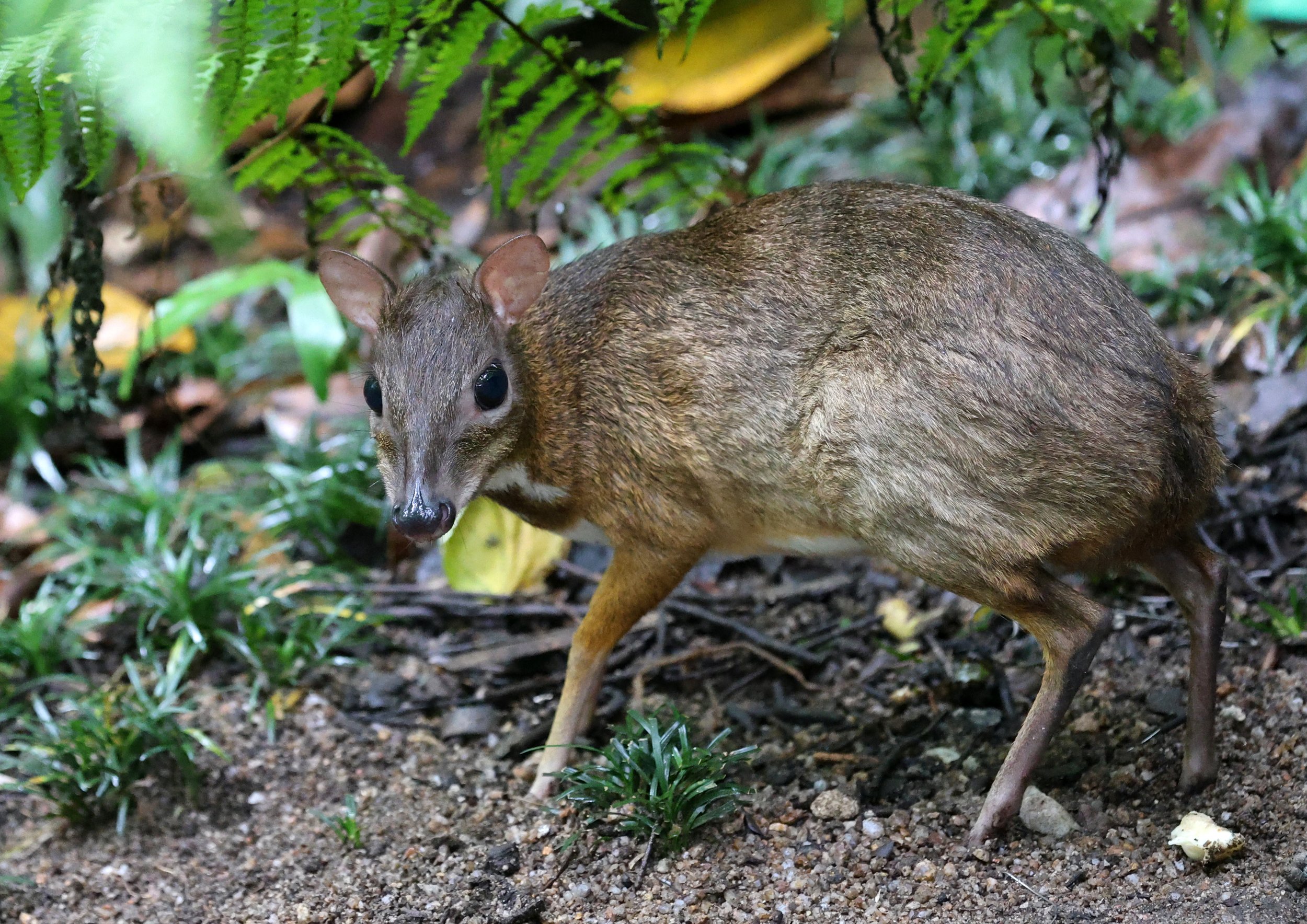
Greater Mouse-deer
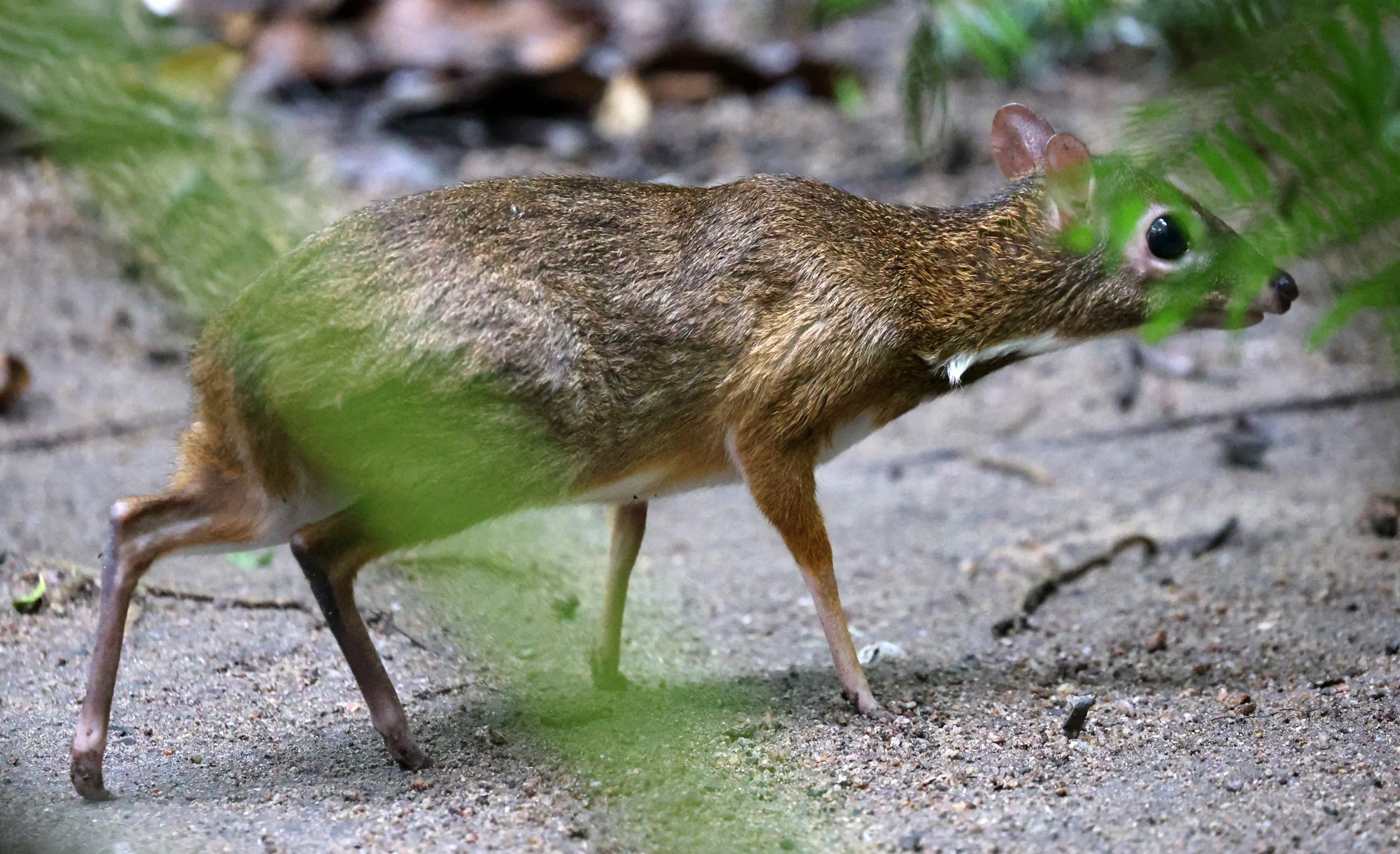
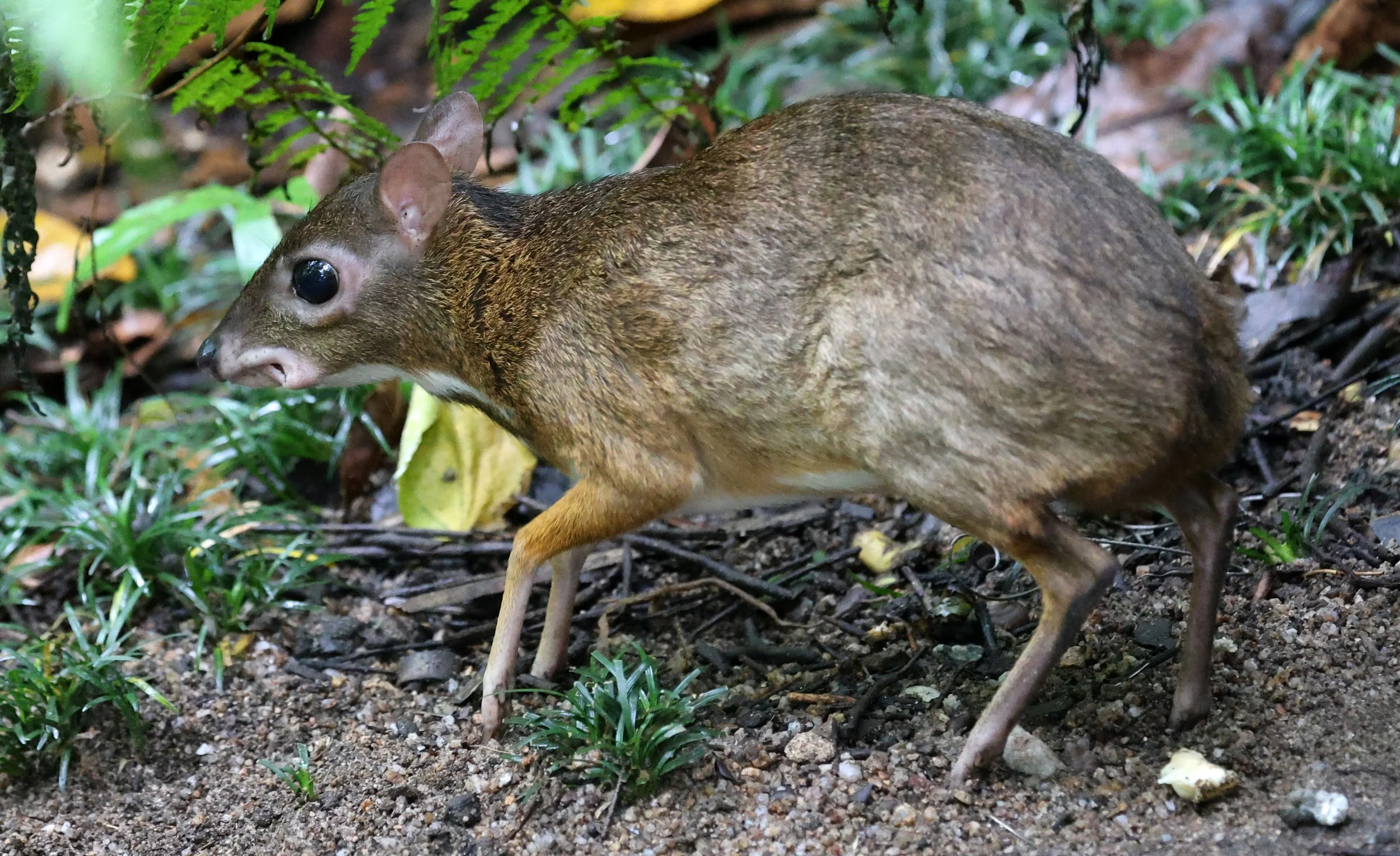
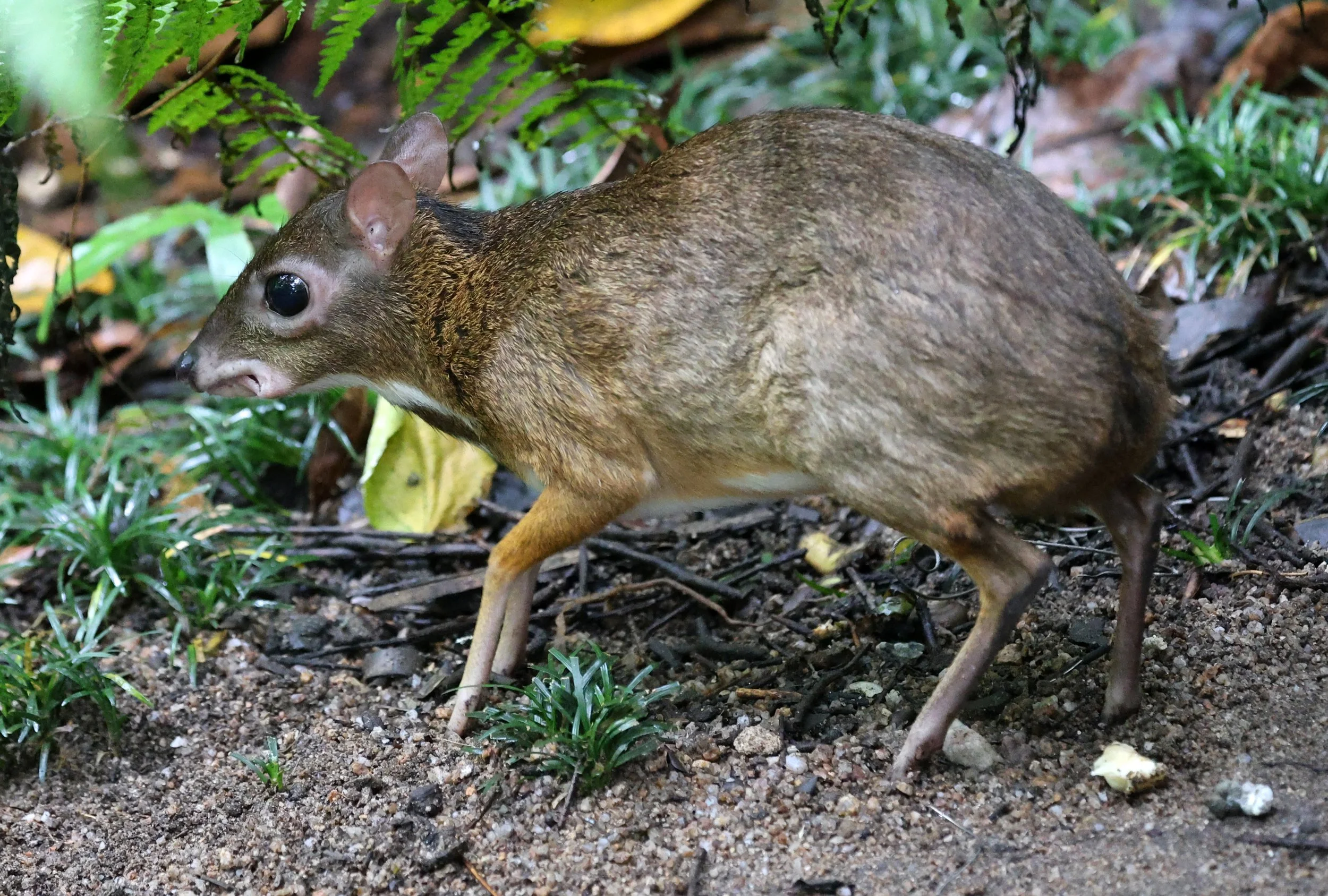
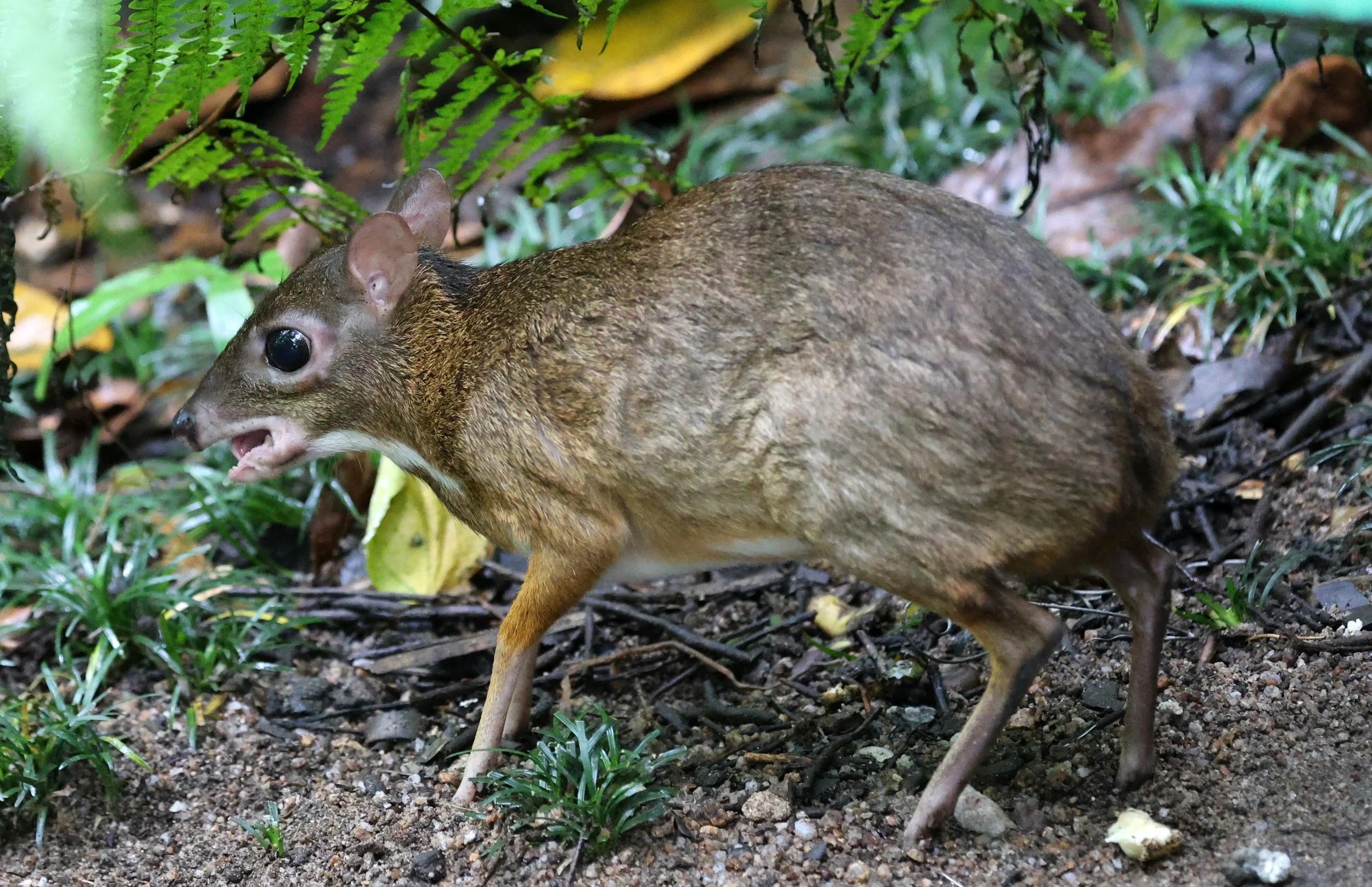
The Greater Mouse-deer, Greater Malay Chevrotain, or napu (Tragulus napu) is a species of even-toed ungulate in the family Tragulidae found in Sumatra, Borneo, and smaller Malaysian and Indonesian islands, and in southern Myanmar, southern Thailand, and peninsular Malaysia. Its natural habitat is subtropical or tropical, moist, lowland forest.

The Greater Mouse-deer is an even-toed ungulate. Although very small for an ungulate, the greater mouse-deer is one of the largest members of its genus. It is rivalled in size by Williamson's mouse-deer. It weighs 5 to 8 kg (11 to 18 lb). Its head-and-body length is 70 to 75 cm (2.30 to 2.46 ft) and its tail length is 8 to 10 cm (3.1 to 3.9 in). Its shoulder height is about 30 to 35 cm (12 to 14 in) It has a small, triangular head with a small, pointed, black nose and large eyes. Its long legs are as thin as a pencil. The hind legs are visibly longer than the front legs. The body is rounded. The fur on the upper part of its body is grey-buff to orange-buff. On the sides, the fur is quite pale, but darker along the midline. It is white underneath, more specifically on the neck, stomach, chest, and chin. The male has neither horns nor antlers, but has small "tusks" – elongated canines in the upper jaws.
Greater mouse-deer are found in Sumatra, Borneo, and smaller Malaysian and Indonesian islands, and in southern Myanmar, southern Thailand, and peninsular Malaysia. They live near water, in tropical forests and mangrove thickets. Thought to be regionally extinct in Singapore, they were rediscovered on an offshore island in 2008. Reports of its occurrence elsewhere are probably incorrect. They are terrestrial, but spend time in wet, swampy areas.
The greater mouse-deer is solitary and nocturnal. It uses small trails through thick brush in the forest. When the male is ready to mate, he rubs a large gland on his lower jaw against the female to determine whether she is ready to mate. If she is not ready, she responds by walking away. The male is very territorial, marking his territory with feces, urine, and secretions from the intermandibular gland under the chin. When angry, the male beats the ground with his hooves at a rate of four times per second.
They are rather trusting but delicate animals. They feed on fallen fruits, aquatic plants, buds, leaves, shrubs and grasses.
Greater mouse-deer breed throughout the year; the female spends most of her adult life pregnant. They usually produce one young per birth, after a gestation of 152–155 days. Newborn animals are well-developed and immediately able to stand; they are fully active after 30 minutes. The young stand on three legs while nursing. Both male and female become mature at age 4½ months. Their lifespan is up to 14 years.


Java Mouse-deer
The Java Mouse-deer (Tragulus javanicus) is a species of even-toed ungulate in the family Tragulidae. When it reaches maturity it is about the size of a rabbit, making it the smallest living ungulate. It is found in forests in Java and perhaps Bali, although sightings there have not been verified.
Mouse-deer possess triangular-shaped heads, arched backs, and rounded bodies with elevated rear ends. The thin, short legs which support the mouse-deer are about the diameter of an average pencil.[citation needed] Unlike the antlered true deer, or horned bovids, but akin to Moschus musk deer, male Java mouse-deer have elongated, tusk-like upper canines which protrude downward from the upper jaw along the sides of their mouth. Males use these "tusks" to defend themselves and their mates against rivals. Females can be distinguished from males because they lack these prominent canines, and they are slightly smaller than the males.[4] Java mouse-deer can be further distinguished by their lack of upper incisors, similar to bovids. The coat coloration of the Java mouse-deer is reddish-brown with a white underside, and pale white spots or vertical markings are also present on the animal's neck.
With an average length of 45 cm (18 in) and an average height of 30 cm (12 in), the Java mouse-deer is the smallest extant (living) ungulate or hoofed mammal, as well as the smallest extant even-toed ungulate.[4][12][13] The weight of the Java mouse-deer ranges from 1 to 2 kilograms (2.2 to 4.4 lb), with males being heavier than females. It has an average tail length of about 5 cm (2.0 in). Mouse-deer are thought to be the most primitive ruminants based on their behaviour and the fossil record, thus they are the living link between ruminants and non-ruminants.

Javan Chevrotain (Tragulus javanicus) Khao Kiew Mountain Open Zoo Chonburi Thailand