Patagonian Mara (Dolichotis patagonum)

Patagonian Mara (Dolichotis patagonum)
The Patagonian Mara (Dolichotis patagonum), also known as the Patagonian cavy or Patagonian hare, is a large rodent native to Argentina. Although it resembles a rabbit or small deer, it is actually a member of the guinea pig family. The species belongs to the kingdom Animalia, phylum Chordata, class Mammalia, order Rodentia, and family Caviidae. Within this family, it is classified in the genus Dolichotis. The Patagonian Mara is one of the largest rodents in the world and is considered one of South America's most distinctive mammals. [en.wikipedia.org], [animaldiversity.org], [animaldiversity.org]
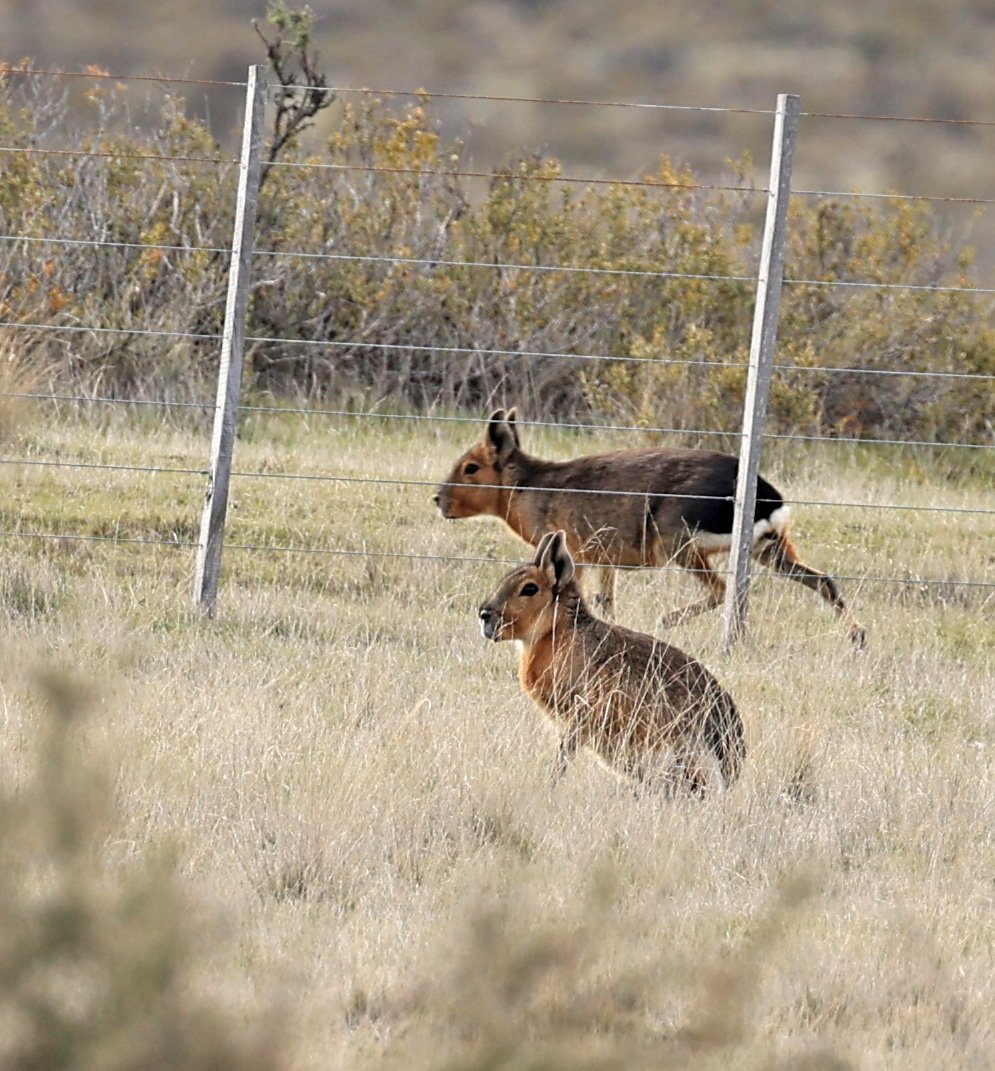
The Patagonian Mara has a slender body, long legs, large upright ears, and a short tail, giving it a striking resemblance to a hare. Adults typically measure between 69 and 75 centimetres in length and can weigh between 8 and 16 kilograms. Their fur is predominantly grey-brown on the back, with a white underside and a distinctive white patch on the rump bordered by a black band. Their long, powerful hind legs allow them to run at high speeds, an important adaptation for life in open habitats where predators can be spotted from a distance. Because of their limb structure and running ability, maras are often compared to small antelope or deer rather than typical rodents. [en.wikipedia.org], [animaldiversity.org]
The Patagonian Mara is found almost exclusively in Argentina, where it inhabits a wide range of open and semi-arid environments. Its distribution extends from central Argentina southward through Patagonia. Preferred habitats include grasslands, shrub steppes, semi-desert regions, and open scrublands where visibility is high and vegetation is relatively low. The species is especially common in the dry plains and shrublands of Patagonia, although it can also occur in agricultural landscapes and grazing areas. Maras typically construct dens in sandy soils and open habitats that allow them to detect approaching predators easily. [animaldiversity.org], [en.wikipedia.org], [mammaldiversity.org]
One of the most interesting features of the Patagonian Mara is its unusual social and reproductive behaviour. Unlike most rodents, maras are generally monogamous, meaning that a male and female form a long-term breeding pair. They often live in groups and raise their young in communal nursery burrows known as crèches, where the offspring of several pairs may be cared for together. The species is primarily diurnal, meaning it is active during the day, and spends much of its time feeding on grasses, herbs, leaves, and other vegetation. Their strong legs and efficient running ability allow them to escape predators by sprinting across the open landscape at impressive speeds. They also use a variety of vocalizations and scent marking to communicate with one another. [en.wikipedia.org], [speciesexplorer.org], [animaldiversity.org]

The International Union for Conservation of Nature (IUCN) currently classifies the Patagonian Mara as Near Threatened. Although the species remains relatively widespread, populations have declined in some areas and are becoming increasingly fragmented. Habitat loss and degradation are among the primary concerns, particularly where native grasslands and shrublands are converted to agriculture or affected by overgrazing. Competition with introduced livestock and invasive species can also reduce food availability and alter habitat quality. [en.wikipedia.org], [mammaldiversity.org]
Additional threats to the Patagonian Mara include hunting, road mortality, and predation by domestic dogs. Human expansion into previously undisturbed habitats has increased pressure on some populations, while changes in land use continue to reduce suitable habitat. Despite these challenges, the species persists in several protected areas throughout Argentina, and ongoing conservation efforts aim to preserve the open grassland and shrubland ecosystems on which it depends. [speciesexplorer.org], [en.wikipedia.org]
The Patagonian Mara is a remarkable example of adaptation to South America's dry grasslands and shrublands. Its rabbit-like appearance, deer-like running abilities, and unusual monogamous social system make it one of the most distinctive rodents in the world. As an important herbivore in Patagonian ecosystems, it plays a valuable role in maintaining plant communities and supporting ecological processes. Continued habitat conservation and management will be important for ensuring the long-term survival of this unique South American species. [en.wikipedia.org], [animaldiversity.org]
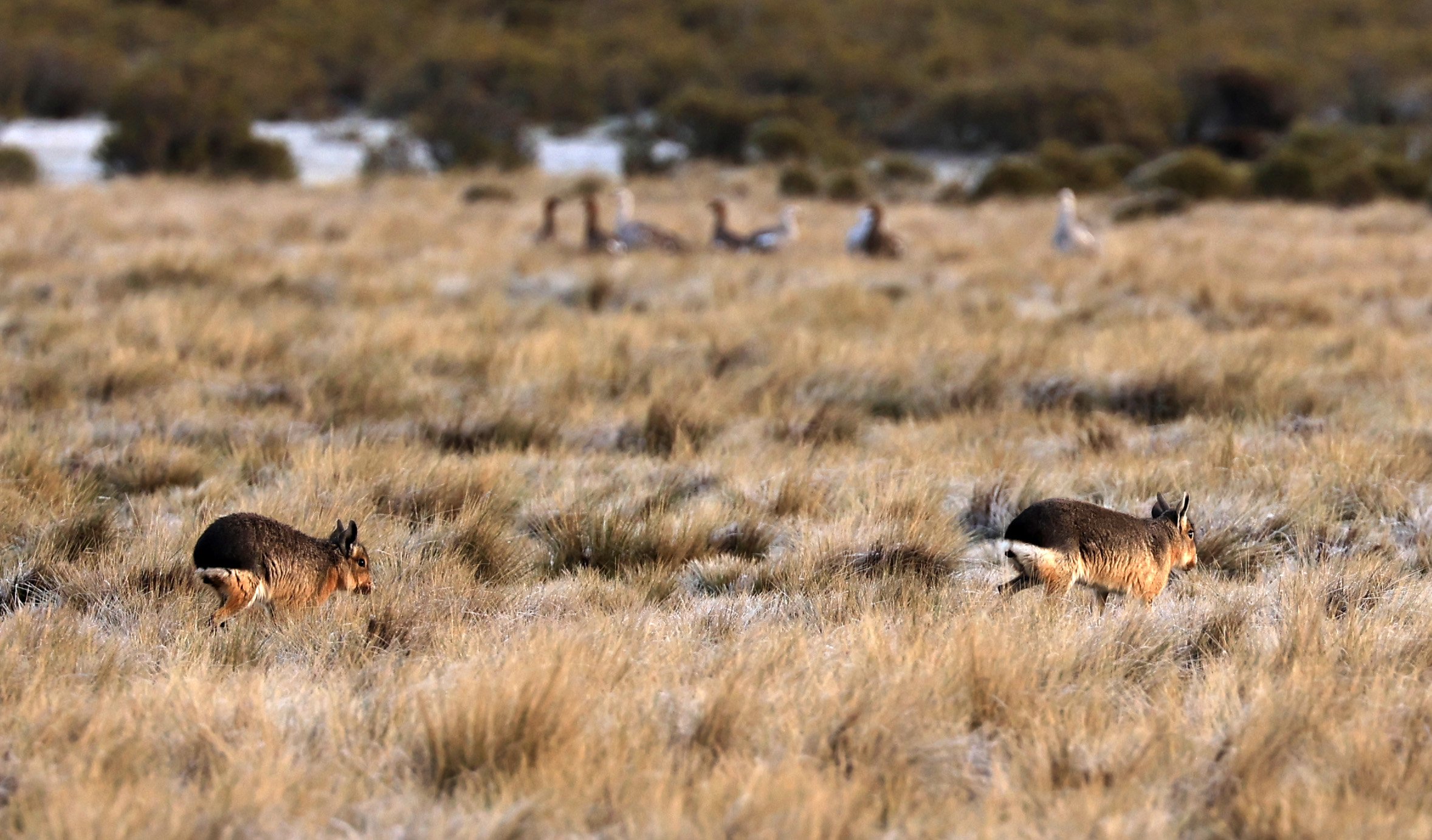
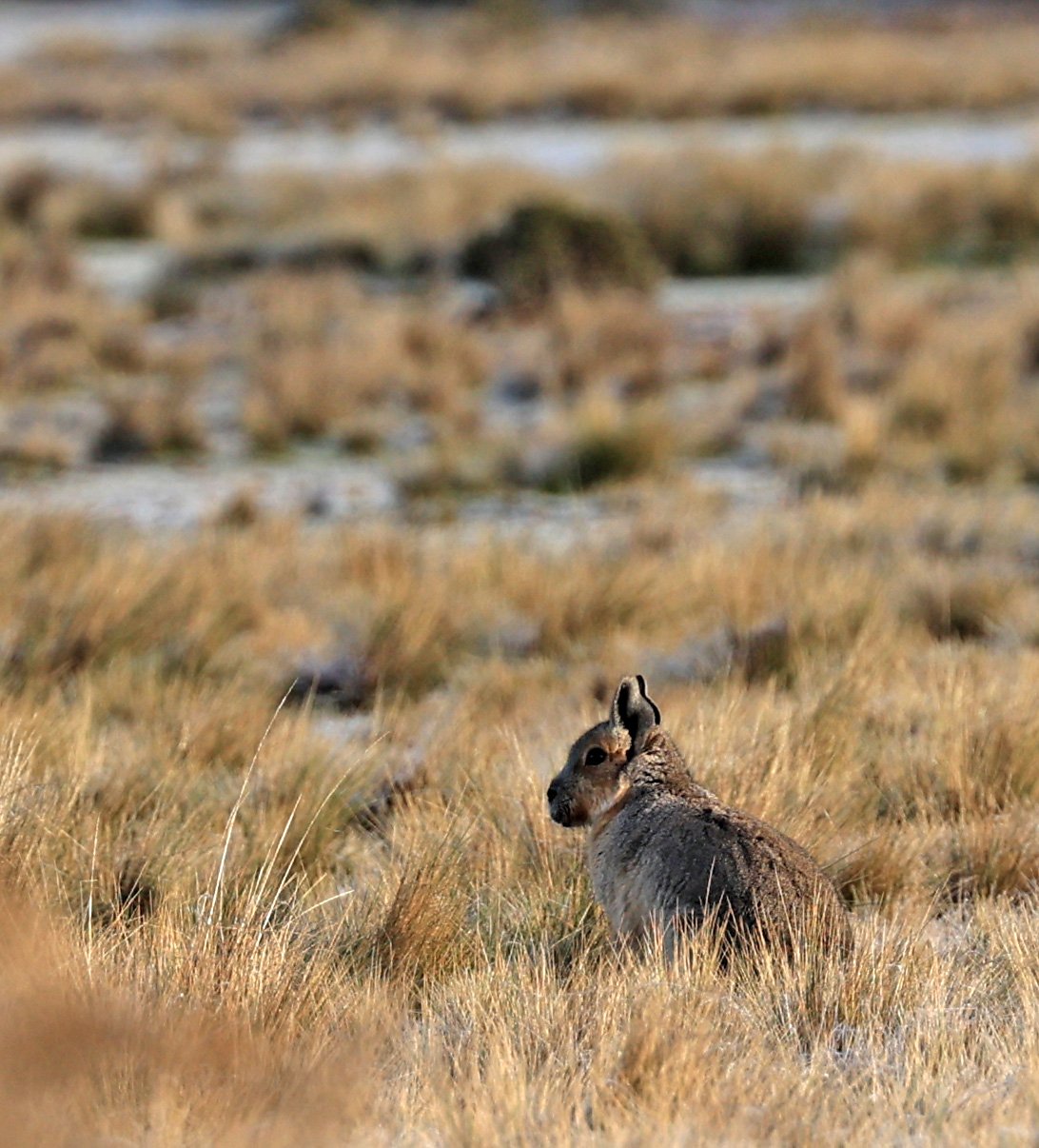
The below images were taken on the Valdes Peninsula, Argentina in 2026 (see associated trip report here):

Patagonian Mara (Dolichotis patagonum) Valdes Peninsula, Chubut Province, Argentina