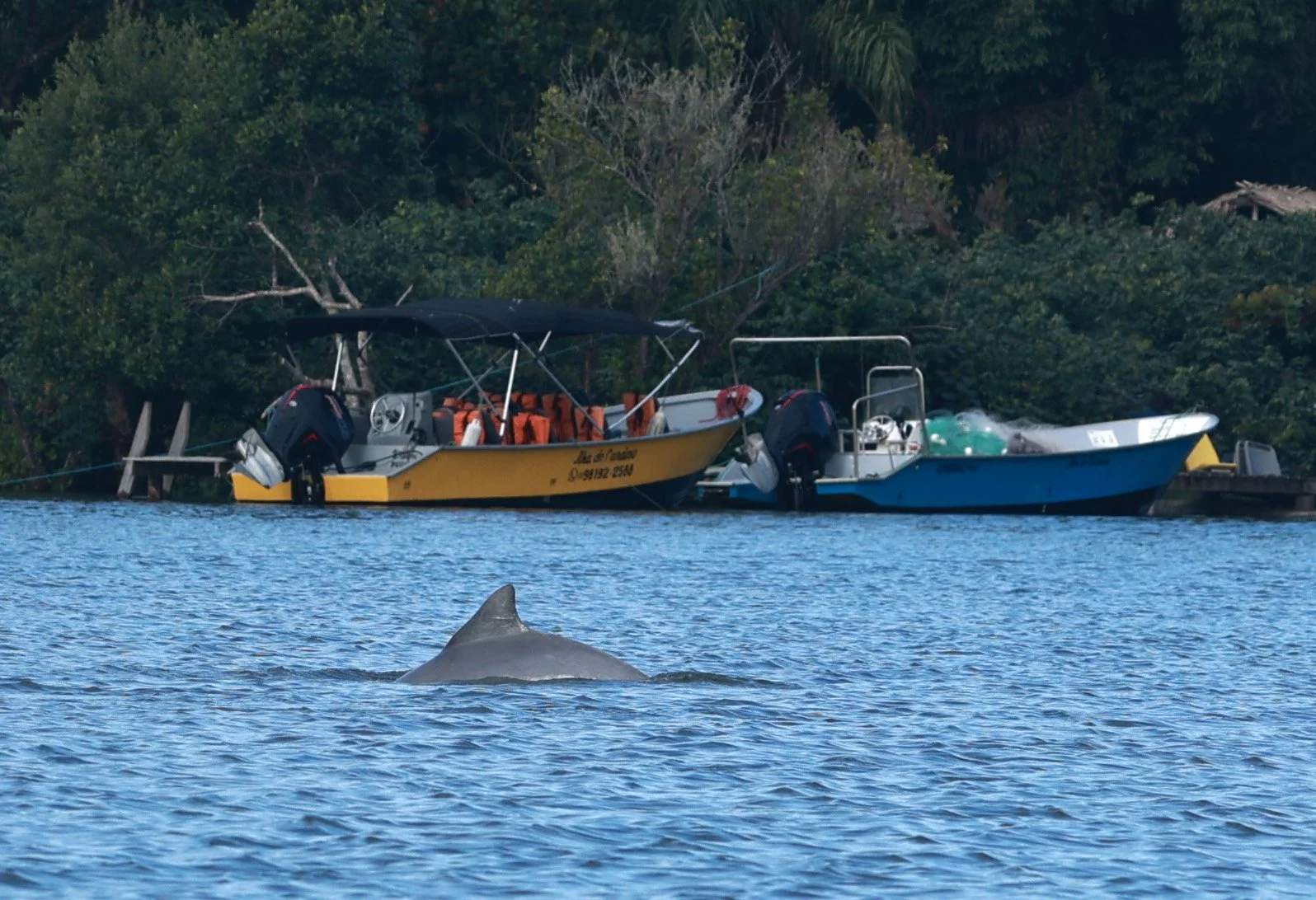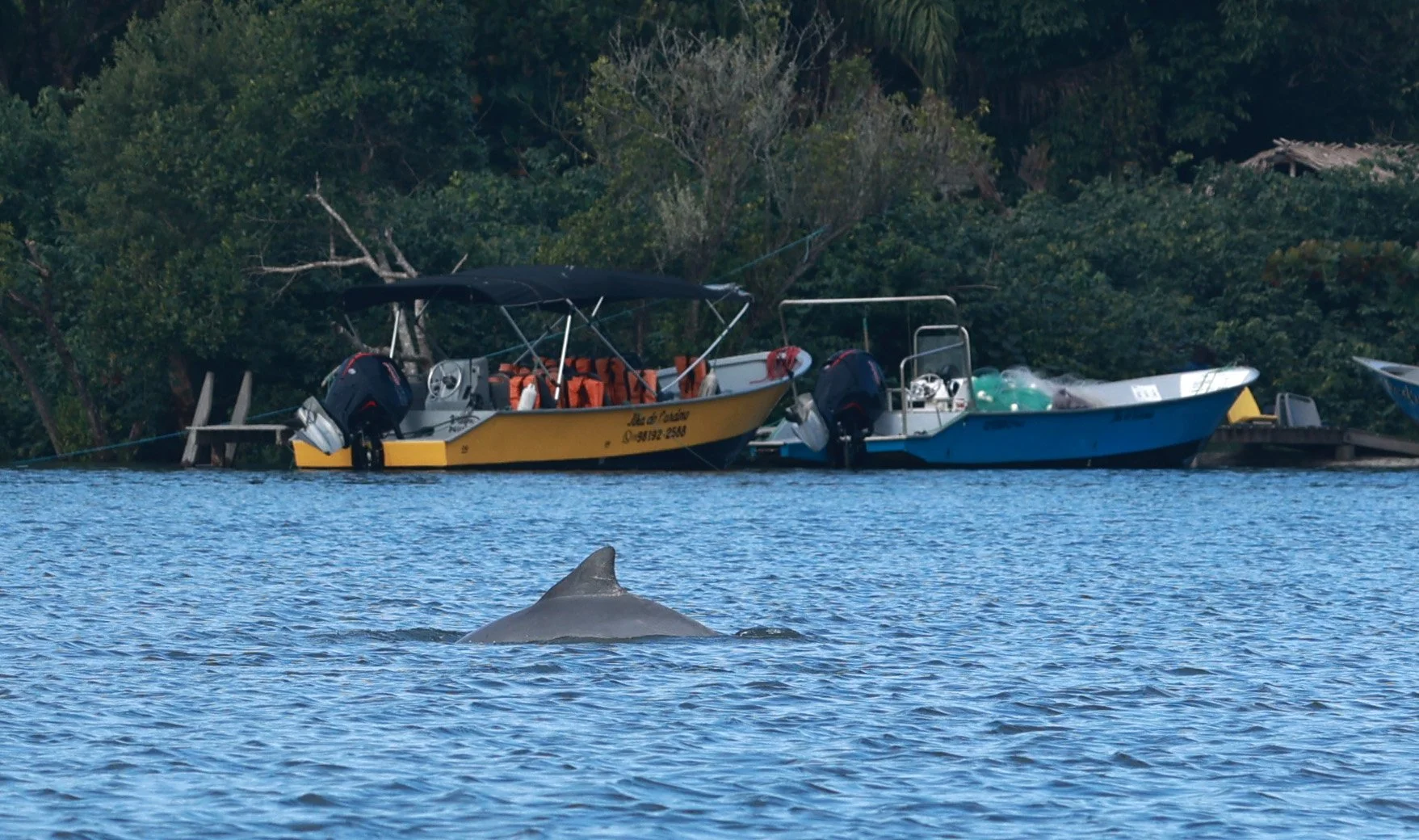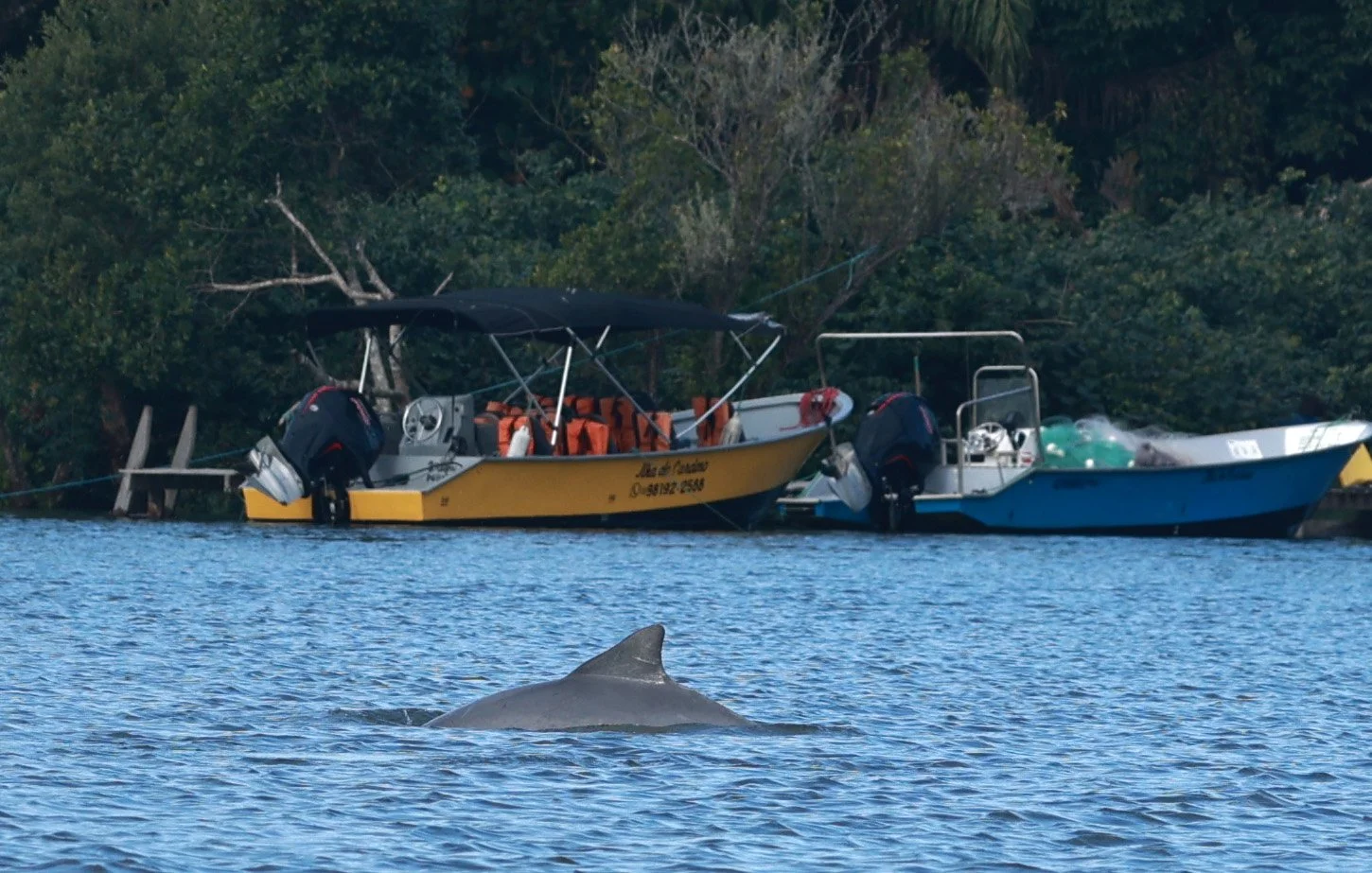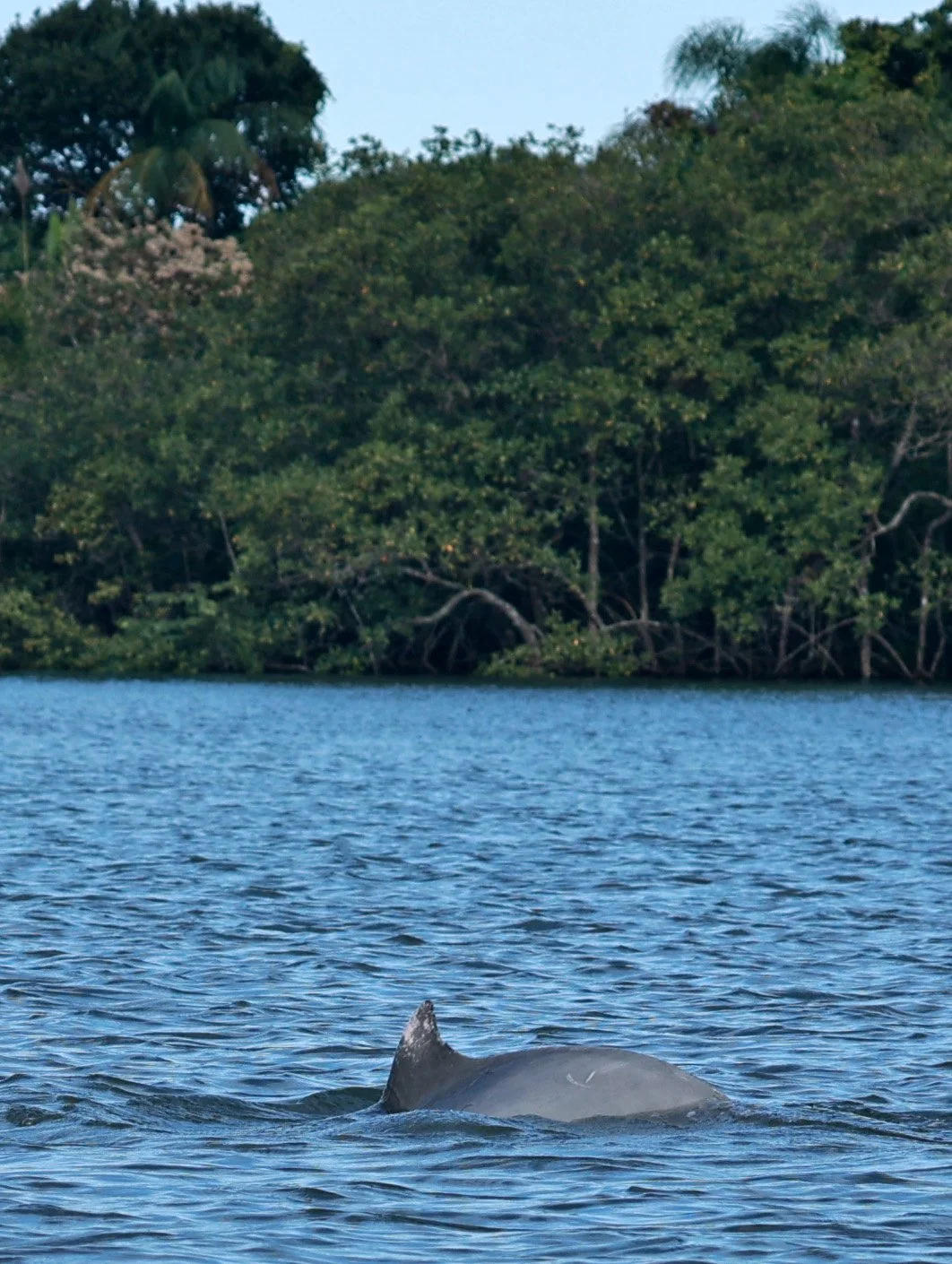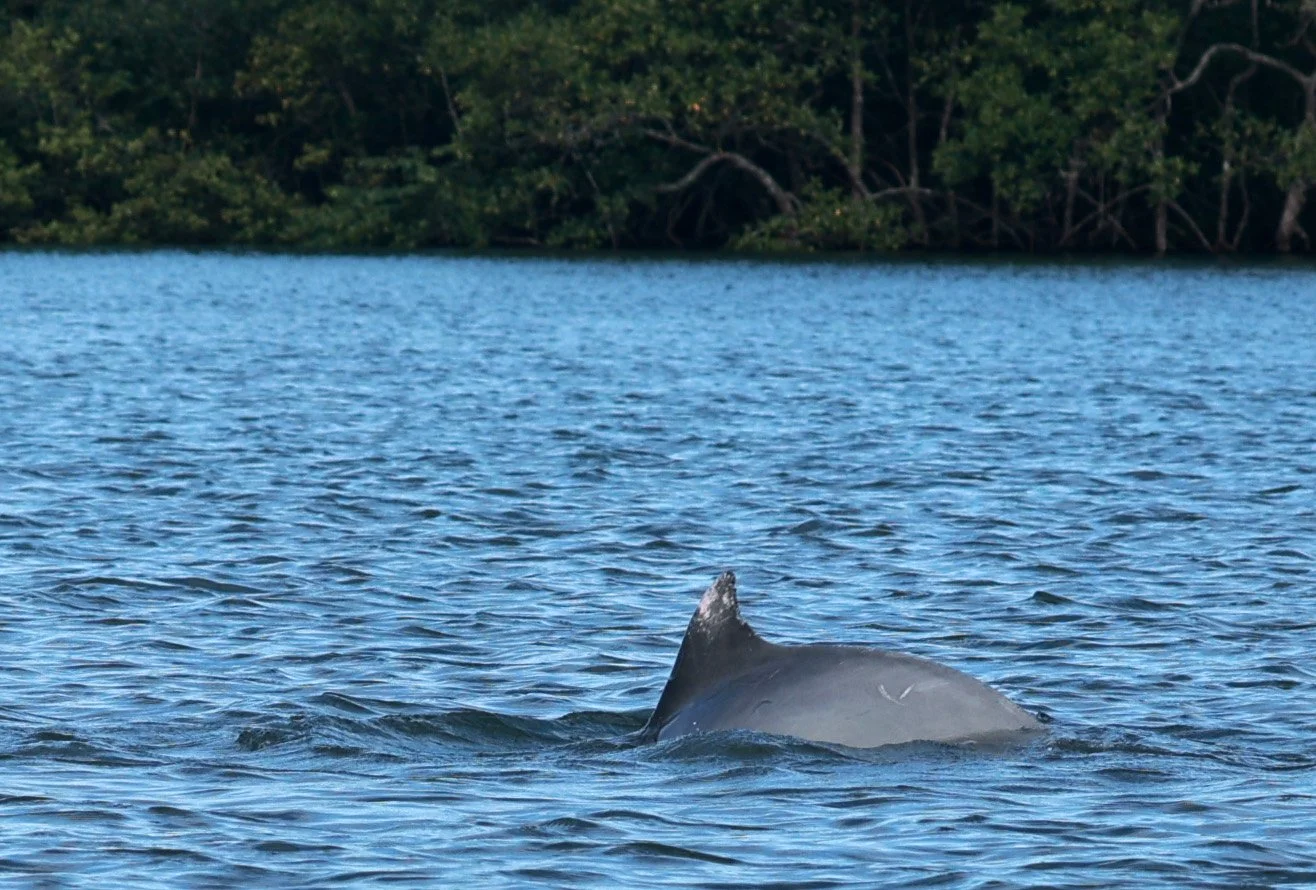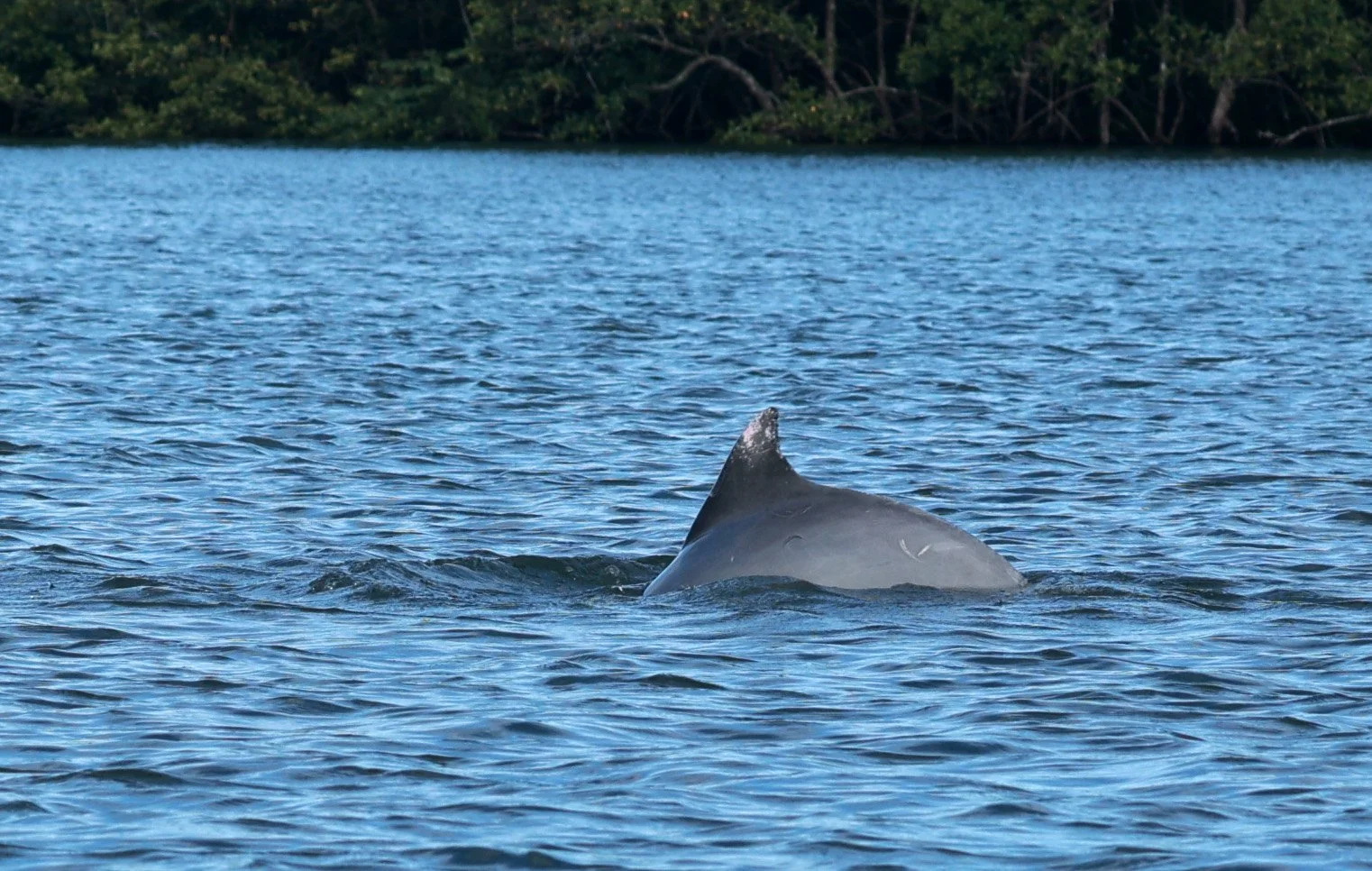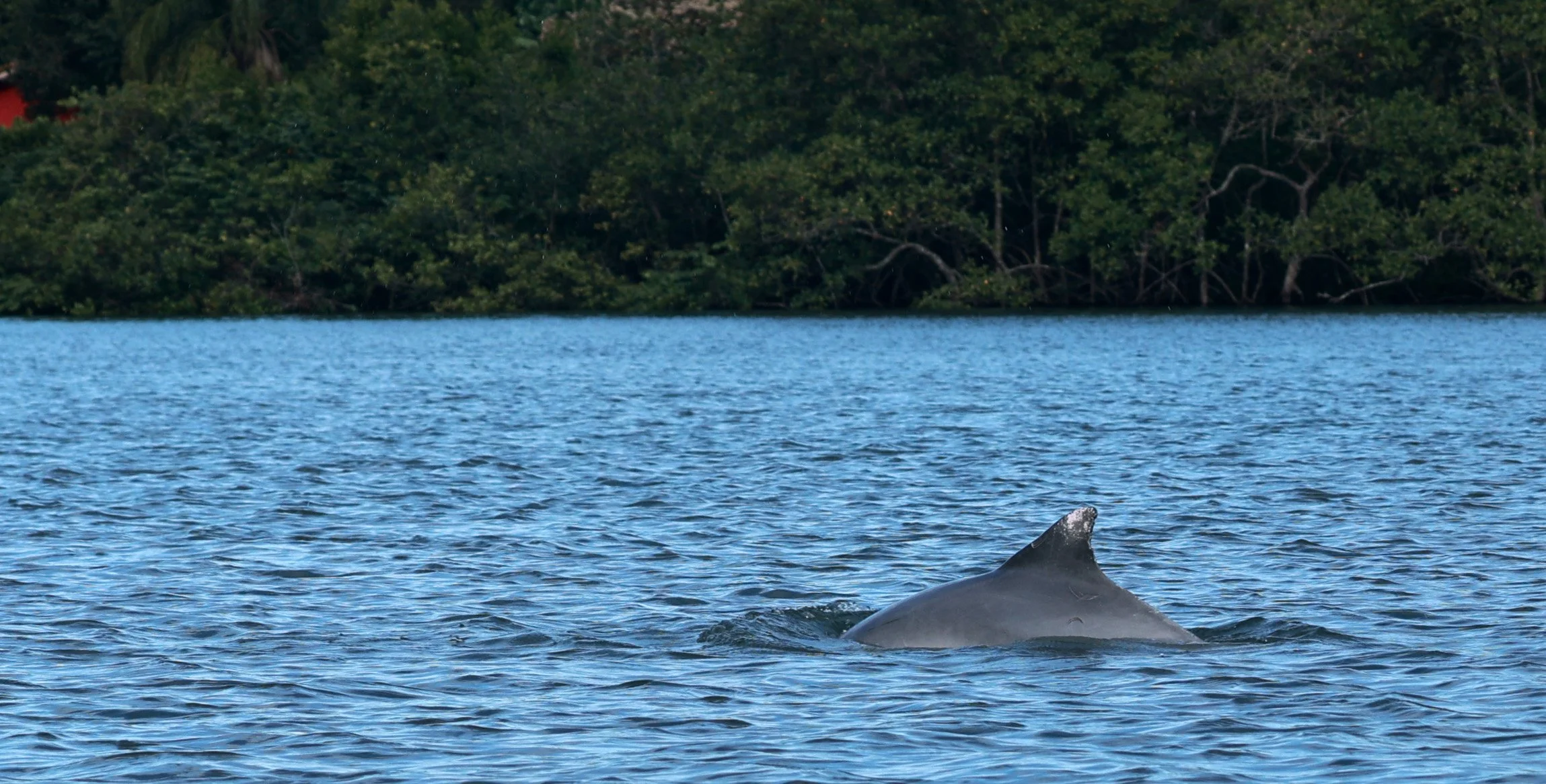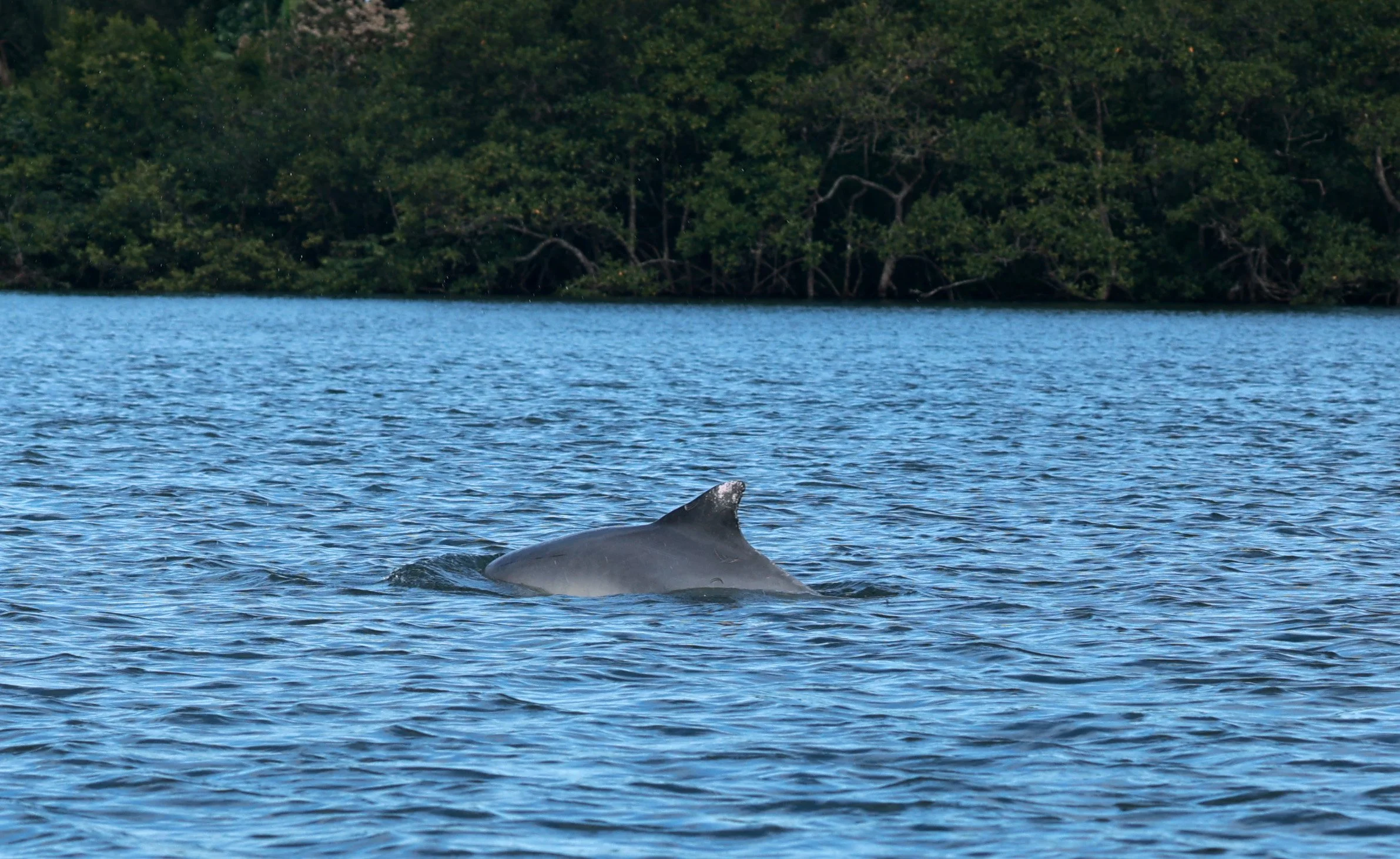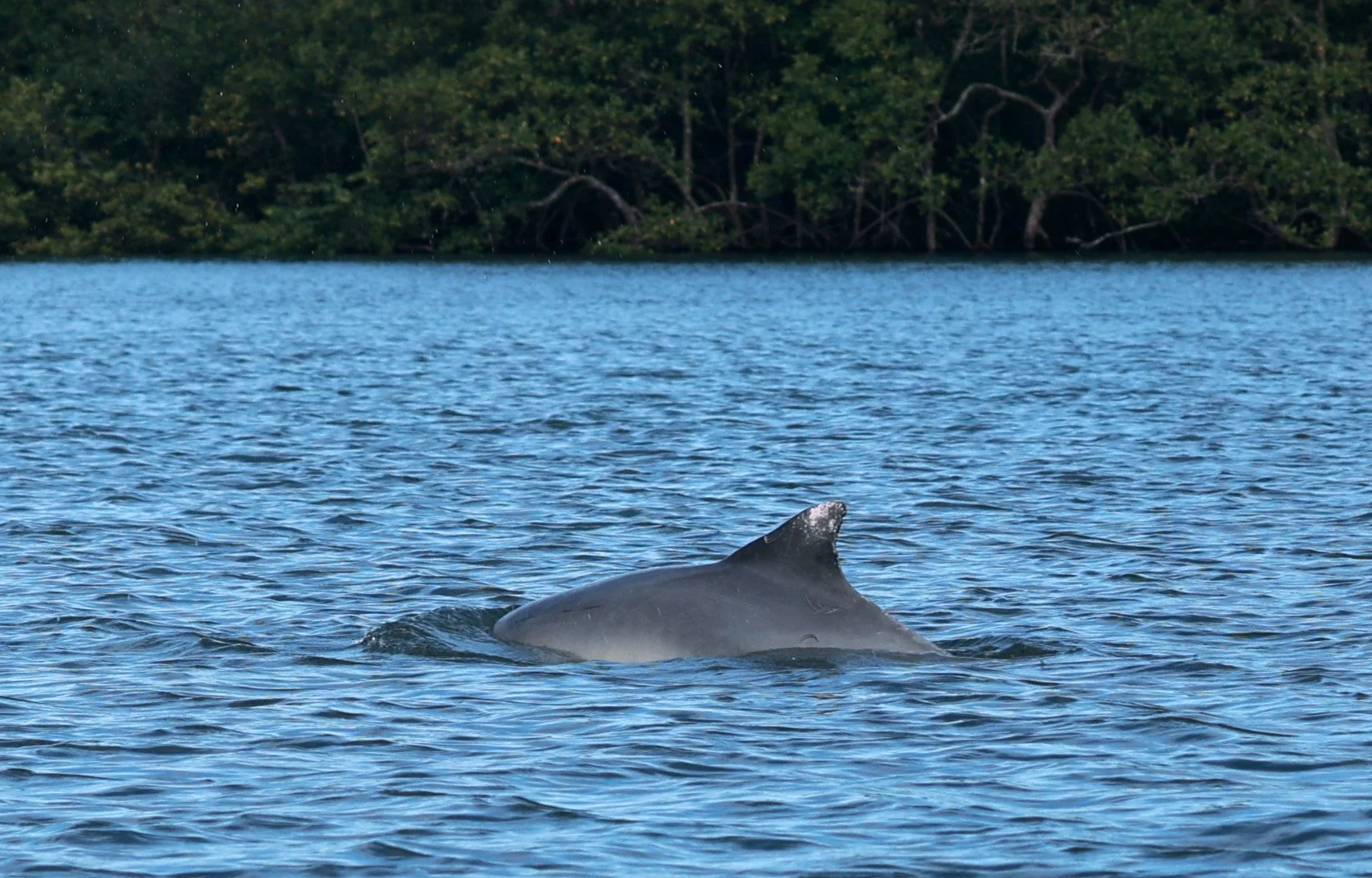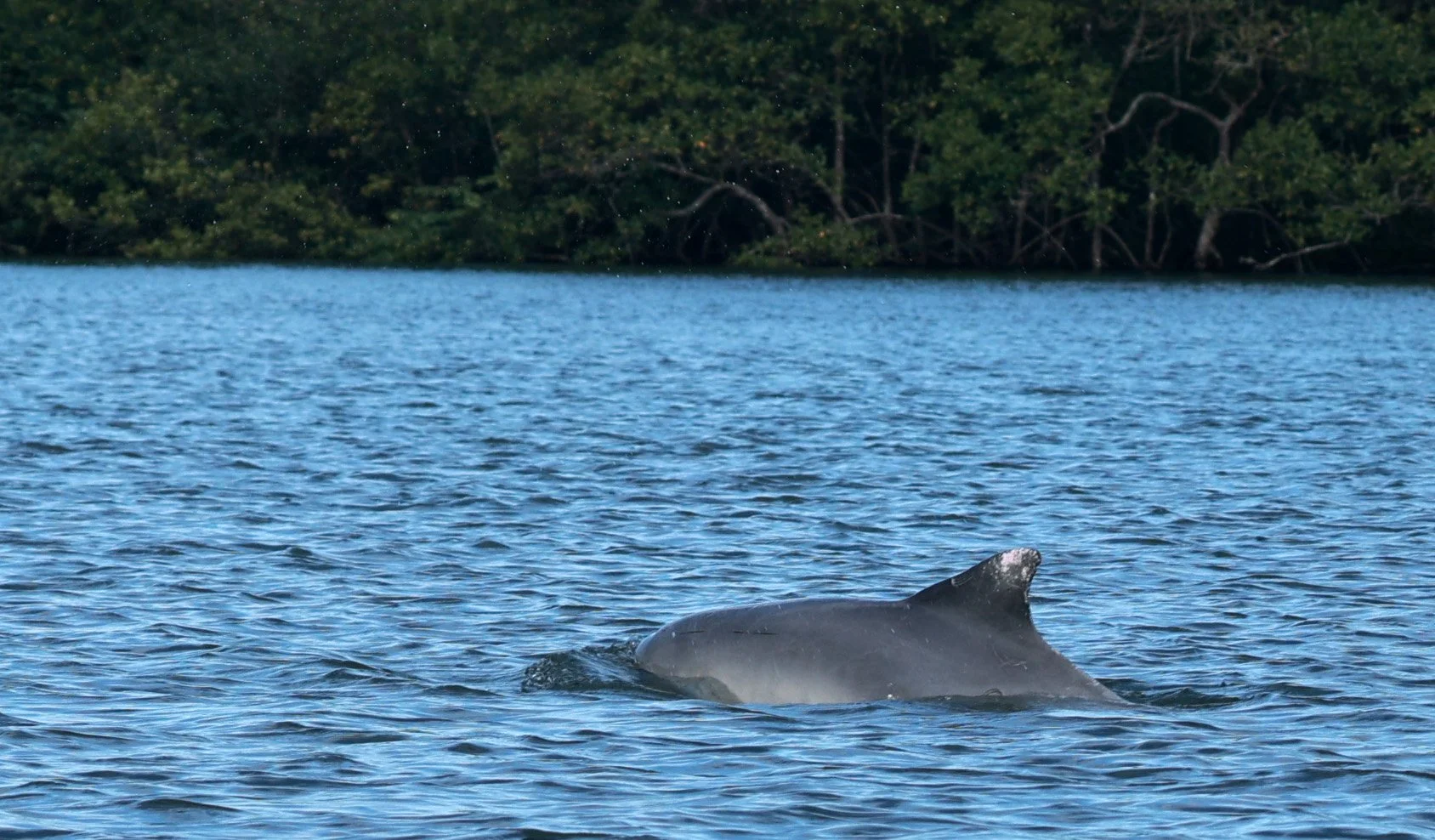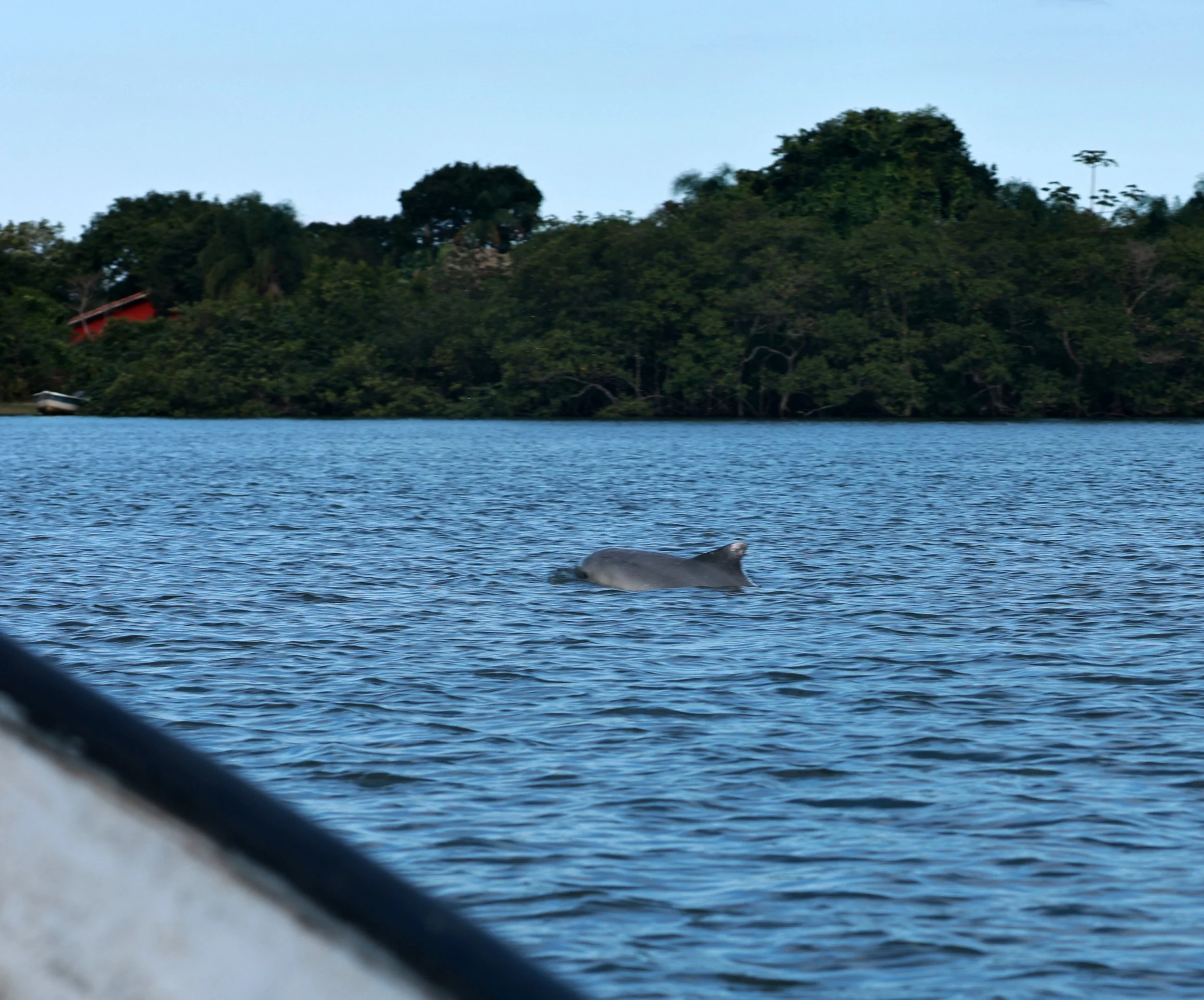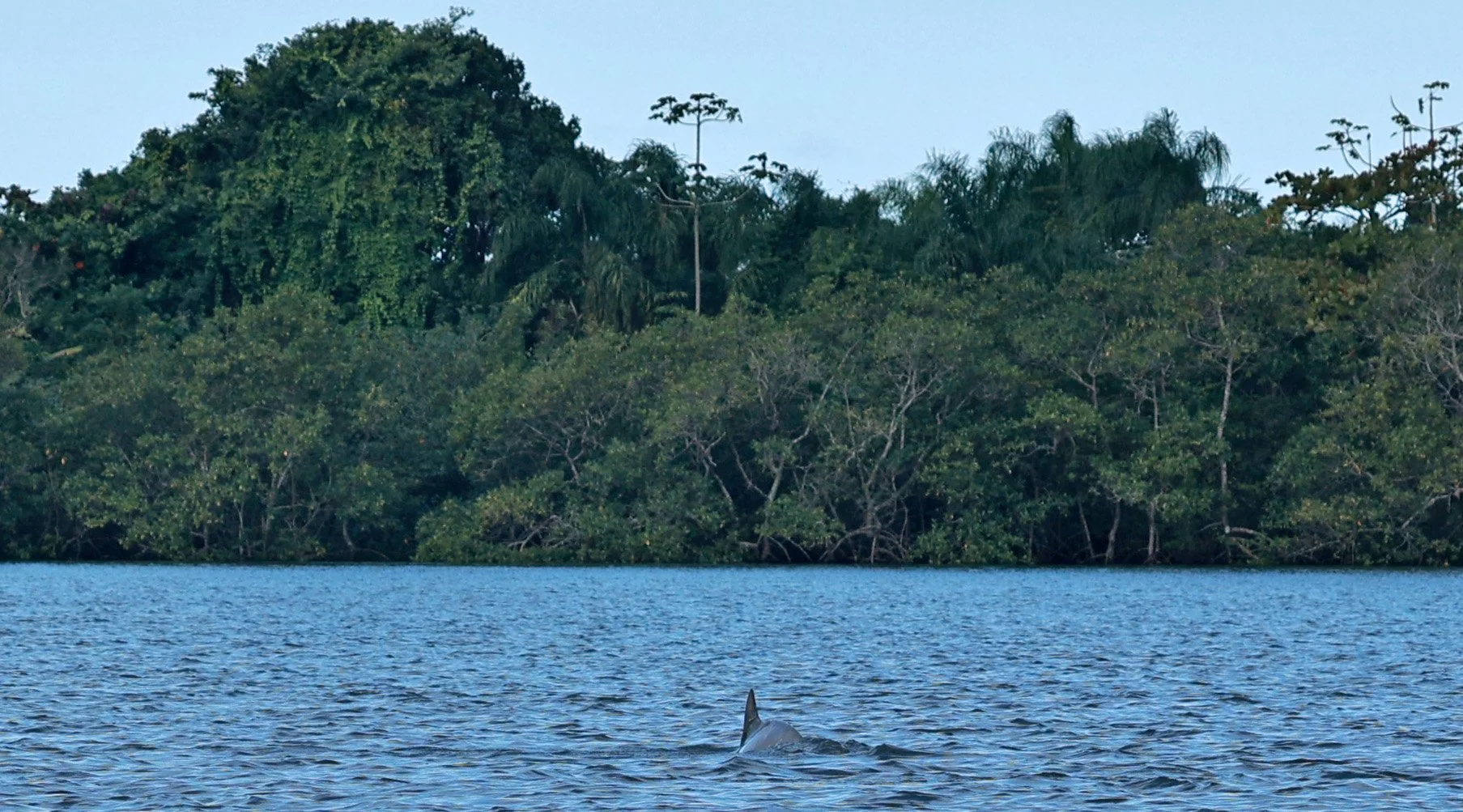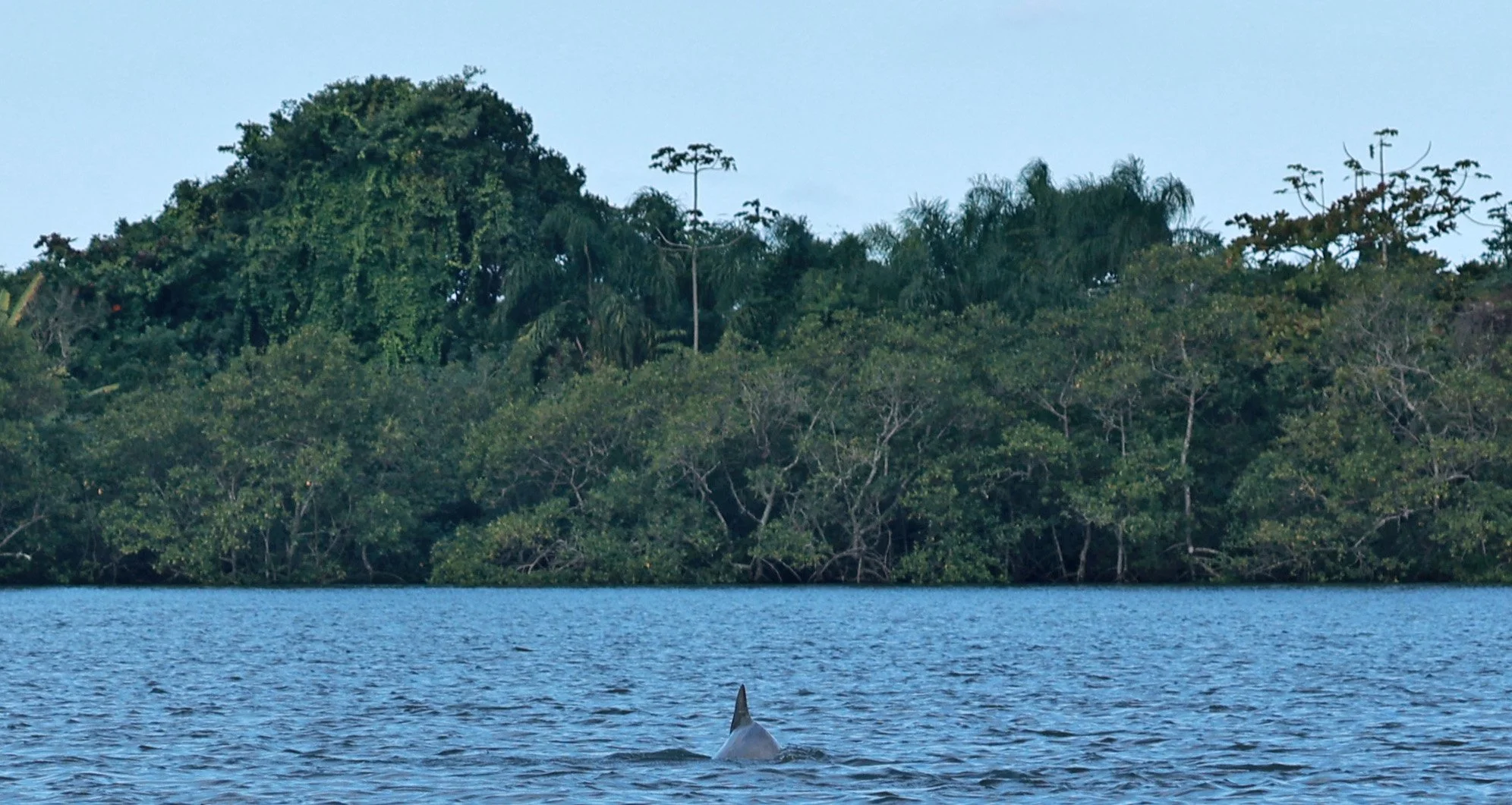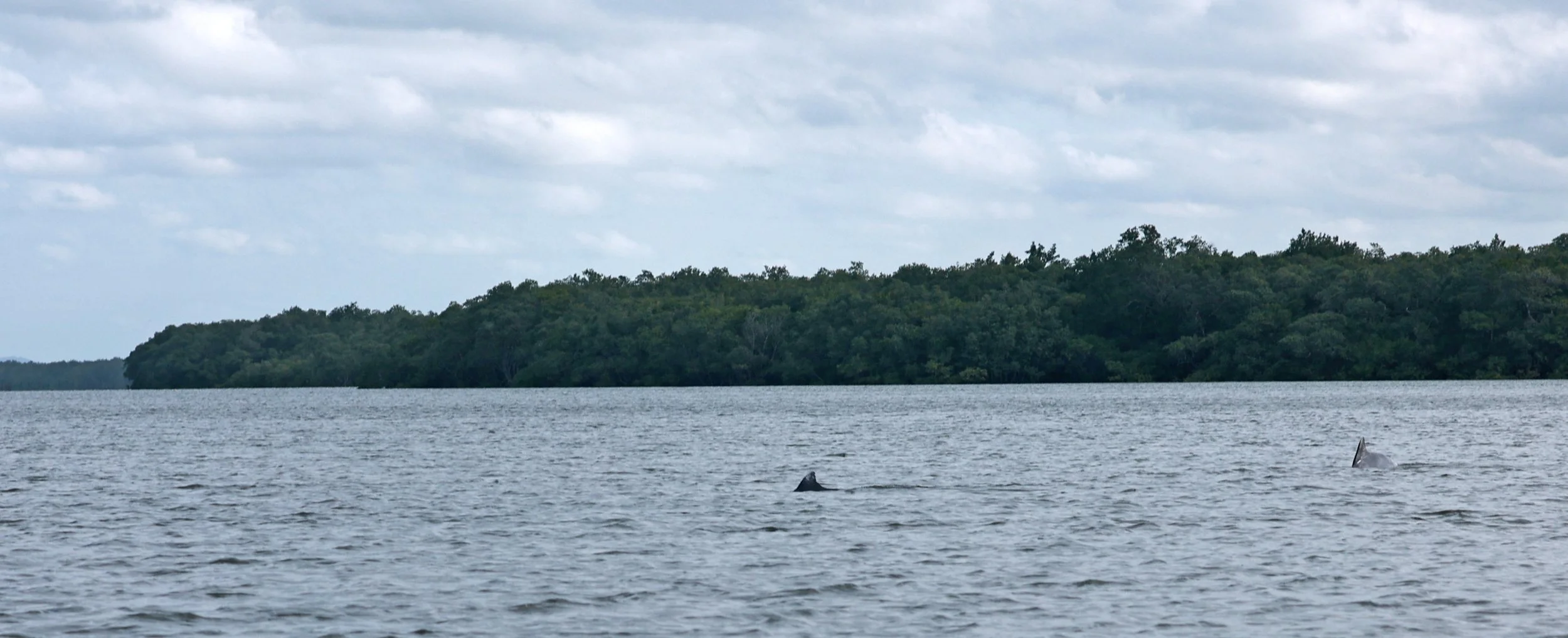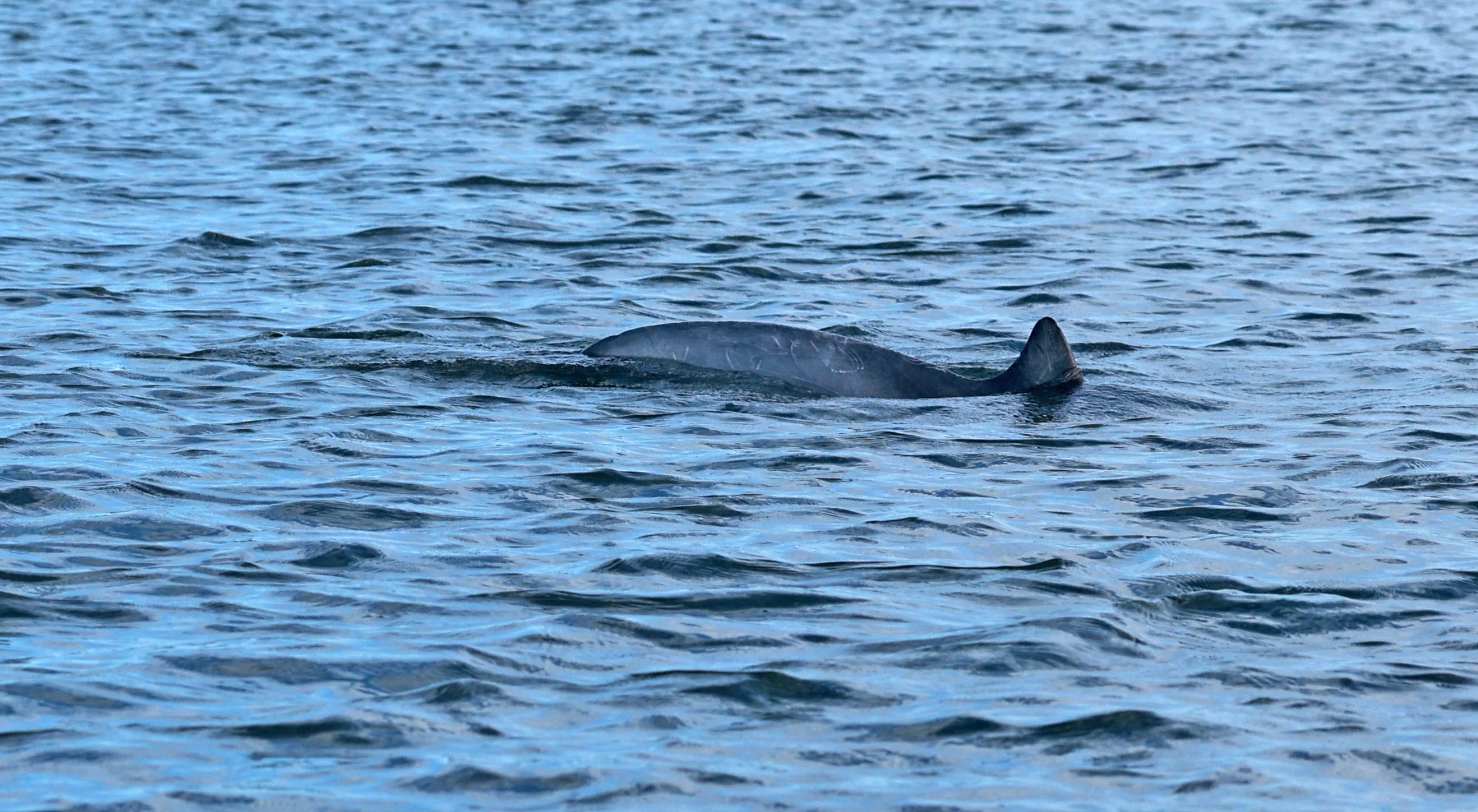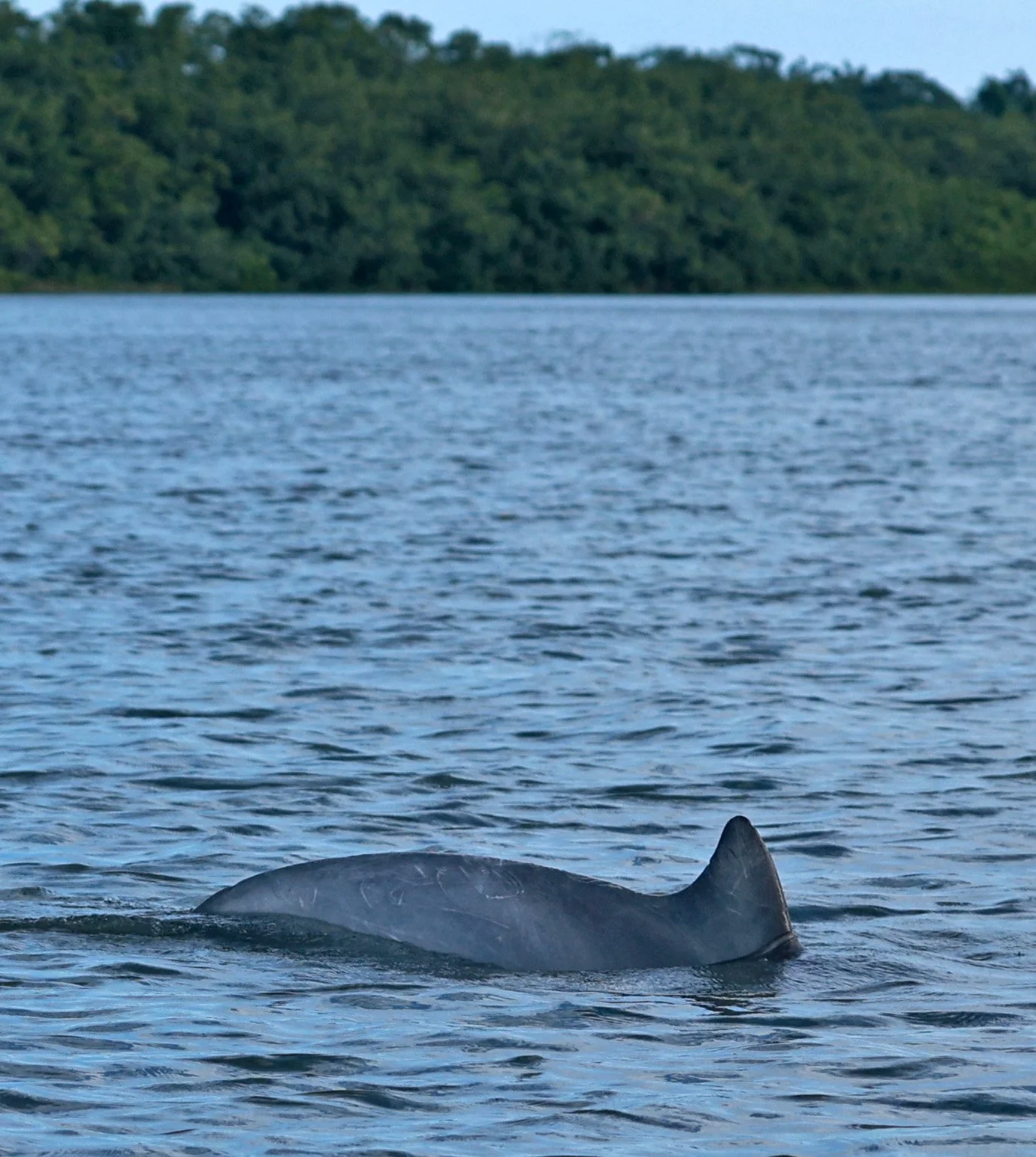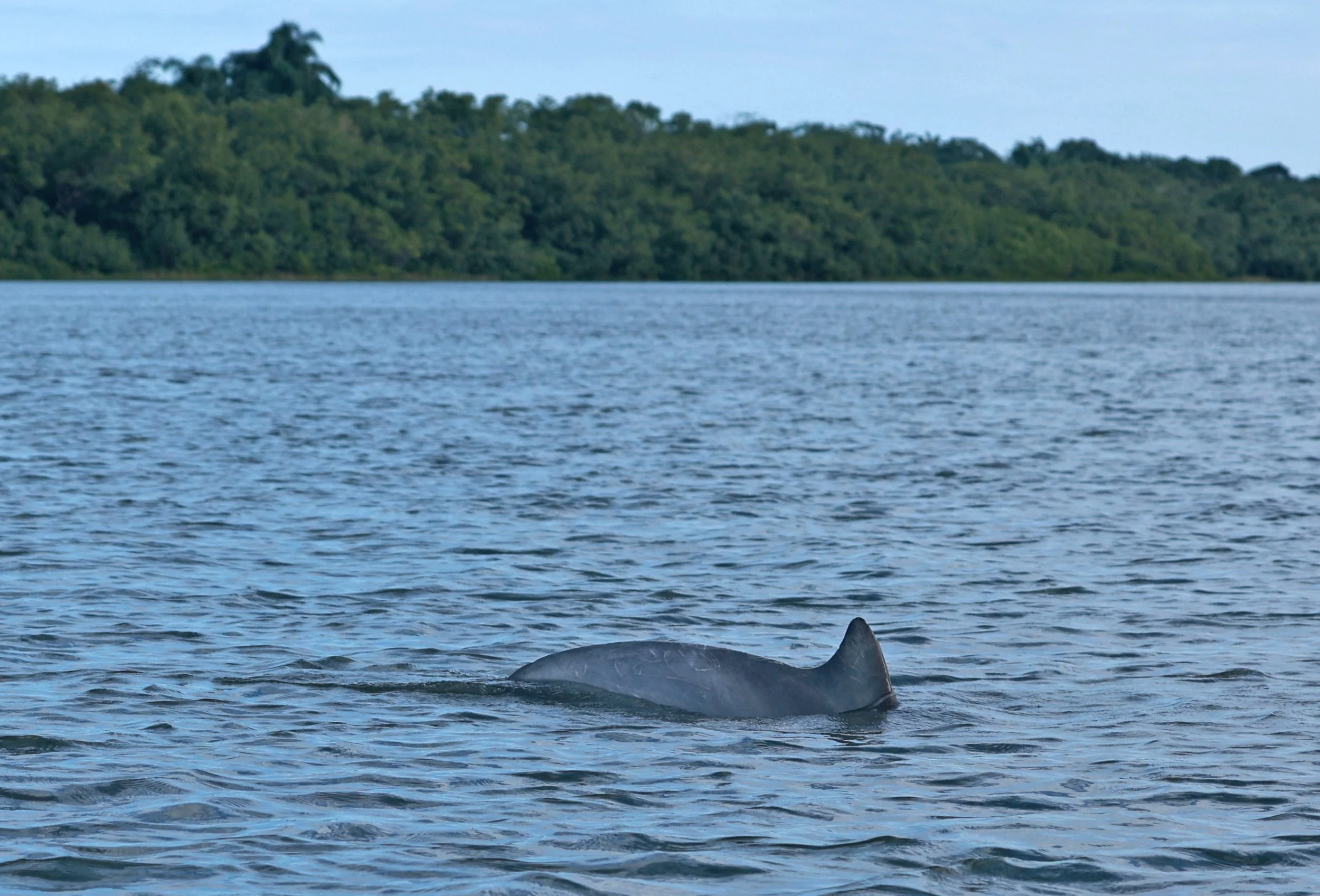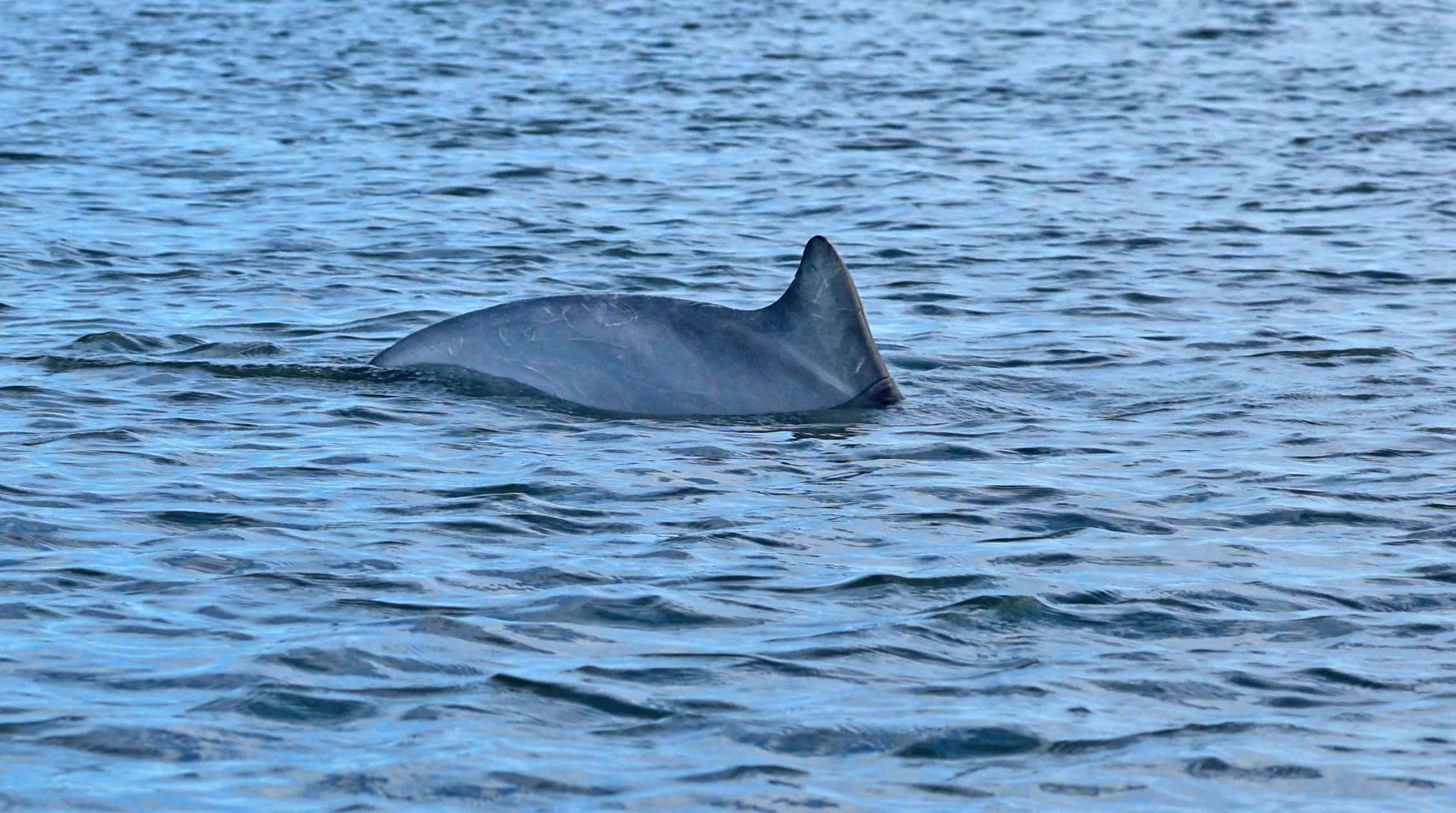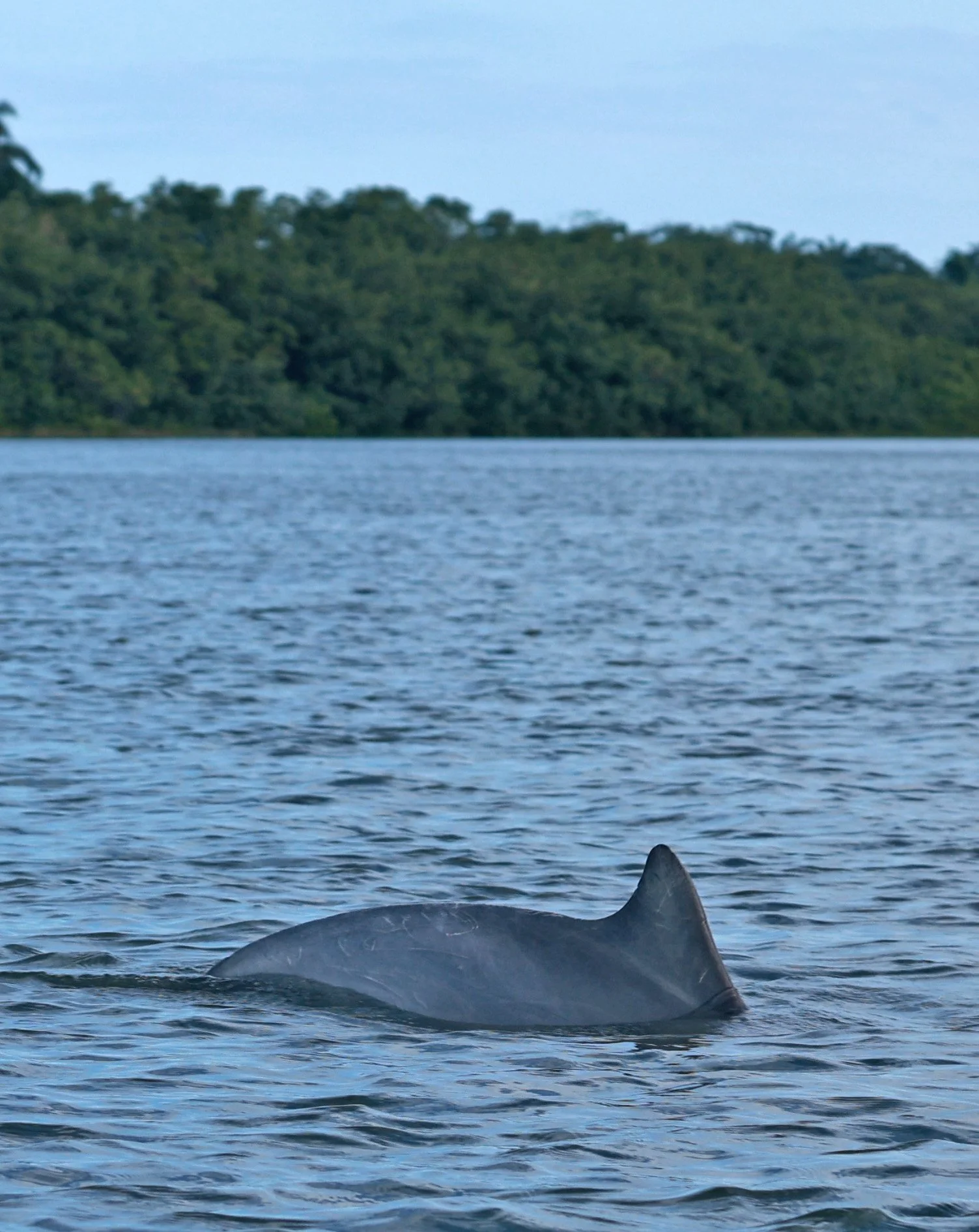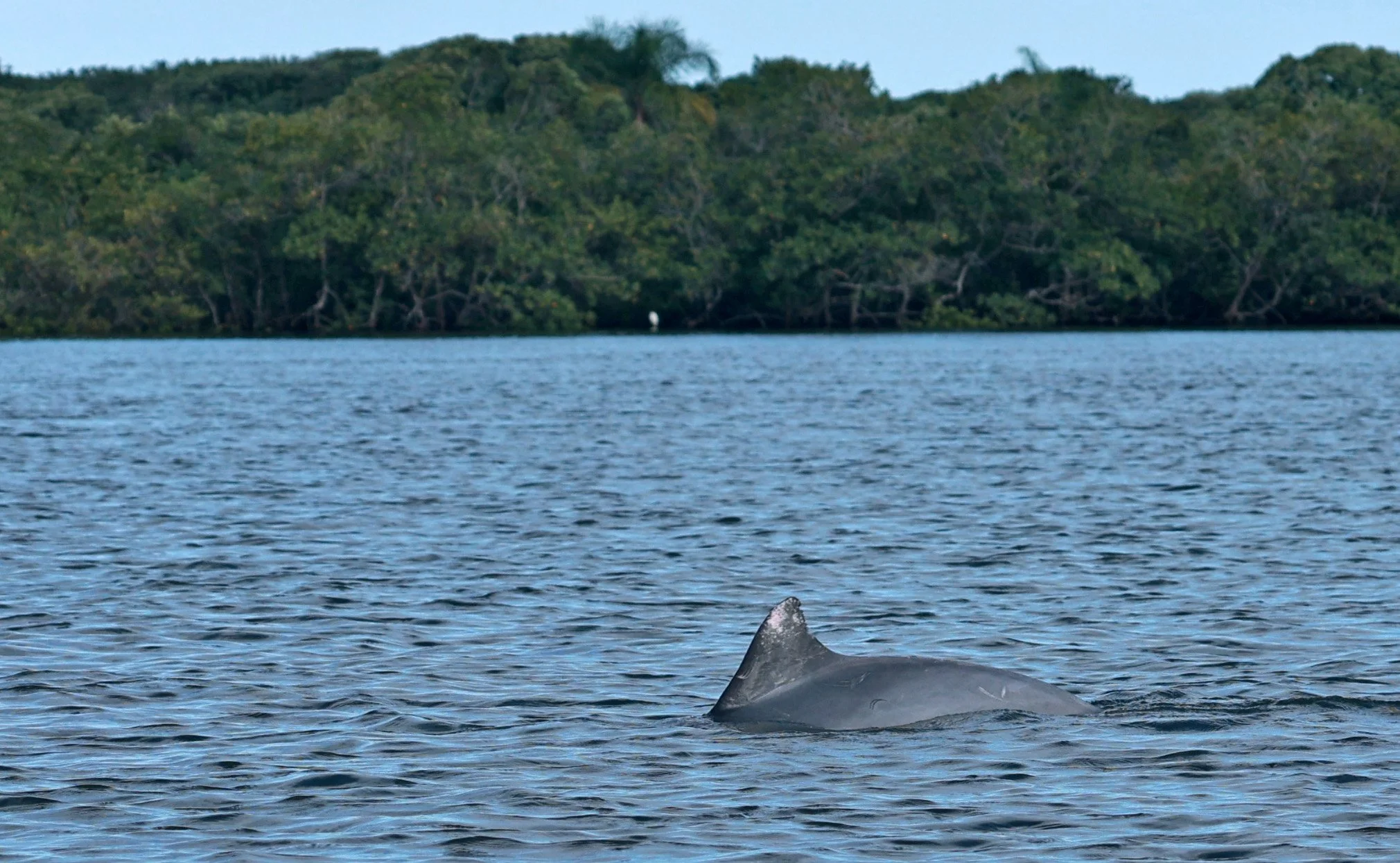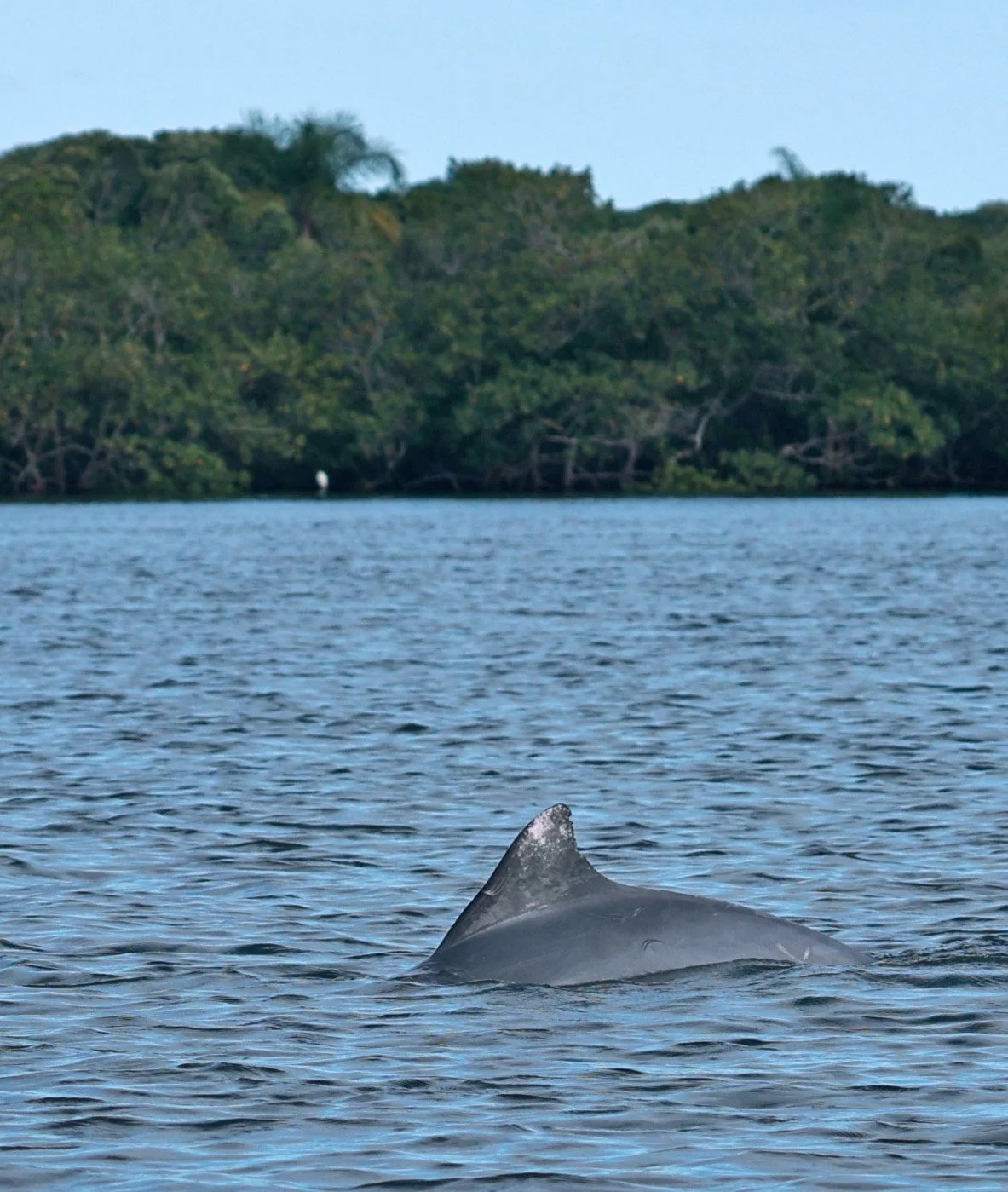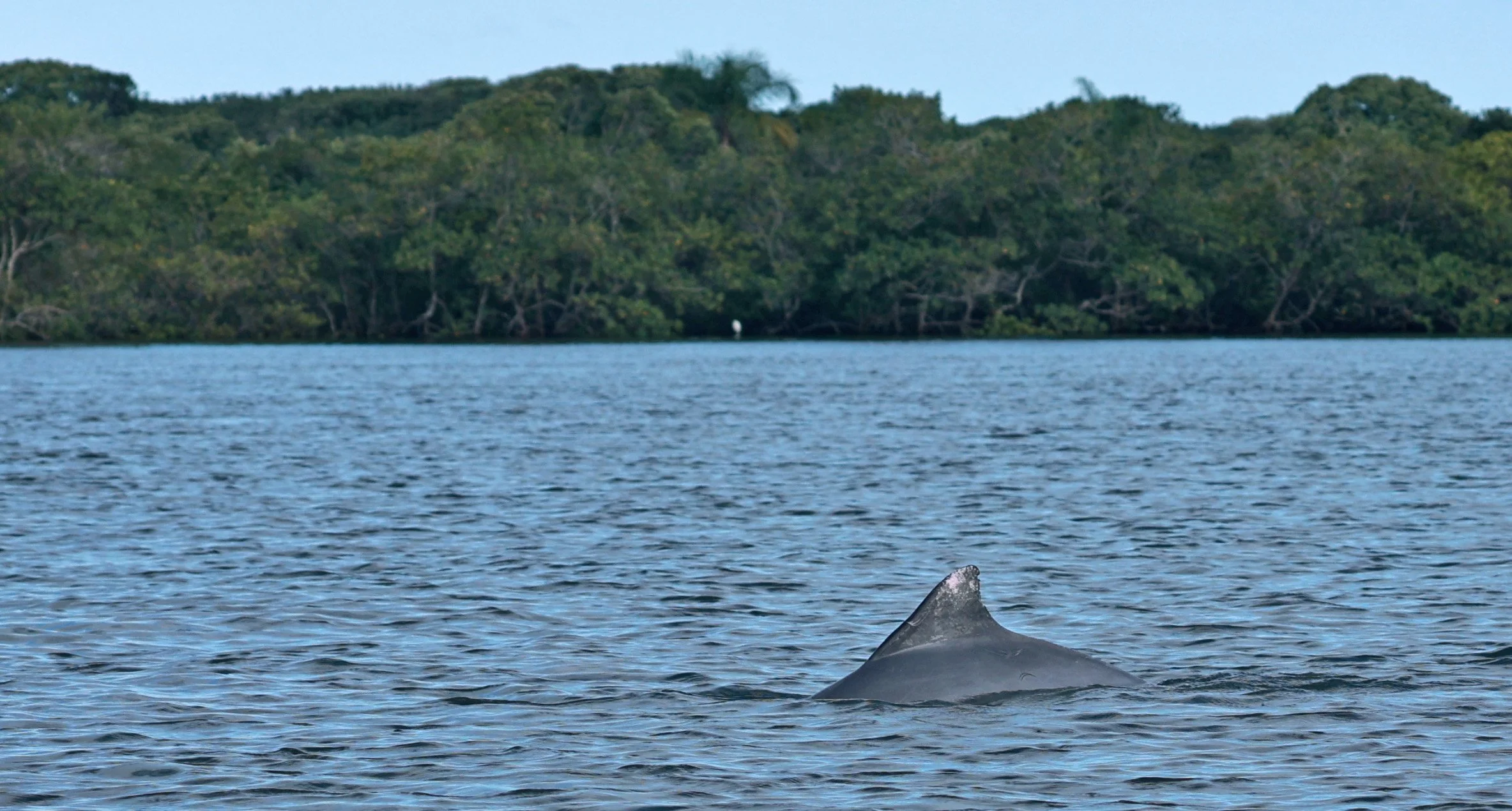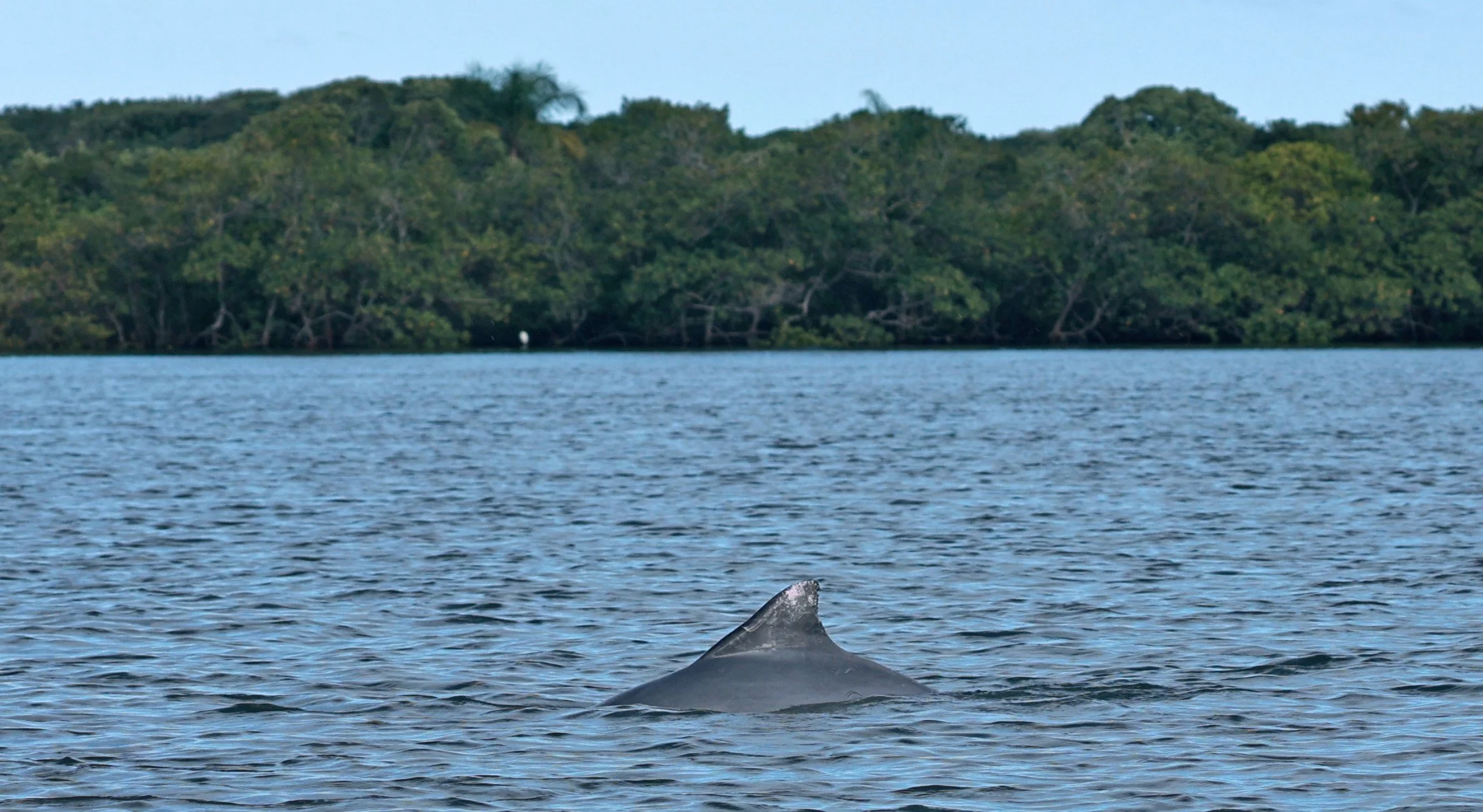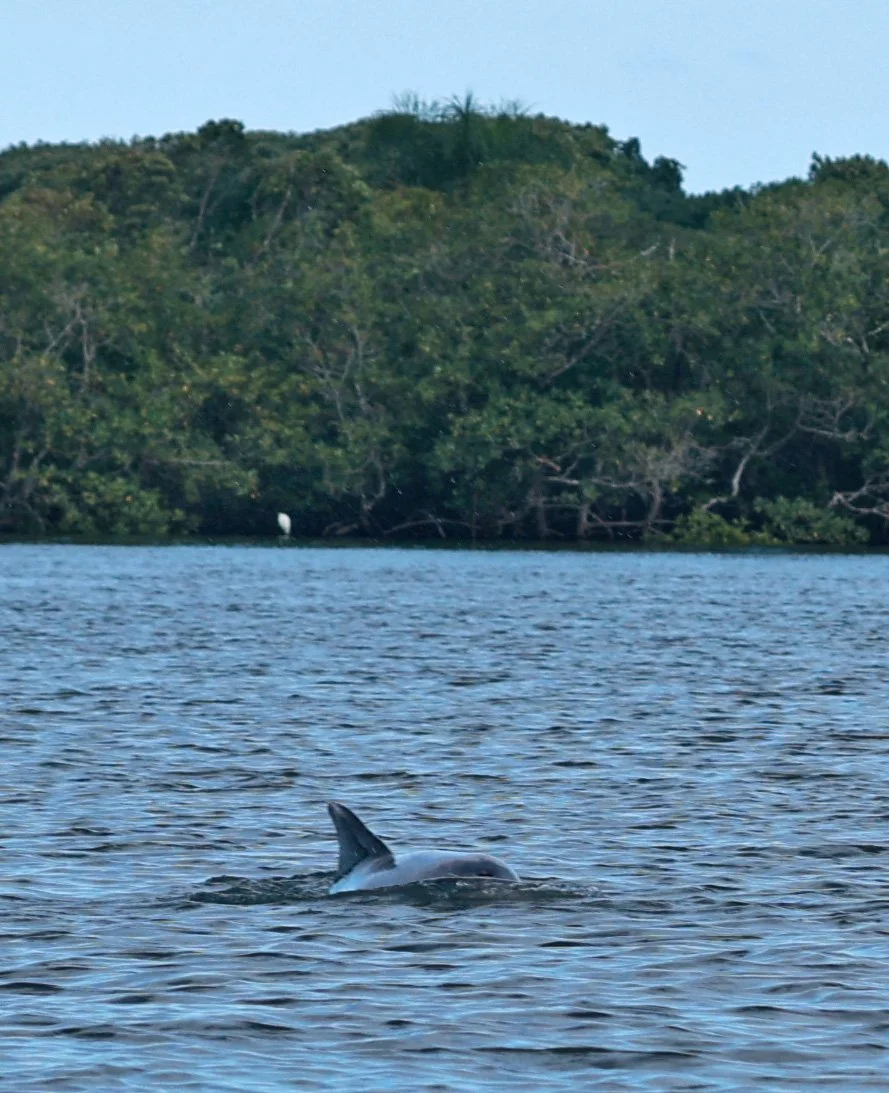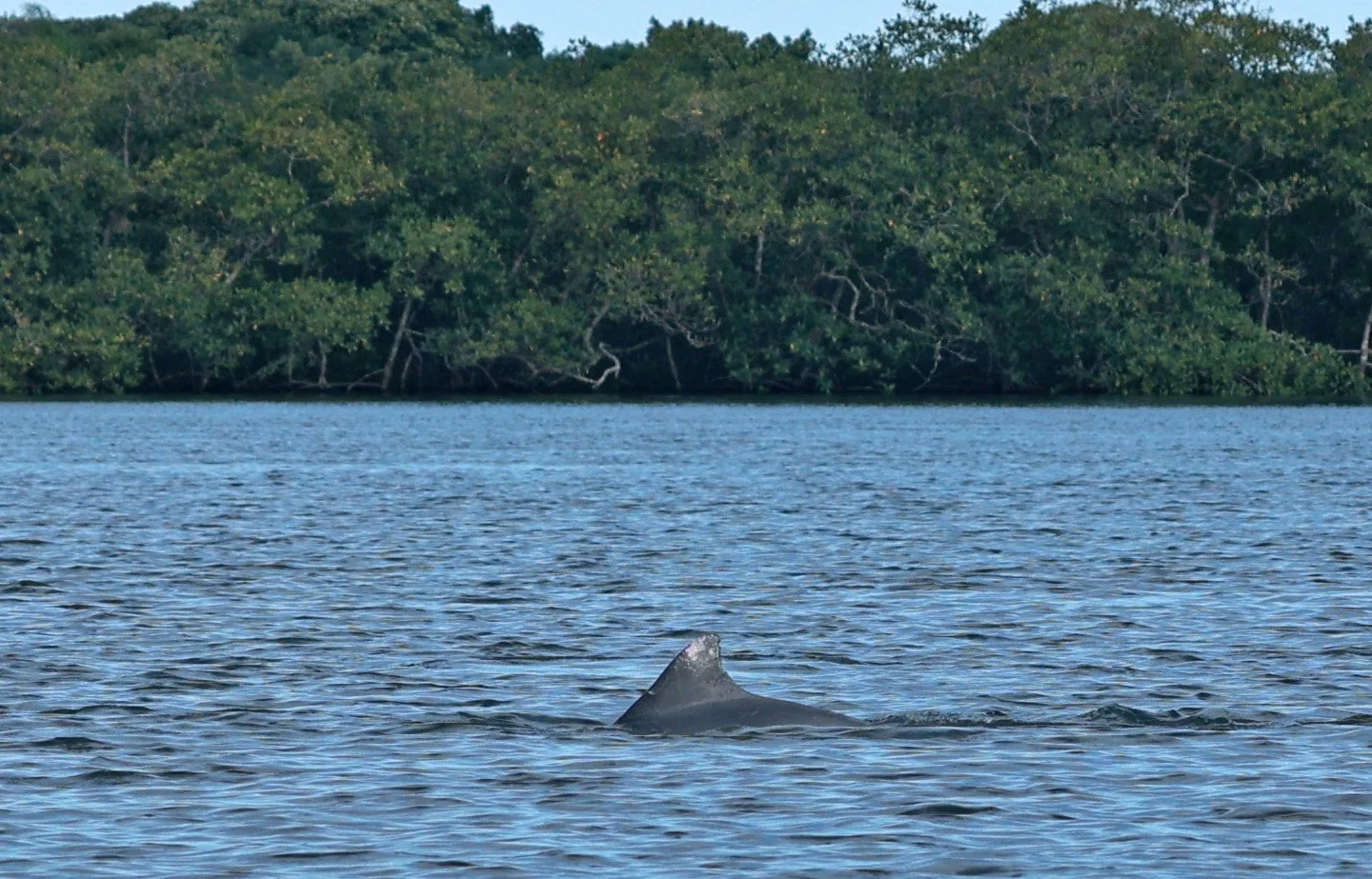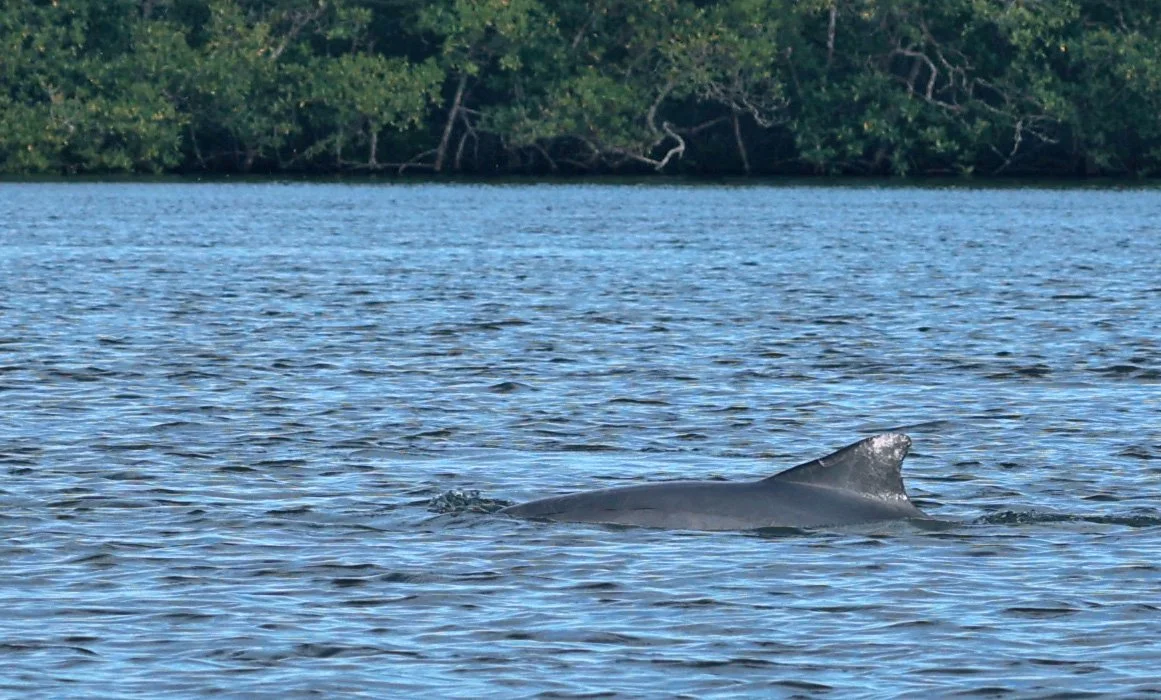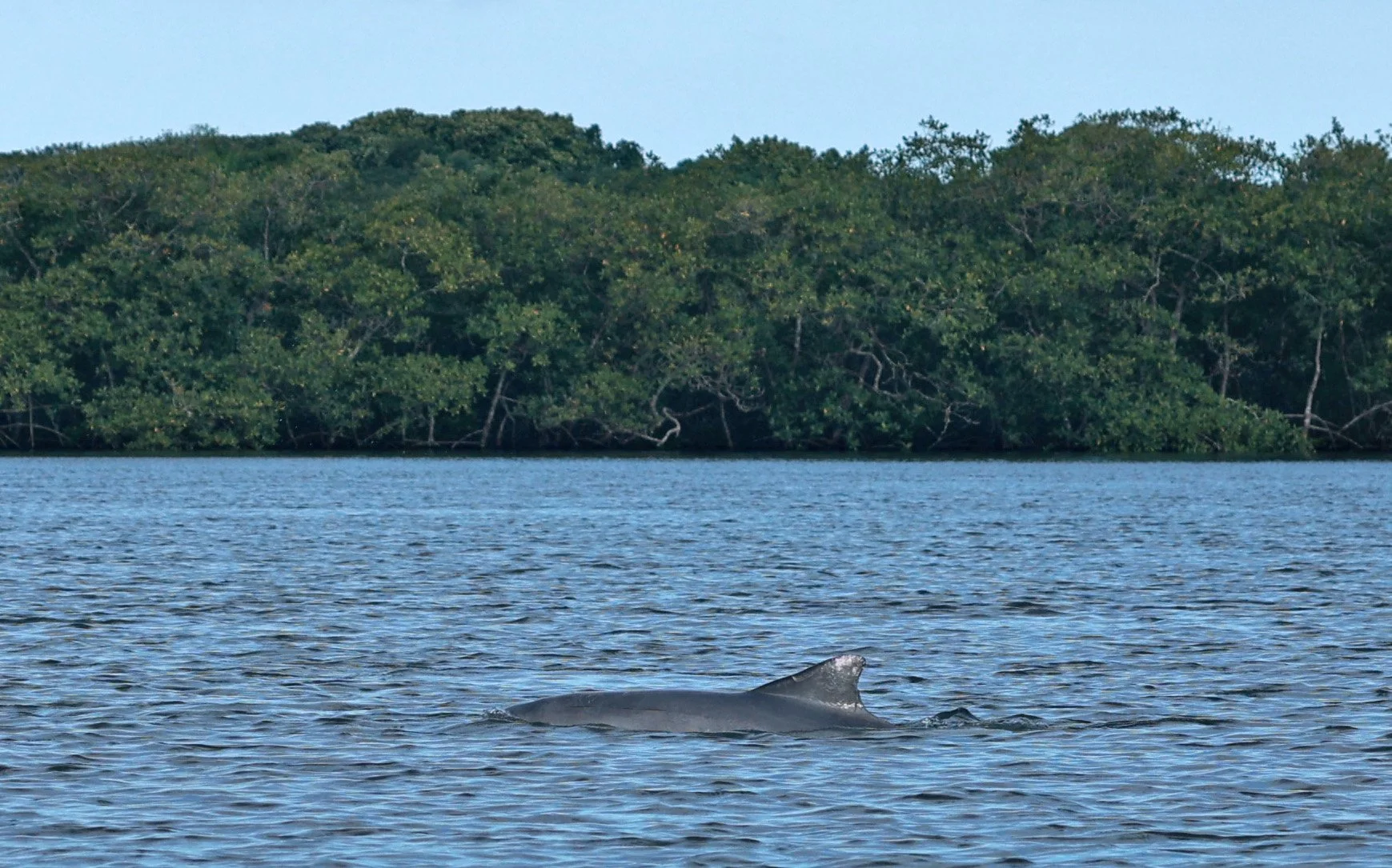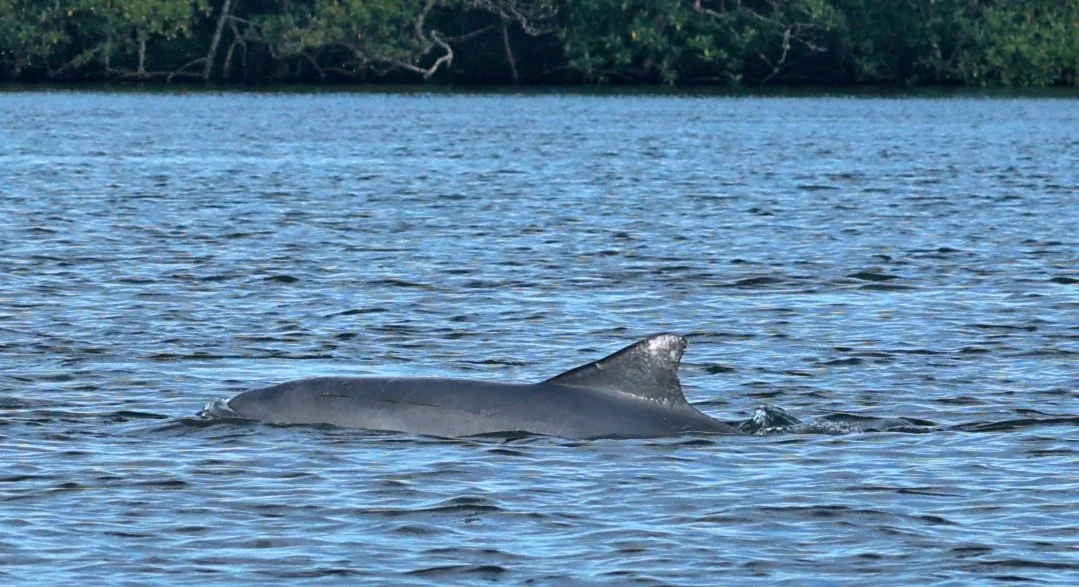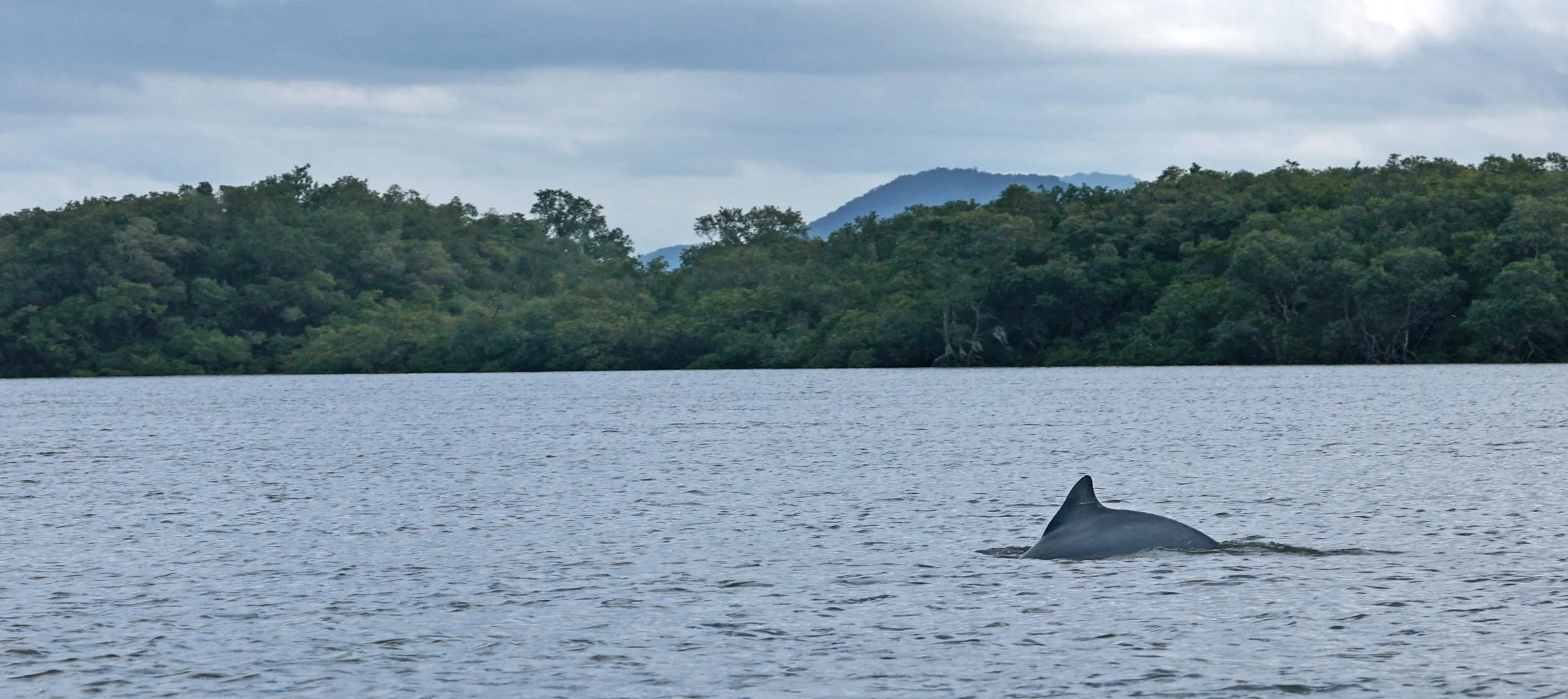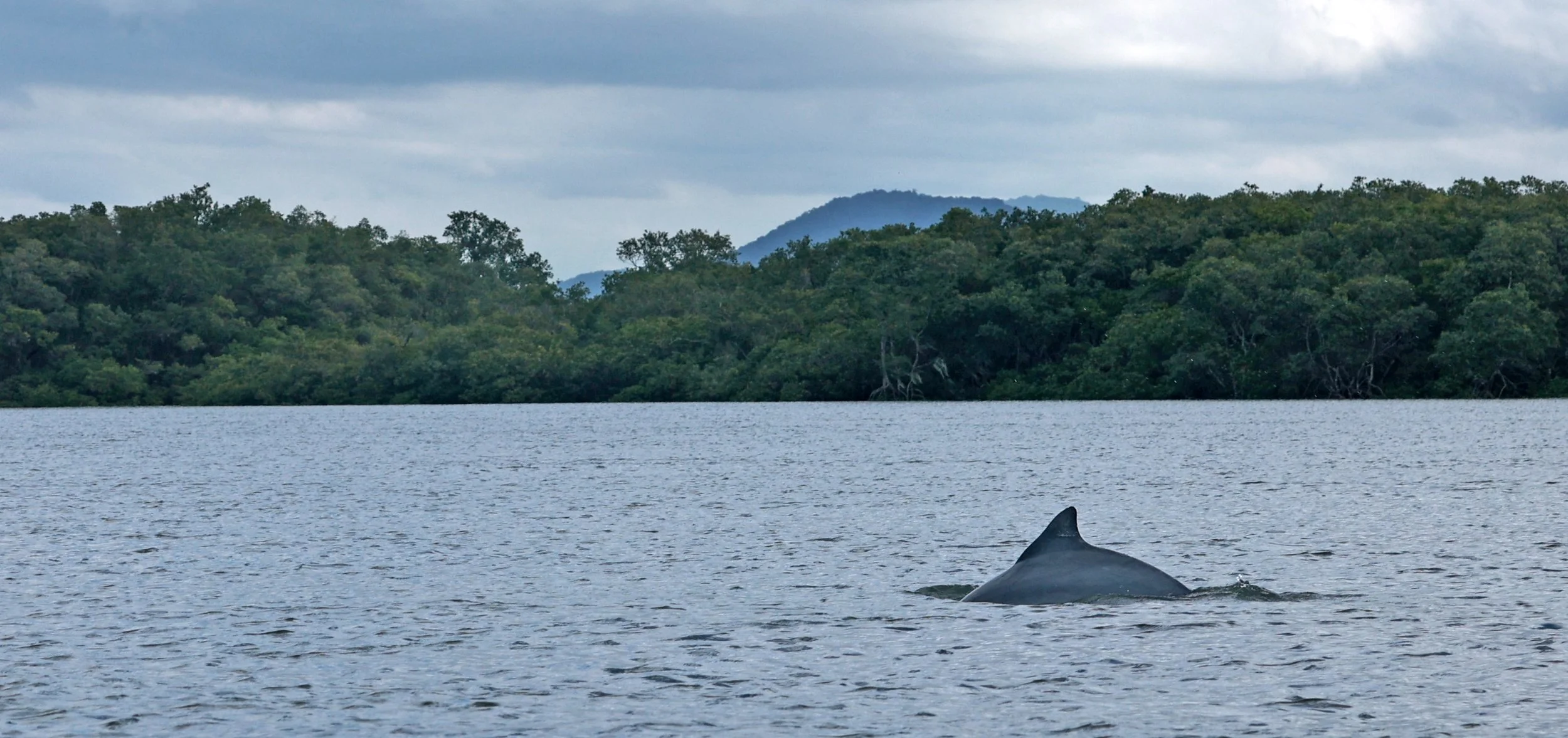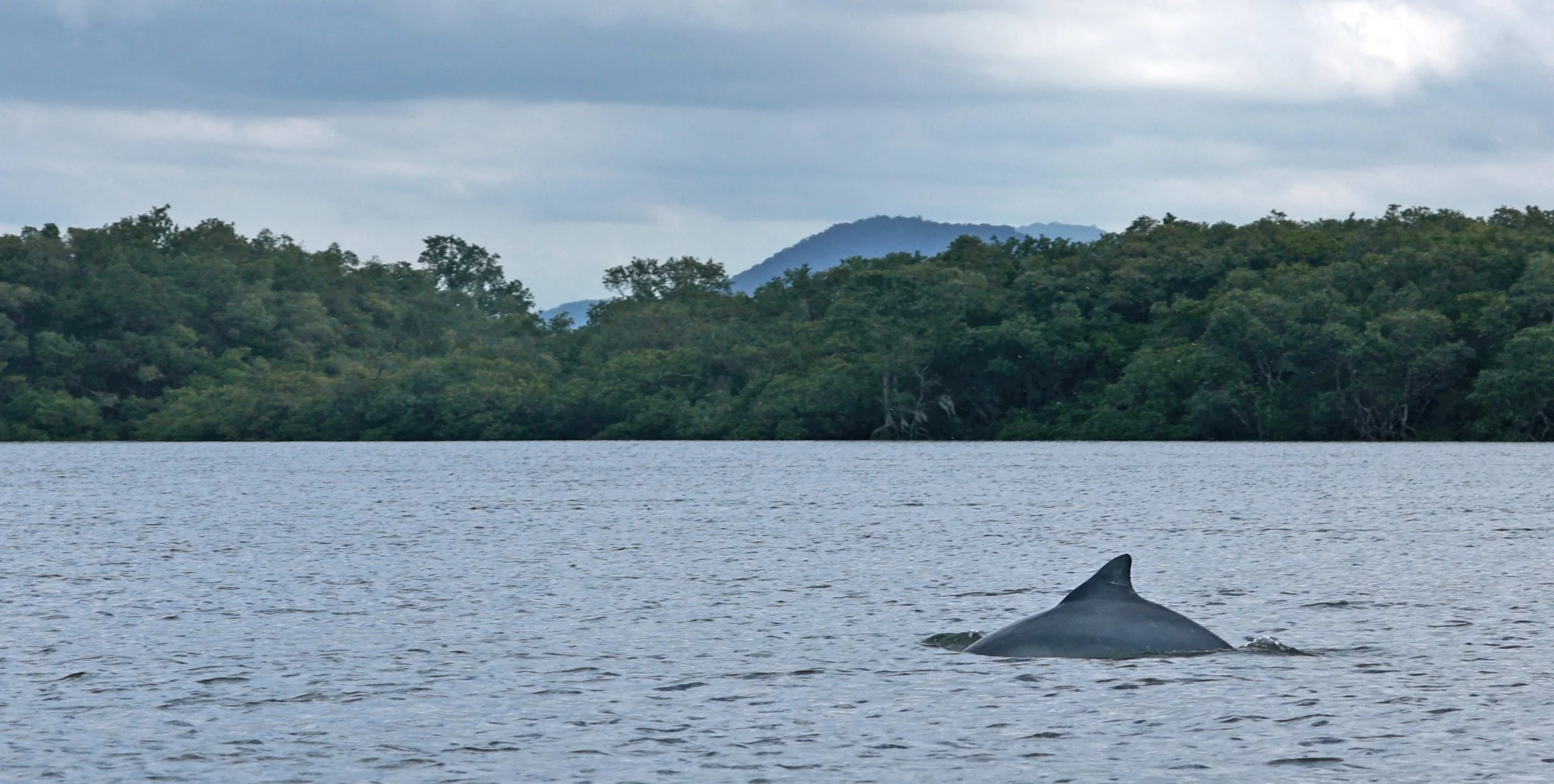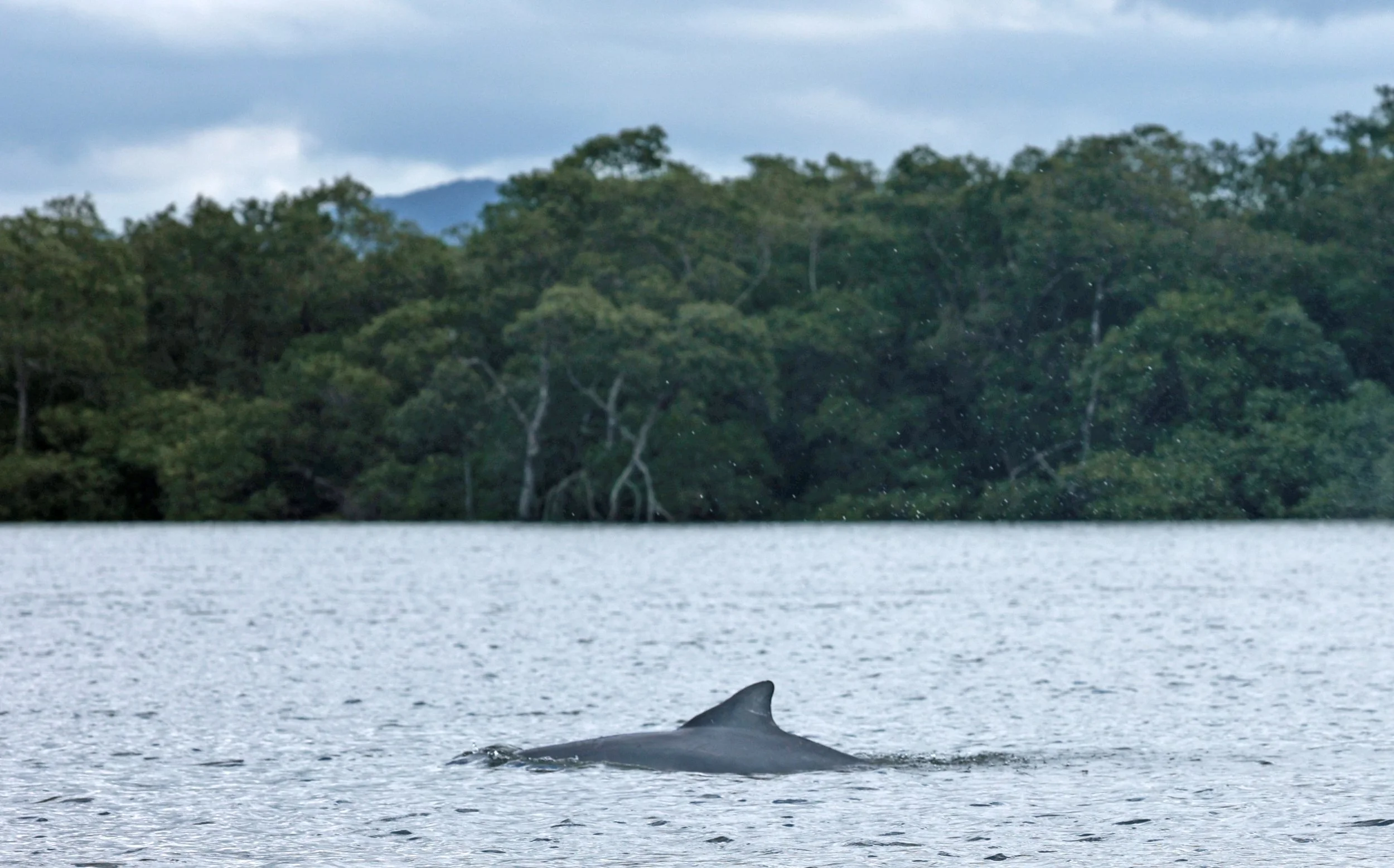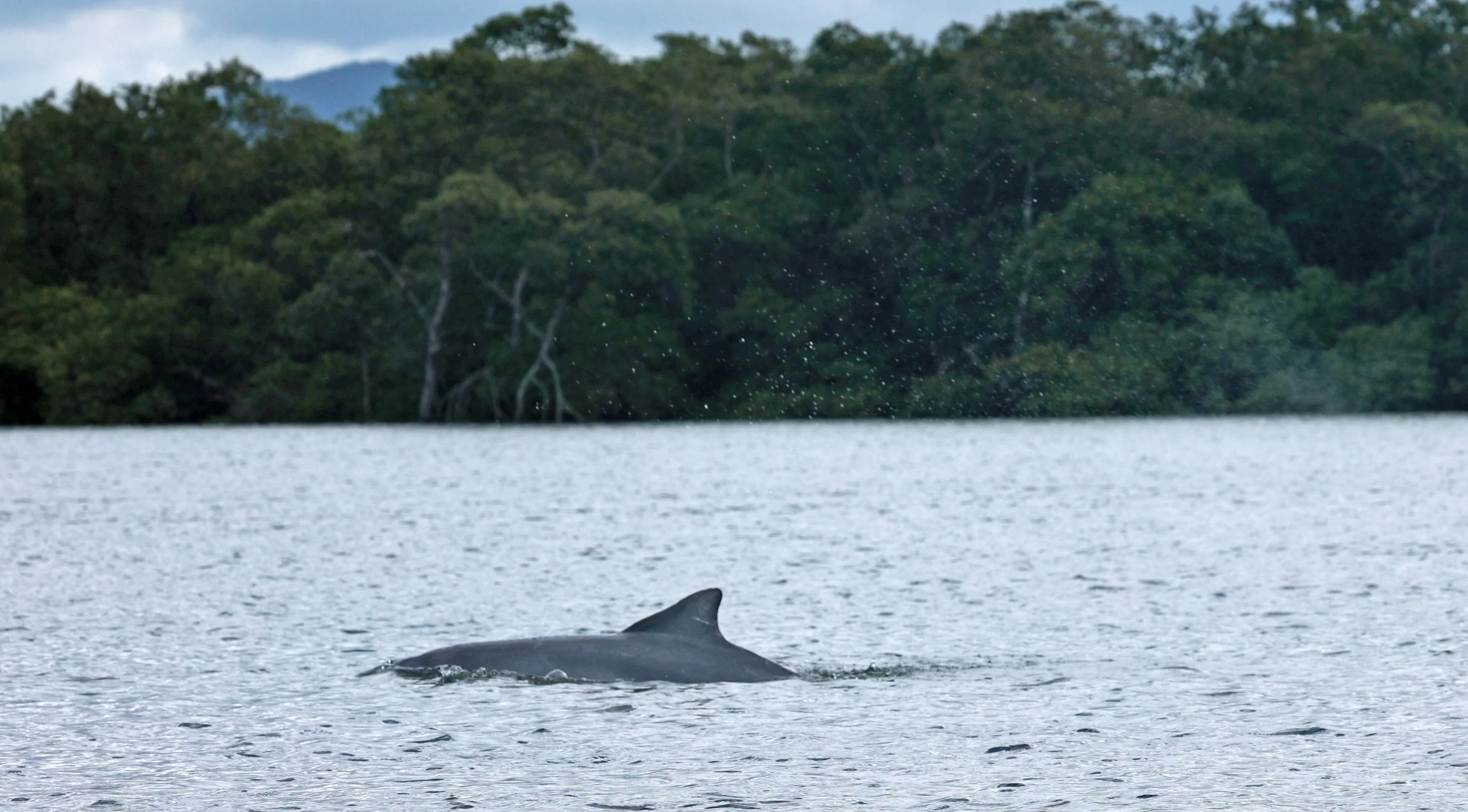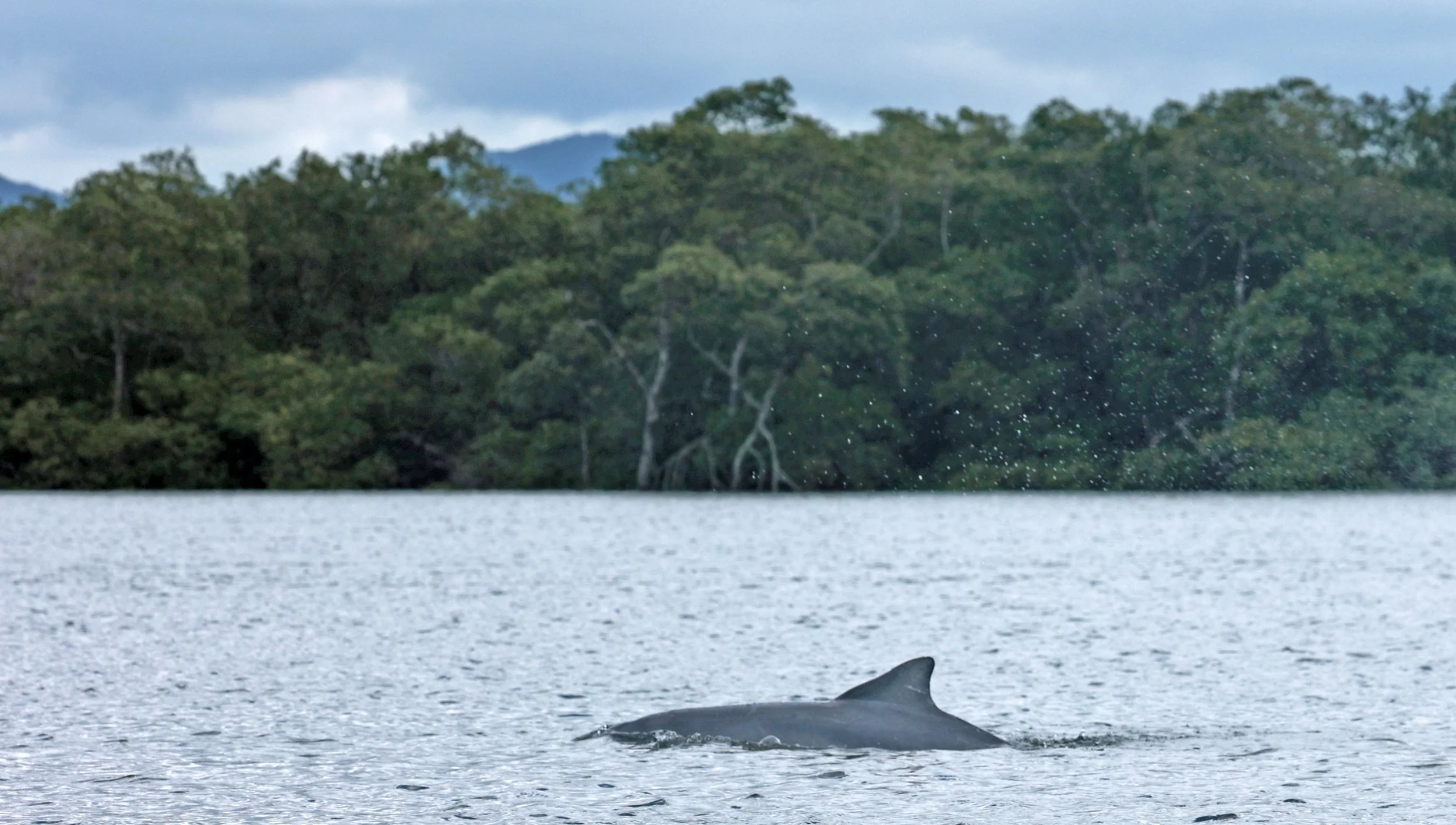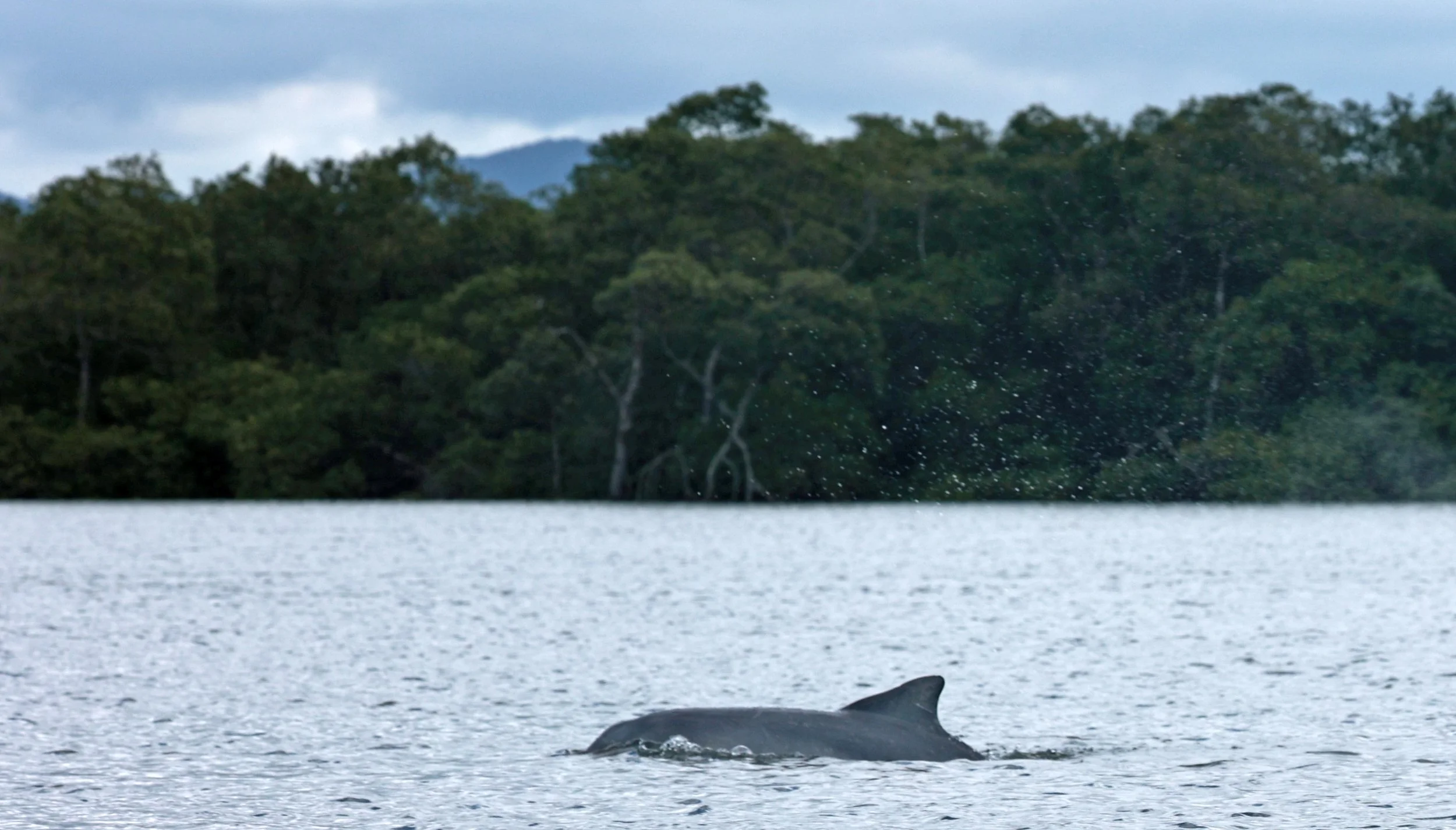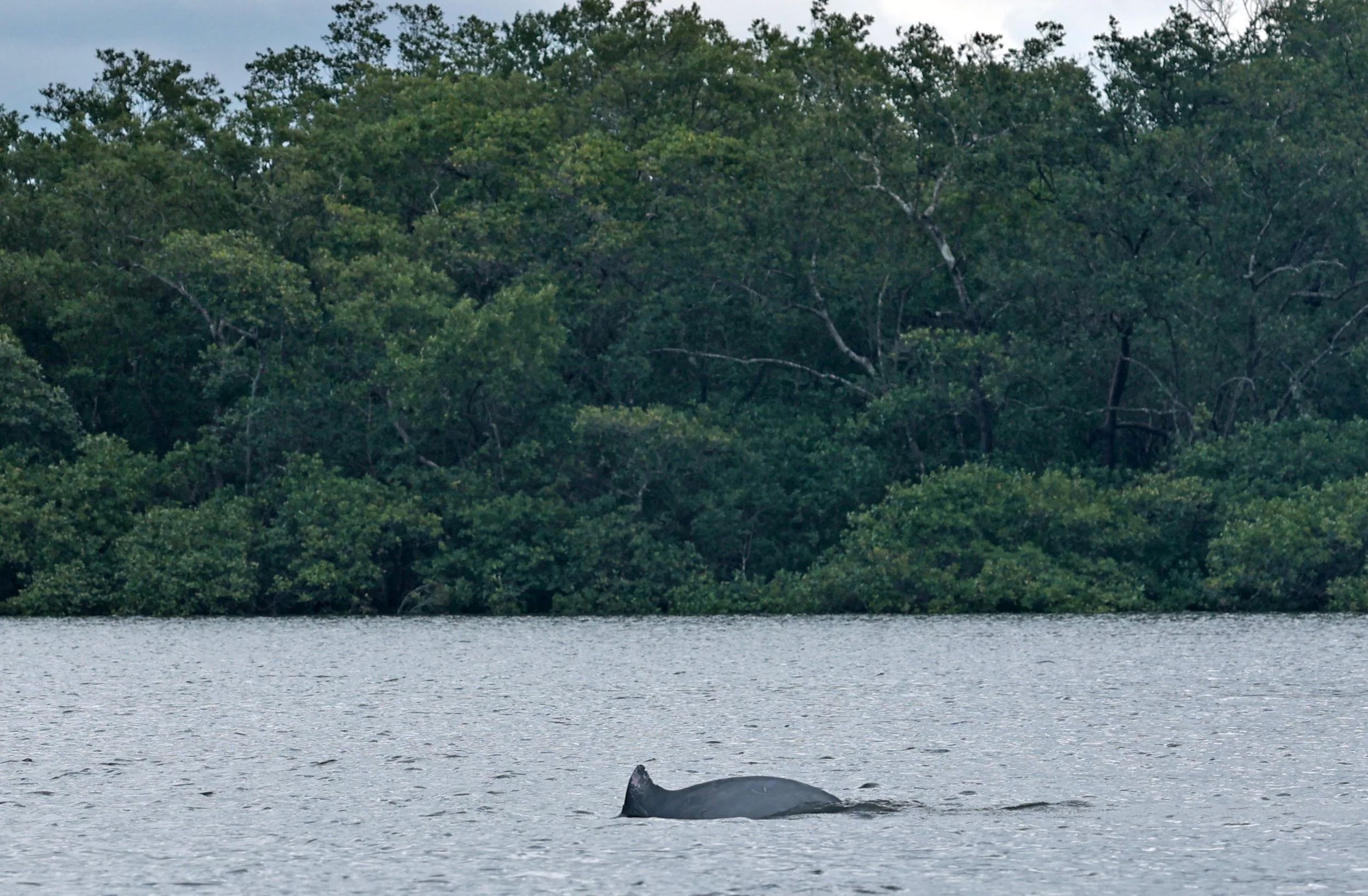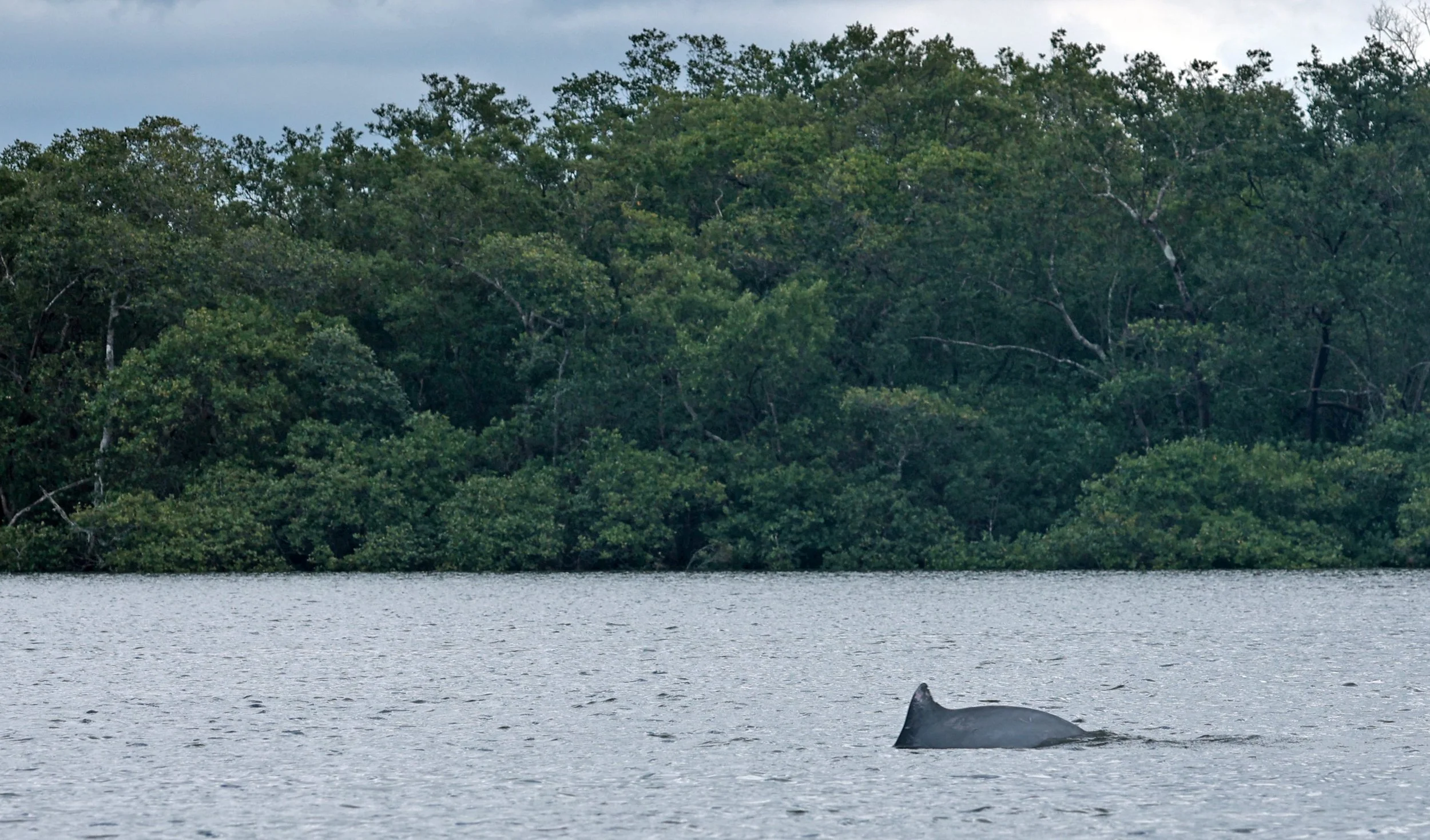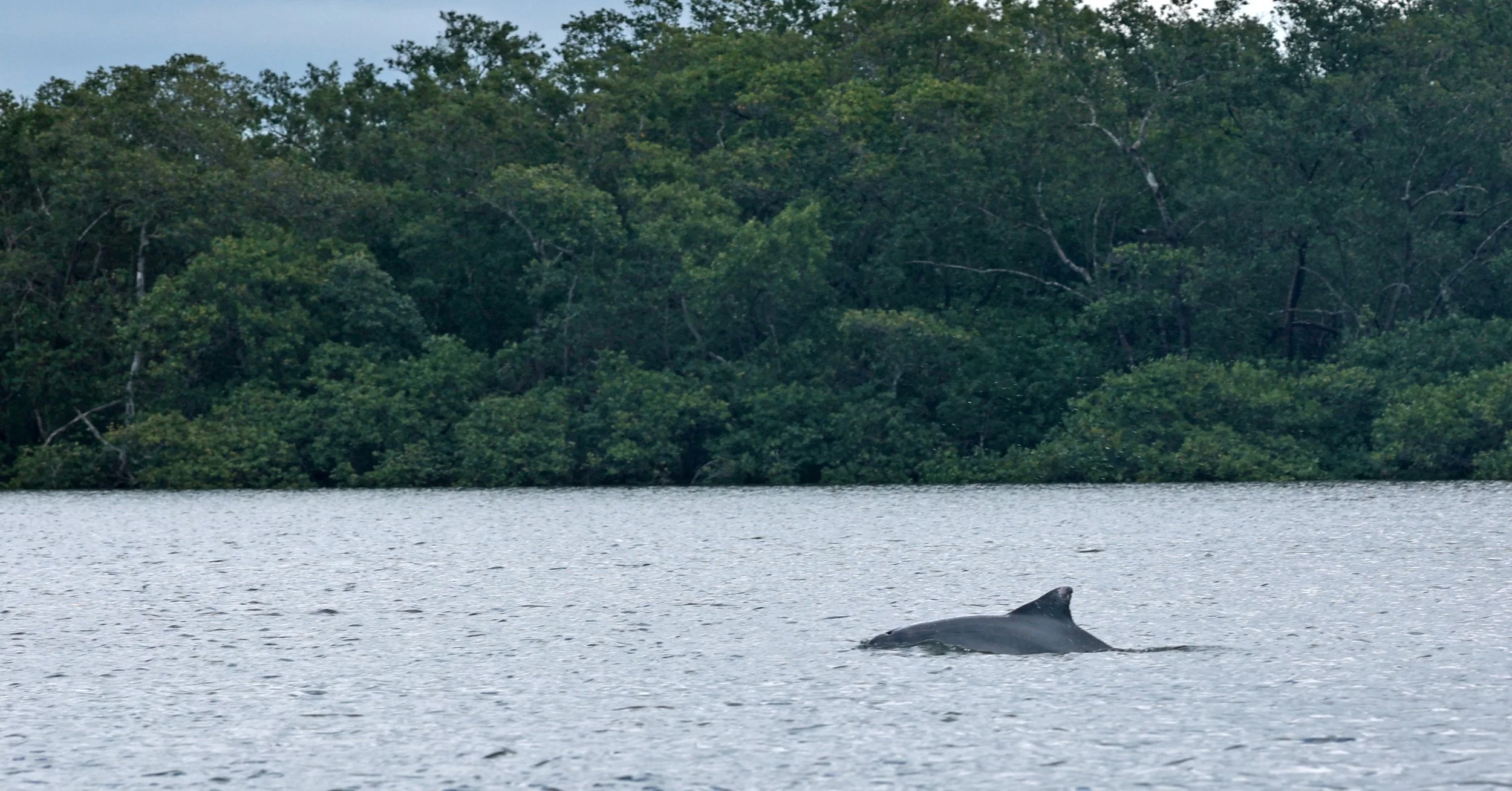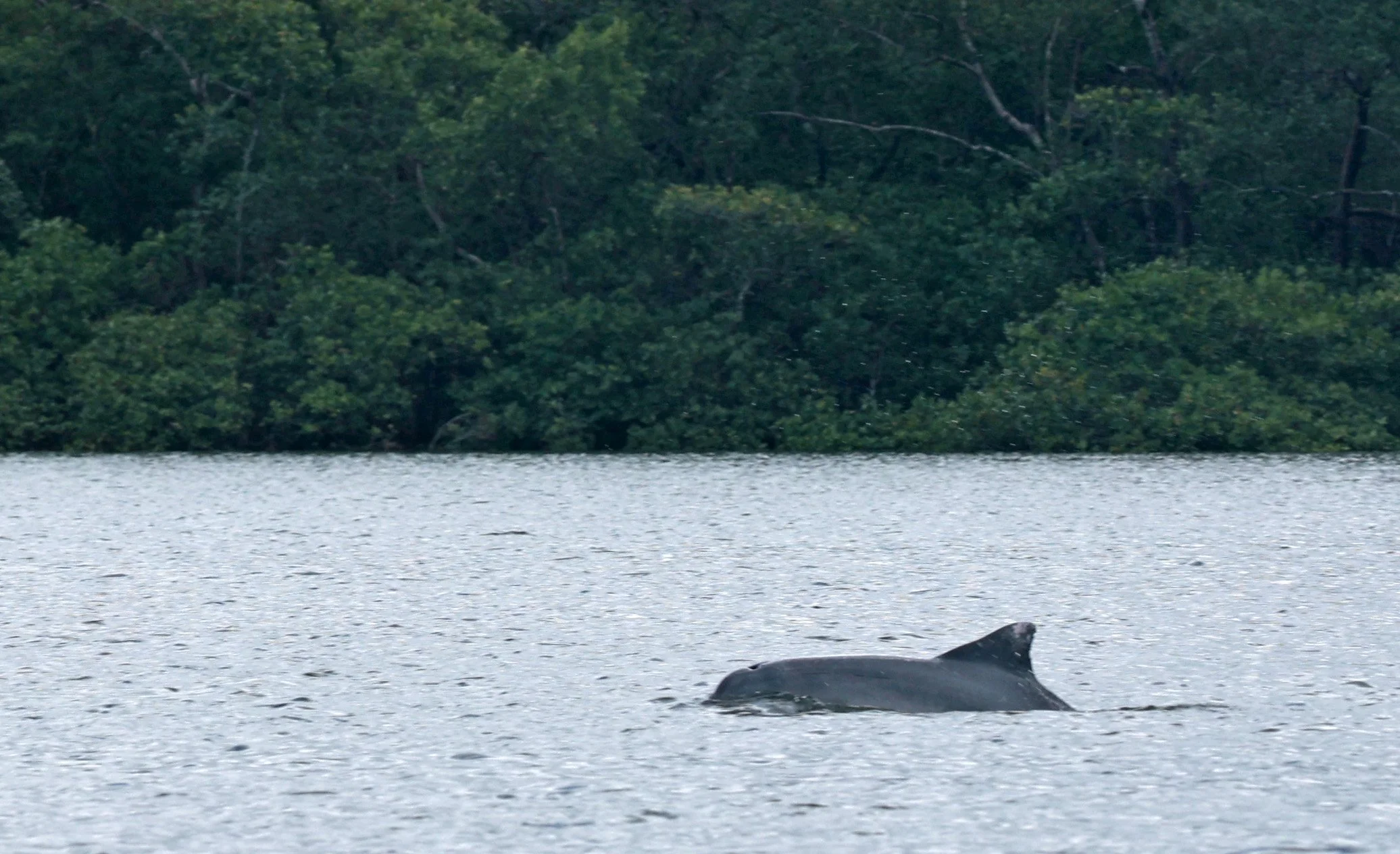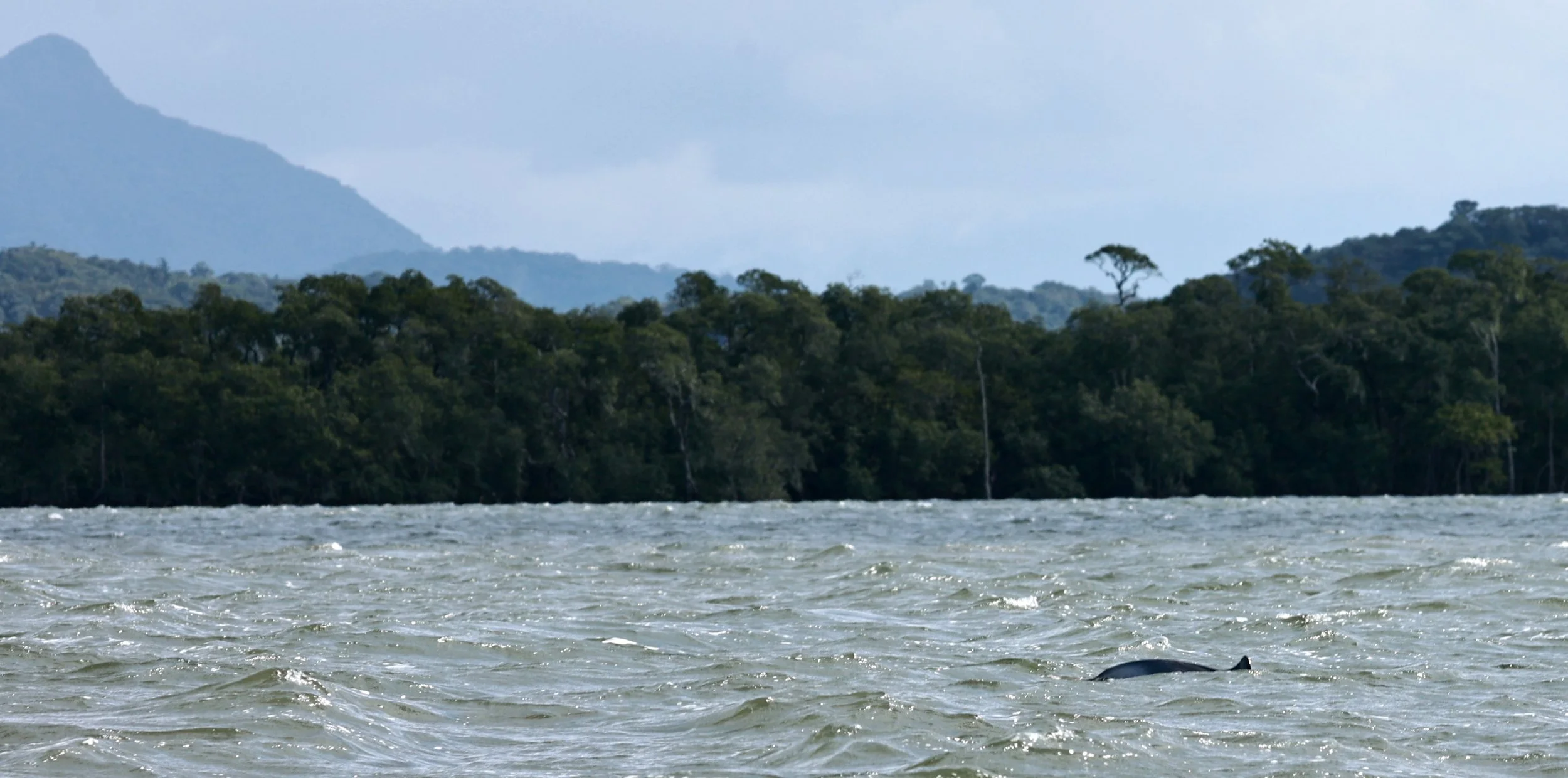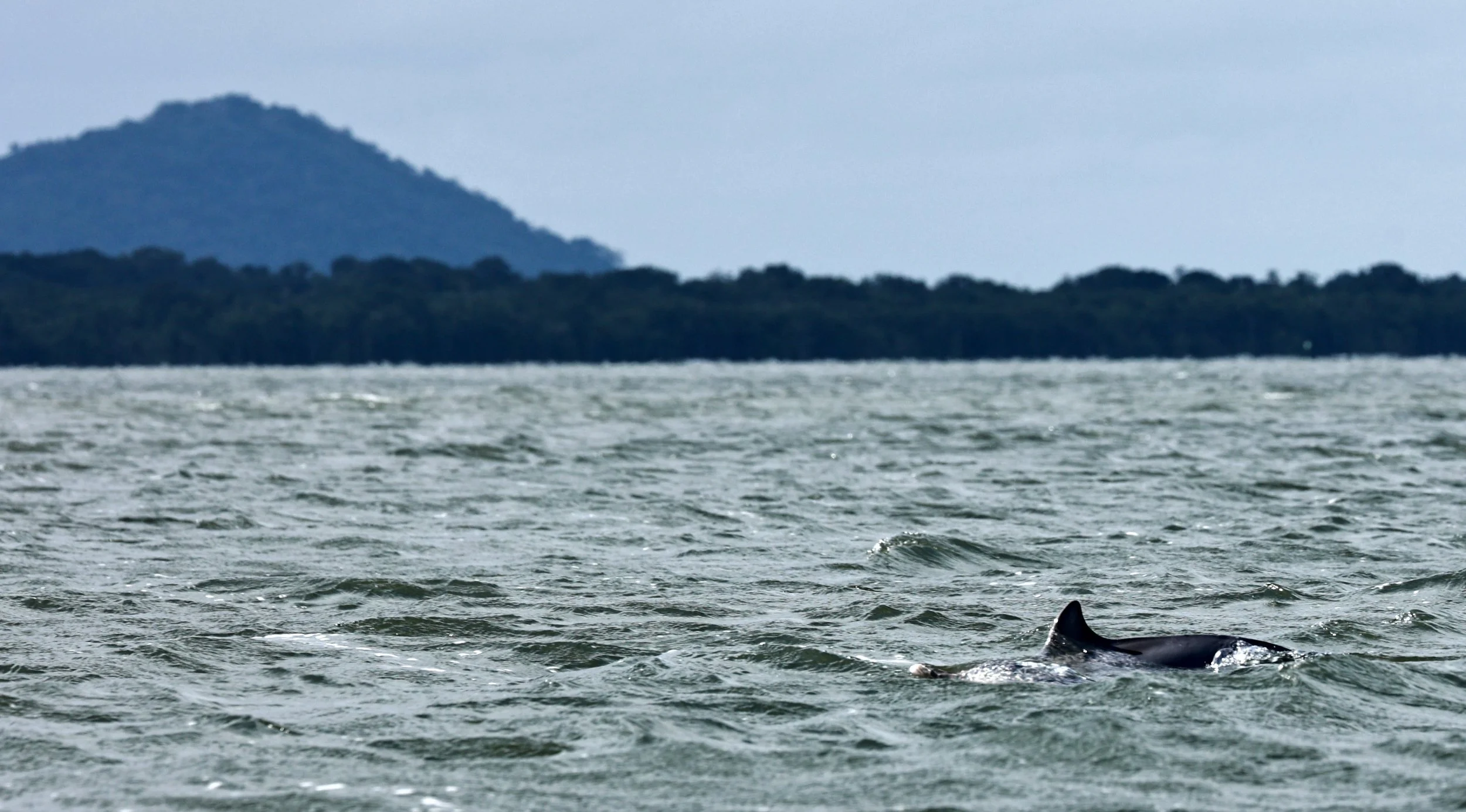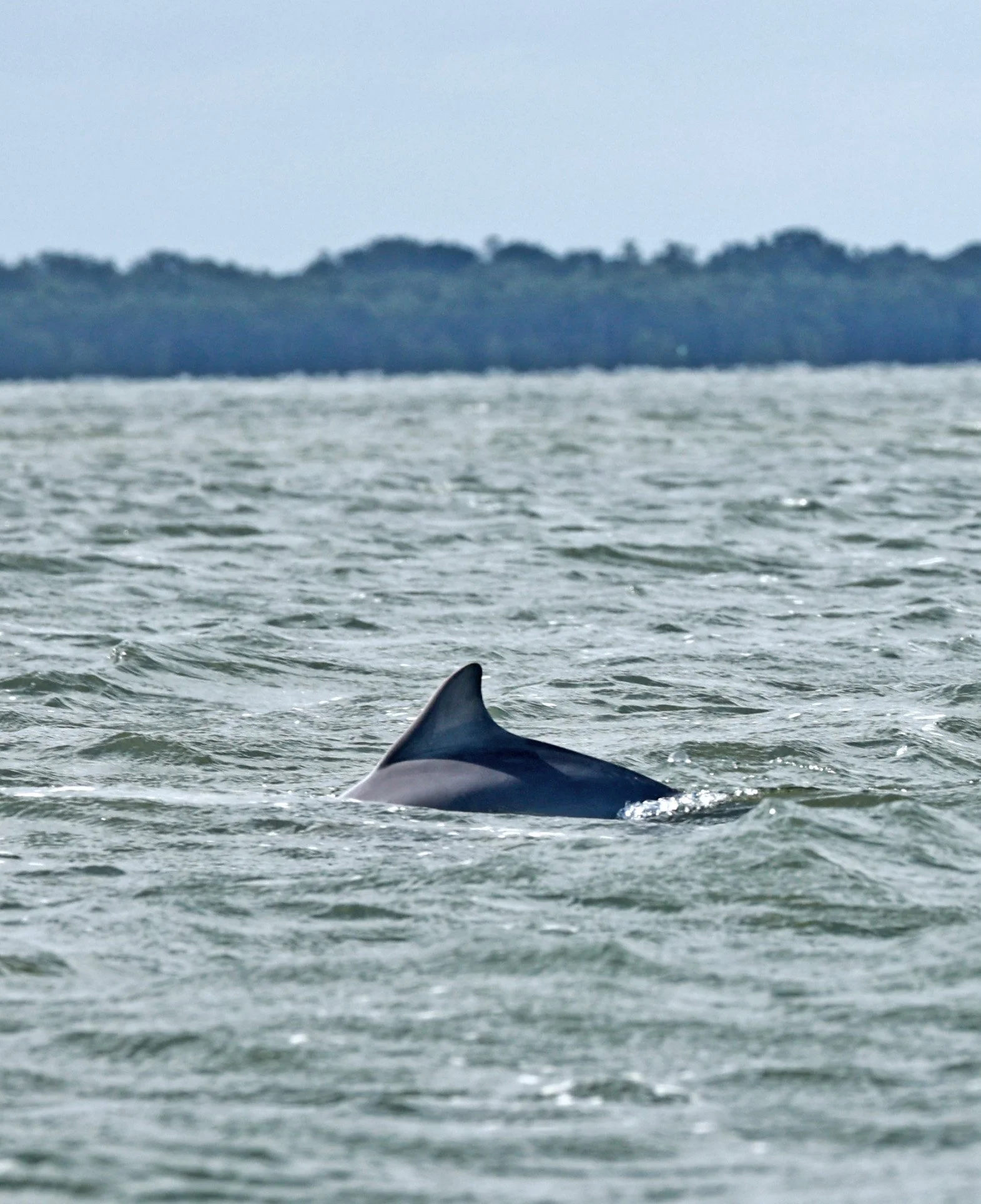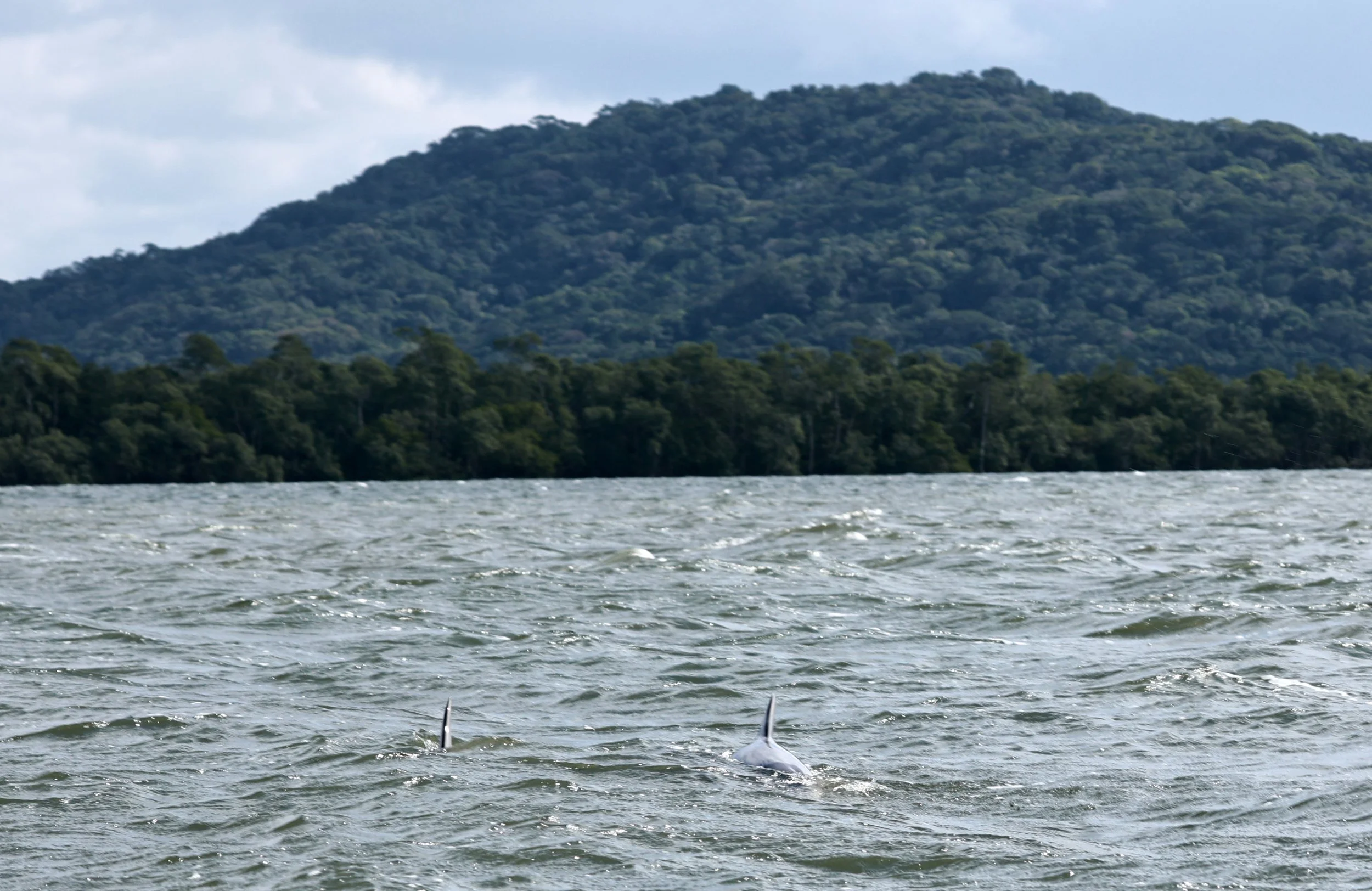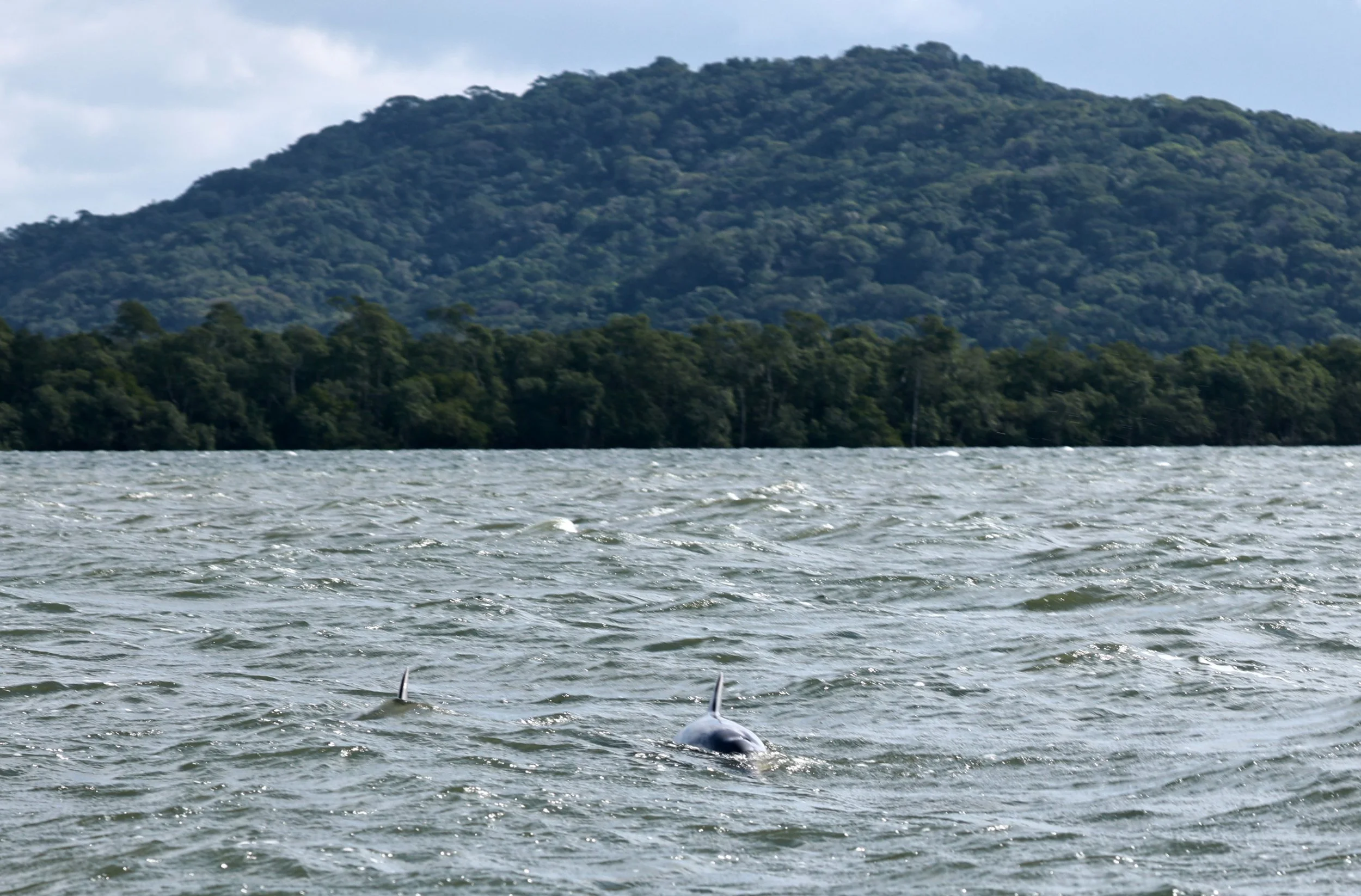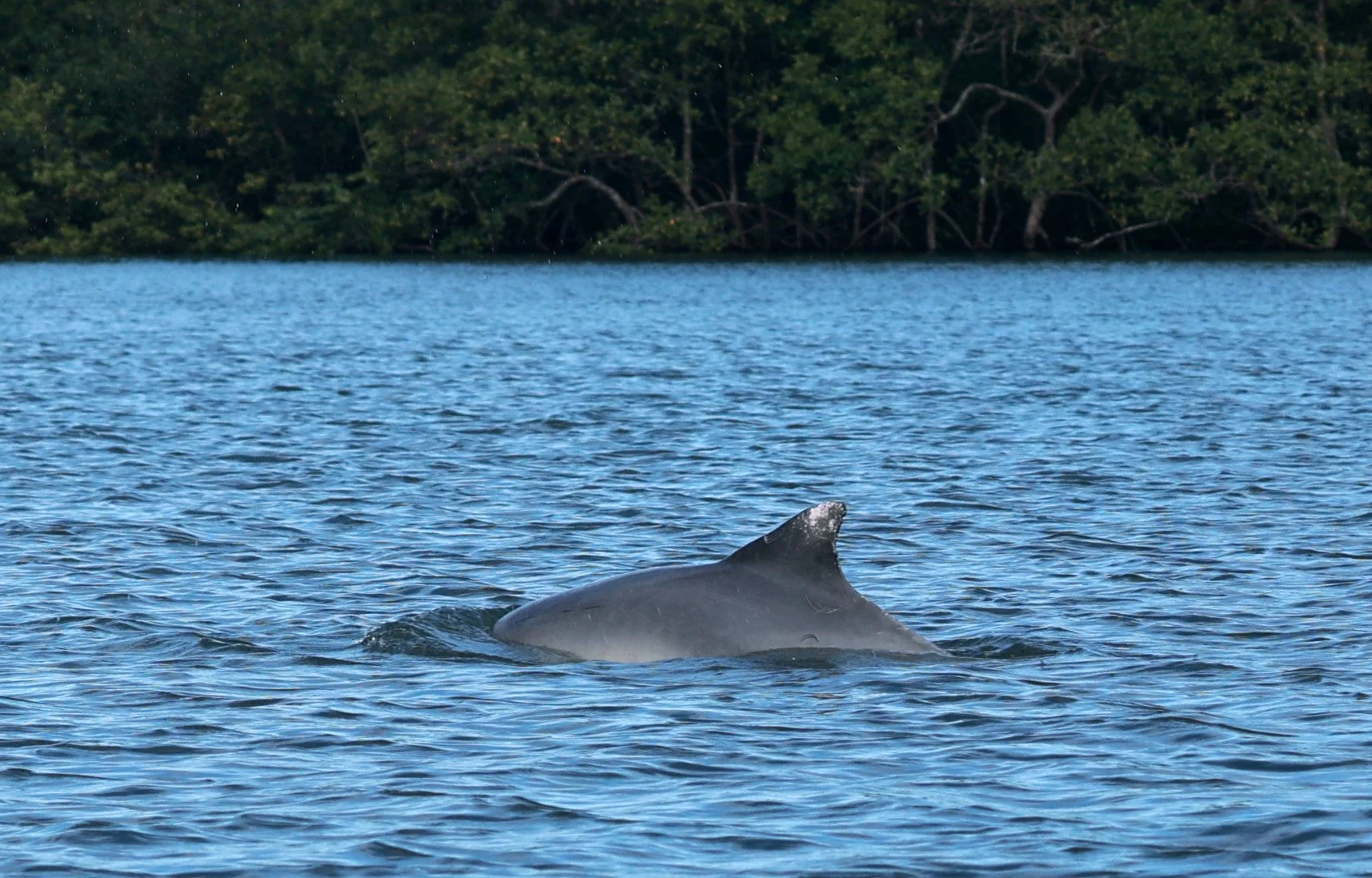
Guiana Dolphin (Sotalia guianensis)
Guiana Dolphin (Sotalia guianensis)
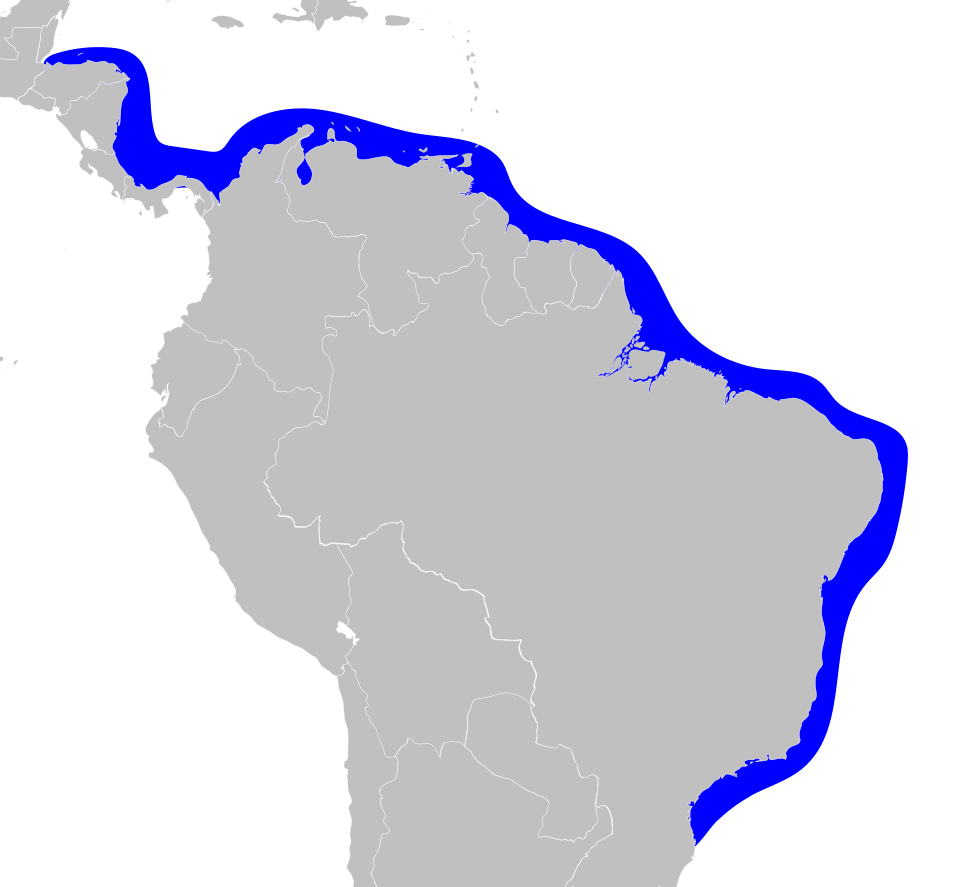
Classification
The Guiana Dolphin (Sotalia guianensis), also known as the Estuarine Dolphin or Costero, is a small coastal dolphin belonging to the family Delphinidae, the oceanic dolphin family. Its scientific classification is: Kingdom Animalia, Phylum Chordata, Class Mammalia, Order Cetacea, Family Delphinidae, Genus Sotalia, and Species S. guianensis. For many years it was considered the same species as the freshwater Tucuxi (Sotalia fluviatilis), but genetic and anatomical studies confirmed that the Guiana Dolphin is a distinct marine and estuarine species. [en.wikipedia.org]
The Guiana Dolphin is one of the most important coastal cetaceans of tropical South America. Because it spends much of its life in shallow coastal waters and estuaries, it has become one of the most studied dolphin species in the region and is considered an indicator of coastal ecosystem health. [en.wikipedia.org], [iwc.int]
General Description
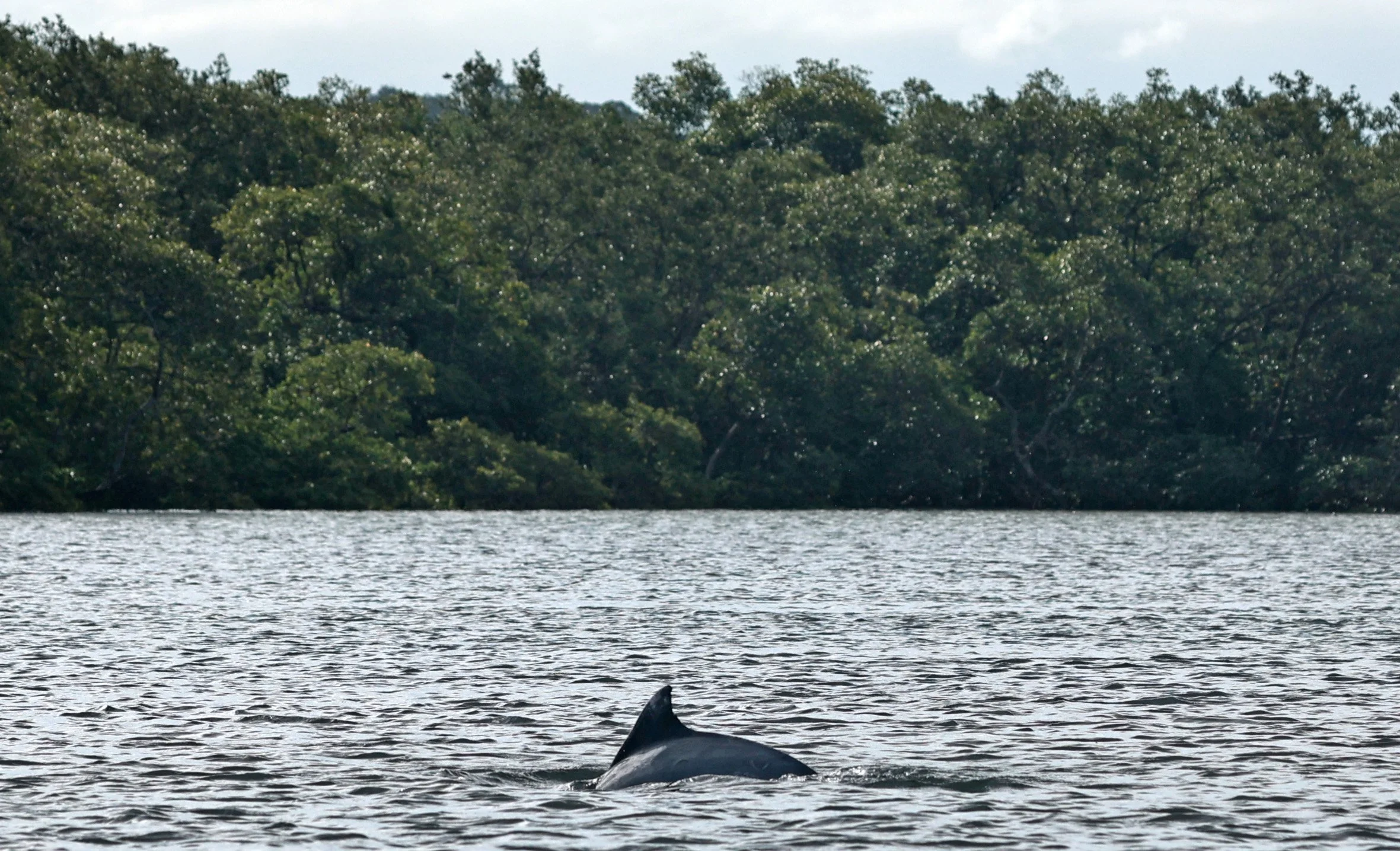
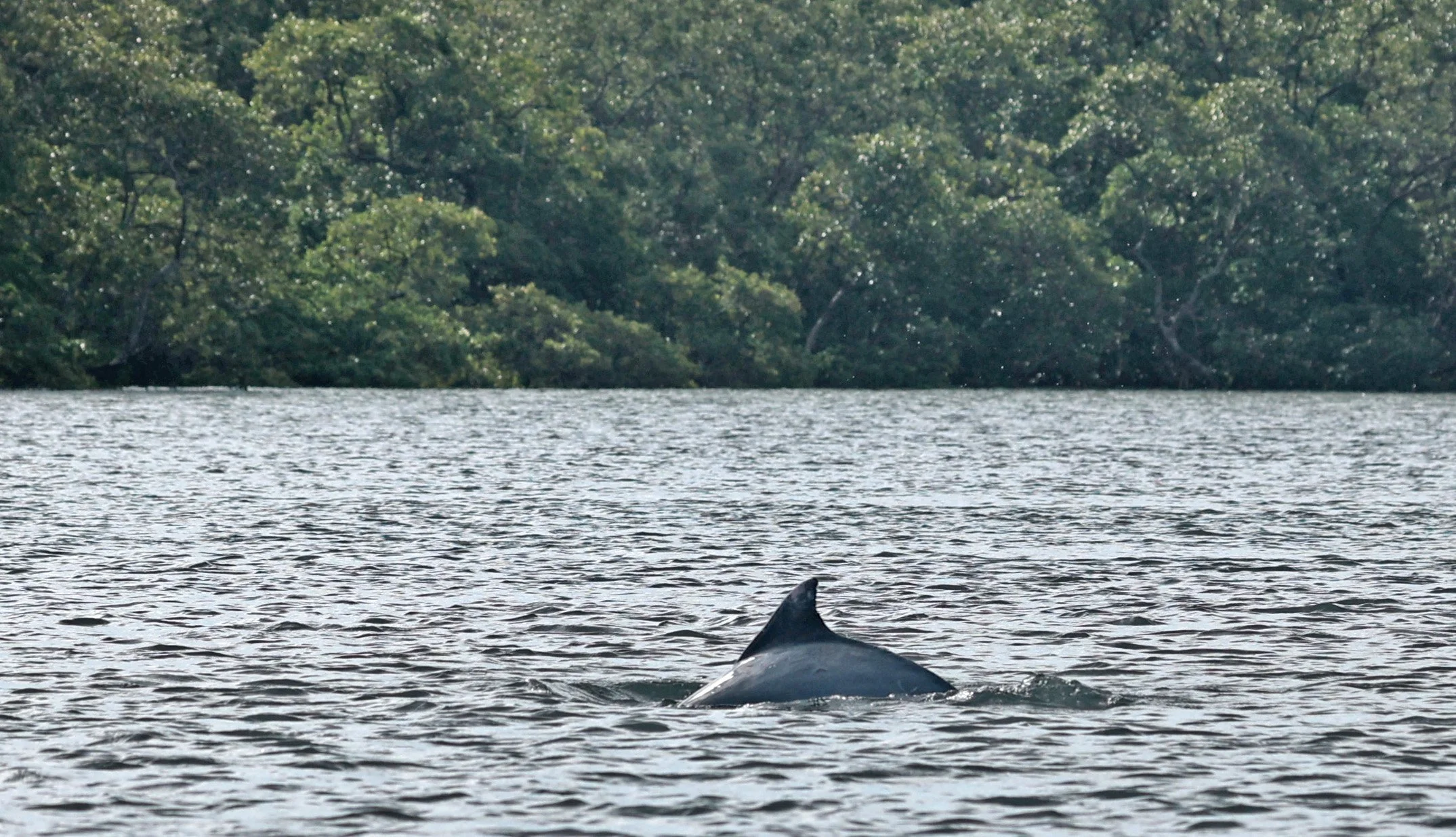
The Guiana Dolphin is a relatively small dolphin, reaching a maximum length of about 2.1 metres and weighing up to 121 kilograms. It has a streamlined body with a well-defined beak, a triangular dorsal fin that is often slightly curved, and a broad tail fluke used for propulsion. Colouration is generally light to bluish-grey along the back and sides, fading to a lighter grey underside. Its appearance is often compared to that of the Bottlenose Dolphin, although it is noticeably smaller. [en.wikipedia.org]
This species lives in small social groups that typically consist of a few individuals, although larger aggregations may occasionally occur in productive feeding areas. Guiana Dolphins are active swimmers and frequently engage in behaviours such as leaping, spy-hopping, and social interactions. Their diet consists primarily of fish, squid, and crustaceans, which they locate using sophisticated echolocation. Recent studies have even demonstrated that the species possesses electroreception, allowing it to detect weak electrical signals produced by prey. [en.wikipedia.org]
As a predator near the top of many coastal food webs, the Guiana Dolphin plays an important ecological role by helping regulate populations of fish and other marine organisms. Its close association with shallow coastal habitats also makes it particularly vulnerable to human activities occurring near shore. [iwc.int], [lajamjournal.org]
Distribution
The Guiana Dolphin inhabits warm, shallow coastal waters of the western Atlantic Ocean and Caribbean region. Its range extends from Honduras and parts of Central America south to southern Brazil, including the coasts of Venezuela, Guyana, Suriname, French Guiana, and numerous other countries along the Atlantic coast of South America. The species is especially common in bays, estuaries, river mouths, lagoons, and nearshore coastal environments. [lajamjournal.org], [en.wikipedia.org]
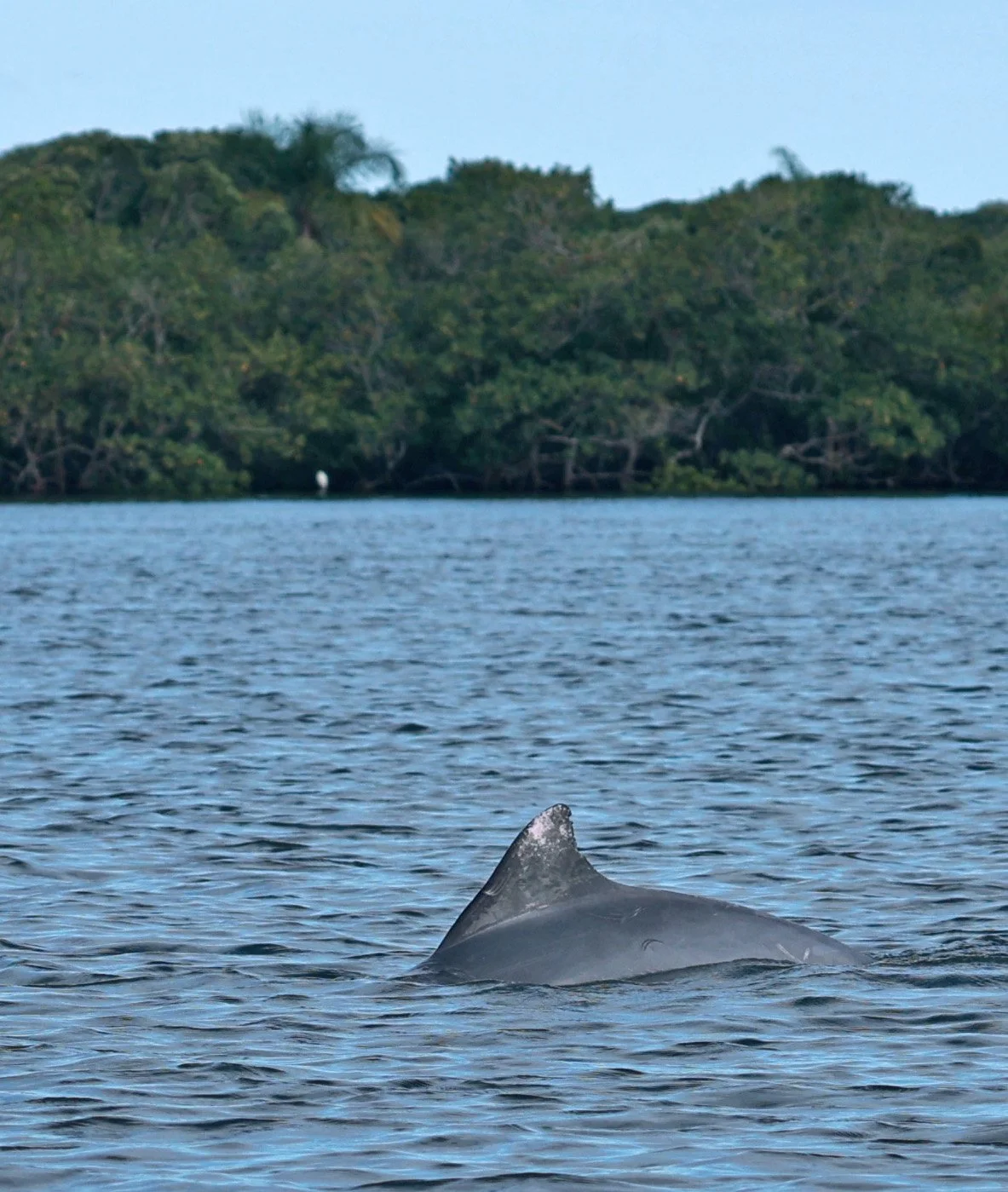
Unlike many oceanic dolphins, the Guiana Dolphin rarely ventures far offshore. It shows a strong preference for protected coastal habitats and is often found in estuaries and brackish waters where freshwater mixes with seawater. The species also occurs in some freshwater systems connected to the coast, including parts of the Orinoco River and Lake Maracaibo. These productive habitats provide abundant feeding opportunities but also place the dolphins in close proximity to human populations and industrial activities. [lajamjournal.org], [lajamjournal.org]
Interesting Facts
One of the most remarkable aspects of the Guiana Dolphin is its taxonomic history. Although scientists originally described it as a separate species in the nineteenth century, it was later grouped with the freshwater Tucuxi. Only modern genetic and anatomical research clearly demonstrated that the two are distinct species, leading to widespread scientific acceptance of Sotalia guianensis as a separate dolphin species. [en.wikipedia.org]
The Guiana Dolphin is highly adapted to life in murky estuarine waters. Its echolocation system allows it to navigate and locate prey even in environments with poor visibility. Researchers have also discovered evidence that the species possesses electroreceptive capabilities, making it one of the few known mammals able to detect weak electrical fields generated by nearby prey. [en.wikipedia.org]
Another interesting feature of the species is its strong site fidelity. Many populations spend their entire lives within relatively small coastal regions, returning repeatedly to the same bays, estuaries, and feeding grounds. While this behaviour helps them exploit familiar habitats efficiently, it also makes them more vulnerable to habitat degradation and local environmental changes. [iwc.int], [lajamjournal.org]
Conservation Status and Threats
The International Union for Conservation of Nature (IUCN) currently classifies the Guiana Dolphin as Near Threatened, and the species is also listed under CITES Appendix I, reflecting concerns about its long-term survival. In 2018, the species was moved from Data Deficient to Near Threatened as evidence accumulated regarding declining populations and increasing threats throughout its range. [en.wikipedia.org], [lajamjournal.org]
The greatest threat to the Guiana Dolphin is accidental entanglement in fishing gear, particularly gillnets. Bycatch is responsible for many dolphin deaths across its range and has been identified as a major conservation concern in several countries. Other threats include habitat degradation, coastal development, pollution, heavy vessel traffic, underwater noise, industrial activities, and intentional hunting for bait or human consumption in some regions. [lajamjournal.org], [iwc.int]
Because the species inhabits coastal waters where human activities are concentrated, conservation efforts require international cooperation across its entire range. In 2024, the International Whaling Commission endorsed a Conservation Management Plan focused on improving monitoring, reducing bycatch, protecting habitat quality, and coordinating research among countries. Continued protection of estuaries, bays, coastal lagoons, and nearshore marine habitats will be essential if populations of the Guiana Dolphin are to remain healthy in the future. [iwc.int], [lajamjournal.org]
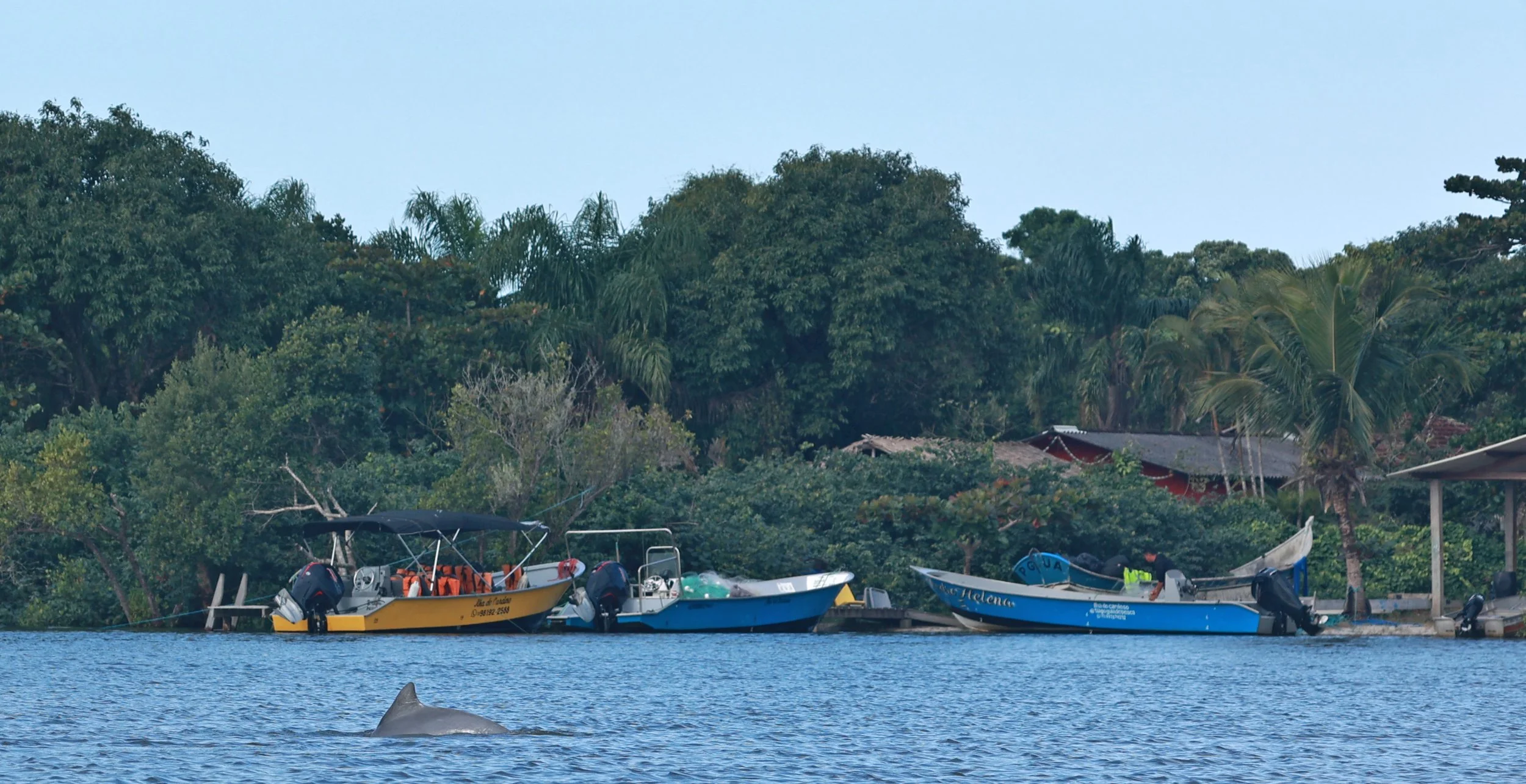
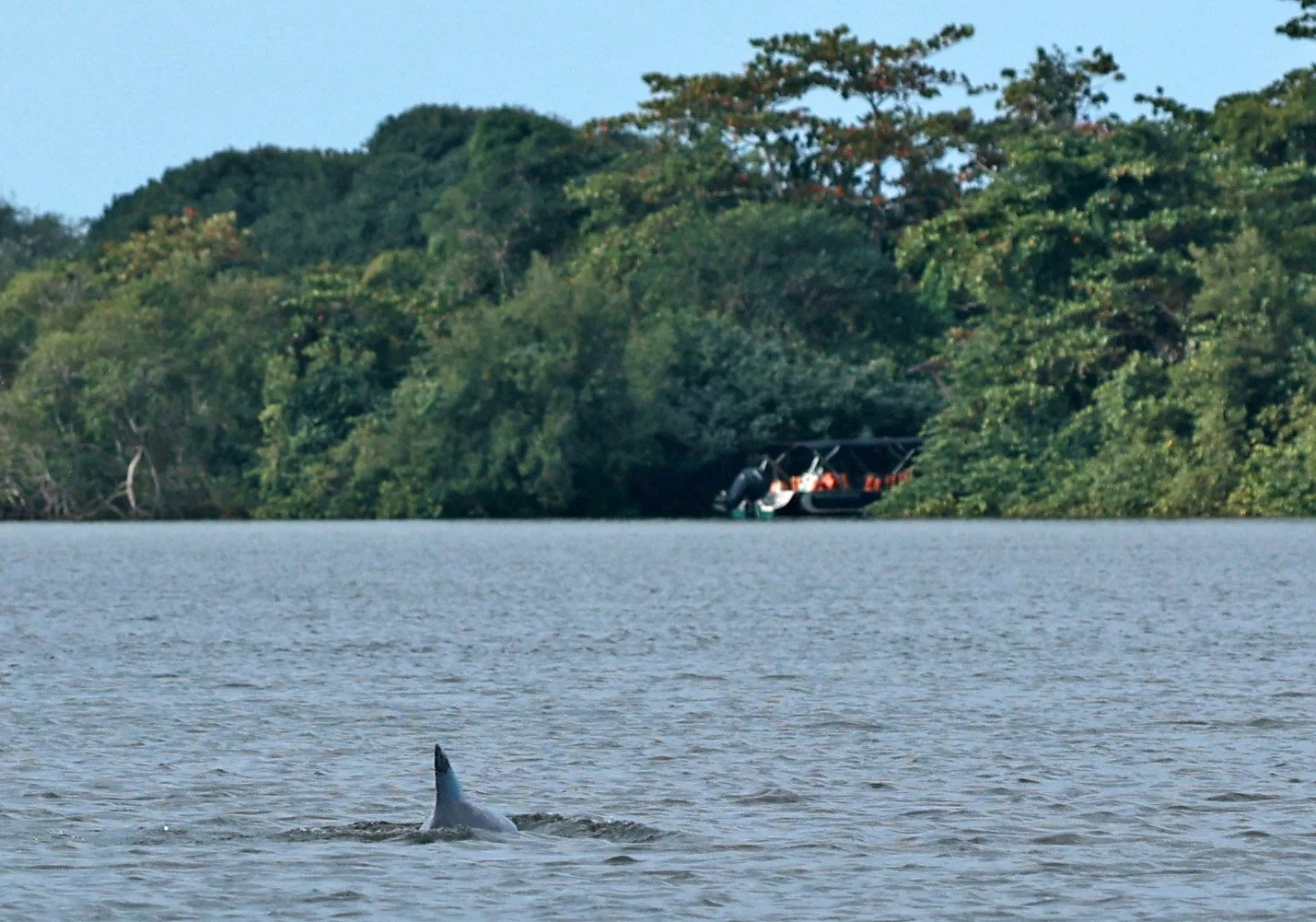
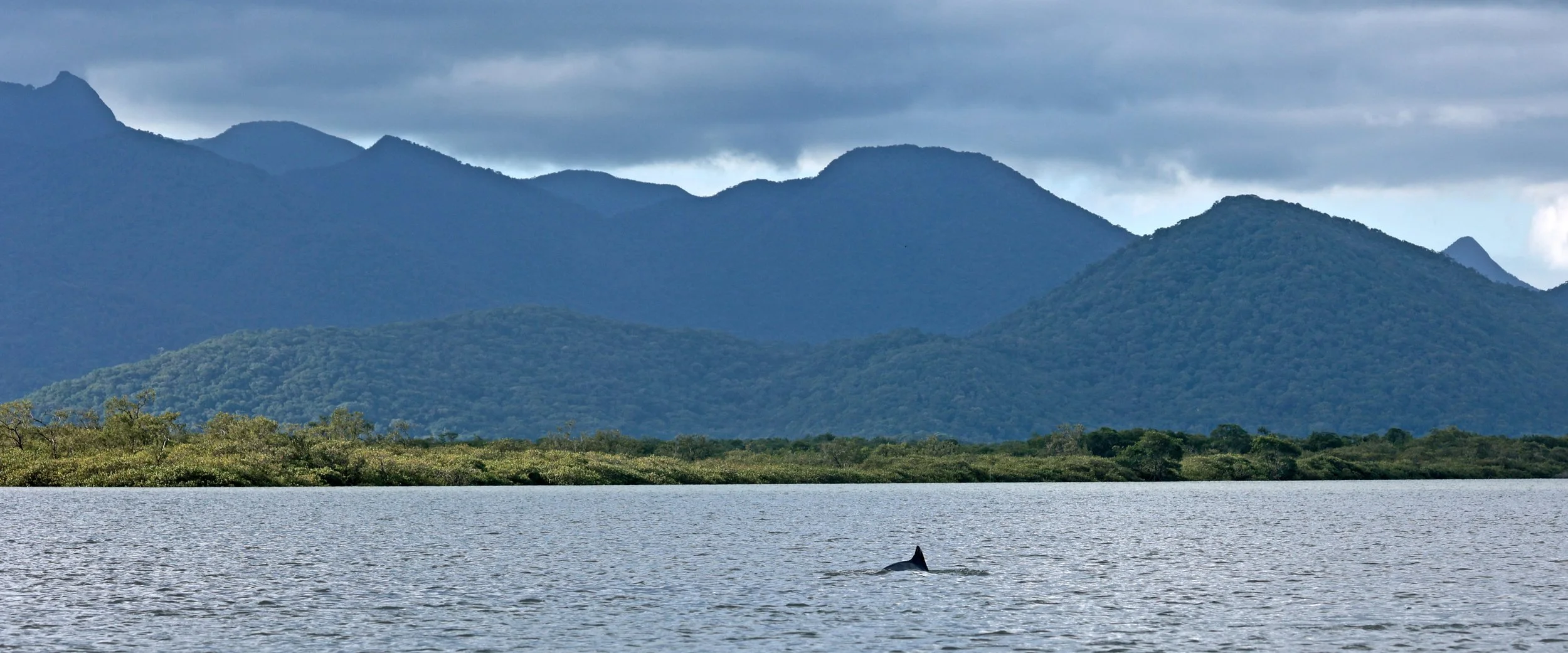
Guiana Dolphin (Sotalia guianensis) Superagüi National Park, Brazil