Expedition to Lao and Thailand's Isaan
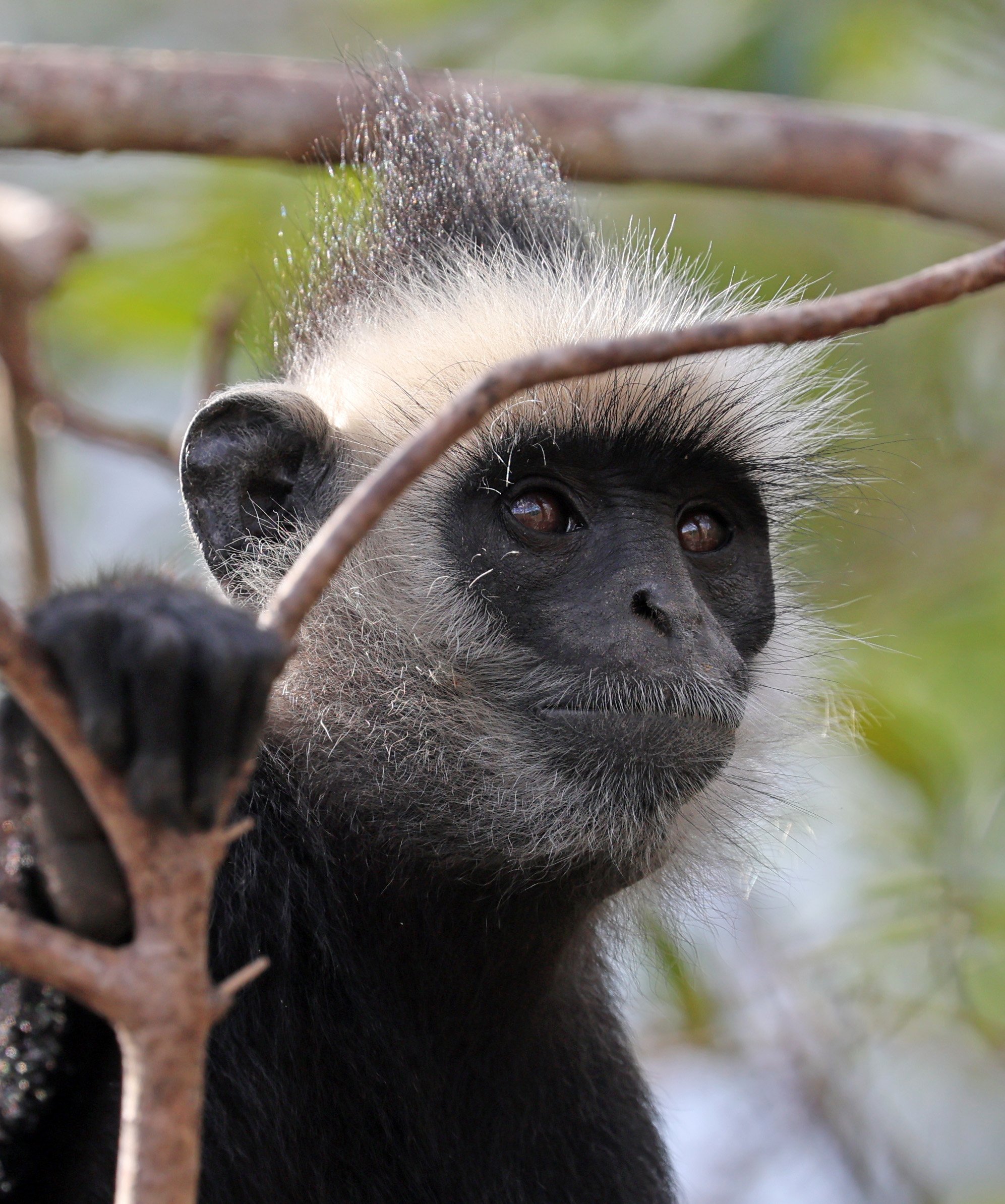
Laotian Langur or White-browed Black Langur (Trachypithecus laotum) at The Rock Viewpoint, Khammouane Province Laos
For my final expedition of 2025, I decided to go for a species of primate that I’d been eyeballing for years now – the Laotian Langur (Trachypithecus laotum). After seeing many trip reports and Facebook posts about the species and the region it calls home, I knew it was high time that I get off my arse and get across the border to Lao and see them! (Link to main gallery)
I decided to combine this effort with a longer road trip that involved exploring parts of Thailand’s Isaan (northeast) region a bit as well as visit some family in northern Thailand in Lampang and Phayao provinces. Not a lot of wildlife seen in these areas so I will present the Lao portion first in this trip report and follow with some brief descriptions and photo galleries of the “Thailand road trip” portion.
The Rock Viewpoint
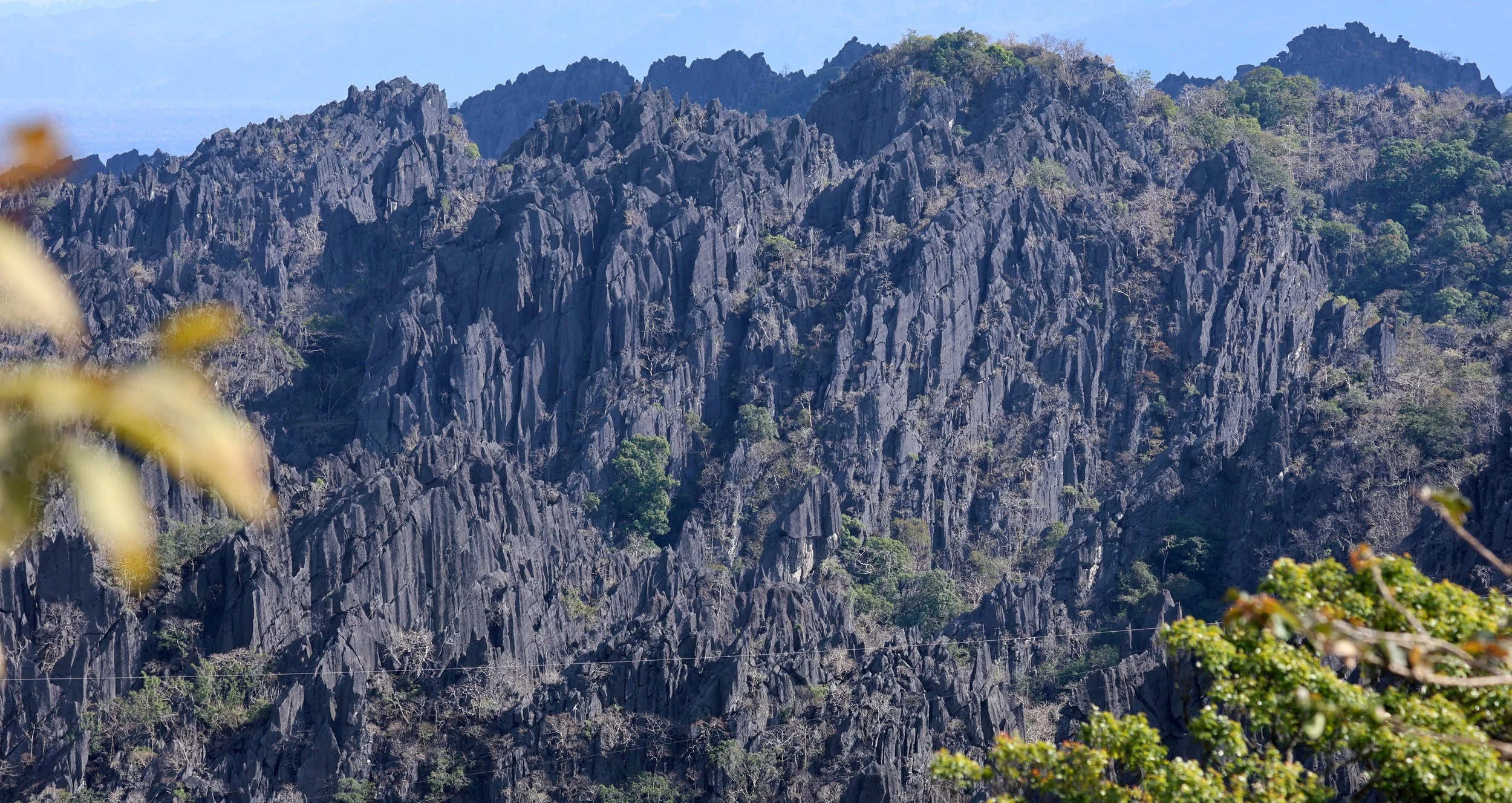
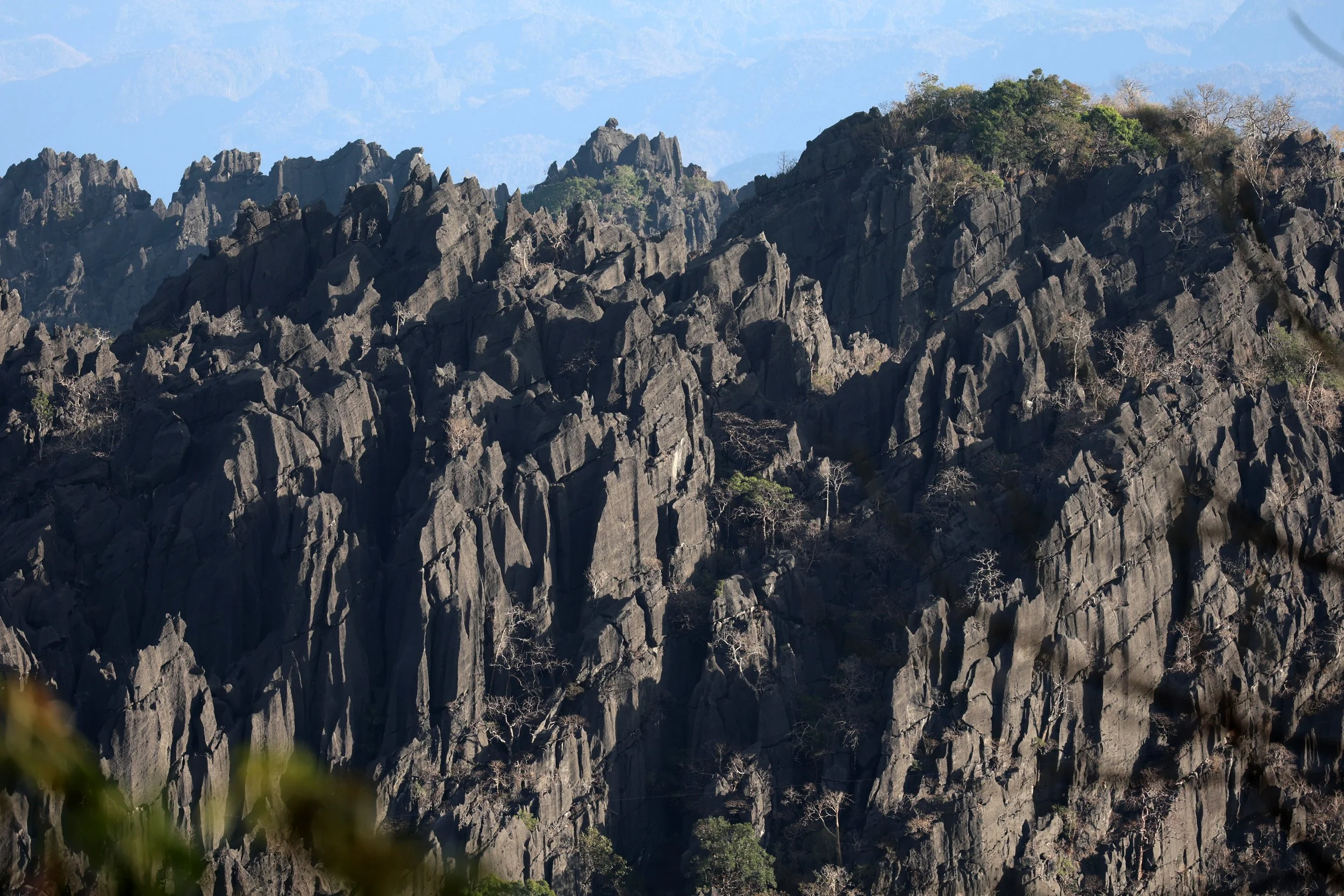
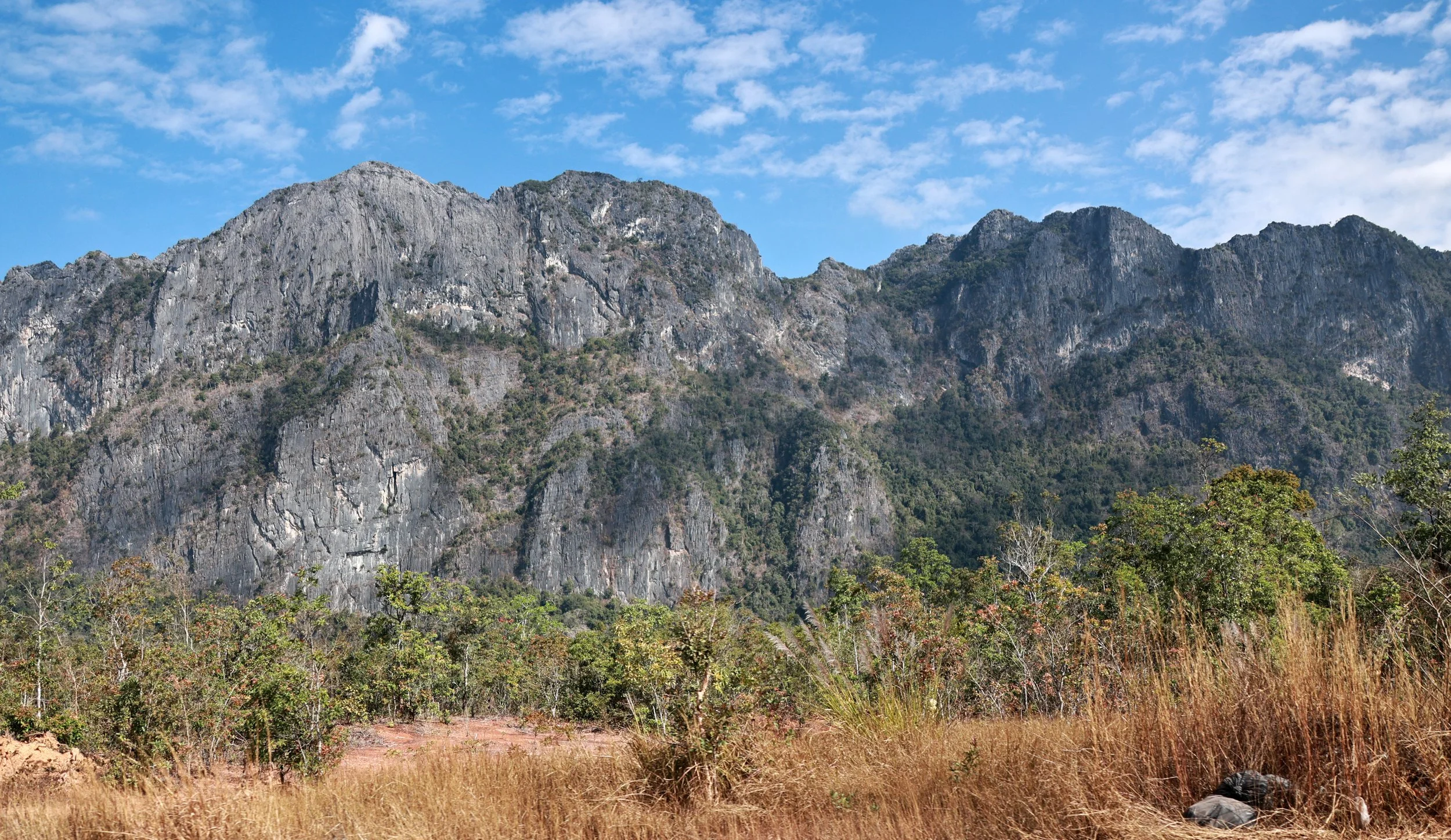
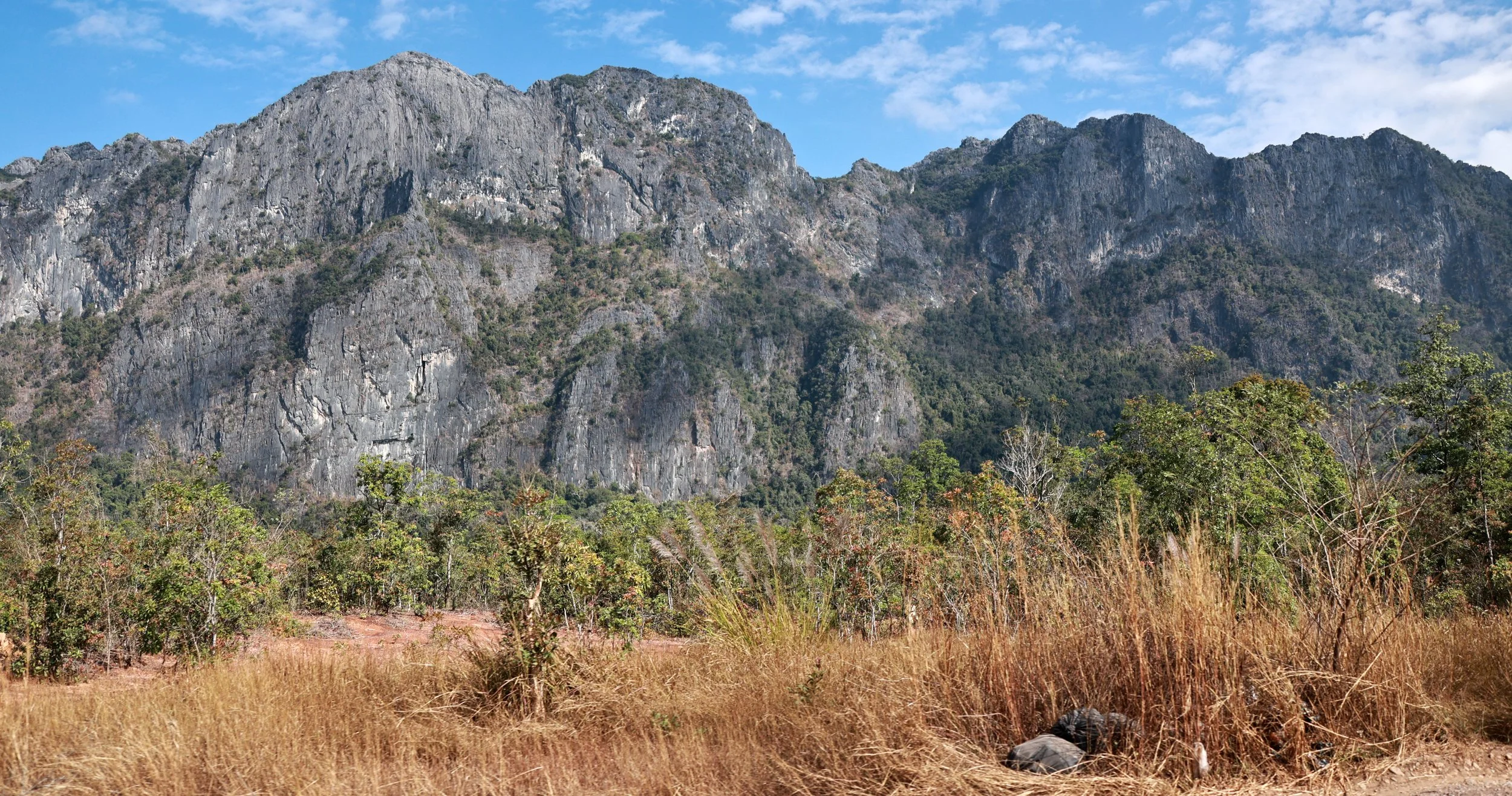
The Laotian Langur is a Lao endemic that resides in some of the roughest habitat anywhere. Central Lao is a maze of incredibly rugged karst limestone mountains that are basically impossible to navigate unless you are a bird, a rat or an agile primate that can manage the jagged karst and avoid the crevice’s that make terrestrial movement virtually impossible.
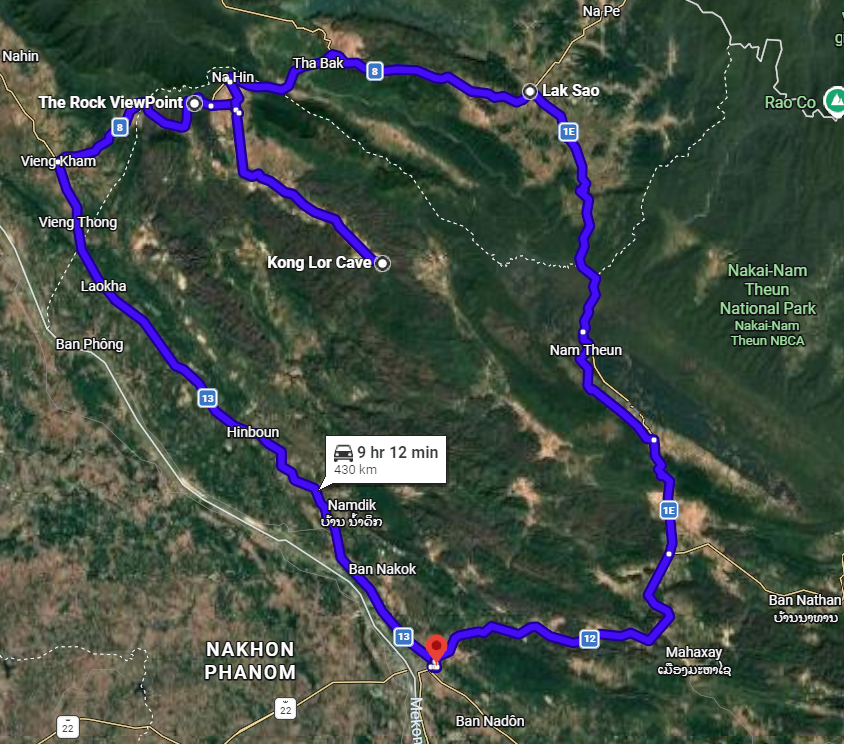
Getting to the area is pretty straight forward. We came overland from Thailand to Nakhon Phanom where we crossed Friendship Bridge #3 to the Thakhek side of the Lao border. I would have driven my own car but since I still had a few months of payments on the beast, I did not have the proper paperwork to take the car internationally. I guess my bank doesn’t trust that I would not just run away to another country! Nah, it’s standard practice here in Thailand – no little blue booklet and no crossing borders… Once I get it, I am driving to Europe damn it!
Overland border crossing is not too bad – be prepared to fork over mint condition US dollars on the Lao side of the border though - $45 was my bill but the condition of the money had to be perfect. We were met by our driver and friend Bouasone Vilayvan who is a guide in Lao. He arranged a driver and himself to escort us around for the four days we were in Lao. Great company and very professional – I highly recommend him if you are planning any explorations in Lao. He knows the region for the langur and other critters well and can help make sure you get the good tips at the time you are there.
Our destination was directly to the famous Rock Viewpoint Resort and Zipline. (Link to Zipline) Yes I said “Zipline”. By far the majority of the thousands of annual tourists who visit the area are there for the zipline which is a very impressive series of lines that travel between platforms that are strategically placed in incredibly precarious spots in the vast jagged karst mountain range in the area. These platforms are connected by one of the most extensive boardwalk networks I have ever seen anywhere. I have no idea how many kilometers of boardwalk are built there but it is truly mind blowing. With all the ups and downs and countless thousands of stairs, the network truly reminded me of an M.C. Escher painting…
Now don’t let the zipline scare you away from trying to get to the area for the primates. The animals of the region are clearly habituated to the whiny sound of the people whizzing between the peaks and valleys. While the purist naturalist may resent the auditory intrusions to the sublime nature of the area, the critters are used to it and are unphased.
Searching for the Langurs basically involves trekking the endless “walkway” that courses through the limestone formations. The trek is not all that long but the endless stairs – both in terms of ascents and descents can make the trek a bit tiring. Bring water! And sun lotion! Both of which I forgot, so my first trek was a bit uncomfortable. I corrected this stupidity and enjoyed more journeys into the Escher painting.
As with all wildlife, there is no guarantee of seeing the langurs at the Viewpoint. There are reports of many folks completely dipping or seeing them quite distantly as they can be anywhere. I was quite fortunate to have seen my first (of two) group only about 10 minutes after starting my first trek on the boardwalk. I heard the movement of leaves overhead and I knew I had one. Sure enough, there was one directly overhead. A couple seconds later I saw several more – some of which were literally in the wide open, staring directly at me. I mean, they were probably there the entire time – wide open, staring at me, wondering, “does this floundering white oaf even see us?”

A great half hour was spent with this group, which seemed as curious about me as I was about them. Clearly they were habituated but I did not notice anything to indicate they had been fed – they did not approach me nor did they give that “give me food” look or behavior that is common in areas where the wildlife is repeatedly fed by tourists. The Viewpoint operation has a strong anti-feeding message posted and for the most part I am confident it is working. Now I am not naïve enough to think that the random tourist wouldn’t whip out a banana from time to time, but my experience with the primates was legitimately authentic and mutually respectful.
After a satisfying viewing of my main target, and noticing the langurs were bored of me too, we both headed our own ways. I was now interested in spotting an endemic (I think) red-variation of the Finlayson’s Variable Squirrel. Now all of the reports I’d come across made it seem that they were incredibly easy to see so of course I did not see a one! Well, I did get a glimpse of one near the “café” but no pictures at all. Although it is not a lifer for me by a longshot, it would have been a gorgeous addition to my photo gallery in this trip report.
I was also interested in seeing another endemic to the area – the Laotian Rock Rat (Laonastes aenigmamus). Evidently a couple days before I arrived, the forestry department released several poached individuals into the karst at the “café”. It is there I believe I caught a fleeting glimpse of one just before it disappeared below the boardwalk out of sight. The tail was clearly NOT a squirrel and the size and black coloration gives me about 90% confidence that I got the critter. I am hesitant to actually list it, however. Oh well, fuck it – LISTED!
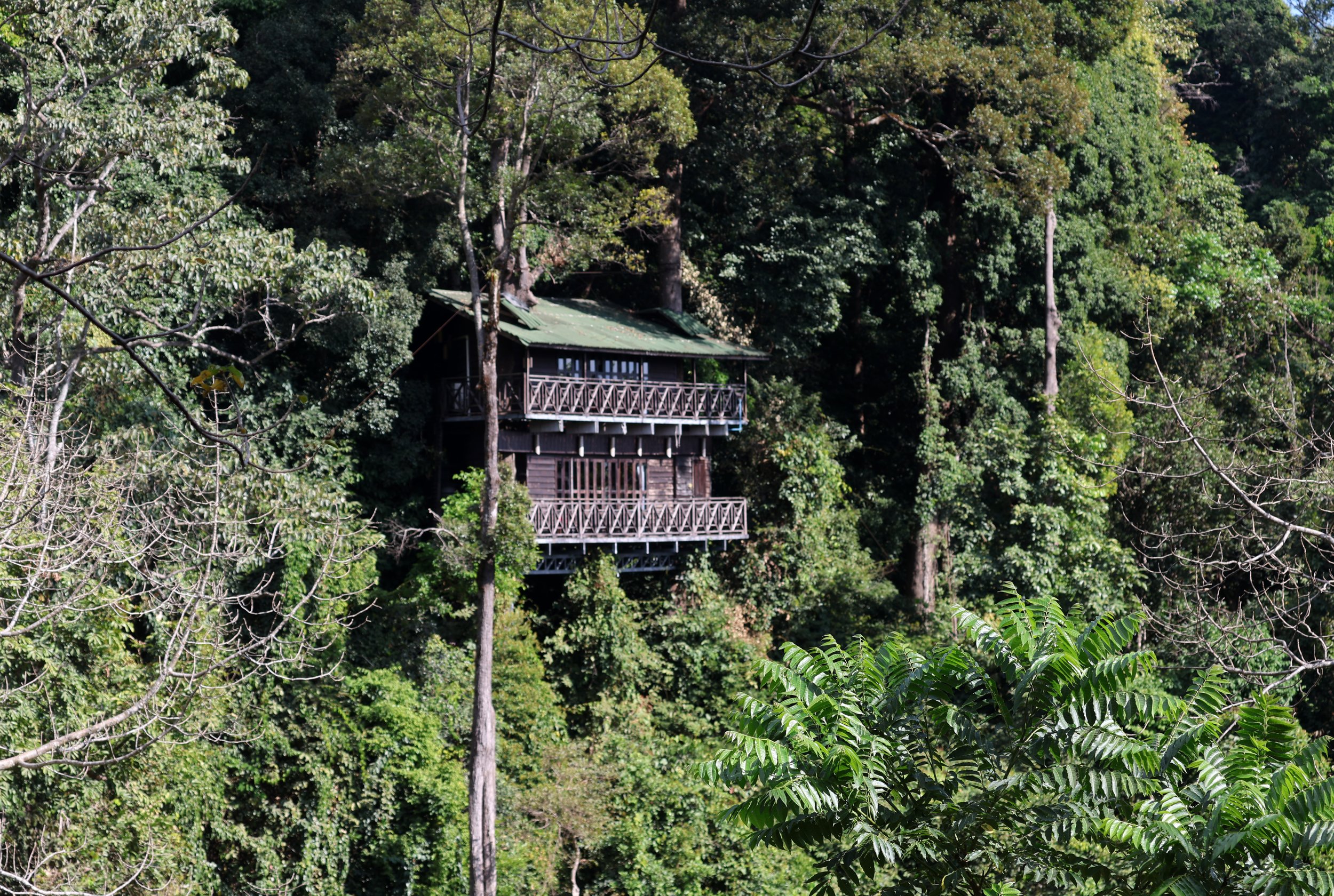
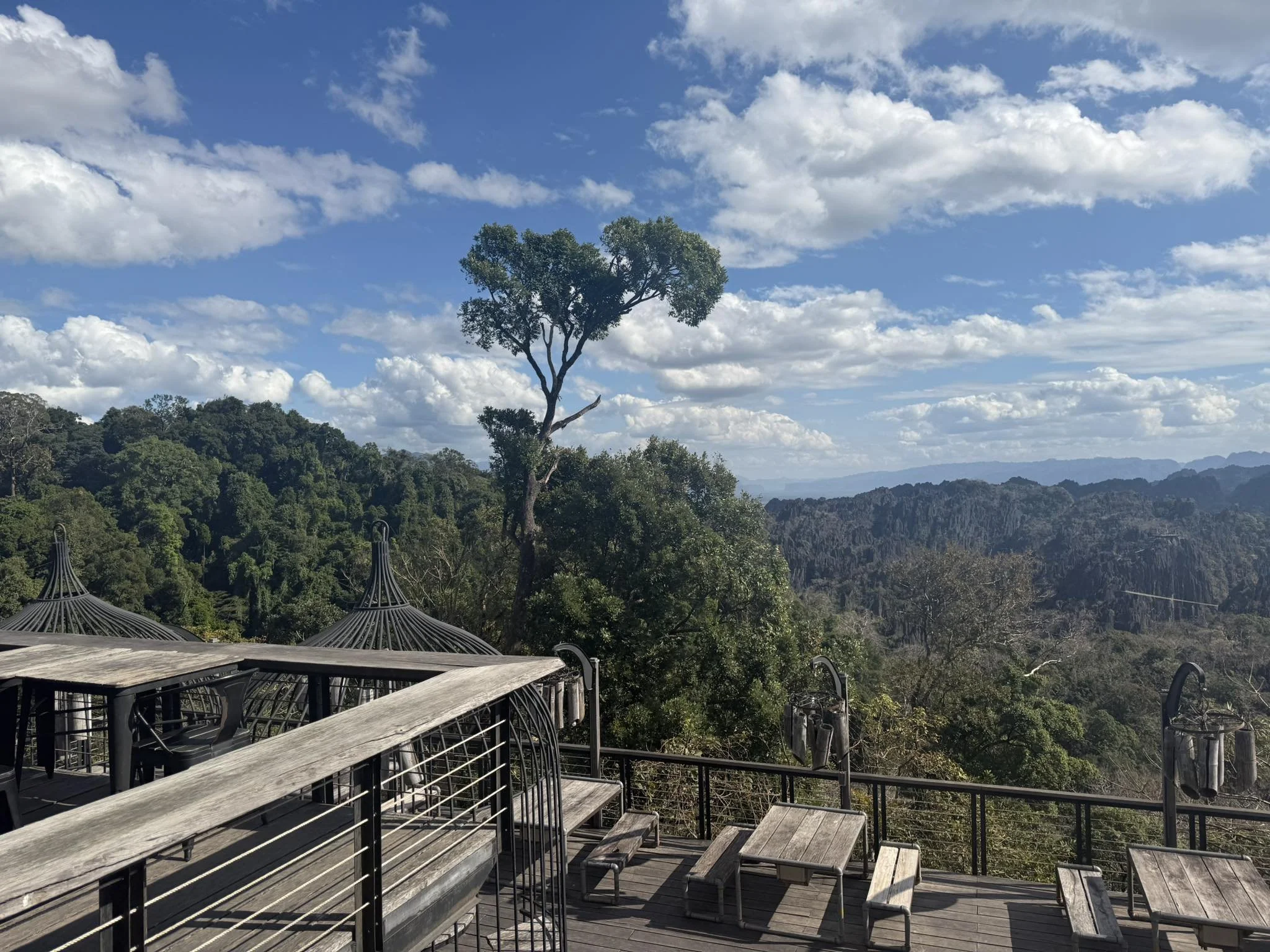
The lodging at the Rock Viewpoint consists of these odd-shaped capsules that are cute and curious but if you are tall or wide, they can be a bit much to handle for long periods of time. I was constantly bumping my head and passing my family between the beds became a battle of girth that at times was fun and at times a bit of a pain… But I absolutely do recommend the place as a base camp for your time there. The cost is very reasonable and you will have awesome views of the forest from the deck of your capsule. I recommend staying “in the forest” section as the noise by the endless parade of passing 22-wheeler trucks on that horrible road (you’ll see what I mean if you go there) is overwhelmingly noisy and dusty. “In the forest” is very pleasant. The restaurant at the resort is quite good and the staff are wonderful. I am not sure how good their English is as all of them spoke Thai, which is my dominant language these days. The manager is very nice and professional French Korean gentleman who goes out of his way to make sure everyone is having a great time. He also gave me great tips on finding the species of interest and had quite a good conservation background himself.

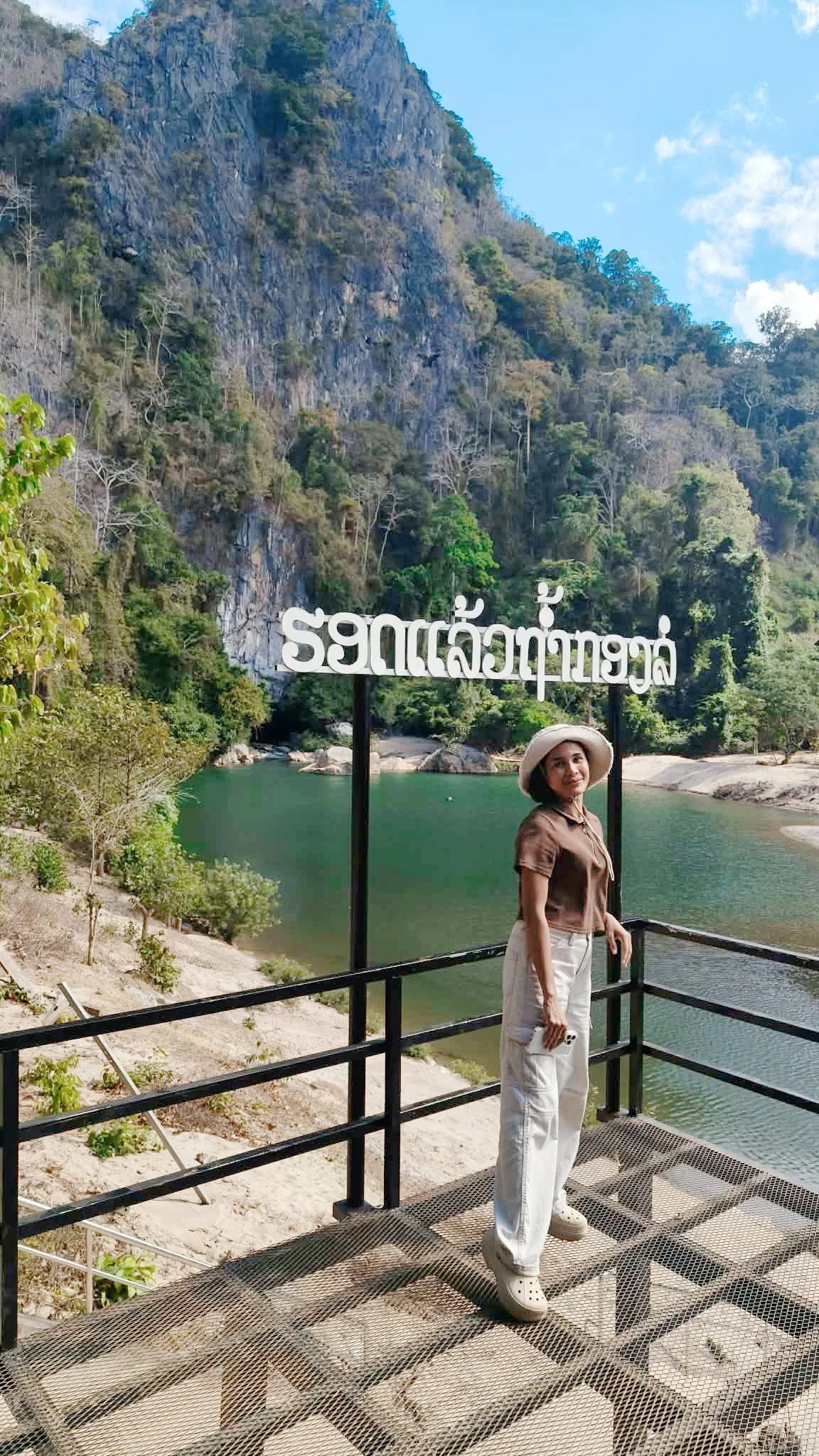
Kong Lor Cave (Tham Kong Lo), Khammouane Province
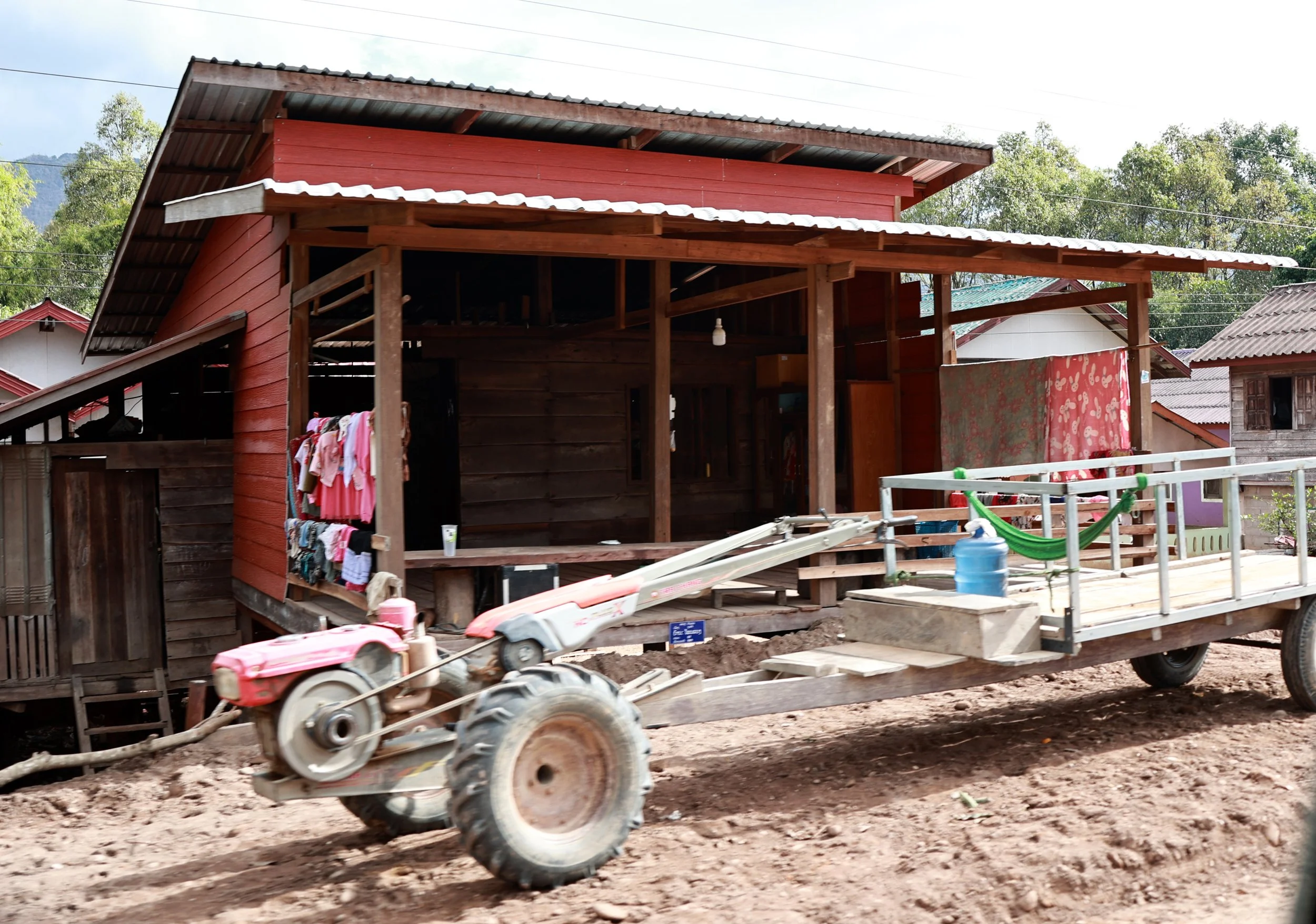
Aside from the easily seen endemic Bare-faced Bulbul, I was able to see some birds although I was not aggressively searching. I was still hoping for a chance at the Laotian Rock Rat so I headed to Kong Lor Cave and town which is an awesome one-hour drive to the east of the Rock Viewpoint. Traveling through the Laotian countryside was like taking a trip back in time some 50++ years into rural Southeast Asia. They say that Lao is at least 30 years behind Thailand in its development. I’d say that it is a bit more than that. While this fact makes traveling through the countryside very romantic and spectacular, I am sure the locals would like better roads and electrical grids.
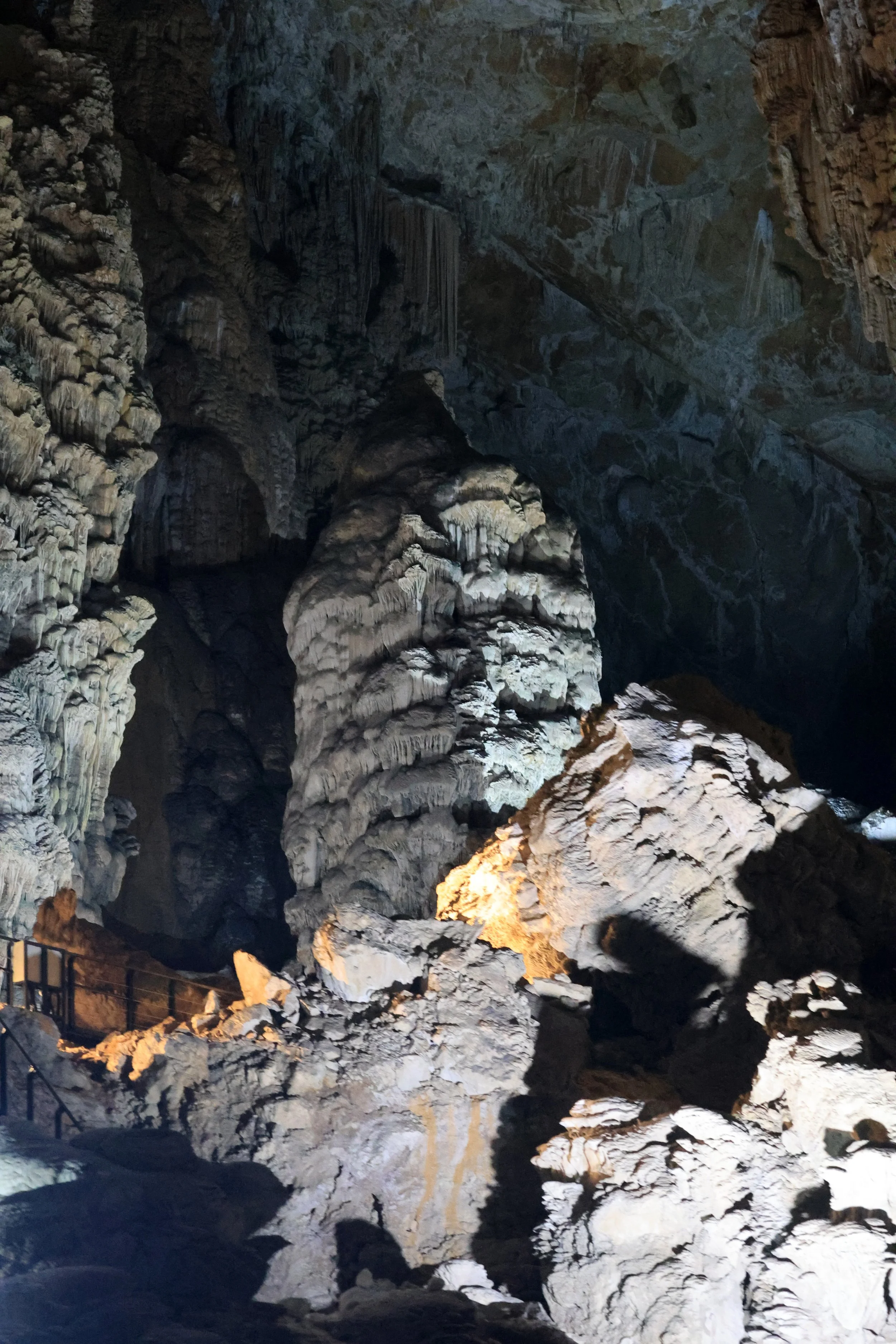
The Kong Lor Cave is out of this world. I really wasn’t into seeing a cave – I was mostly interested in the potential for bats and another chance at the Laotian Rock Rat. But that cave is amazing. The size of the formations cannot be overstated. The stalagmites were the size of multi-story buildings! Do you even use the term ‘stalagmite’ when they are that large? The photos don’t do the formations justice but honestly these place needs to be seen to be believed.
We did come across a group of Hipposideros bats. The literature I came across stated the common species in the cave was the Laotian Roundleaf of Leaf-nosed Bat (H. rotalis). I am listing them as such but due to the poor nature of my images, I am moderately confident at most about this ID. They also looked like H. armiger to me as well. Sadly I did not get enough facial detail to be certain. I am open to suggestions here by anyone who has a deeper knowledge of this particular group of bats that is said to be a permanent fixture in the cave evidently.
We spent some time at the Kong Lor View Resort which is owned and operated by “Kosy” a very nice man and is wife. Kosy has had Laotian Rock Rats on his property often and from time to time they are spotted on the karst that is directly behind his resort. I did search the small, exposed area several times but no luck. I wasn’t really optimistic as we were there in the middle of the day so any self-respecting rock rat would have been deep inside relaxing and avoiding the heat. I did manage to see at least a dozen Finlayson’s Variable Squirrels (Callosciurus finlaysonii ferrugineus), which up to this point the most spectacular variation I have seen of this remarkable group of squirrels. The coloration is absolutely spectacular. Thanks to Stuart Chapman for a heads up on the potential for seeing the rat at this location. Stuart had better luck than I did. With that in mind, I will plan on spending a couple nights at the location in the future.
Our final day in Lao was spent road-tripping through more spectacular karst country and rural farmland countryside. I wanted to visit the wildlife market at Lak Sao to see the carnage of the rampant wildlife poaching in Lao. We were unlucky however to arrive at a time when the wildlife sellers were not in the market – evidently, they stop selling around 8AM and start again around 2PM. I did not feel like sticking around so we missed the experience. I said I was unlucky…perhaps I was lucky as these sorts of things actually do depress me. I simply wanted to document the practice to use as a case study in my classes.
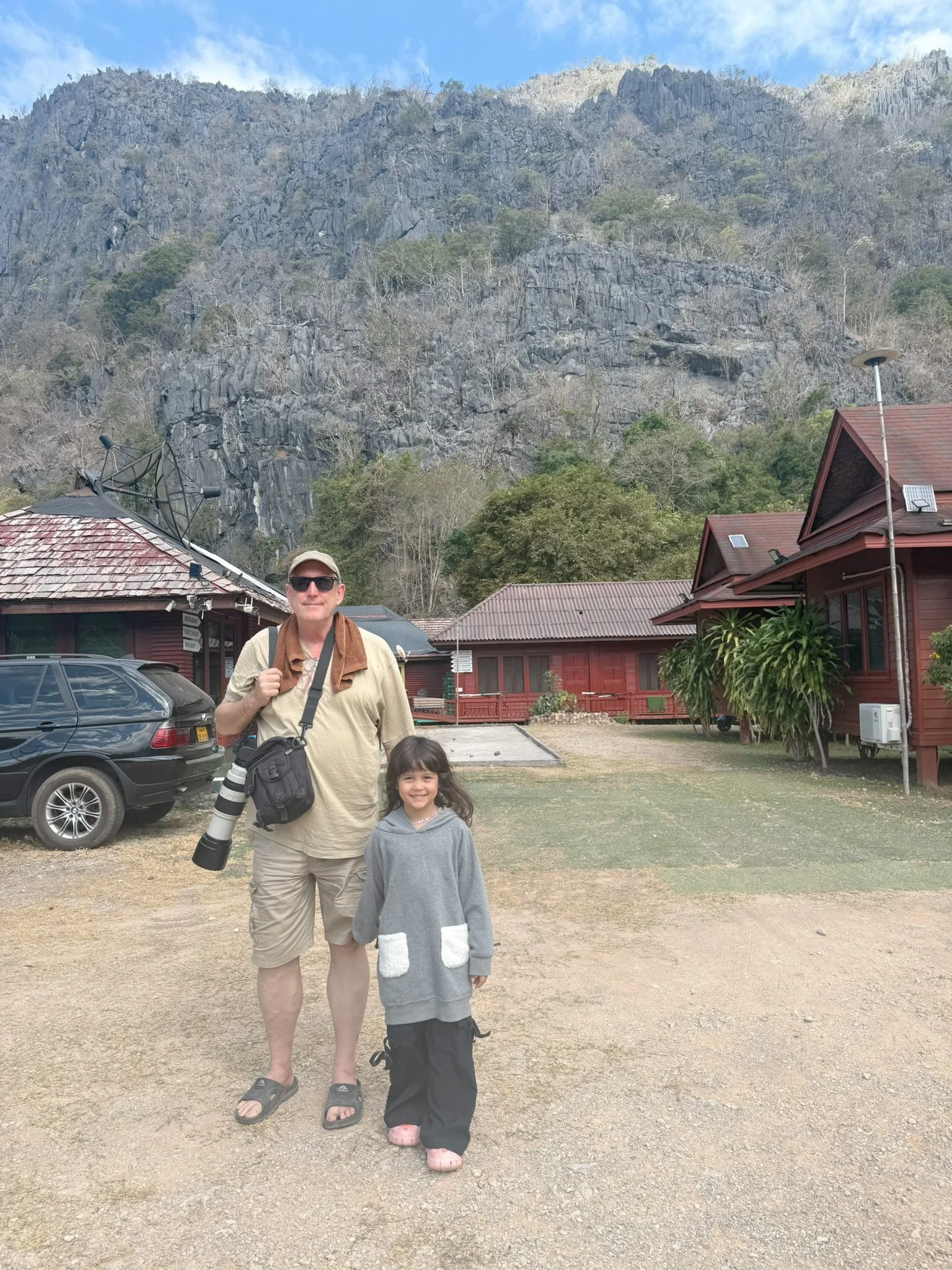
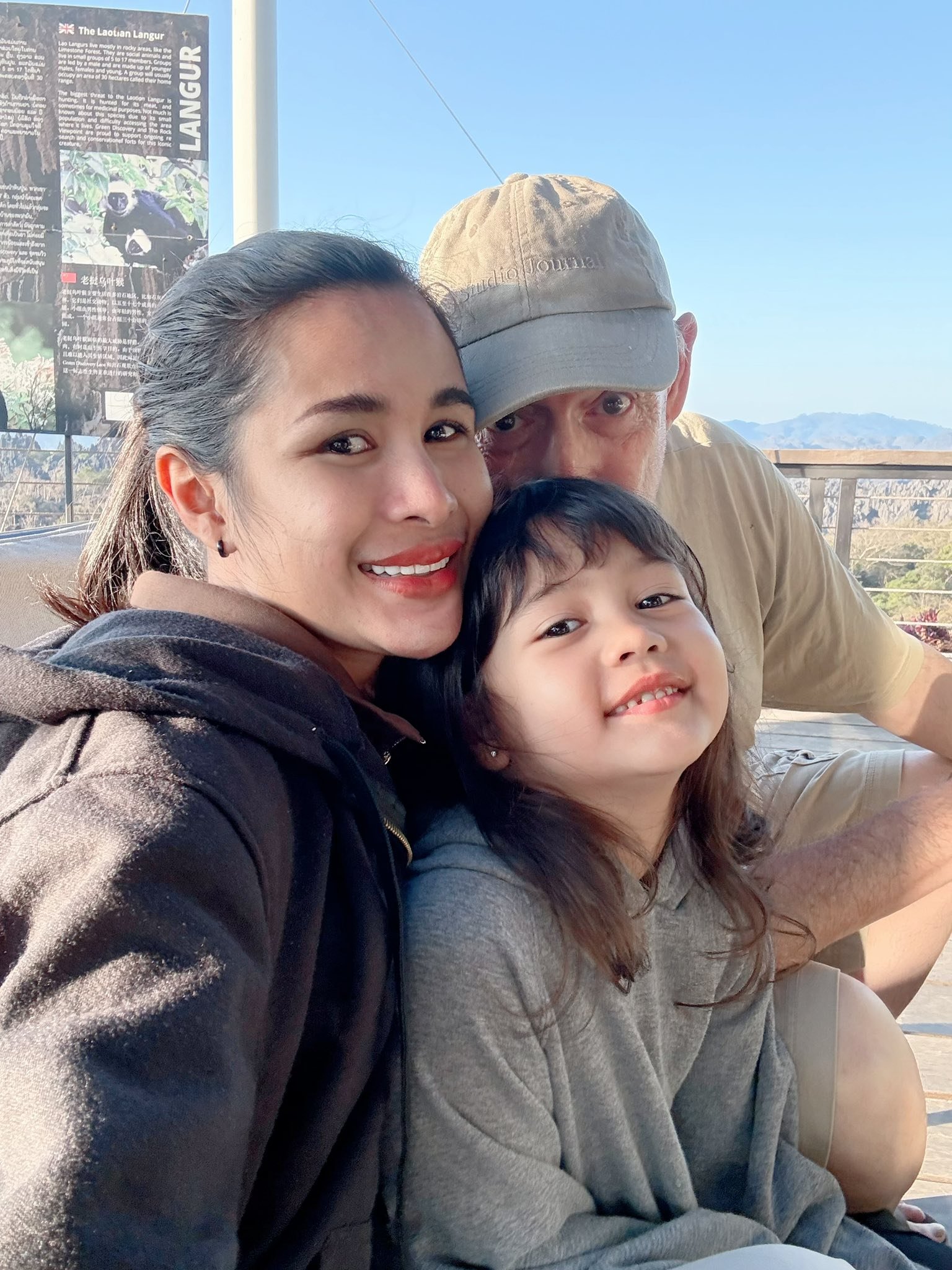
Our time in Lao was short but it was absolutely spectacular. Liana and Gift very much enjoyed our time at the Rock Viewpoint and handled our road trip very well considering how rough the roads are in Lao. The company of our guide and driver was a great addition to the experience. I will absolutely return when I get that little blue book! I know a photo of the elusive and endangered Laotian Rock Rat is waiting for me down the road!
Laotian Langur (Trachypithecus laotum) at The Rock Viewpoint, Khammouane Province Laos (Link to main gallery)


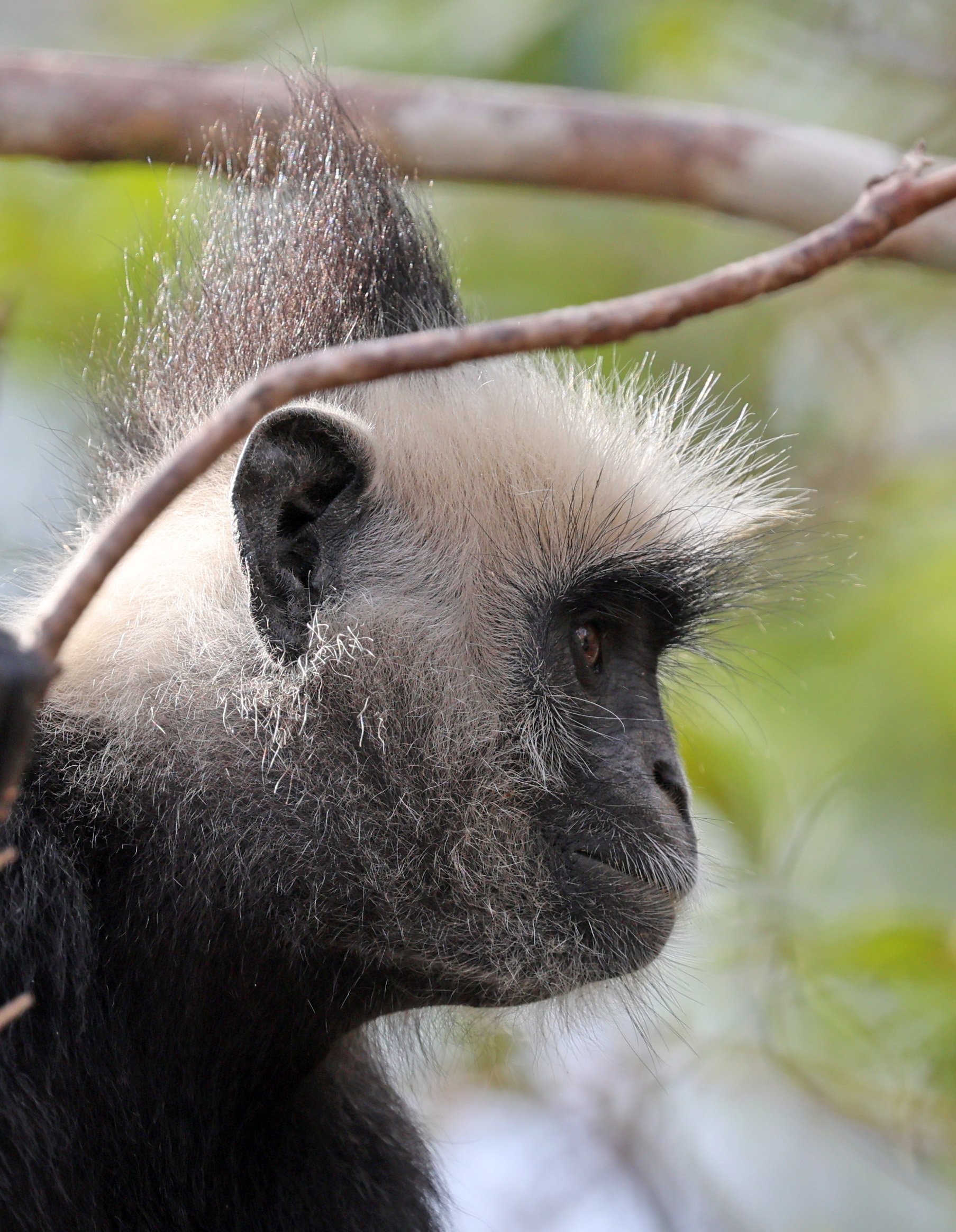


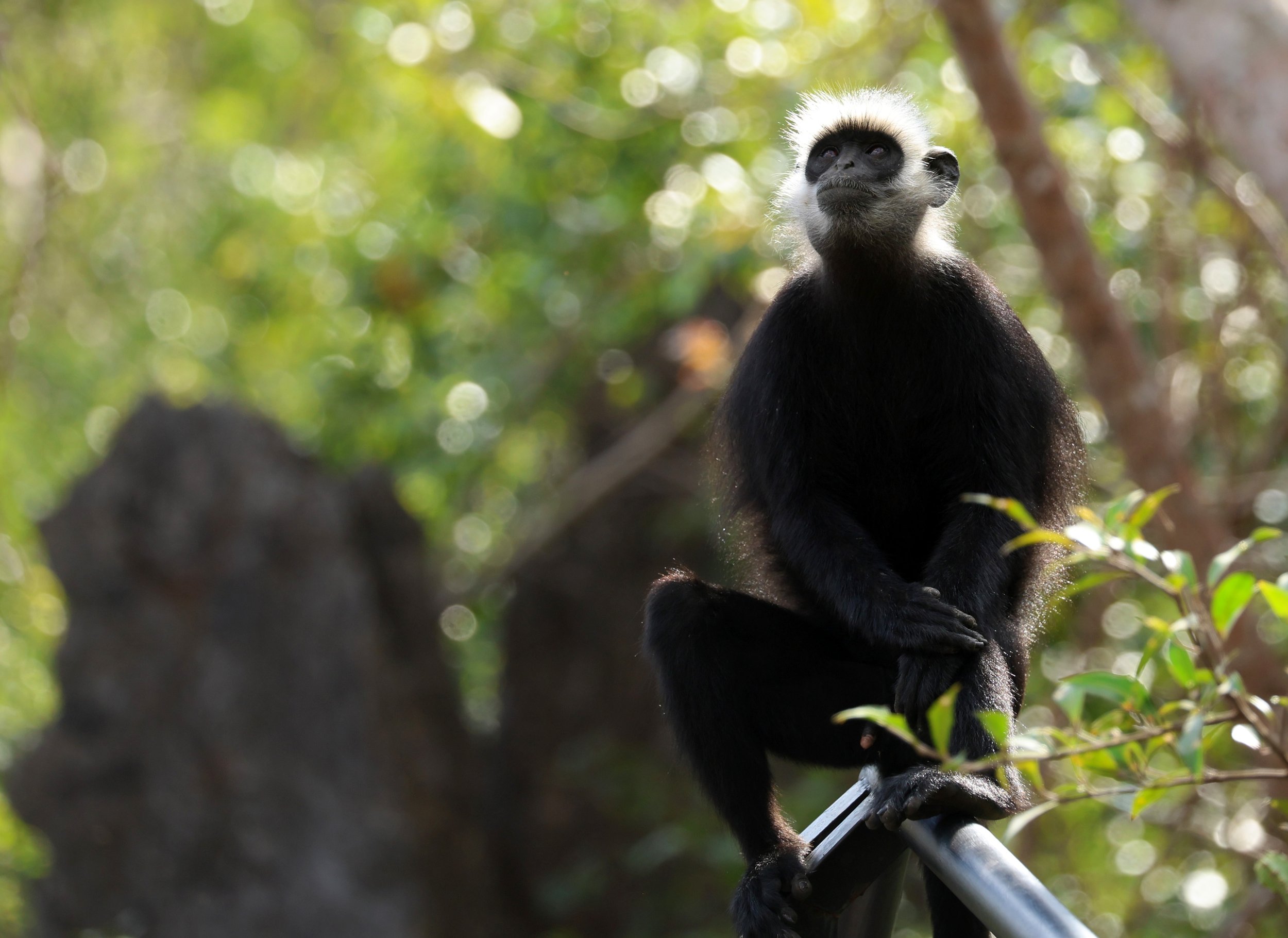


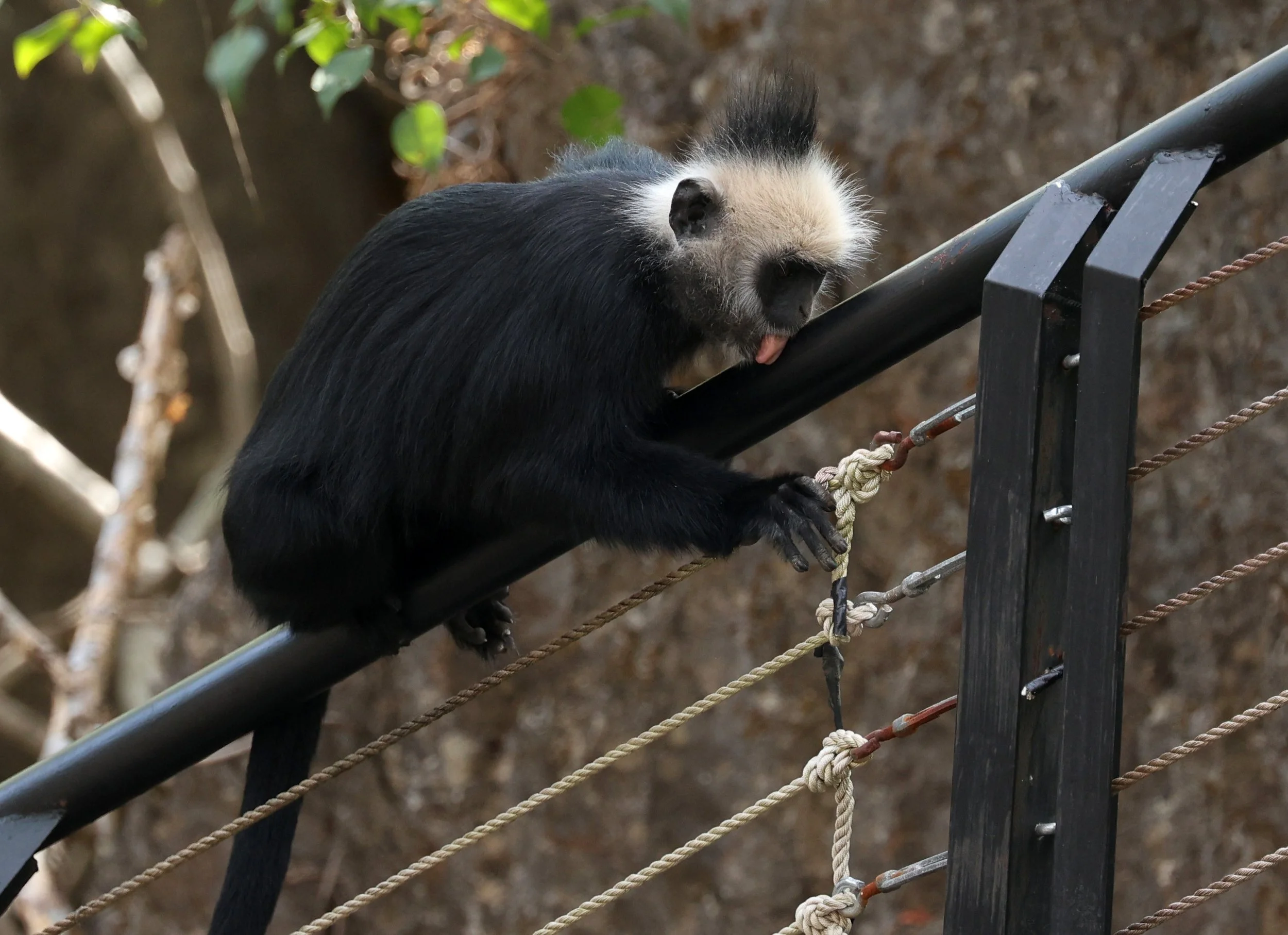
Curious behavior of licking the paint of the railing. I've seen langurs do this in many locations. A mineral lick of sorts.
Other Critters at the Rock Viewpoint & Kong Lor Cave

Variable Squirrel (Callosciurus finlaysonii ferrugineus) Kong Lor Cave (Tham Kong Lo), Khammouane Province

Variable Squirrel (Callosciurus finlaysonii ferrugineus) Kong Lor Cave (Tham Kong Lo), Khammouane Province

Variable Squirrel (Callosciurus finlaysonii ferrugineus) Kong Lor Cave (Tham Kong Lo), Khammouane Province

Bare-faced Bulbul (Nok hualon) The Rock Viewpoint

Bare-faced Bulbul (Nok hualon) The Rock Viewpoint

Black-naped Monarch (Hypothymis azurea) The Rock Viewpoint

Hainan Blue Flycatcher (Cyornis hainanus) The Rock Viewpoint

Hainan Blue Flycatcher (Cyornis hainanus) The Rock Viewpoint
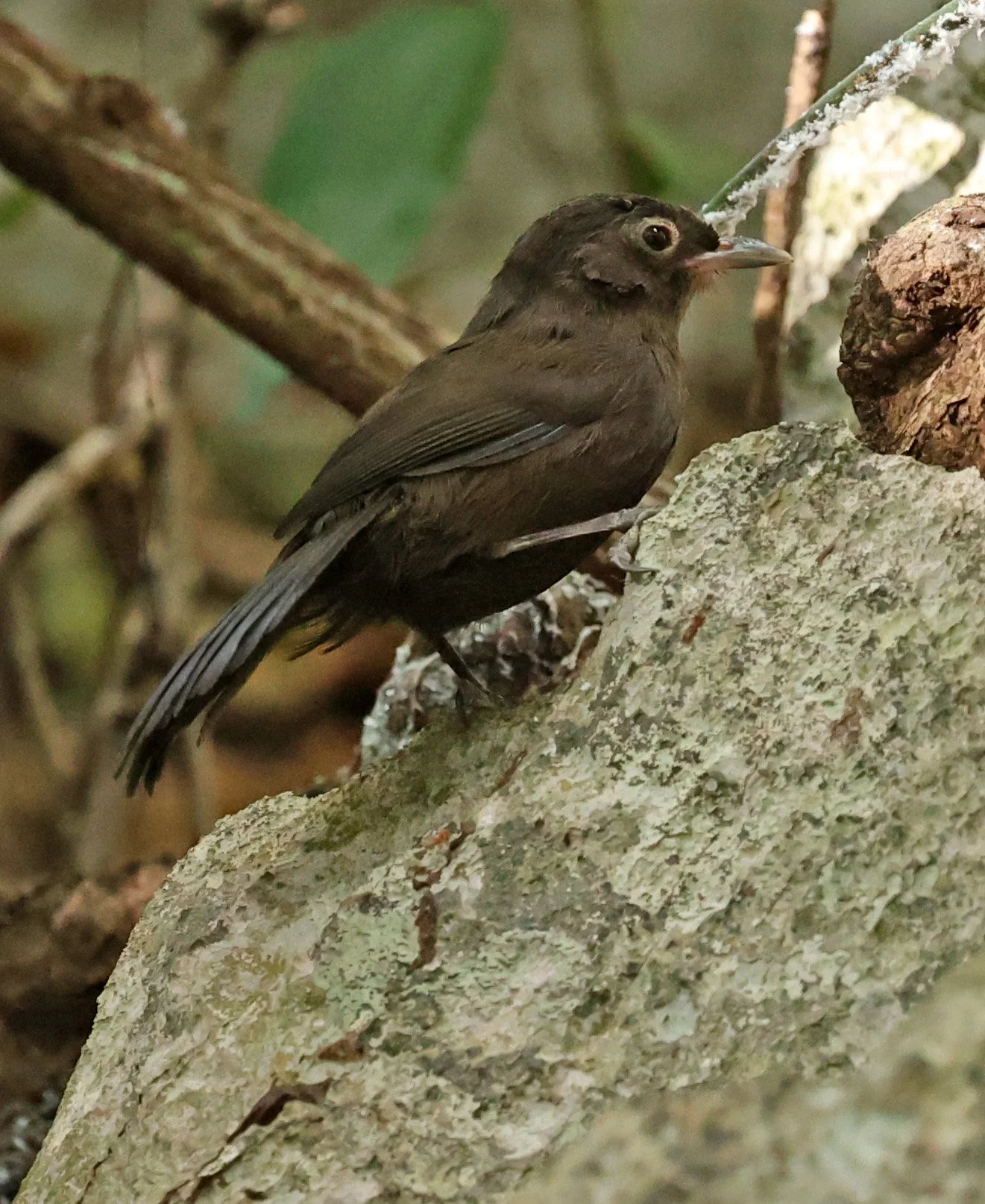
Sooty Babbler (Stachyris herberti) The Rock Viewpoint

Sooty Babbler (Stachyris herberti) The Rock Viewpoint

Laotian roundleaf bat (Hipposideros rotalis) Kong Lor Cave (Tham Kong Lo), Khammouane Province

Laotian roundleaf bat (Hipposideros rotalis) Kong Lor Cave (Tham Kong Lo), Khammouane Province
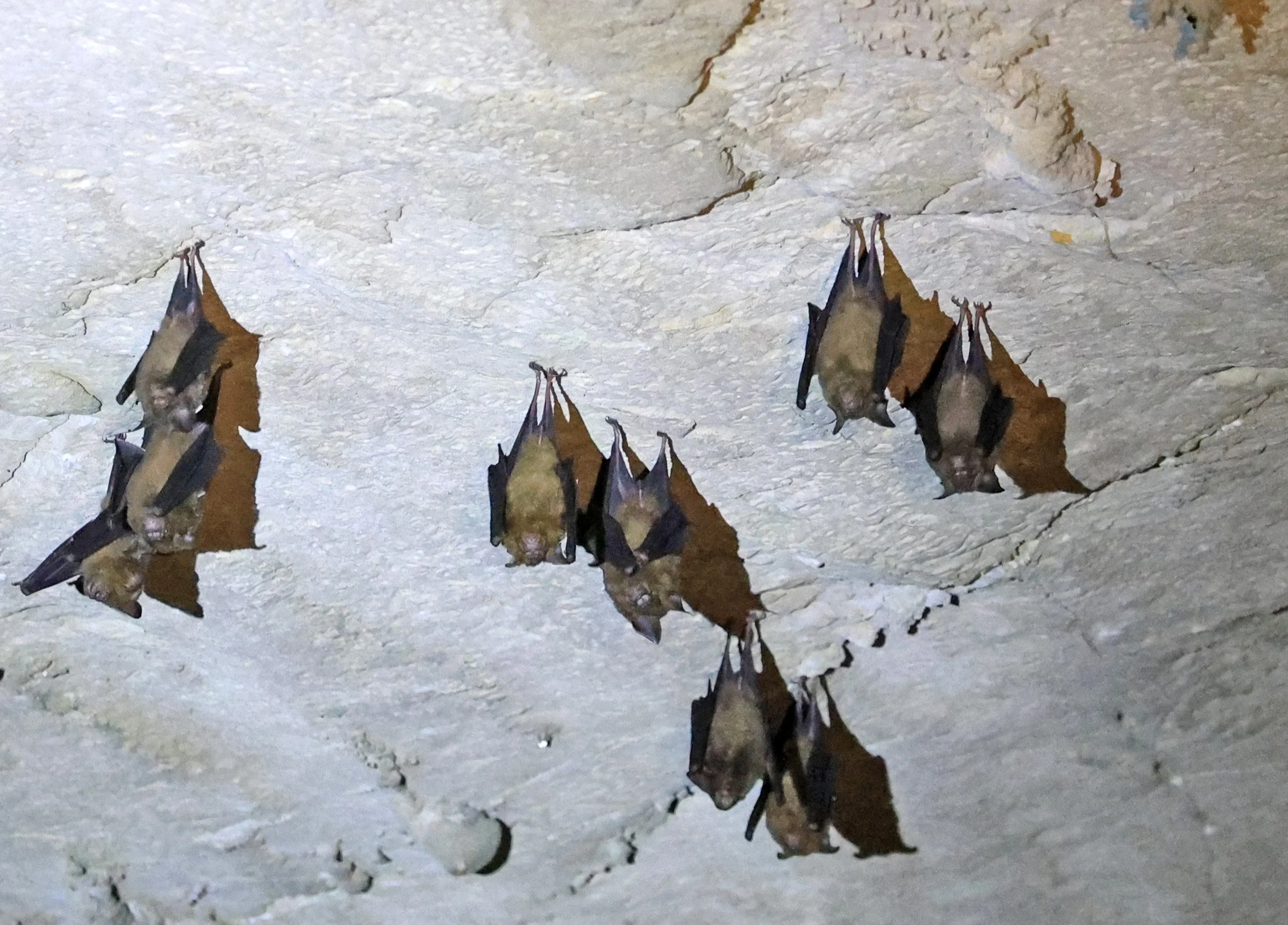
Laotian roundleaf bat (Hipposideros rotalis) Kong Lor Cave (Tham Kong Lo), Khammouane Province

Unidentified fish species - Kong Lor Cave (Tham Kong Lo), Khammouane Province
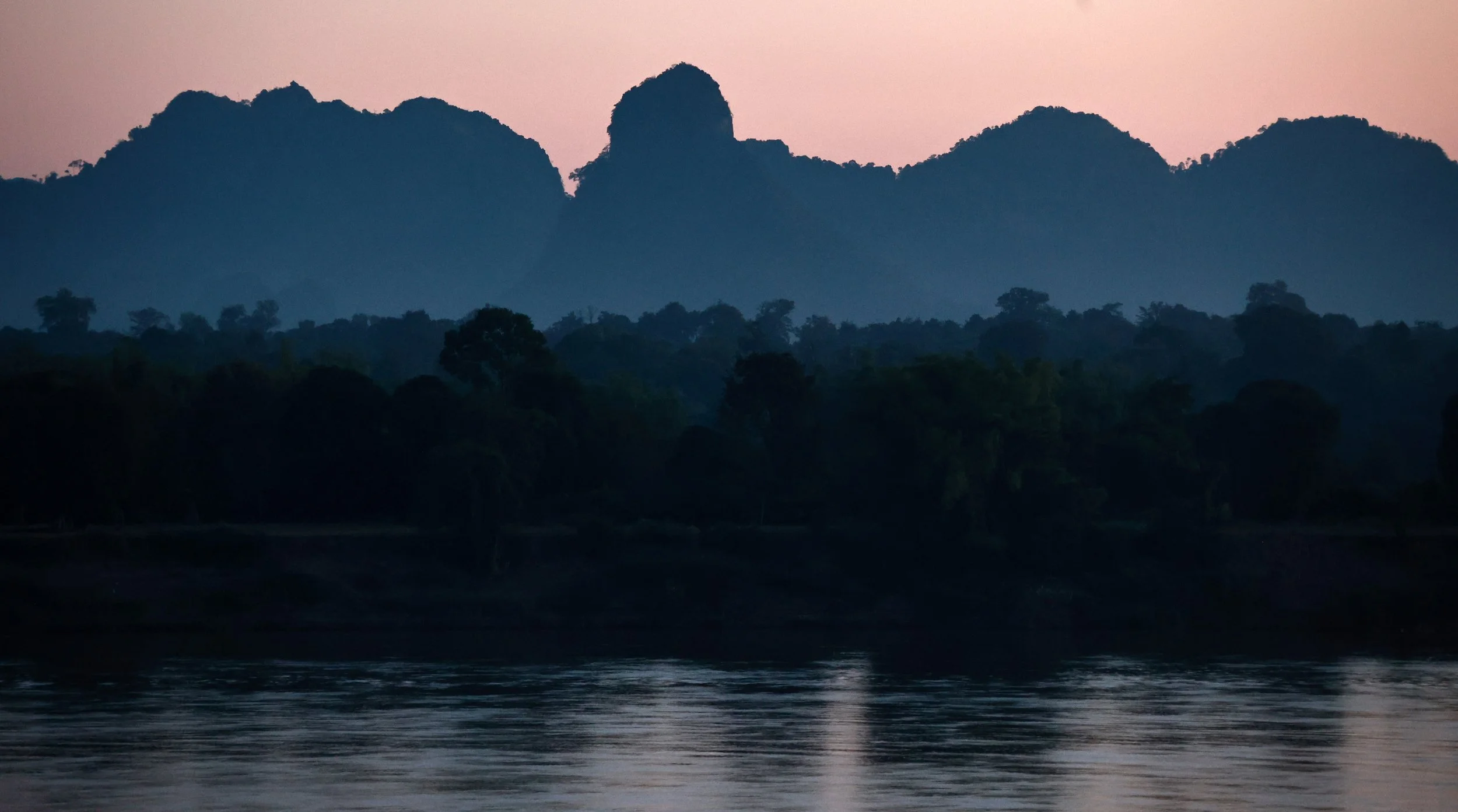
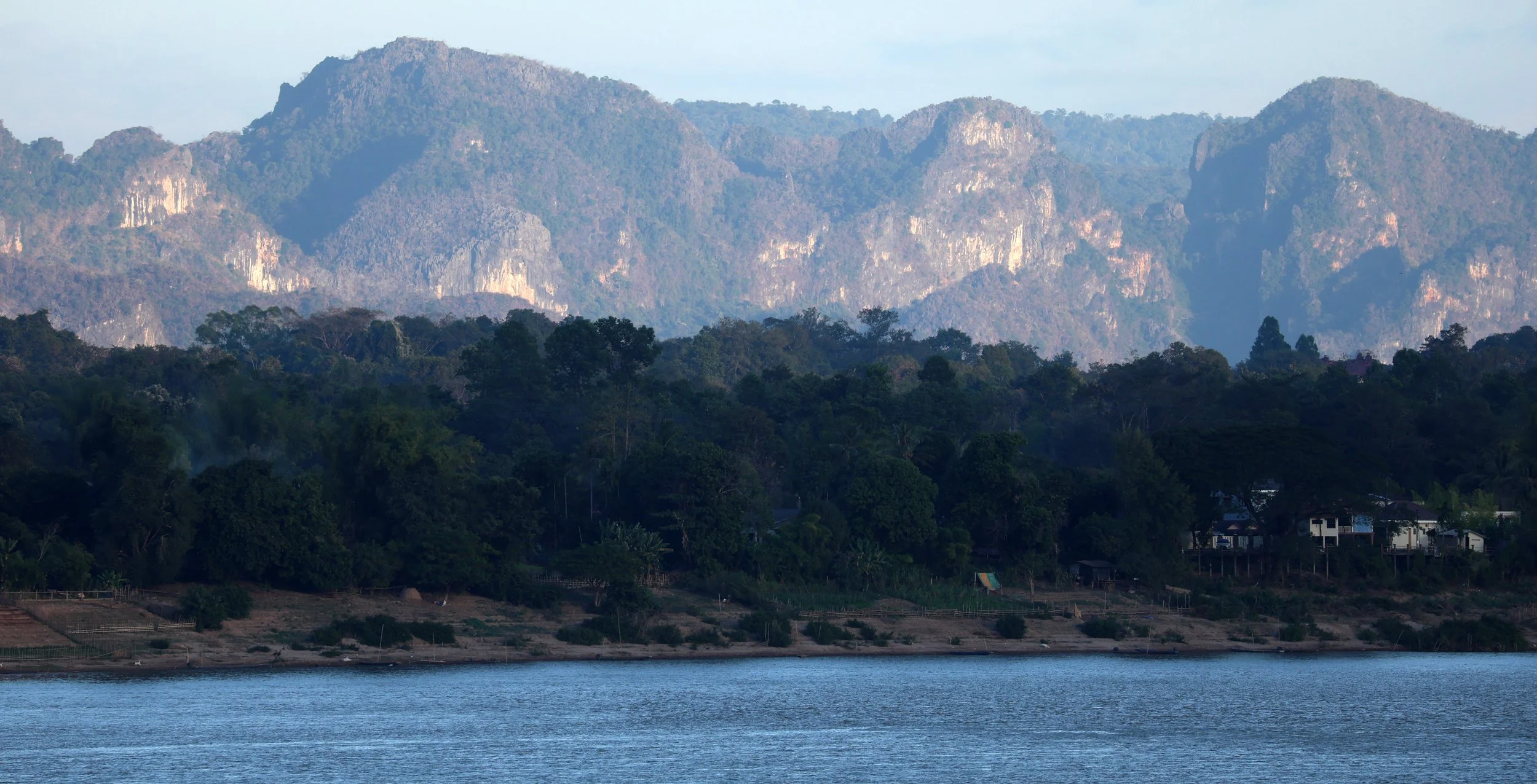
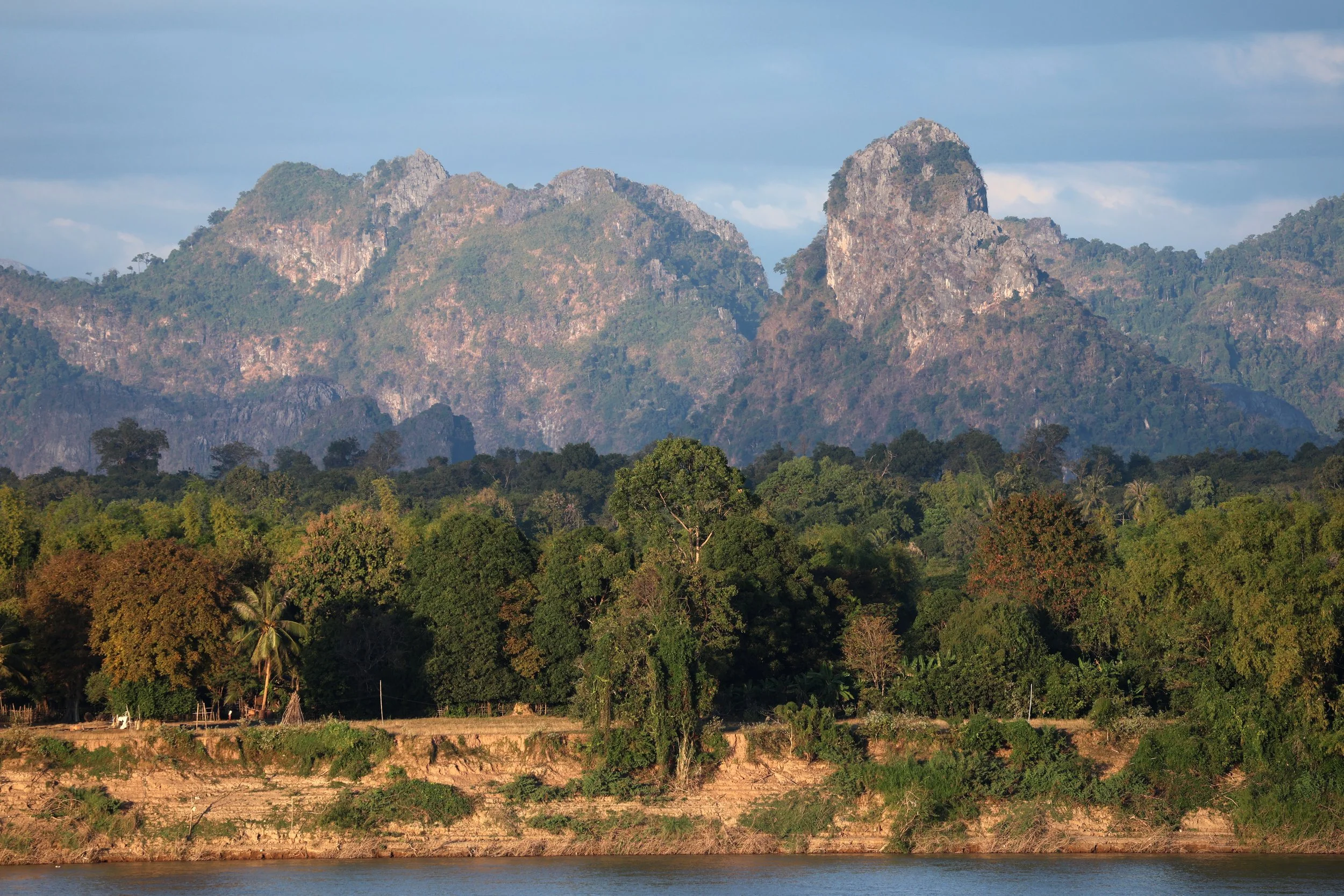
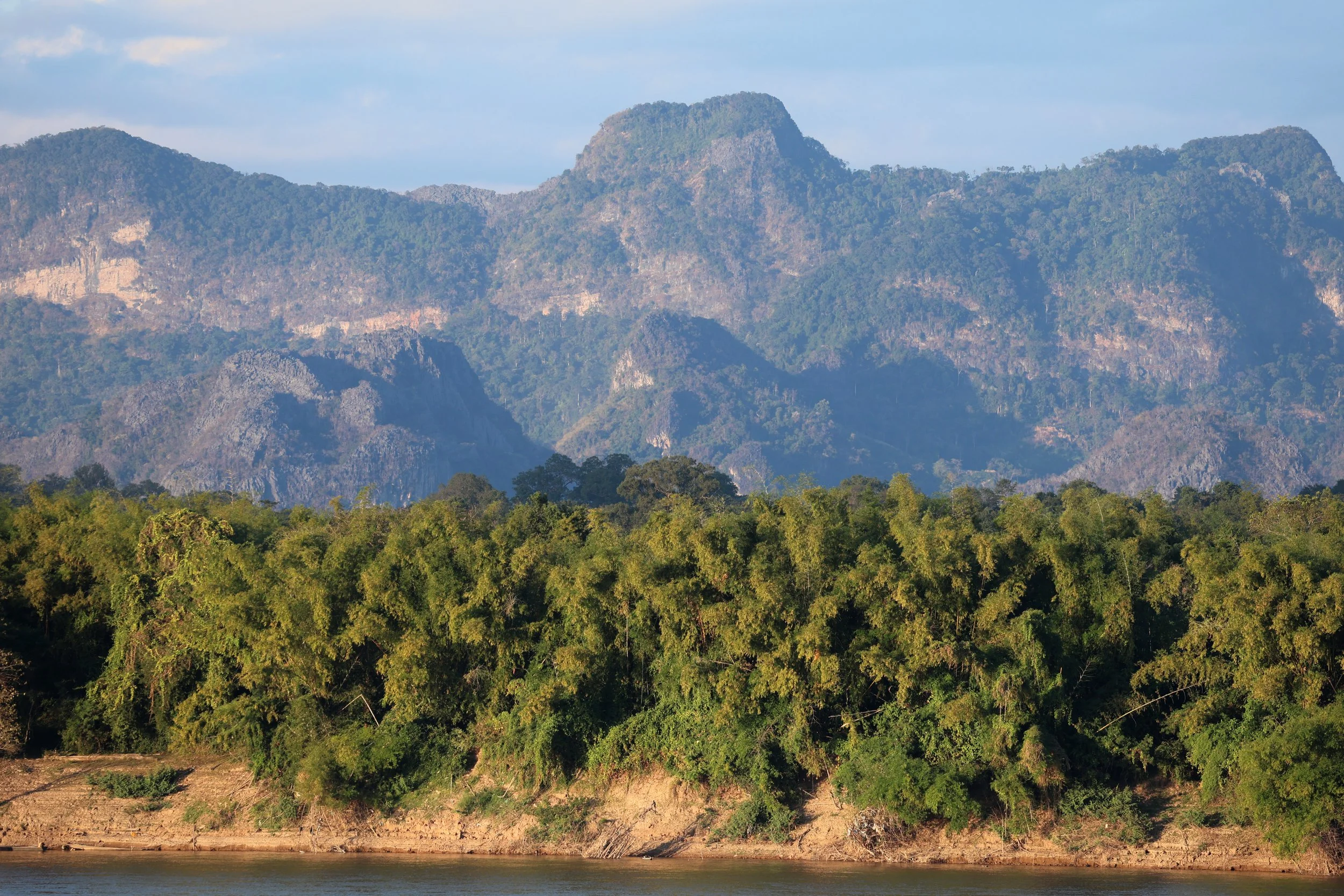
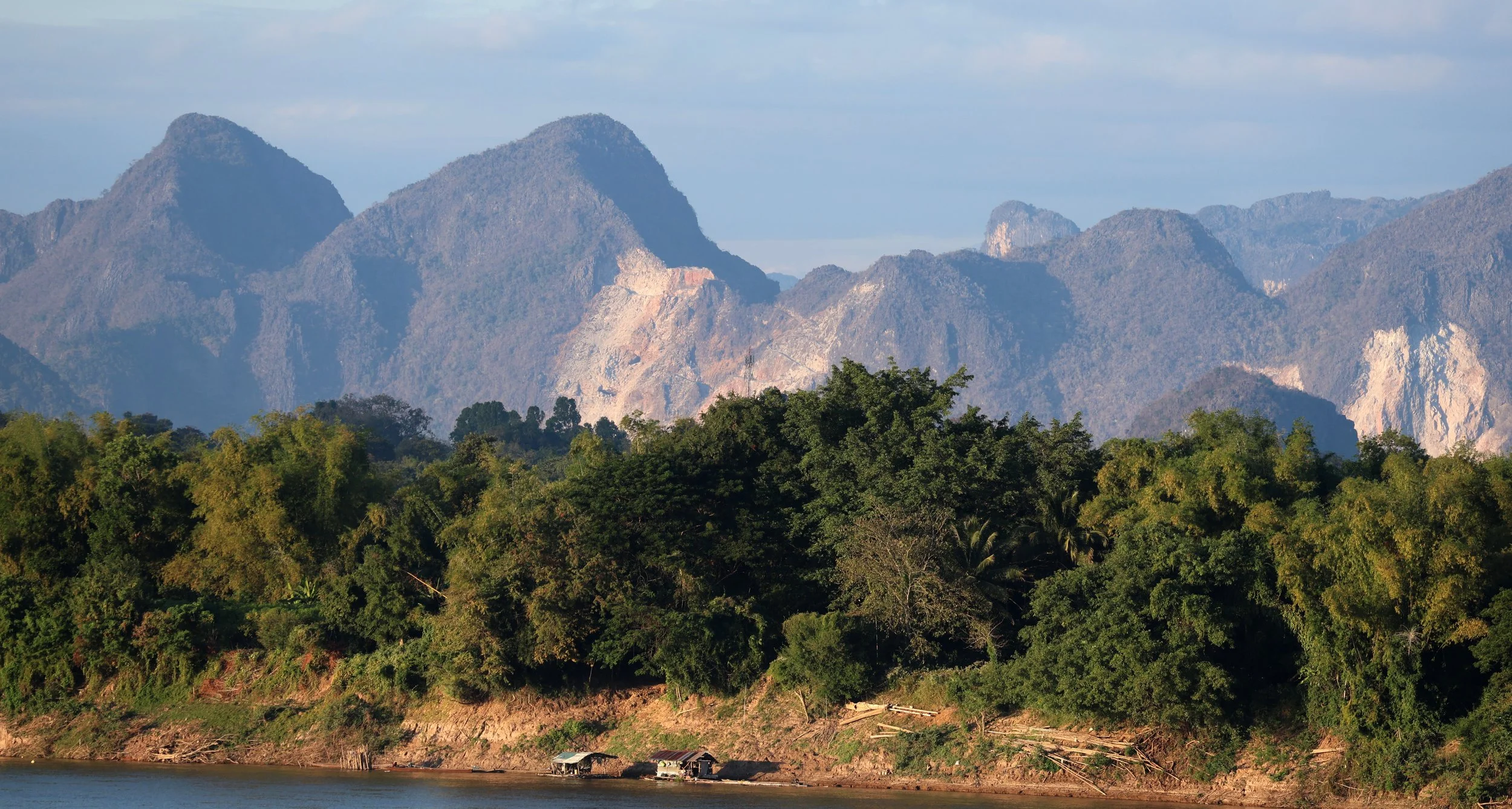
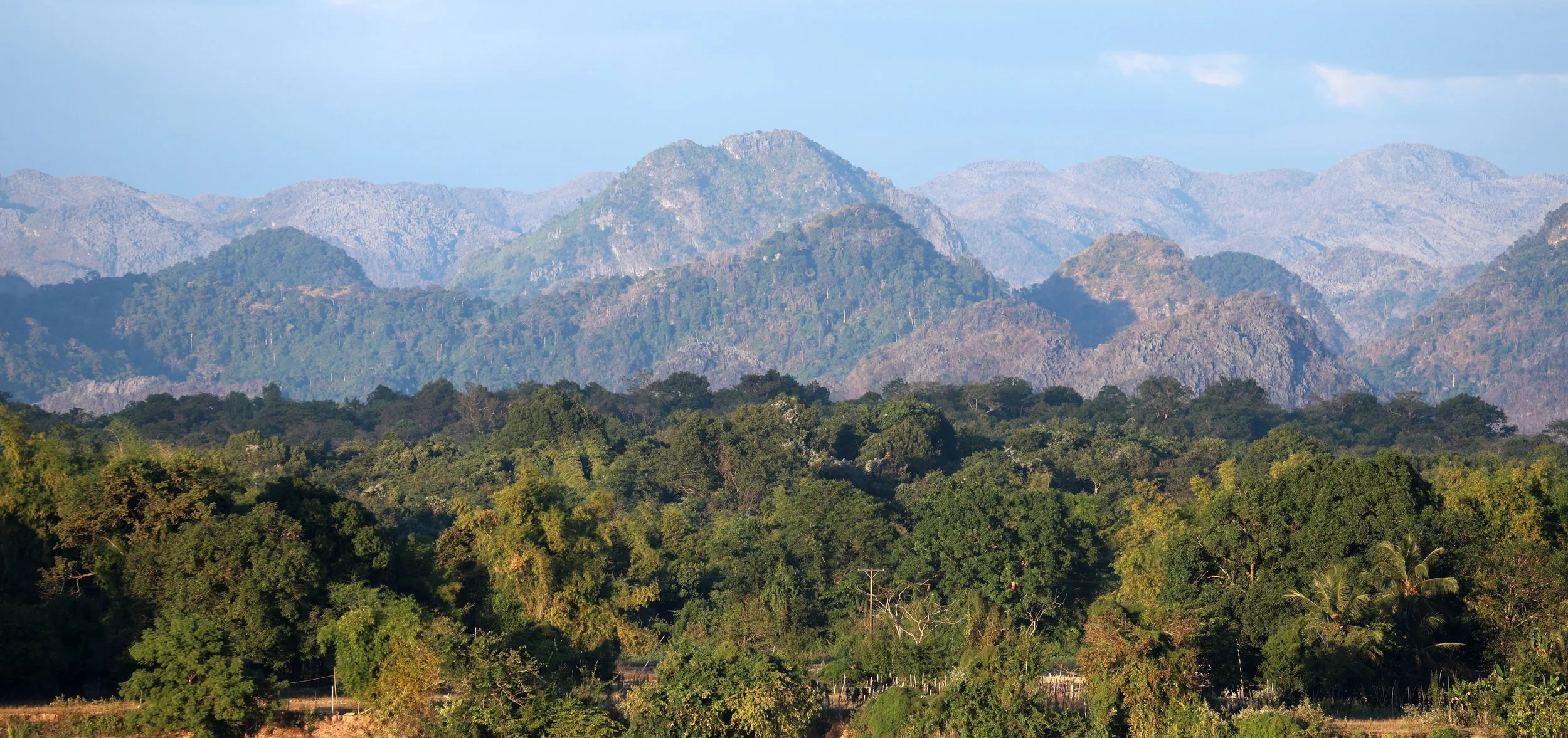
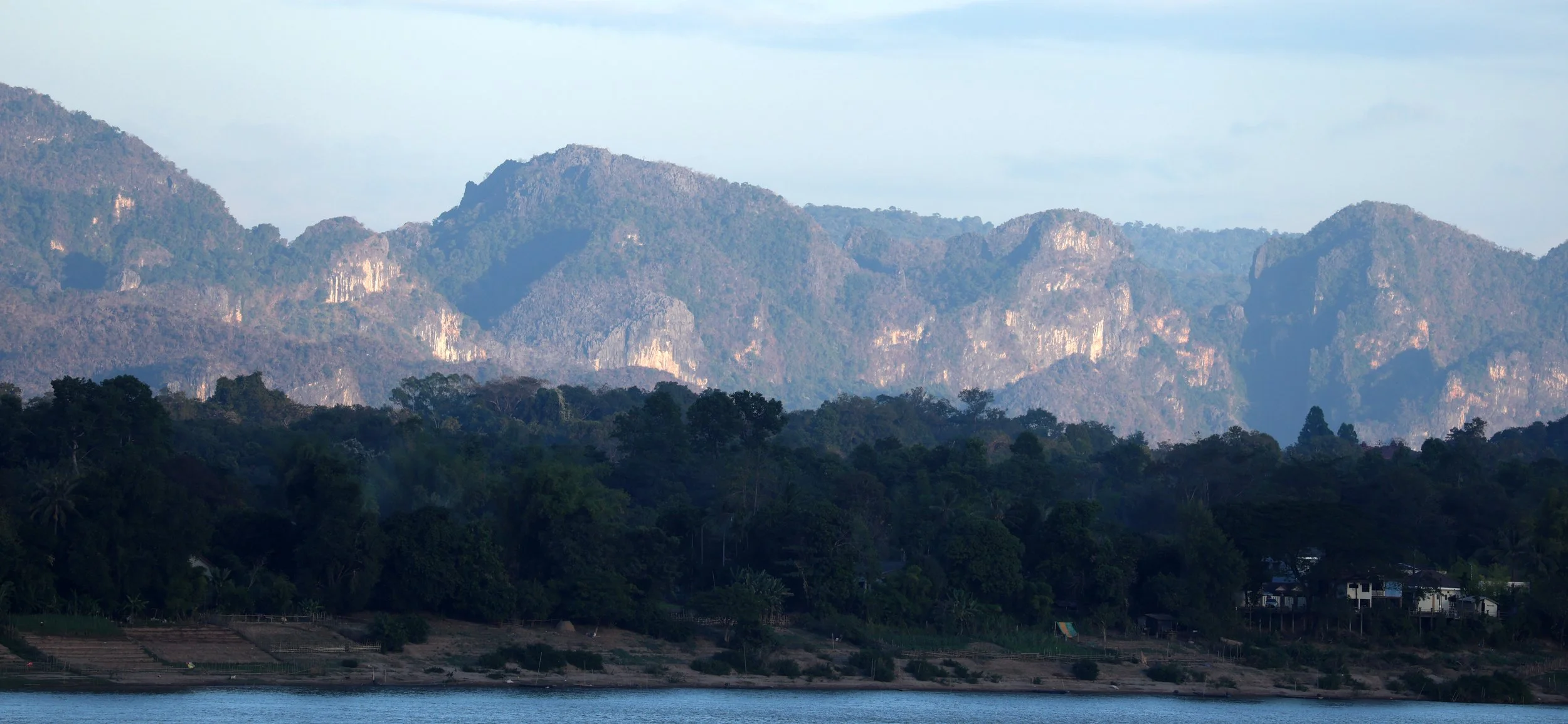
Scenery of Khammouane Province, Lao

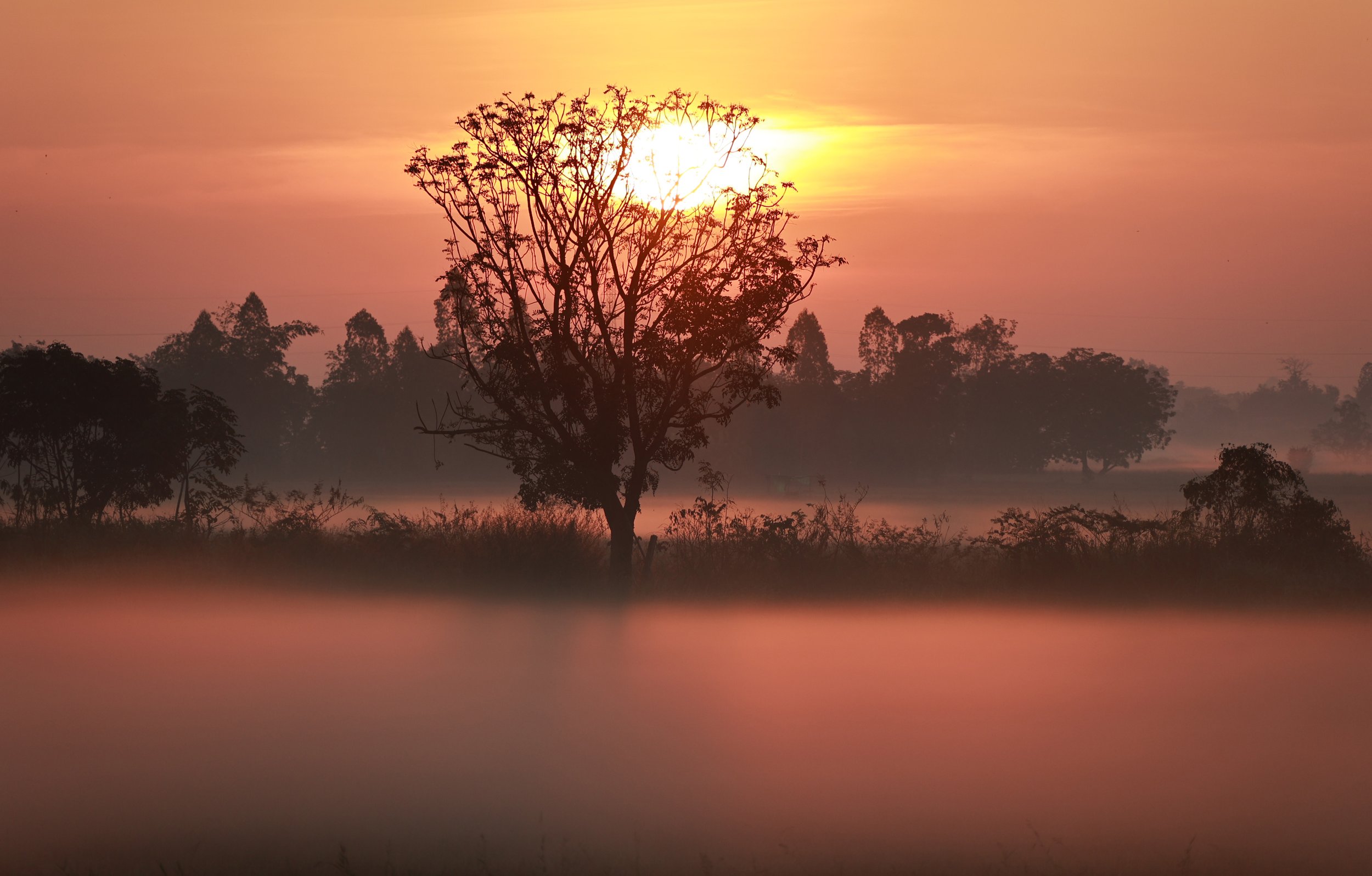
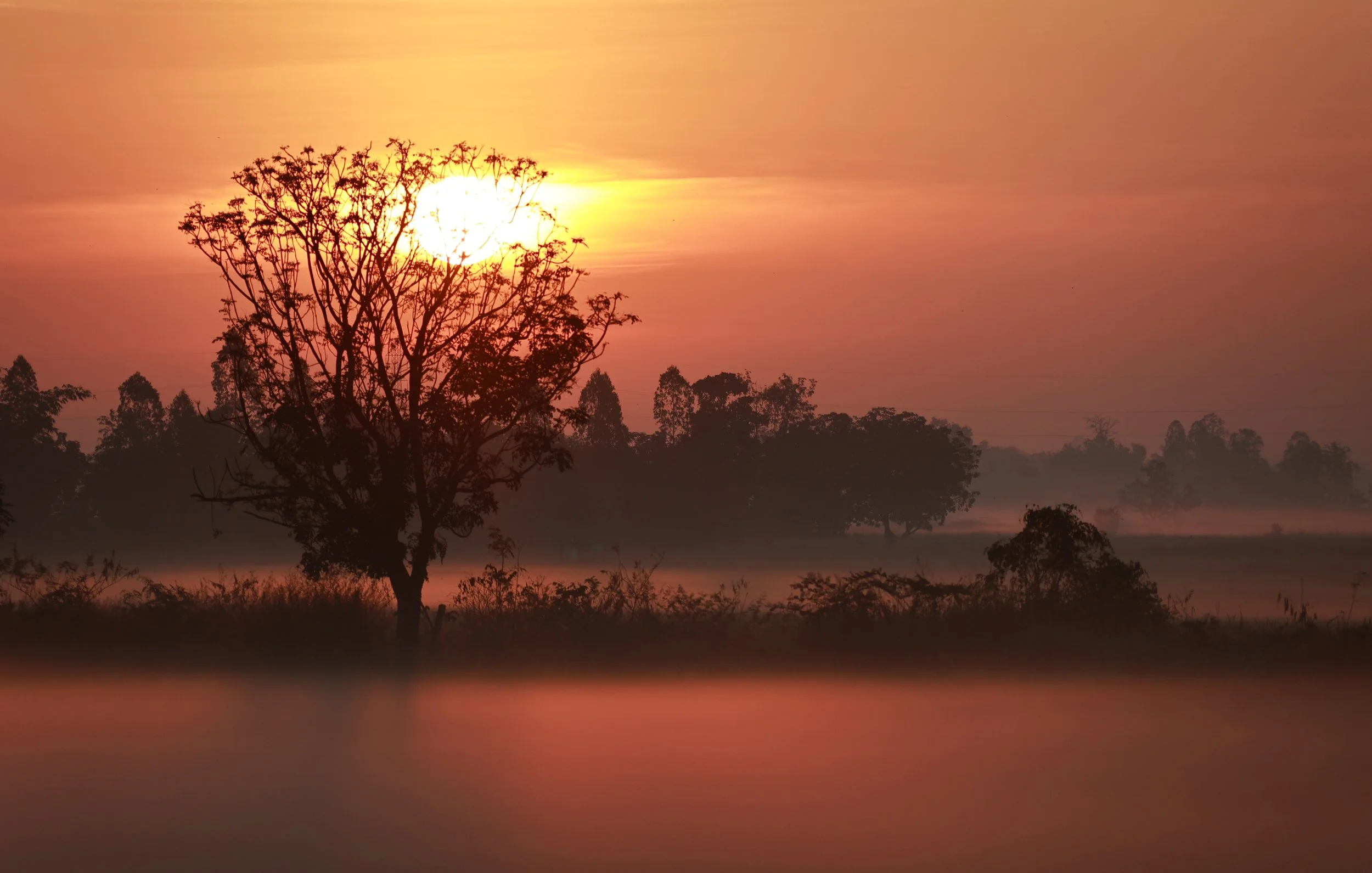
Gift enjoying a Mekong River sunrise. Lao across the water


Crossing Friendship Bridge #3
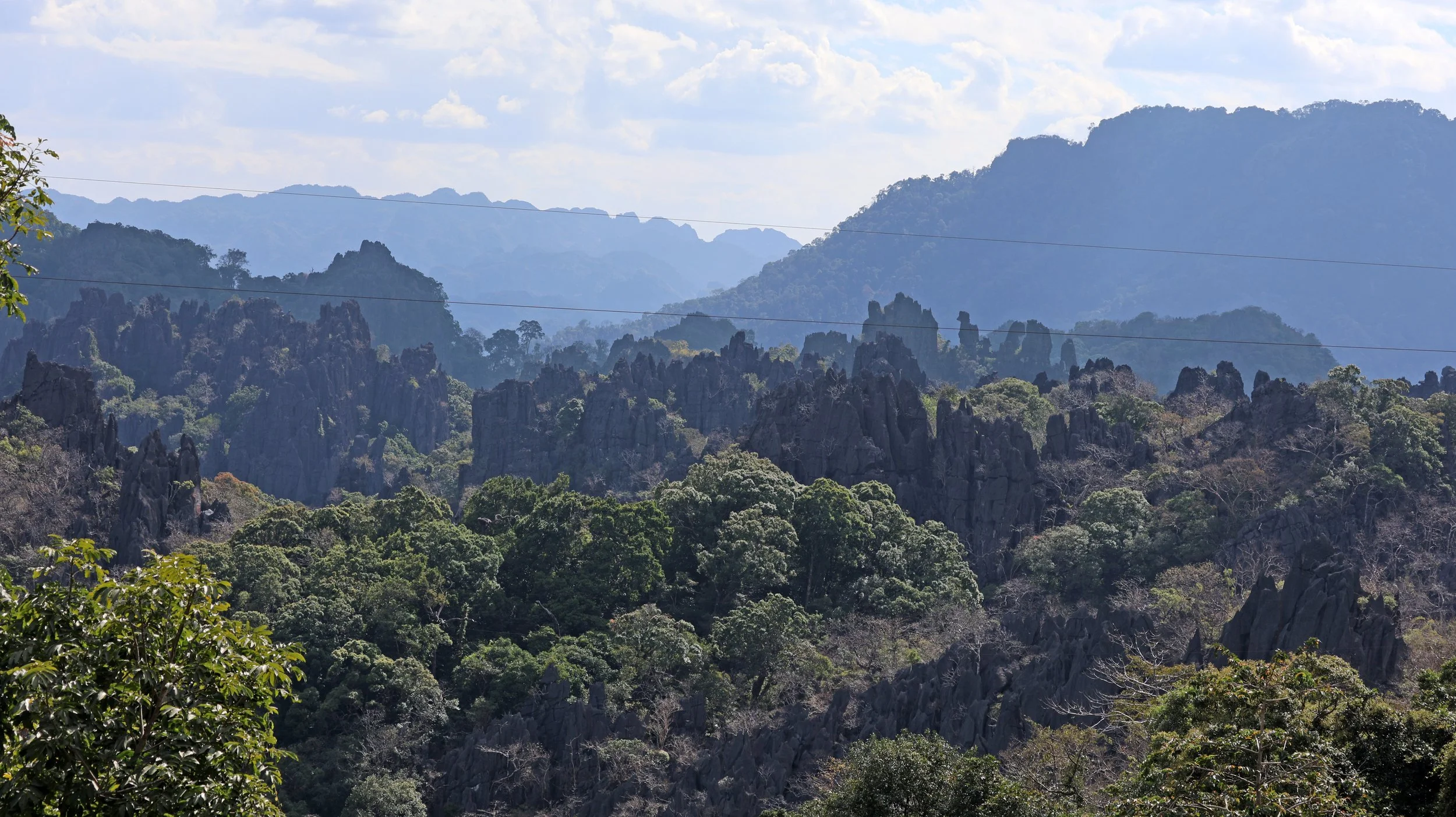
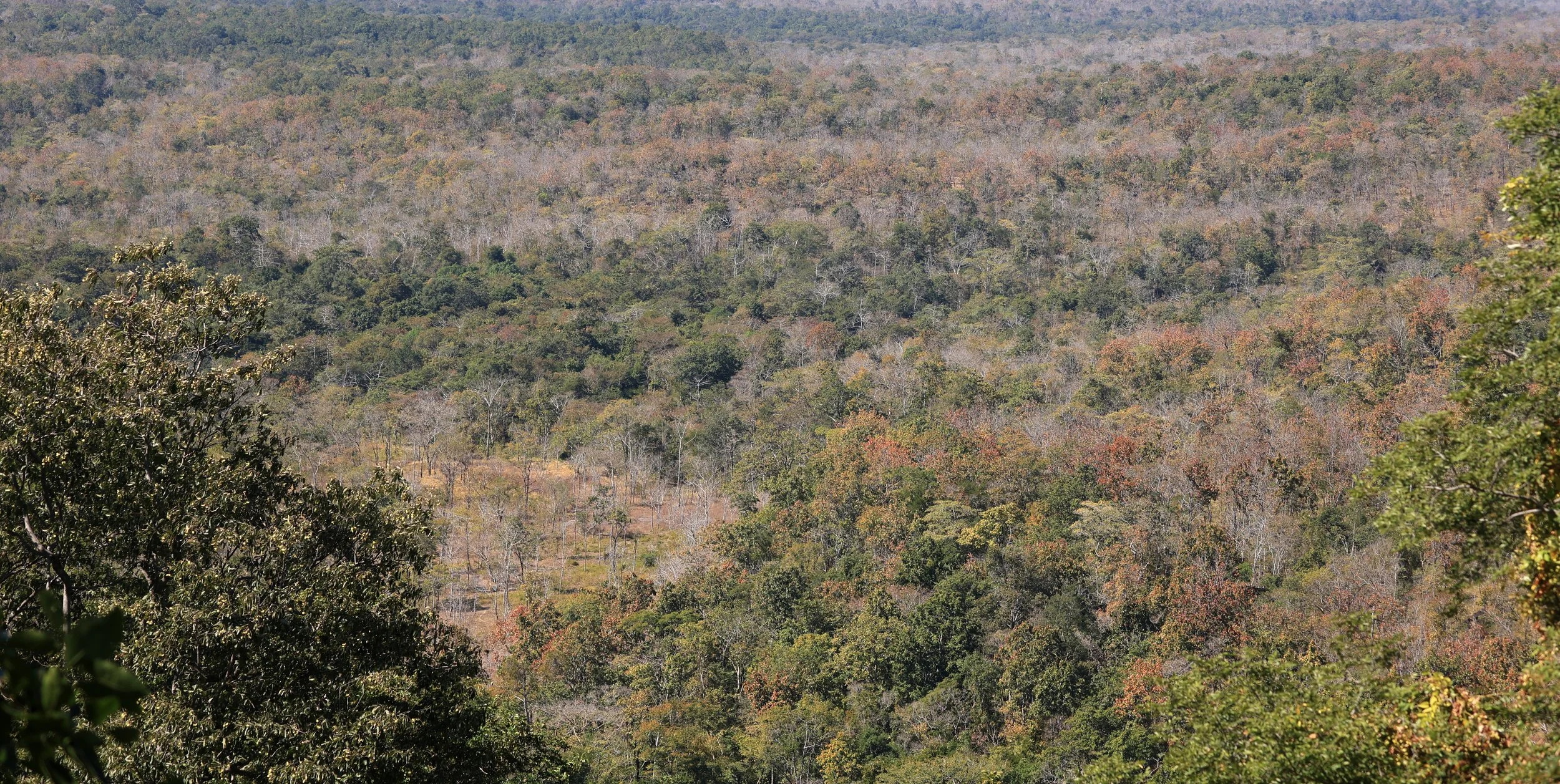
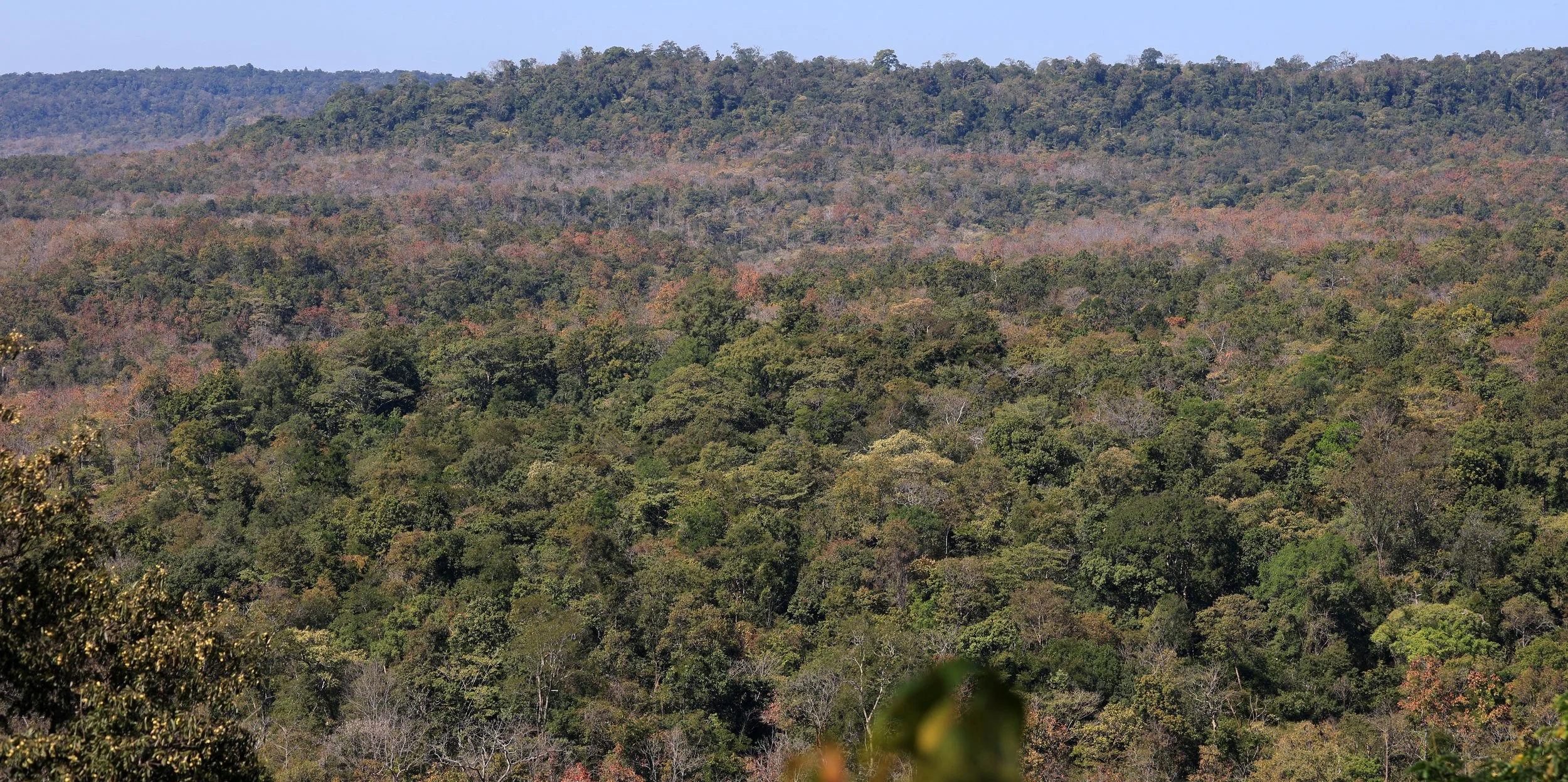
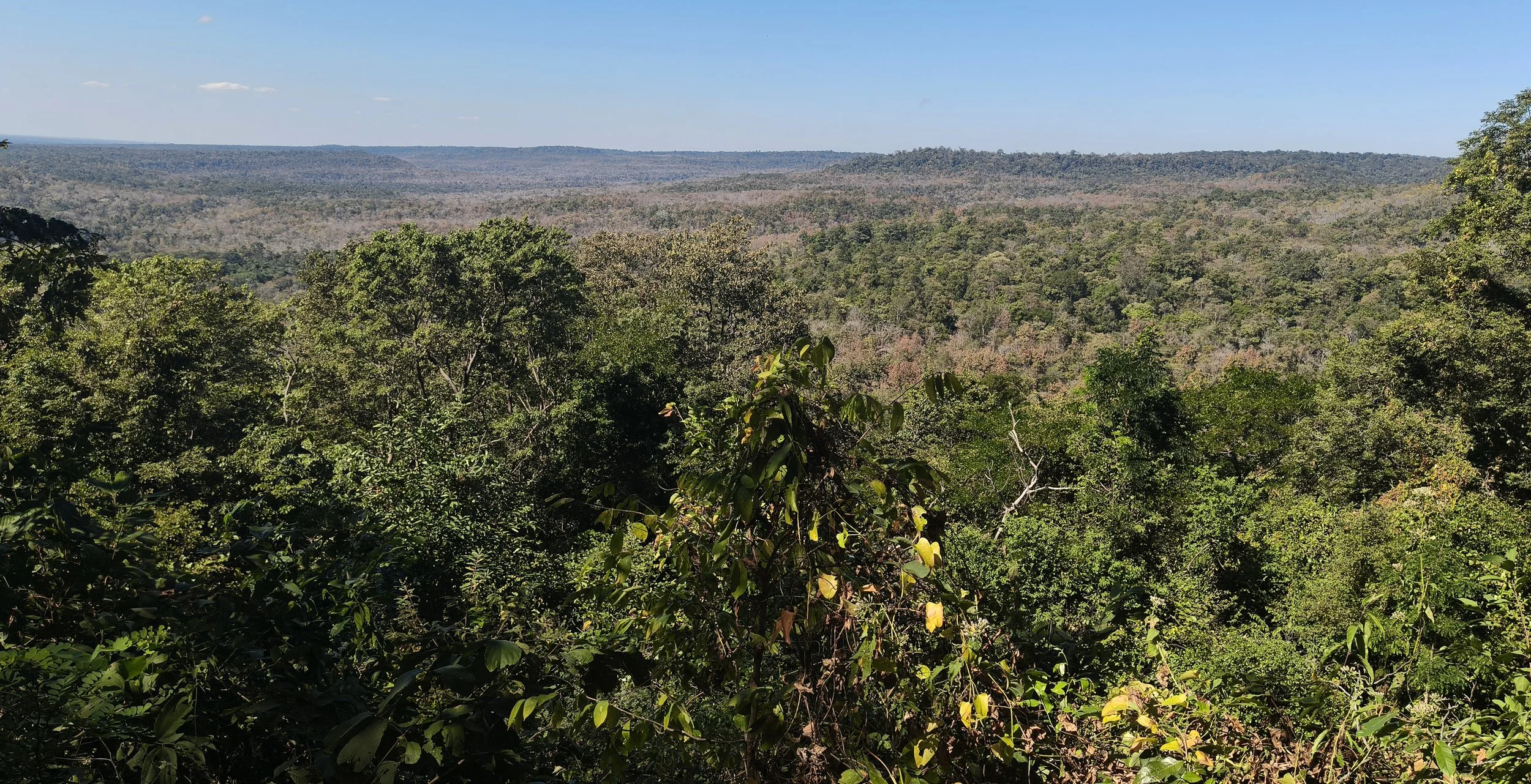
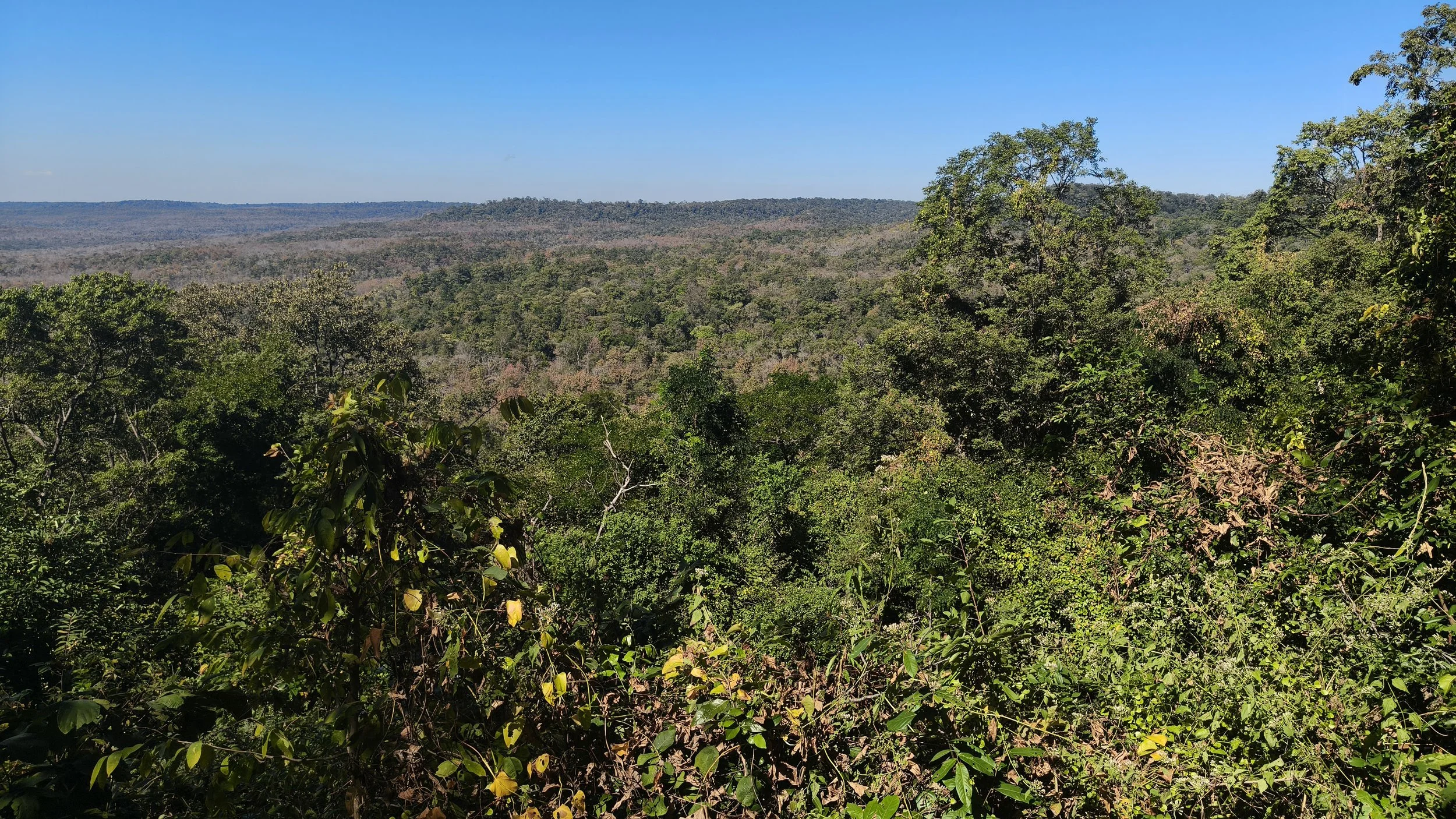
View from the Rock Viewpoint
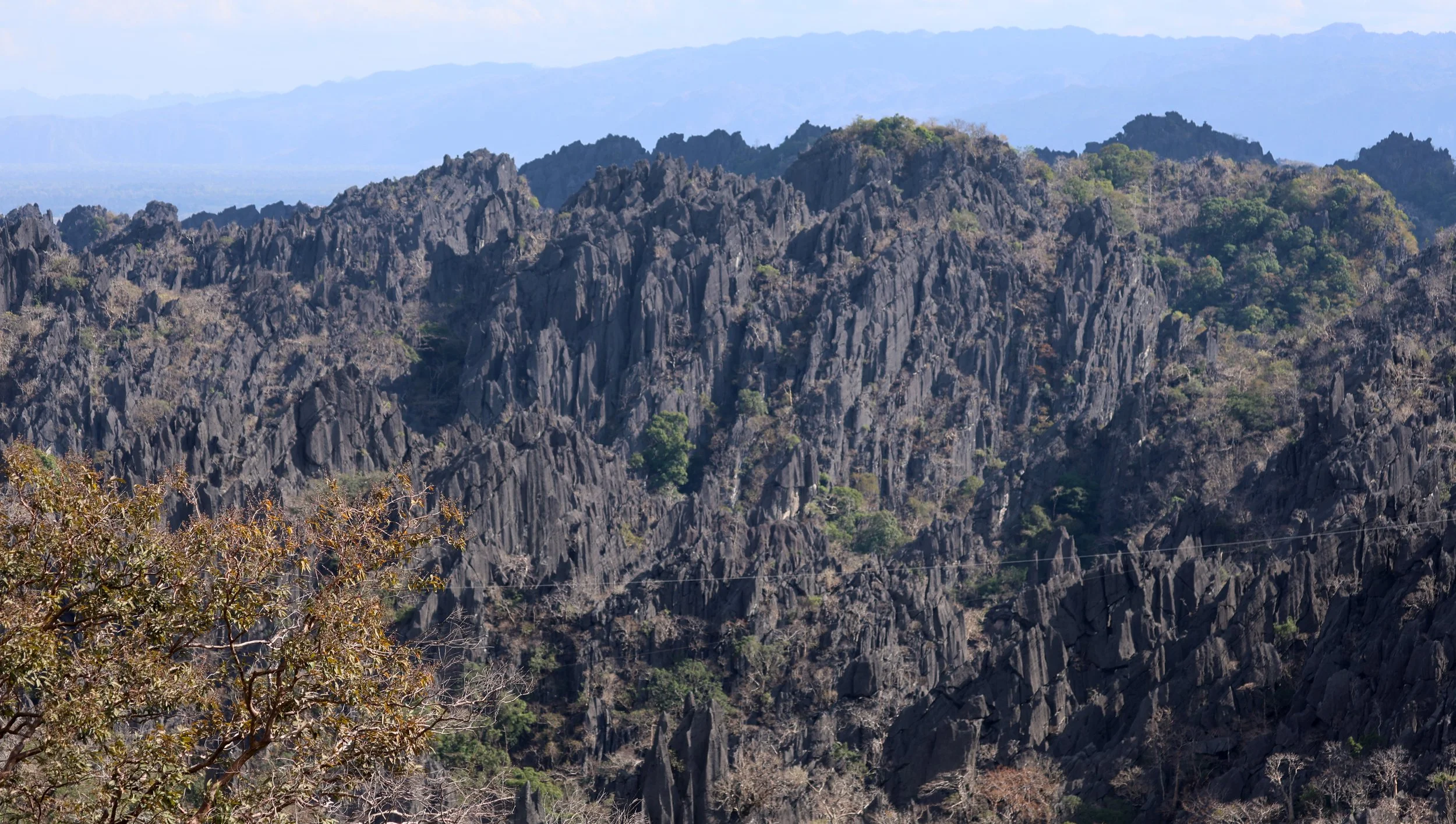
Amazing karst mountains for miles and miles
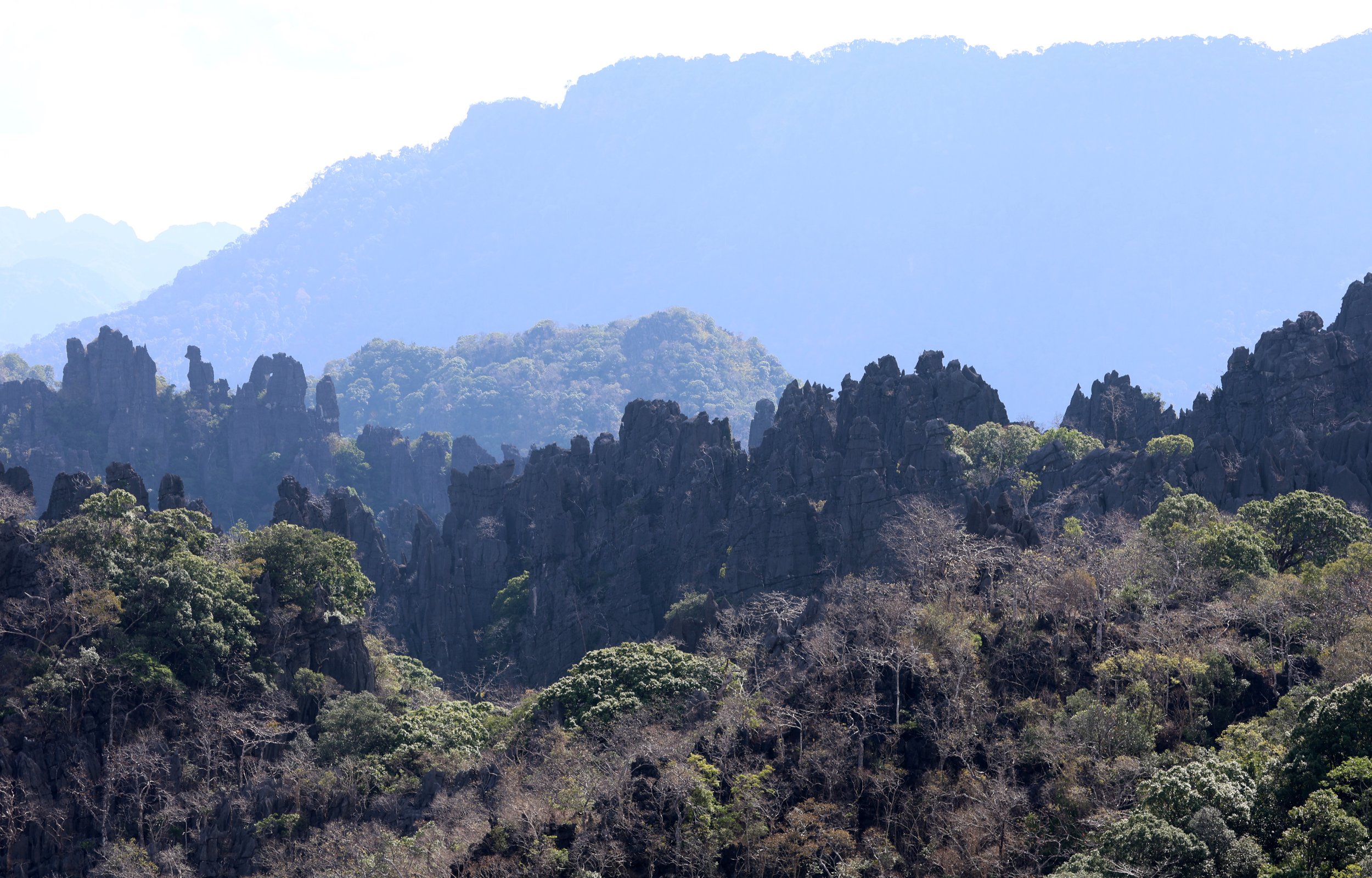
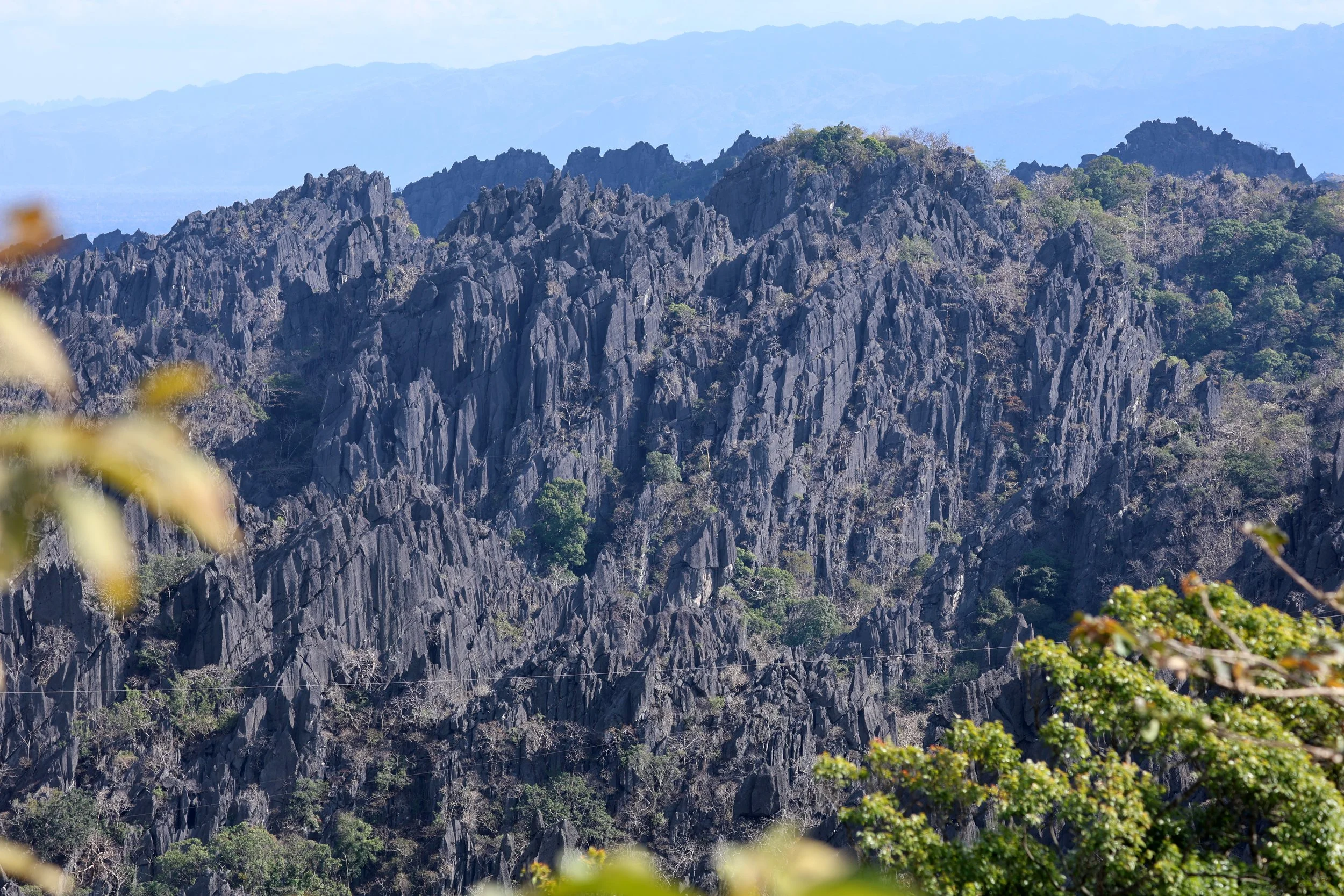
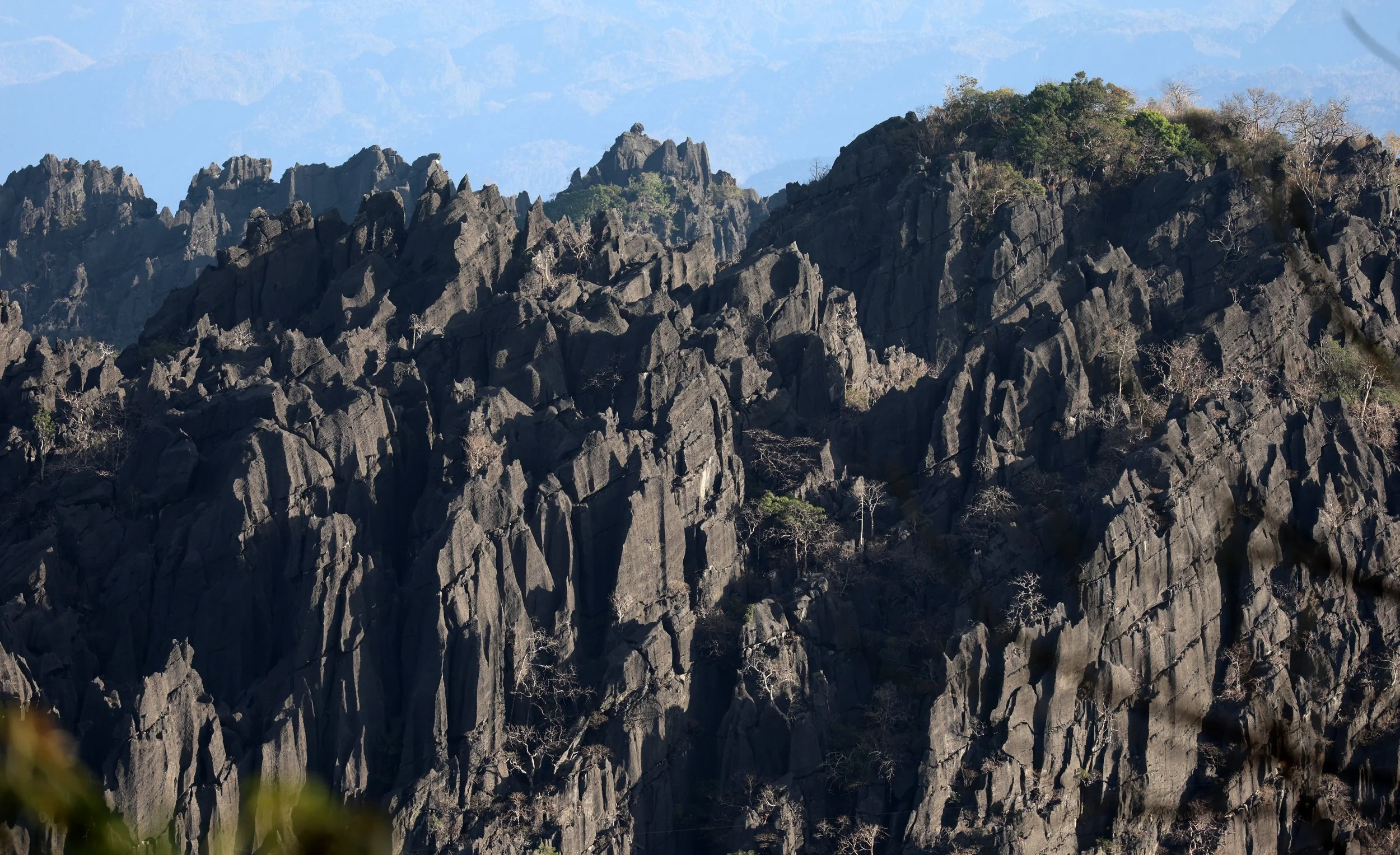
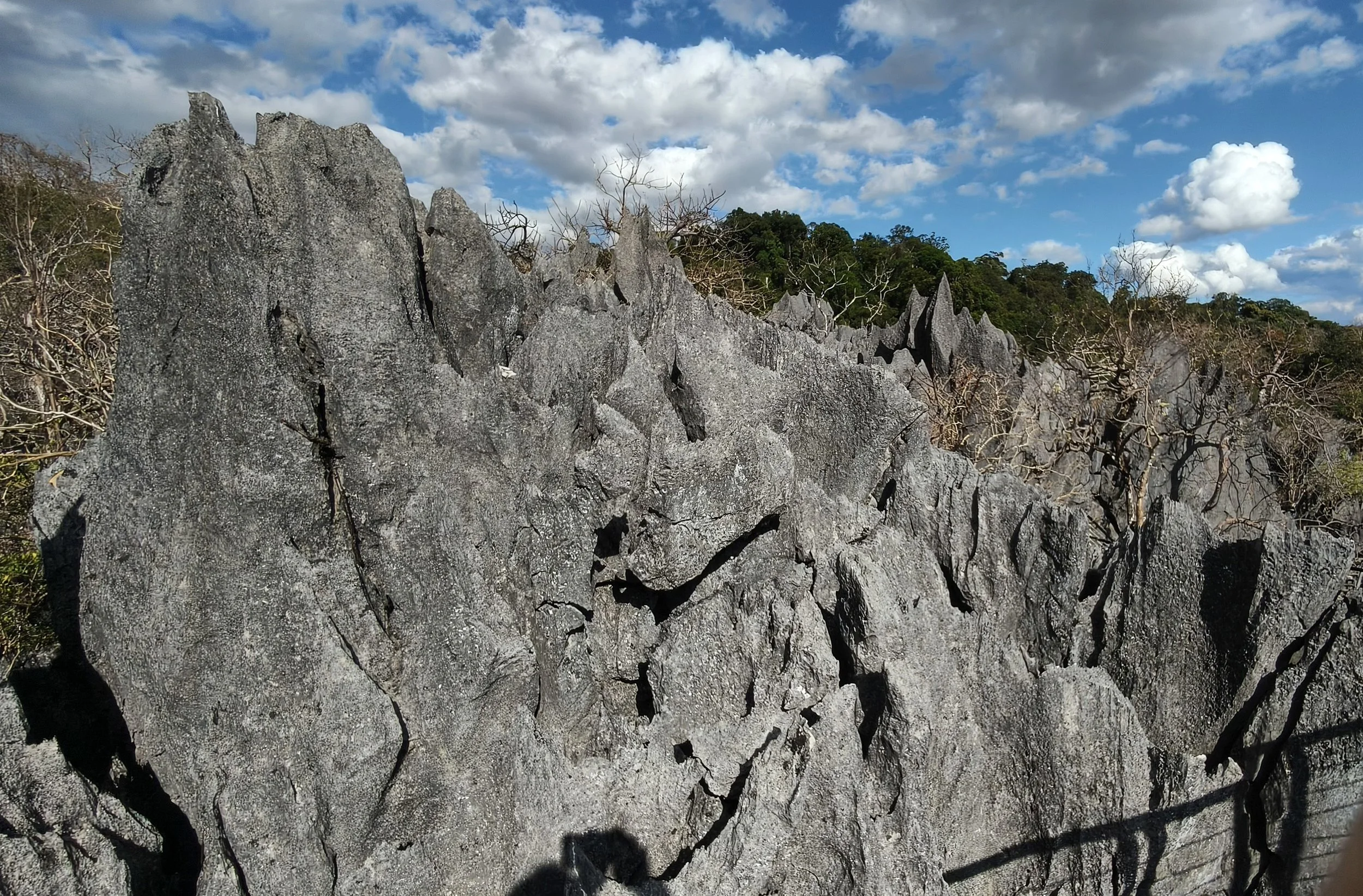
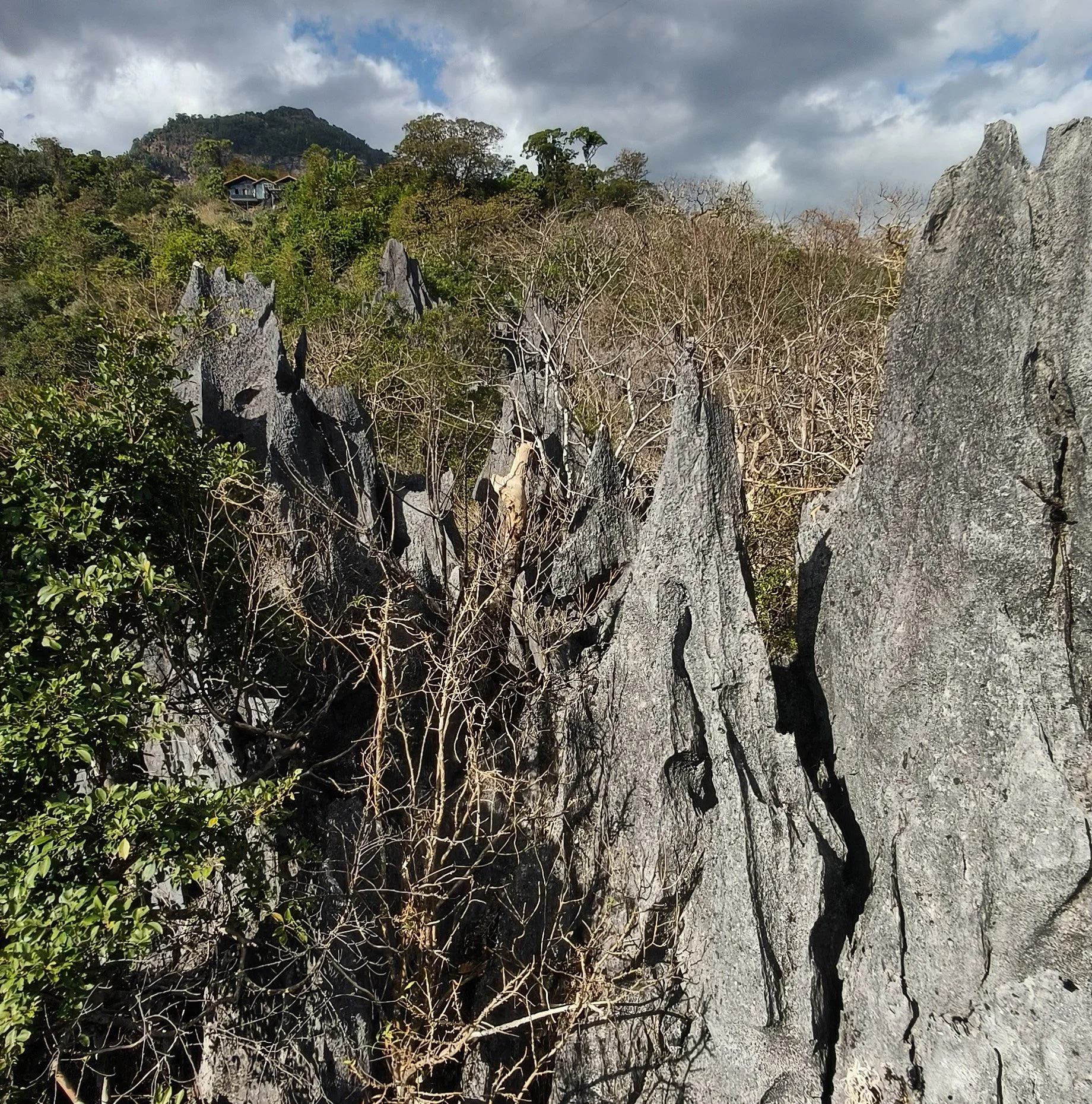
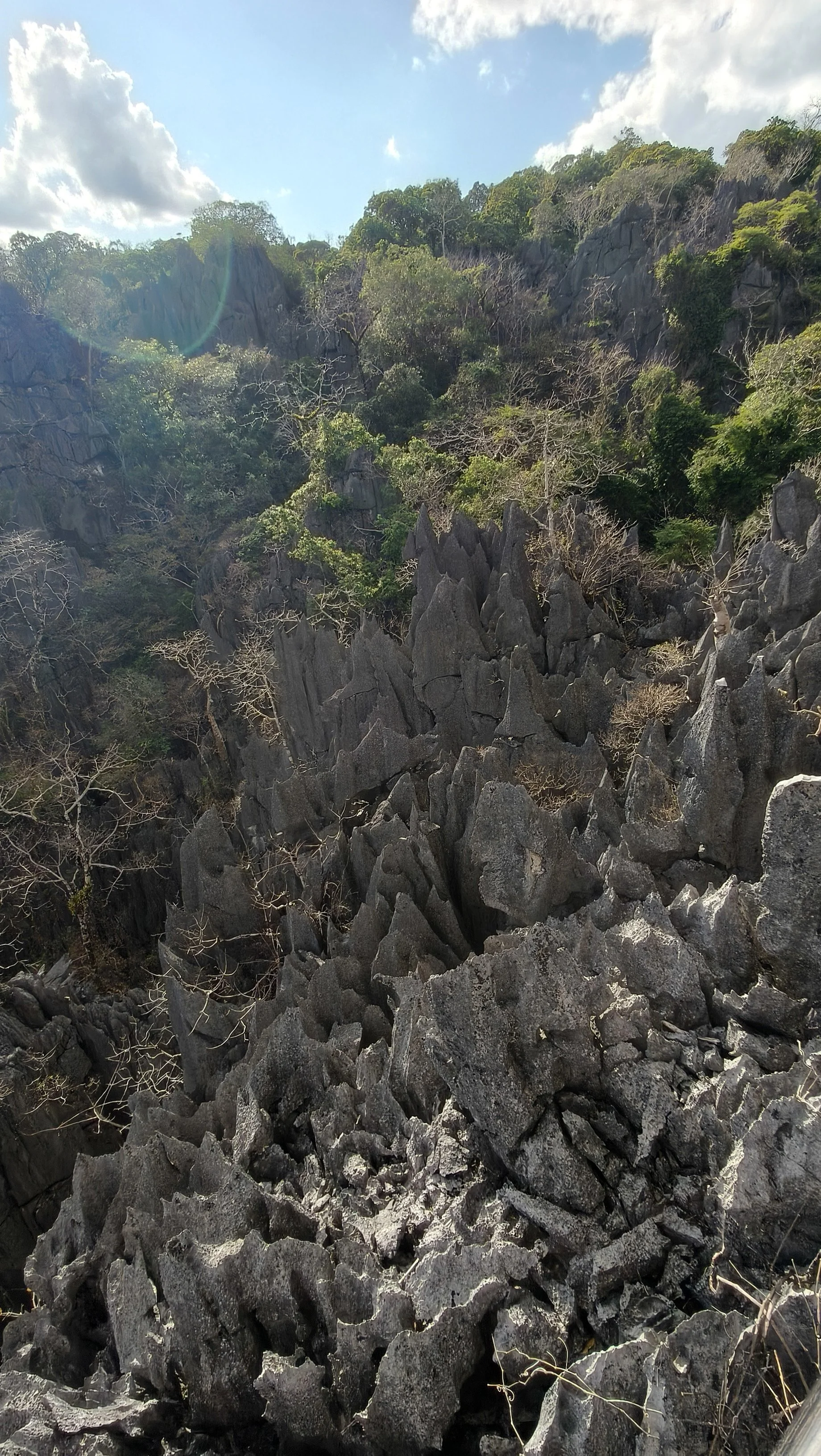
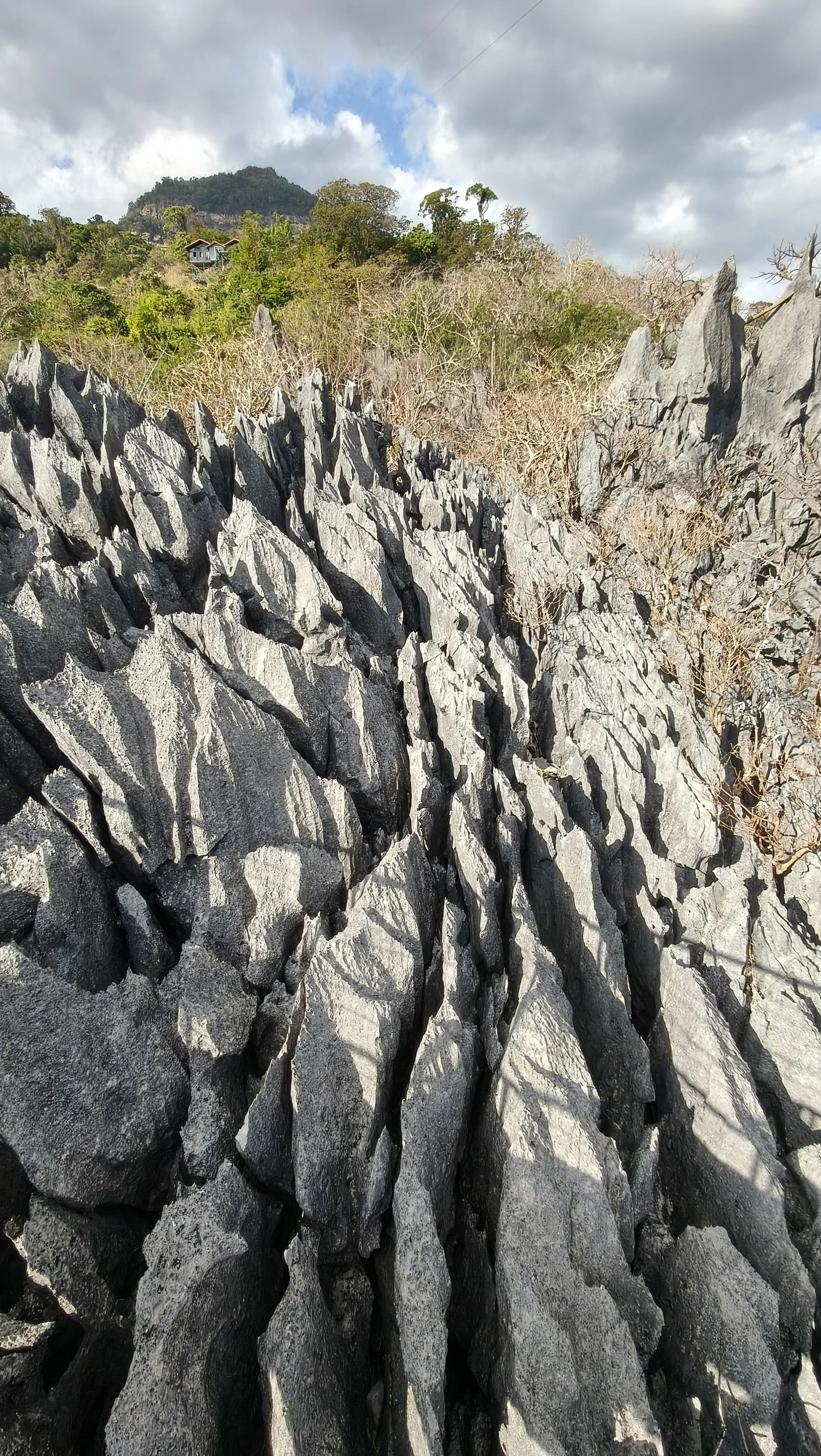
Karst maze
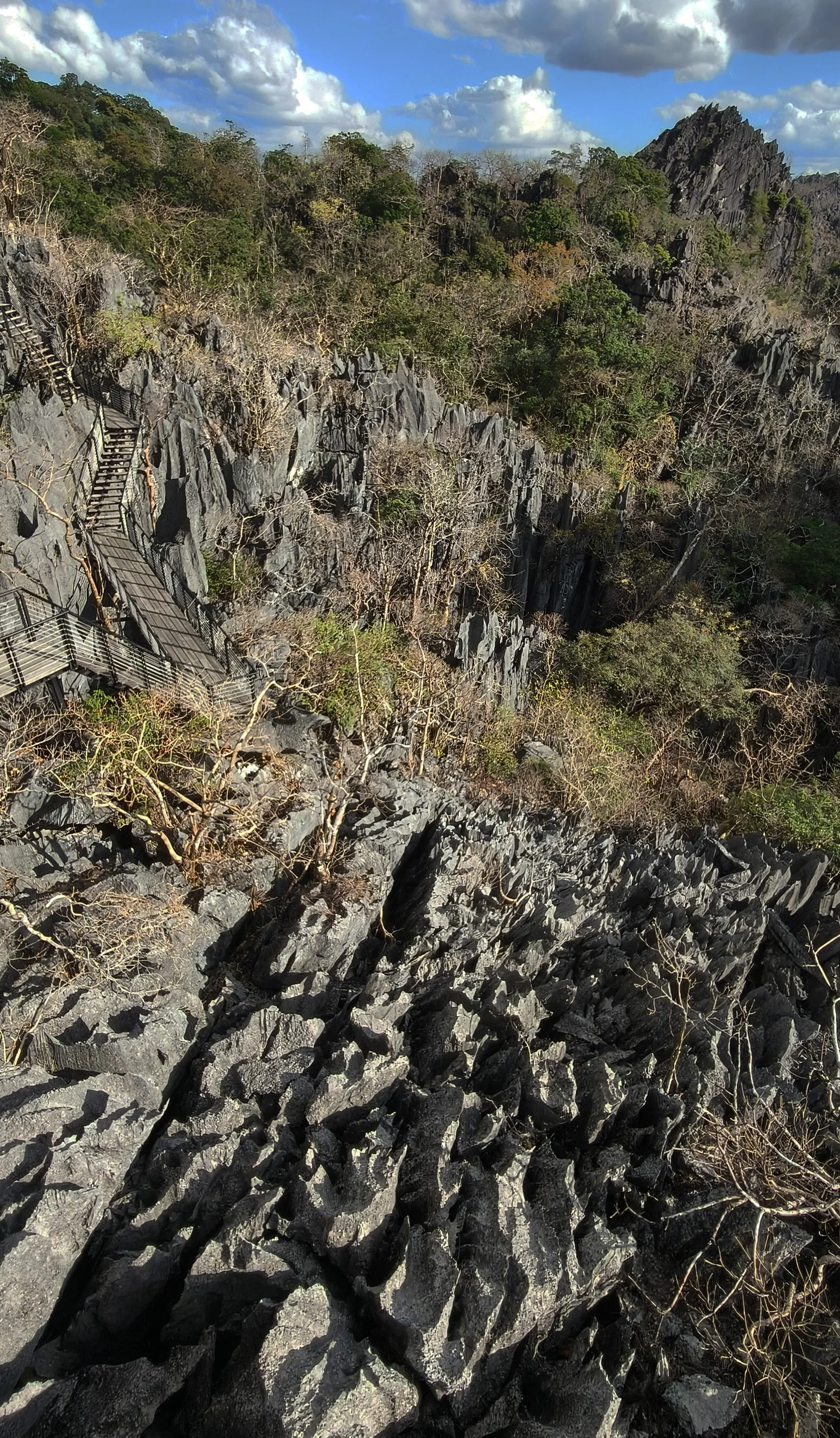
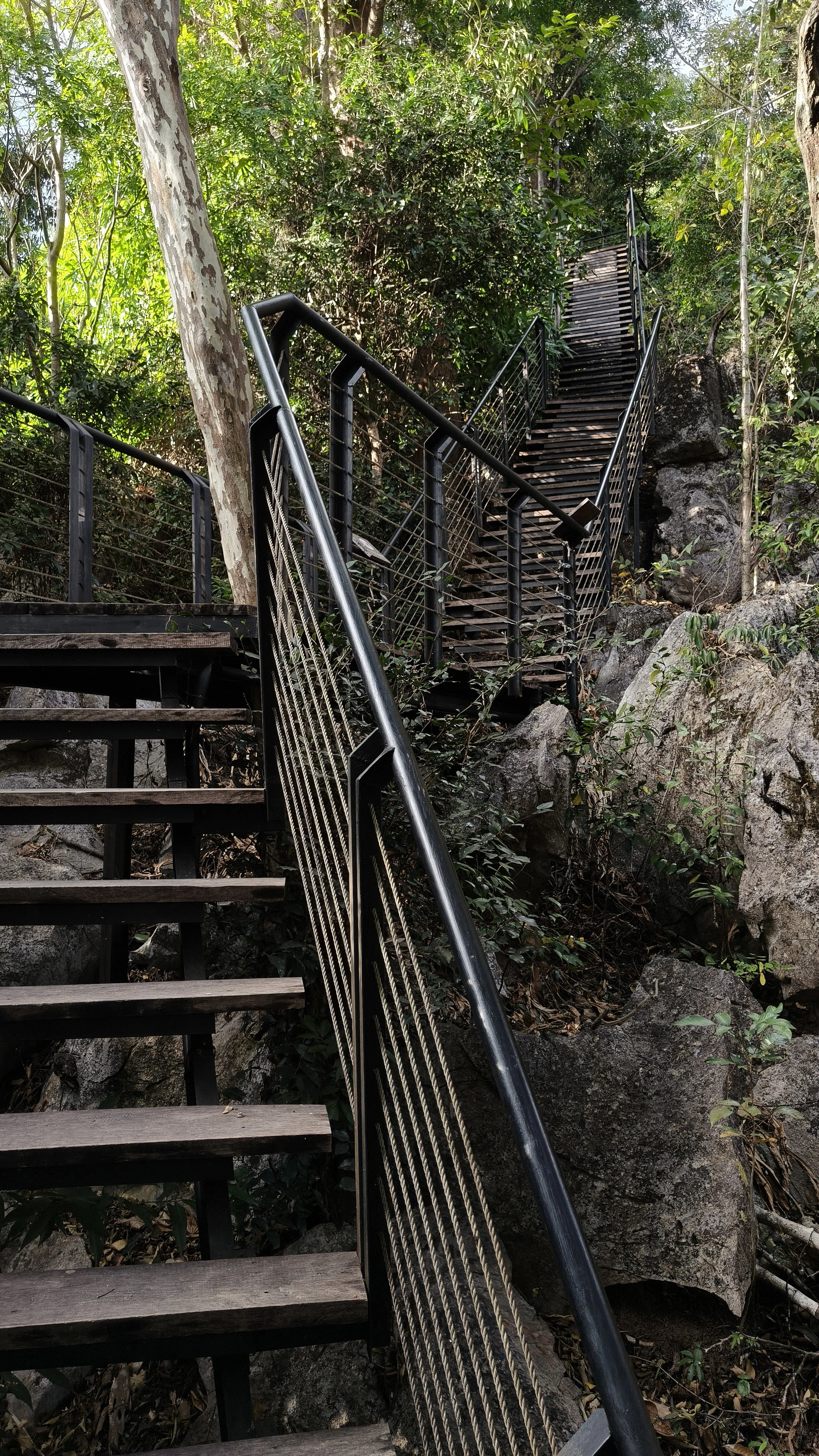
A segment of the Escher stair network!
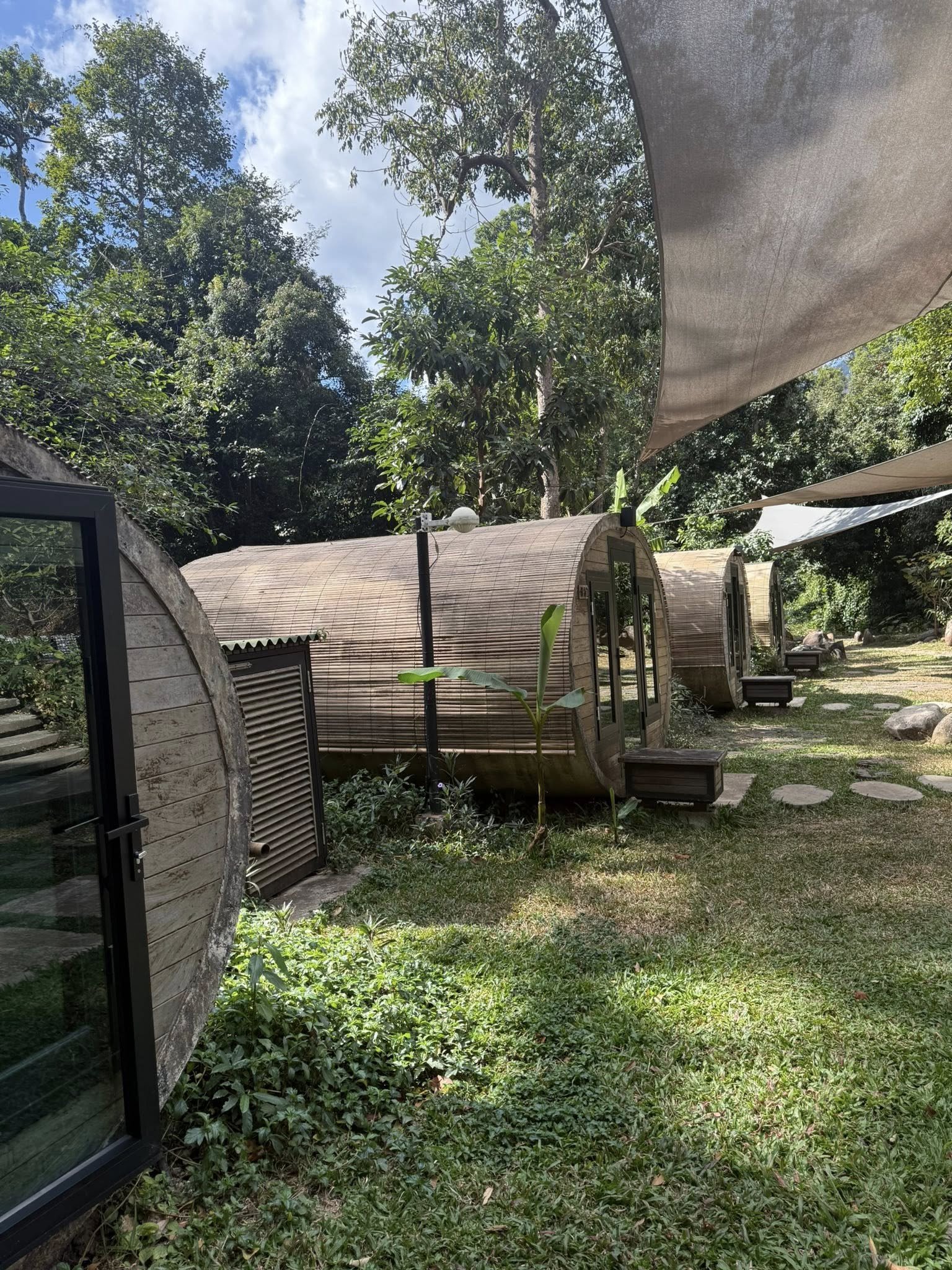
Capsules at the Rock Viewpoint Resort
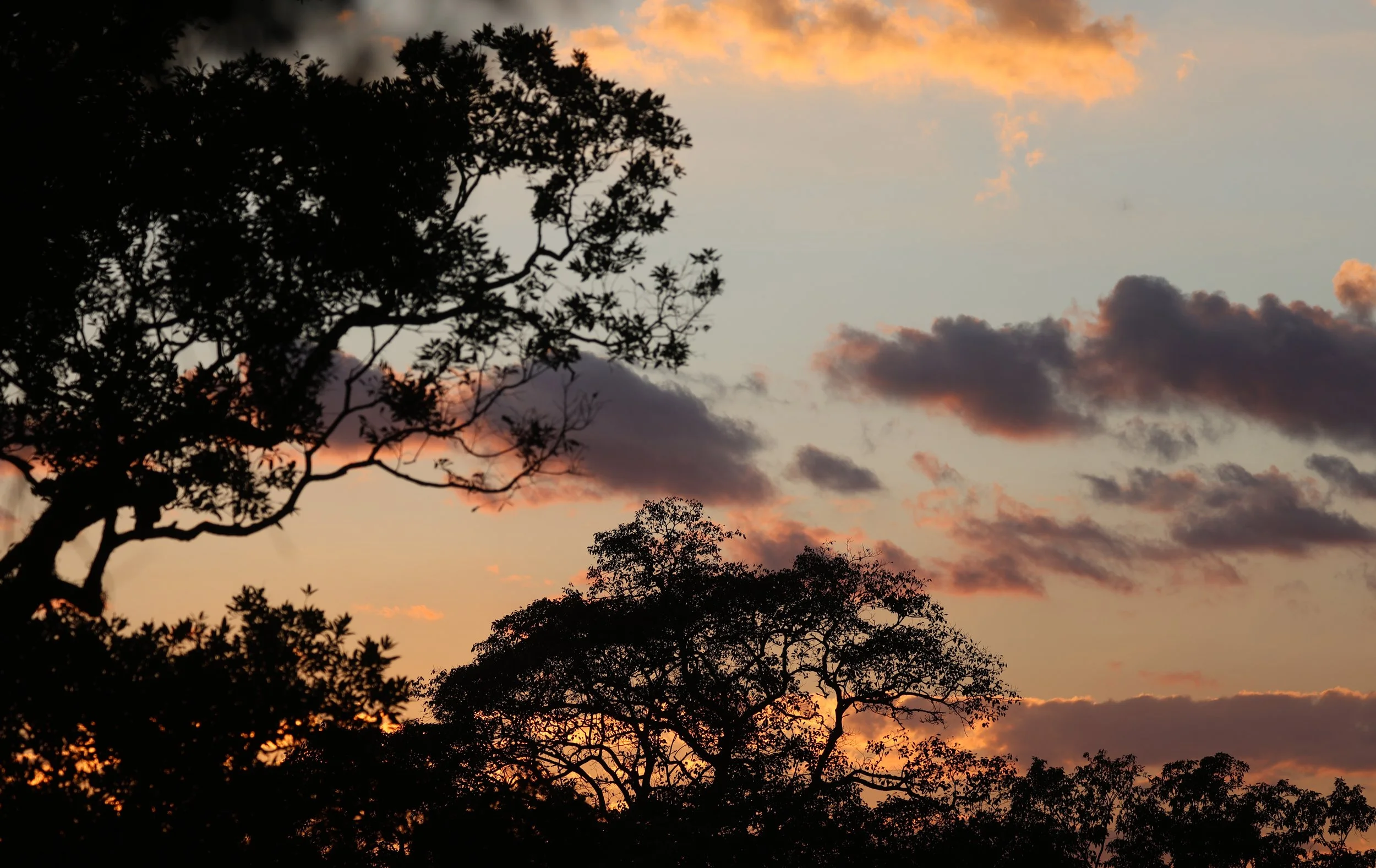
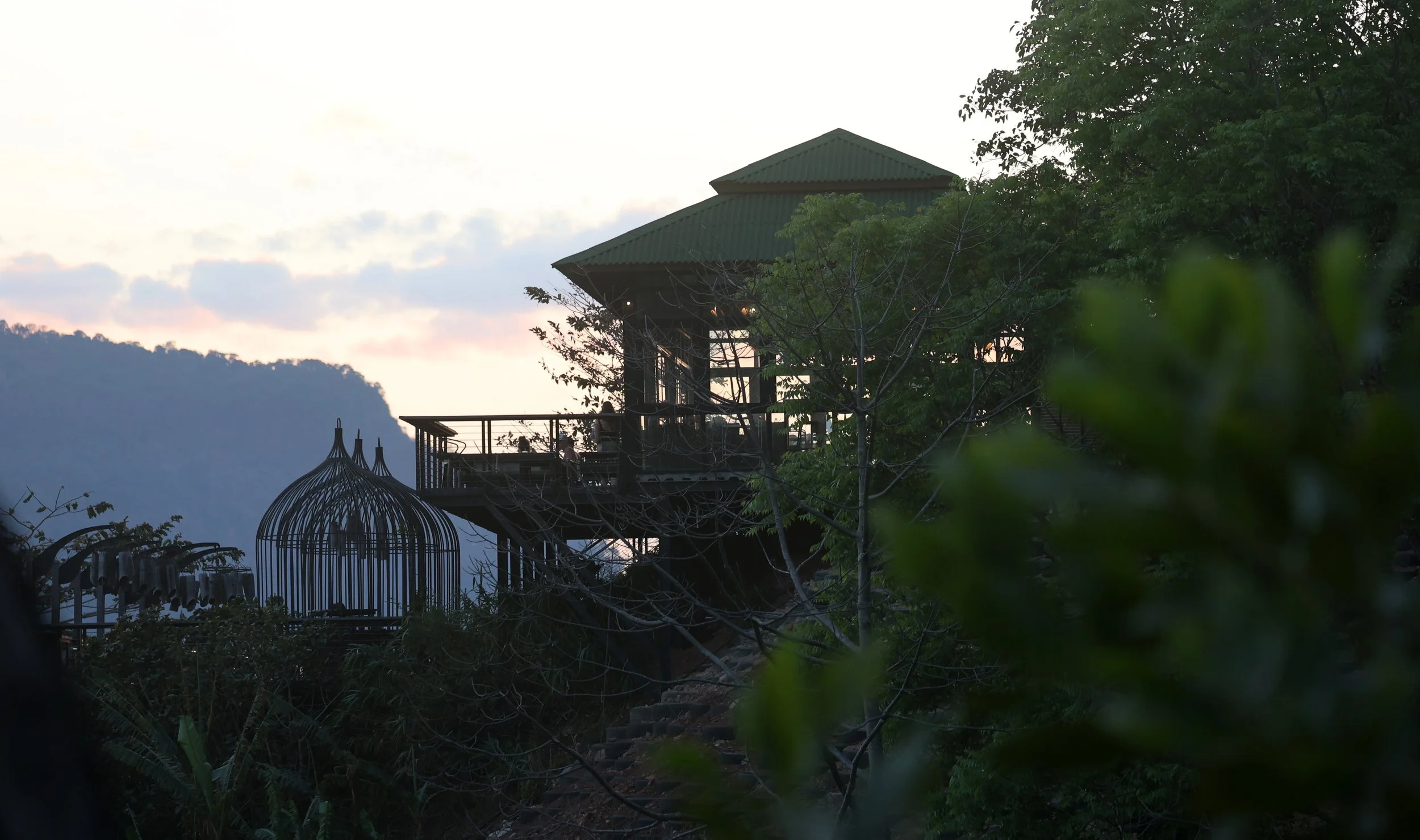
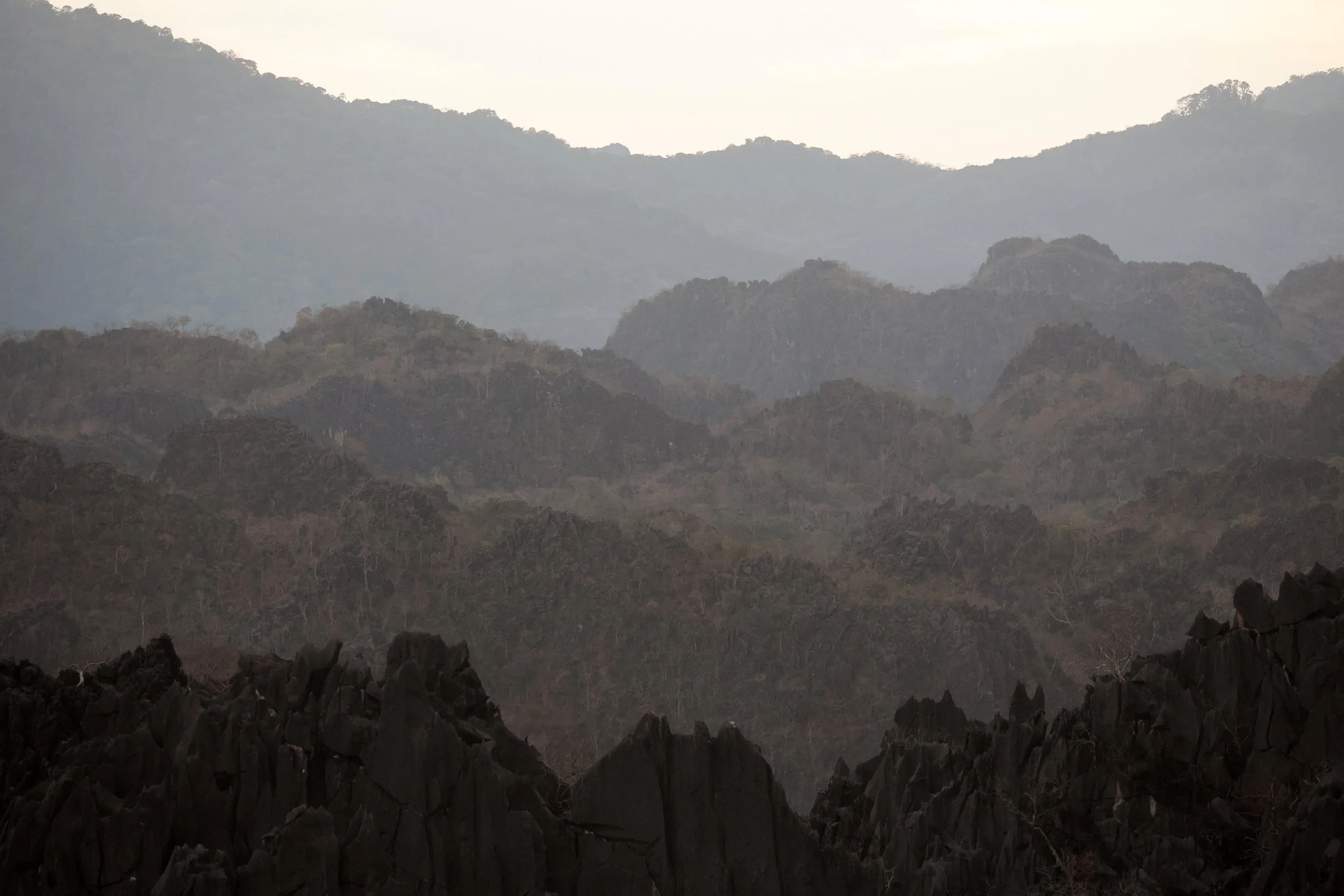
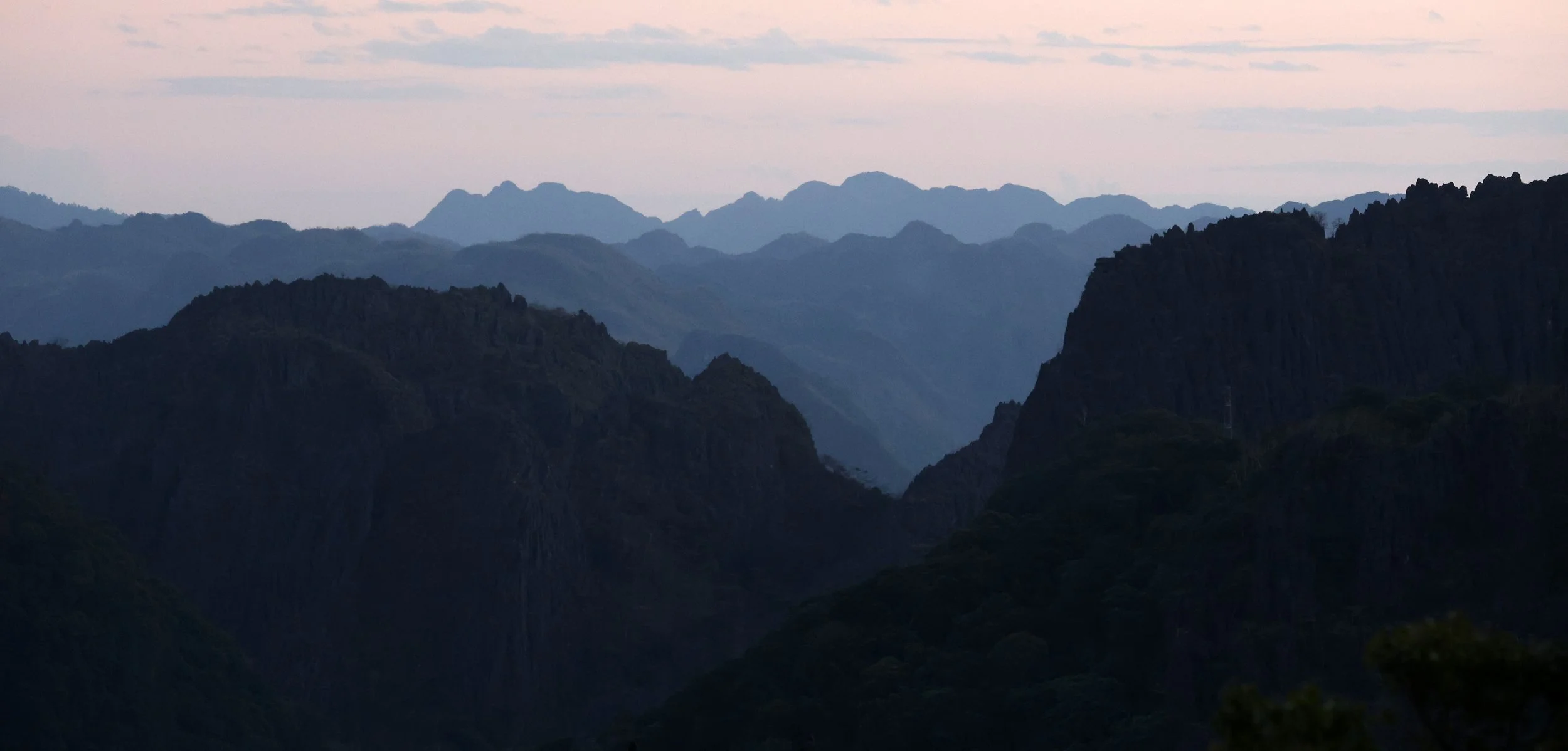
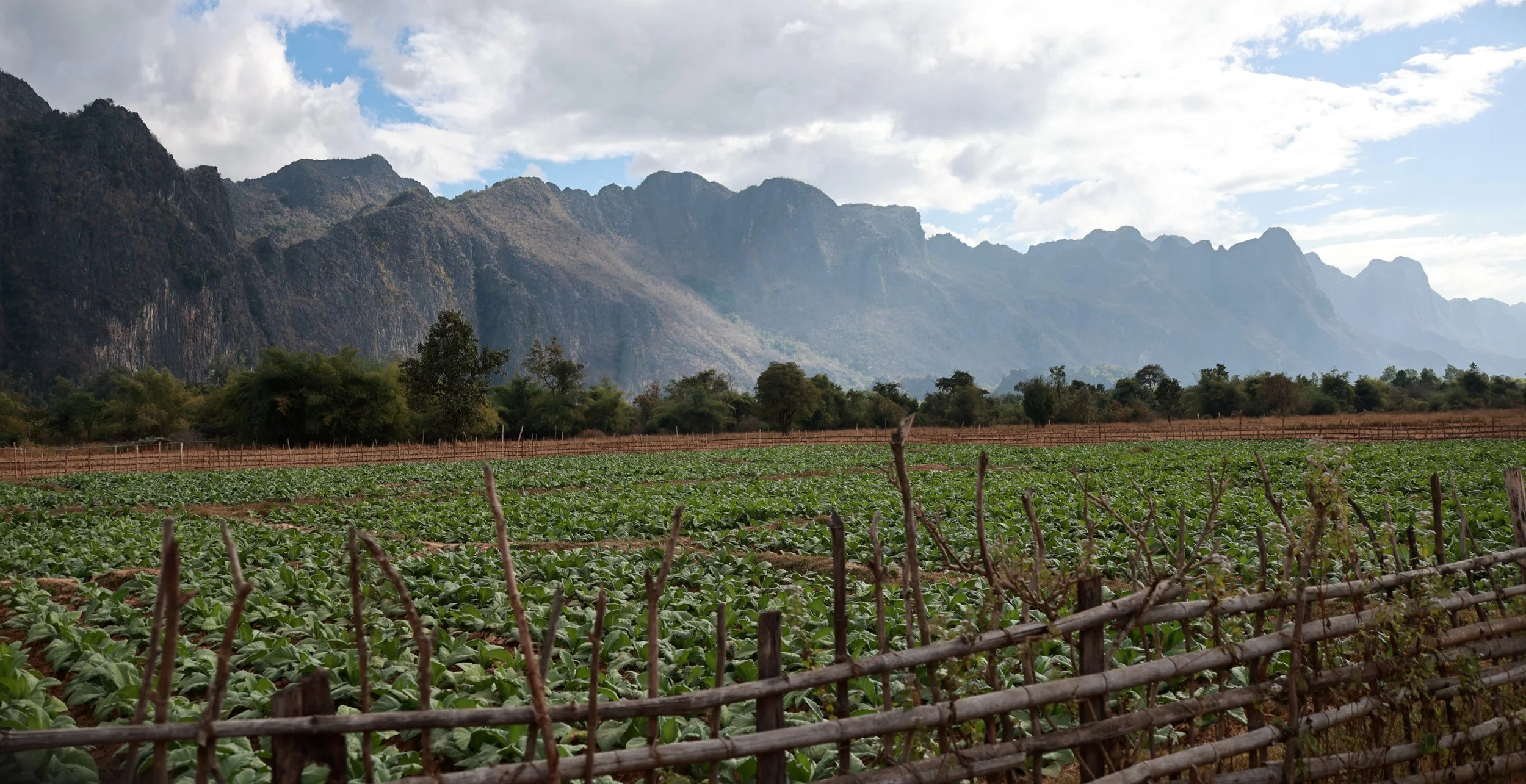
The Lao countryside on the way to Kong Lor Cave




The get a feel for the size of these formations, note the walkway in the image




50+ year old wooden bridges are the norm

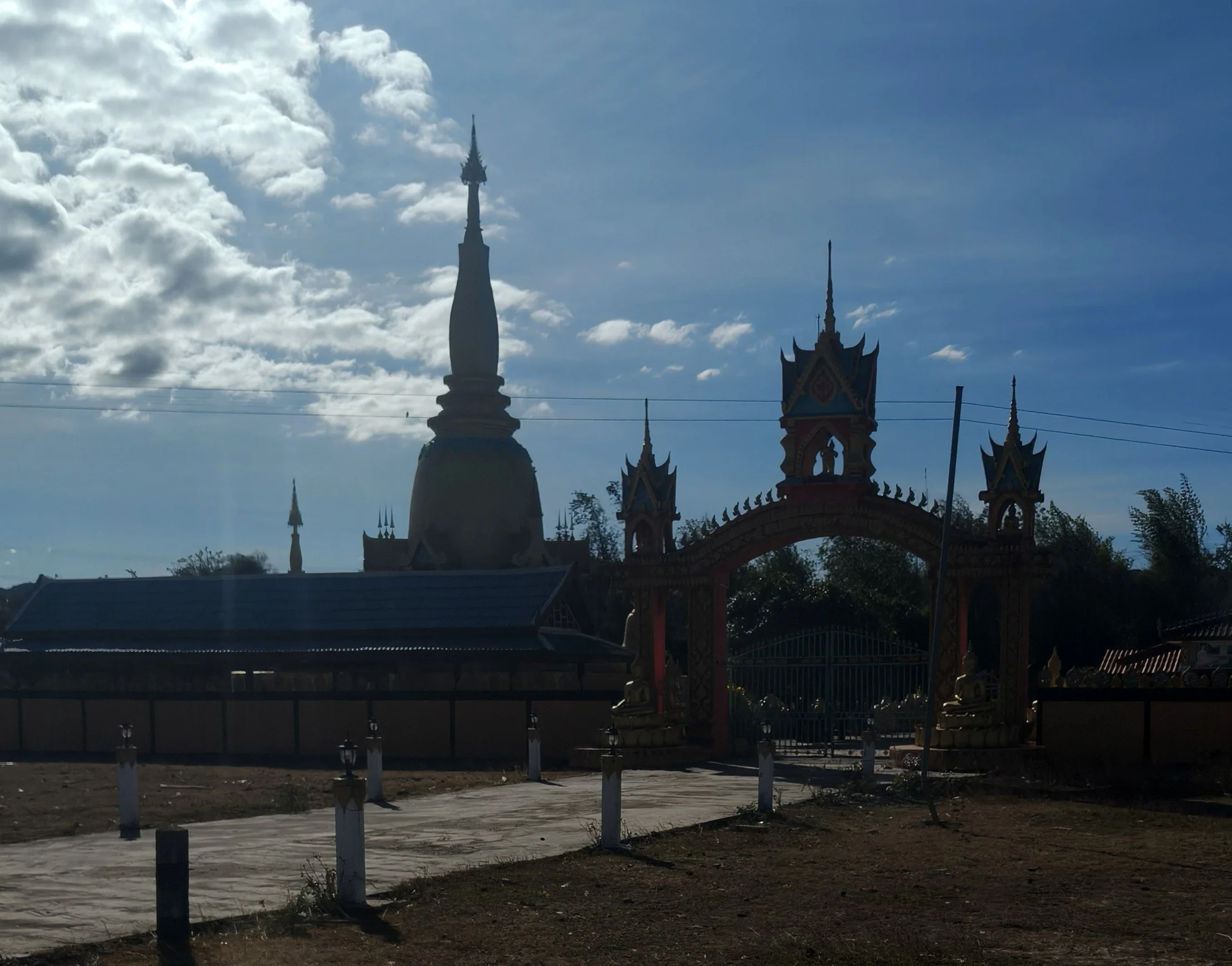


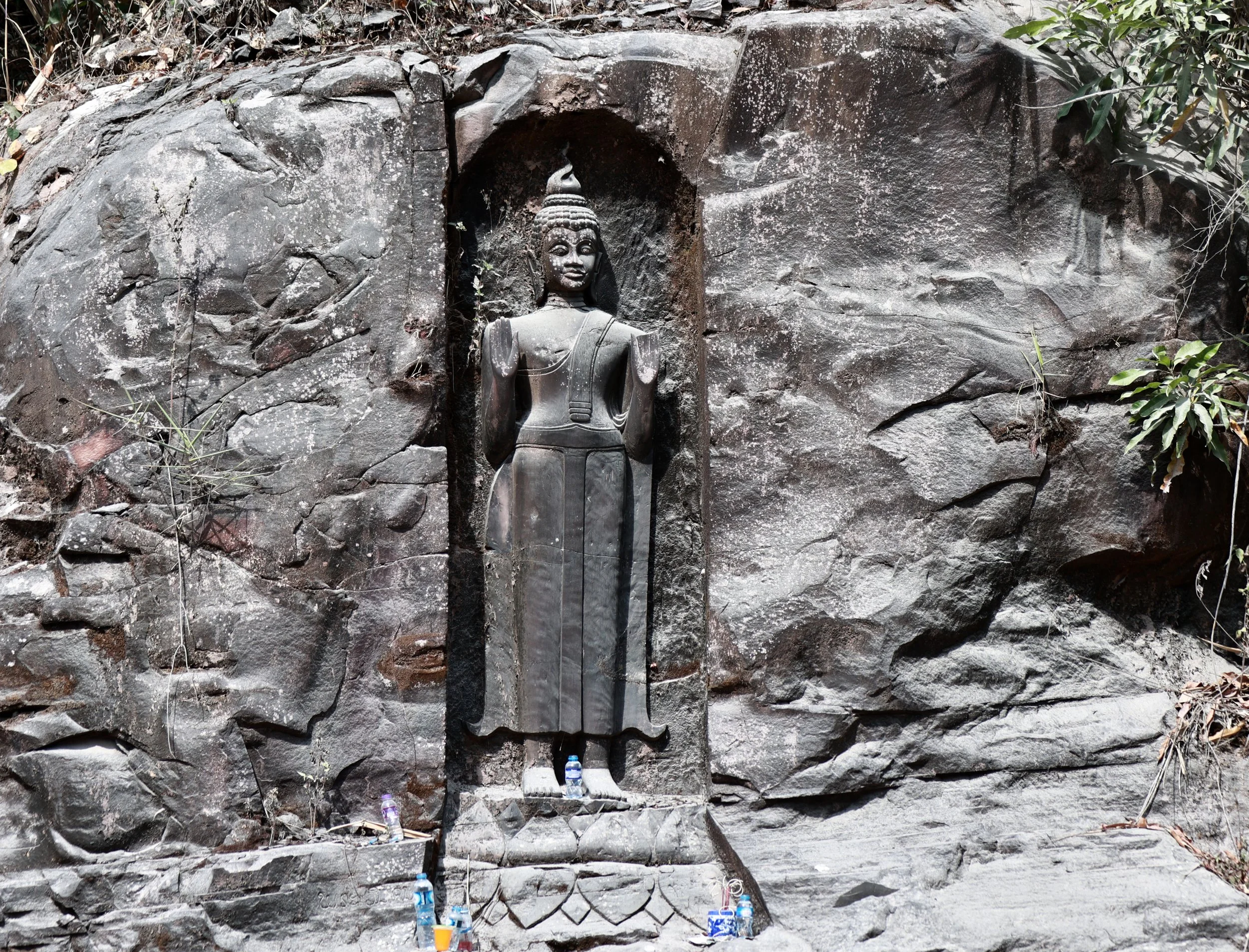
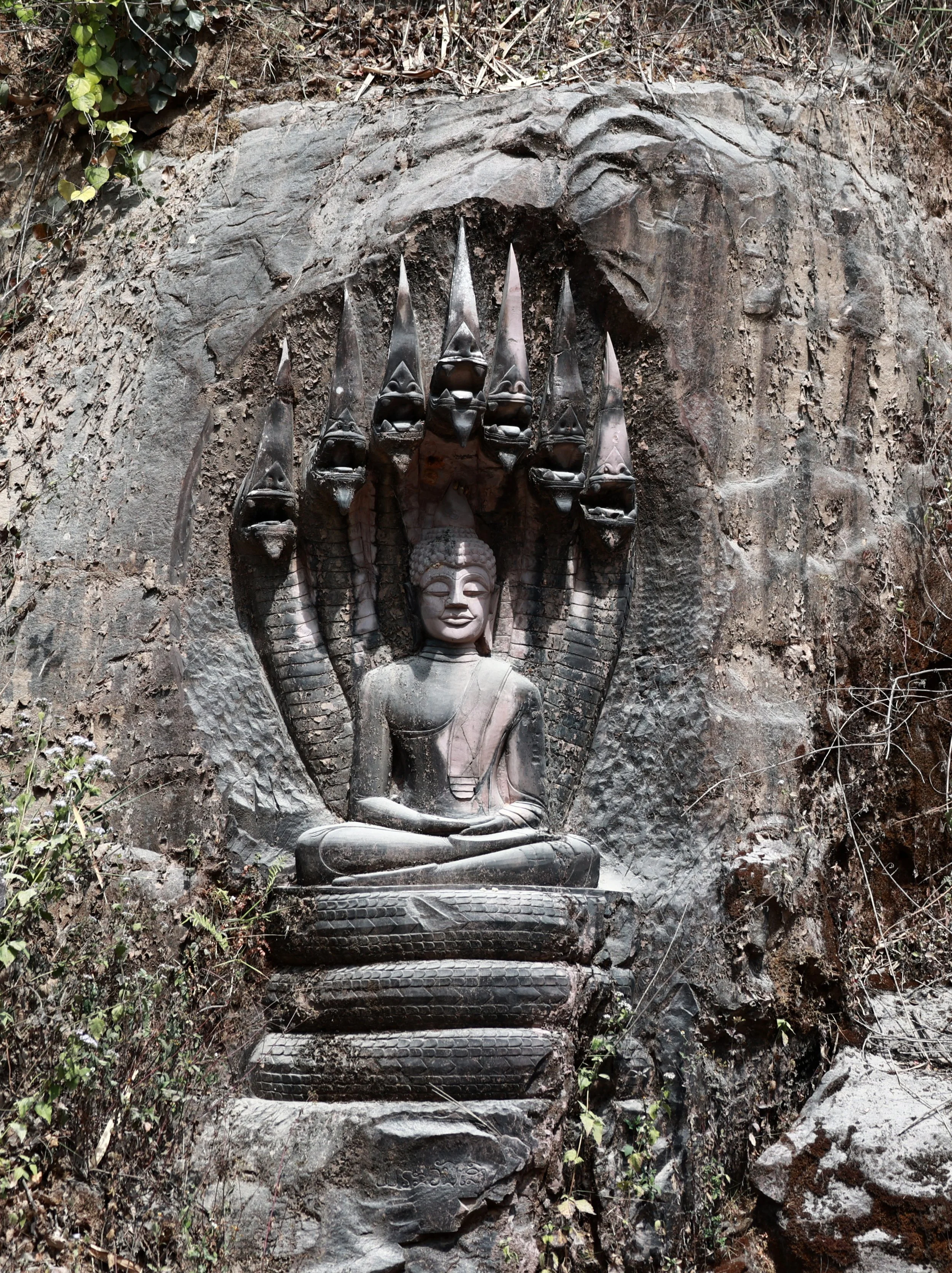
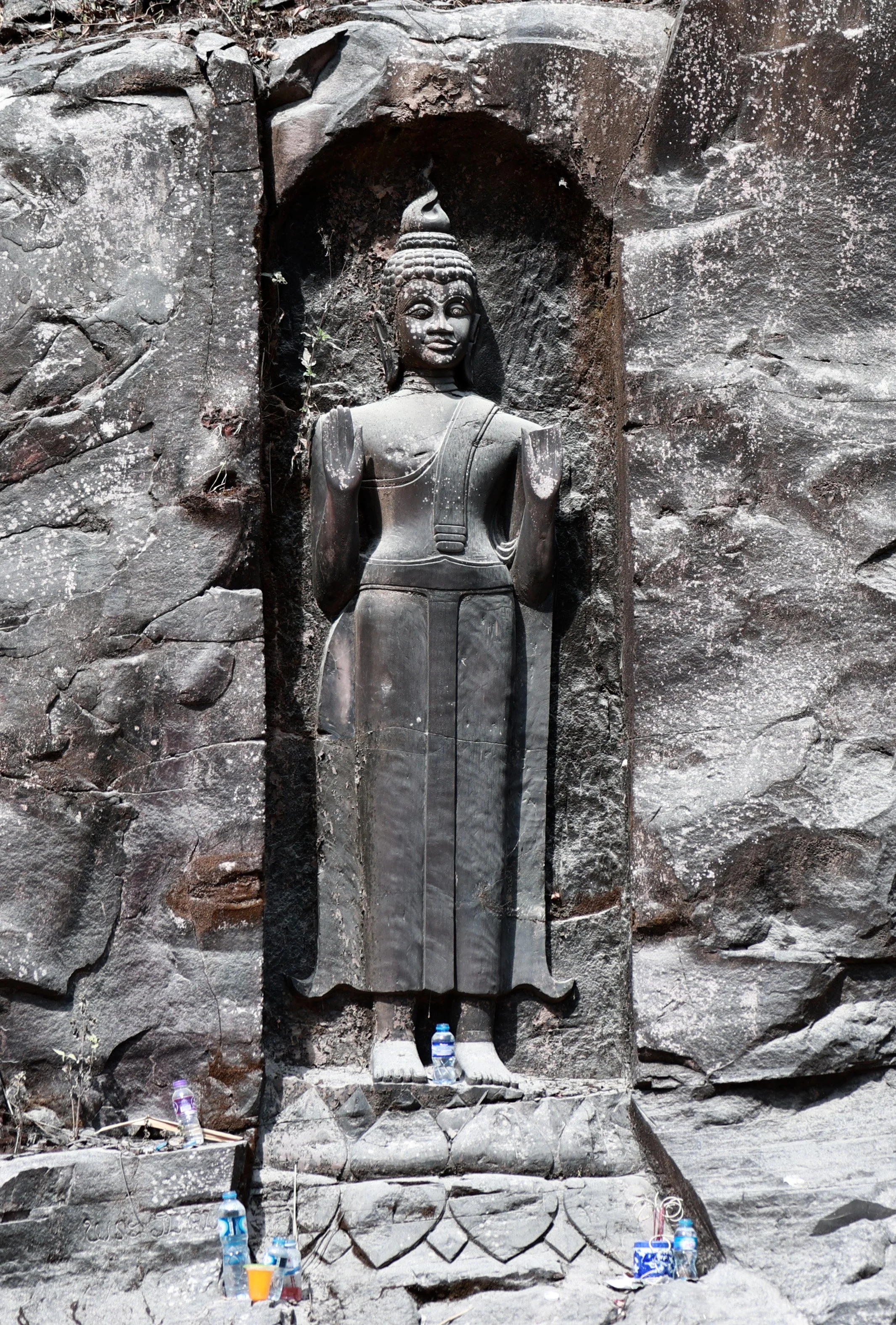
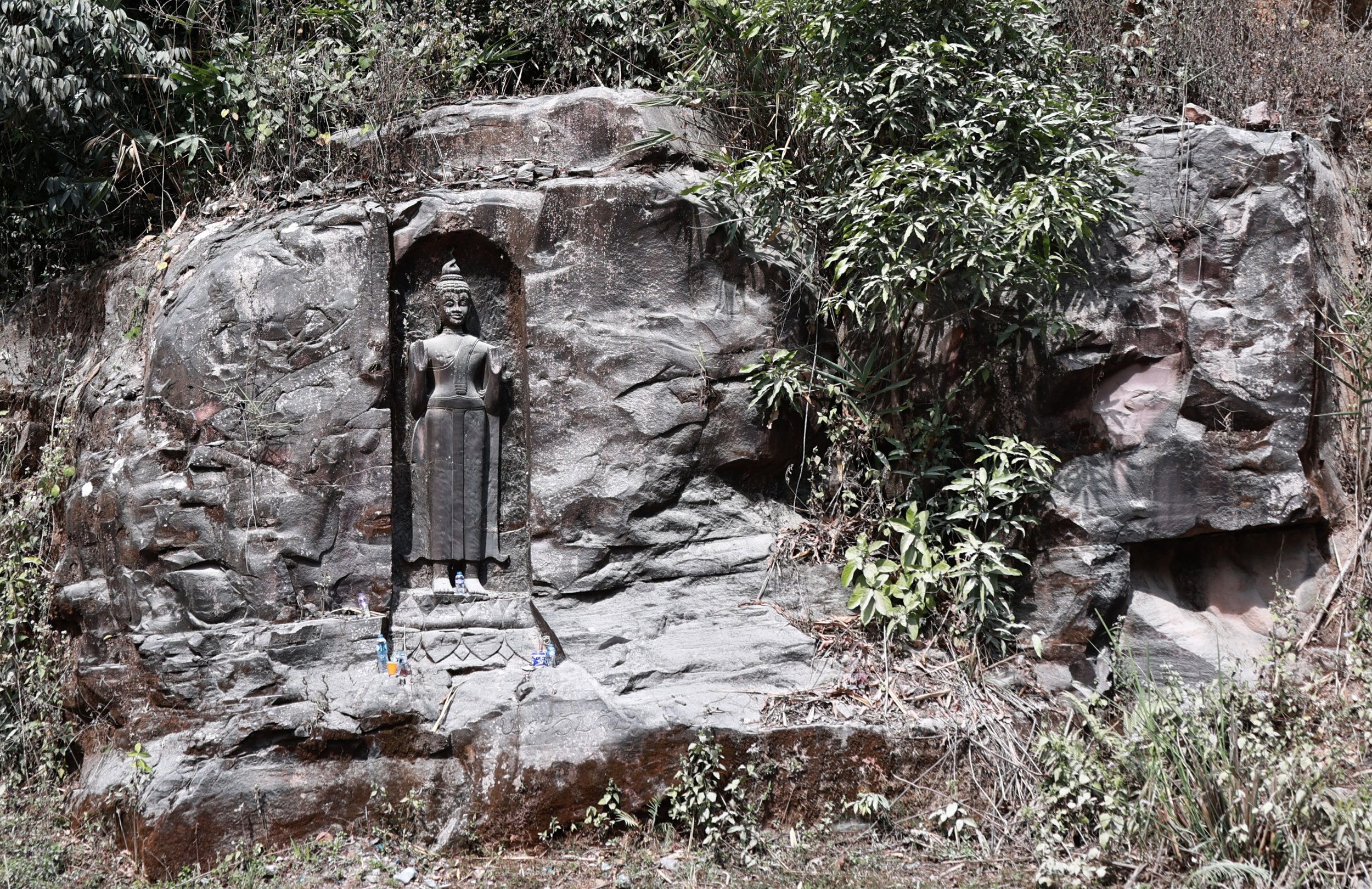
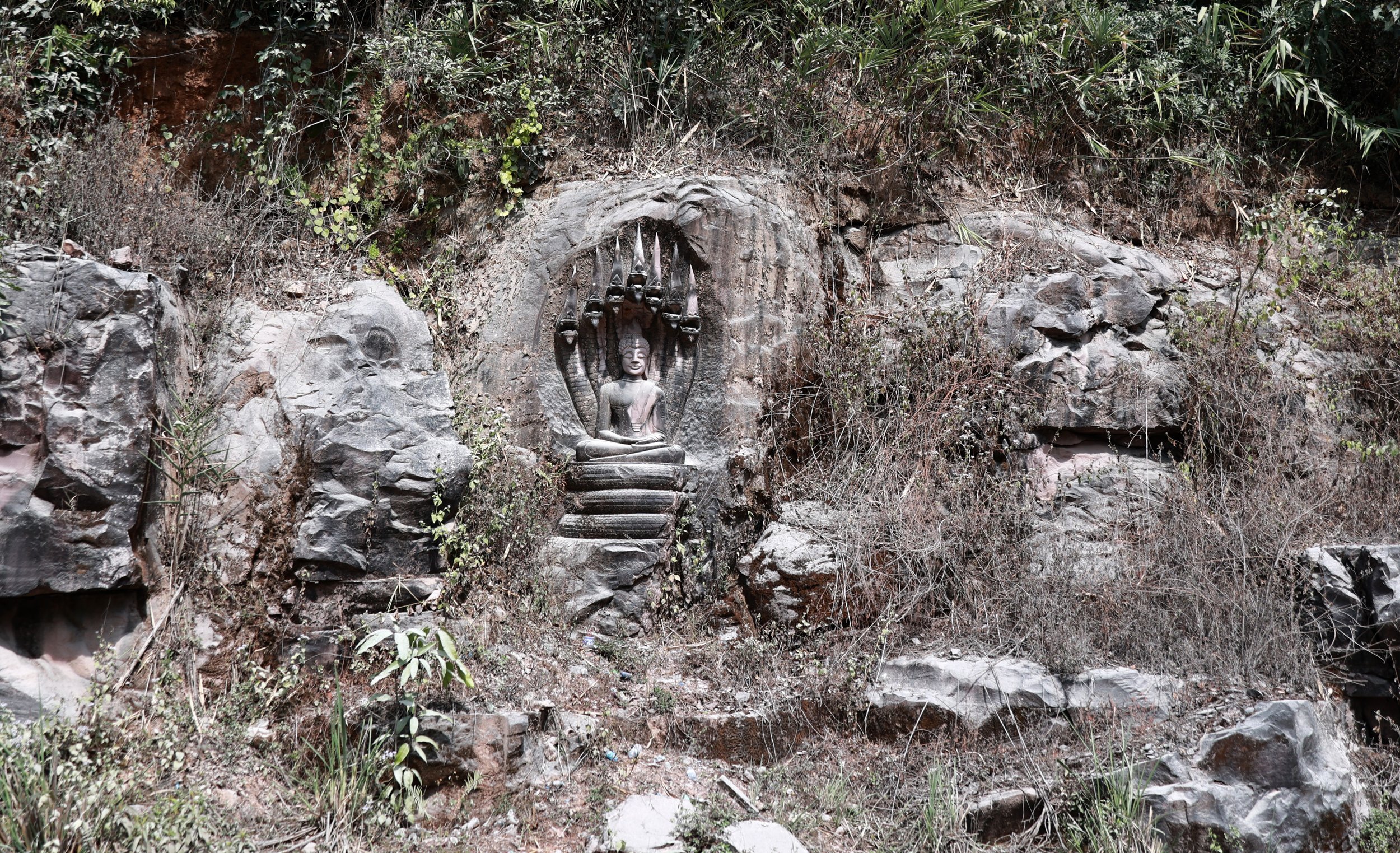
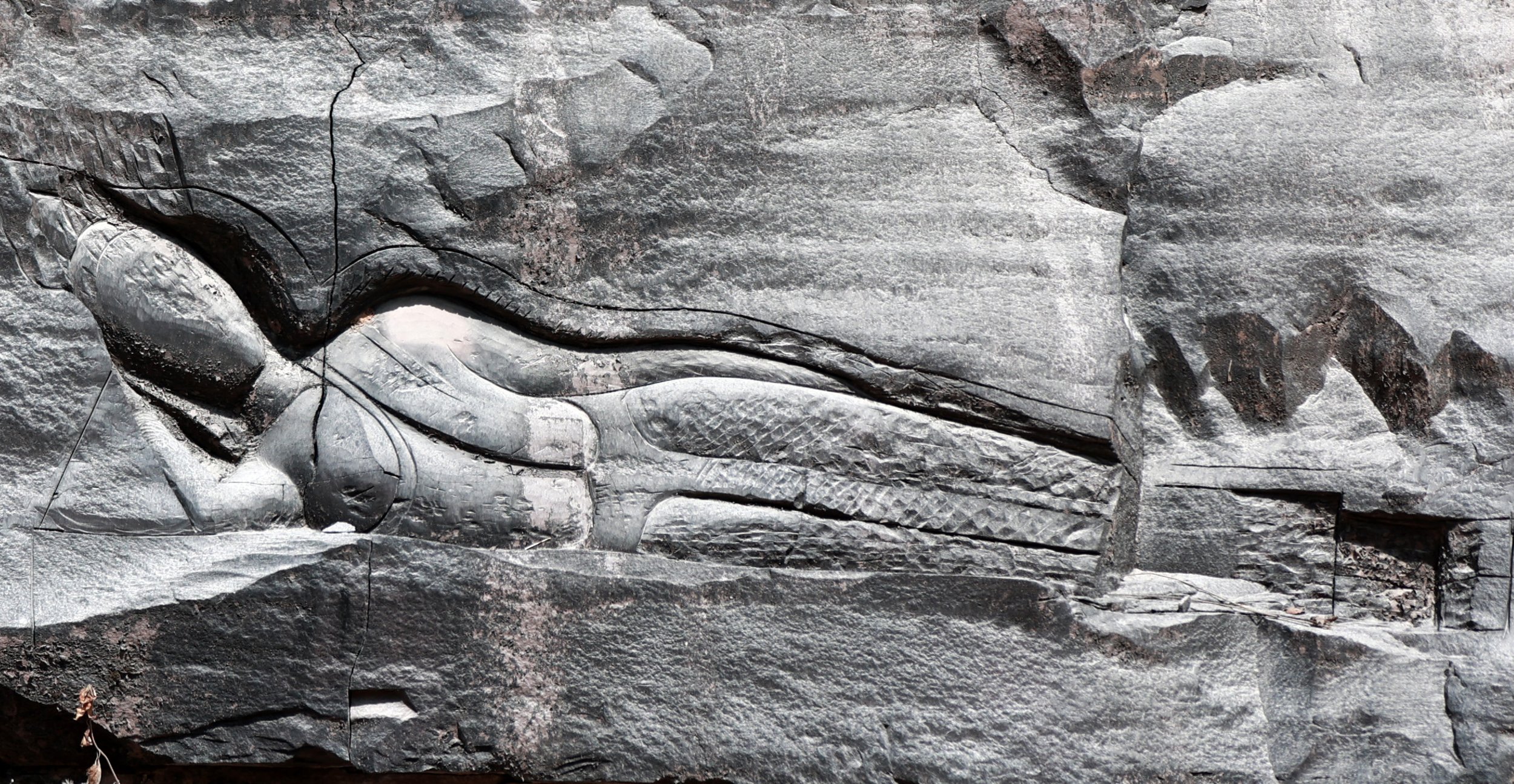
Random ancient Buddhist carvings in the limestone
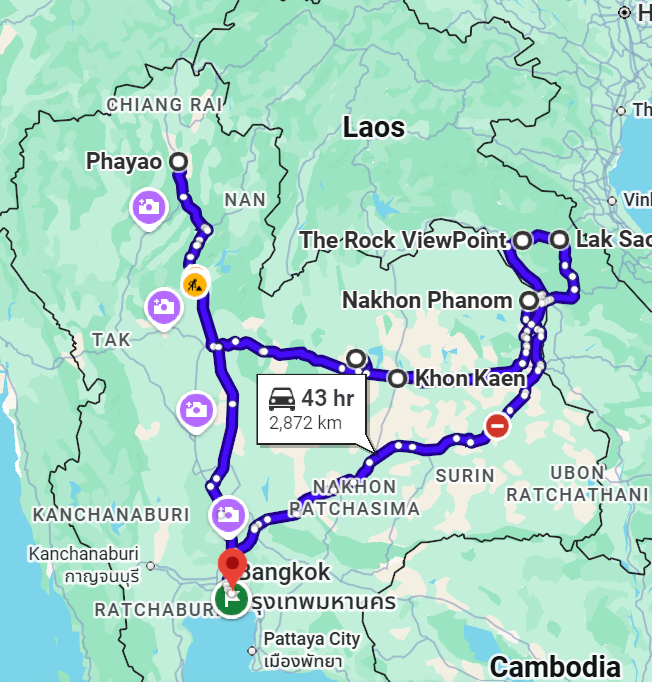
Isaan & Northern Thailand
The next section of this trip report will be a series of galleries of the various sights and stops we made along our 15-day journey through Thailand’s Isaan region and the north. I’ve included some “chat” generated descriptions for information only. The below map shows our route for the 15-day road trip.
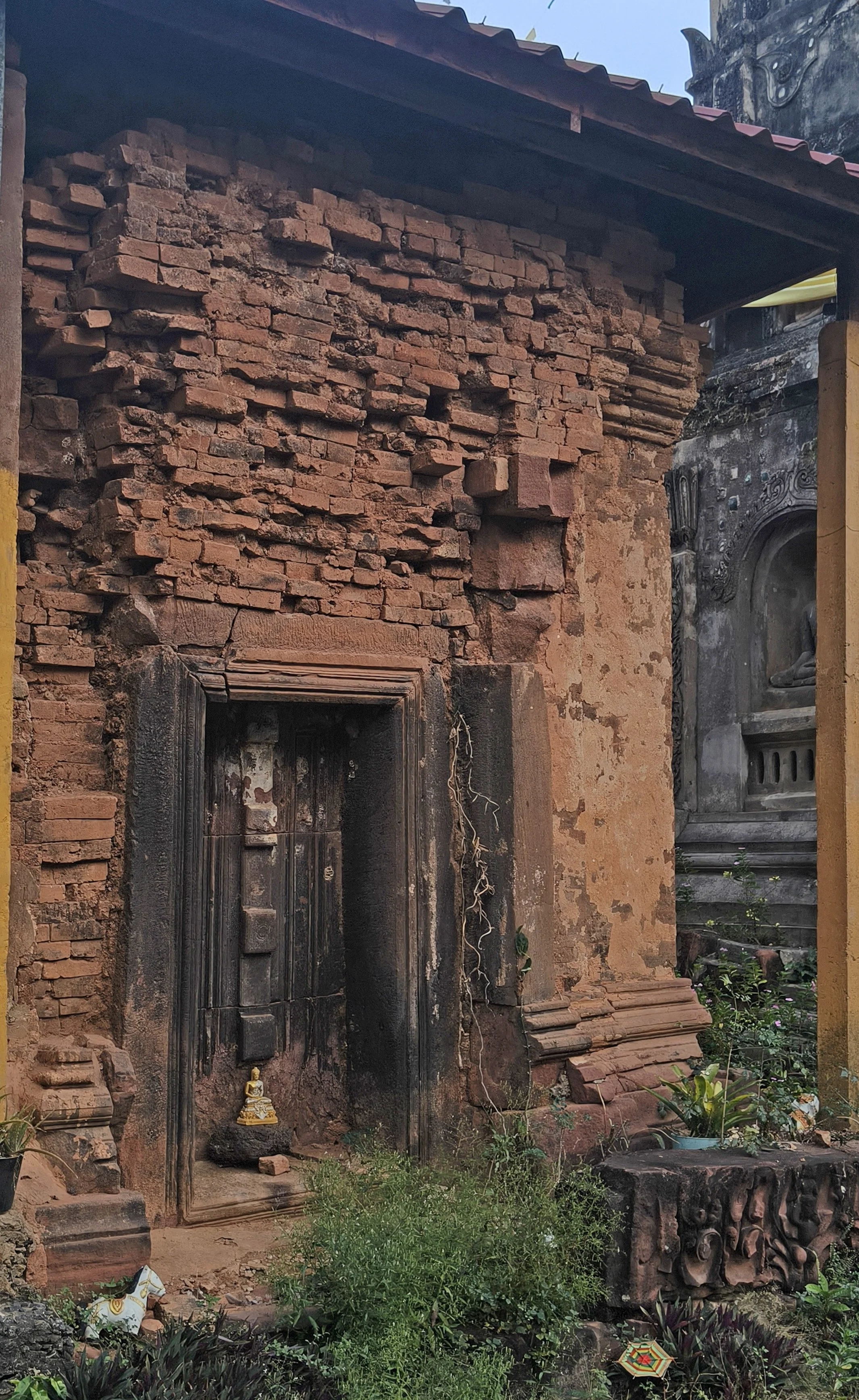
Wat Burapha Ku Ka Singh, Roi Et
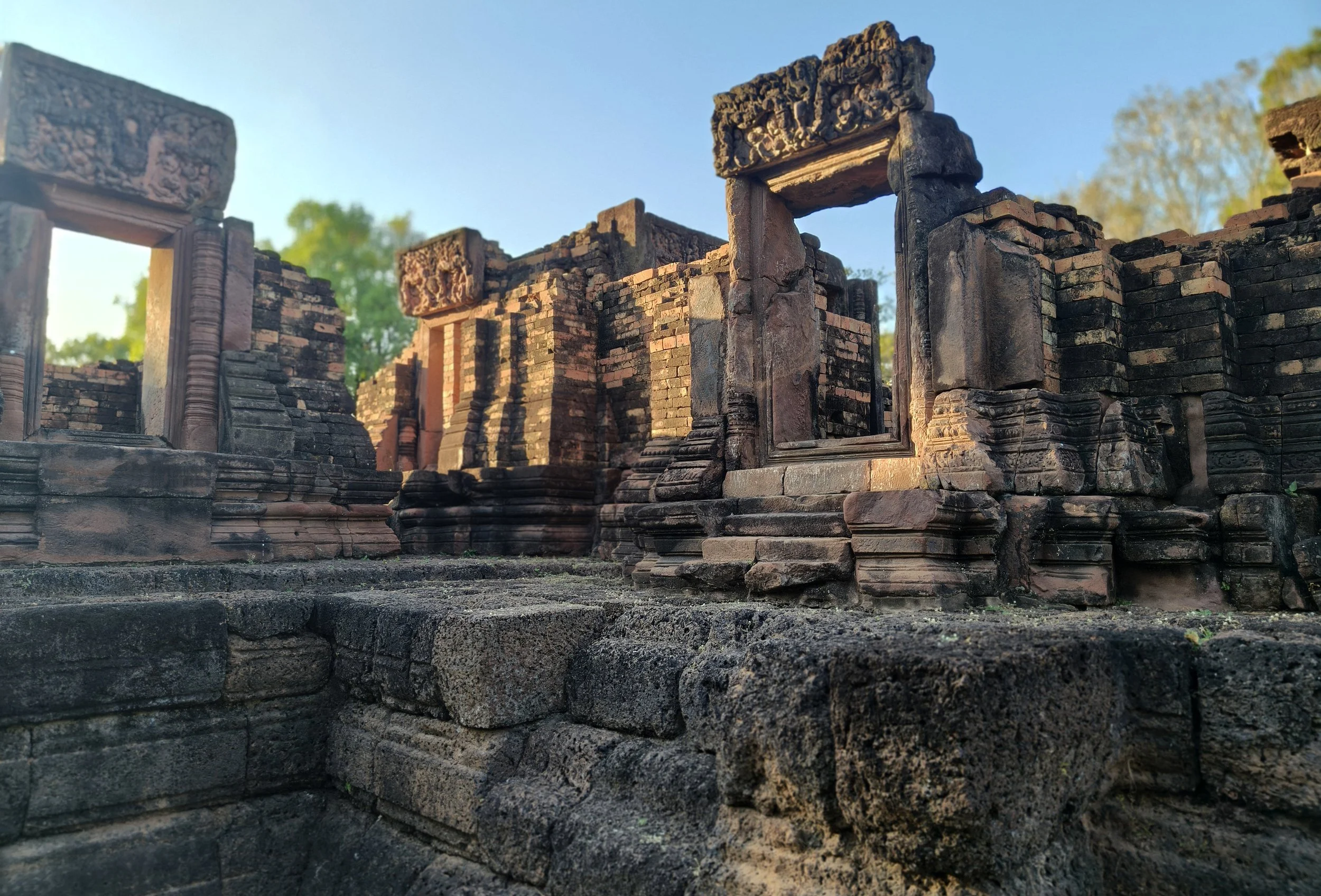
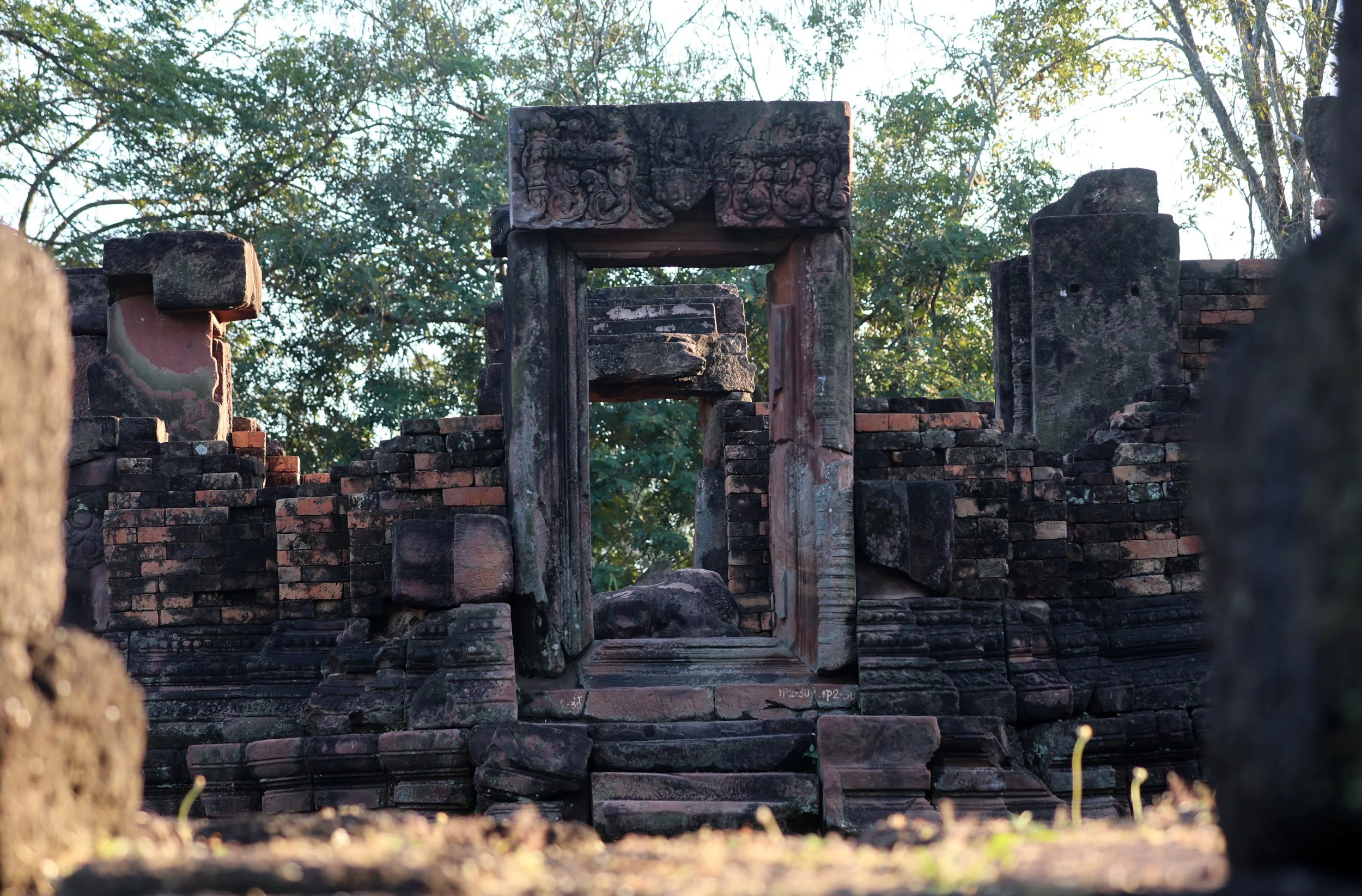
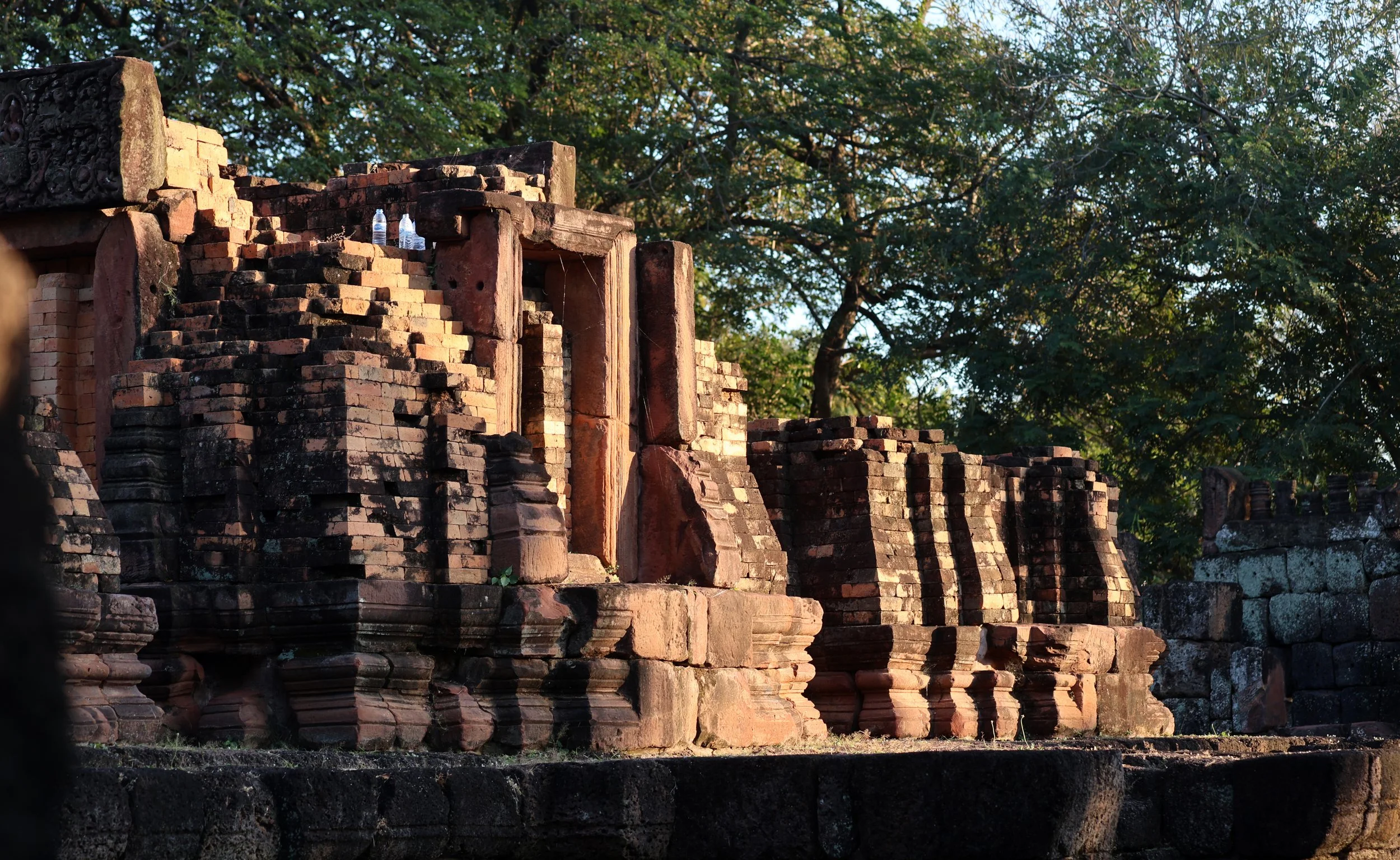
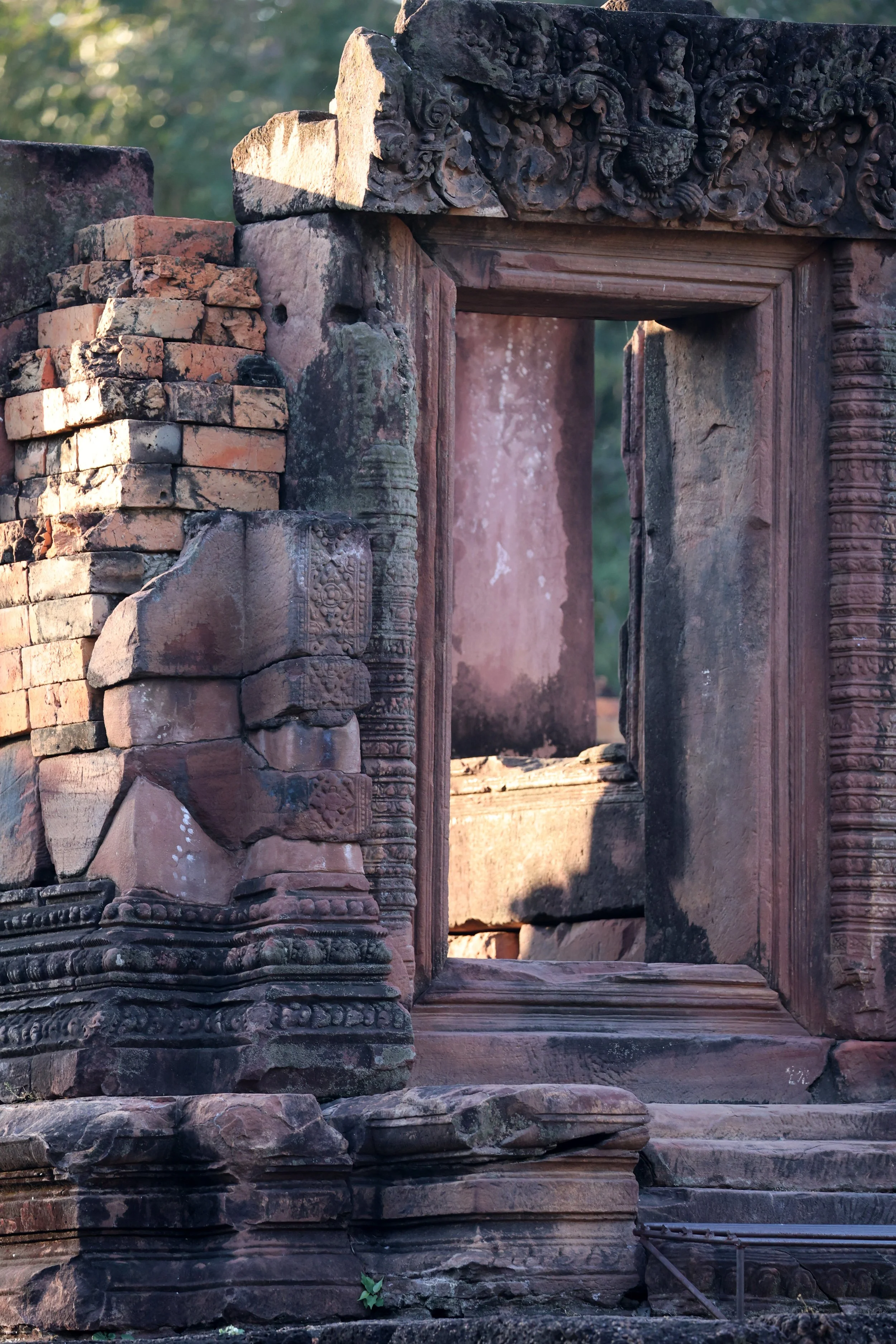
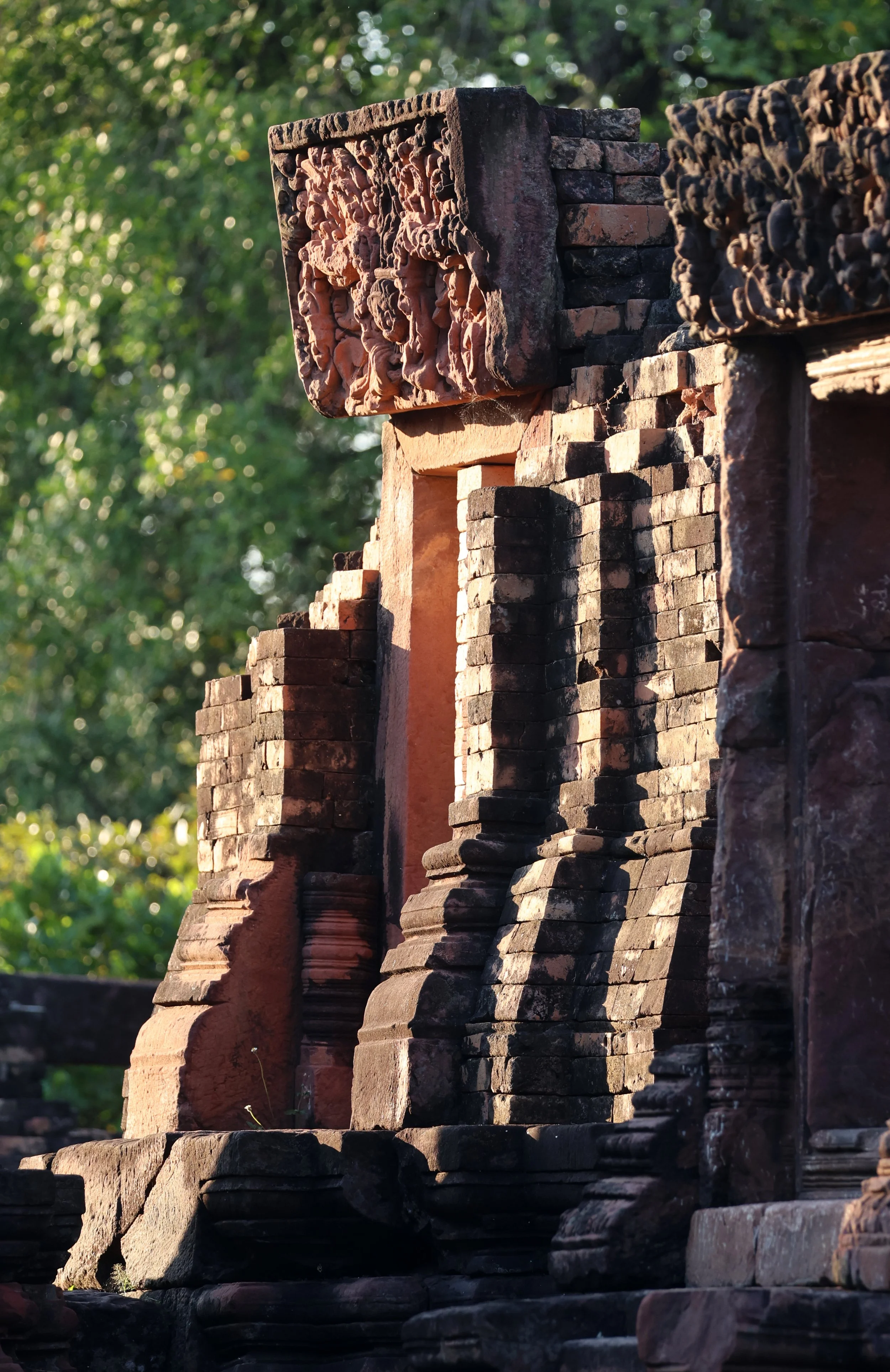
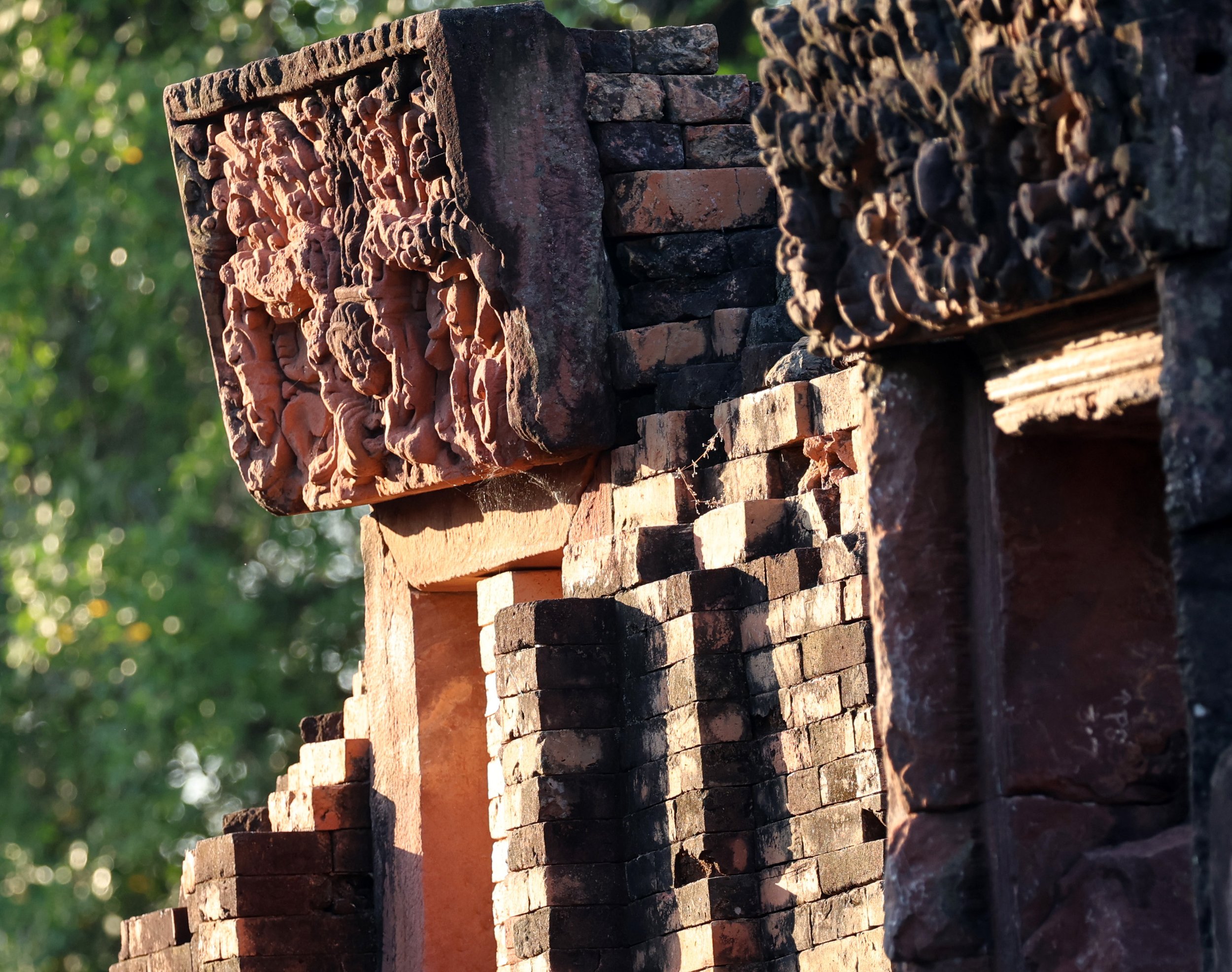
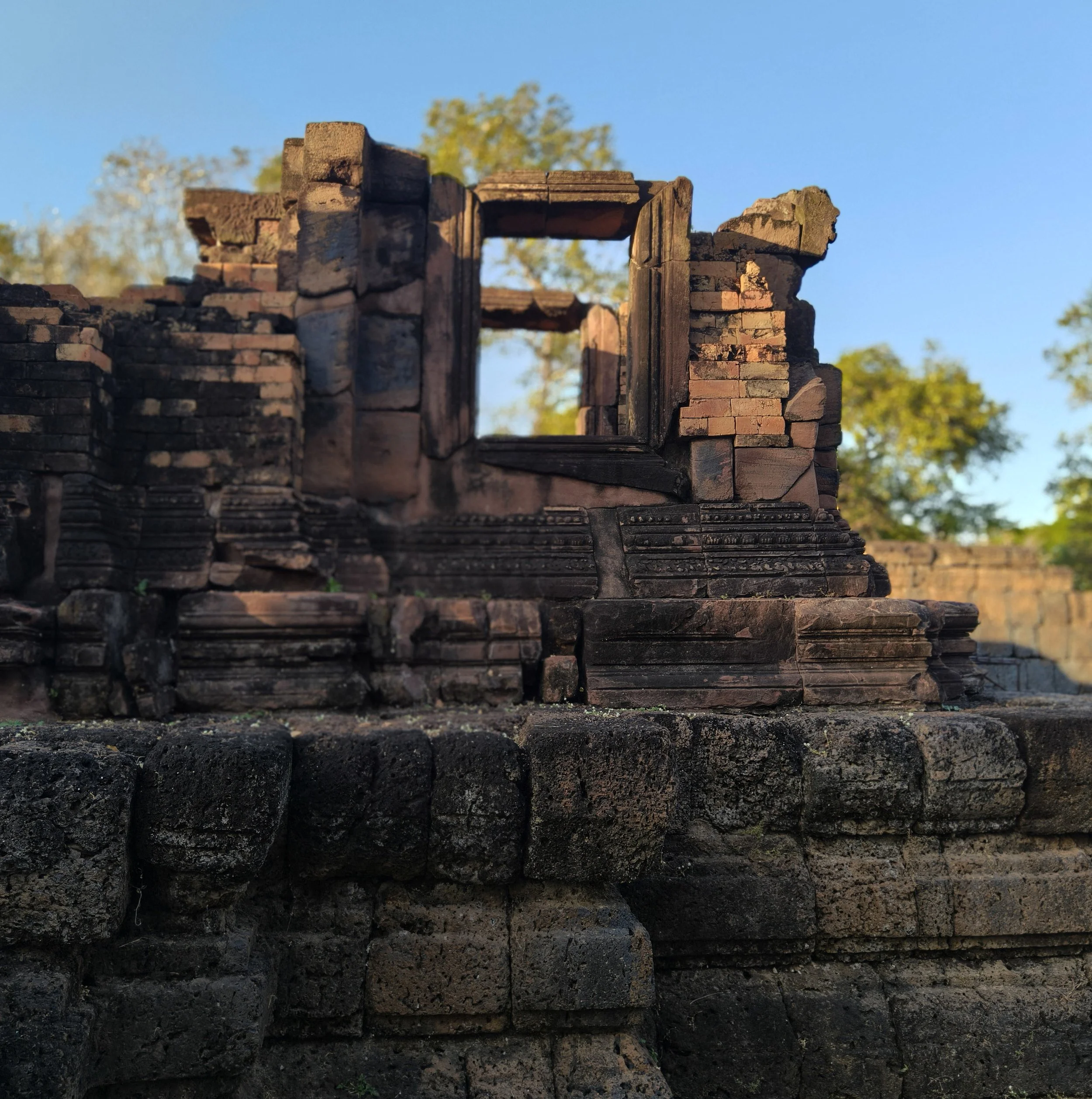
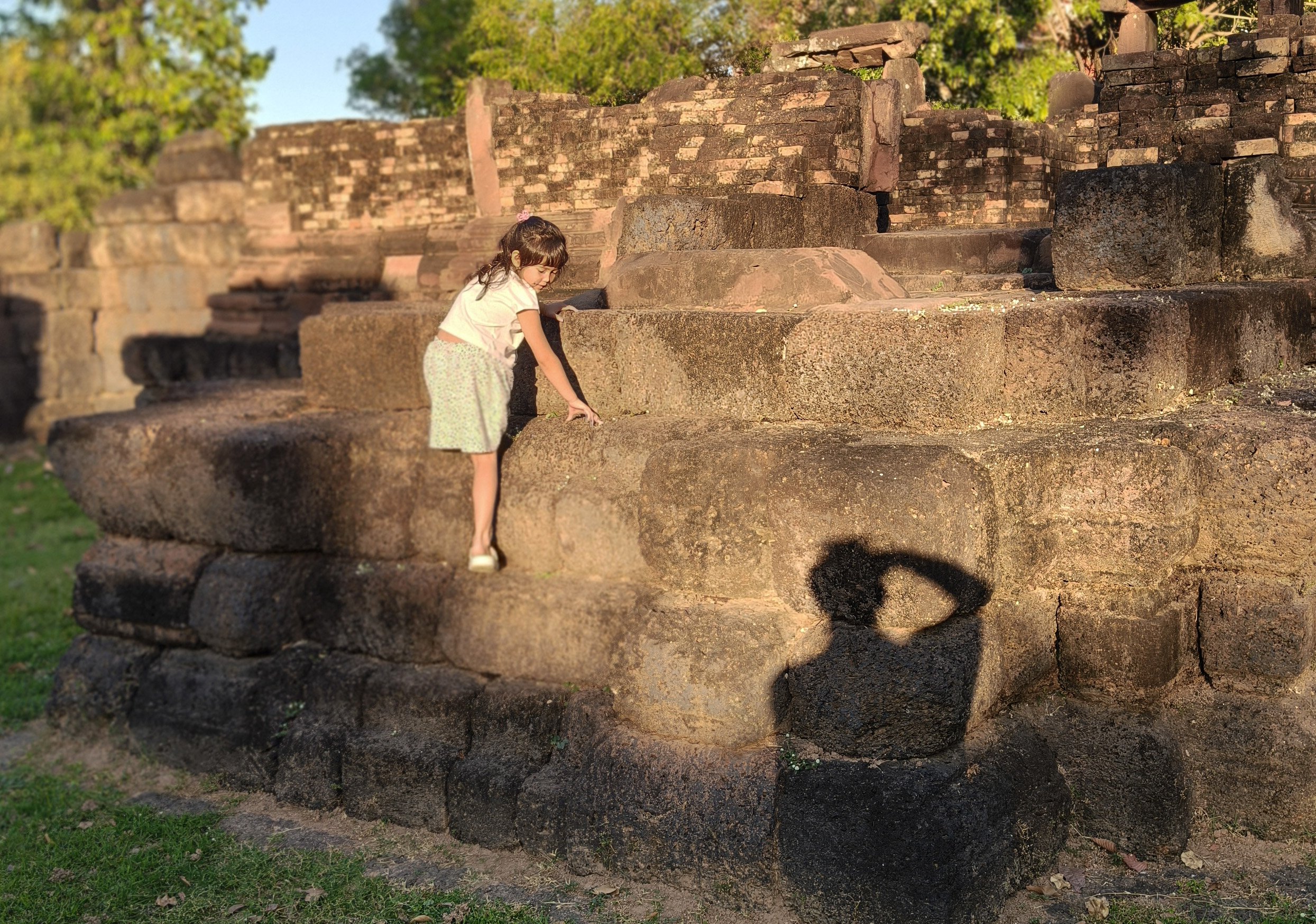
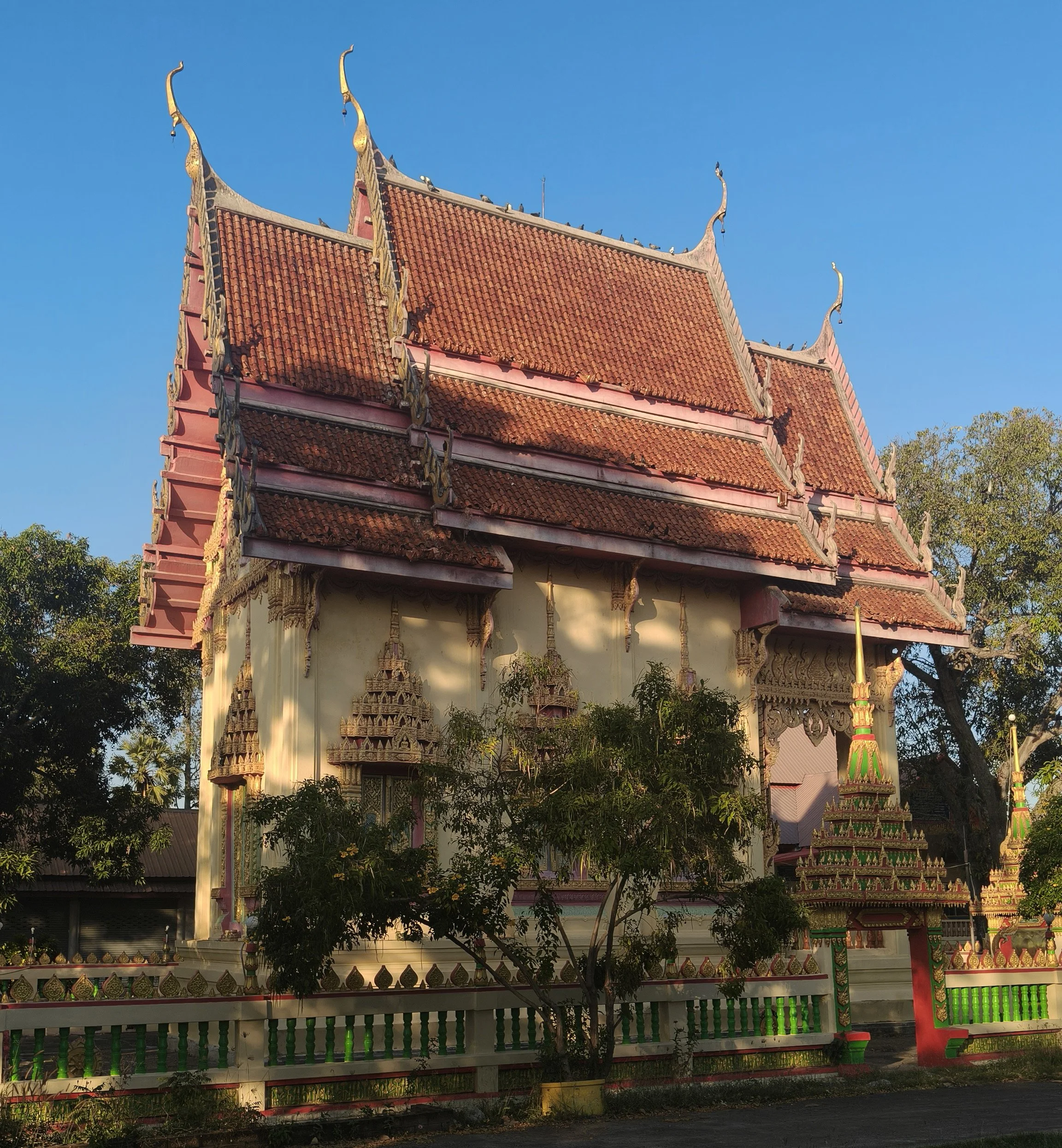
Wat Burapha Ku Ka Sing is a modern Buddhist temple complex in Roi Et, Thailand, that incorporates the ruins of an ancient 11th-century Khmer sanctuary called Ku Ka Sing. The ancient site is historically significant and is dedicated to the Hindu god Shiva.
Khmer Sanctuary Ruins (Ku Ka Sing): The historical centerpiece of the temple grounds, the ruins consist of three prangs (spires) and library buildings on a single laterite base, surrounded by a wall with entrance pavilions (gopuras). Outside the wall is a U-shaped moat. The central prang is the largest and features a Shiva Lingam in its inner chamber, symbolizing Shiva and fertility.
Architecture: The structures primarily use laterite and sandstone and feature detailed carvings in the Baphuon style. A notable lintel found at the site depicts the god Indra on his mount, the Erawan elephant.
Modern Temple: The ancient ruins are located within the grounds of the contemporary Wat Burapha Ku Ka Sing, which is an active monastery with monks in residence.
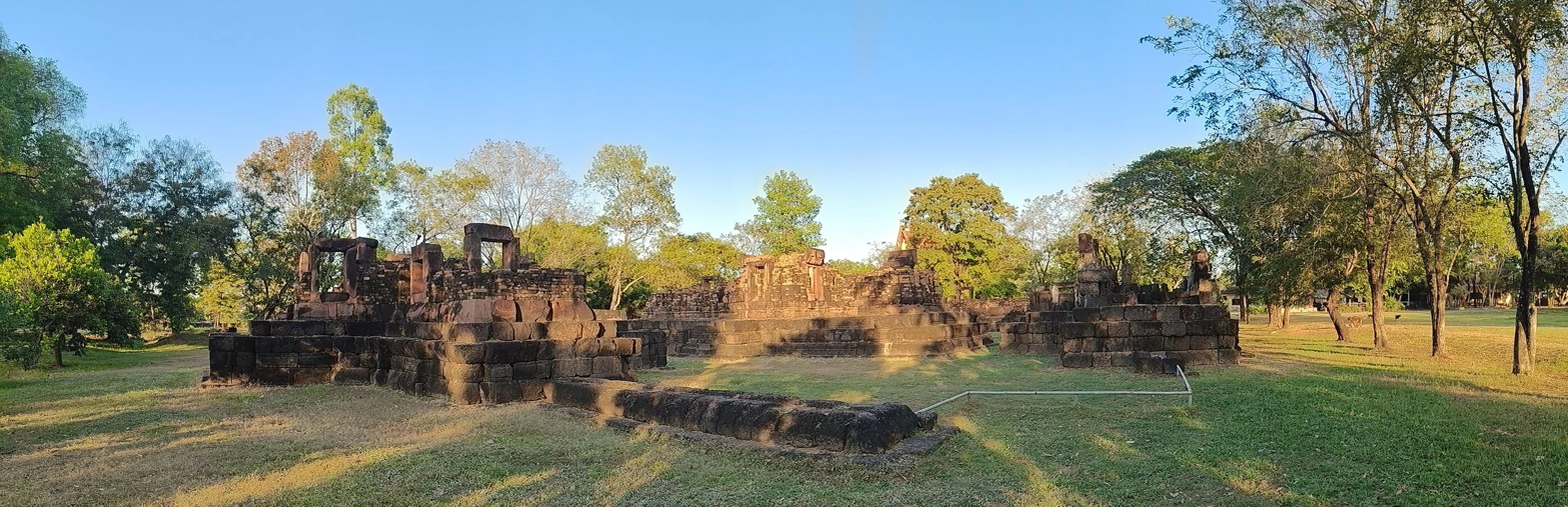
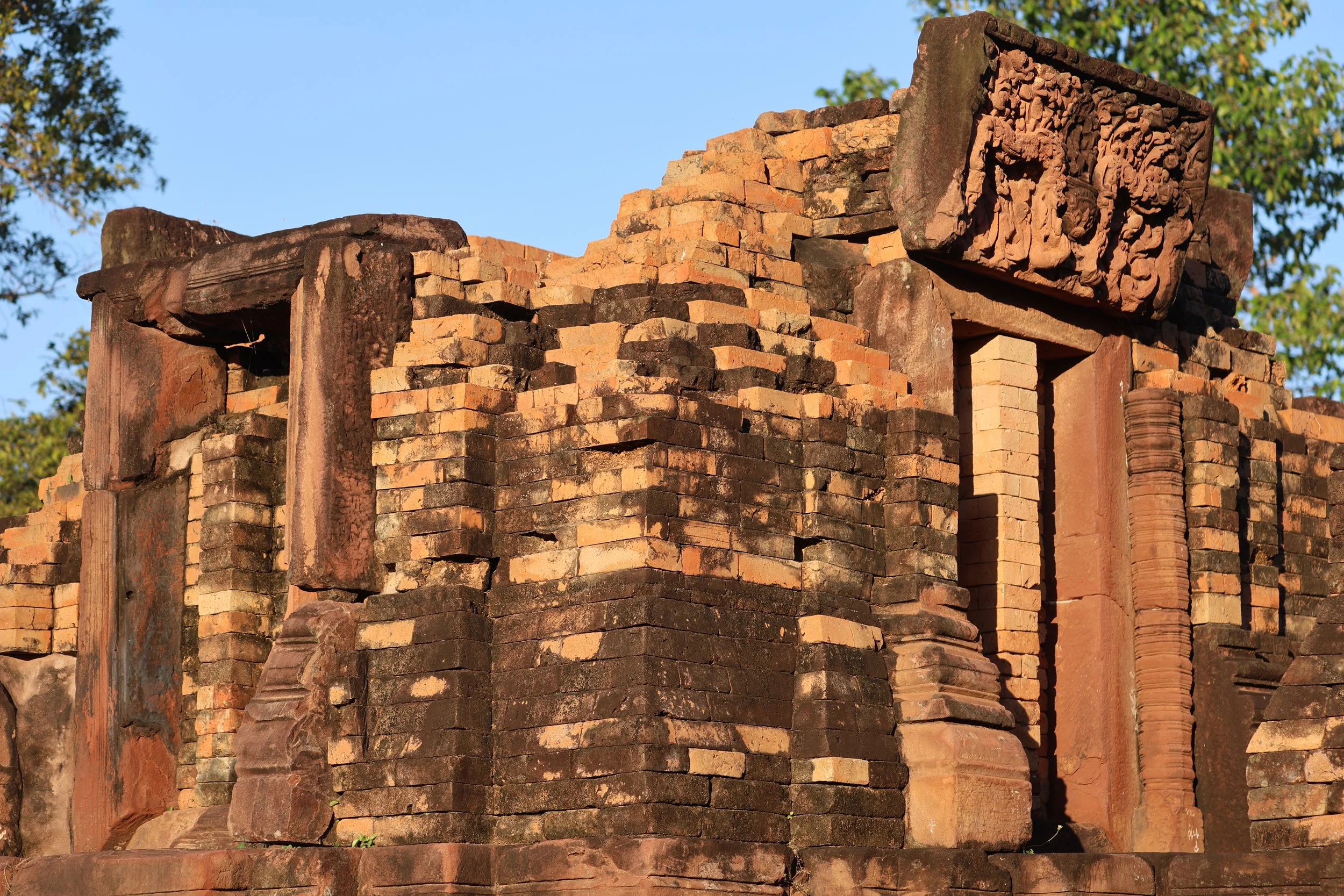
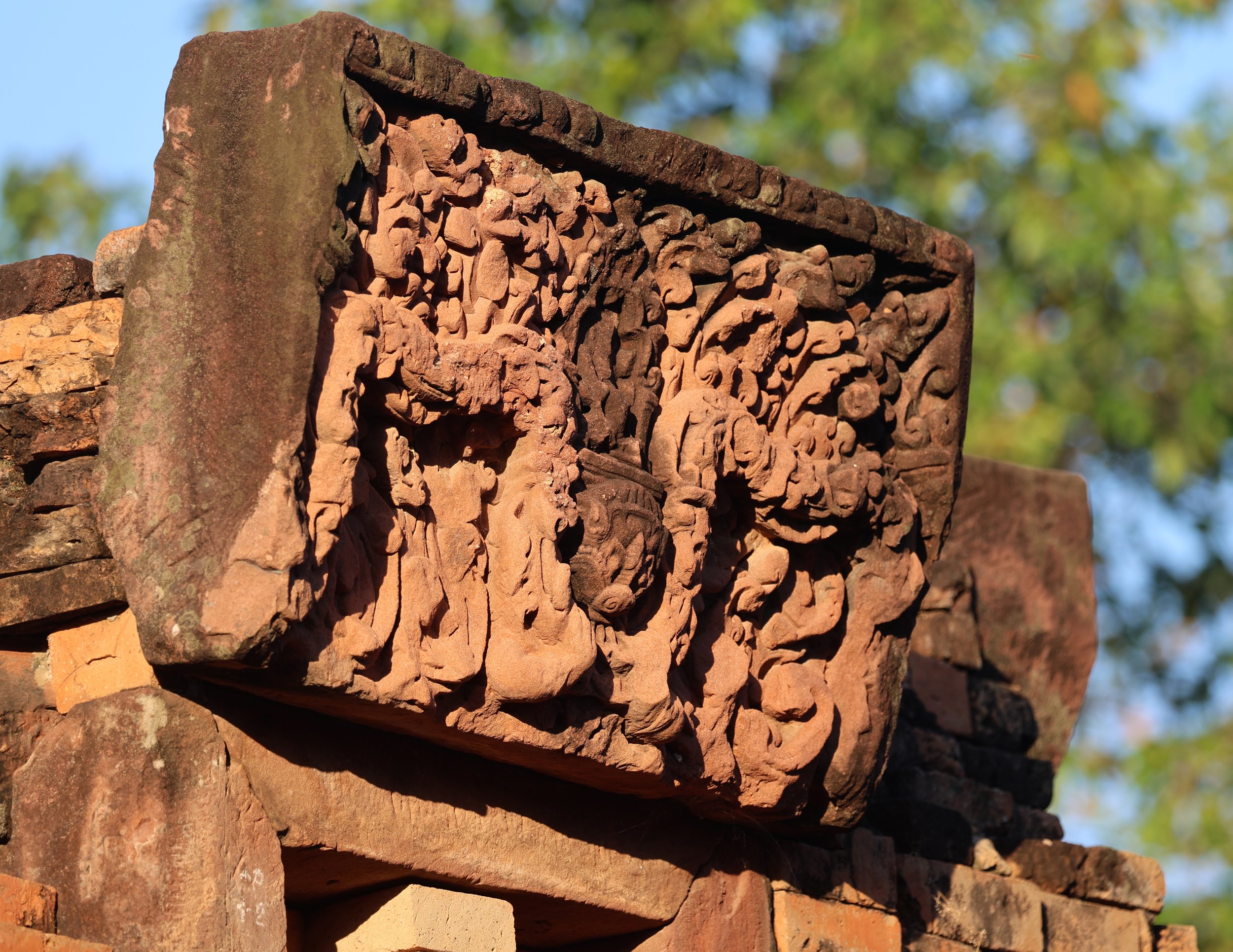
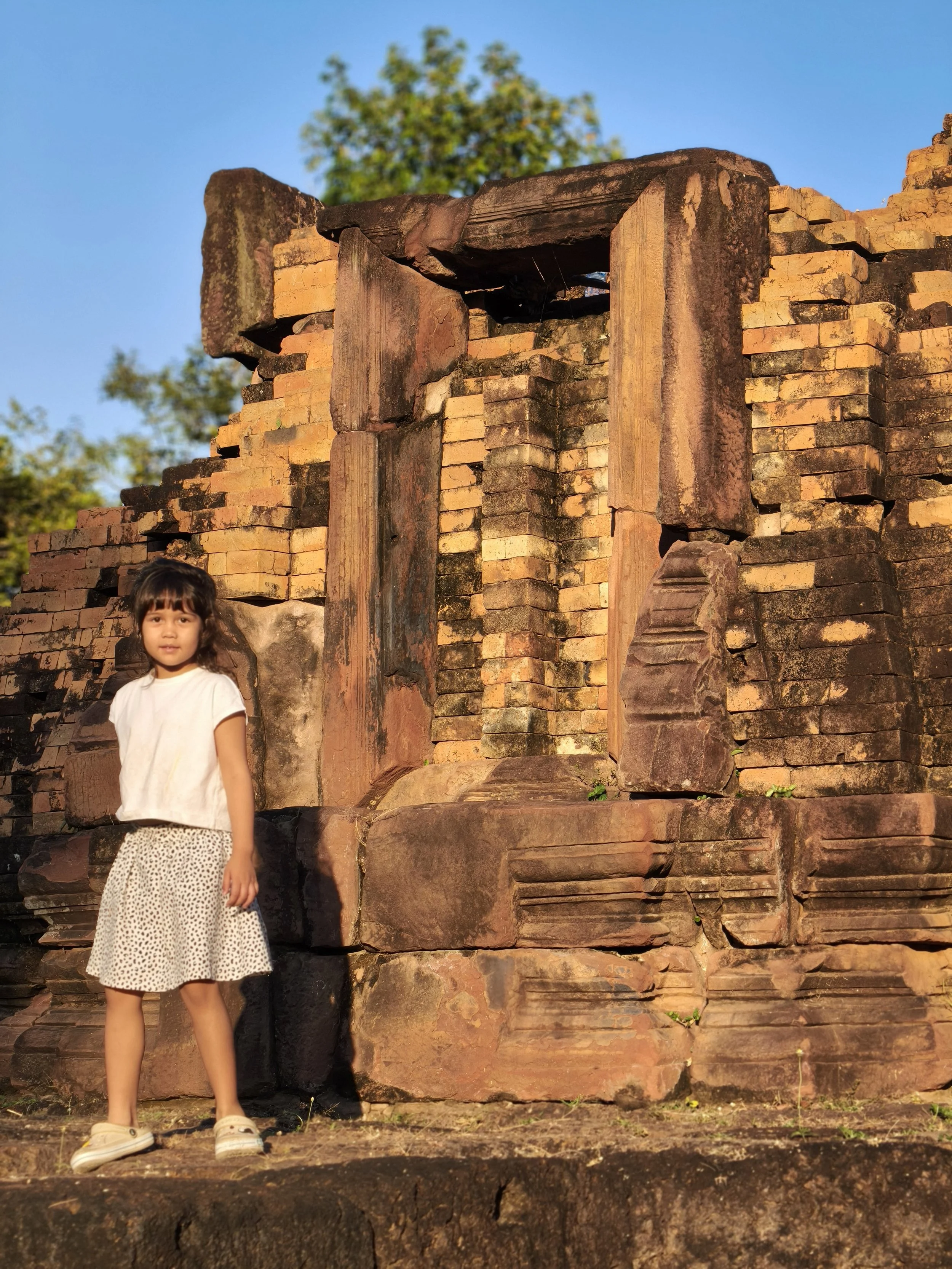
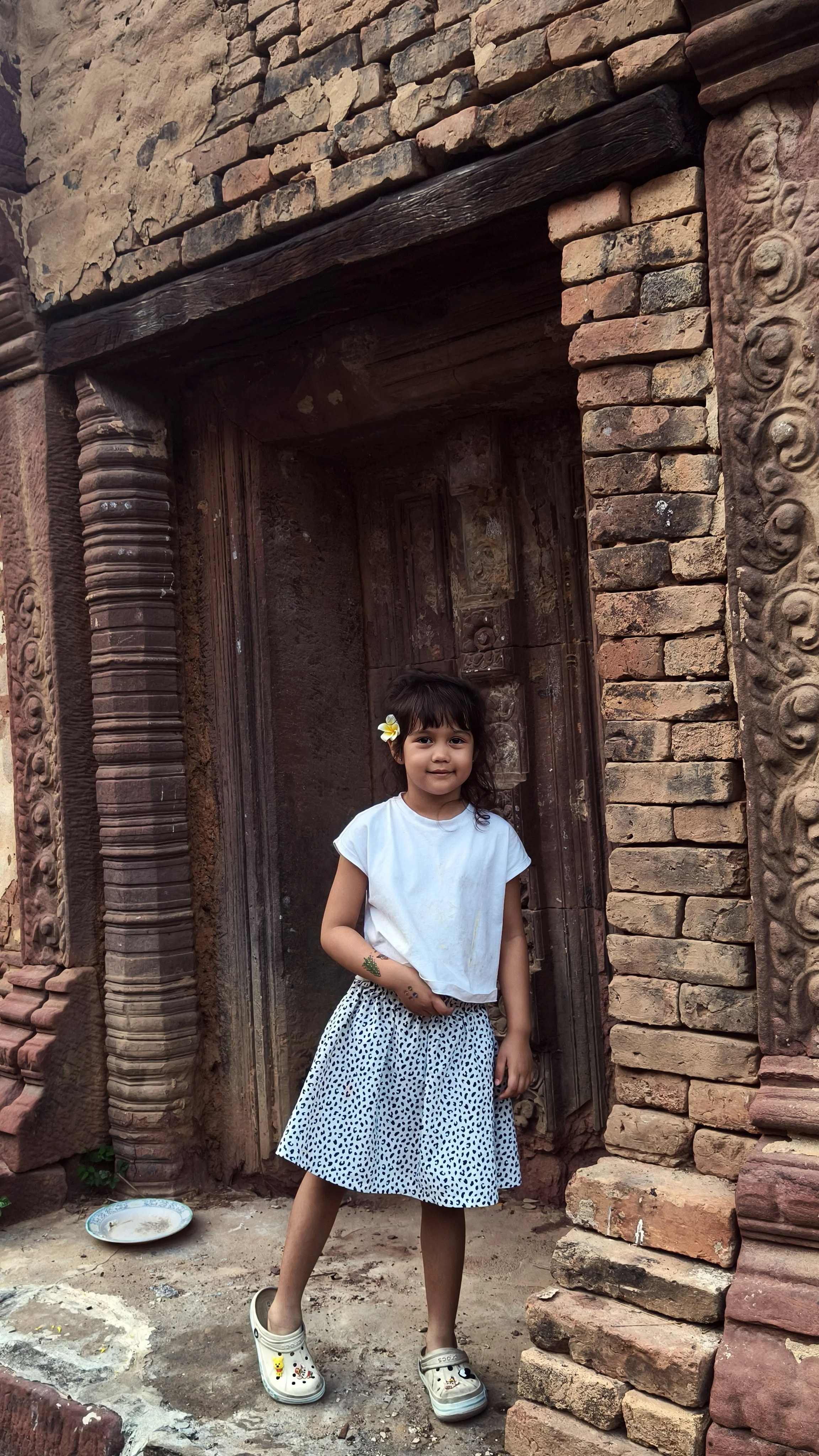
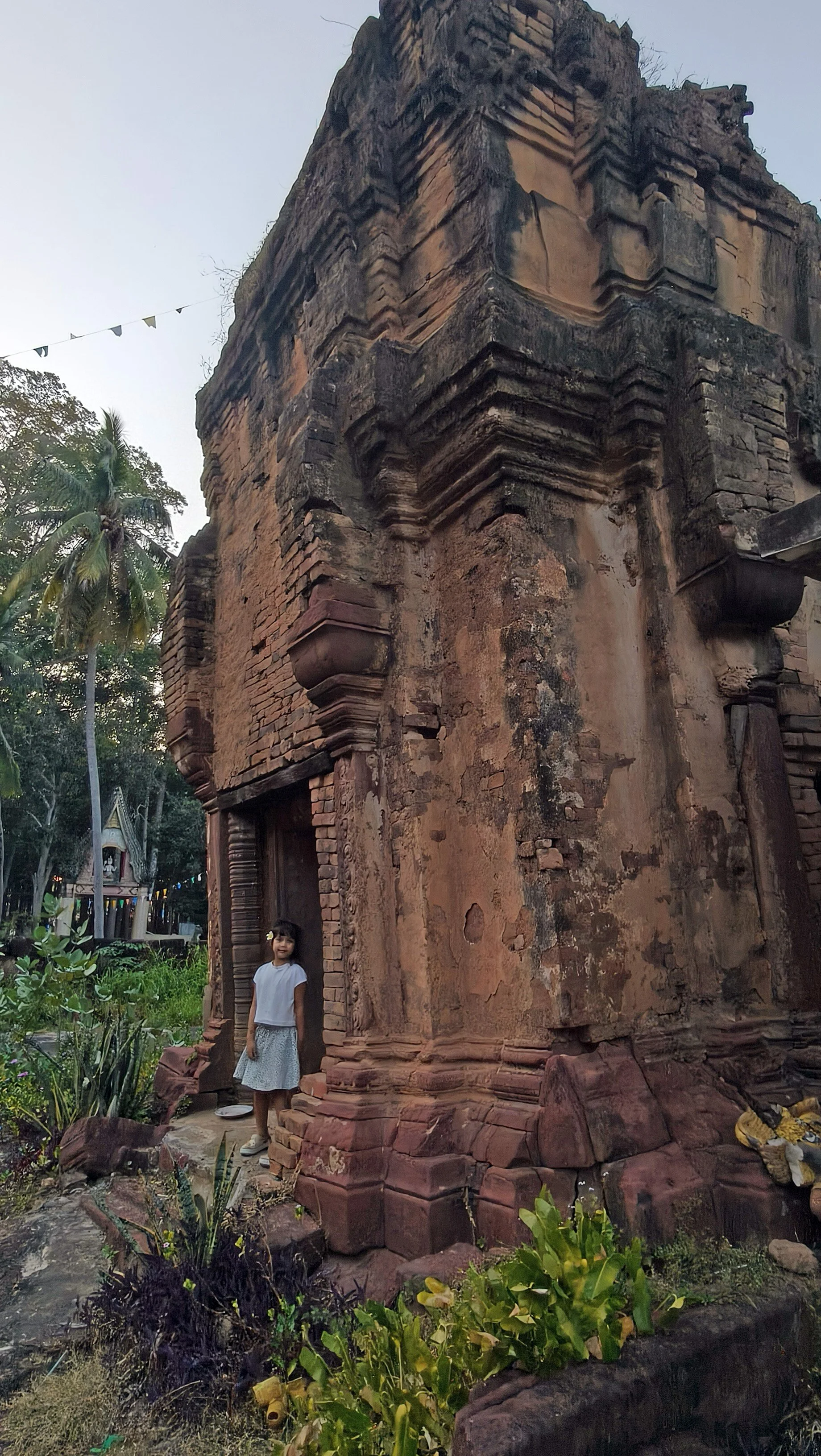
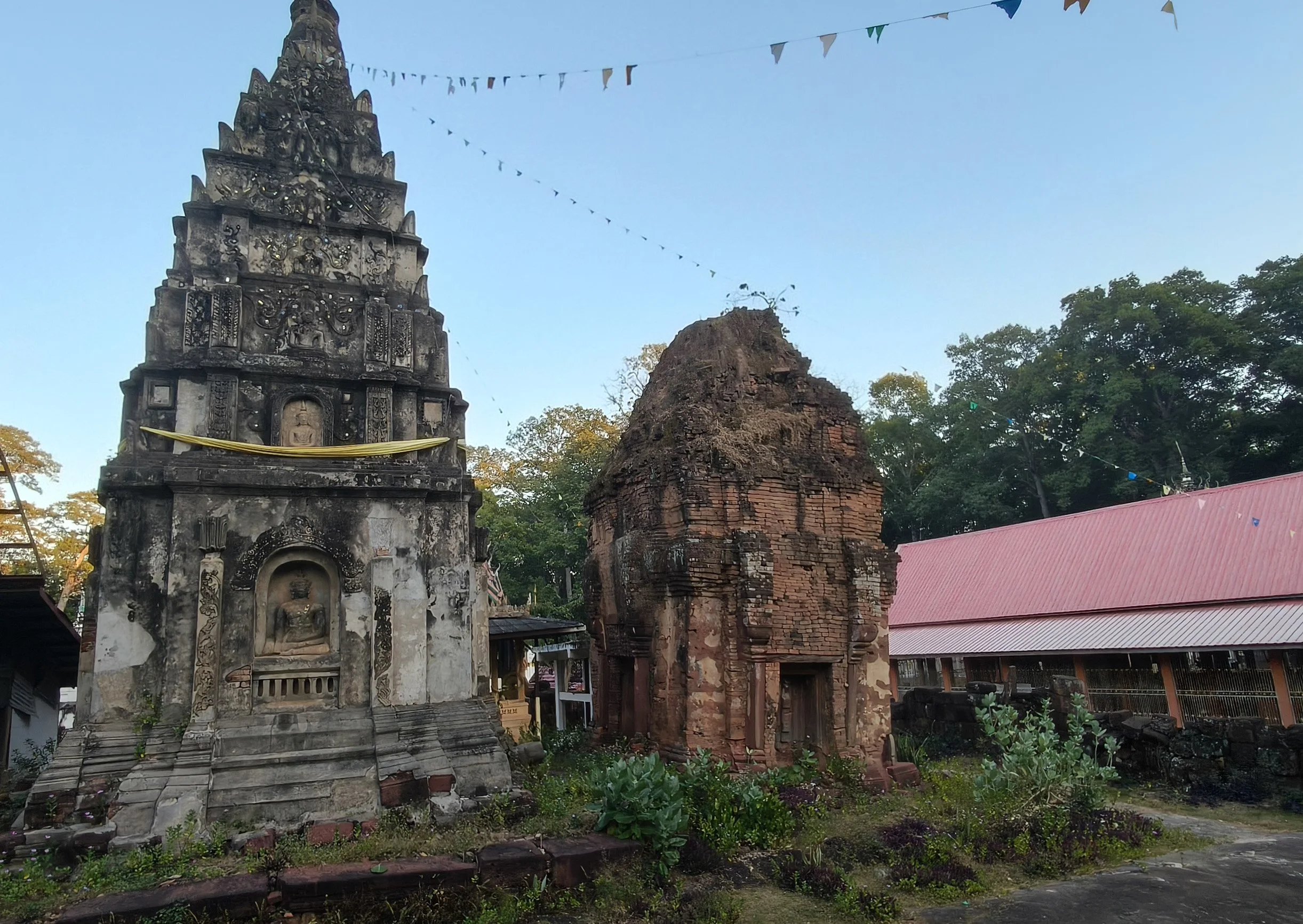
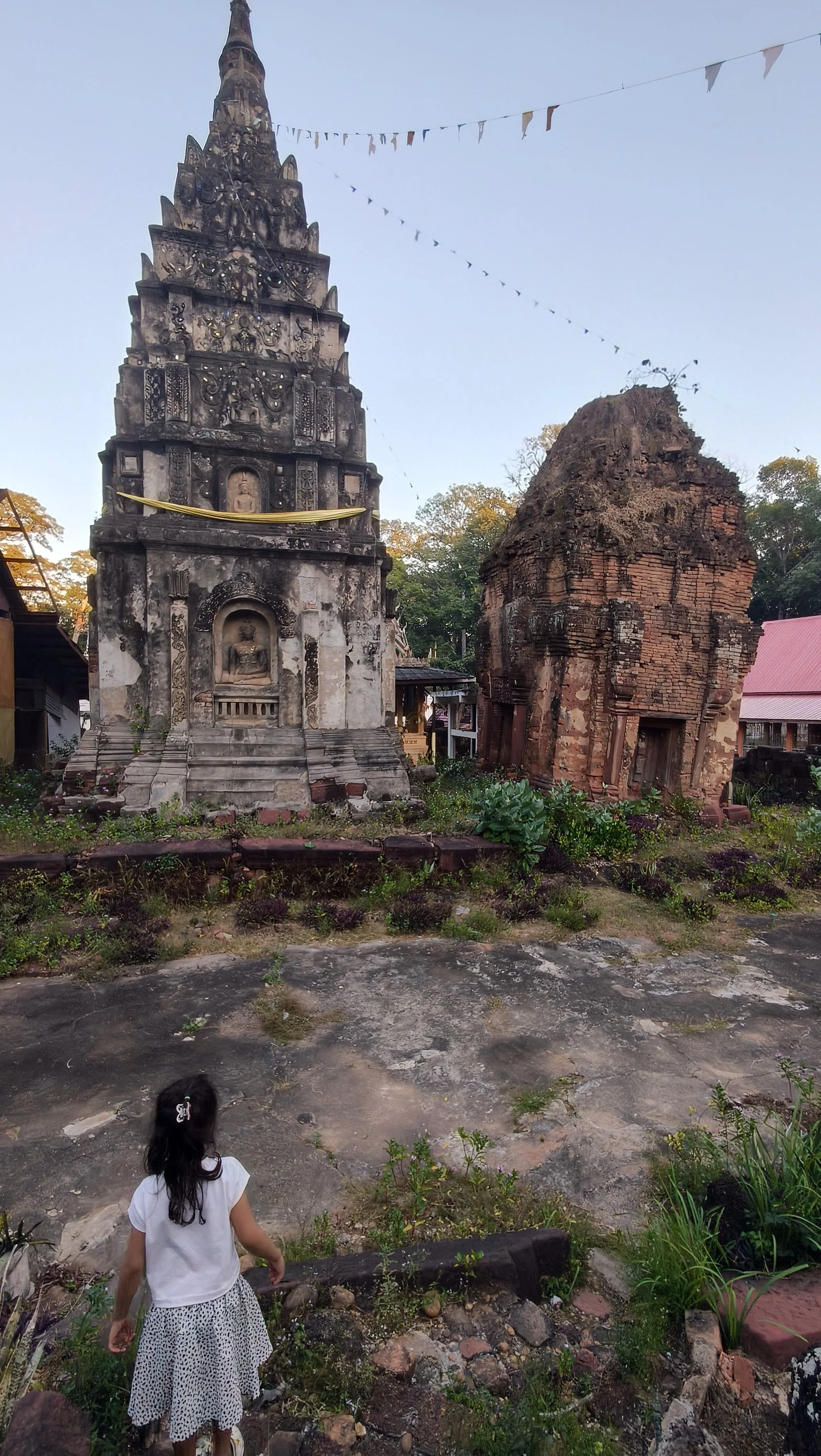
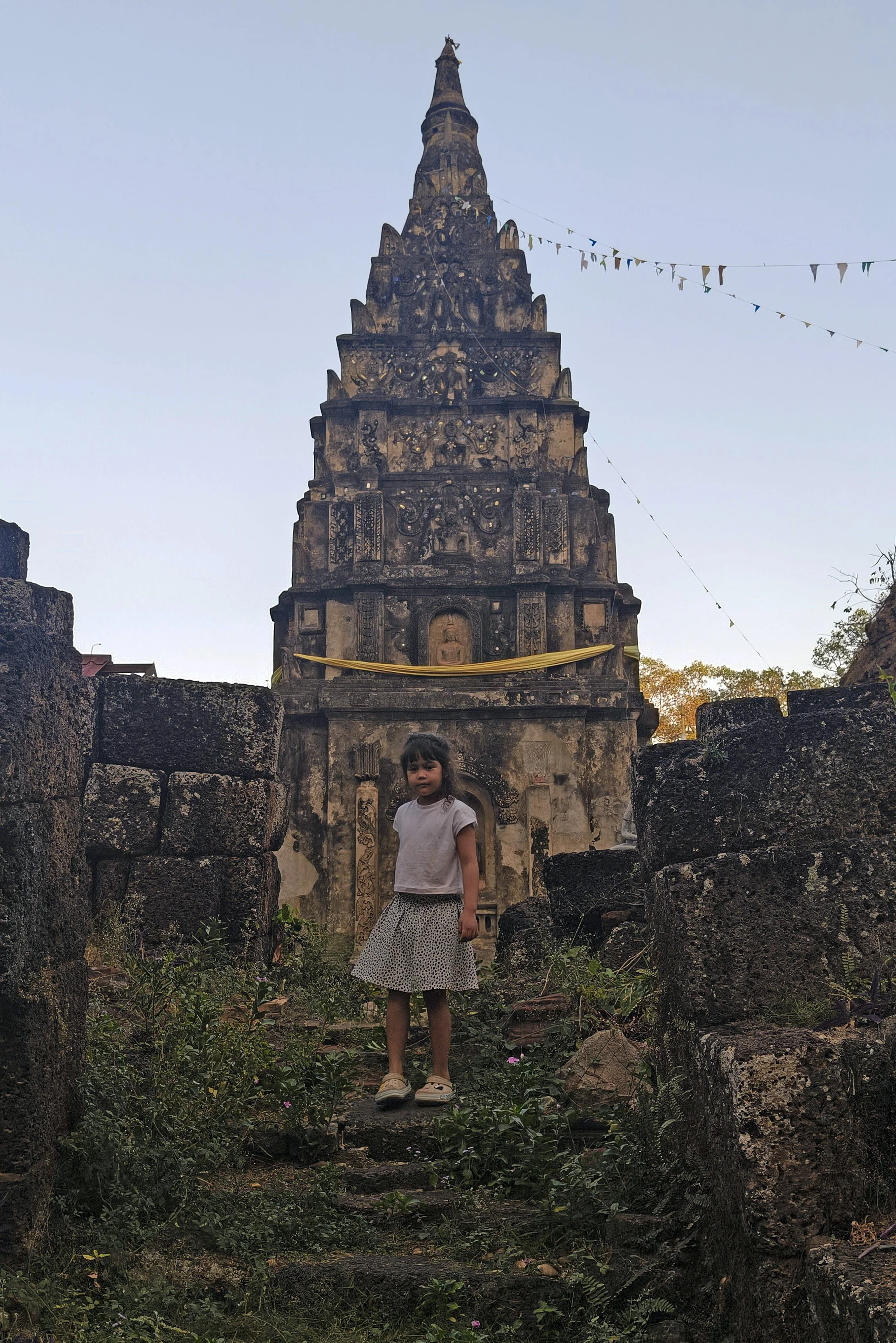
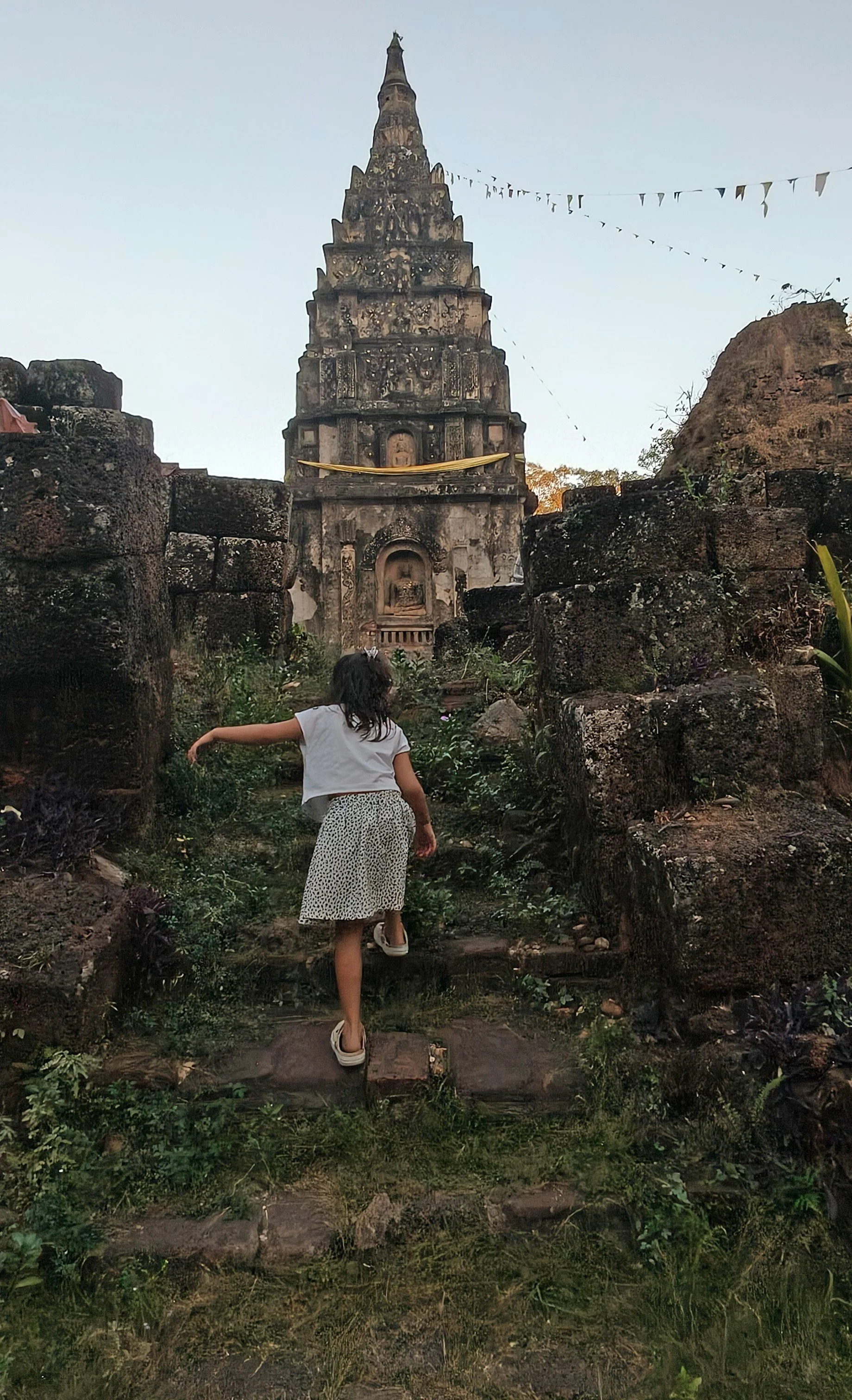
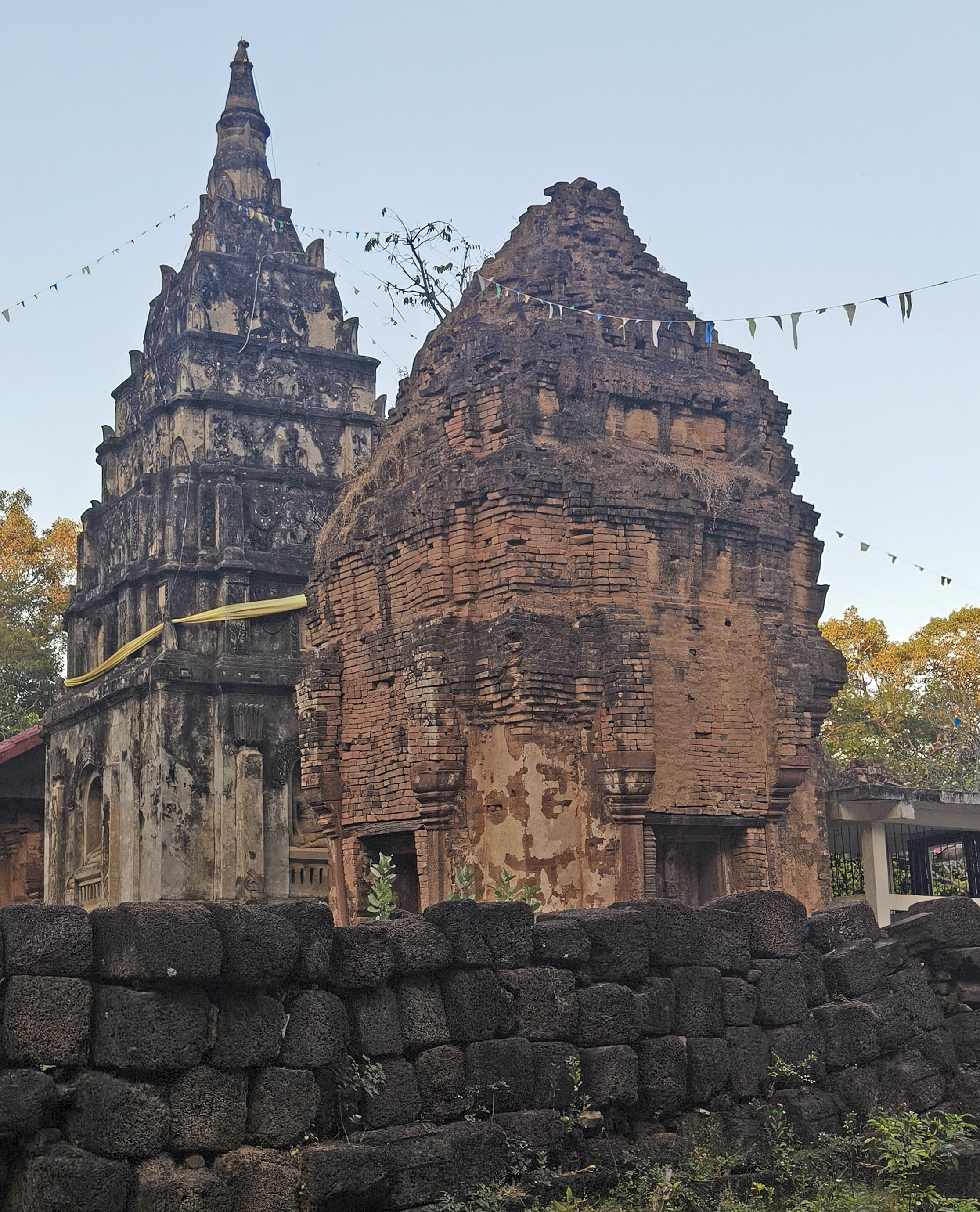
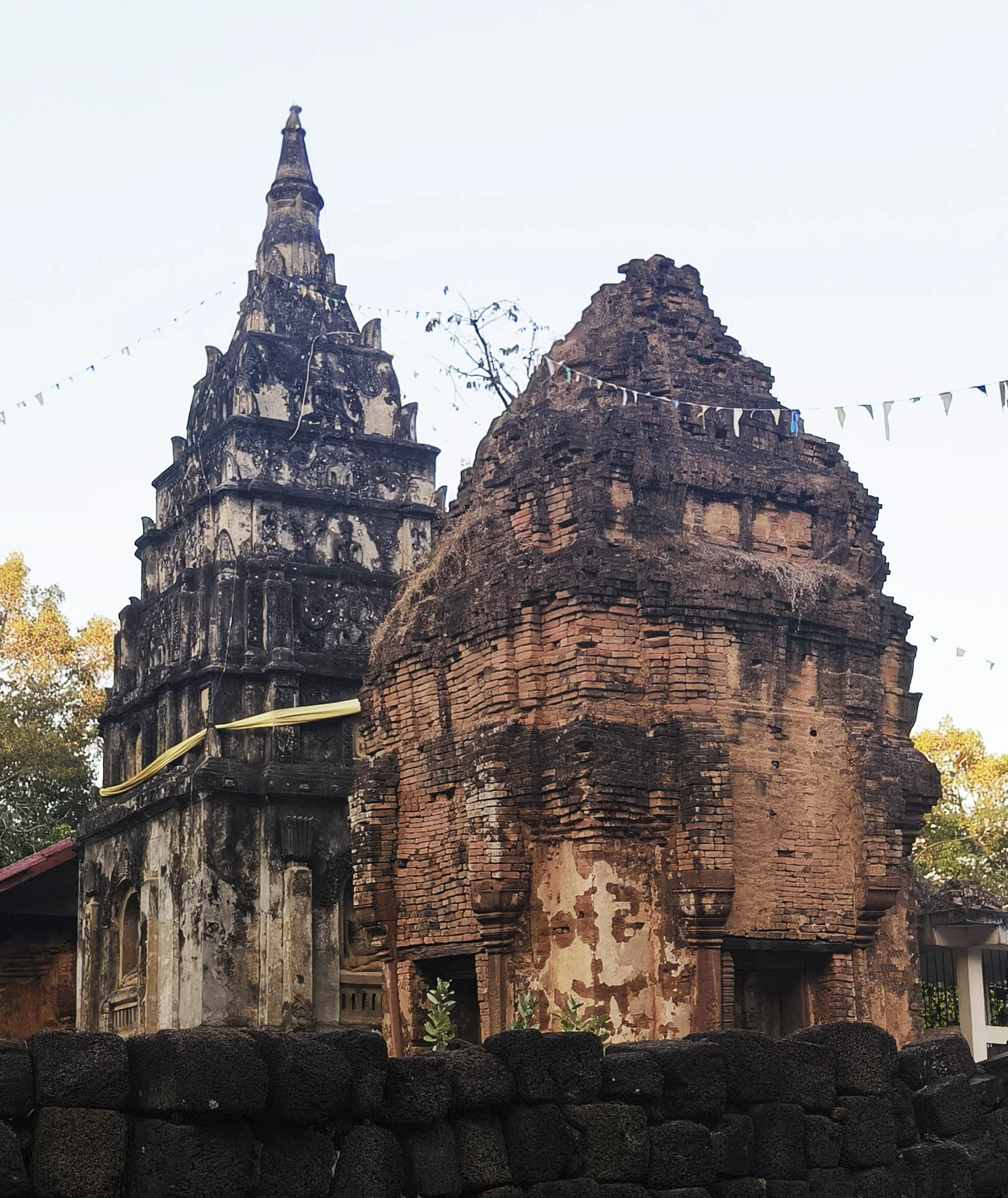
Wat Ku Phra Kona, Roi Et
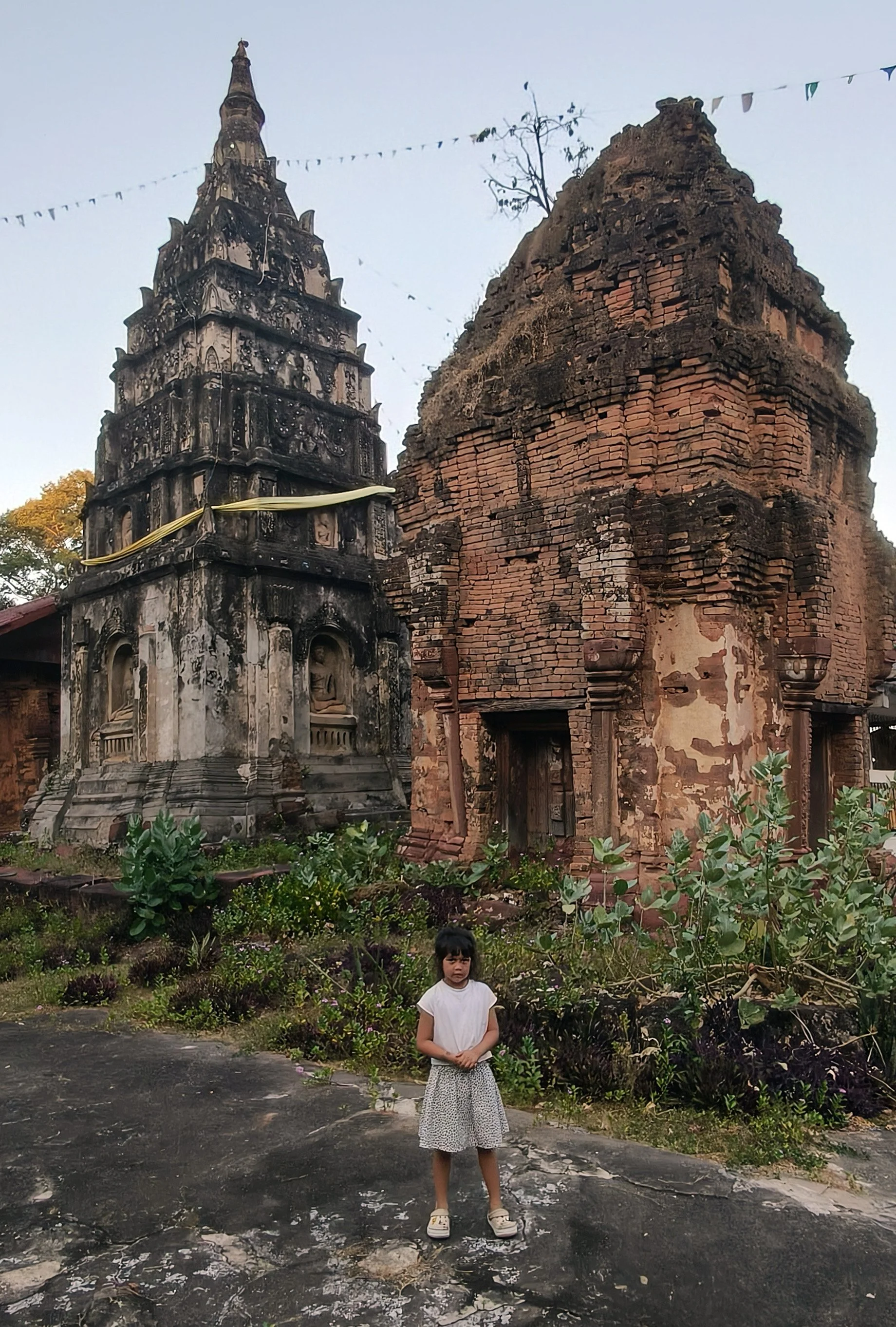
Wat Ku Phra Kona is an11th-century Khmer templelocated in the Suwannaphum district of Roi Et province, Thailand. The site is an active Buddhist temple built around ancient Khmer ruins and is known for its architecture, historical significance, and a resident troupe of macaques
Architecture: The complex originally comprised three east-facing brick prangs (religious spires) on a single sandstone base, surrounded by a boundary wall. The central prang was significantly renovated in 1874, covered in stucco and reshaped into tiers with Buddha images.
Historical Significance: Believed to date from the Baphuon style of Khmer art (11th century), the temple was originally a Hindu sanctuary dedicated to the god Shiva, as evidenced by a Shiva Lingam found inside and a fallen lintel depicting Shiva on a bull. It has since been converted into an active Buddhist temple.
Notable Elements: The site features original thousand-year-old sandstone carvings and lintels, some of which depict deities like Indra on his elephant mount. Traces of a former moat and a causeway leading to a lake are also present.

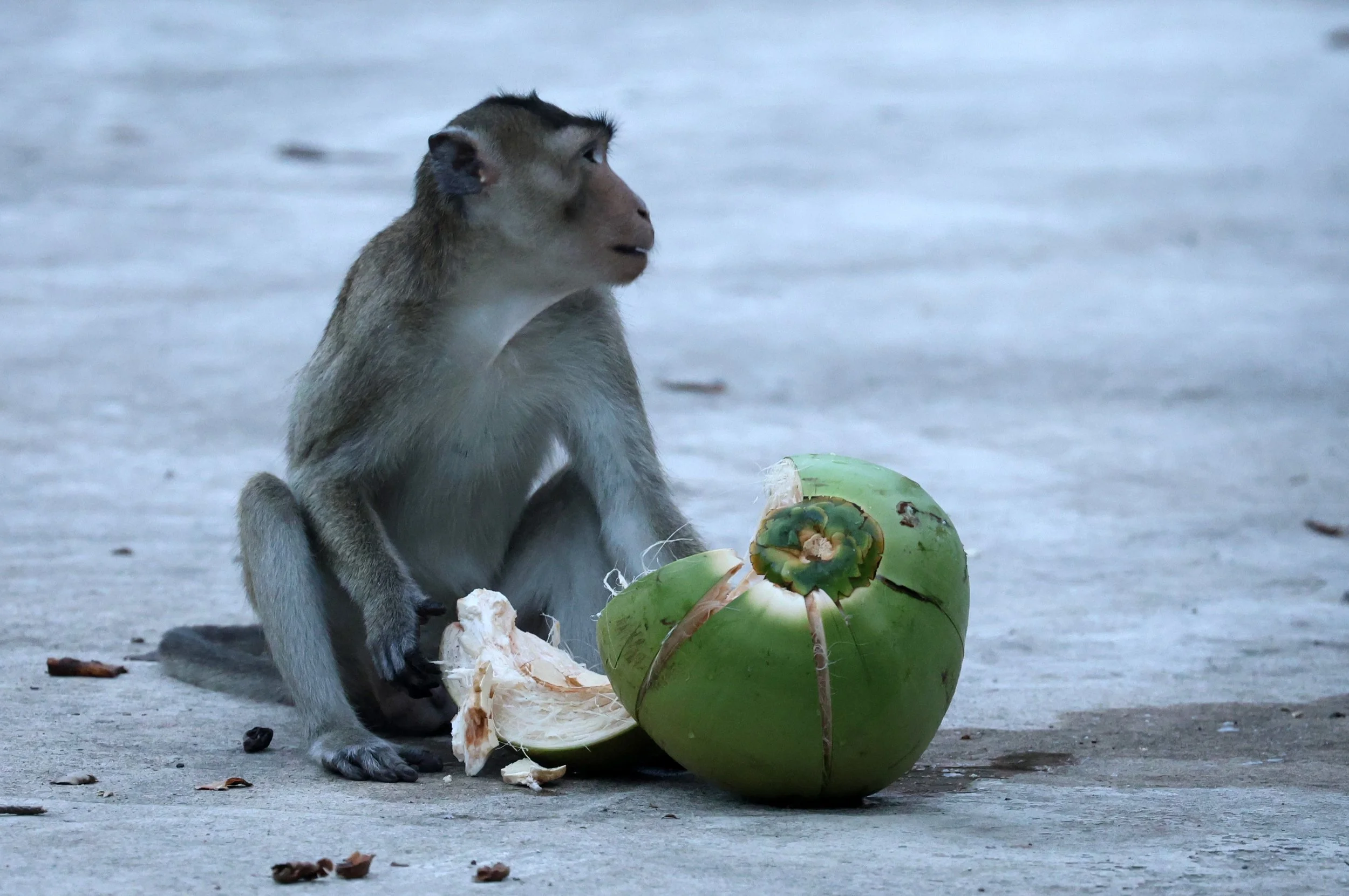
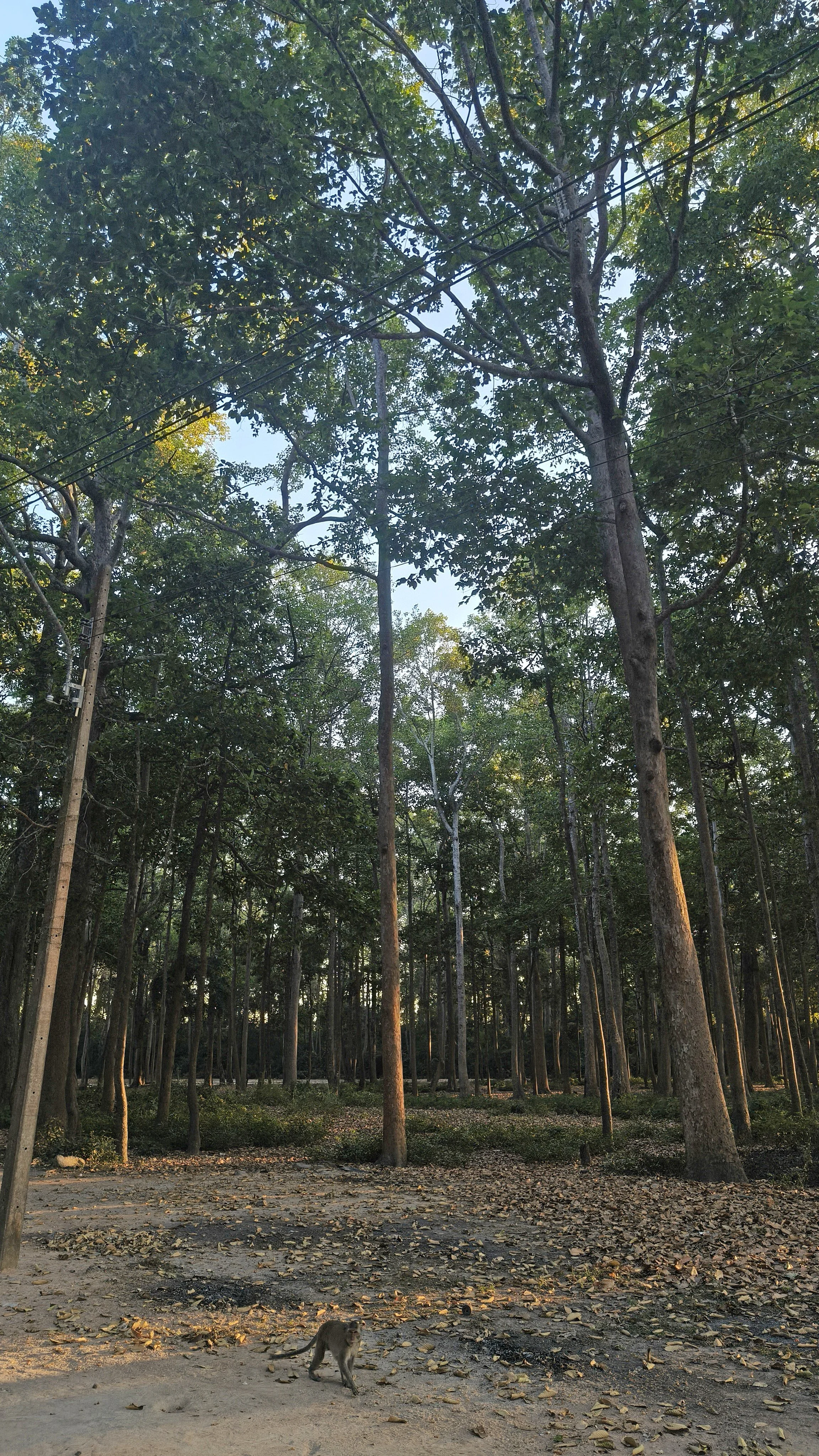
Long-tailed Macaque (Macaca fascicularis)




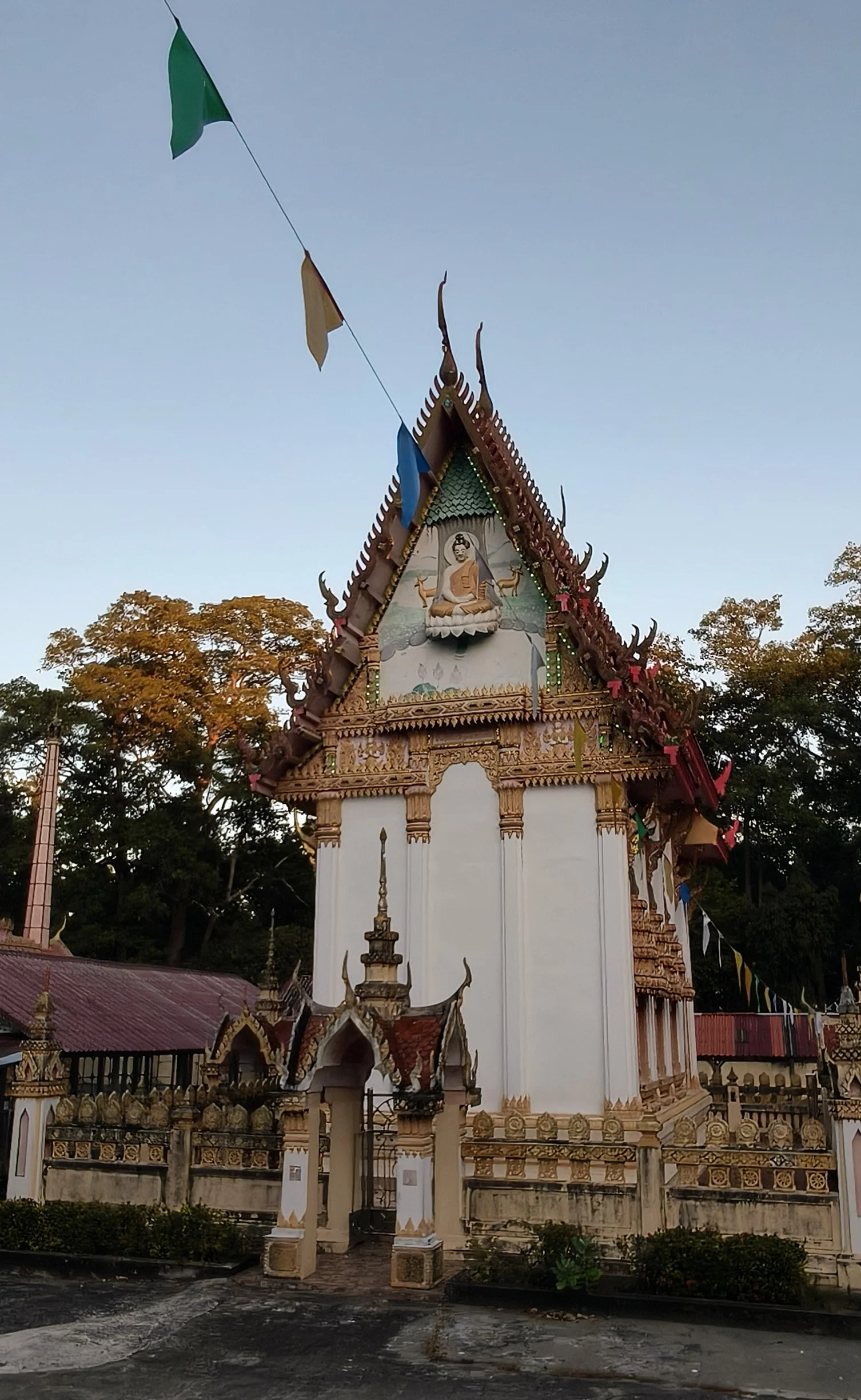
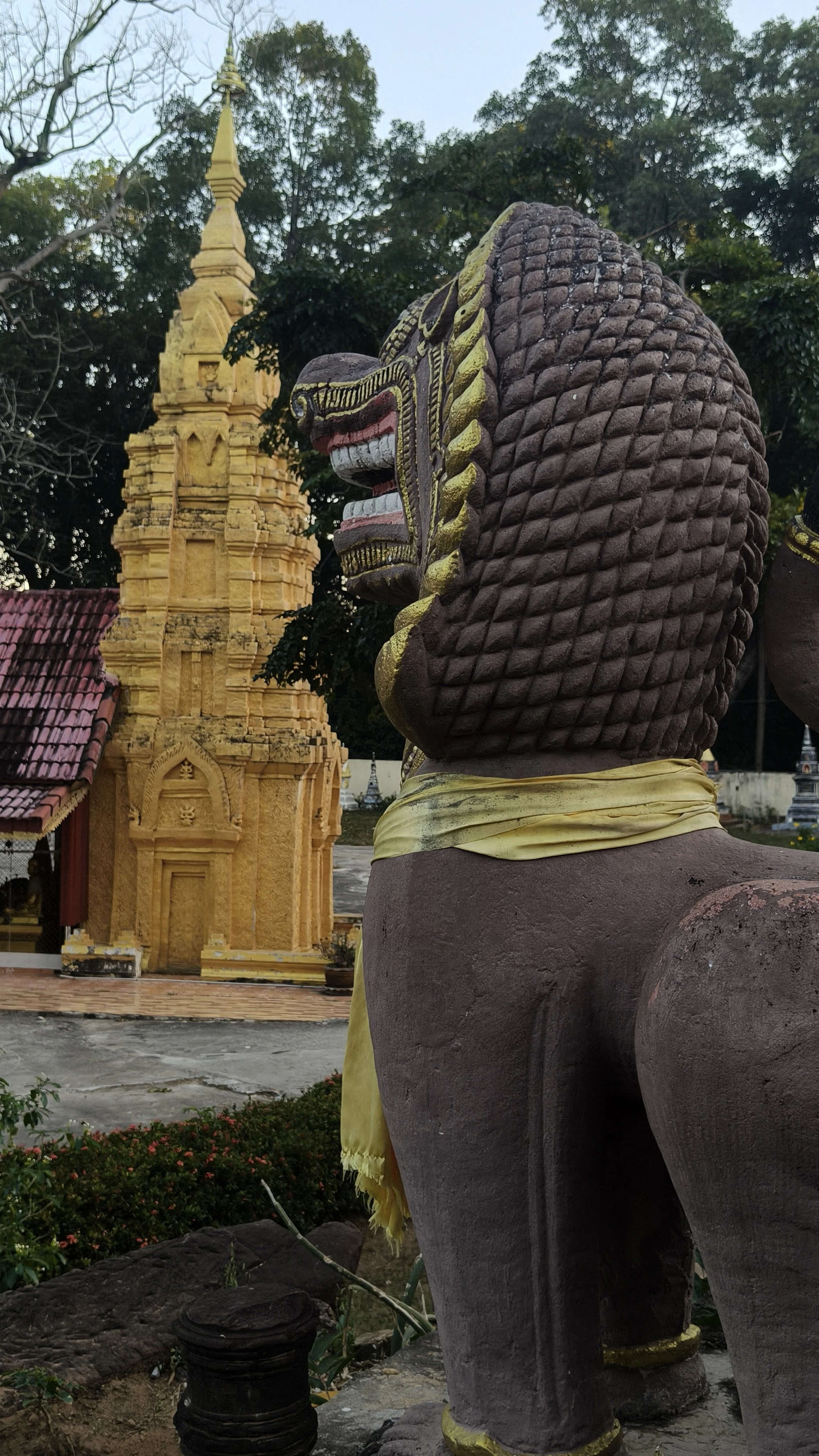
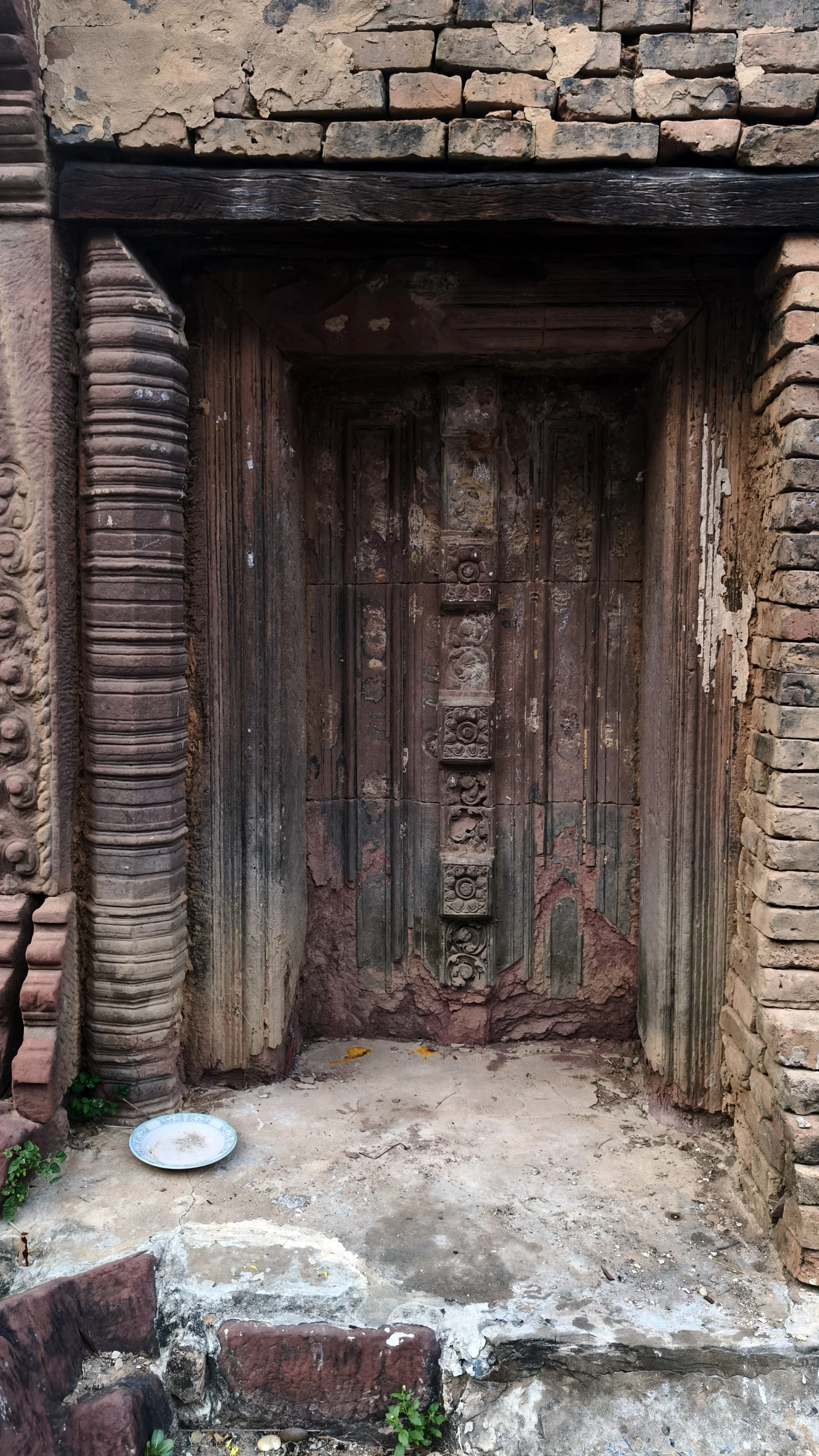
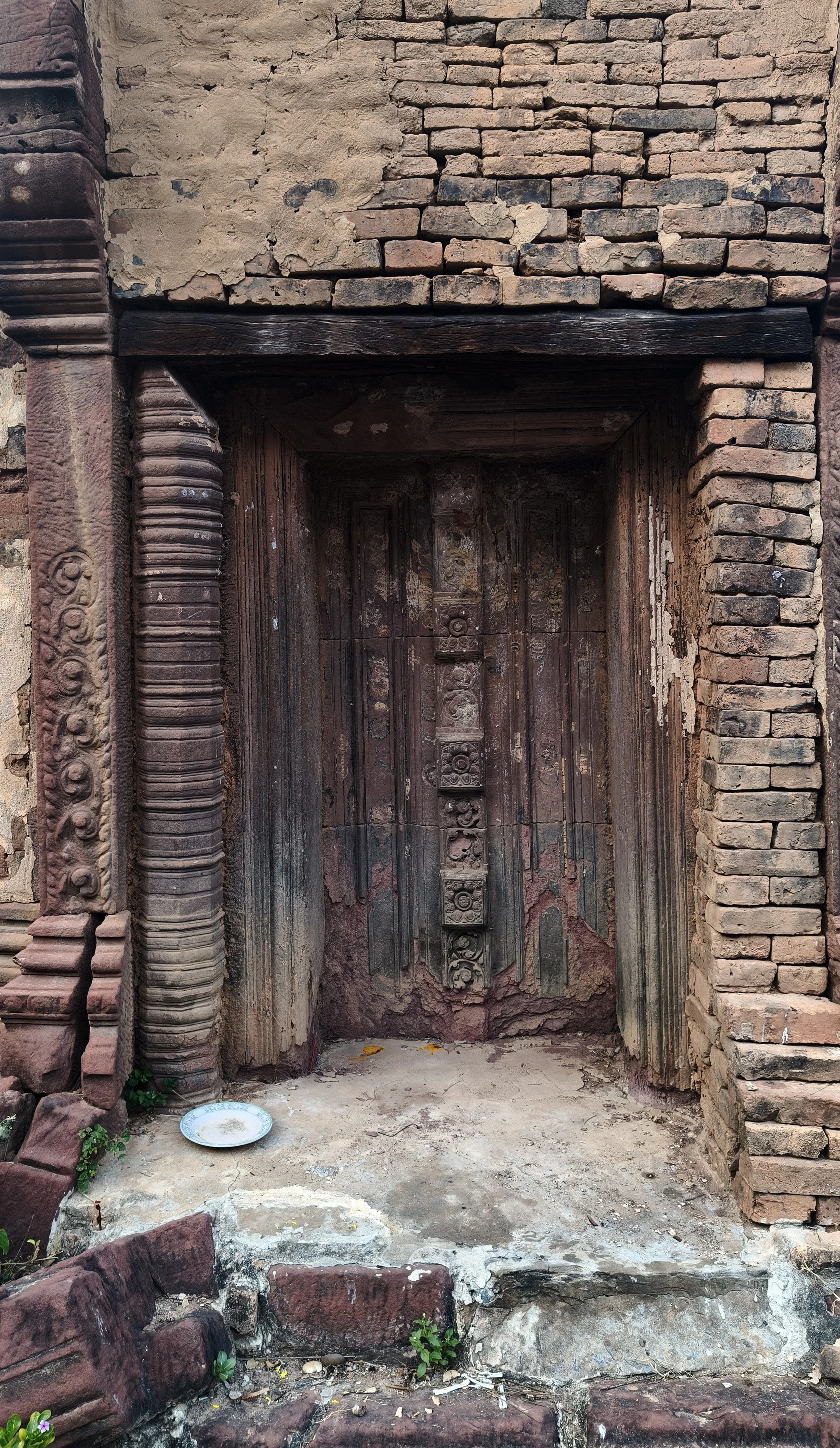
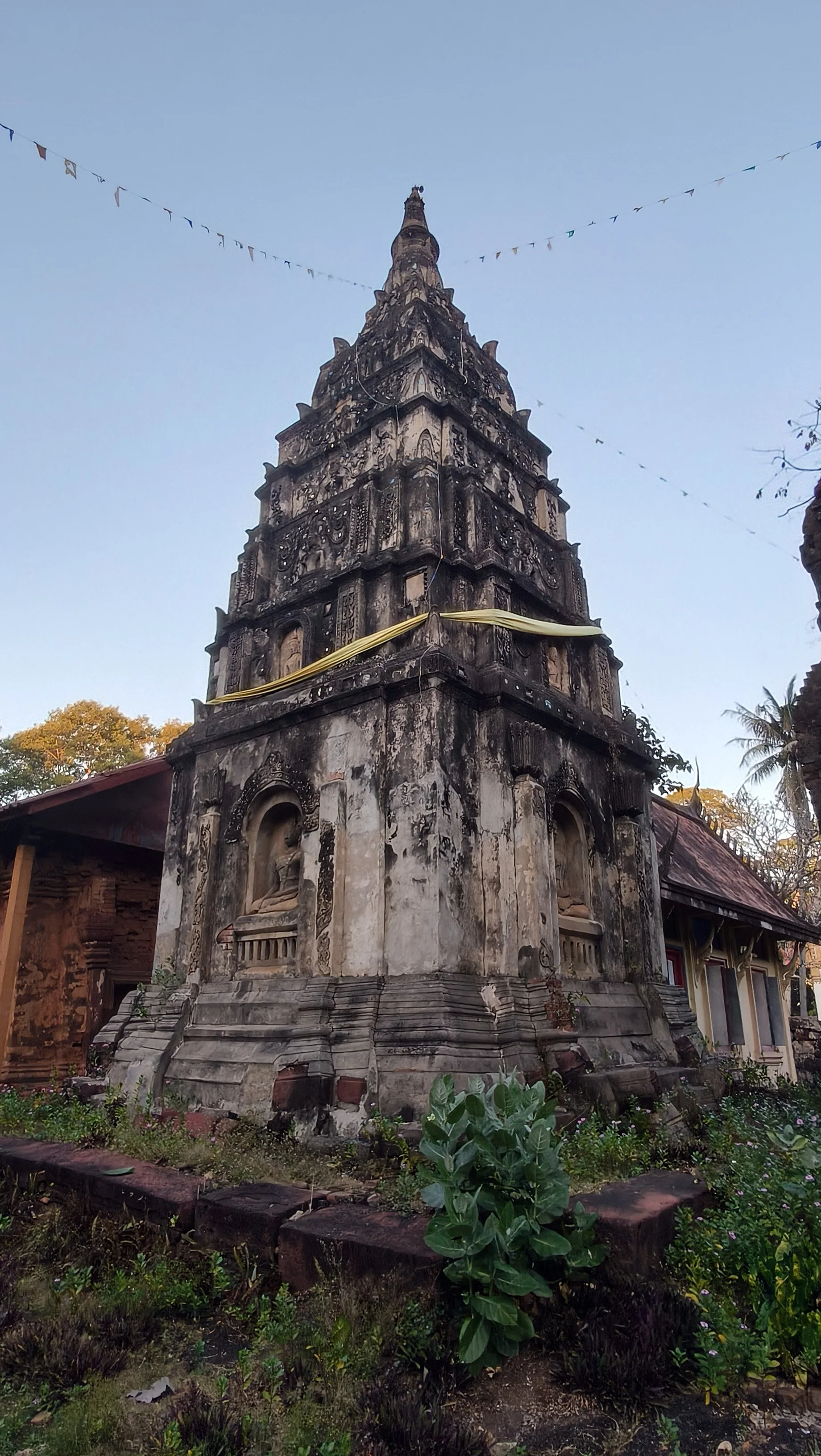
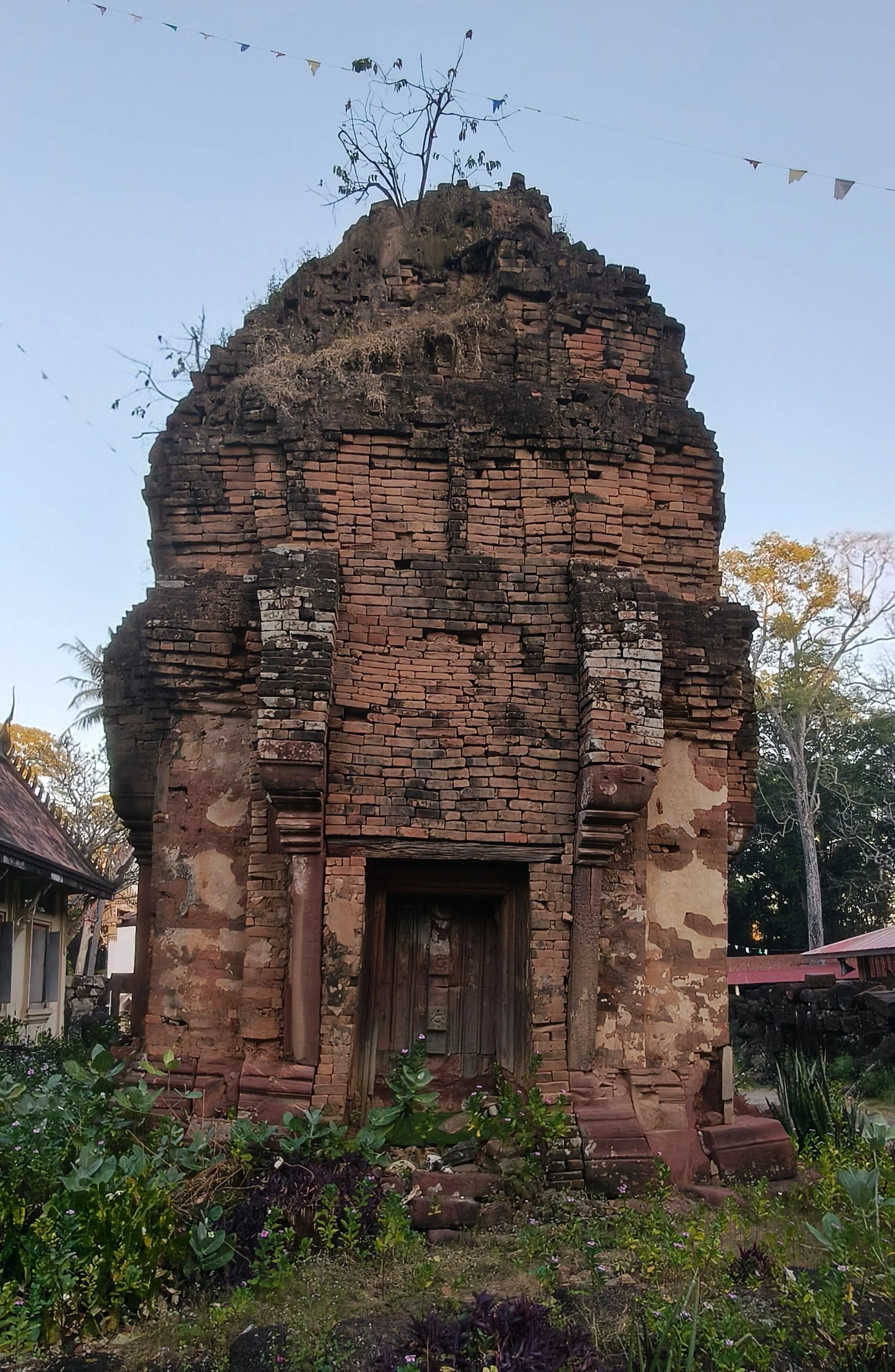

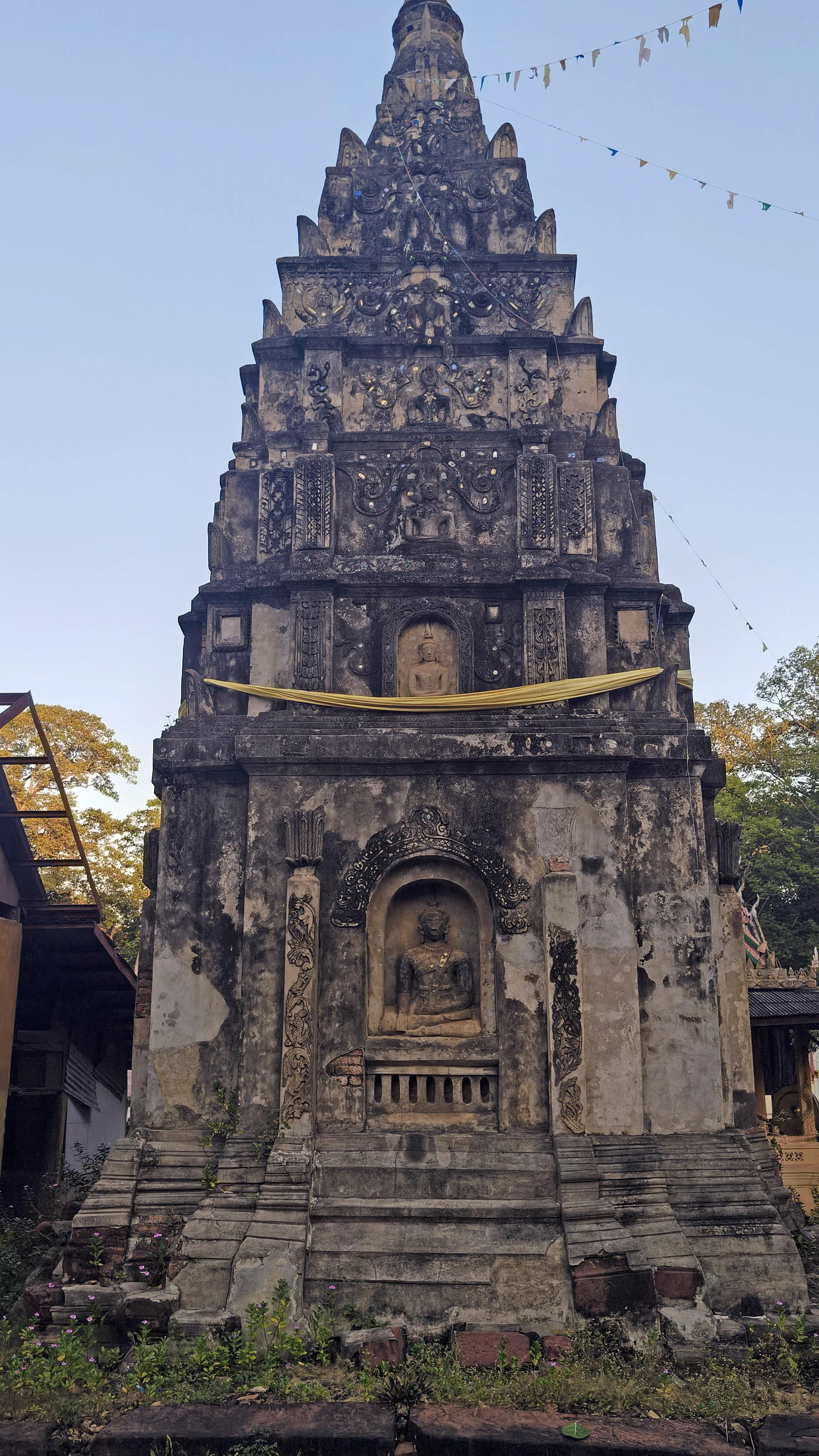
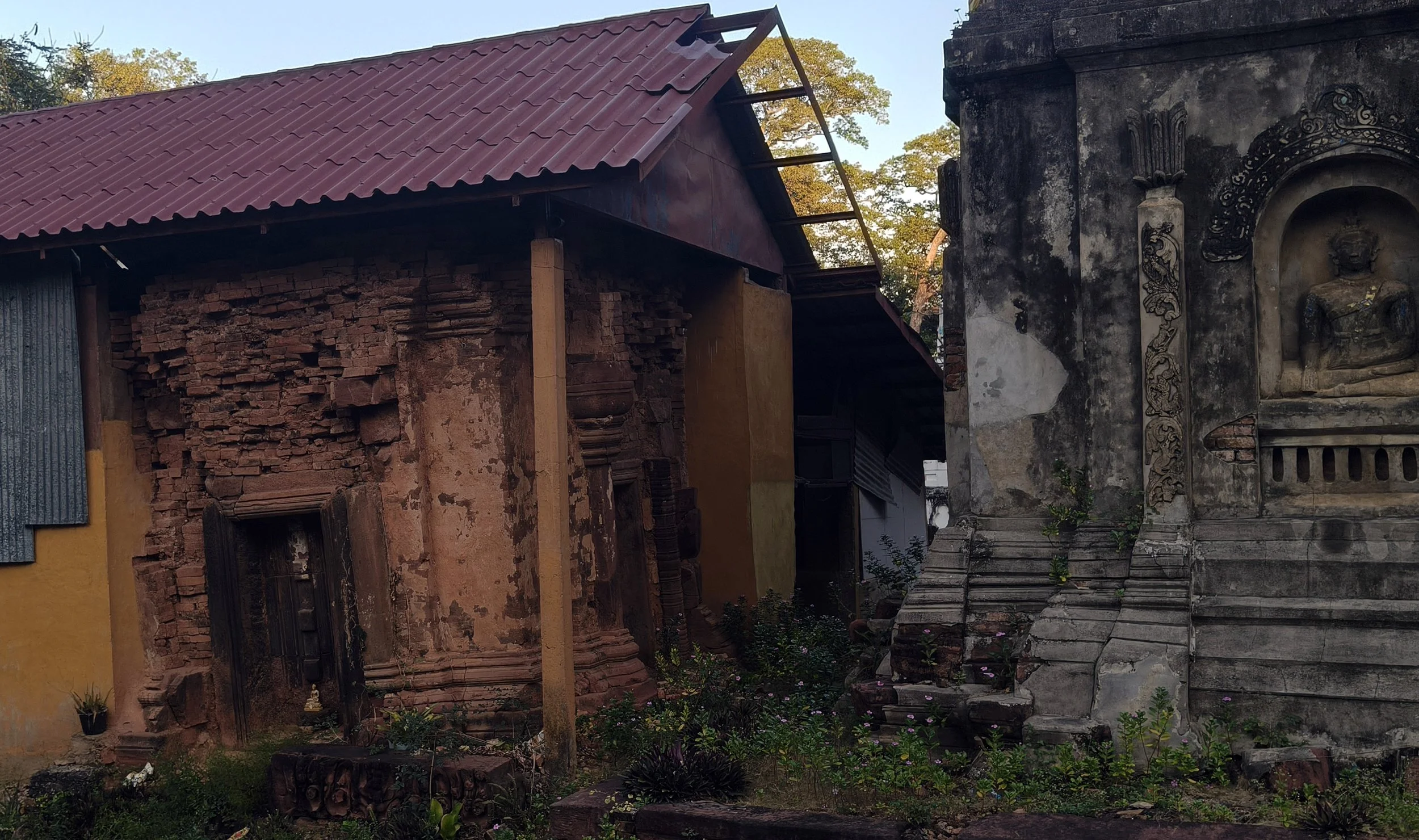
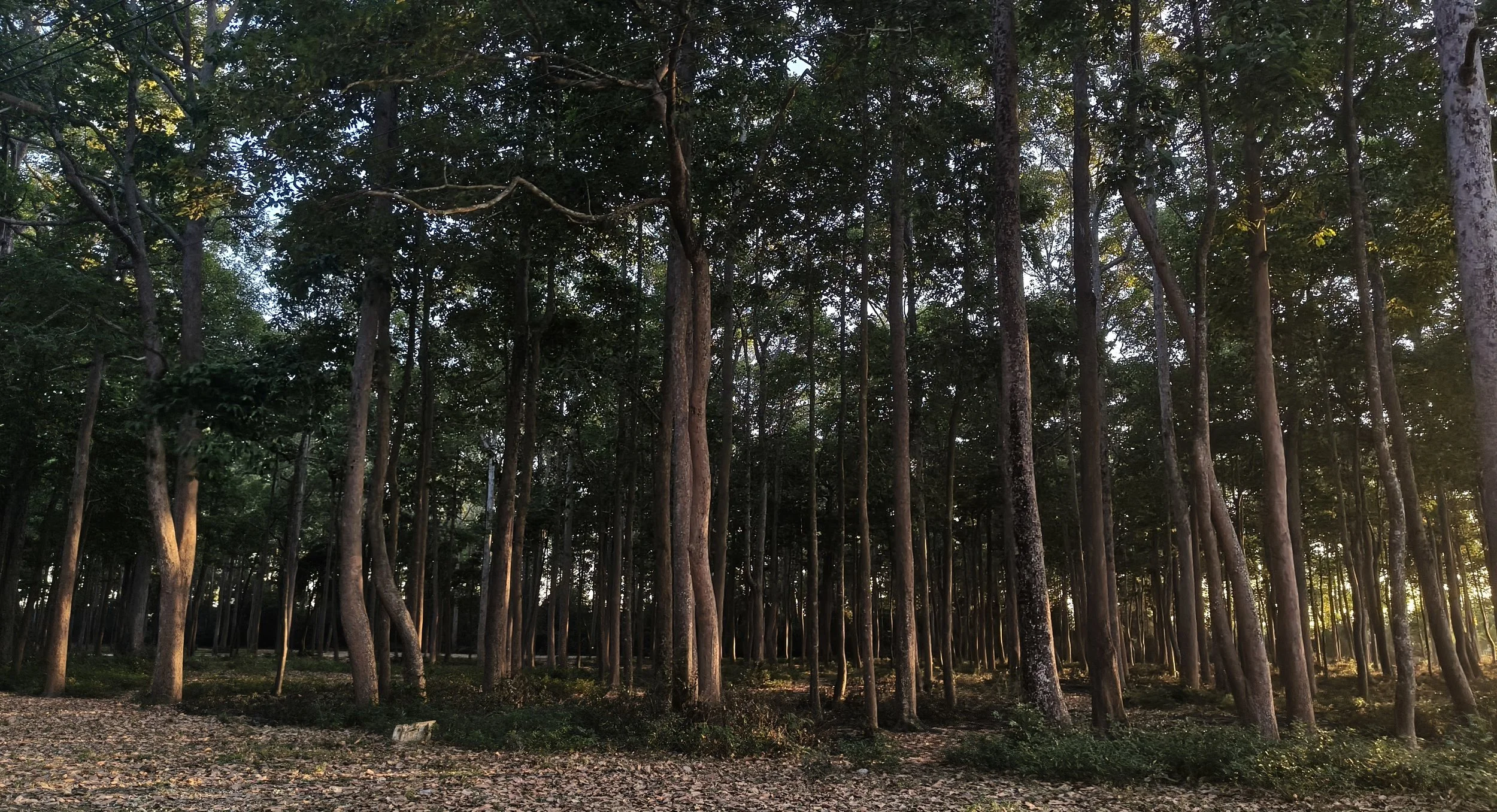
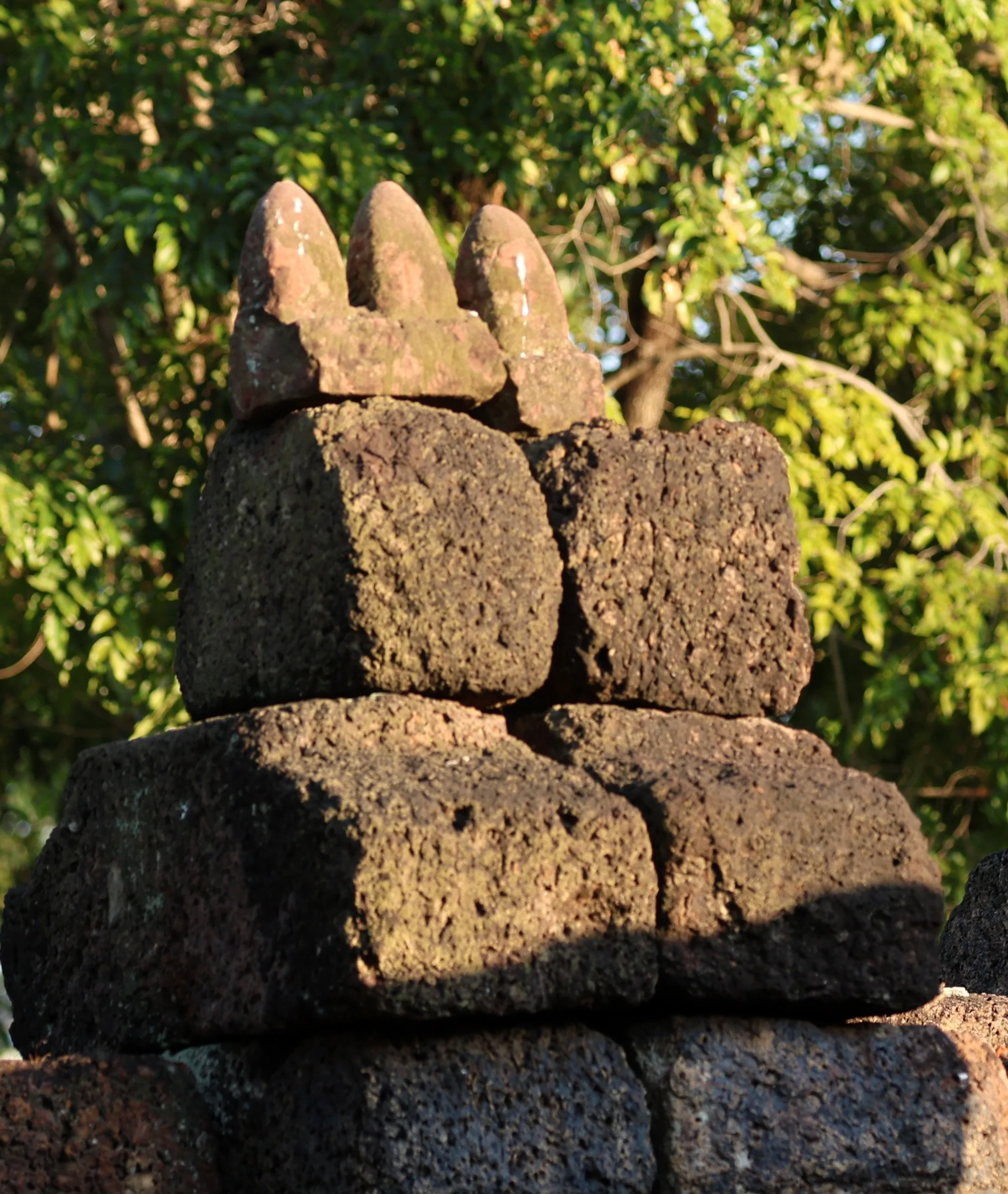
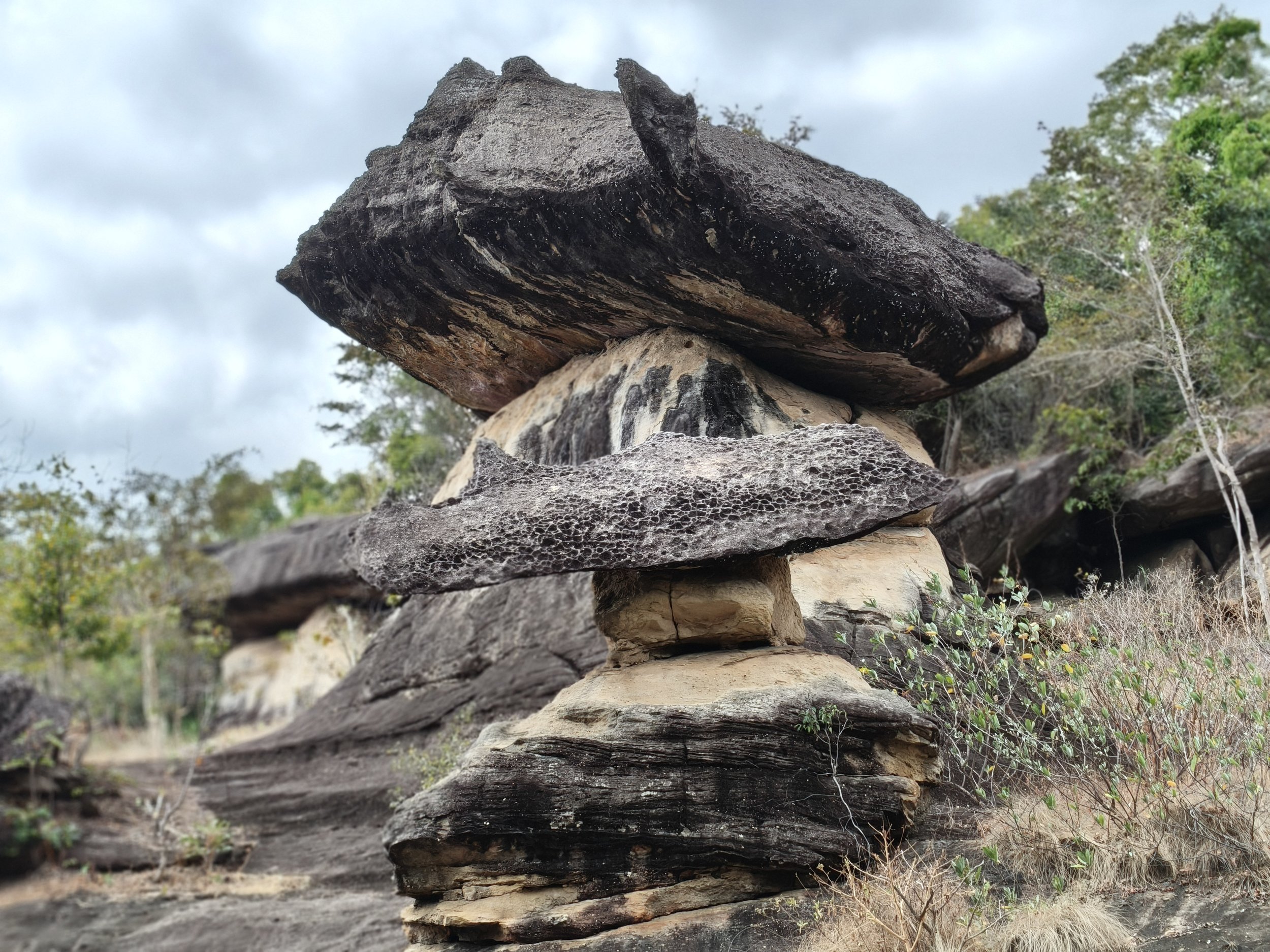
Phu Pha Thoep National Park, Mukdahan
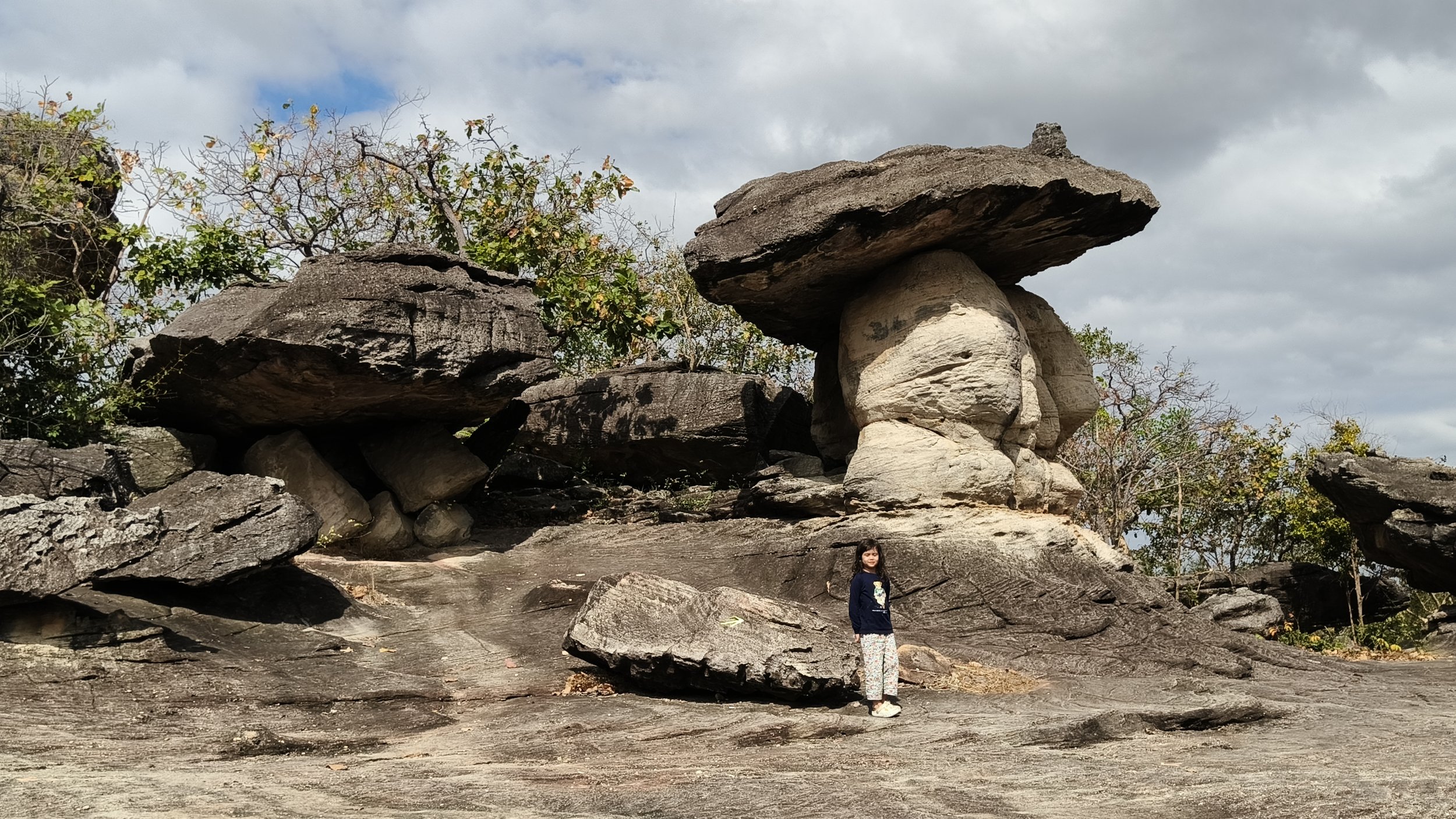
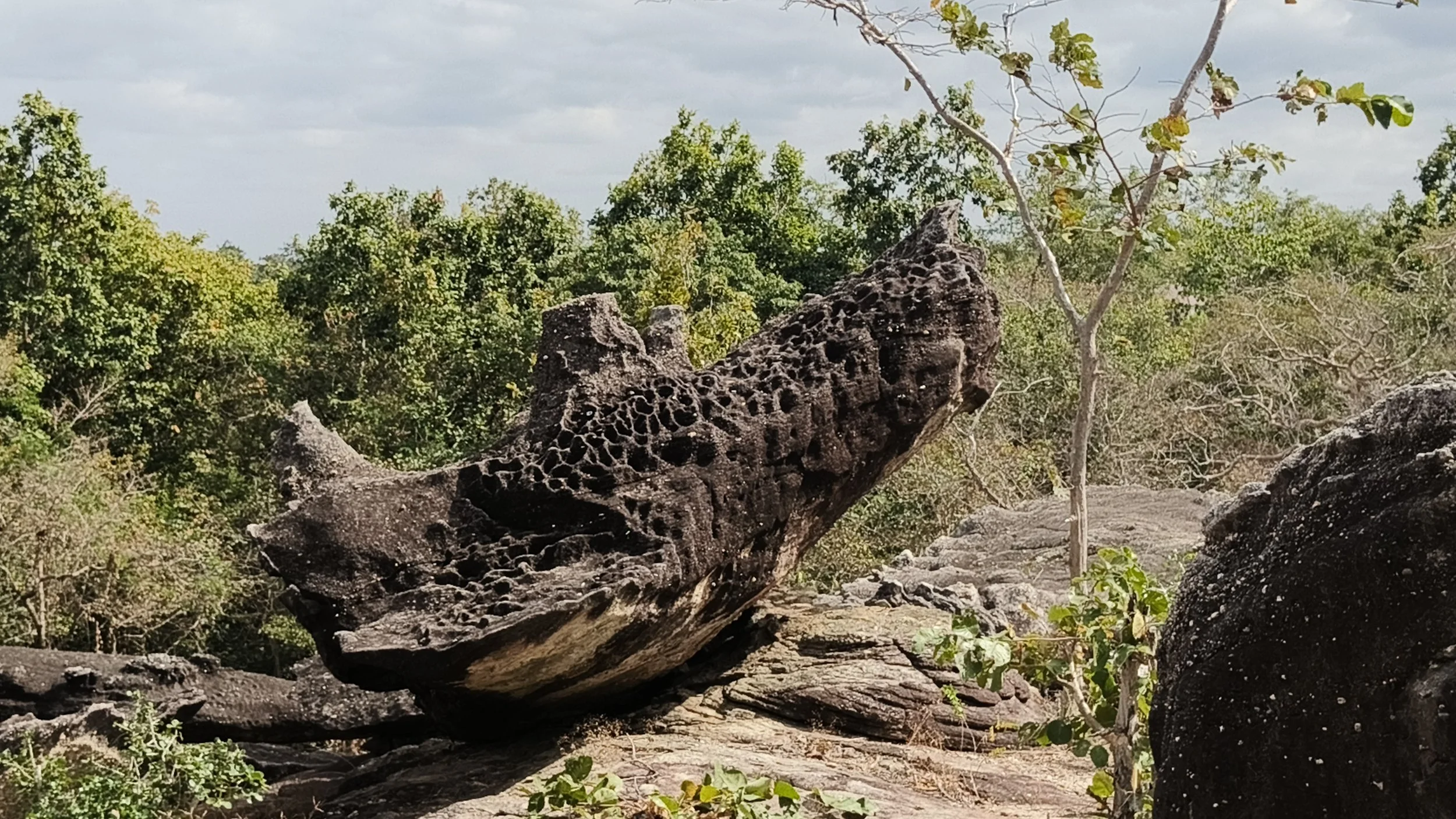
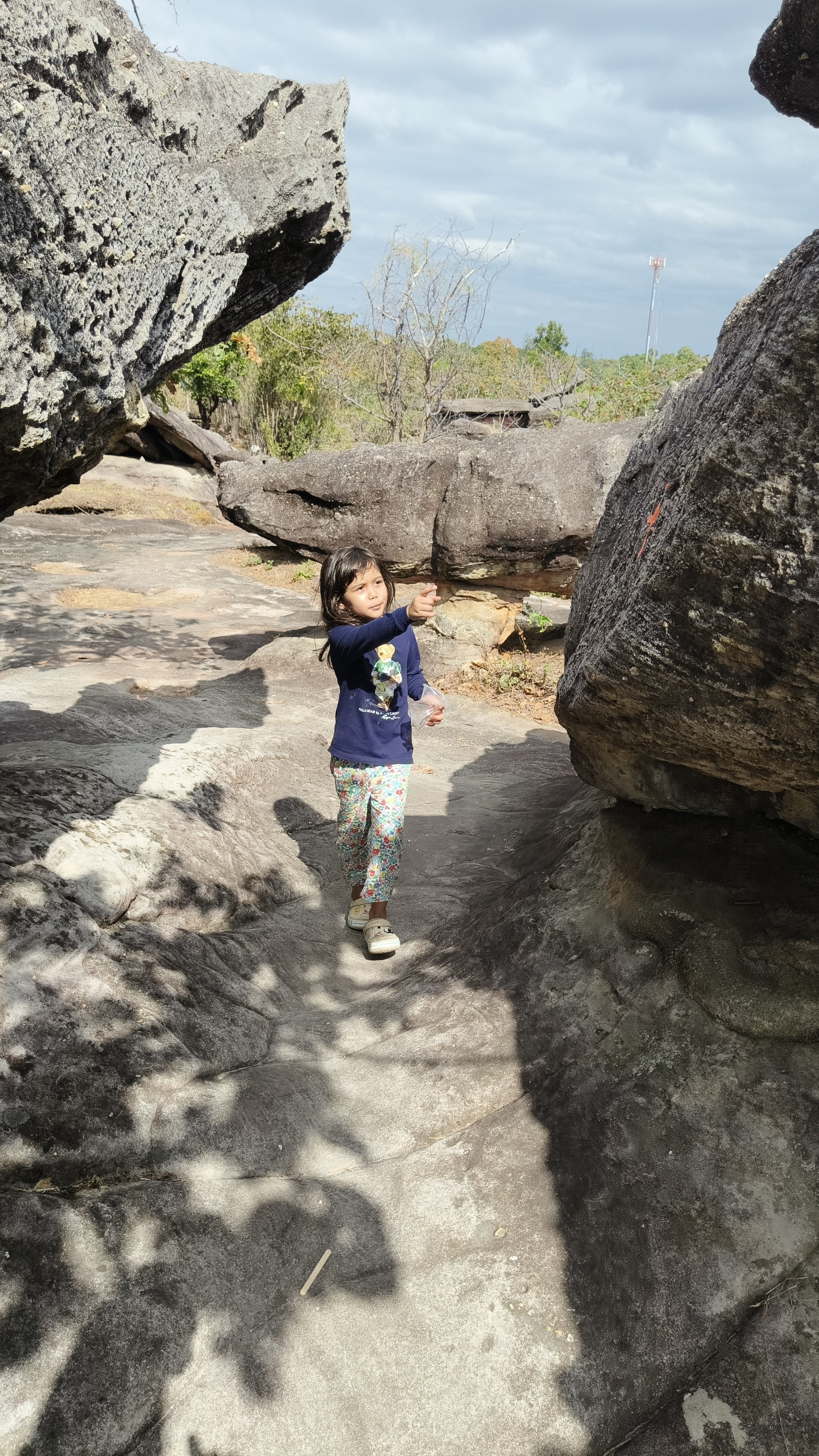
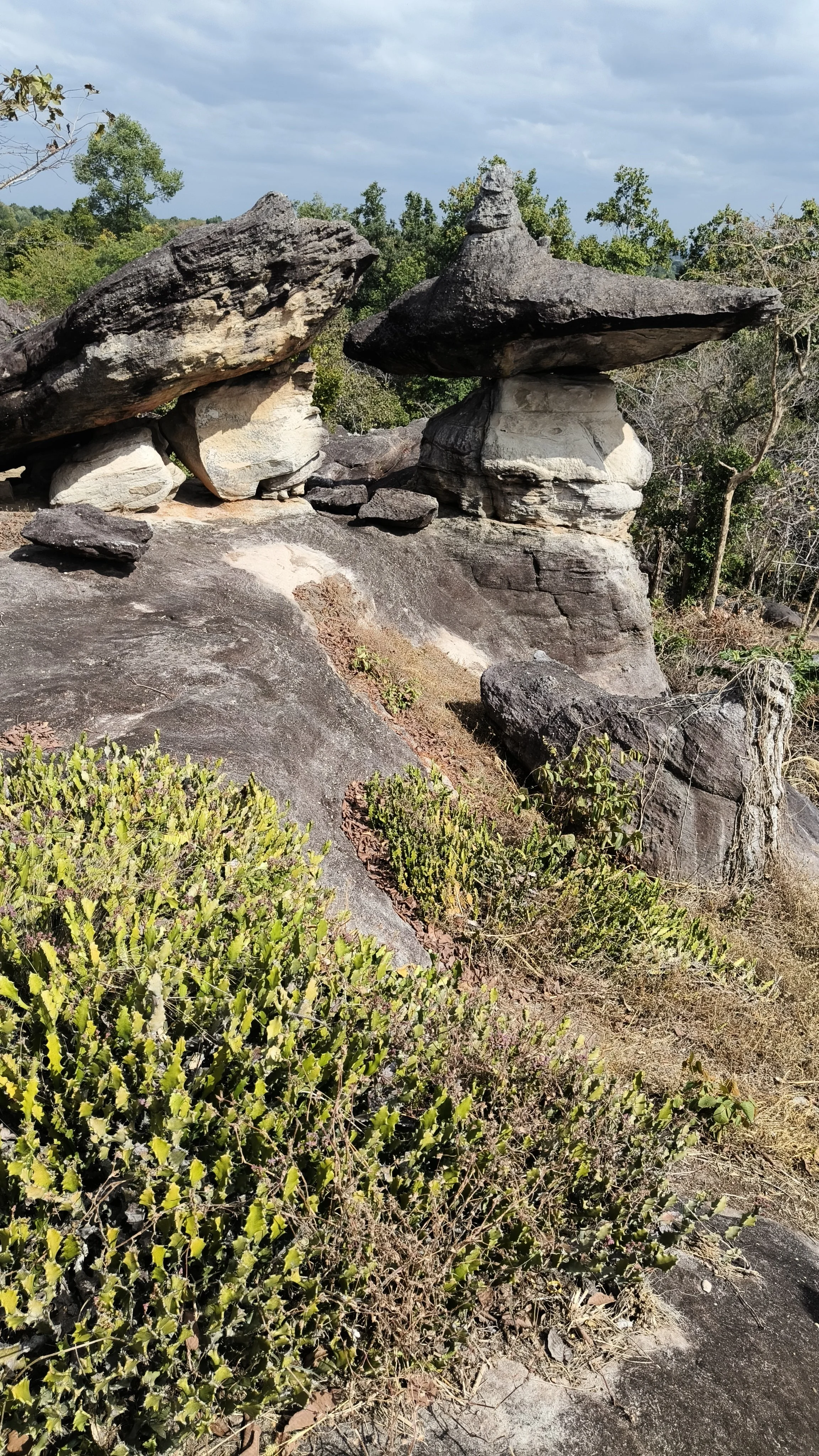
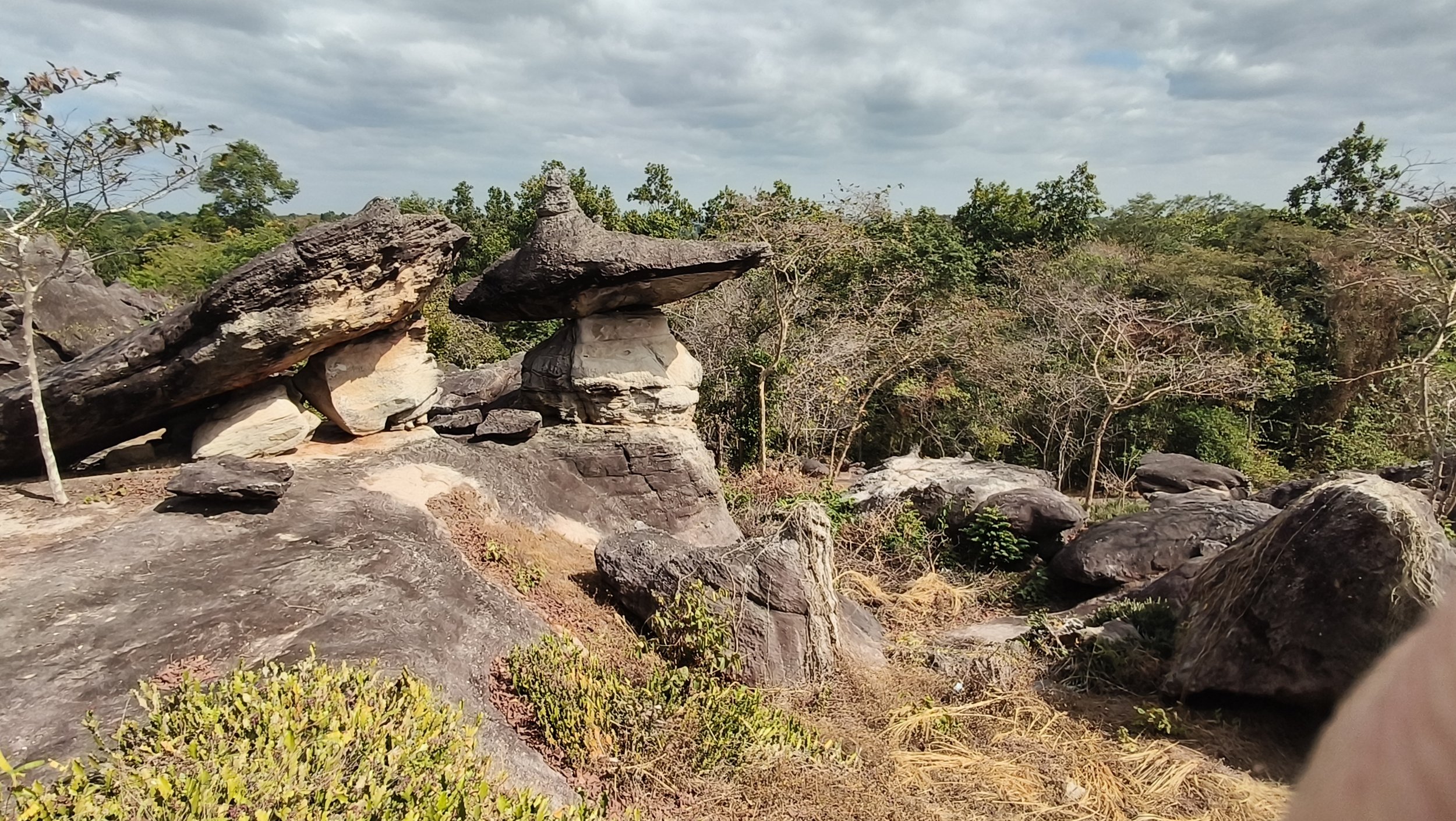
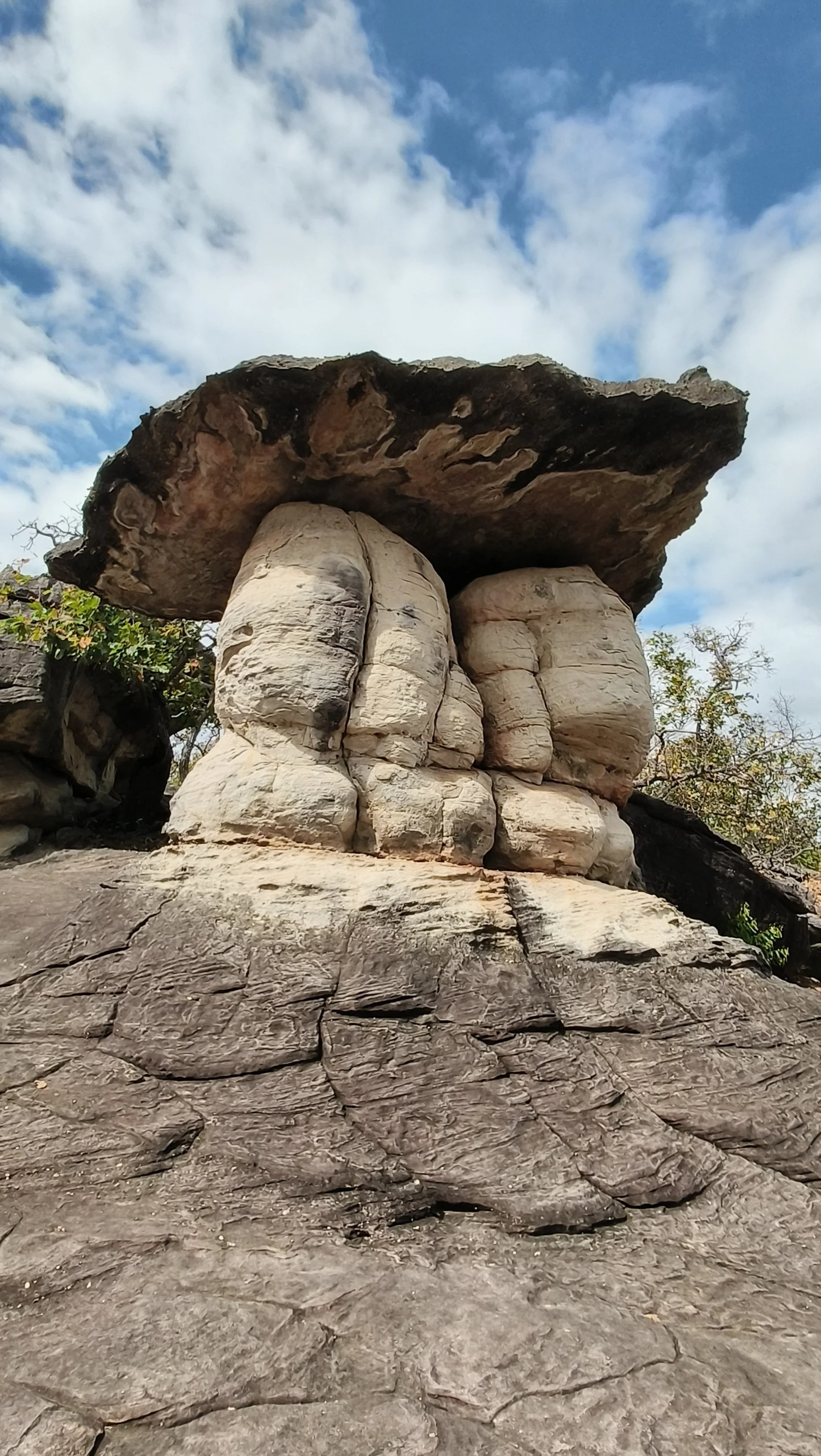
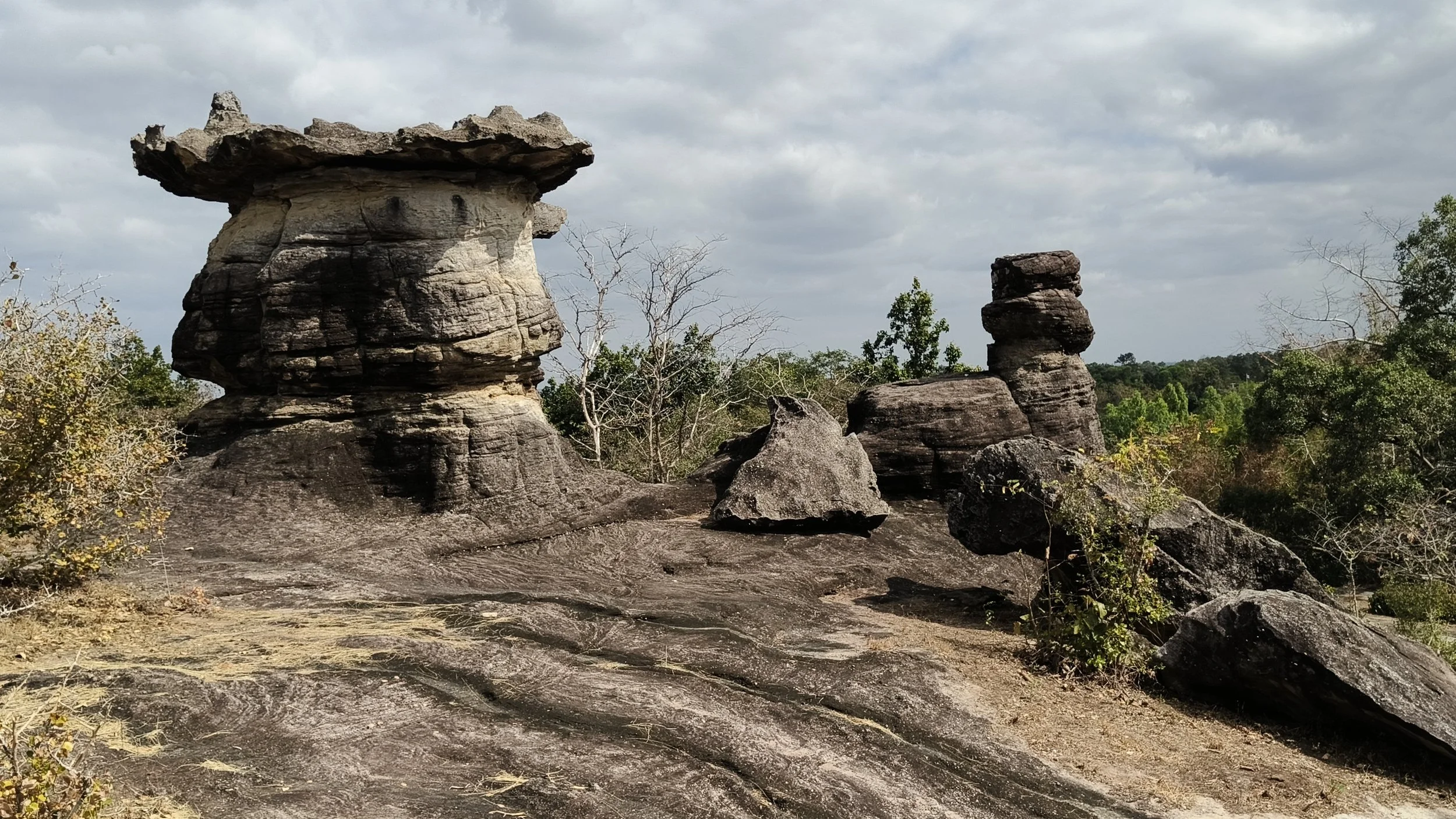
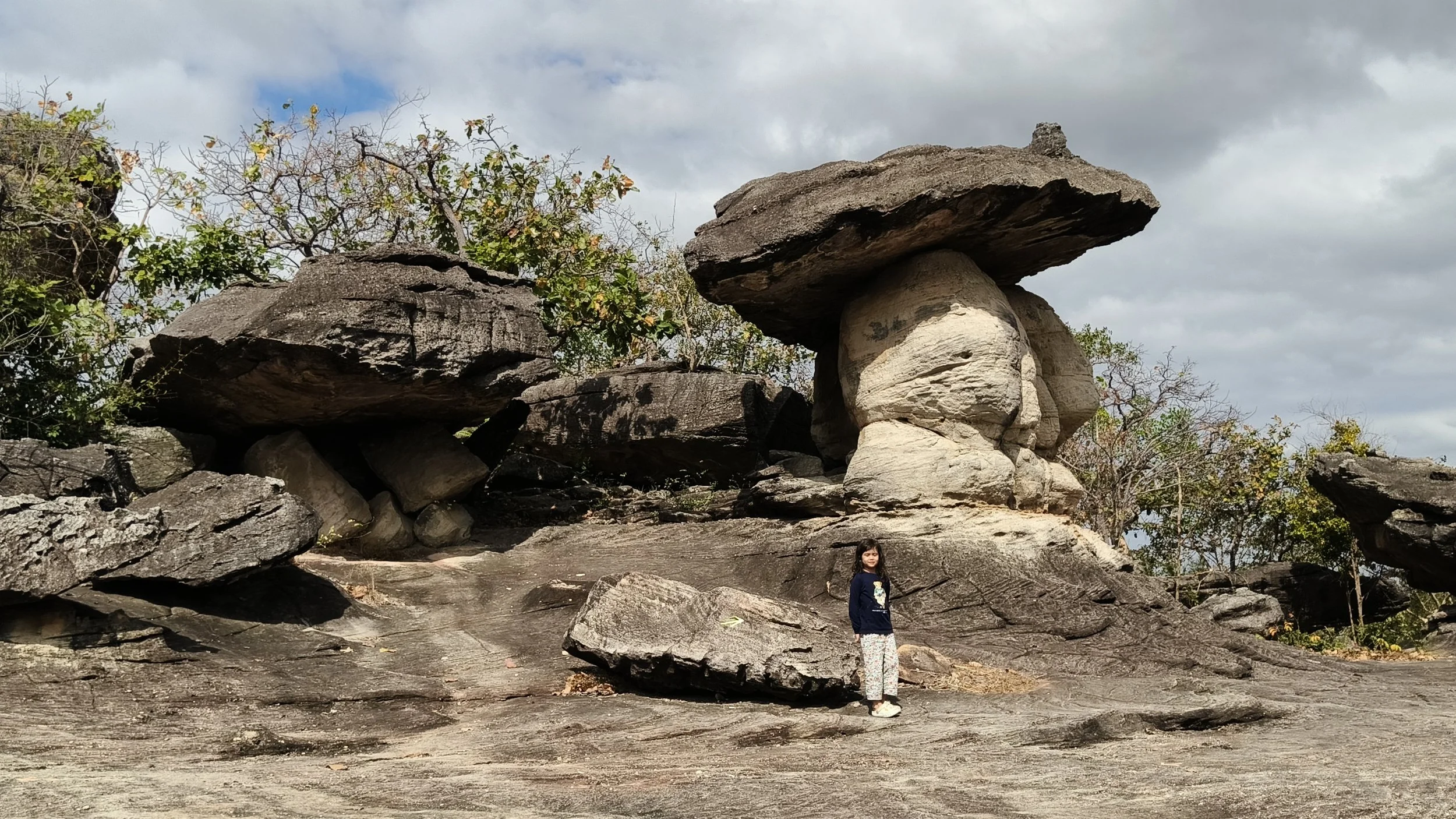
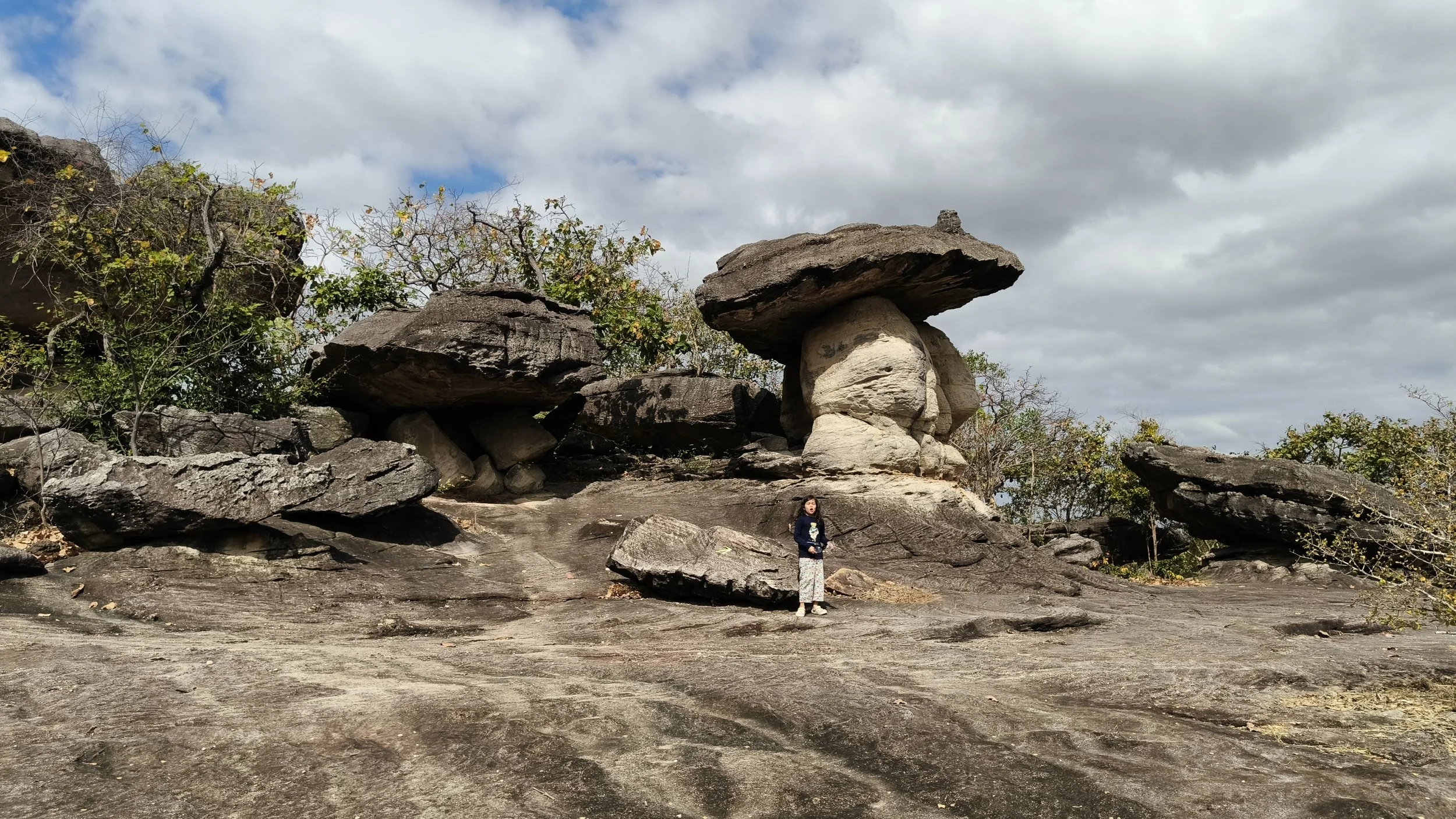
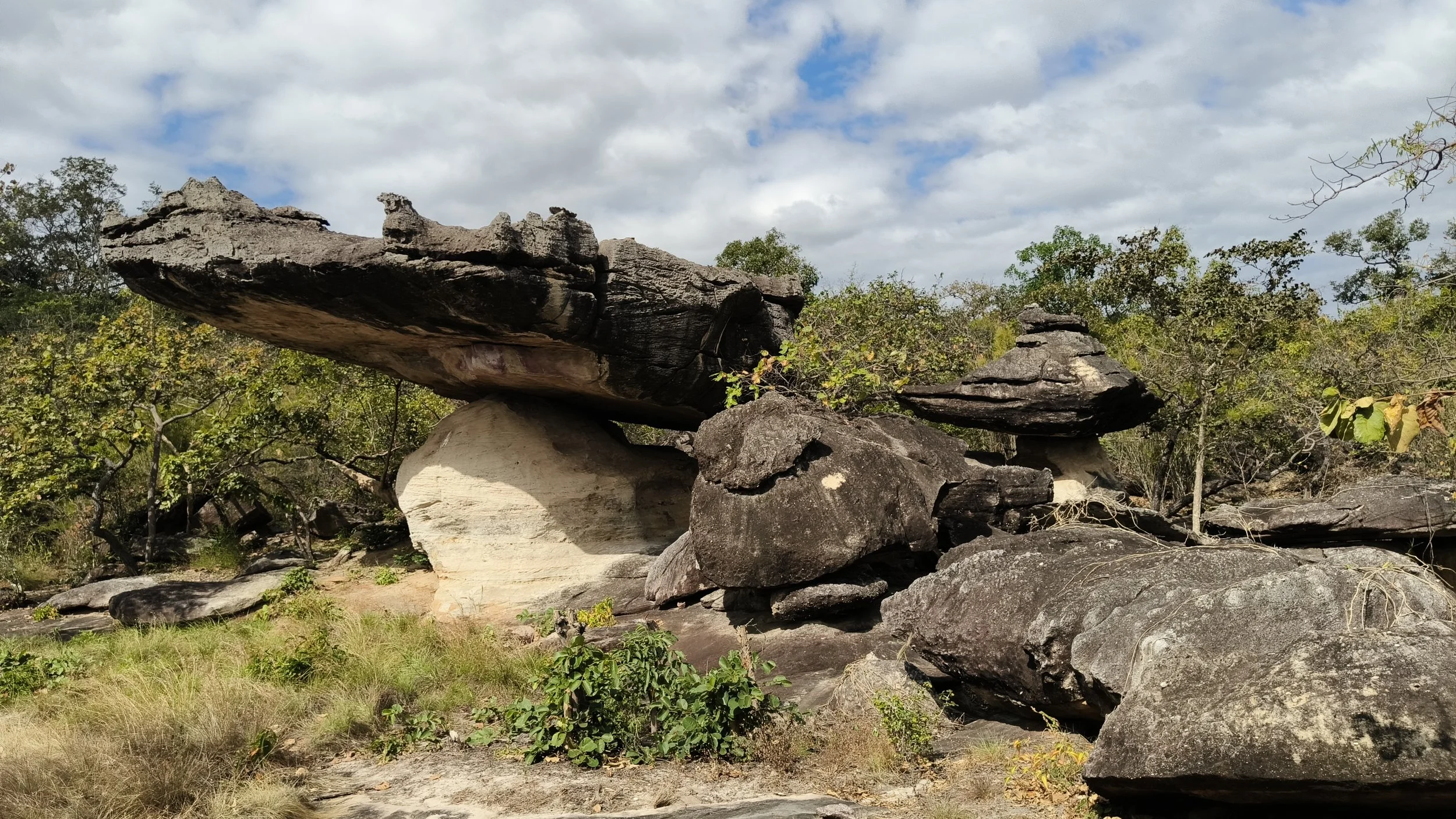
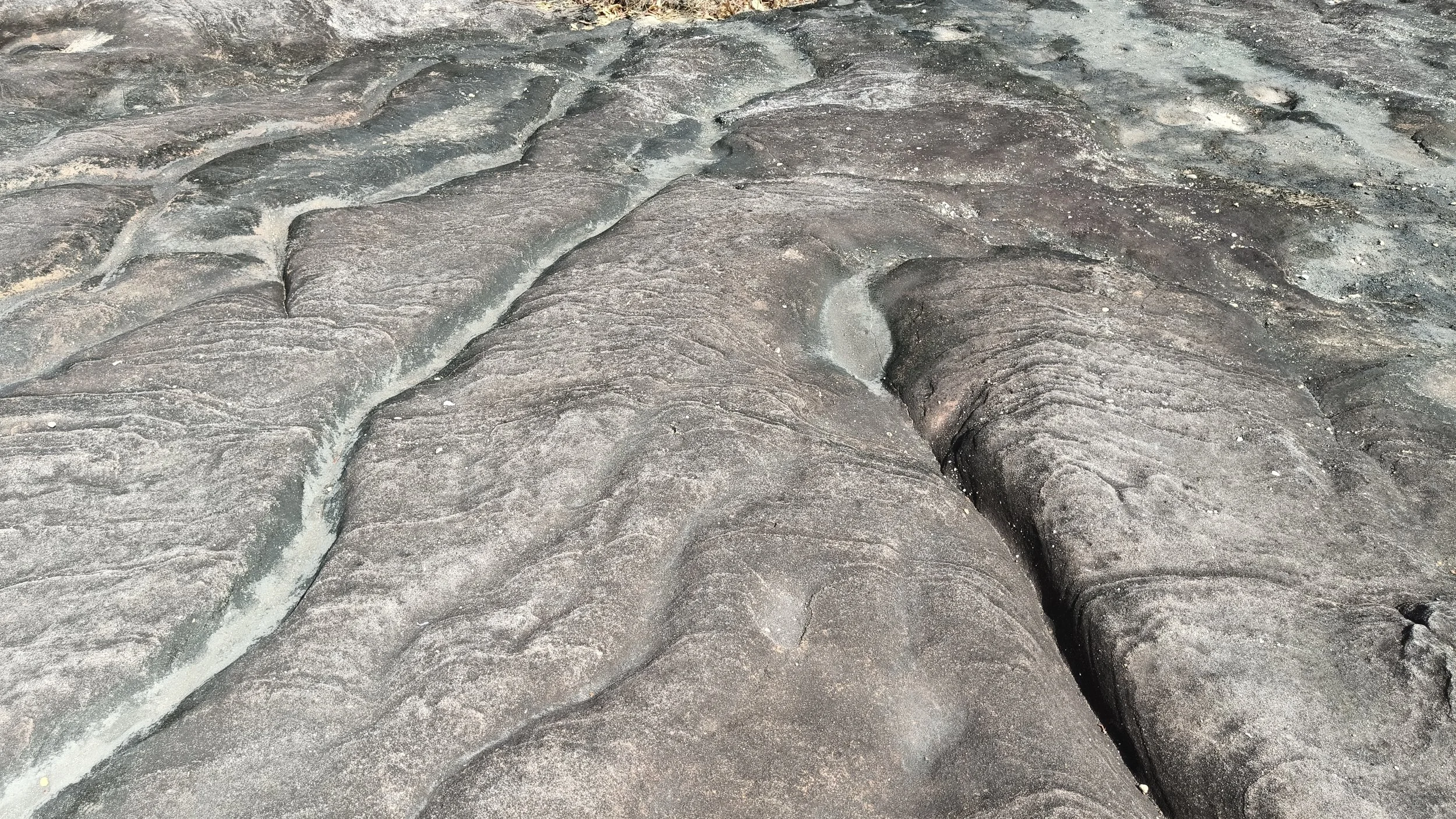
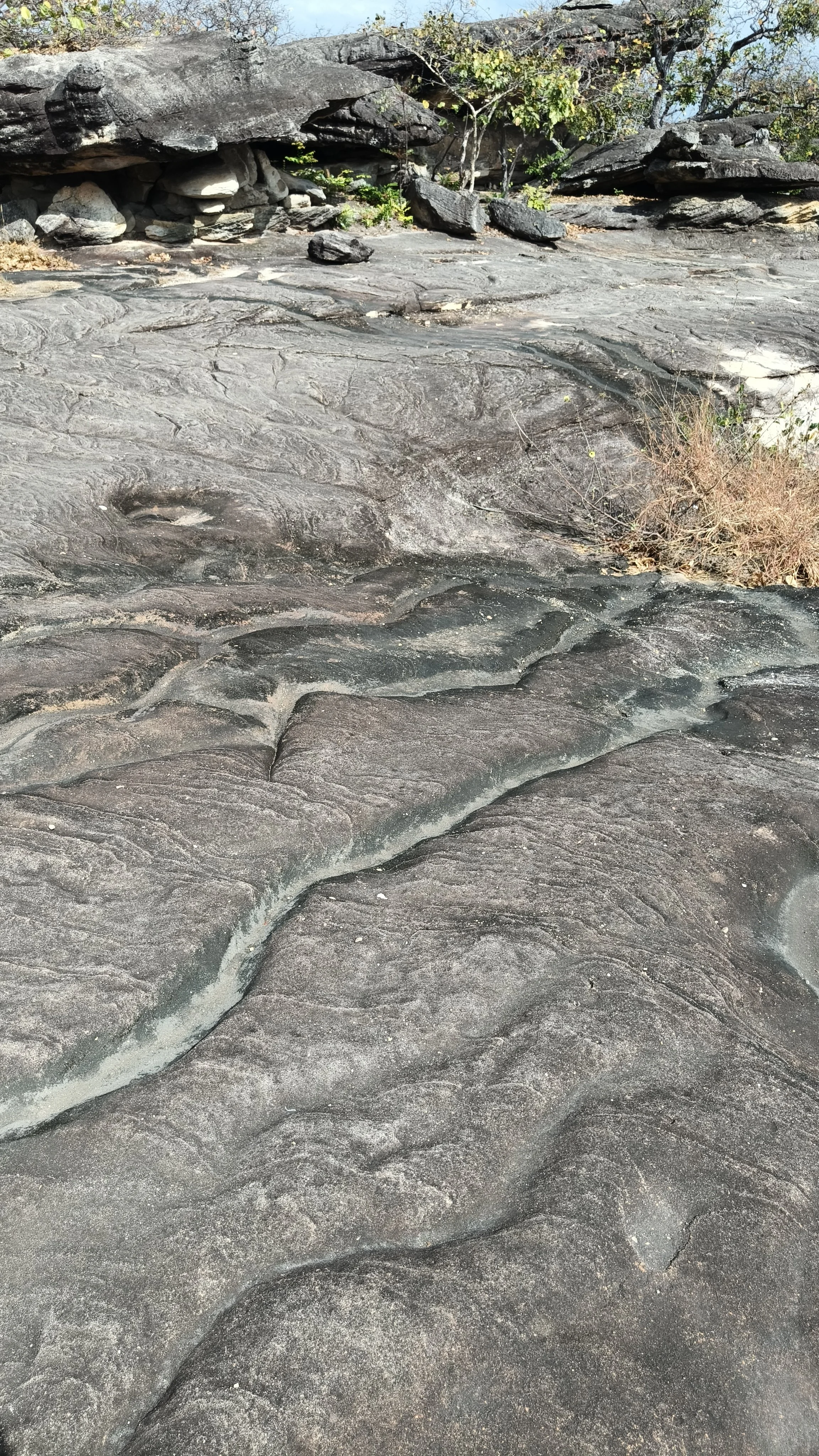
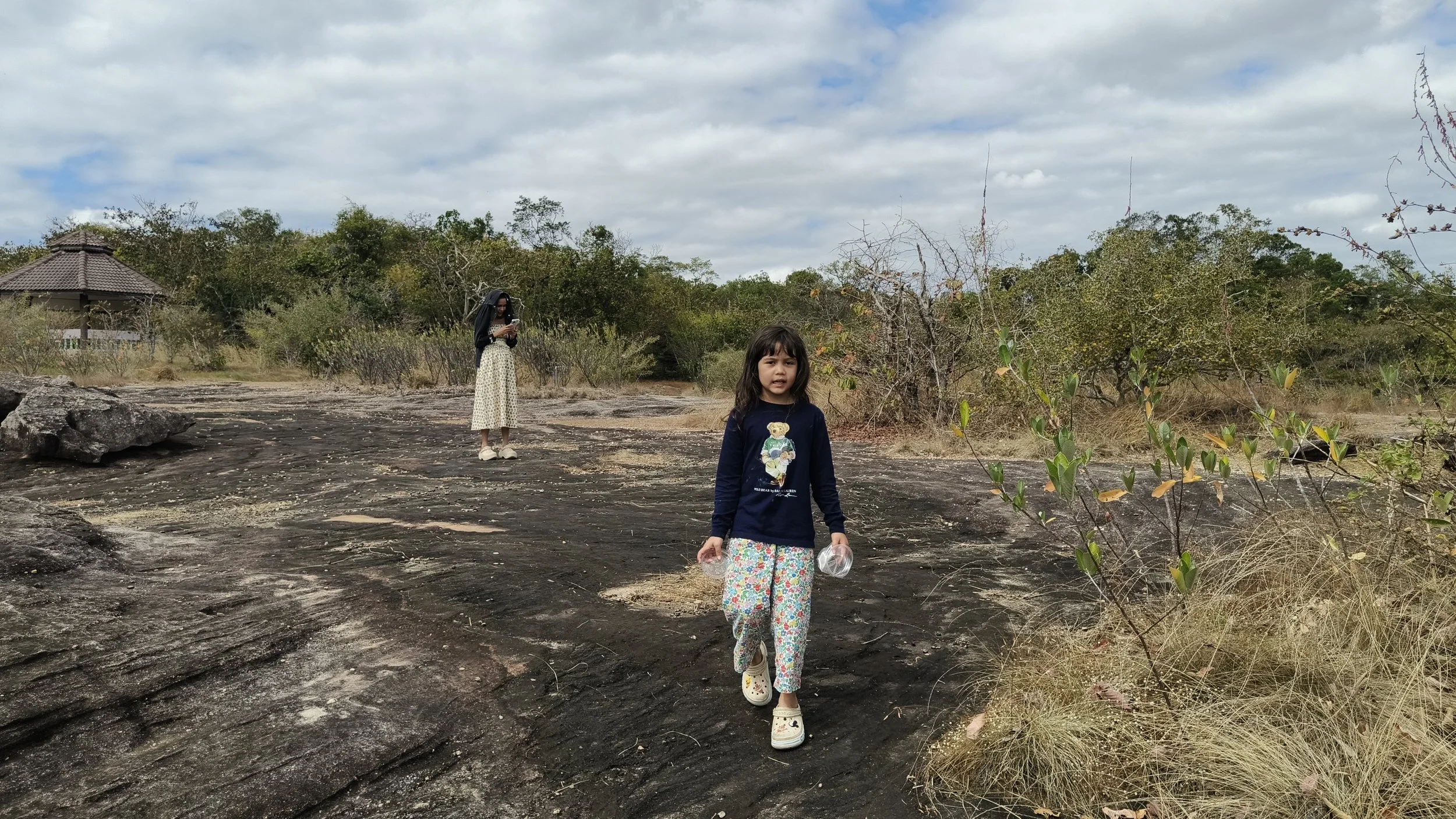
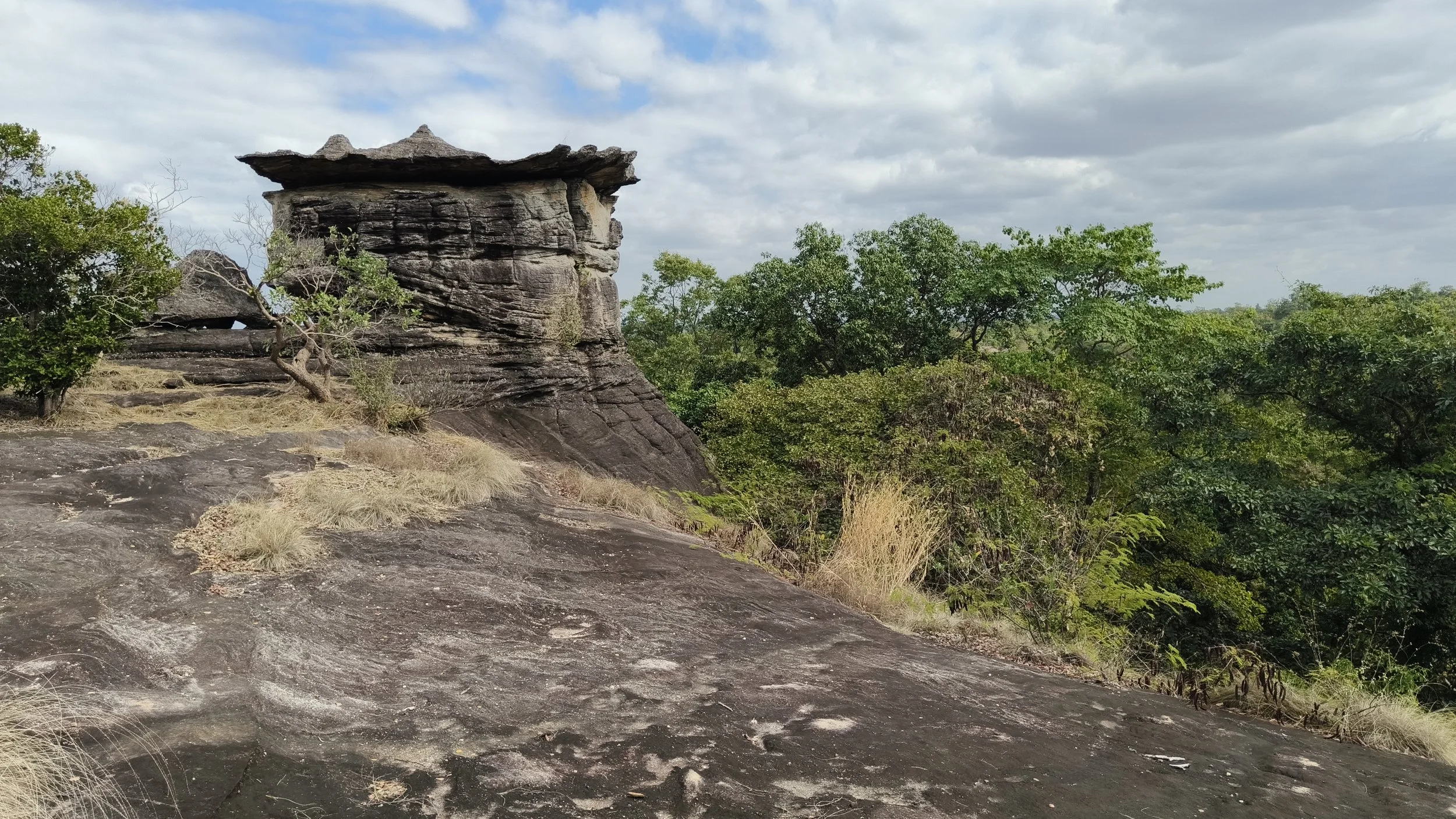
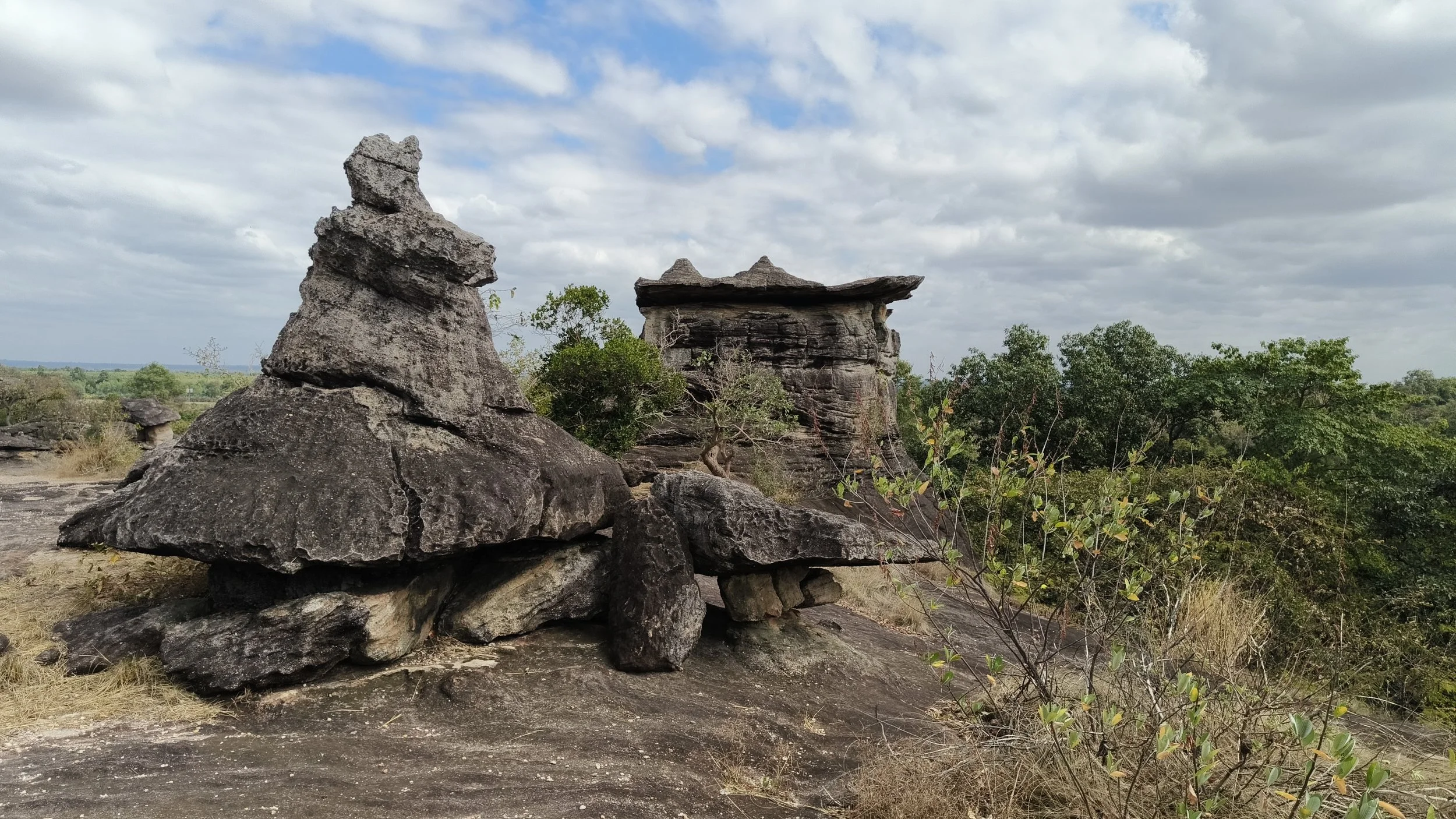
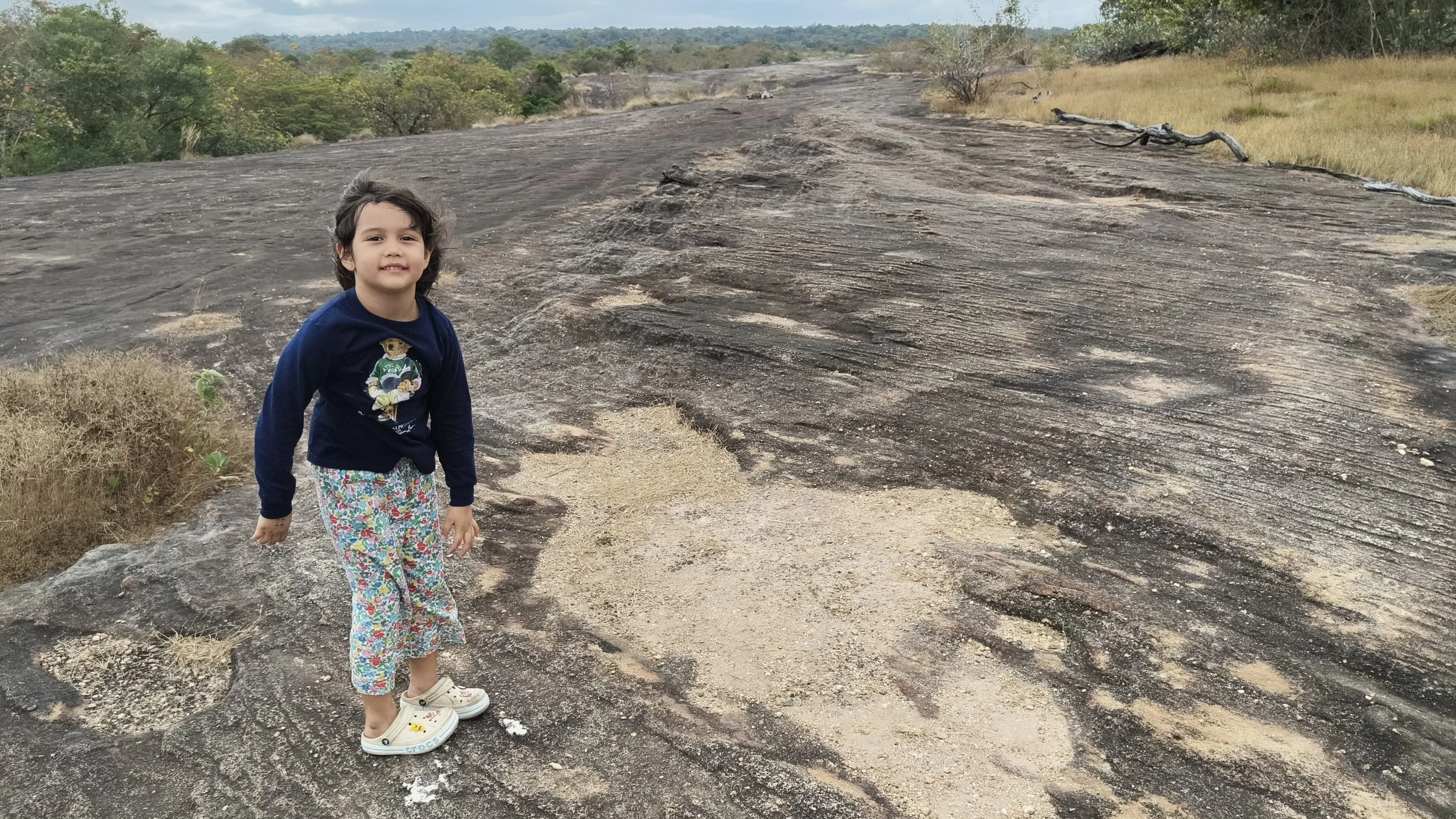
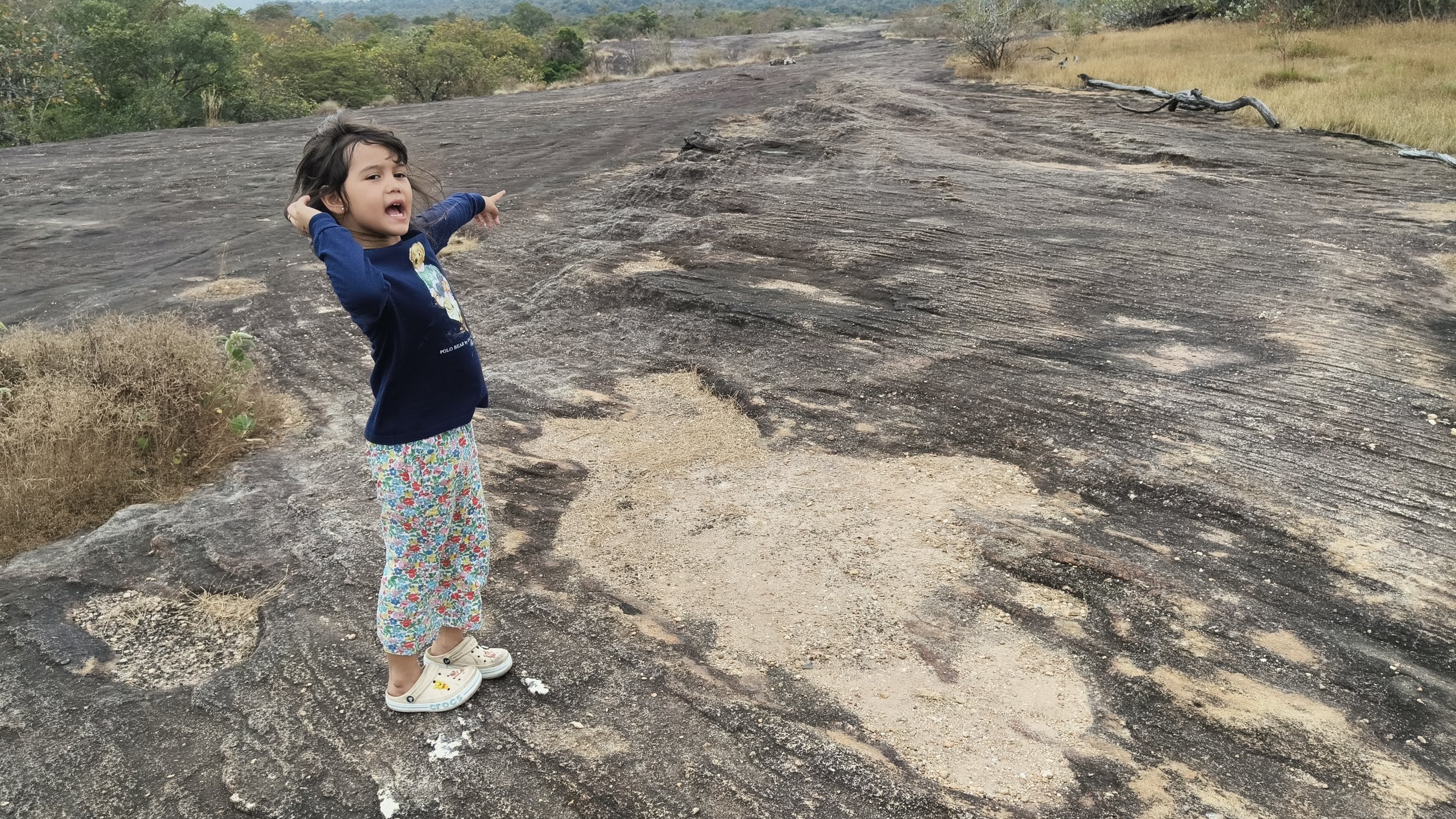
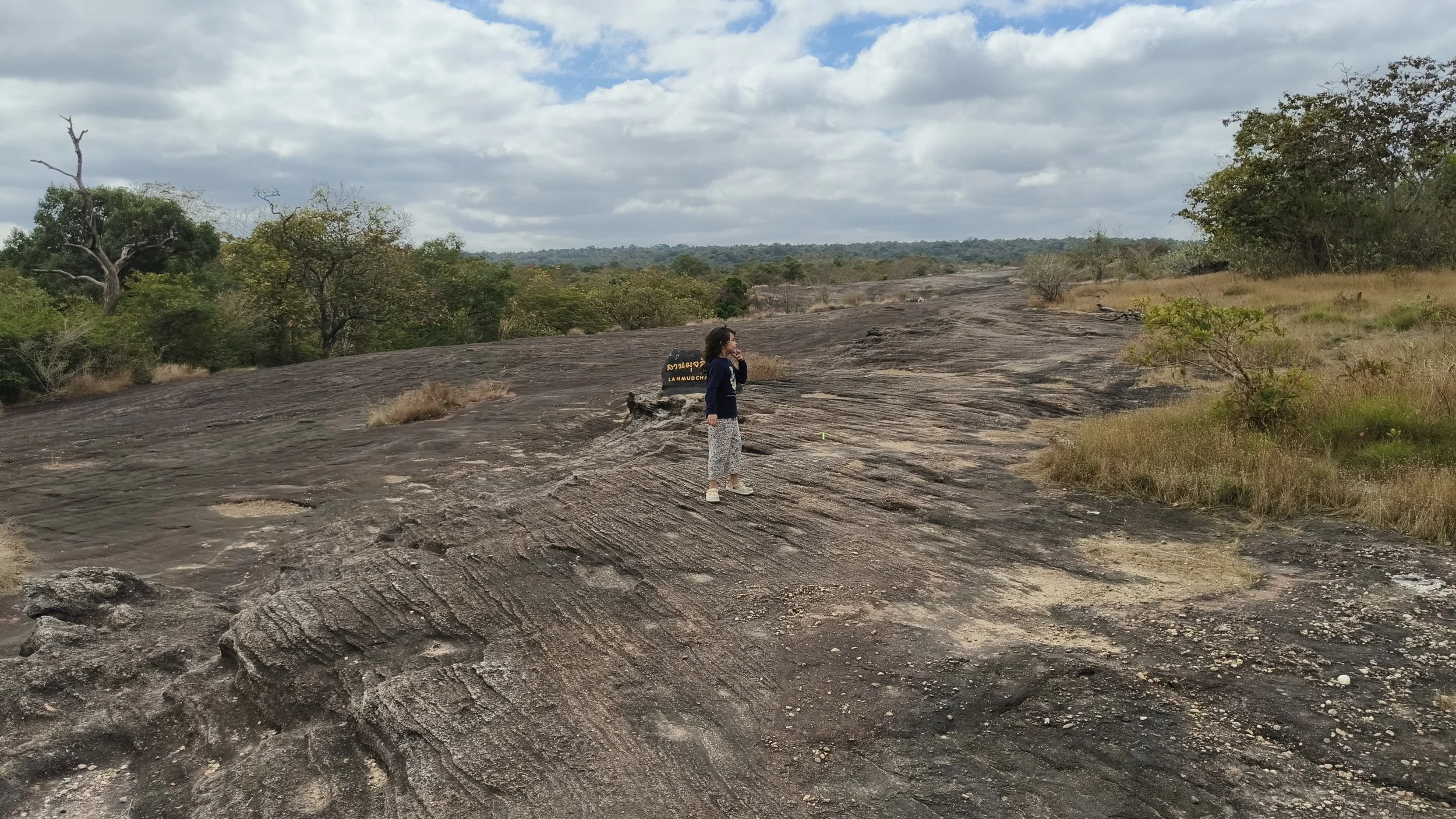
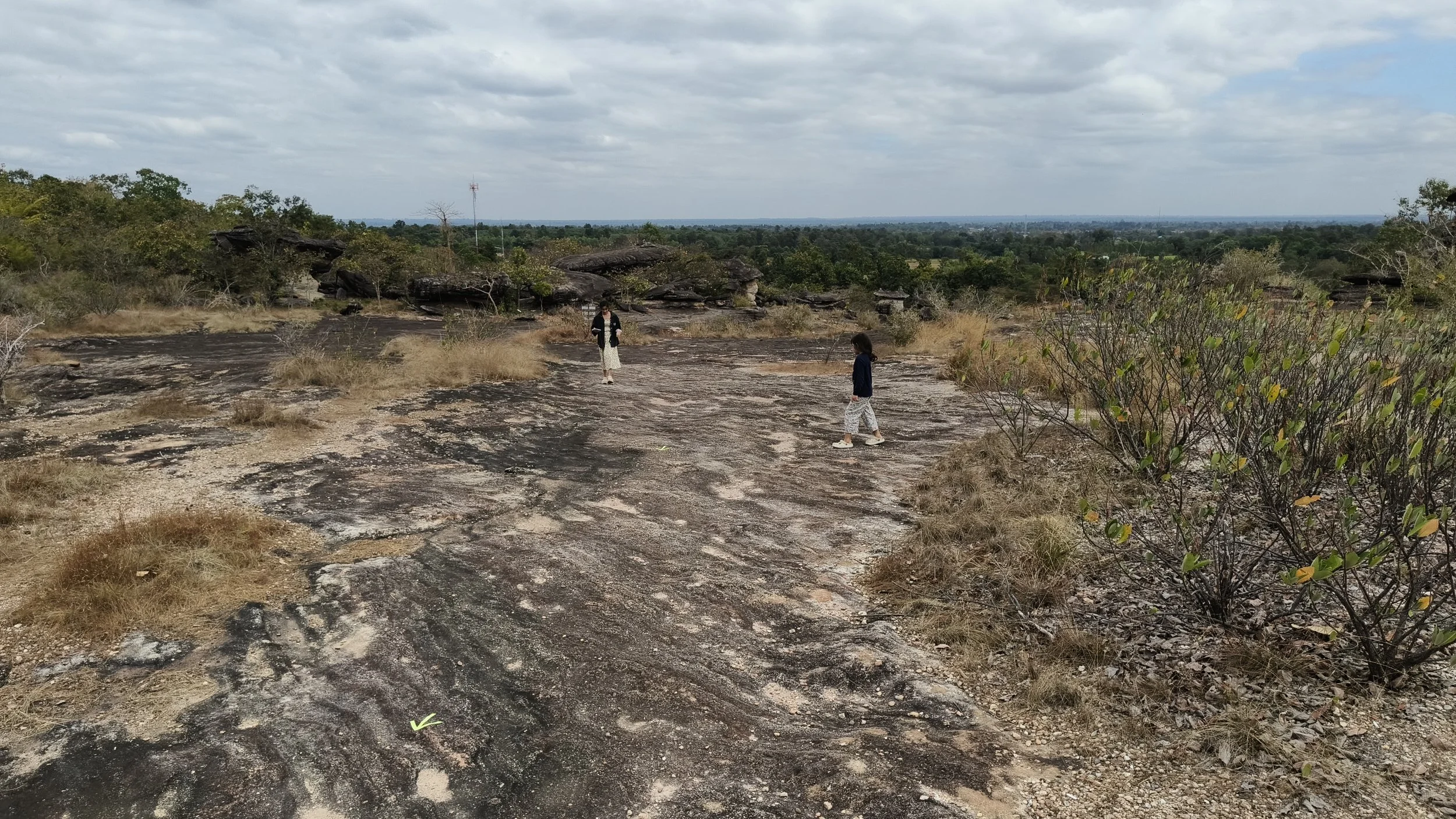
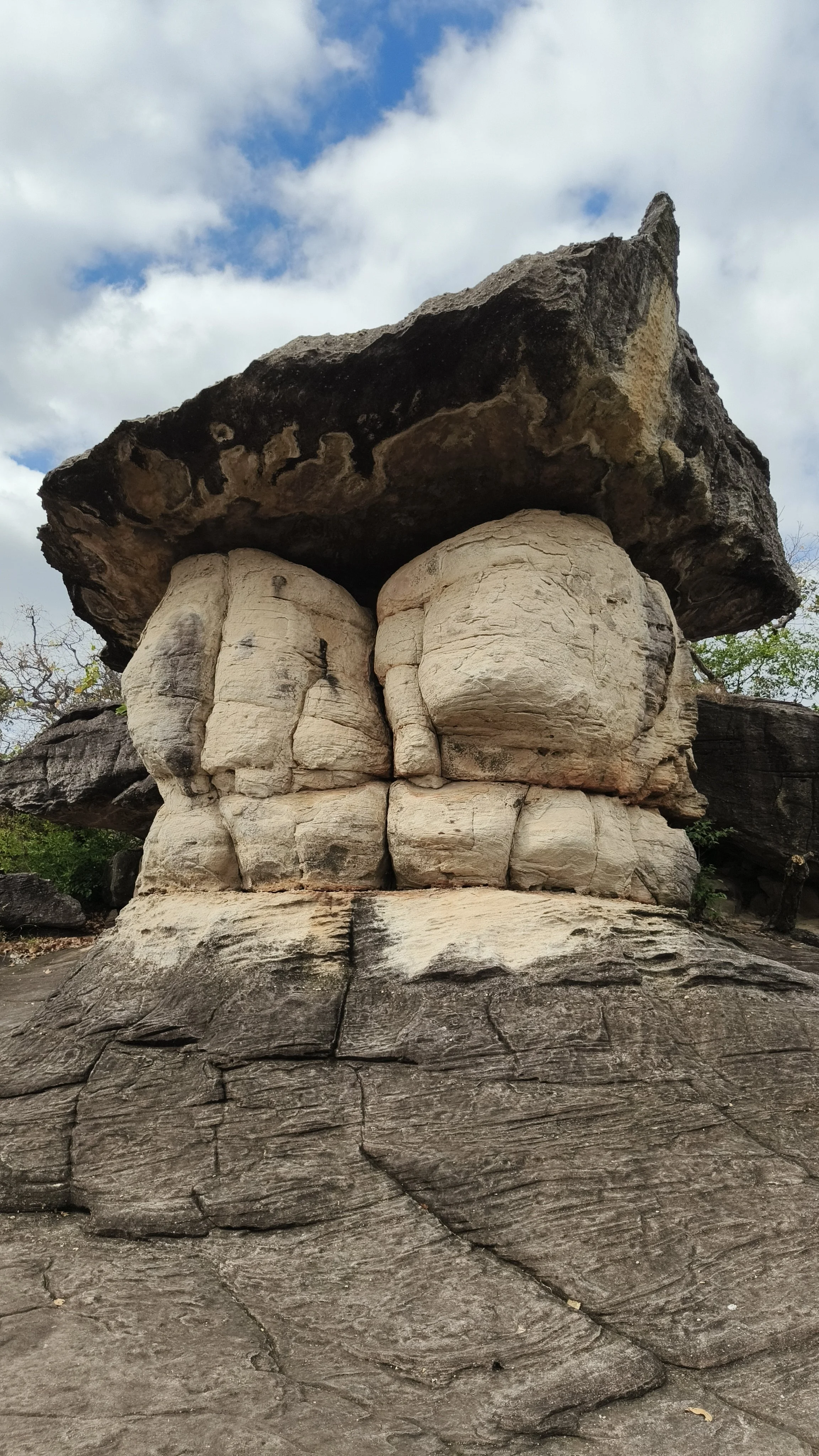
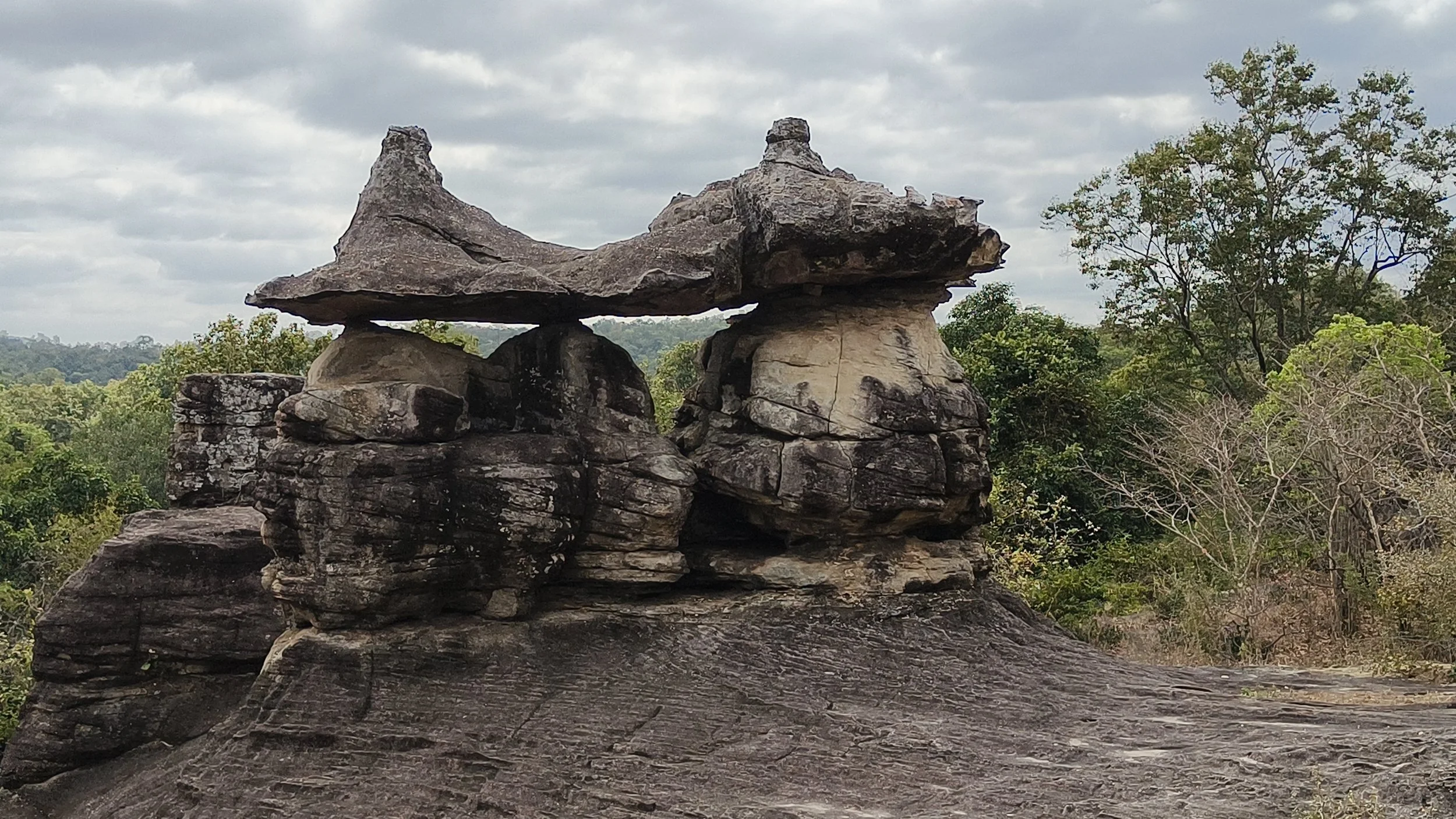
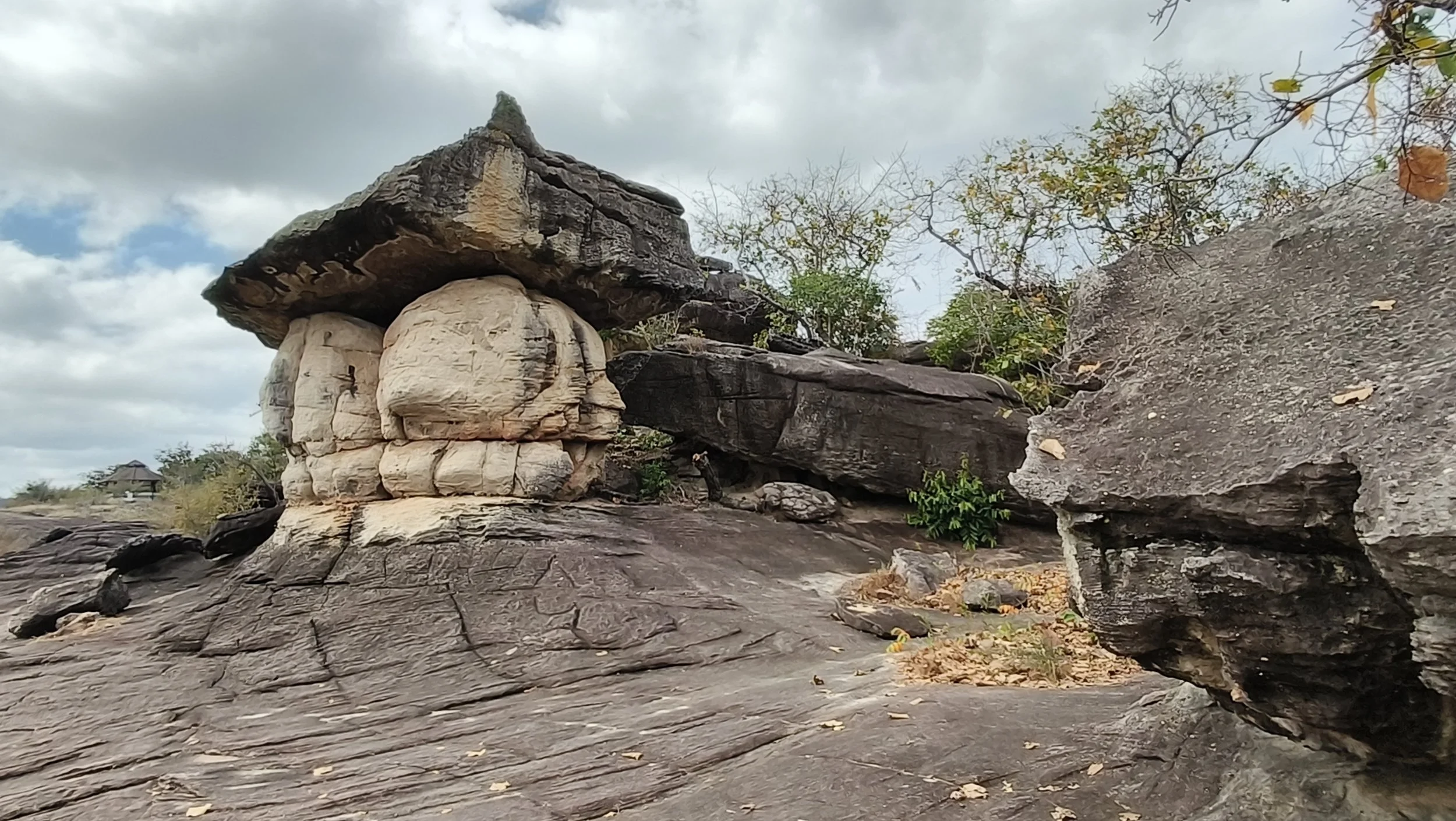
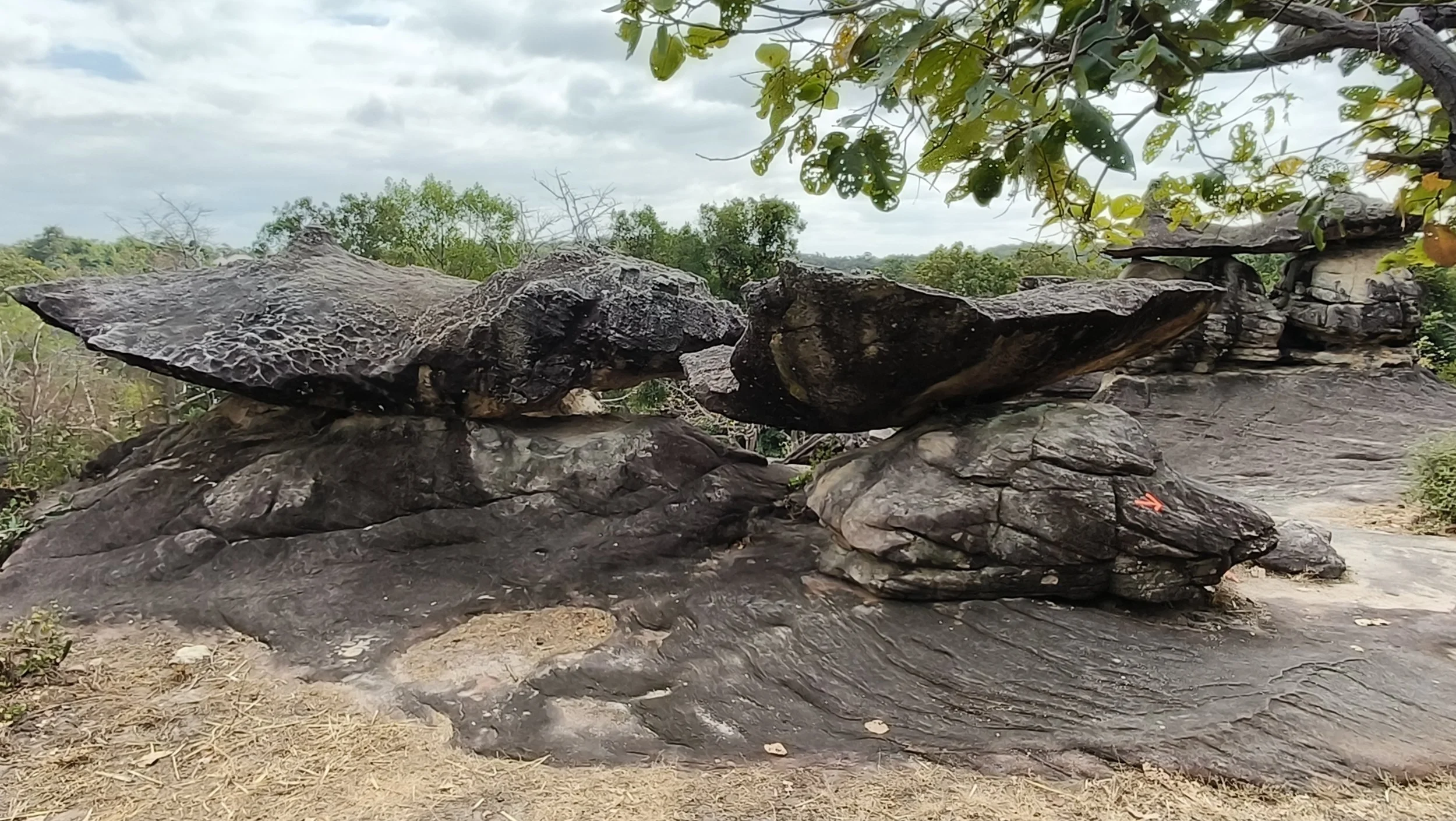
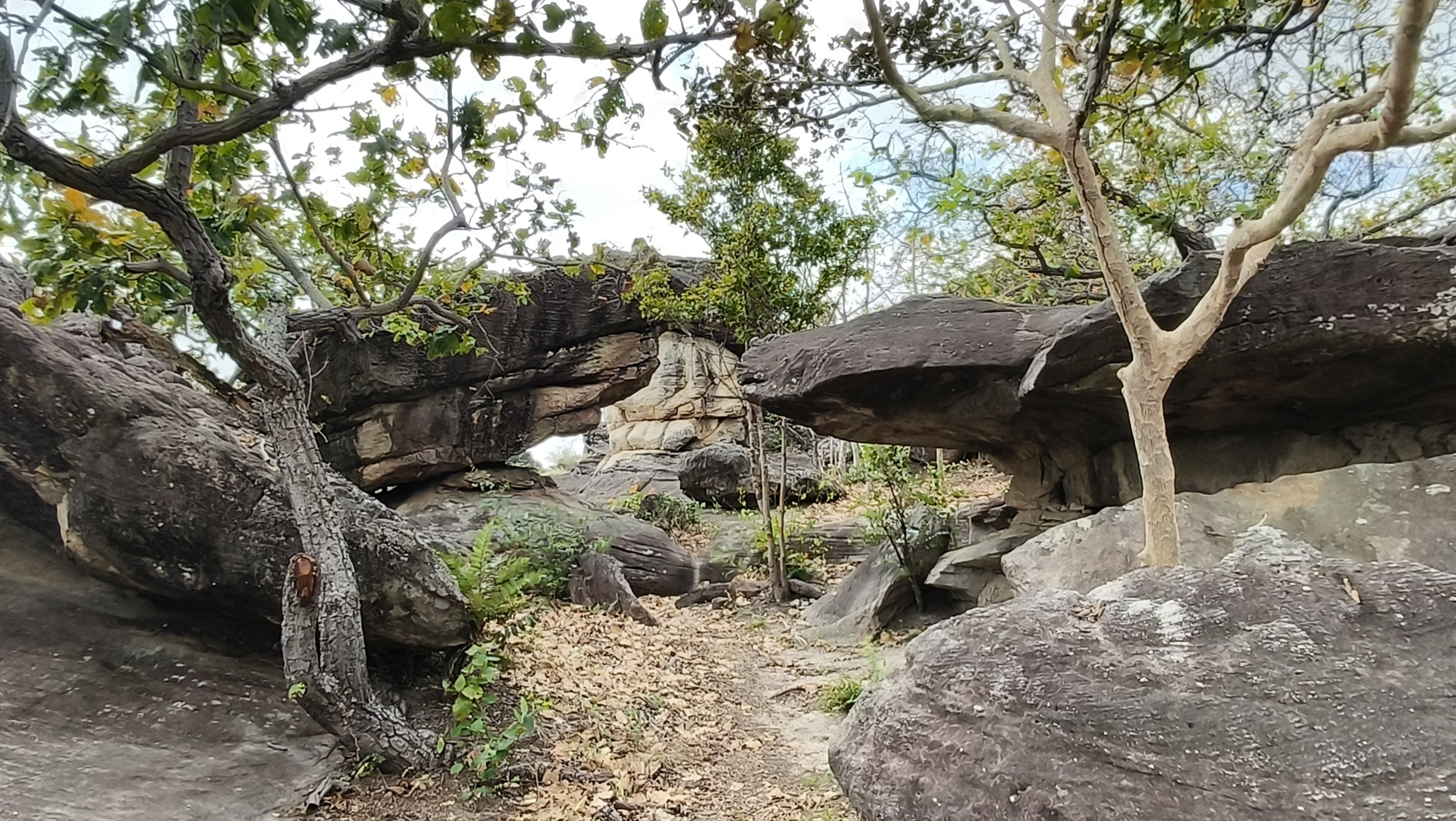
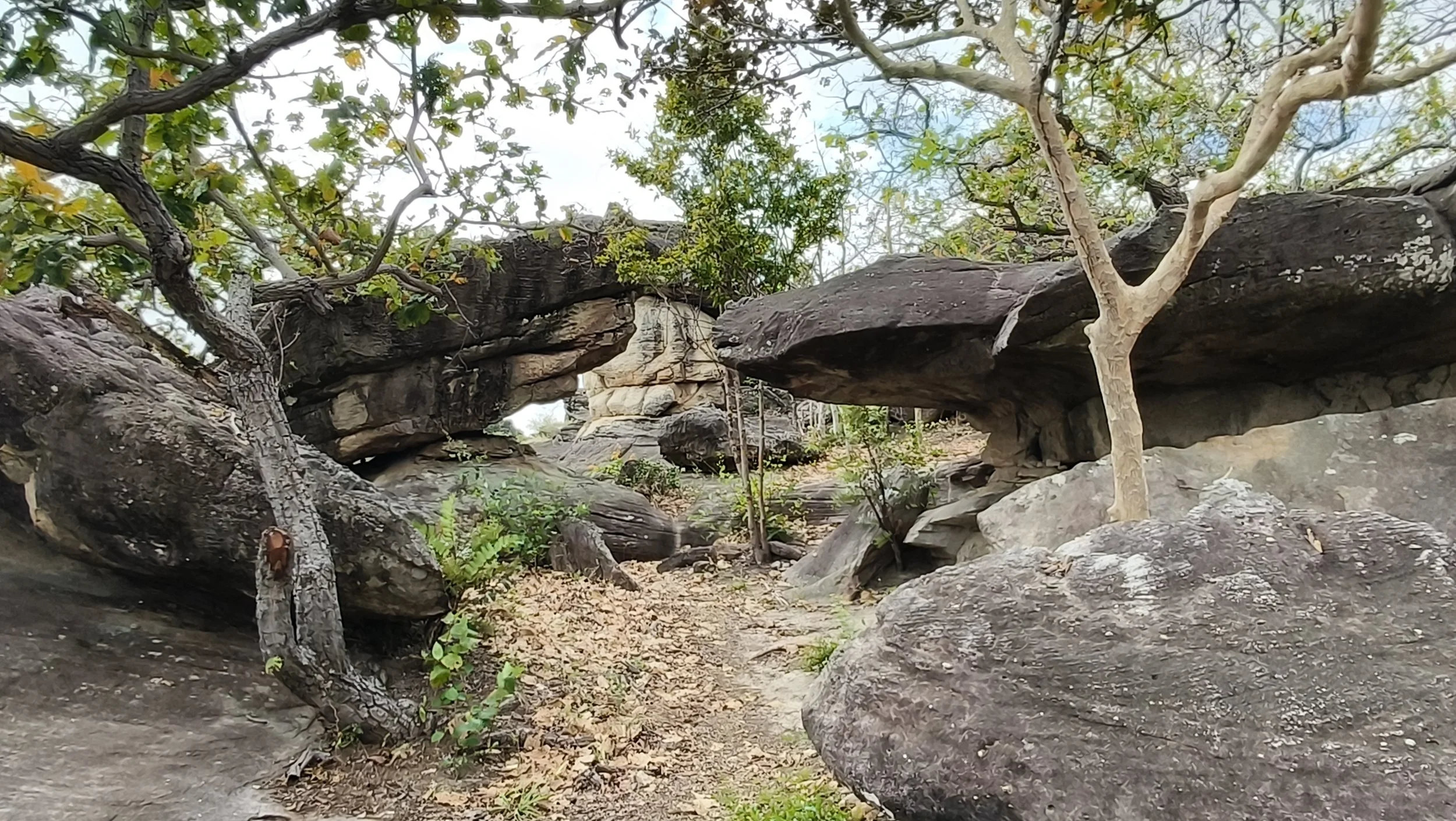
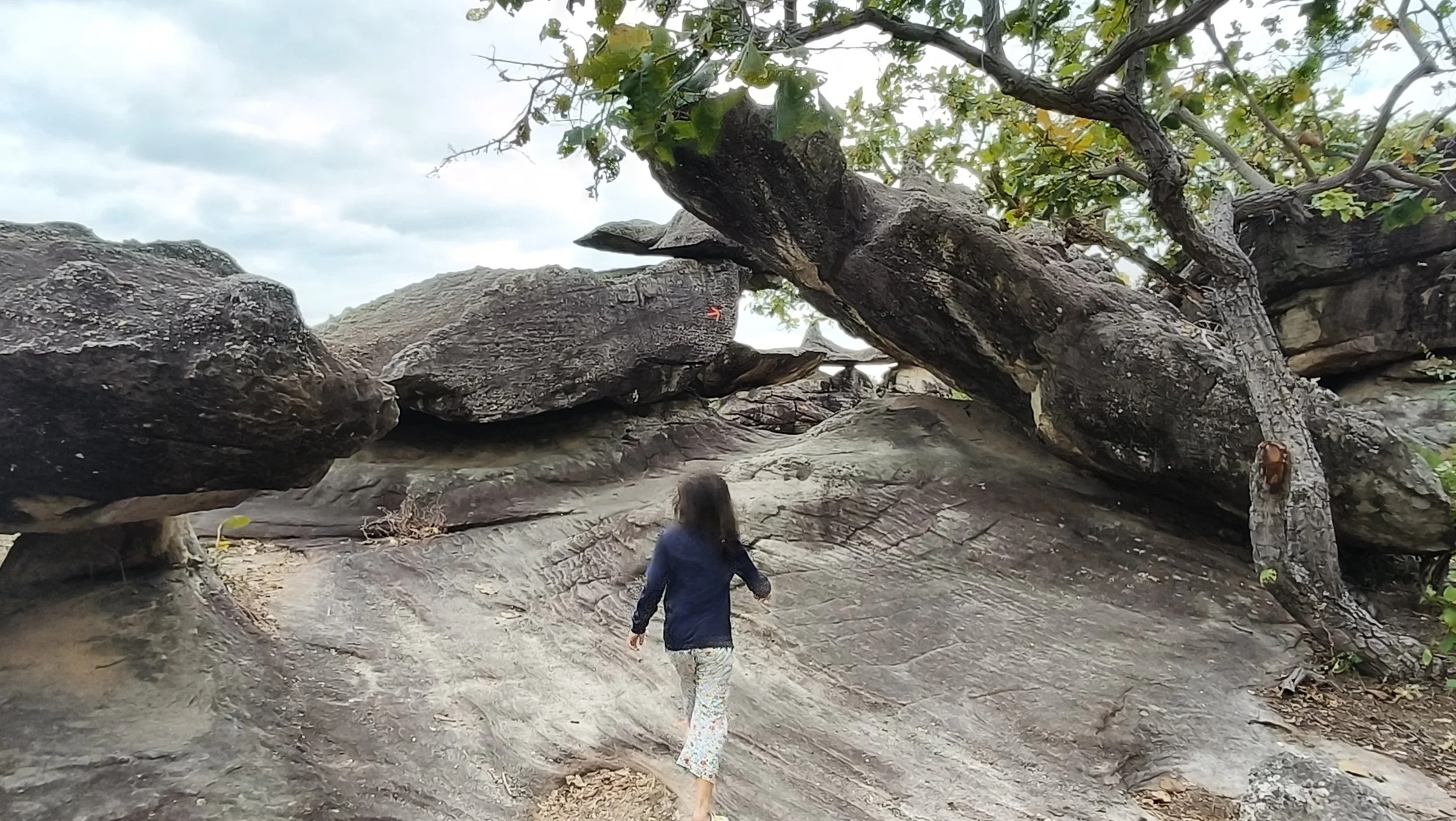
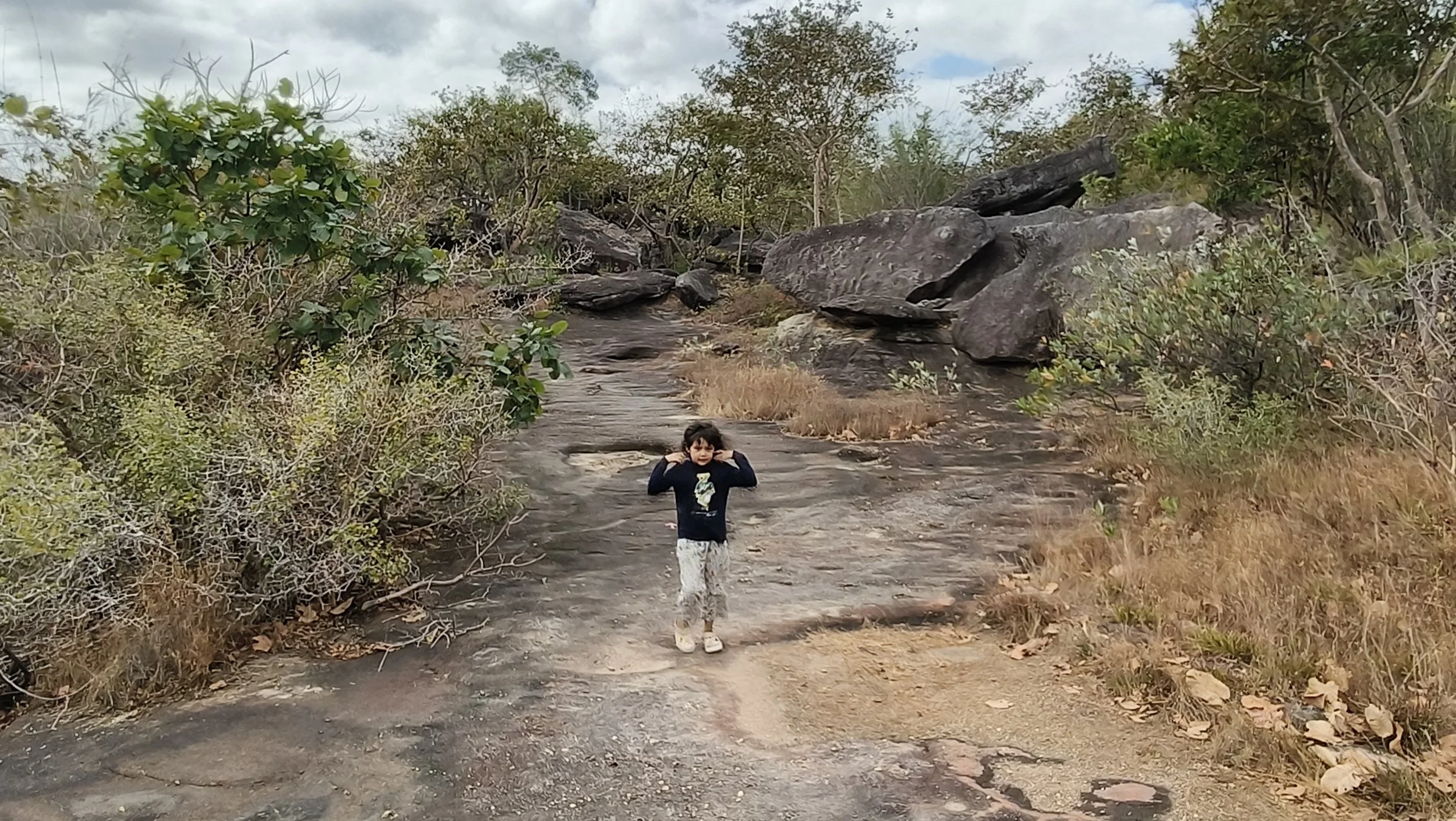
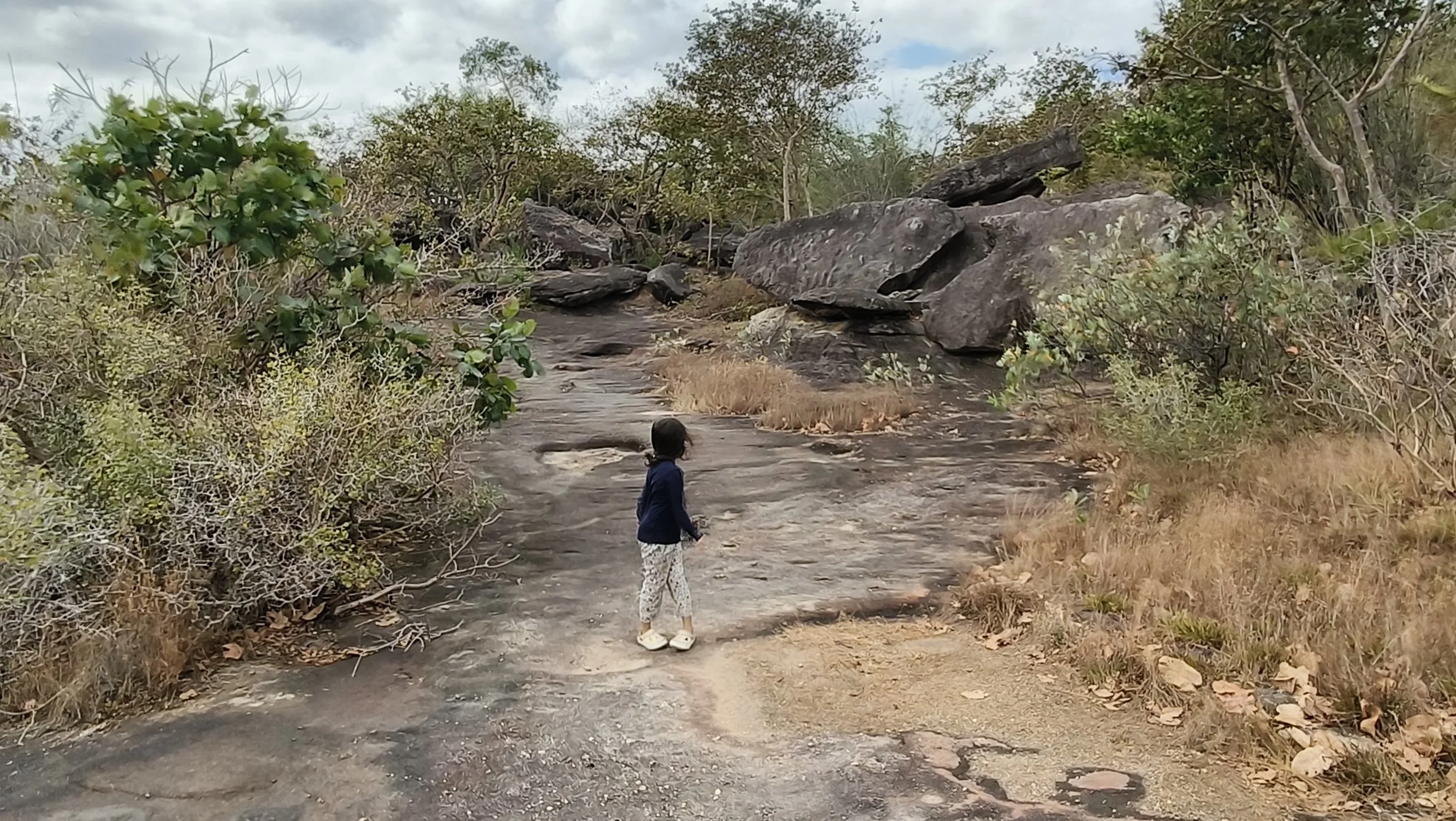
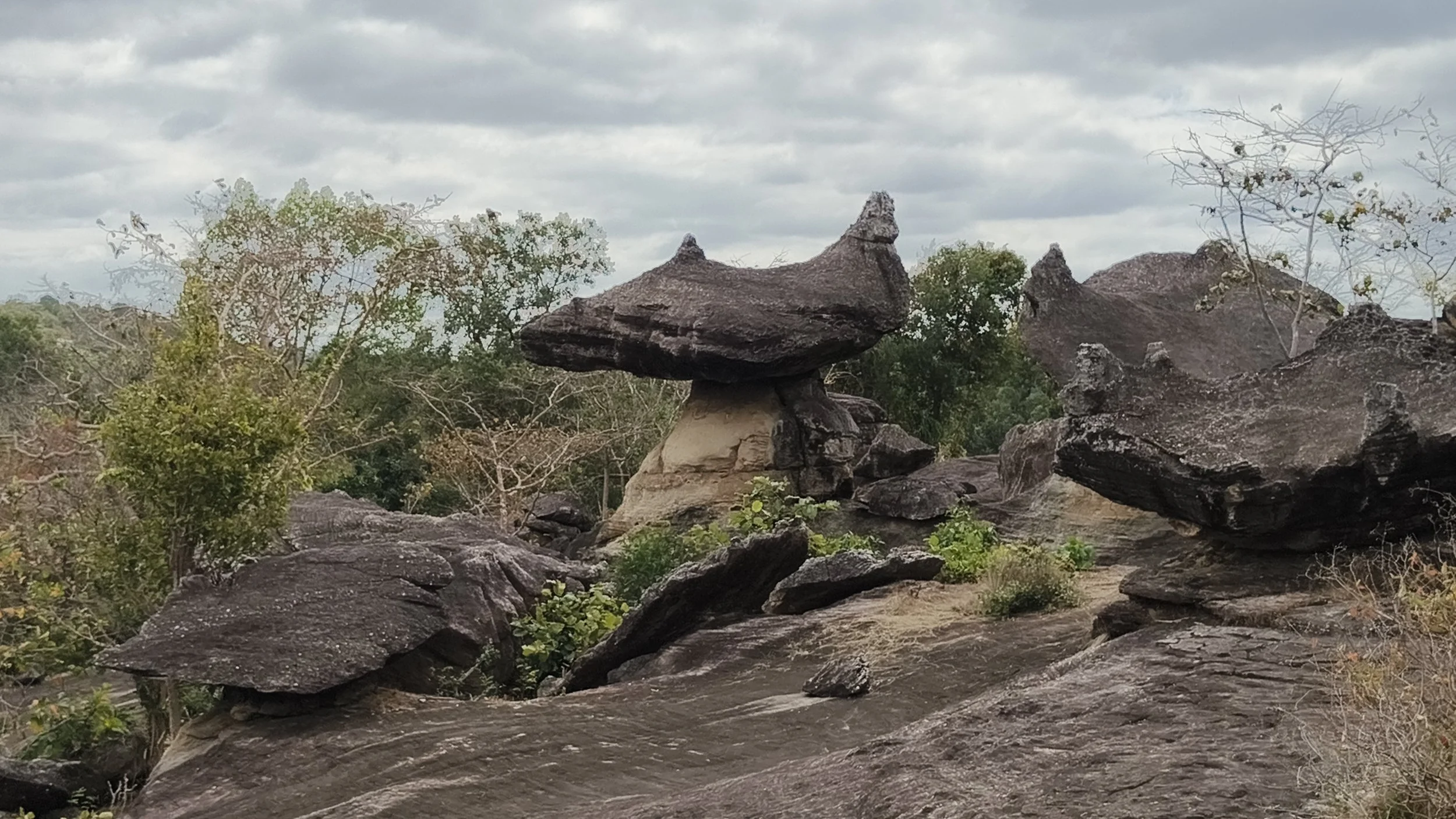
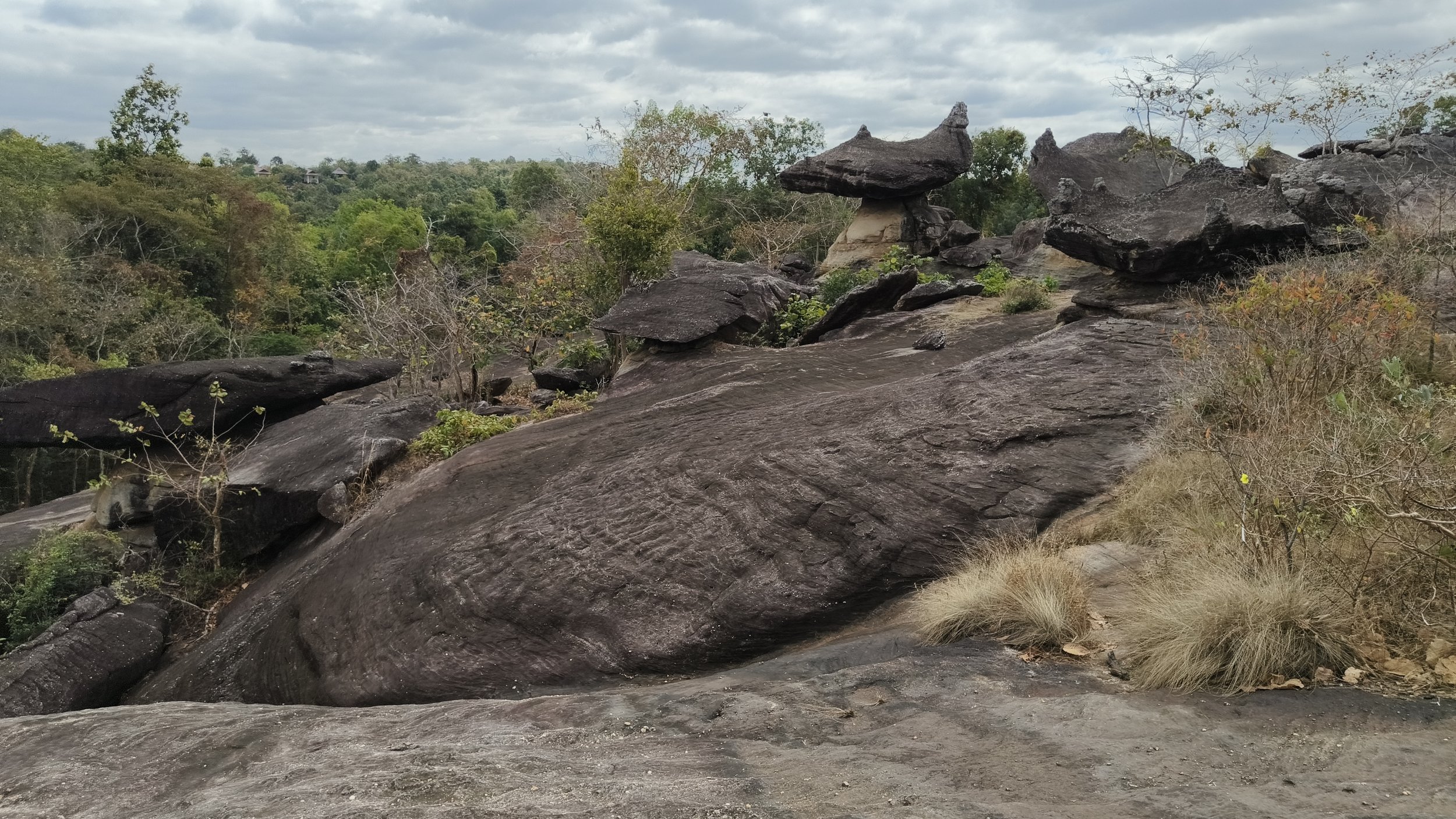
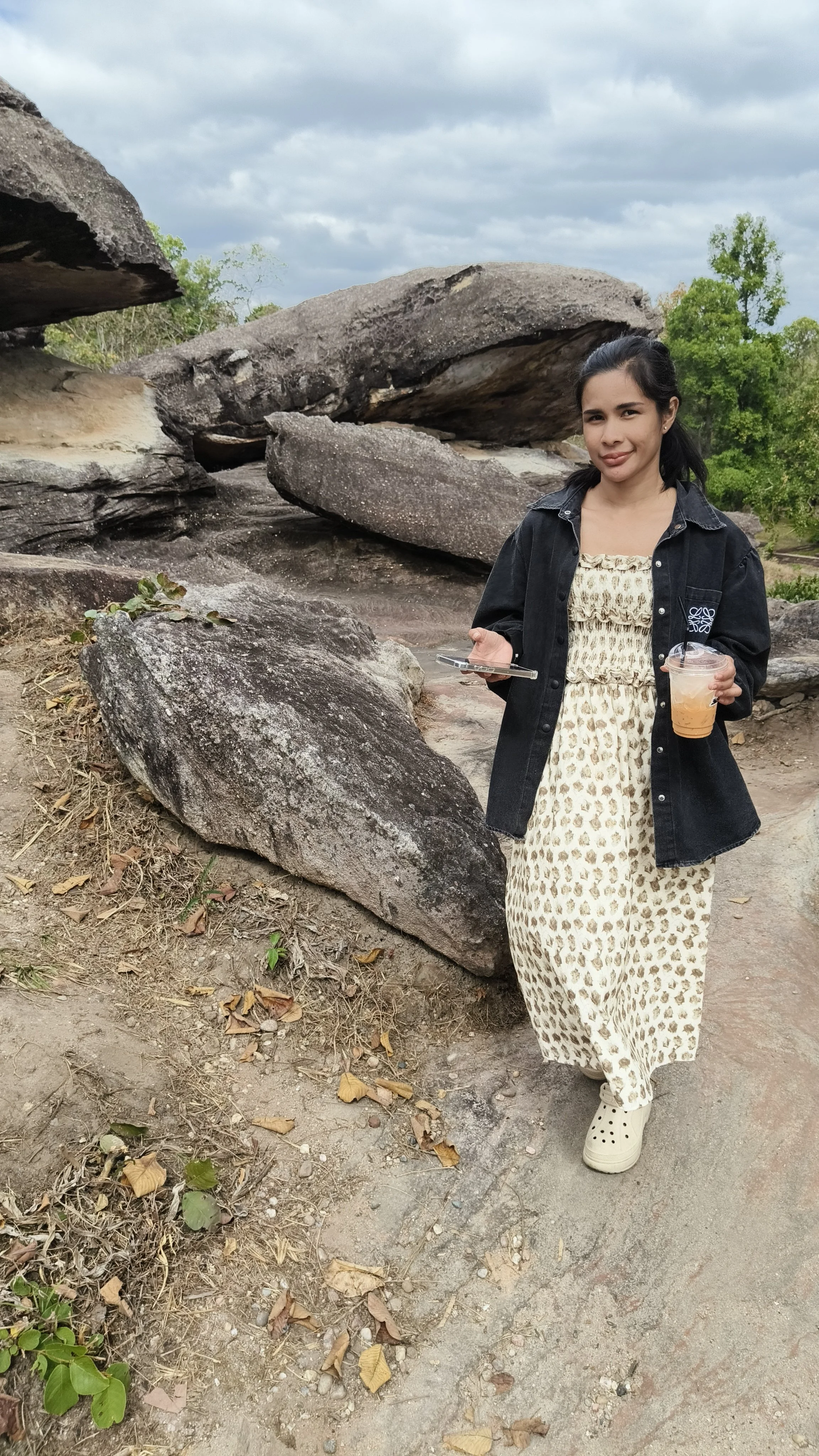
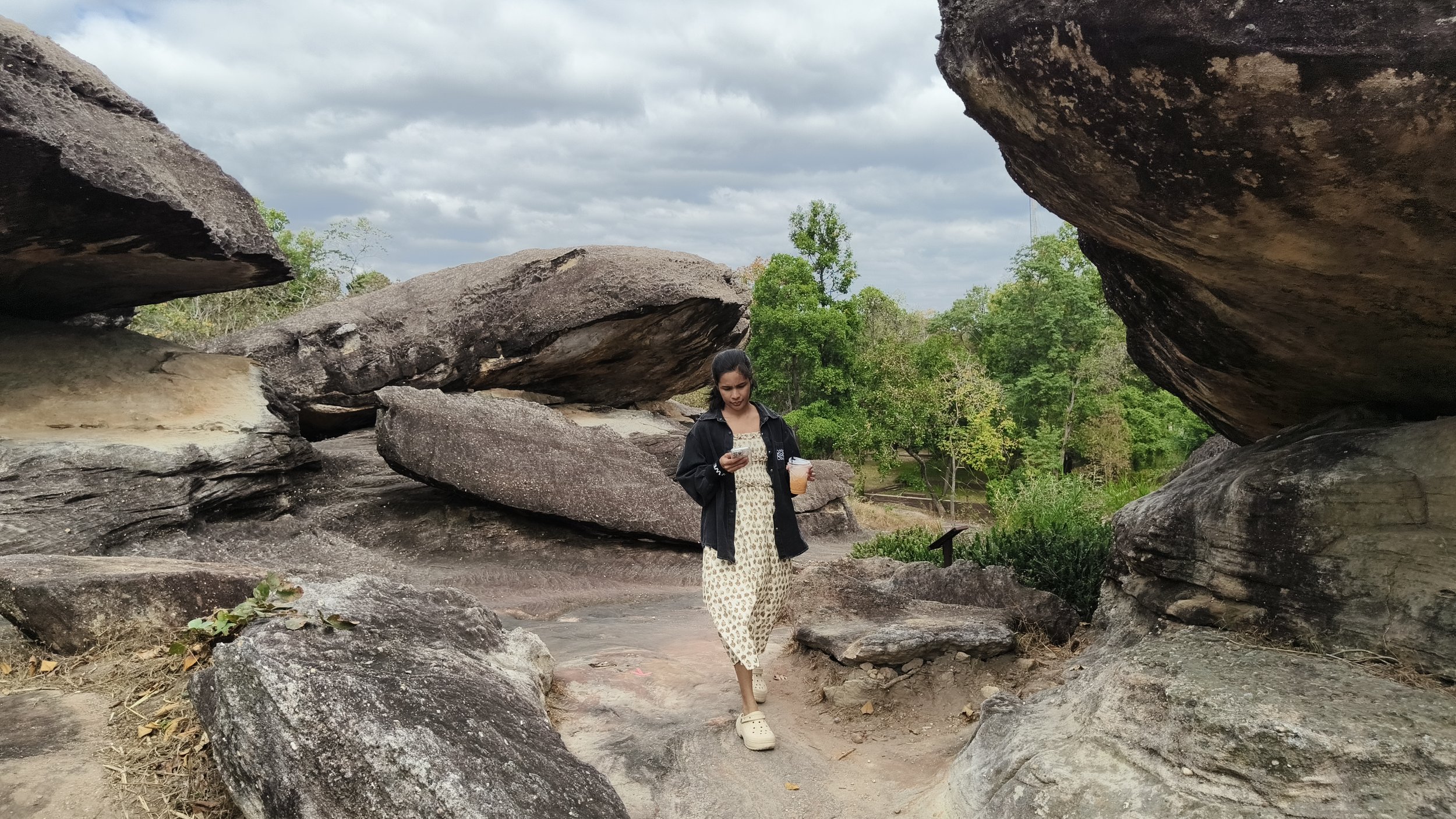
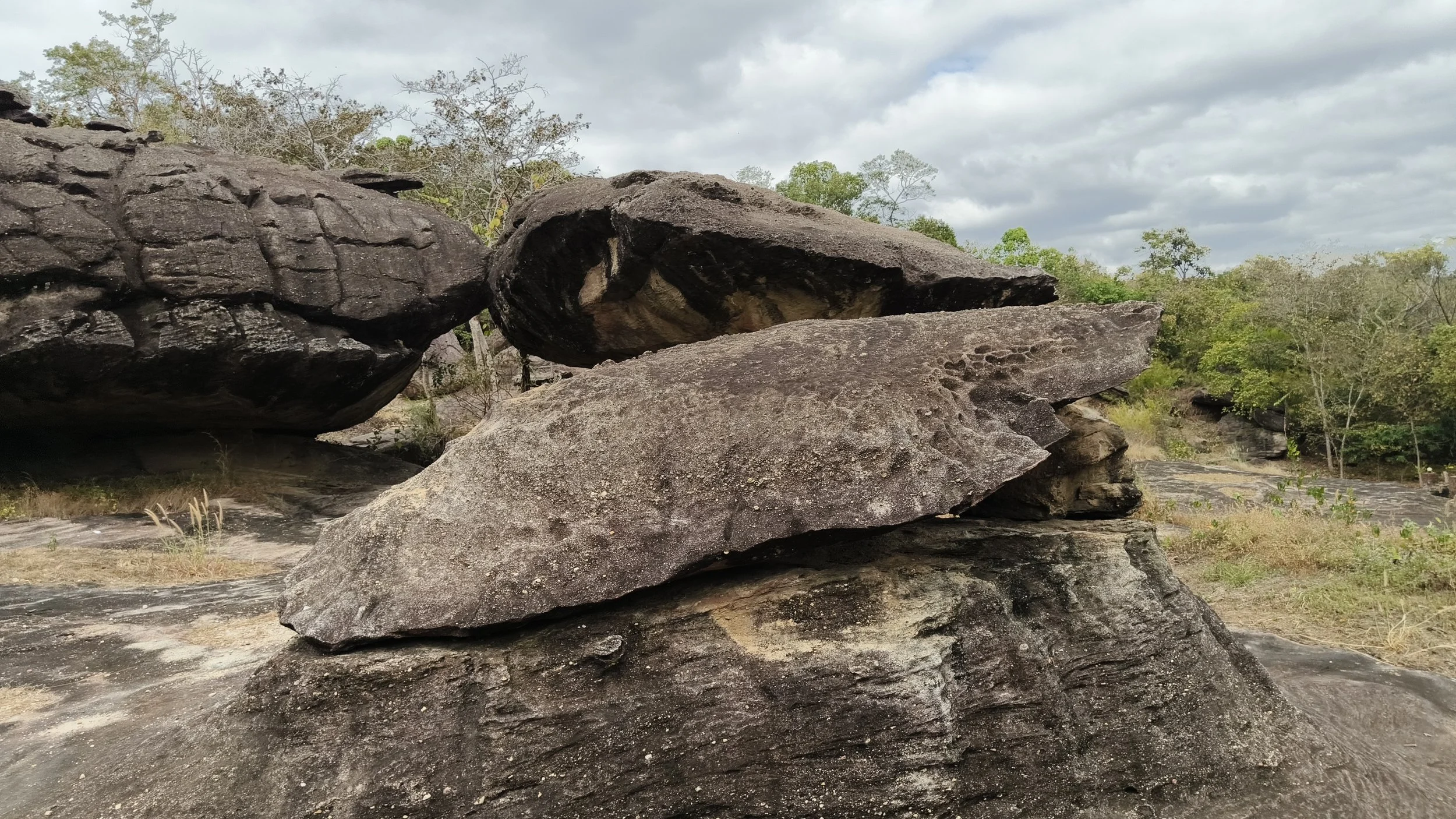
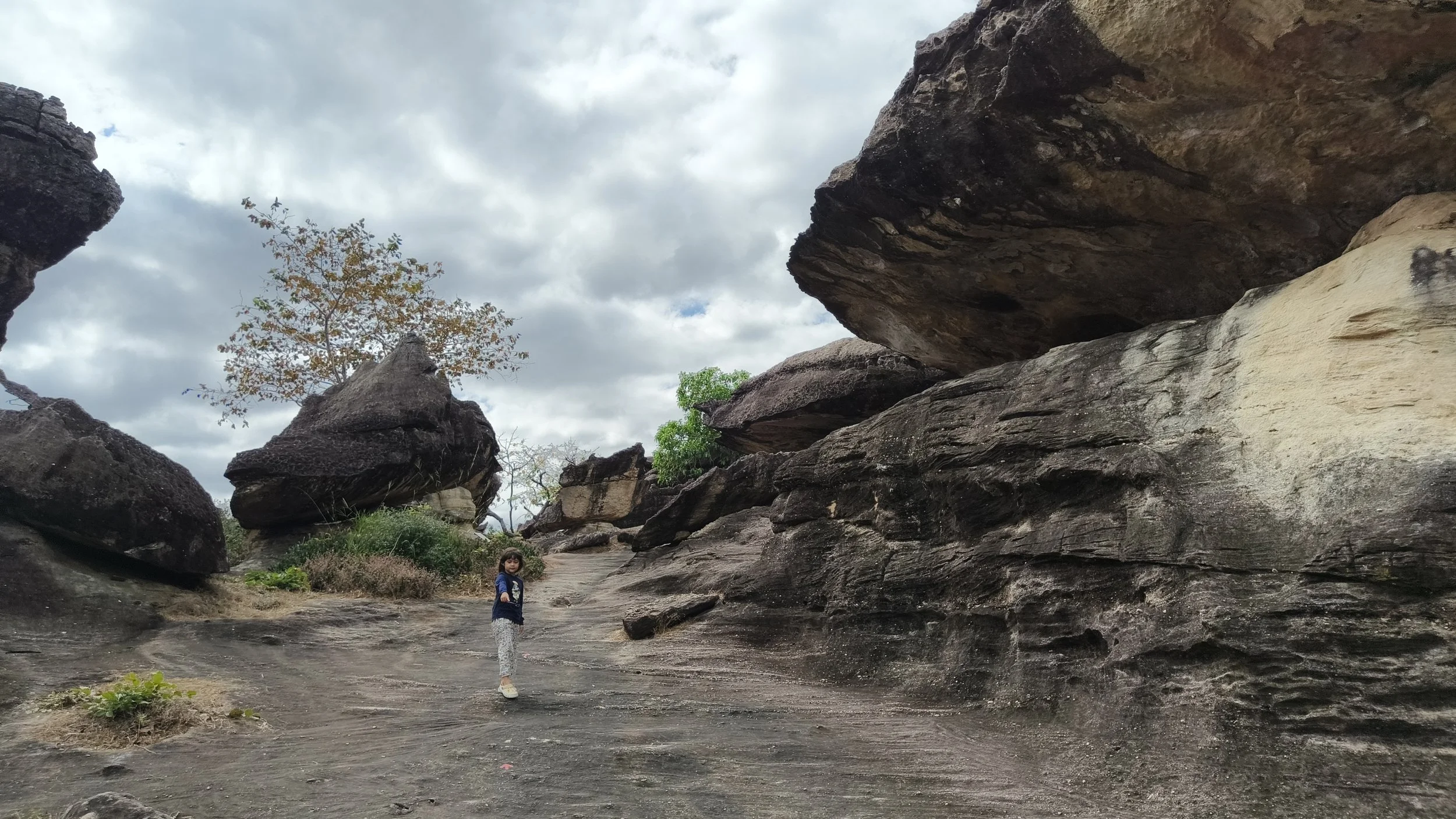
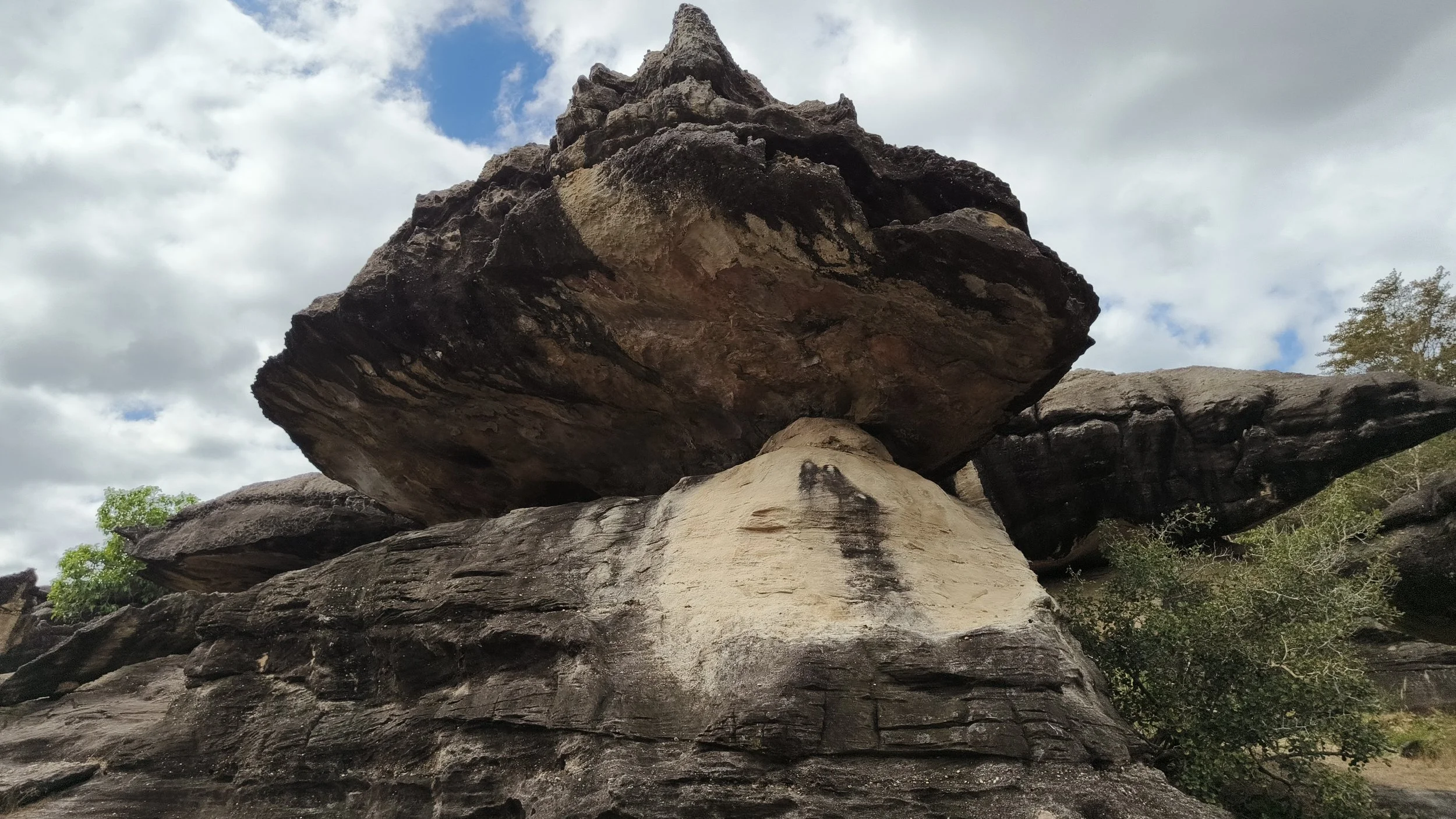
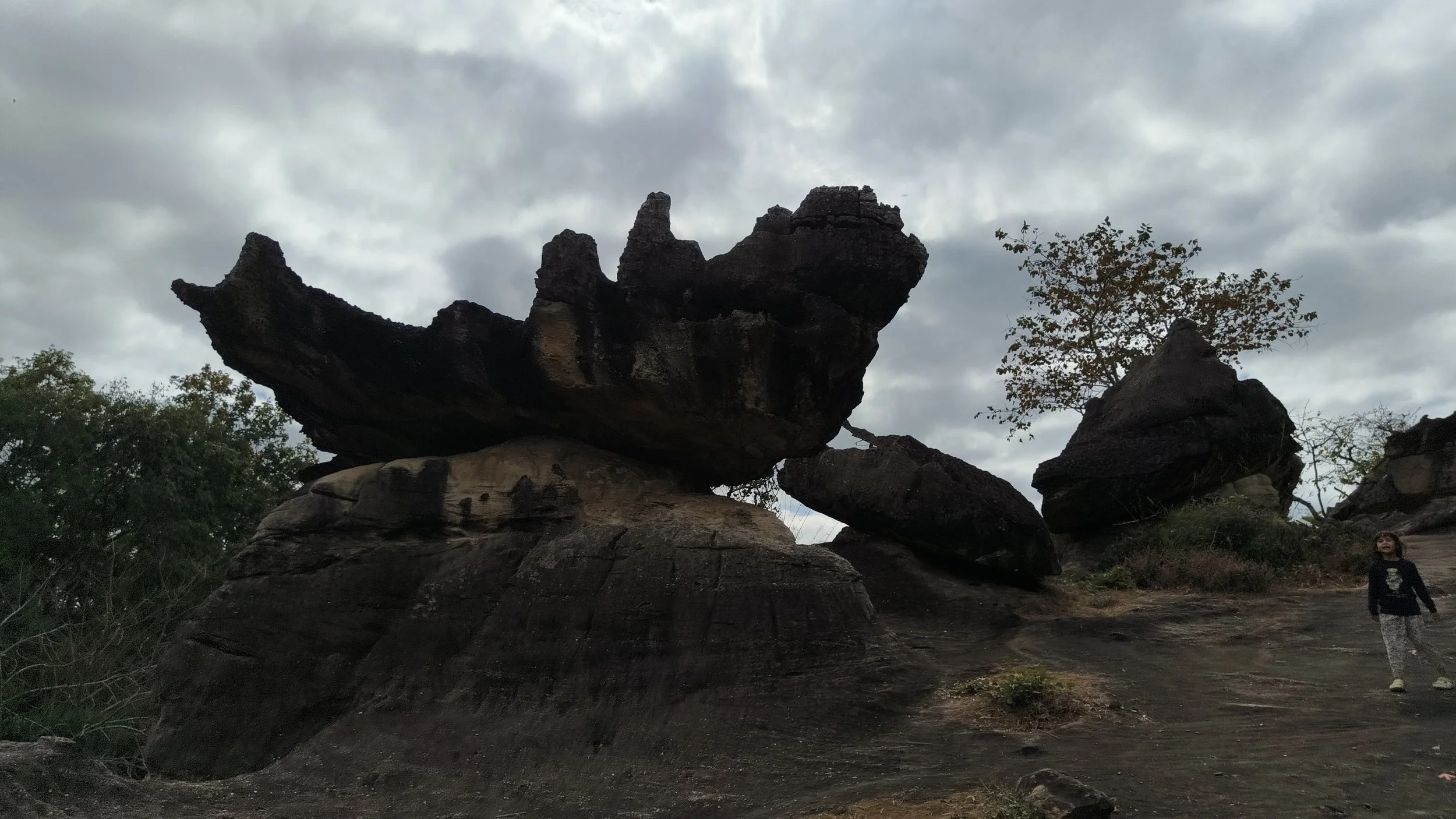
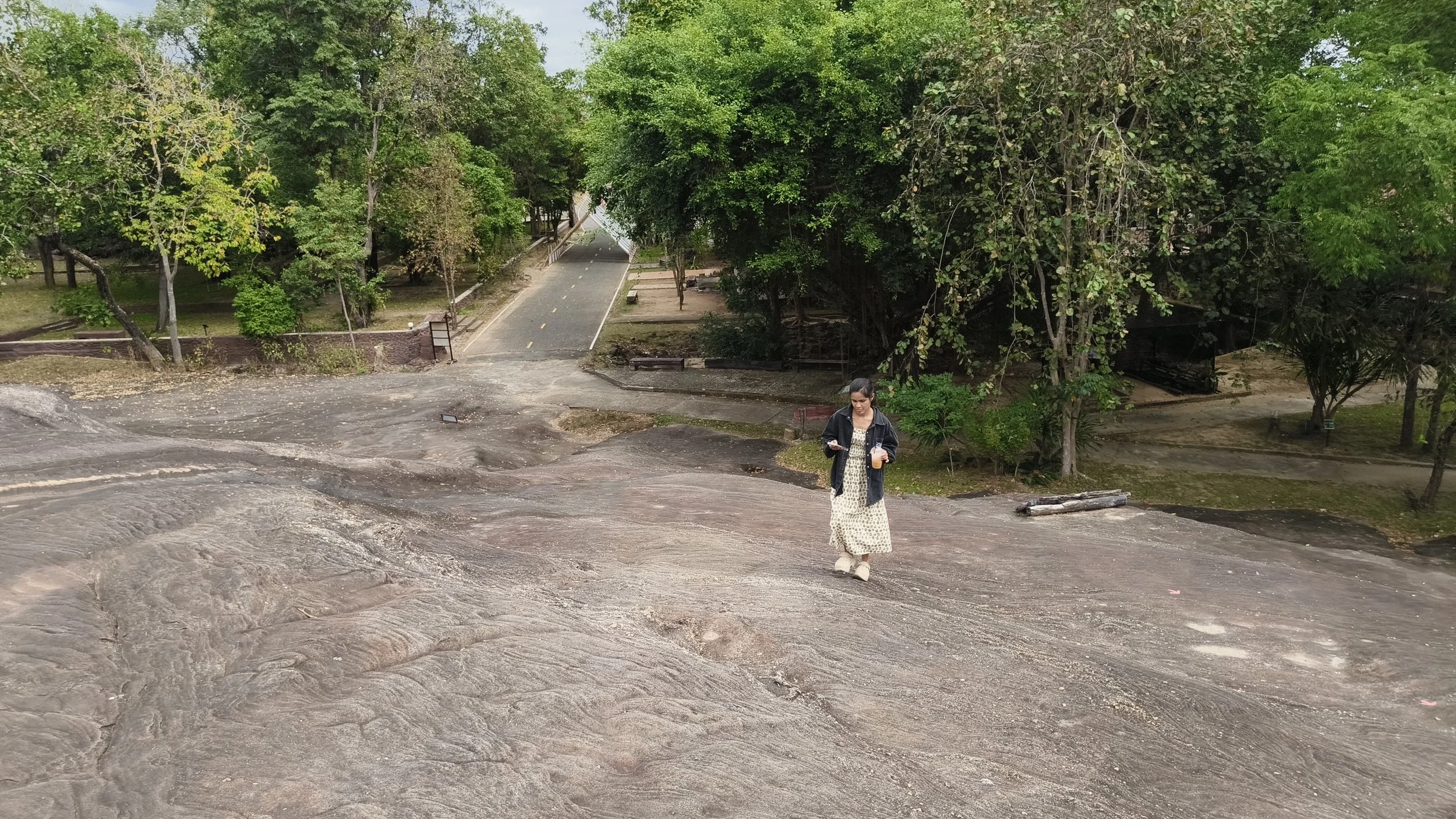
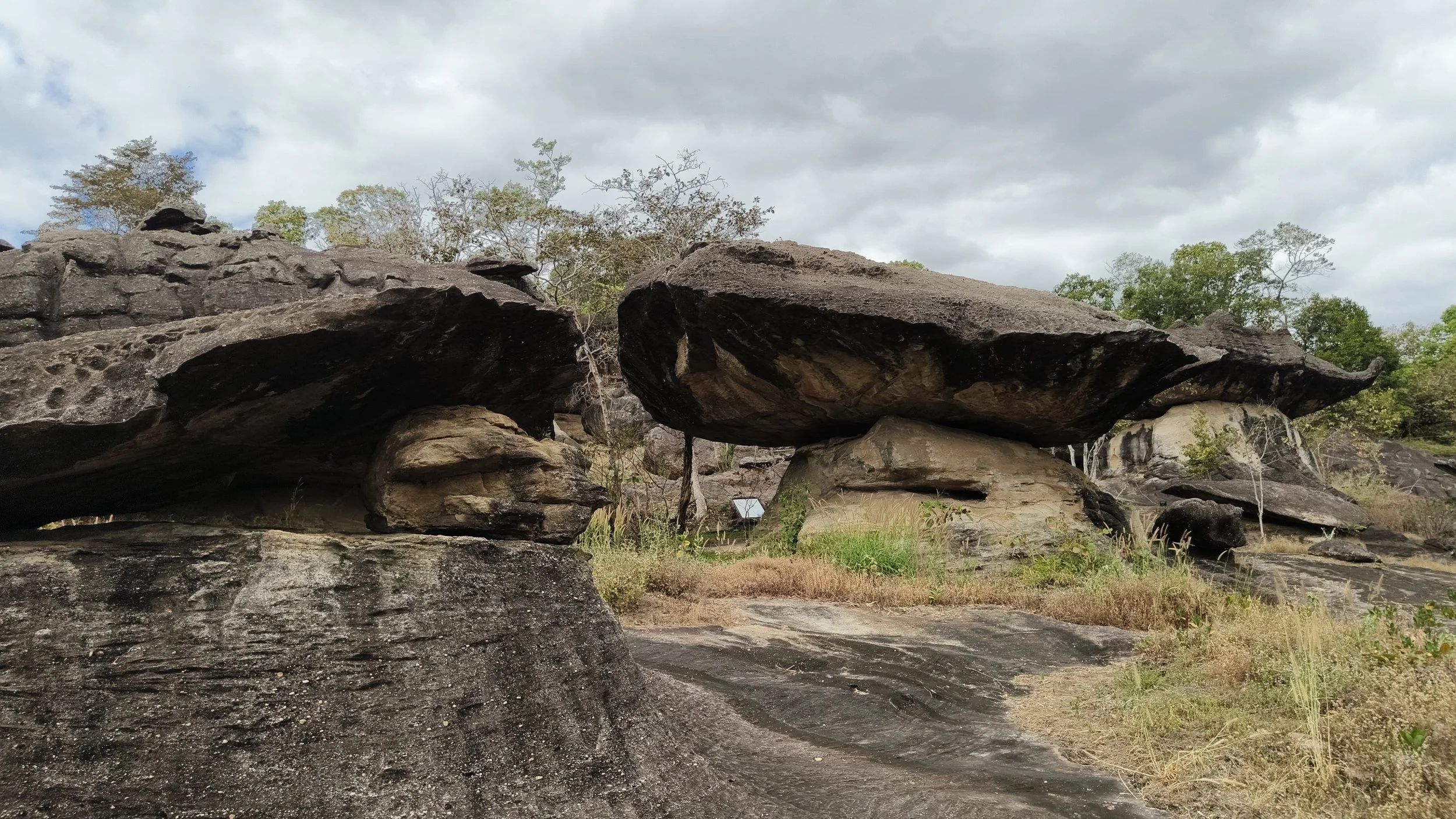
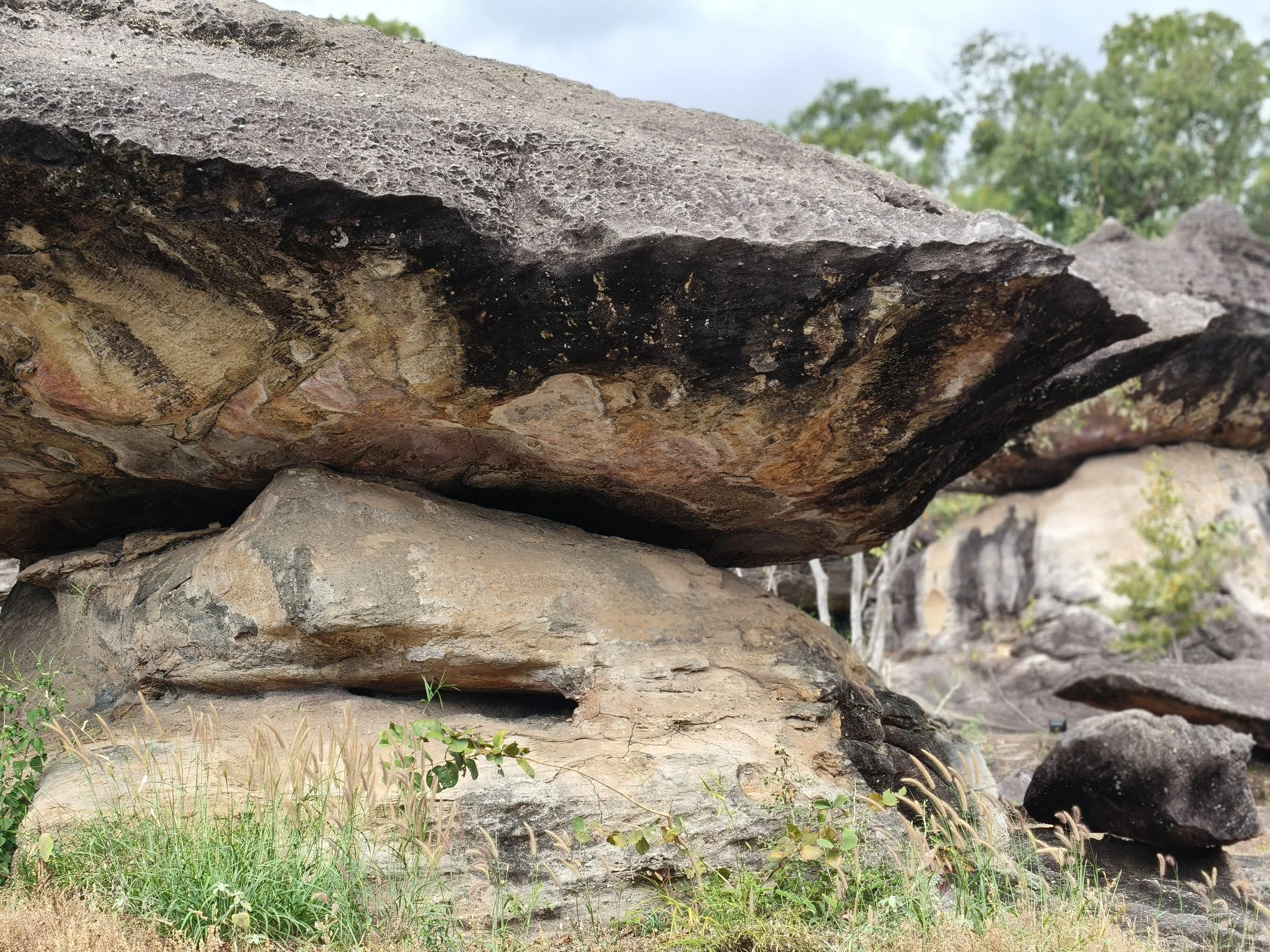
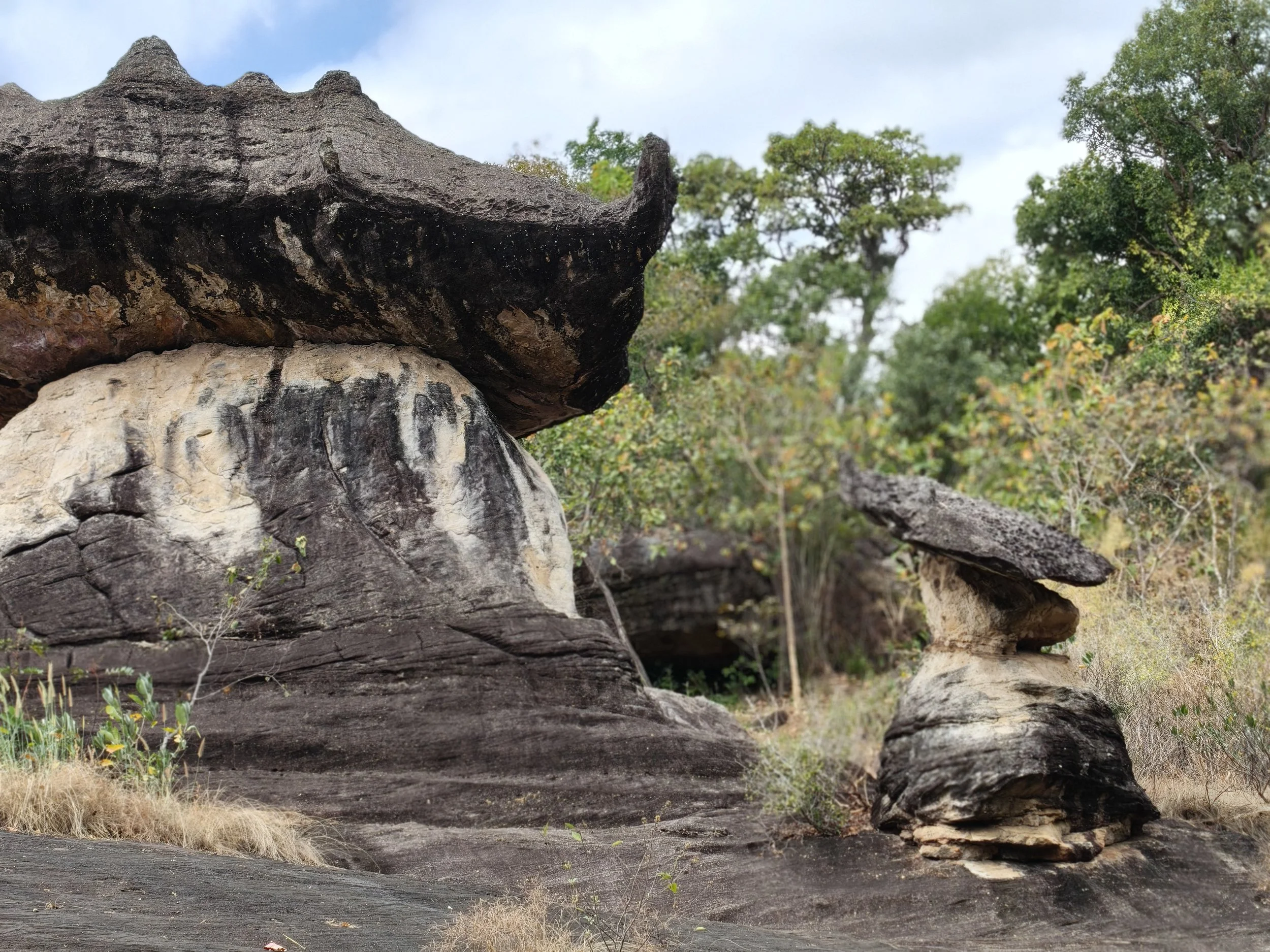
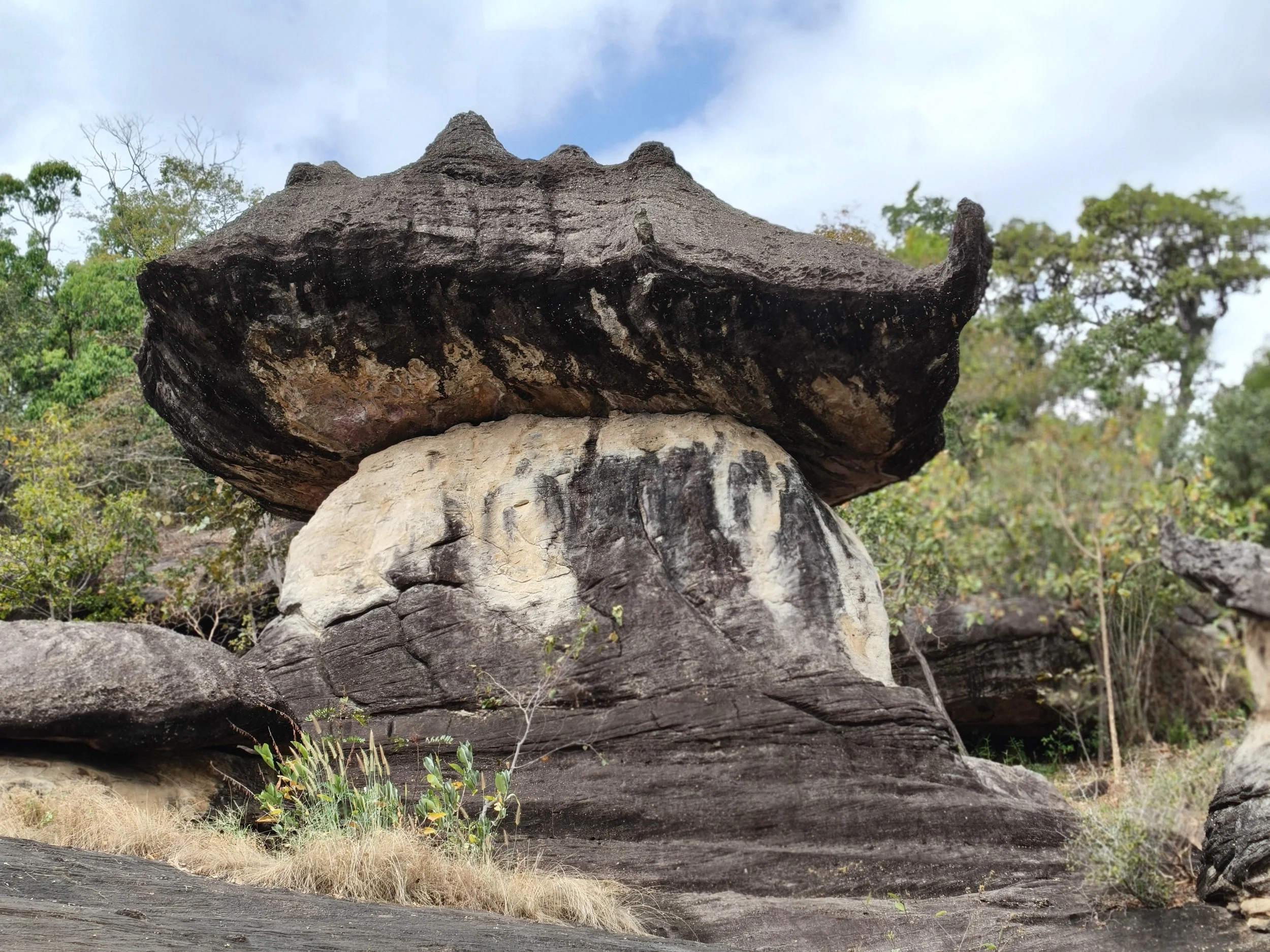
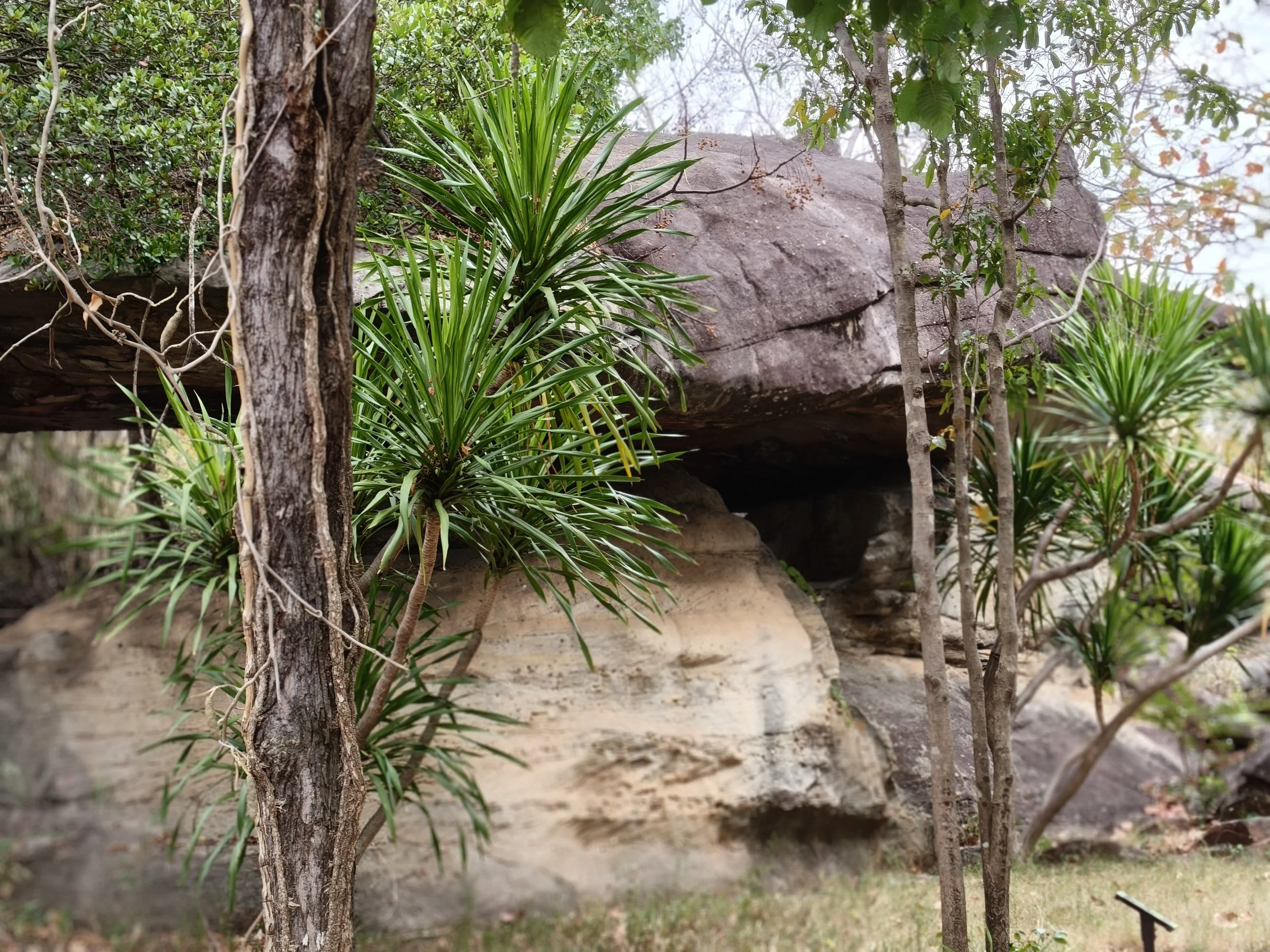
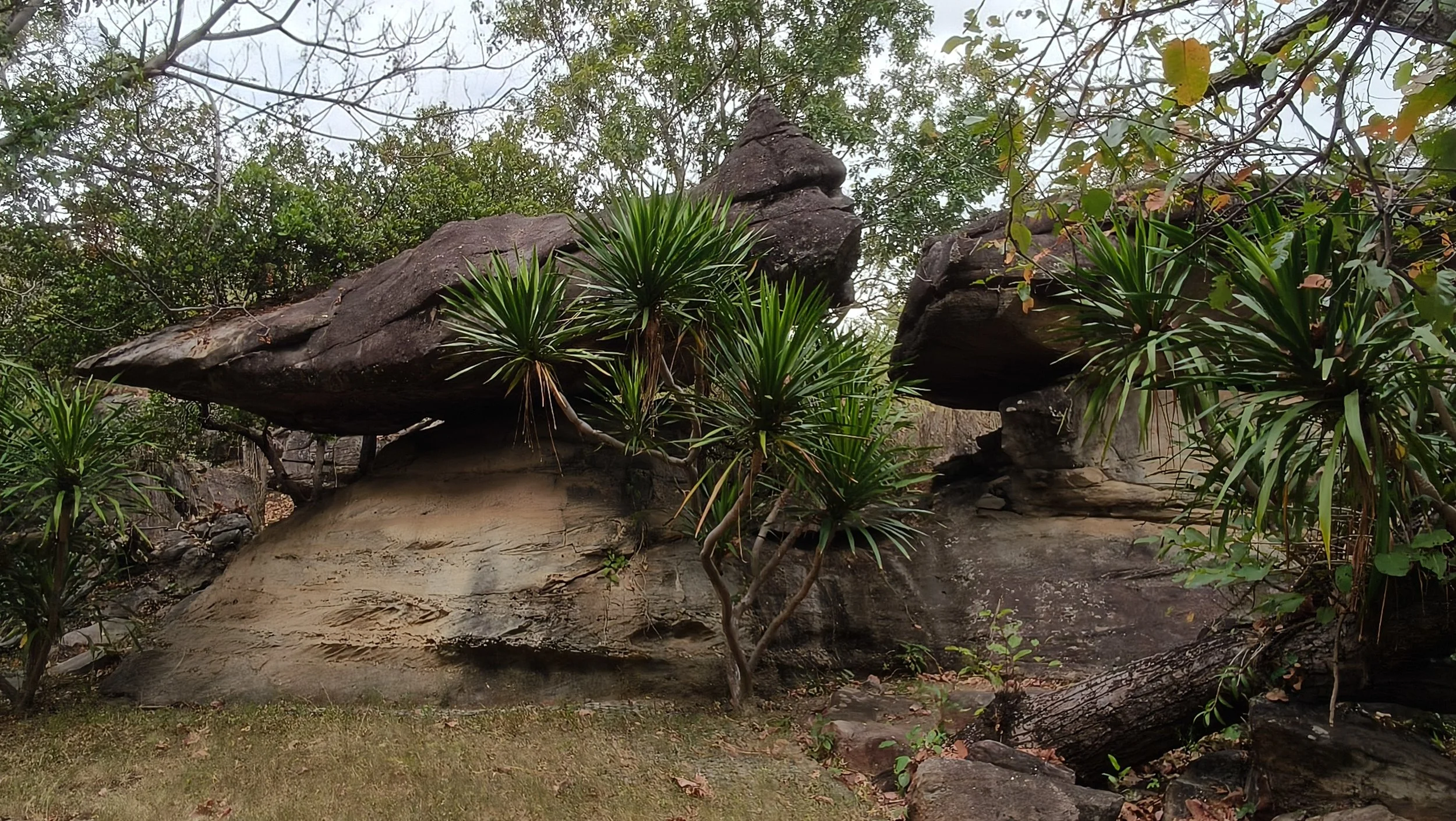
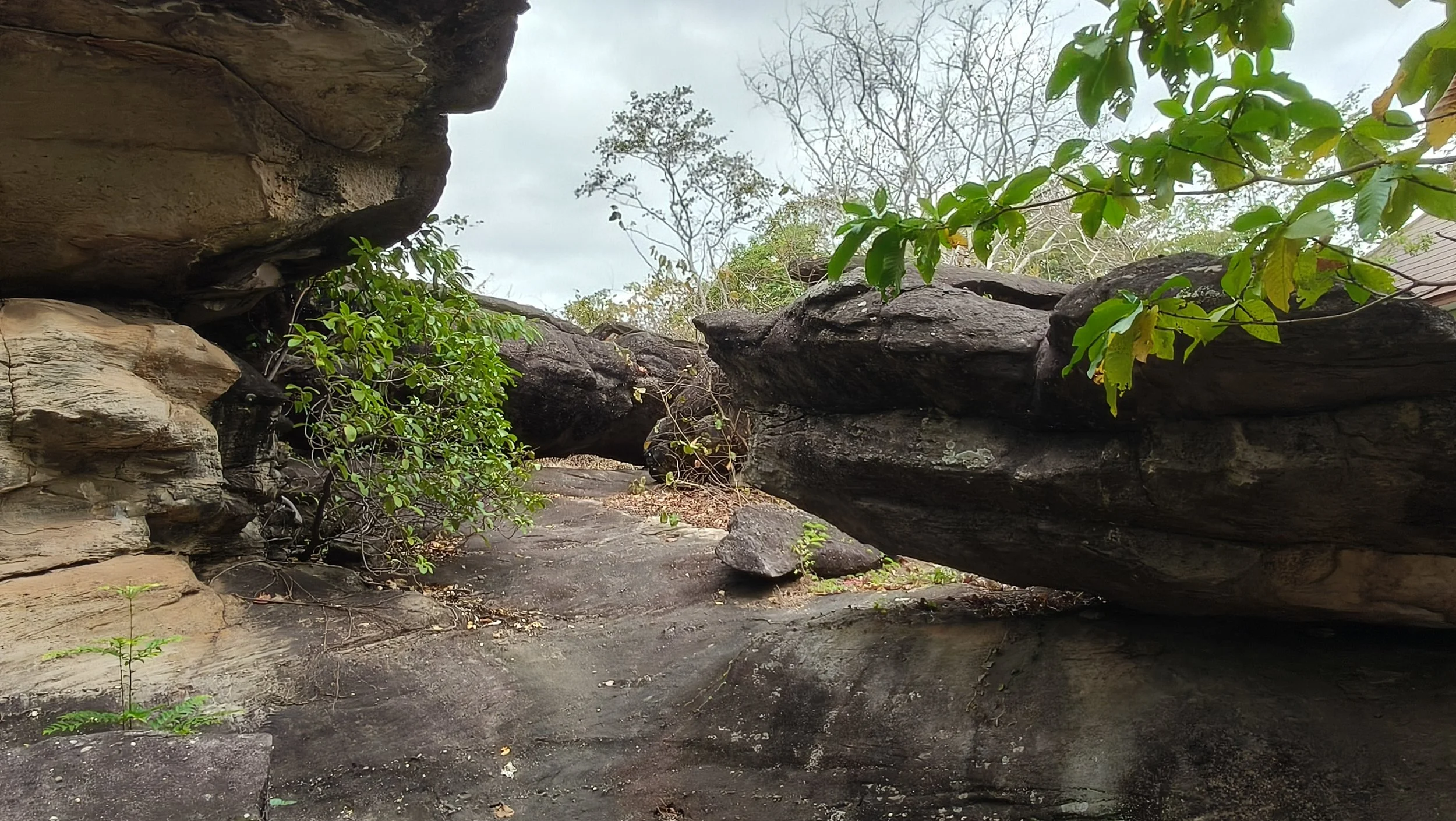
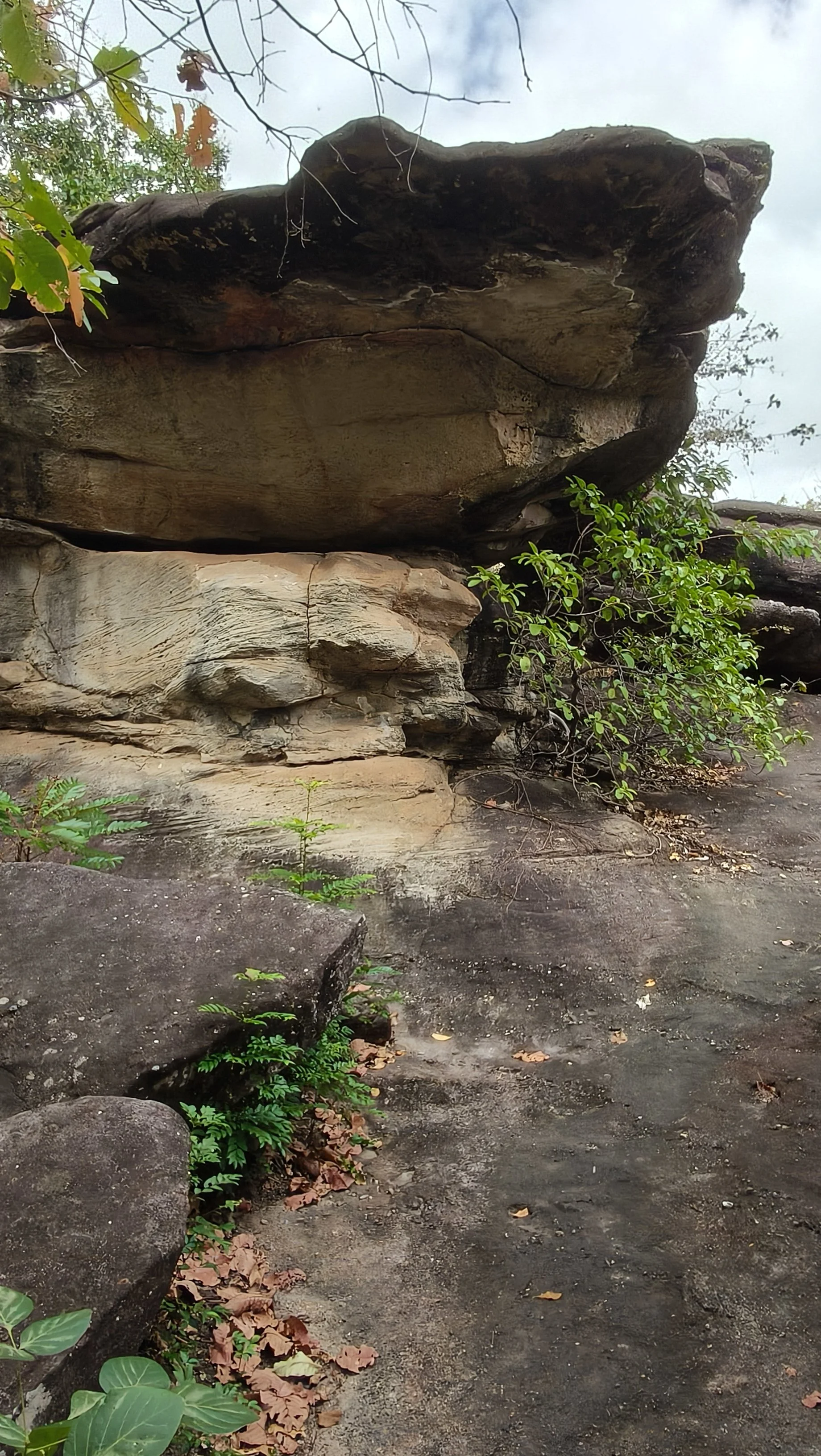
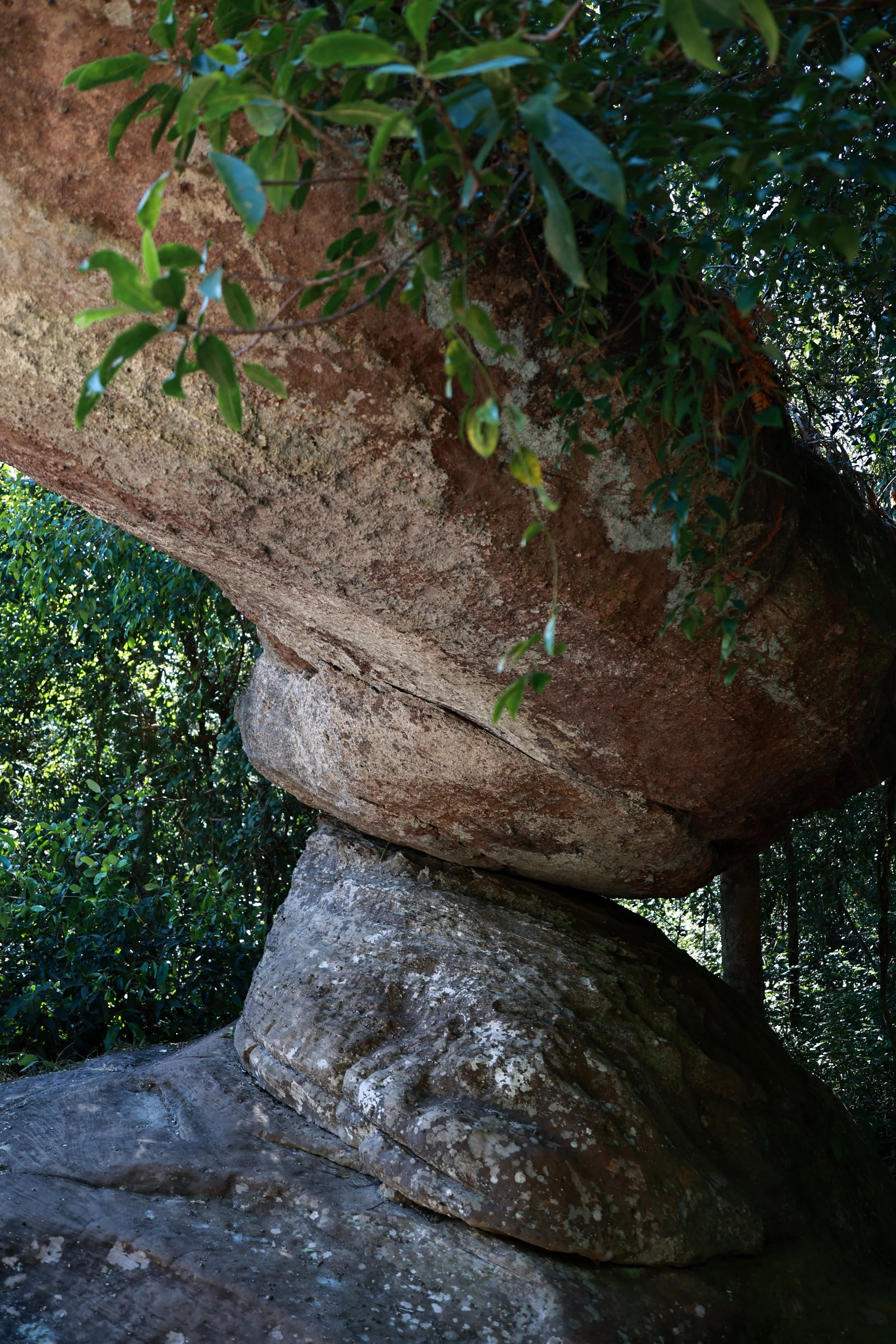
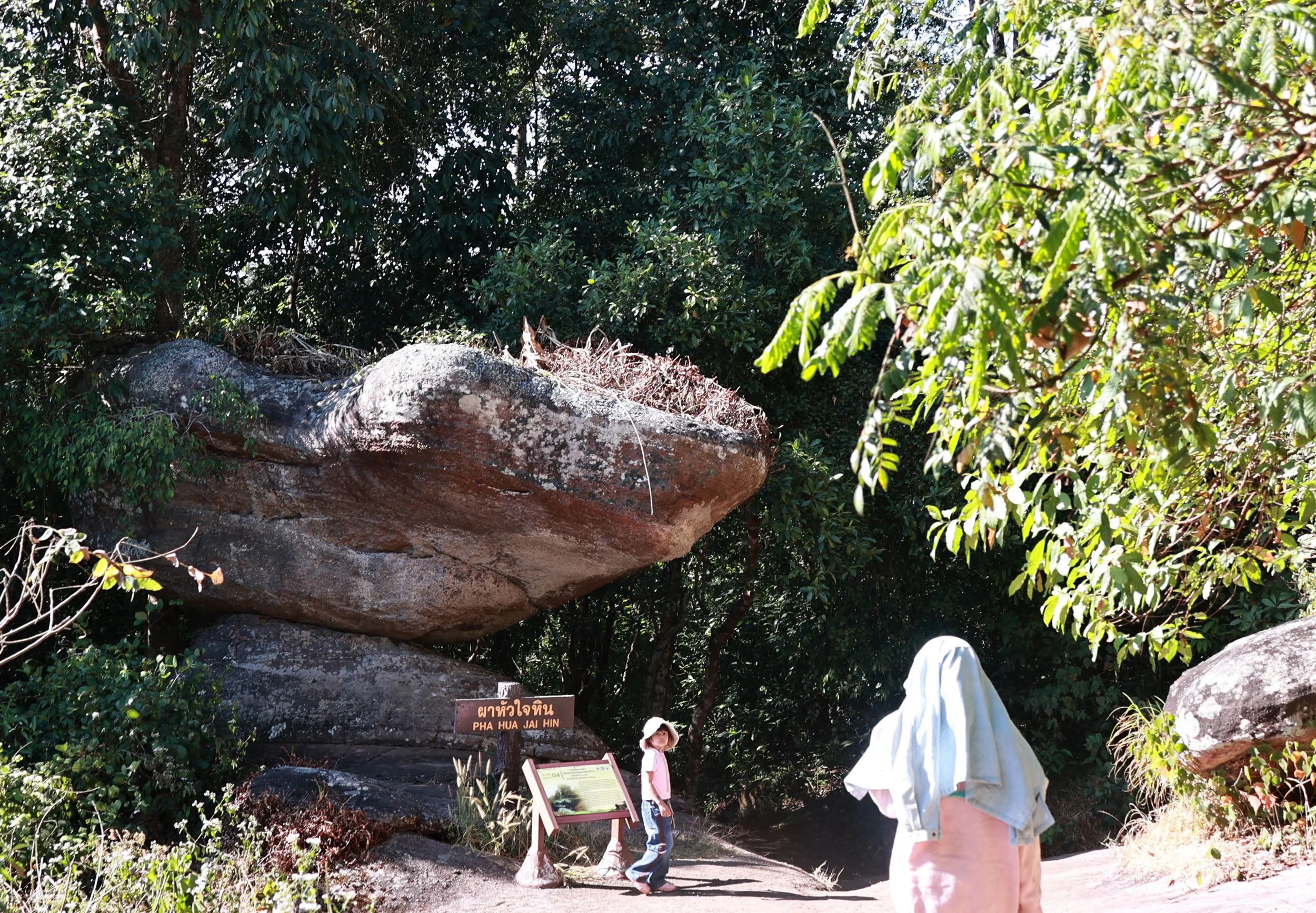
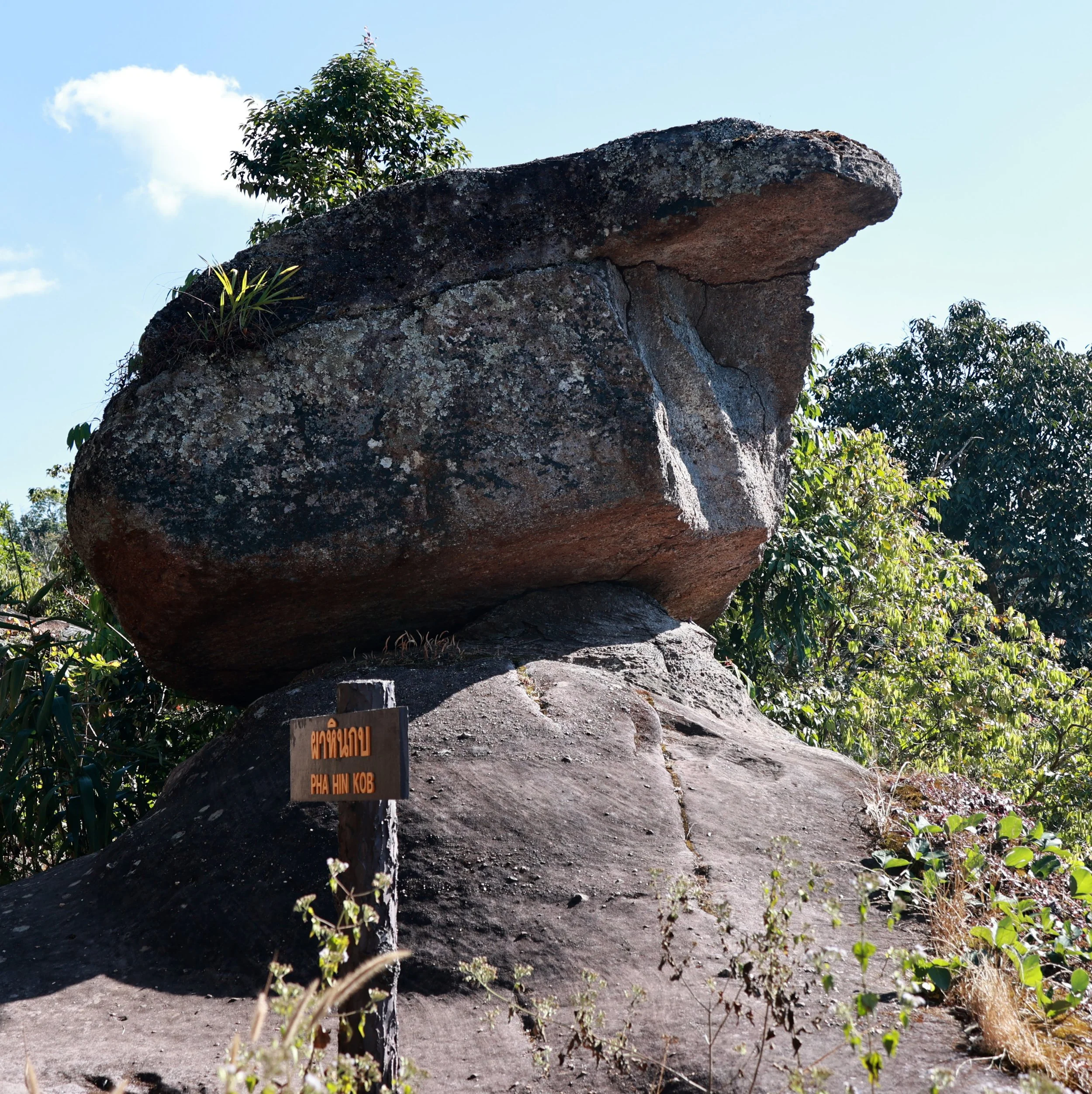
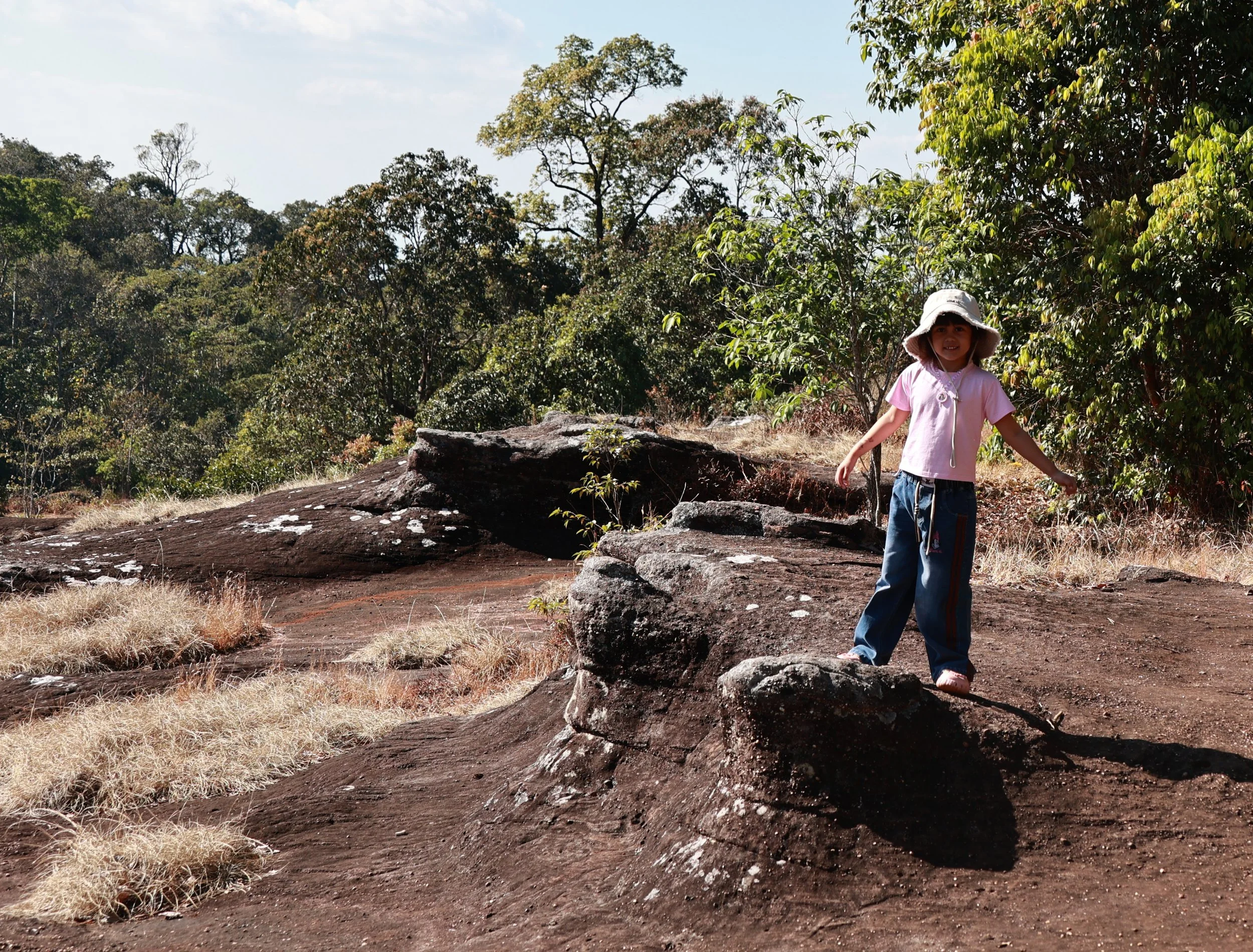
Phu Pha Thoep National Park is located at 25 Moo 5, Ban Khon Sai, Na Si Nuan Subdistrict, Mueang District, Mukdahan Province 49000, Thailand. It is renowned for its unusual, mushroom-shaped rock formations, ancient cave paintings, scenic viewpoints overlooking the Mekong River and Laos, and a seasonal waterfall.
The park, also known as Mukdahan National Park, offers a variety of natural wonders accessible via an easy to moderate hiking trail that starts behind the visitor center. The primary attraction is the group of peculiar rock formations, some resembling mushrooms, pavilions, or swans, collectively known as the Hin Thoep group.
Wat Maruk Kha Nakhon

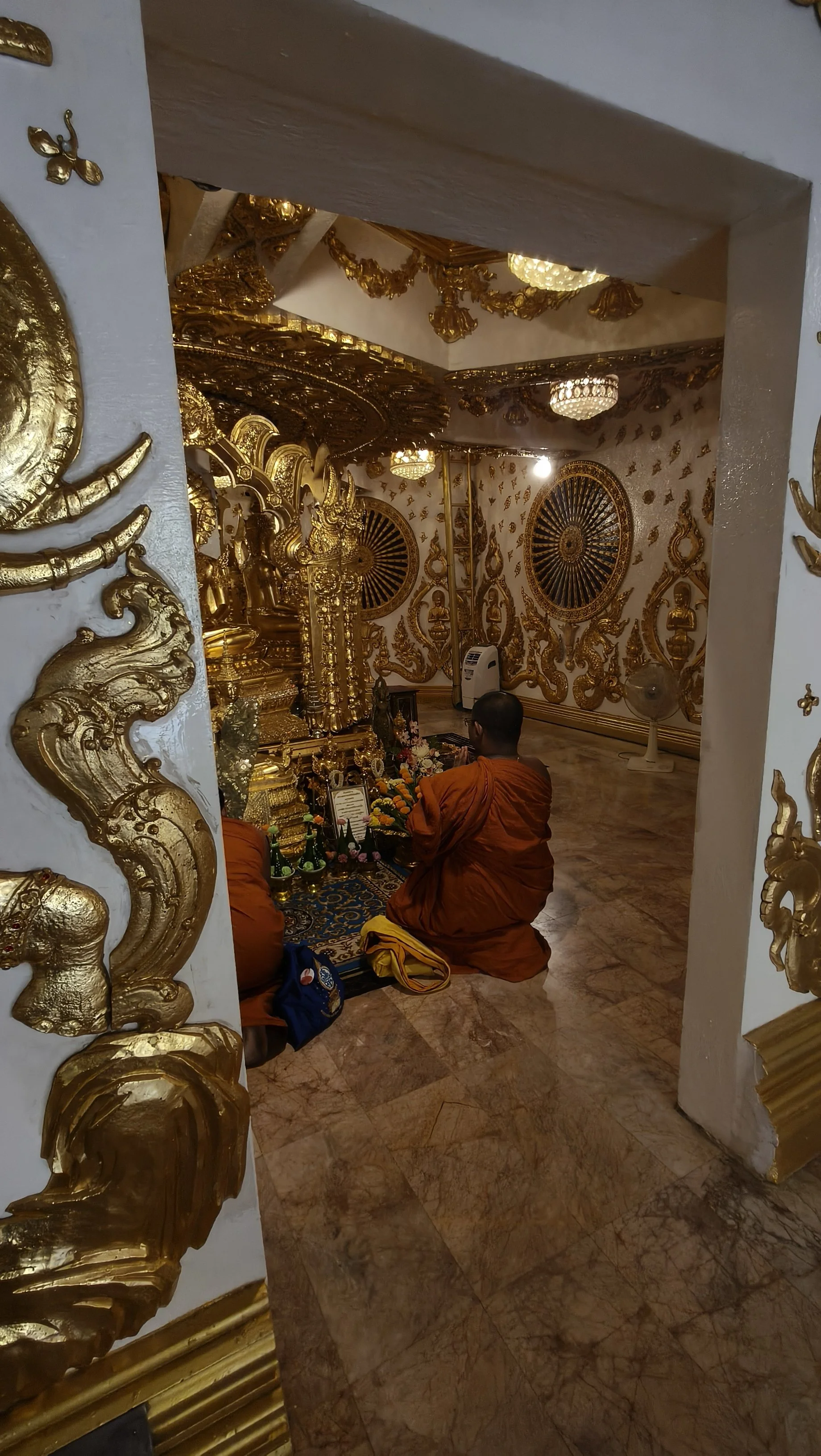
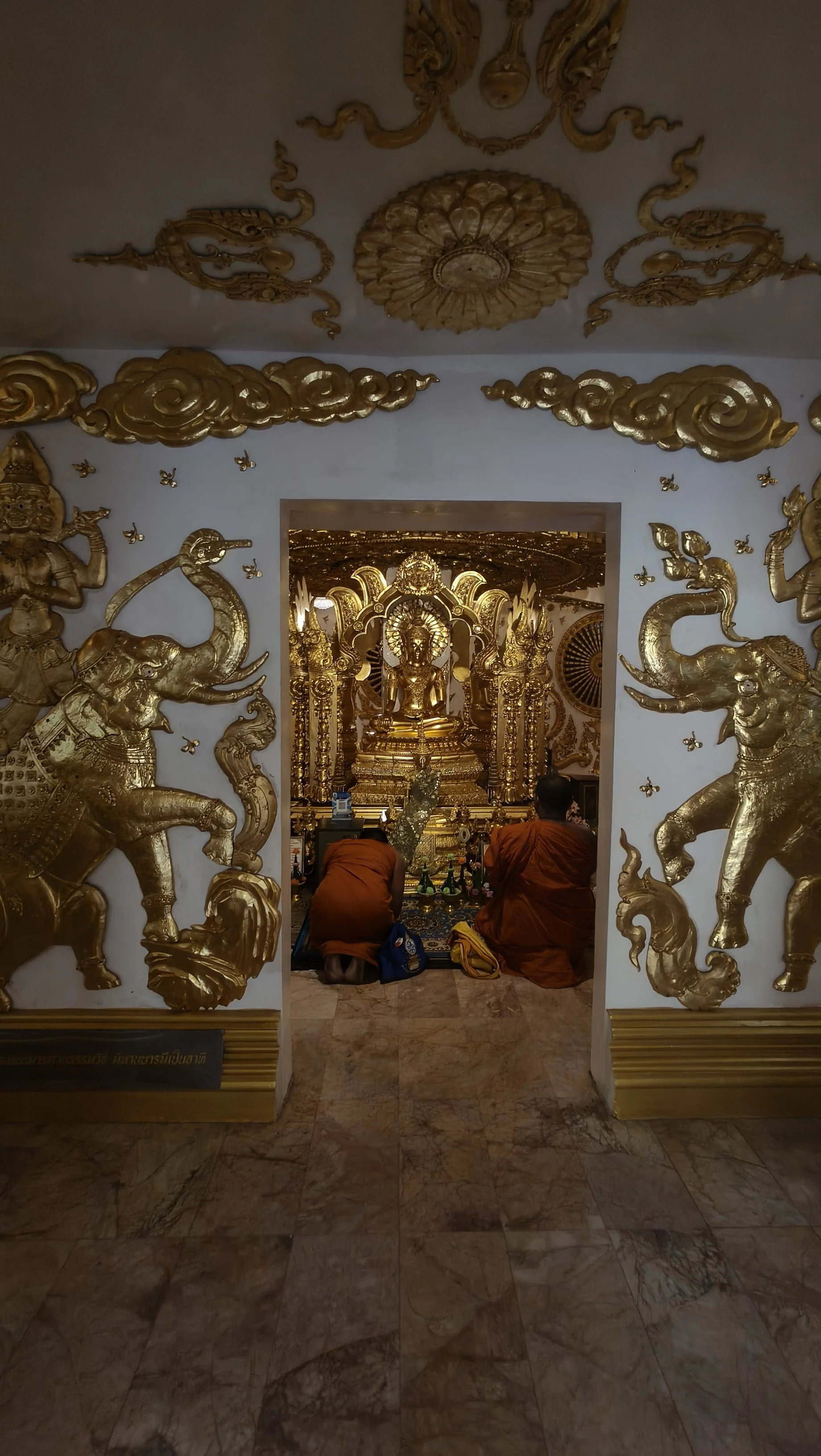
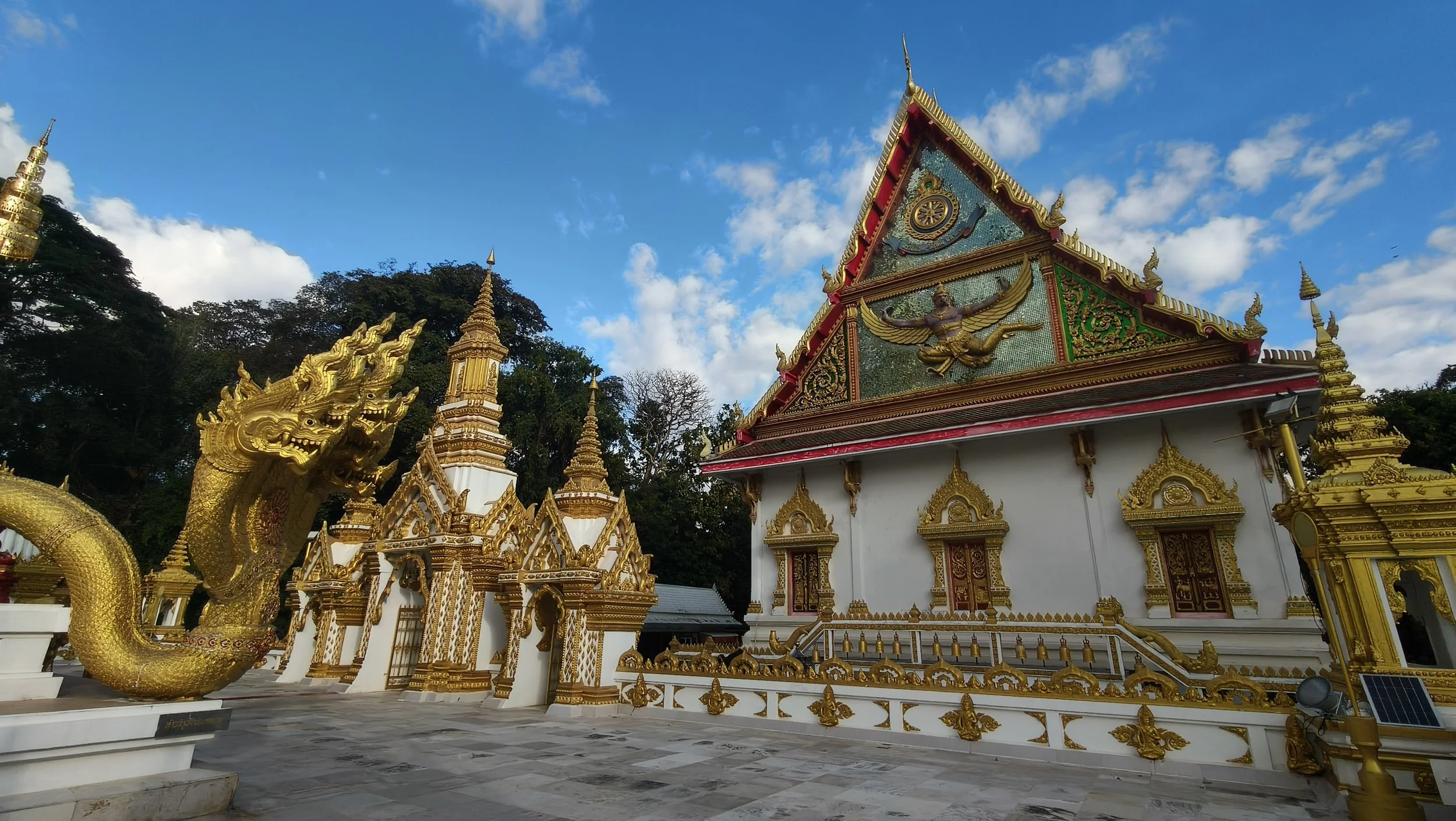
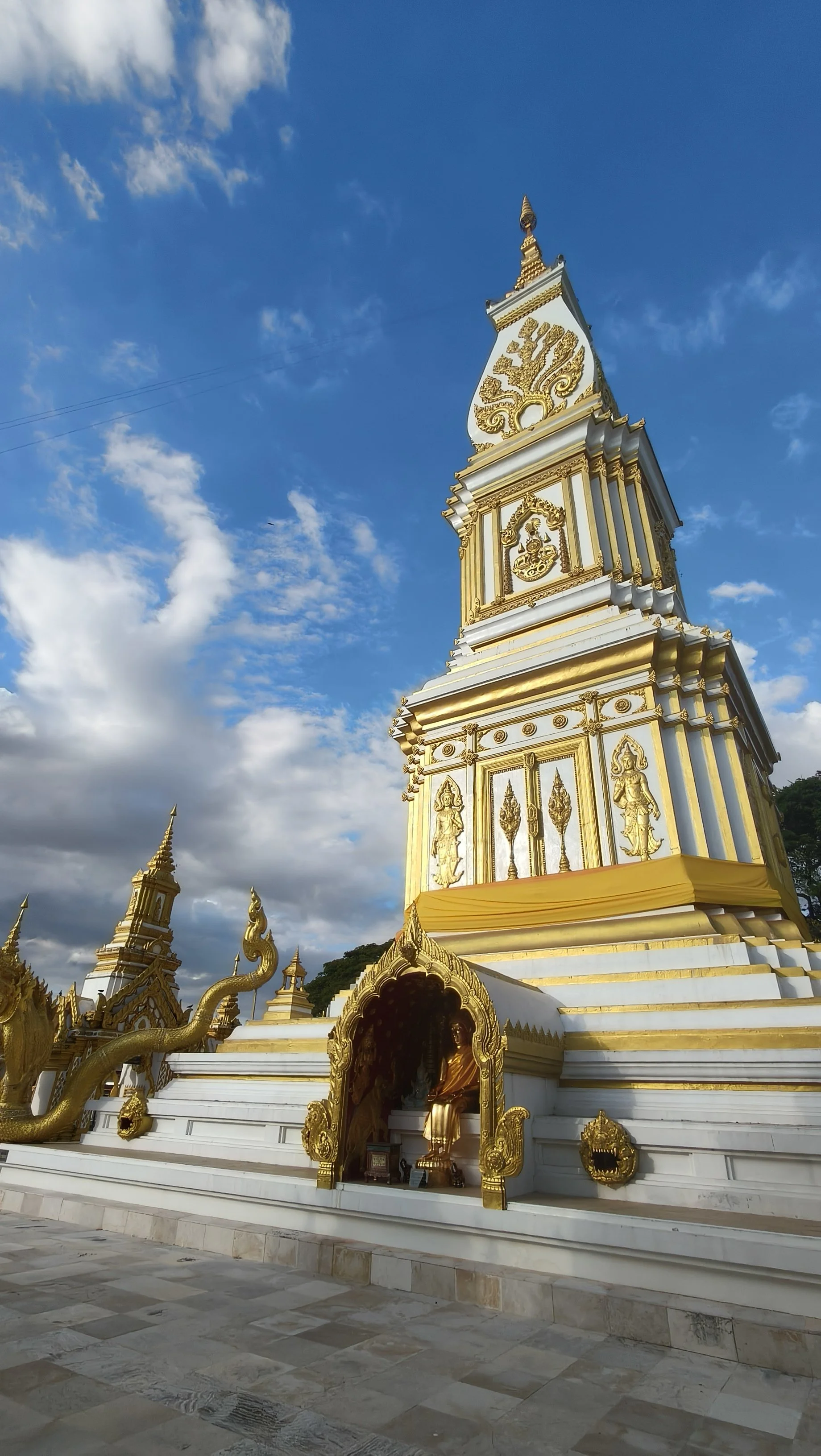
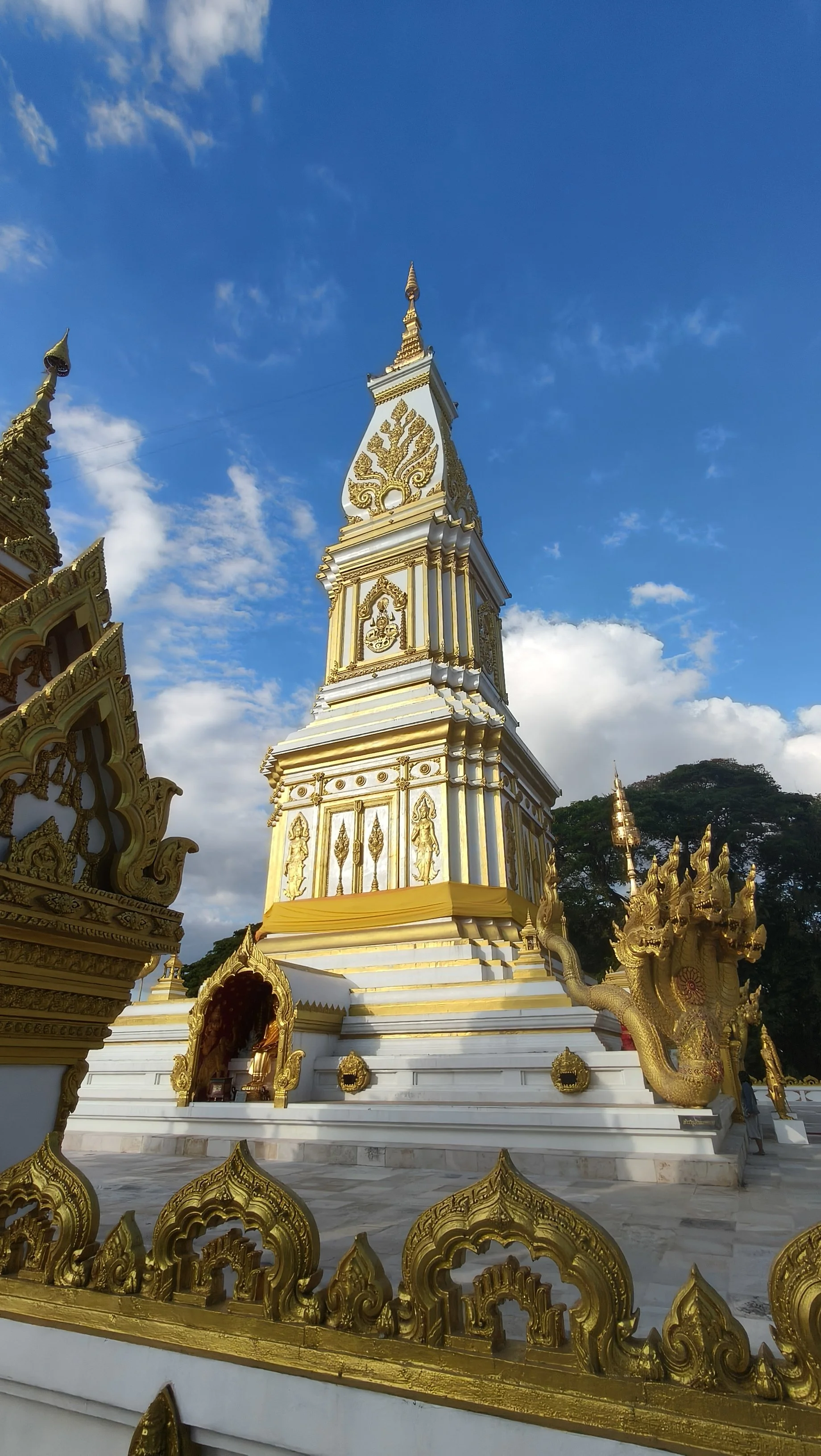
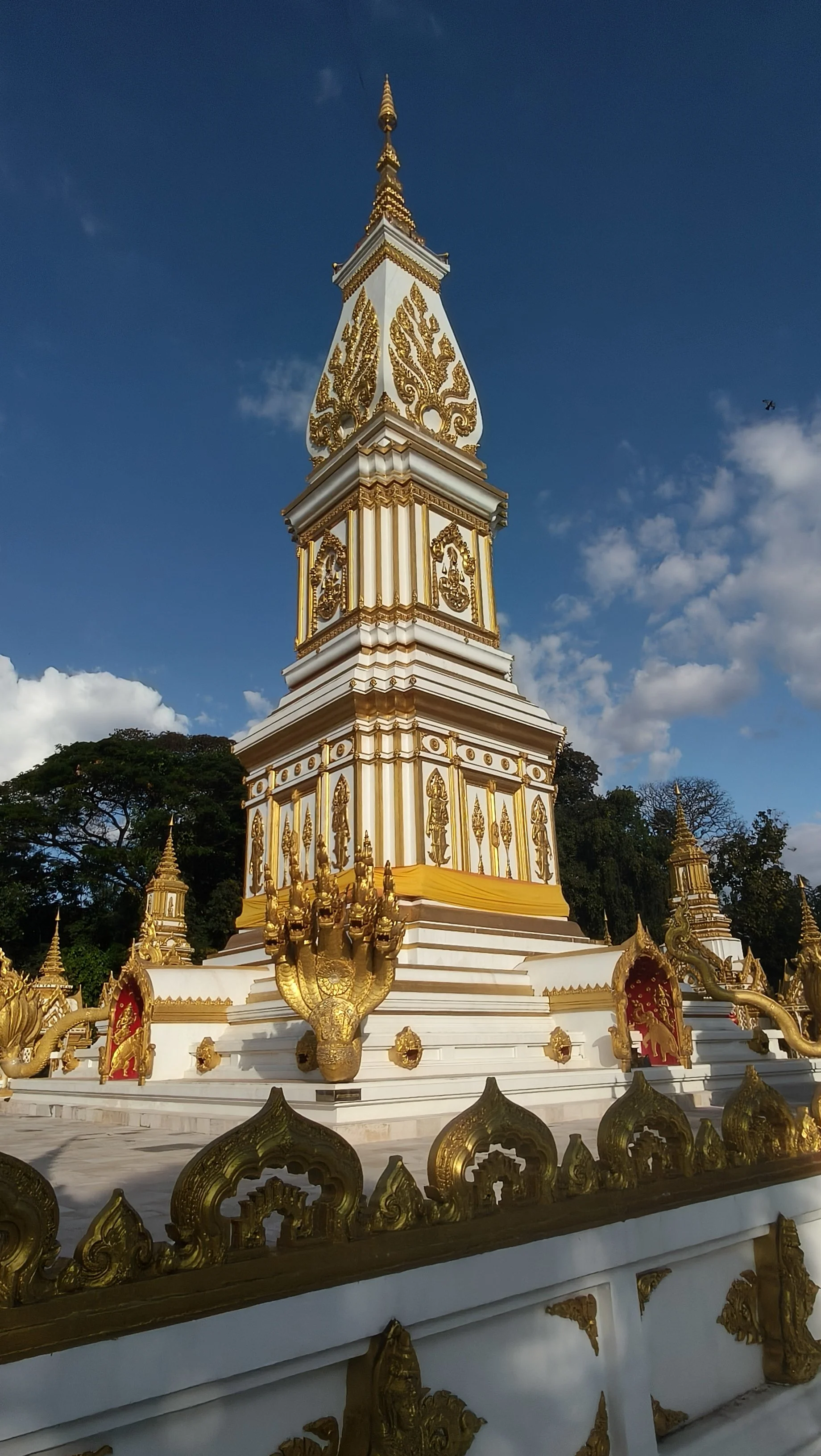
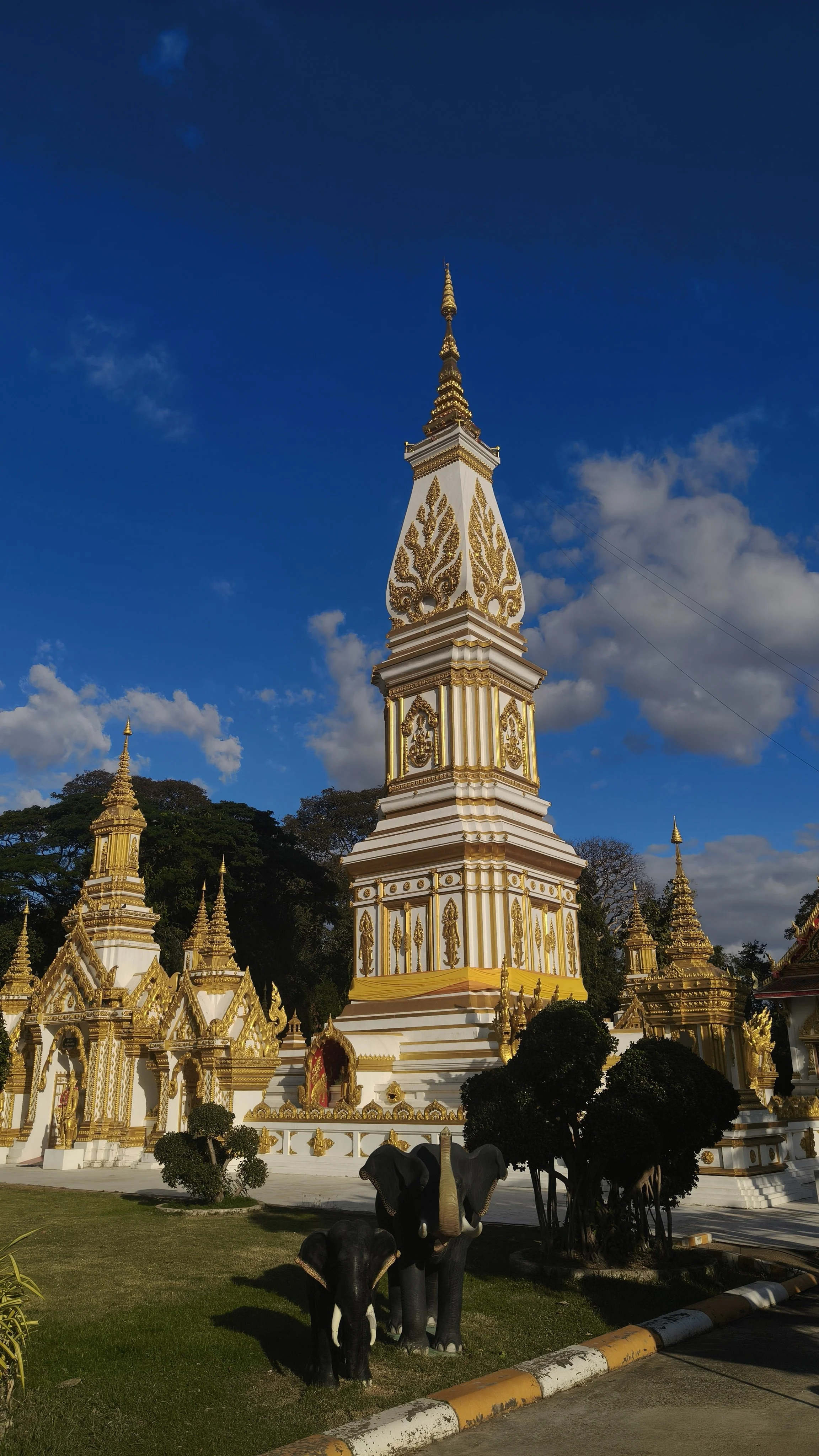
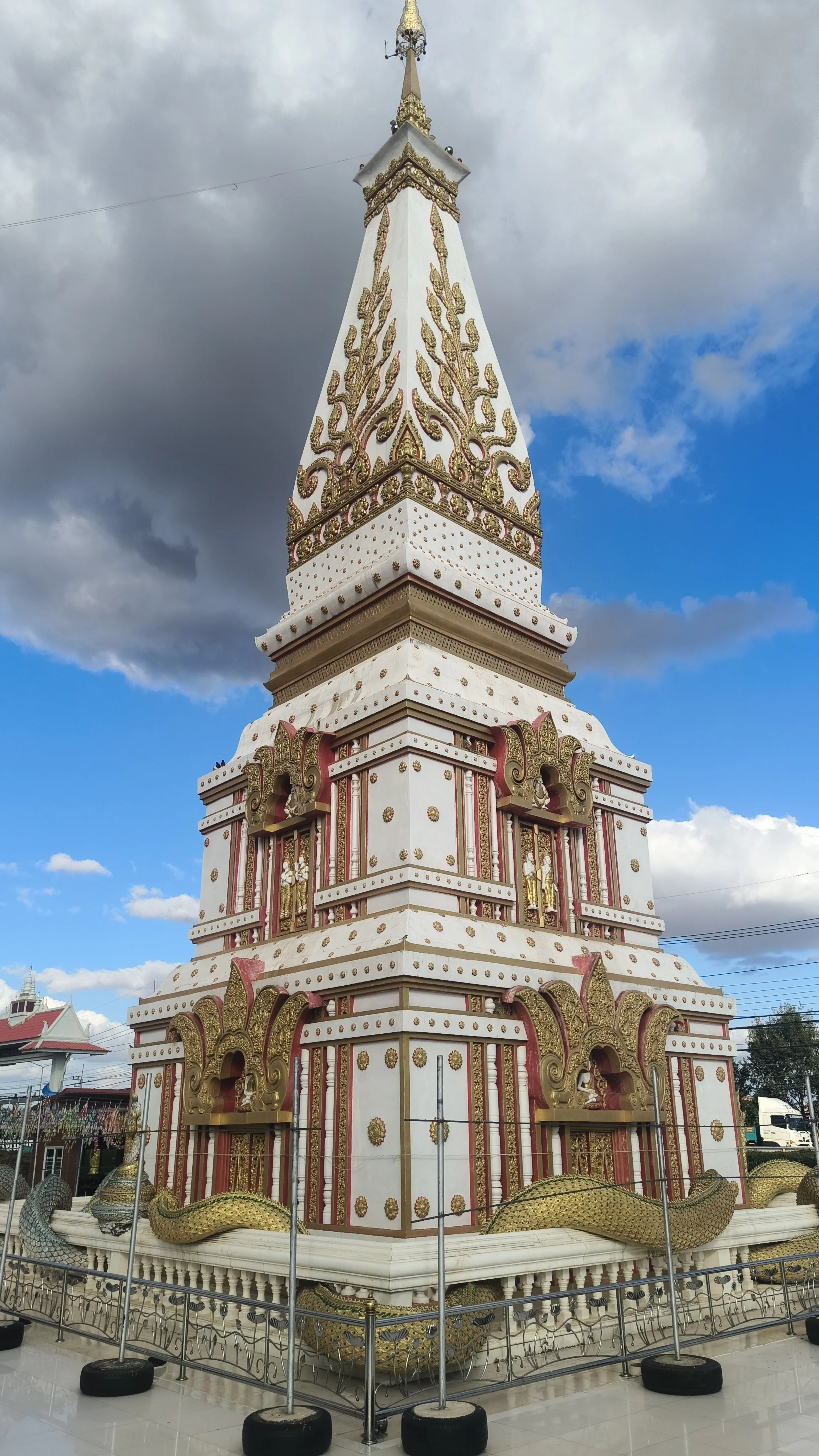
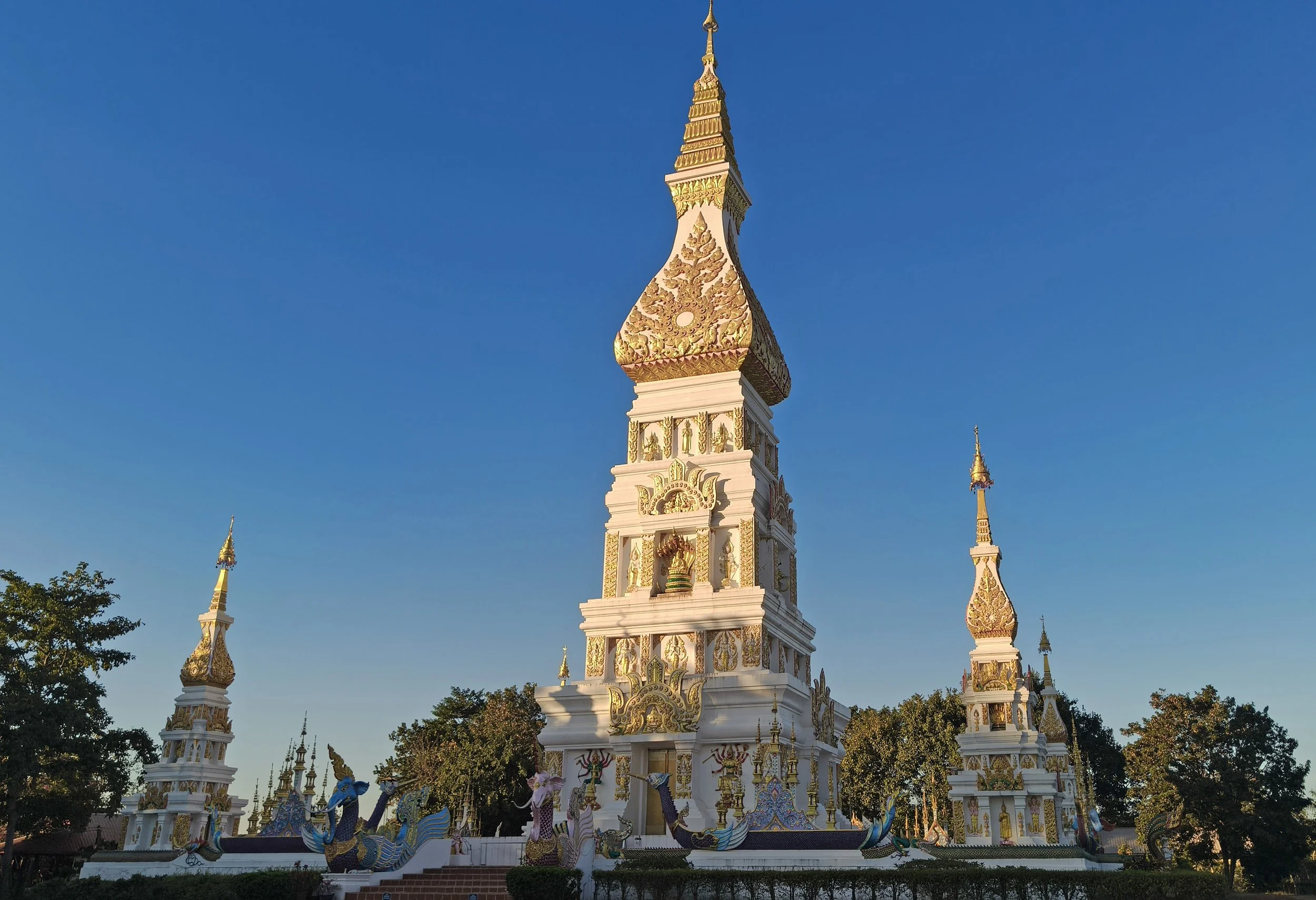
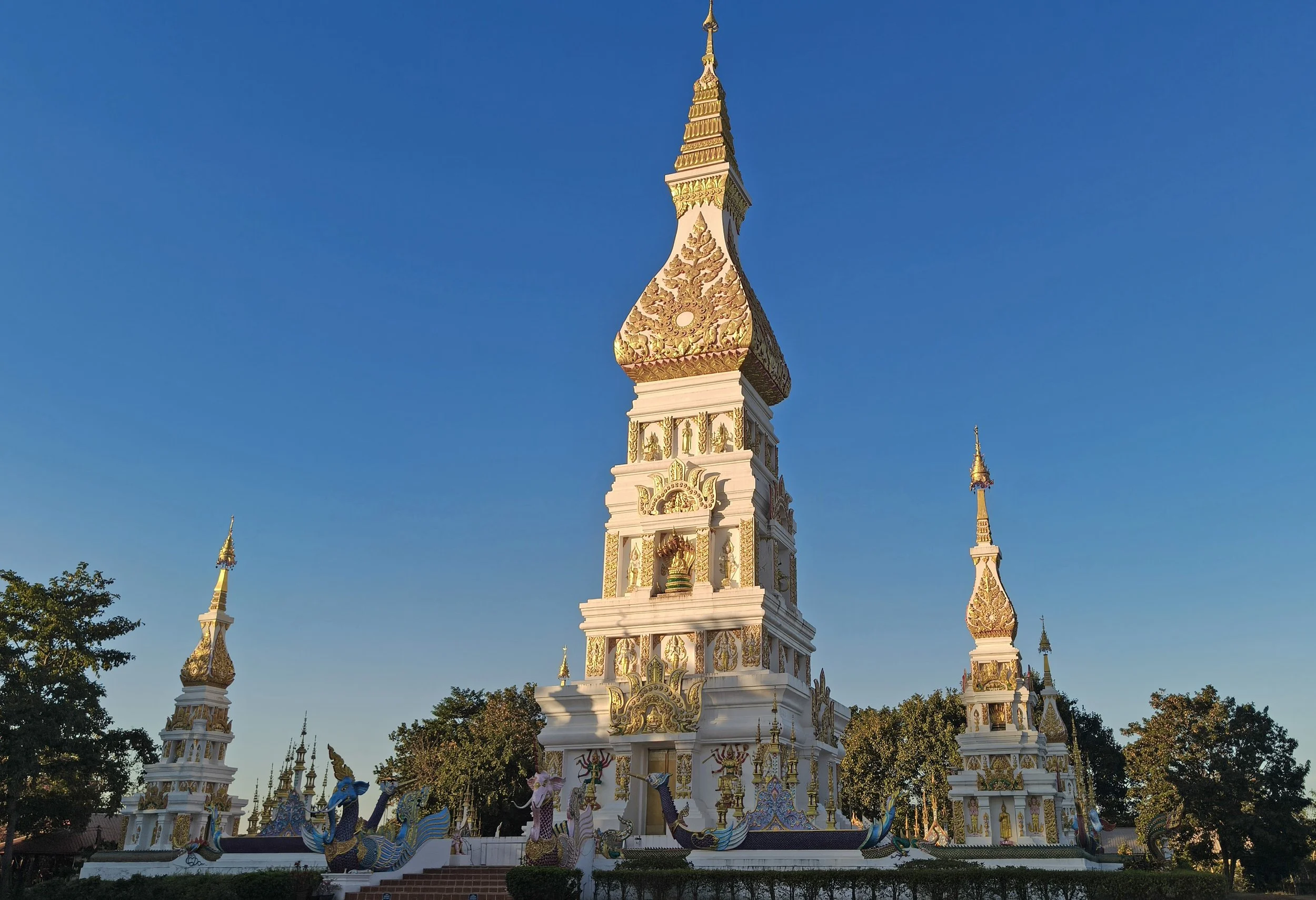
Wat Maruk Kha Nakhon is a significant Buddhist temple in Nakhon Phanom, Thailand, best known as the location of Phrathat Marukkha Nakhon, a revered stupa (pagoda) dedicated to those born on a Wednesday night.
Phrathat Marukkha Nakhon The main attraction is the 50.9-meter-tall, 20-meter-wide square stupa, which resembles the design of the famous Phra That Phanom but on a slightly smaller scale.
Significance The stupa was completed in 1996 to celebrate the 50th Anniversary of His Majesty King Bhumibol Adulyadej's Accession to the Throne. It is one of several stupas in the region associated with specific birth days of the week, serving as a significant pilgrimage site for locals.
Relics The stupa's central hall houses a splendidly adorned Buddha image, and the top part enshrines Buddha's relics along with other precious items recovered from the ancient Phra That.
Location The temple is situated in Ban Don Nang Hong Tha, in the Don Nang Hong Sub-district of the That Phanom district.
History The original temple complex is nearly three hundred years old, built by a former city ruler, but was later deserted due to flooding and disease, with the ruins now located opposite the present site, separated by a creek.



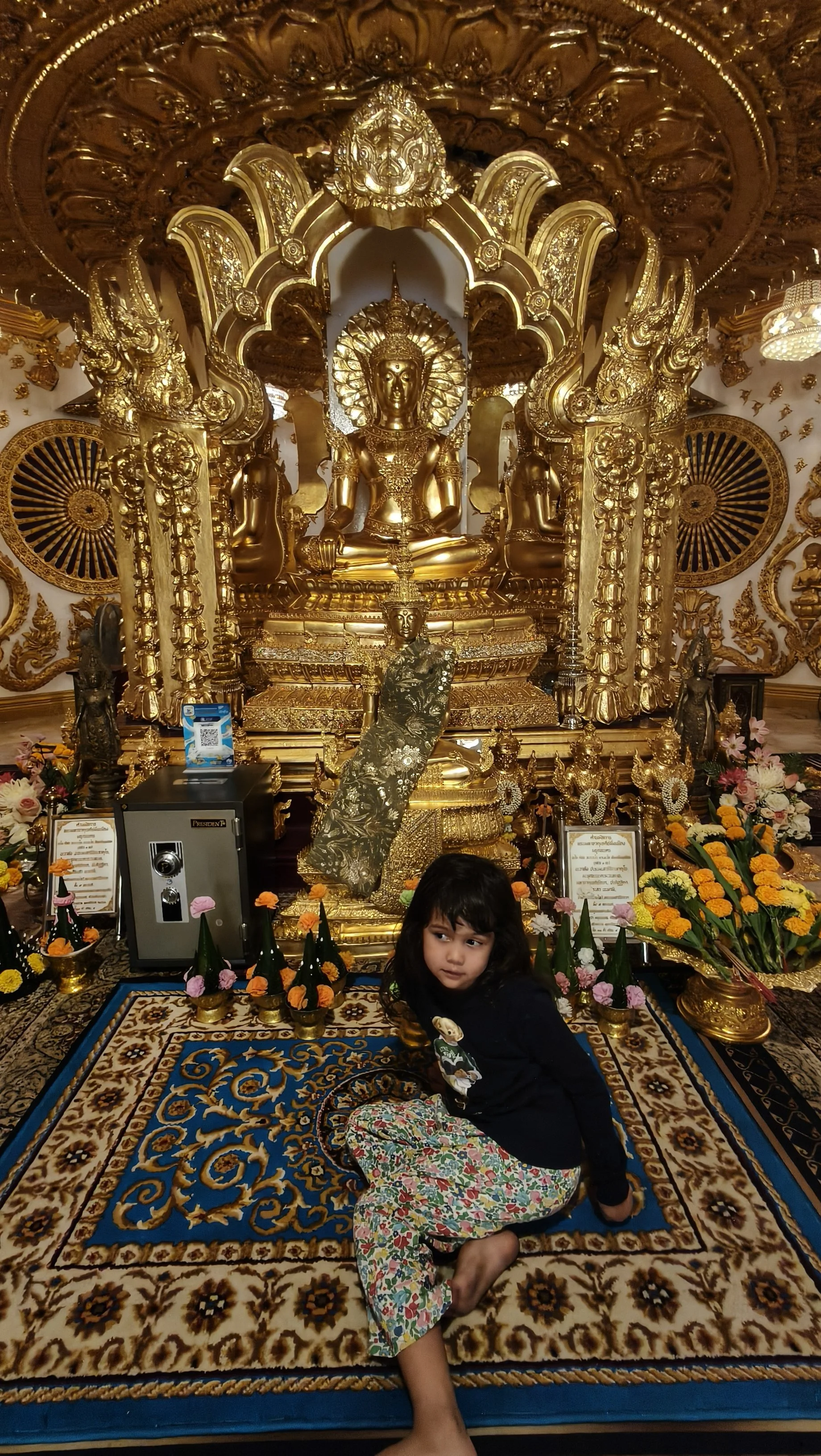


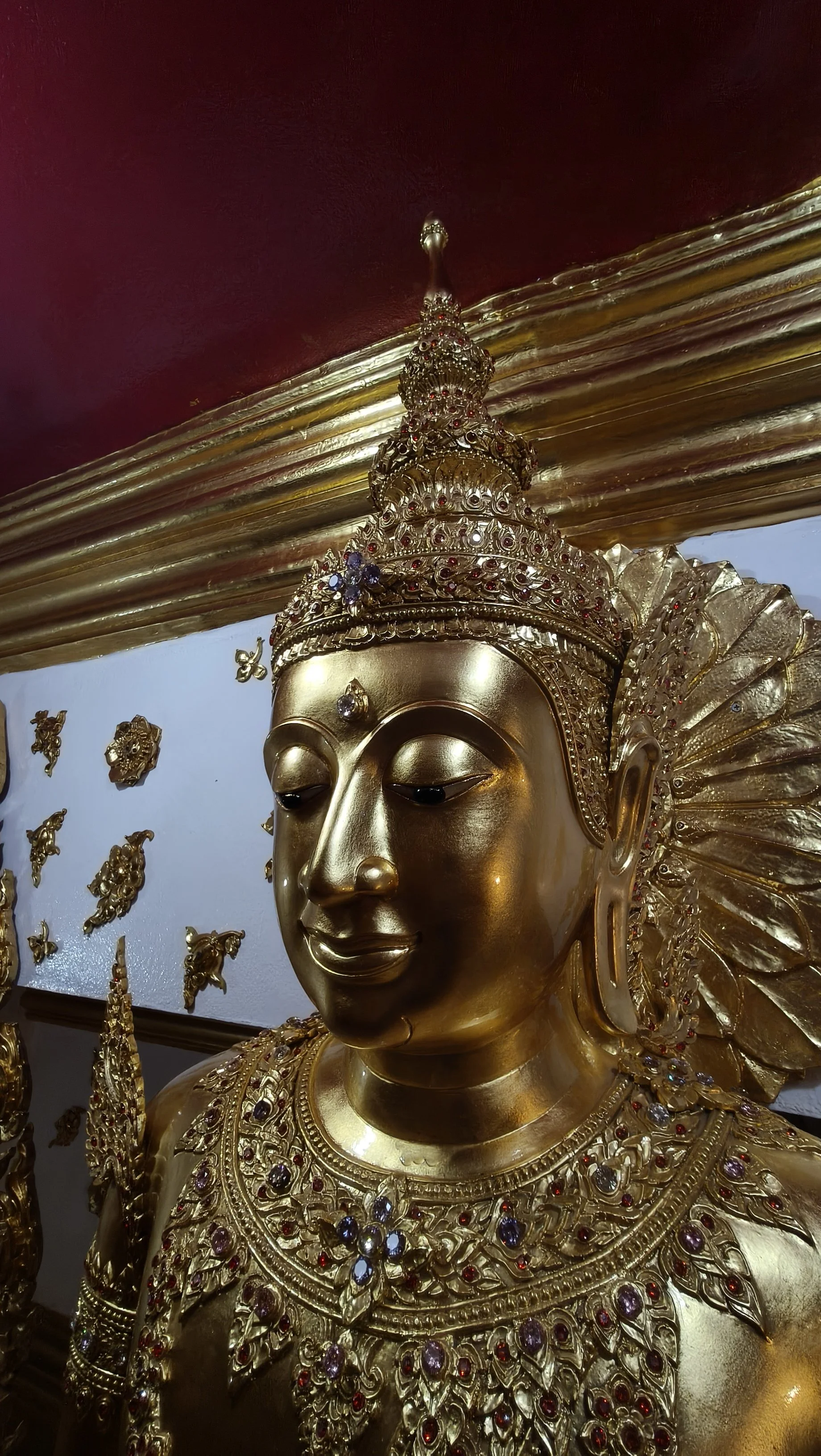
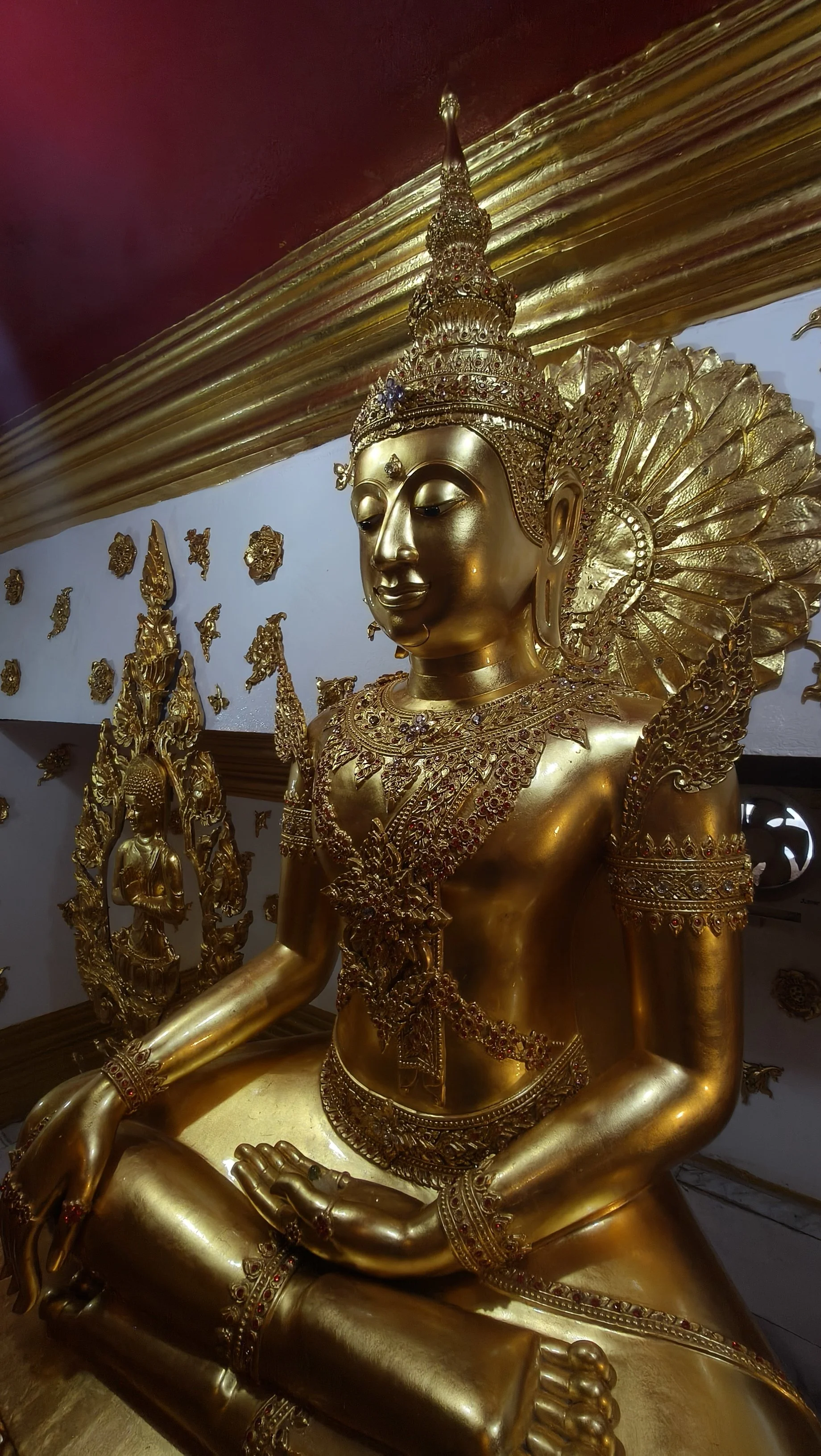

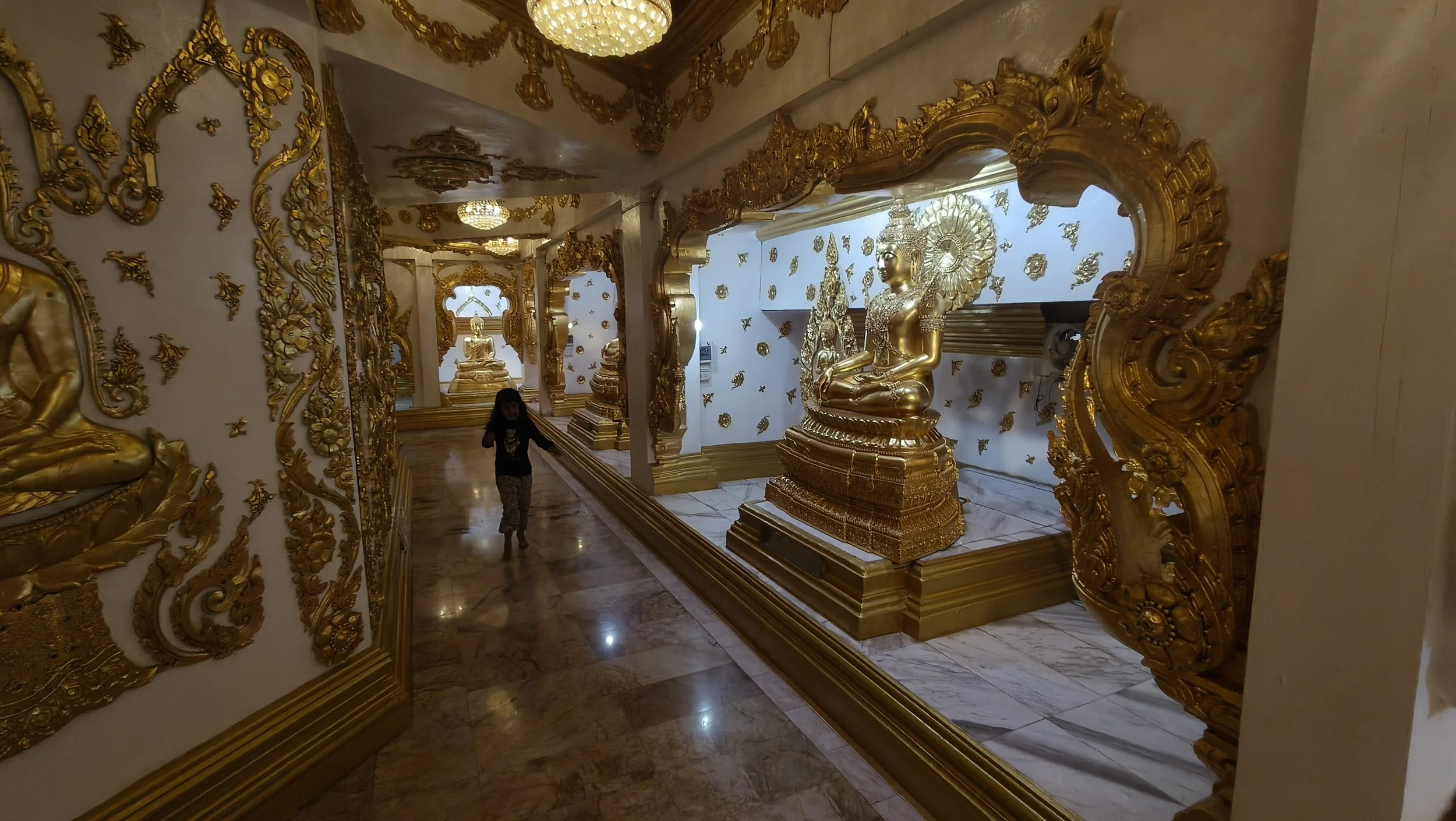







Chanwisut Pagoda (Tanchai)
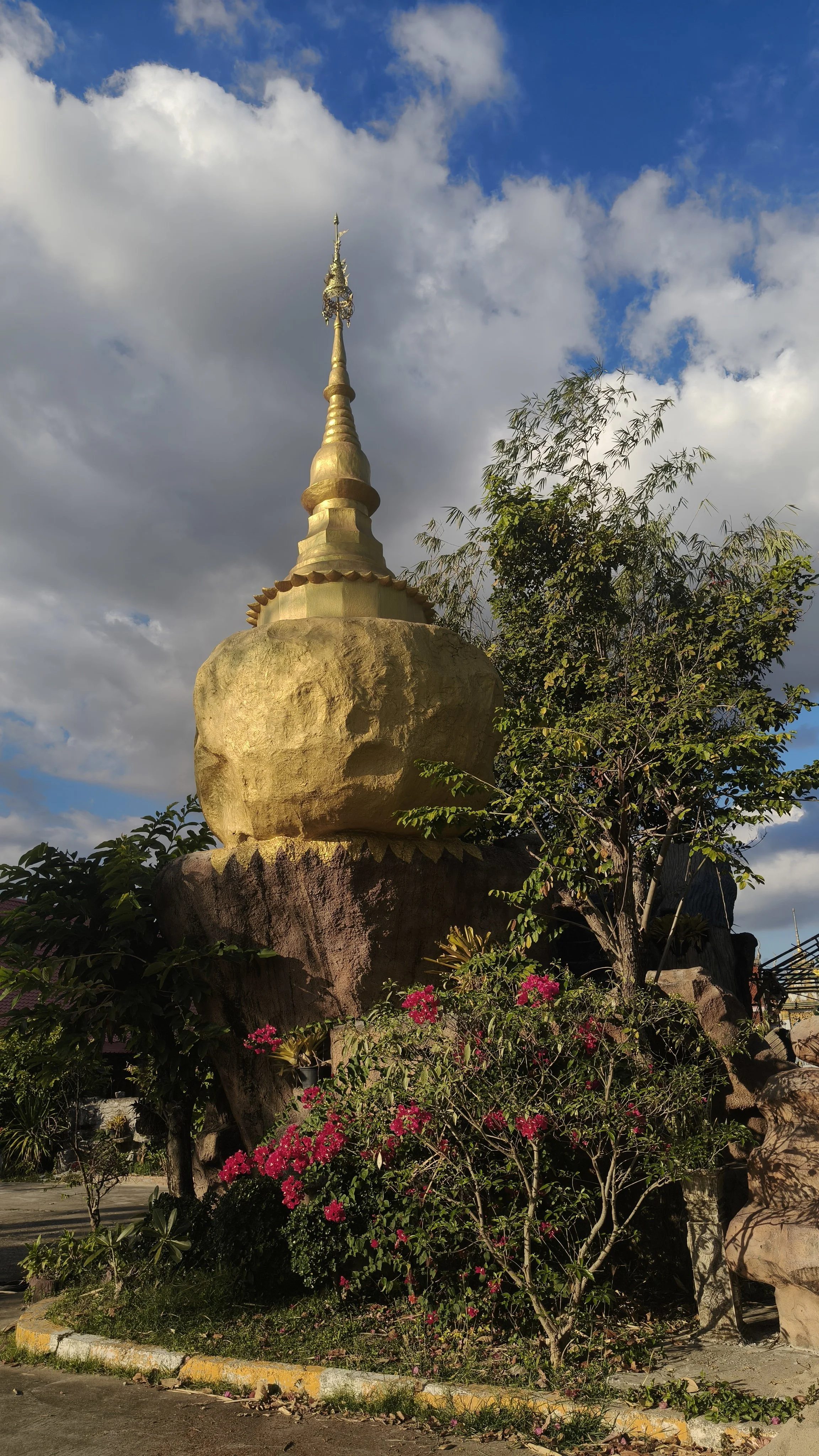
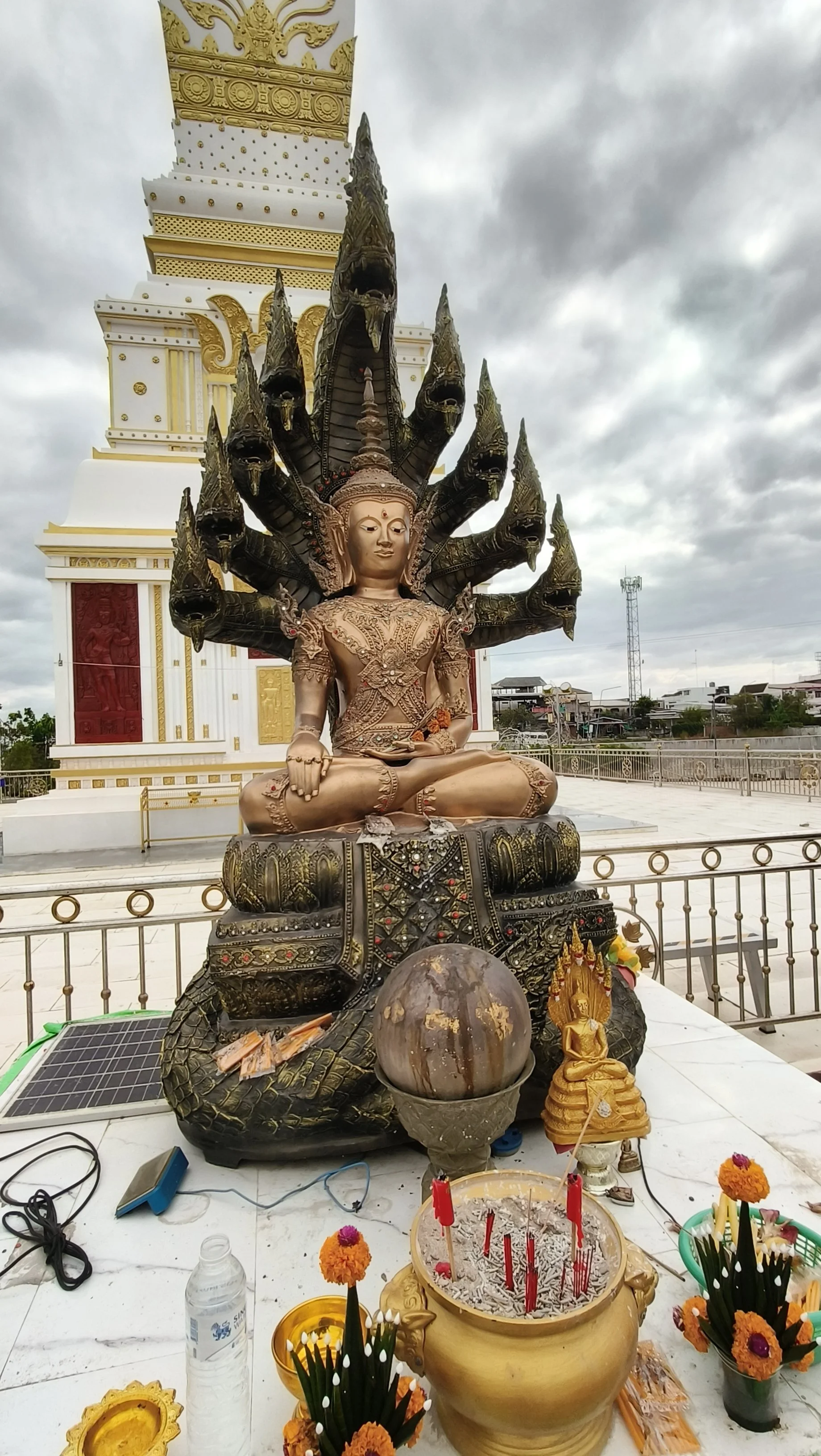
The Chanwisut Pagoda (Tanchai) is the Phra That Phanom replica located at Wat Si Mongkhon Nuea in Mukdahan, Thailand.
The original and highly revered Phra That Phanom is located in Nakhon Phanom province and houses a relic of the Buddha's chest bone. It is considered one of the most sacred sites in northeastern Thailand and a significant place of pilgrimage for both Thai and Laotian Buddhists. Replicas, such as the one in Wat Si Mongkhon Nuea, were constructed in various locations to represent the Lan Xang culture and embody the status of city stupas in the region, allowing devotees in different areas to pay homage.
Location: Wat Si Mongkhon Nuea is an ancient temple located along the Mekong River in the Mueang district of Mukdahan.
Significance: The temple itself was established in 1742 and is an important local place of worship. The replica pagoda is a key feature, allowing visitors to connect with the traditions associated with the main Phra That Phanom.


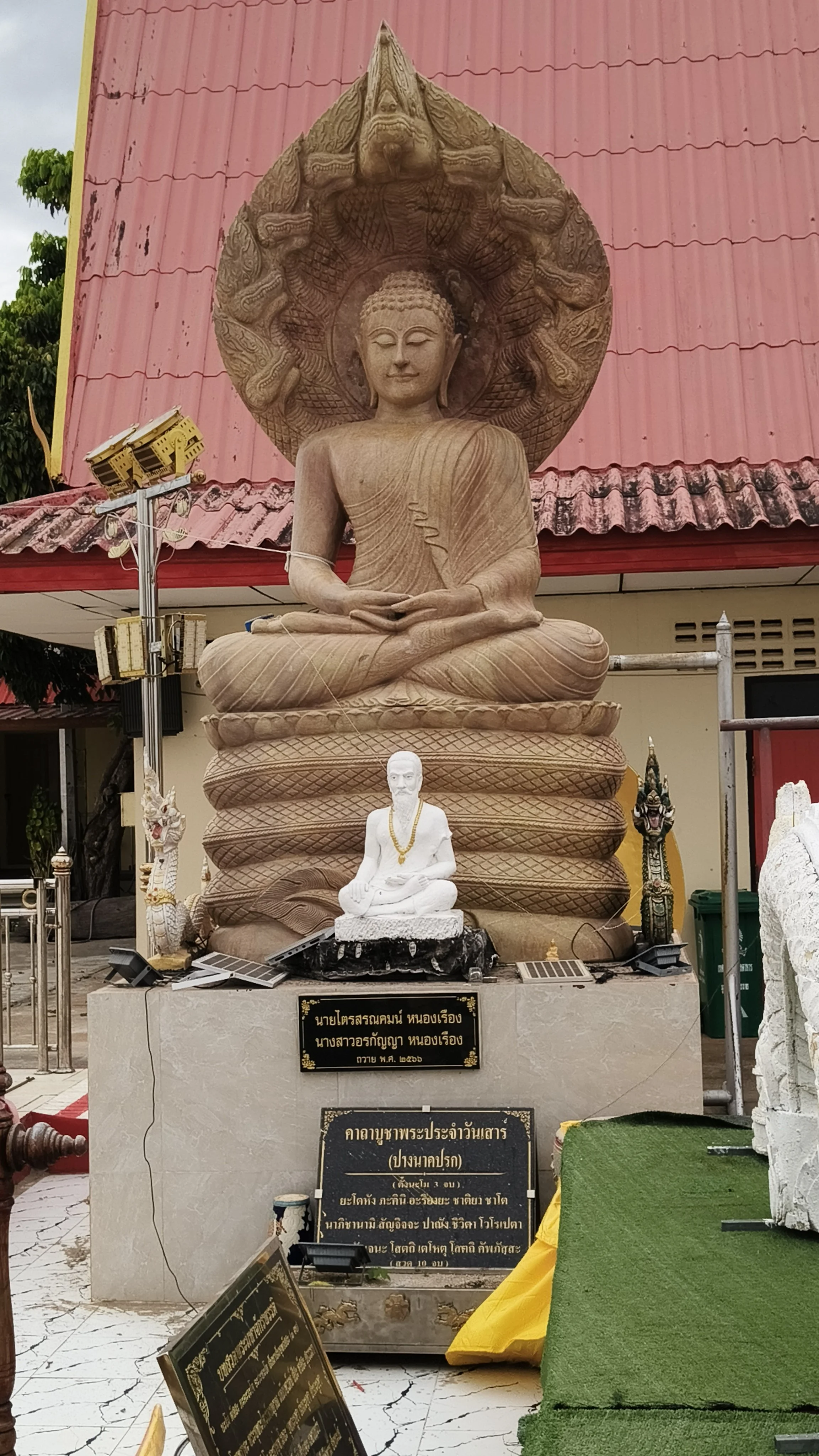


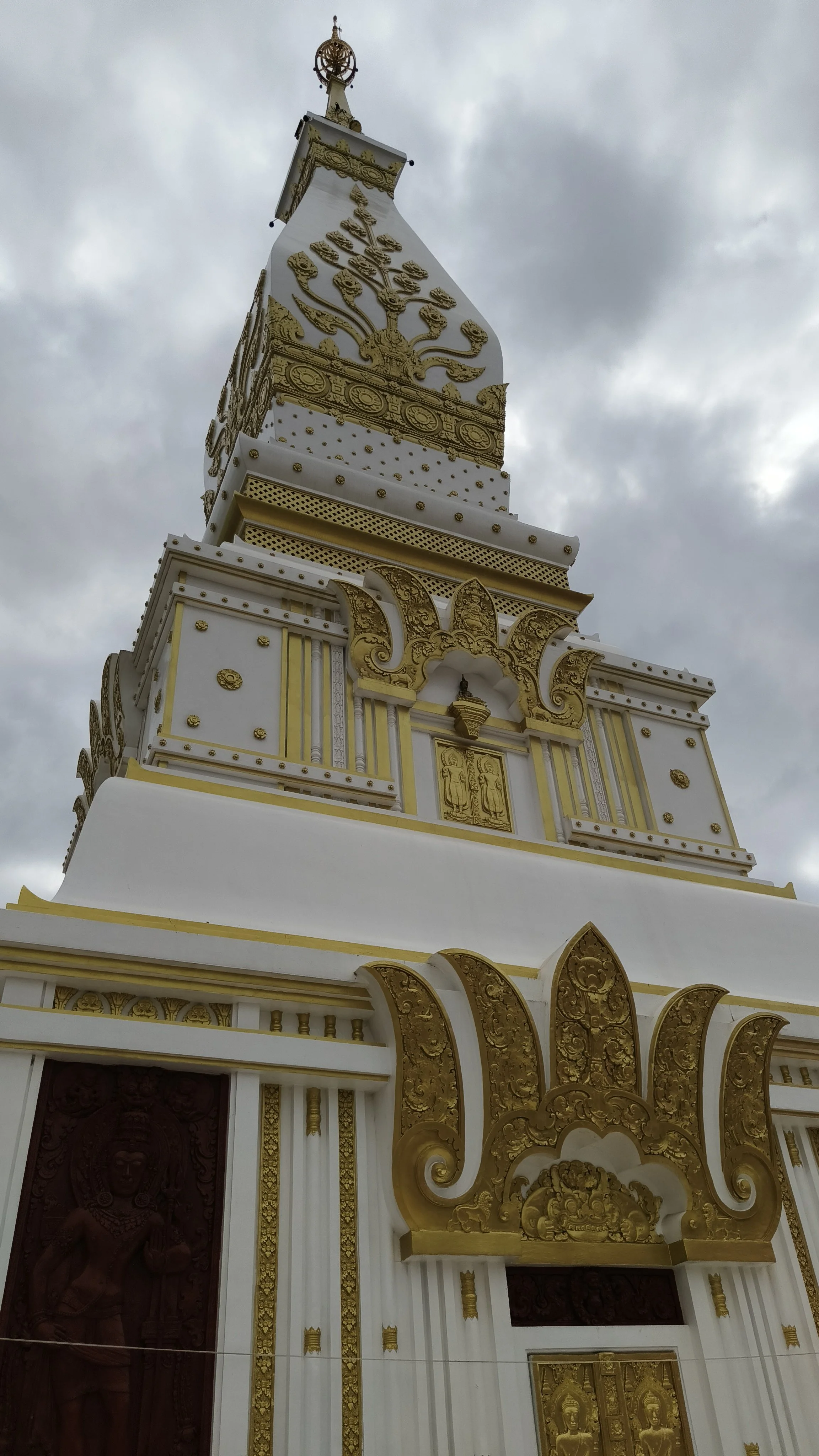
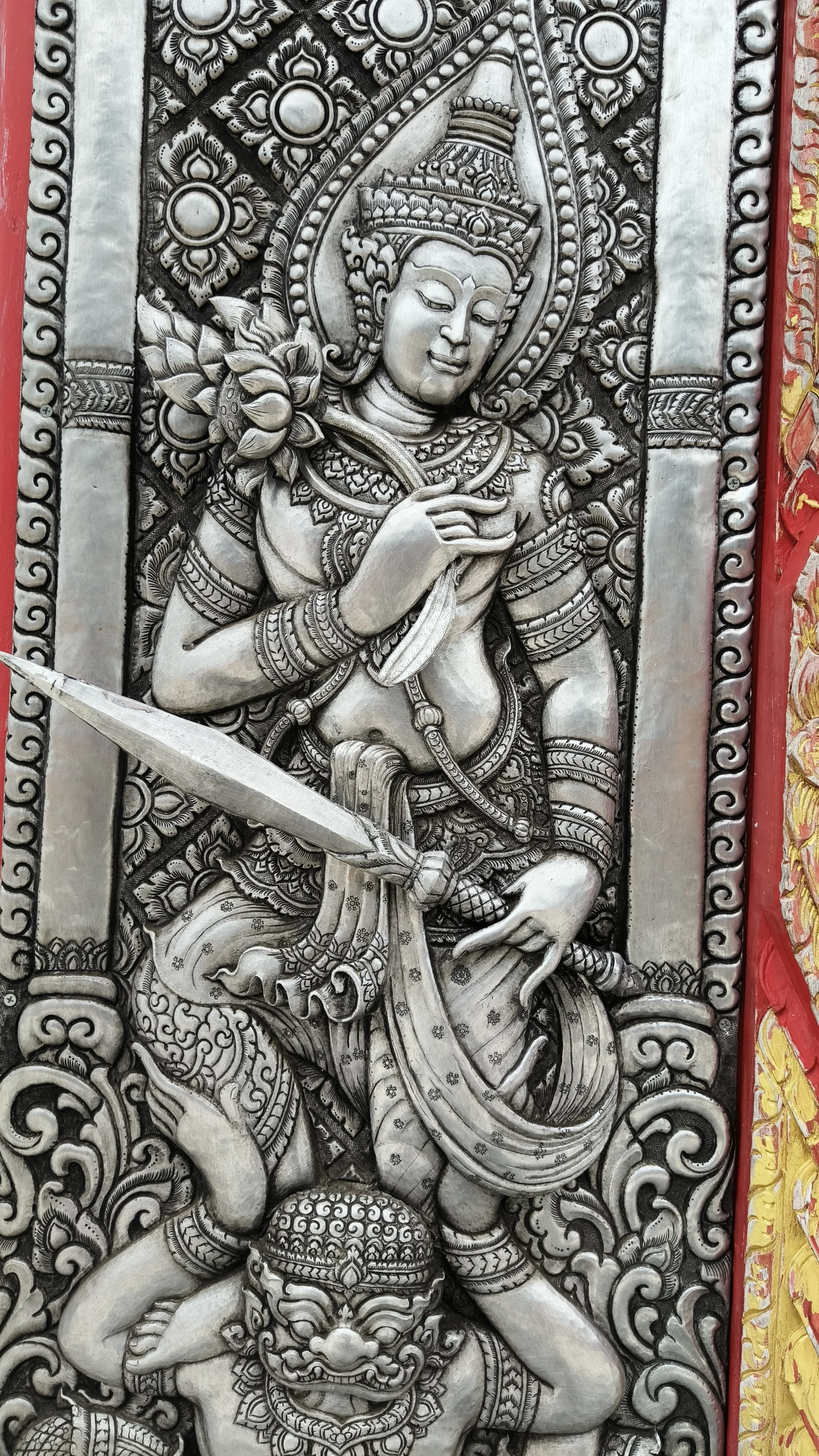

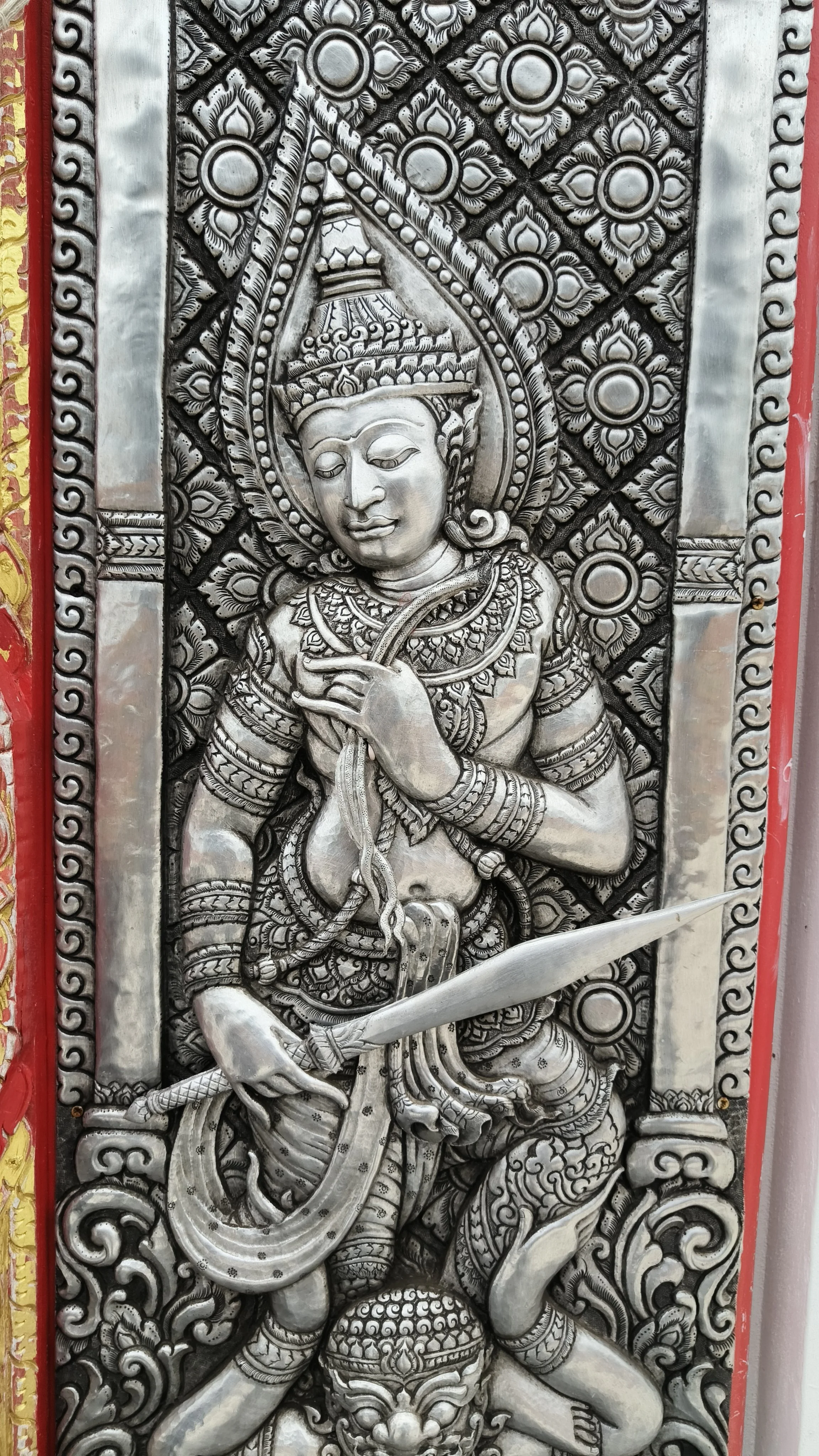


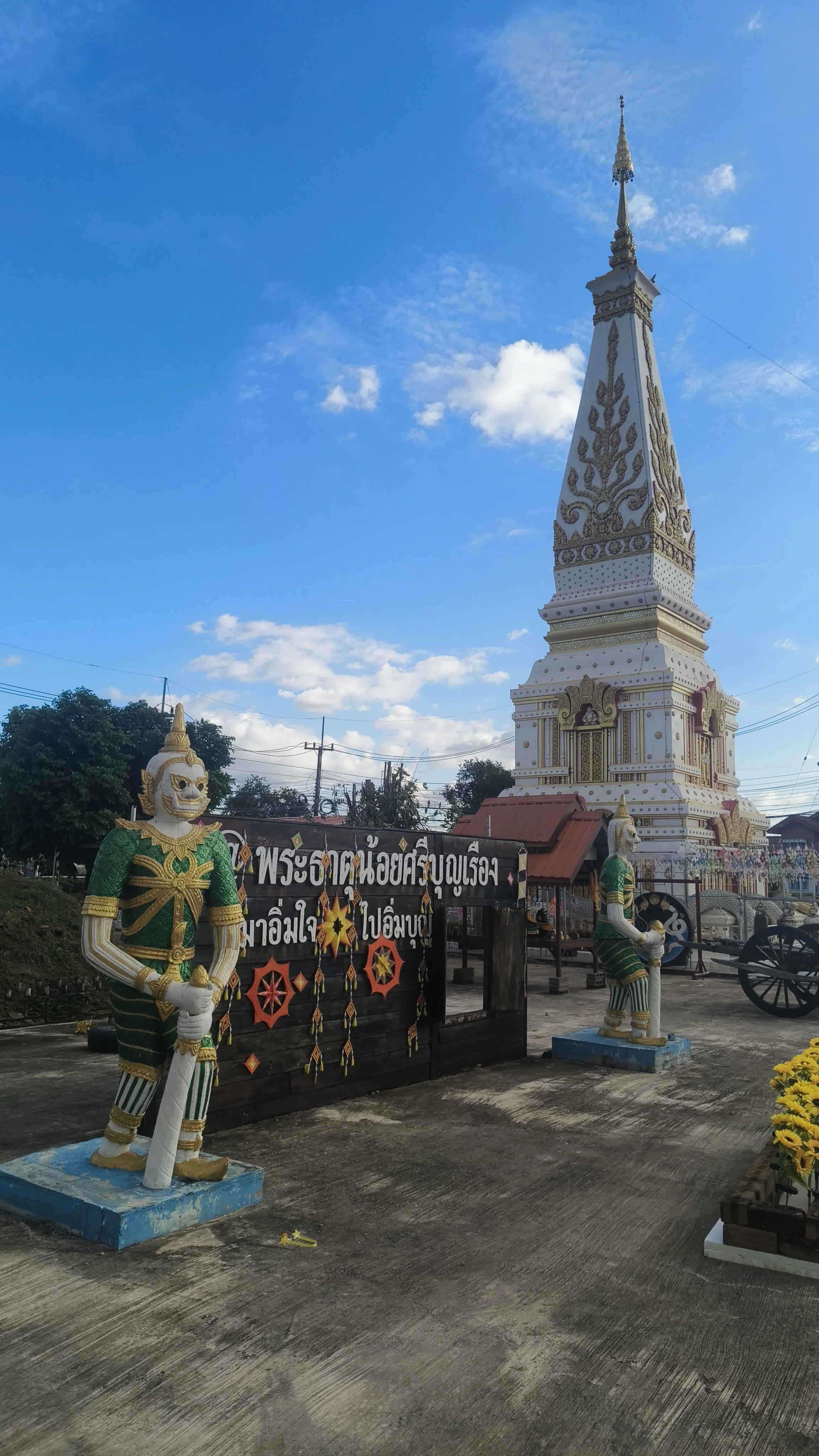
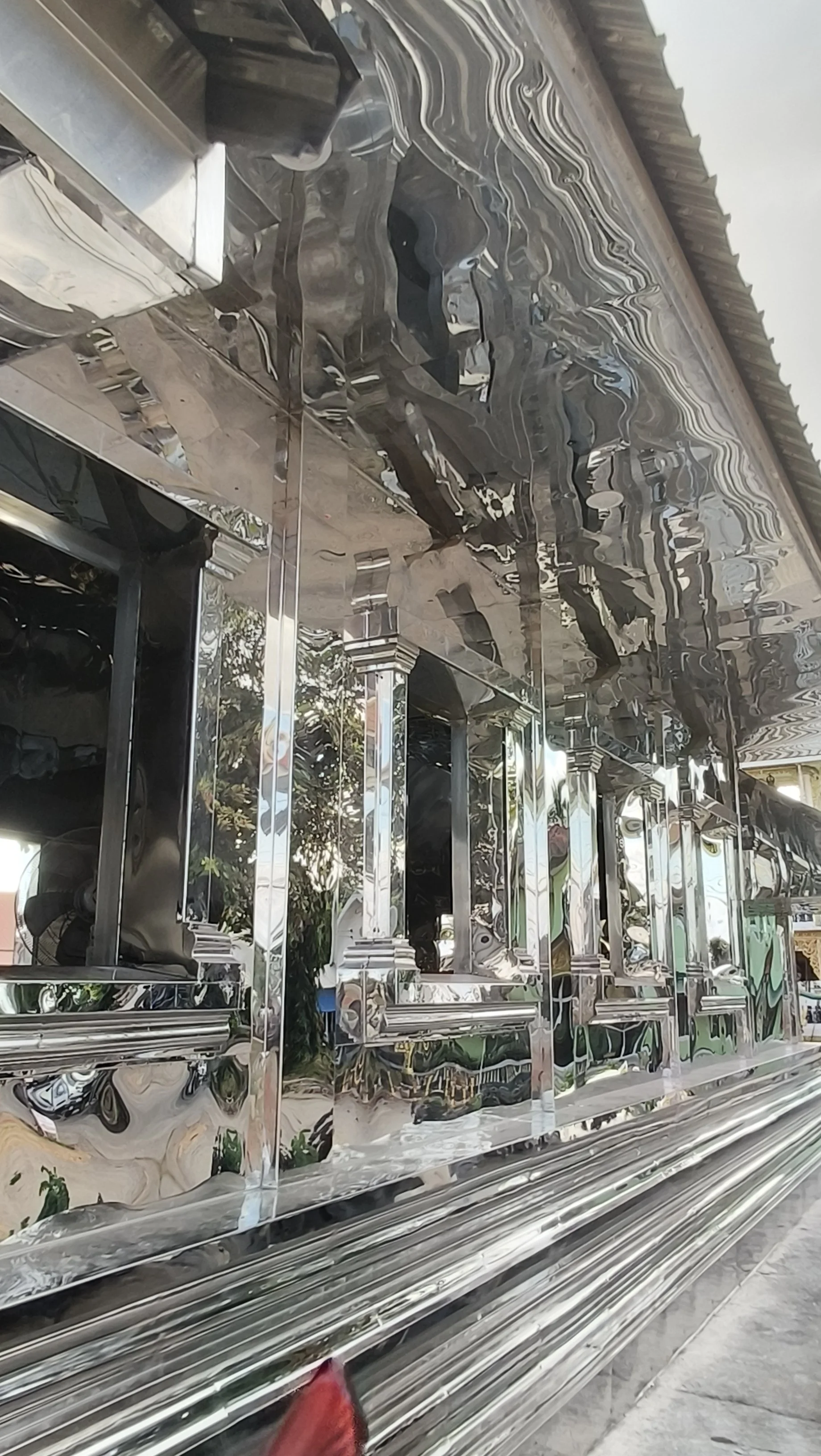
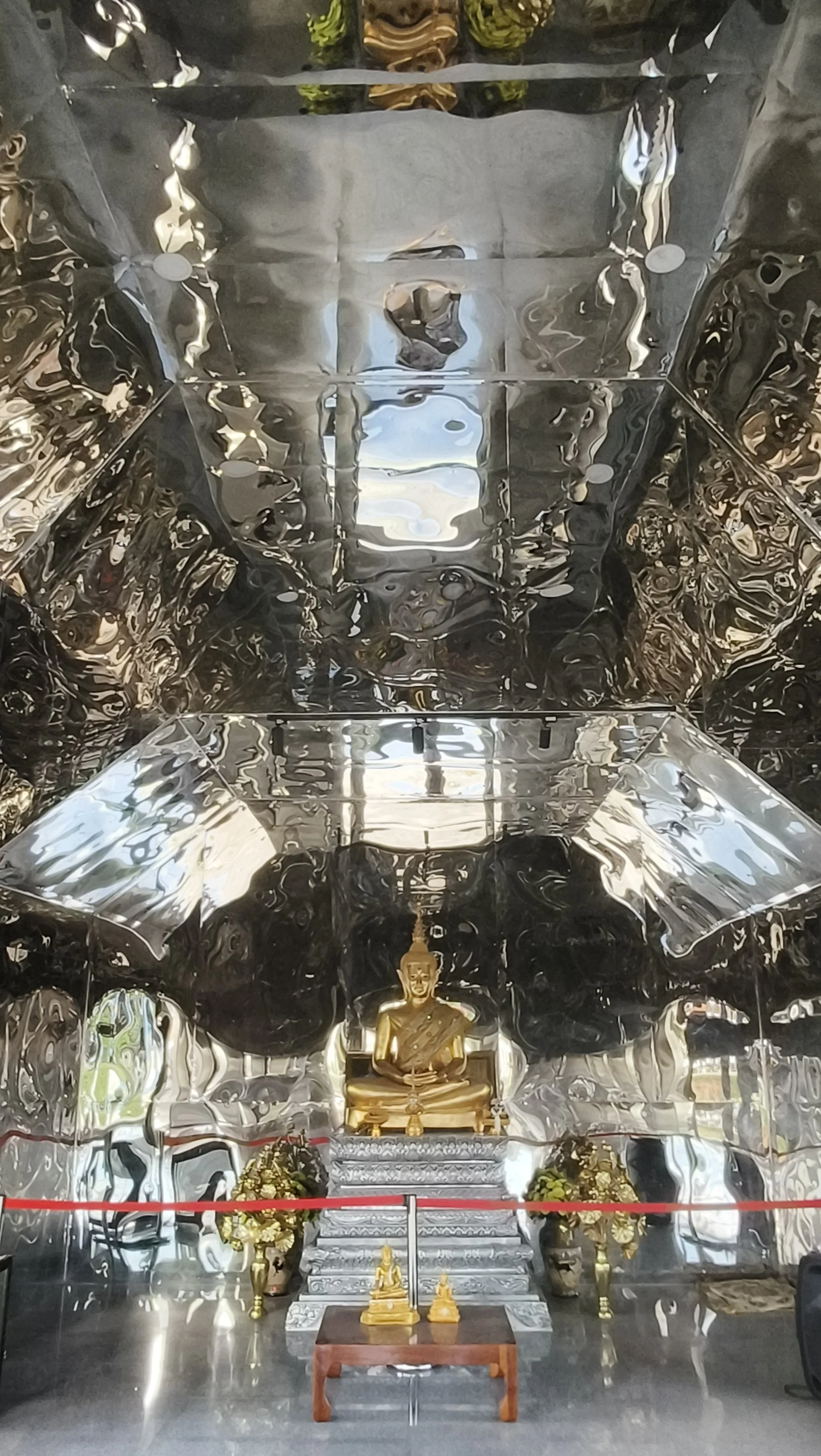
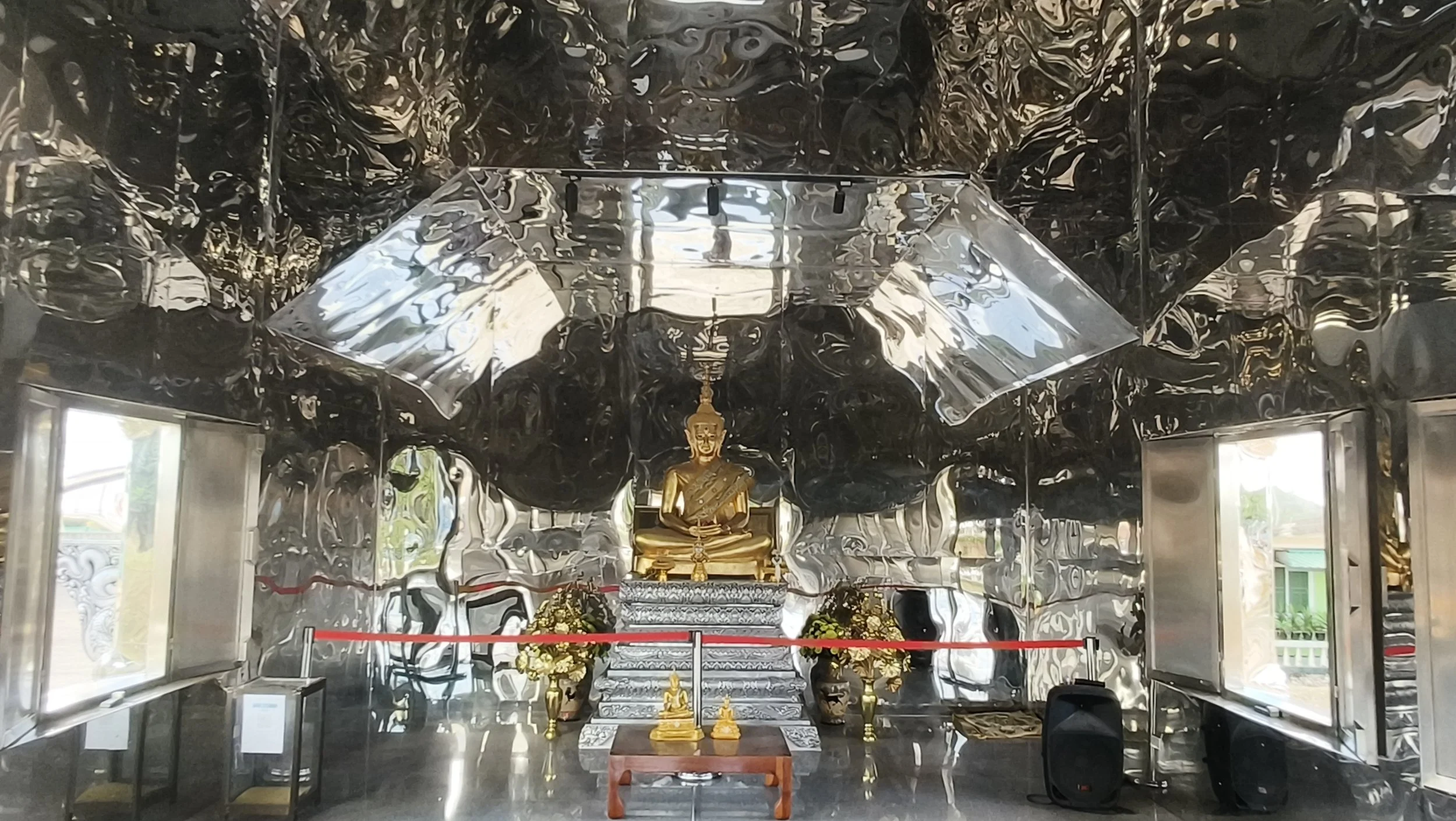
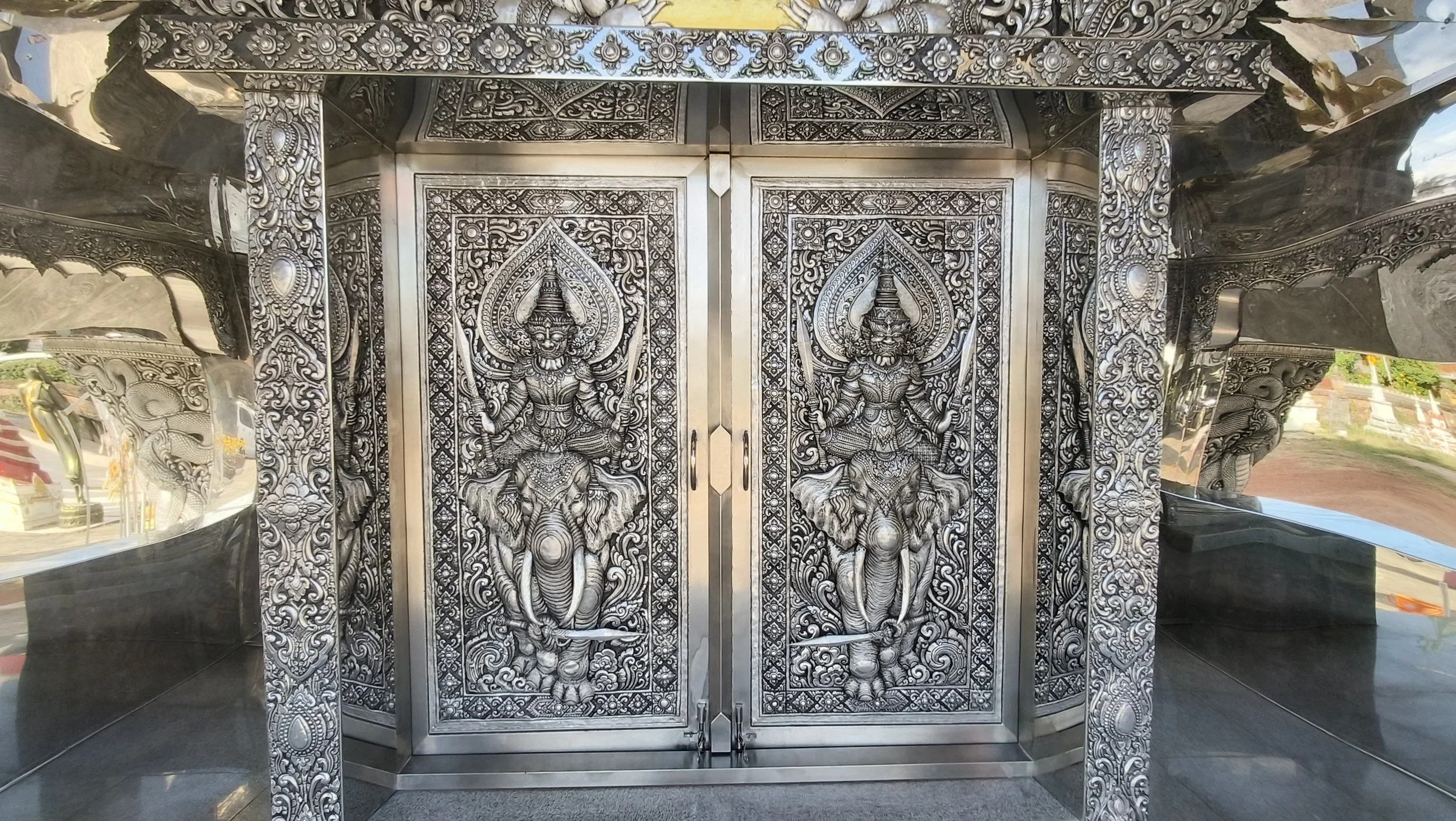
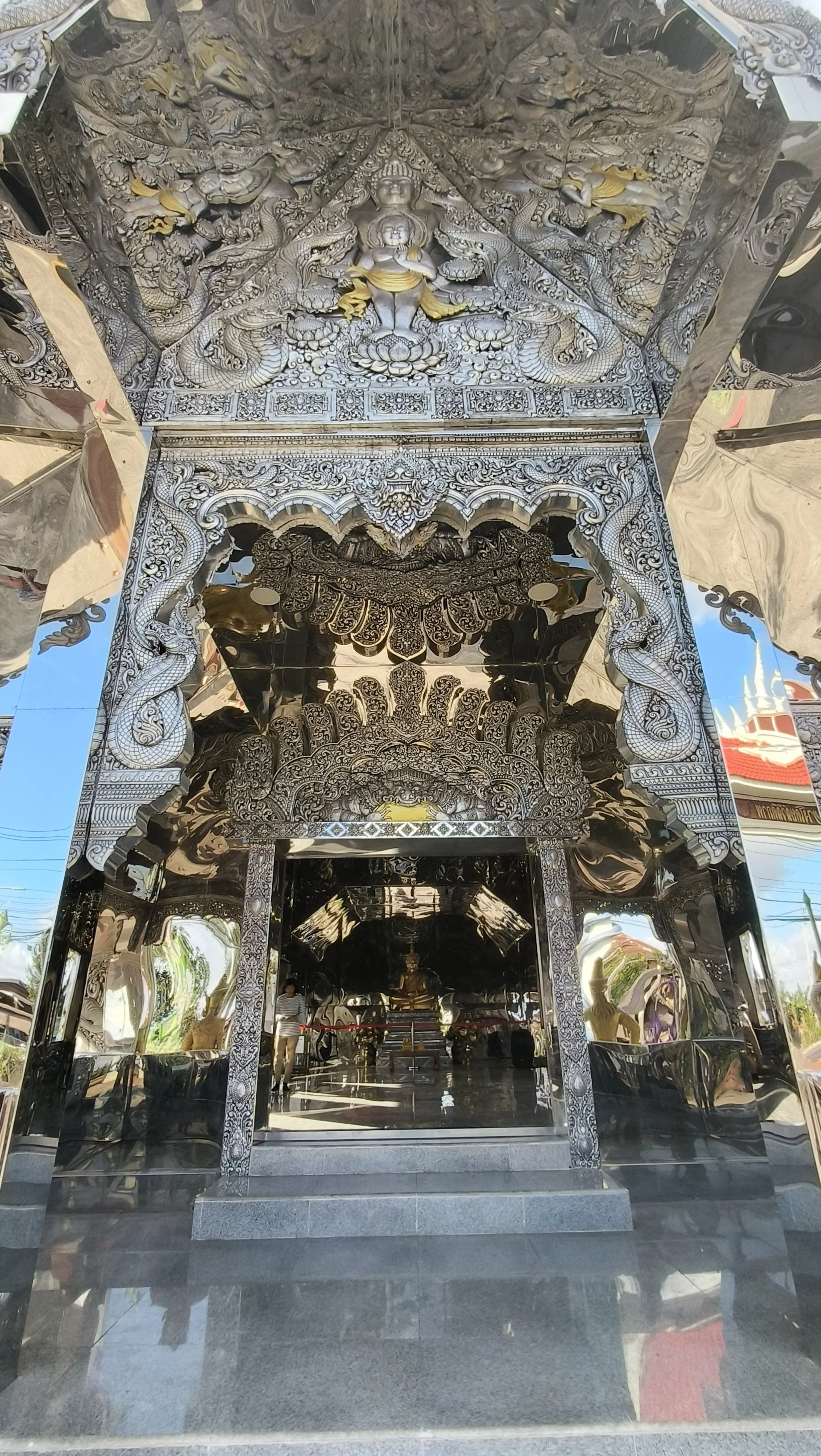
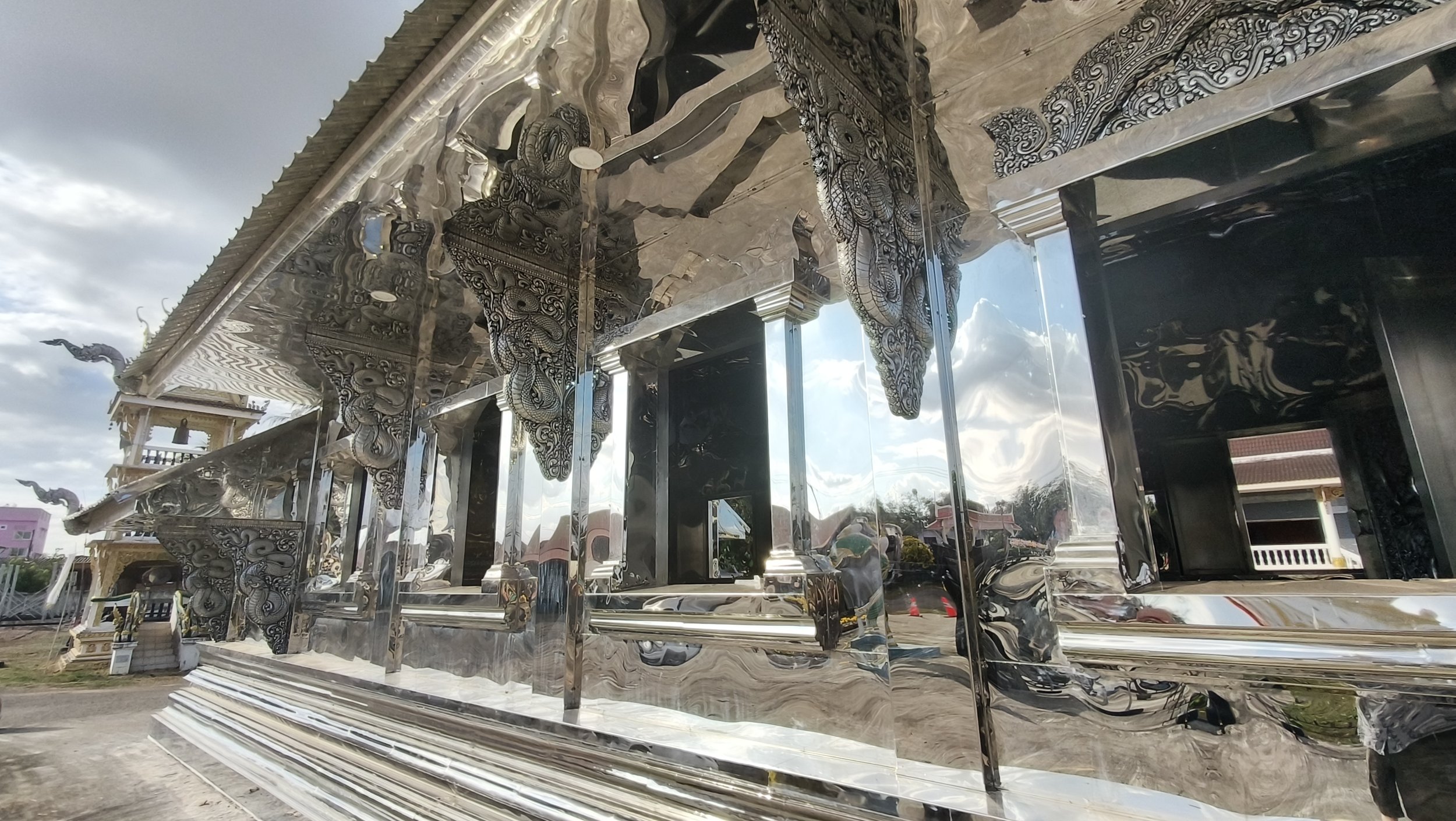
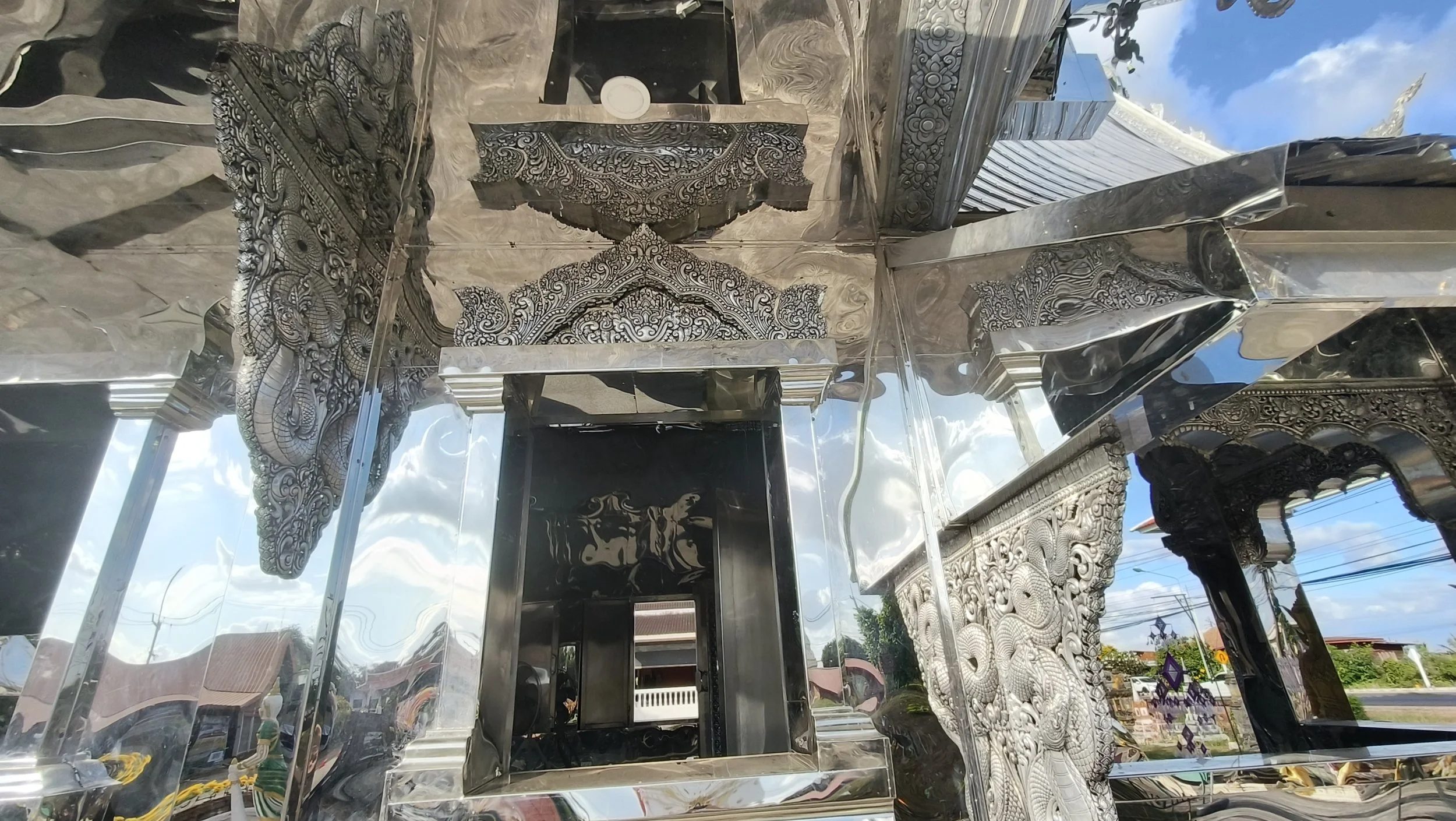
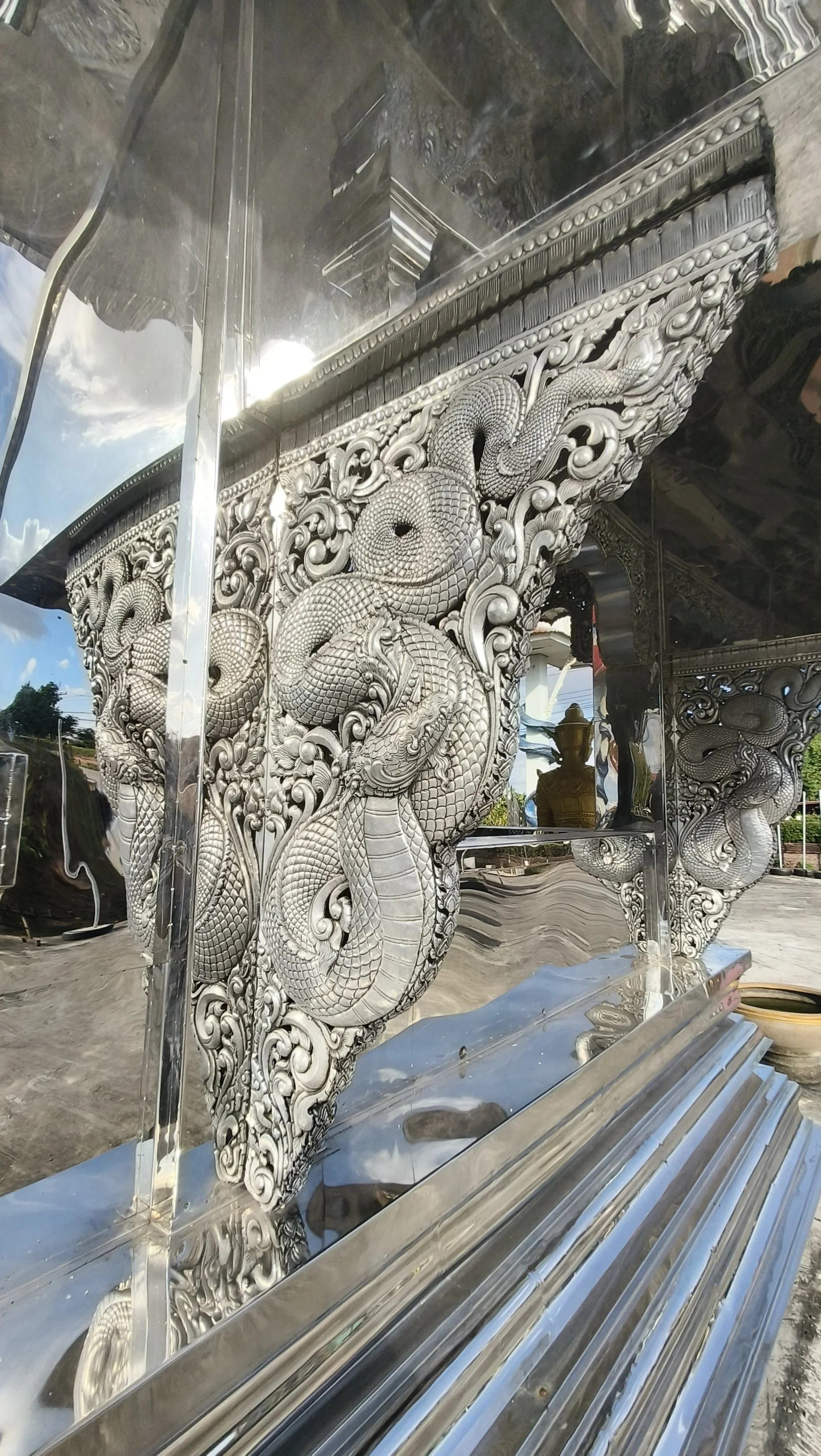
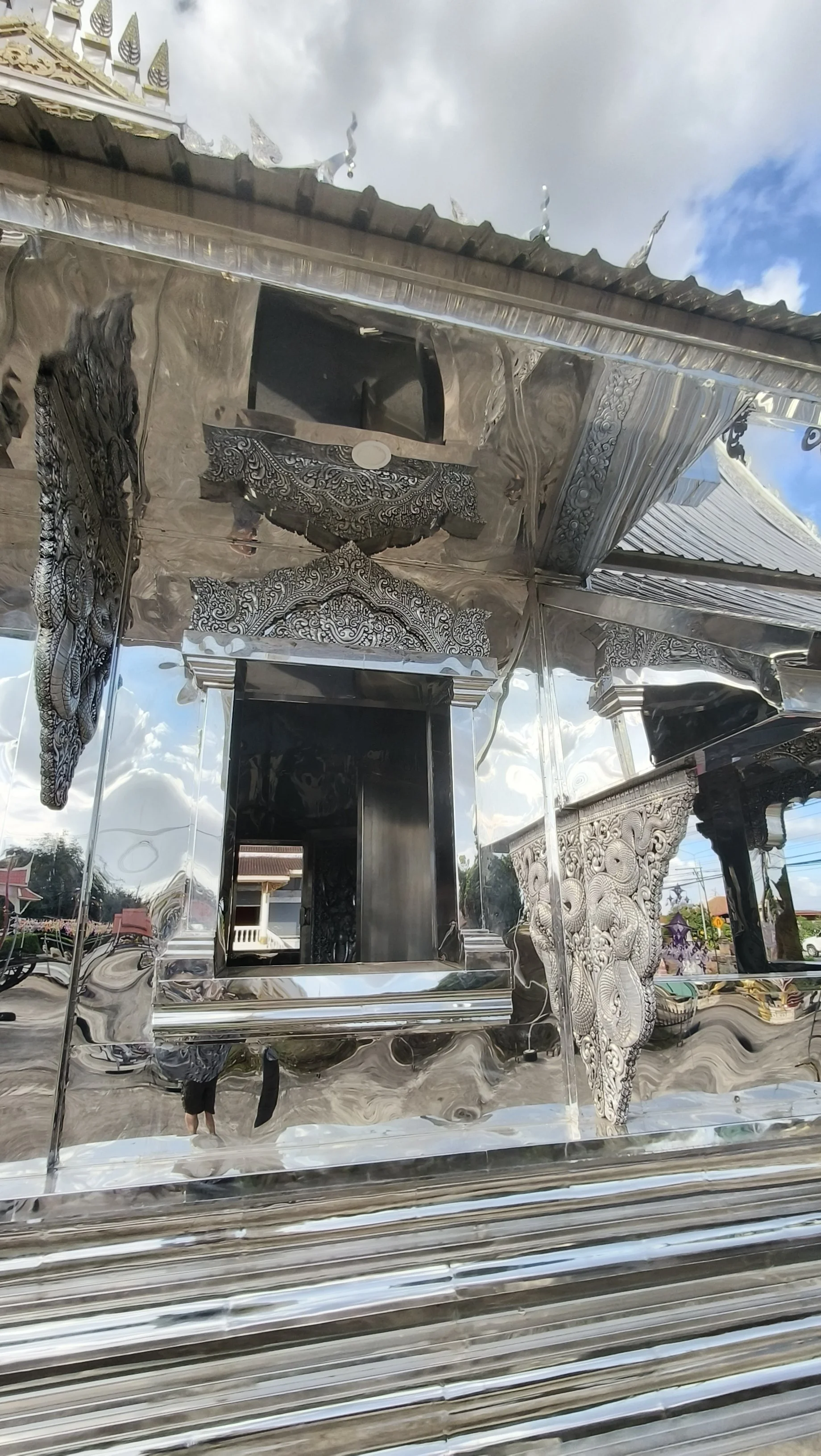
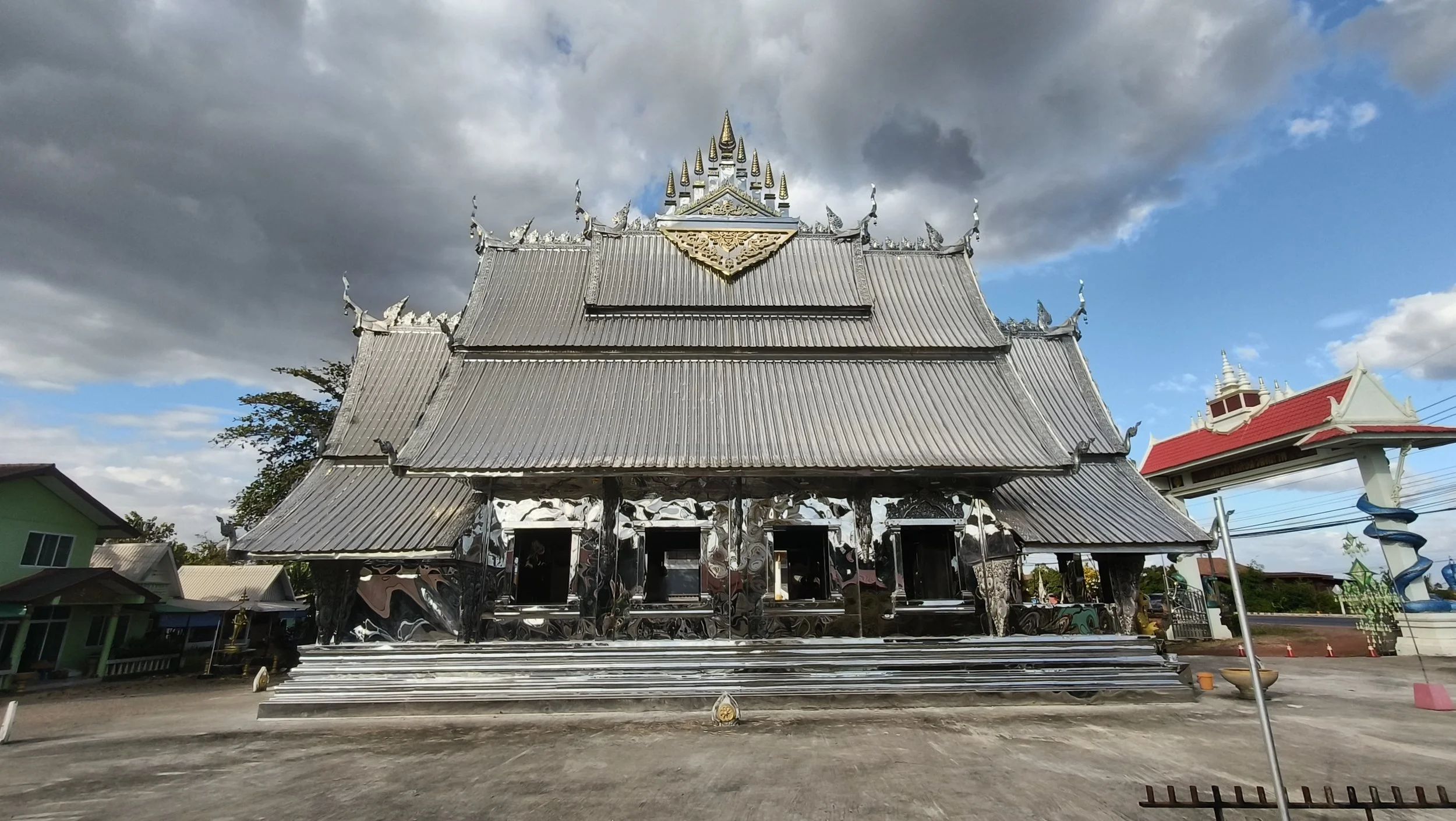
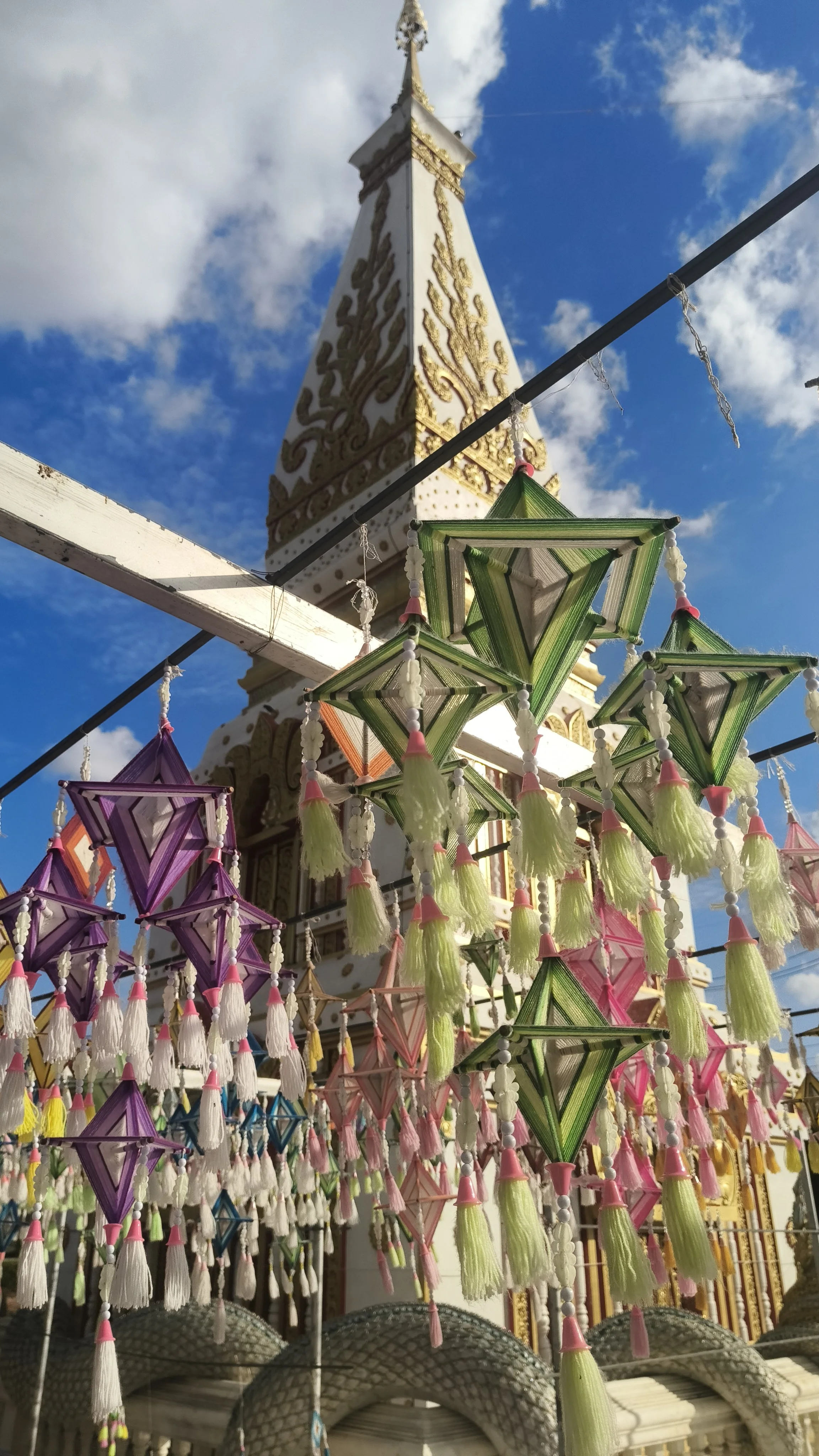
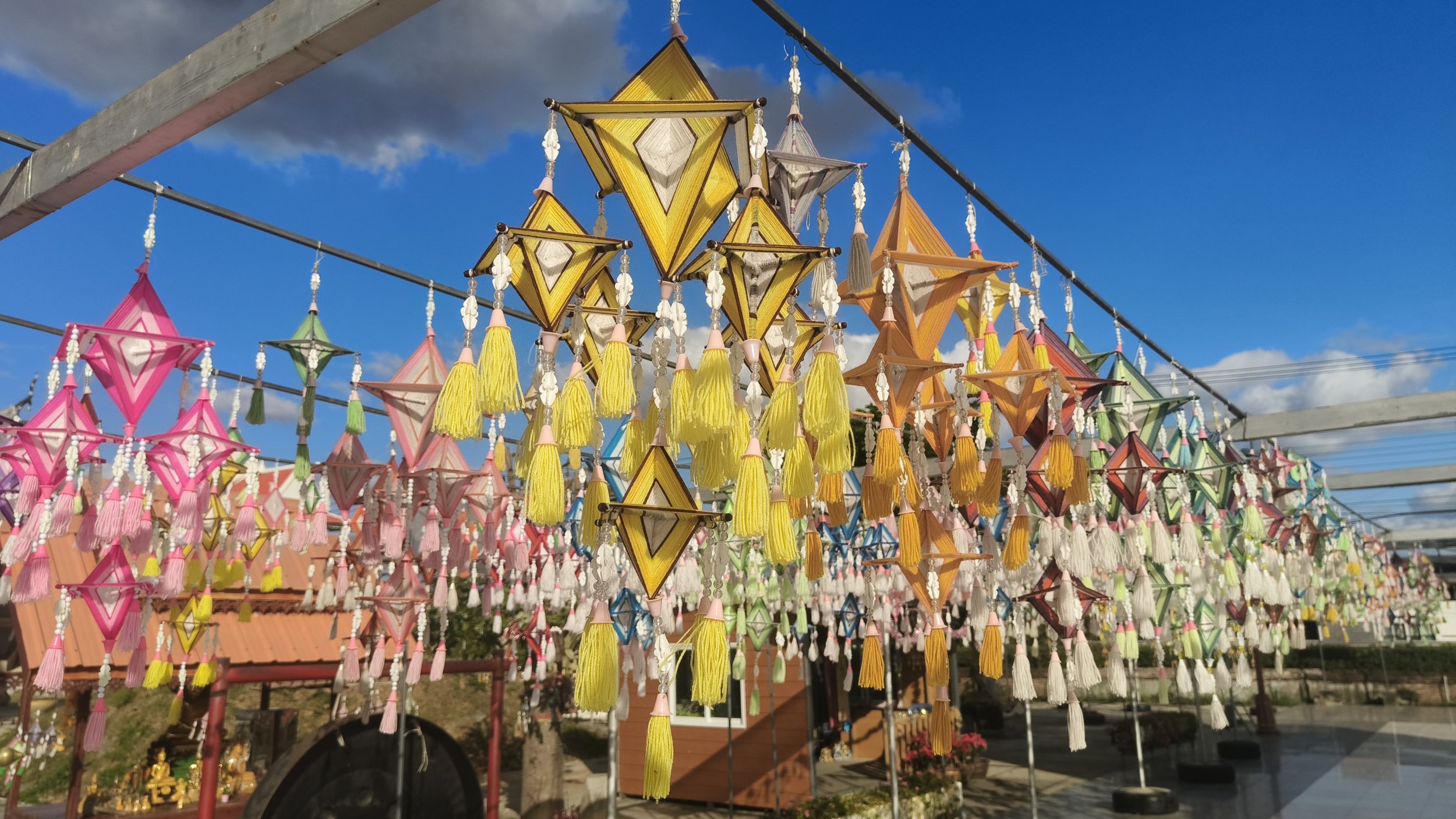
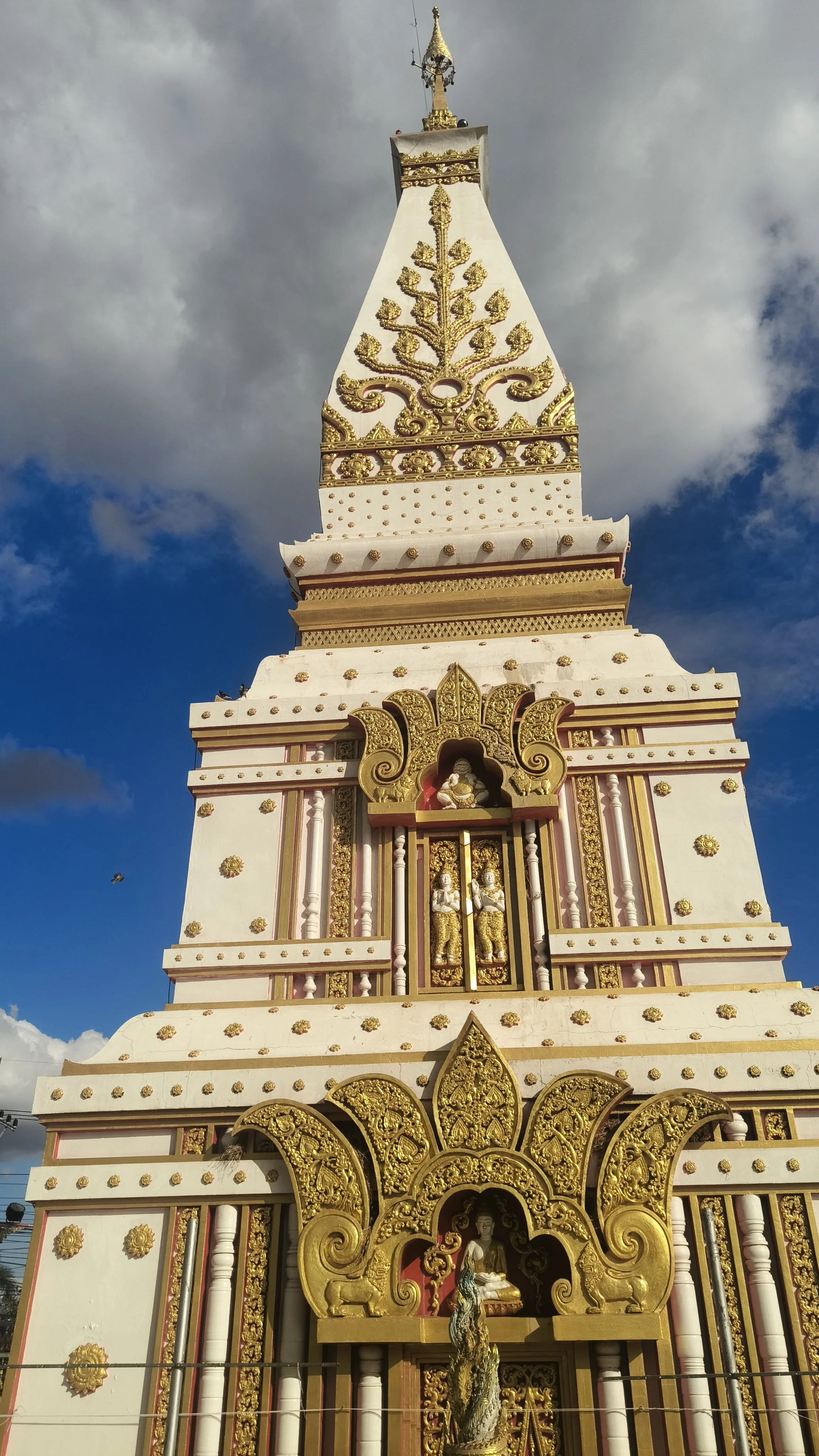
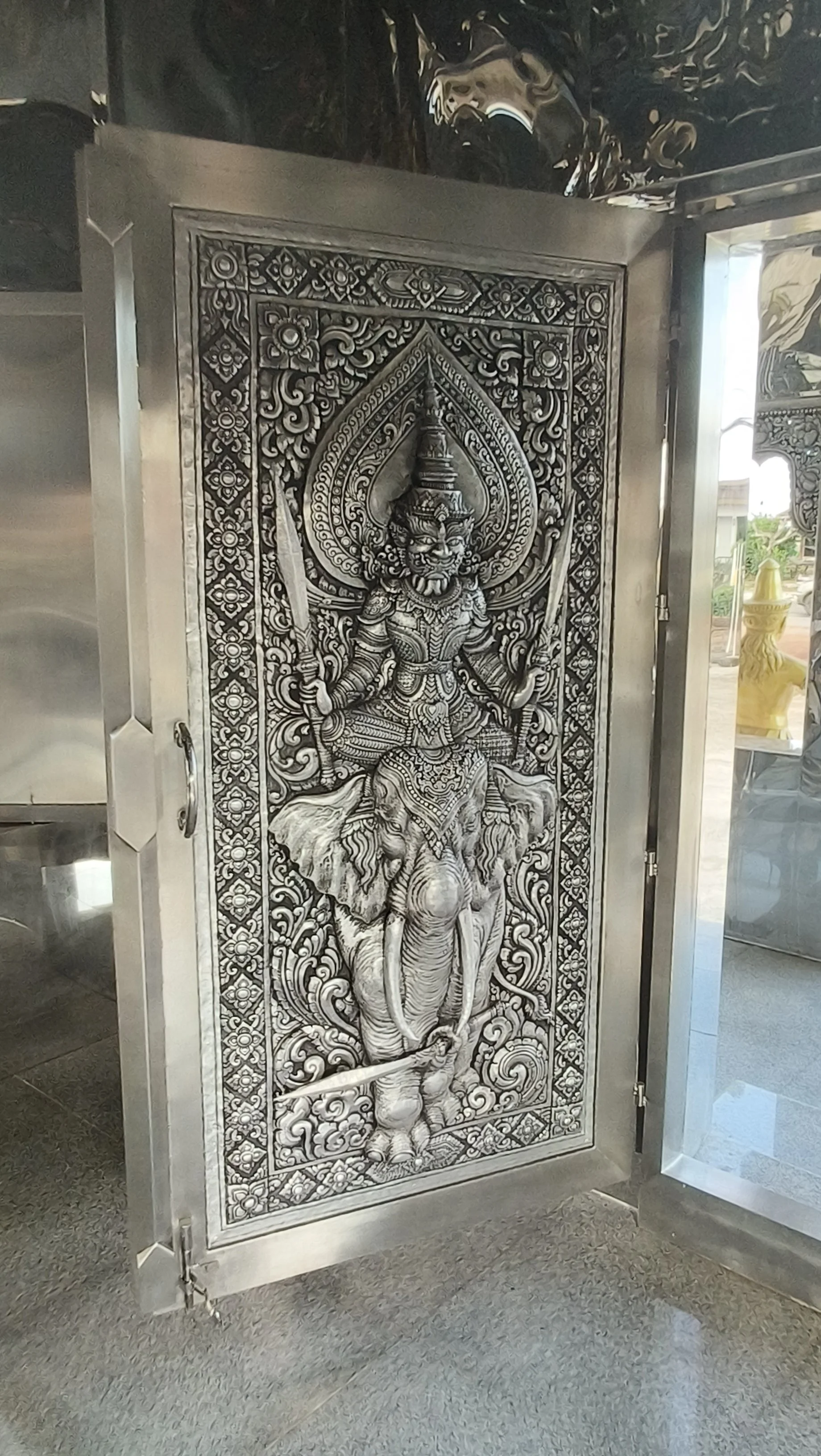
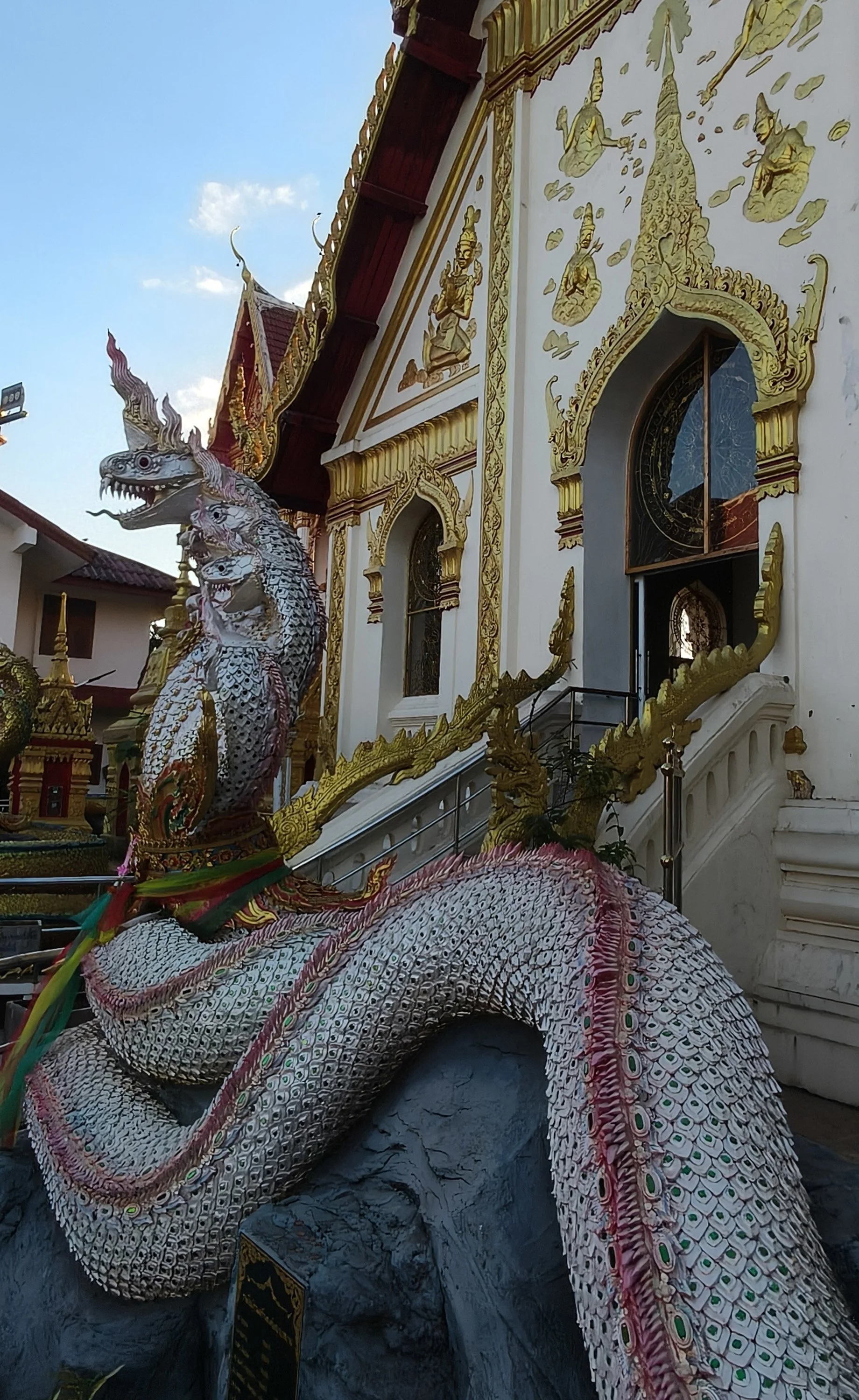
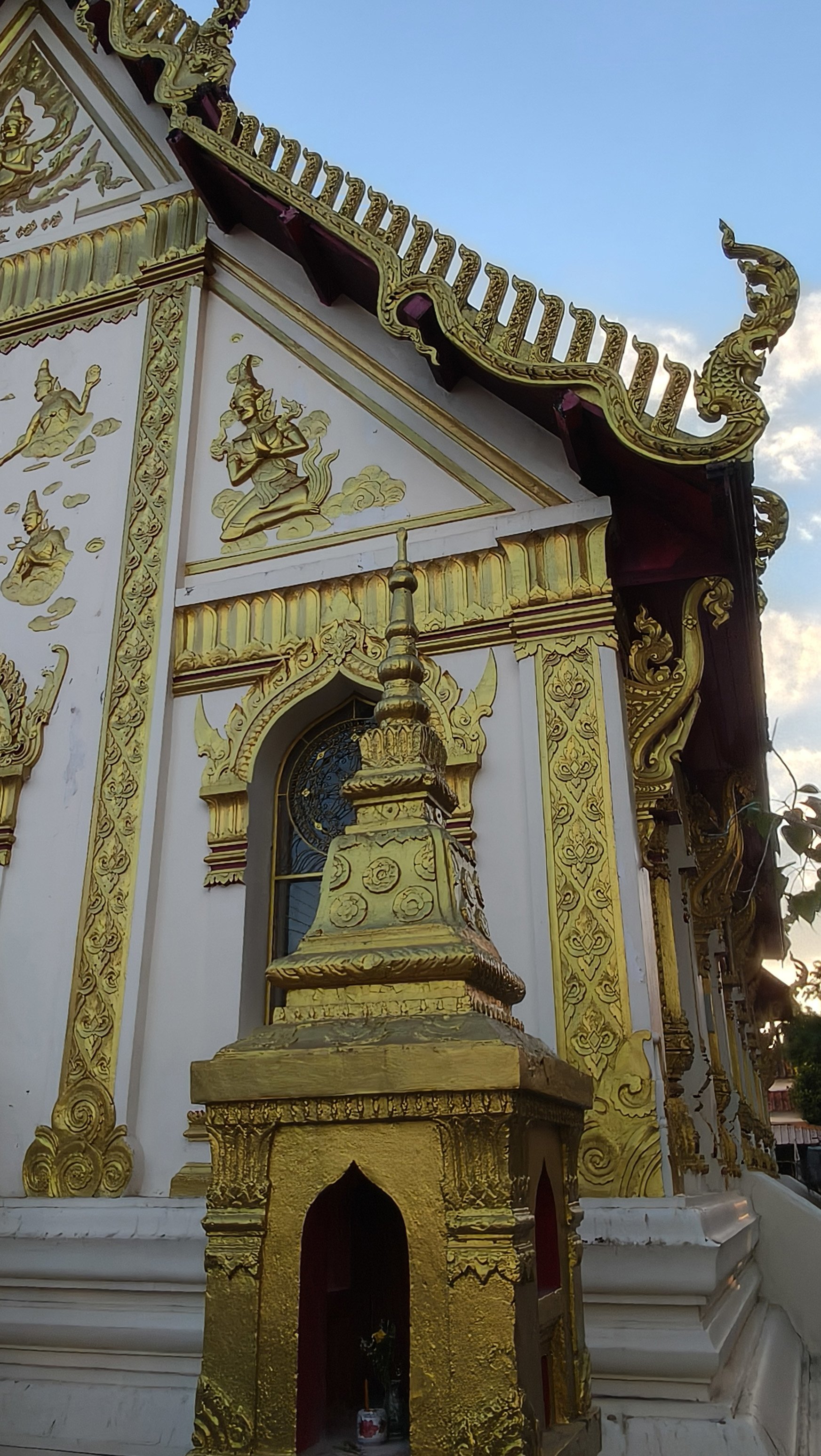
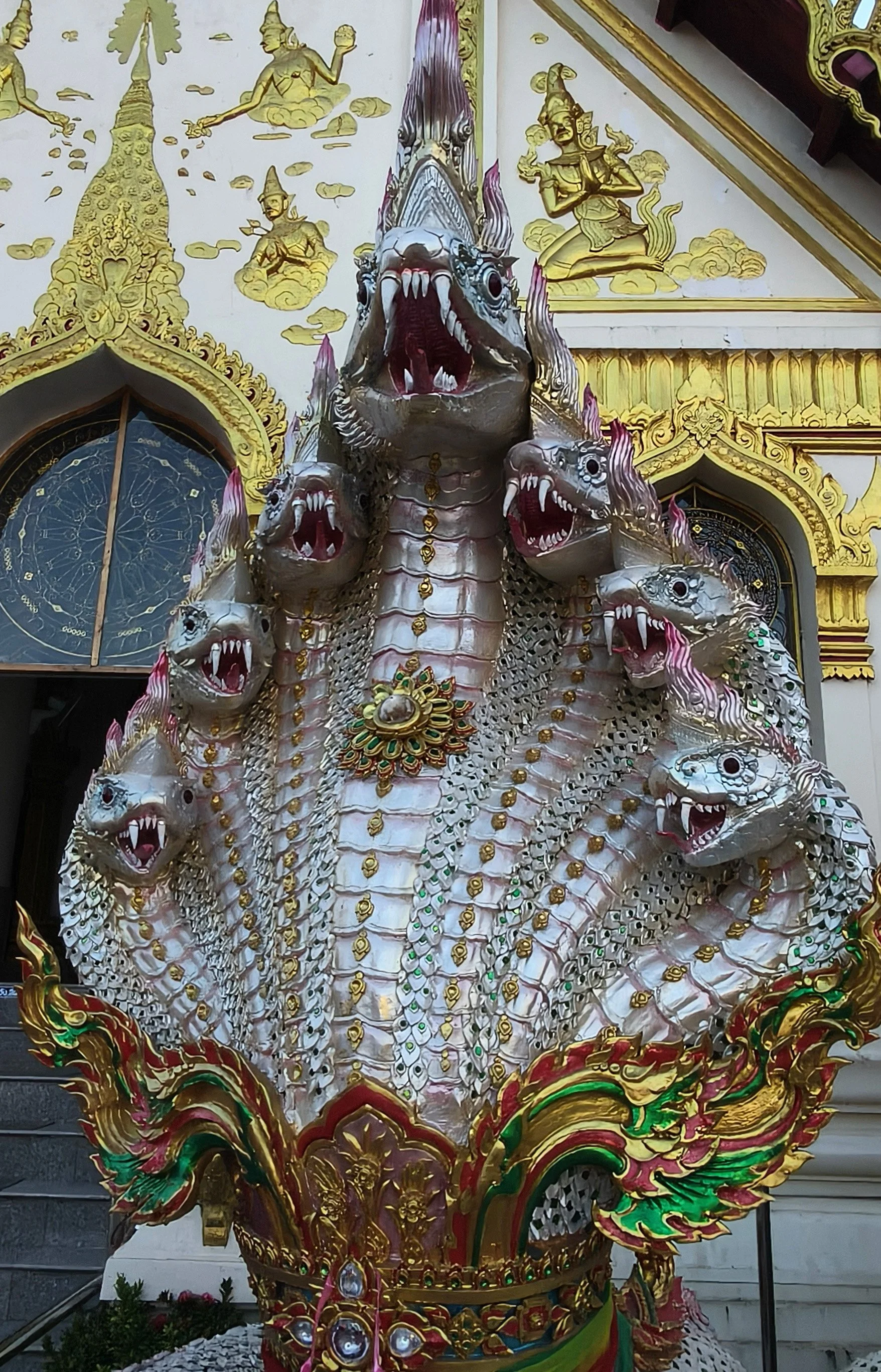
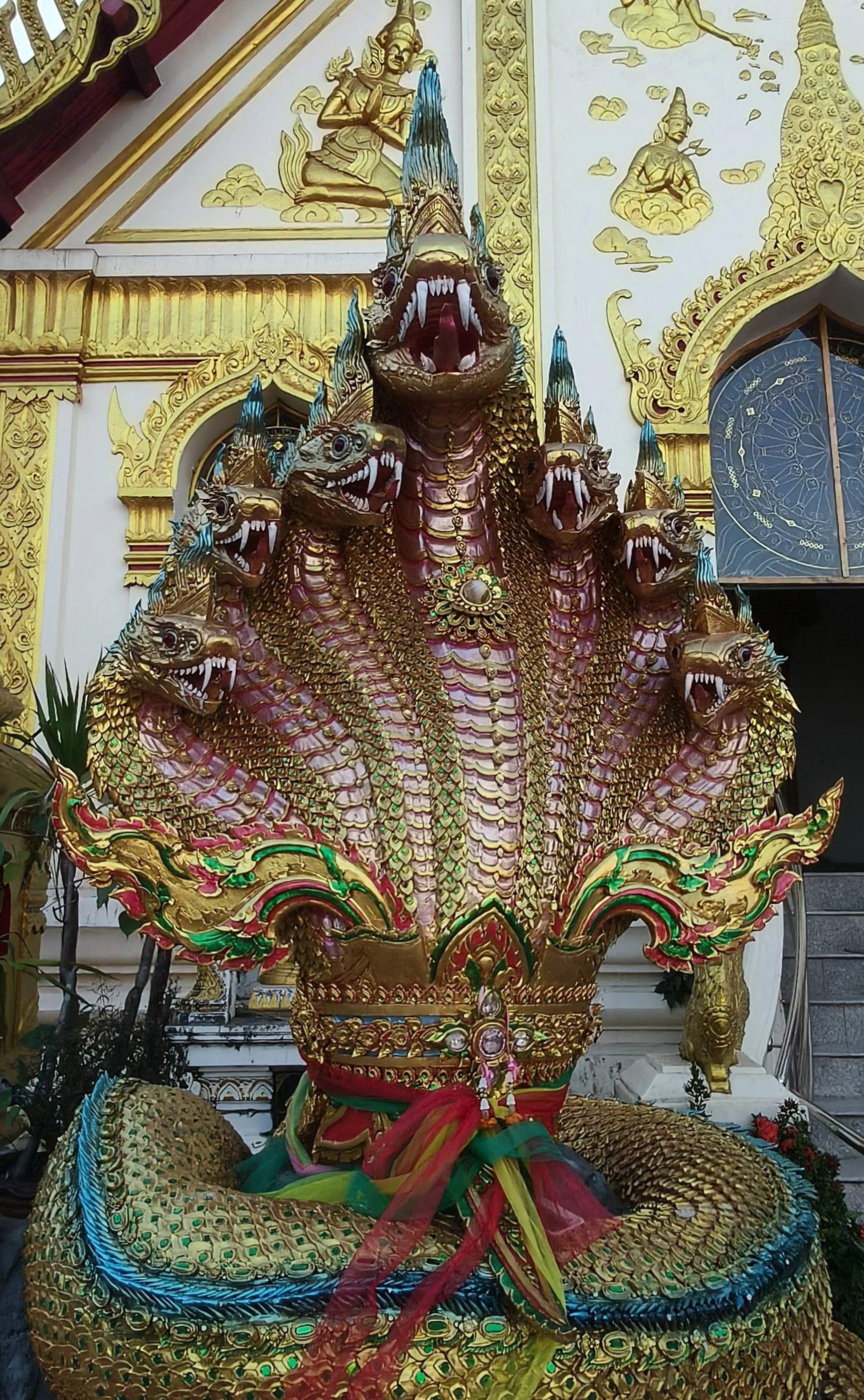
Wat That Noi Sribunrueang: The Reflective Mirror Temple of Nakhon Phanom
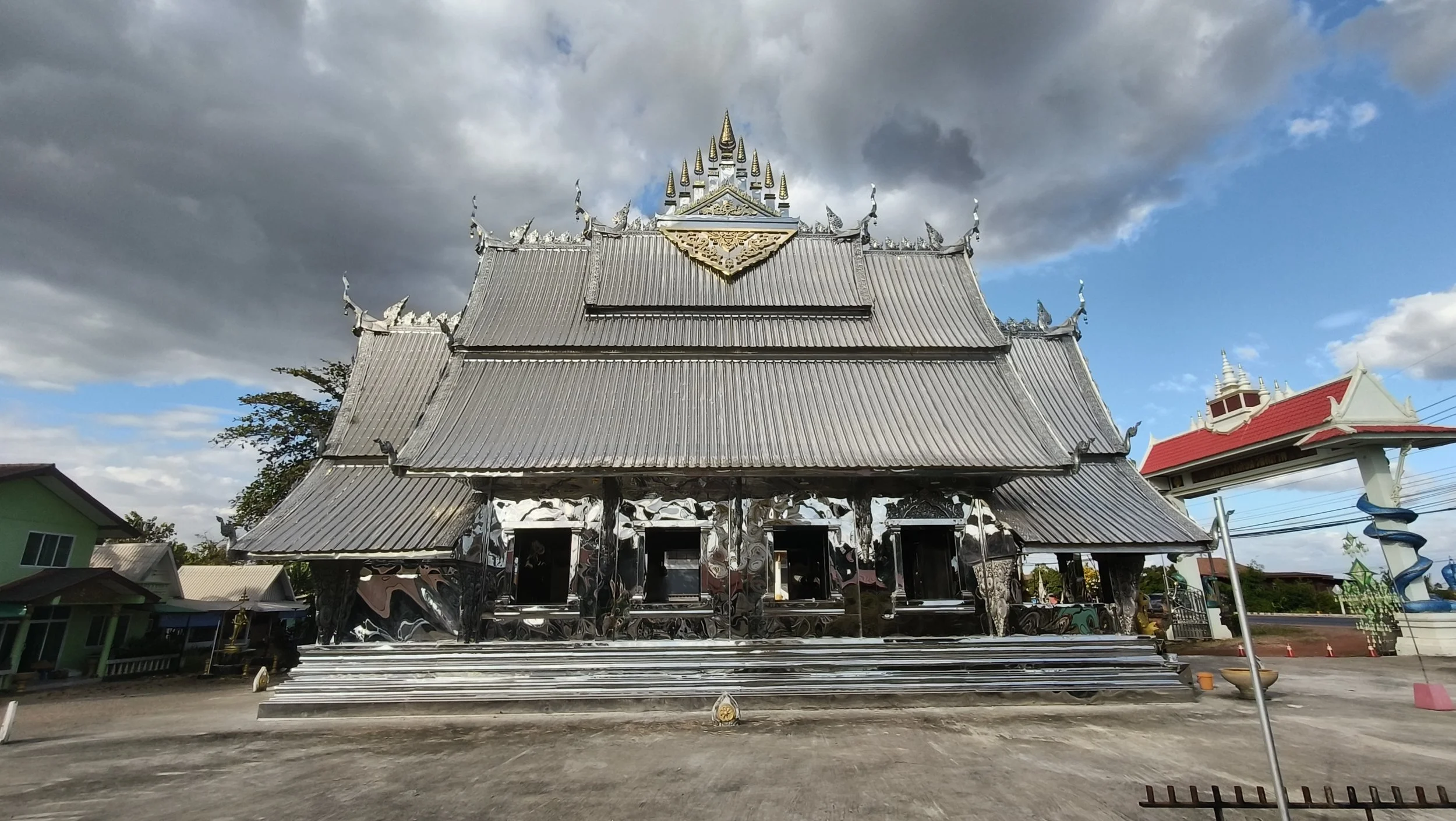
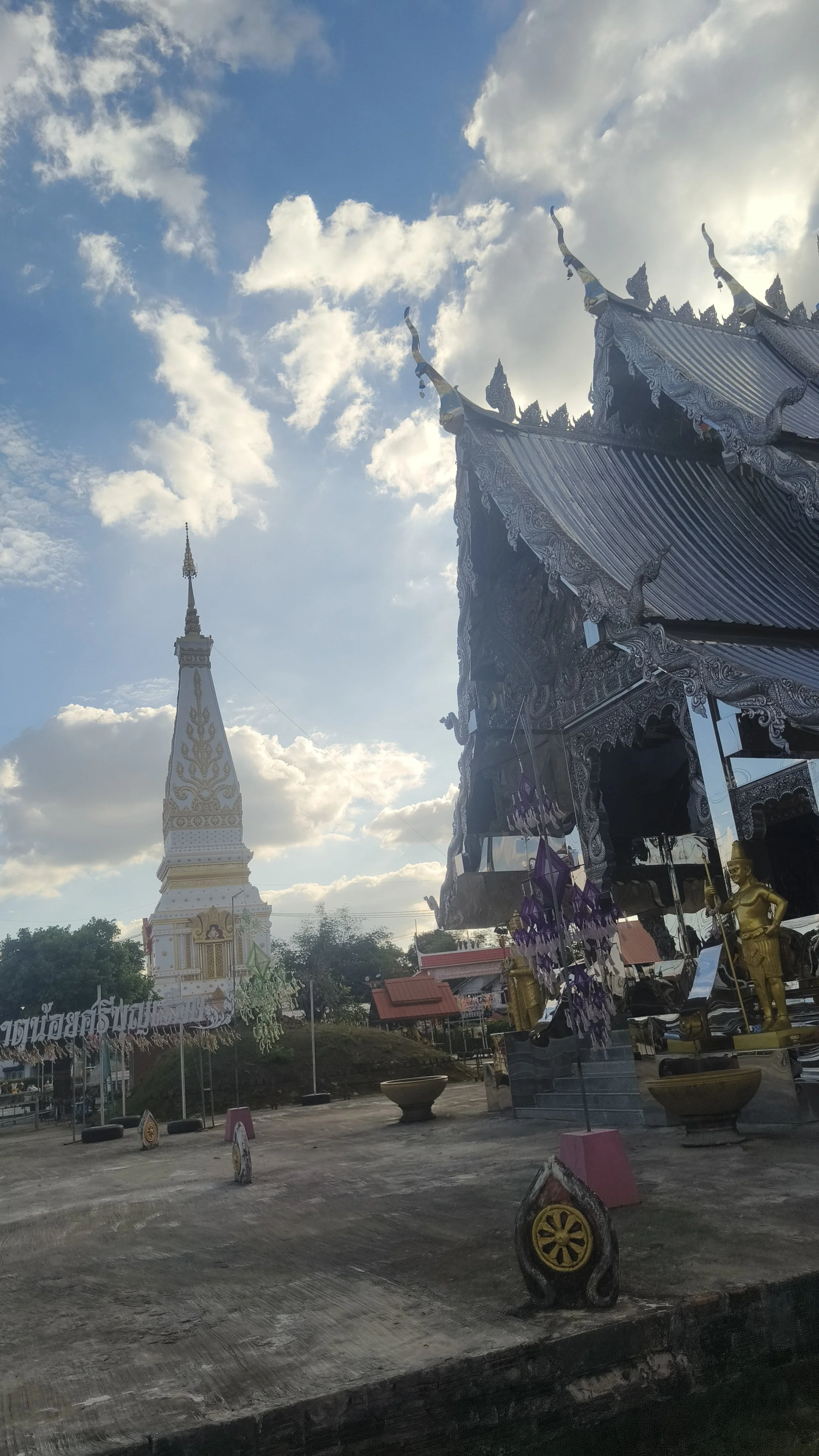
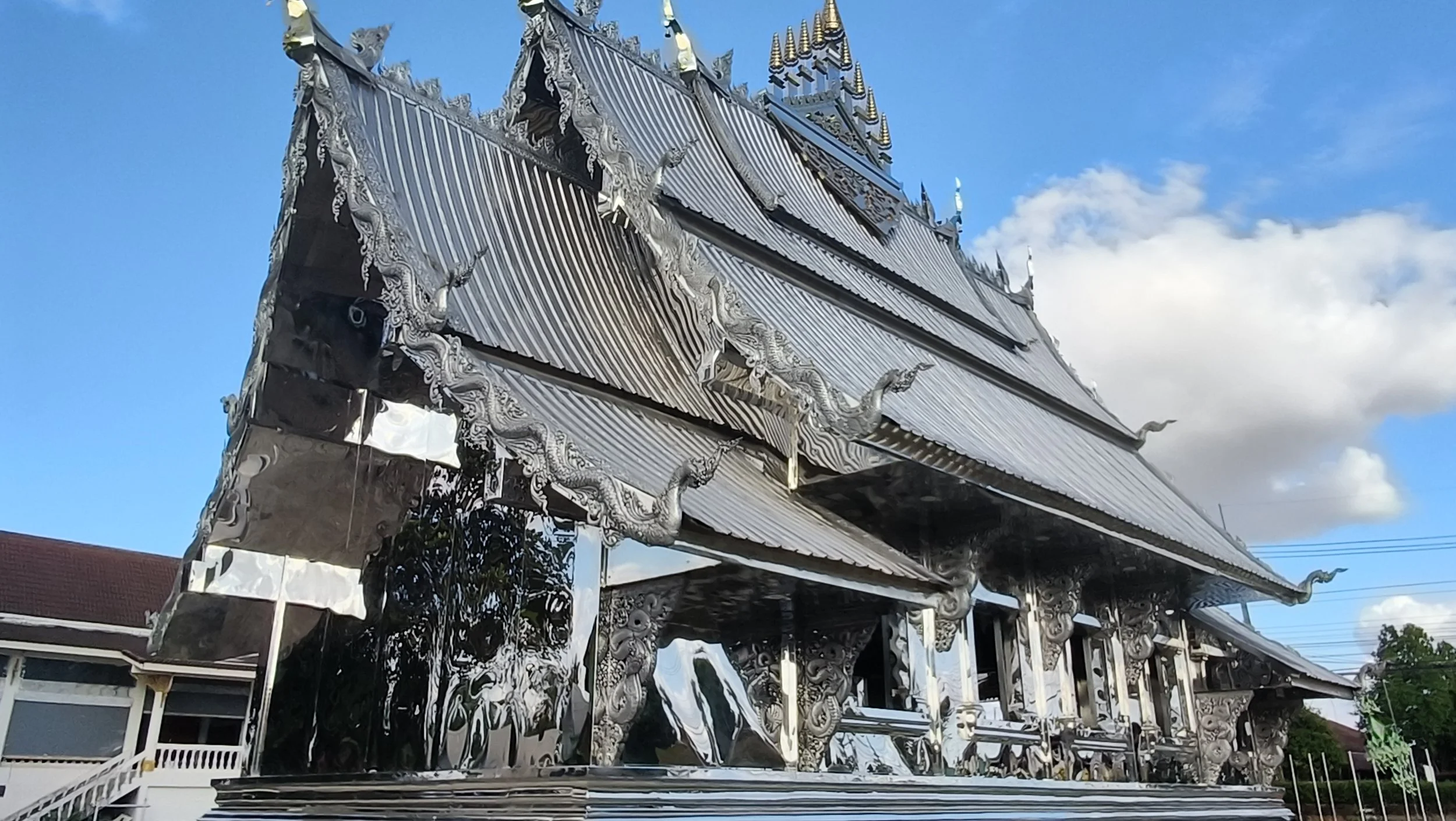
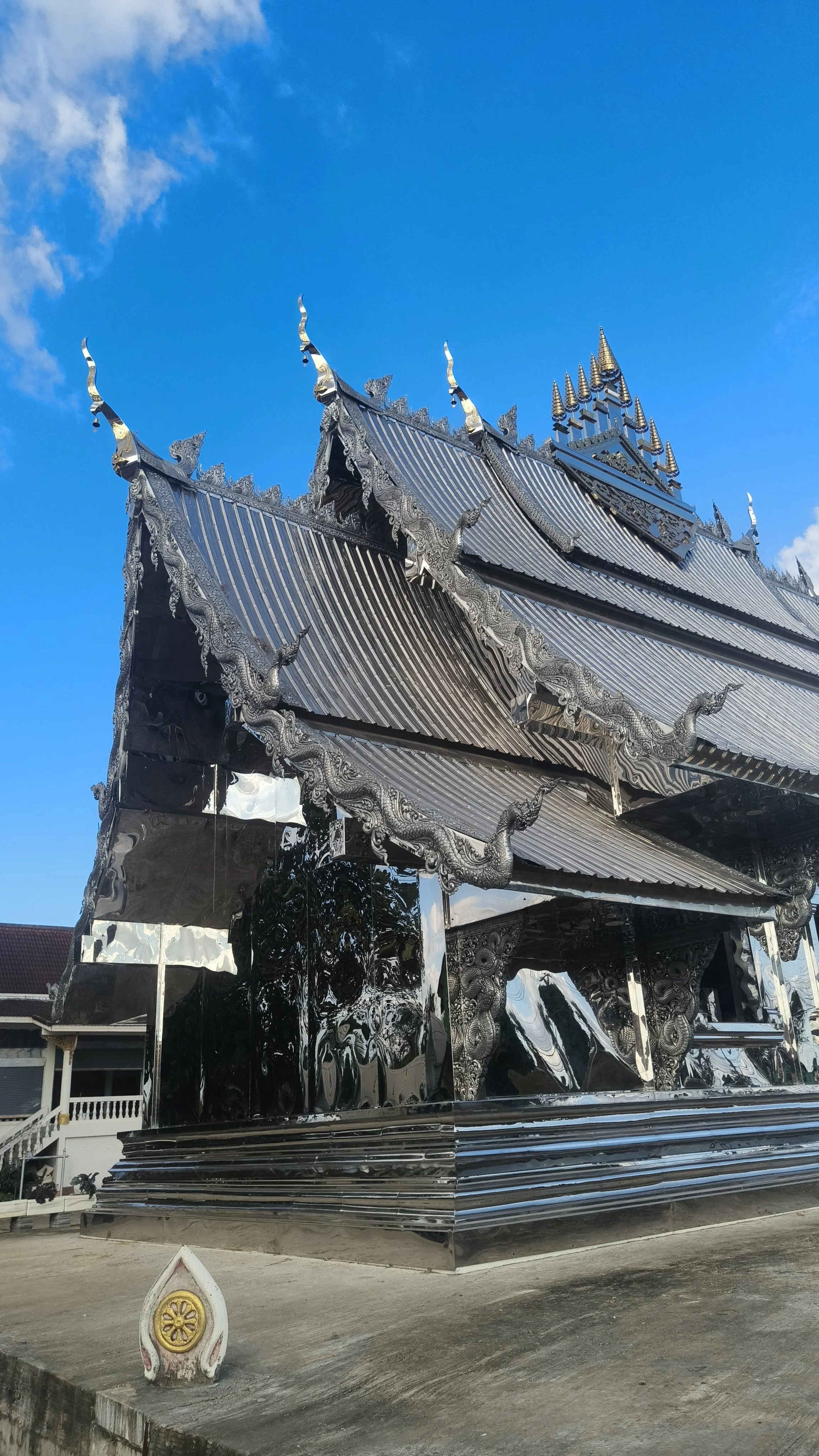
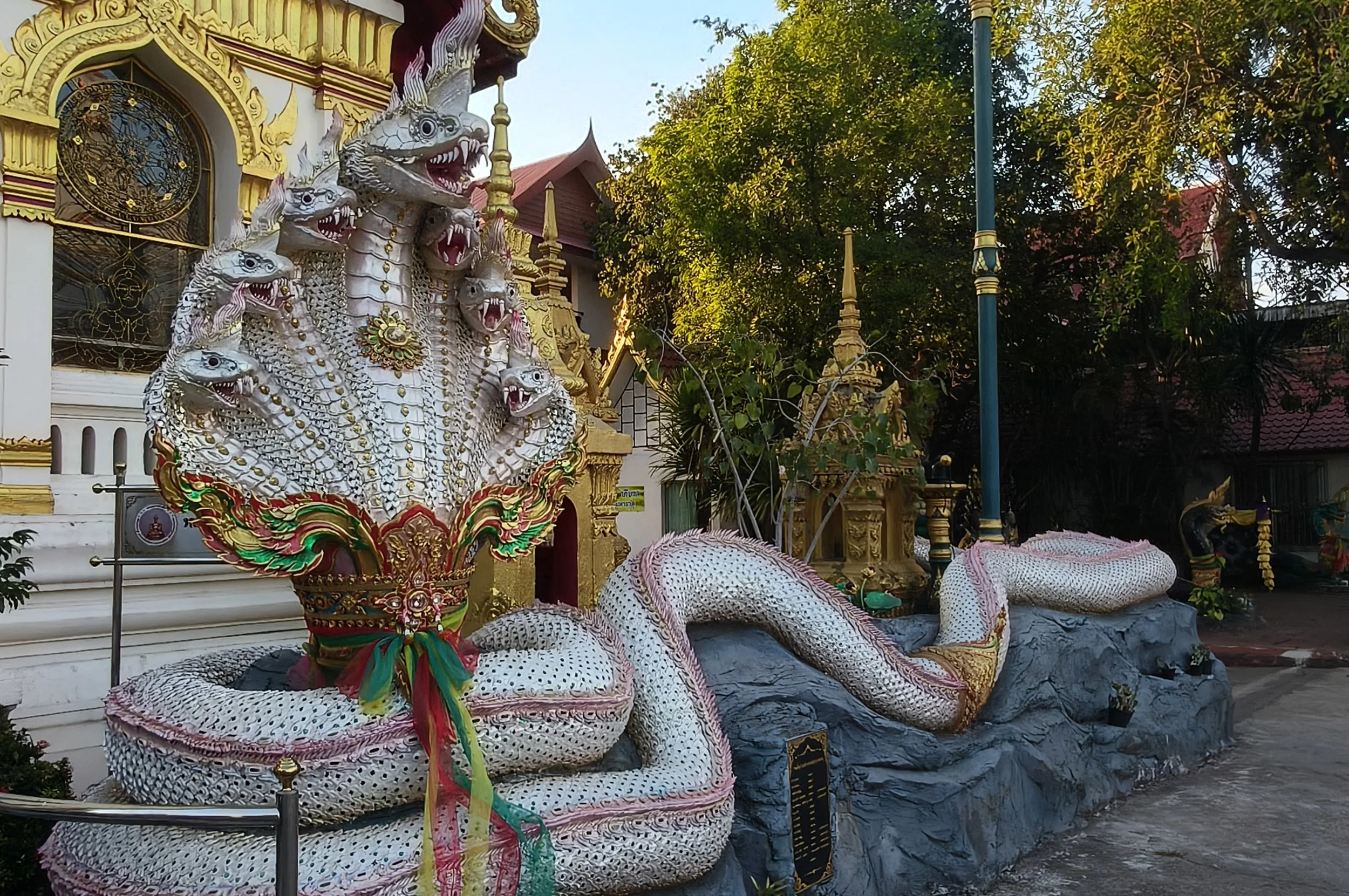
Wat That Noi Sribunrueang is an ancient and revered temple in That Phanom, Nakhon Phanom Province, Thailand, known for its unique and extensive use of stainless steel and ceramic mosaics in its architecture. The temple's striking features and reflective elements have led to it being described as the "Reflective Mirror Temple of That Phanom Town".
Stainless Steel Chapel: A major highlight, the chapel is reportedly the first of its kind in the region to be made entirely of stainless steel, featuring intricate paintings and designs.
Ceramic Mosaic Shrine: The temple is home to Hor Thep Wittayakom, Asia's largest ceramic mosaic shrine, which sits in the middle of the water and is adorned with more than 20 million pieces of mosaic.
Naga Statues: Statues of seven-headed Nagas, decorated with around 900,000 pieces of mosaic, are also situated in the center of the water, surrounding the central structure.
Historical Significance: The temple is an ancient site, full of local stories and beliefs, and is an archaeological site.
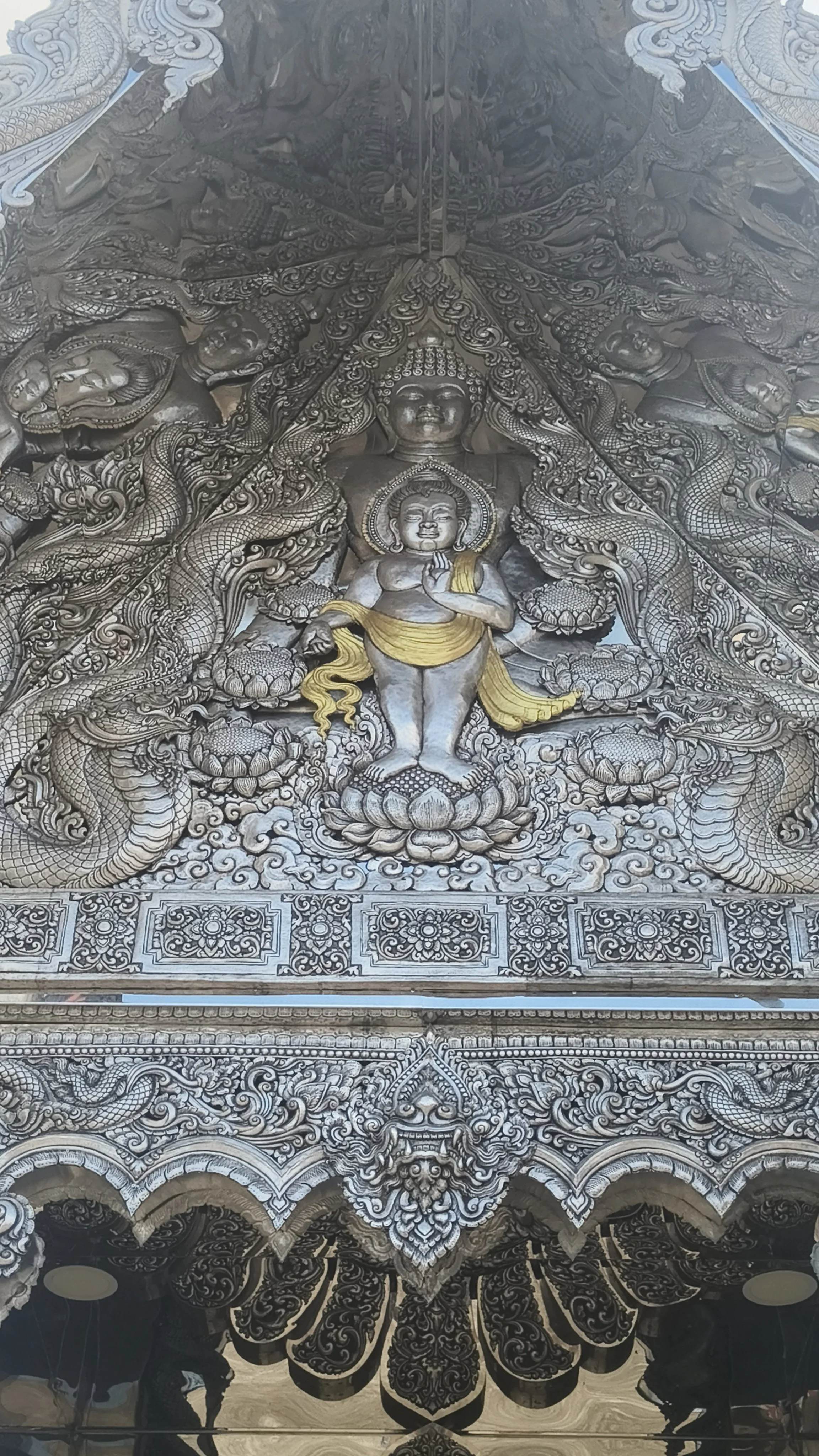
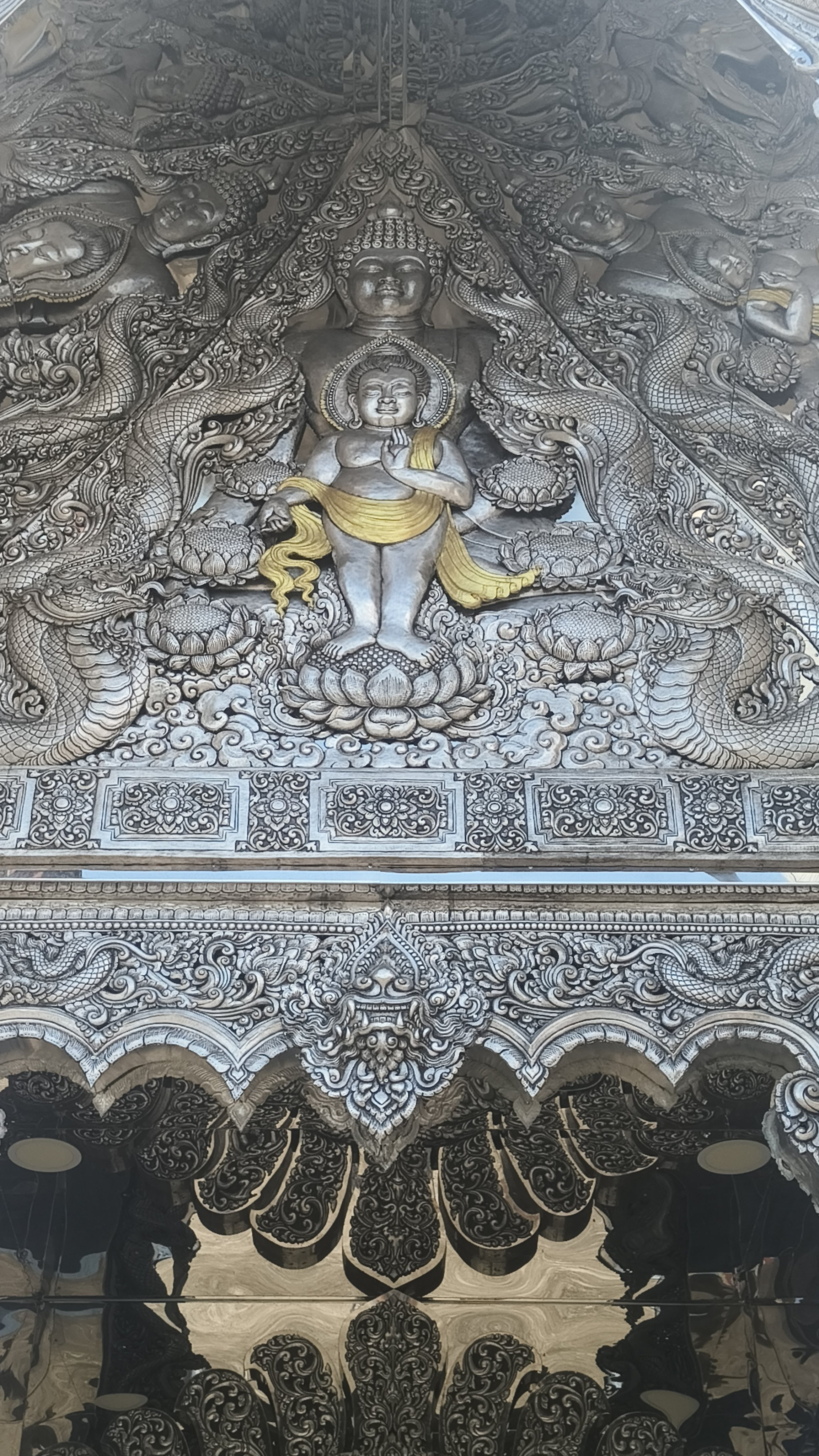
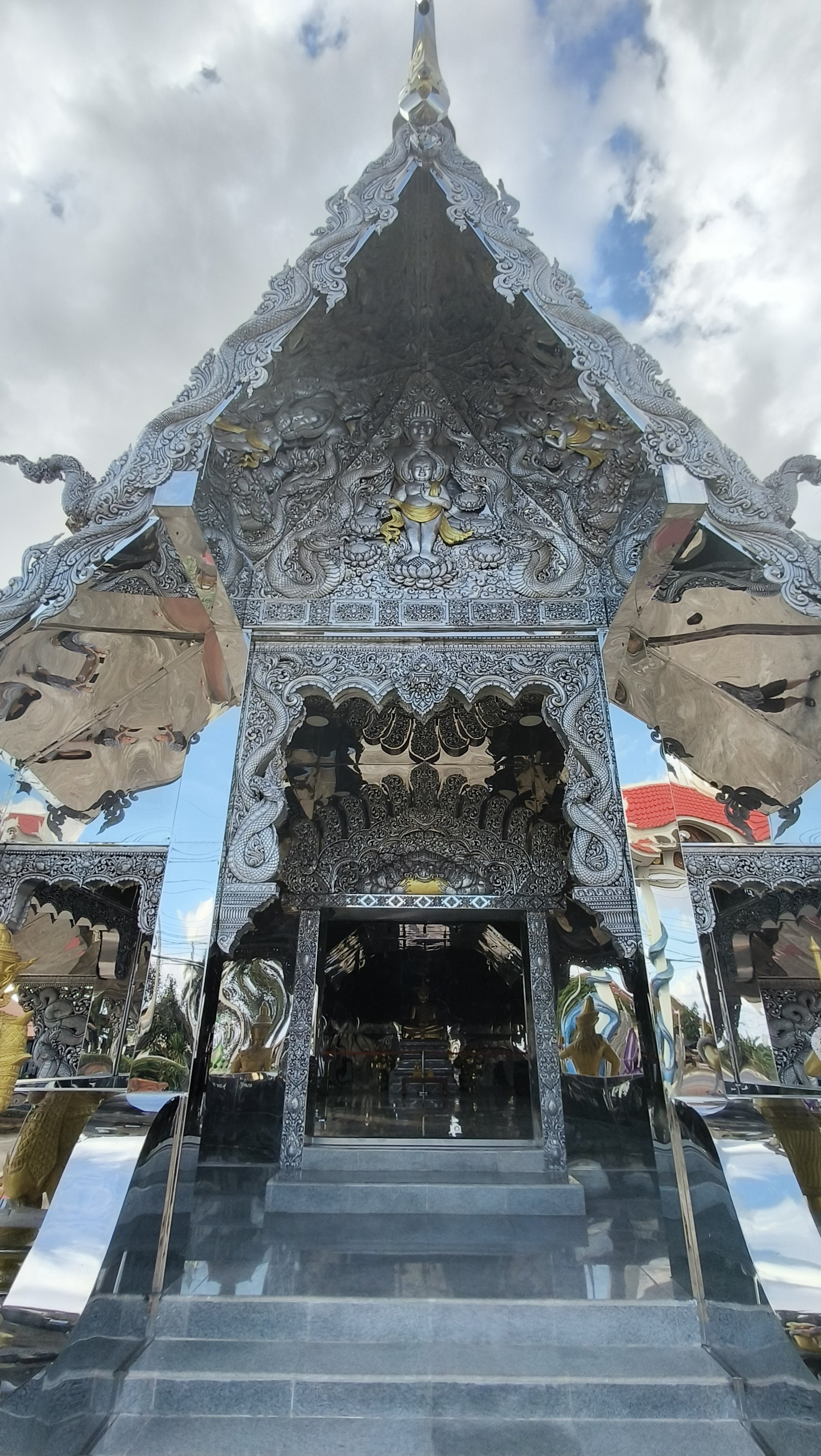
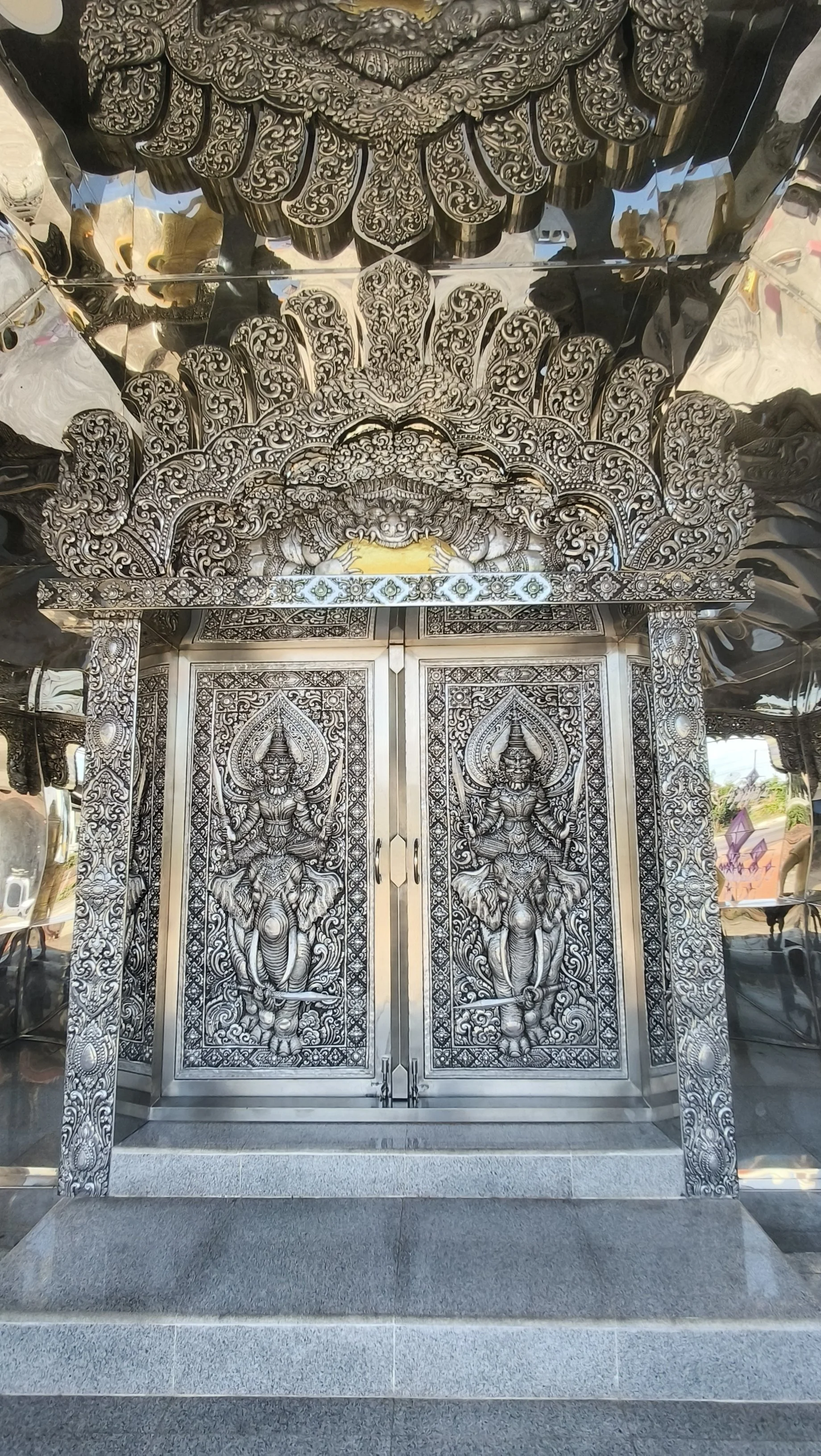
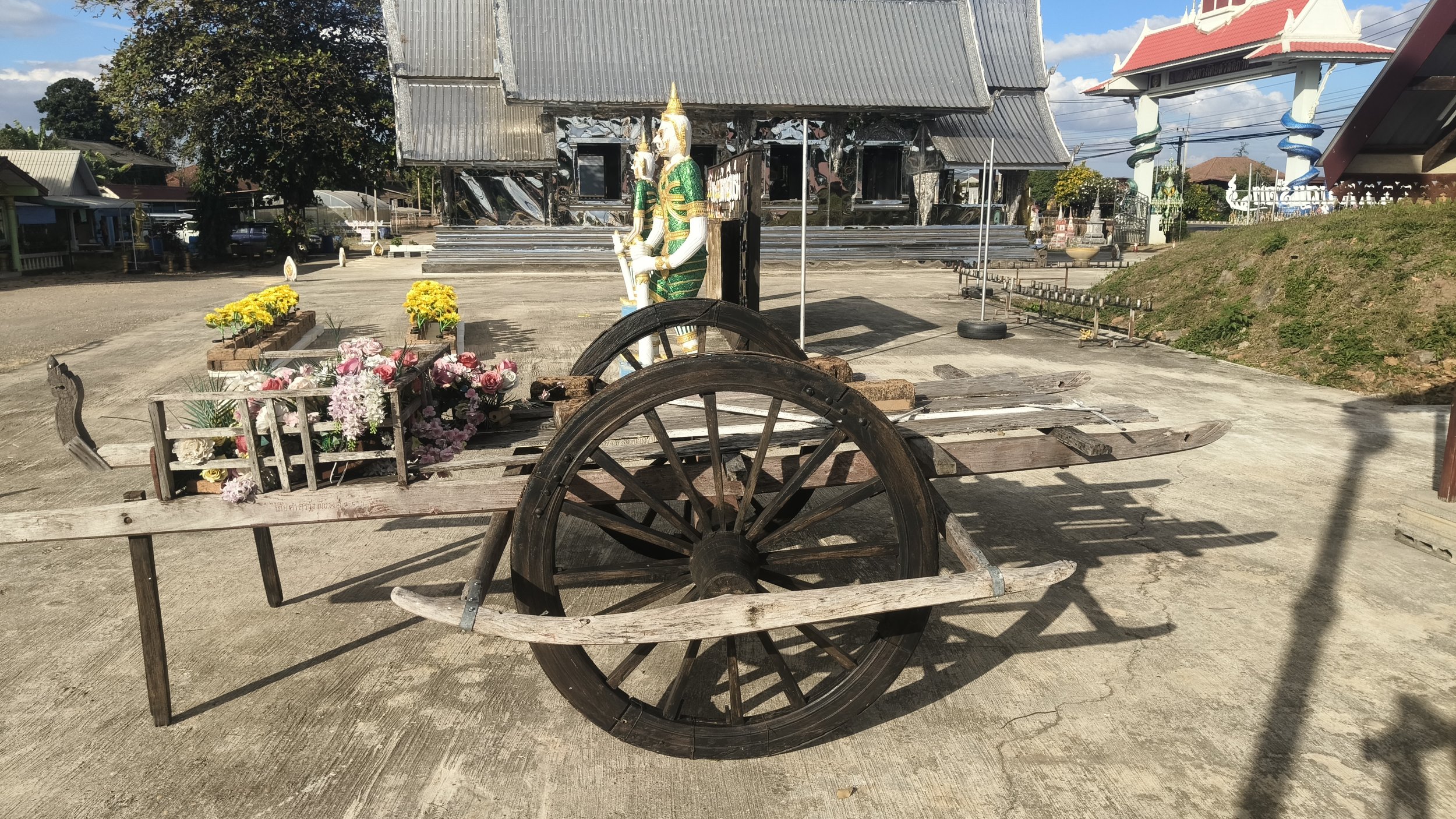

Misc Stuff from Yasothon, Mukdahan and Nakhon Phanom

Giant Chinese Francolin

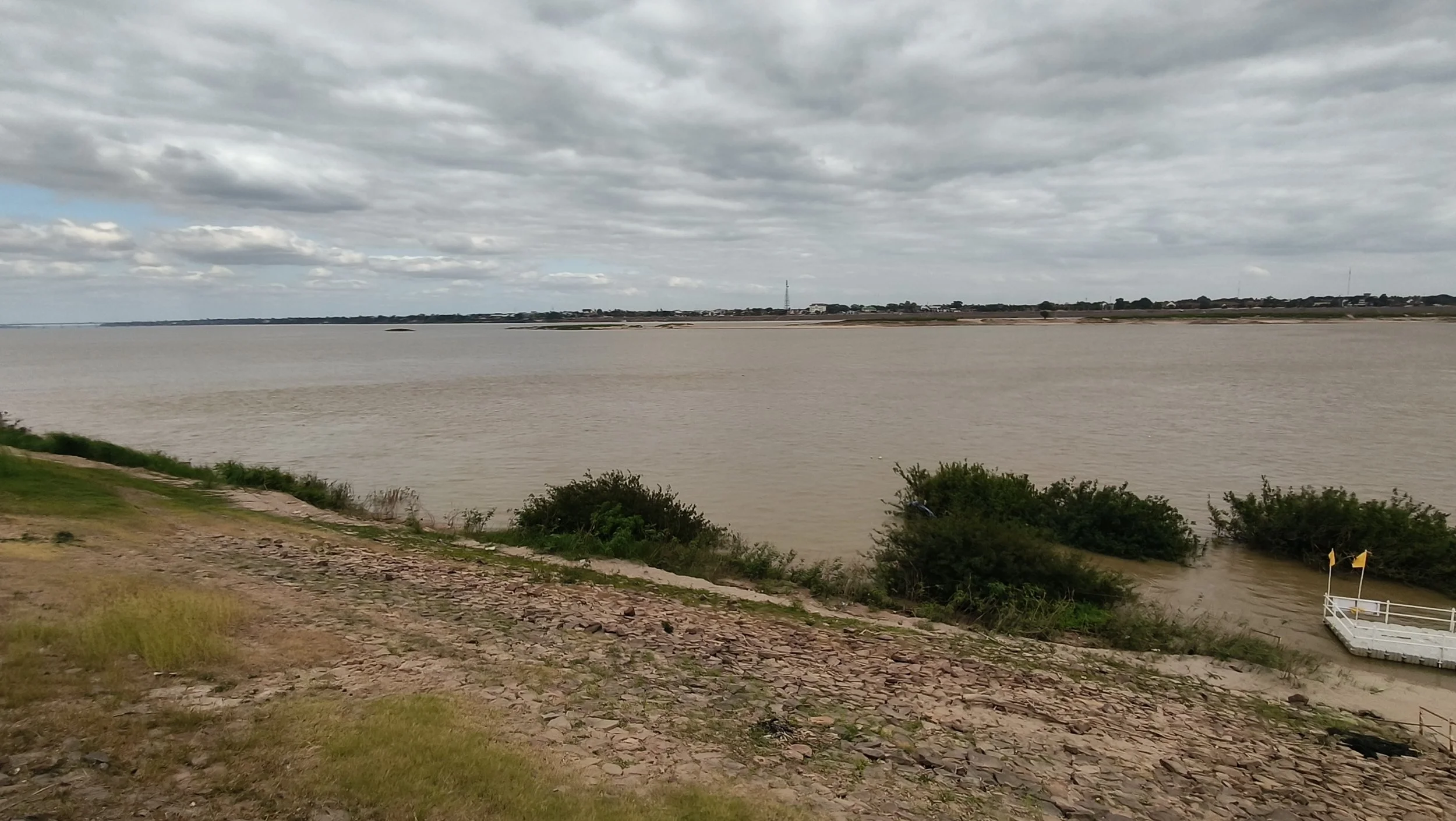
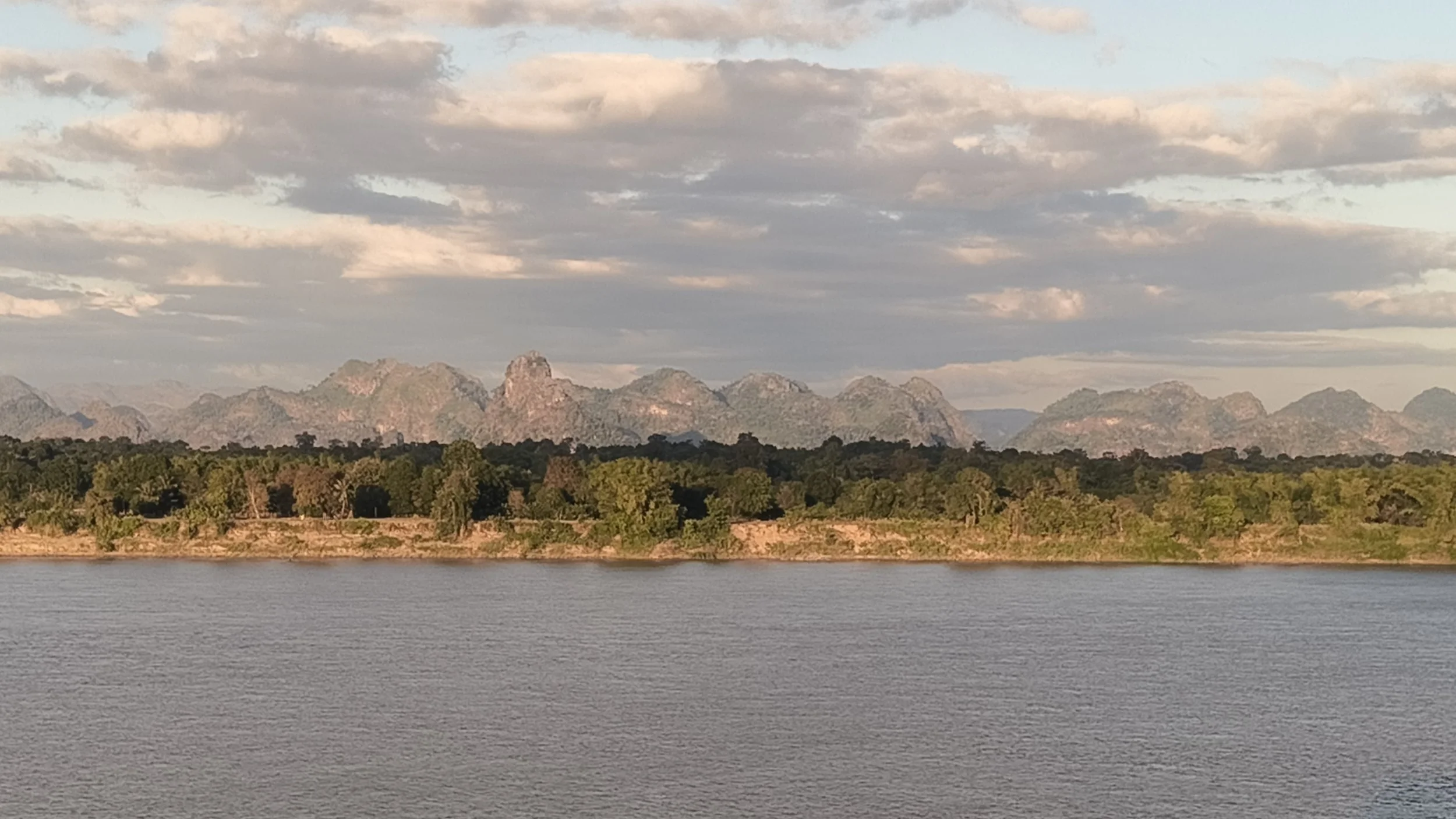
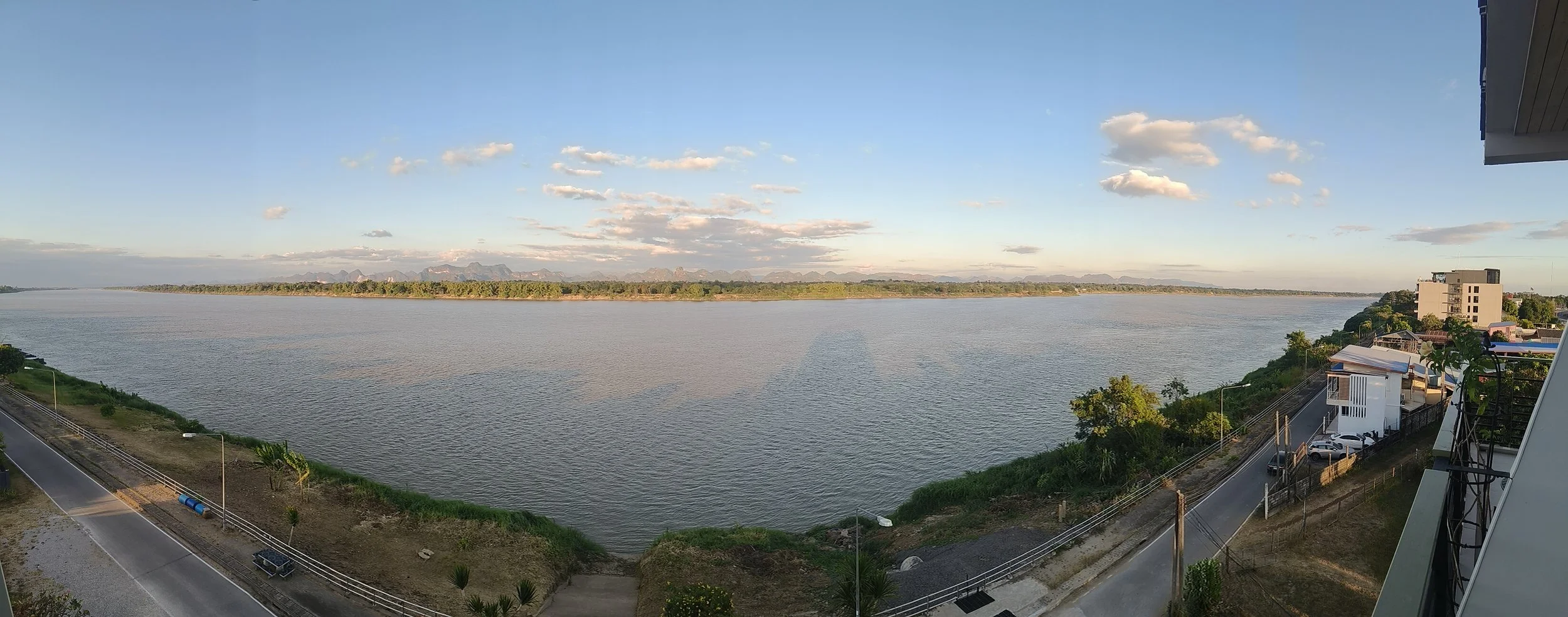
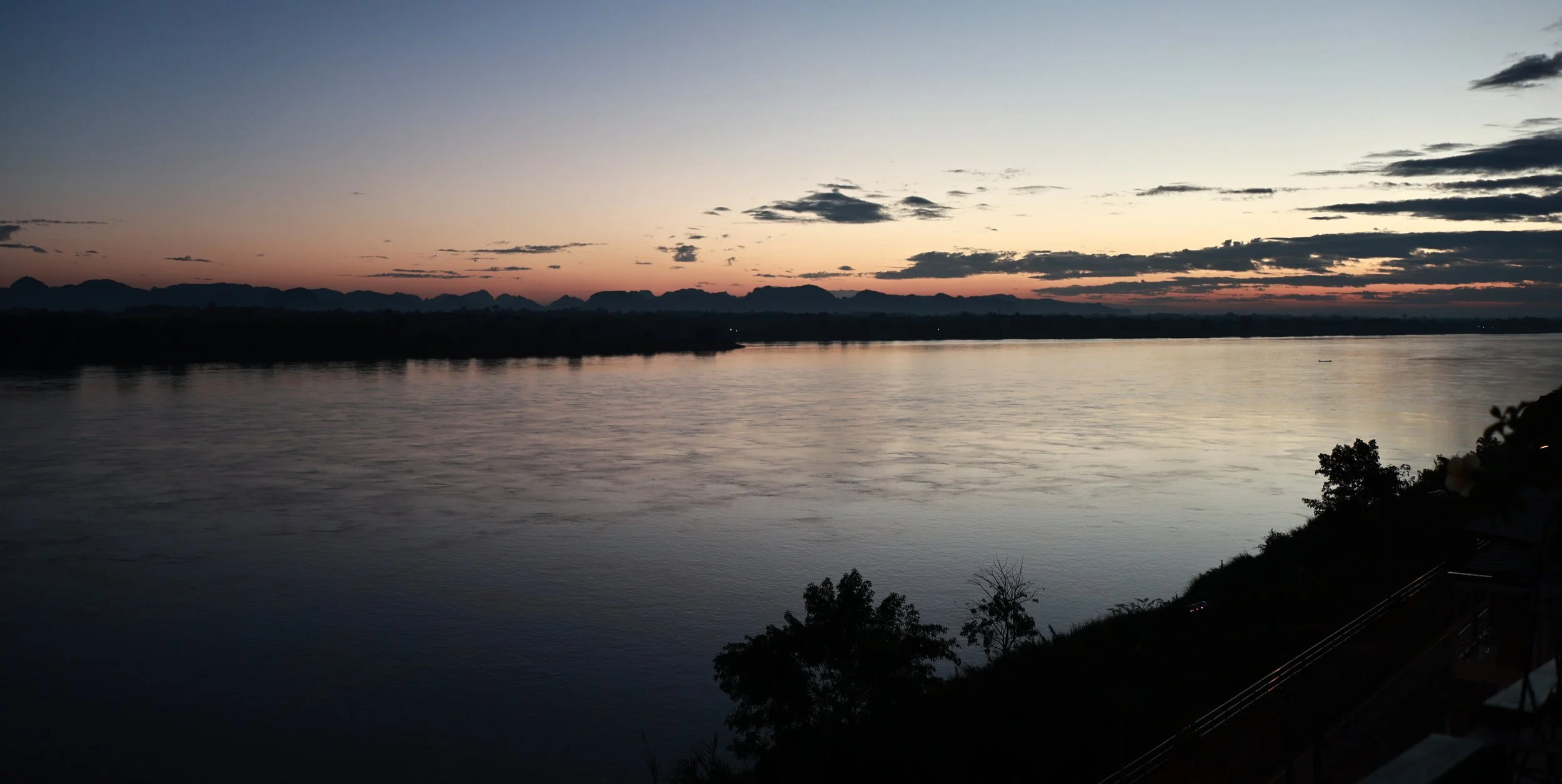
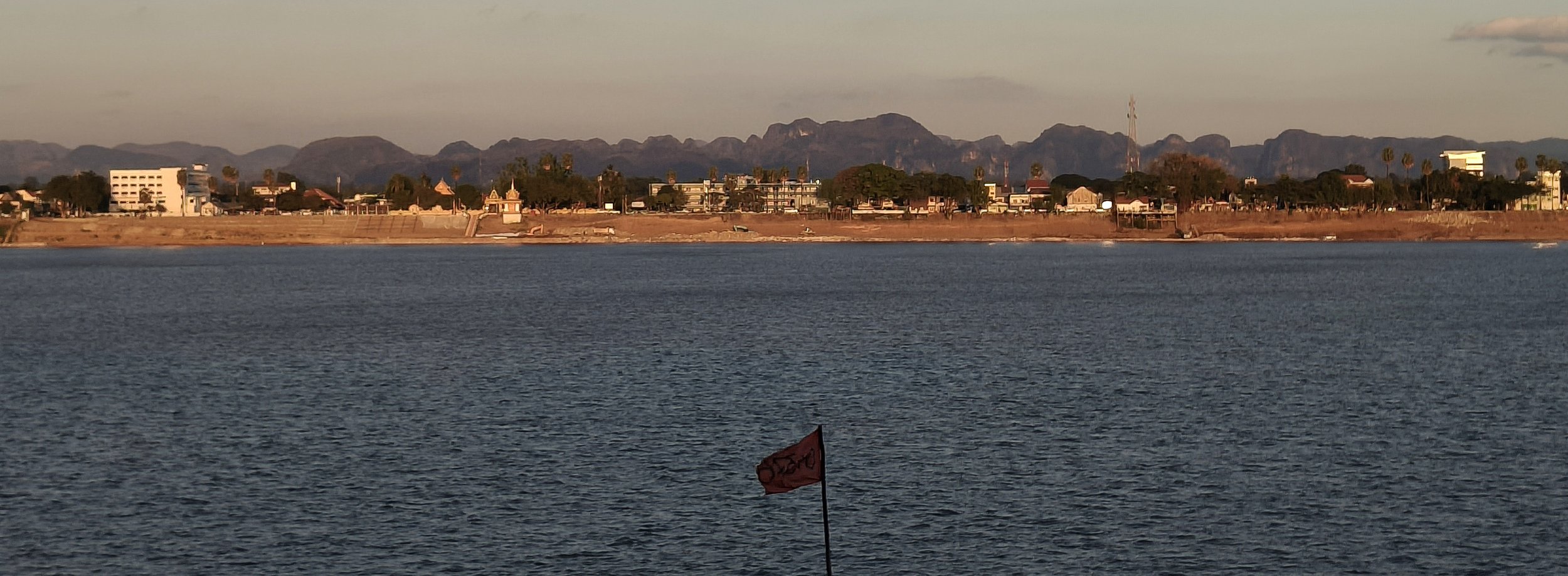
Views of the Mekong River from Nakhon Phanom
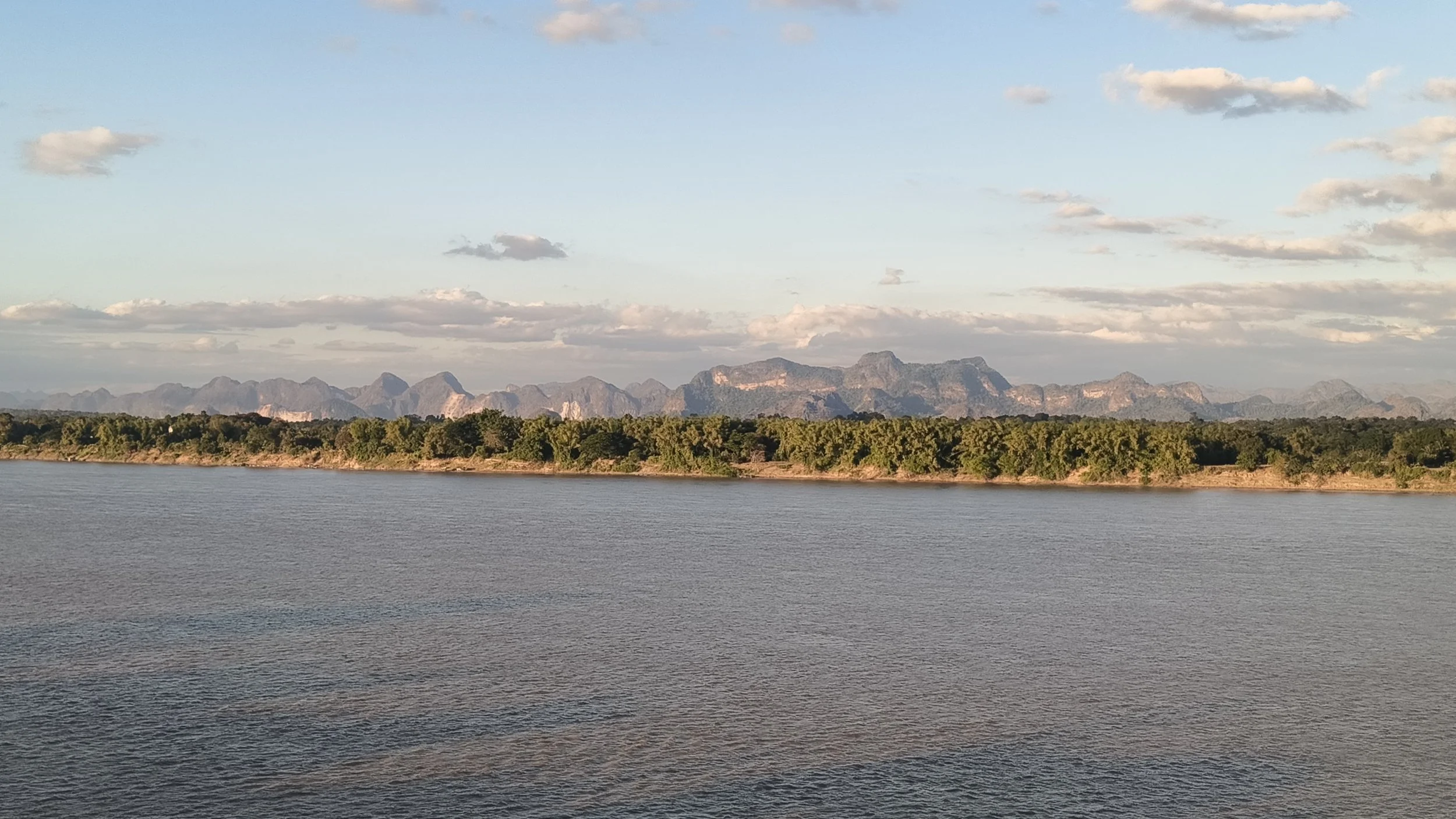
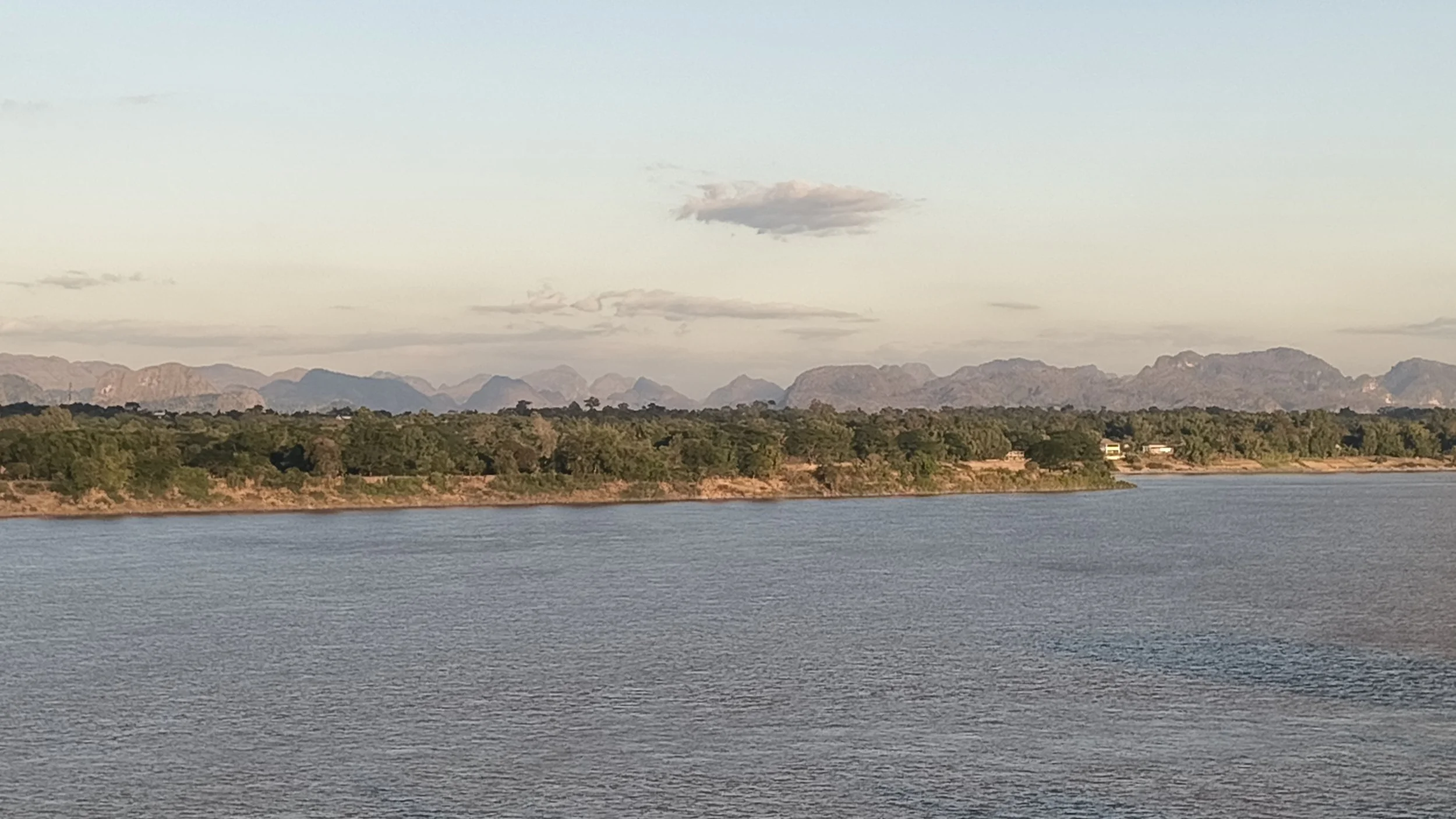

Wat Phrom Wihan (วัดพรหมวิหาร) Loeng Nok Tha district of Yasothon Province, Thailand

Wat Phrom Wihan (วัดพรหมวิหาร) Loeng Nok Tha district of Yasothon Province, Thailand
PTT stop in Yasothon
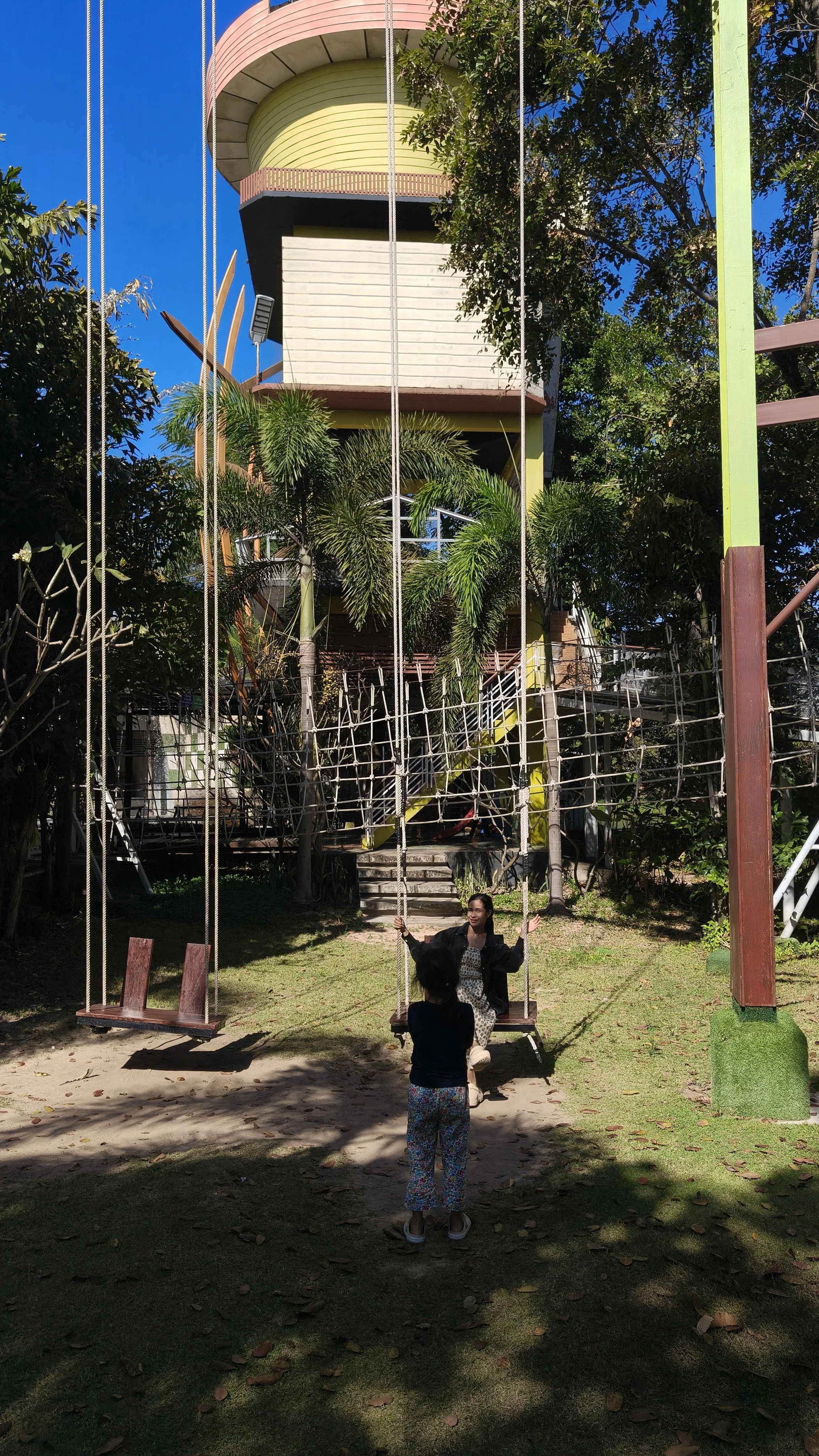








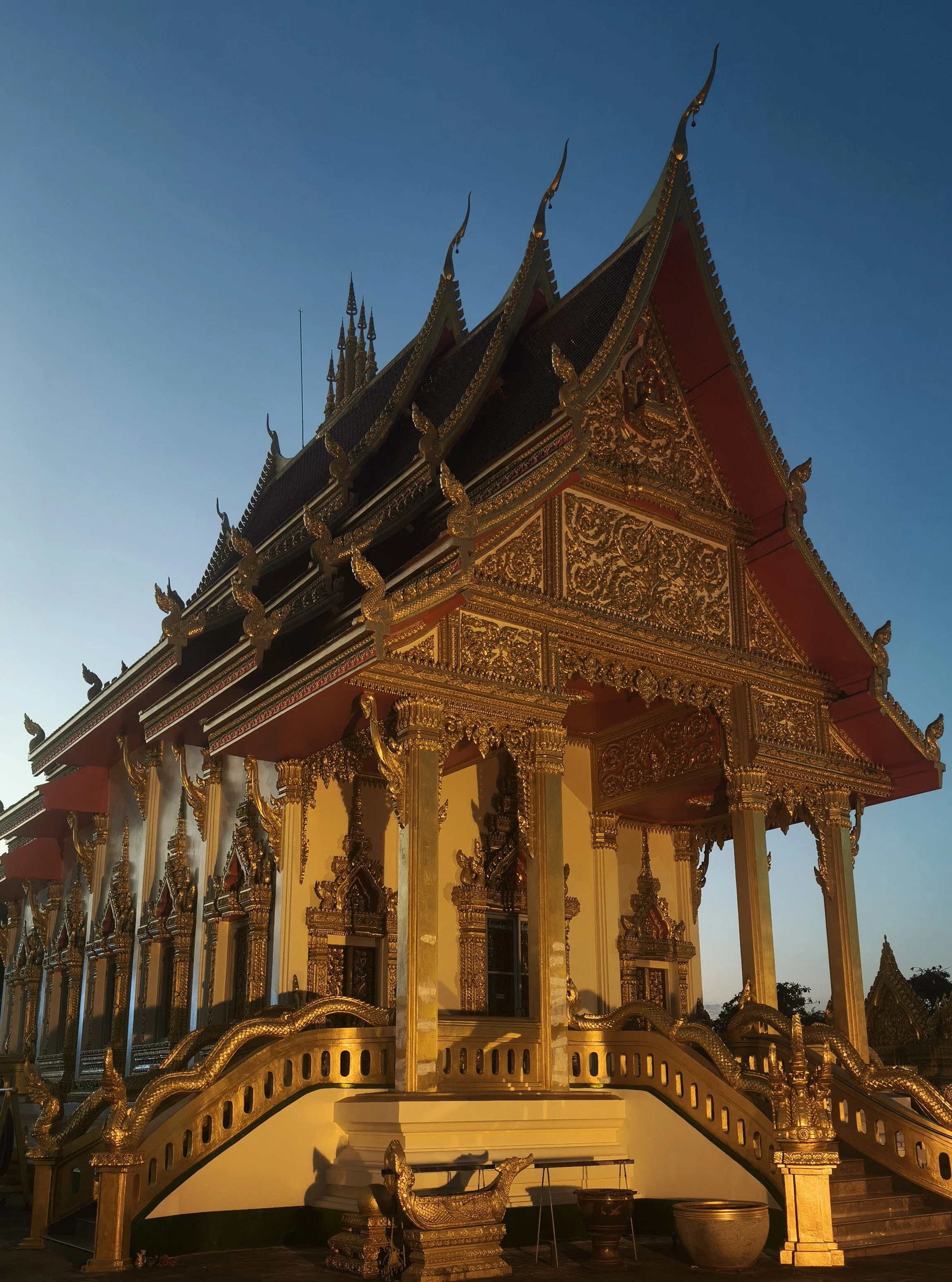
Wat Klang
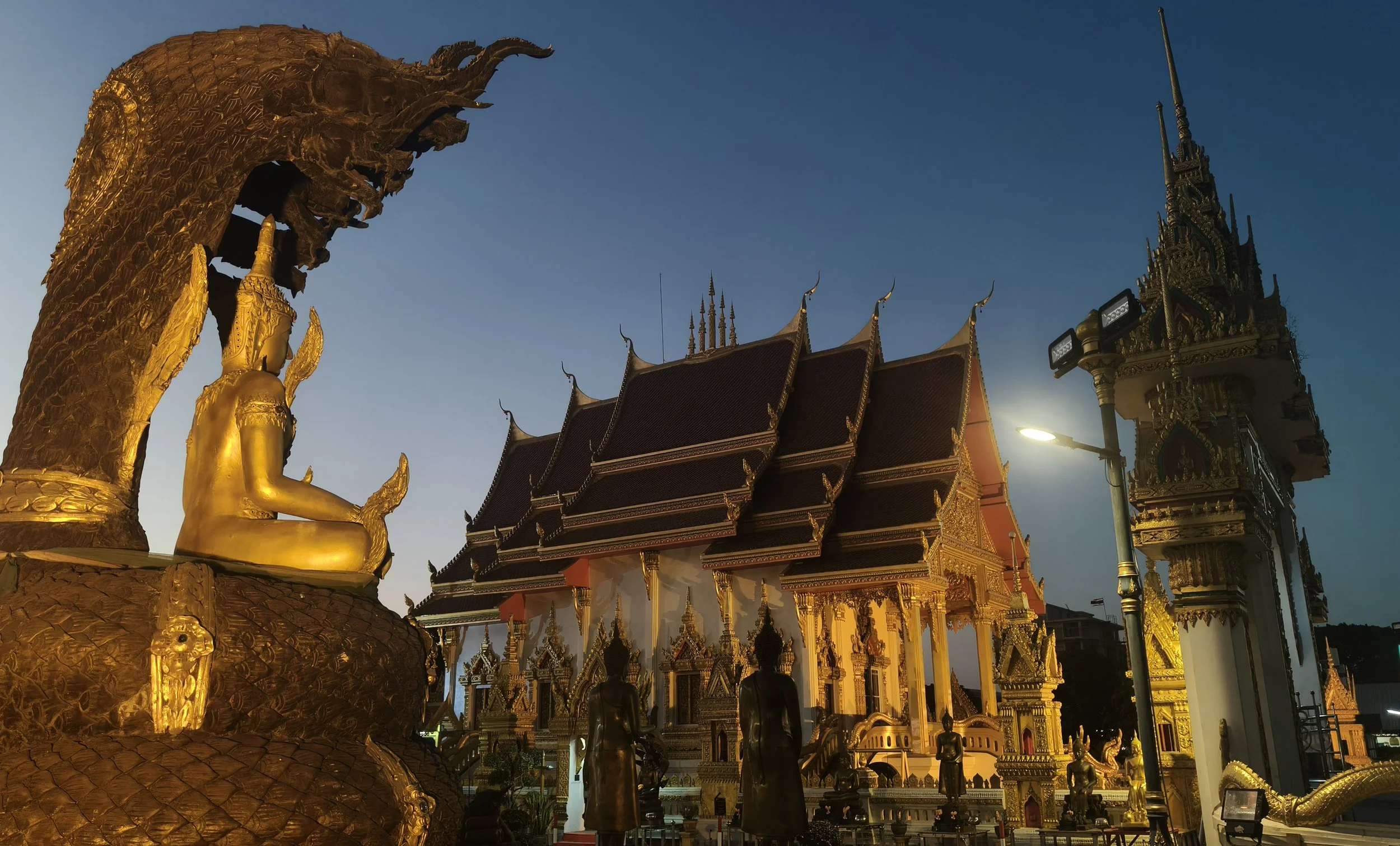
Wat Klang in Nakhon Phanom refers to a significant temple, often associated with Wat Phra That Renu, known for its distinct pink, Lao-influenced chedi (stupa) built in 1918, housing an ancient Buddha image, and offering a serene riverside experience in this charming Thai town, though another Wat Klang (Main Temple) is also central to the province.
Location: Situated in Nakhon Phanom, a city known for its Mekong River views, cultural mix, and proximity to Laos.
Architecture: Features a unique pink chedi reflecting Lao styles, making it visually striking, as noted by Asian Historical Architecture and YouTube.
Spiritual Significance: Home to a revered, ancient Buddha image and a popular spot for prayer, gold leaf application, and receiving blessings, according to this YouTube video.
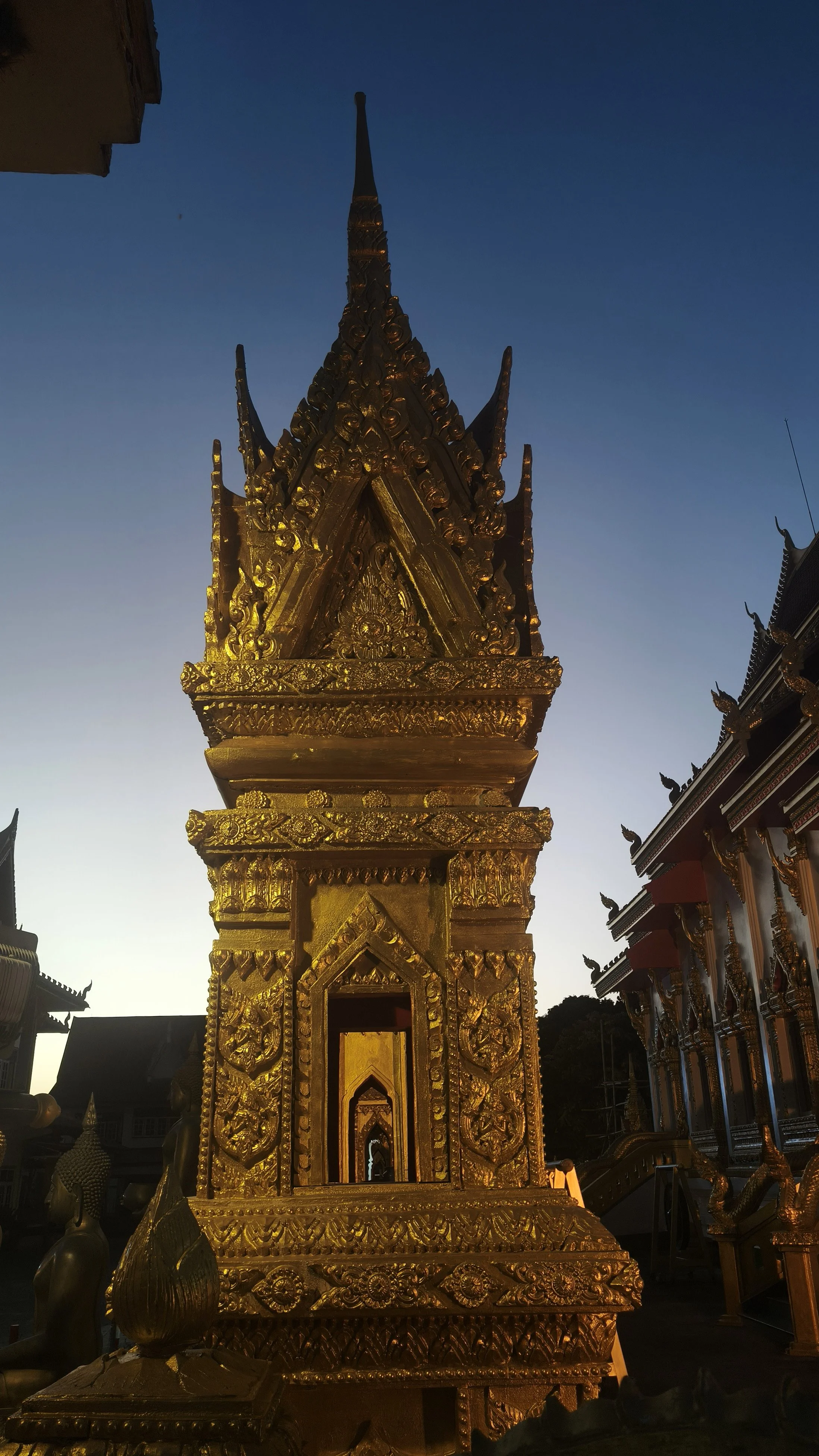
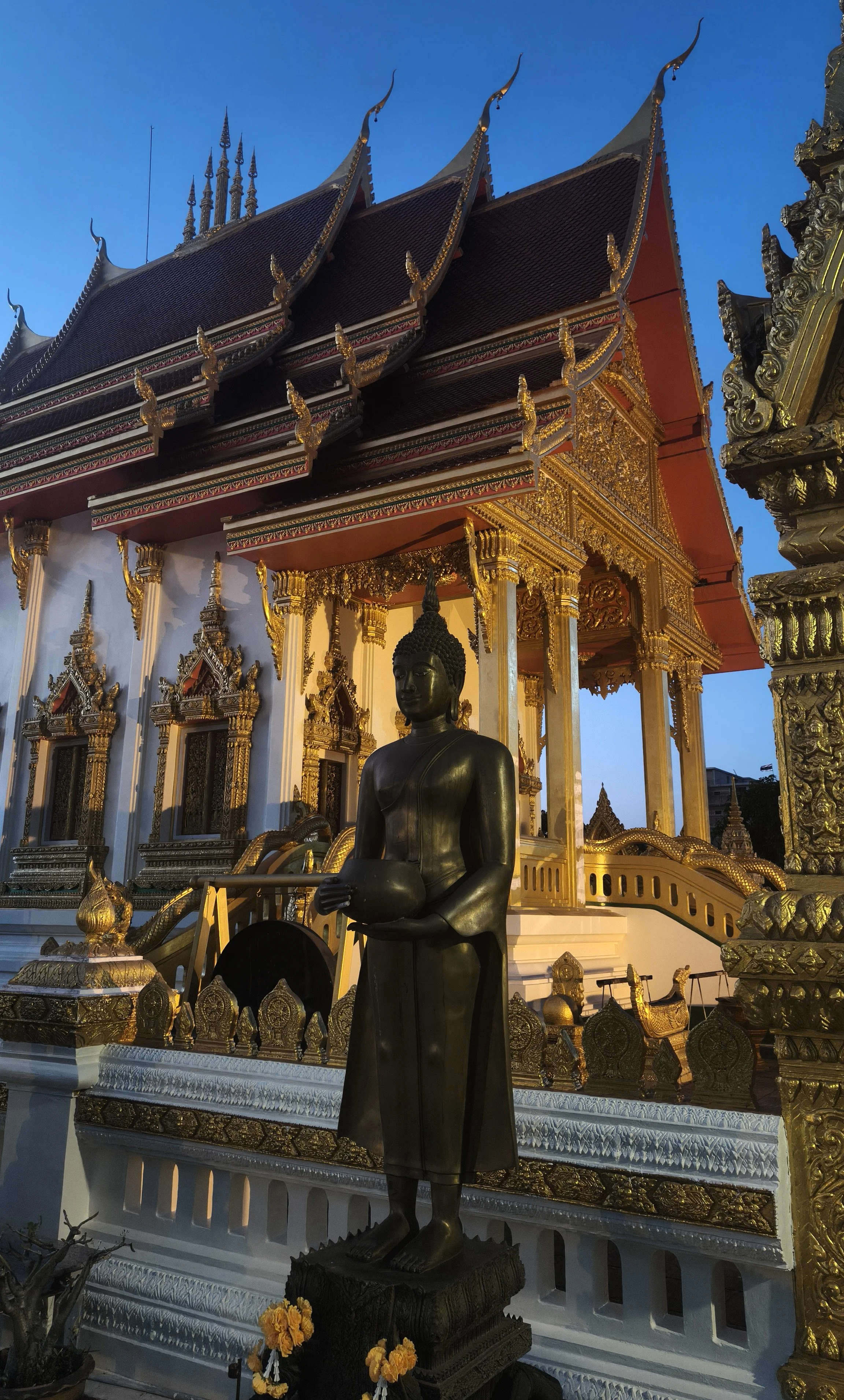
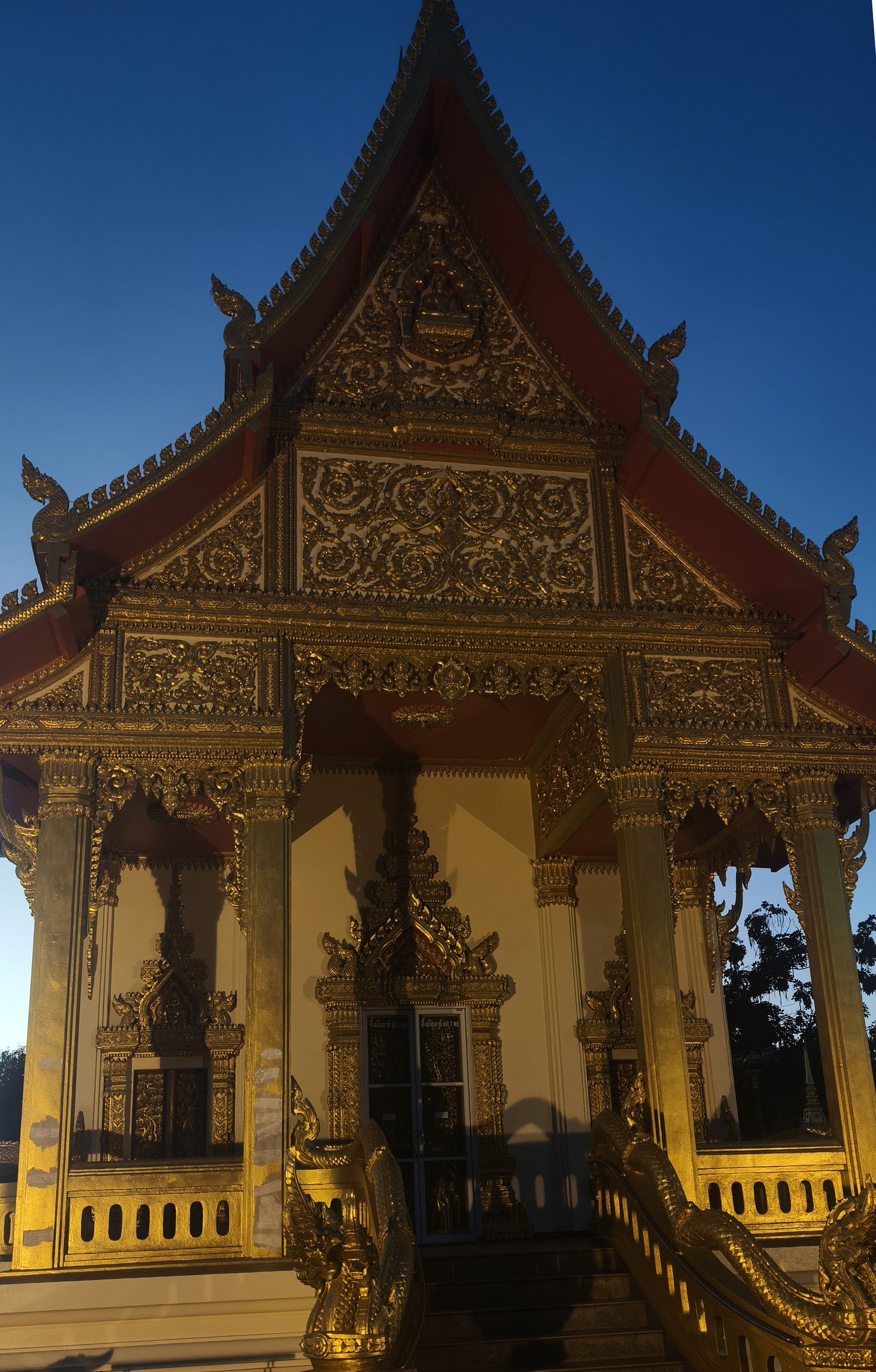
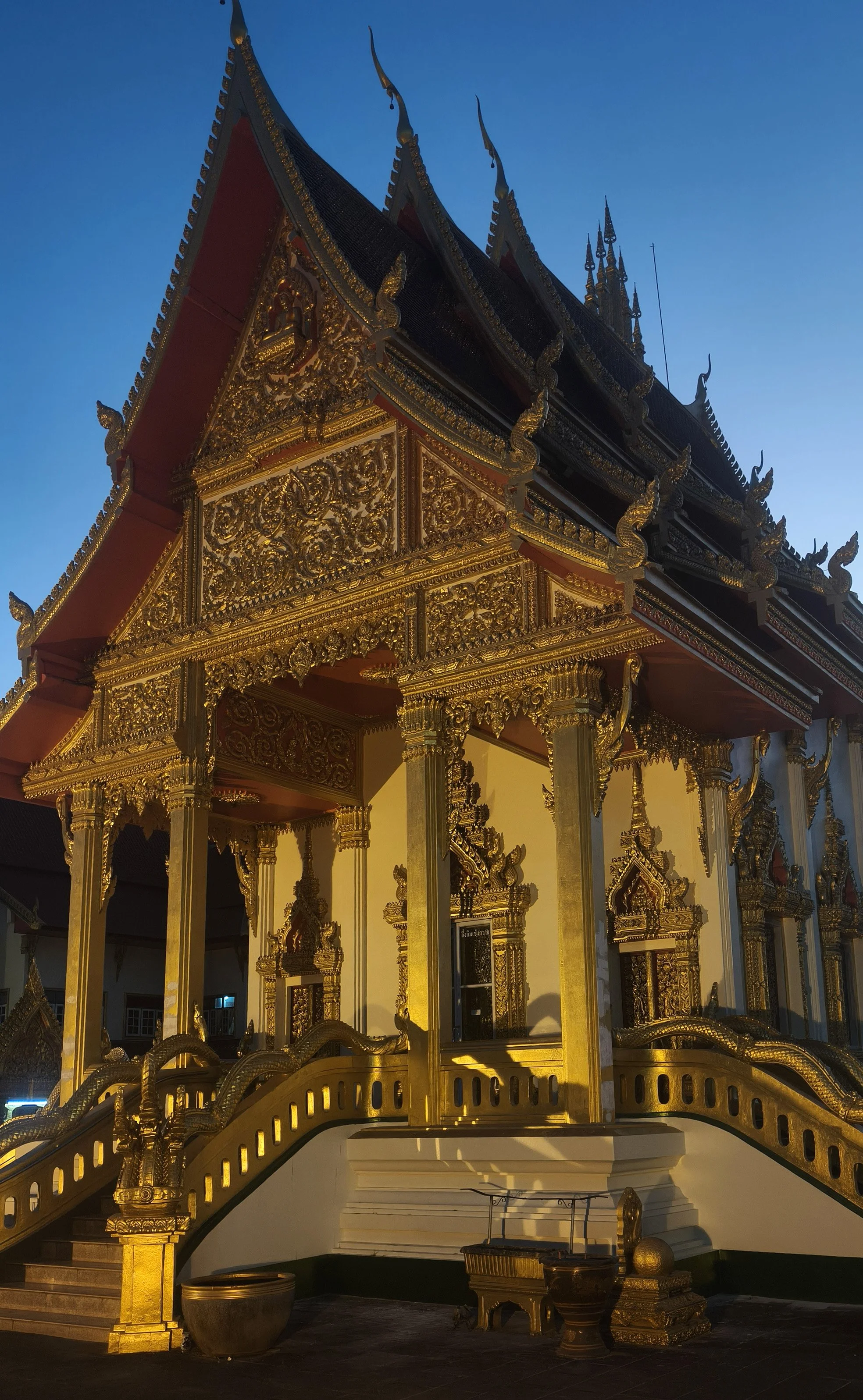
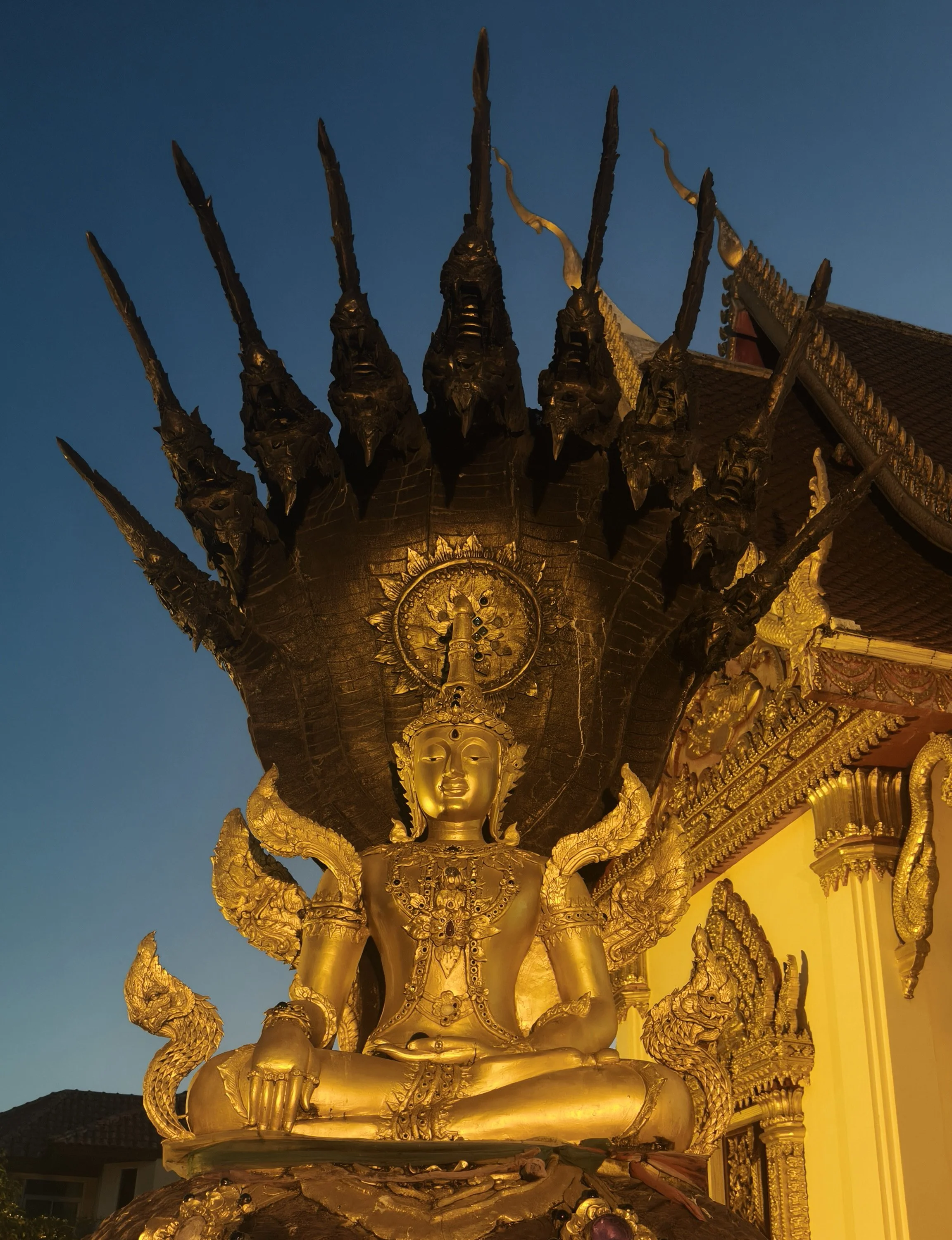
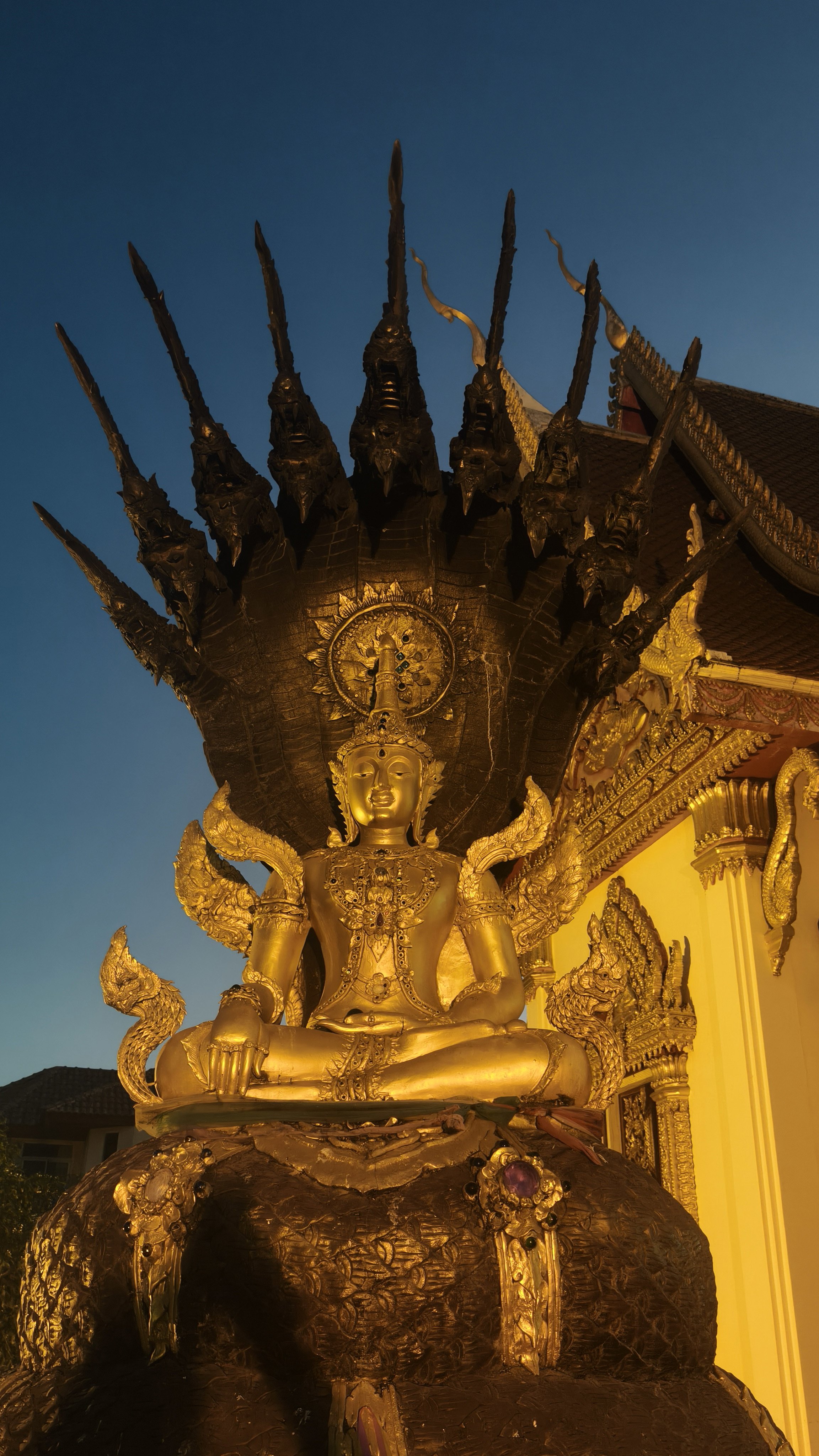
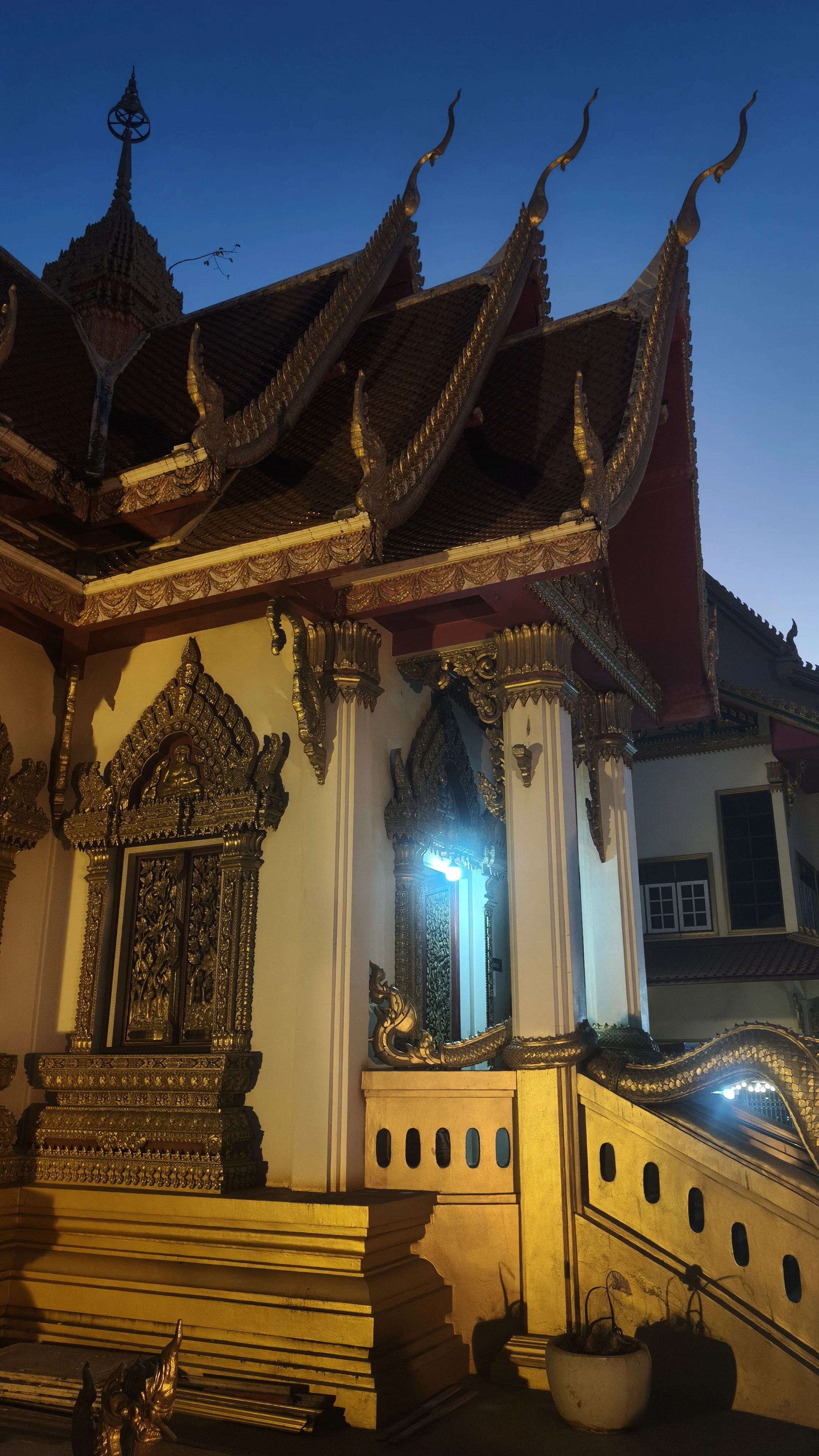
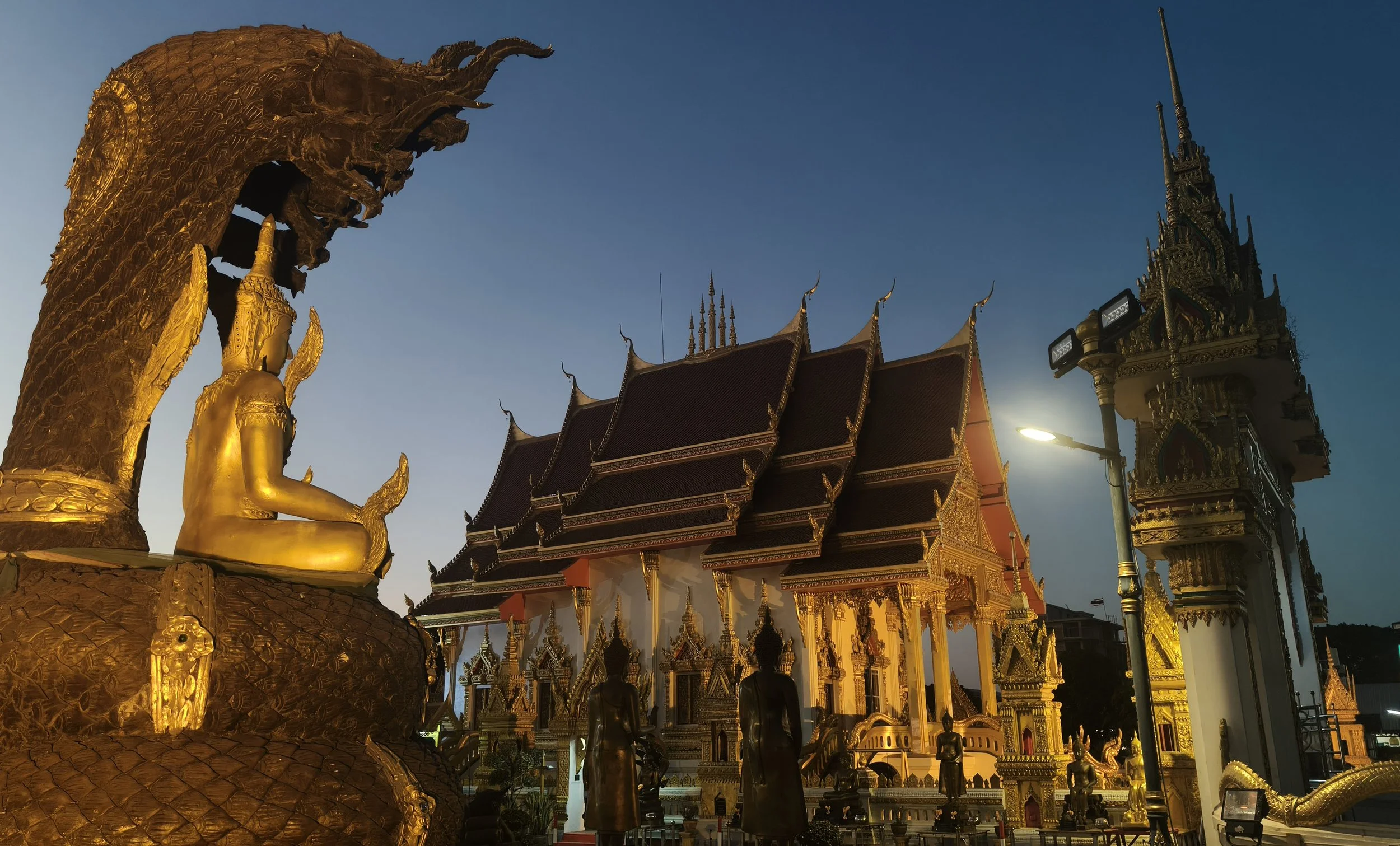
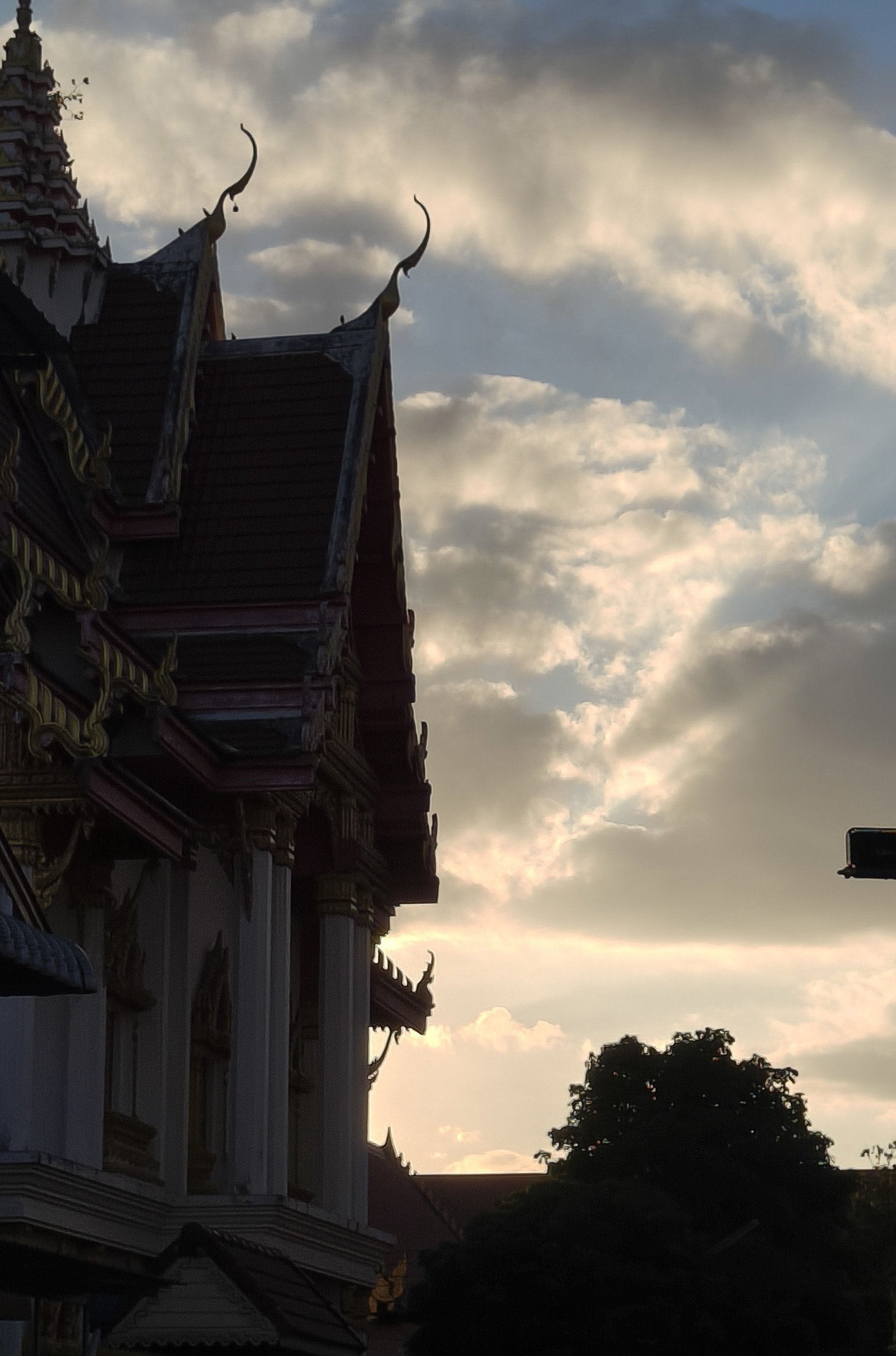
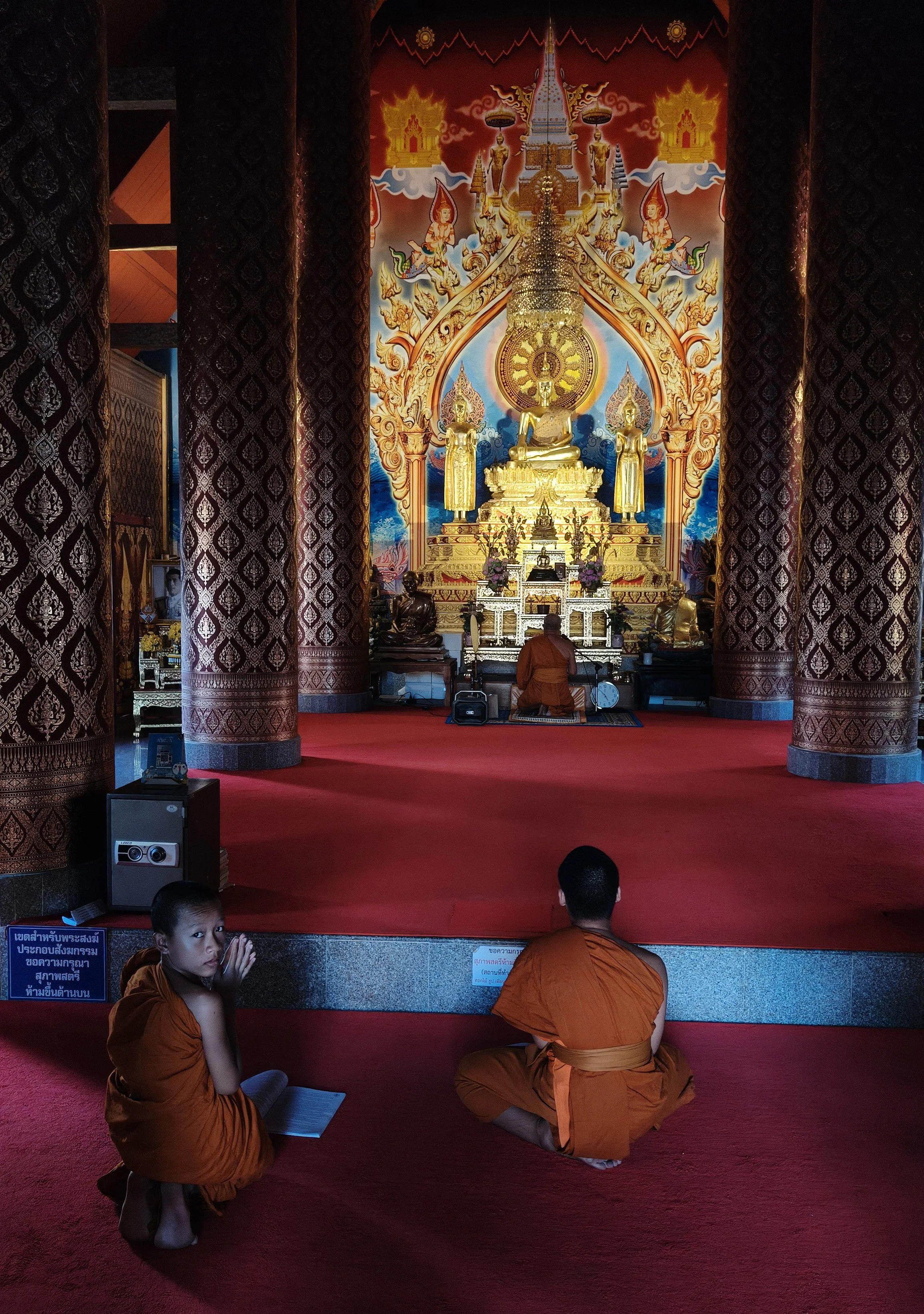
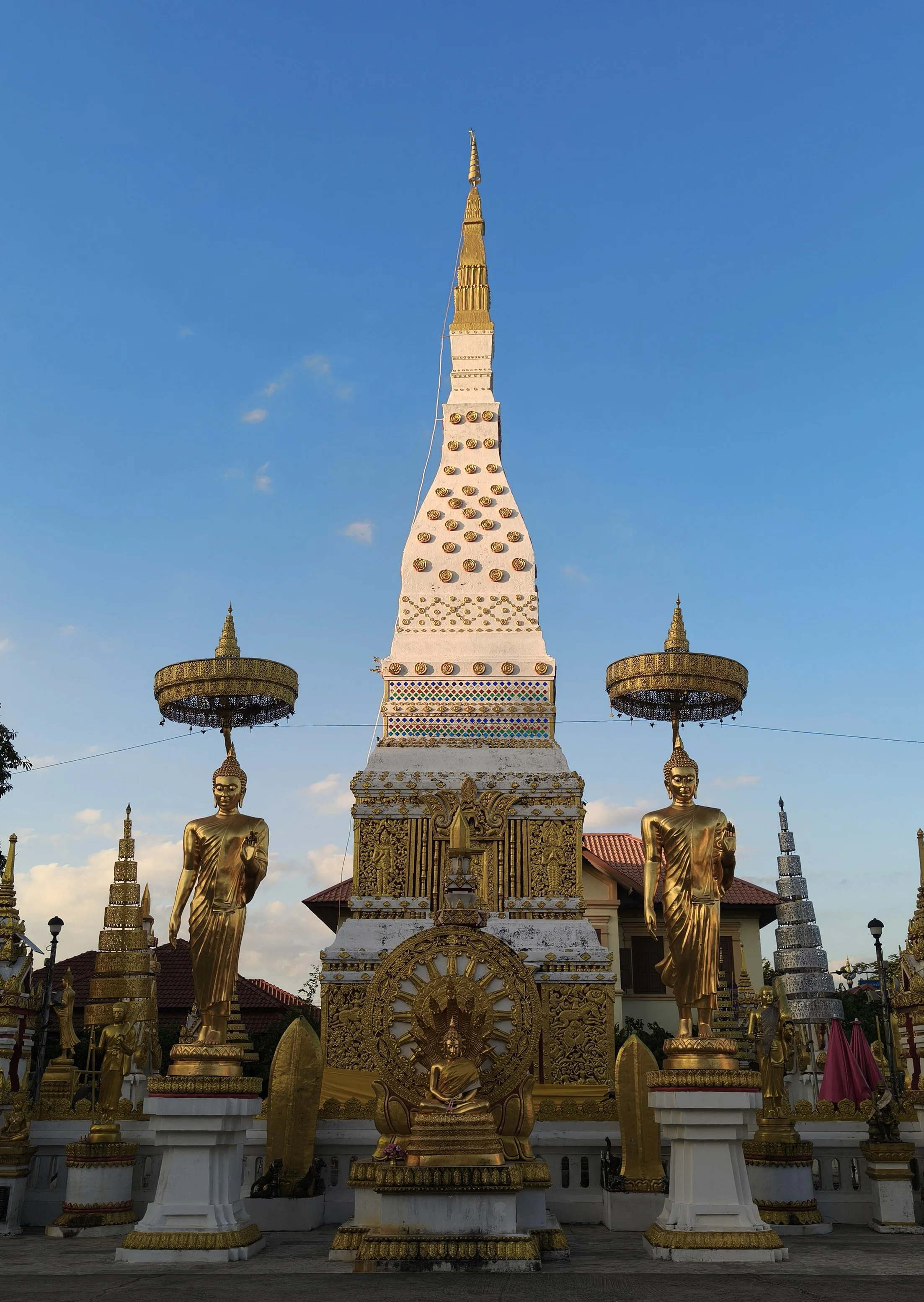
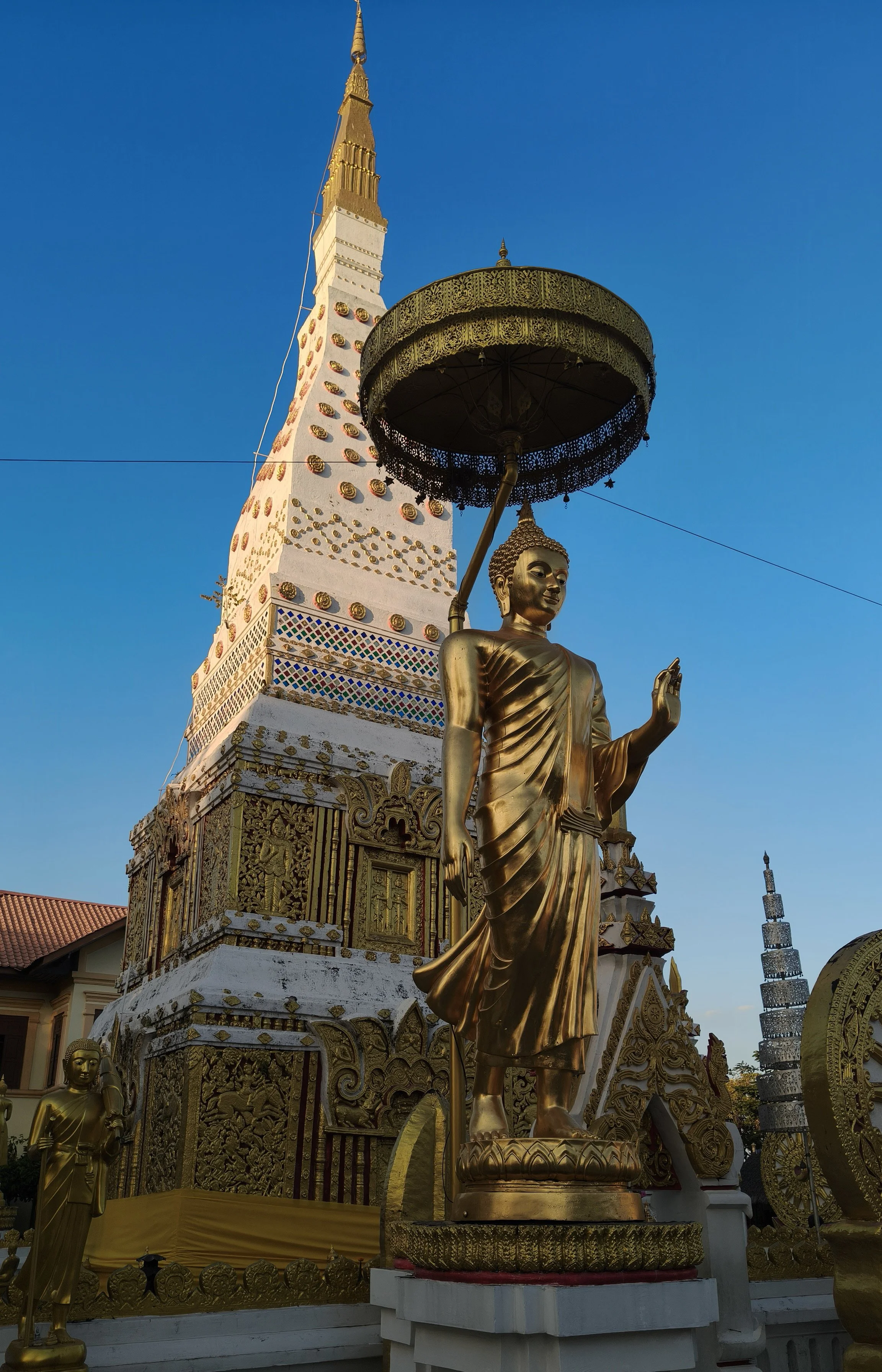
Wat Mahathat Phra That Nakhon, Nakhon Phanom
Wat Mahathat (Phra That Nakhon) in Nakhon Phanom is a significant temple with a distinctive Lao-style chedi, built around 1920-1922, housing relics and serving as a sacred site for those born on Saturday, offering blessings and beautiful Mekong River views, featuring colorful glass, Naga, and Buddha imagery, with specific rituals and offerings for devotees. It's known for its peaceful atmosphere and views across the Mekong to Laos, making it a key spiritual destination in the region.
Sacred Relics: It is believed to enshrine relics, making it a vital Buddhist site.
Lao-Style Chedi: The main stupa is tall, slender, and decorated with glass, dragons, and angels, representing Lao architectural influence.
For Saturday-Born People: The chedi is particularly important for individuals born on a Saturday, who offer specific items like 10 incenses, candles, flowers, and sticky rice for good fortune.
Mekong River Views: The temple offers a beautiful panoramic view of the Mekong River and Laos.
Rituals: Visitors circumambulate the chedi three times, chanting specific verses for blessings like happiness, wealth, and strength.
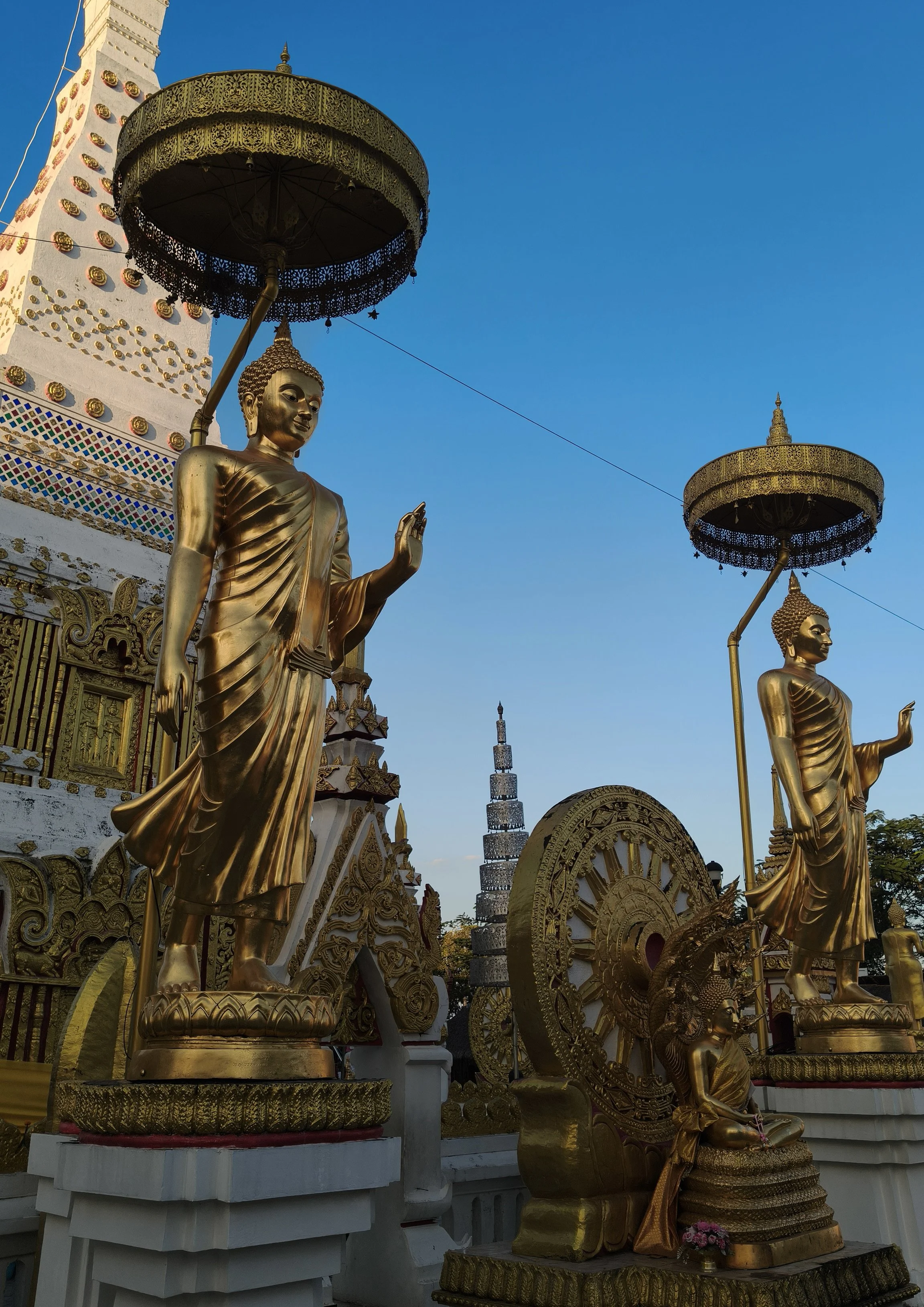
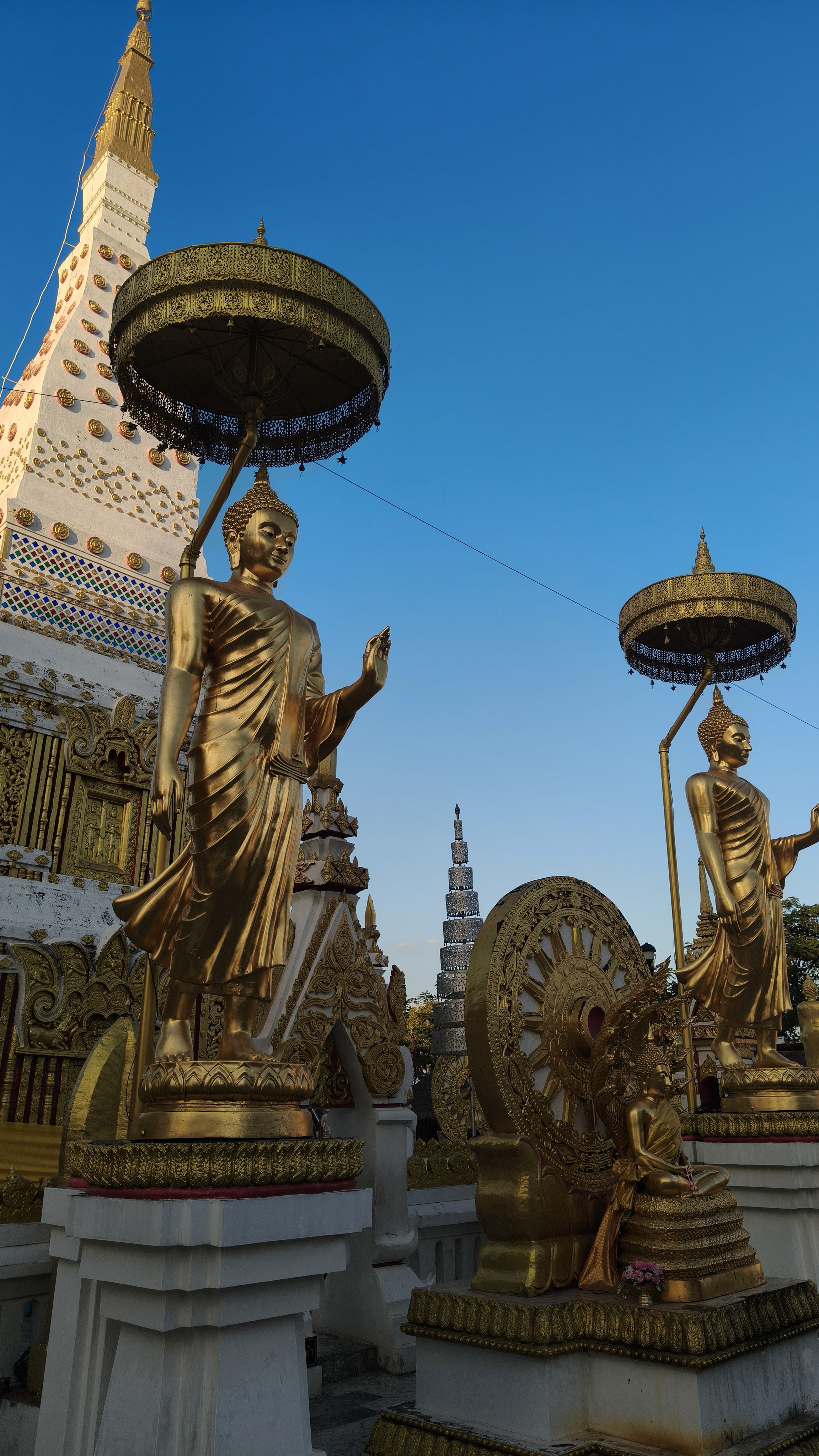
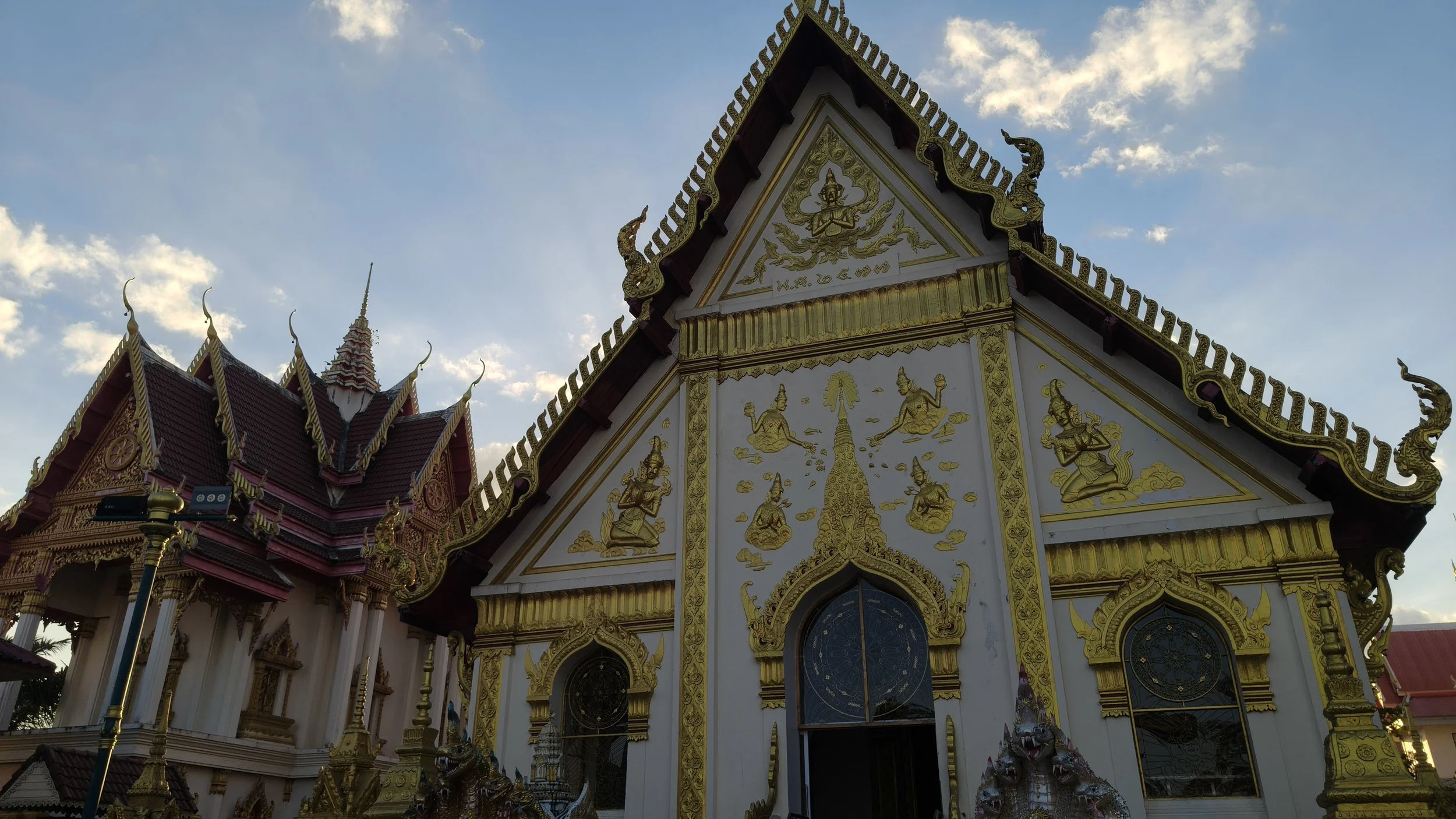
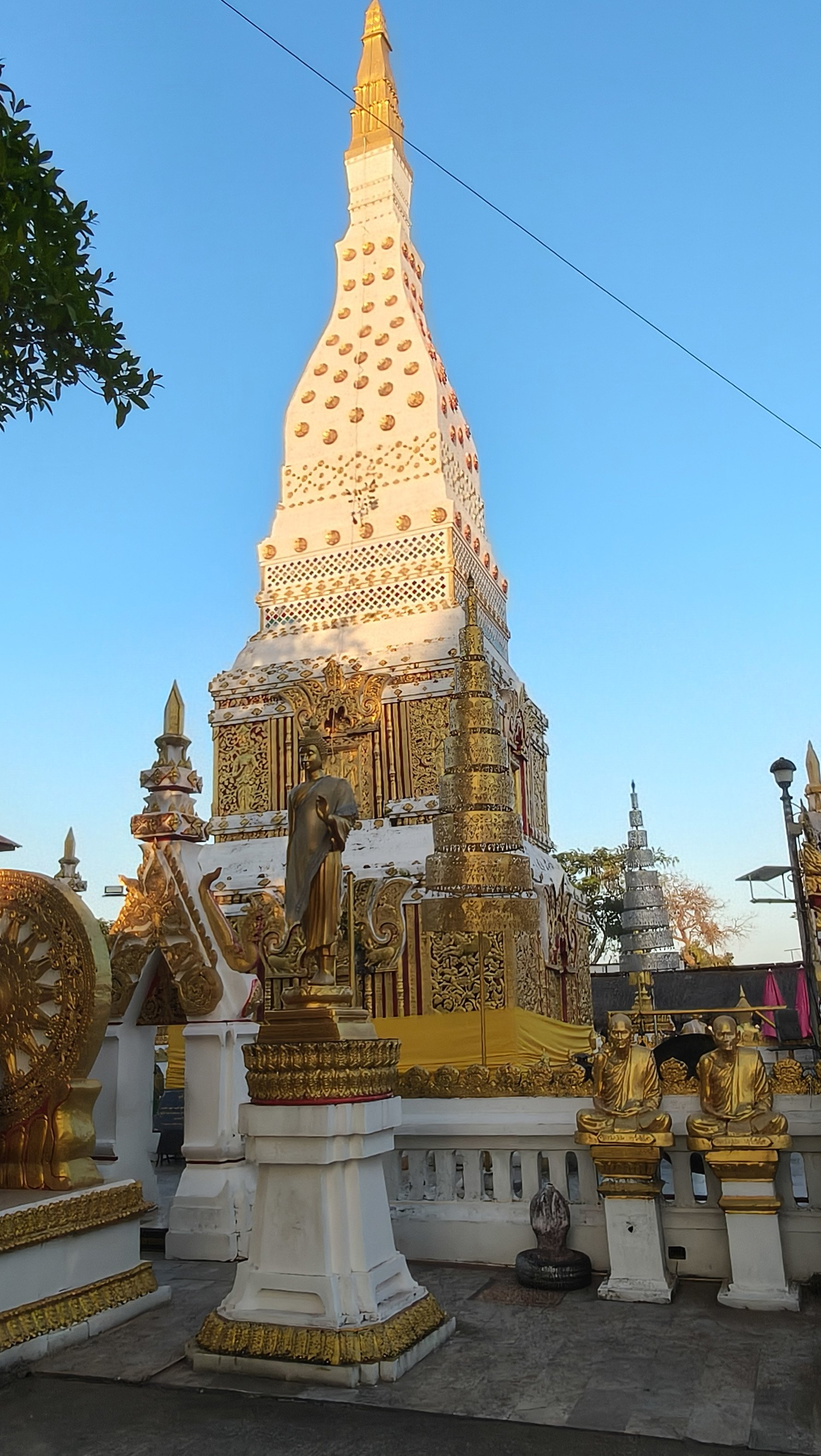
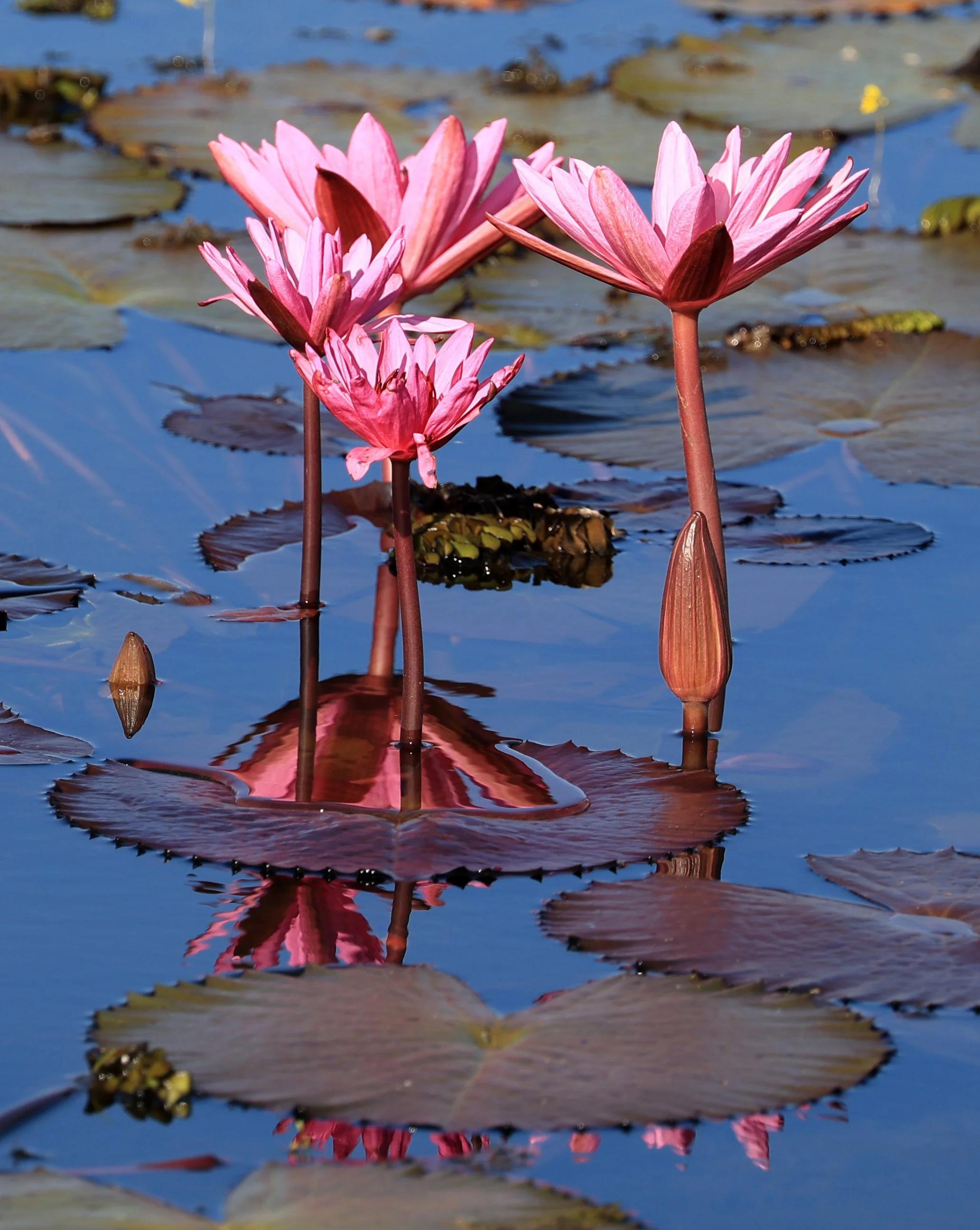
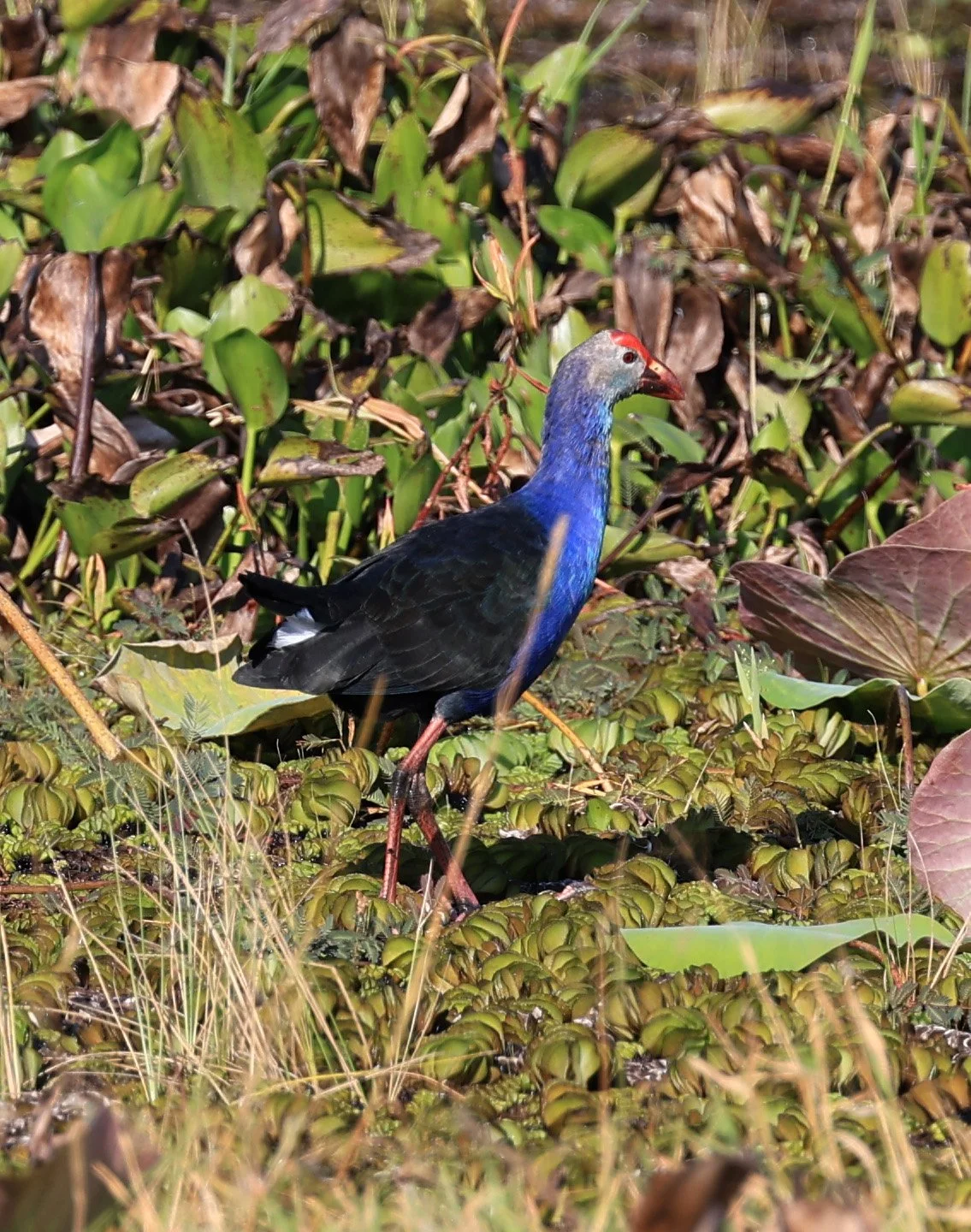
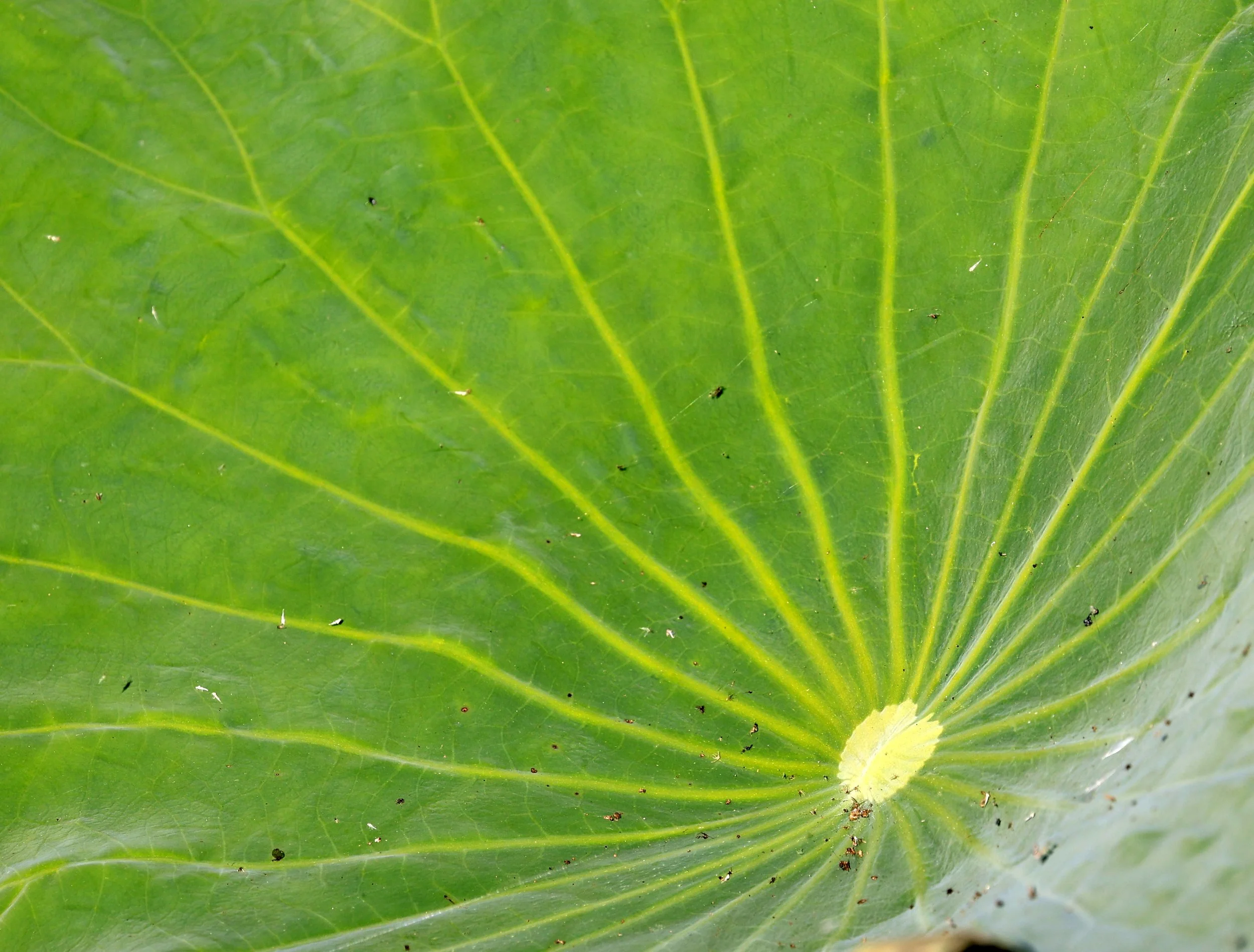
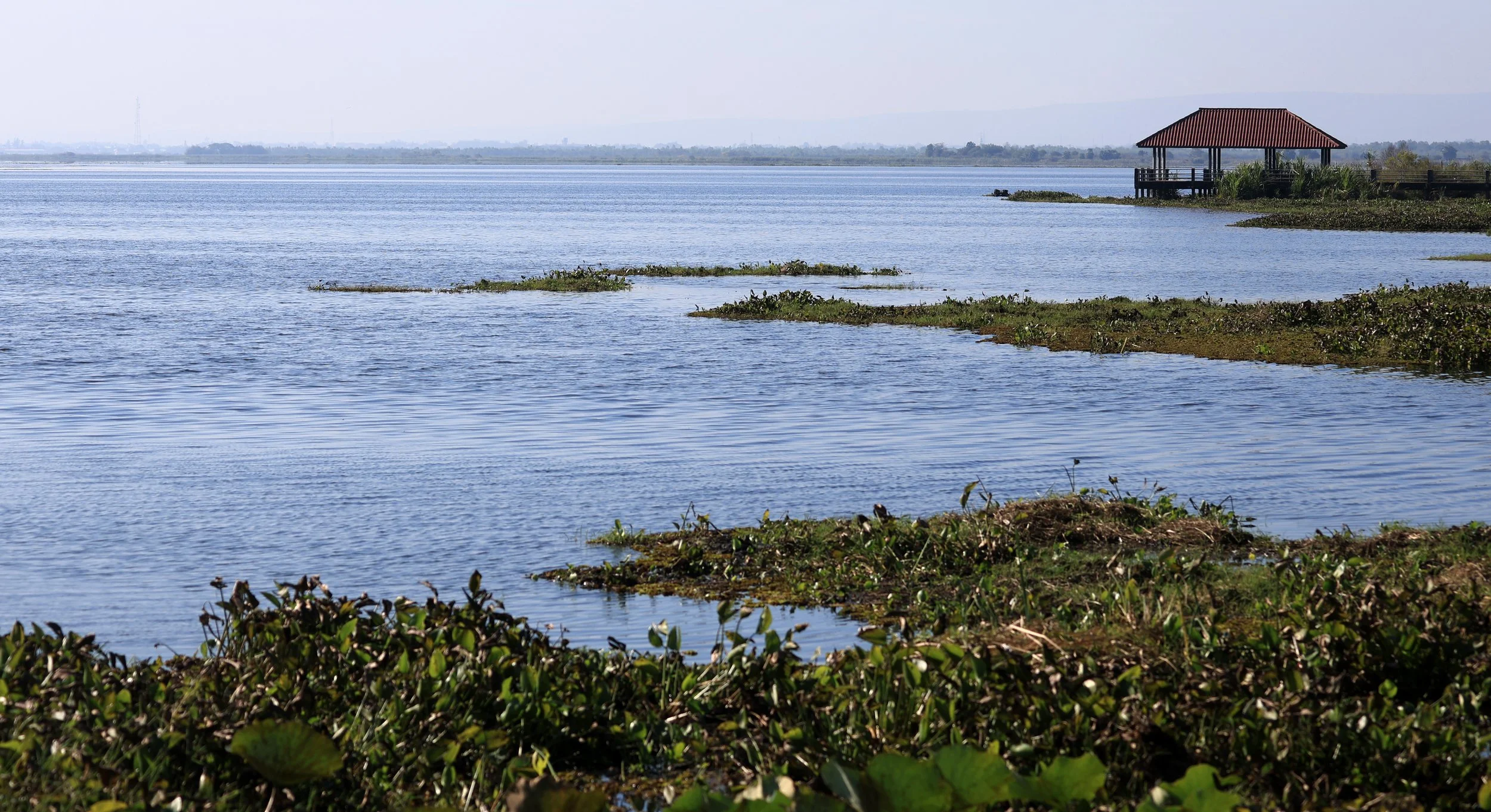
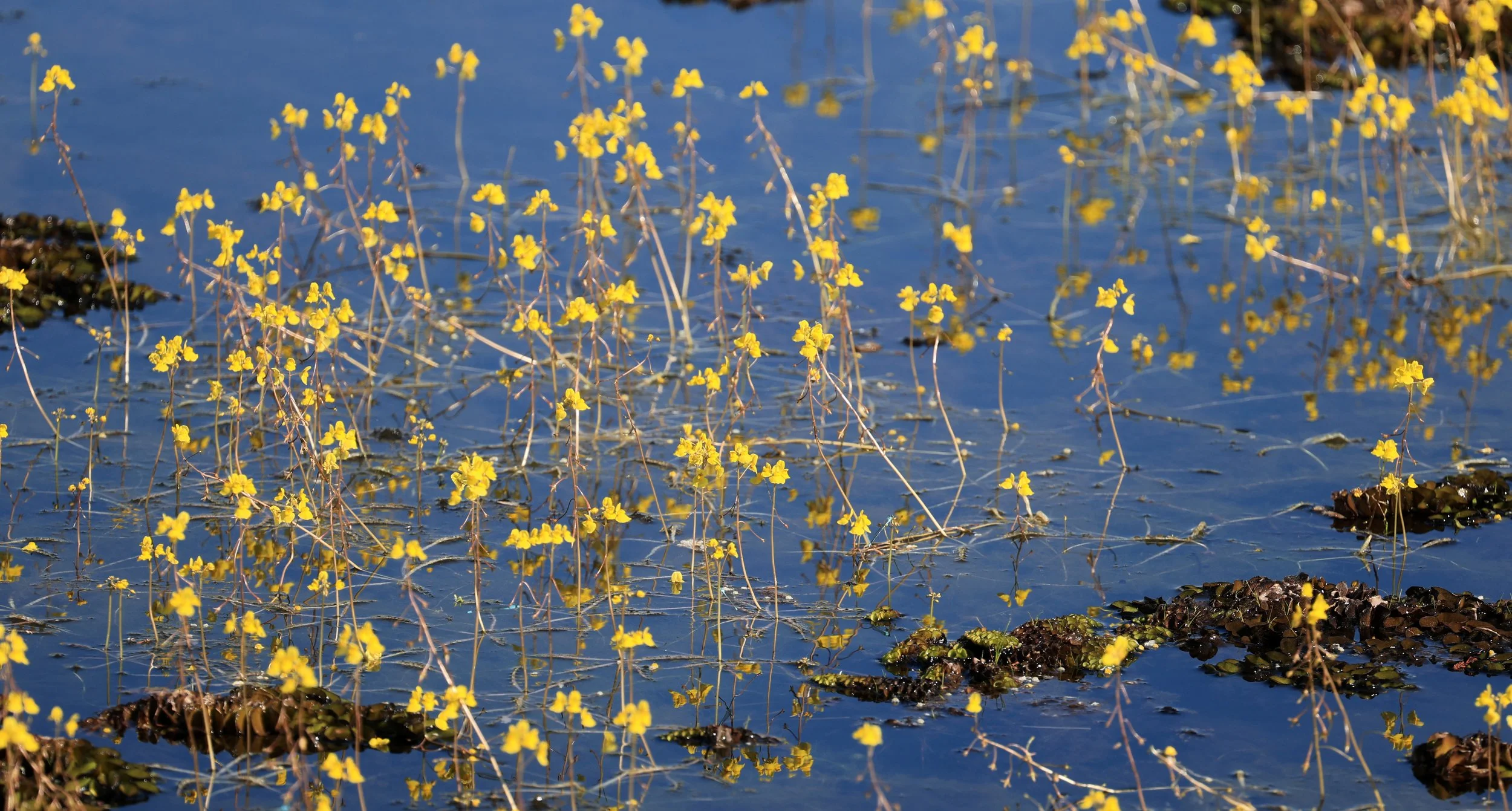
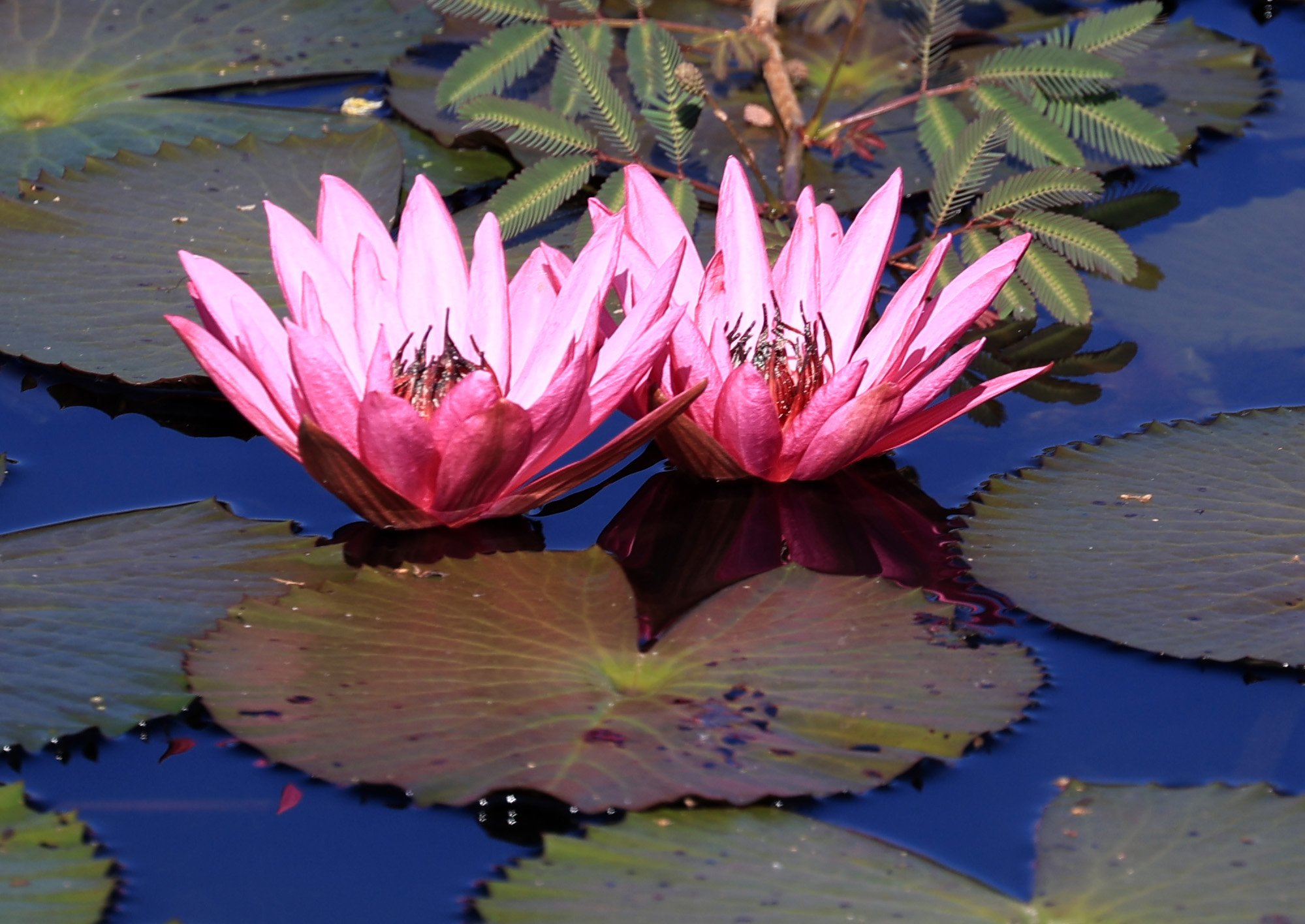
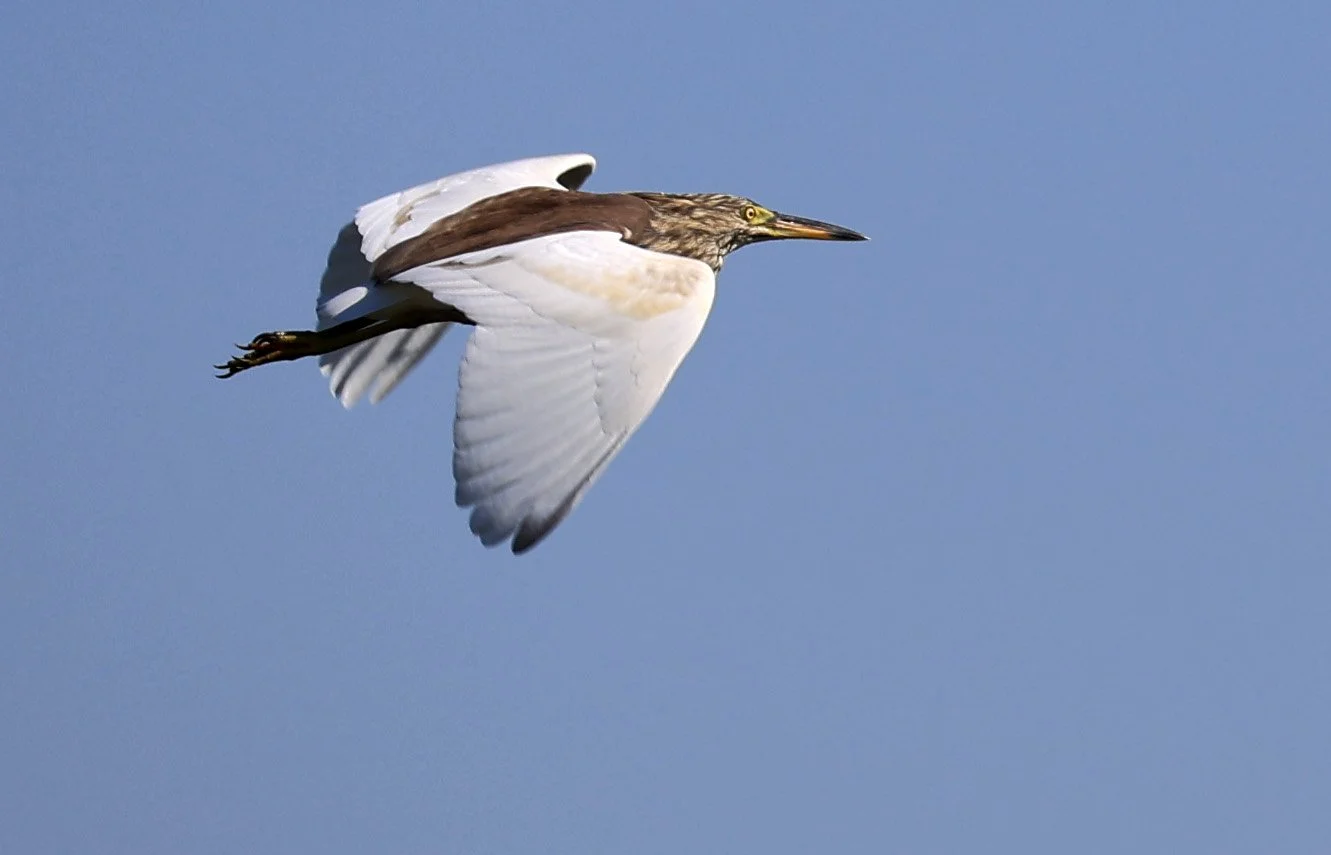
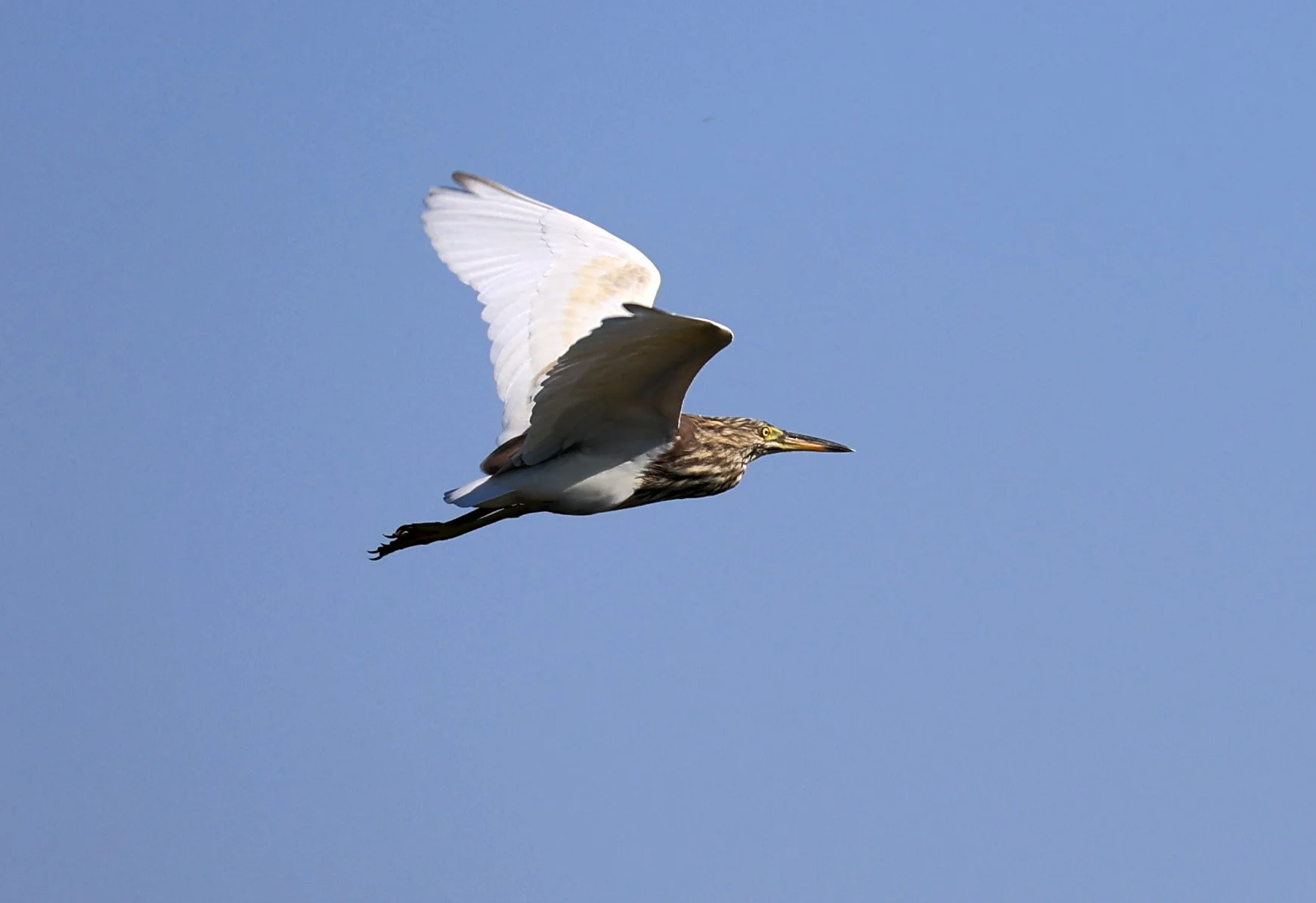
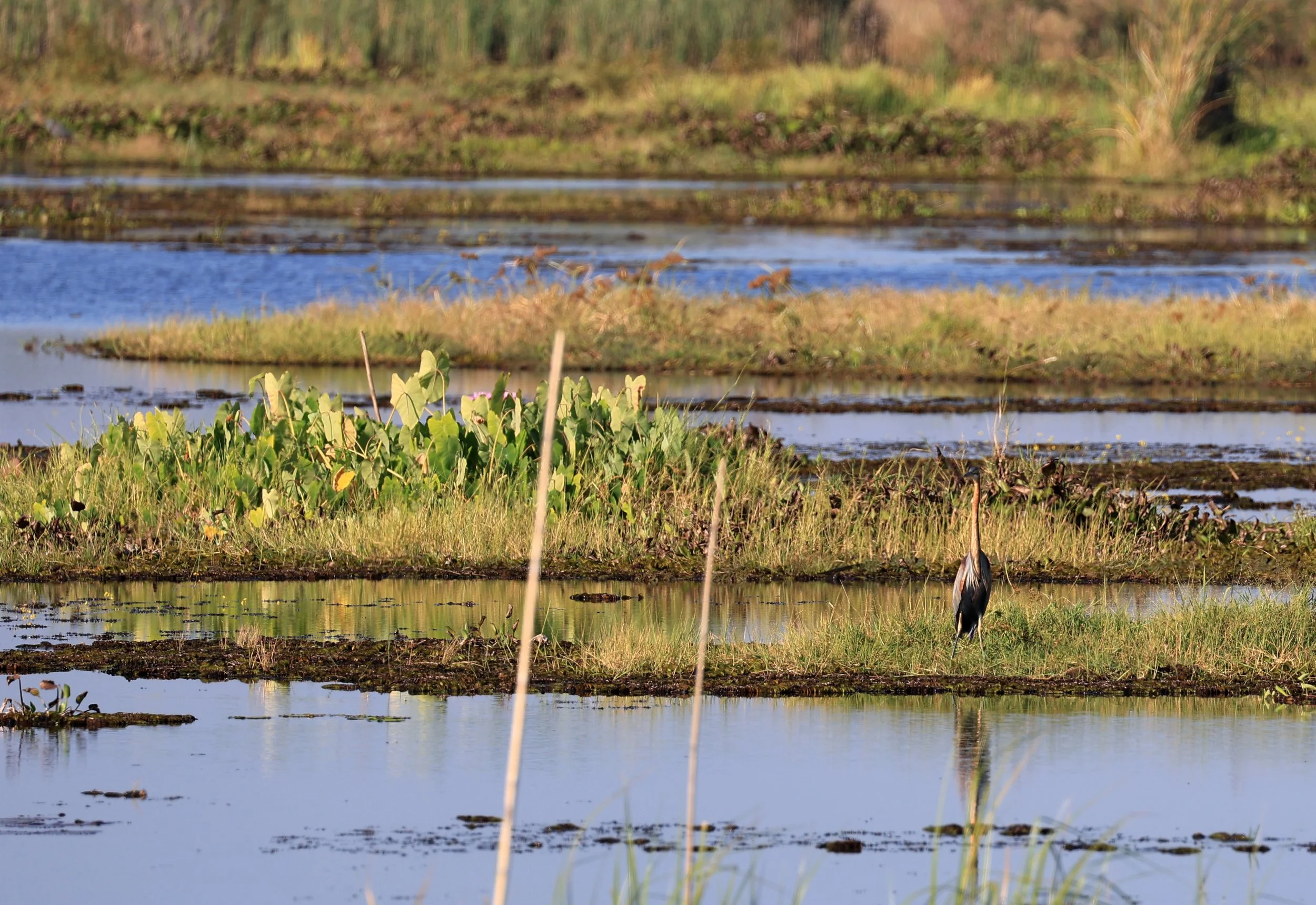
Nong Han Lake & Wetland, Sakon Nakhon Province



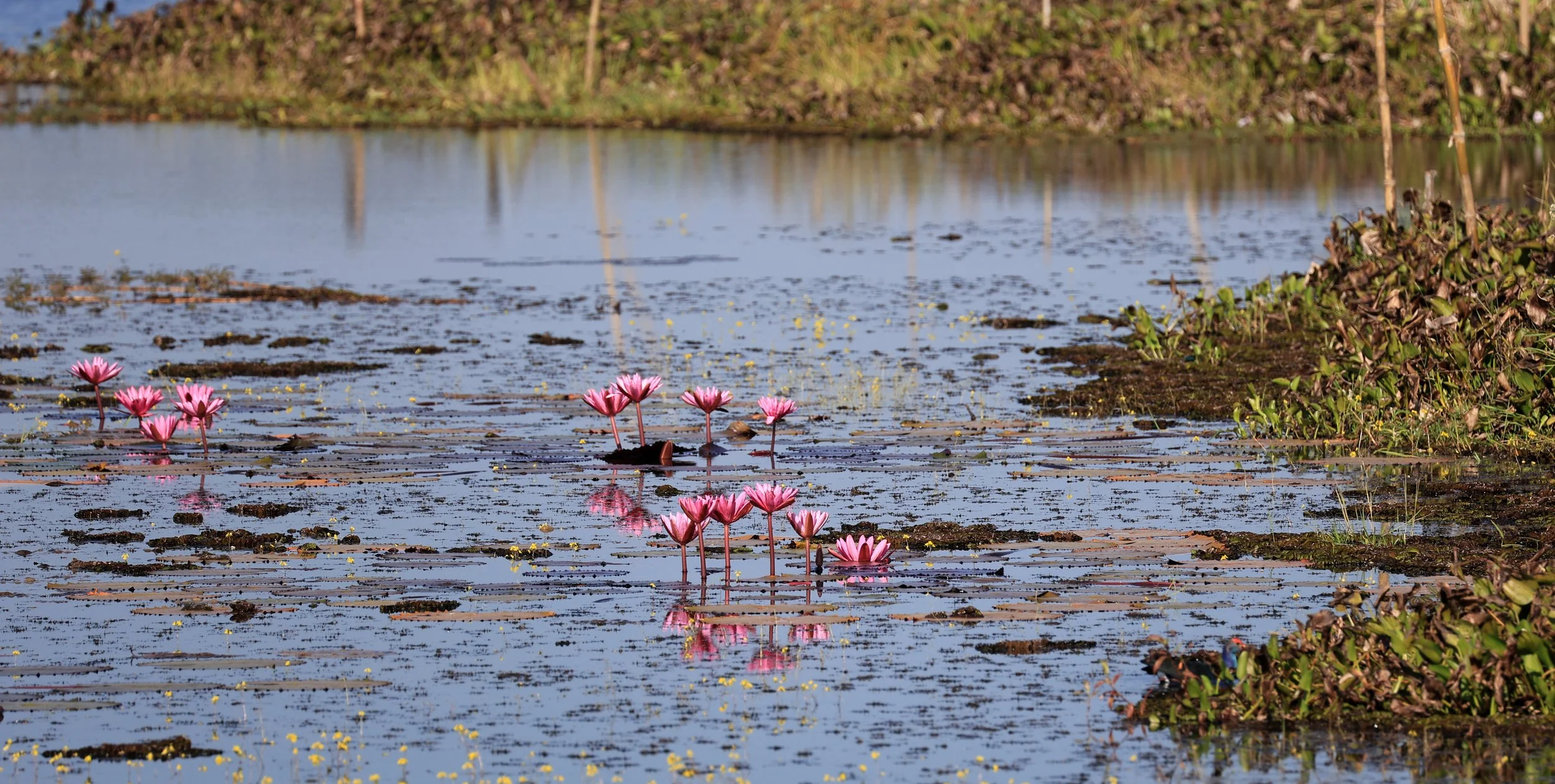


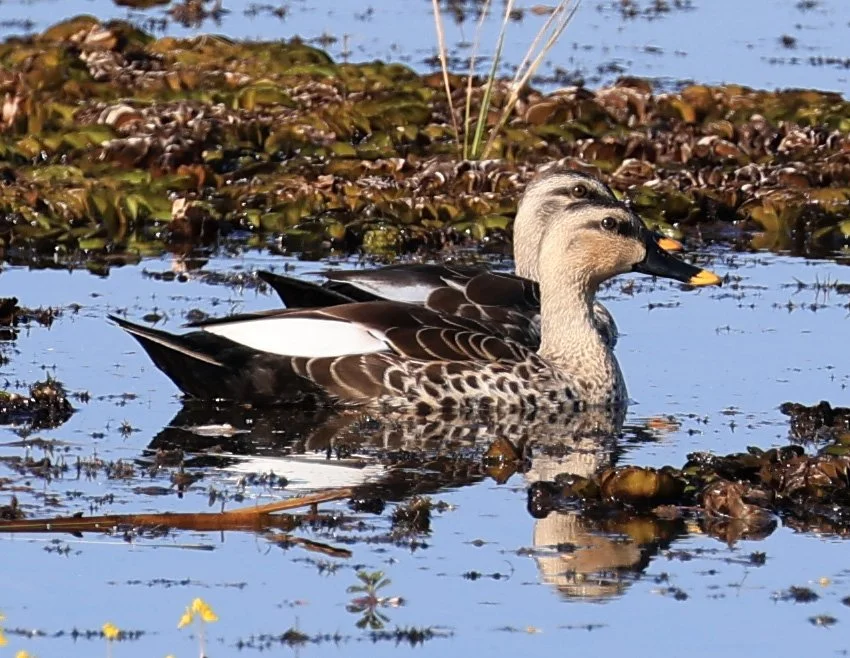





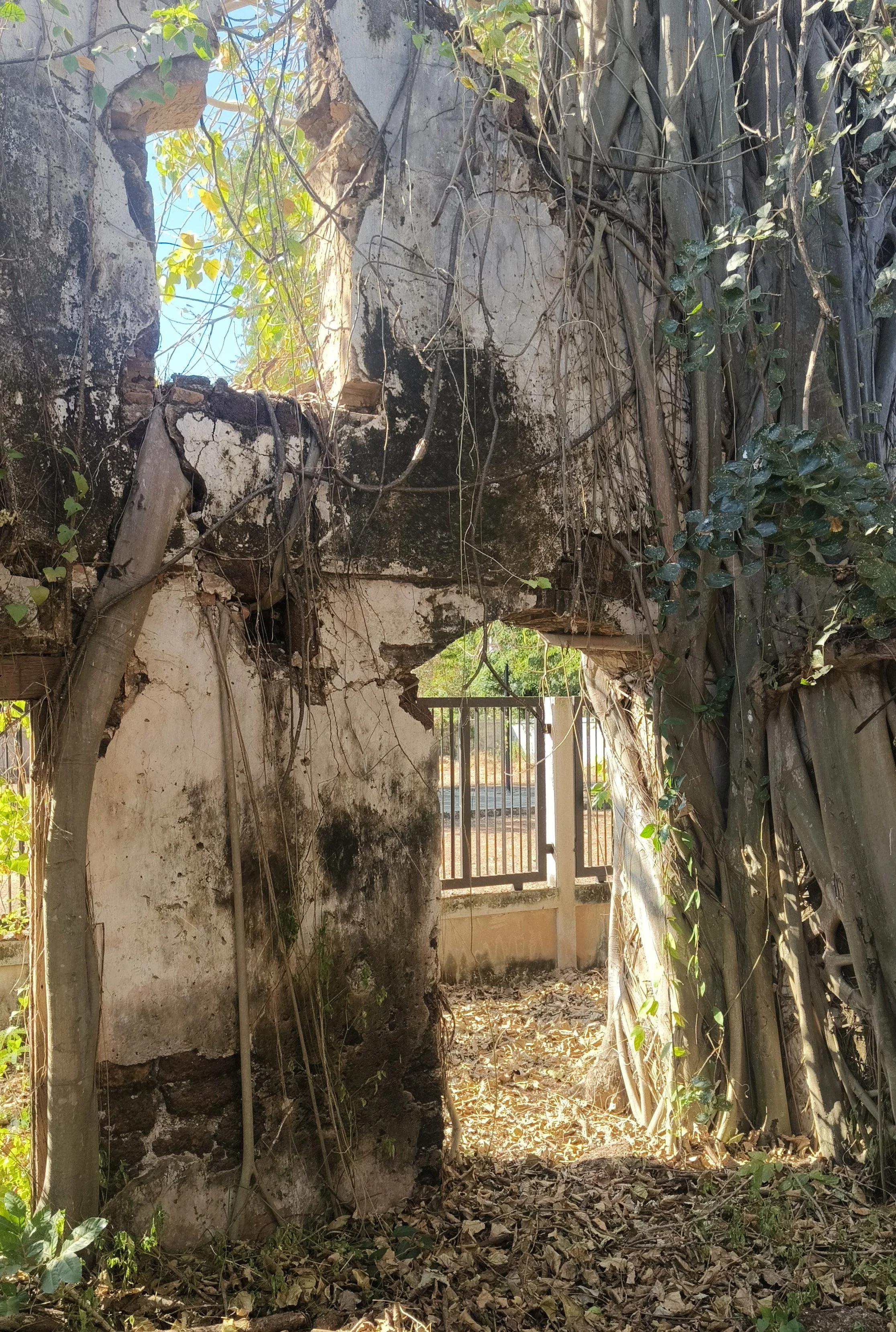
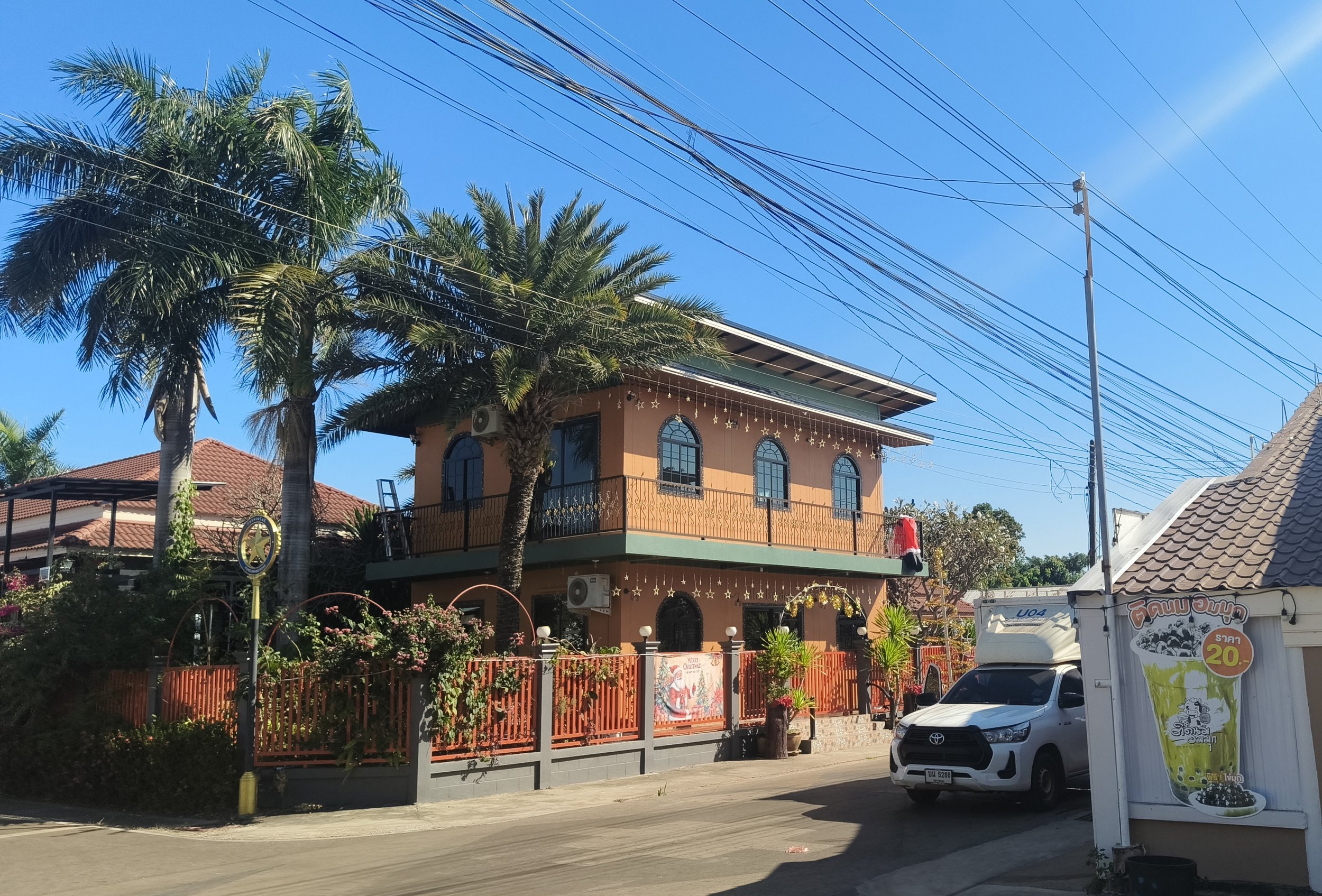
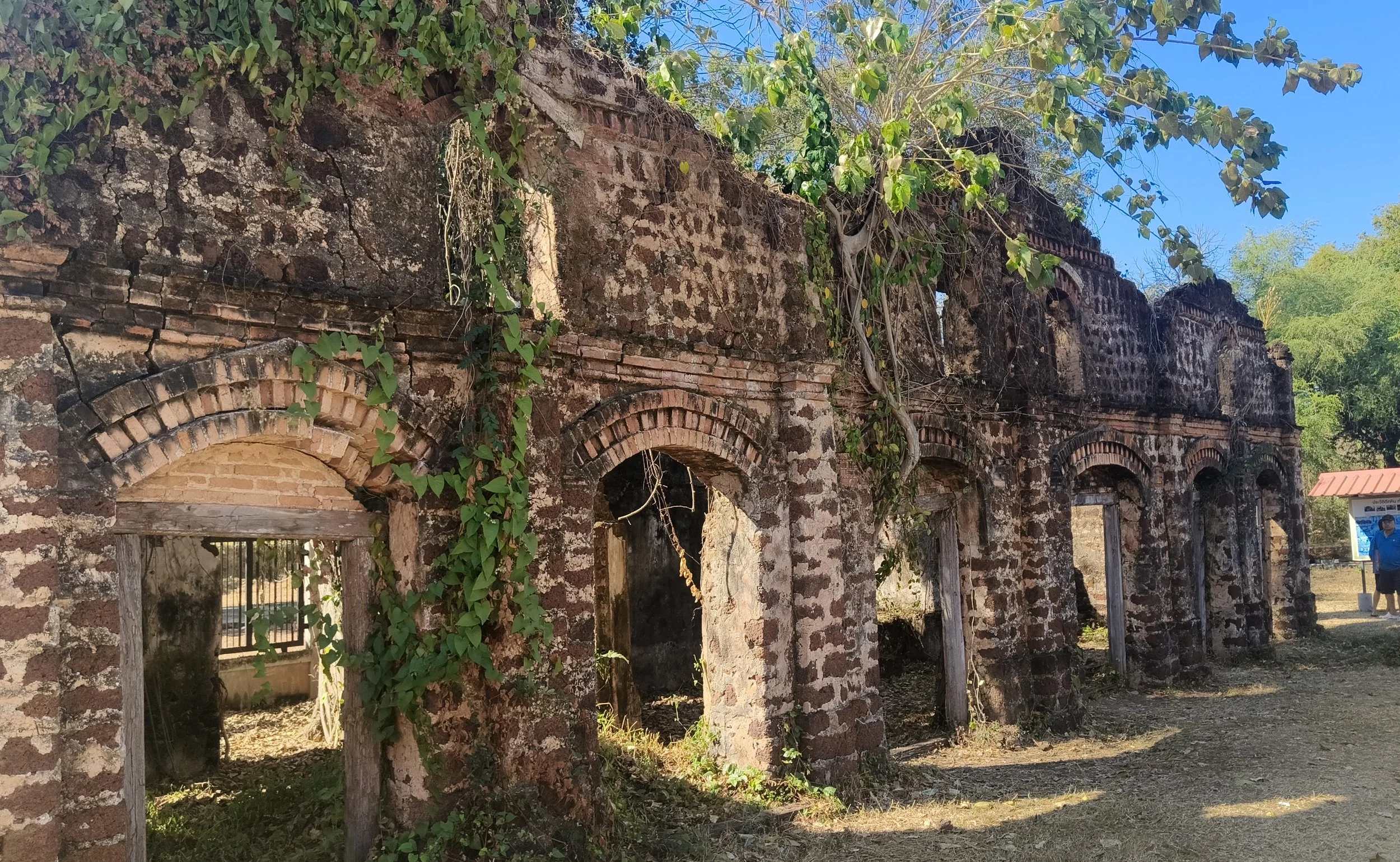
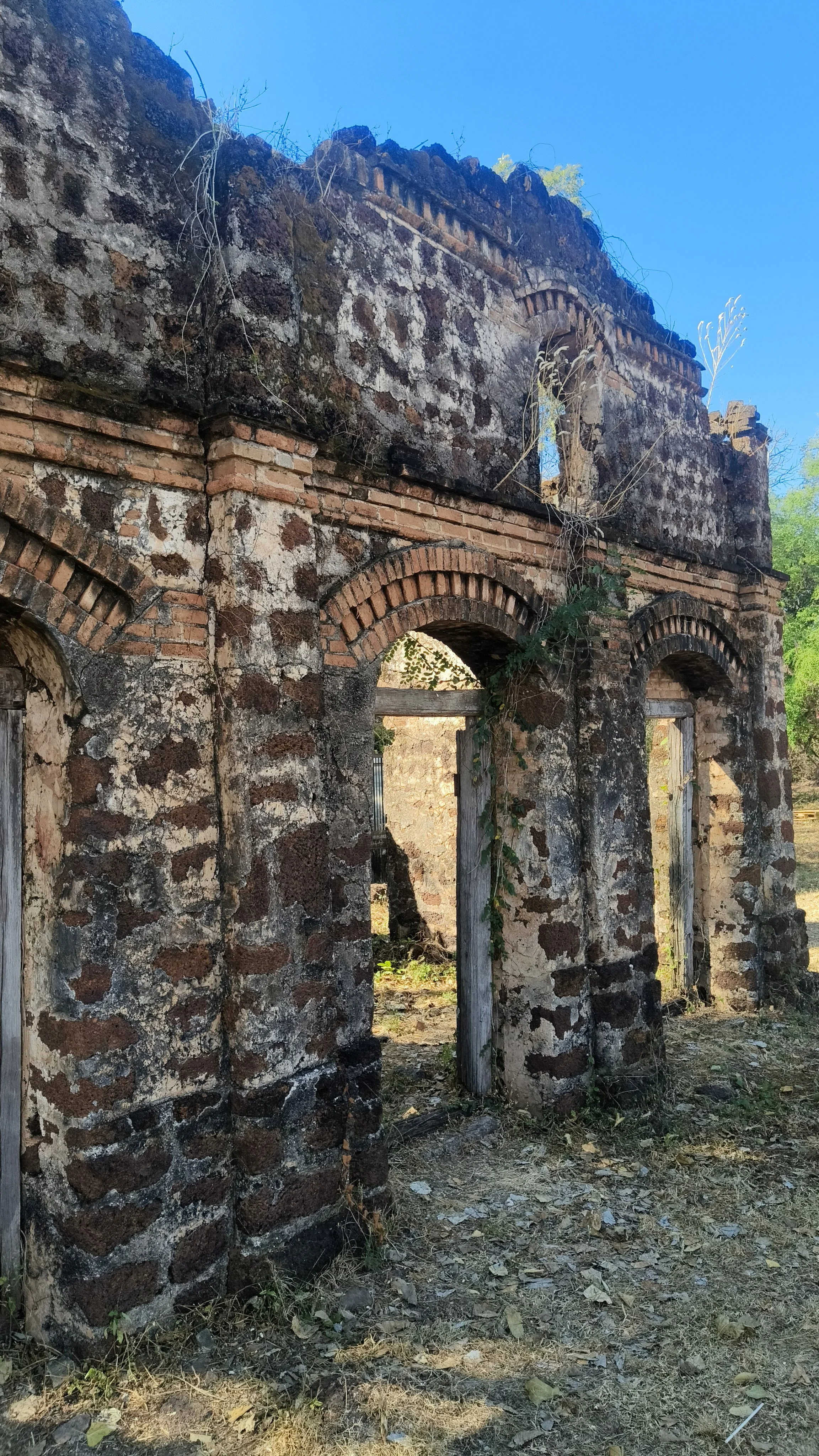
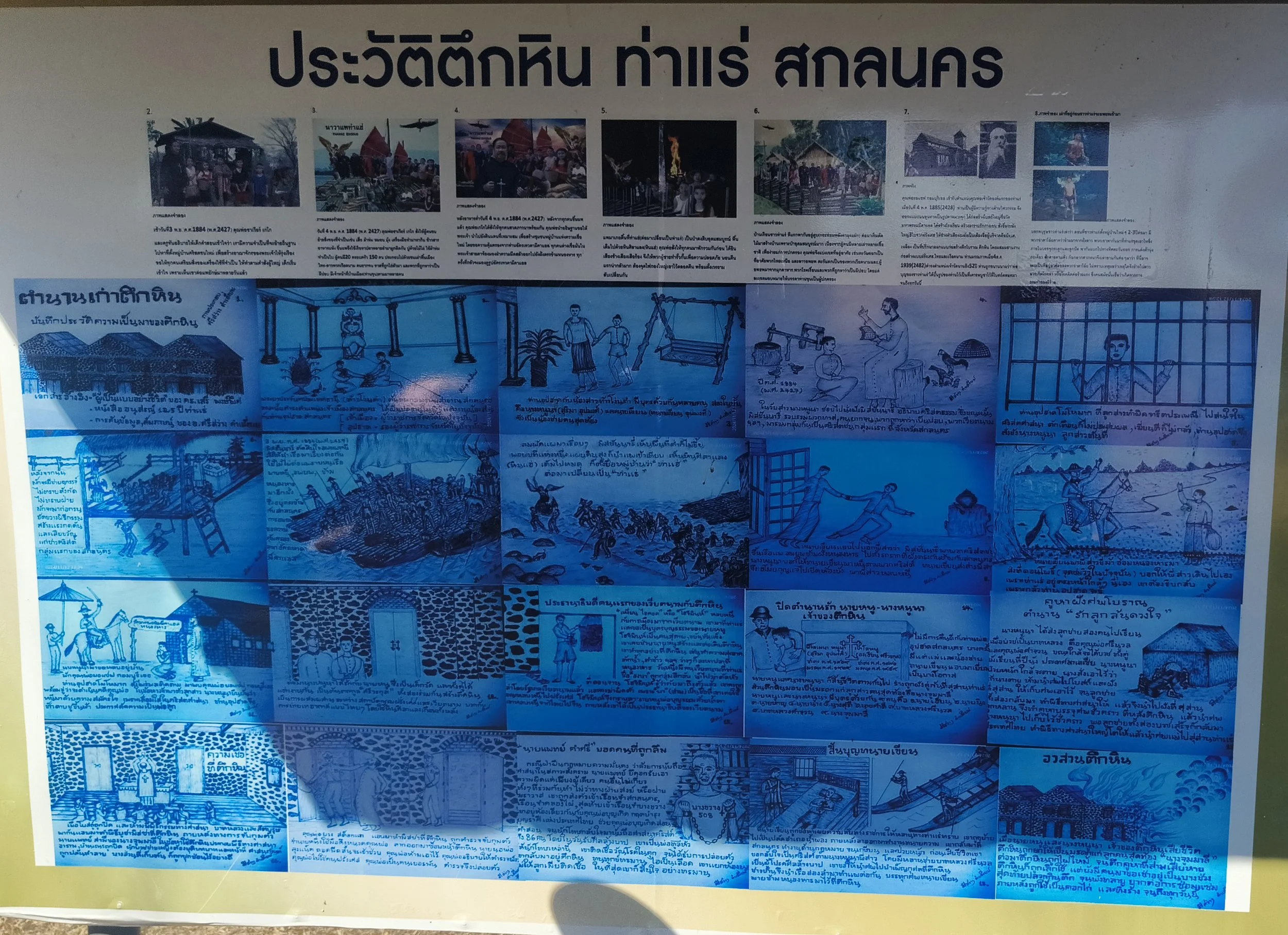
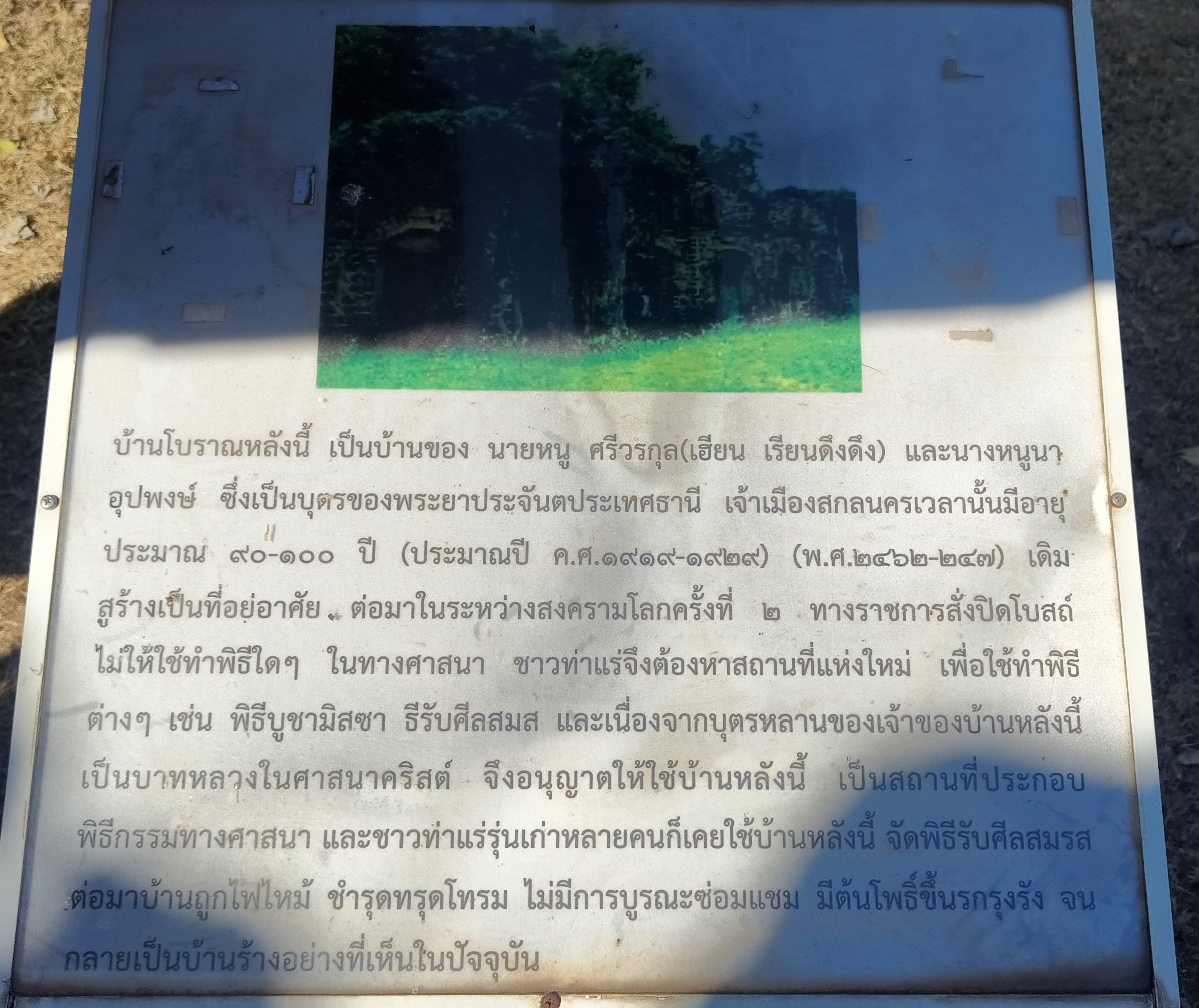
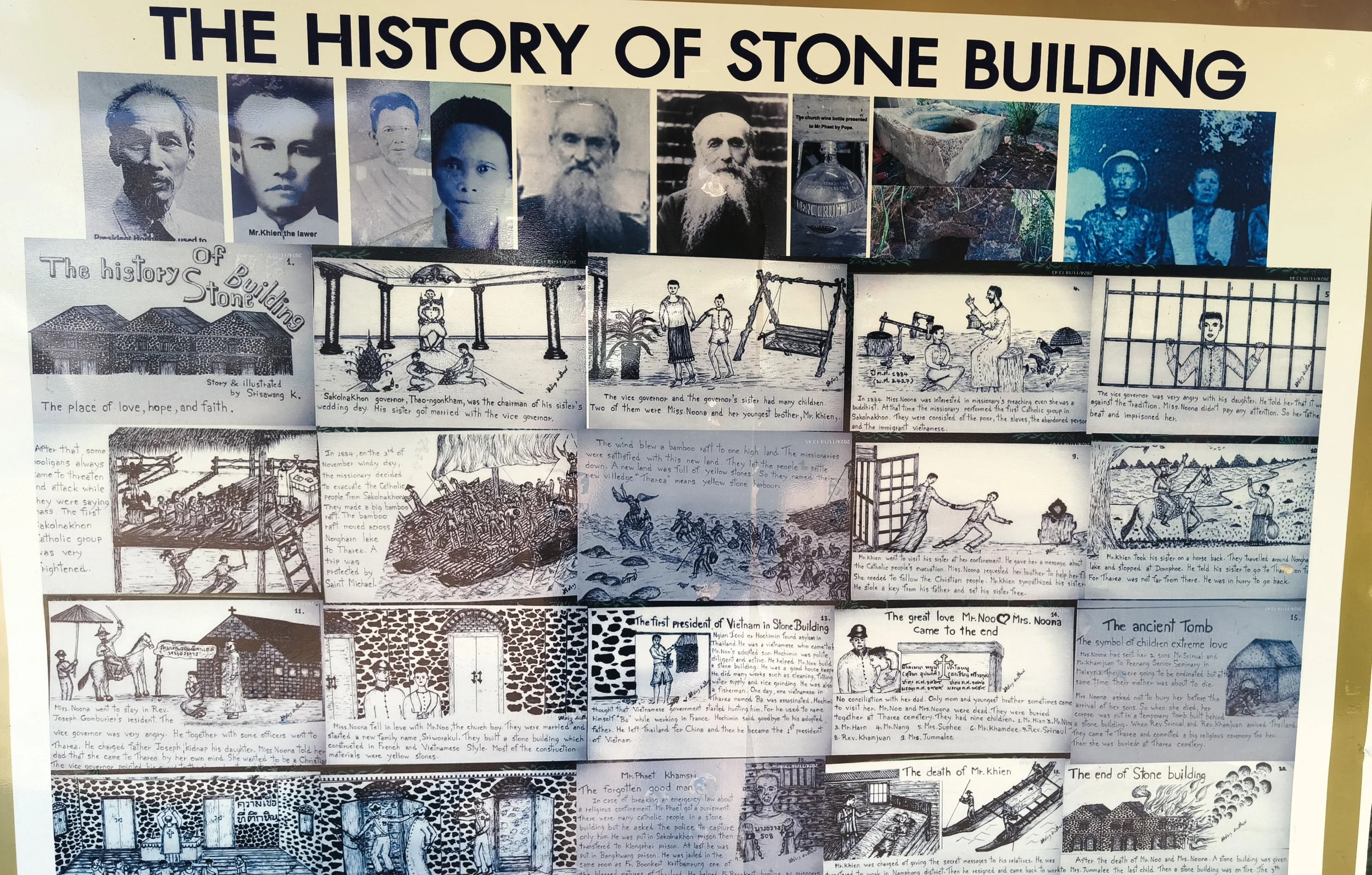
The "Old Stone Houses" in Sakon Nakhon
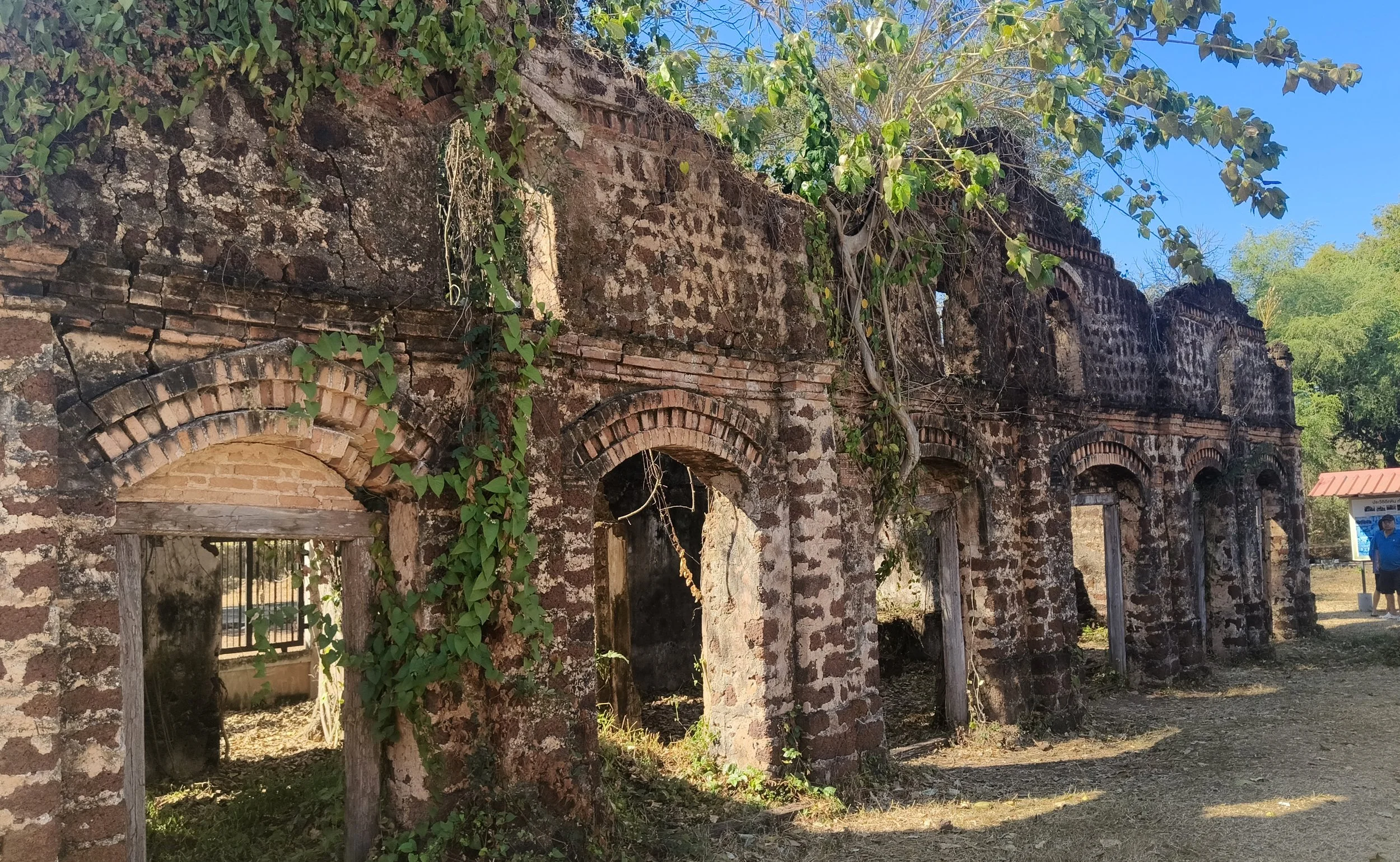
The "old stone houses" in Sakon Nakhon are the historic French-colonial style buildings located in the Tha Rae Catholic Community, which is a well-known tourist attraction. These houses are notable for their unique architecture, a mix of French, Vietnamese, and colonial styles, built by Vietnamese Christian immigrants who settled there over a century ago.
Location: Tha Rae Village (Ban Tha Rae), located near Nong Harn lake on Highway 22 (Sakon Nakhon - Nakhon Phanom), about 21 kilometers from Sakon Nakhon city center.
Architecture: The buildings are primarily made of brick, often featuring arched doorways and windows, which gives them a stone-like or rustic appearance. This architectural style is rare in the region and offers great photo opportunities.
Udomdetwat Mansion (คฤหาสน์อุดมเดชวัฒน์): This is one of the most prominent and well-preserved buildings, over 90 years old. The ground floor now houses the UDD Udomdetwat Café and Bistro, allowing visitors to experience the antique interior.
St. Michael's Cathedral: The large, boat-shaped church is a central landmark of the community, commemorating the migration of the first settlers.
Tha Rae Village Layout: The village itself is laid out in a distinct checkerboard pattern, similar to a European city plan.
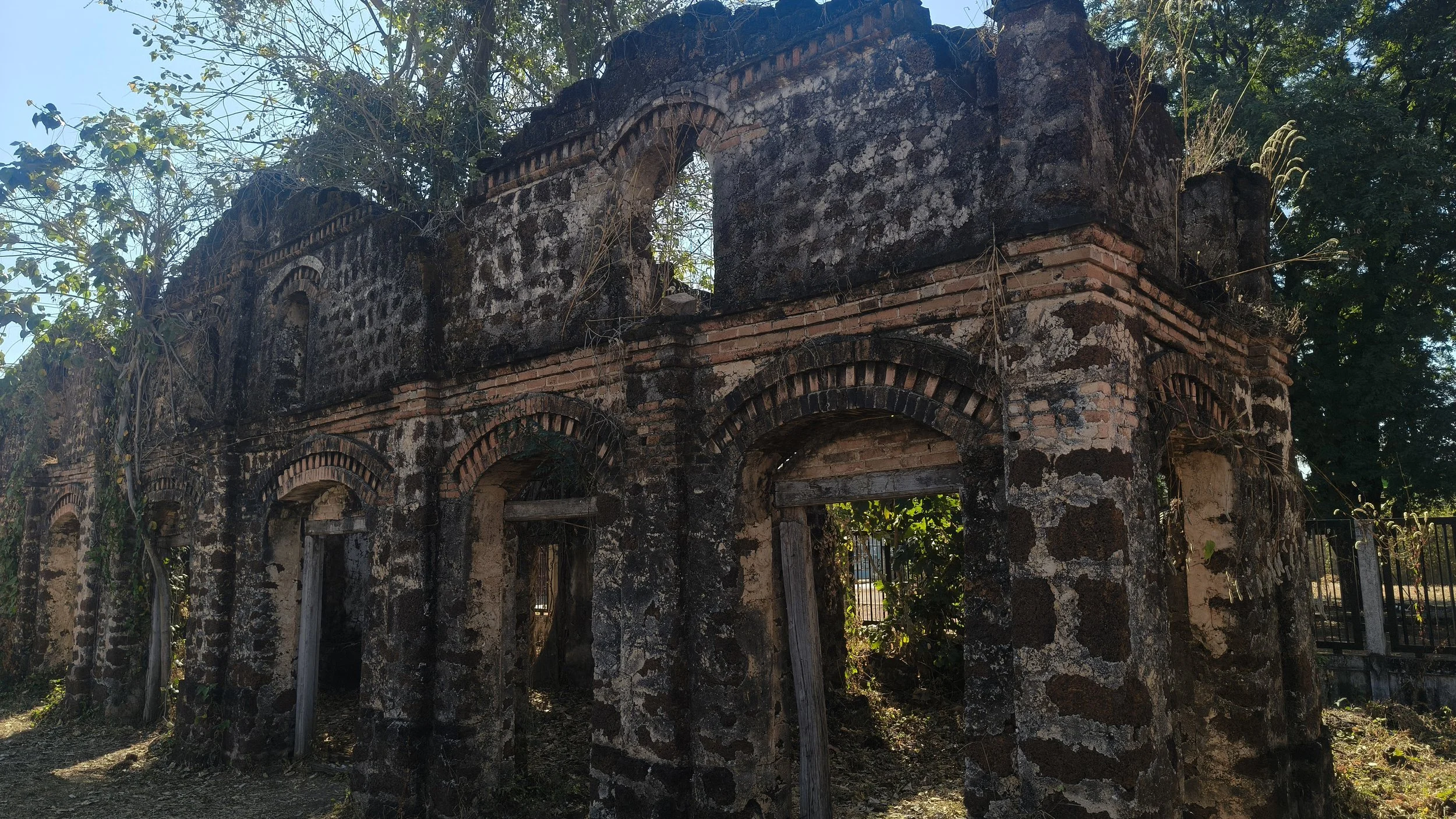
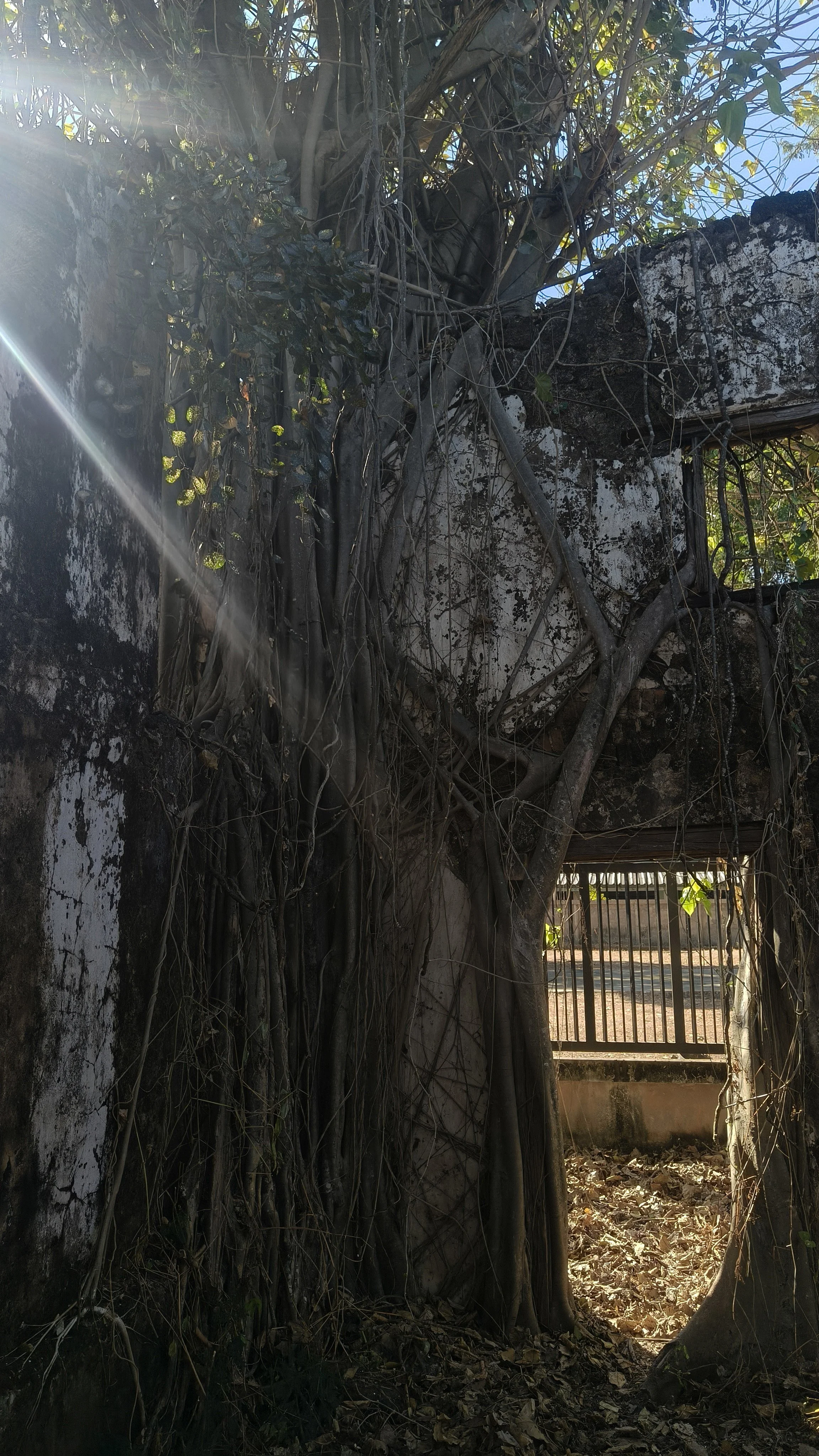
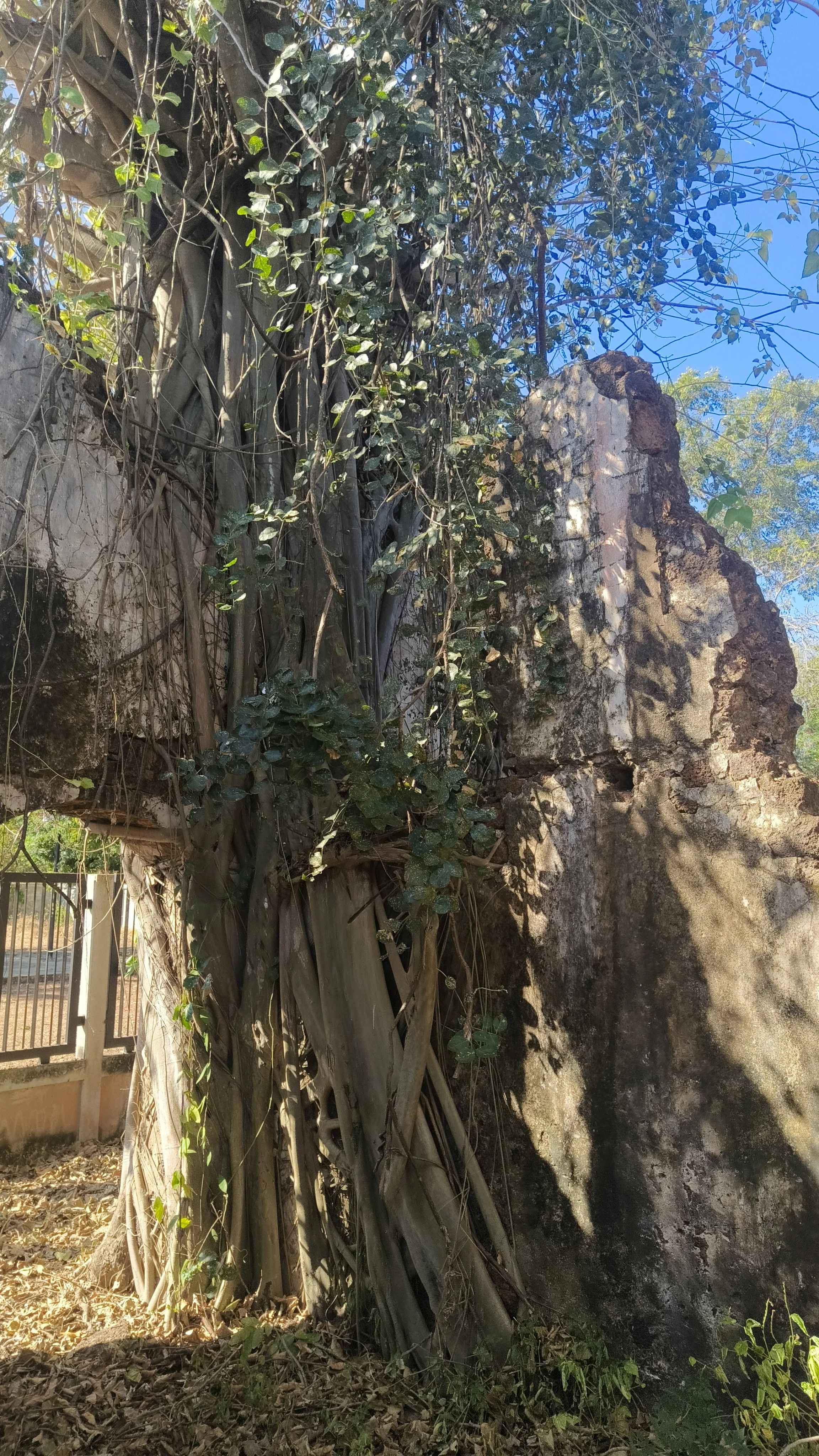
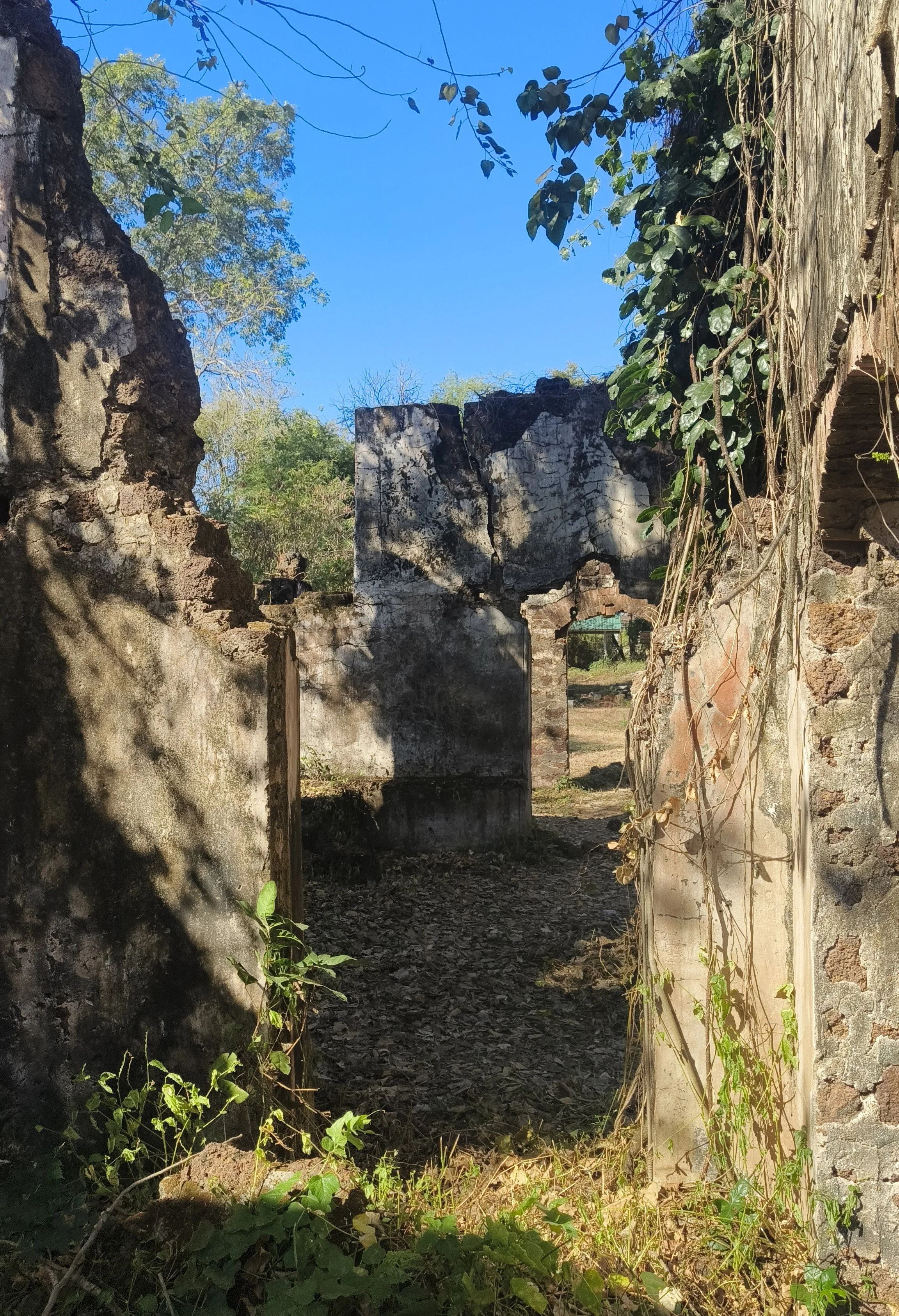
Phu Phan National Park, Kalasin Province
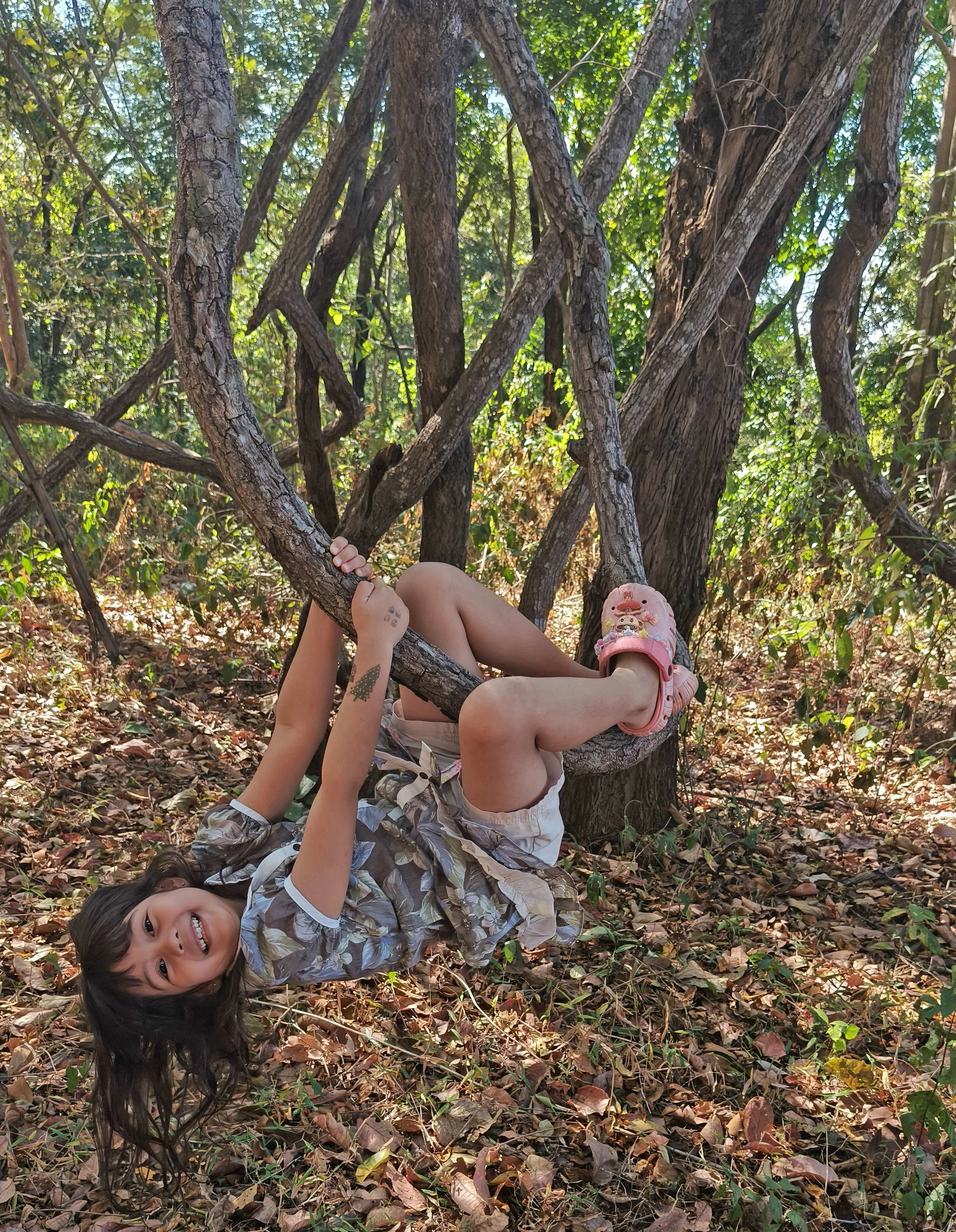
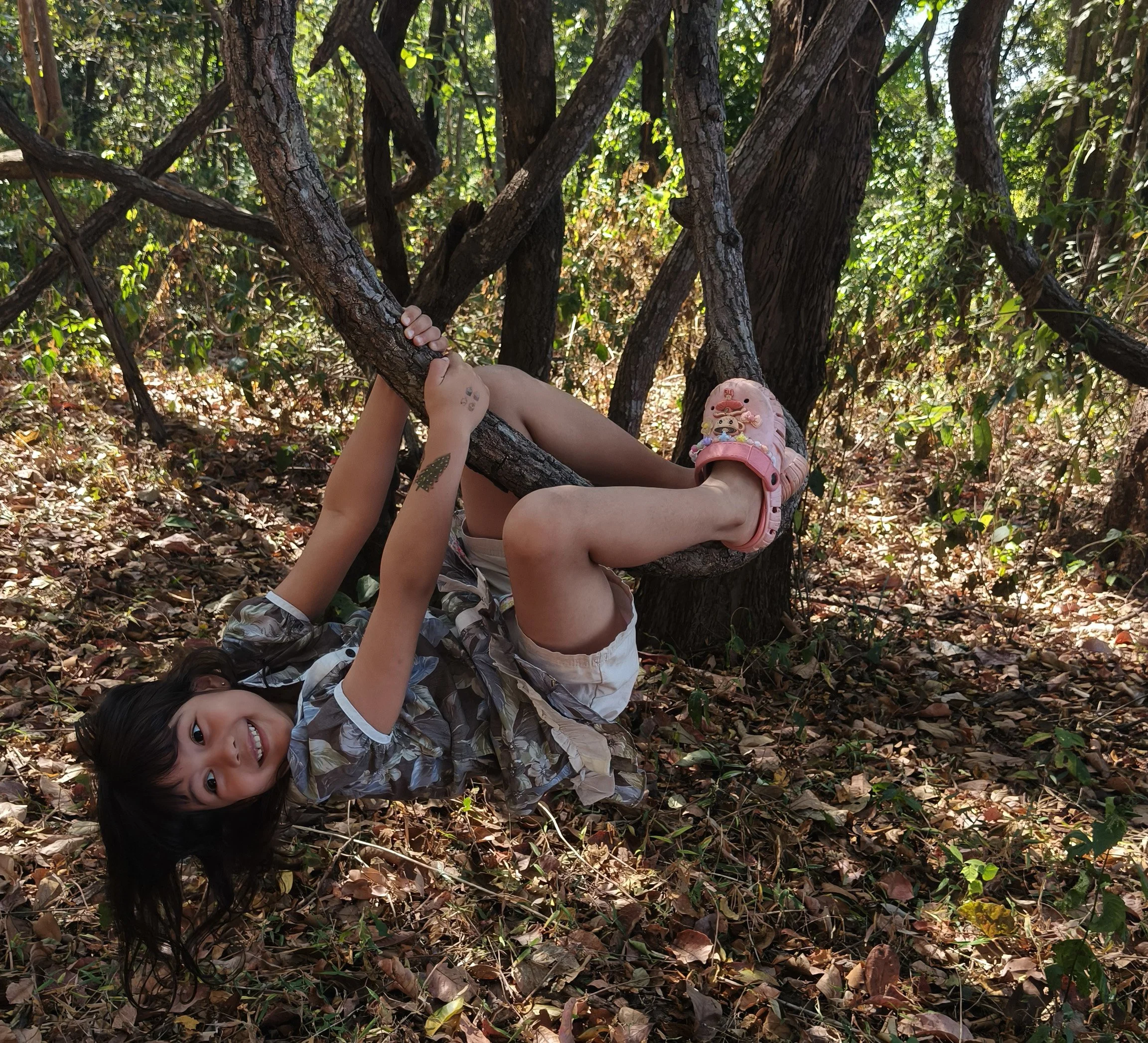
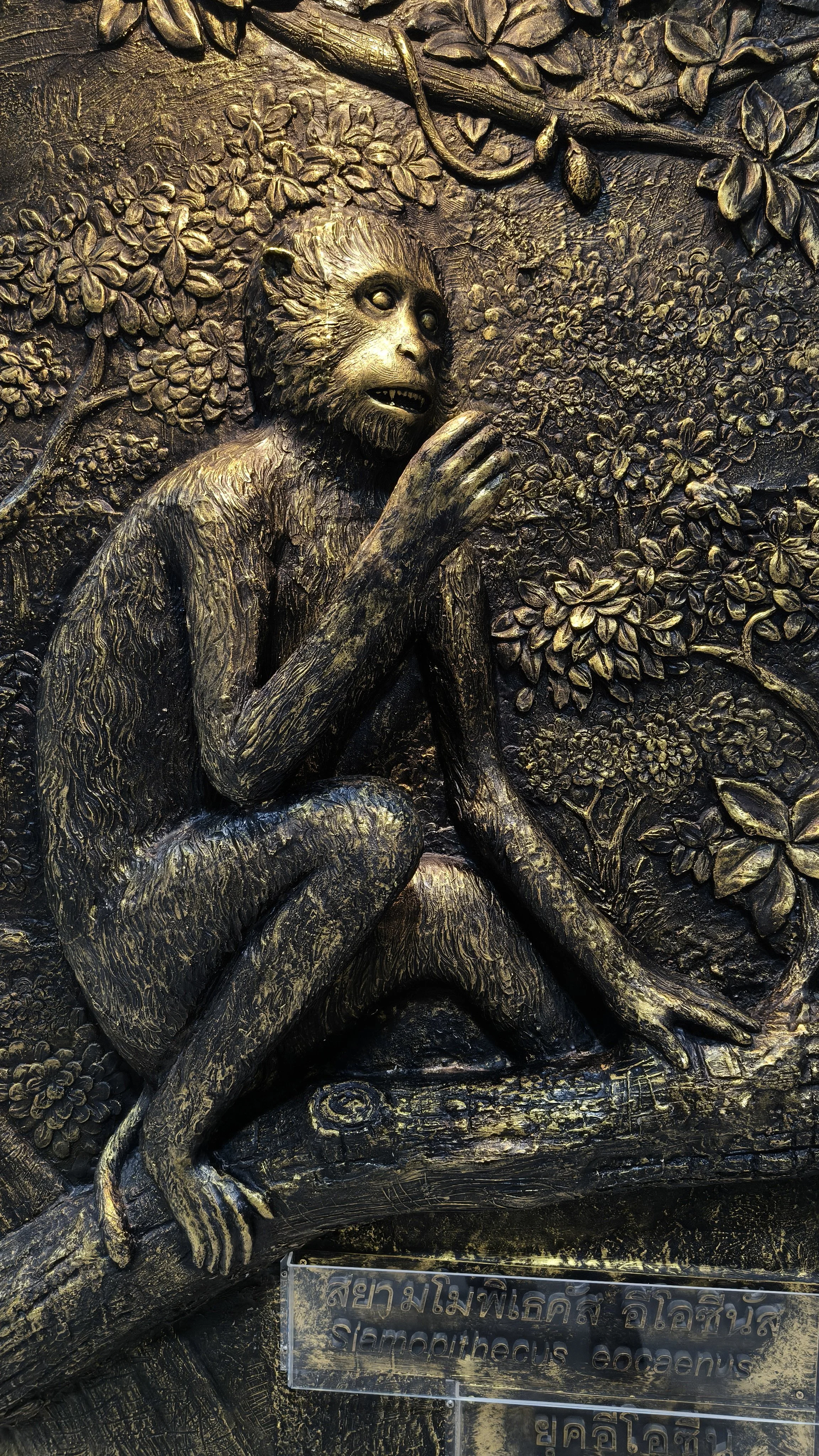
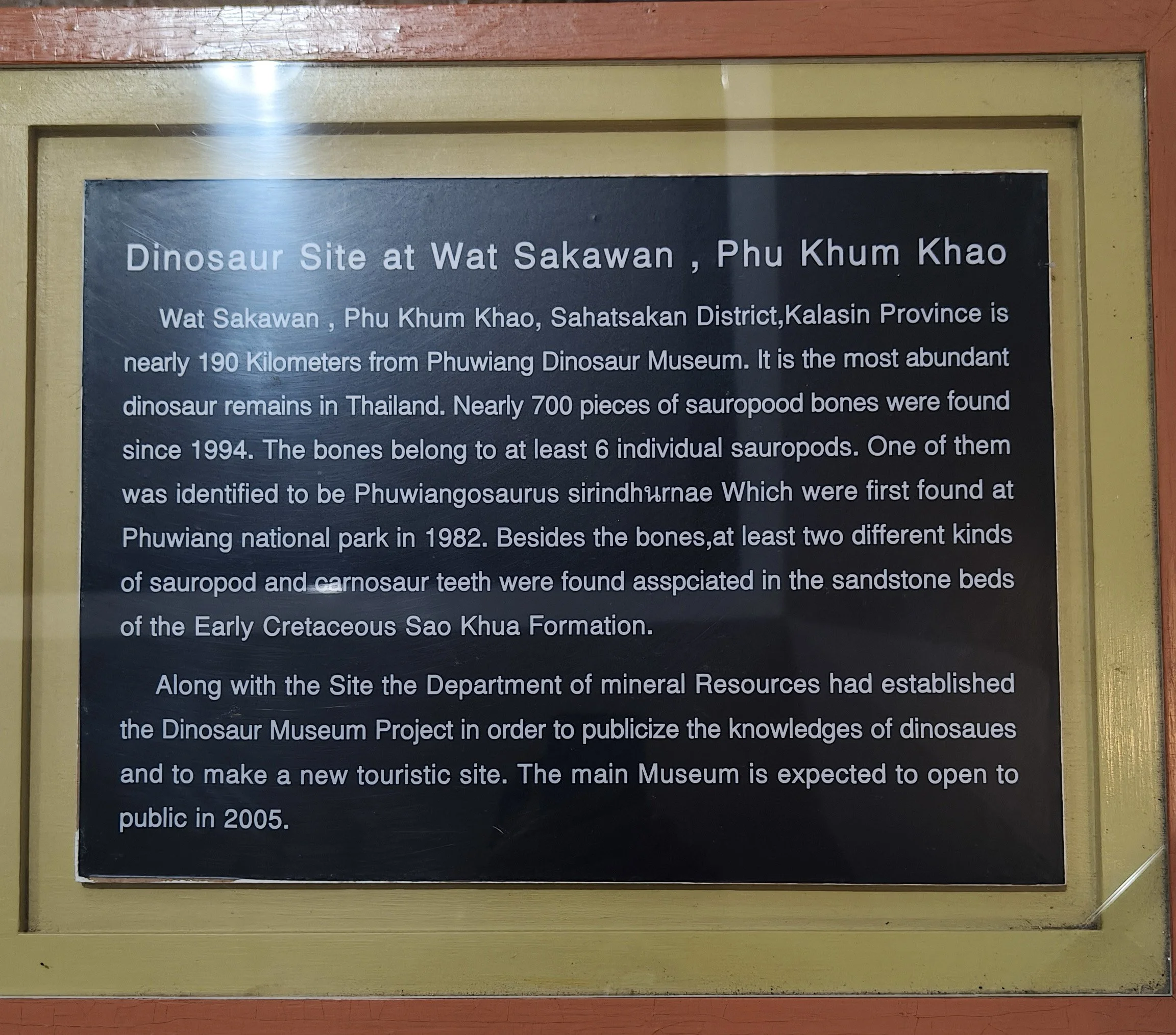
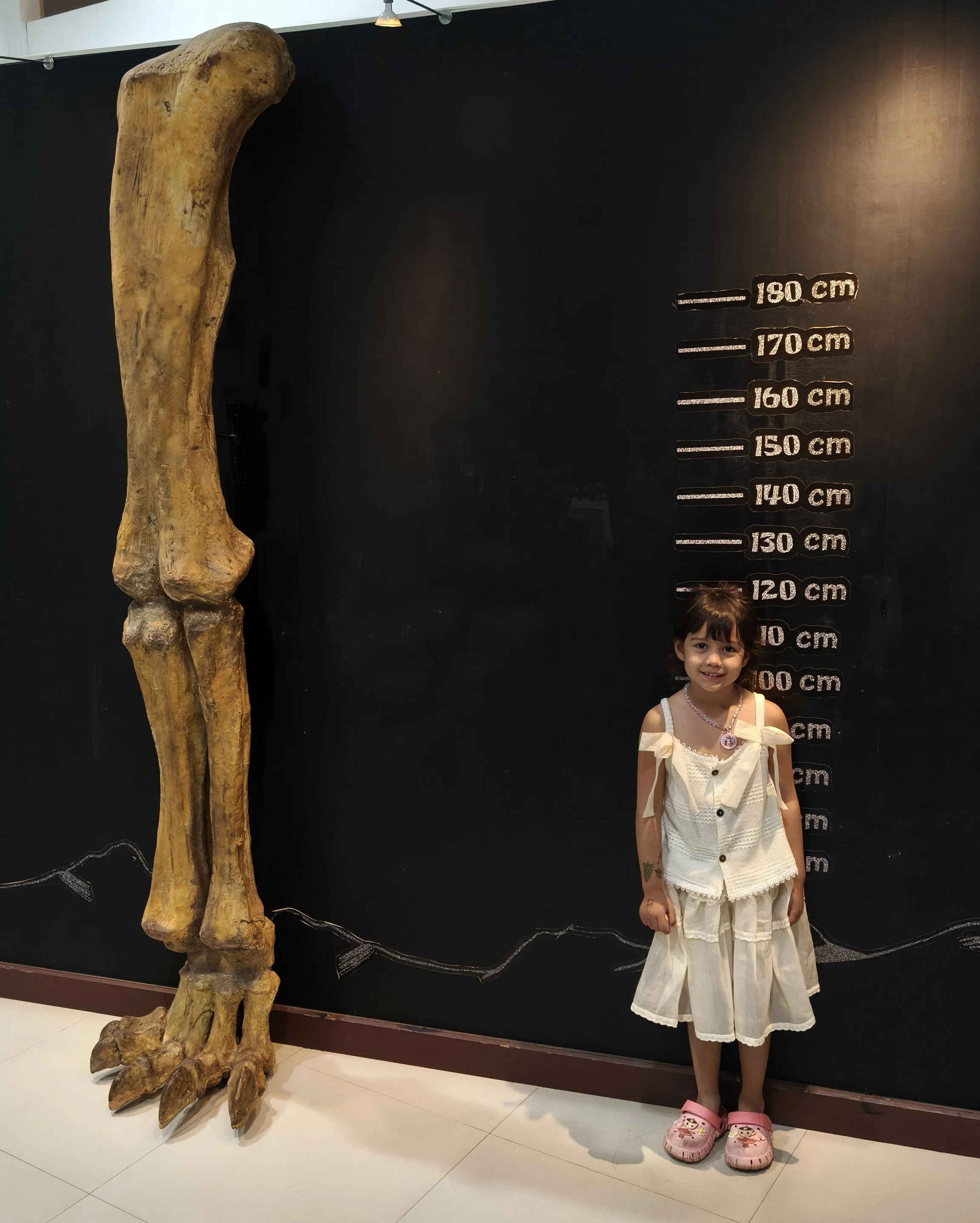
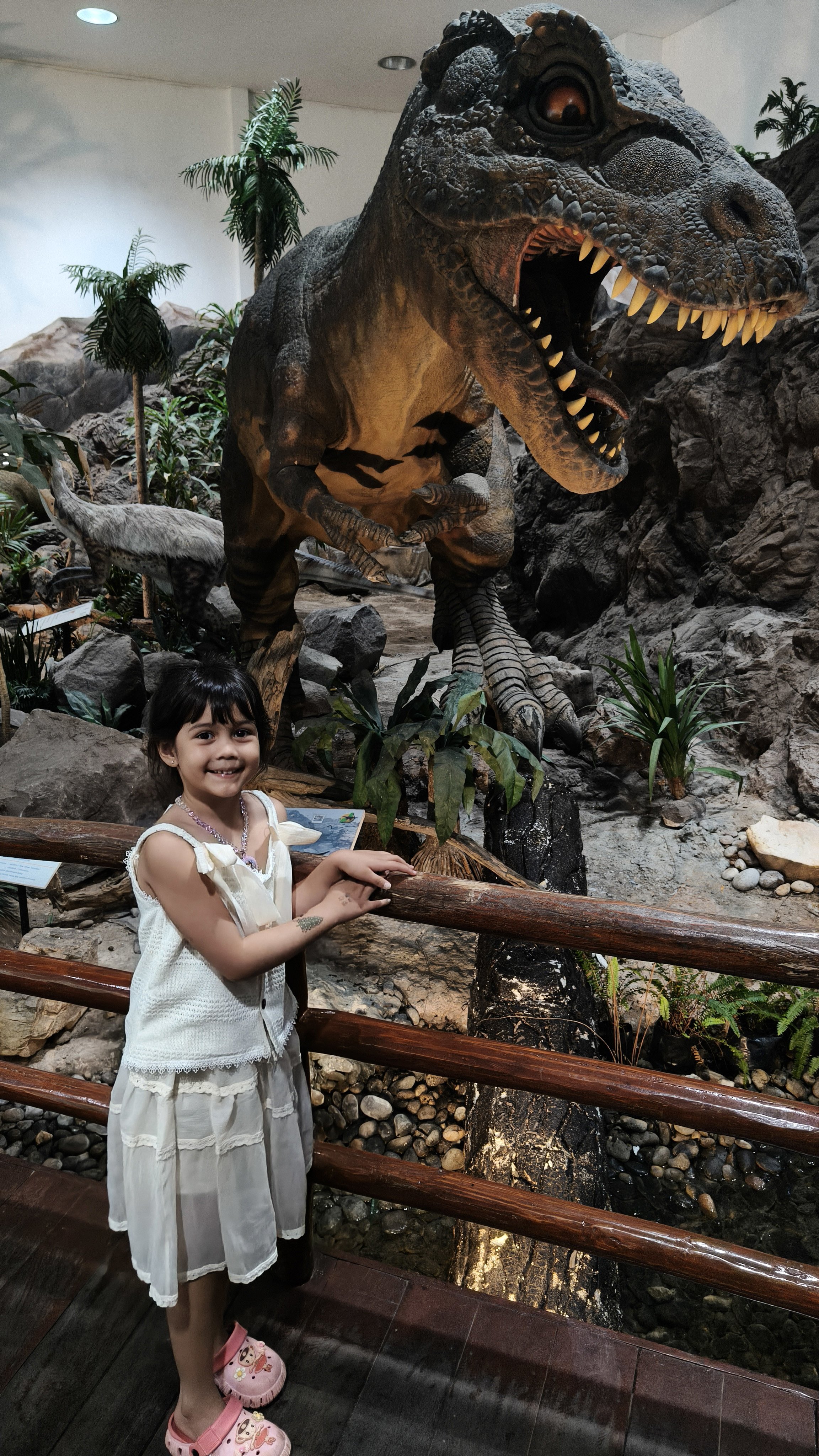
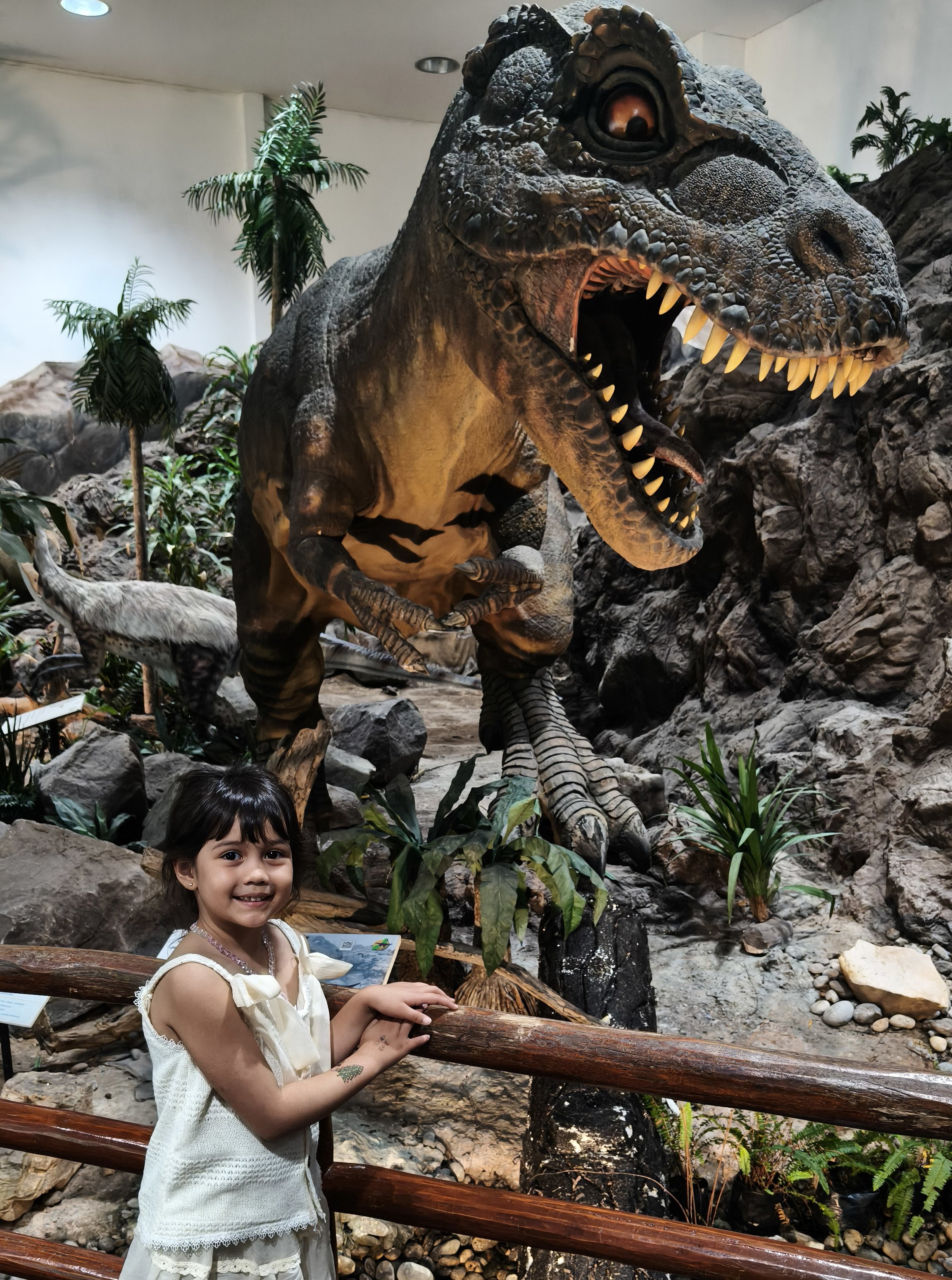
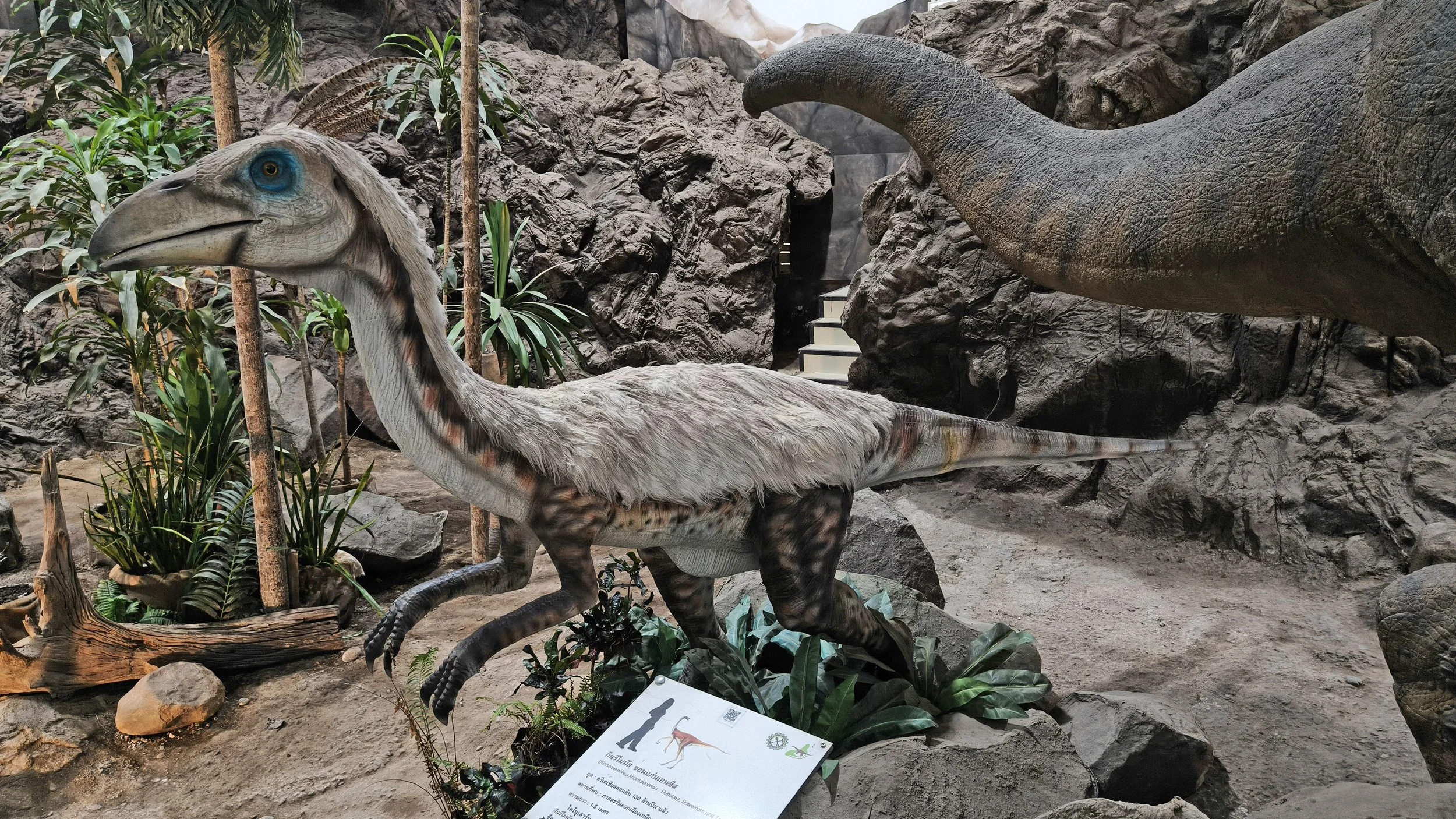
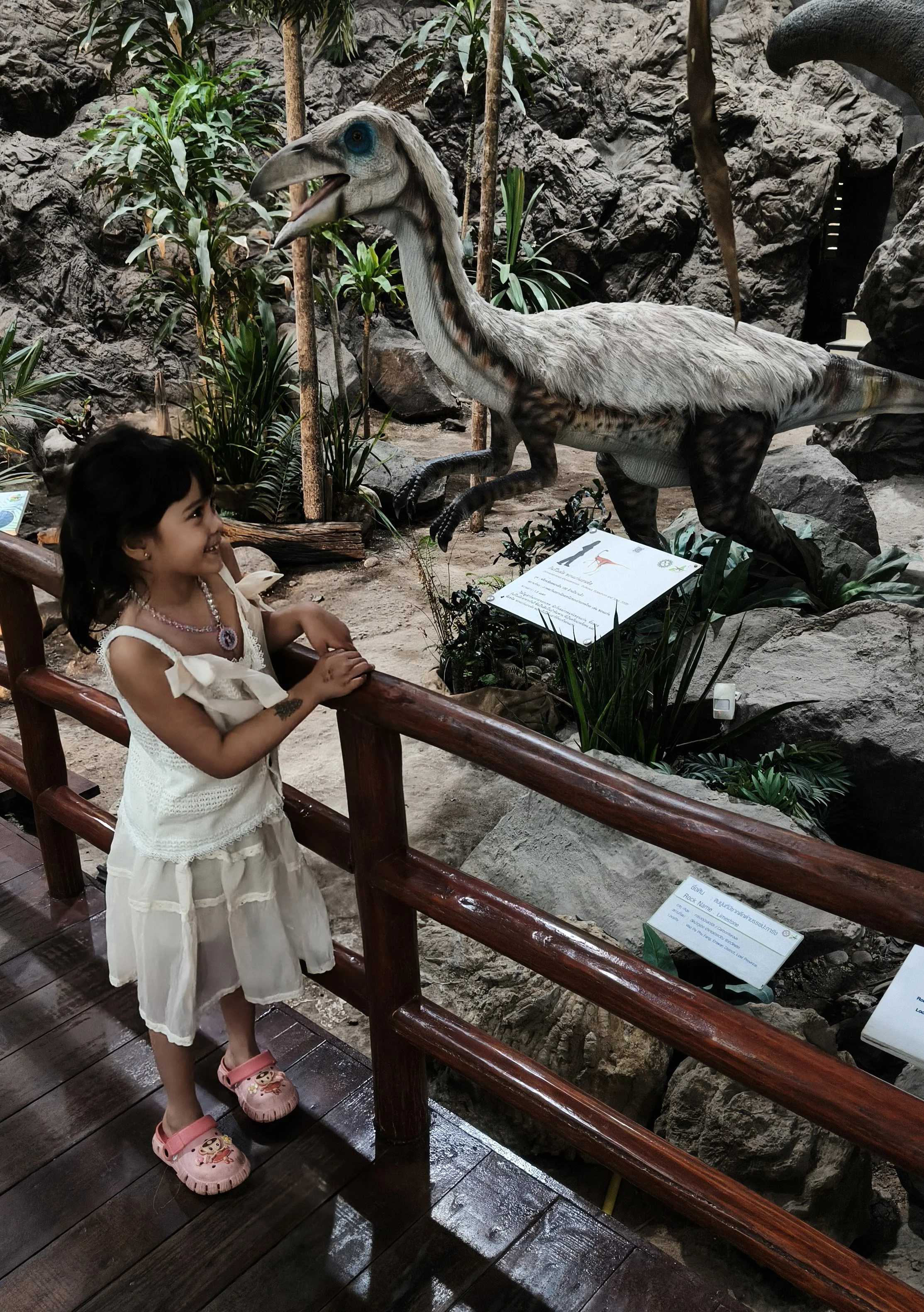
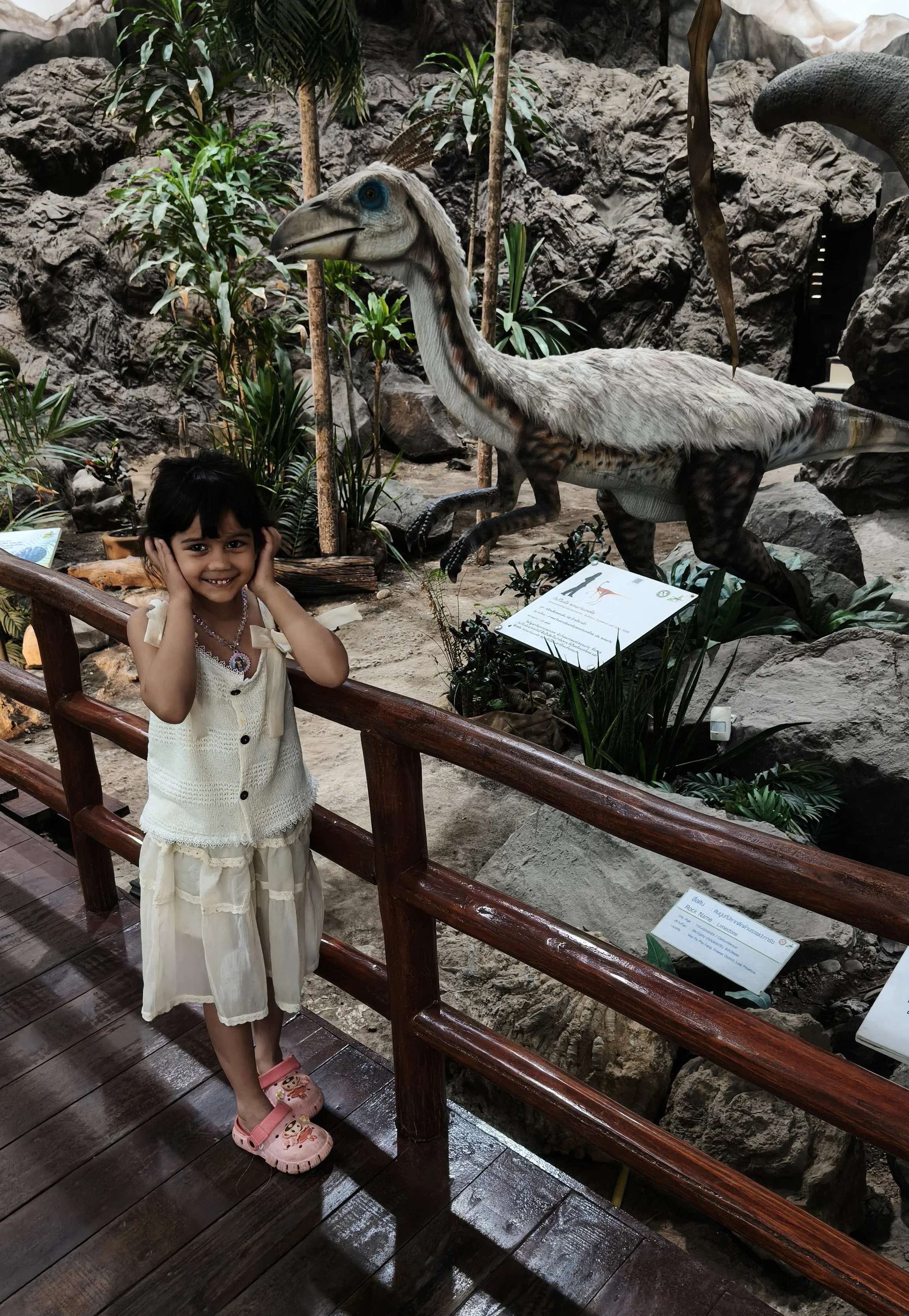
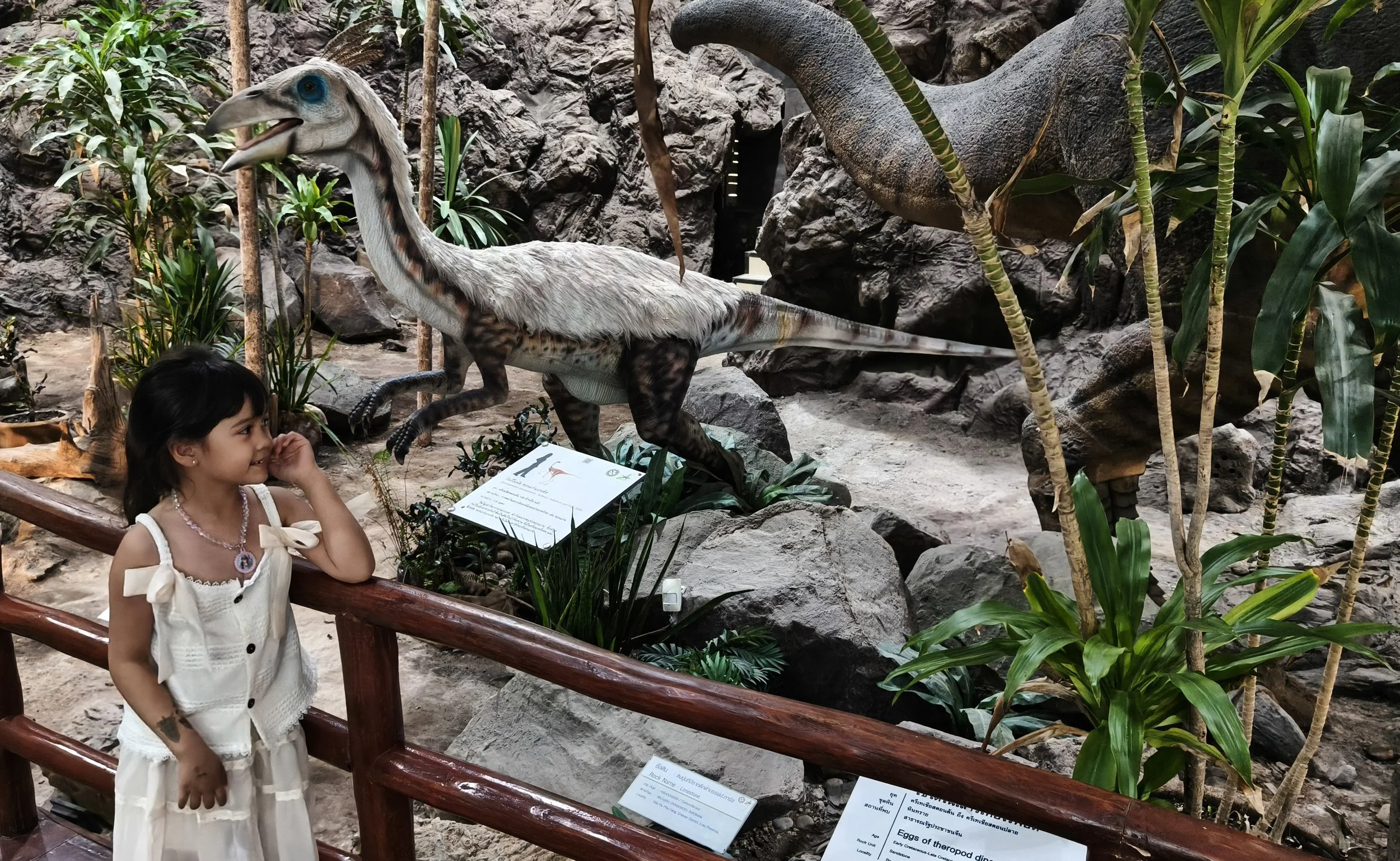
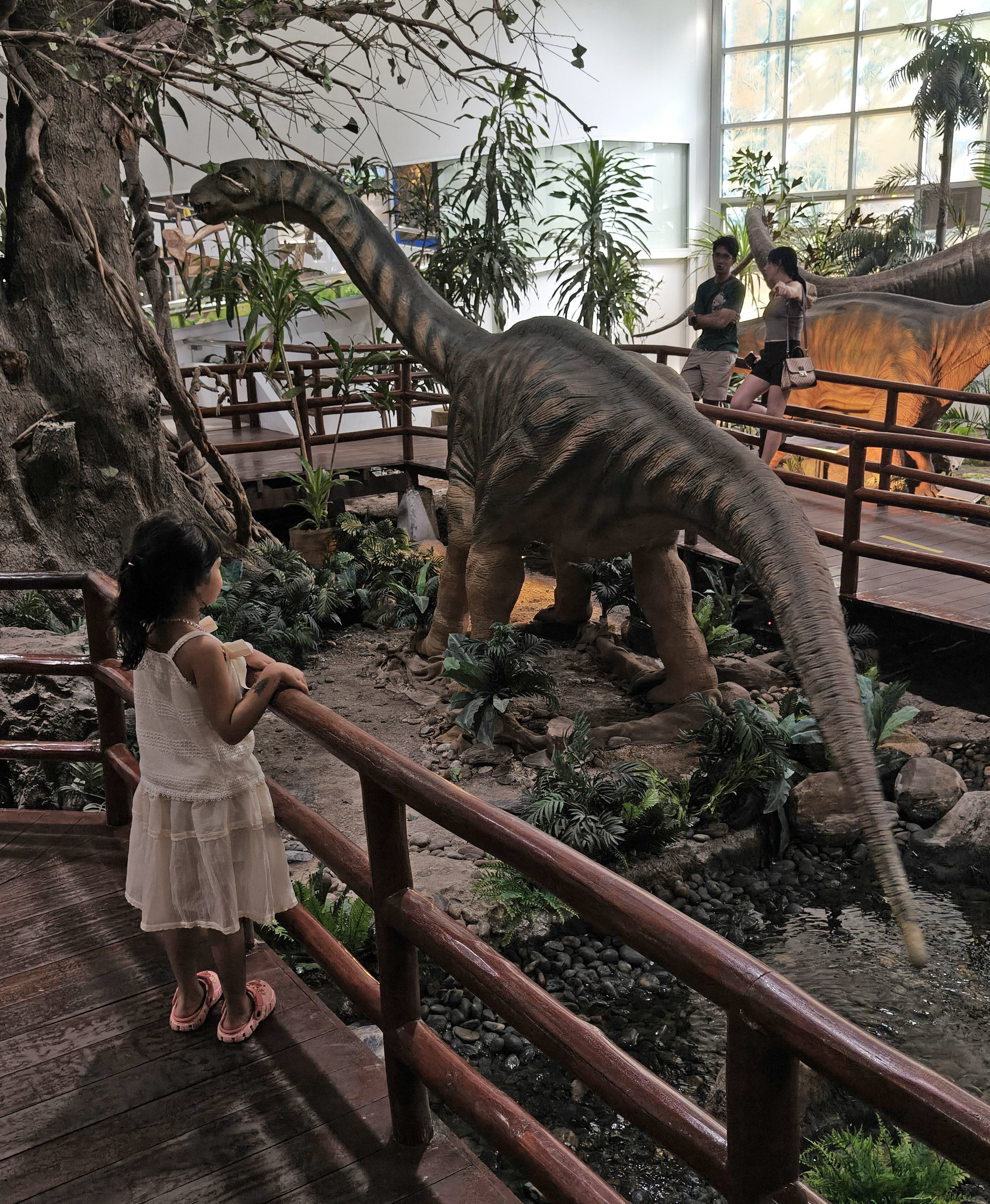
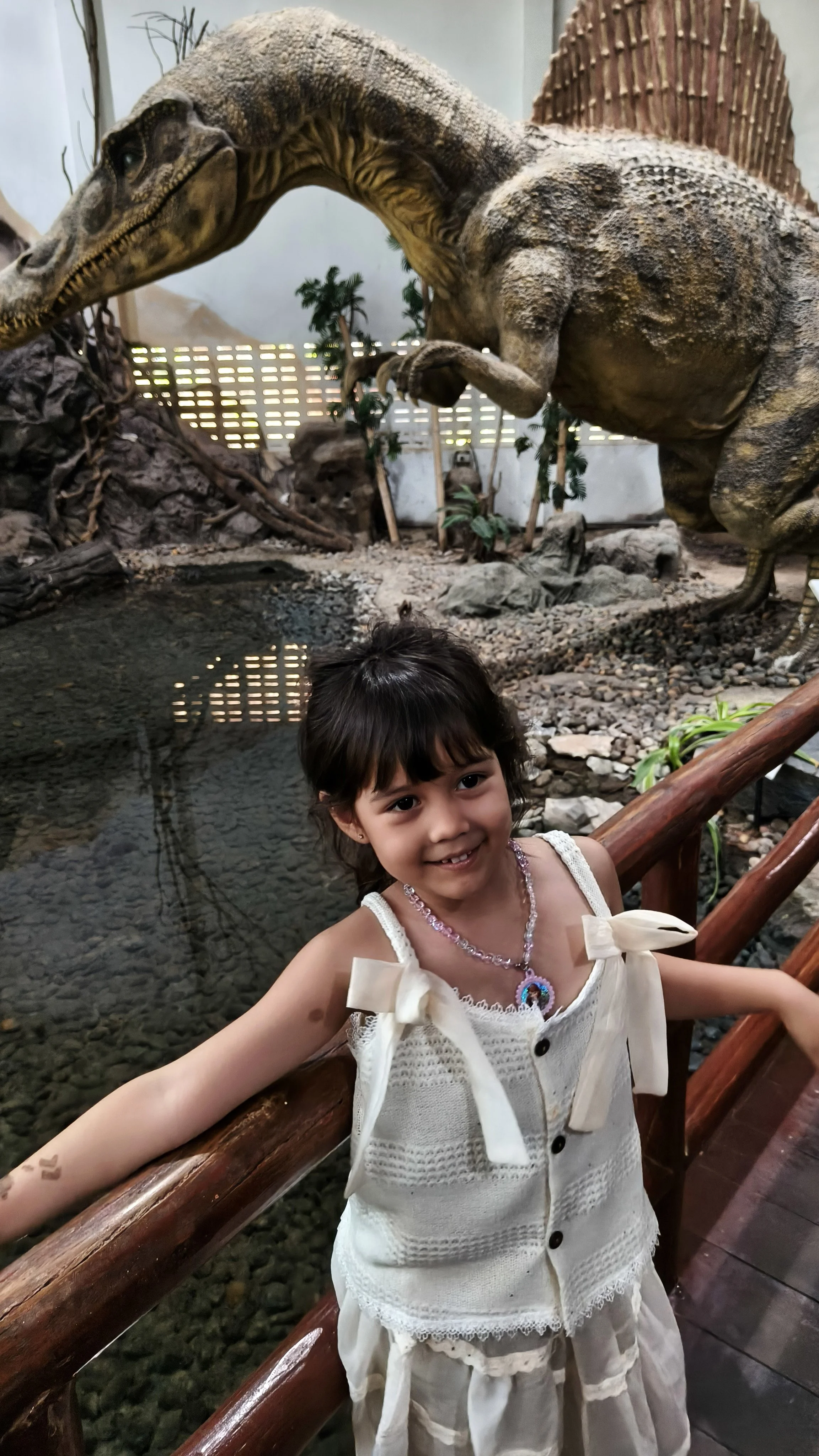
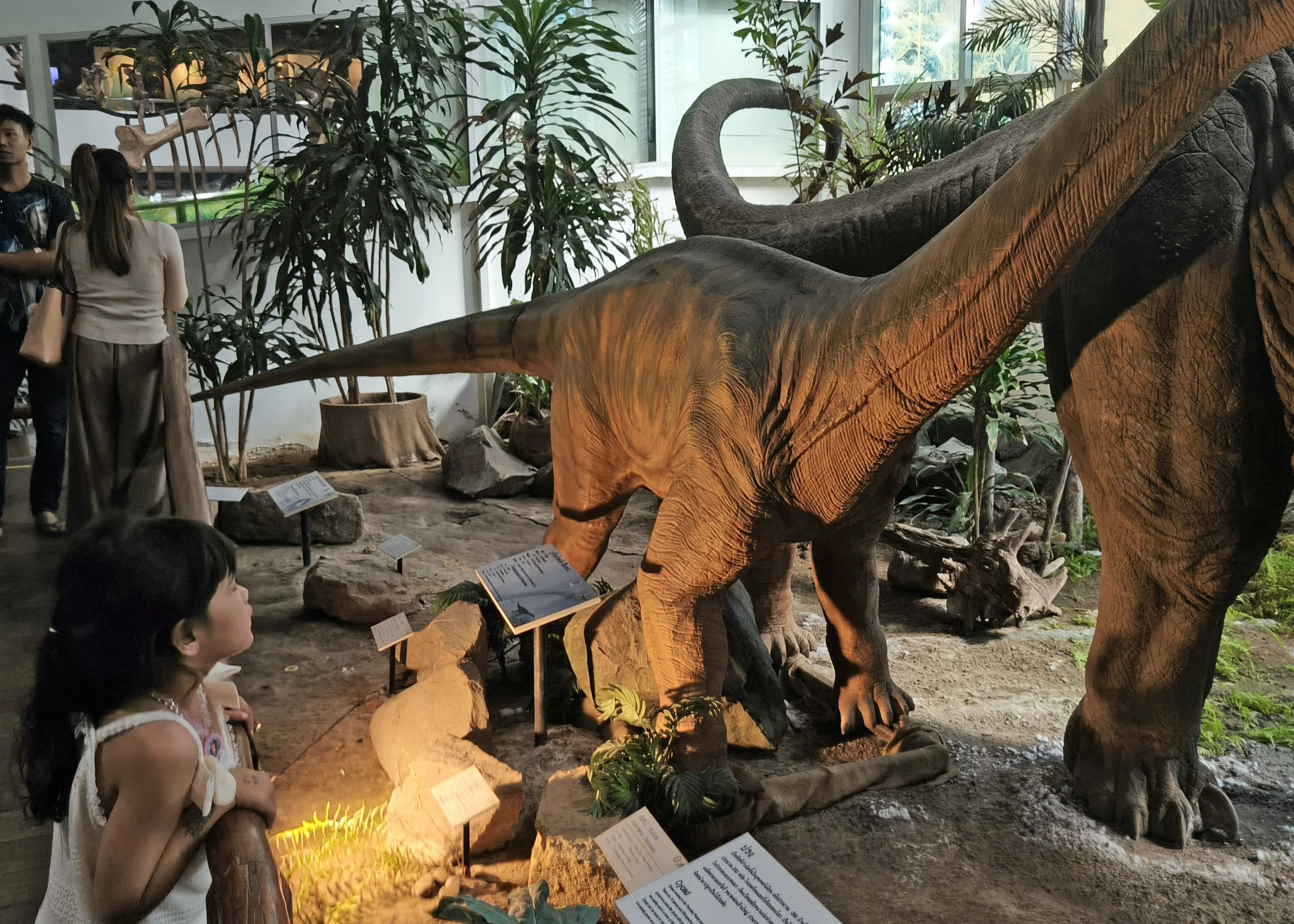
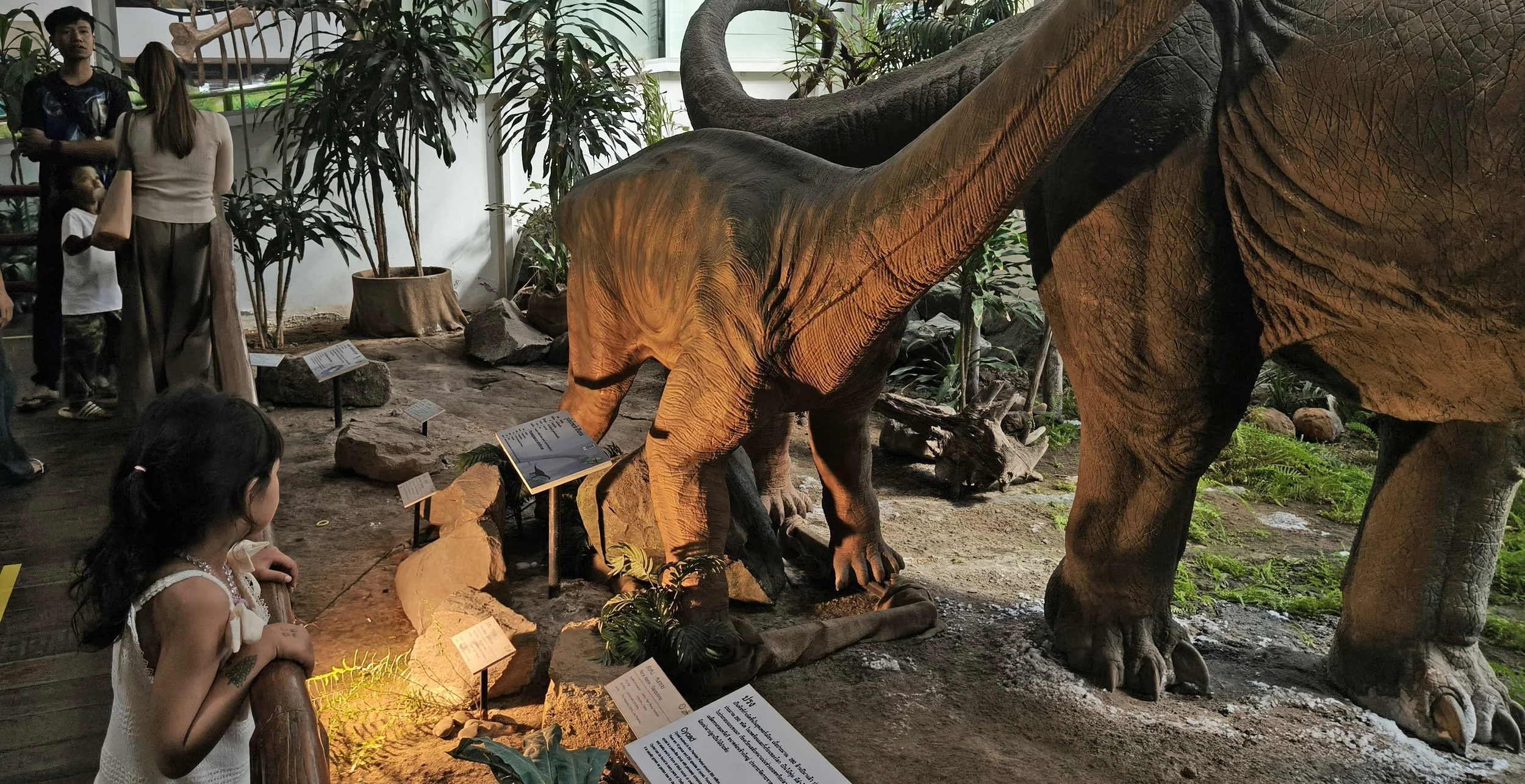
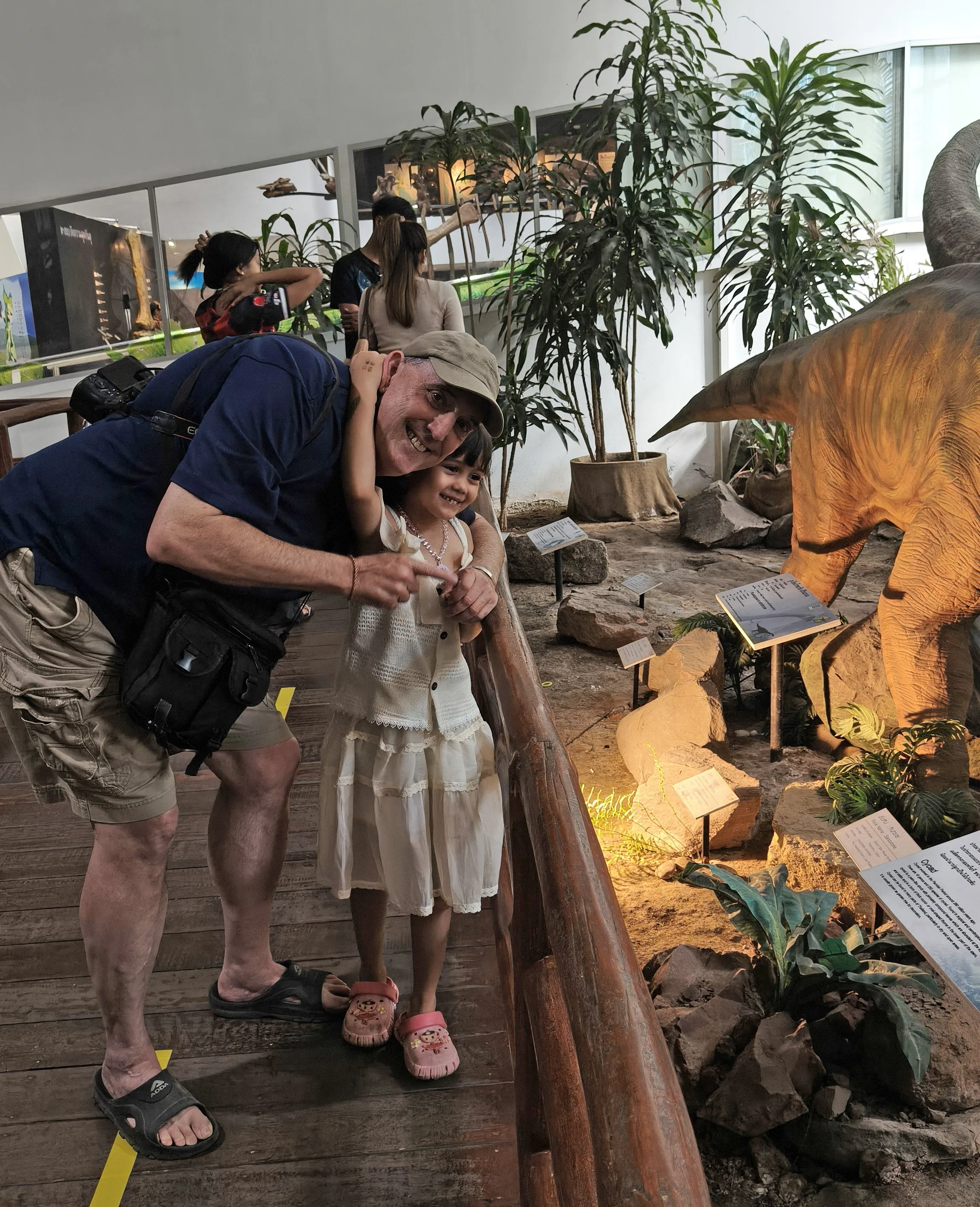
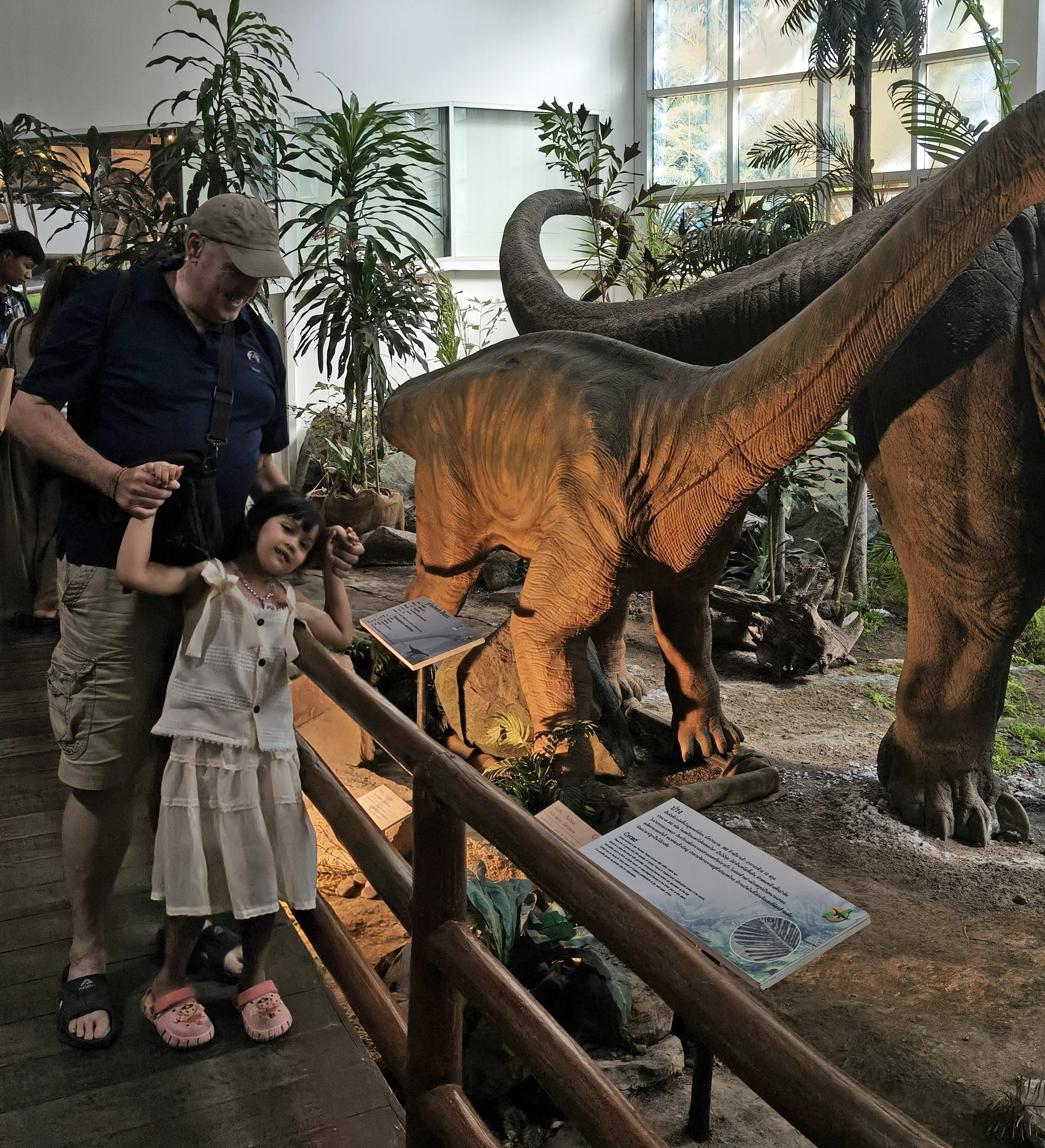
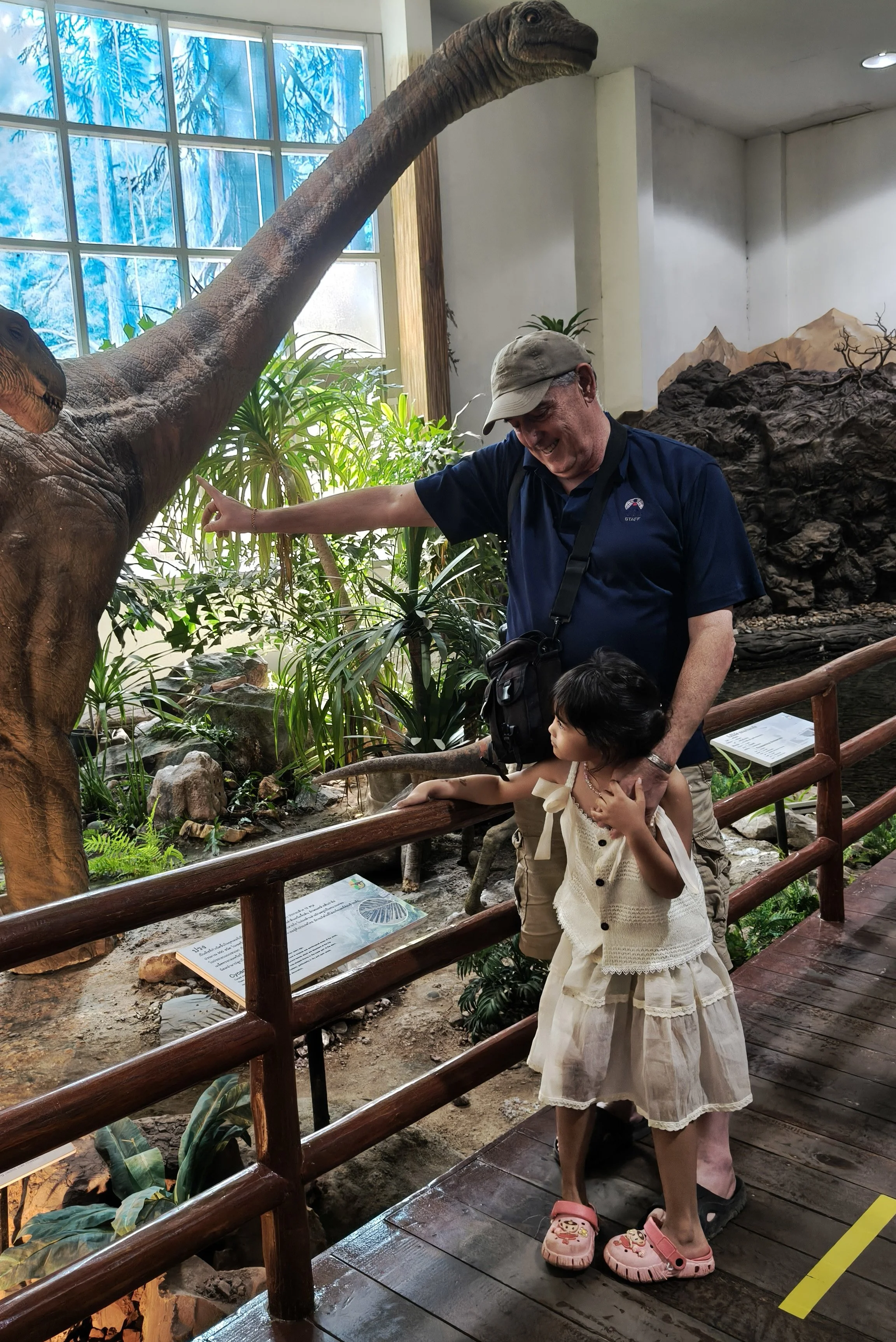
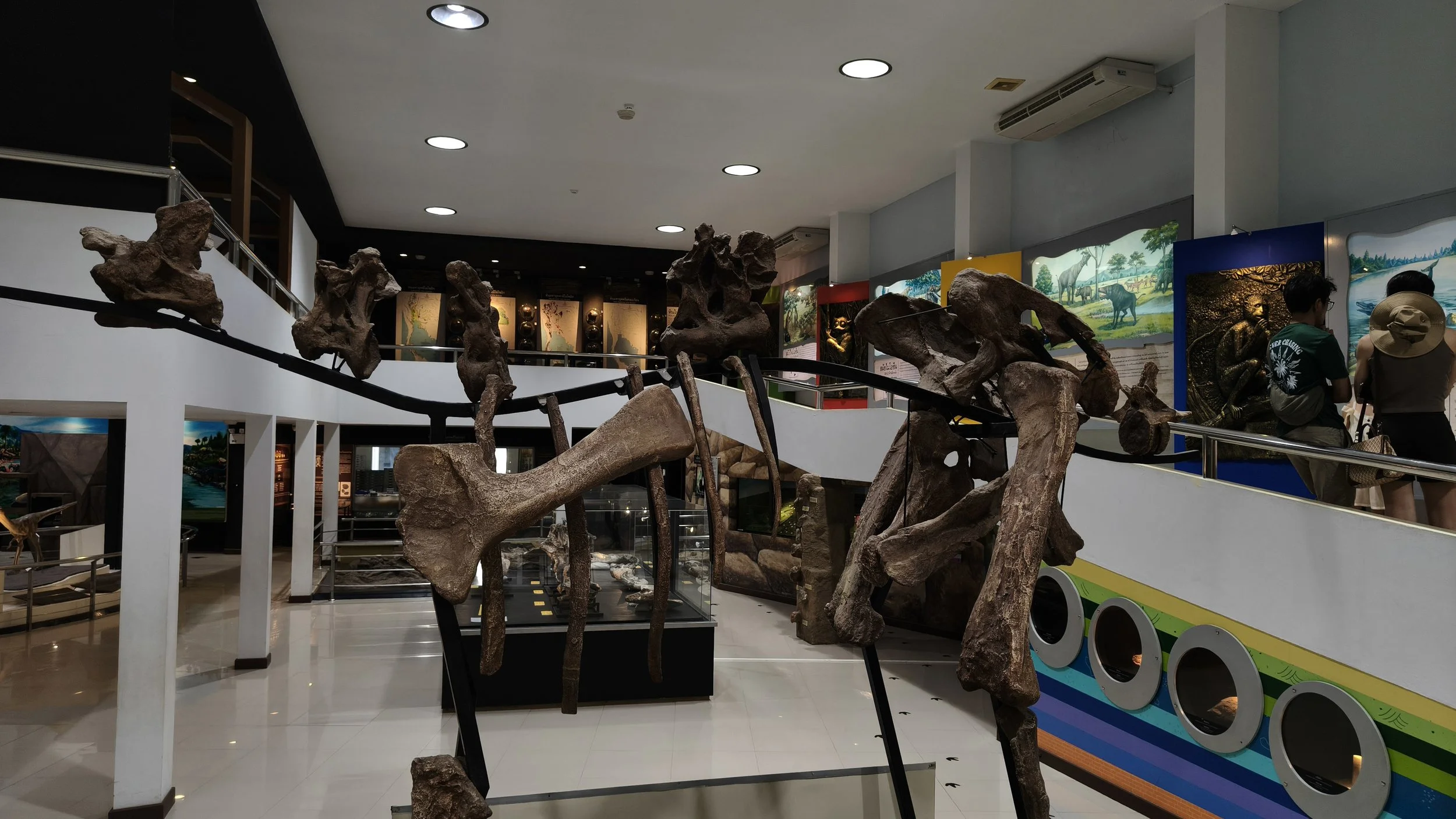
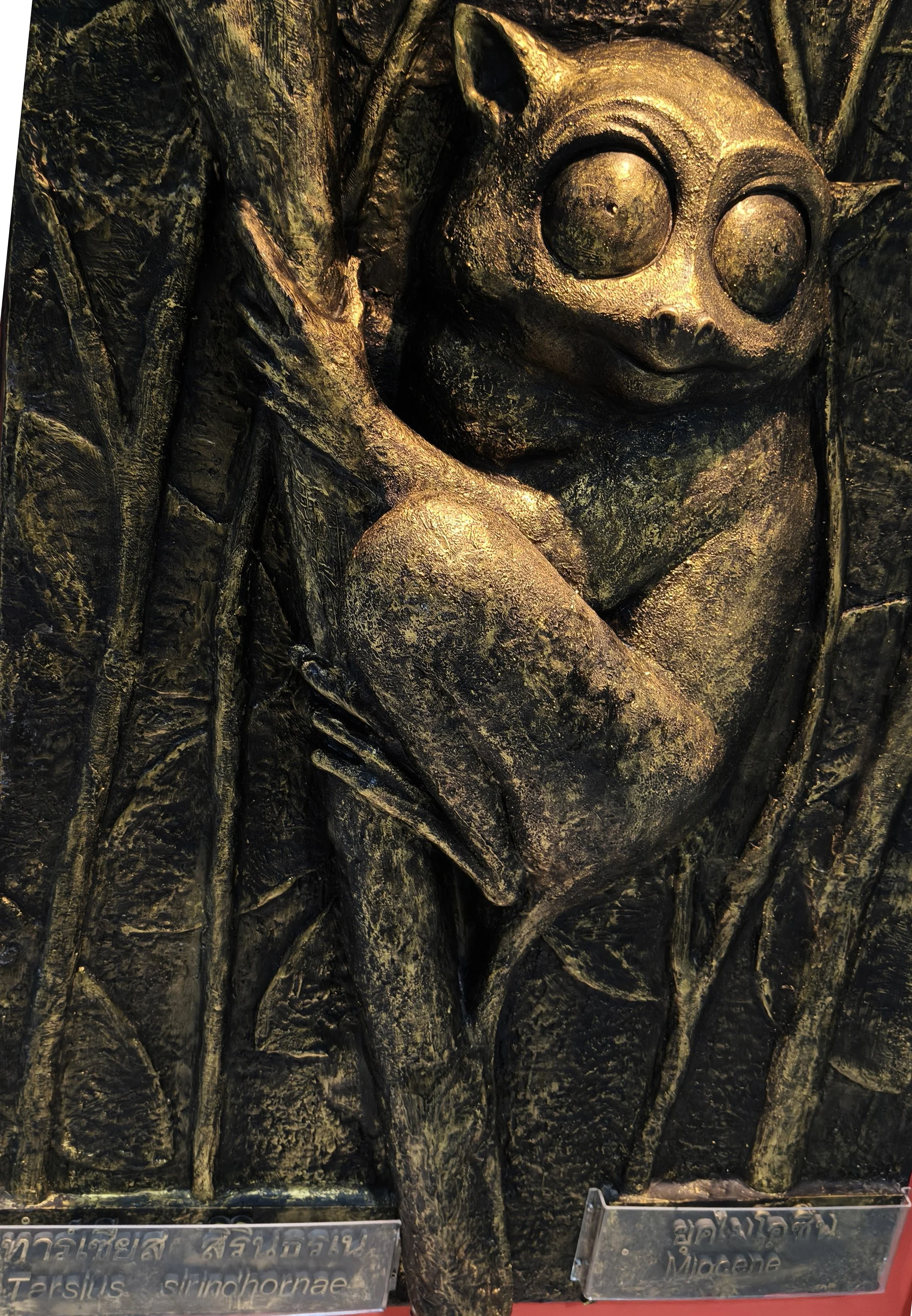
Phu Wiang Dinosaur Museum
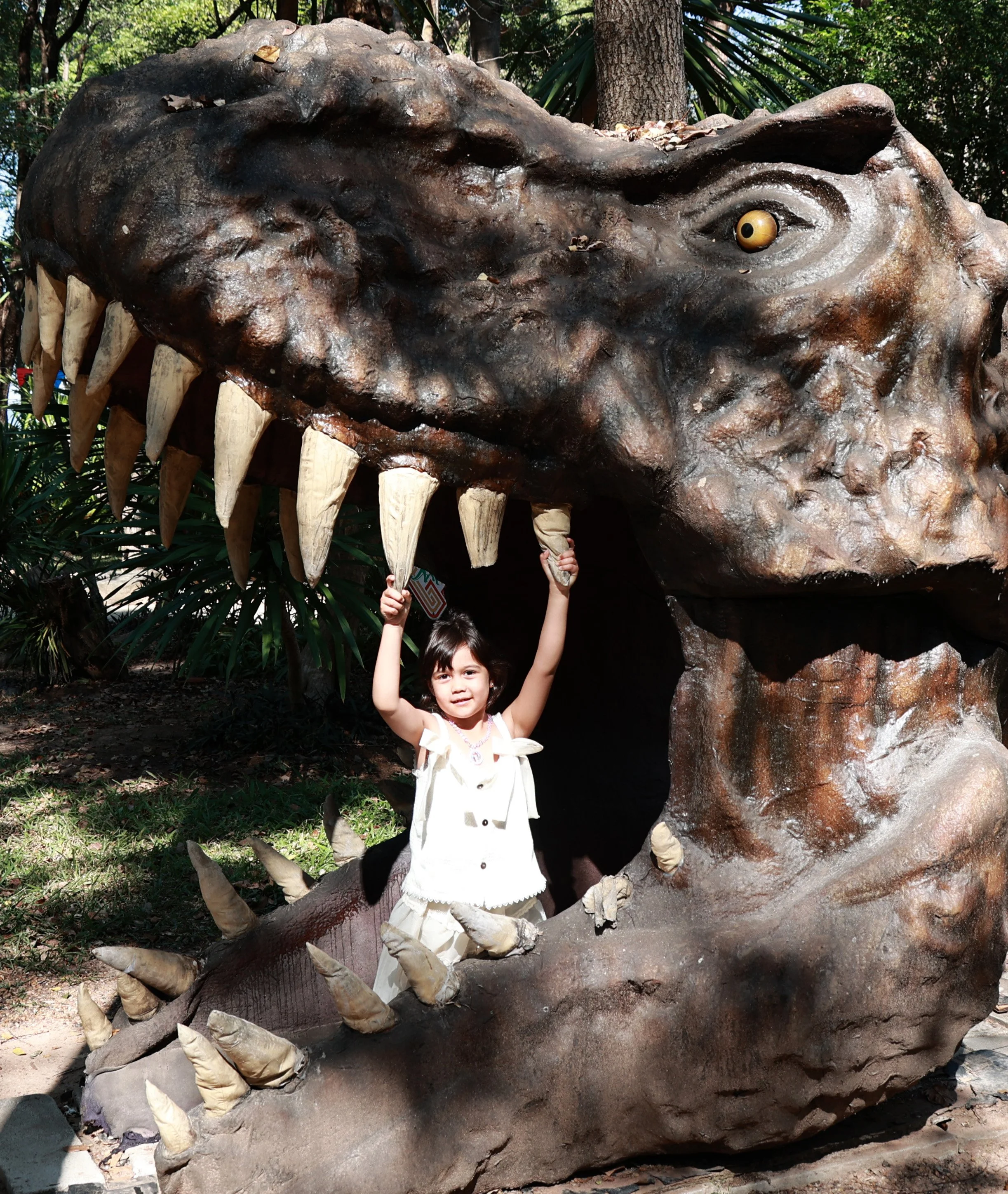
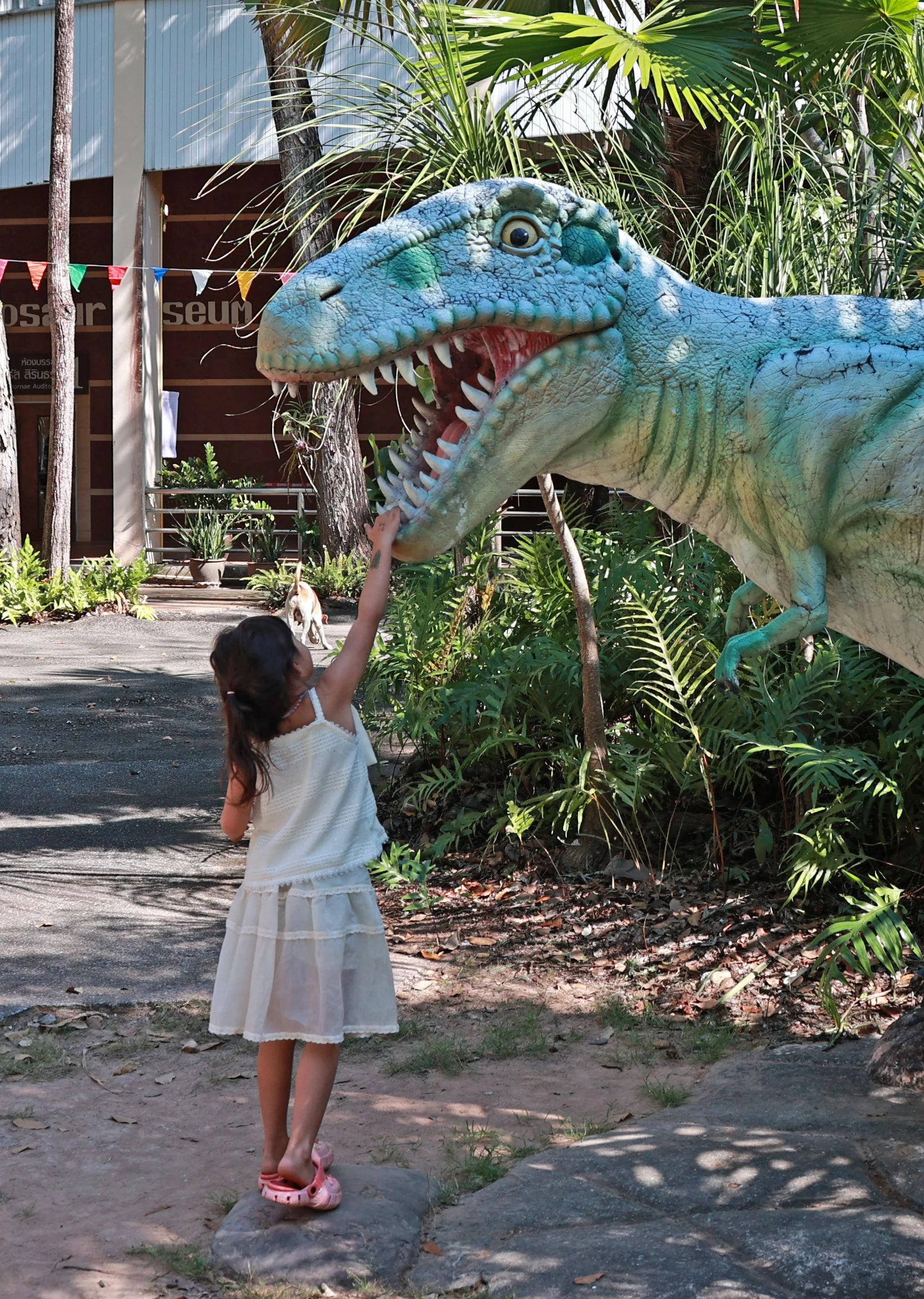
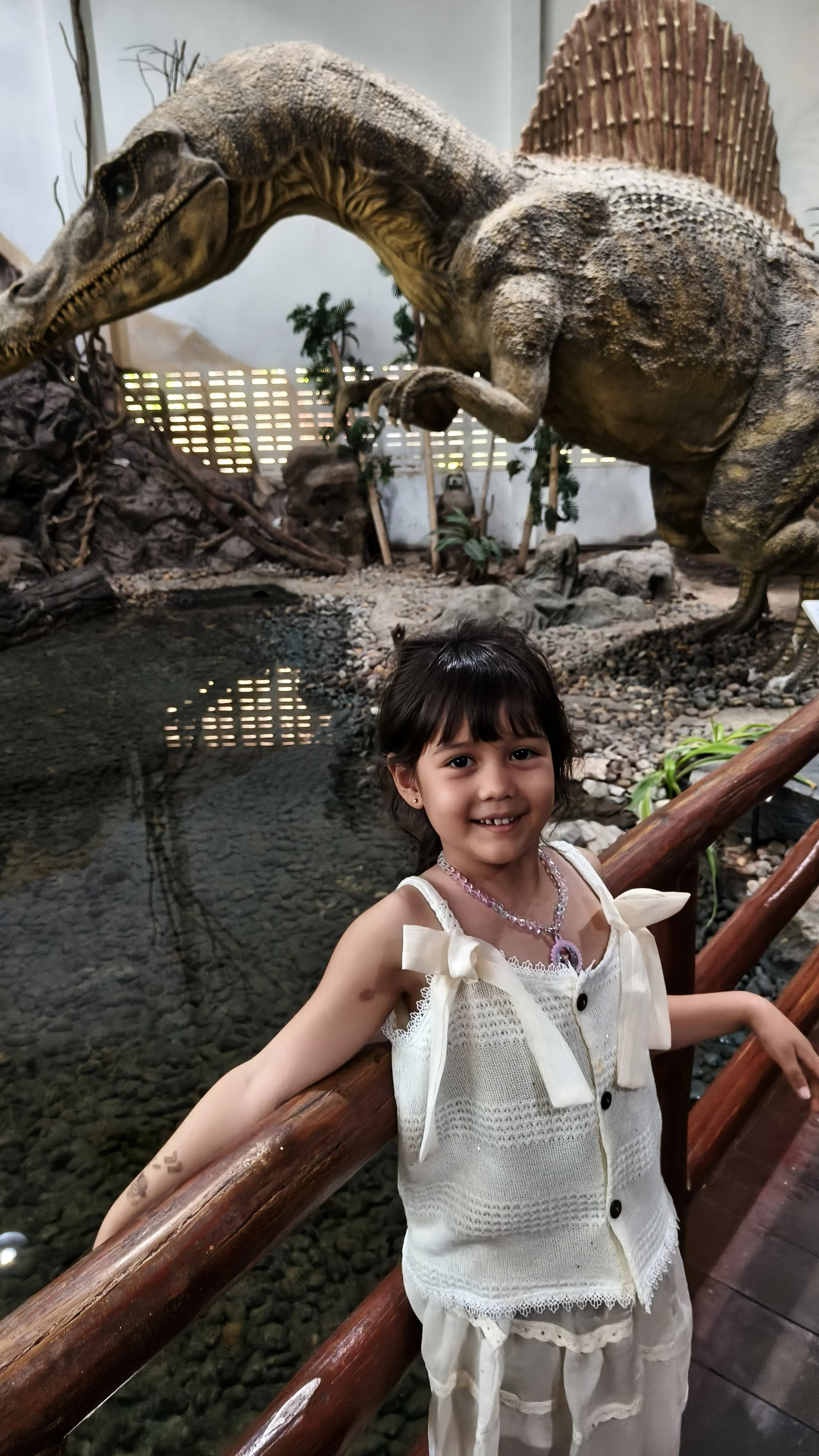
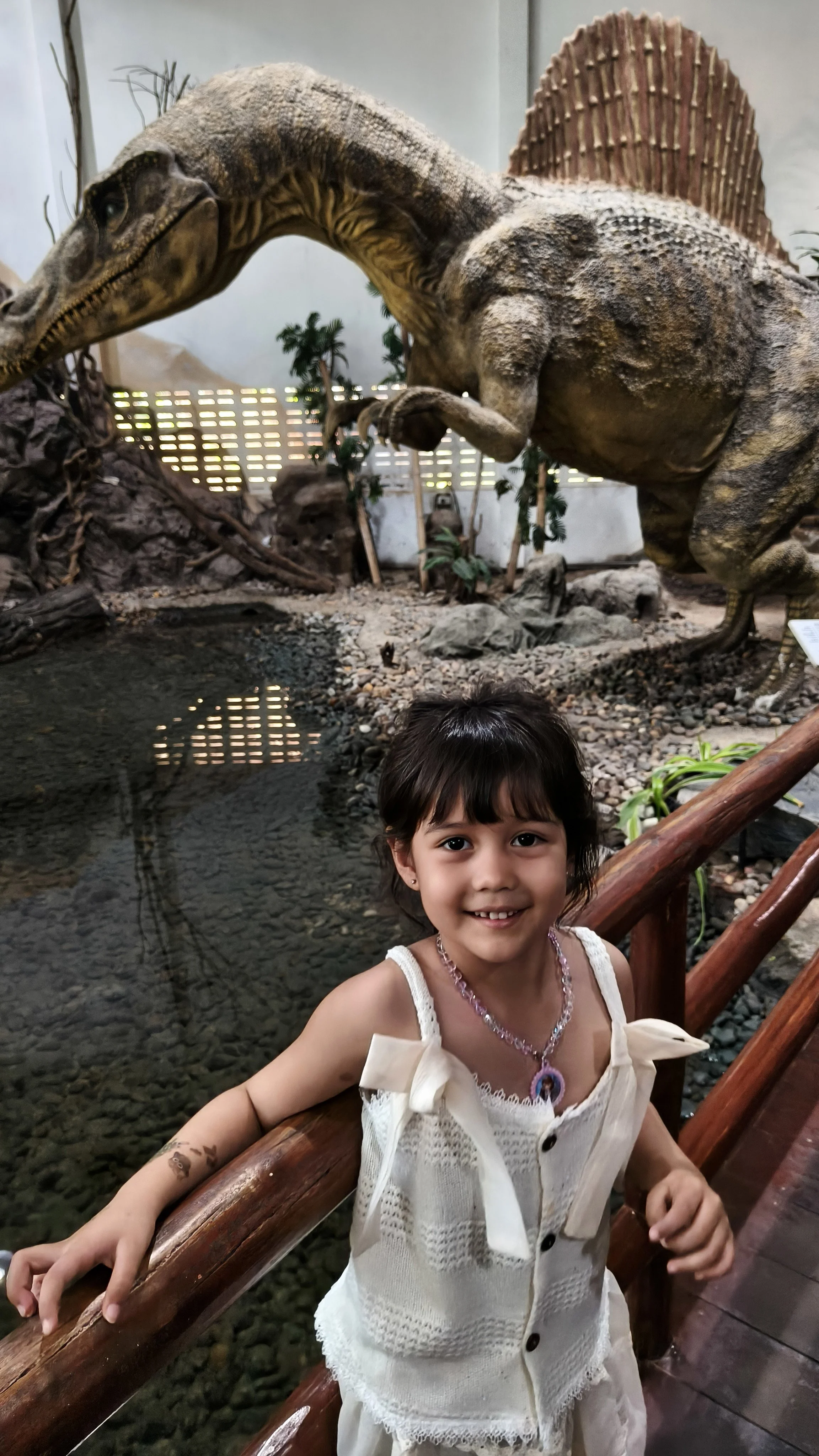
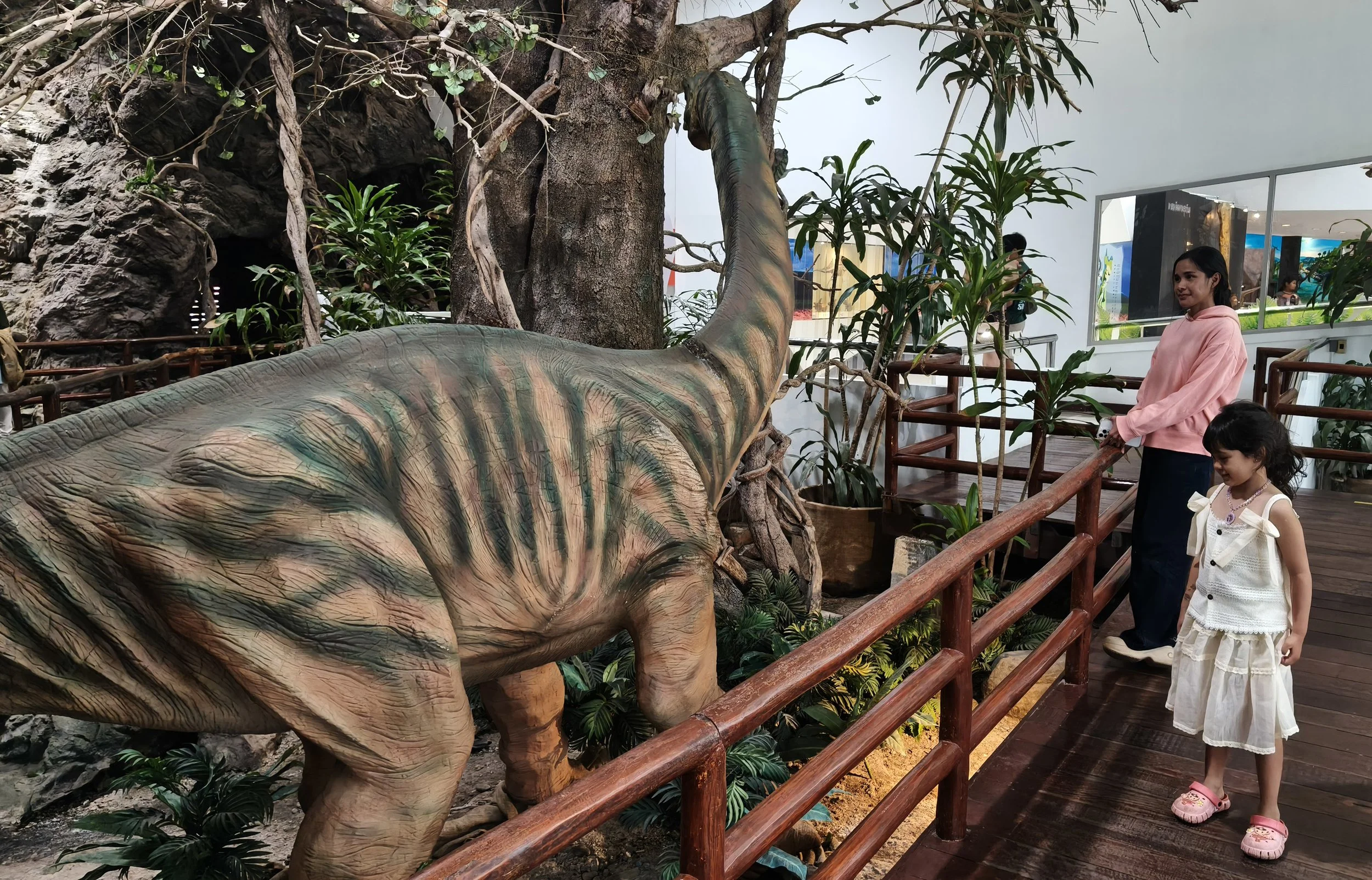
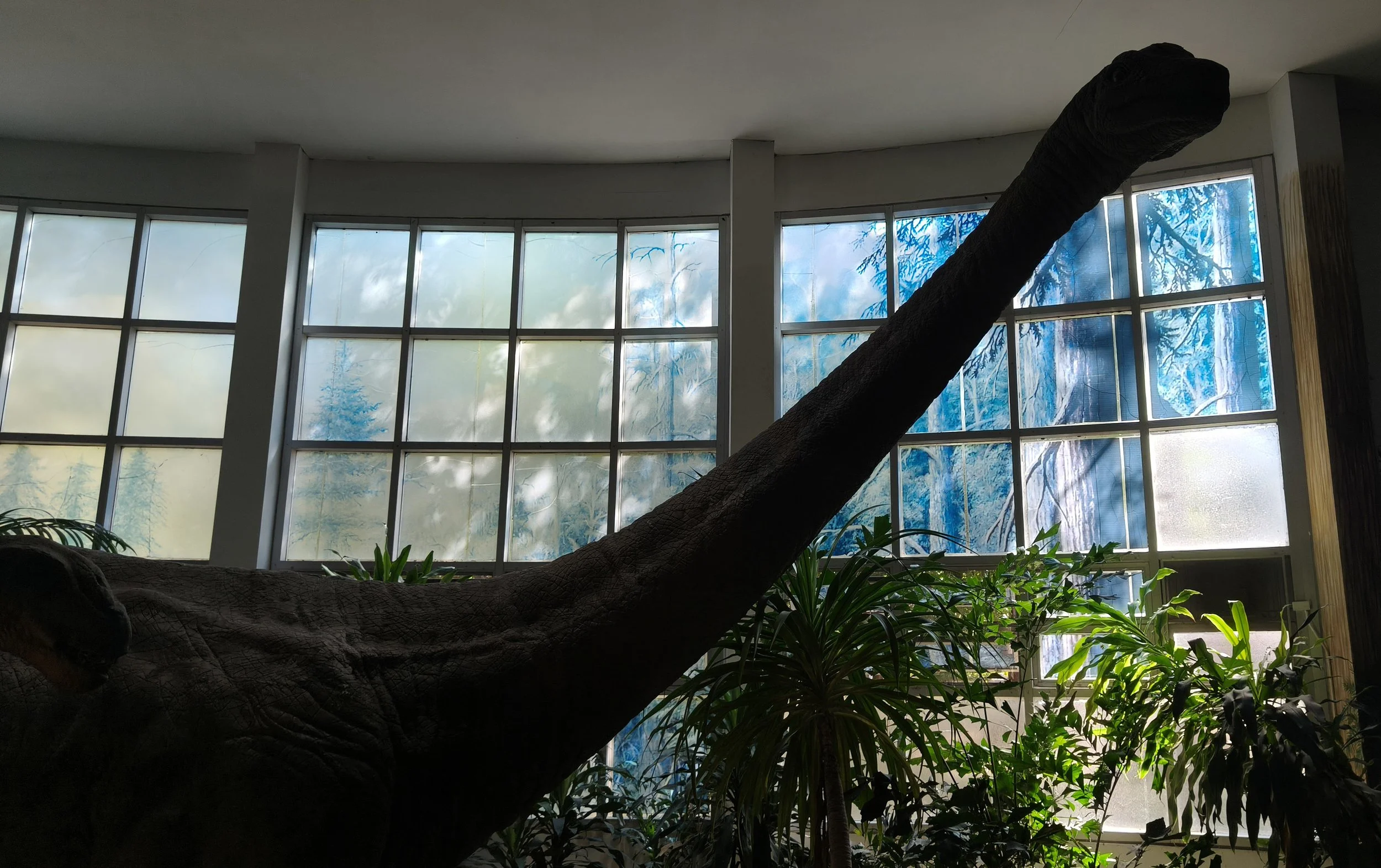
The Phu Wiang Dinosaur Museum is a geological museum in Khon Kaen Province, Thailand, known for exhibiting the first dinosaur fossils discovered in the country, including unique species like Phuwiangosaurus sirindhornae and Siamotyrannus isanensis. The museum features full-size models, real fossils, and interactive displays, making it a popular educational attraction for all ages.
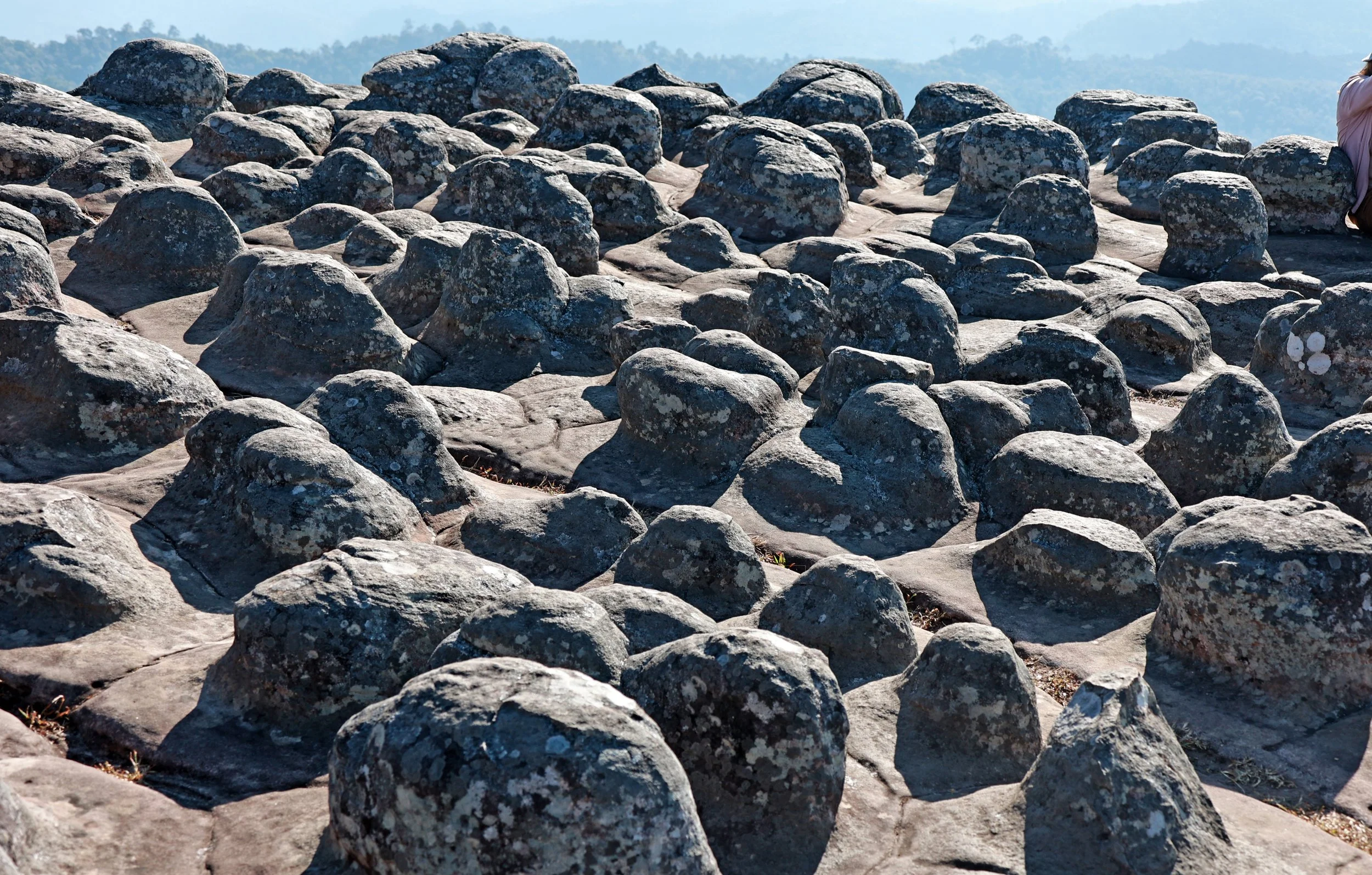
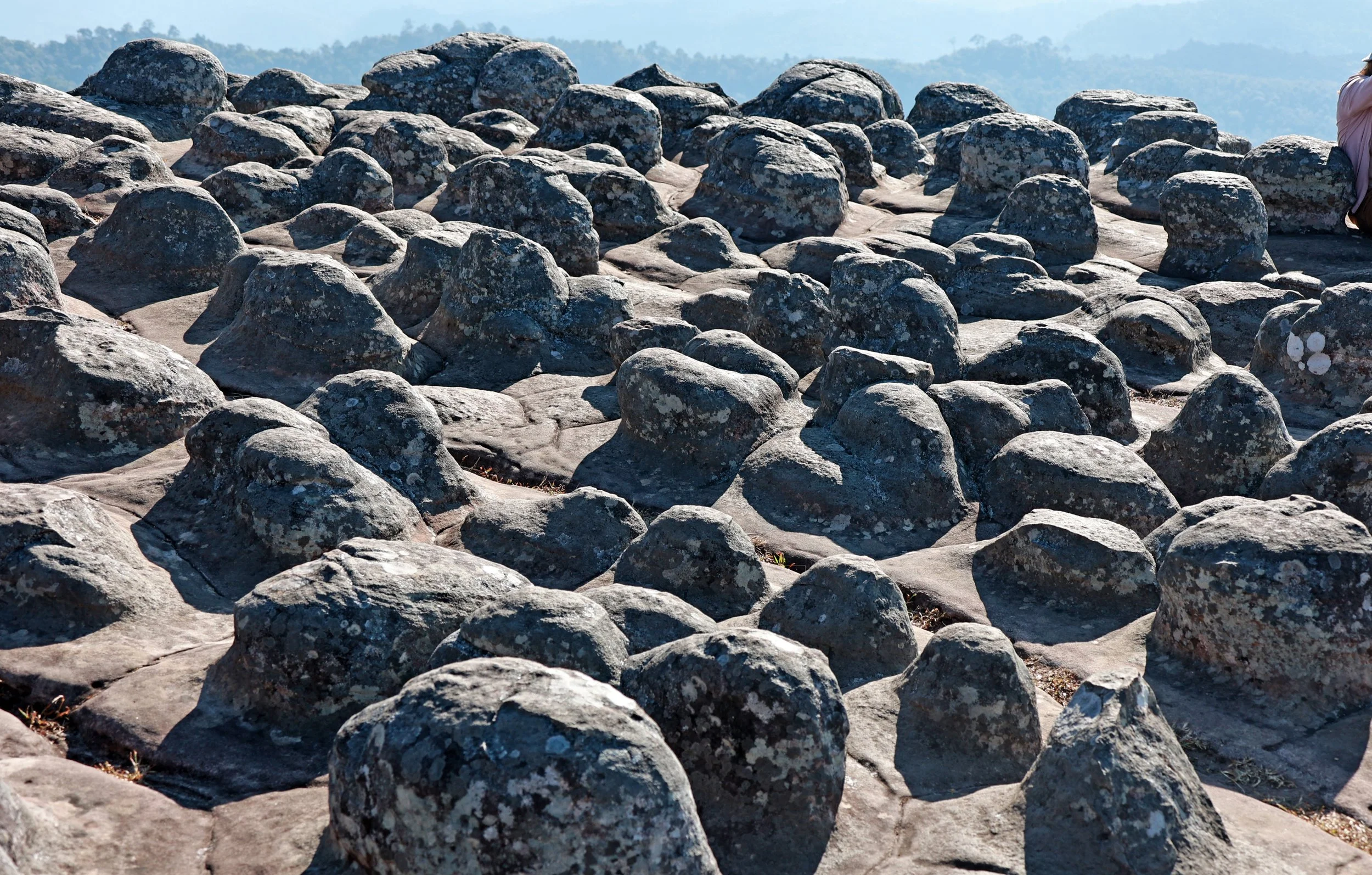
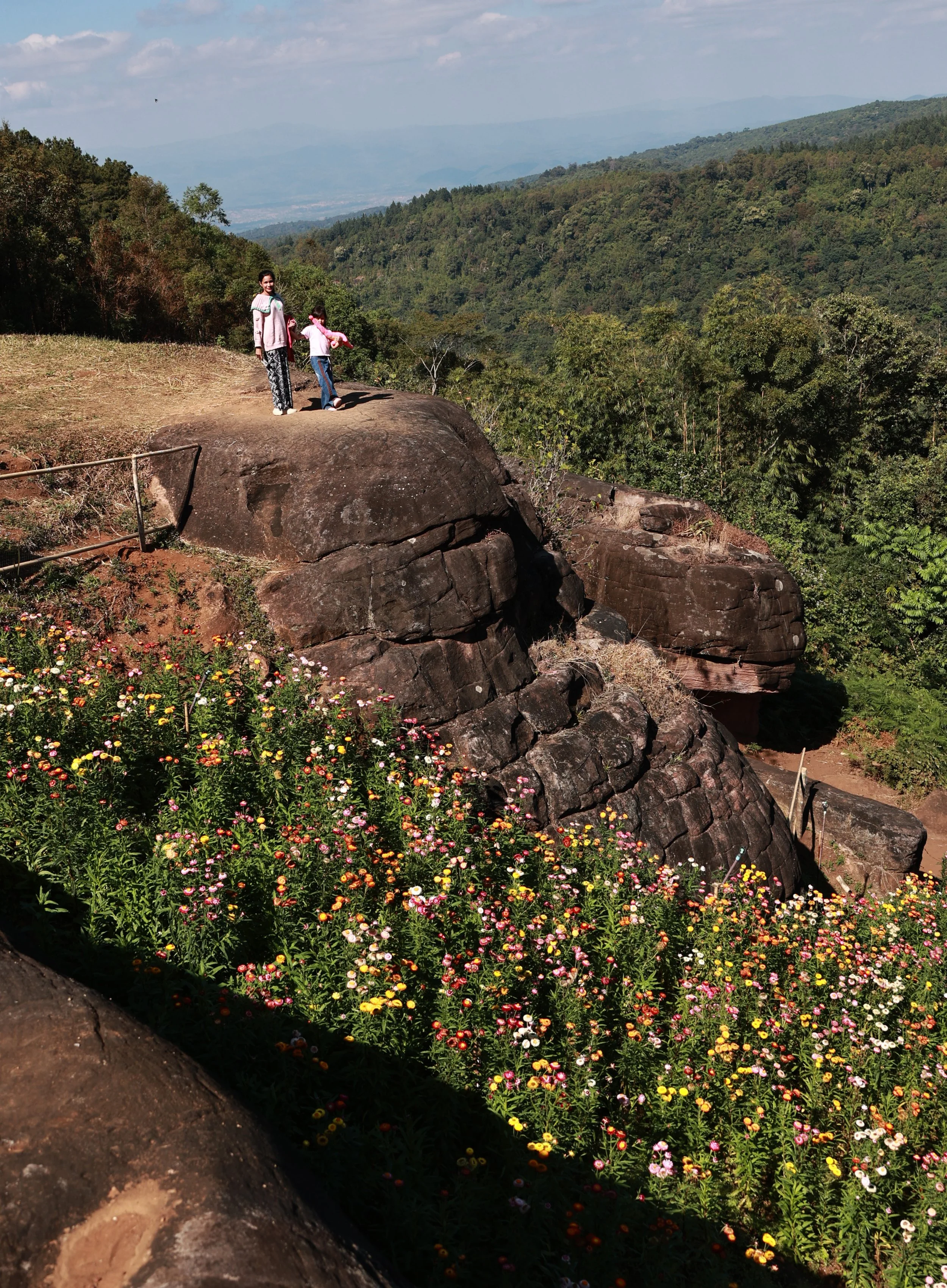
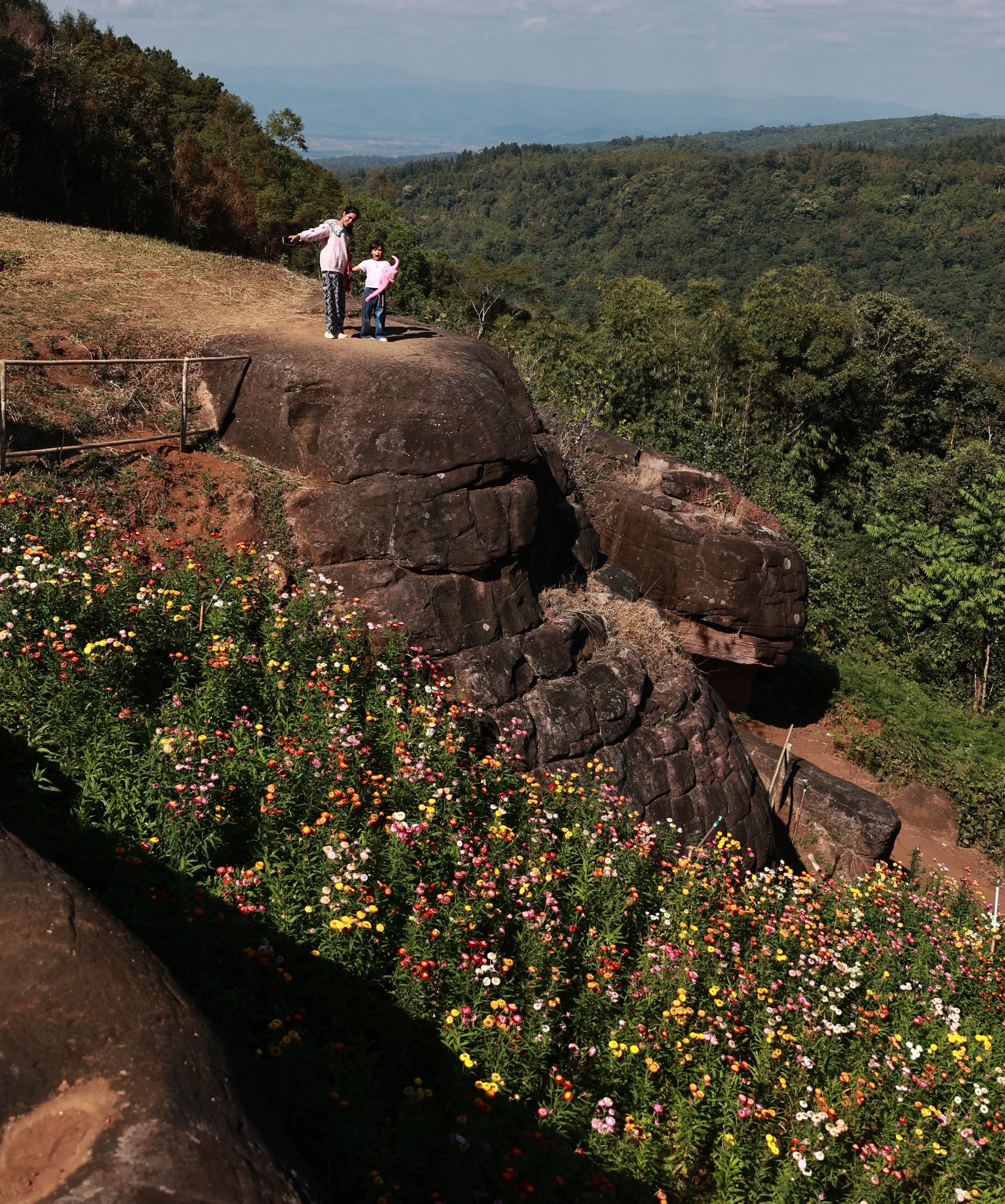
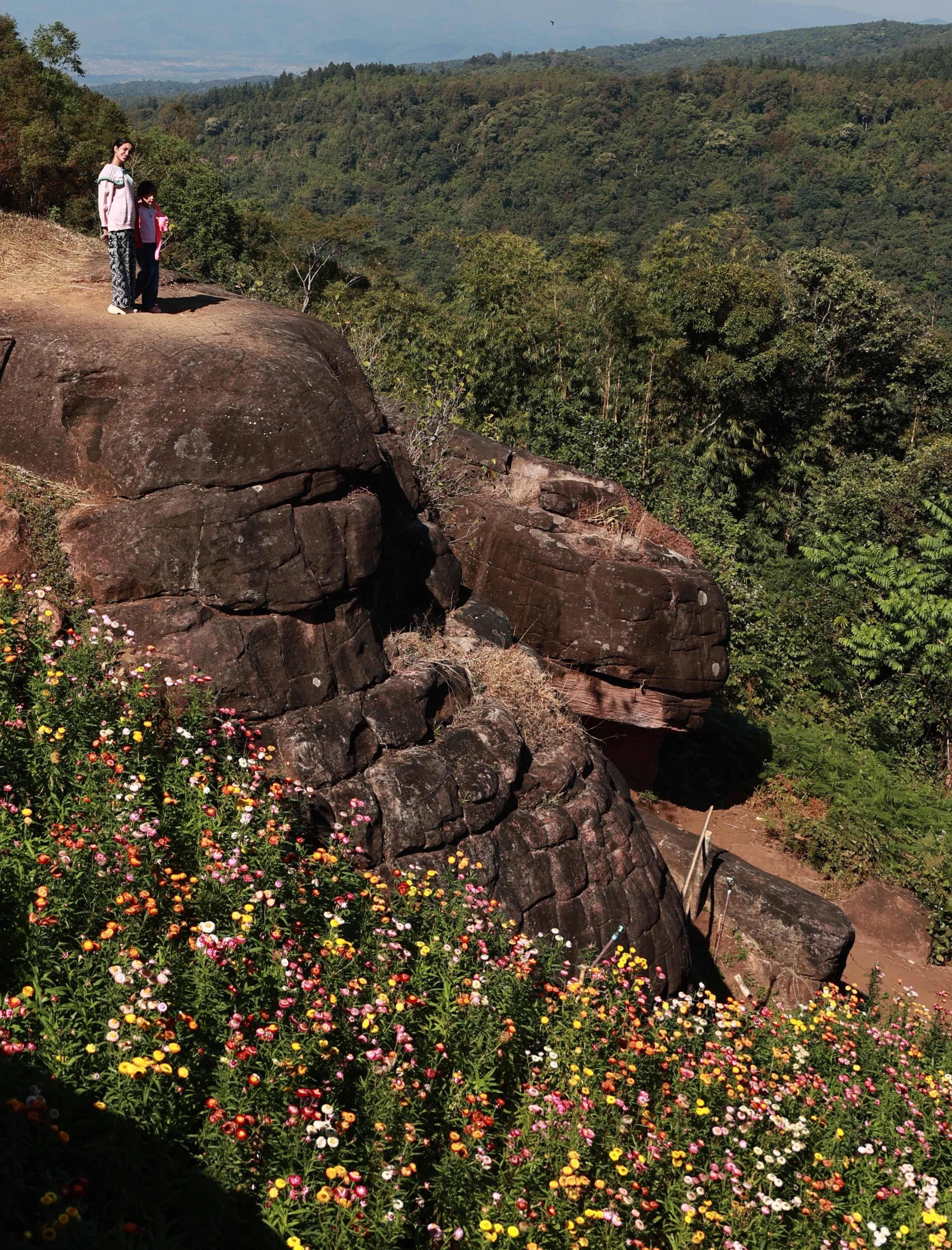
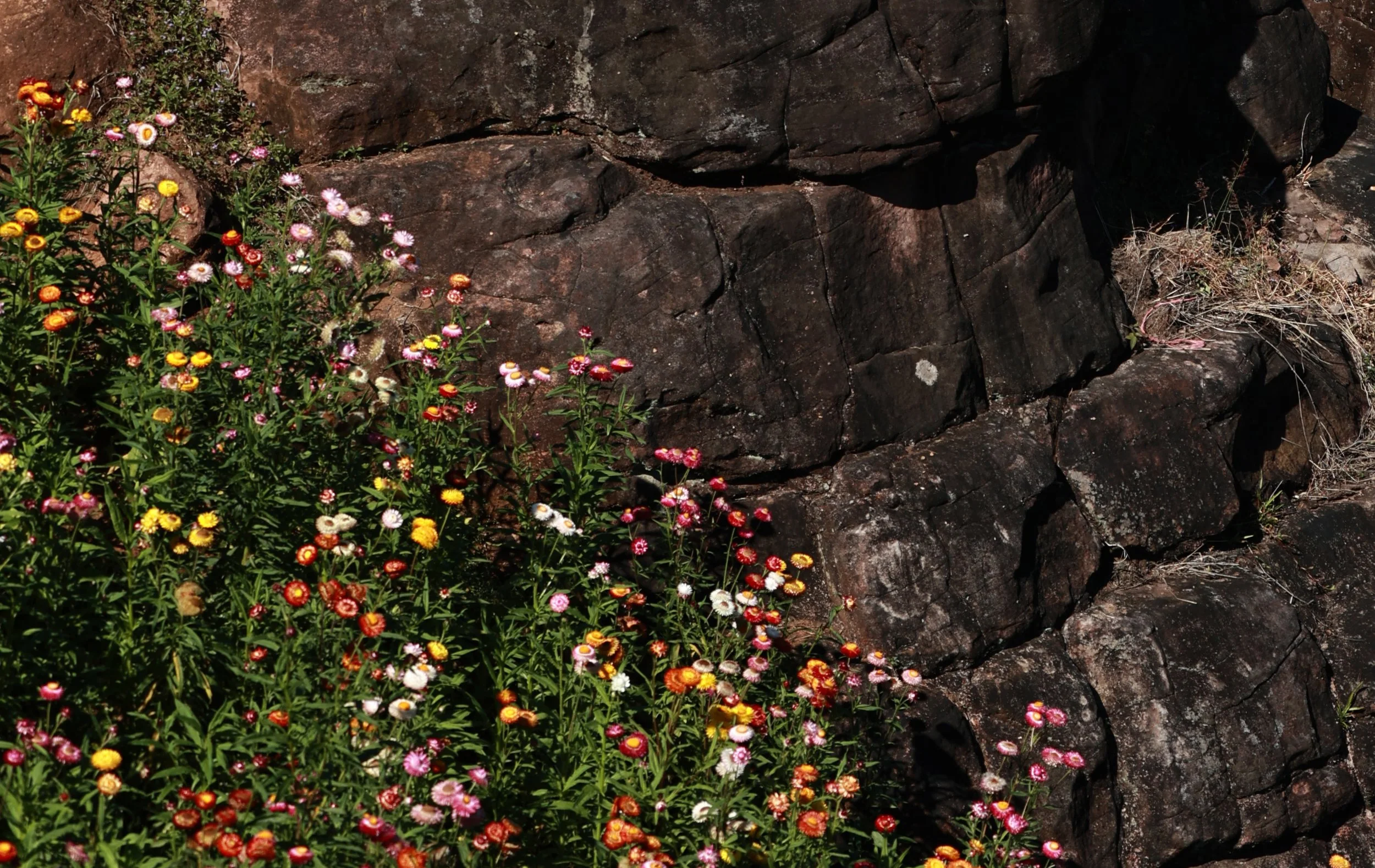
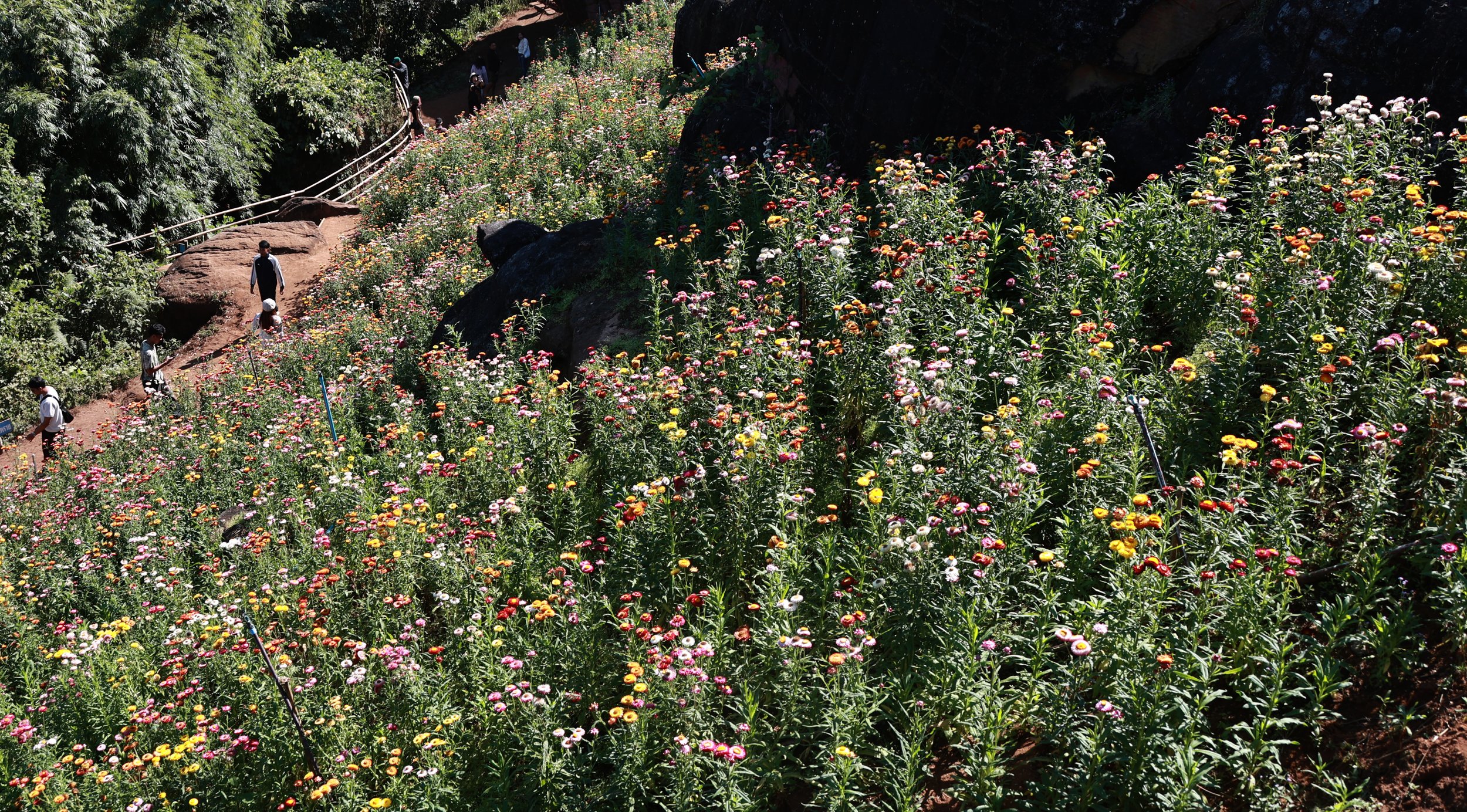
Phu Hin Rong Kla National Park is a 307-square-kilometer protected area that spans the borders of Loei, Phitsanulok, and Phetchabun provinces. While much of the park's primary administration is located in Nakhon Thai District, Phitsanulok, it extends significantly into Dan Sai District, Loei Province.
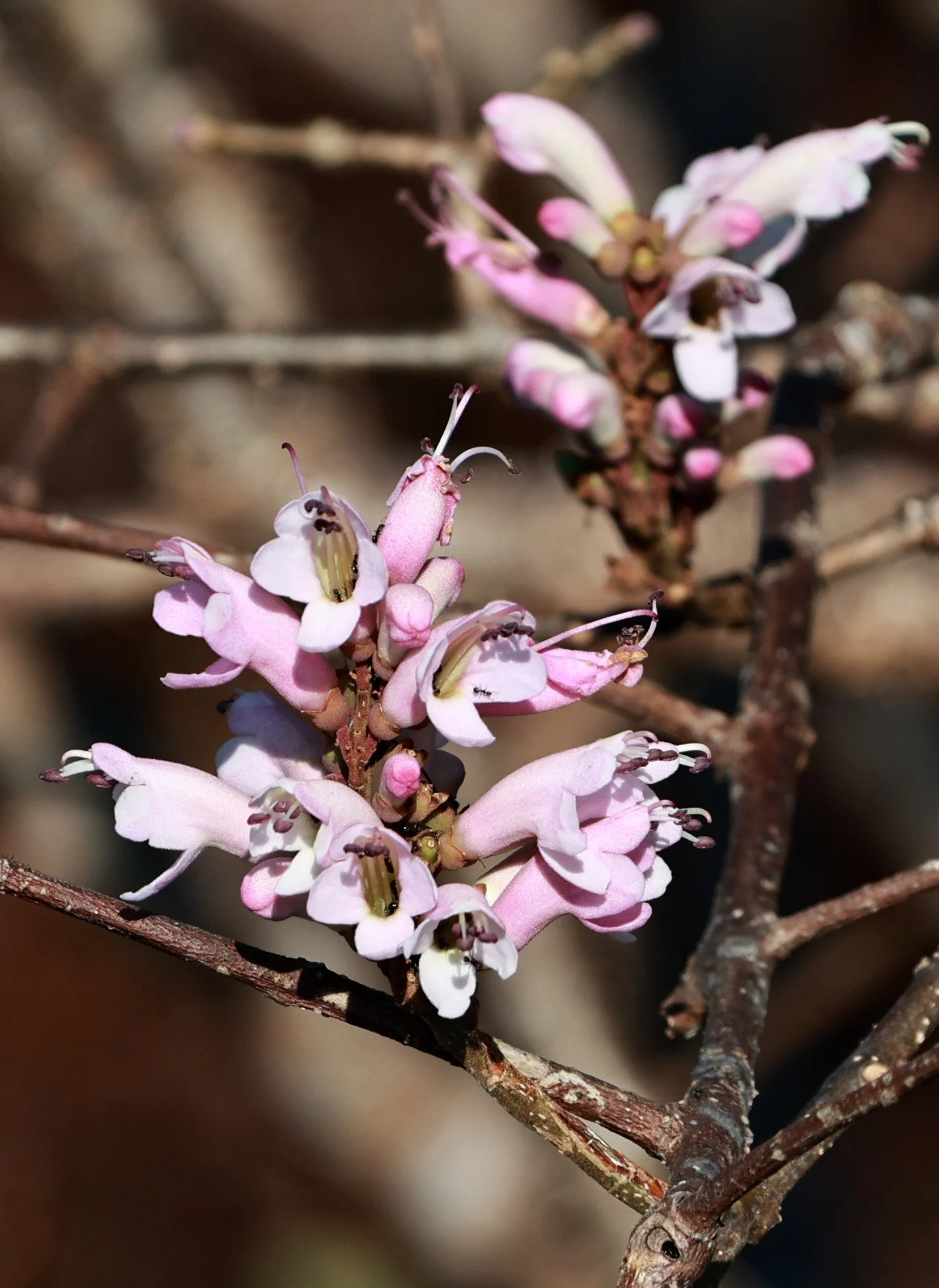
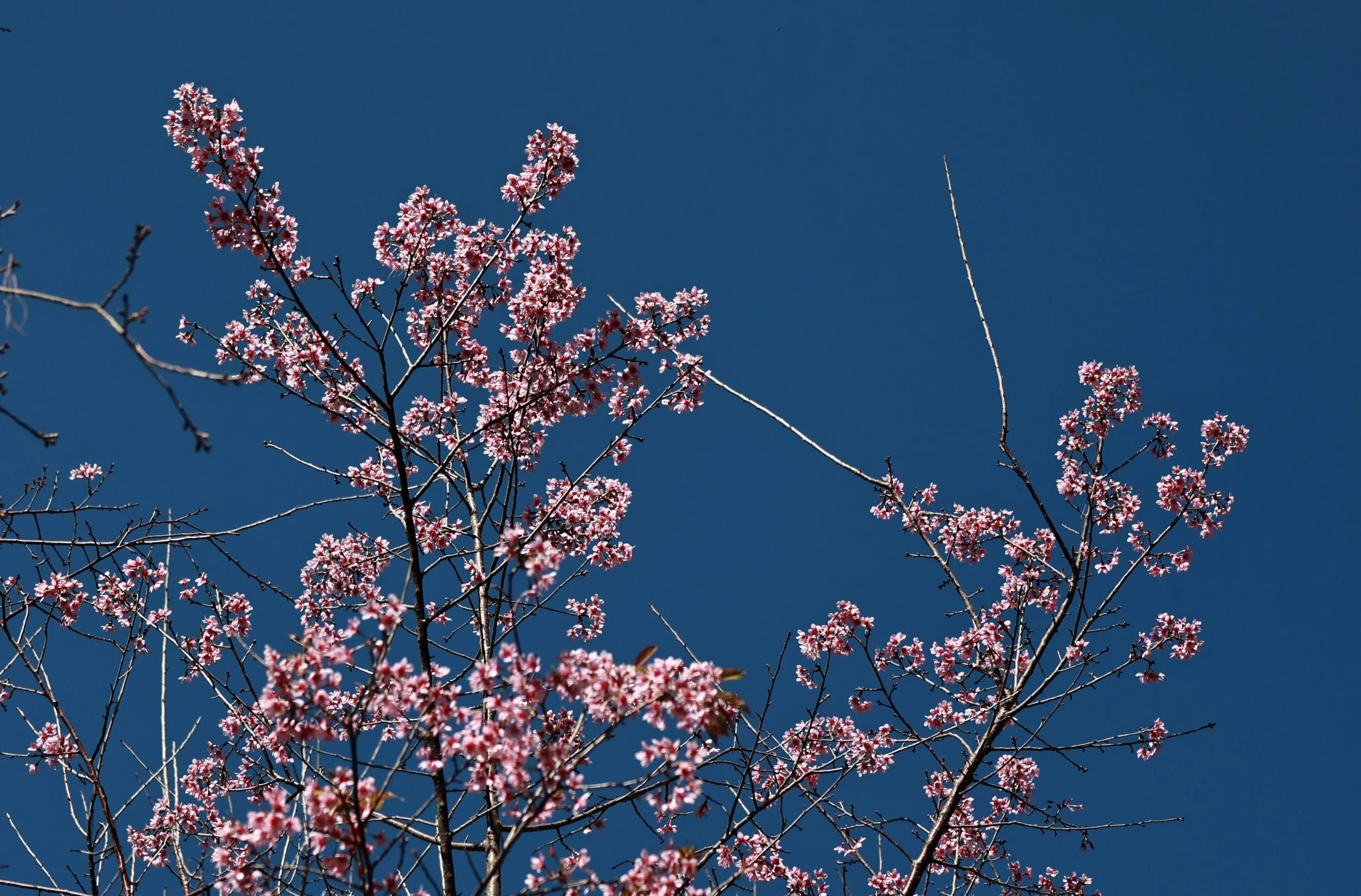
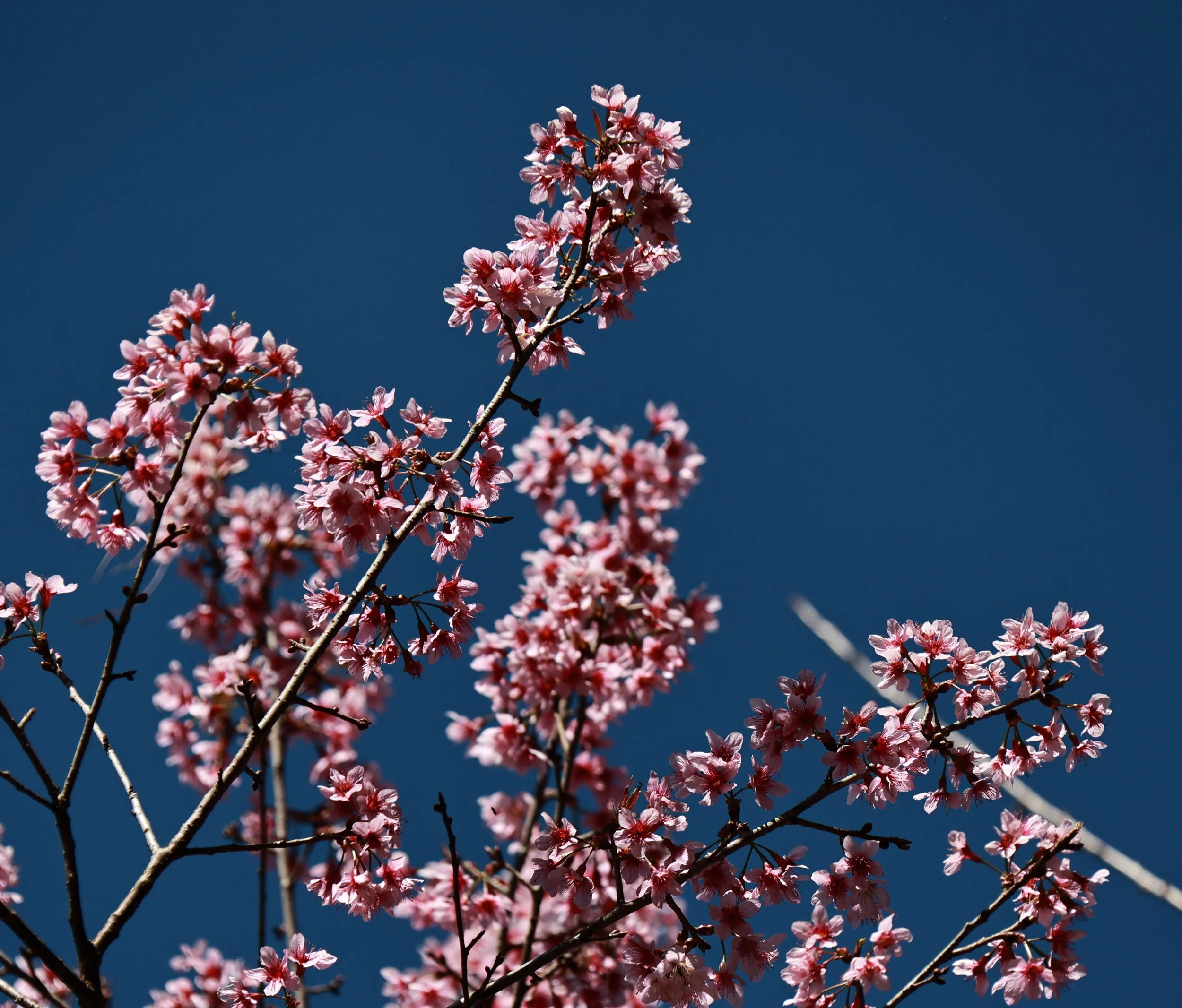
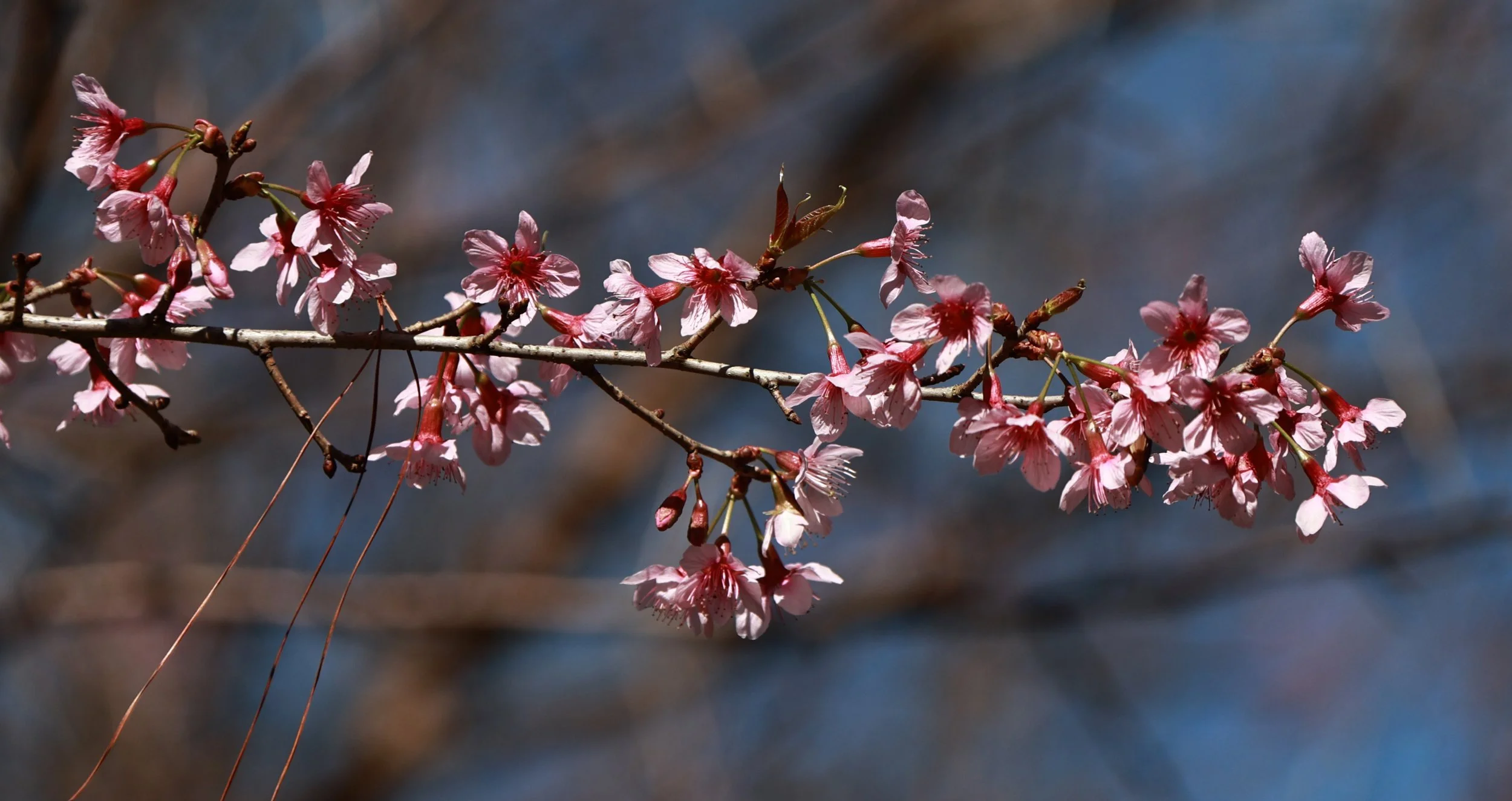
Phu Lom Lo: Located on the border of Loei and Phitsanulok, this peak is famous for its vast fields of Wild Himalayan Cherry blossoms (Sakura of Thailand), which typically bloom in January. Visitors from the Loei side often access it through the Kok Sathon sub-district.
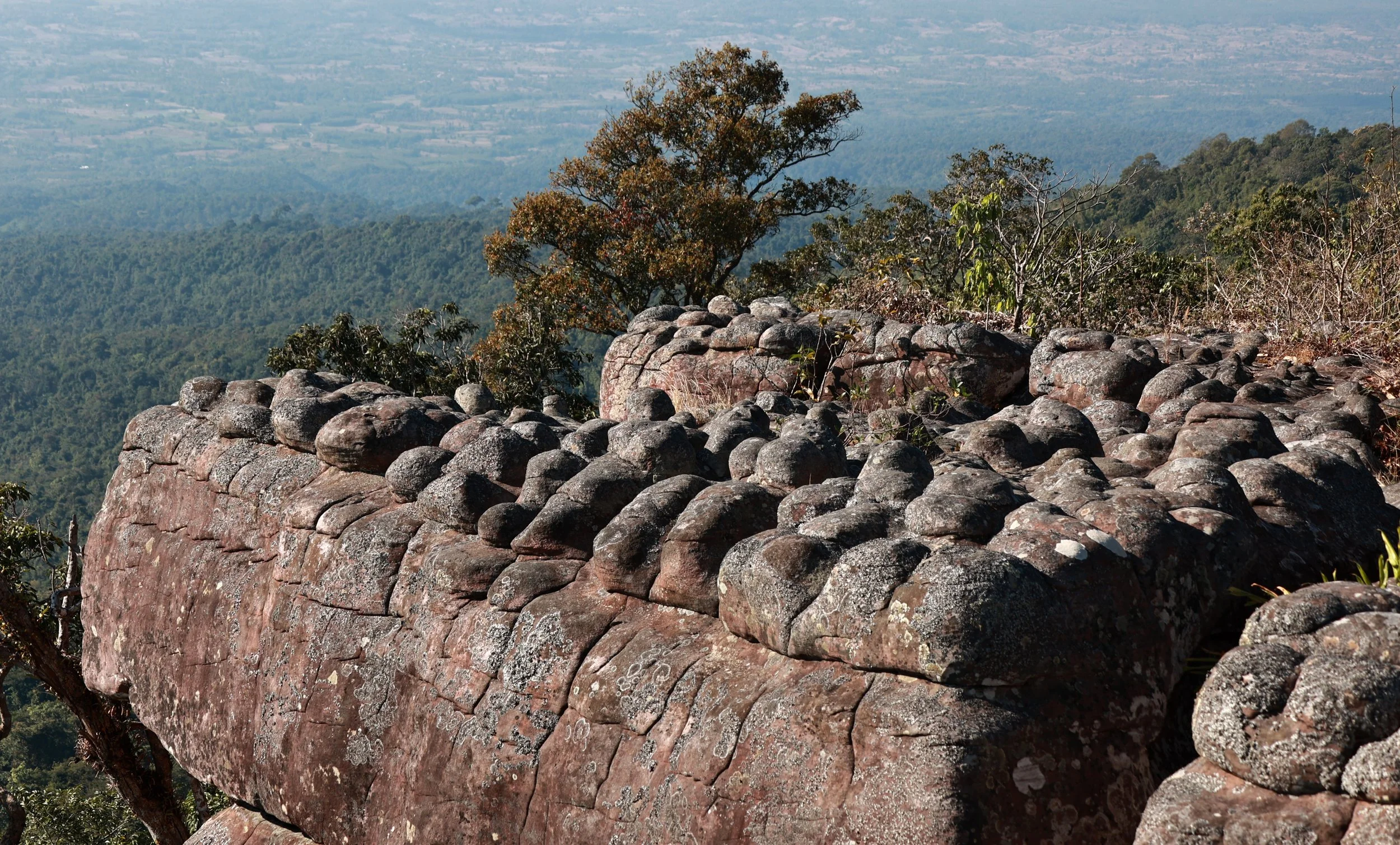
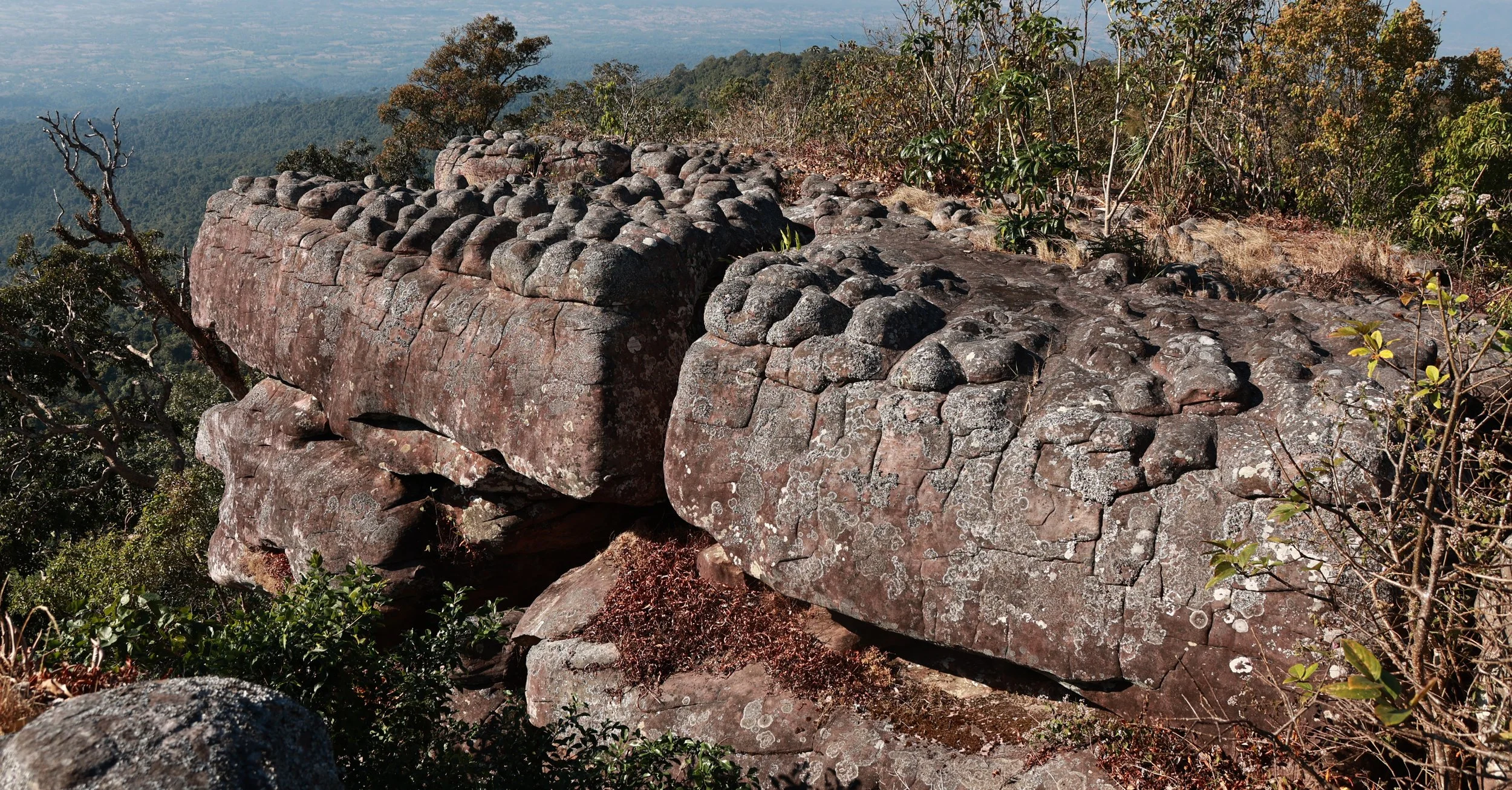
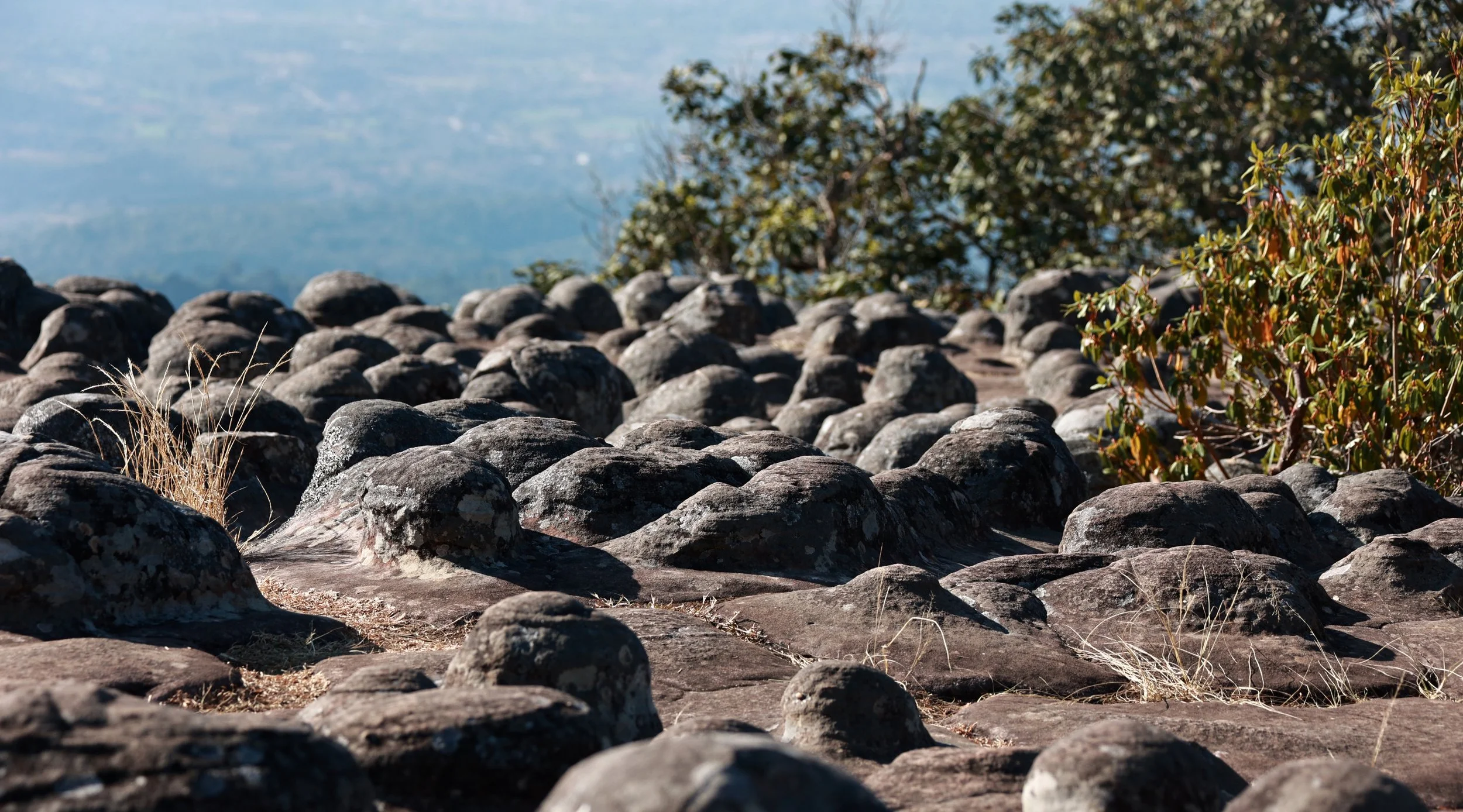
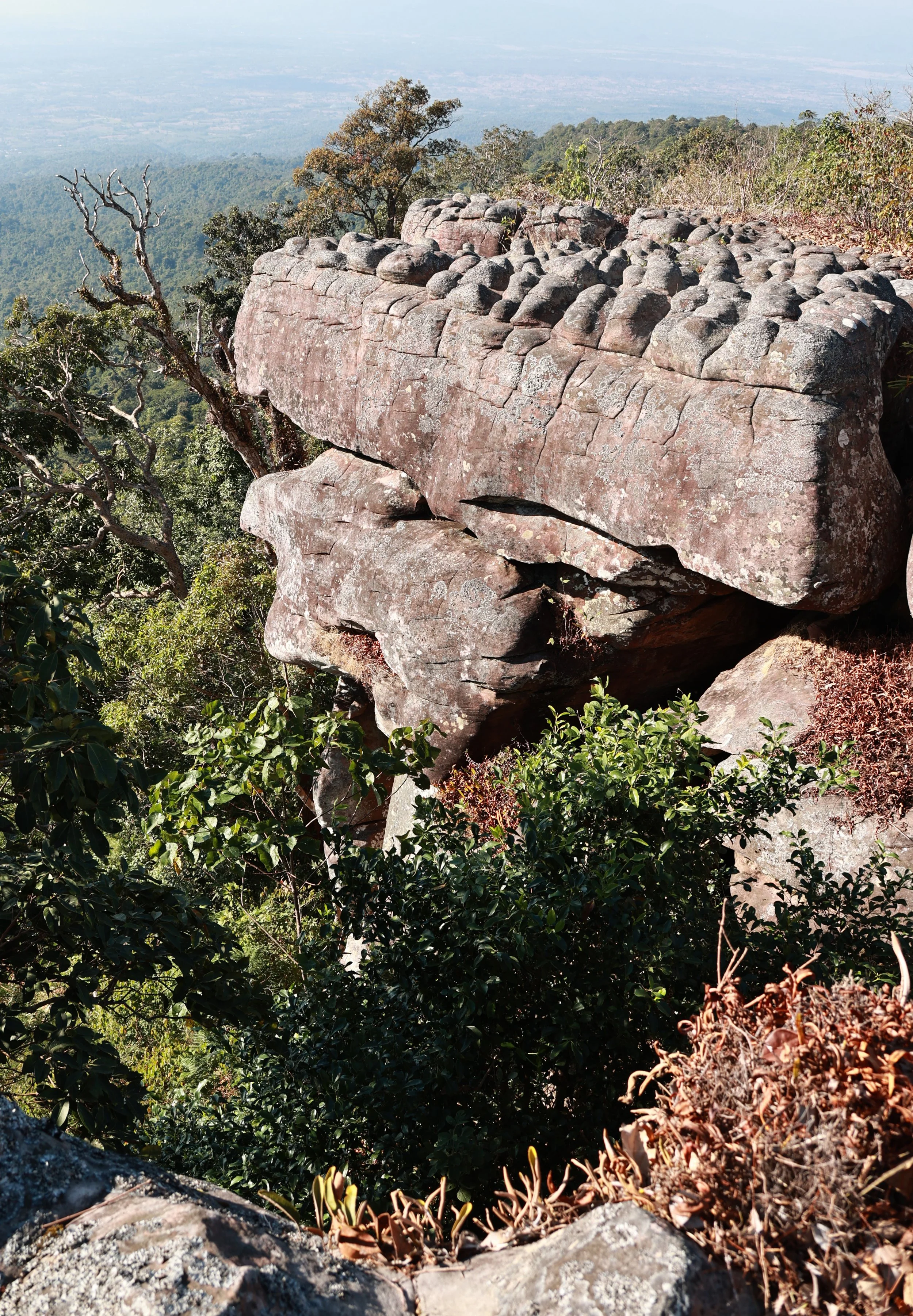
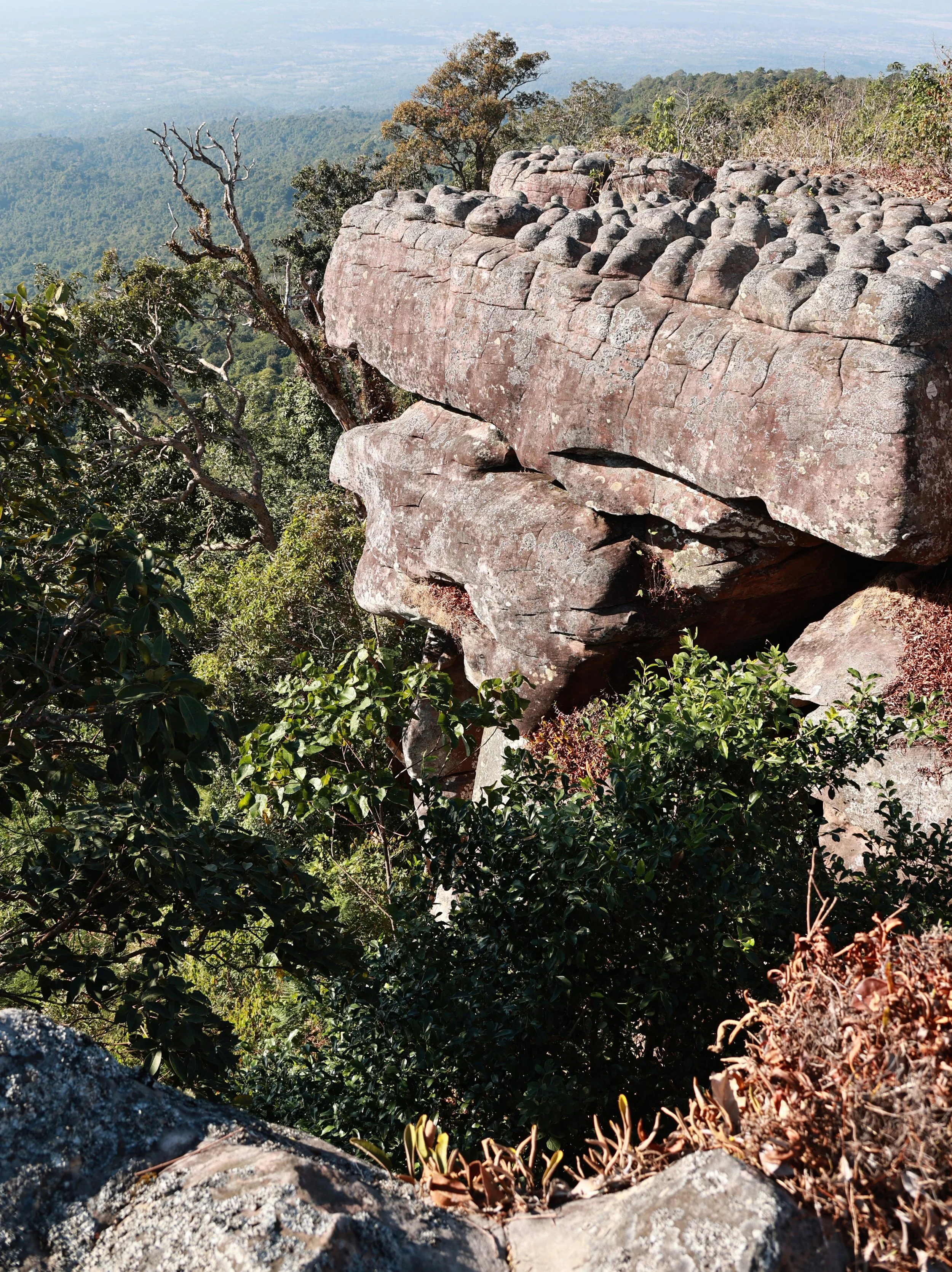
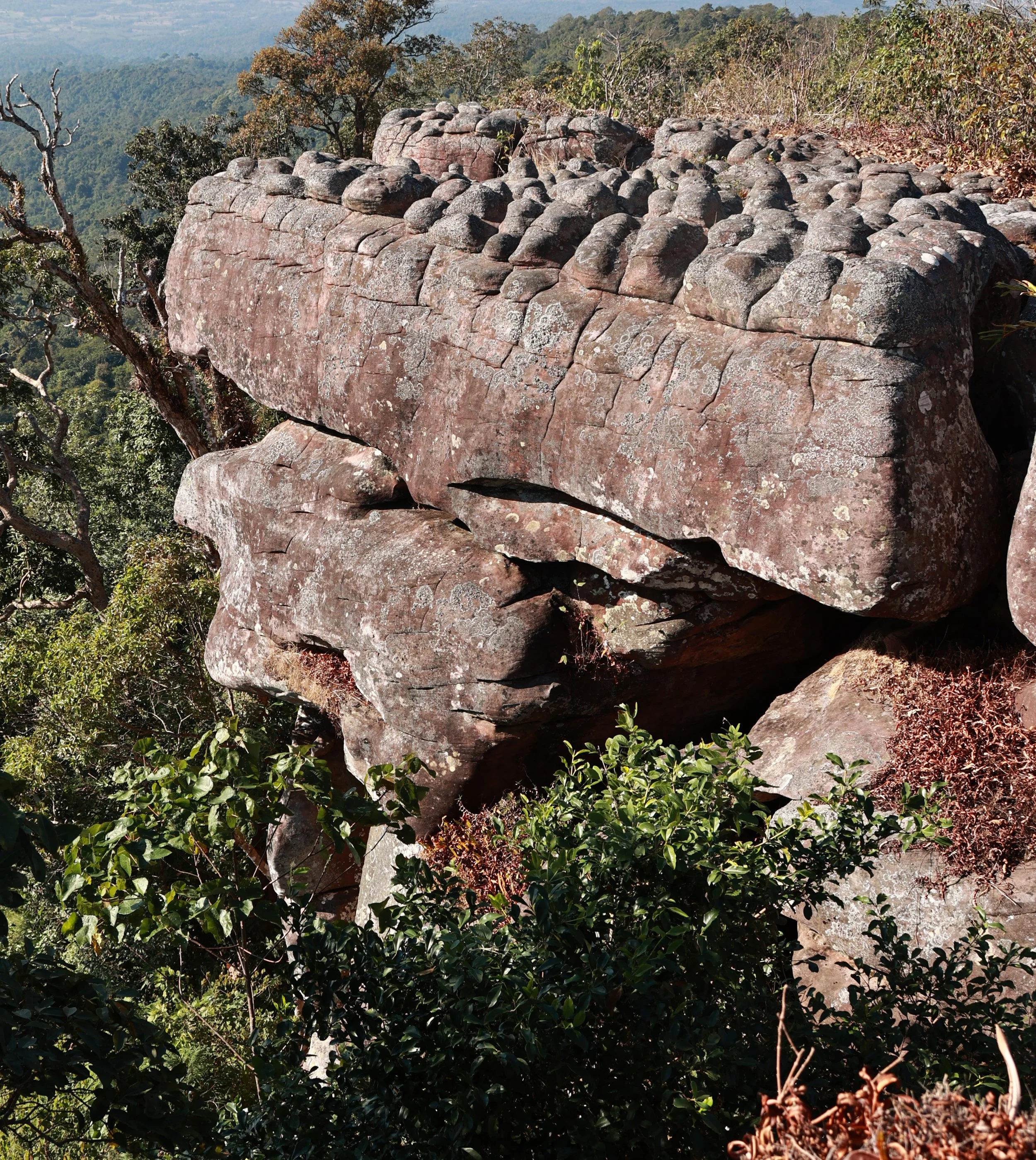
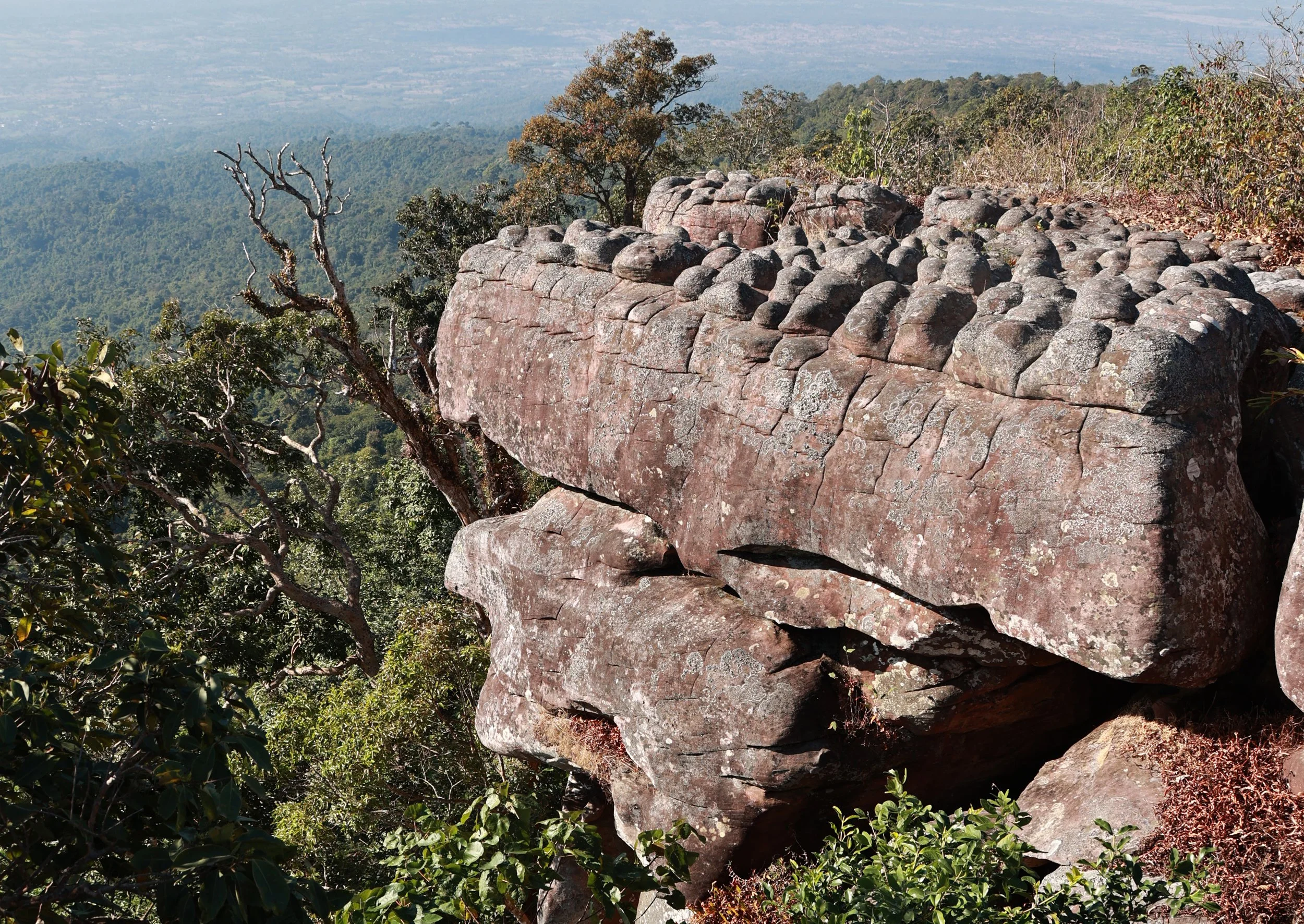
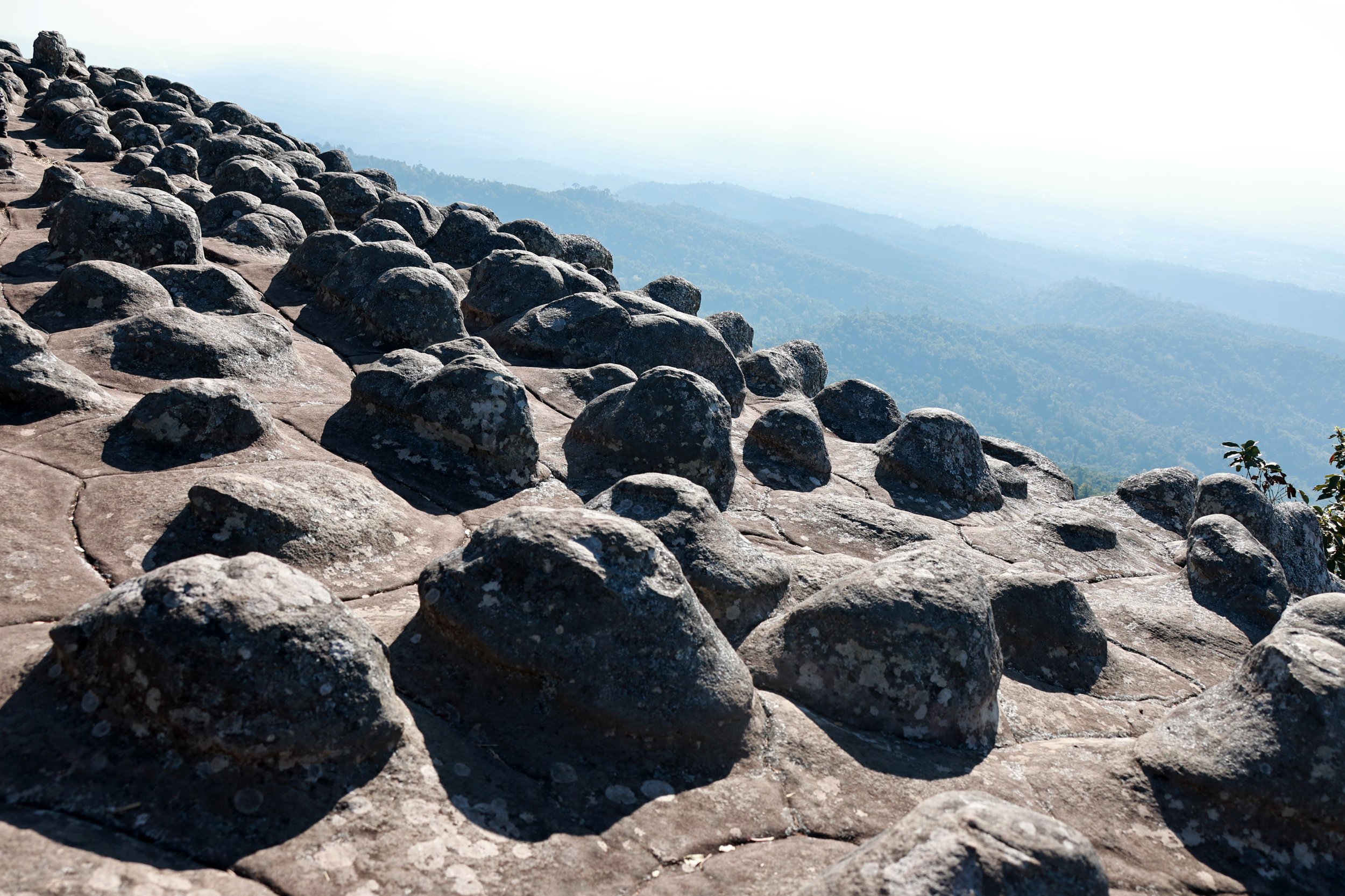
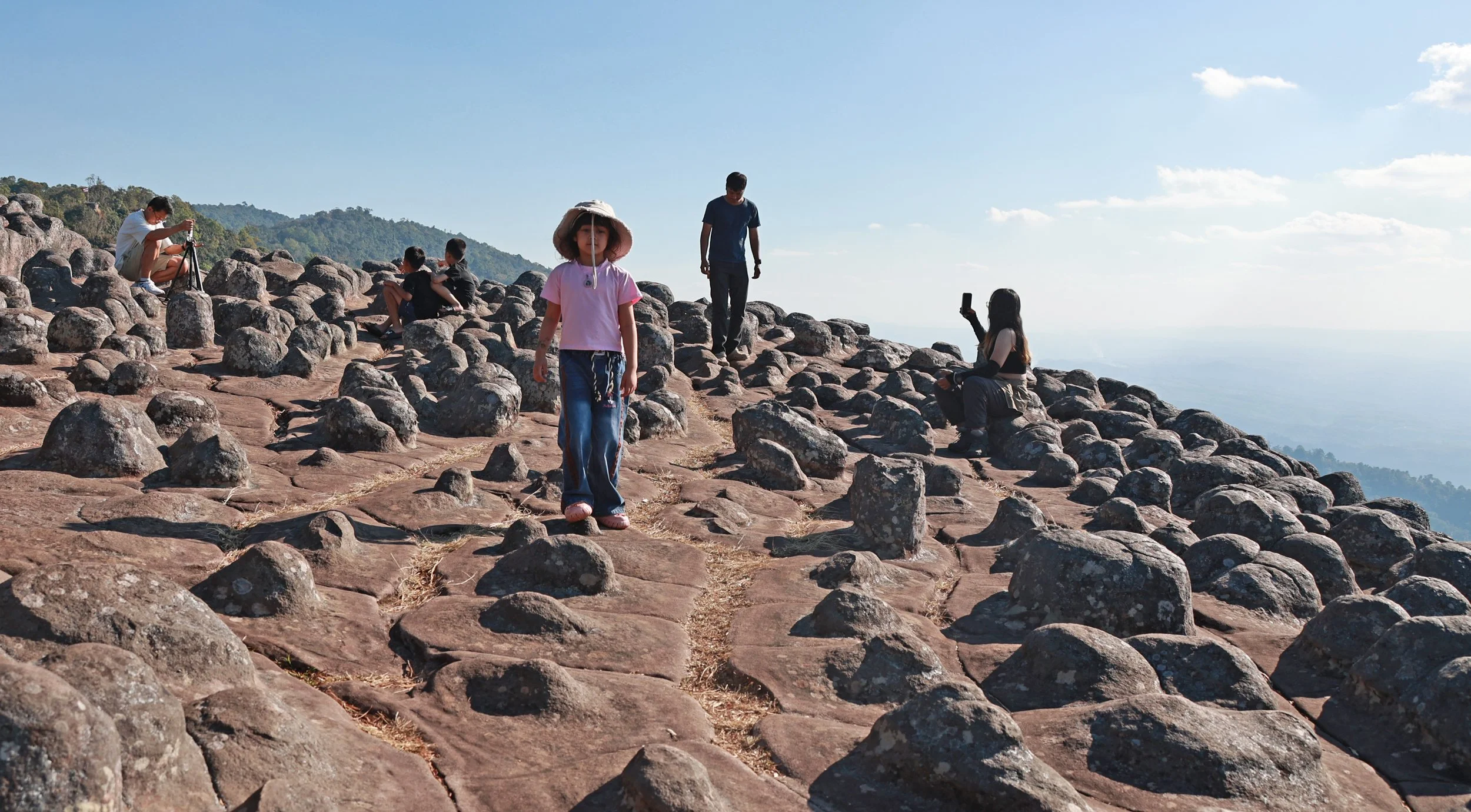
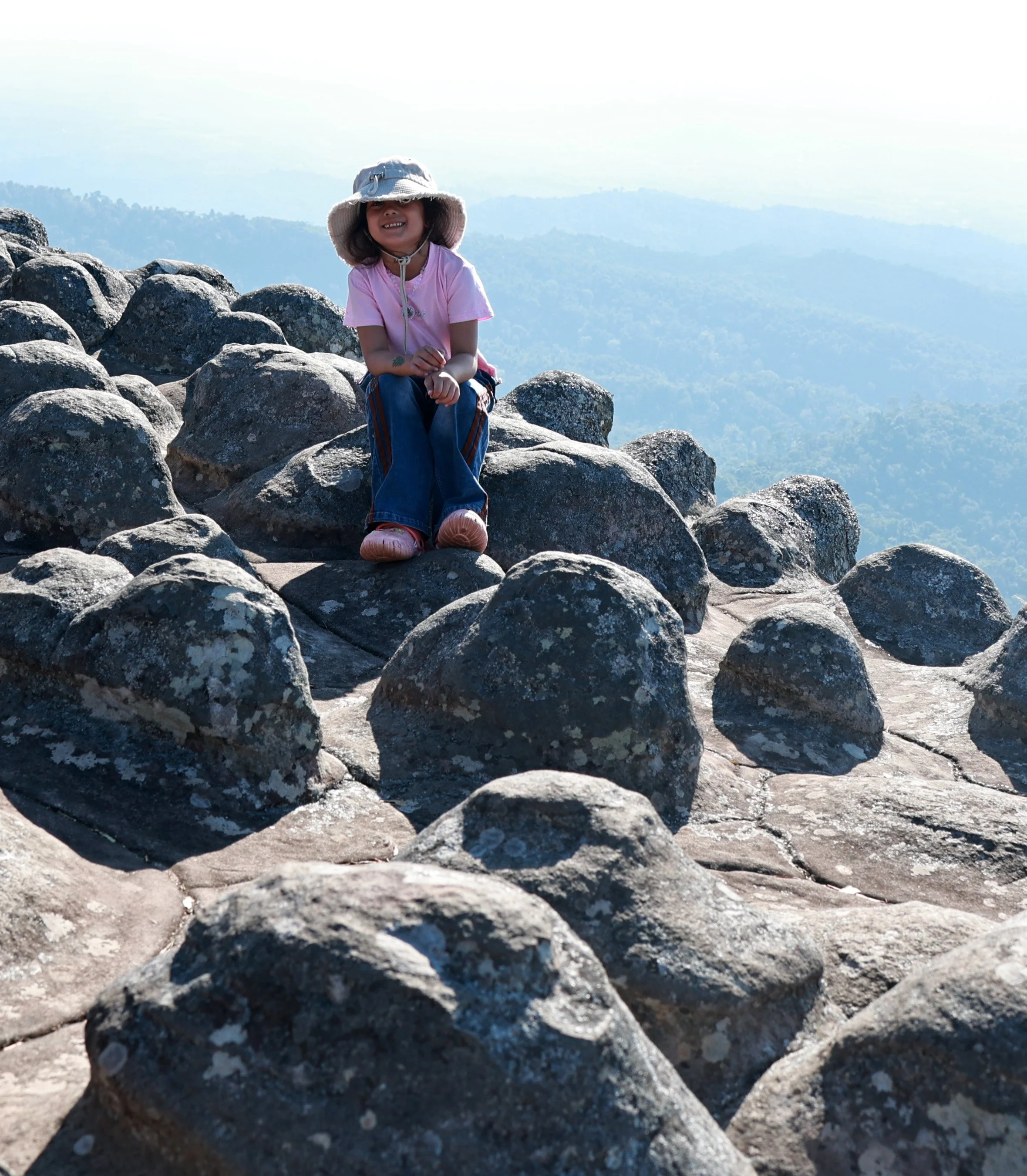
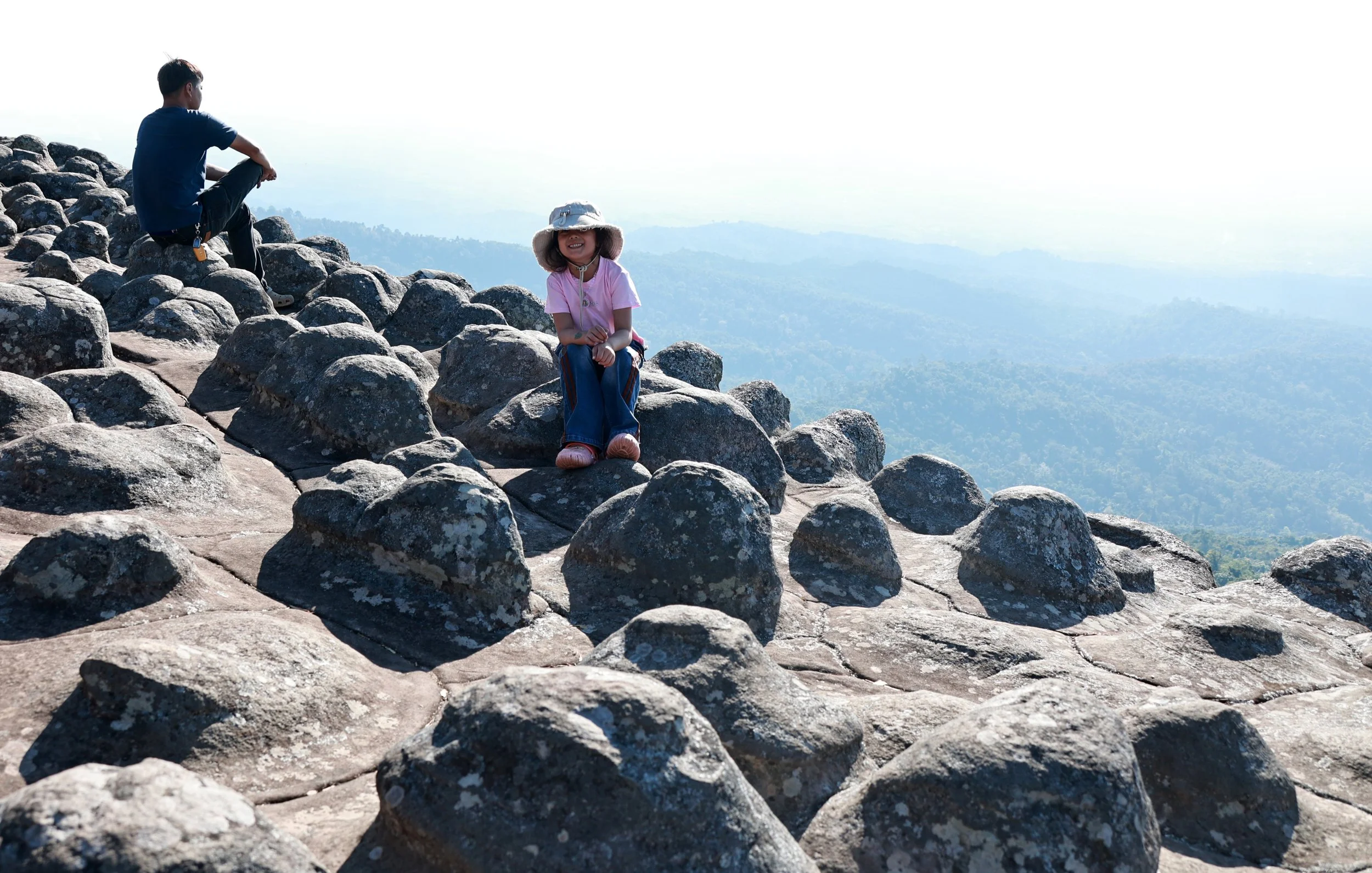
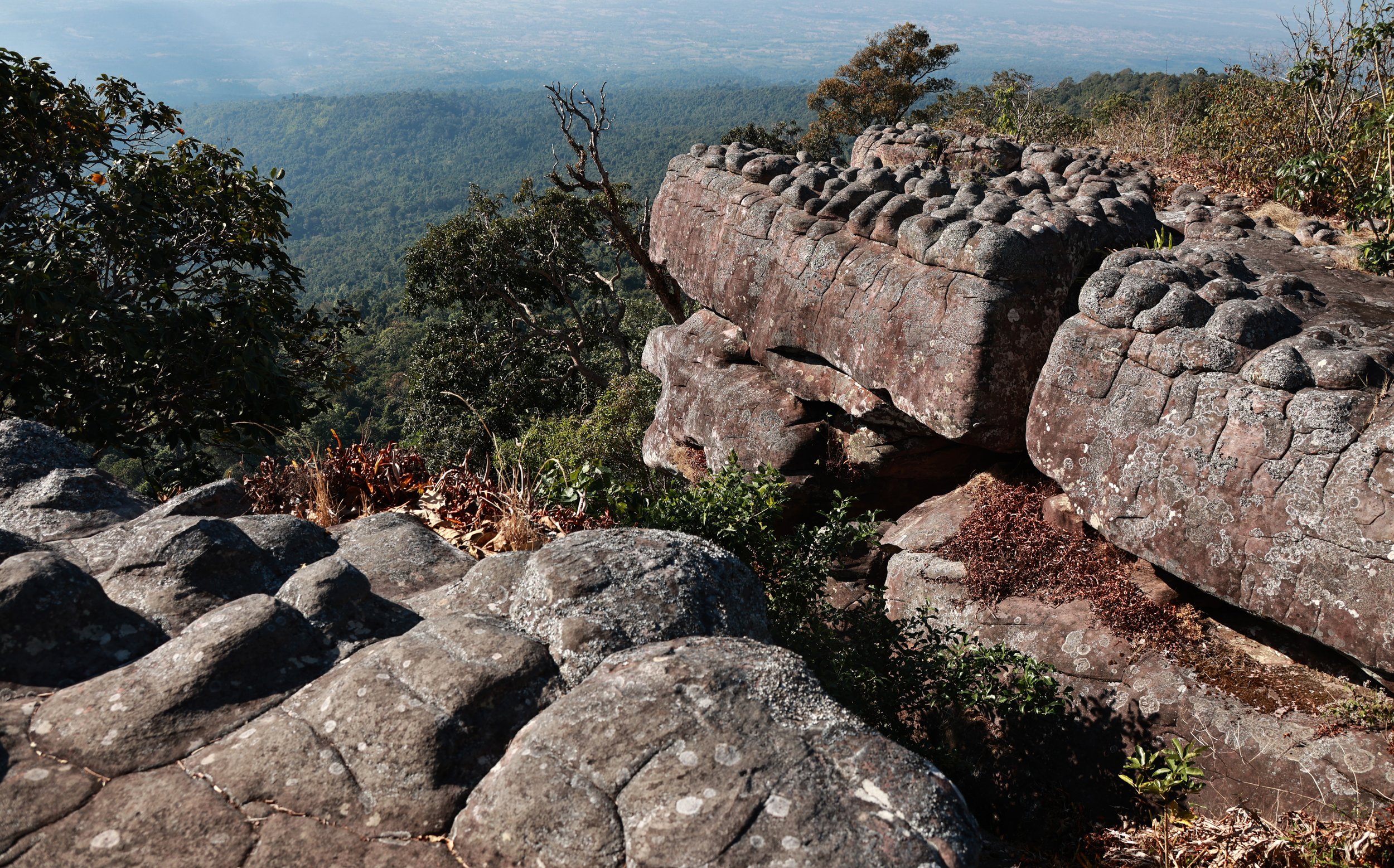
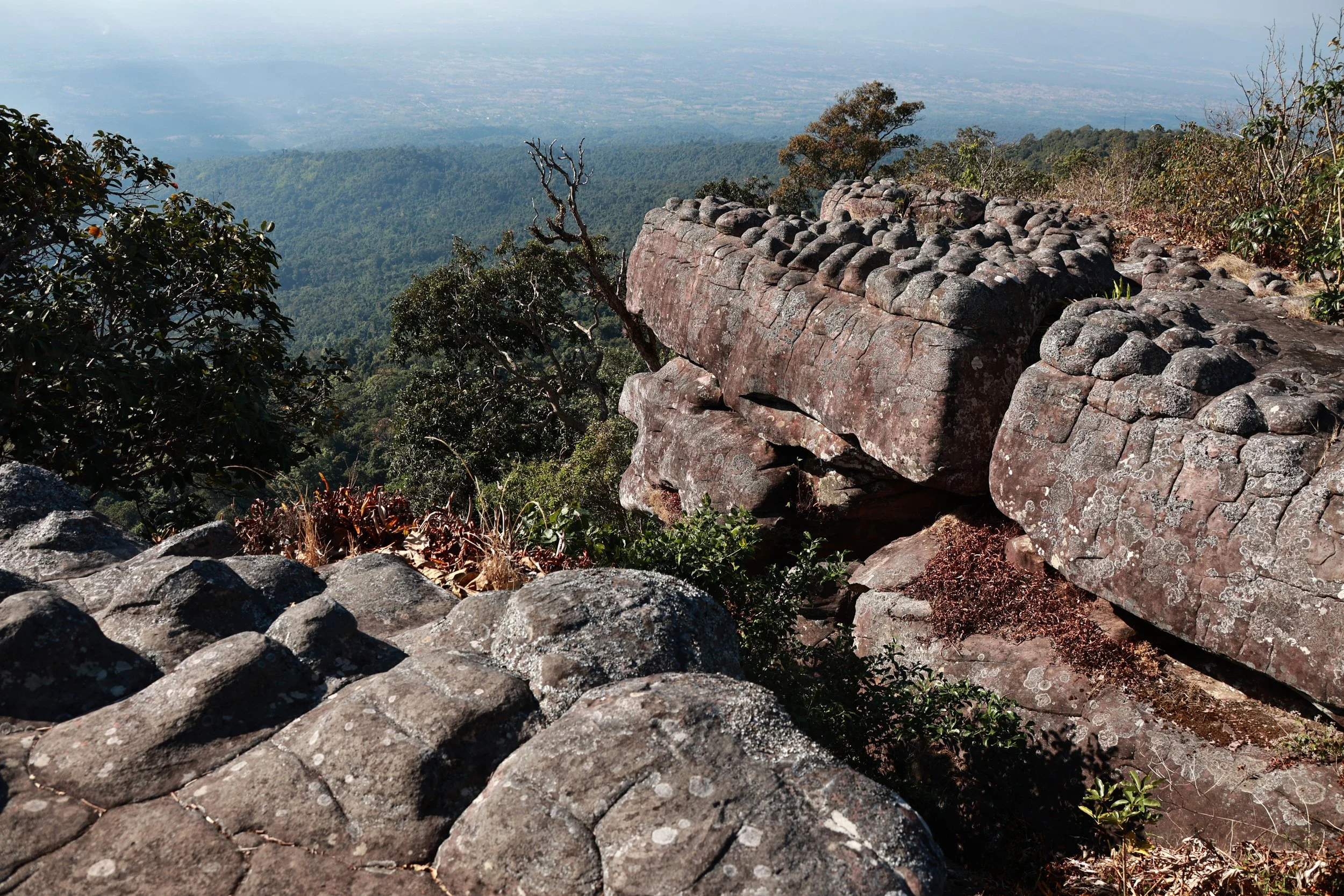
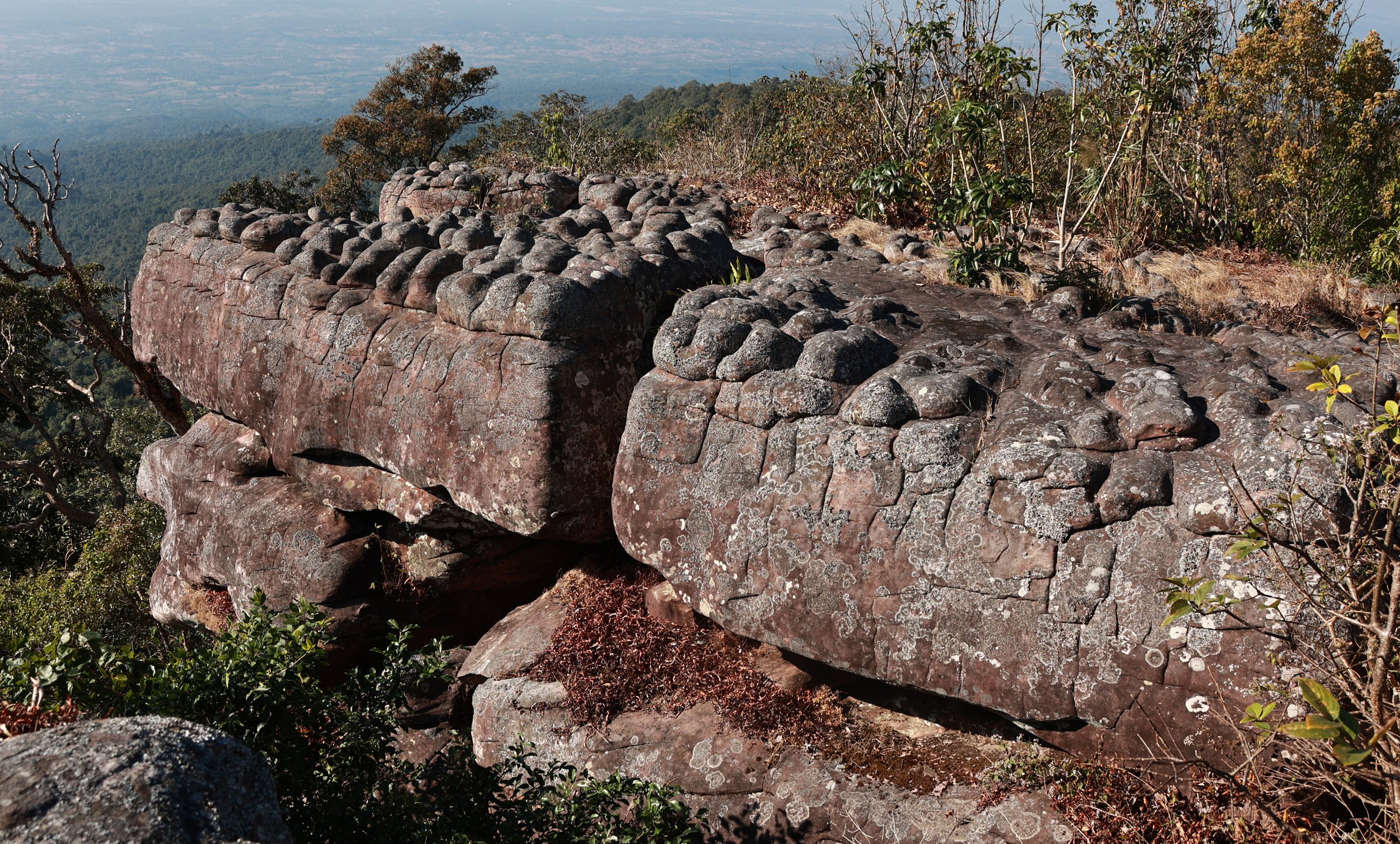
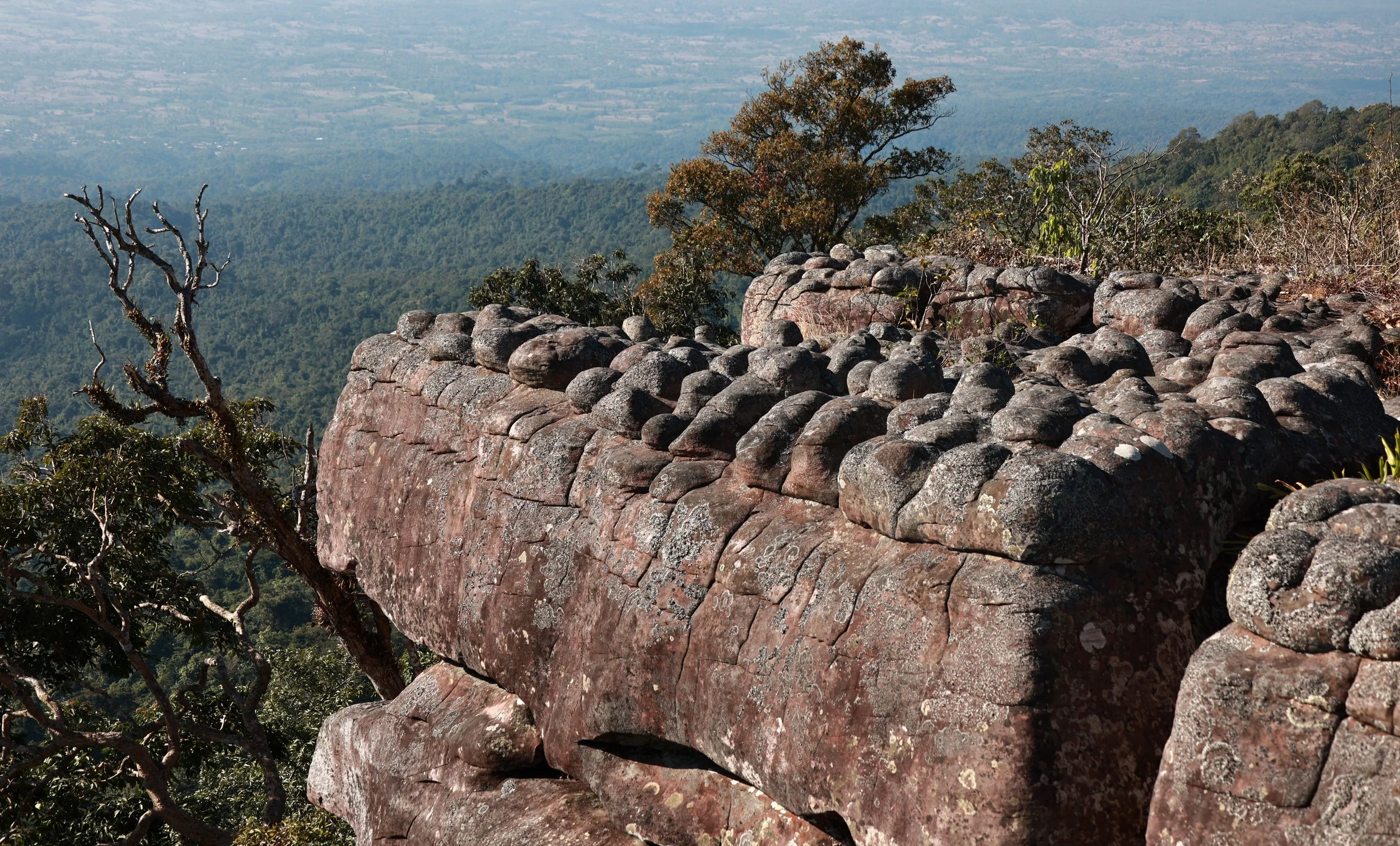
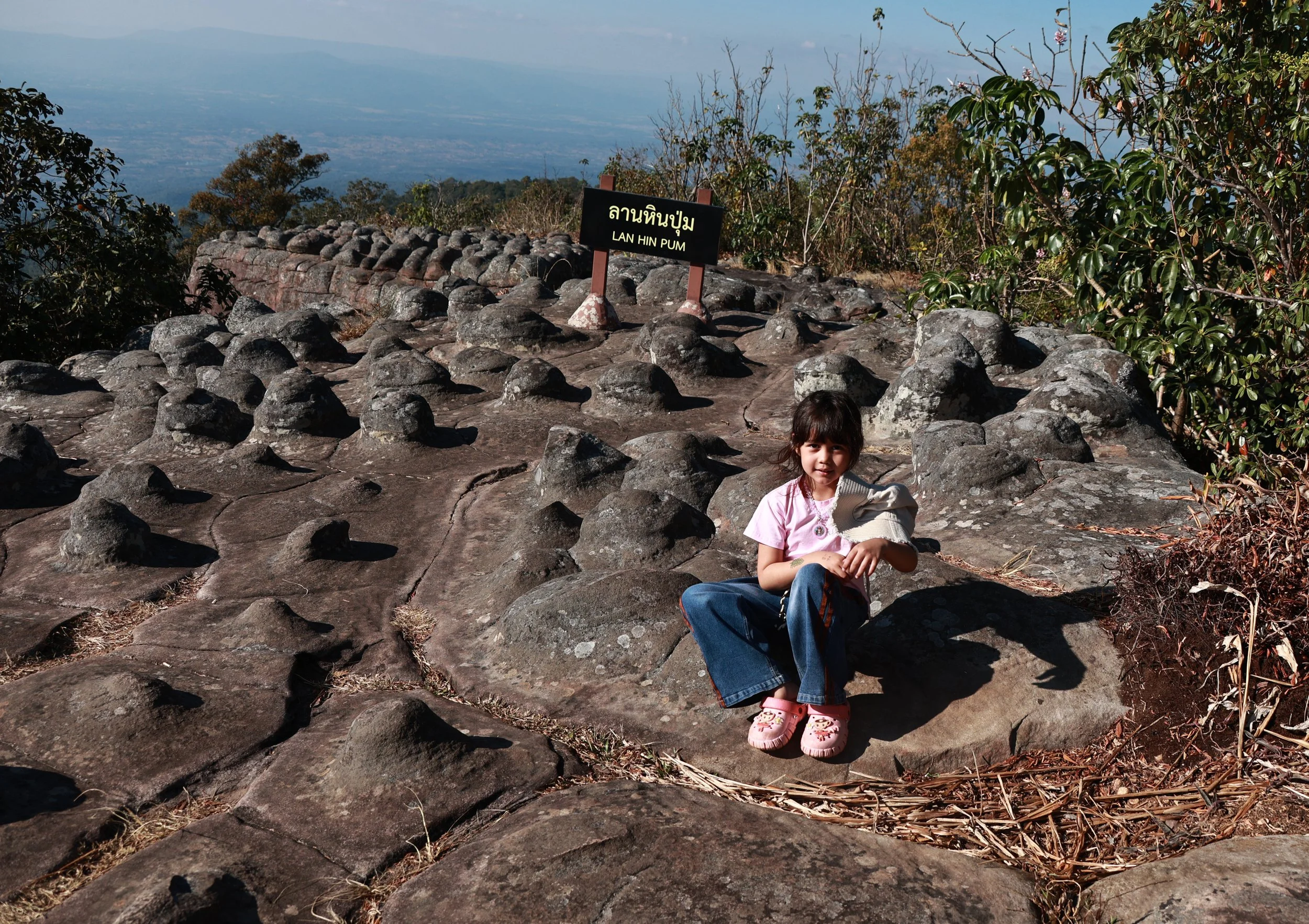
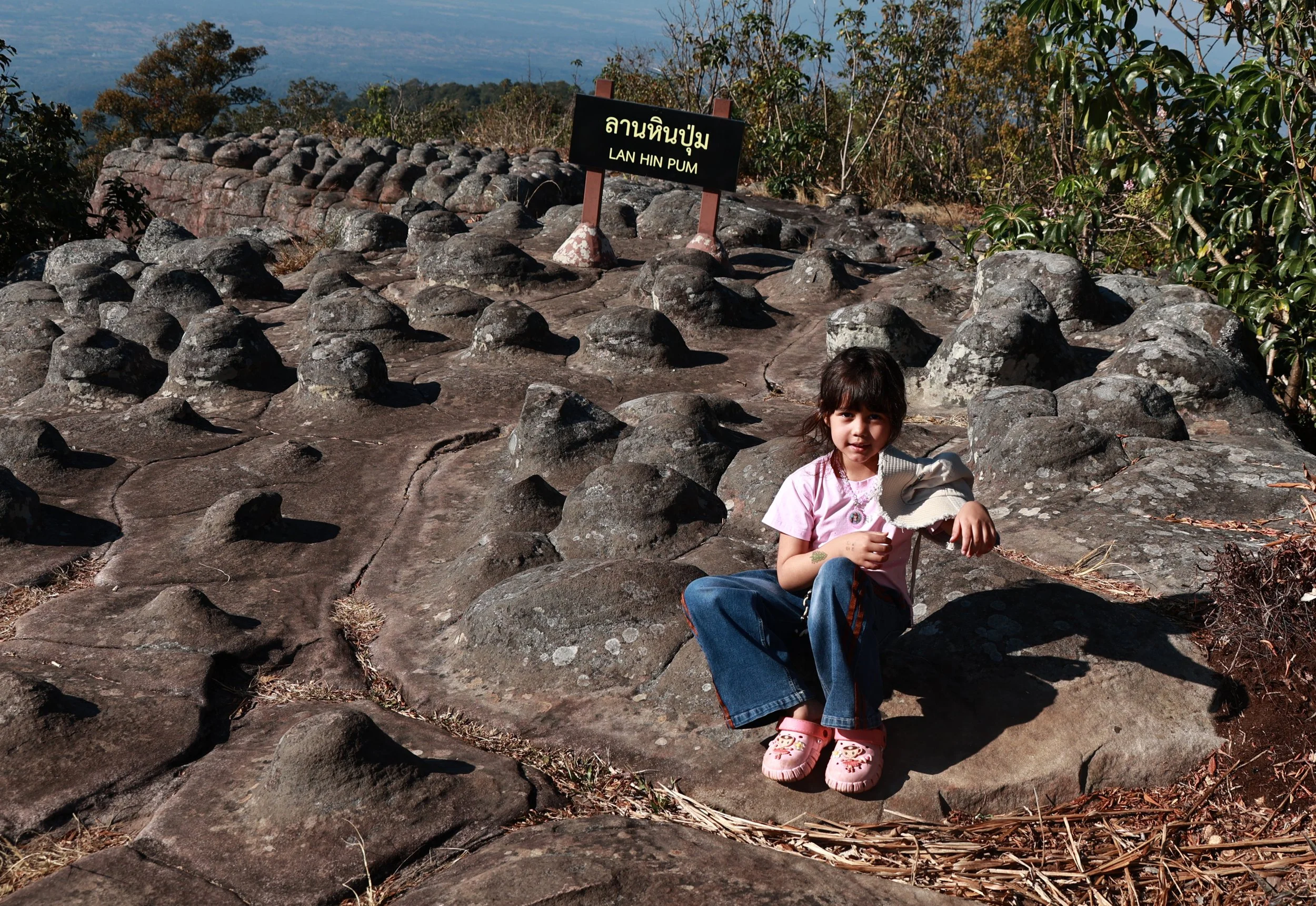
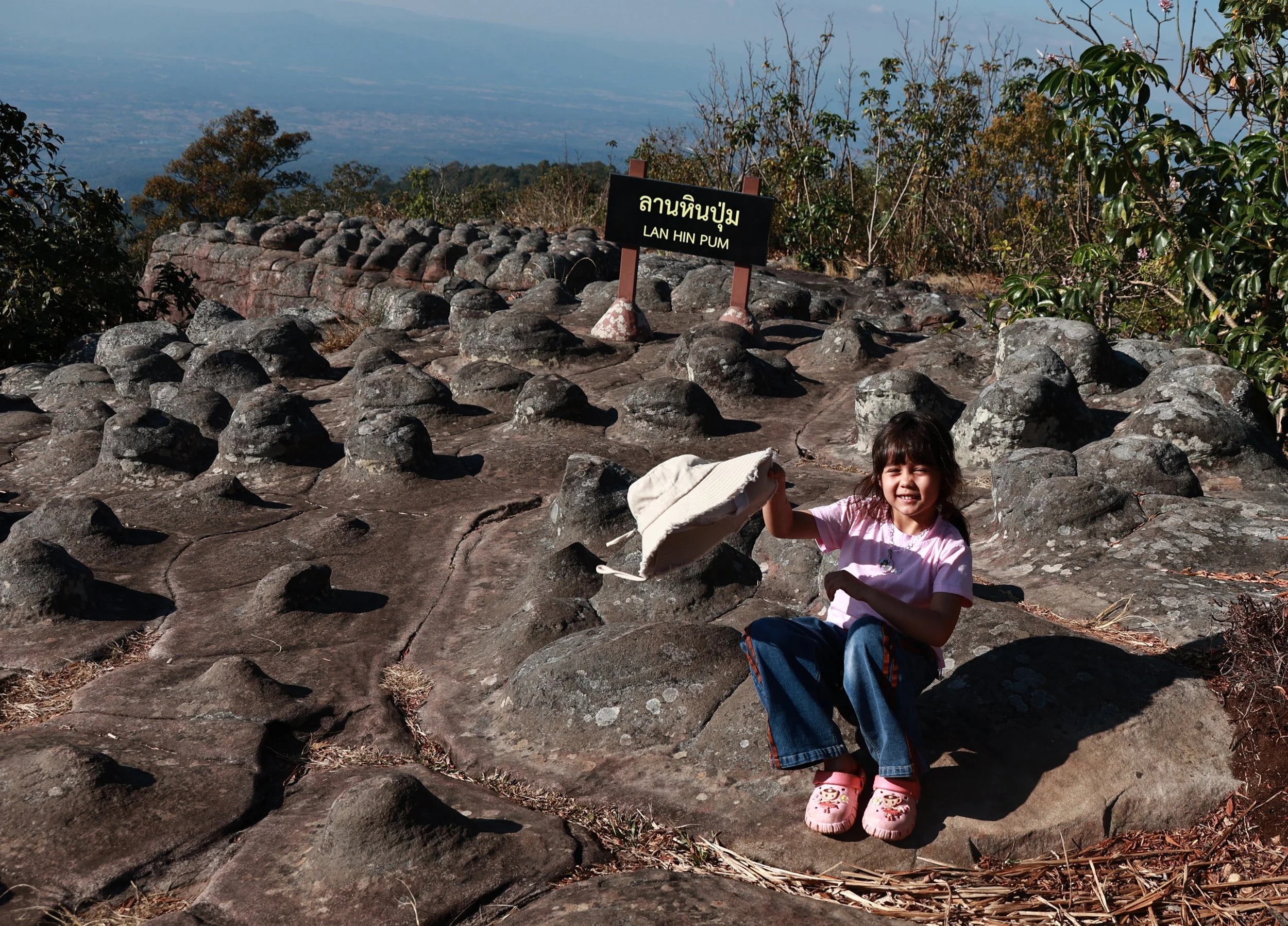
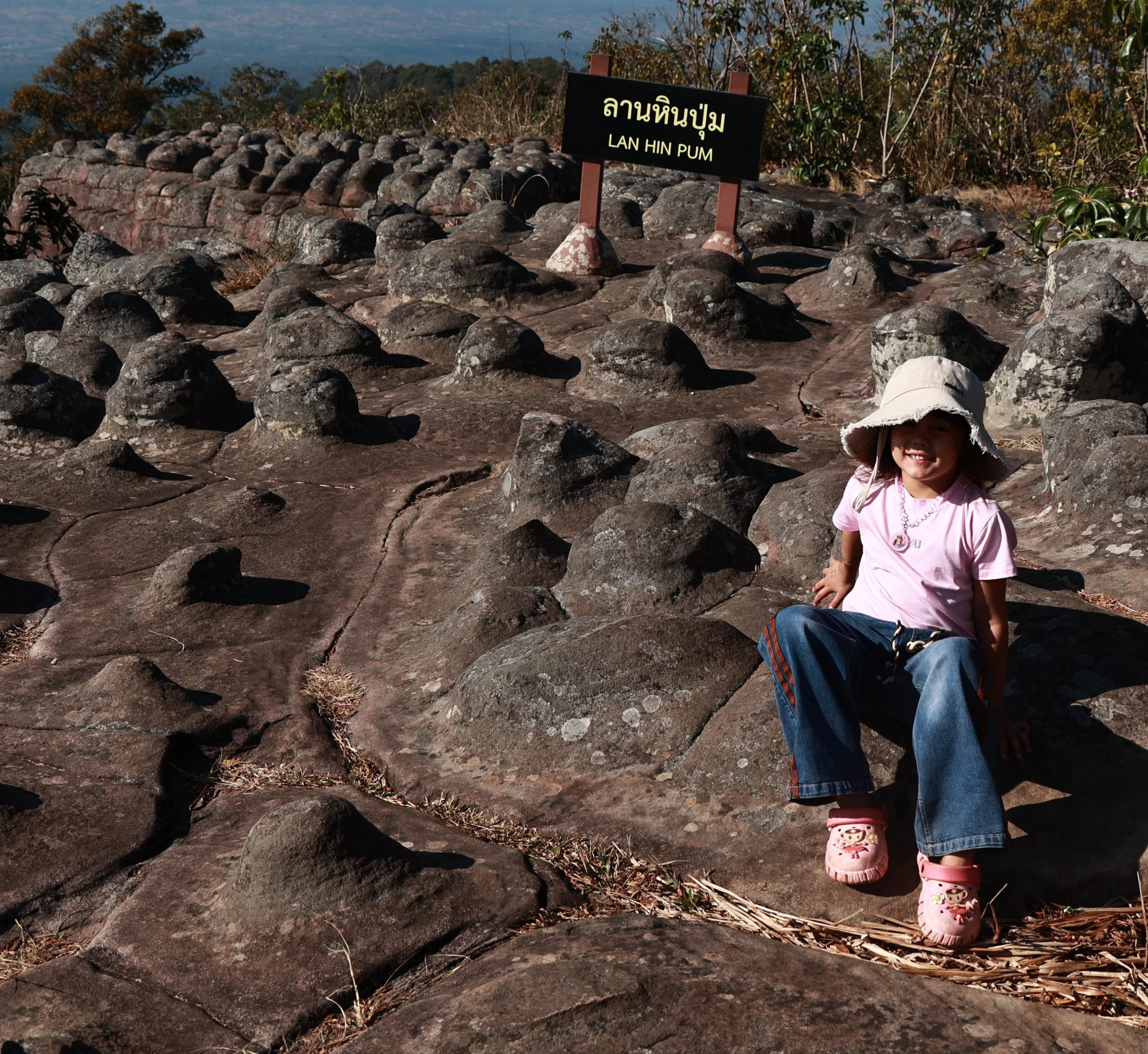
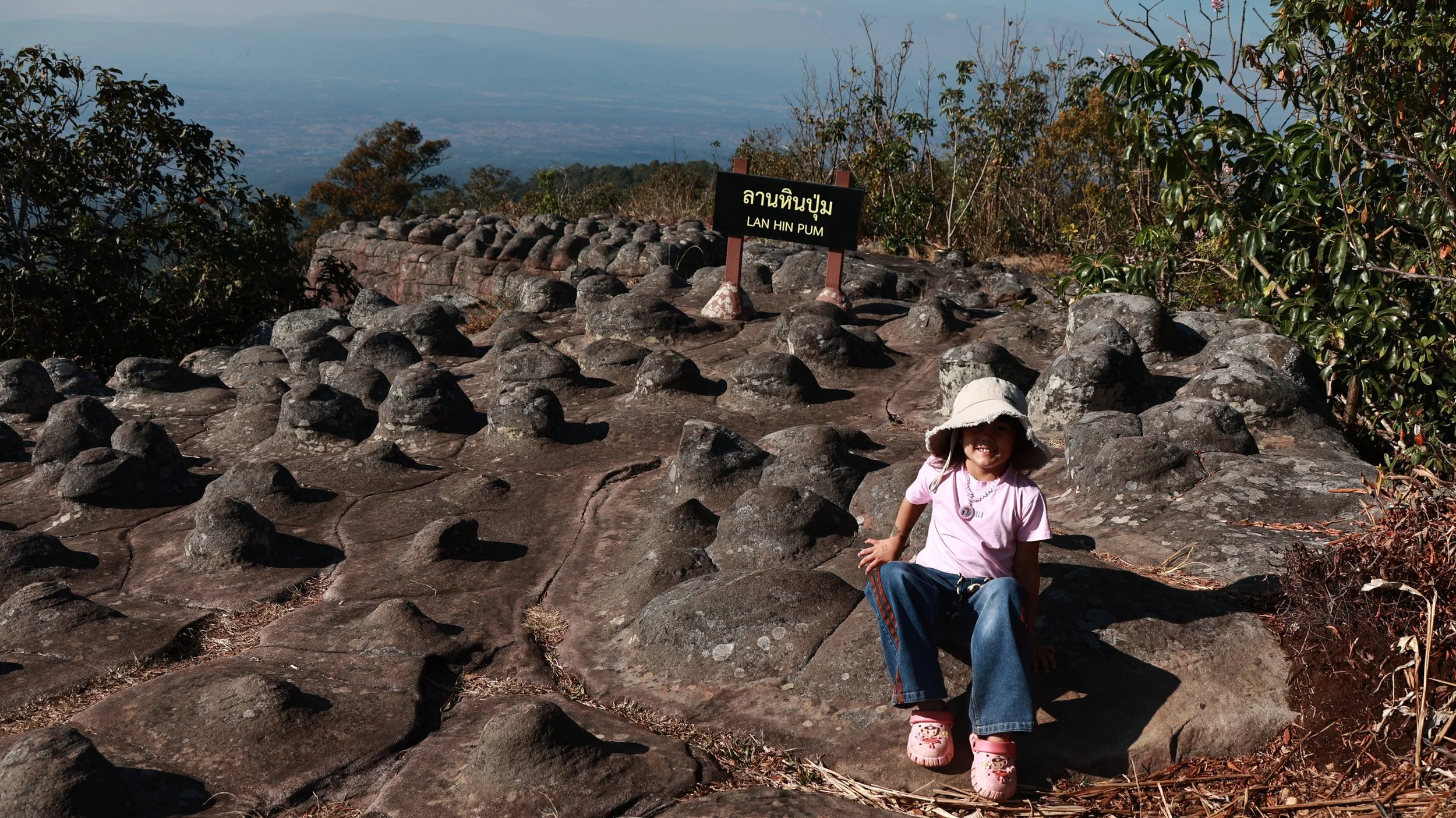
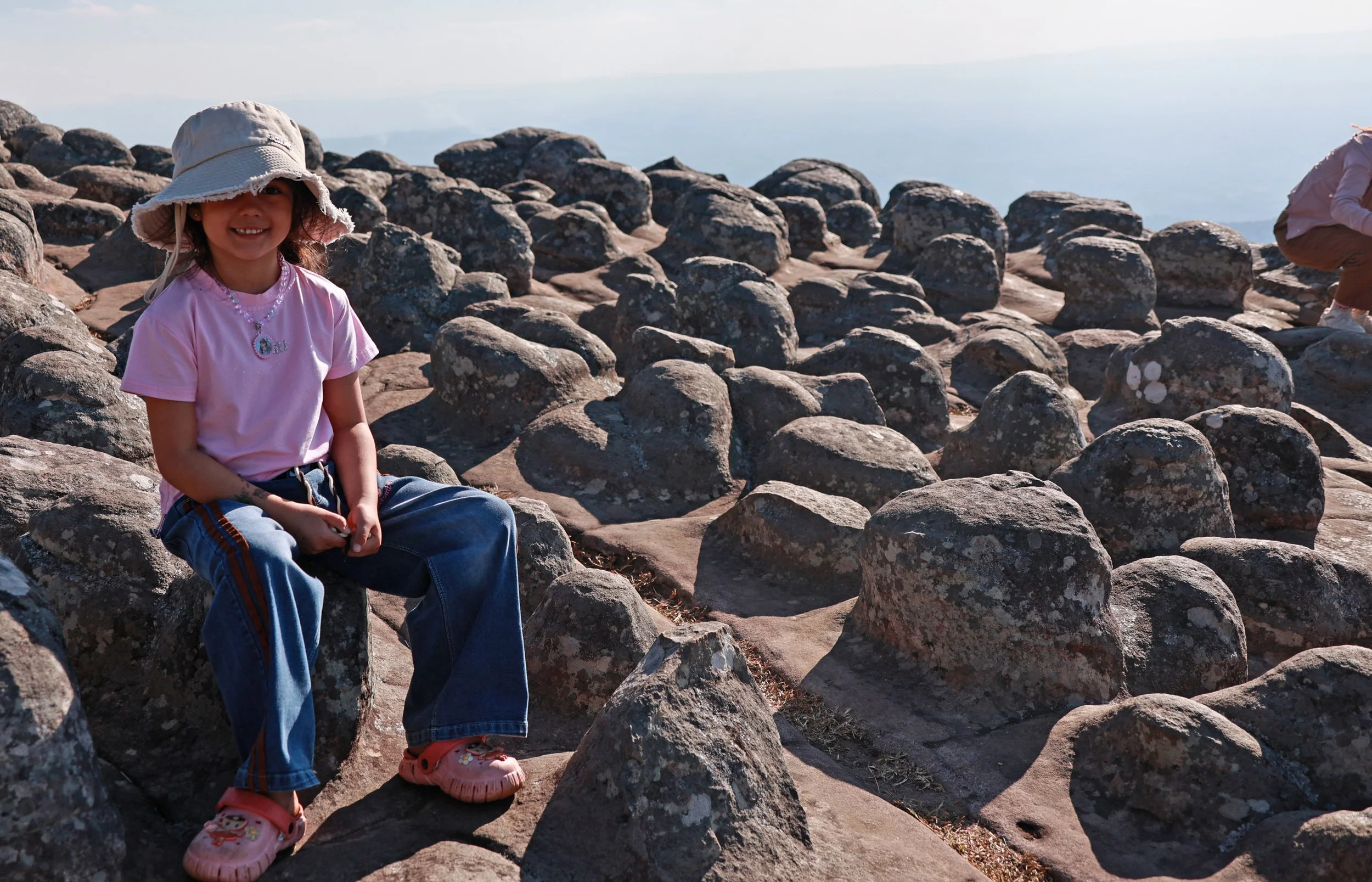
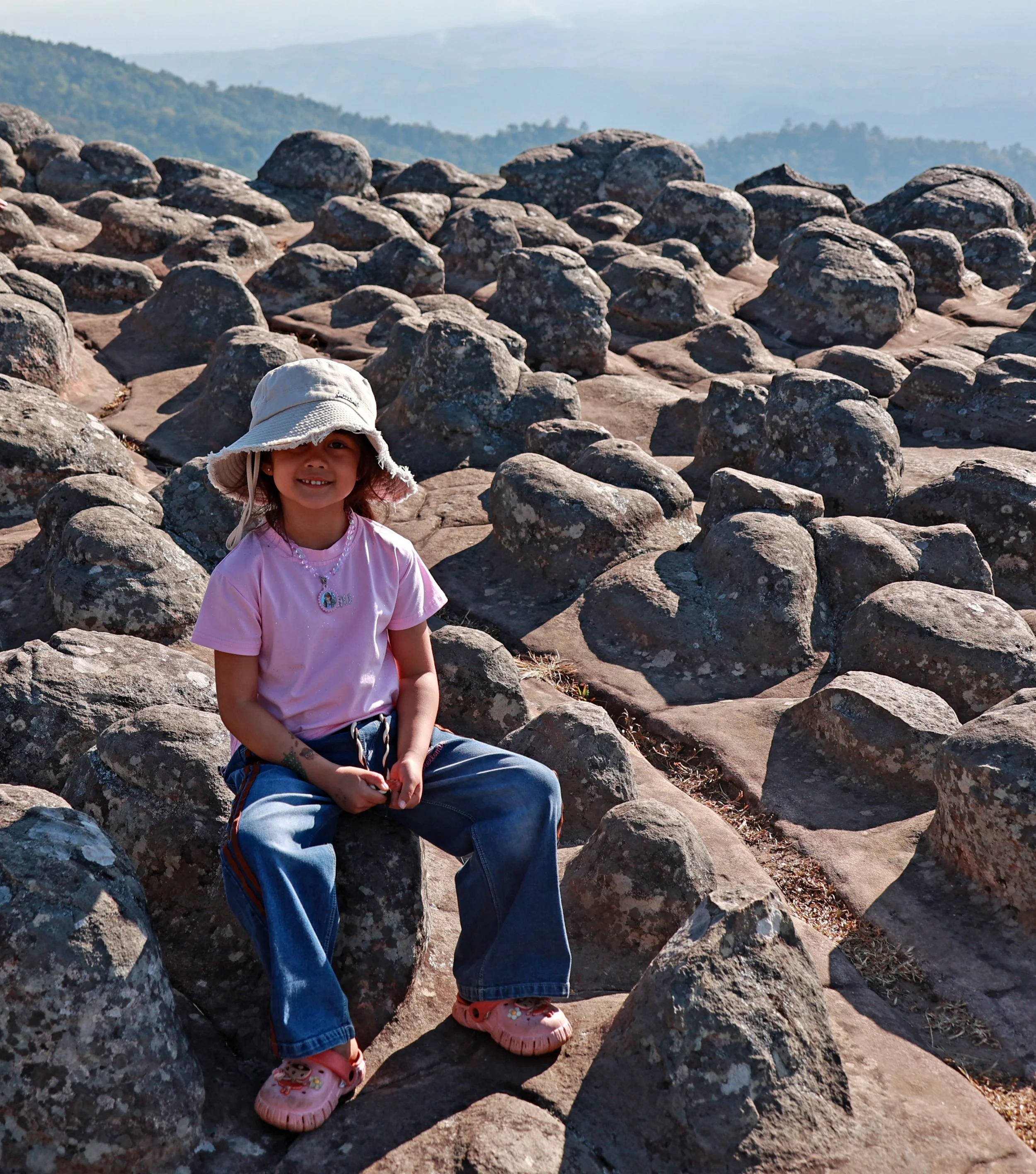
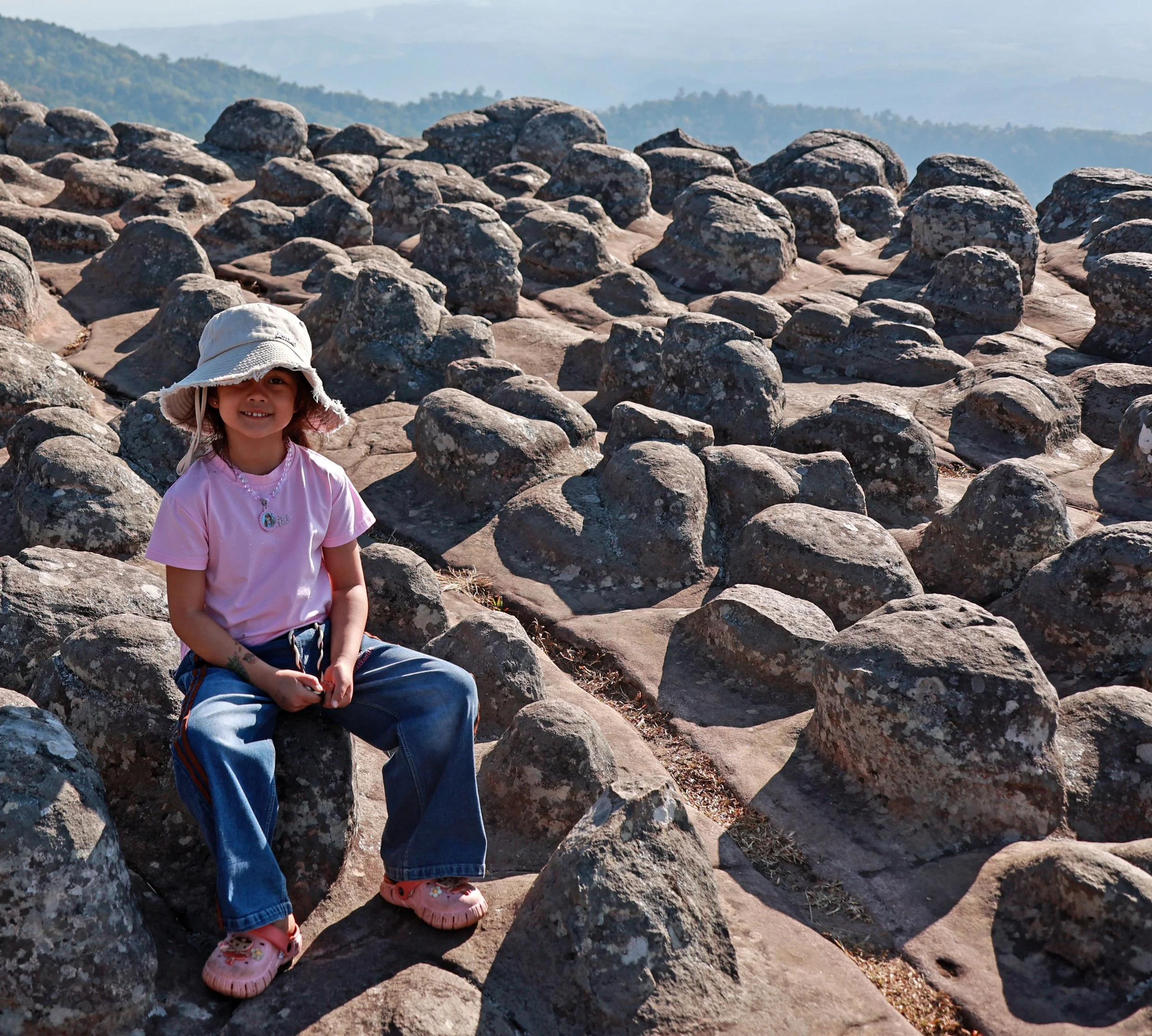
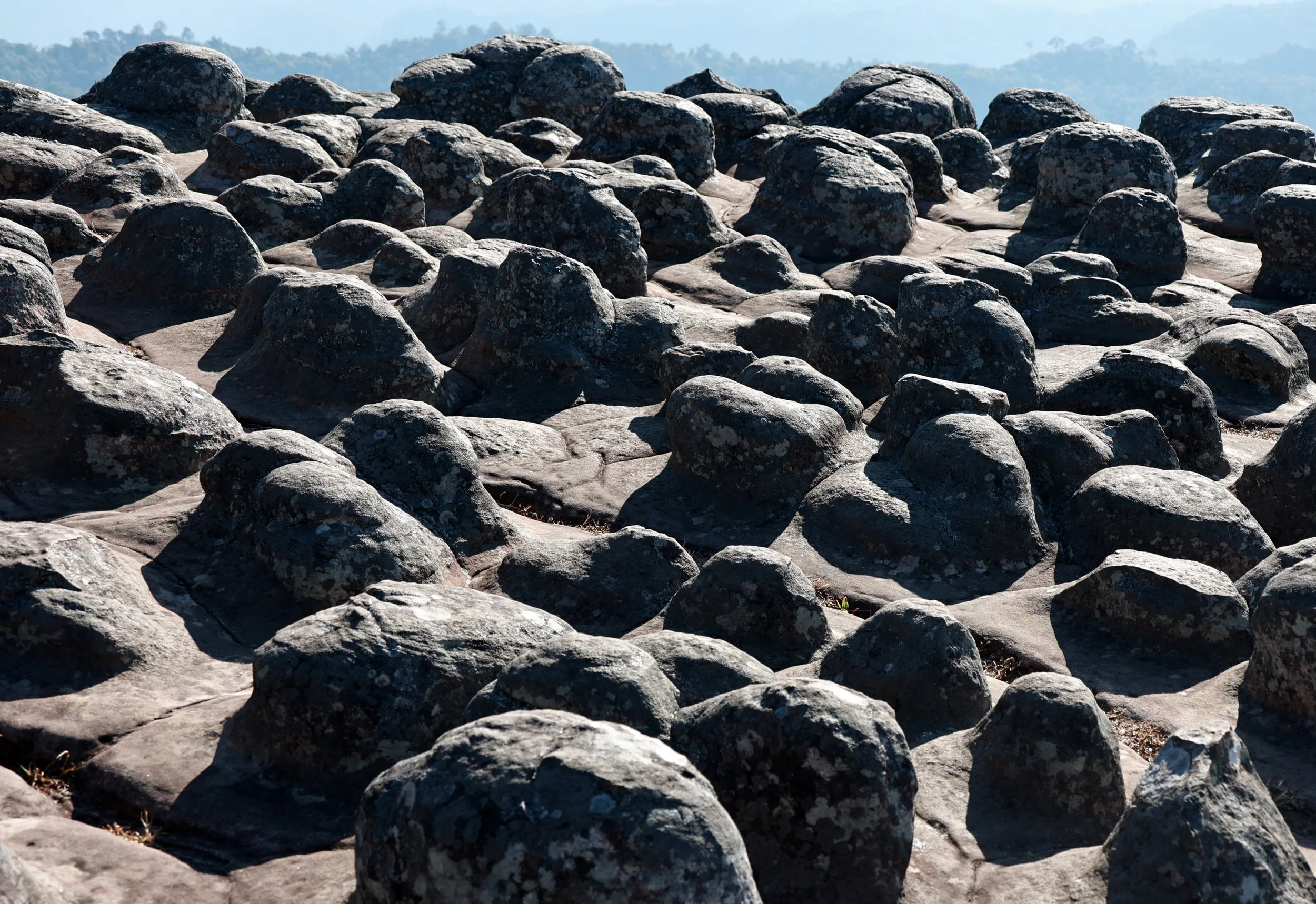
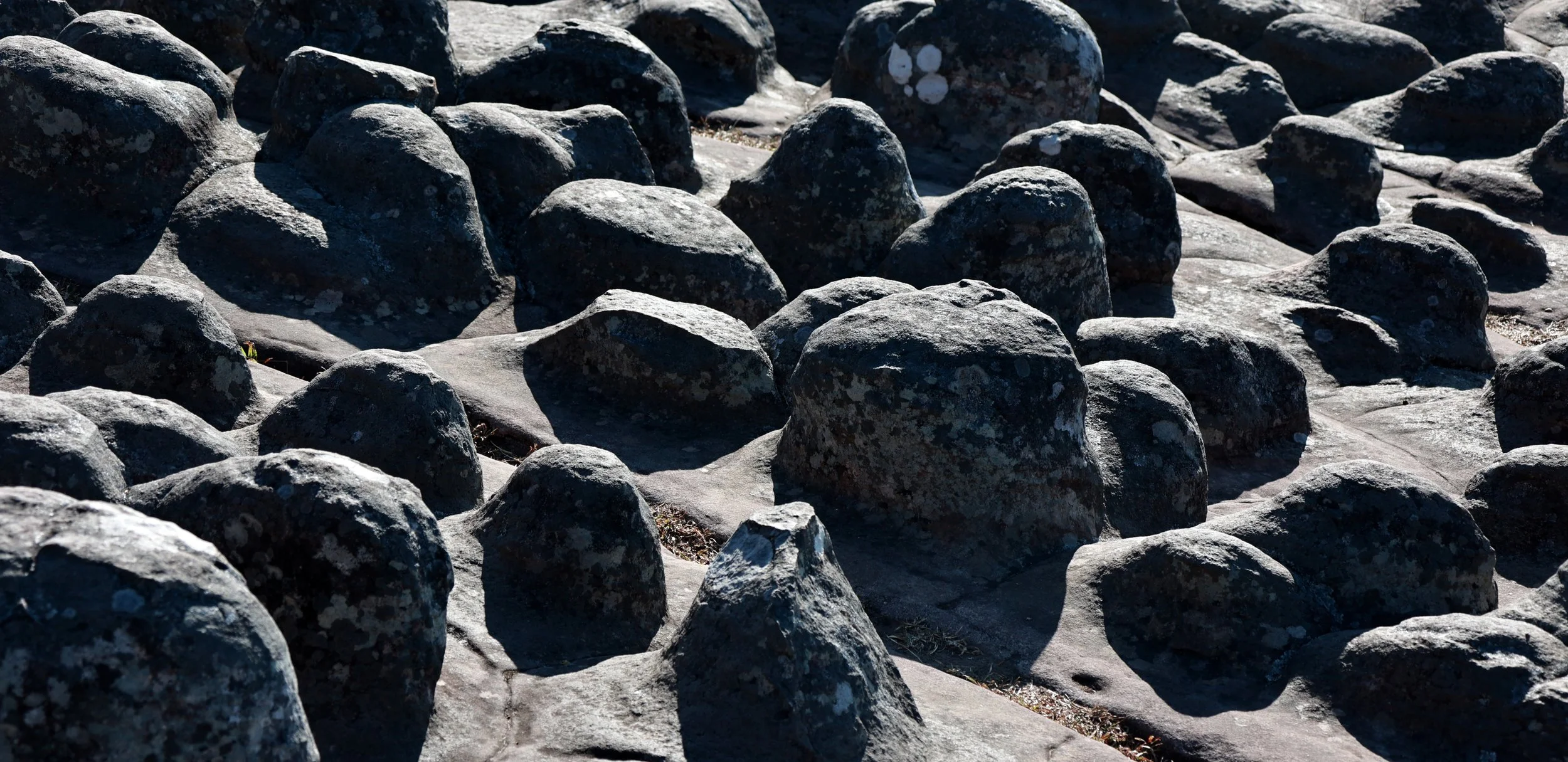
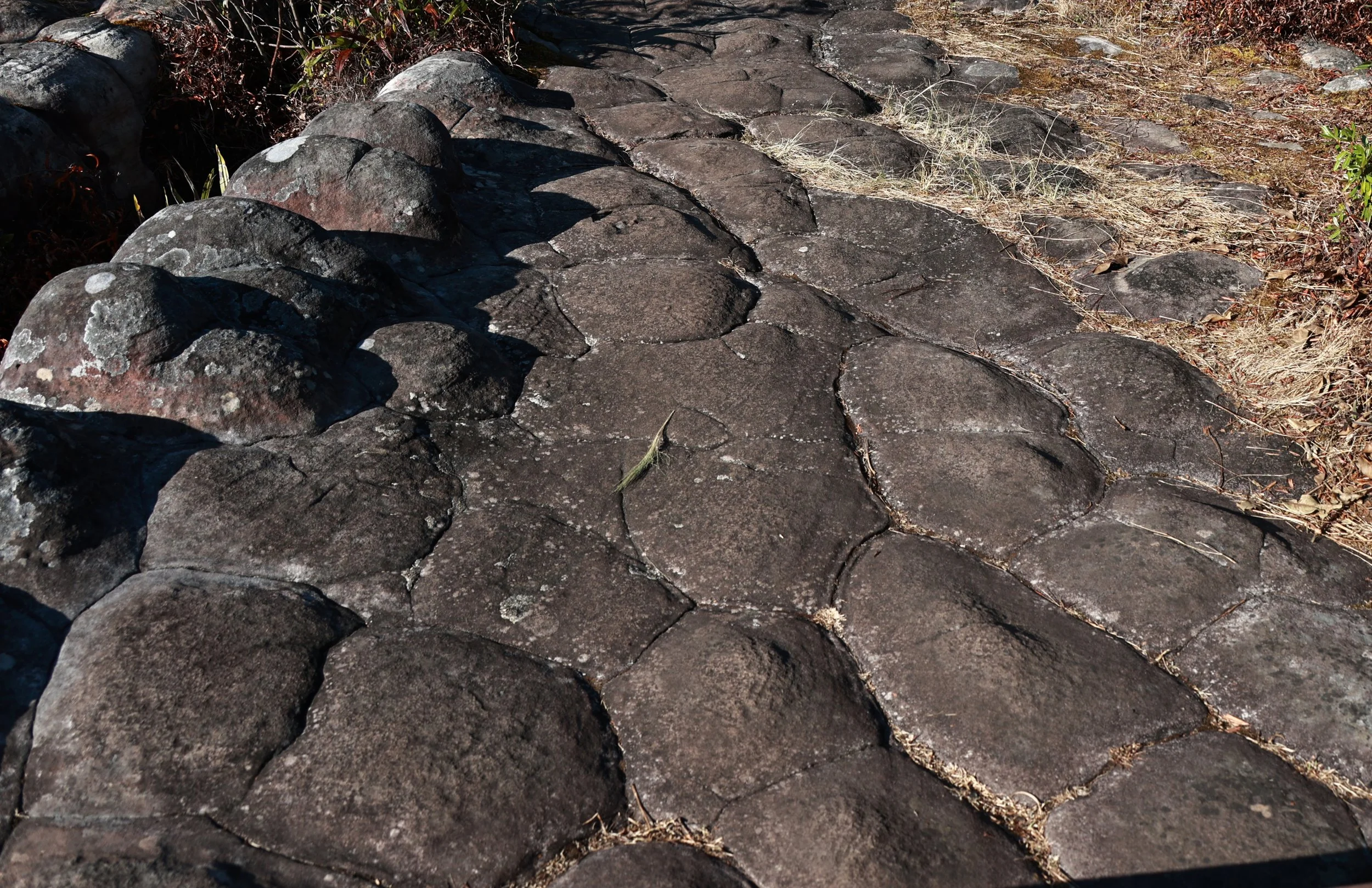
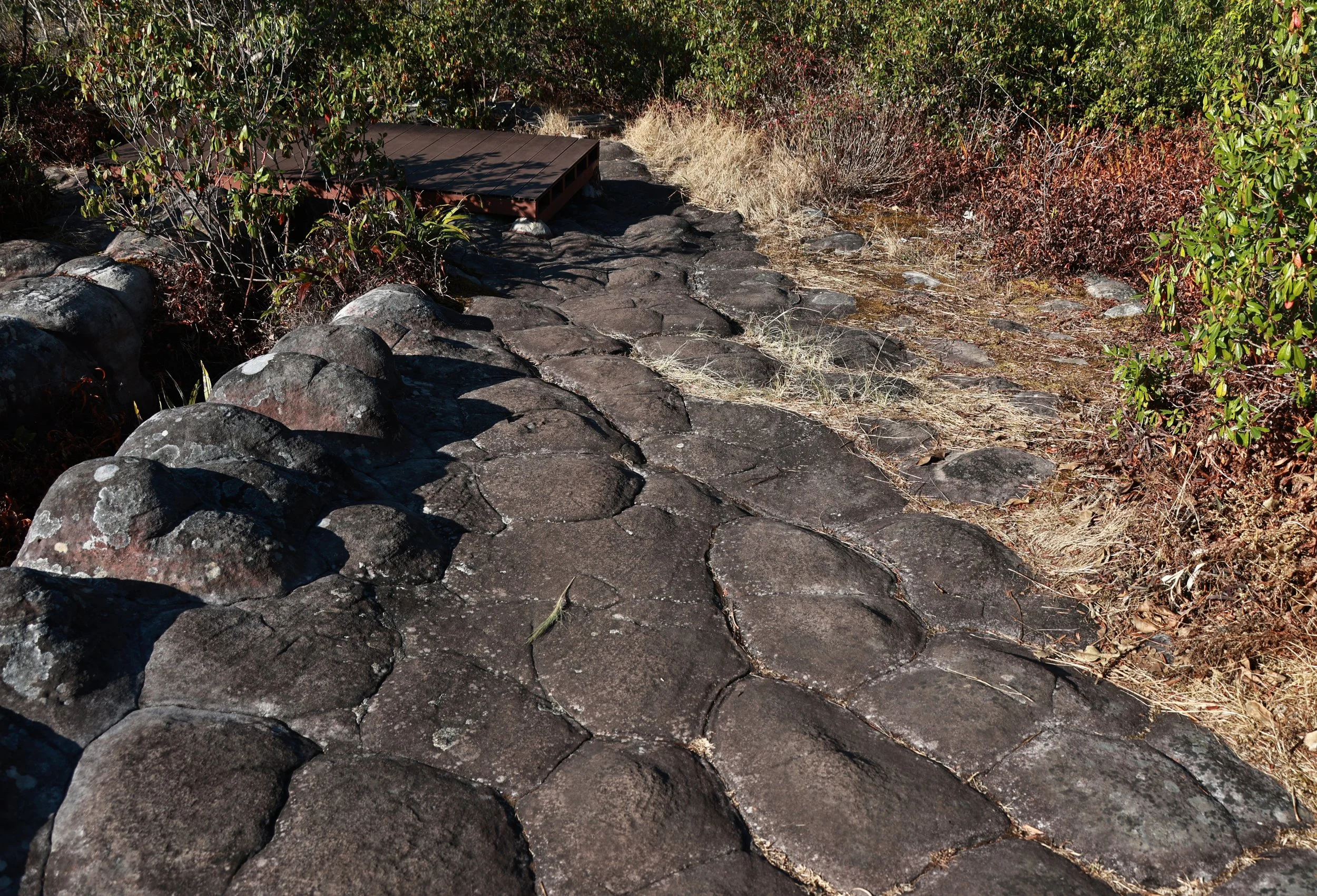
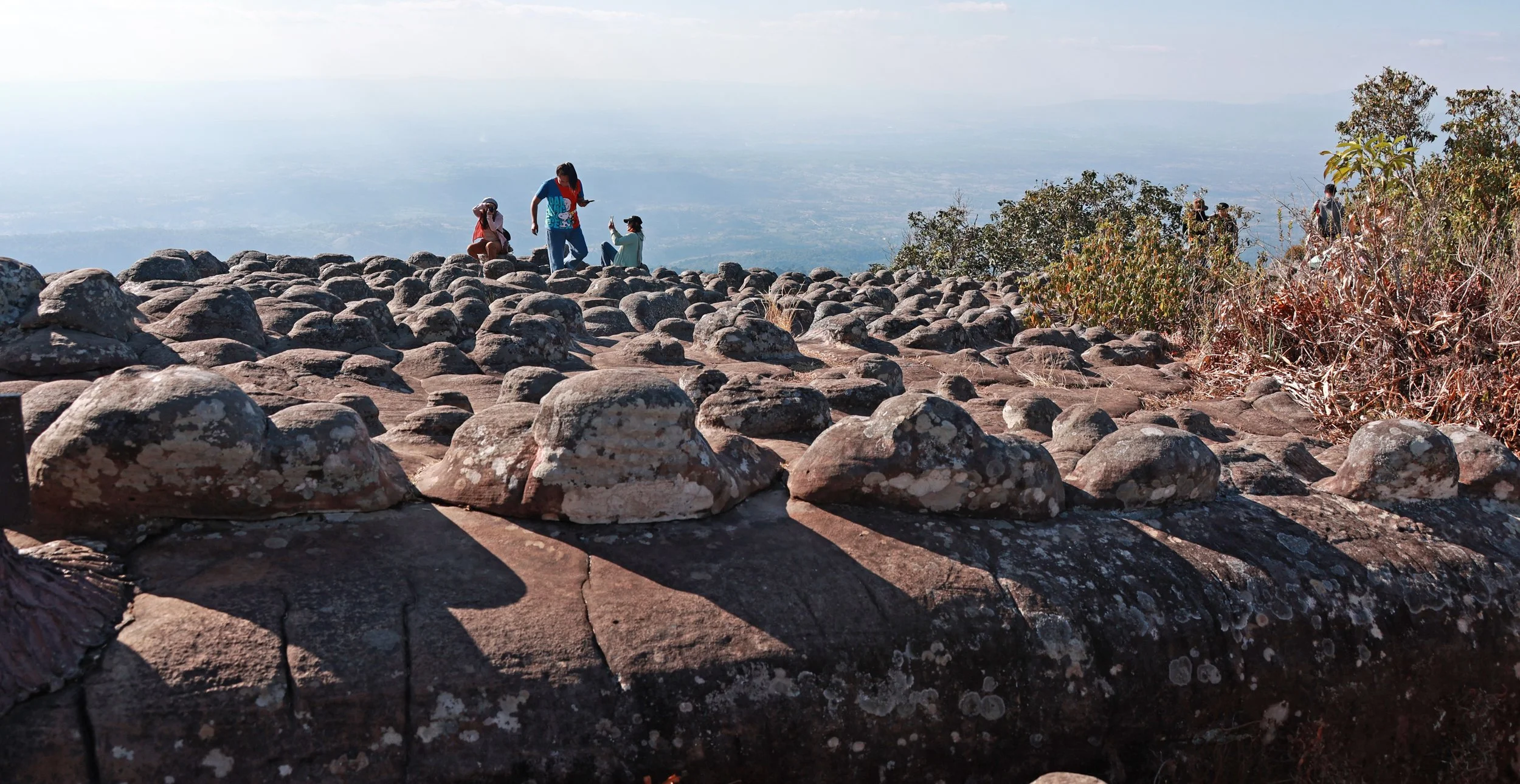
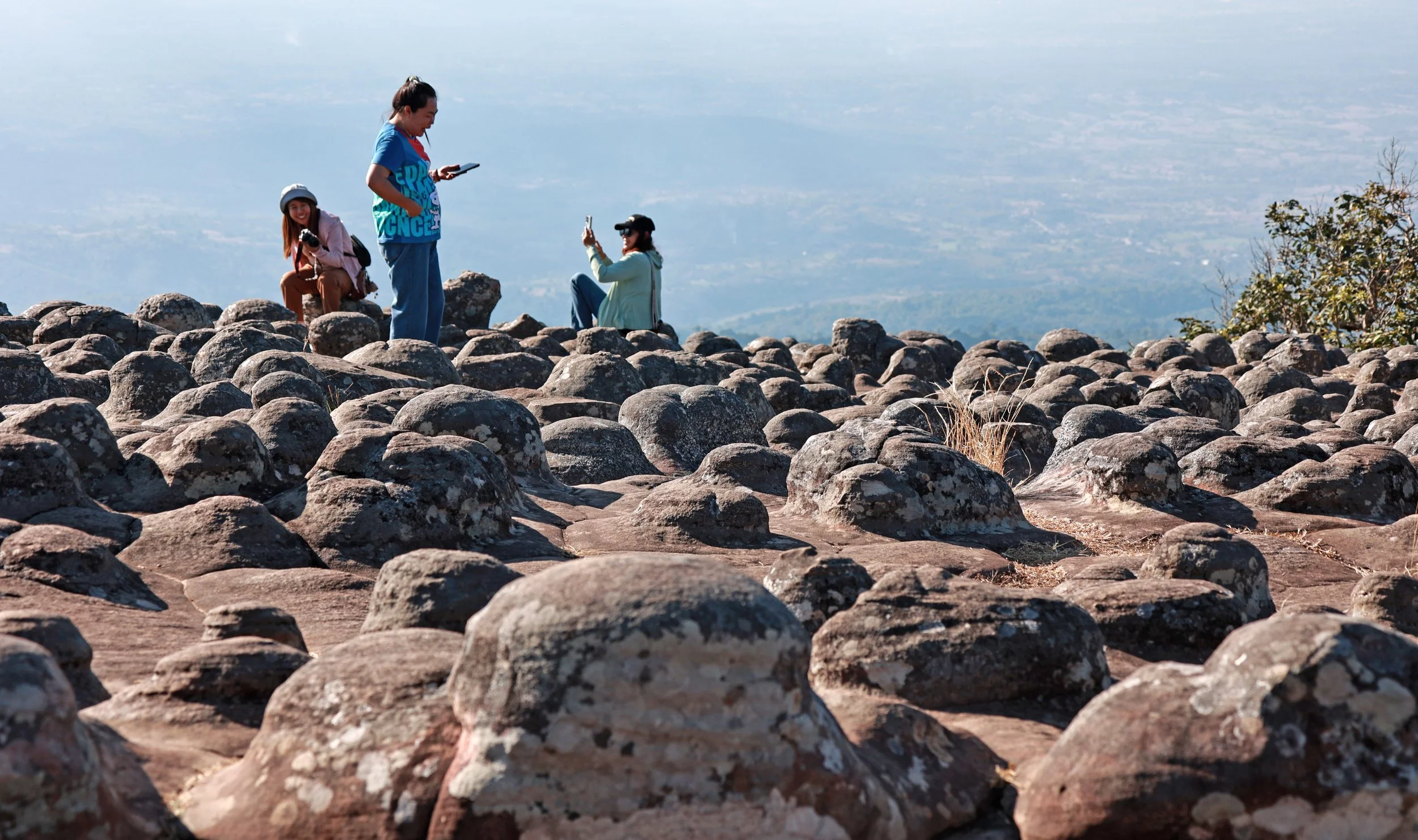
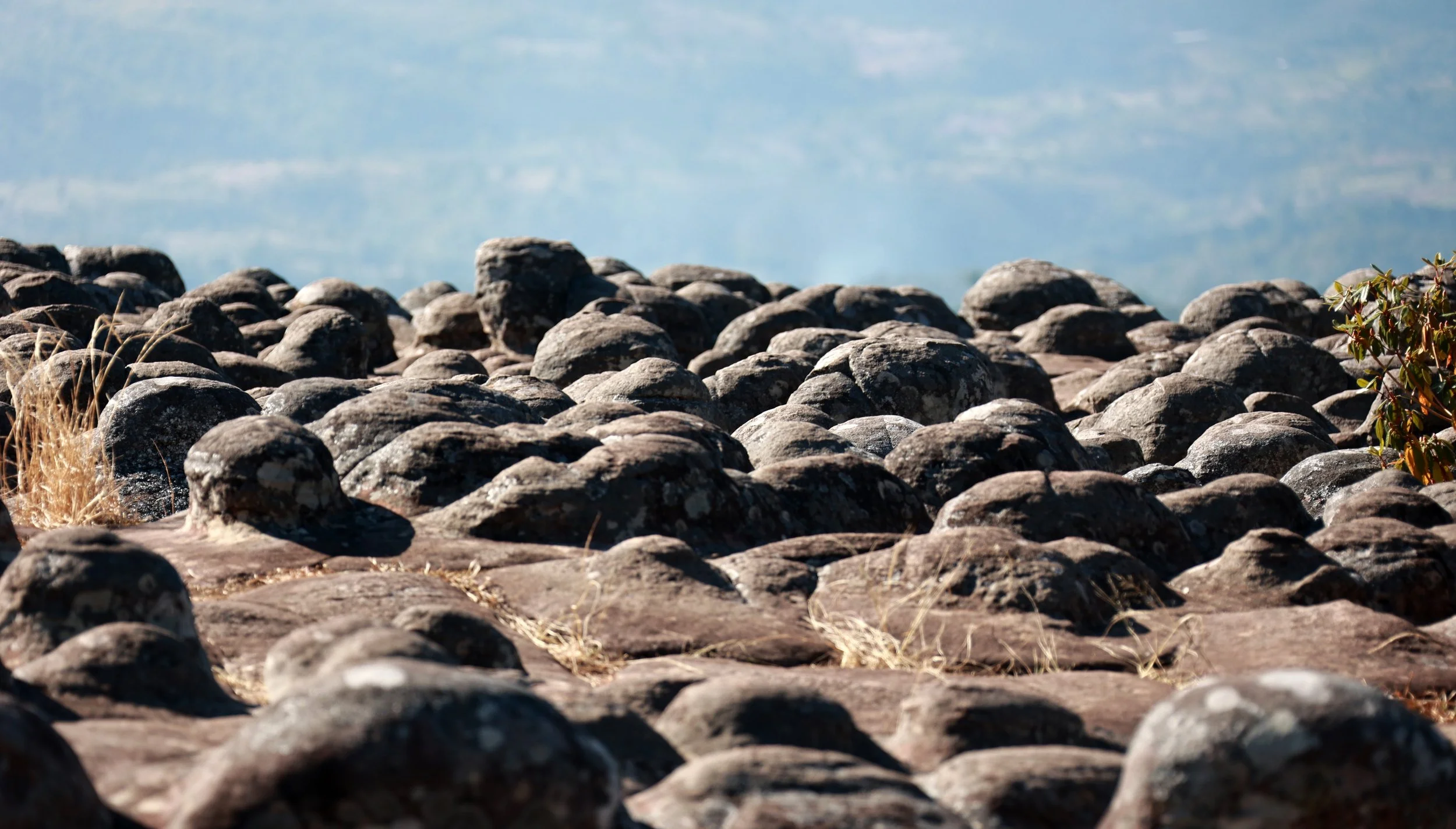
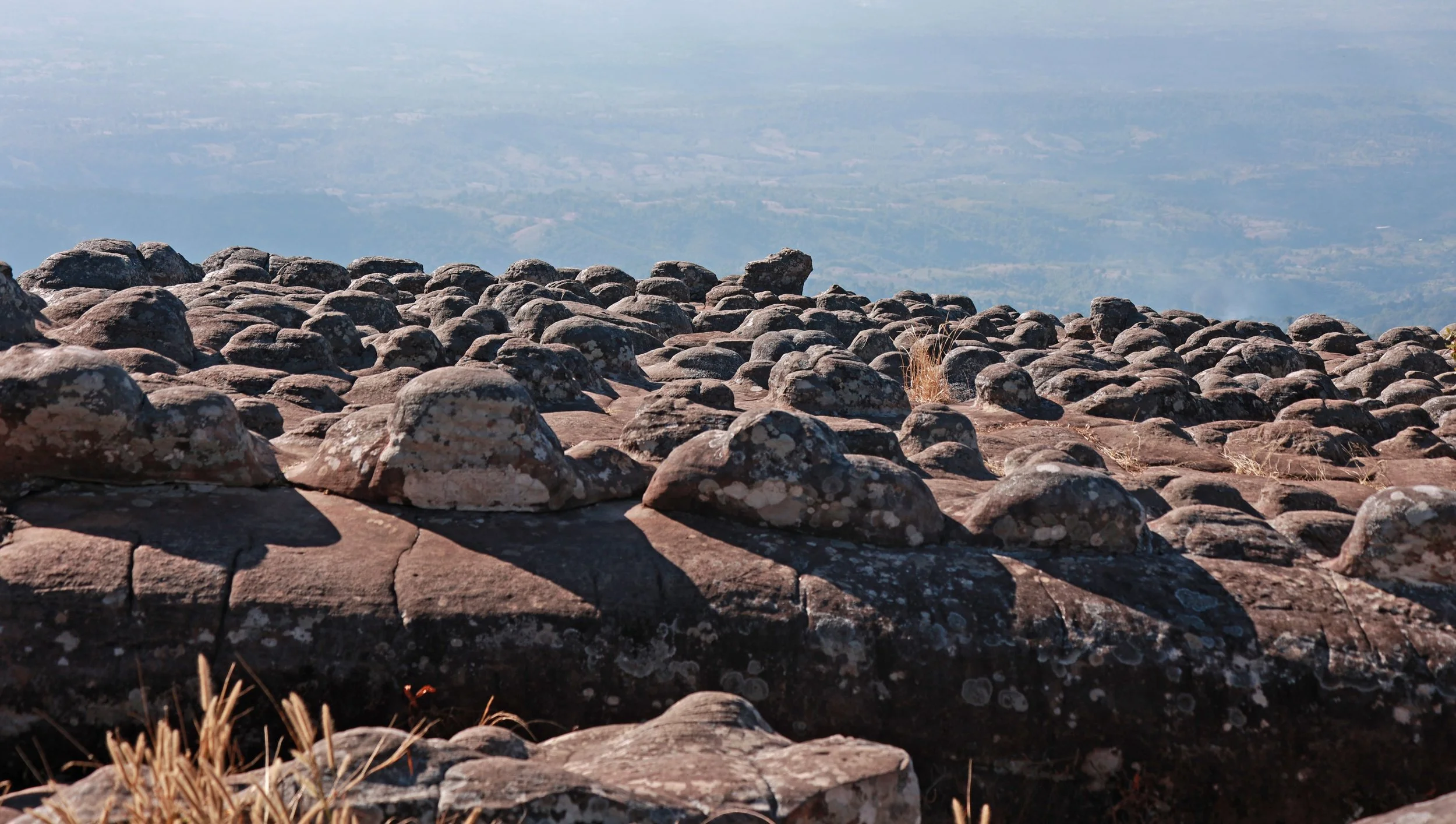
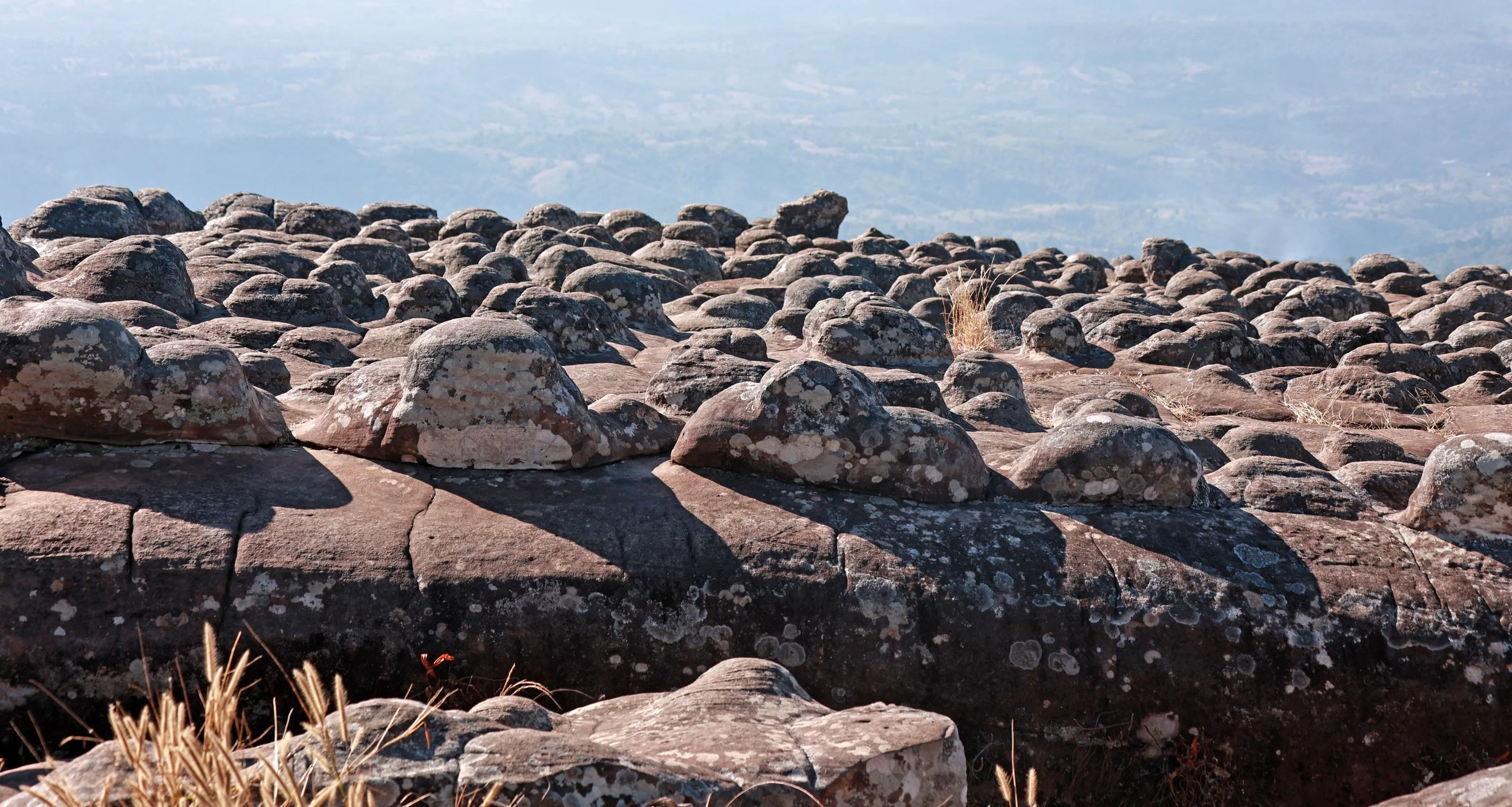
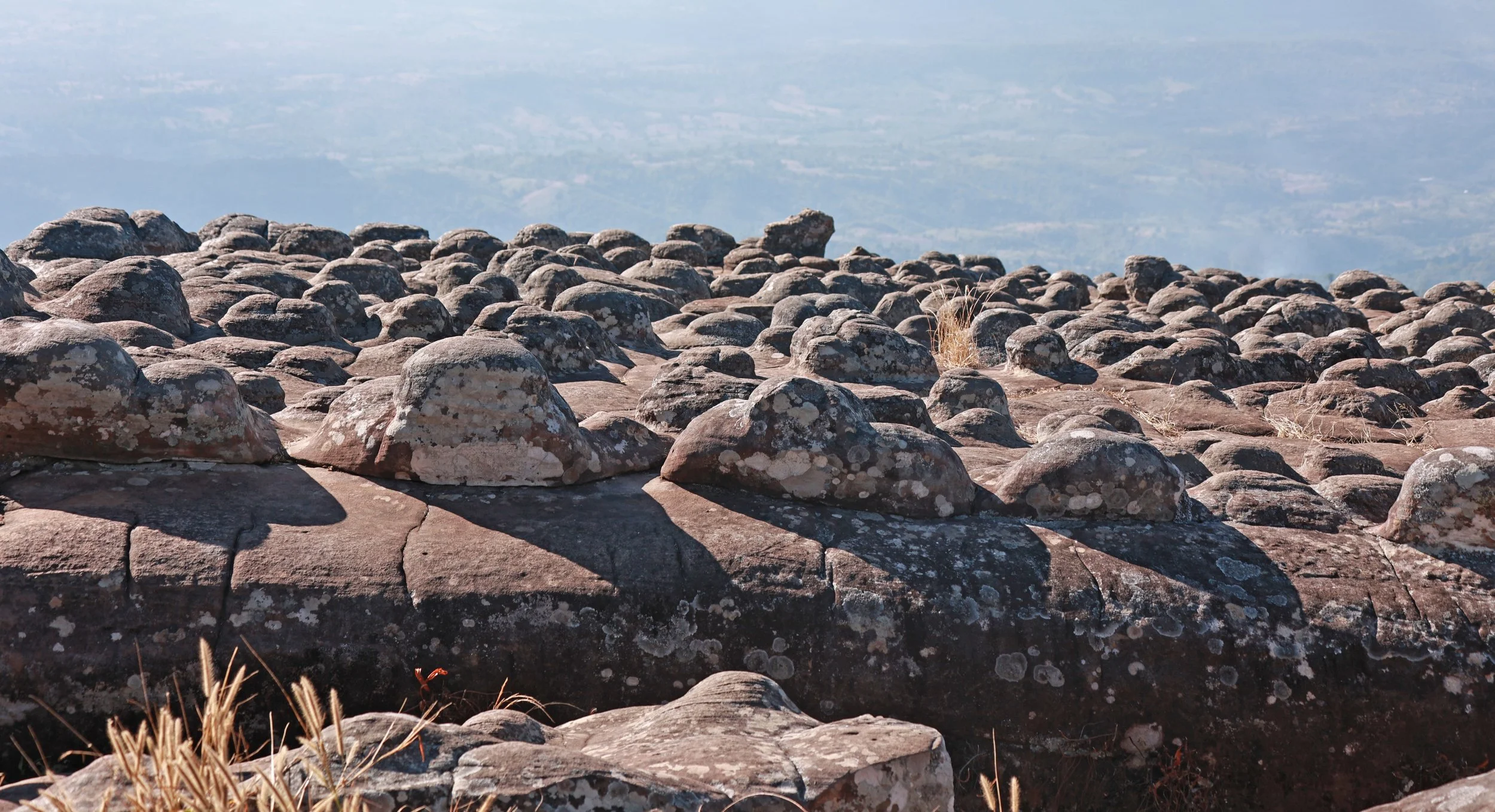
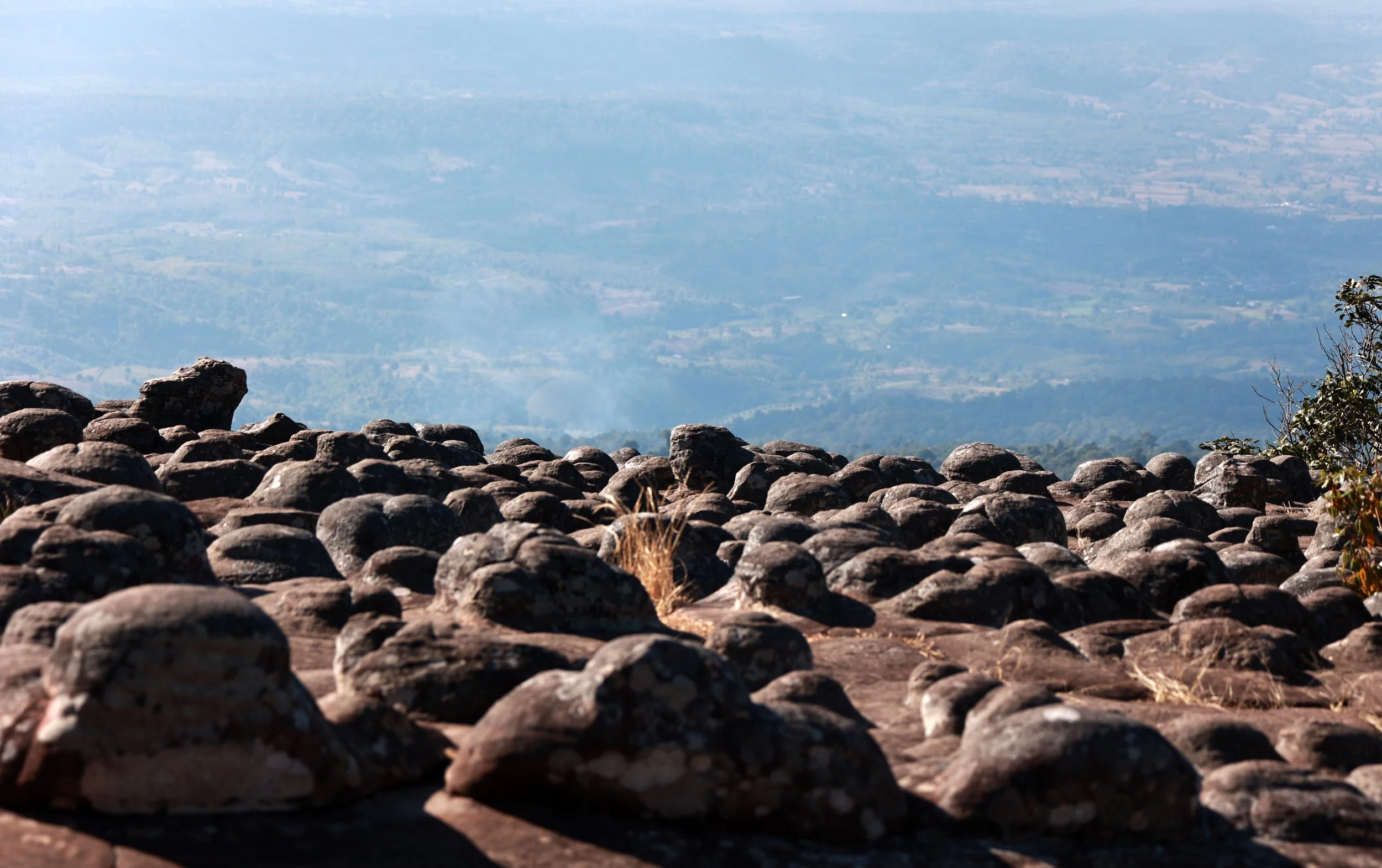
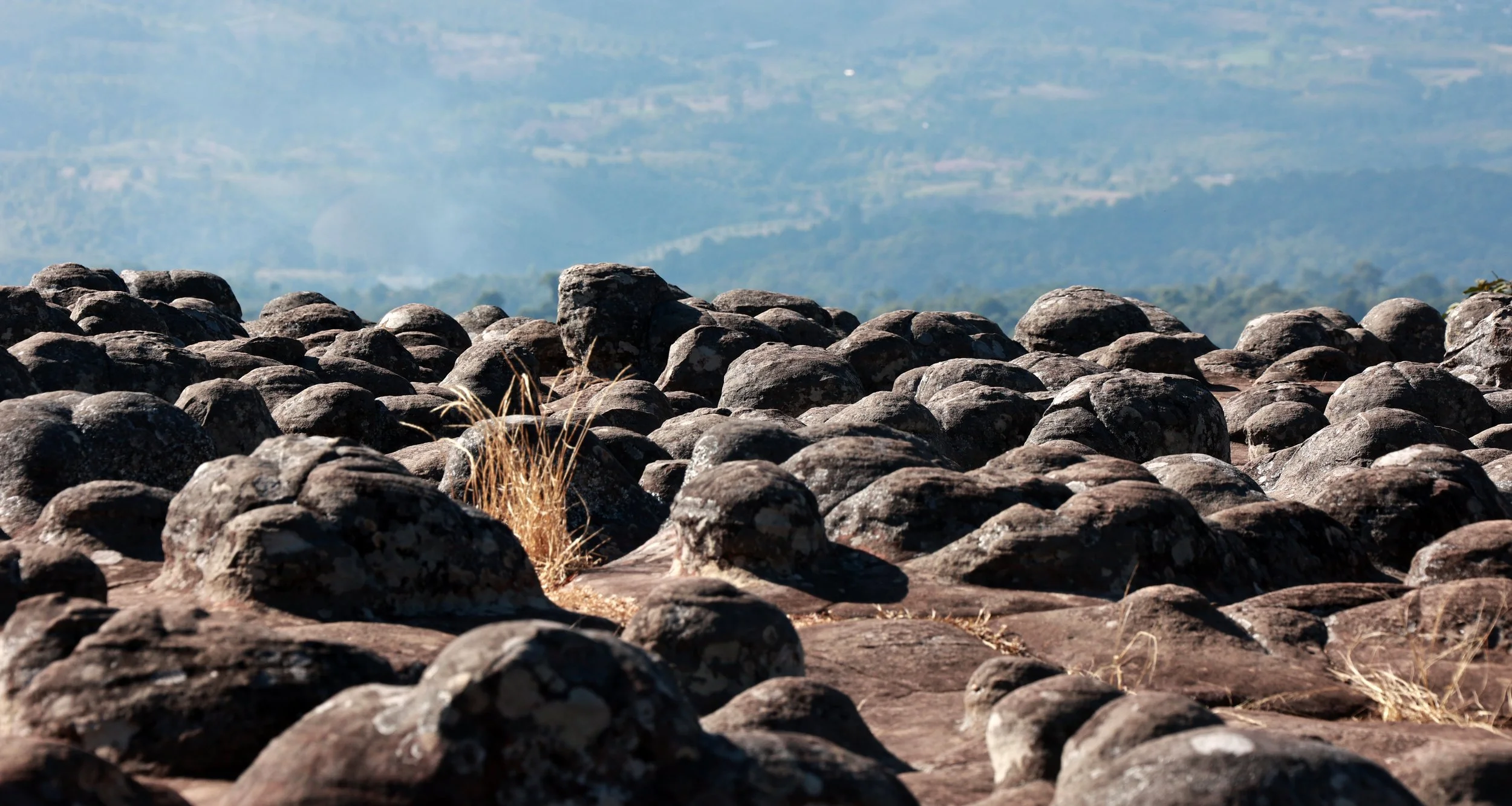
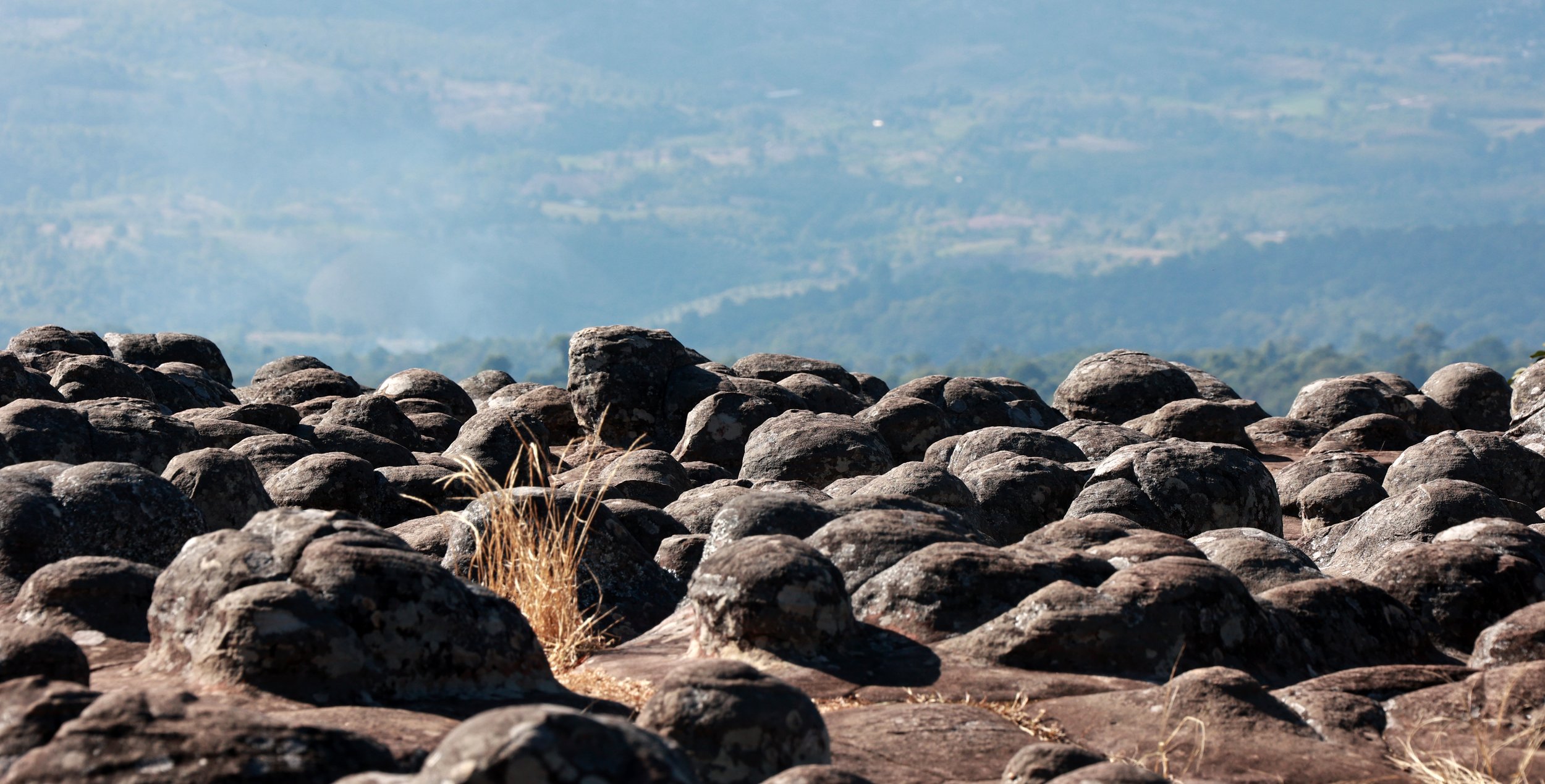
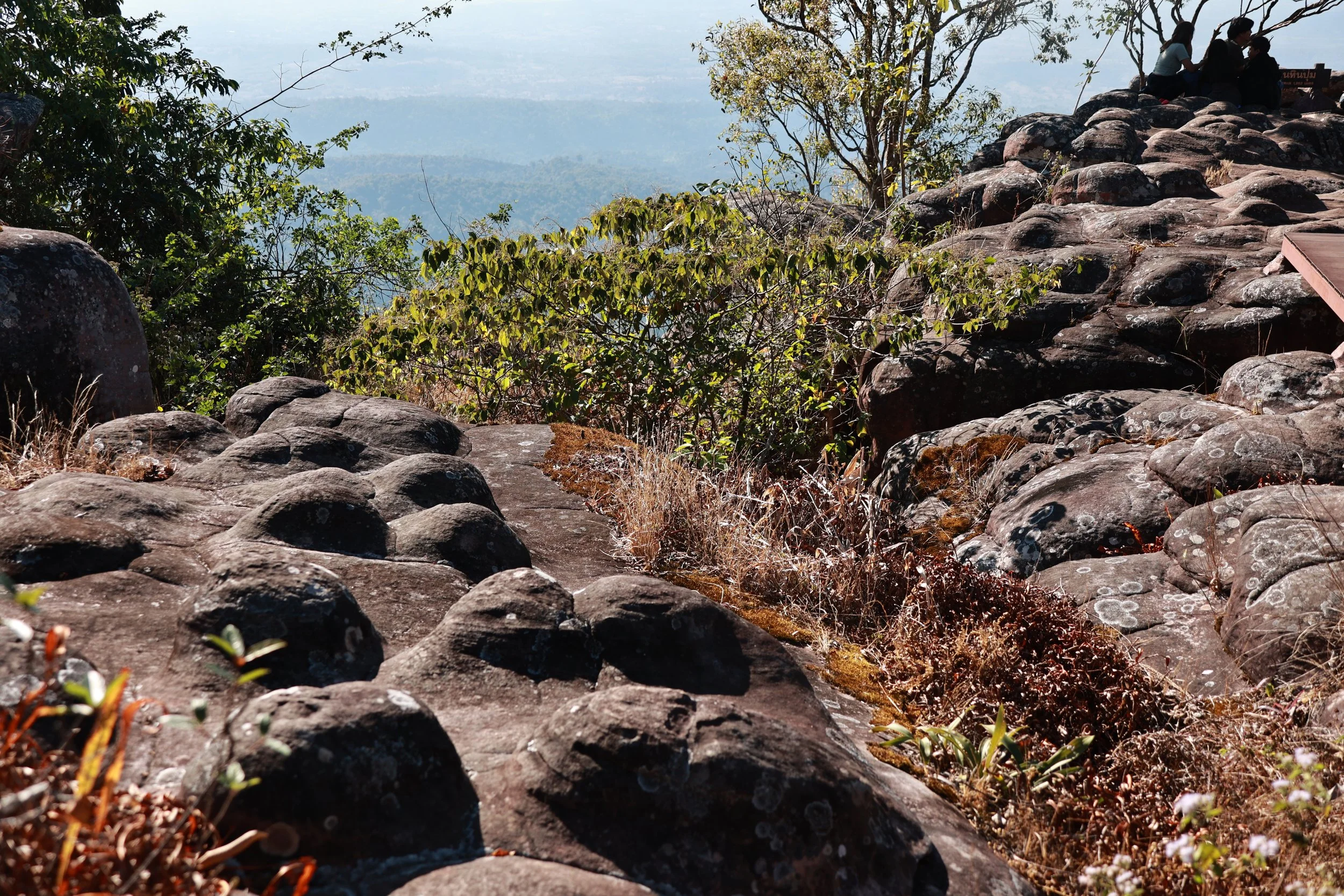
Geological Landmarks: The park is renowned for unique rock formations such as Lan Hin Pum (natural rock knobs) and Lan Hin Taek (large fissures in the sandstone).
Historical Significance: From 1968 to 1982, the park served as a major stronghold for the Communist Party of Thailand (CPT). Historical sites include the School of Political and Military Tactics, a CPT hospital, and rustic meeting halls.
Natural Scenery: The park features high-altitude landscapes with a peak elevation of 1,820 meters. Key waterfalls include Man Daeng and Sri Phinong.
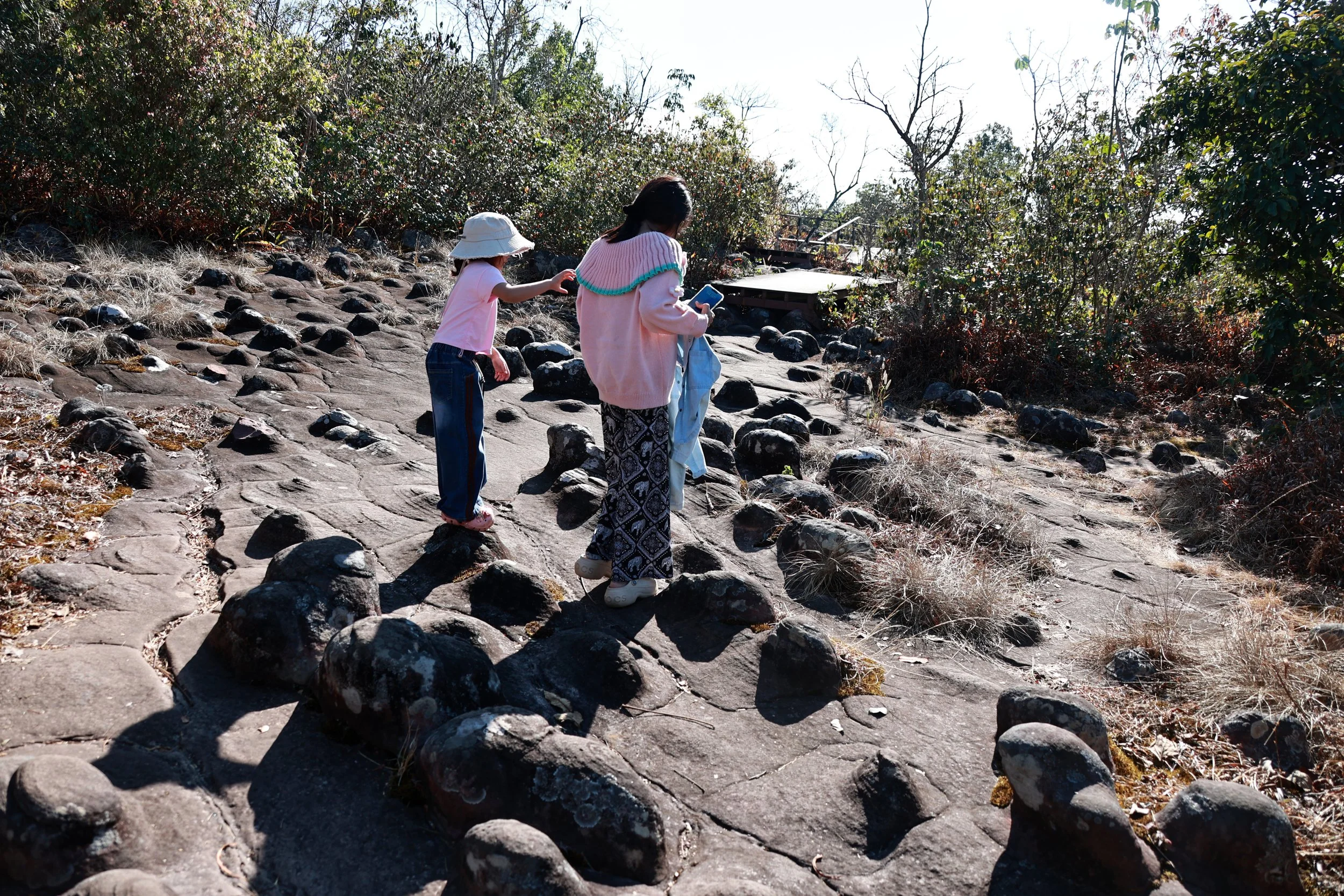
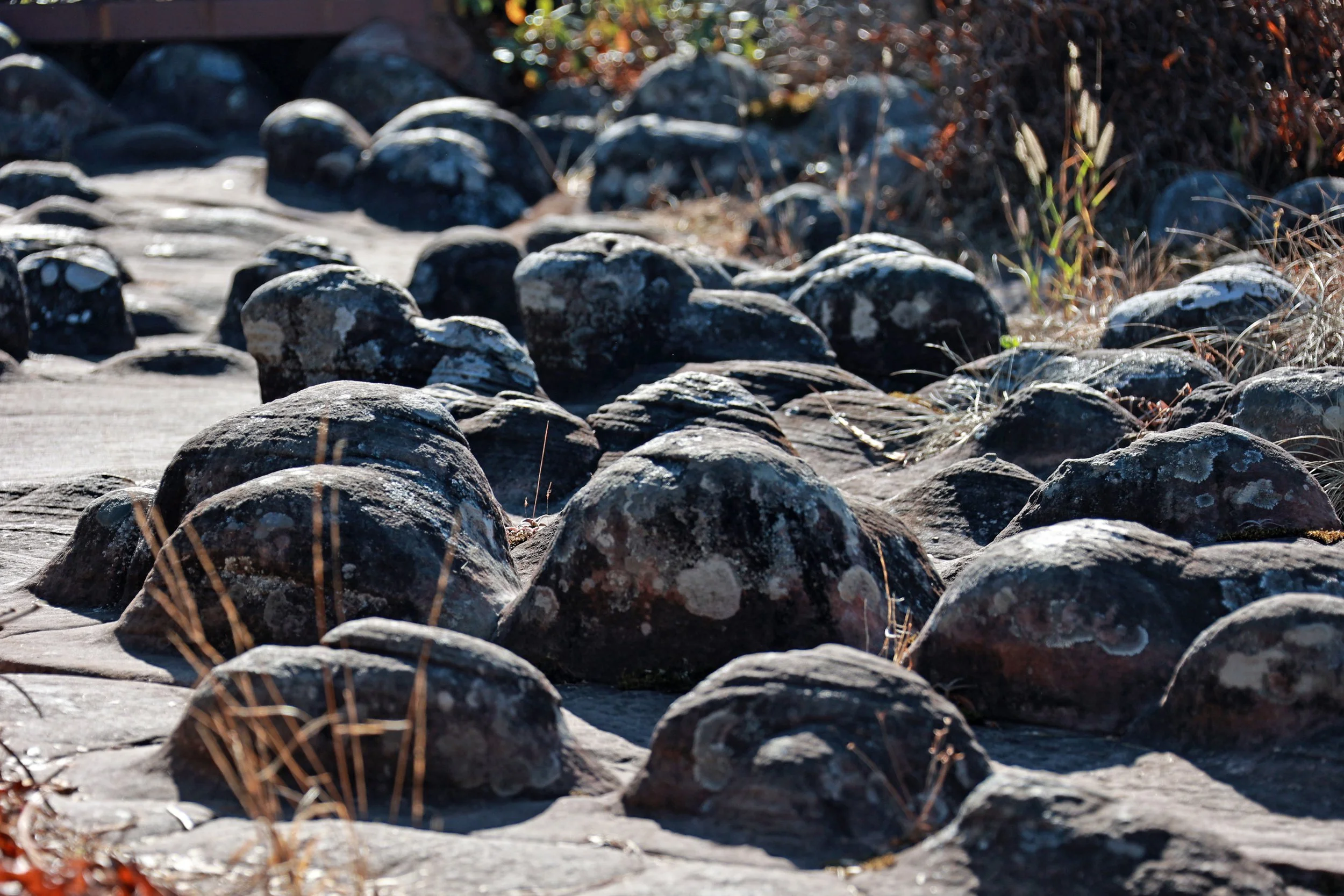
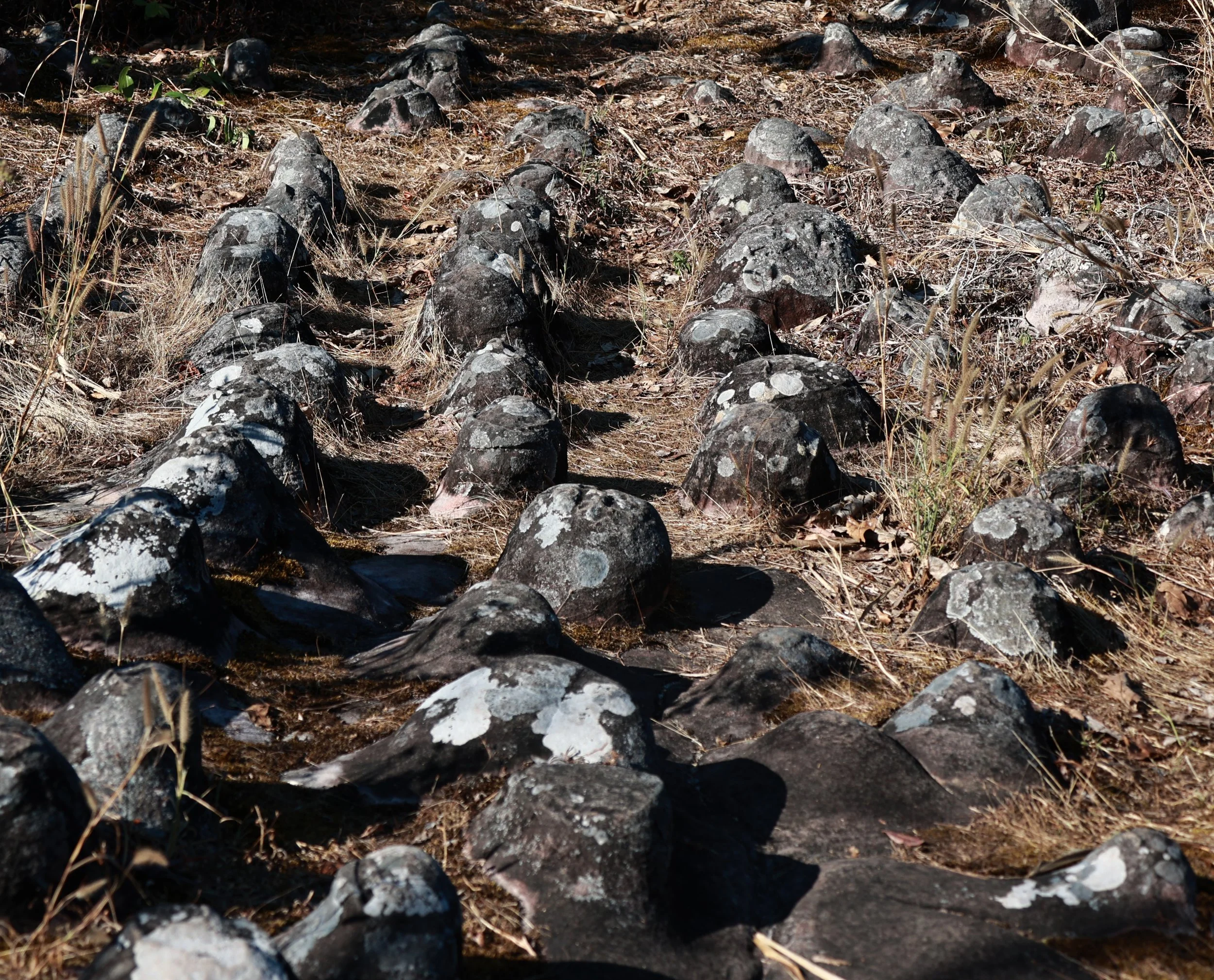
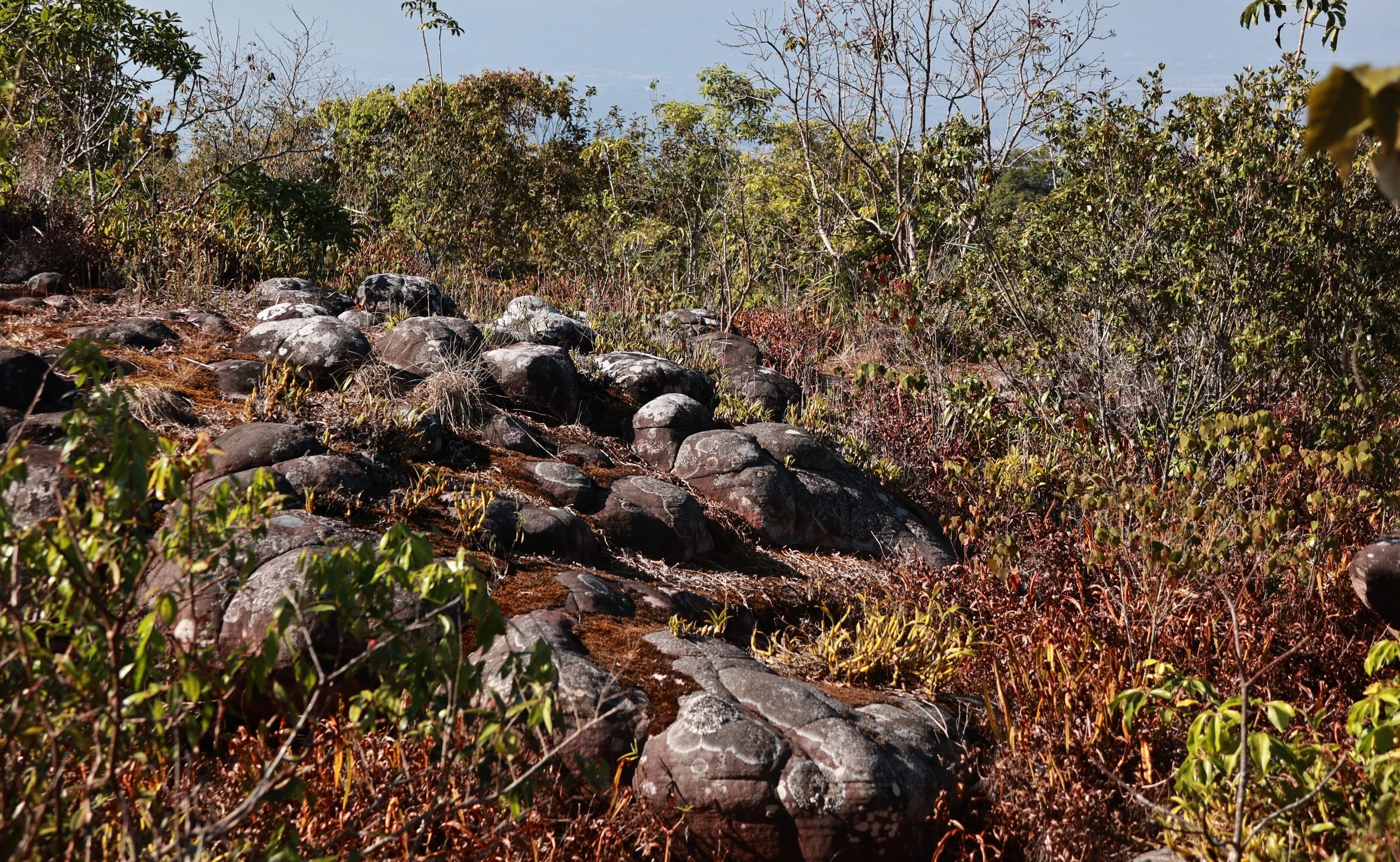
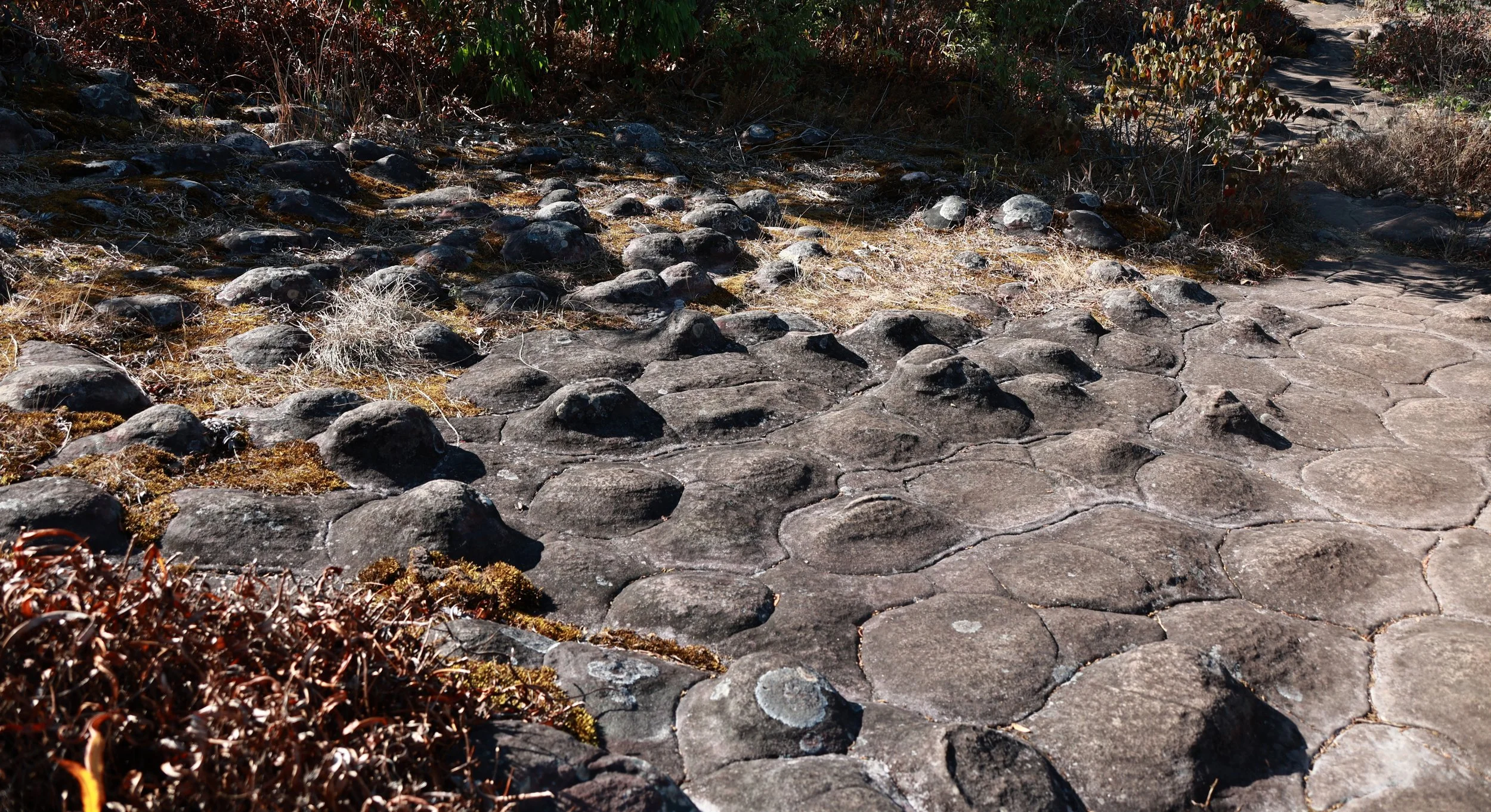
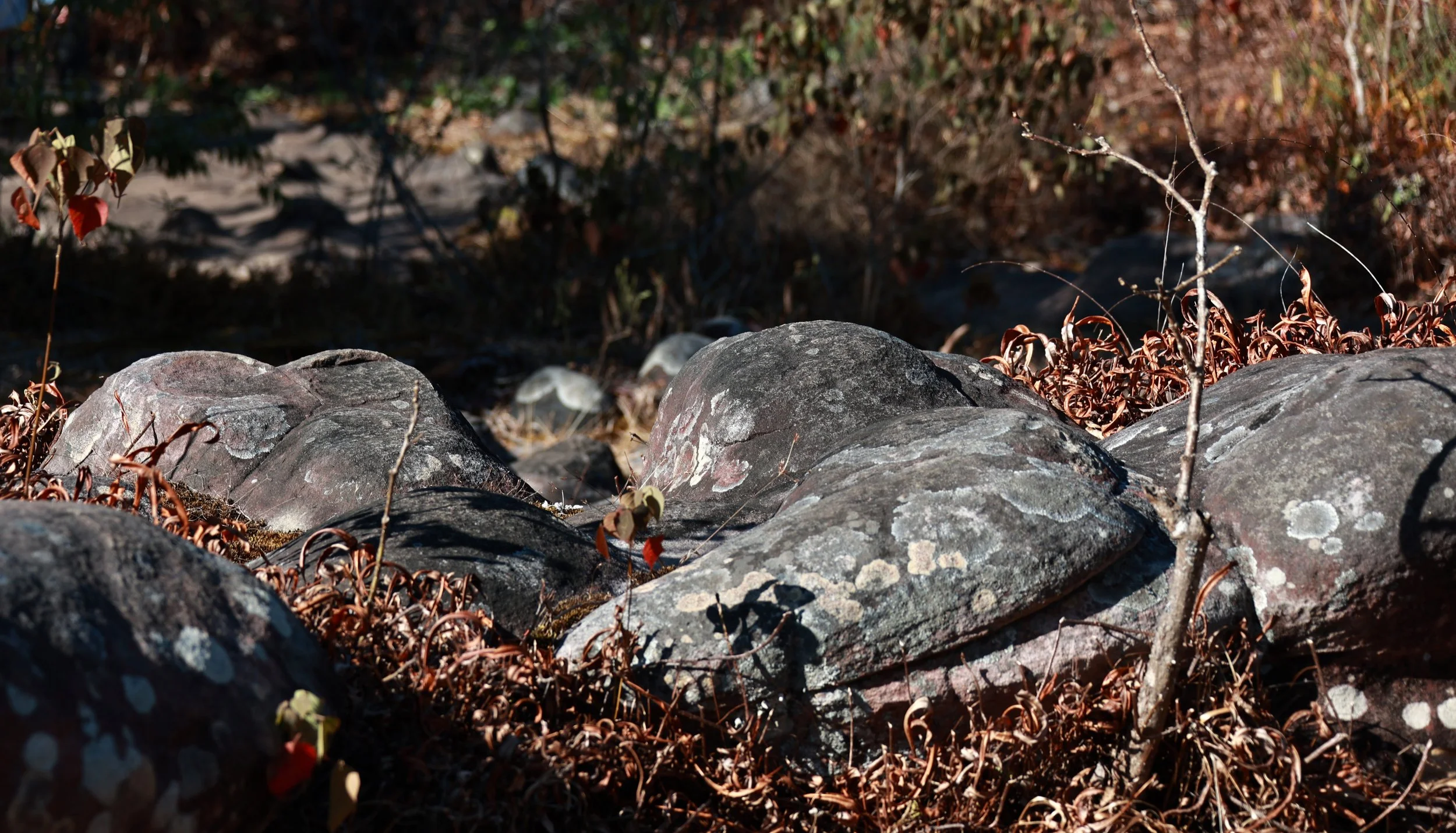
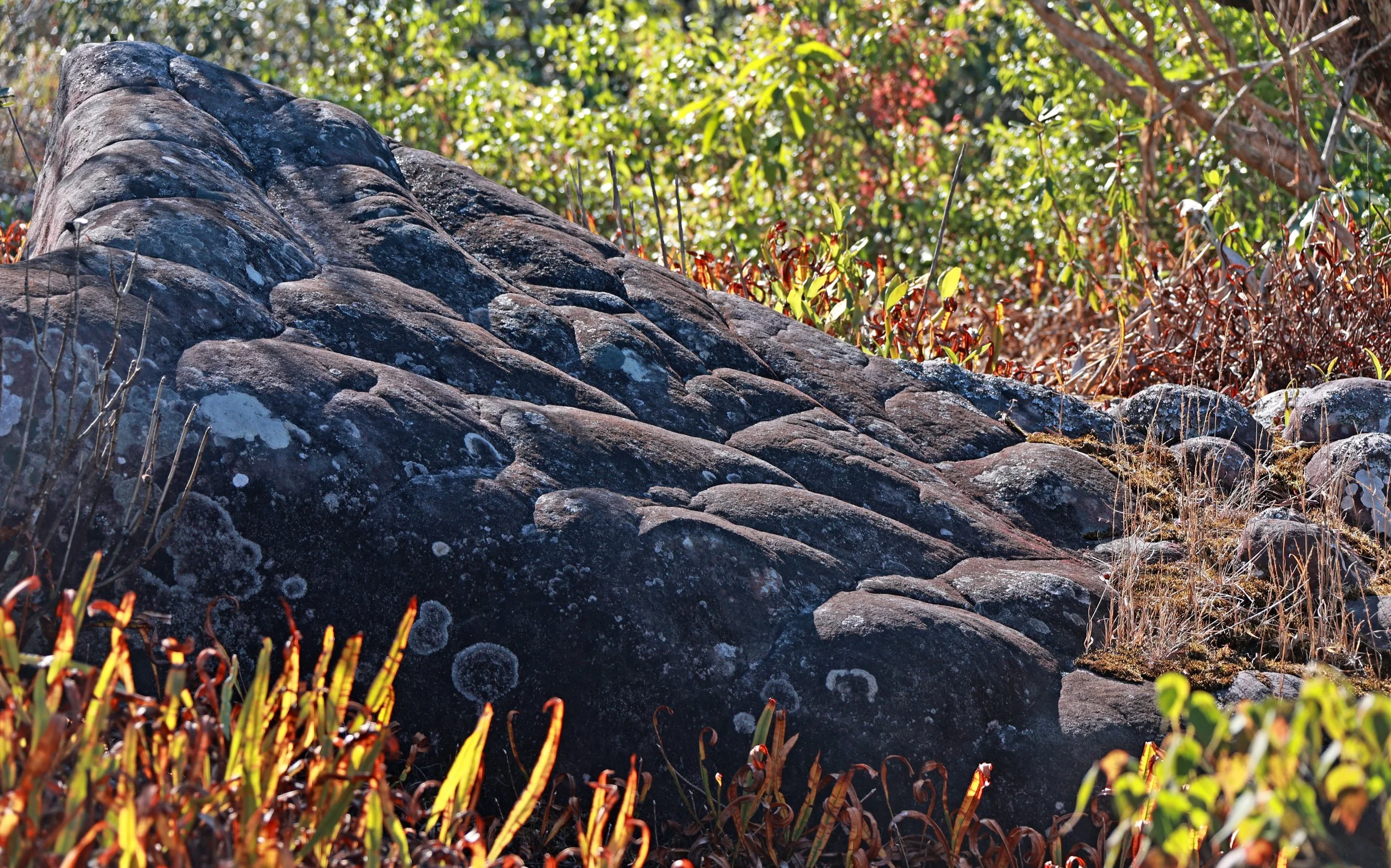
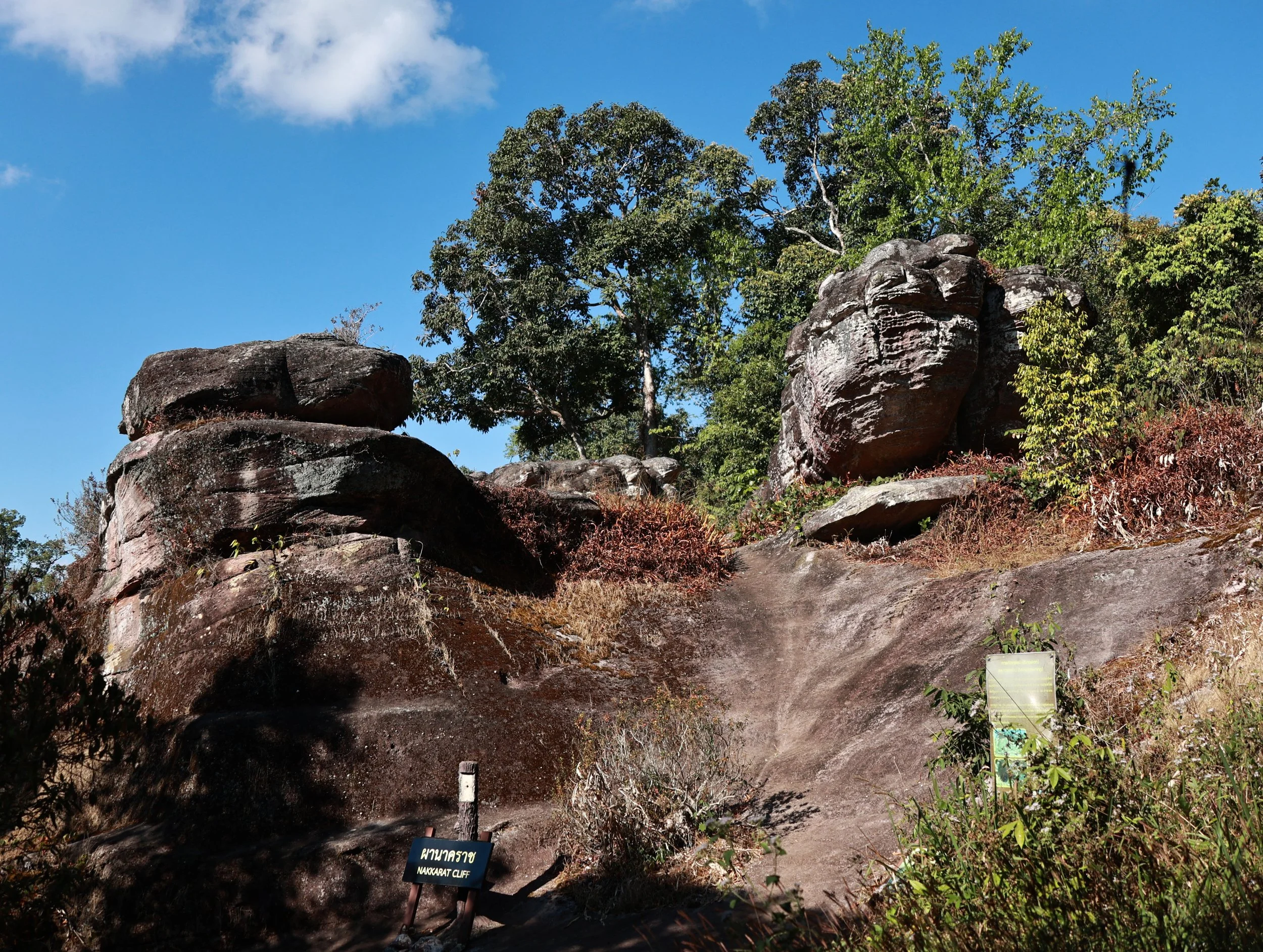
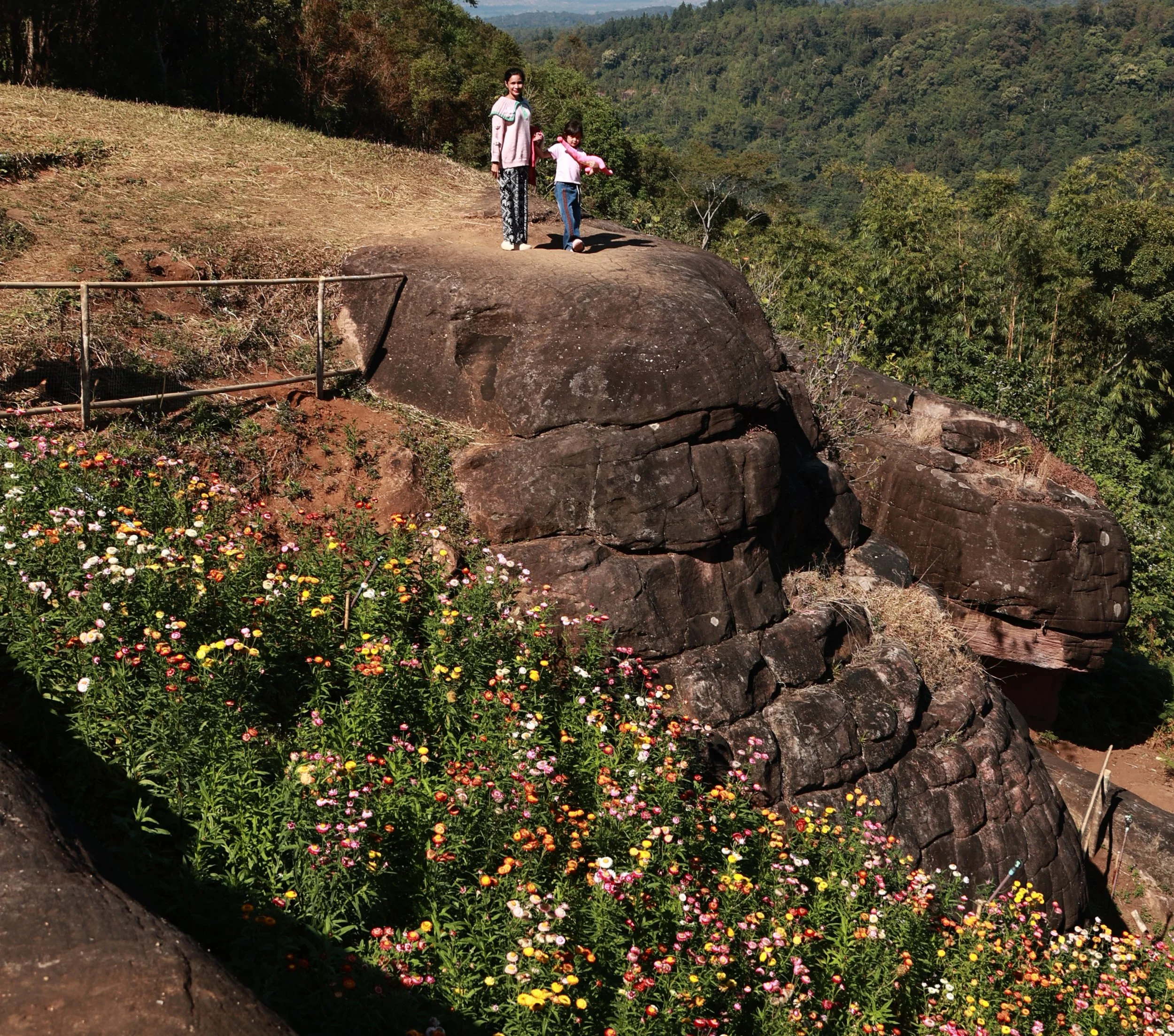
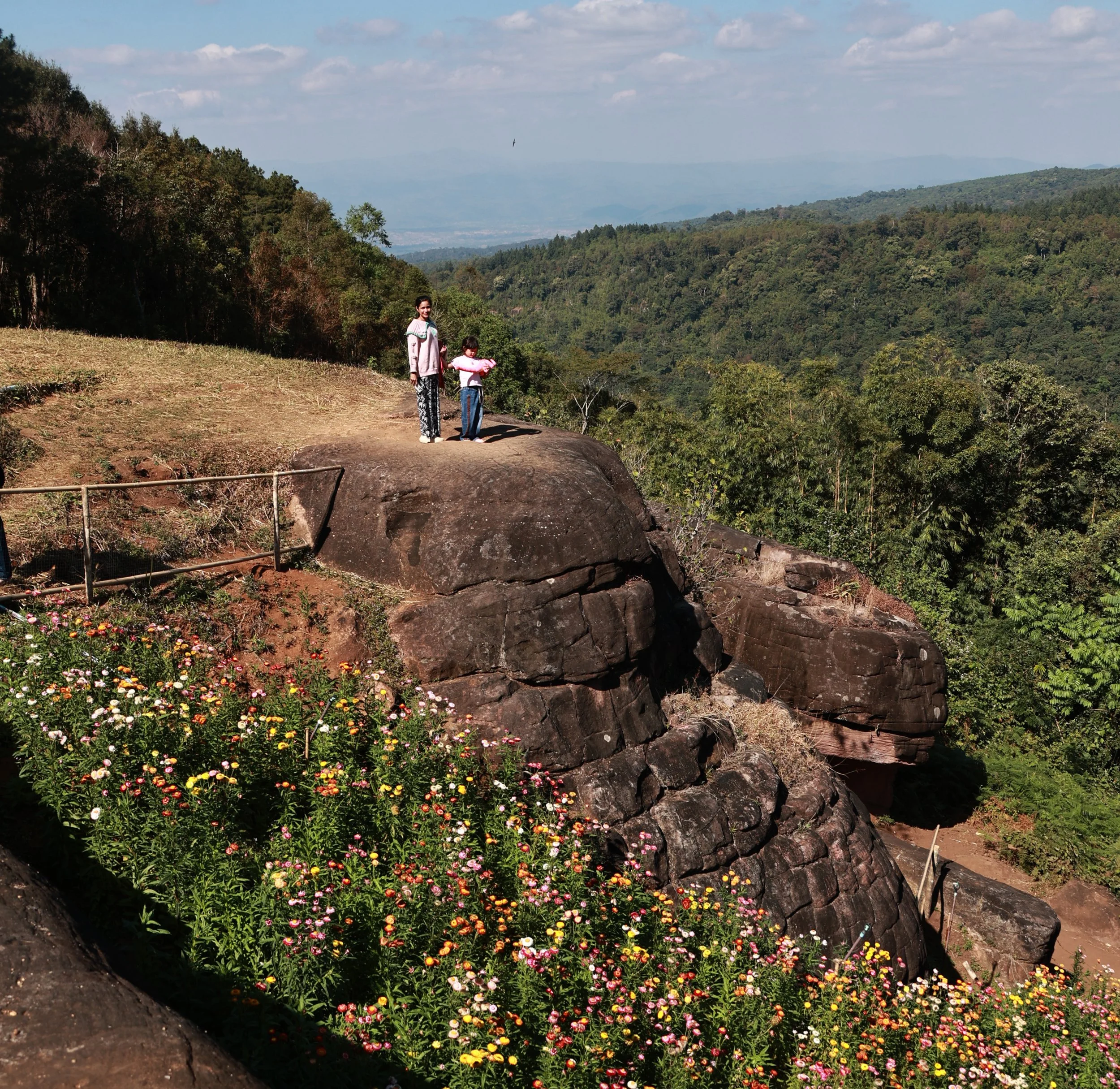
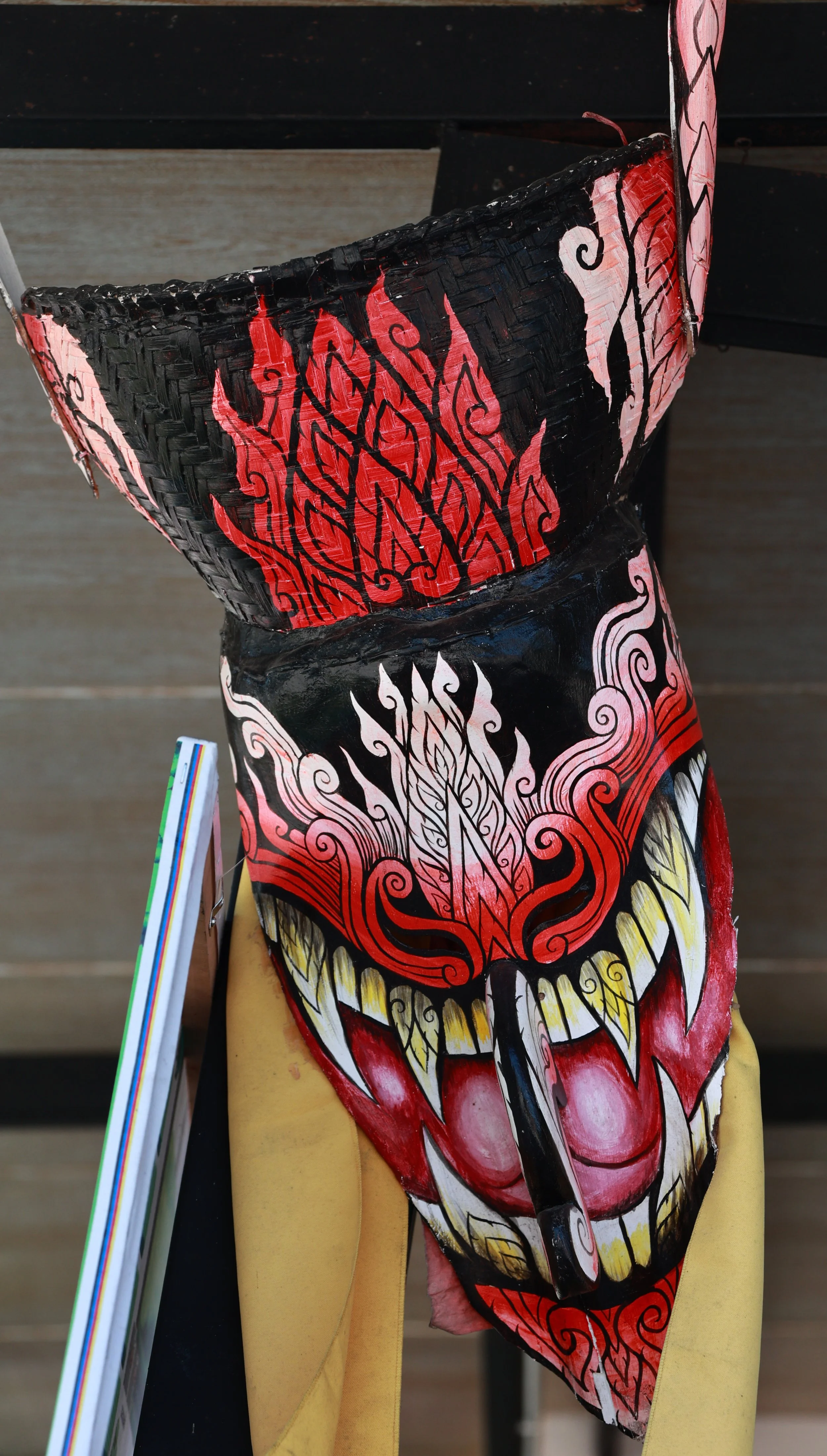
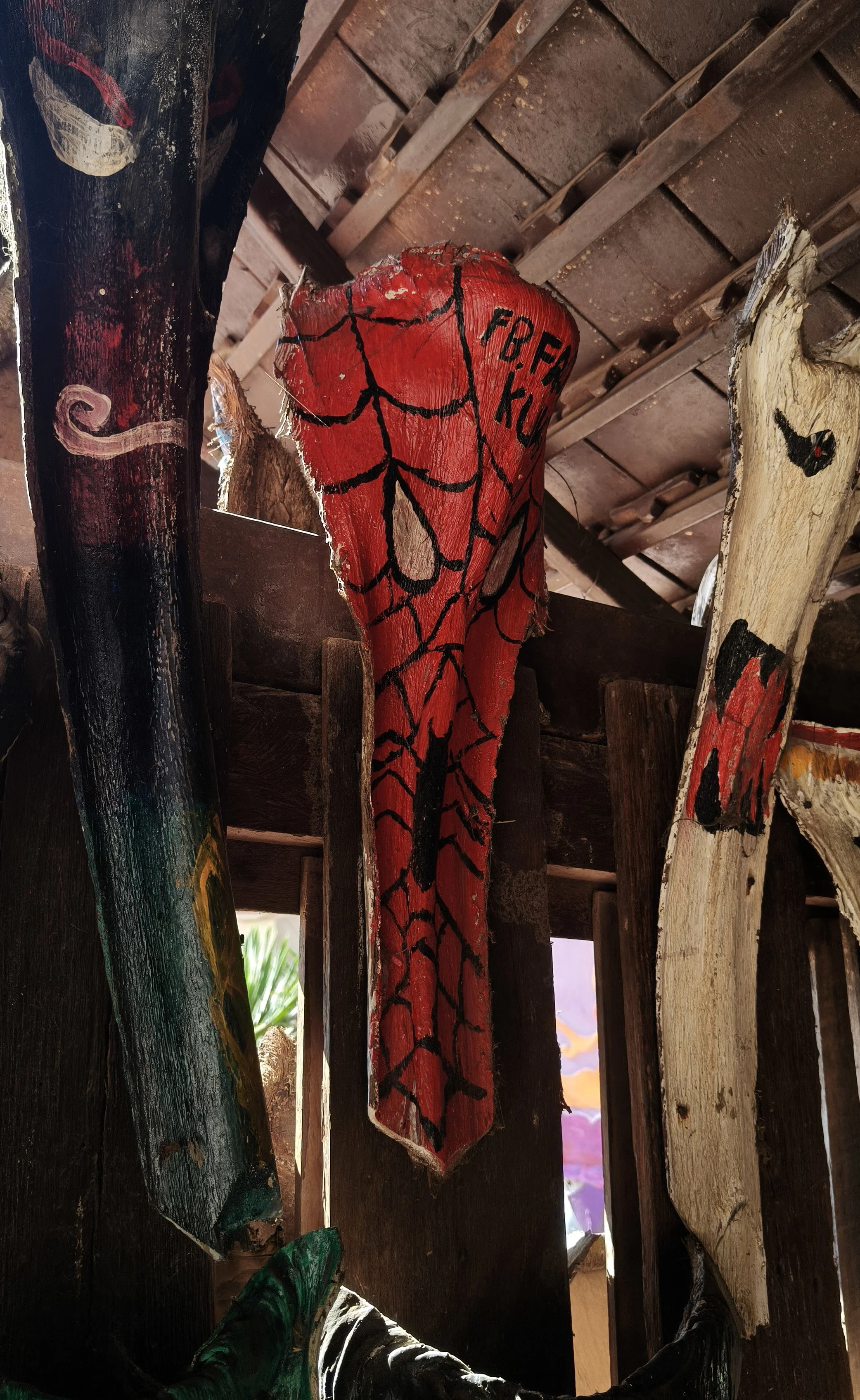
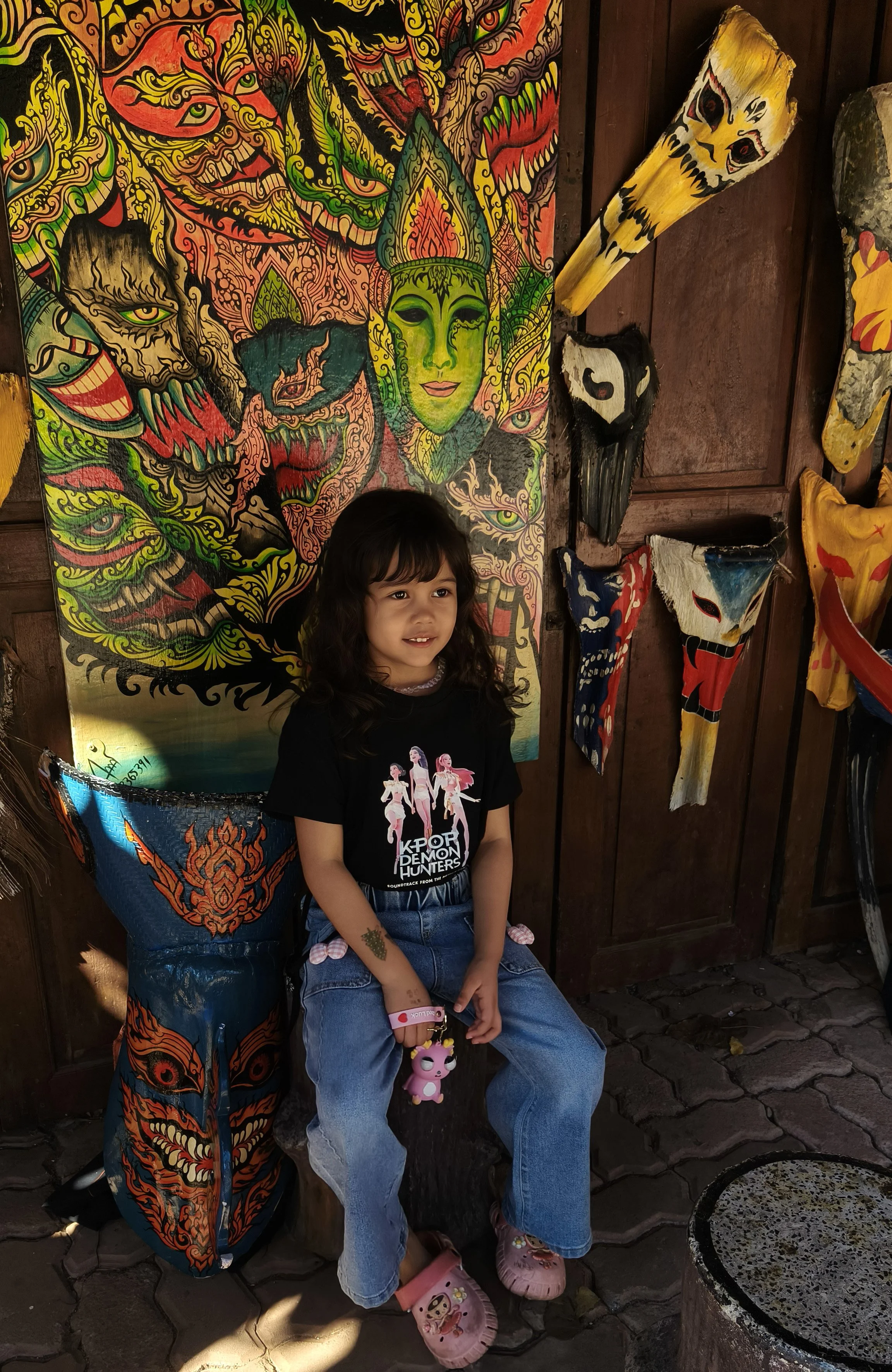
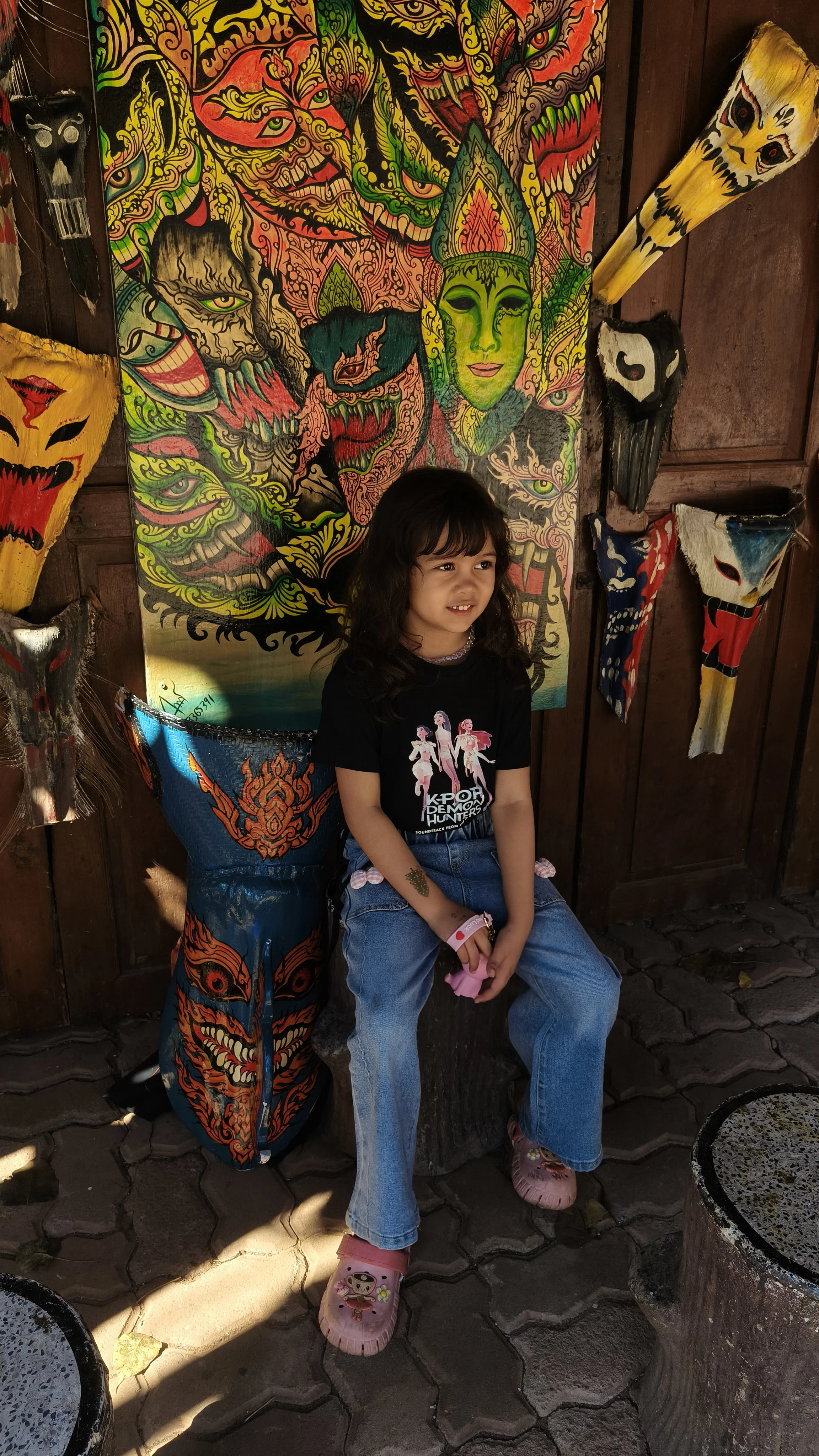
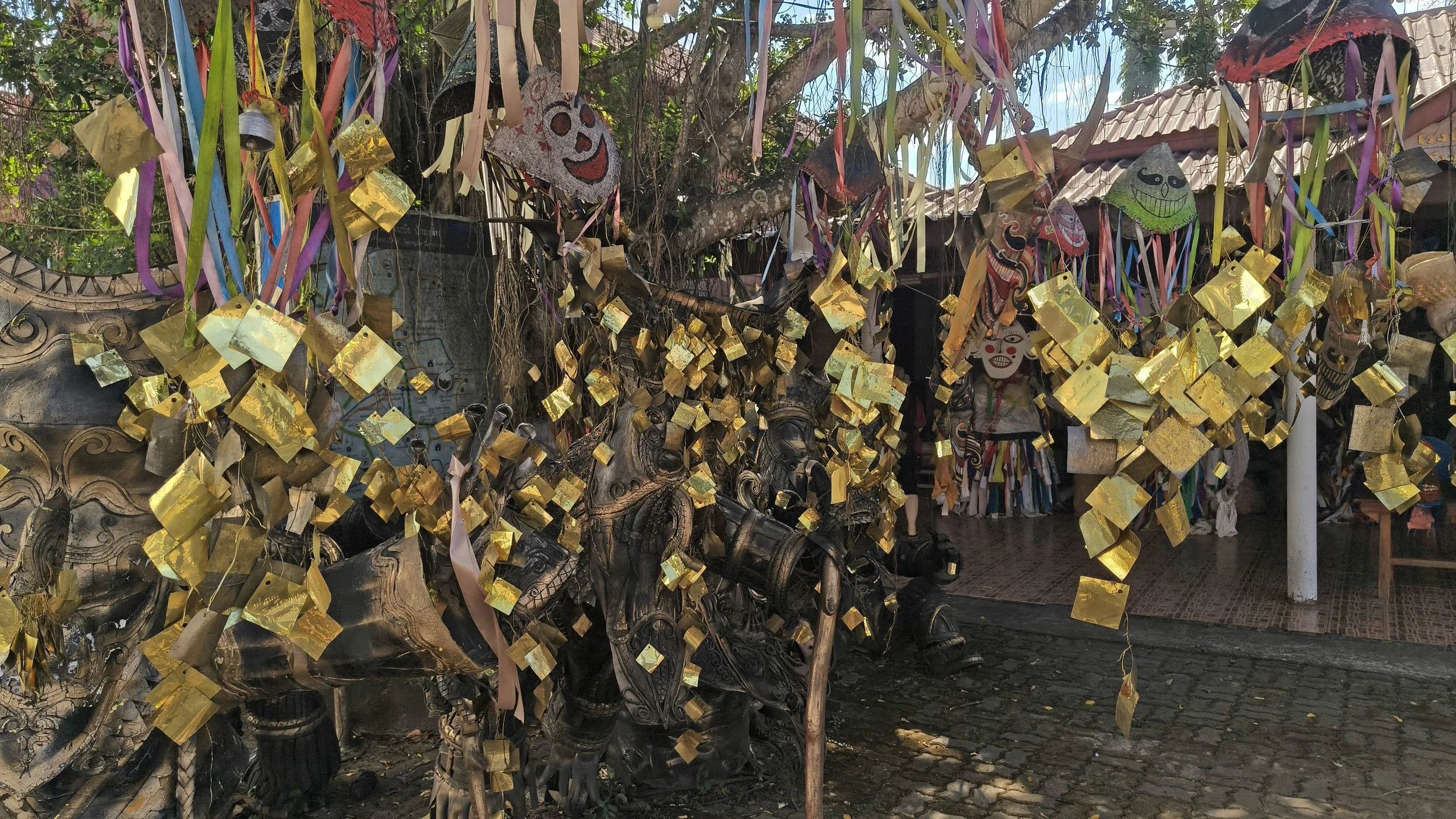
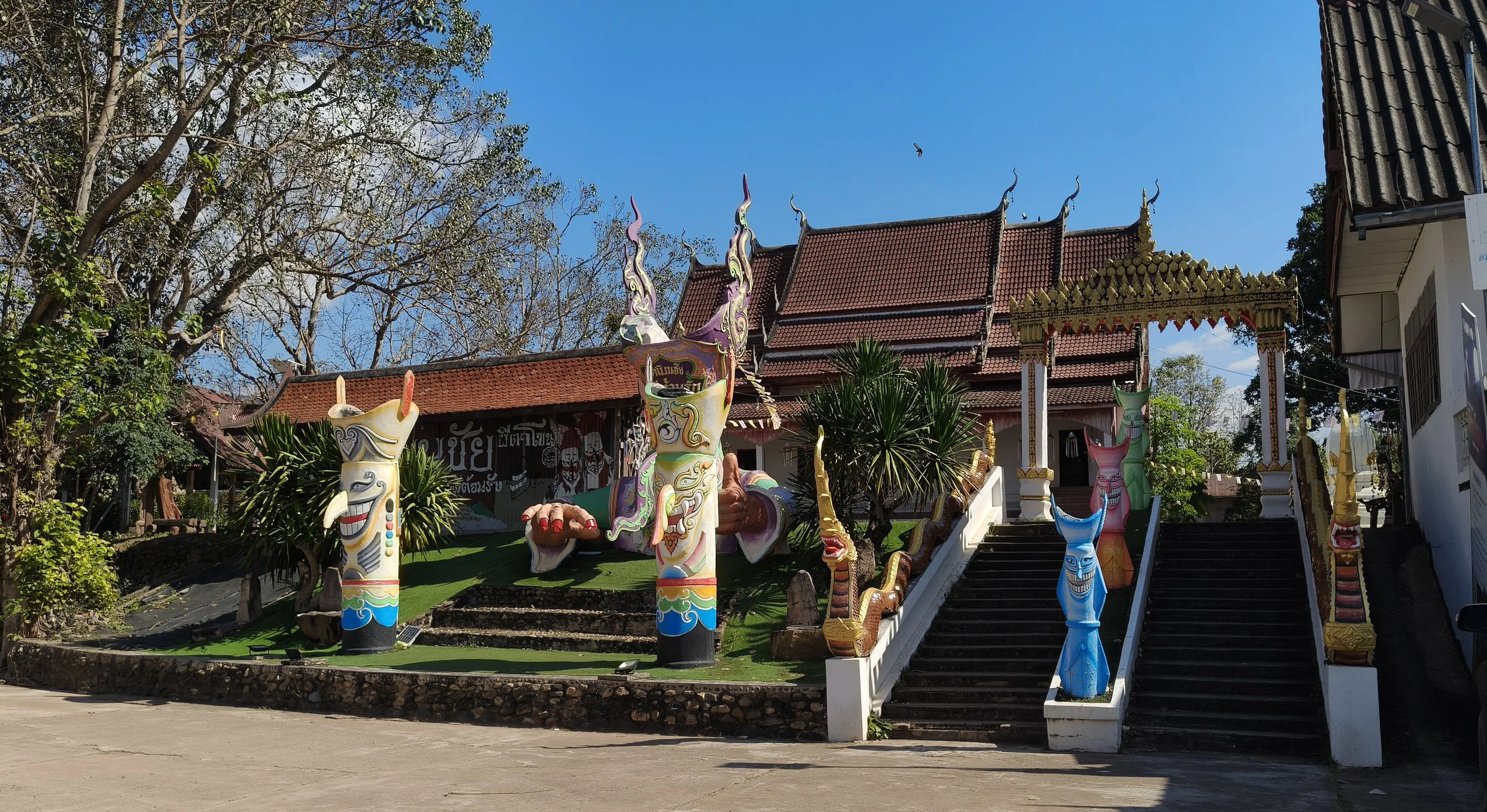
Phi Ta Khon (ผีตาโขน)
Phi Ta Khon (ผีตาโขน) is Thailand's vibrant "Ghost Festival," a unique folk celebration in Dan Sai, Loei Province, blending Buddhist rituals (Boon Luang) with local folklore, featuring colorful, scary masks made from sticky rice steamers, lively parades, music, and dancing, typically held annually in June/July to welcome spirits and ensure a good harvest.
What it Is:
A three-day festival combining merit-making (Boon Luang) with a joyous ghost parade.
Celebrates the return of spirits, warding off evil, and praying for rain and prosperity.
Key Features:
Masks (หน้ากากผีตาโขน): Iconic, scary-looking masks made from sticky rice steamers (huad), coconut shells, and wood, often with phallic symbols, worn by participants.
Procession: A parade of masked figures (Phi Ta Khon) dancing, playing music (like the bell-like Mark Ka Laeng), and creating a festive atmosphere.
Music & Dance: Lively traditional music, performances, and playful dancing are central to the event.
Rituals: Includes Buddhist ceremonies, inviting Phra Upakhut (a revered Buddha image), and casting masks into the river.
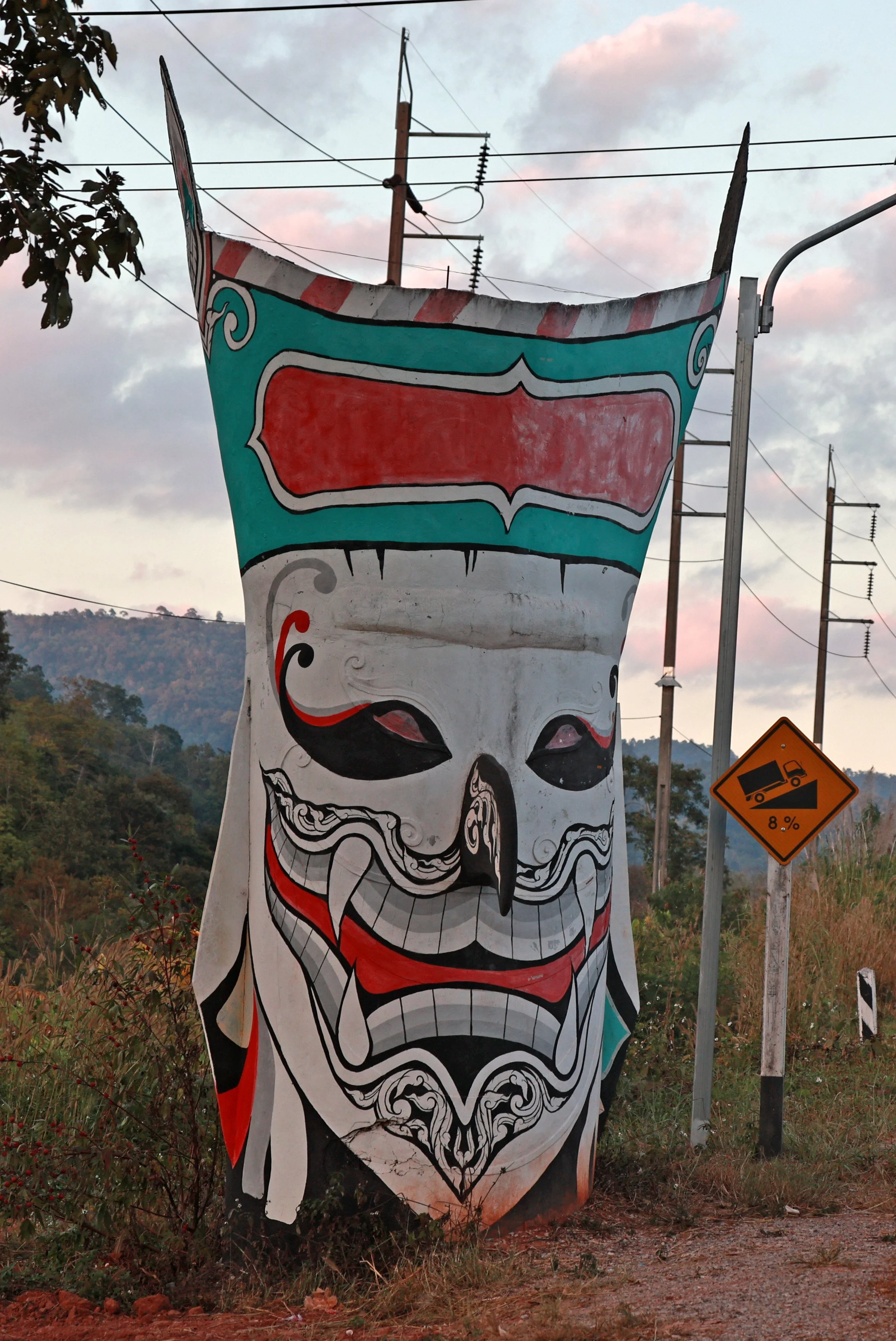
Phi Ta Khon, Dan Sai
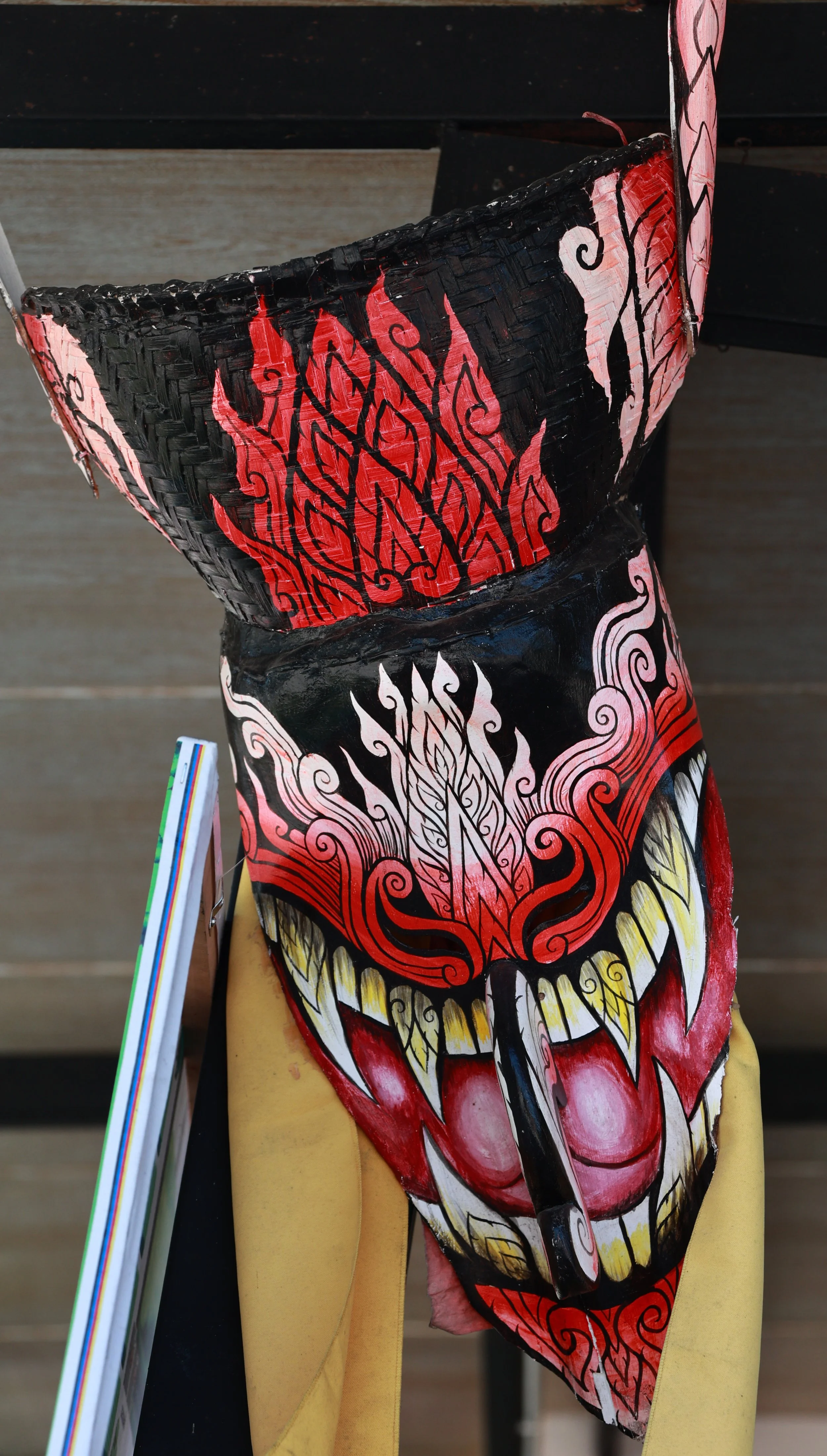
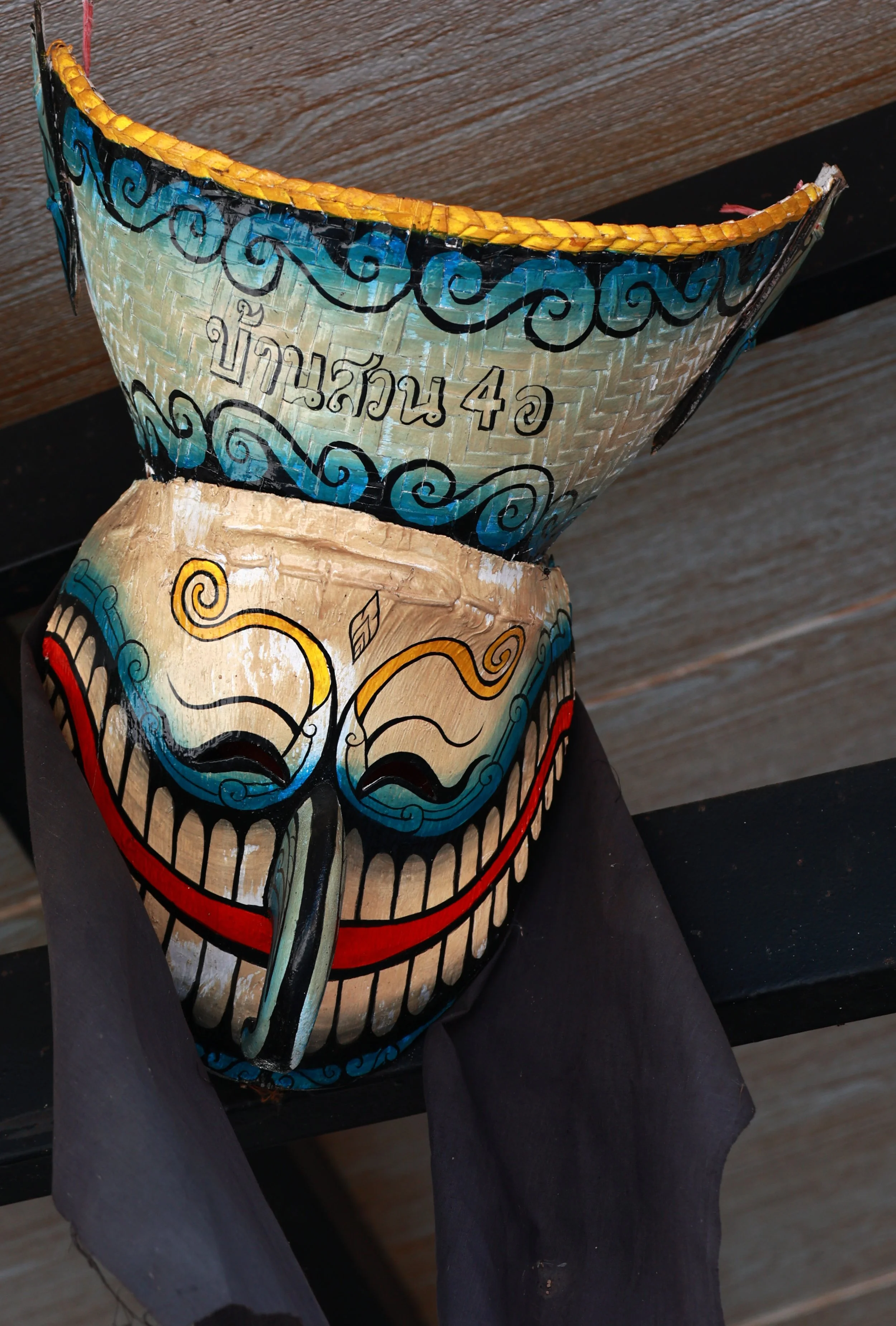
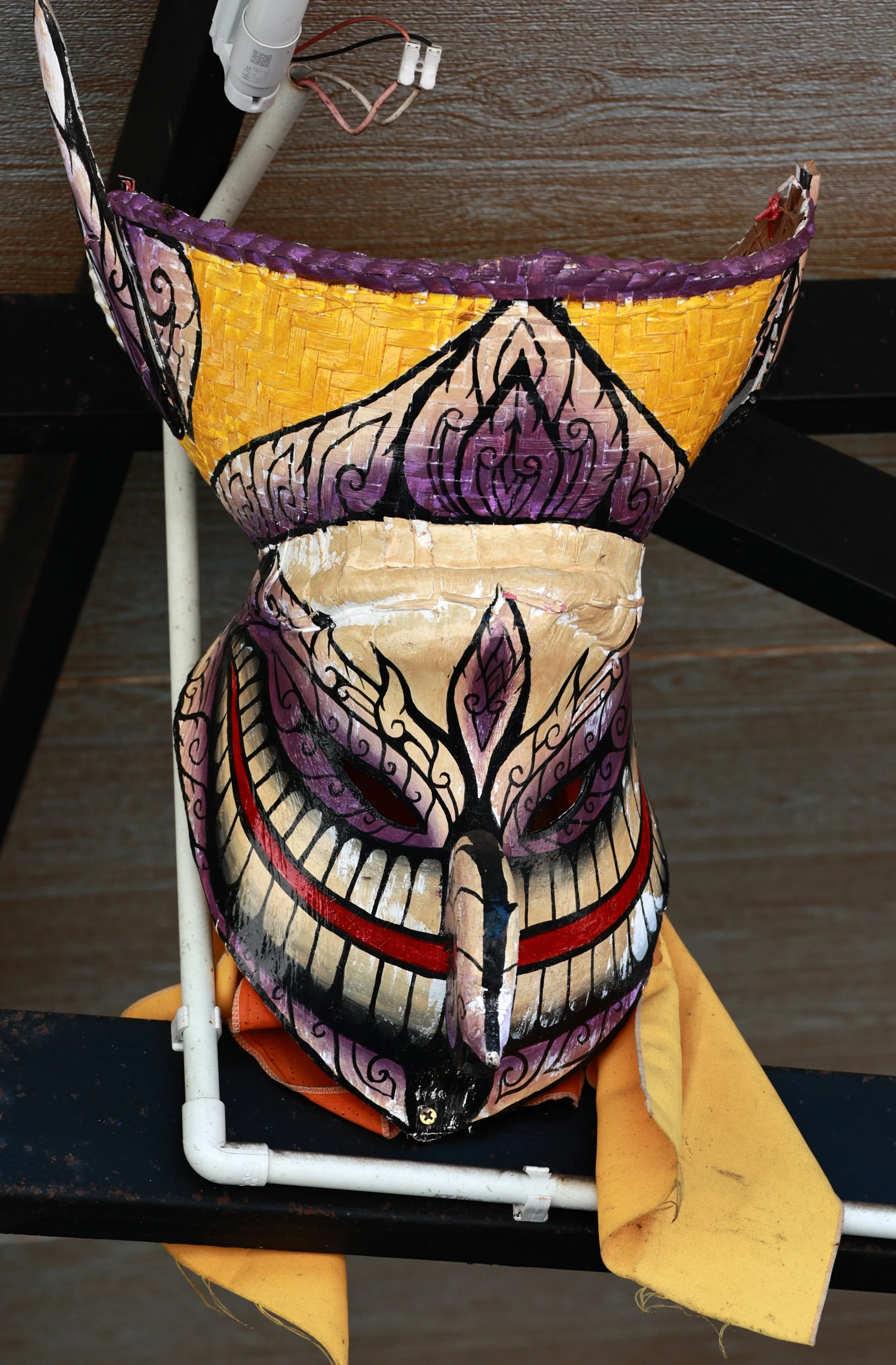
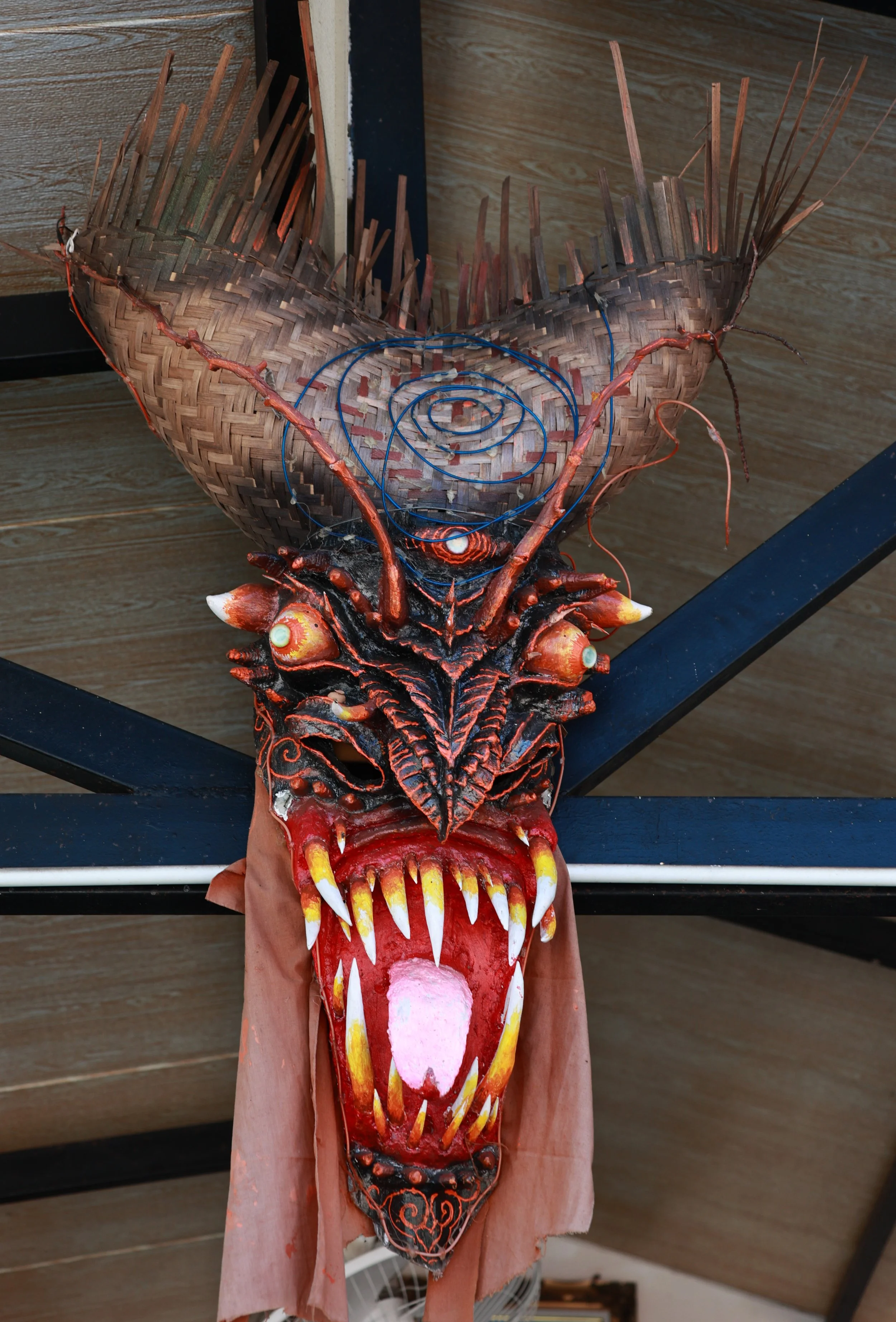

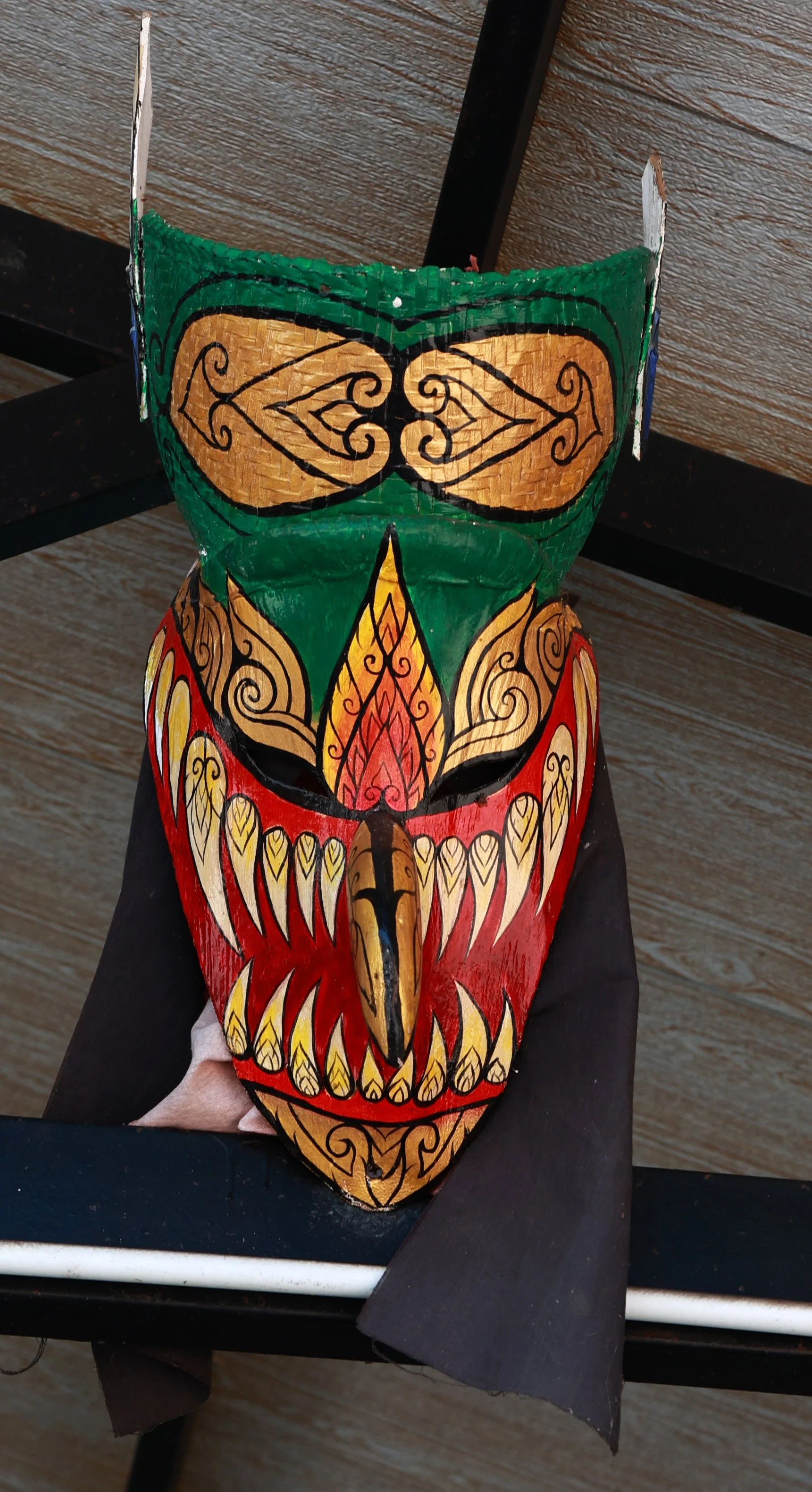
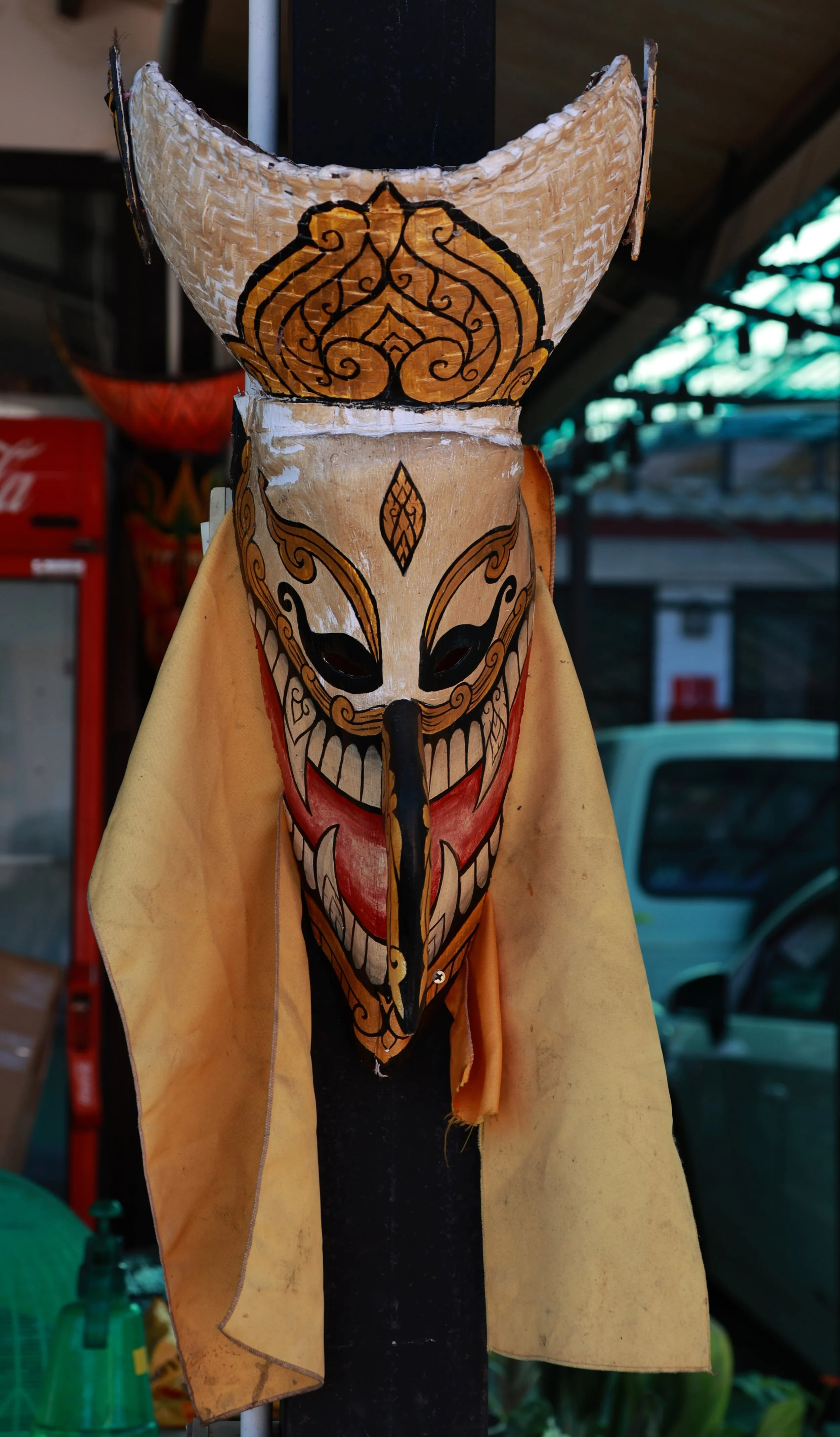
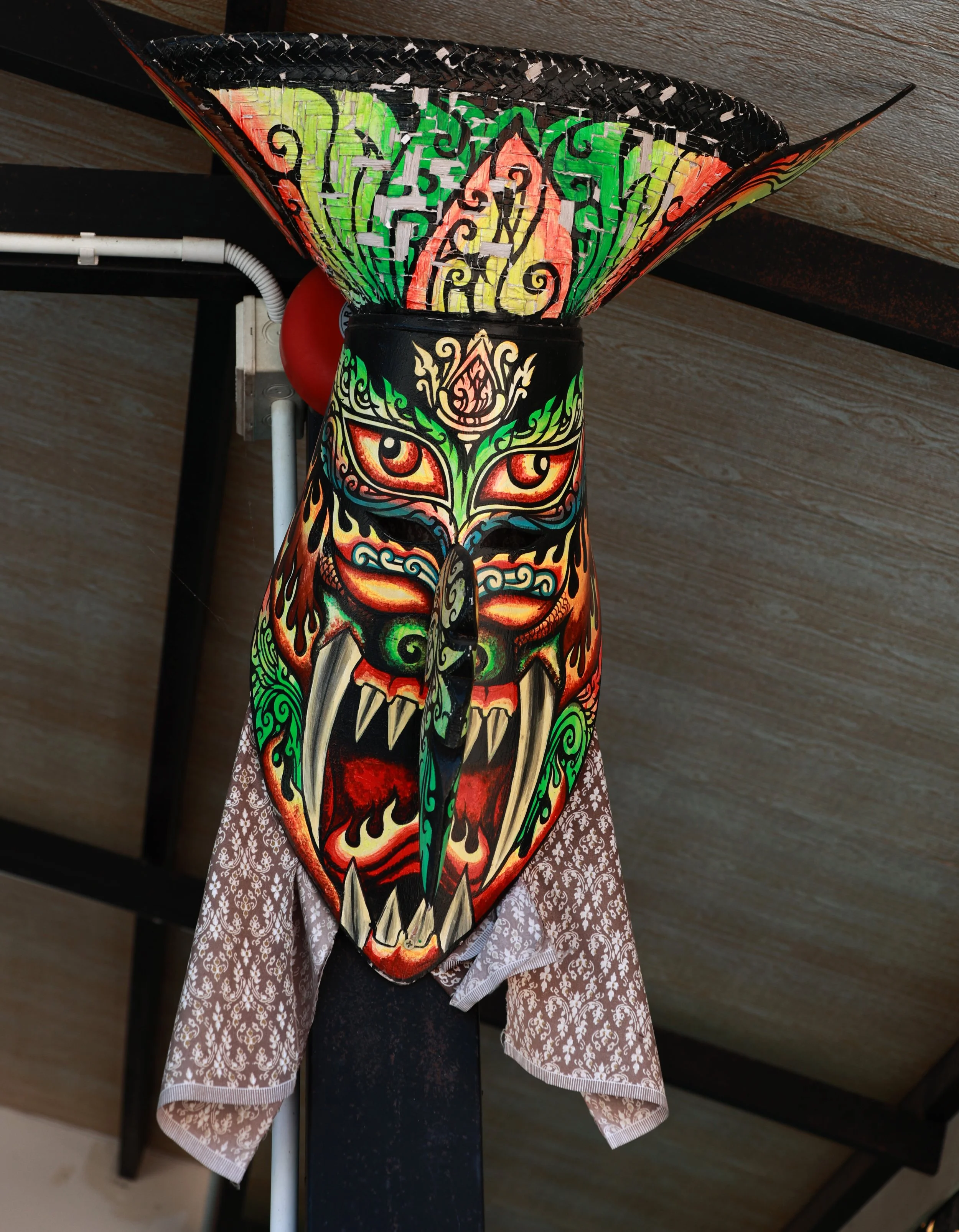
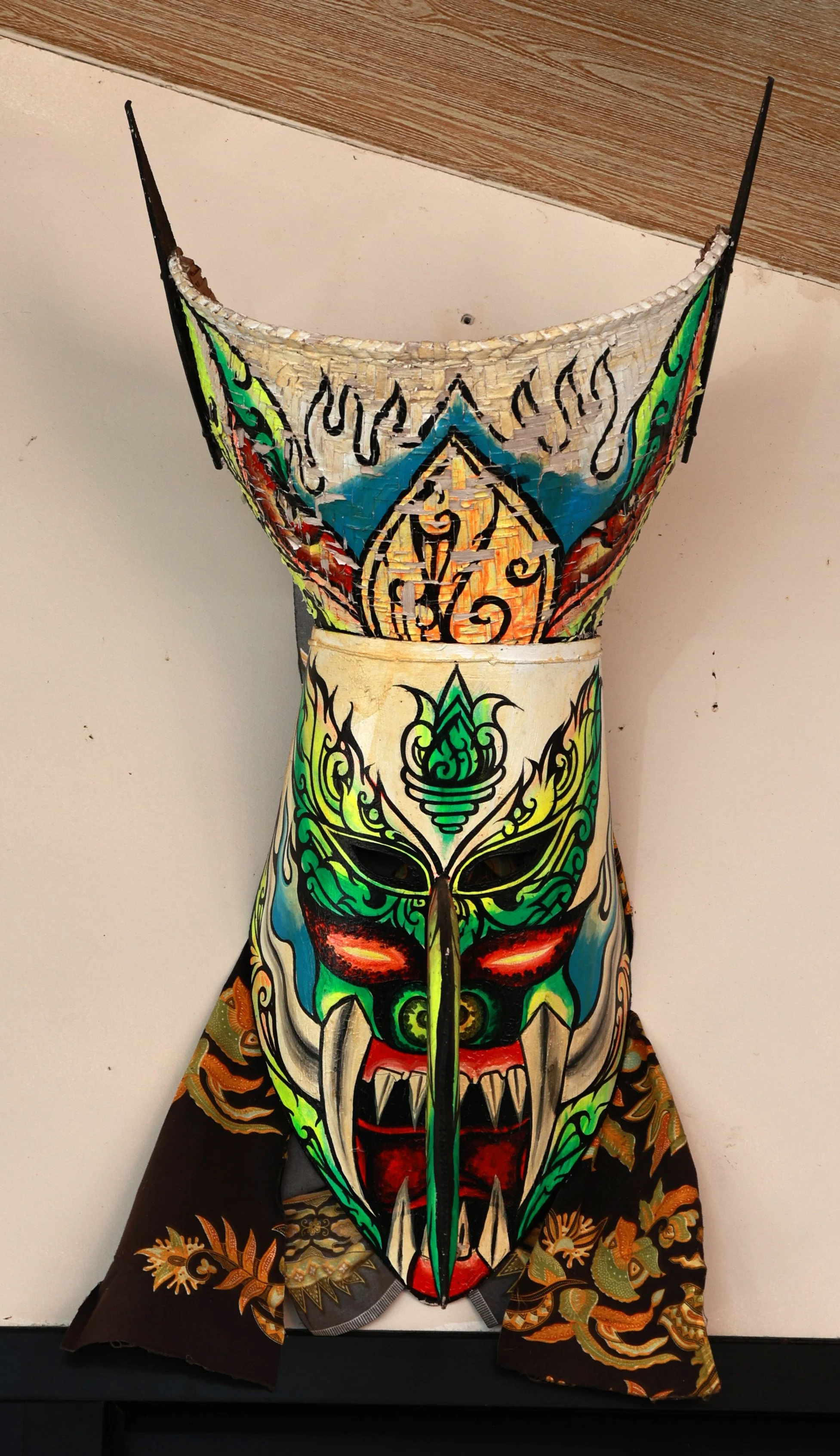
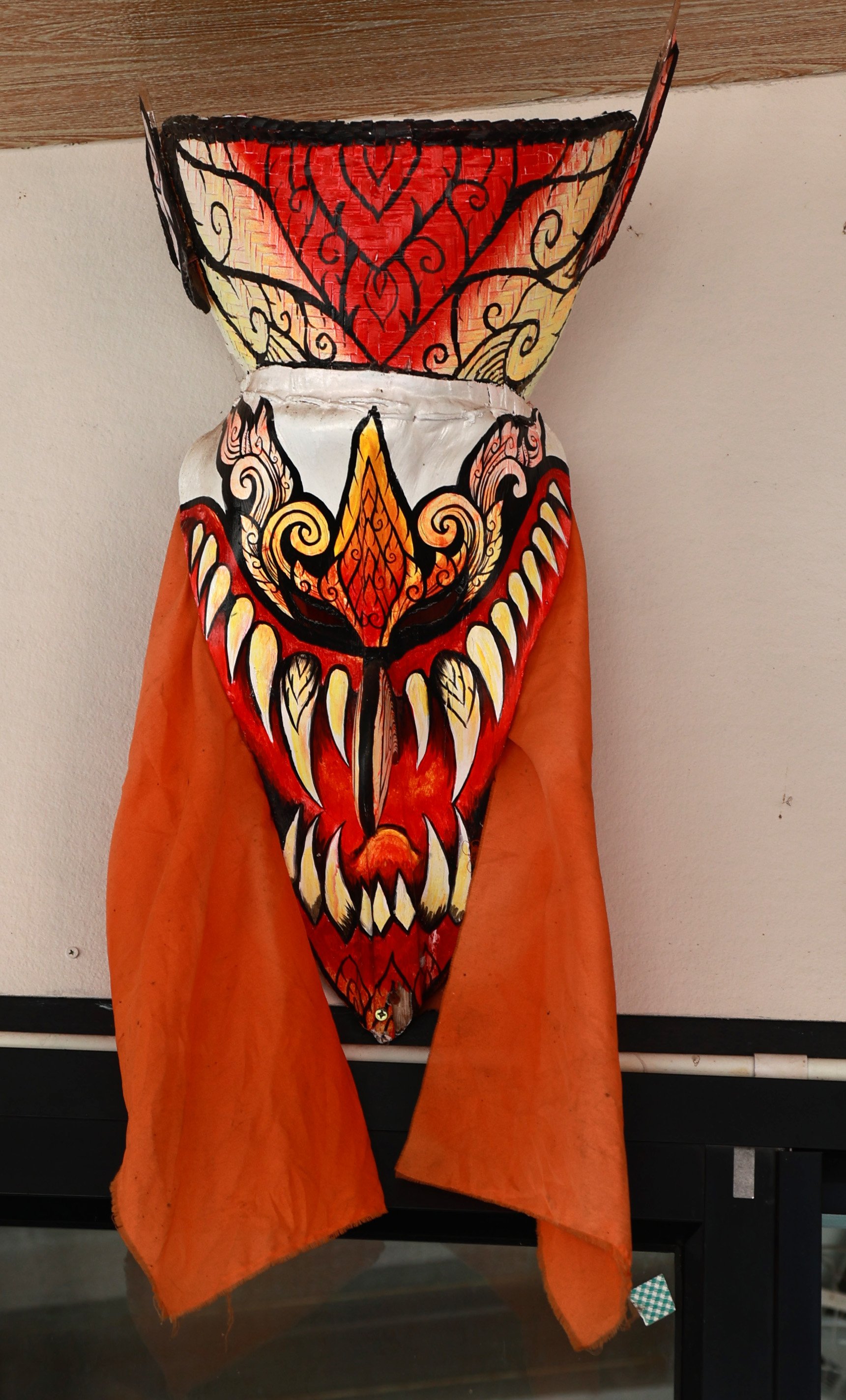
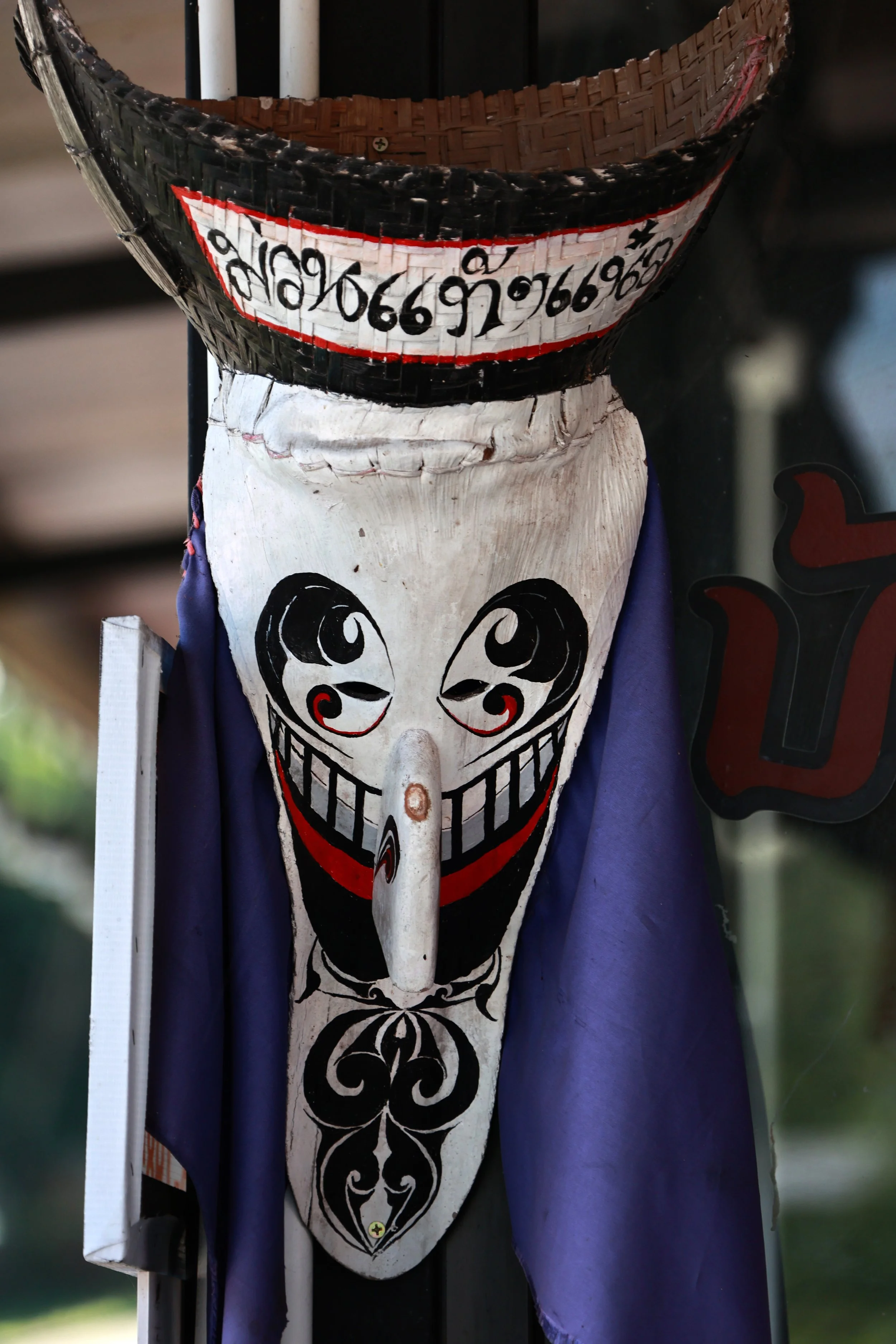
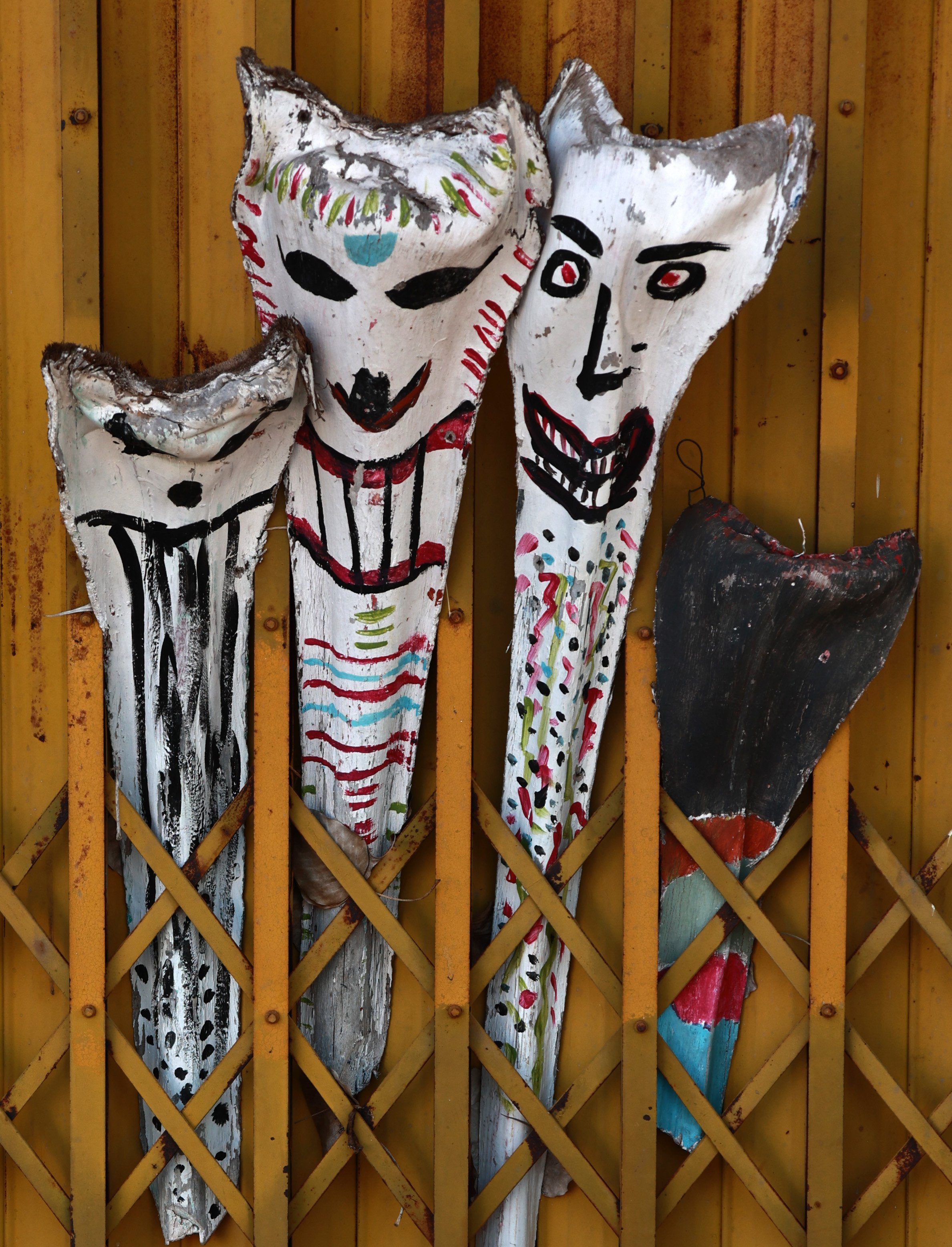
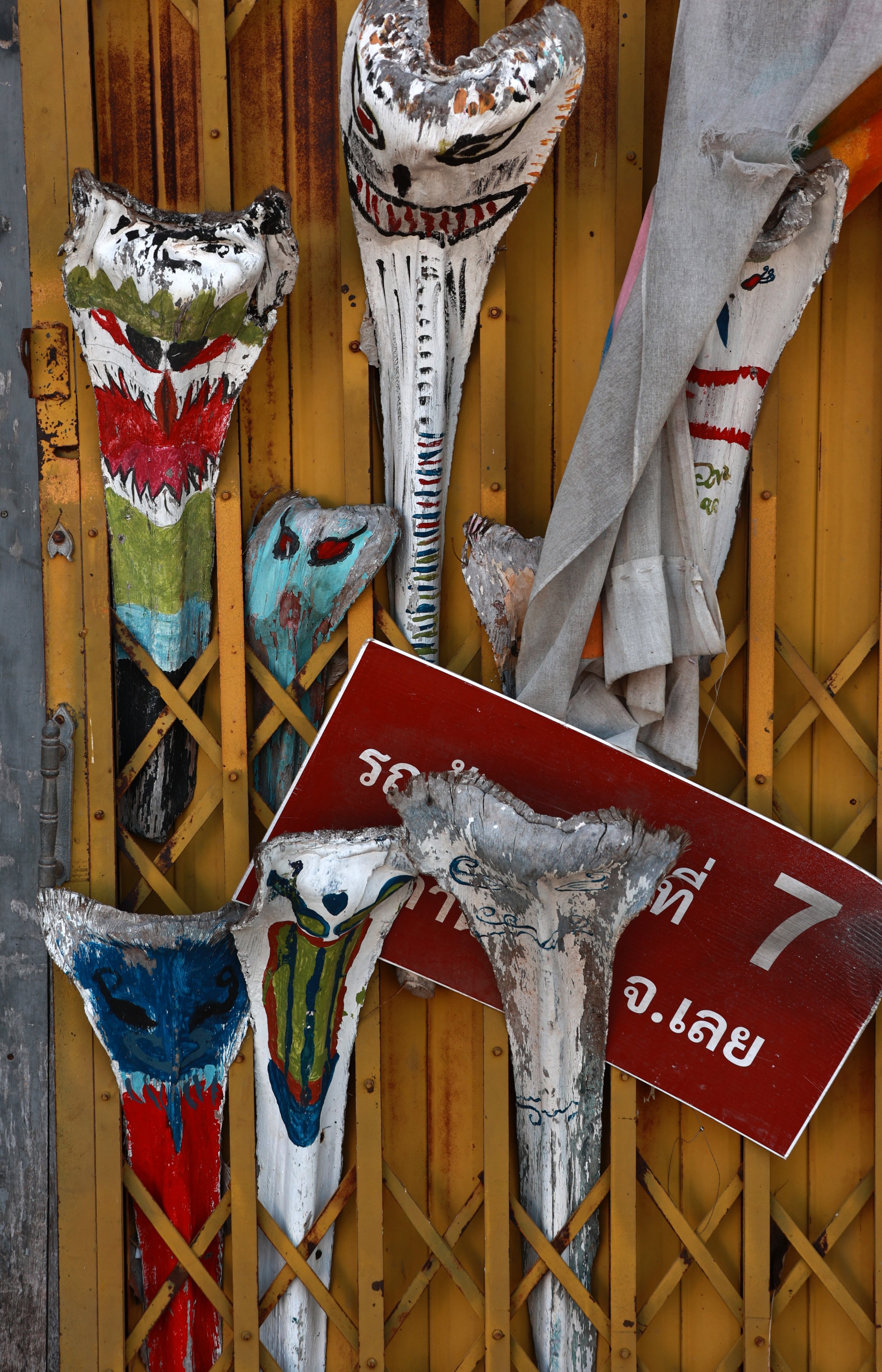
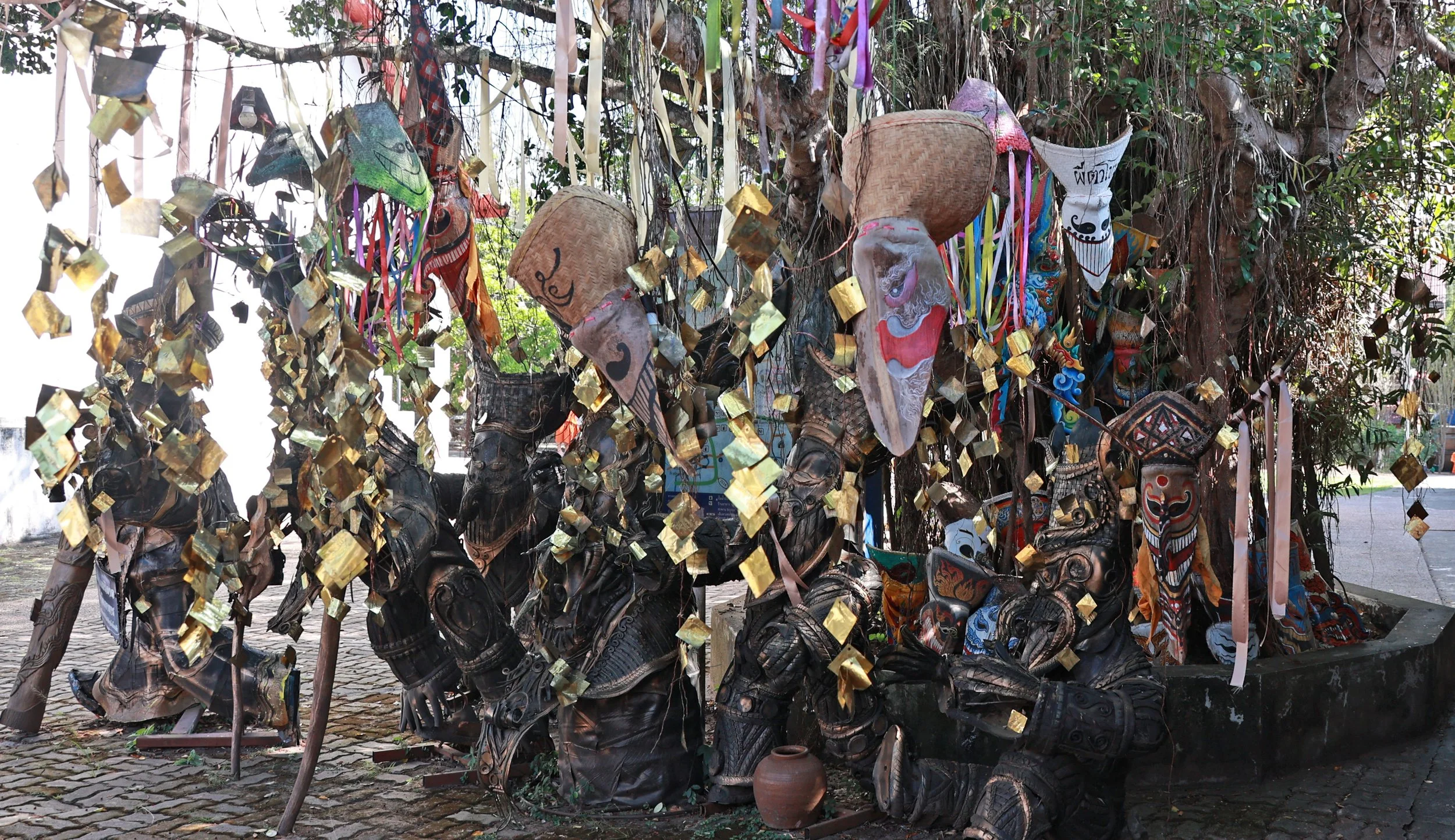
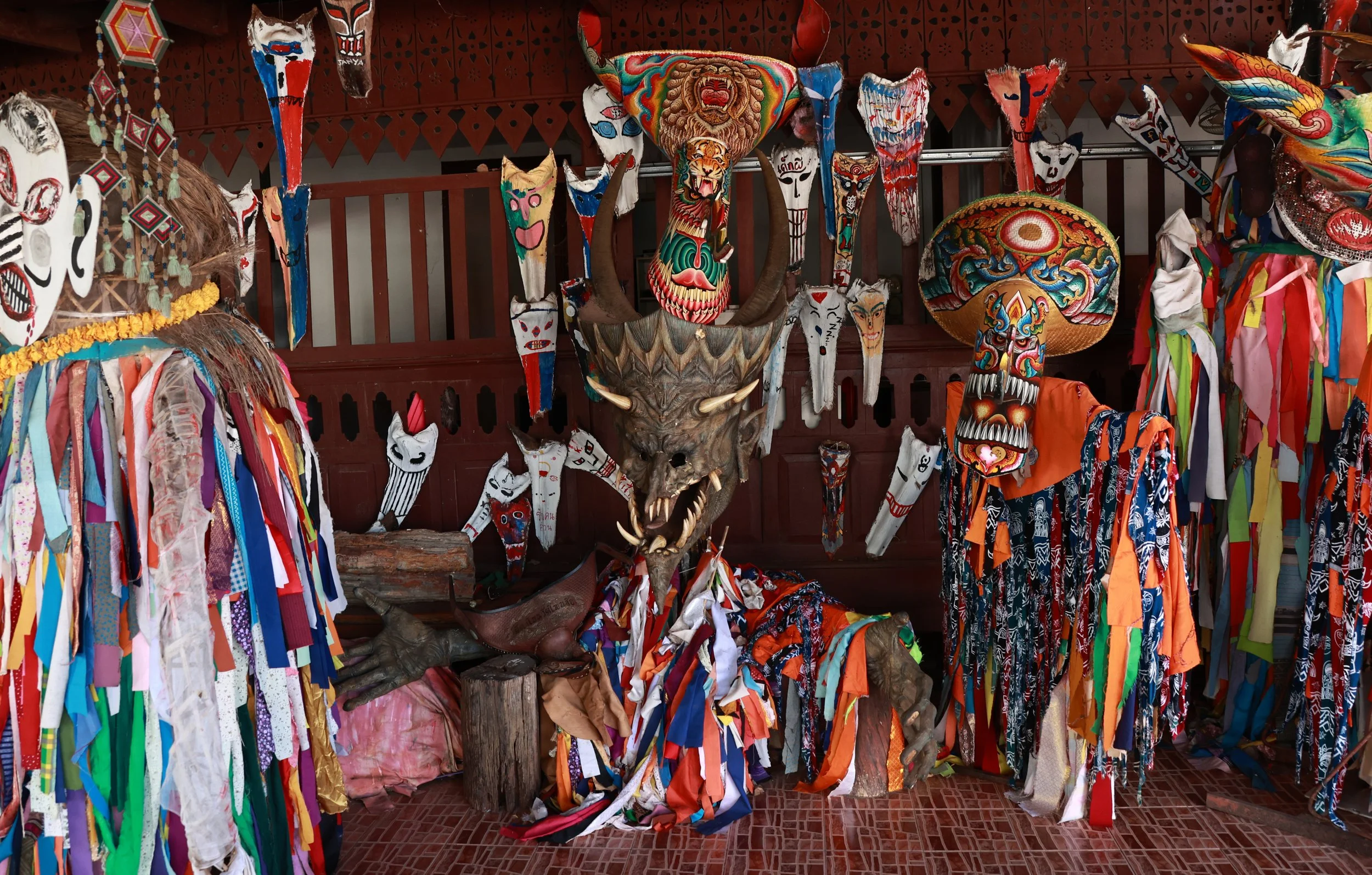
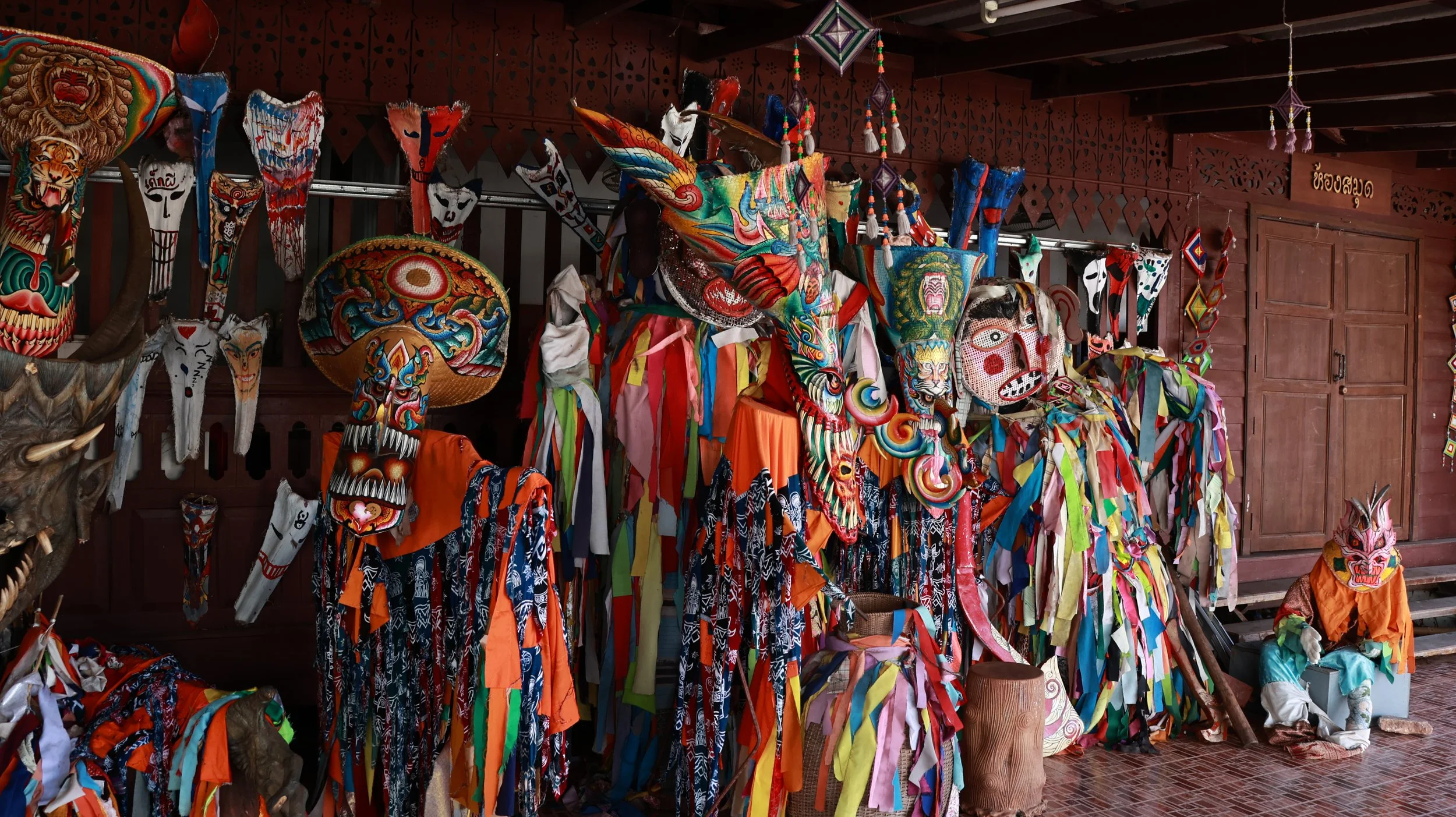
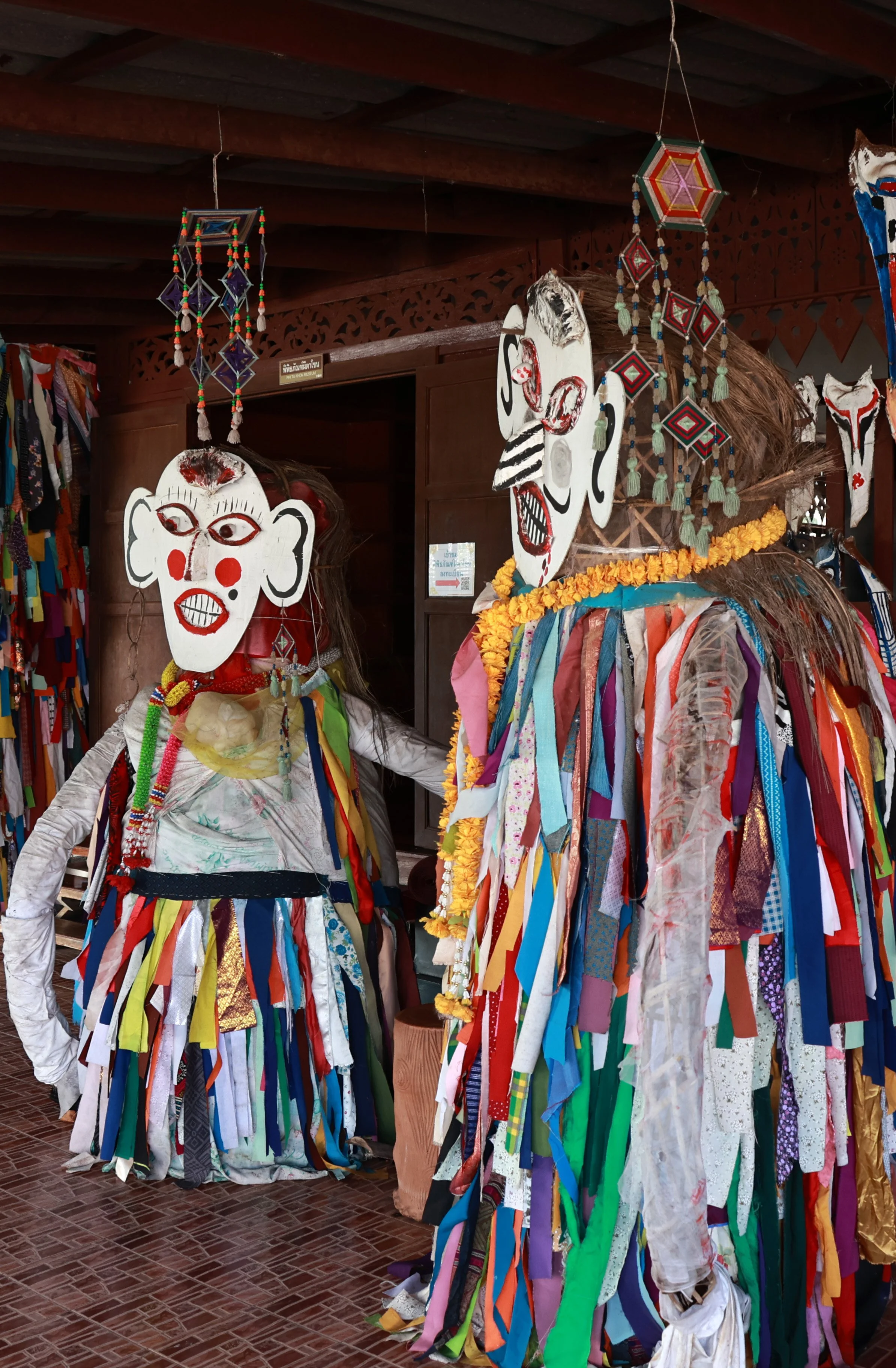
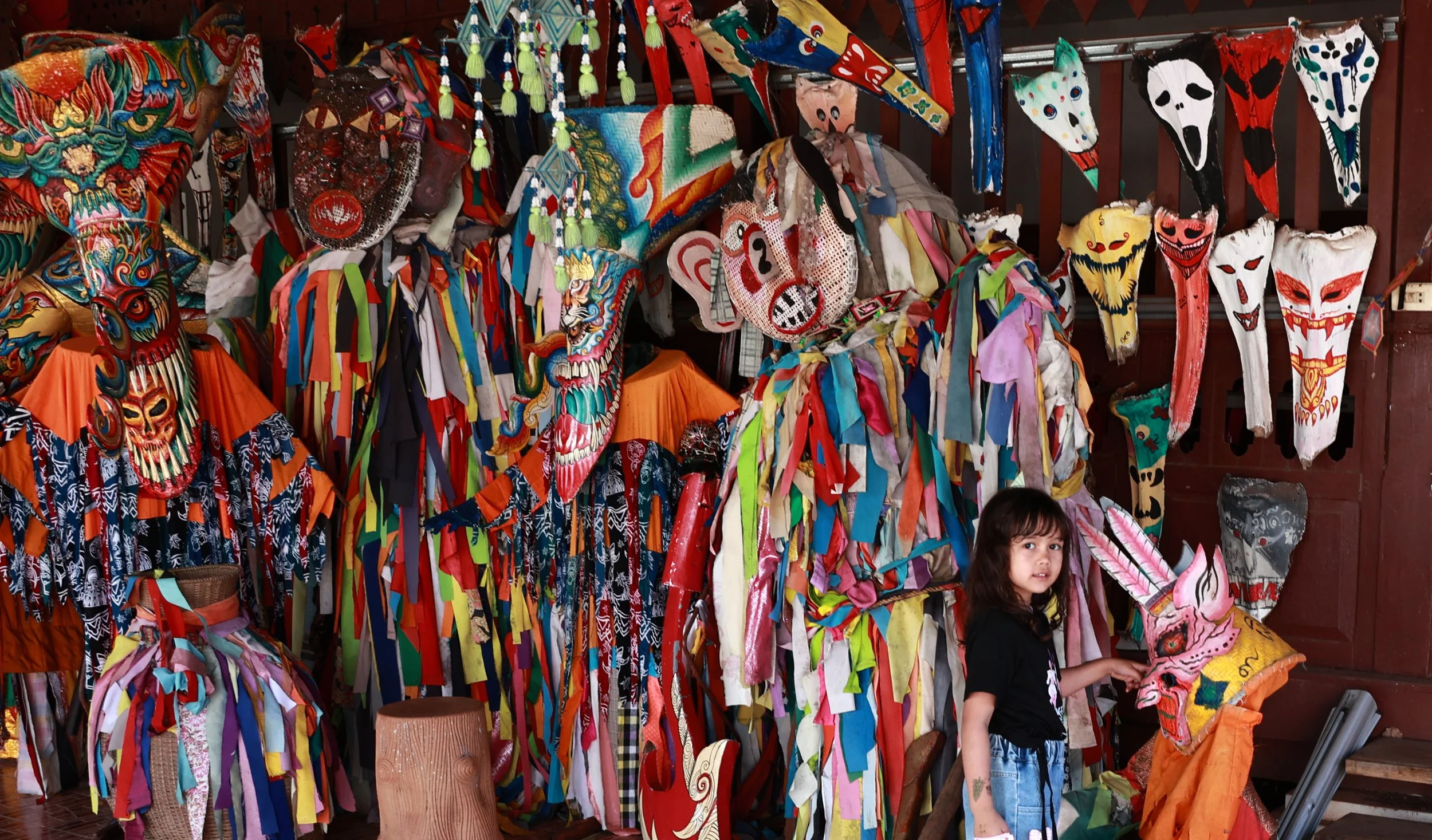
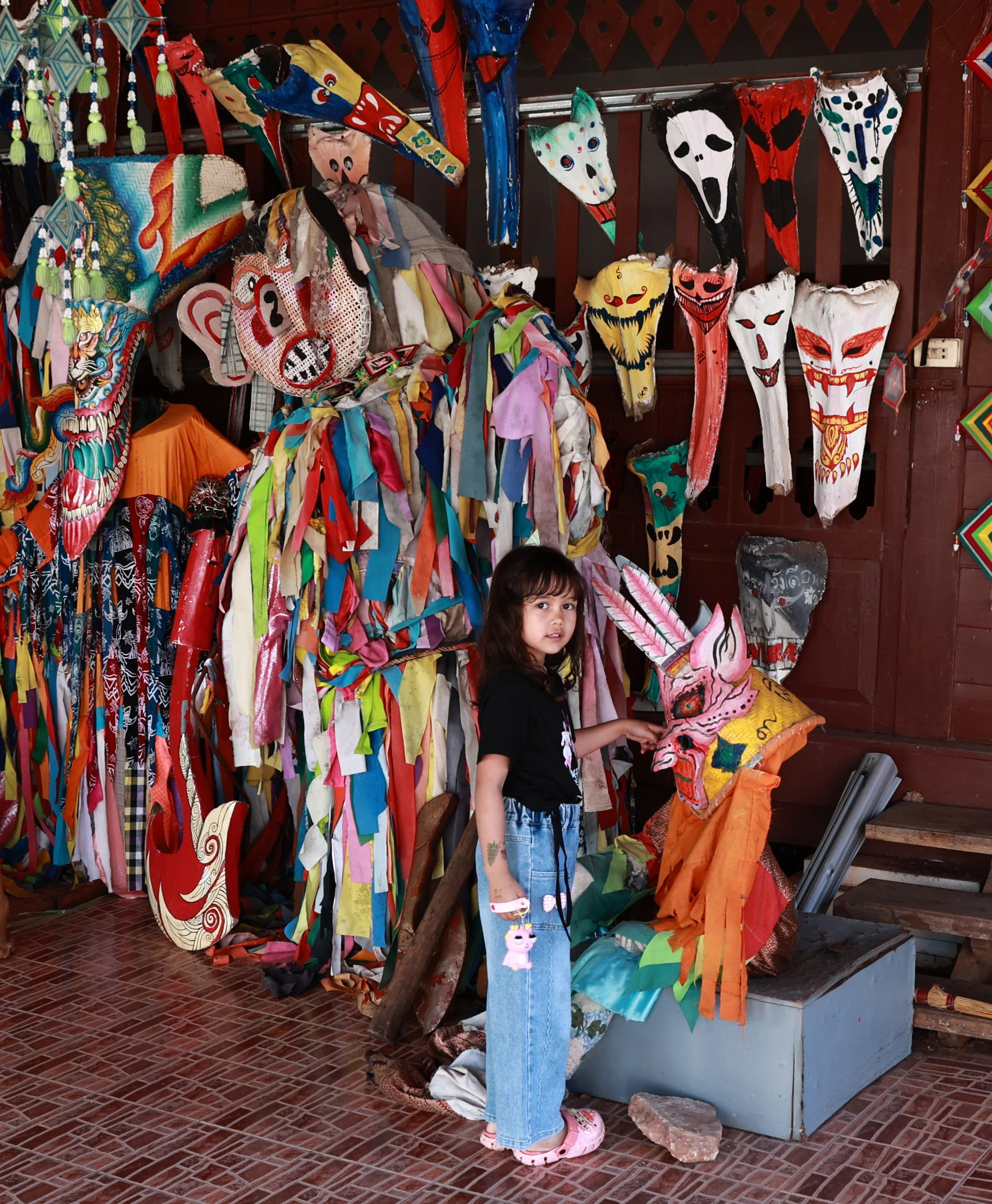
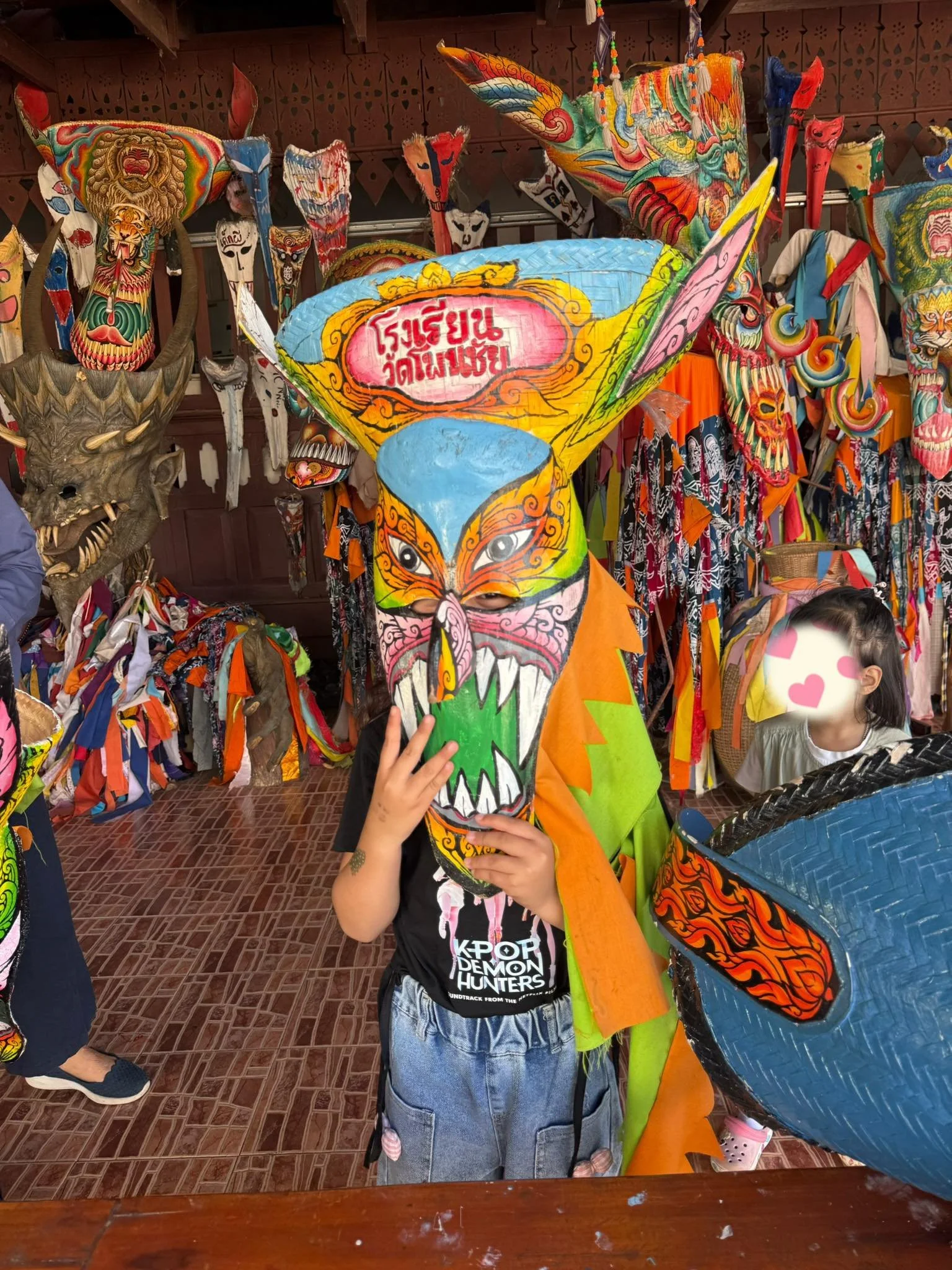
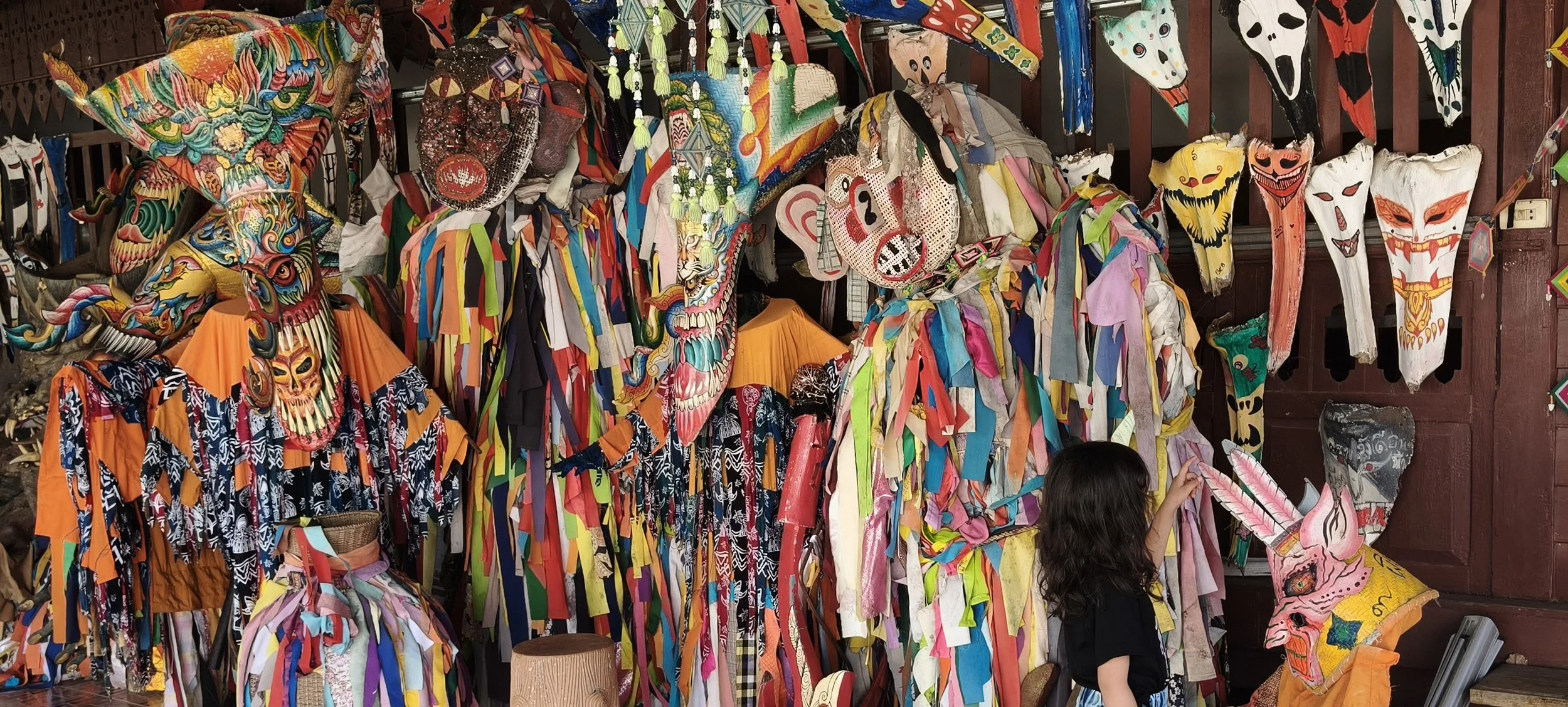
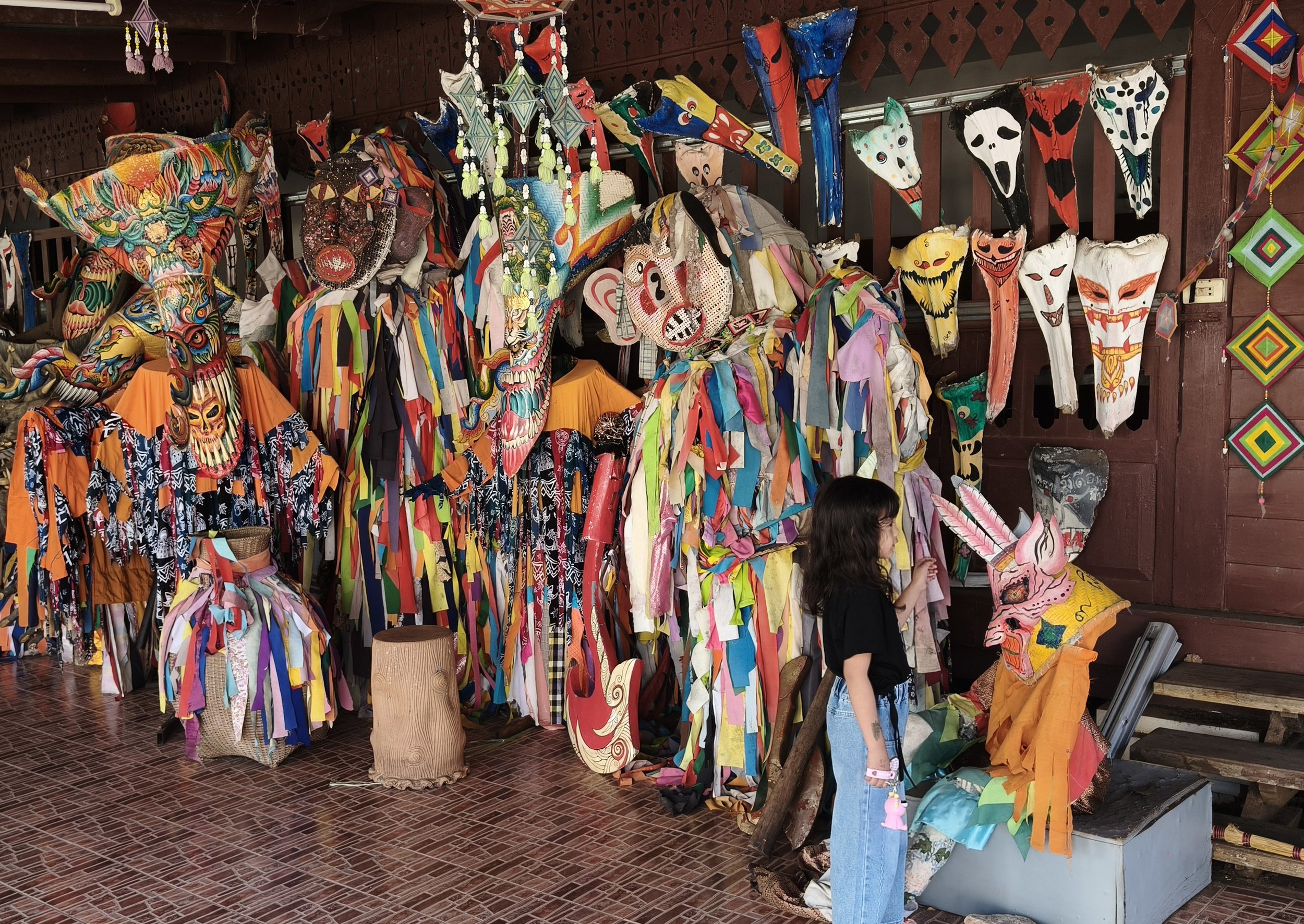
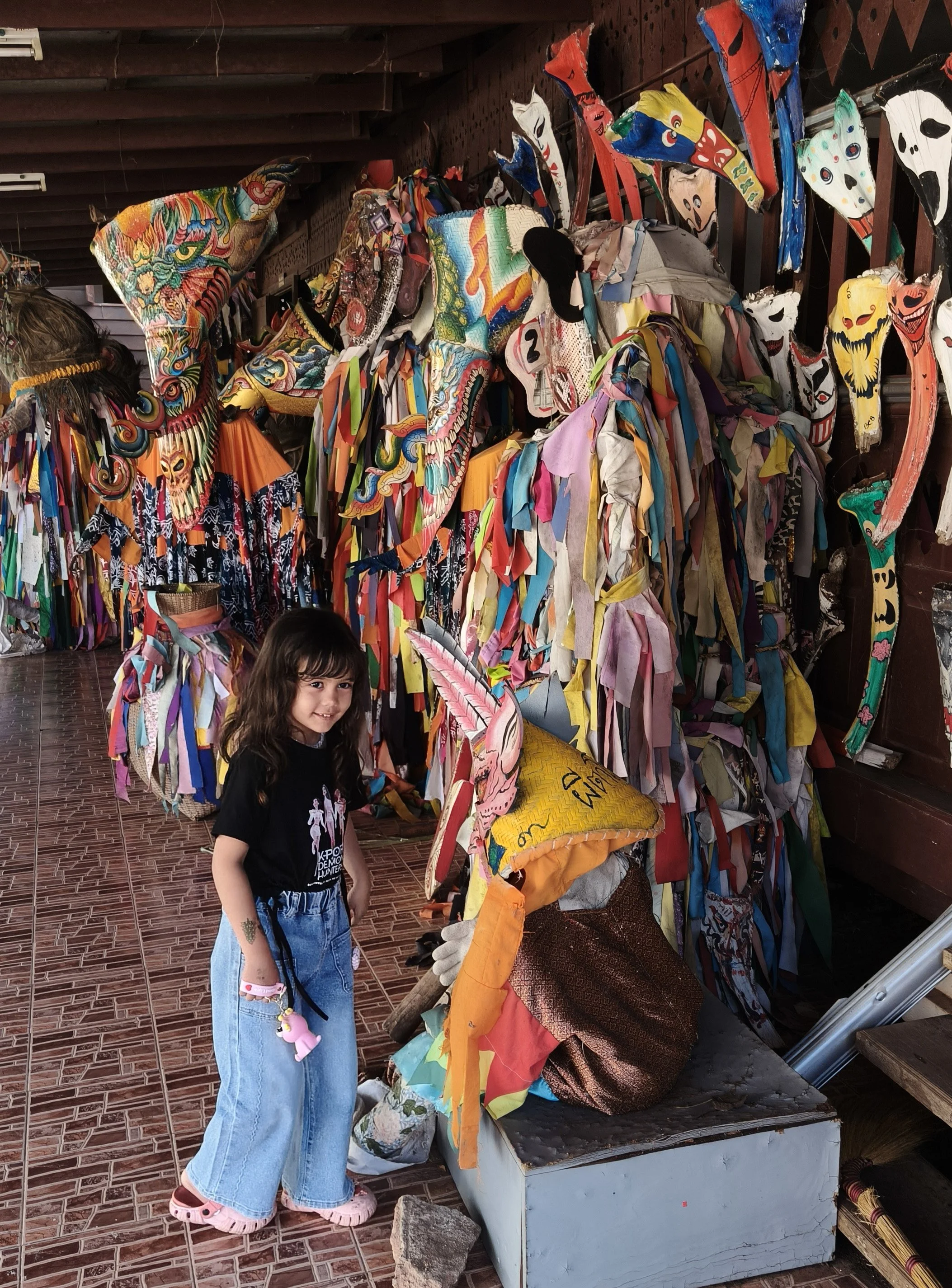
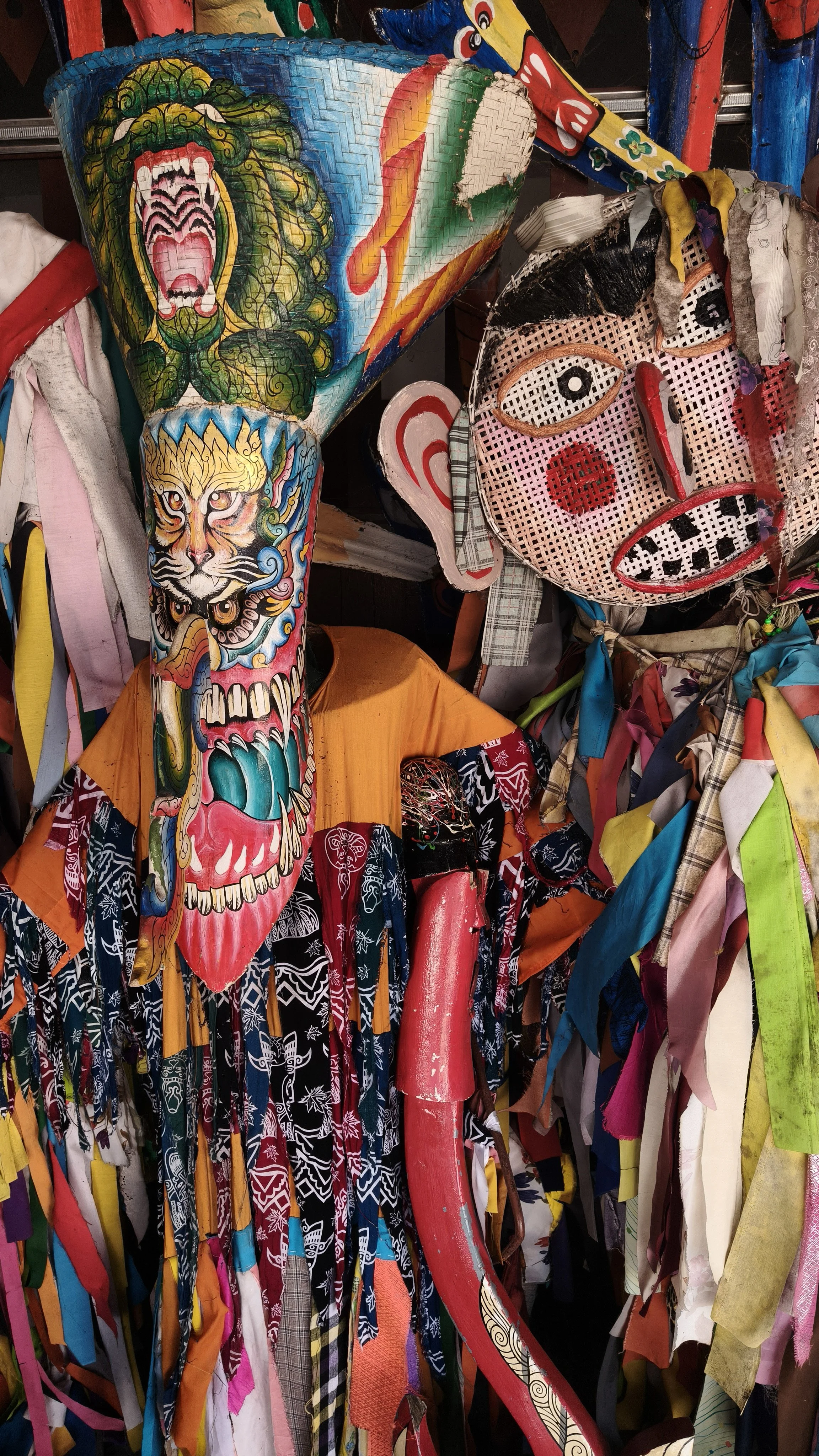
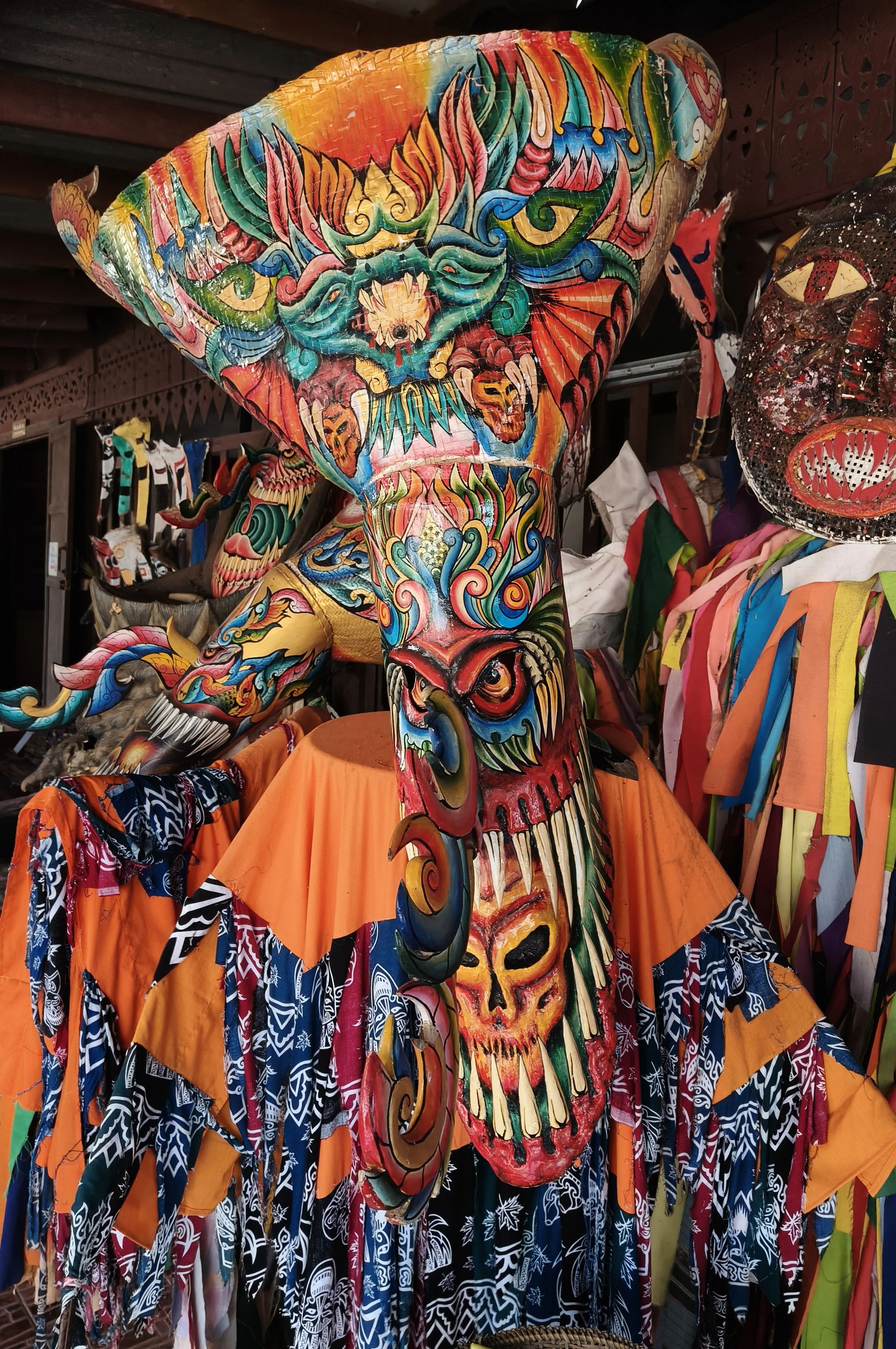
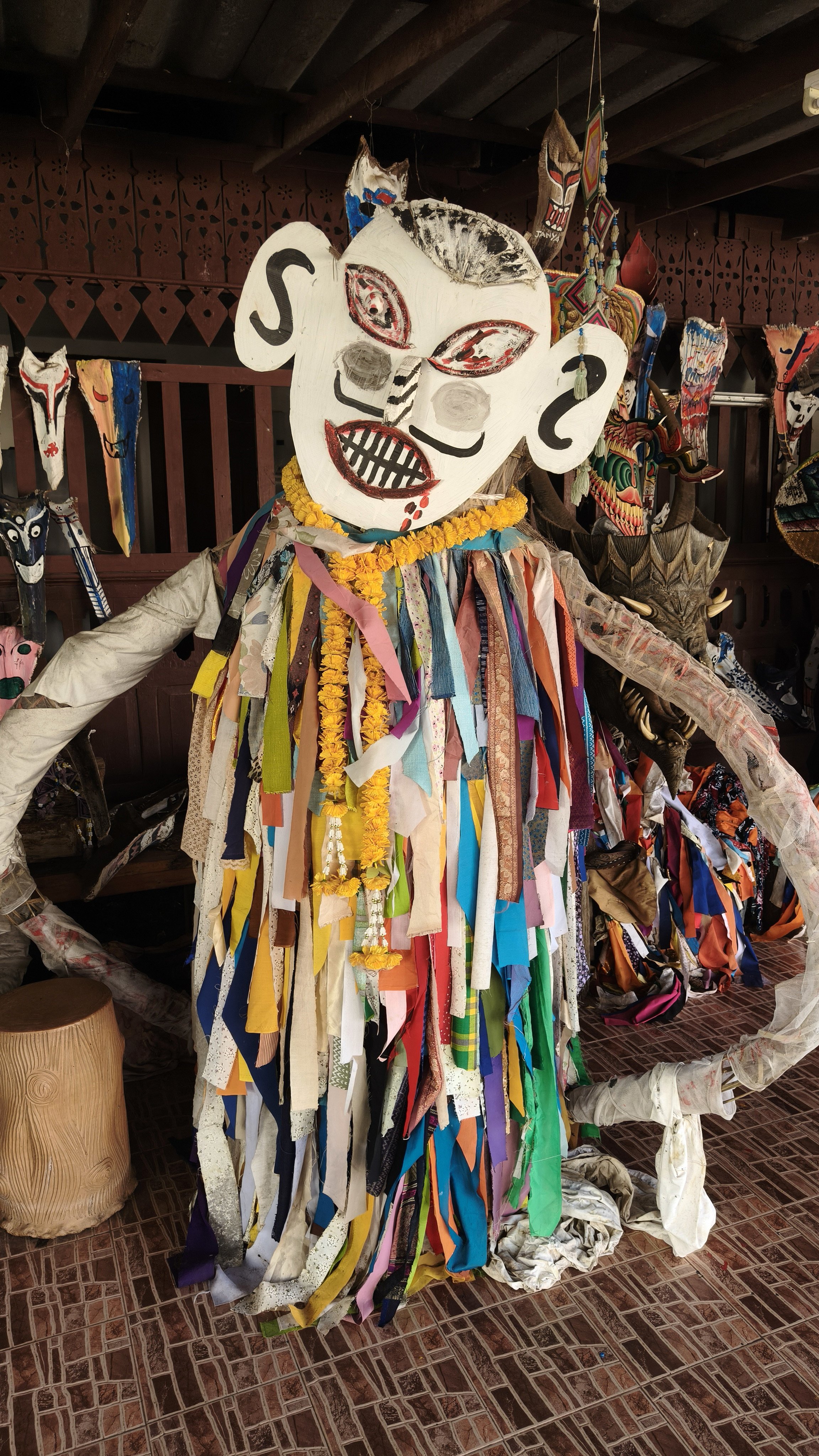
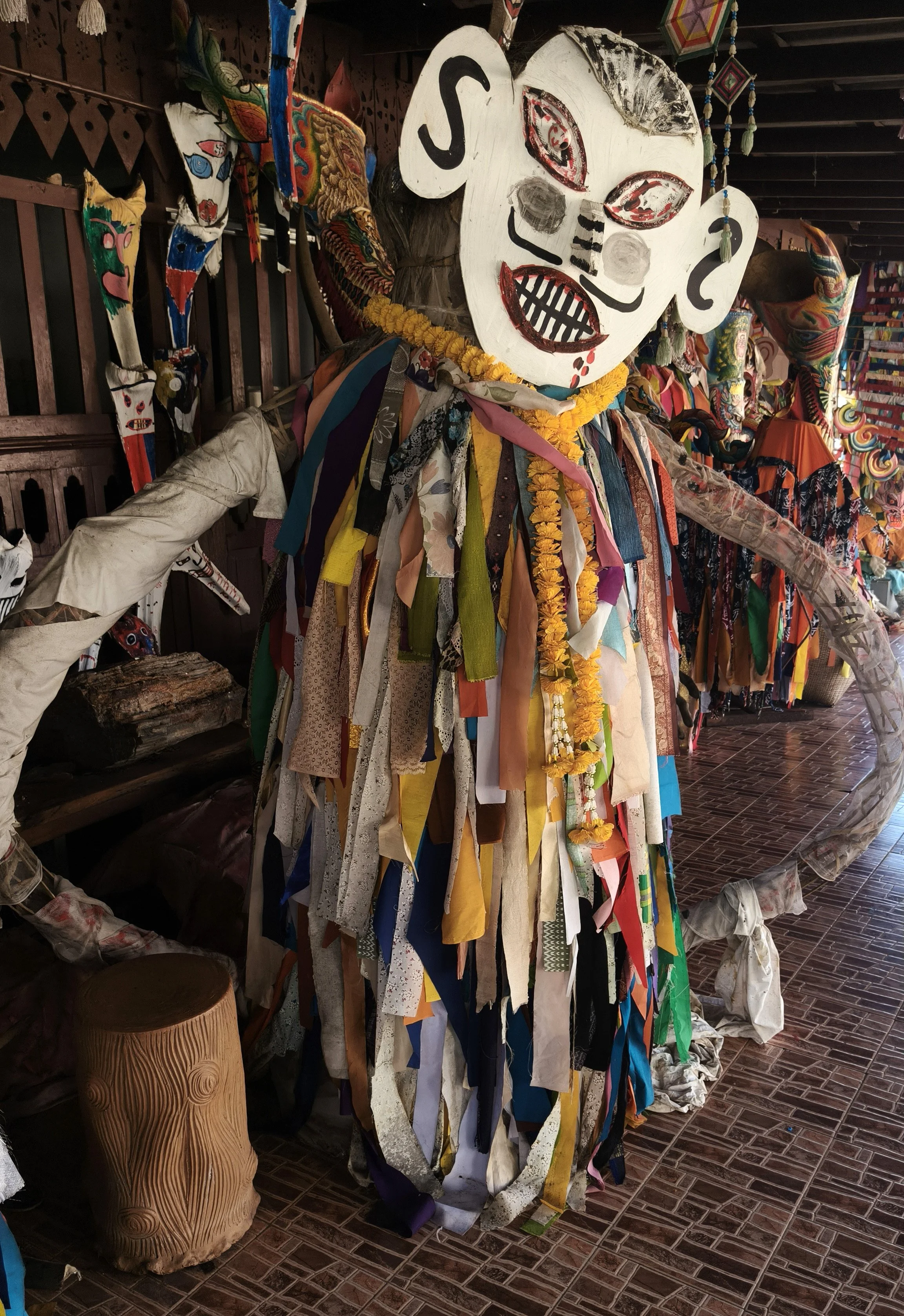
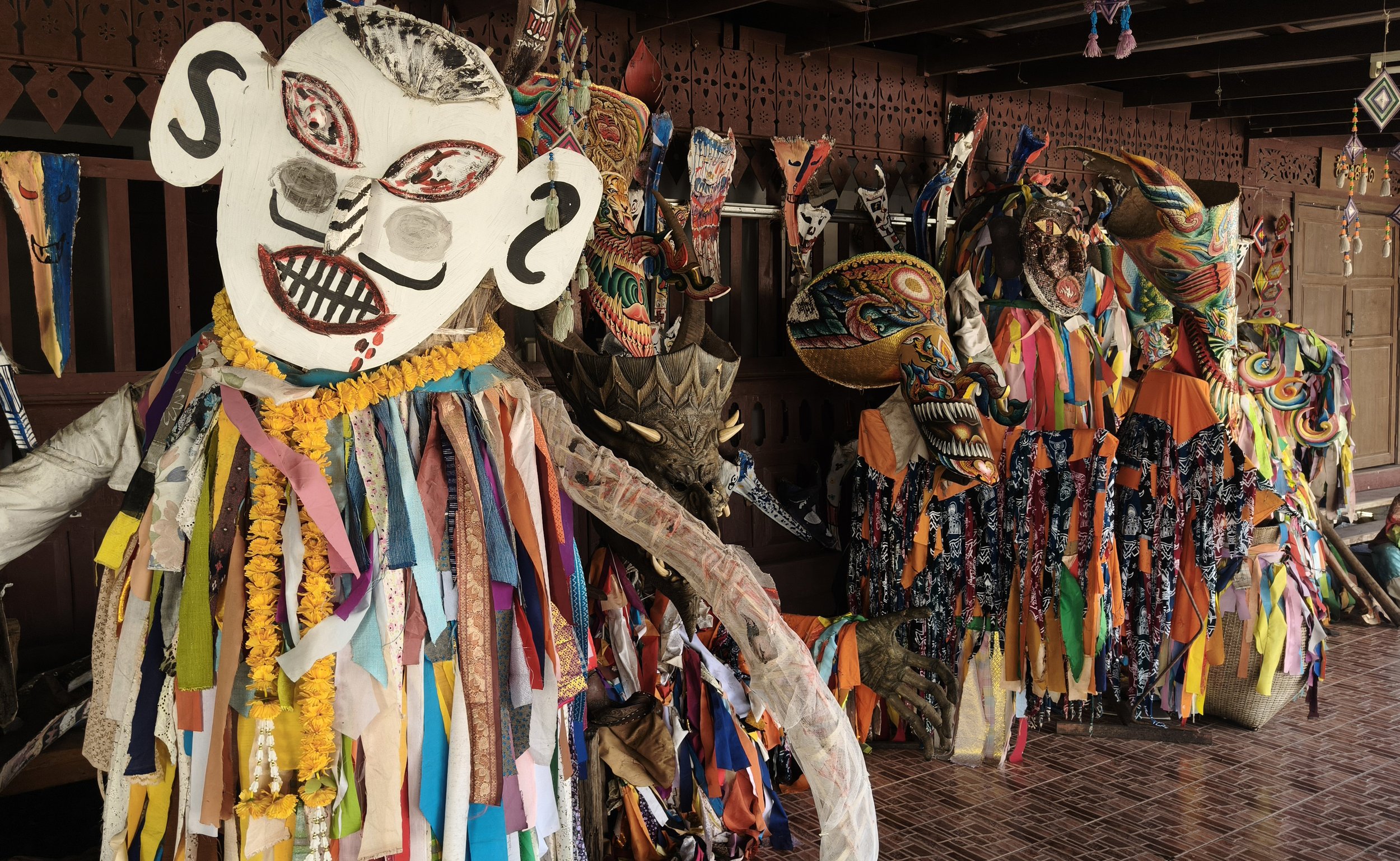
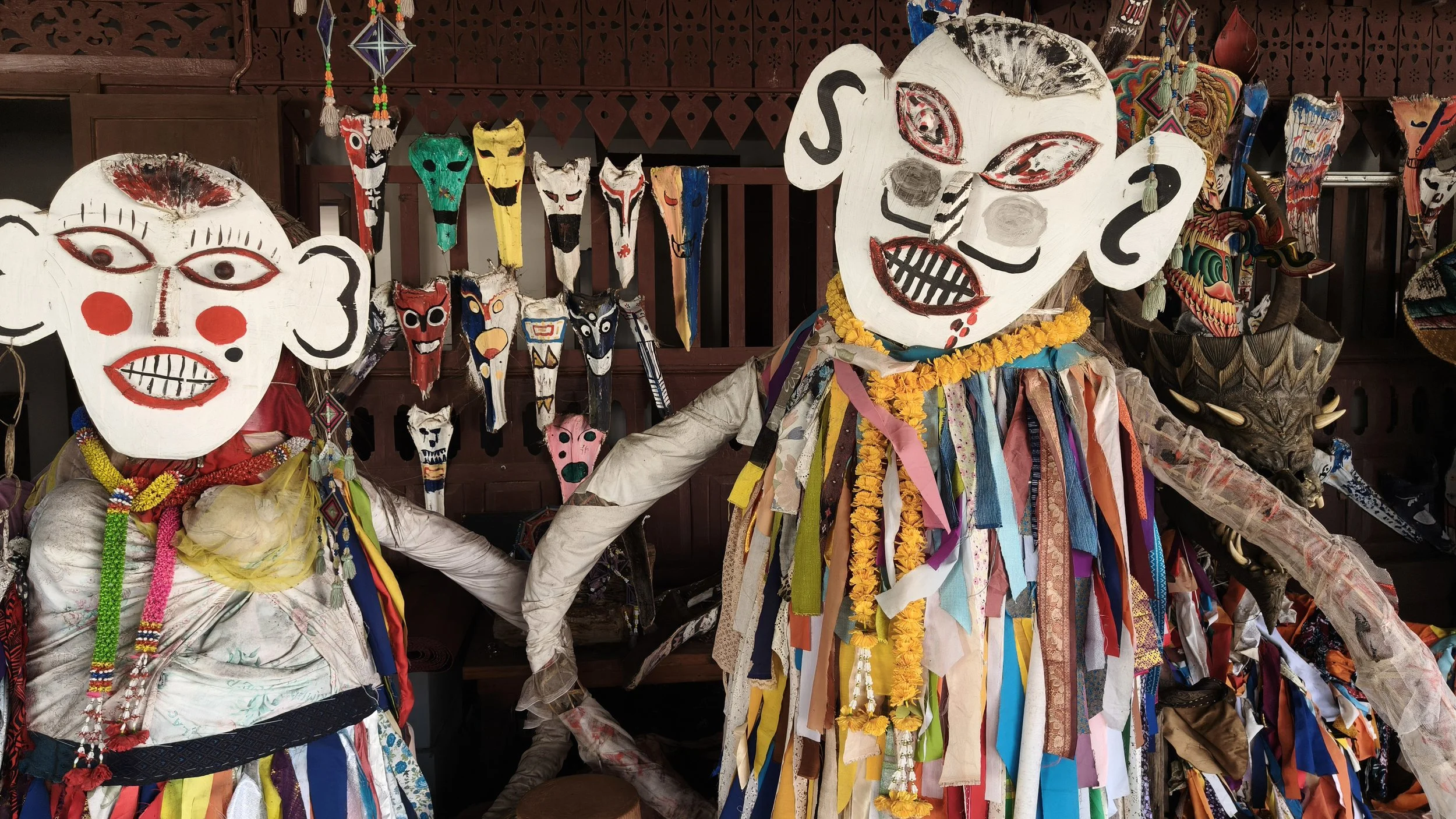
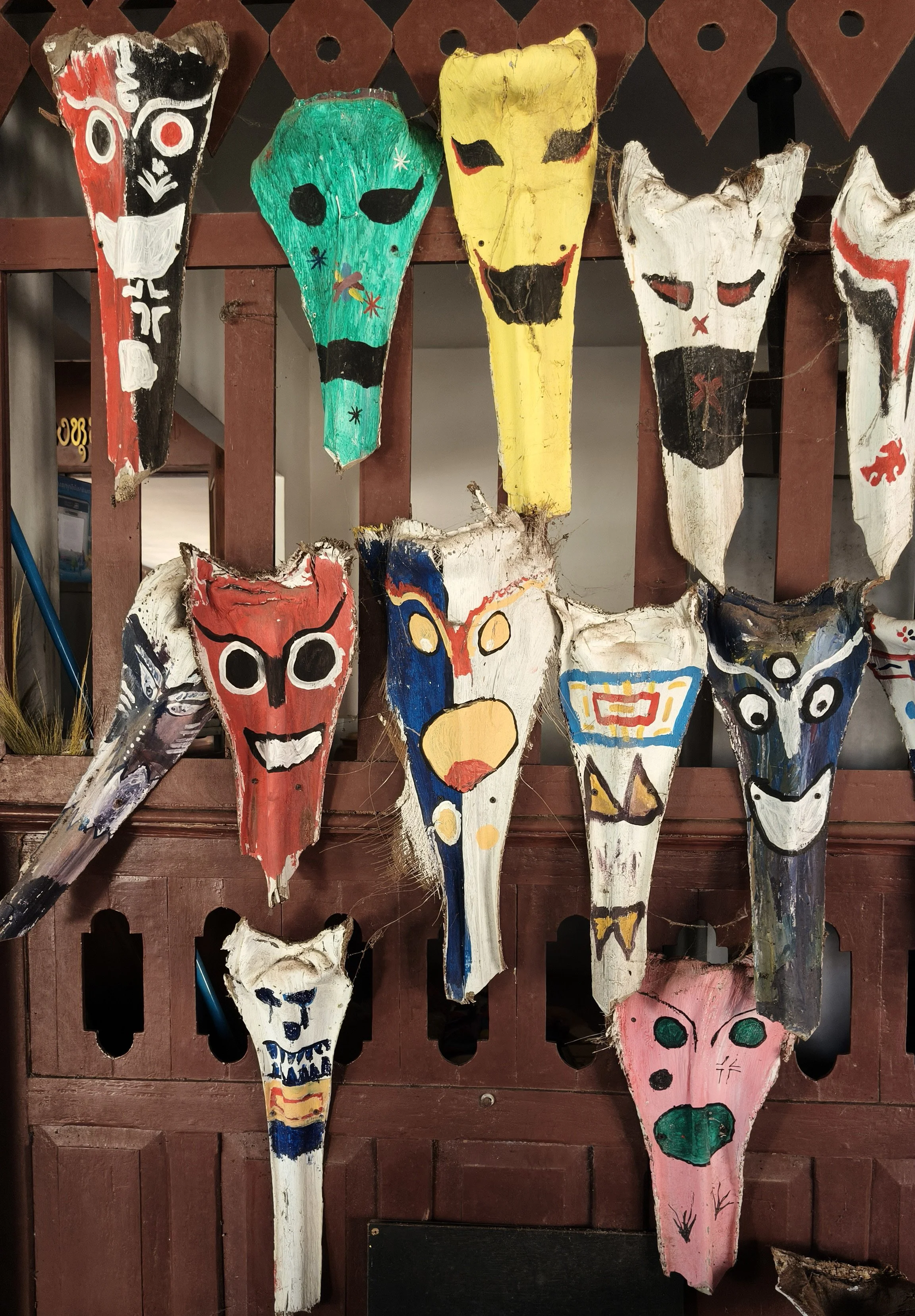
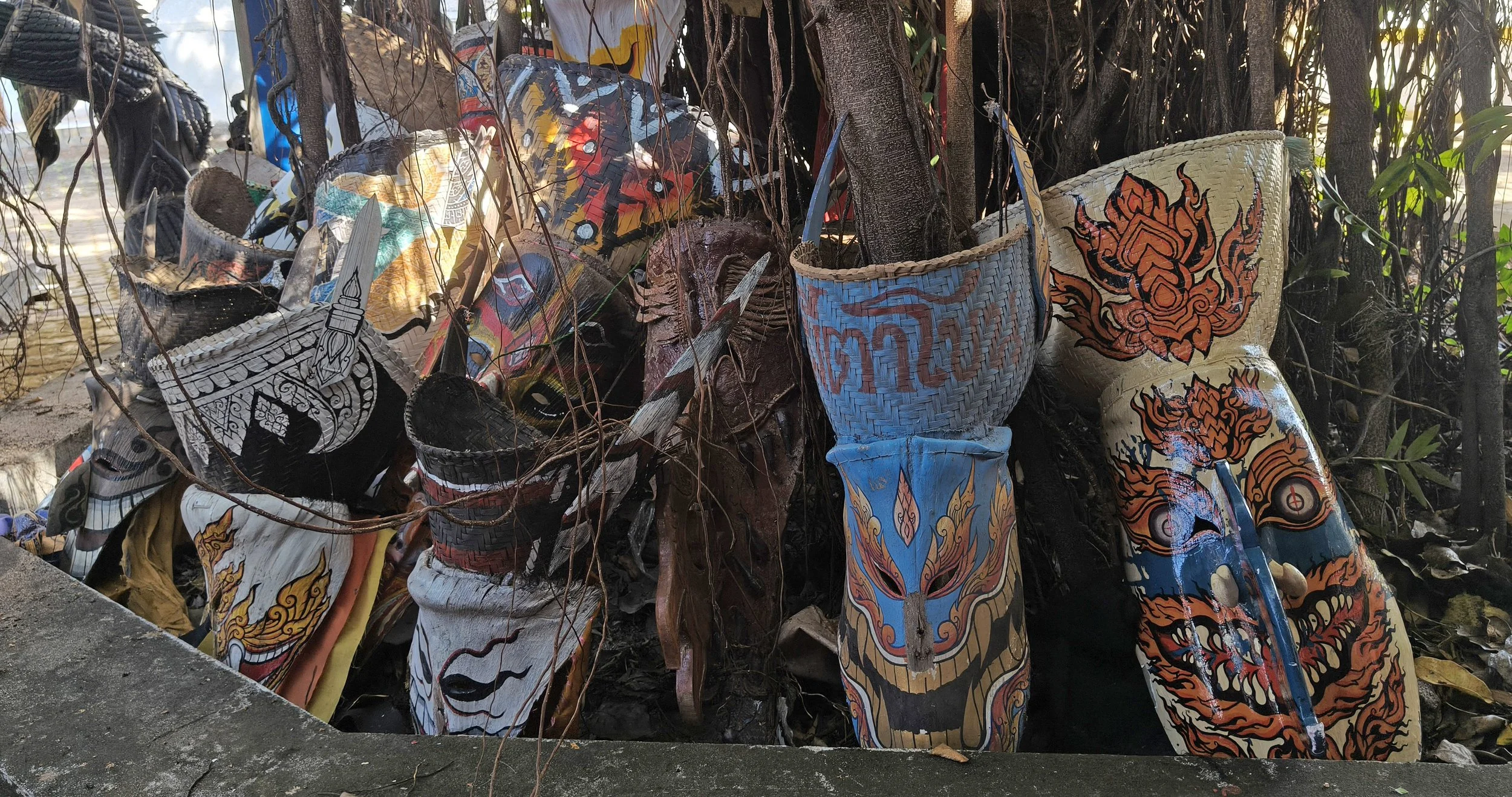
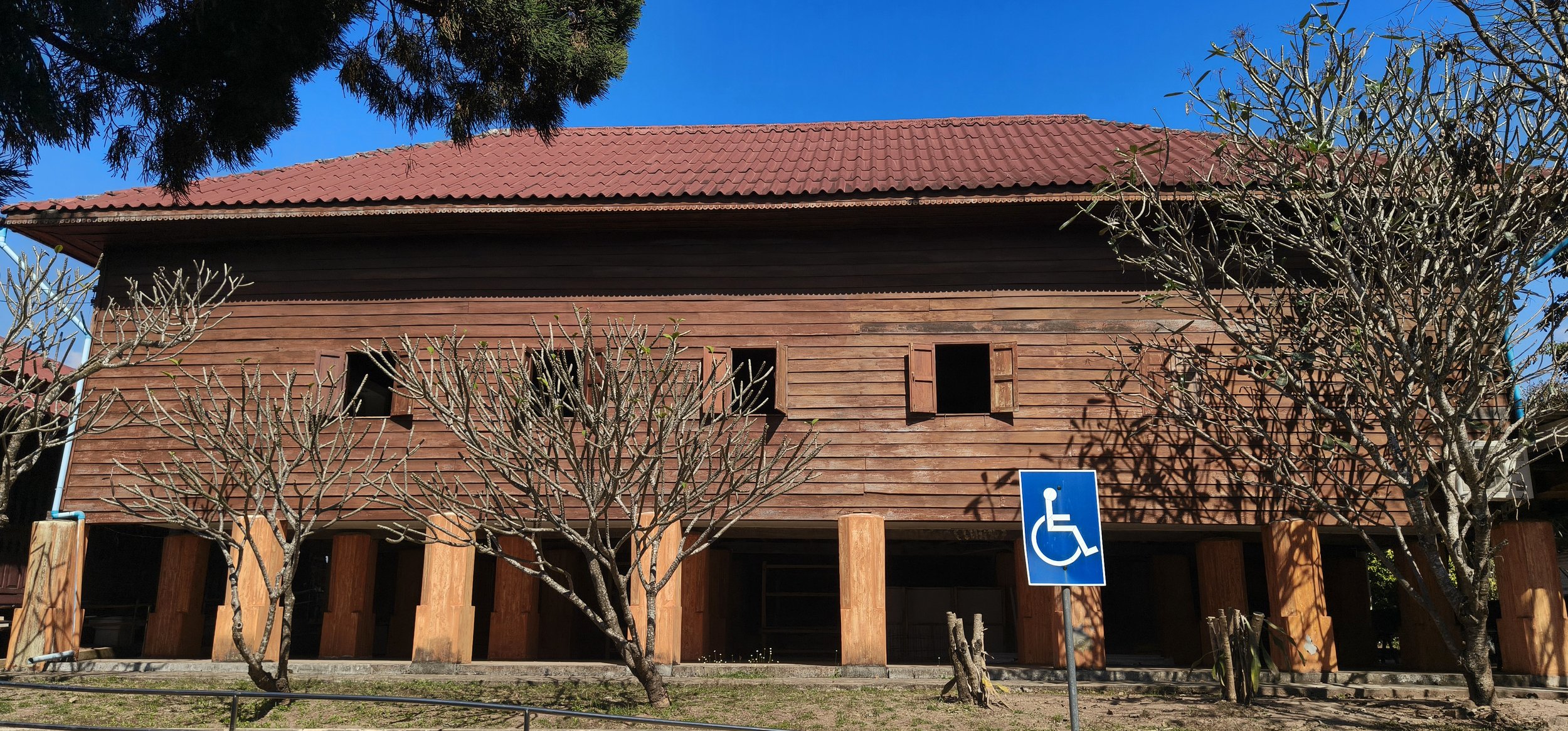
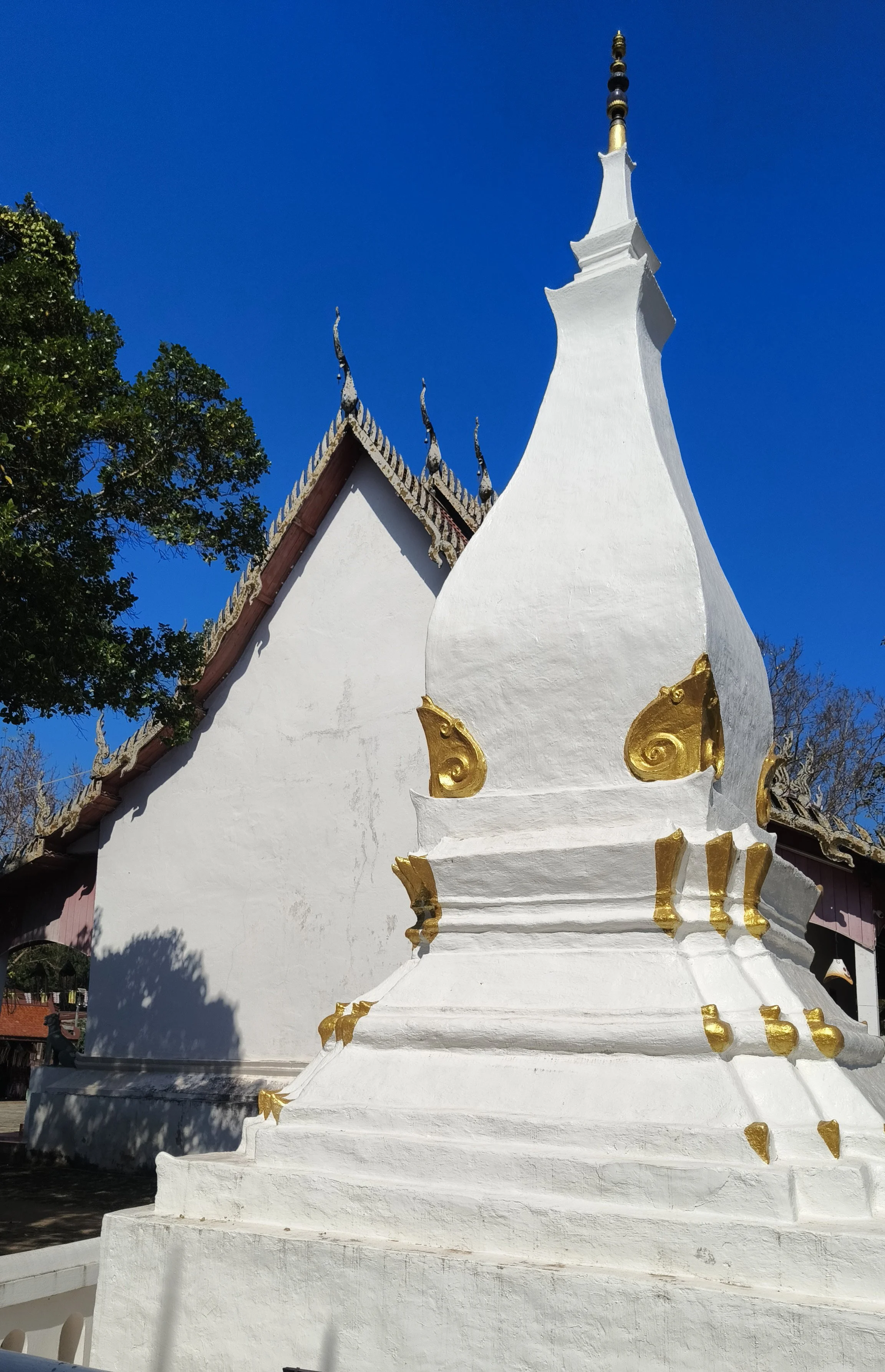
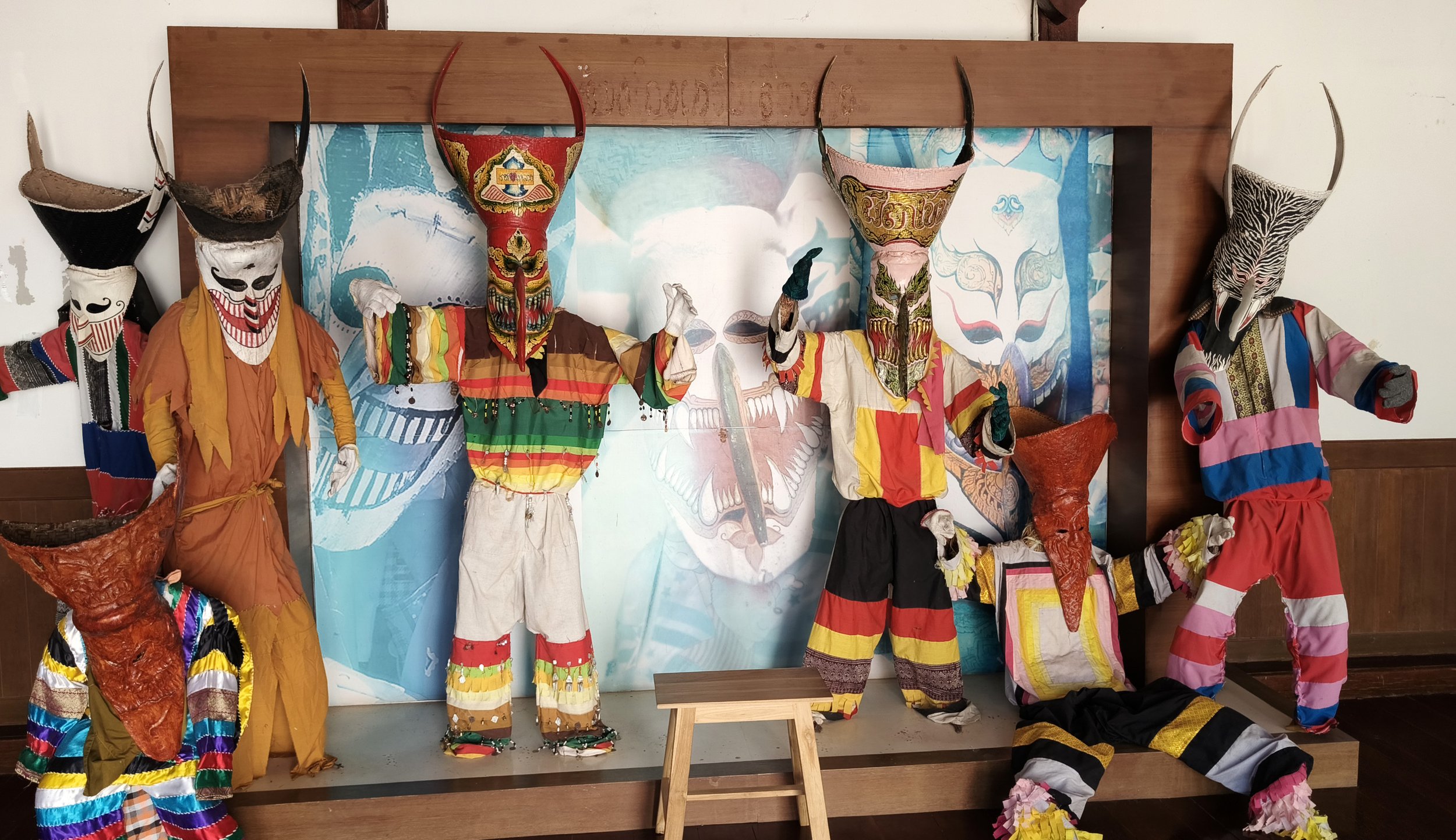
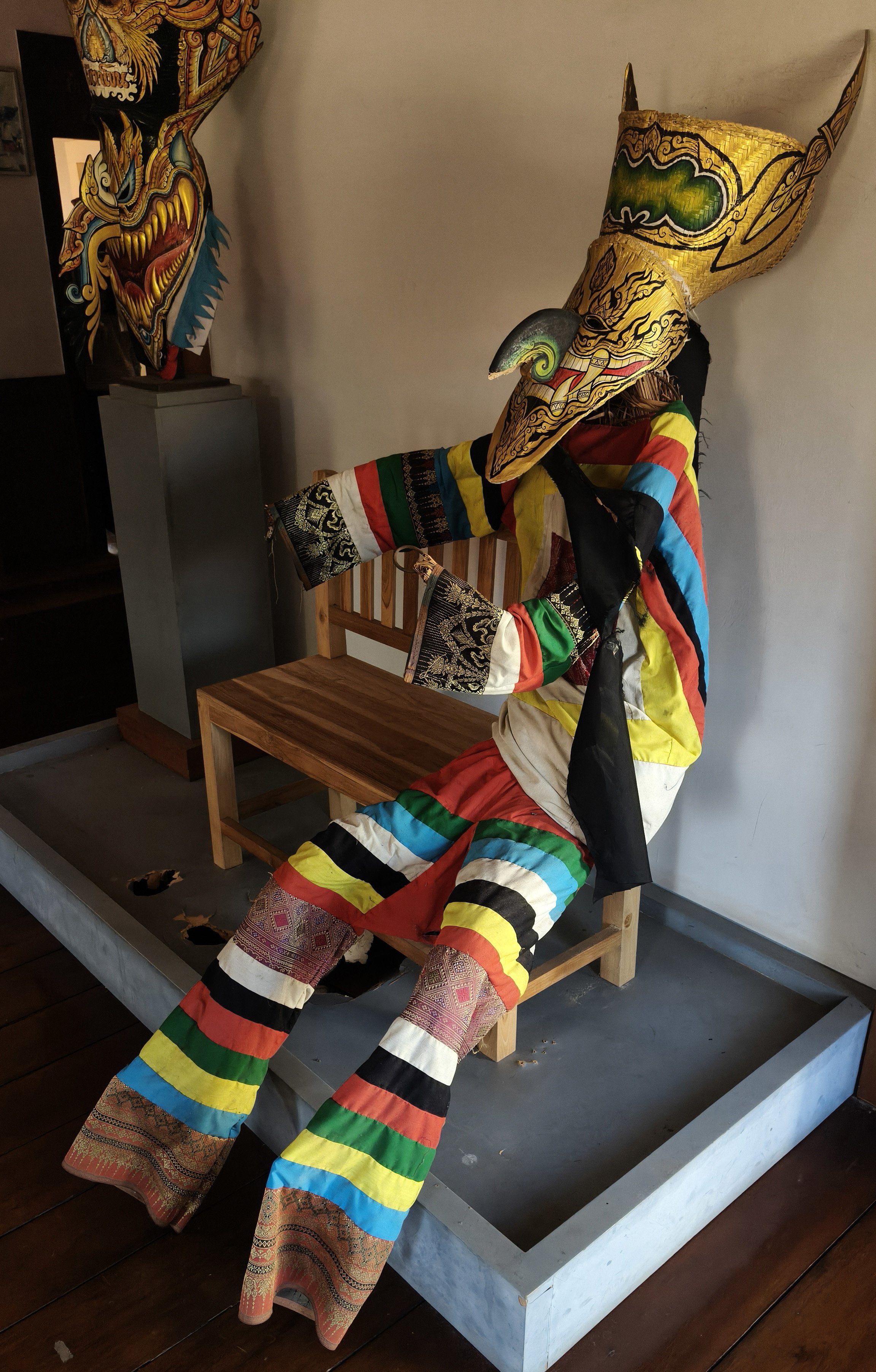
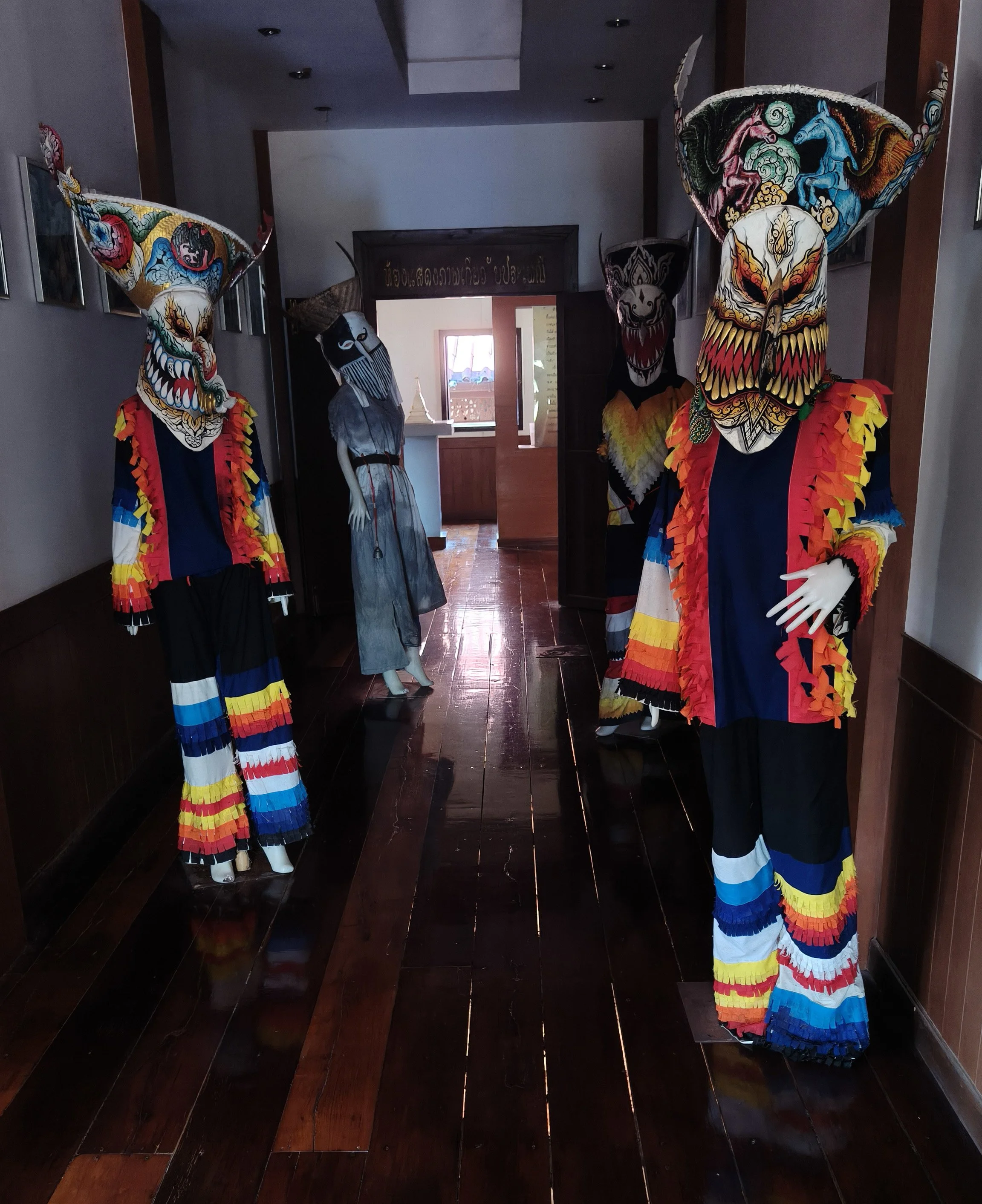
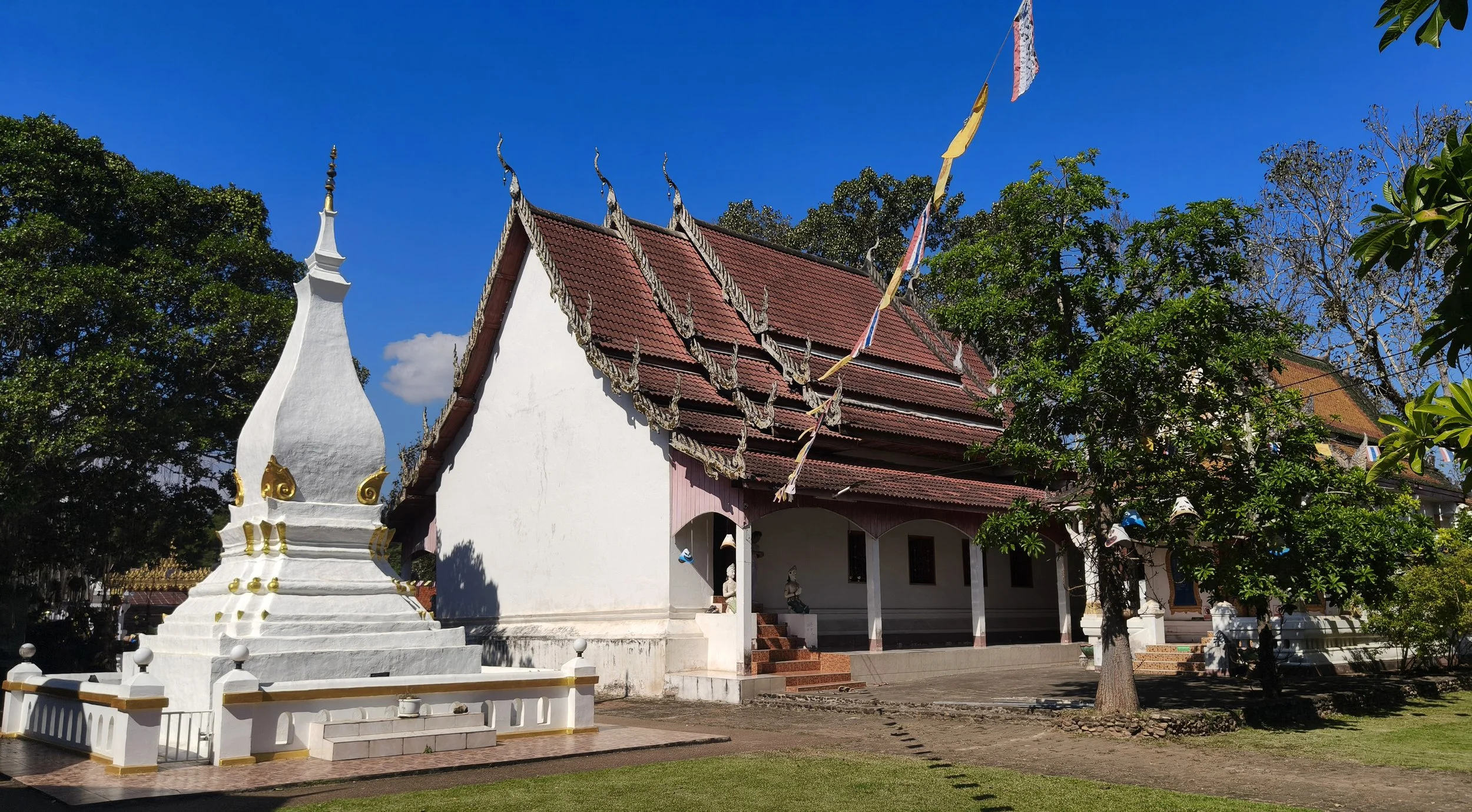
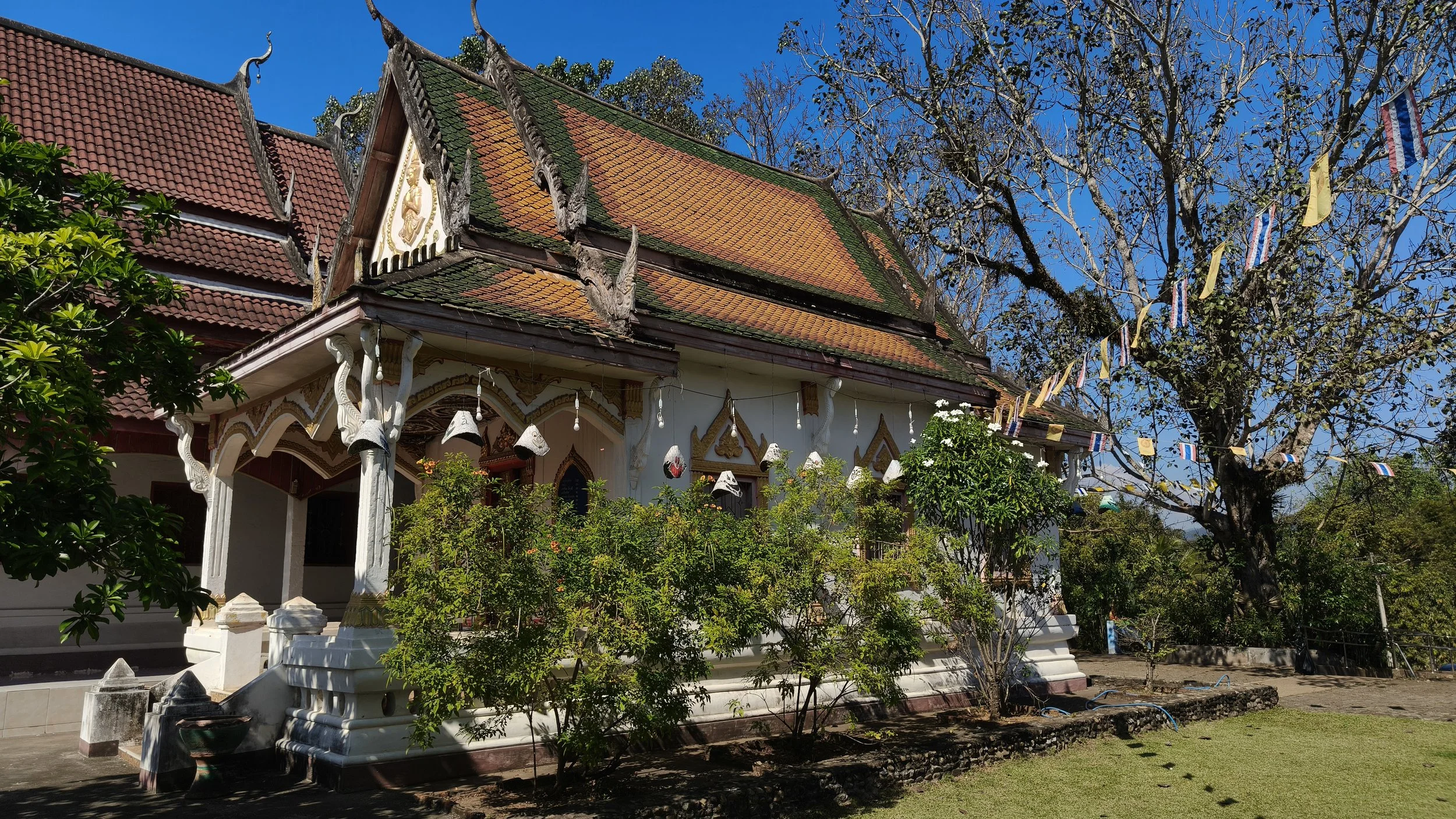
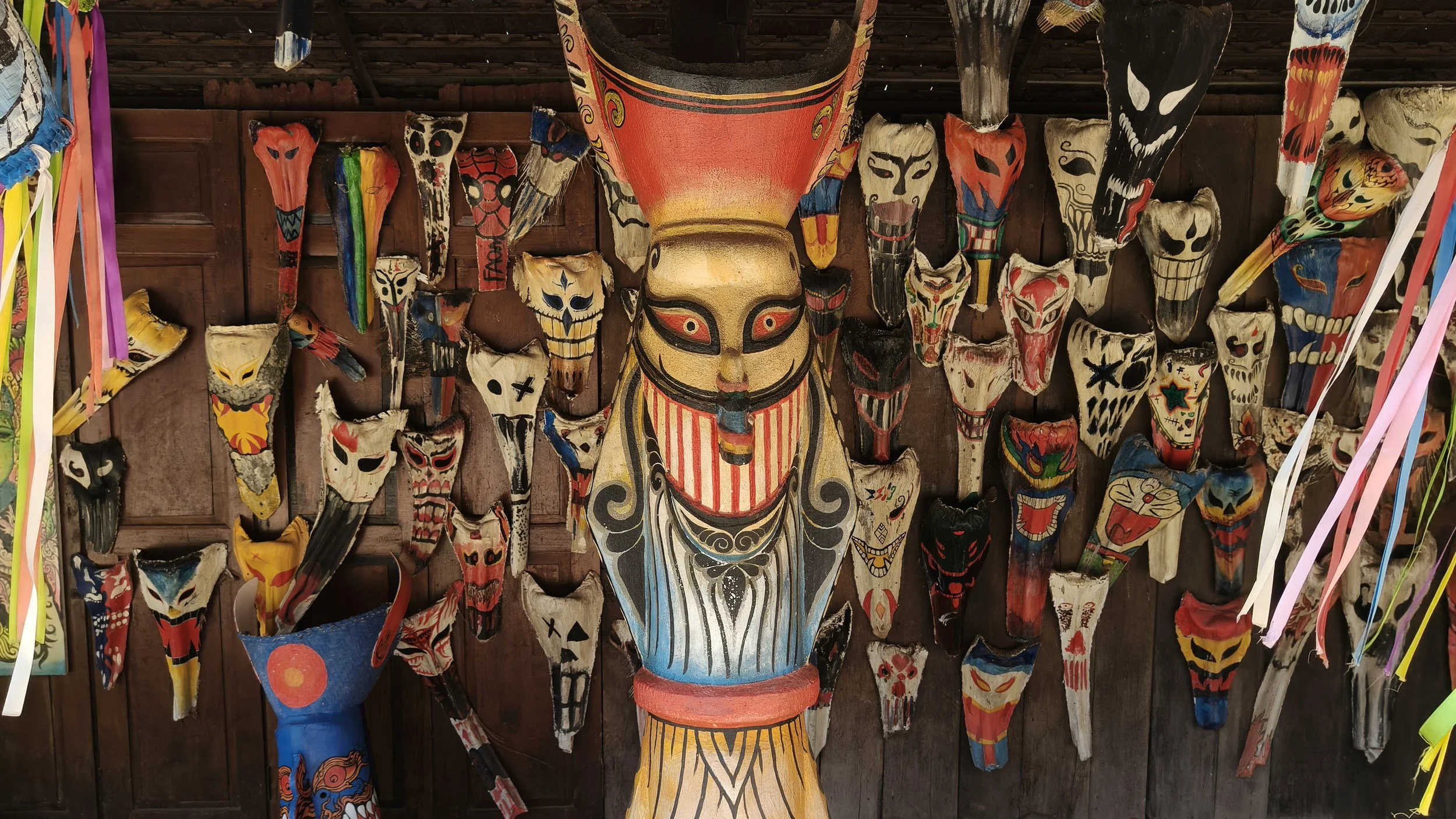
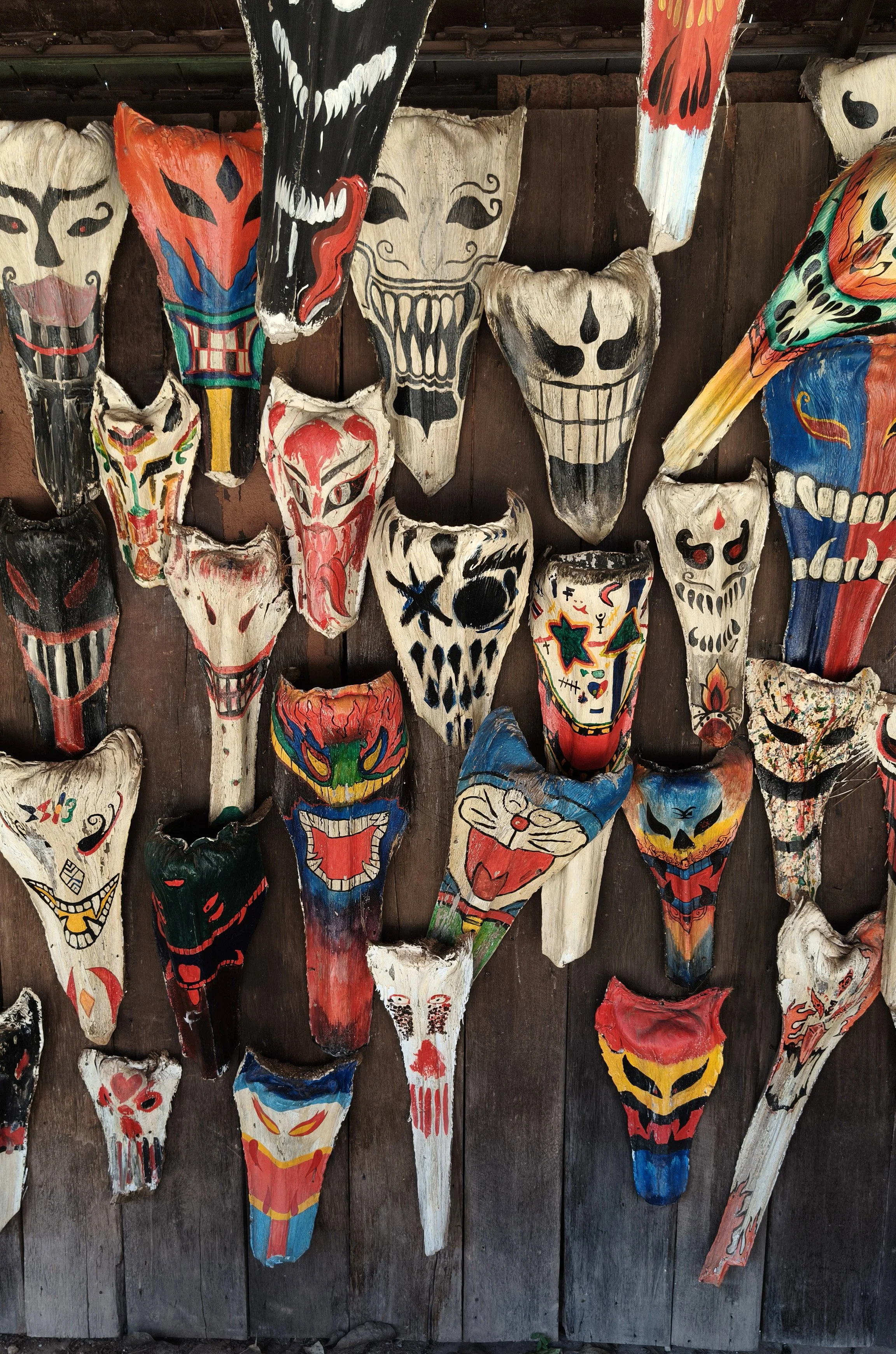
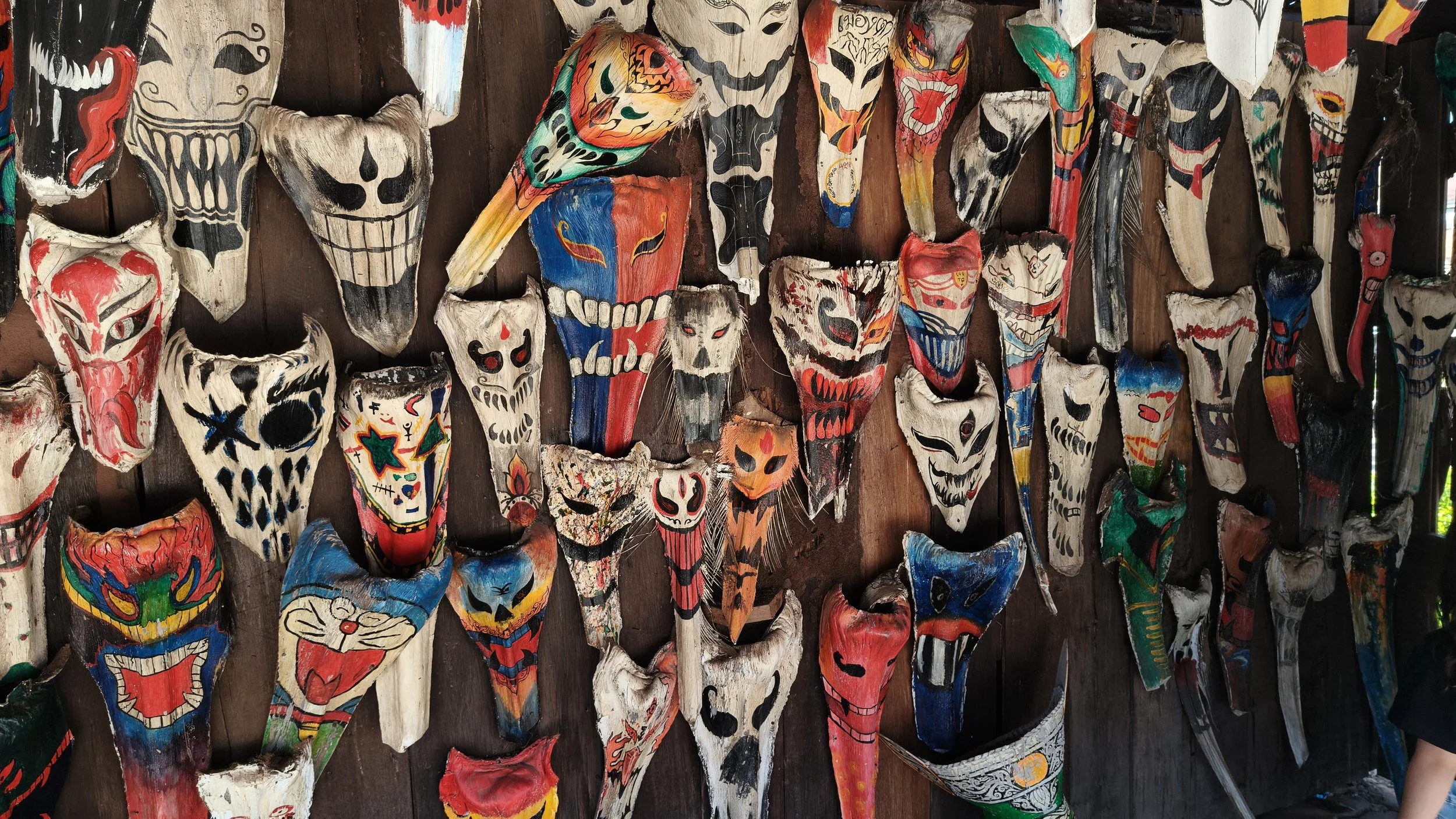
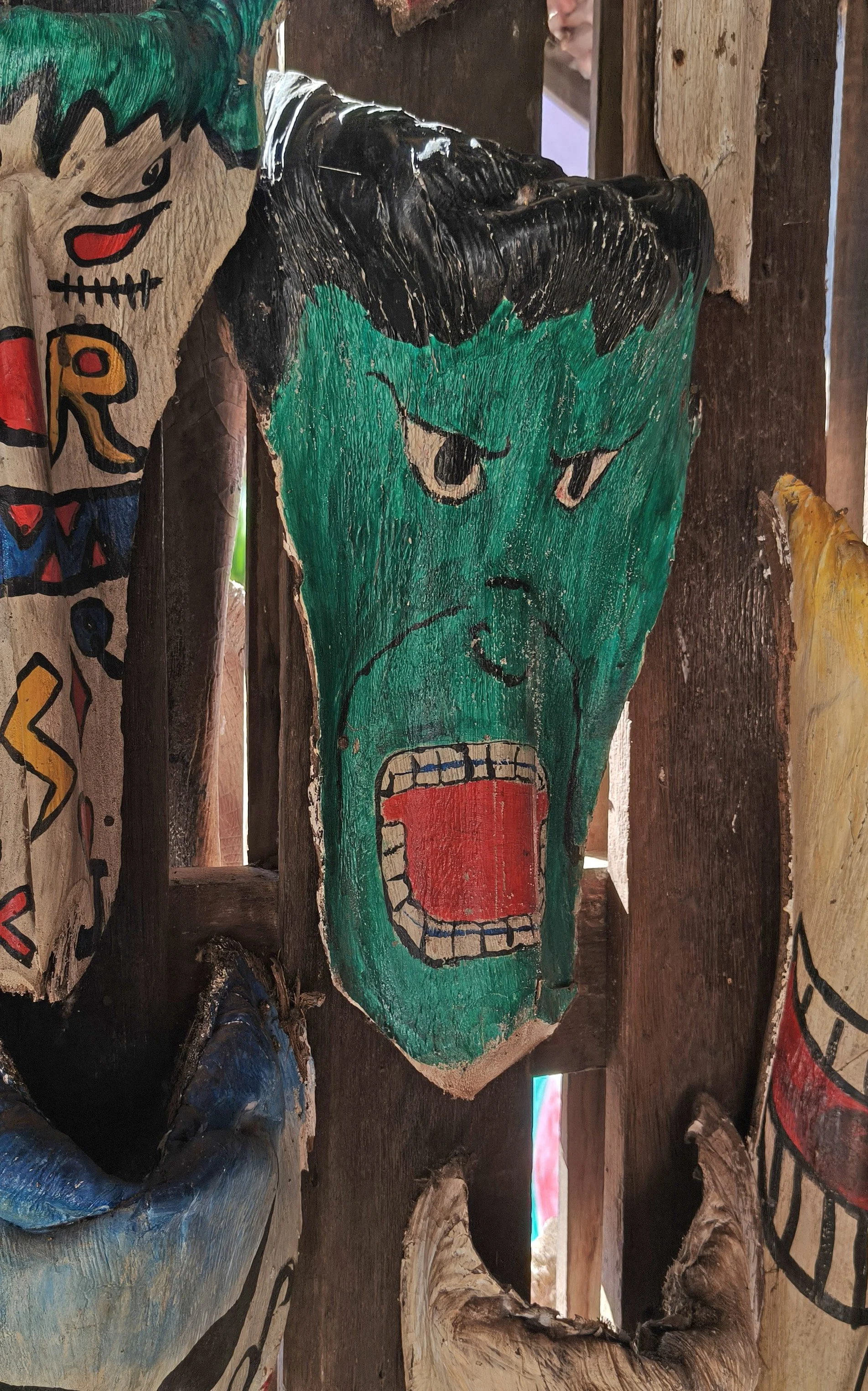
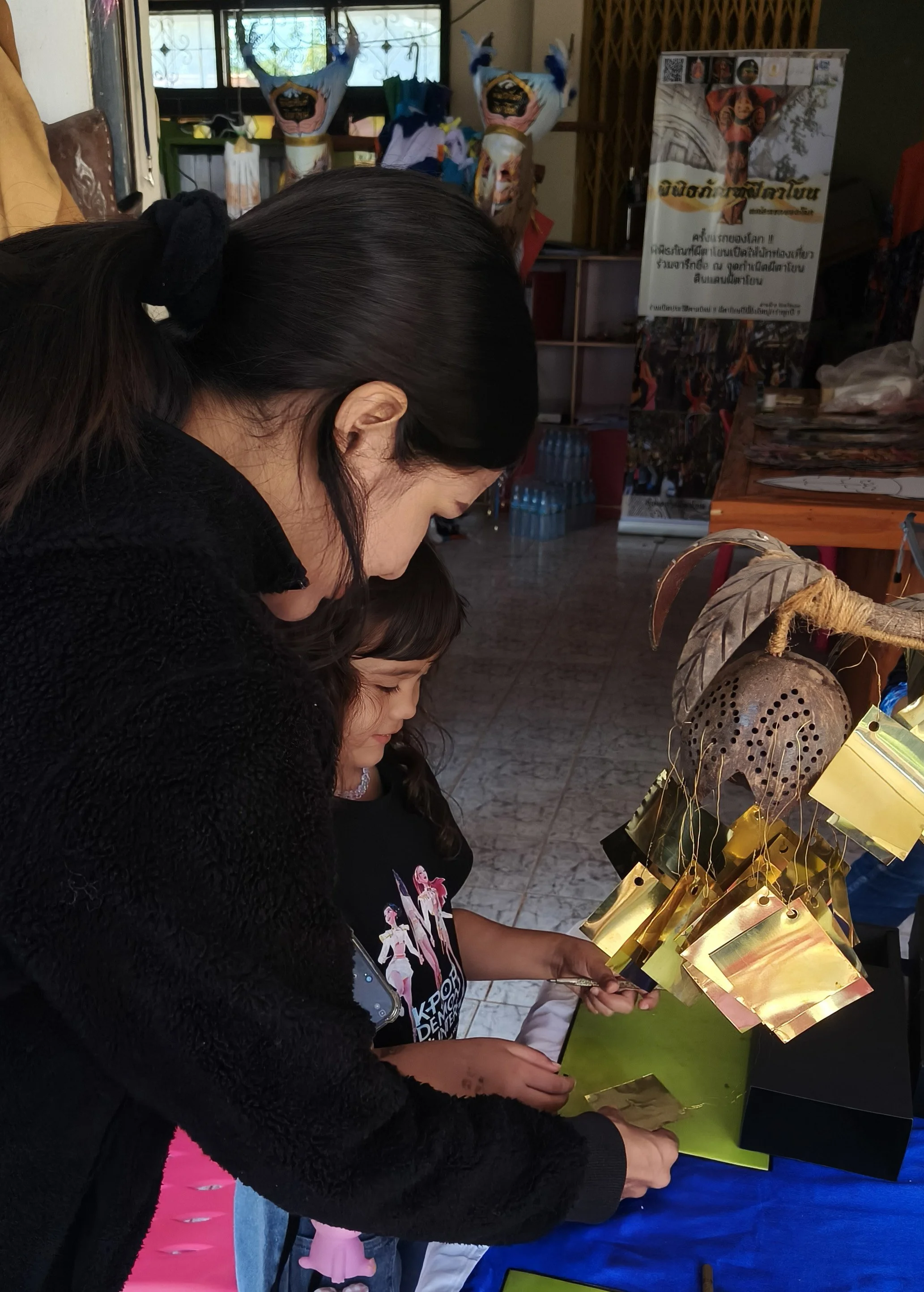
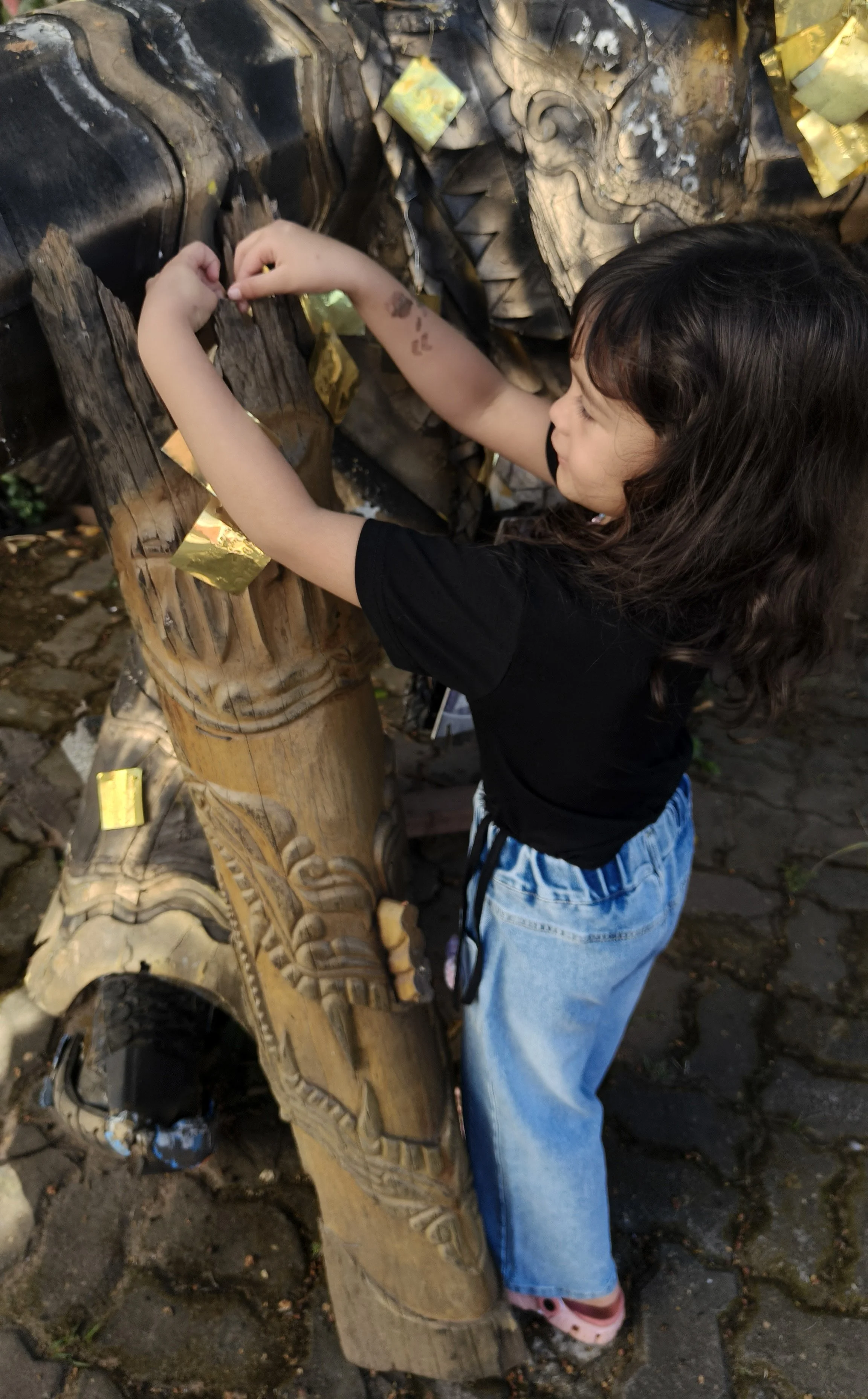
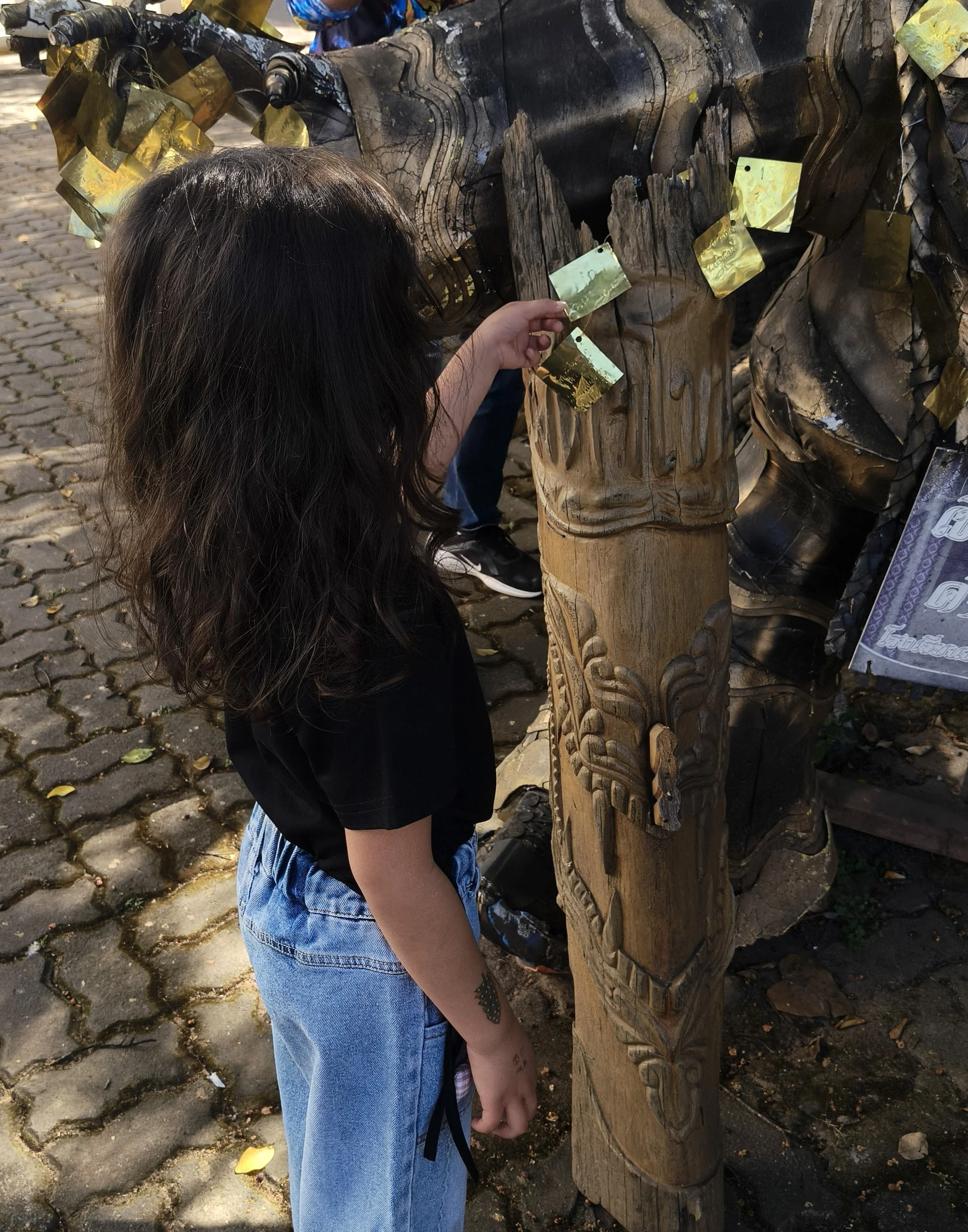
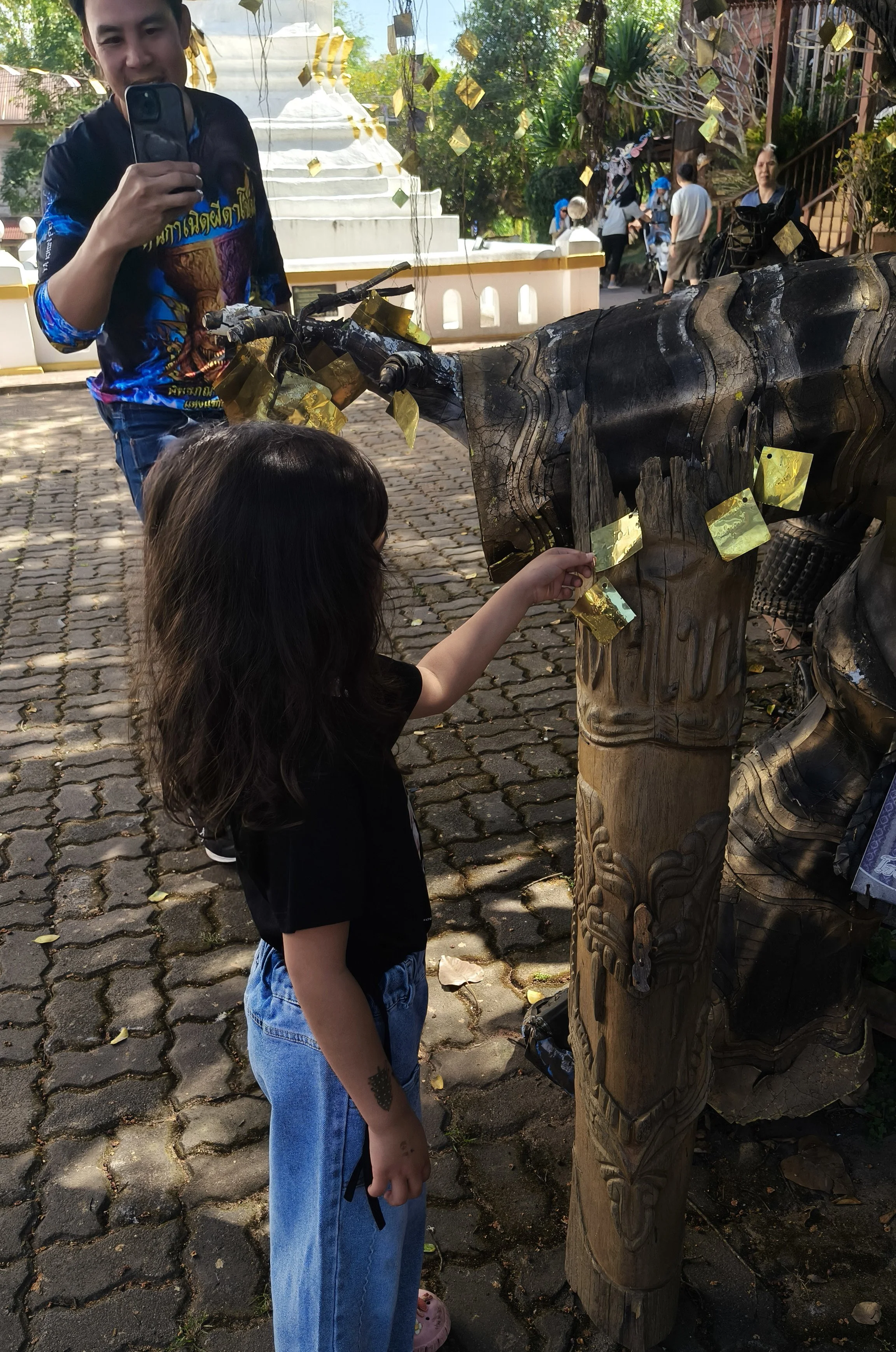


Maha Wihan Sam Saeng Tham (Maha Vihara of the Triple Light) - Sam Saeng Tham Monastery Nakhon Thai District, Phitsanulok


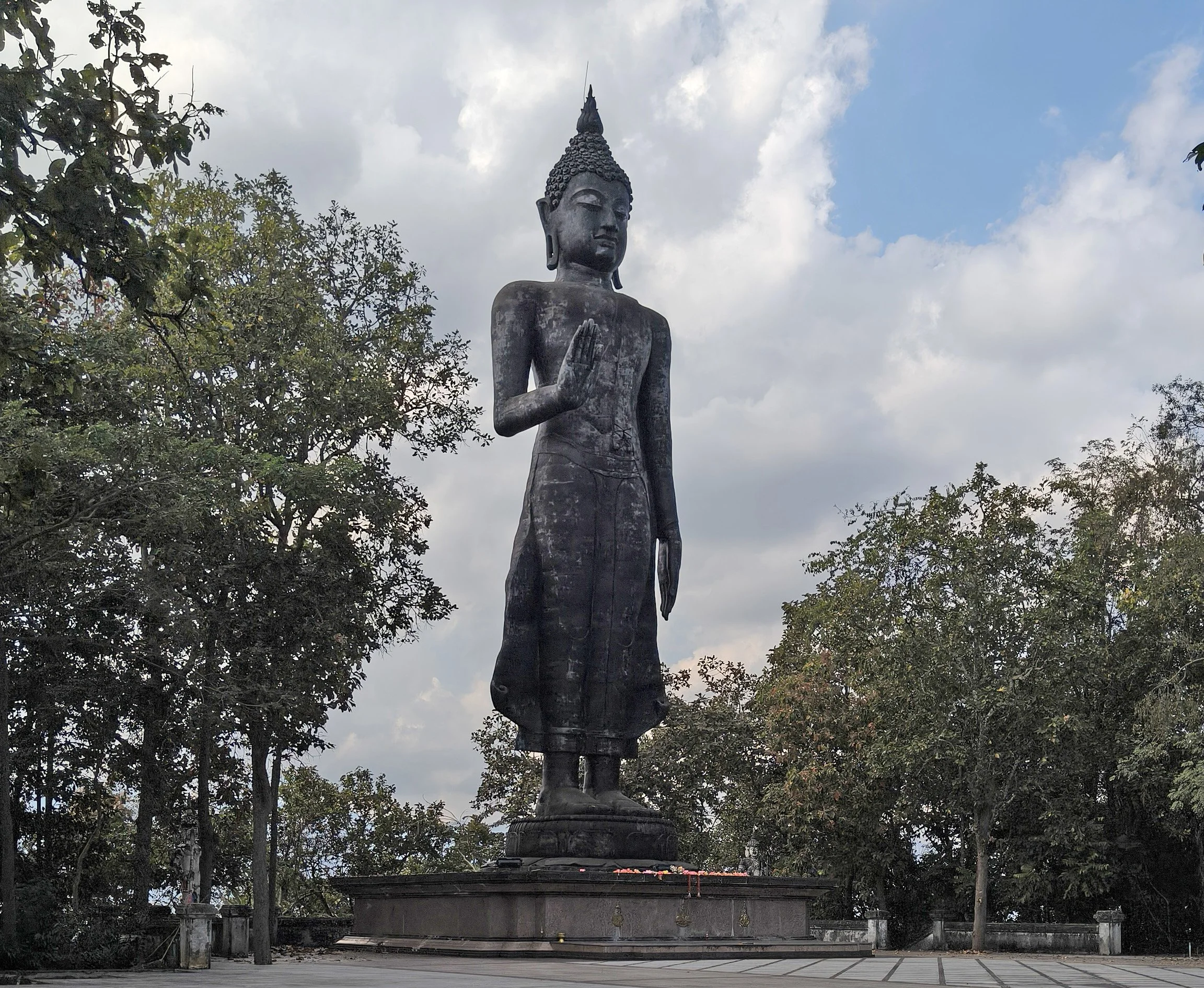
Doi Butsarakham
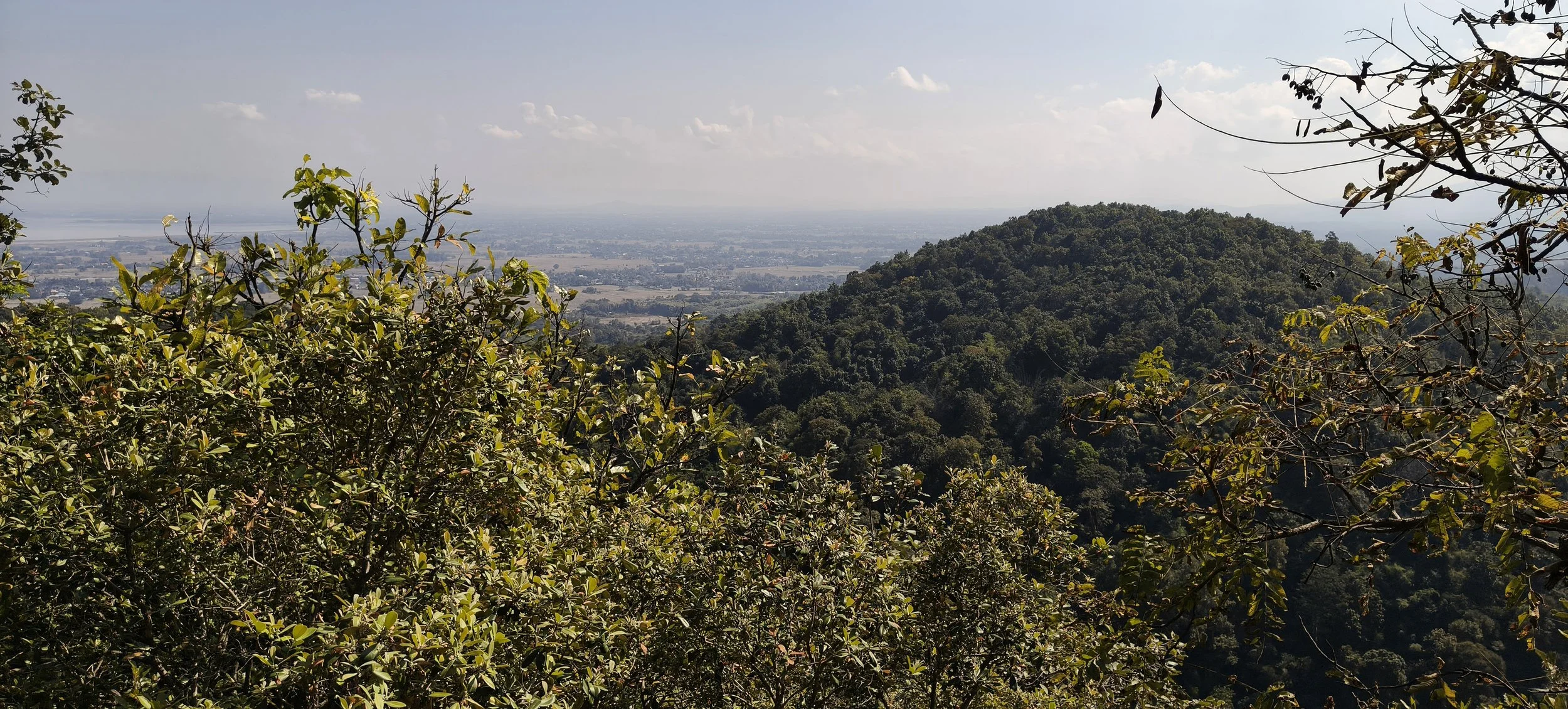
Doi Butsarakham (also spelled Doi Bussarakham) is a significant religious and scenic mountain located in the Mueang Phayao District of Phayao Province, Thailand. It is situated approximately 7 to 12 kilometers west of the famous Kwan Phayao (Phayao Lake).
Key Highlights
Wat Analayo Thipphayaram: The mountain's primary attraction is this vast and meticulously designed temple complex. It covers multiple hills and features a mix of architectural styles, including Lanna, Thai-Chinese, and Indian (notably a replica of the Bodh Gaya stupa).
Sacred Statues: The site houses diverse religious icons, including a large standing Buddha, a golden replica of the Emerald Buddha, and various statues made of silver, gold, and topaz.
Panoramic Views: From the summit, visitors can enjoy clear, sweeping views of Phayao City and the expansive Phayao Lake.
Natural Beauty: Known historically as a "legendary hill," it is nestled within a national forest, offering a tranquil, rustic atmosphere with lush greenery.
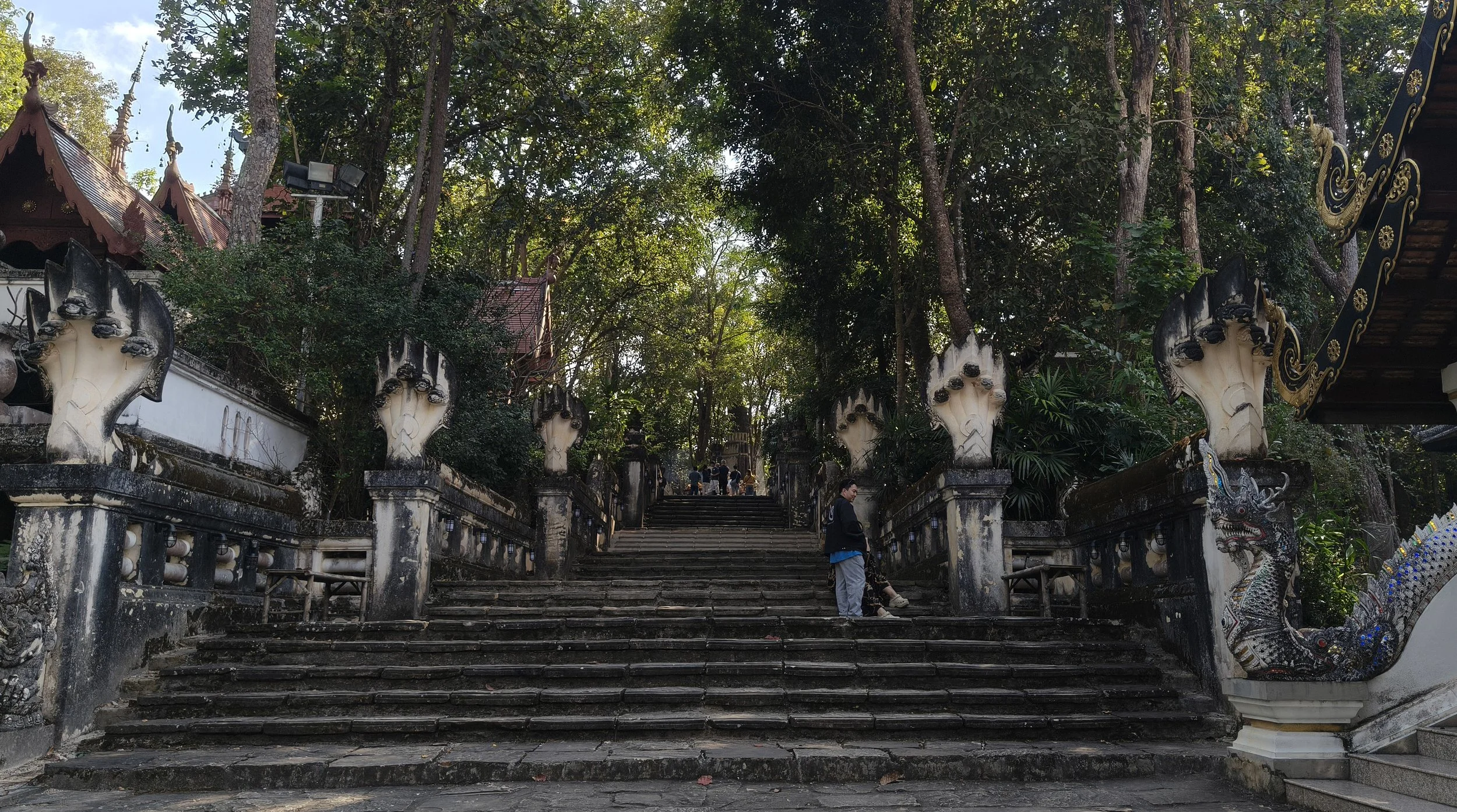
Accessibility: You can reach the top via a paved road for vehicles or by climbing a series of decorative steps.
Location: Wat Analayo Thipphayaram is located in San Pa Muang sub-district.
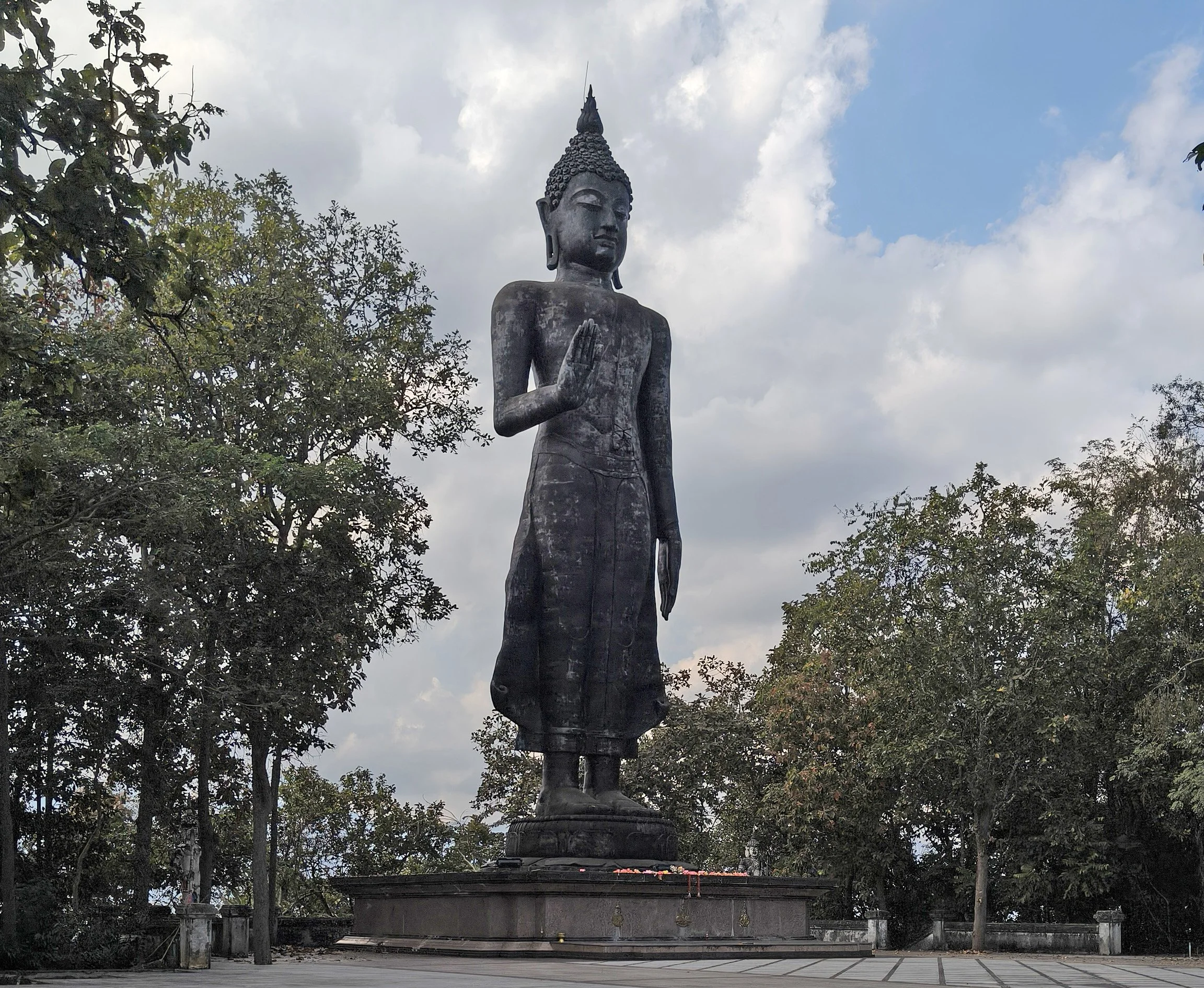
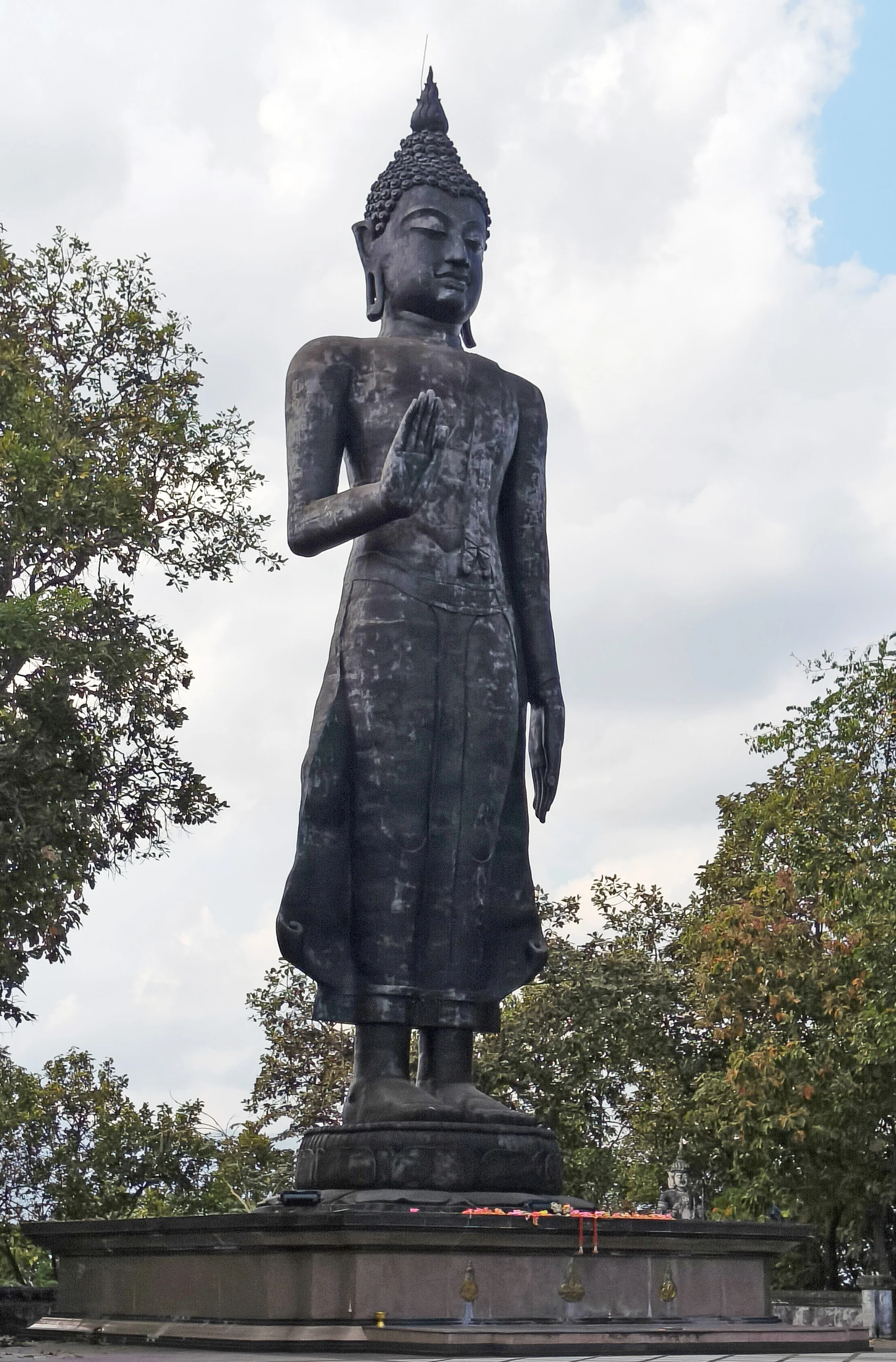
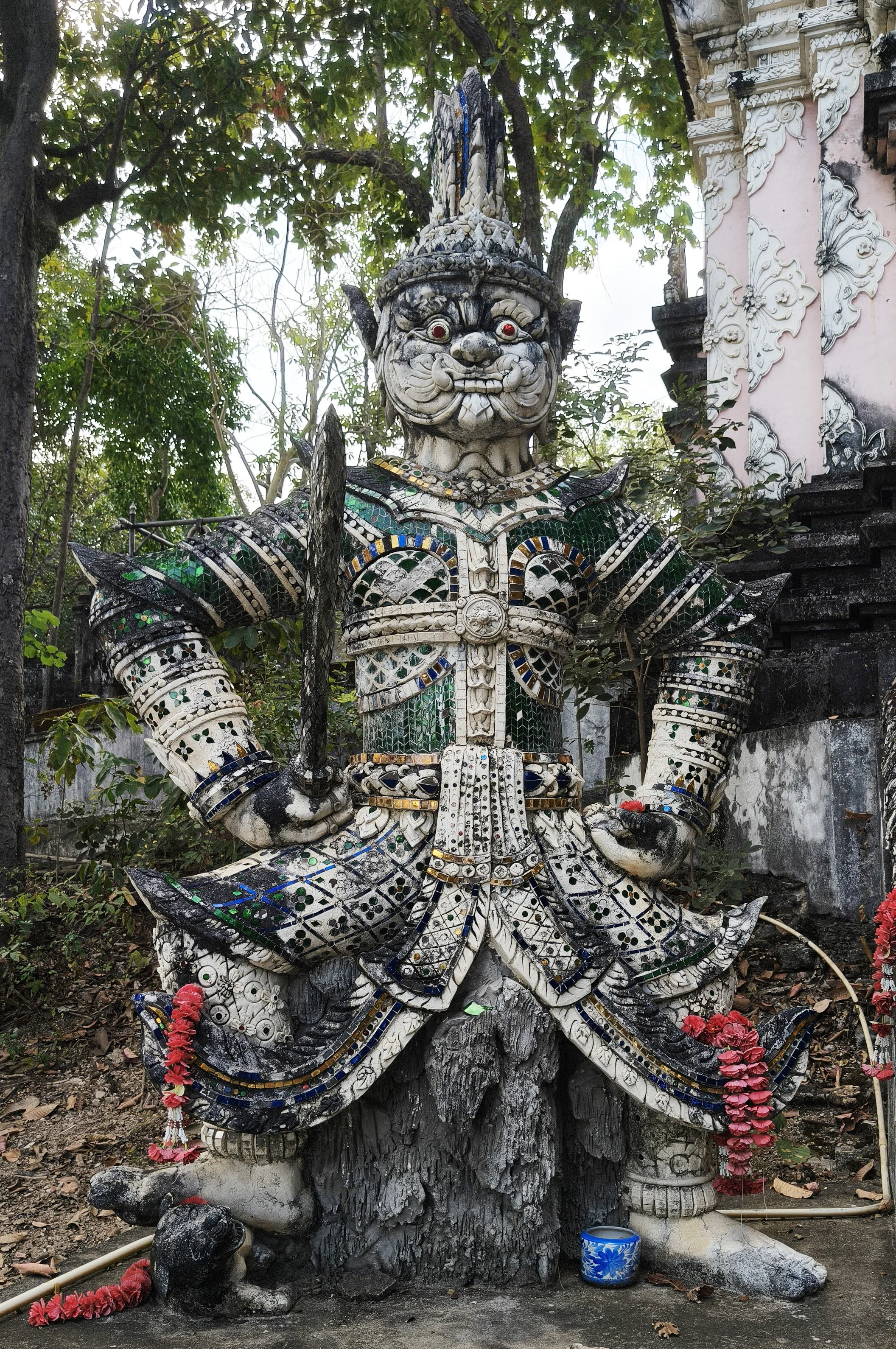
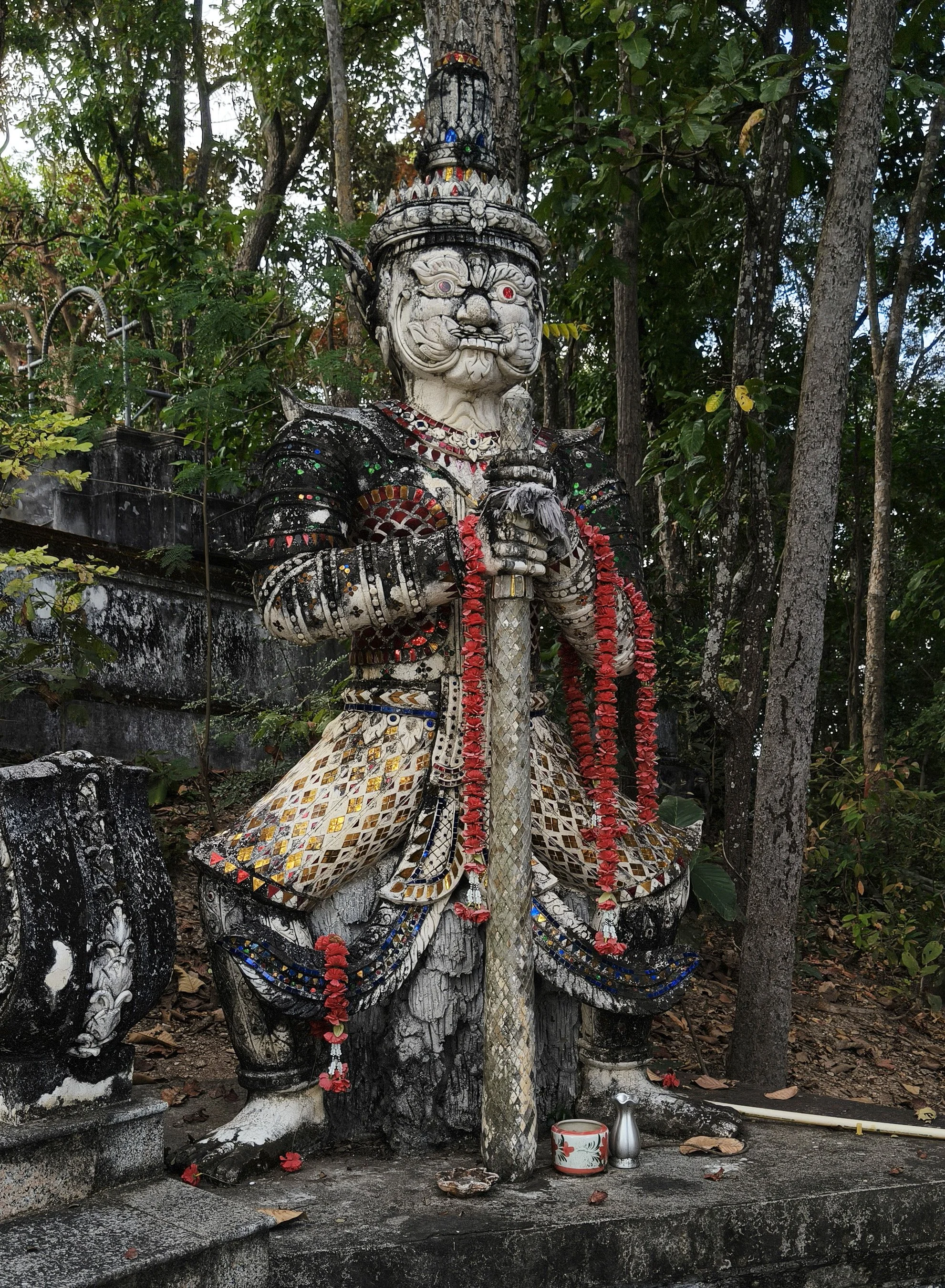
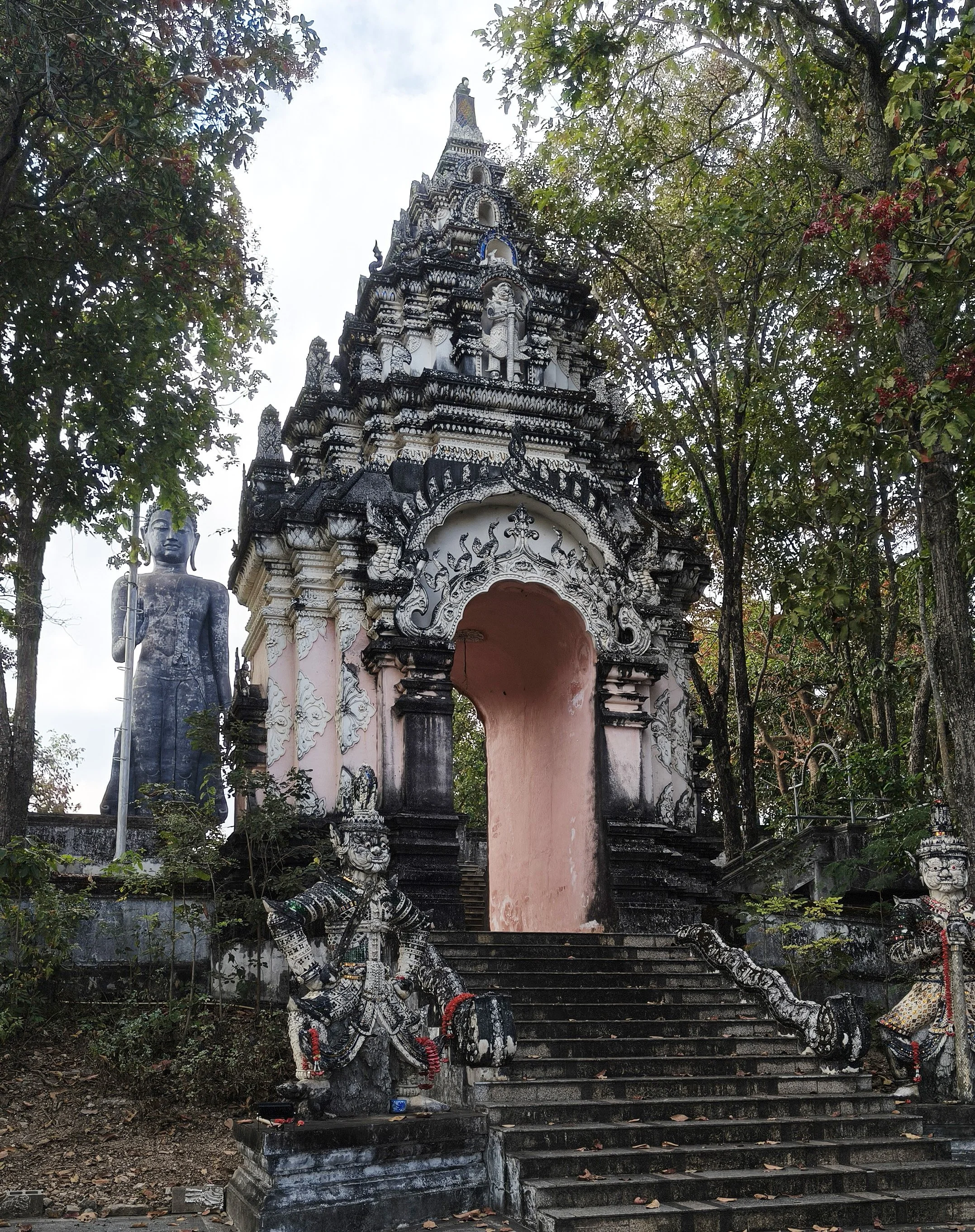

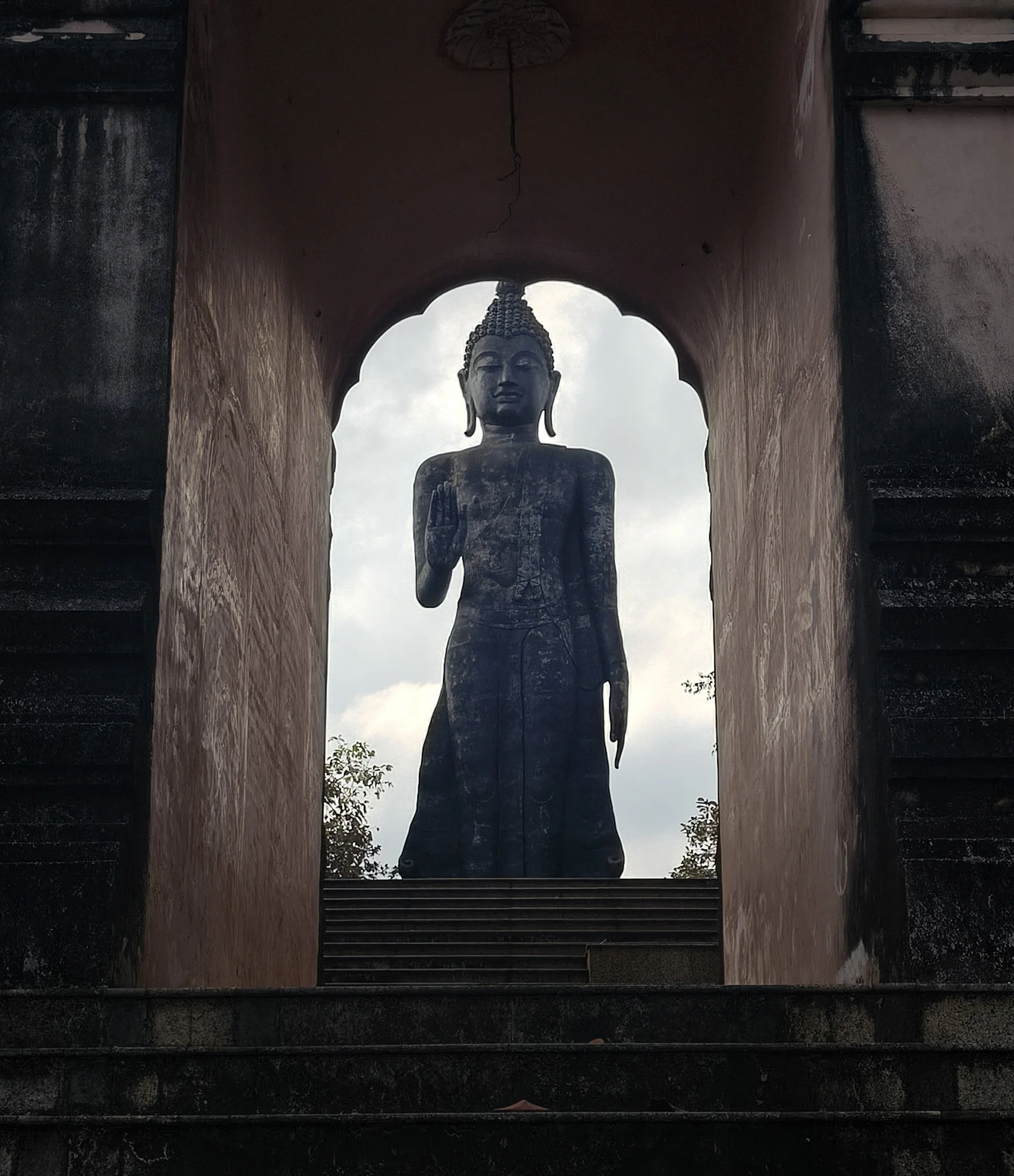
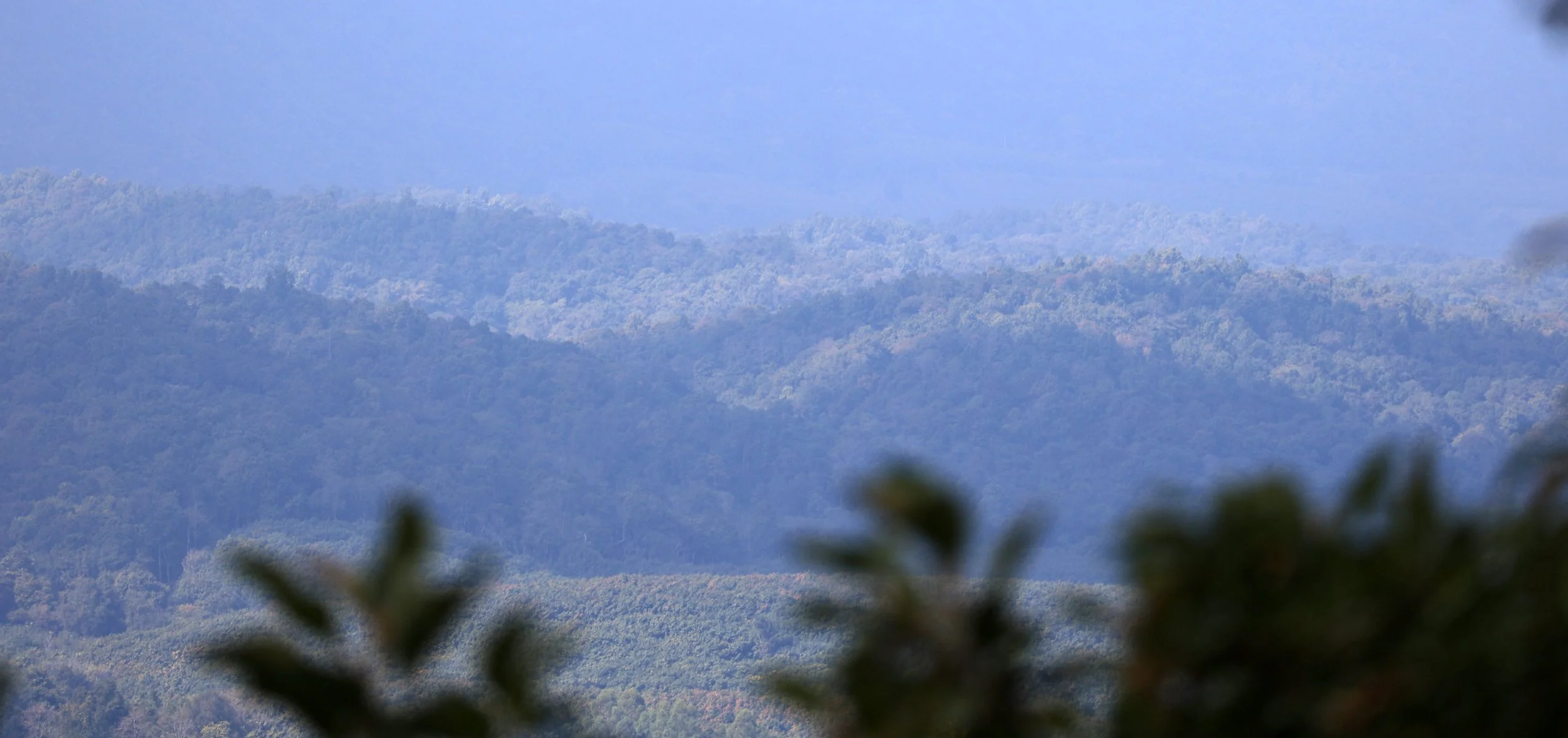
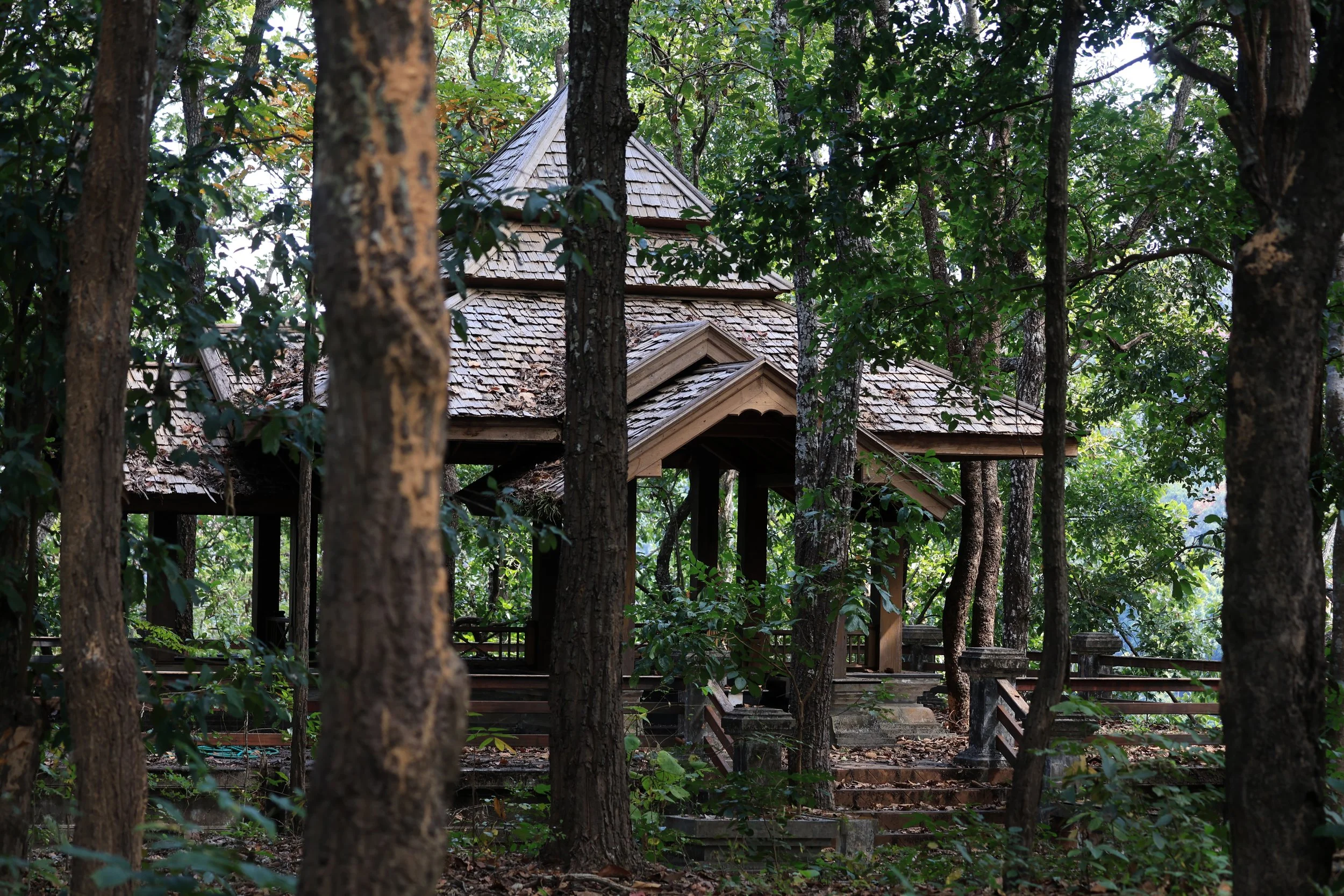
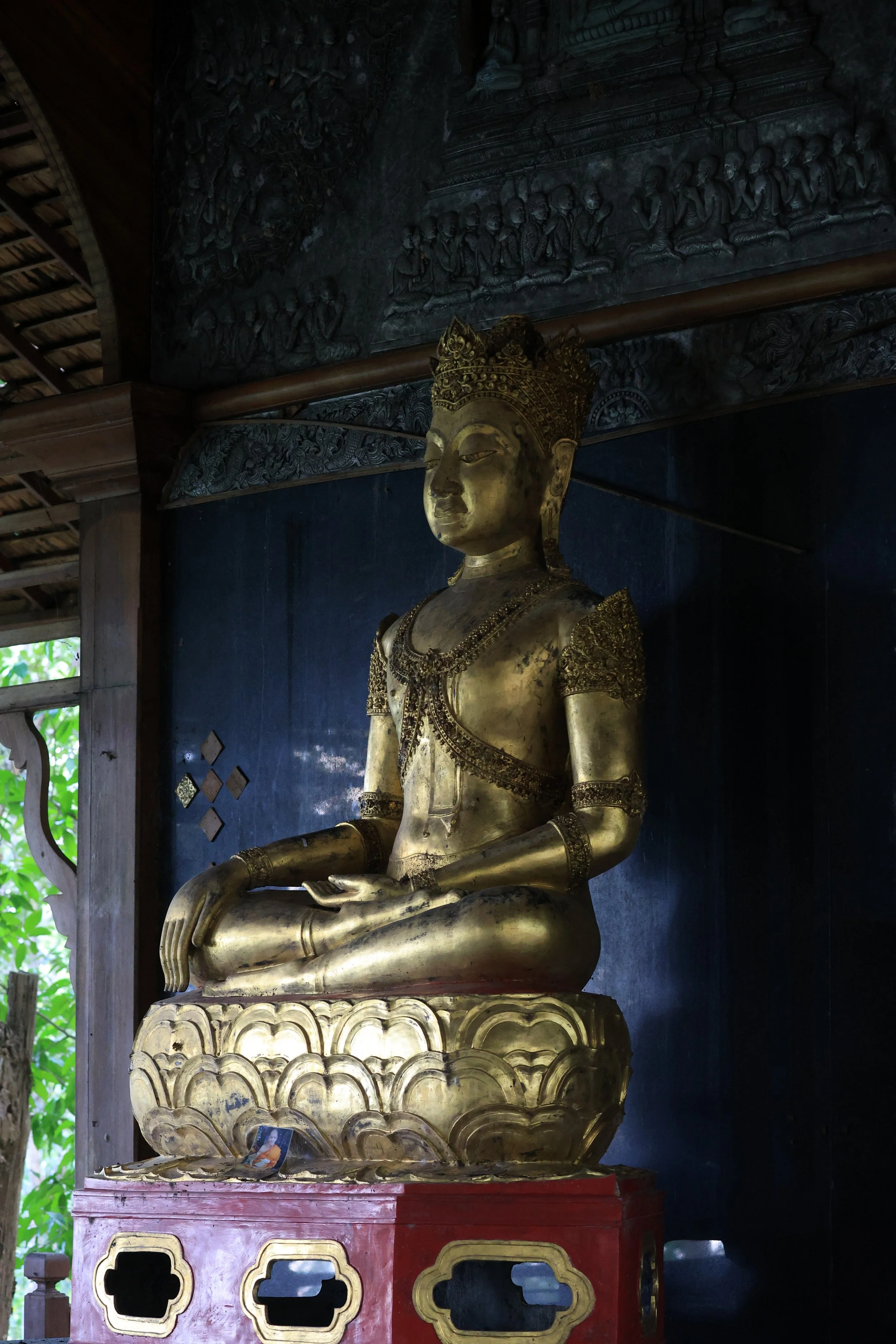
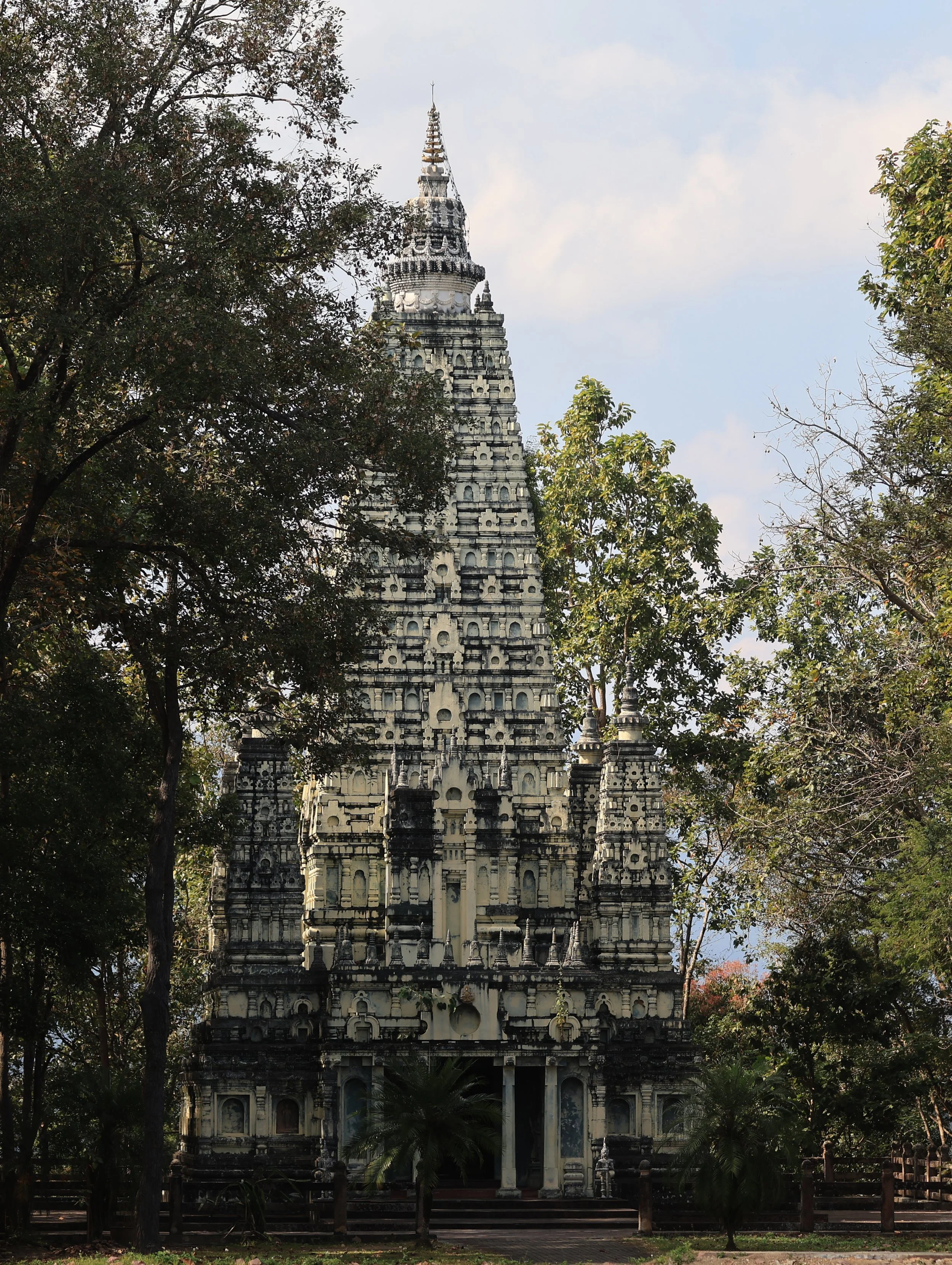
Phra Chedi Phutthakhaya Phayao Province
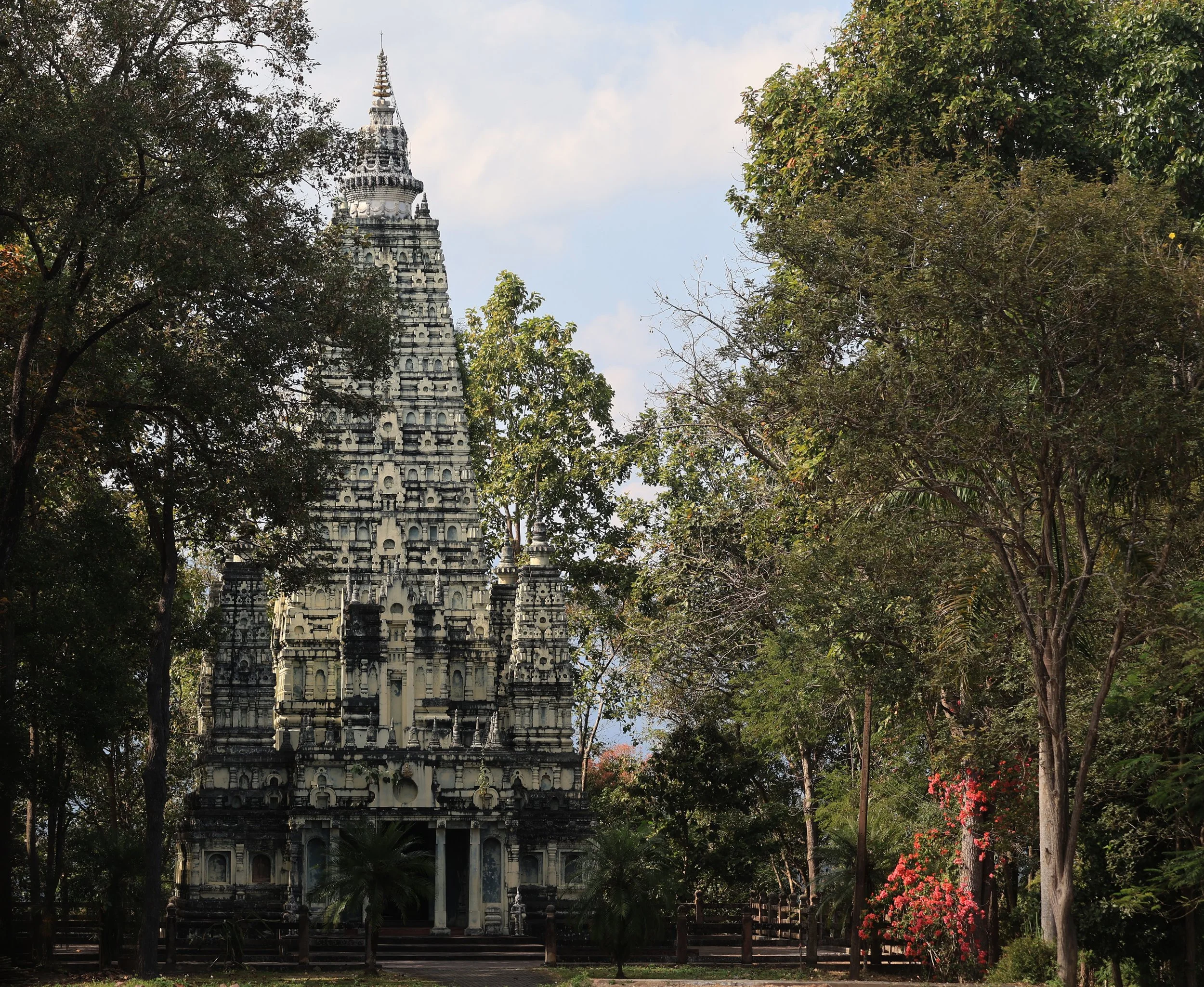
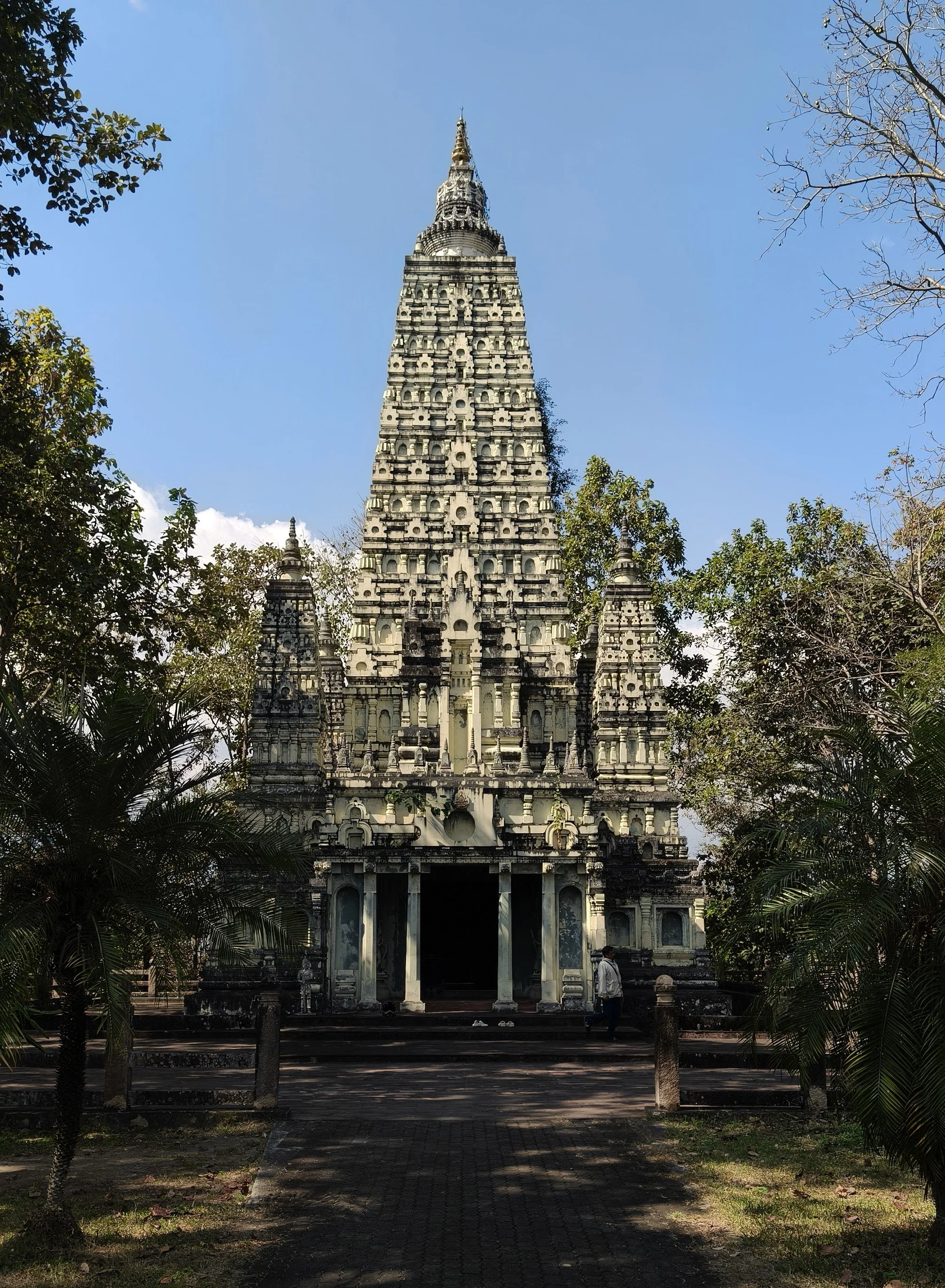
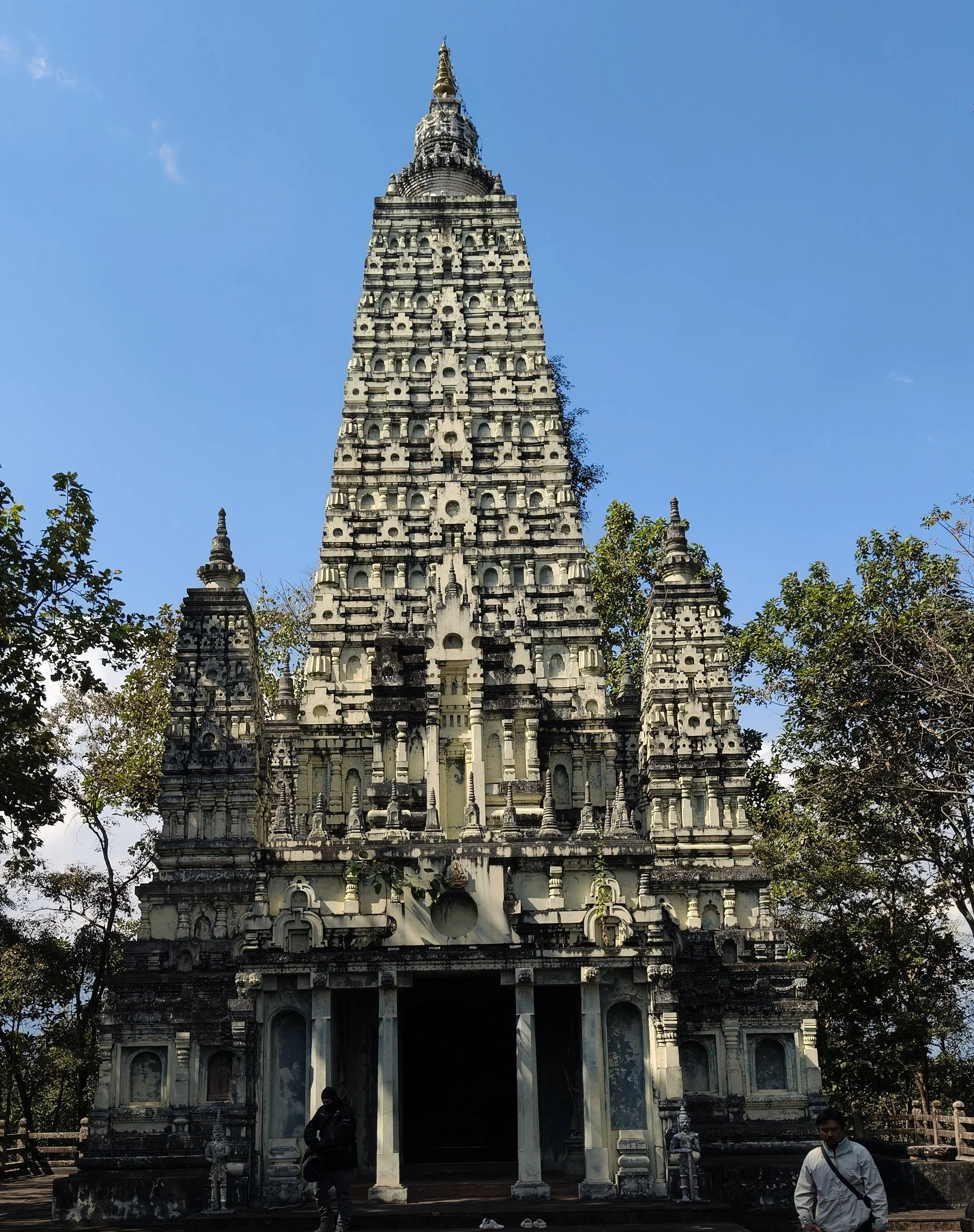
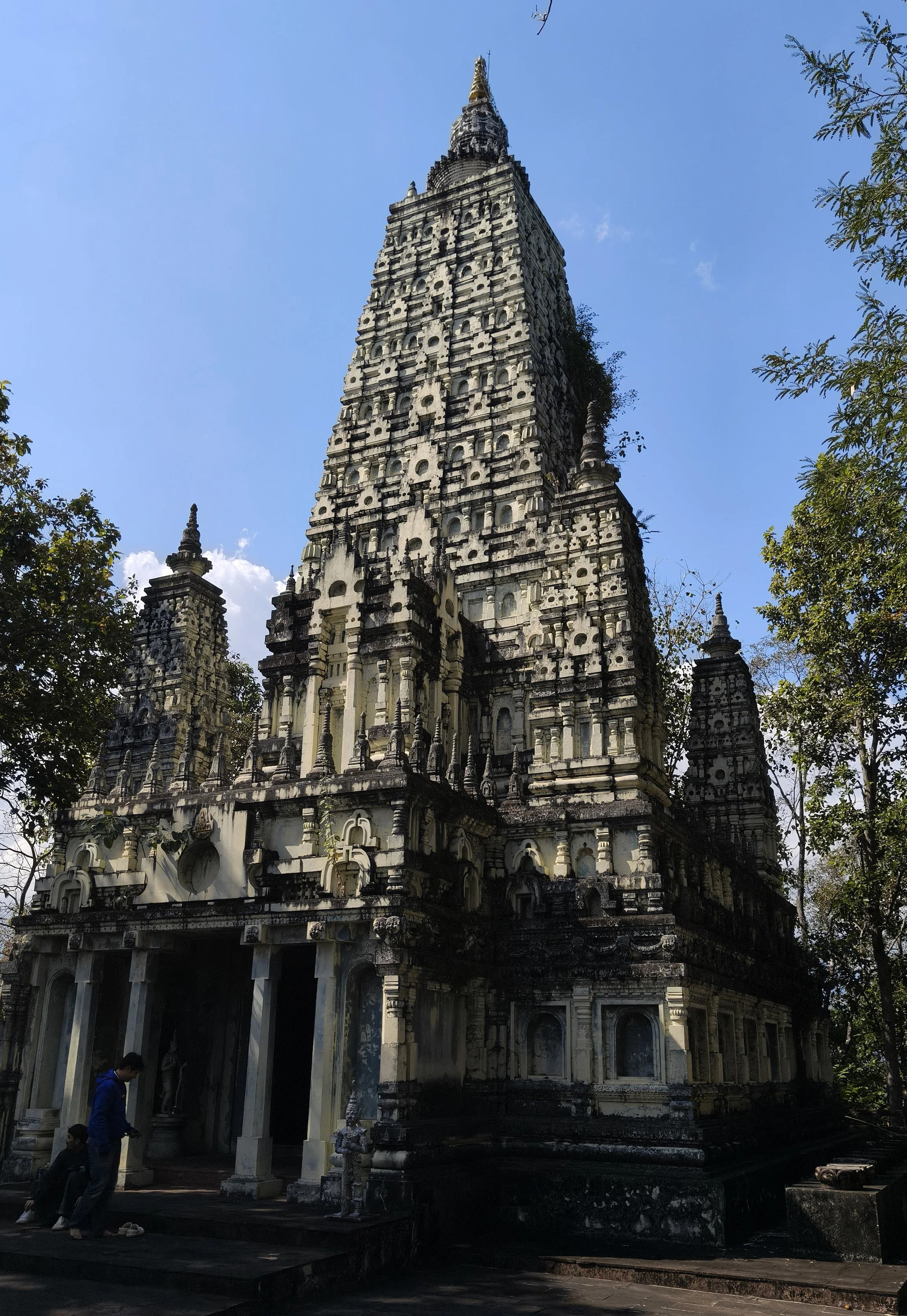
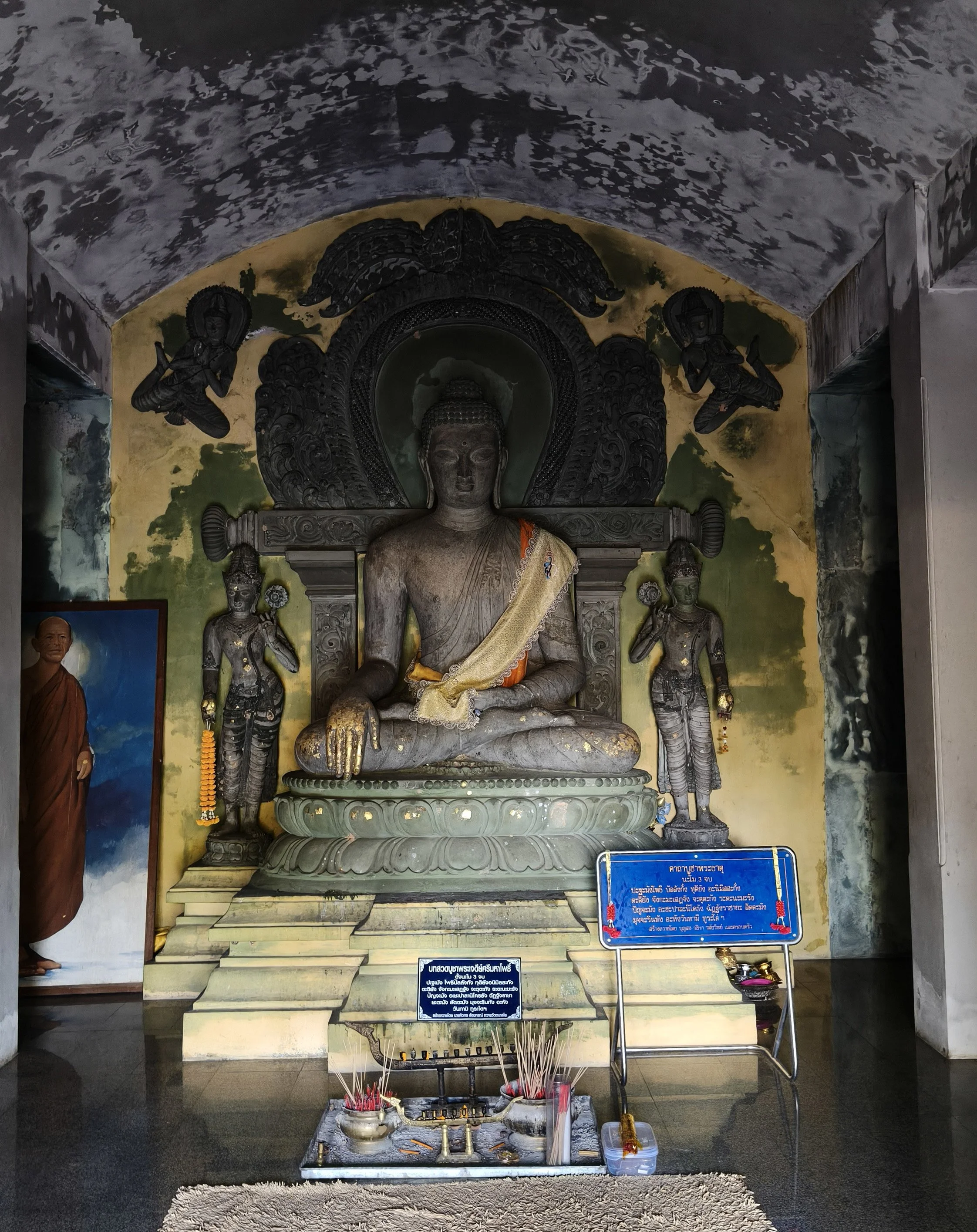
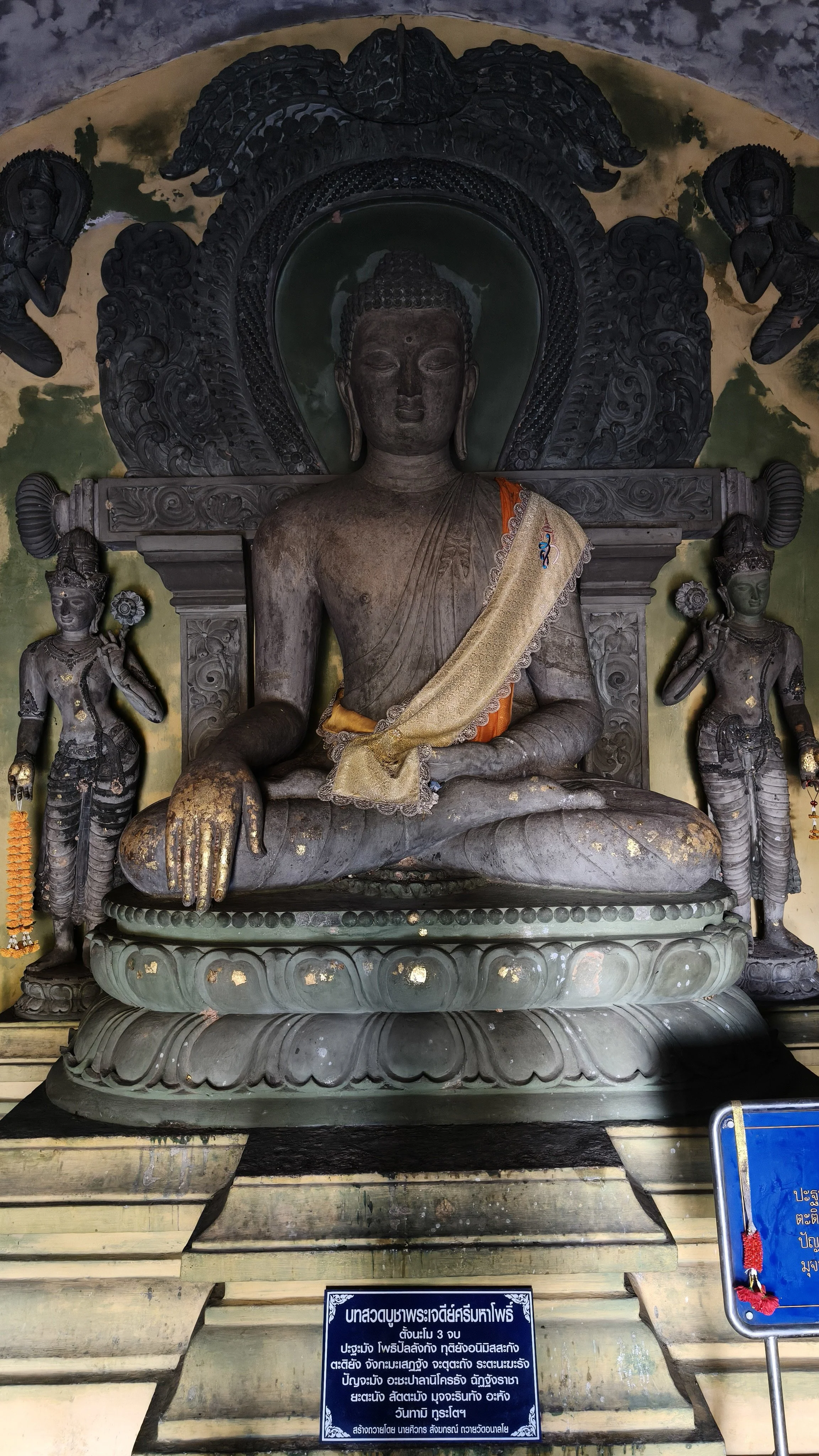
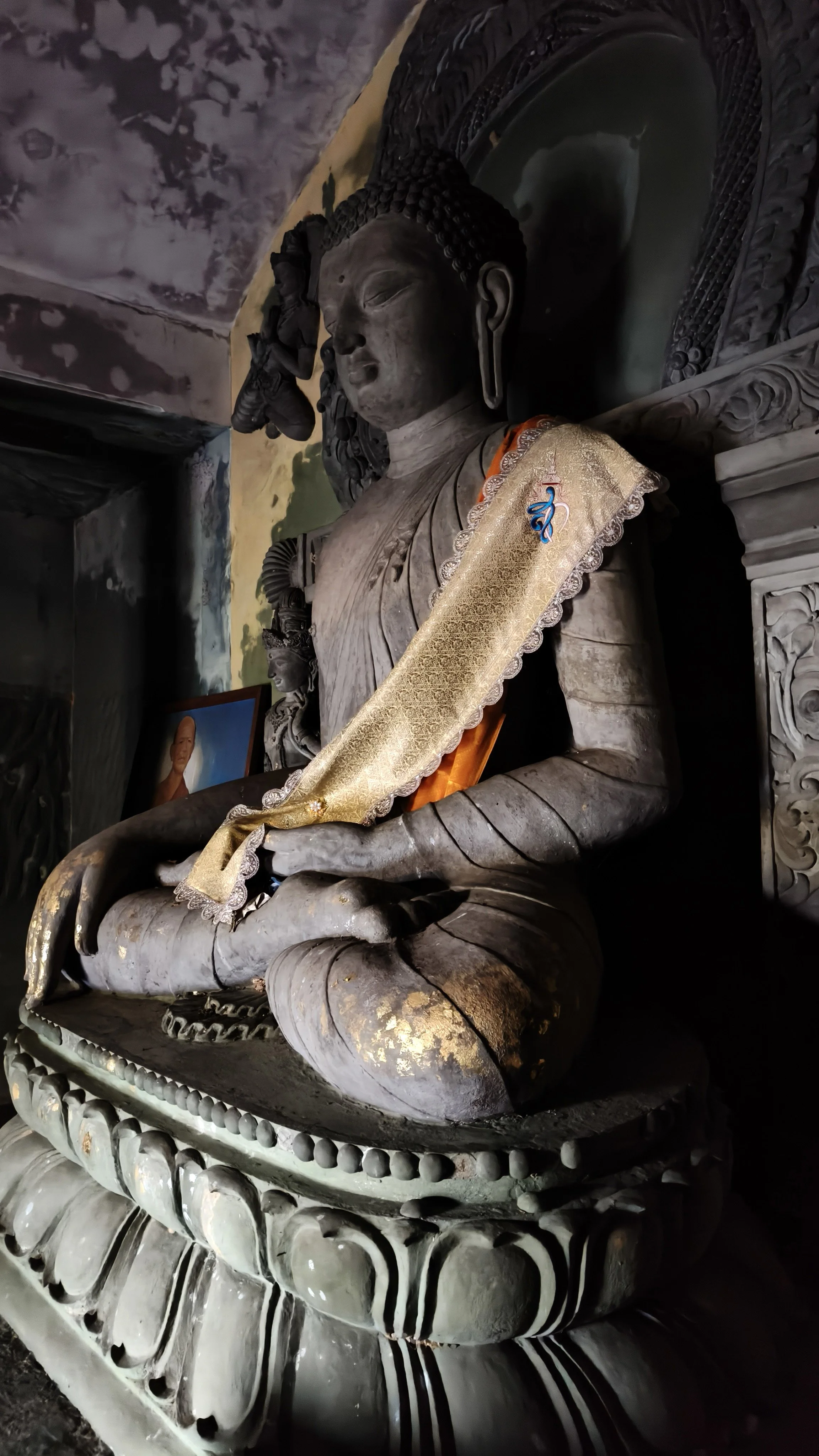
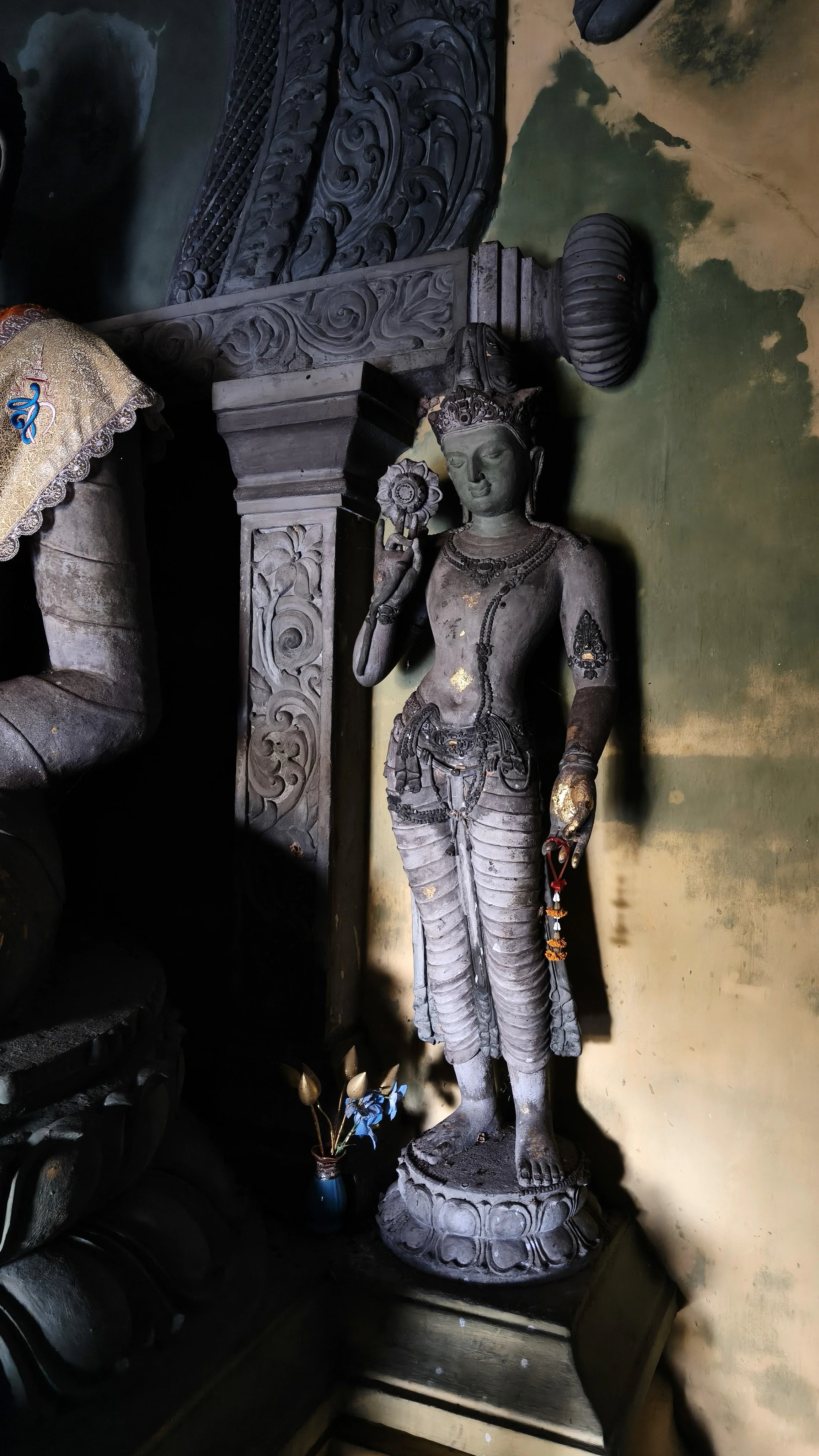
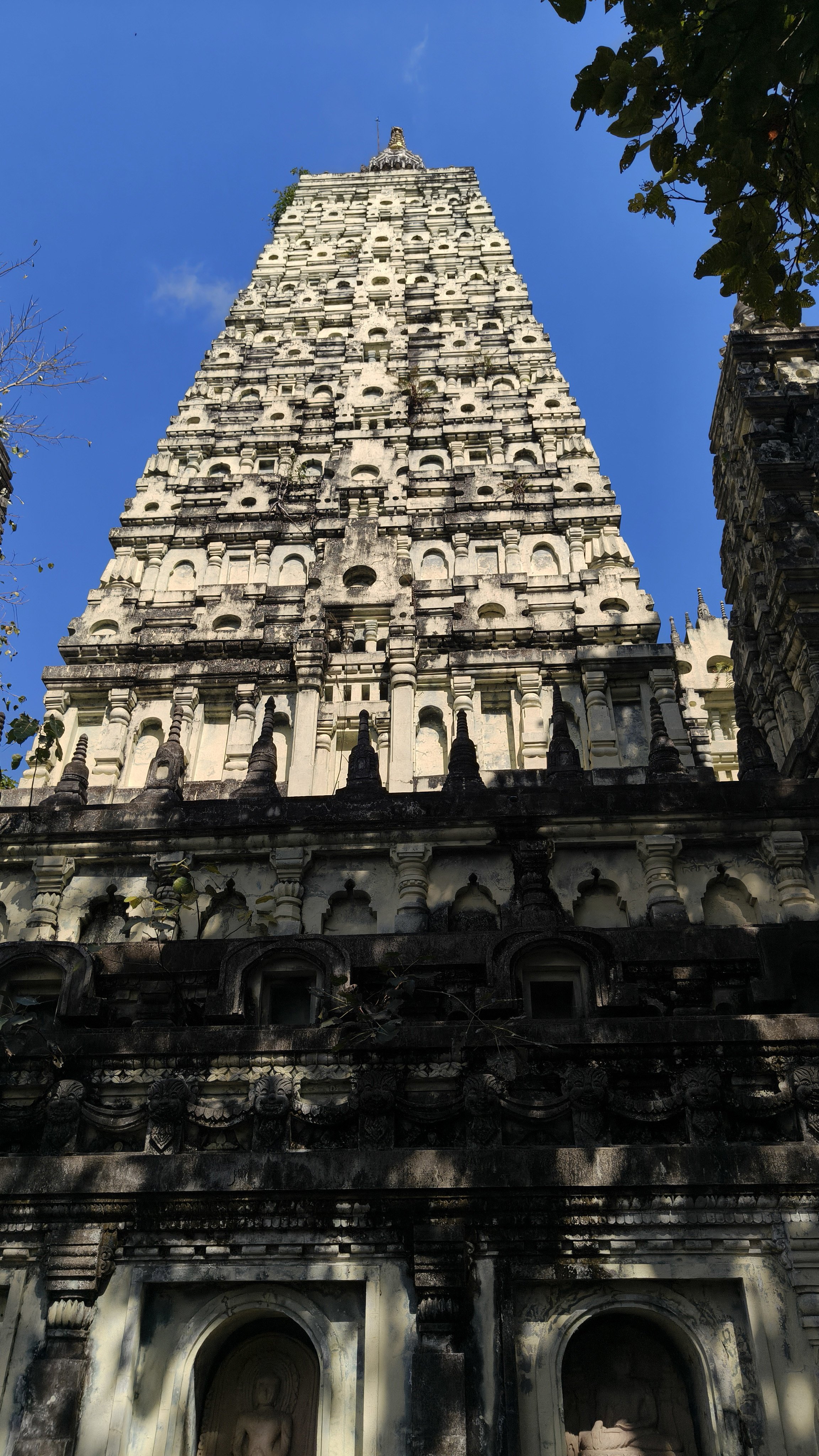
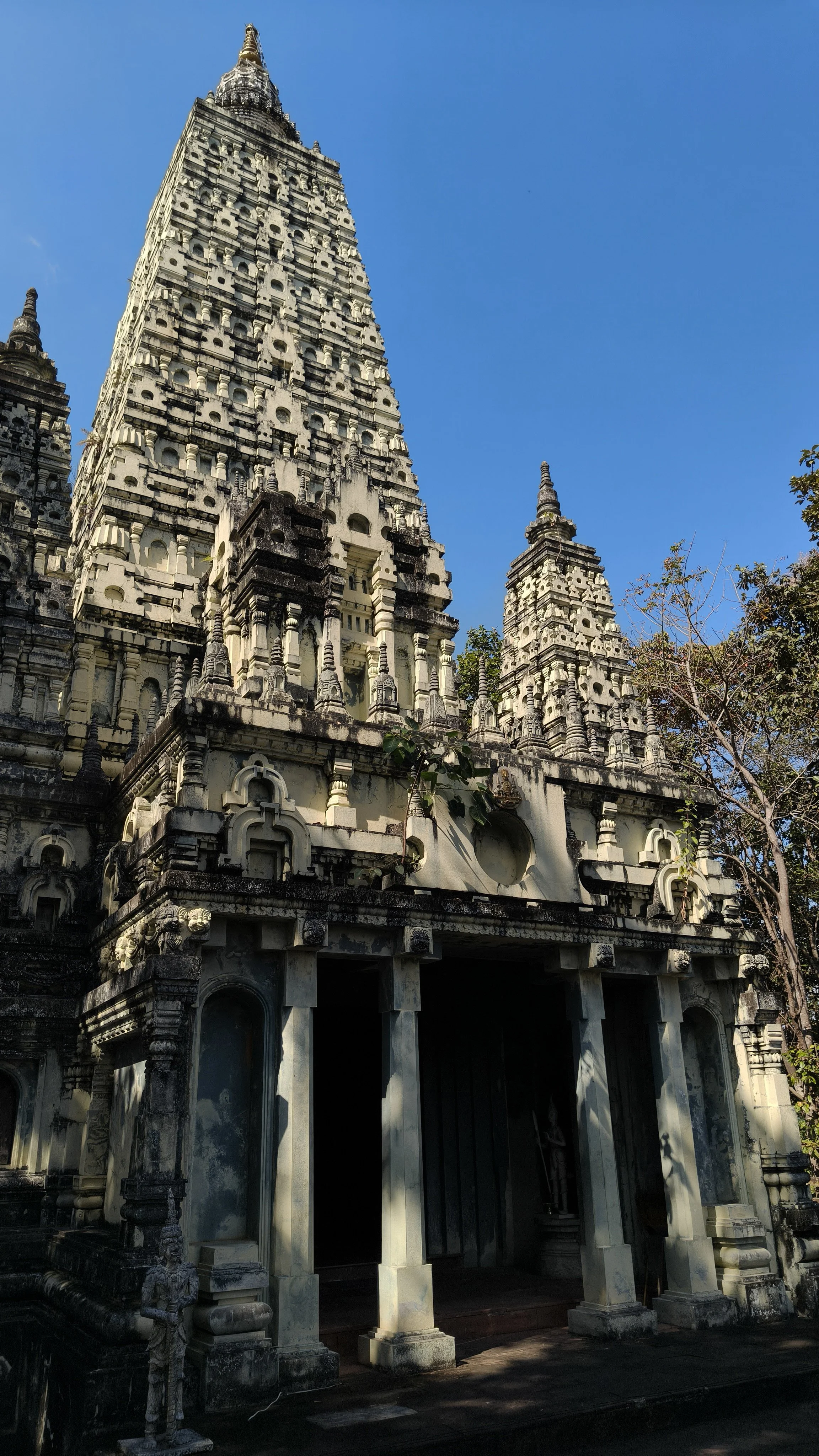
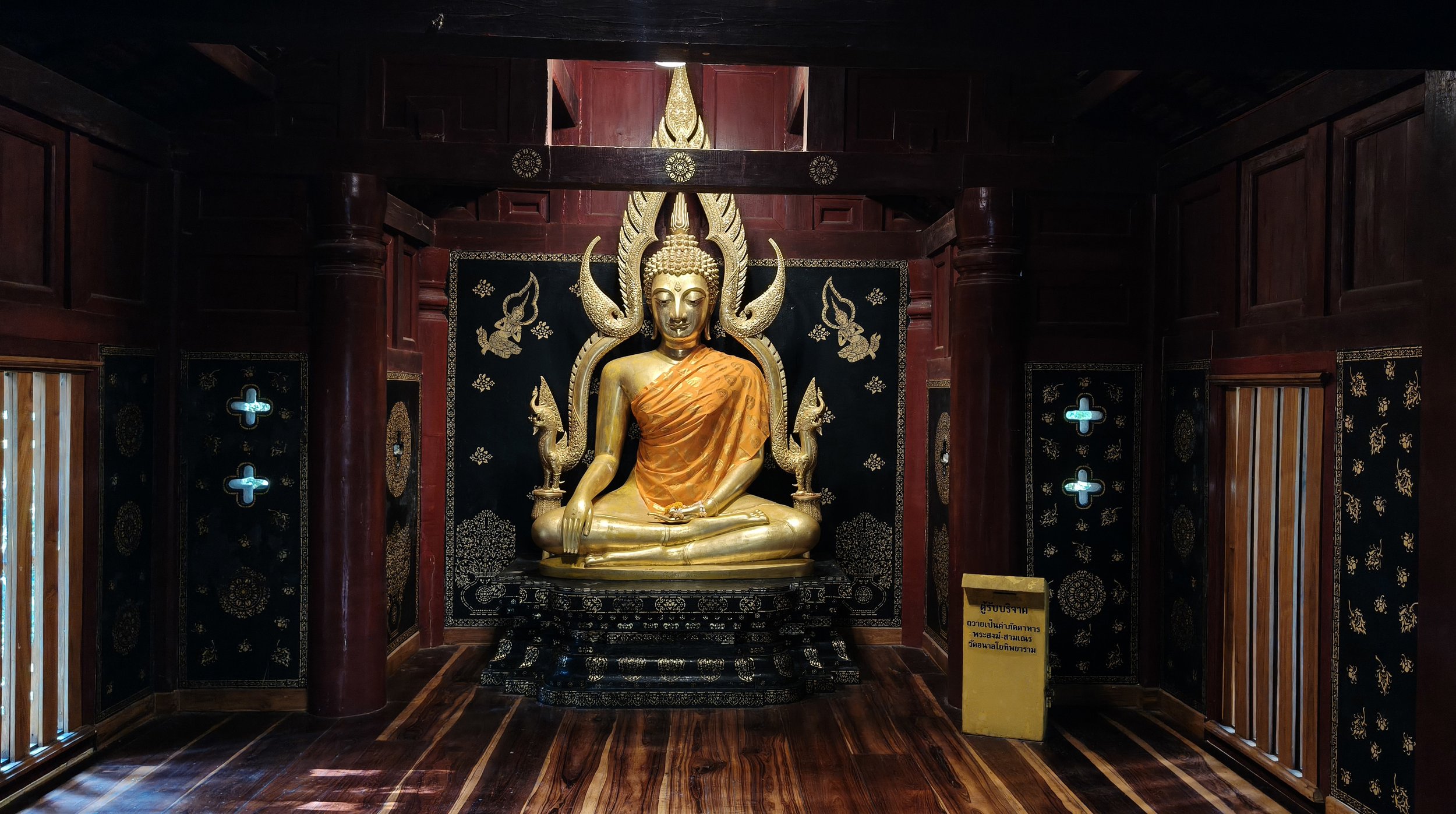
Wat Analayothipyaram (also known as Luang Pu Phaibun) is a large, serene, hilltop temple complex in Phayao, Thailand, known for its eclectic mix of Buddhist architectural styles and panoramic views over Kwan Phayao (Phayao Lake).
Location: The temple is situated on Doi Butsarakham, approximately 20 kilometers north of the Phayao provincial center, in the San Pa Muang sub-district. The address is 5RG7+W27, San Pa Muang, Mueang Phayao District
Diverse Architecture: The complex features a blend of Thai, Indian (Bodh Gaya style Rattana Chedi), Chinese (Kuan Yin Bodhisattva pavilion), Lanna, Burmese, and Tai Yai art styles.
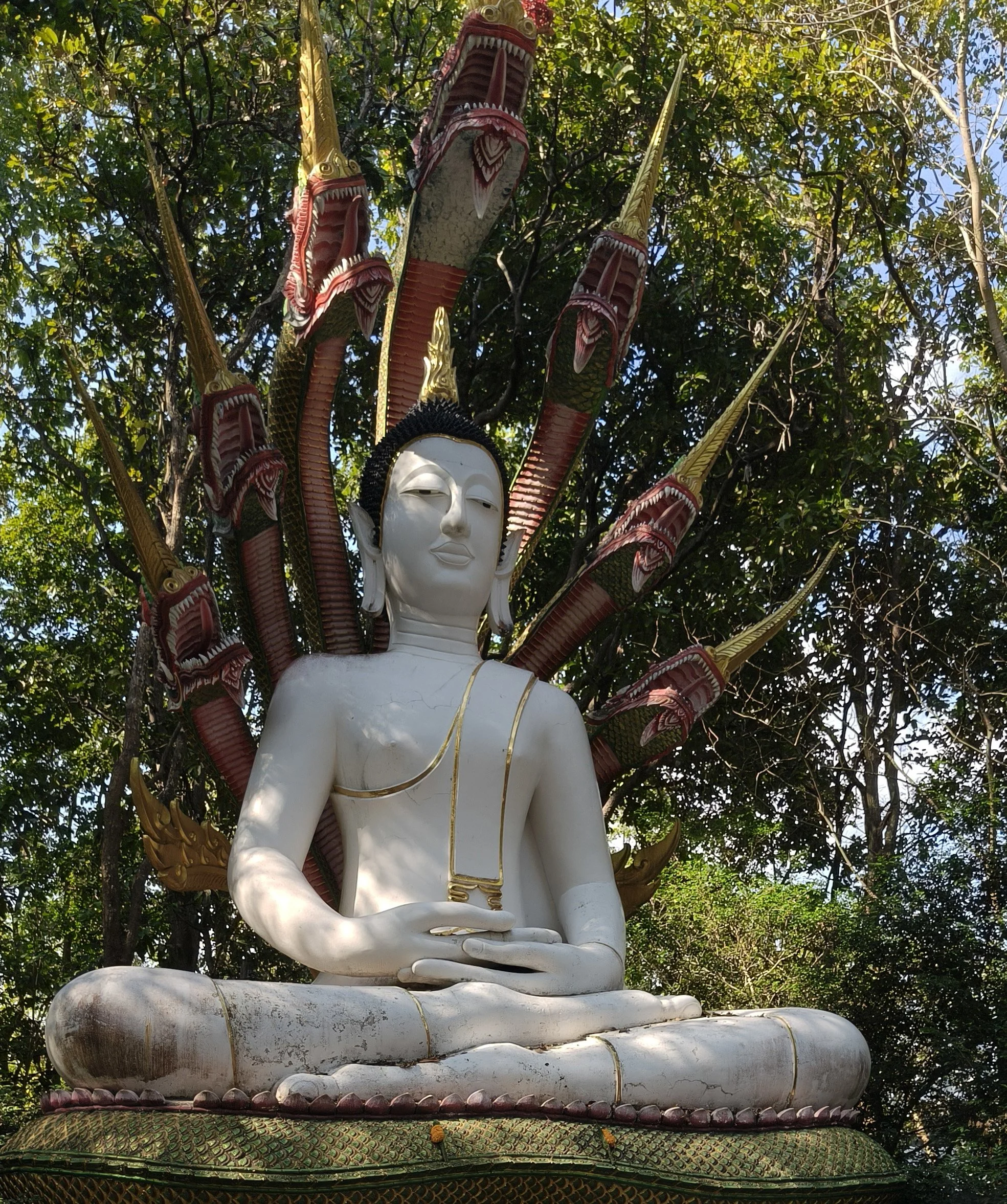
Buddha Images: The grounds house numerous Buddha images in various postures (seated, standing, reclining, walking), including a large Sukhothai-style image, replicas of the Emerald Buddha, and a massive white outdoor Buddha statue.
Views: The summit of the mountain offers breathtaking panoramic views of the surrounding area, including Phayao city and Kwan Phayao (Phayao Lake).
Tranquil Atmosphere: Praised by visitors as a peaceful hidden gem, it is an excellent place for quiet contemplation, meditation, and escaping crowds.
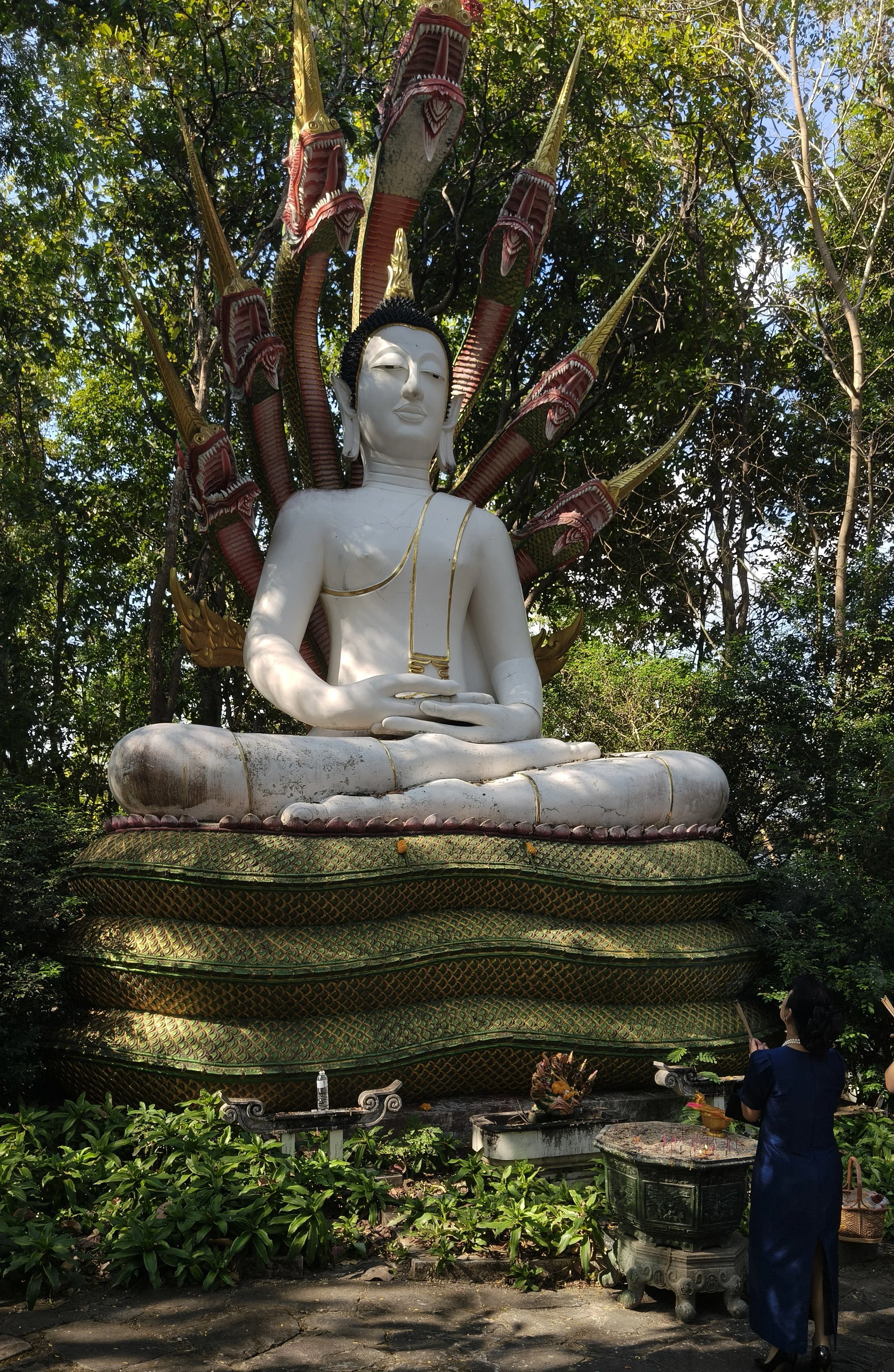
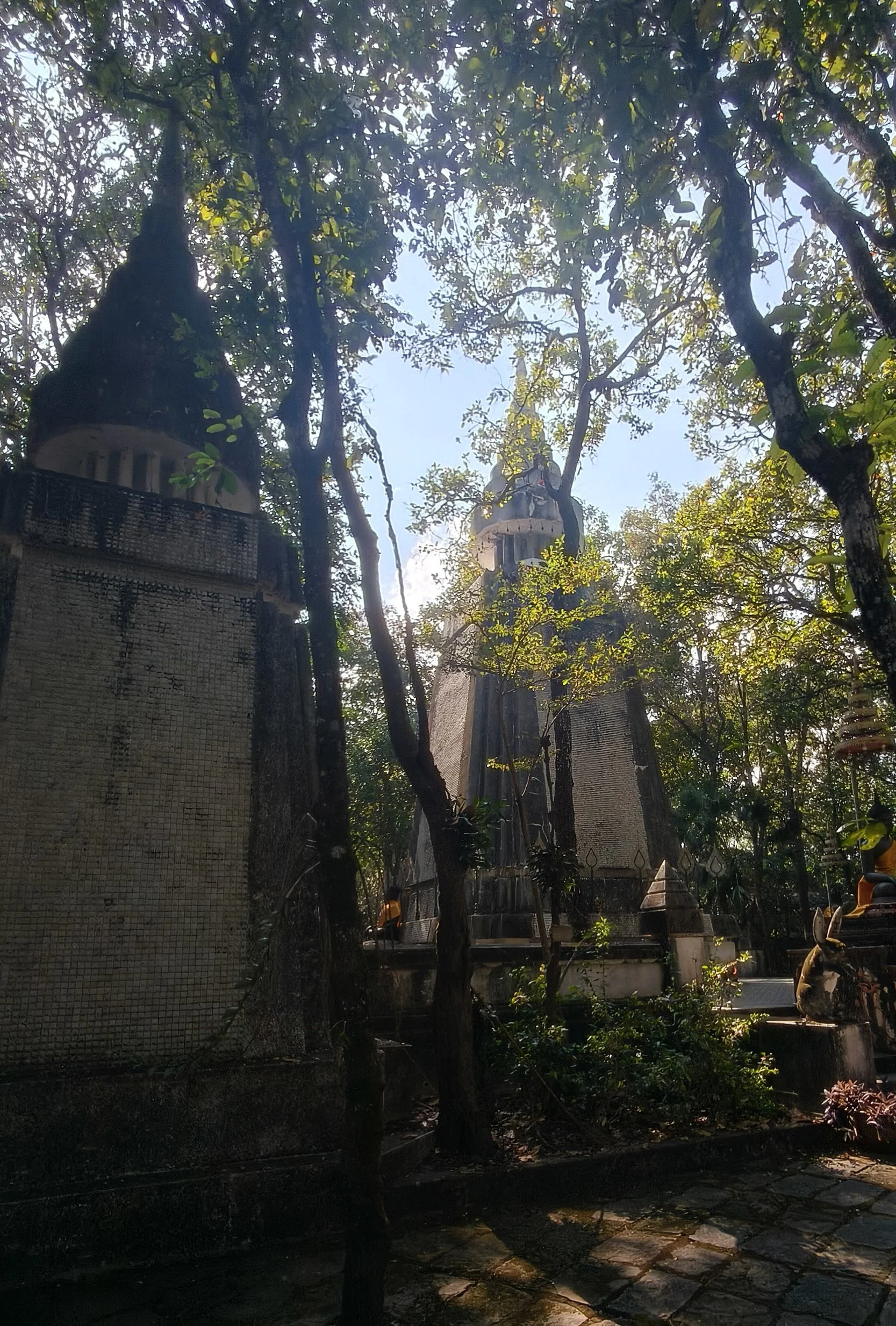
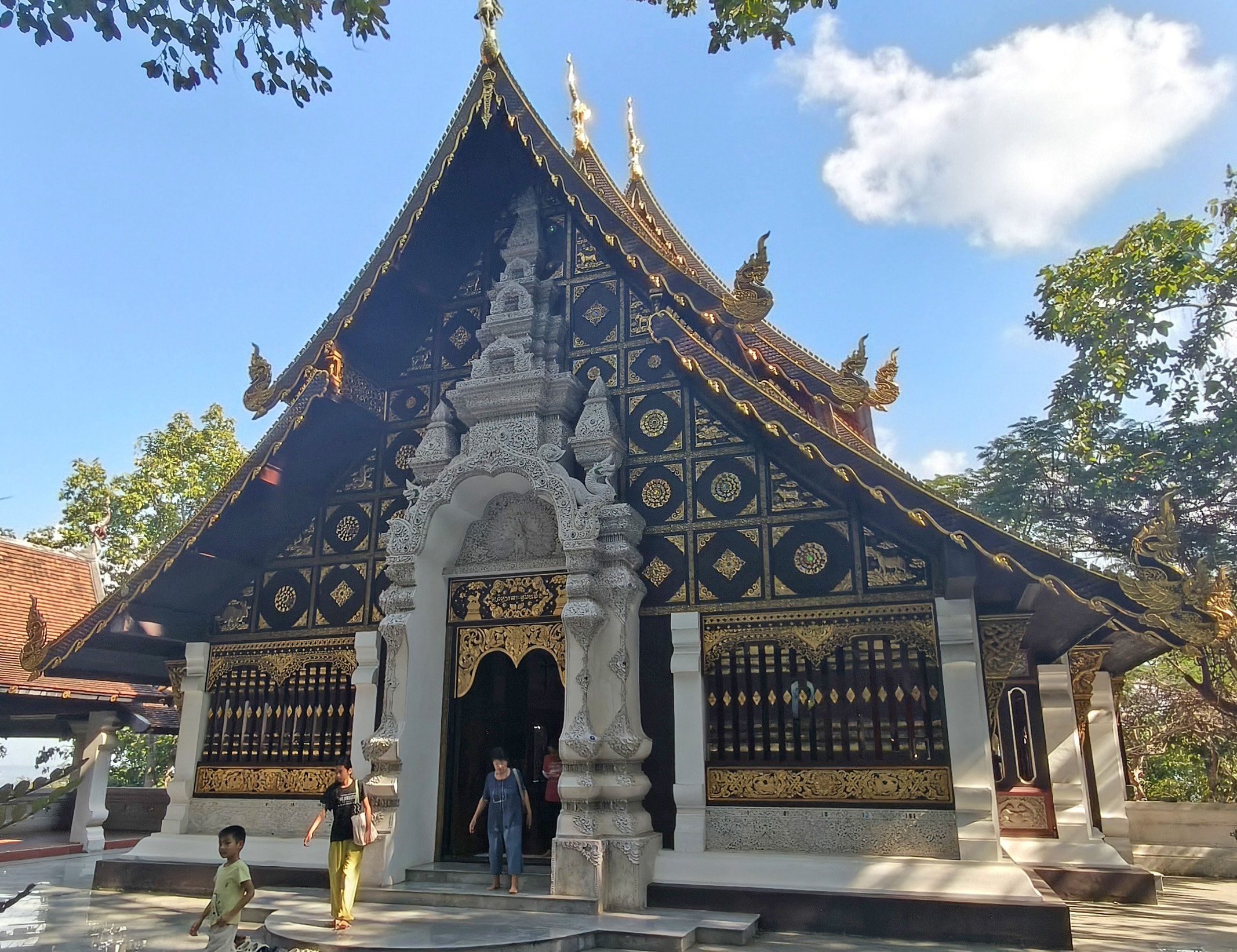
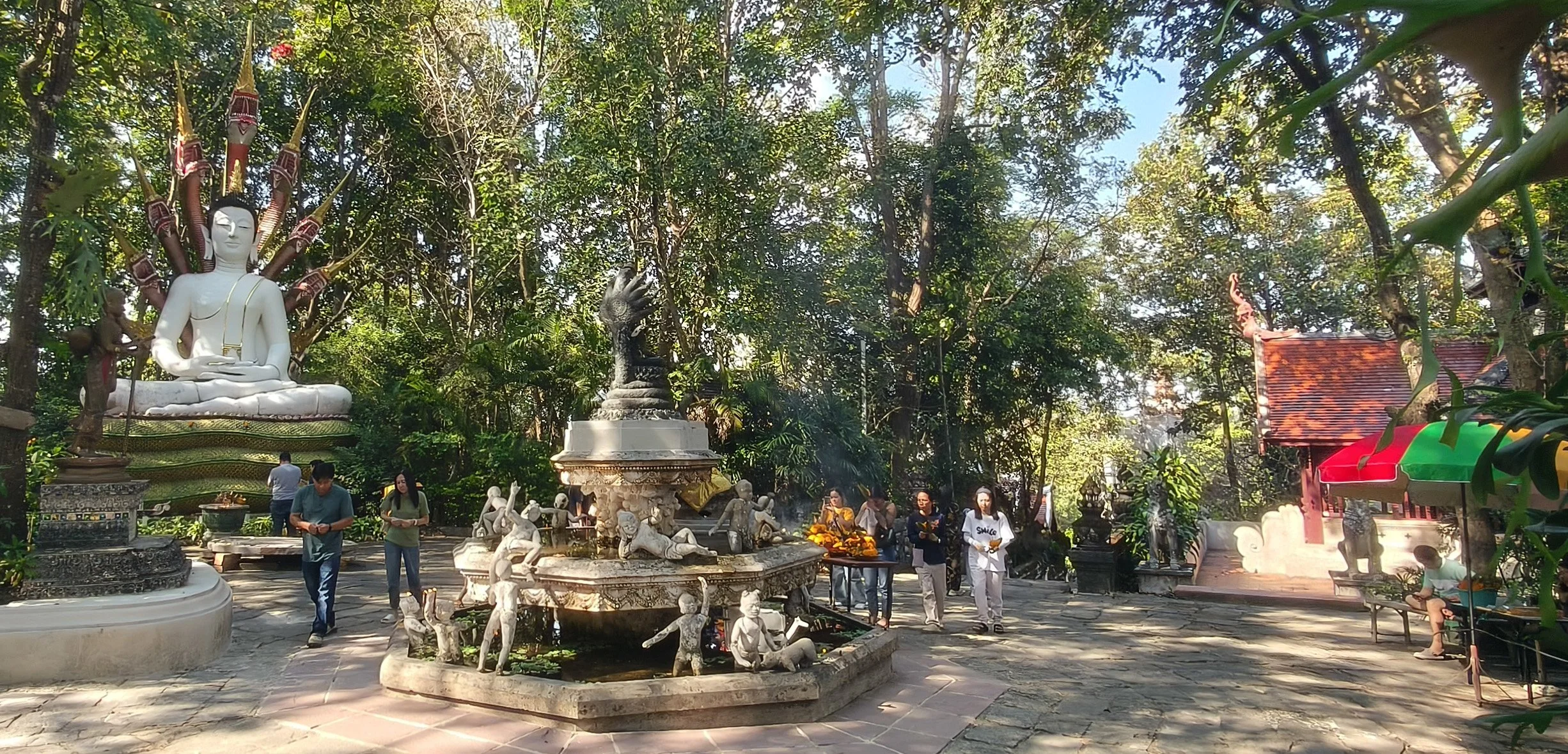
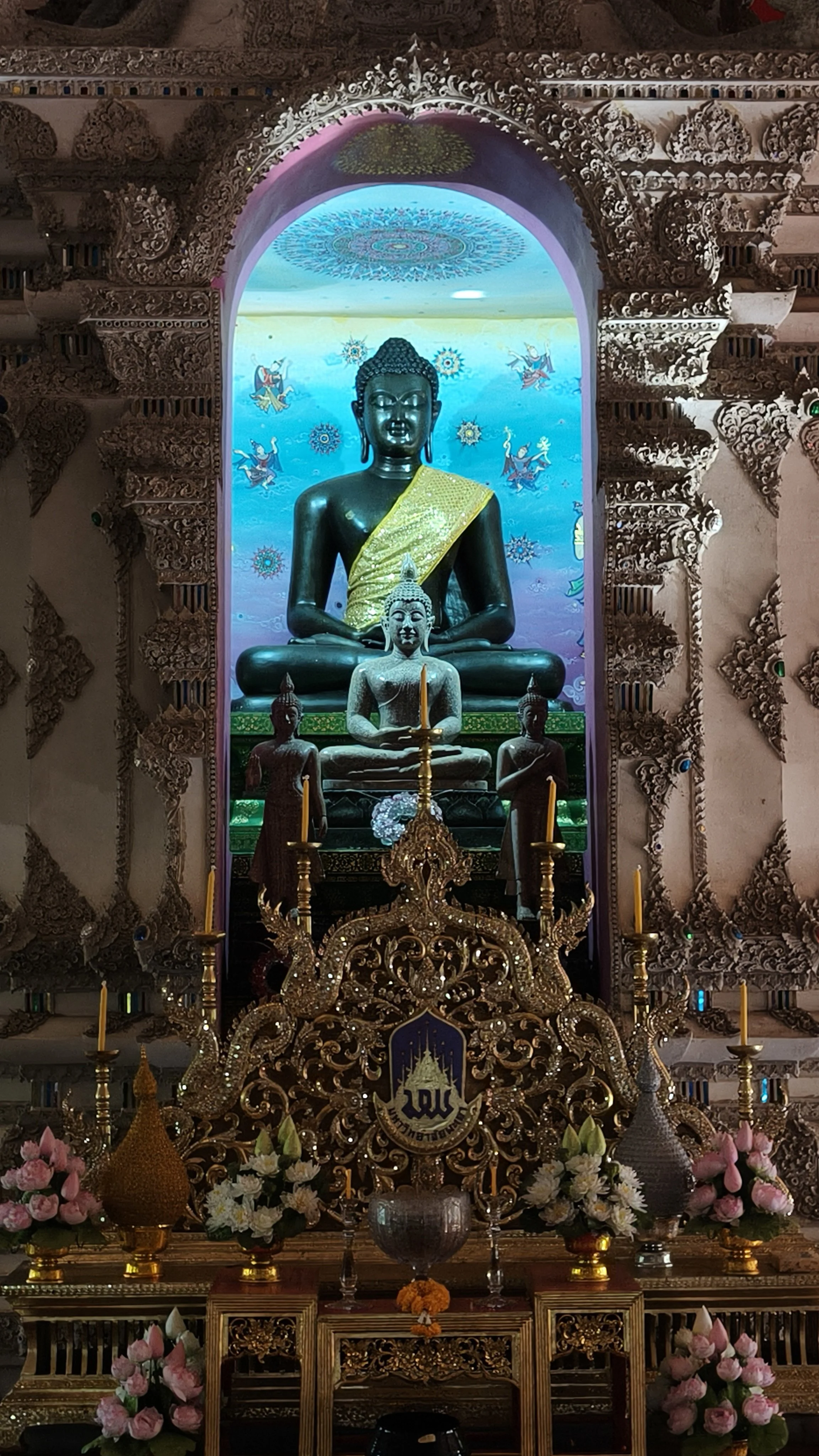
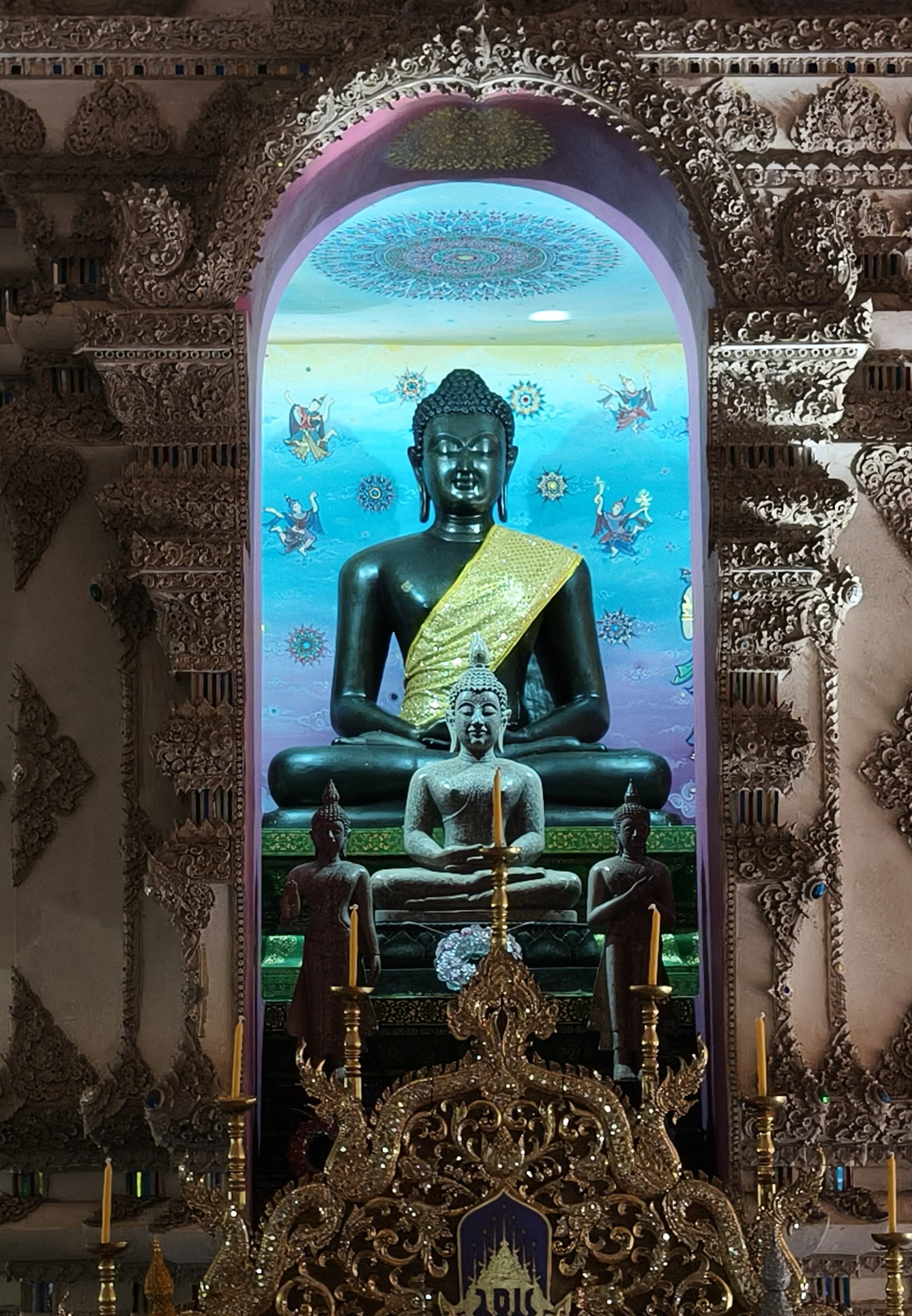
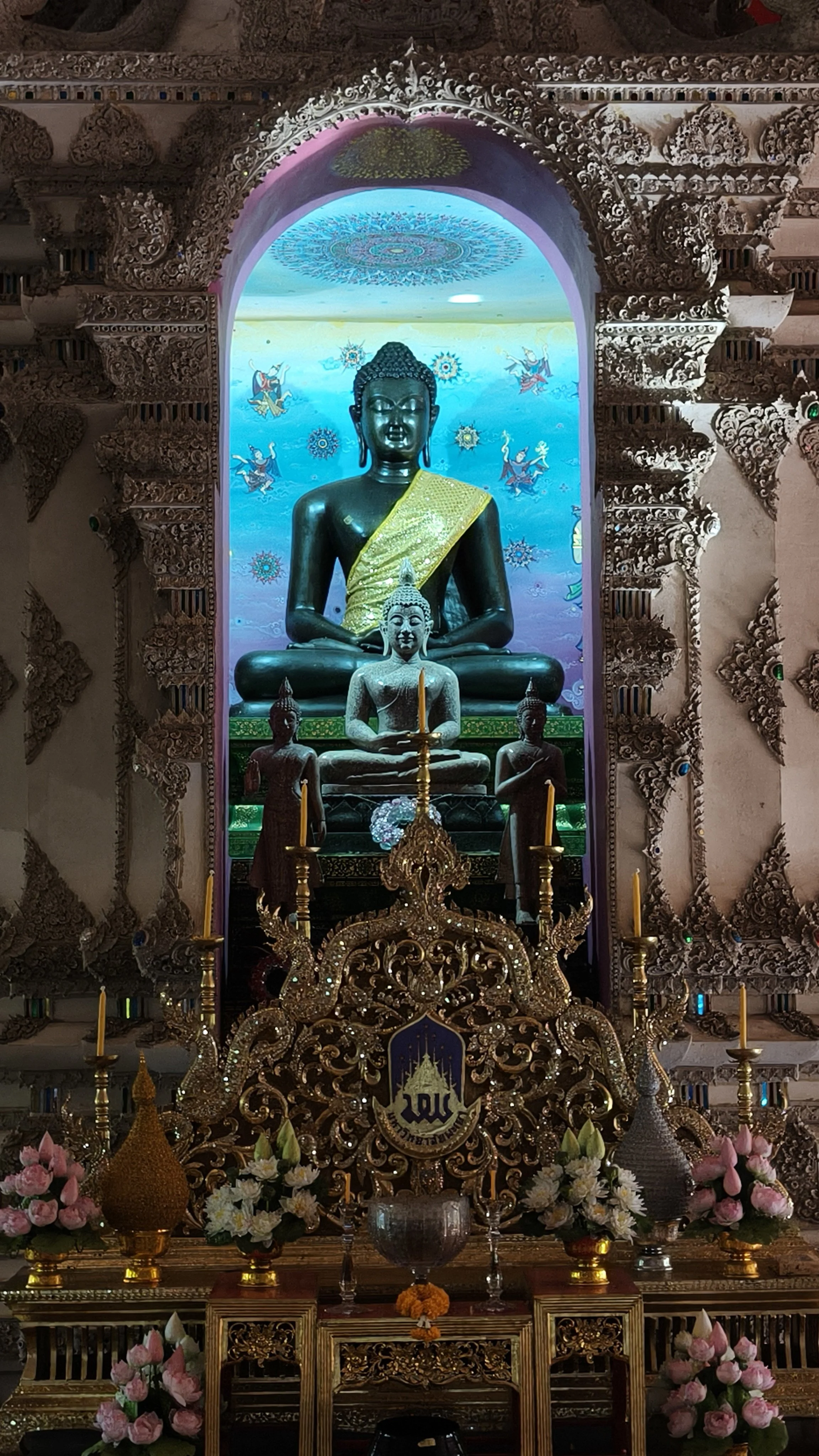
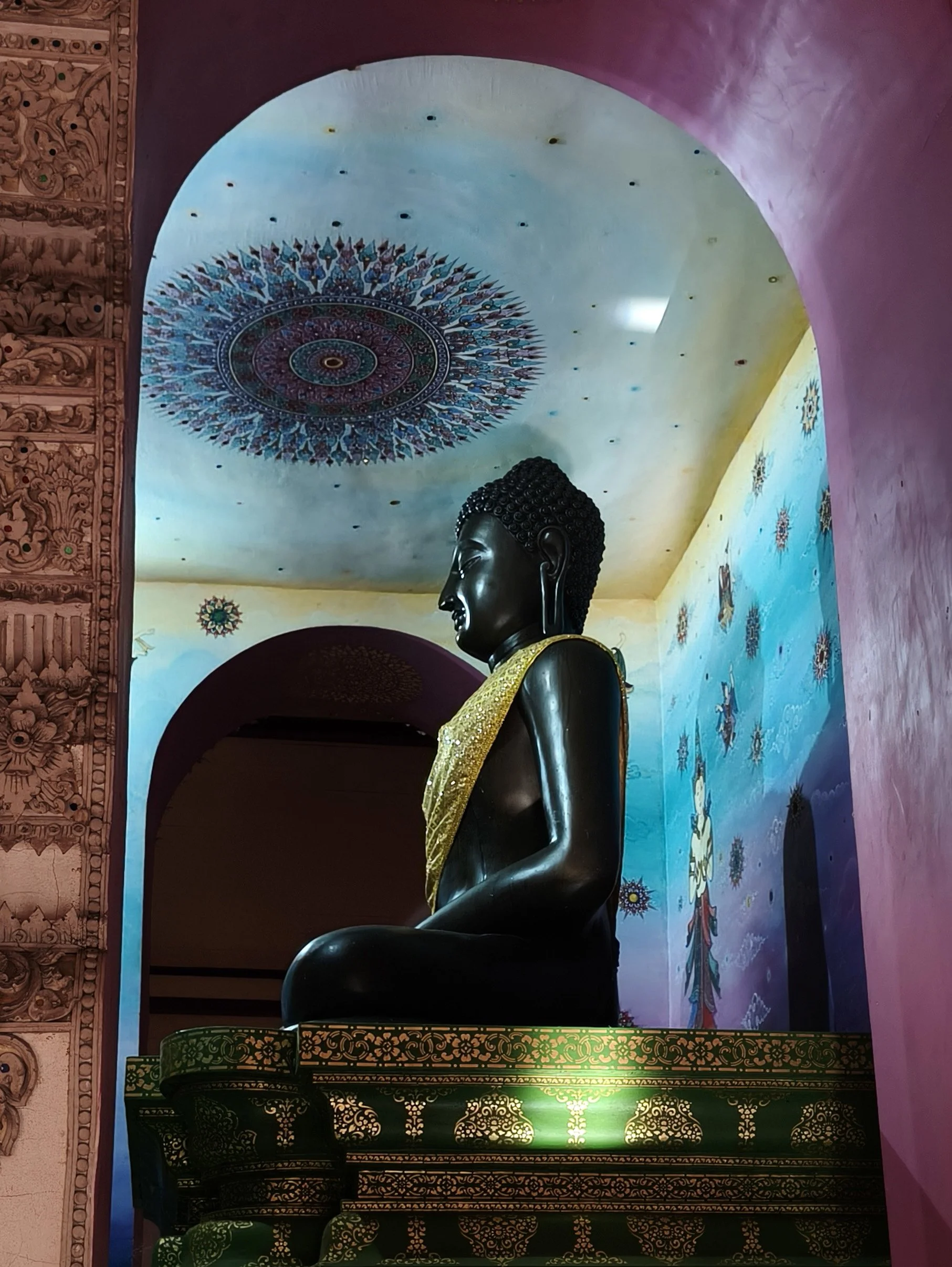
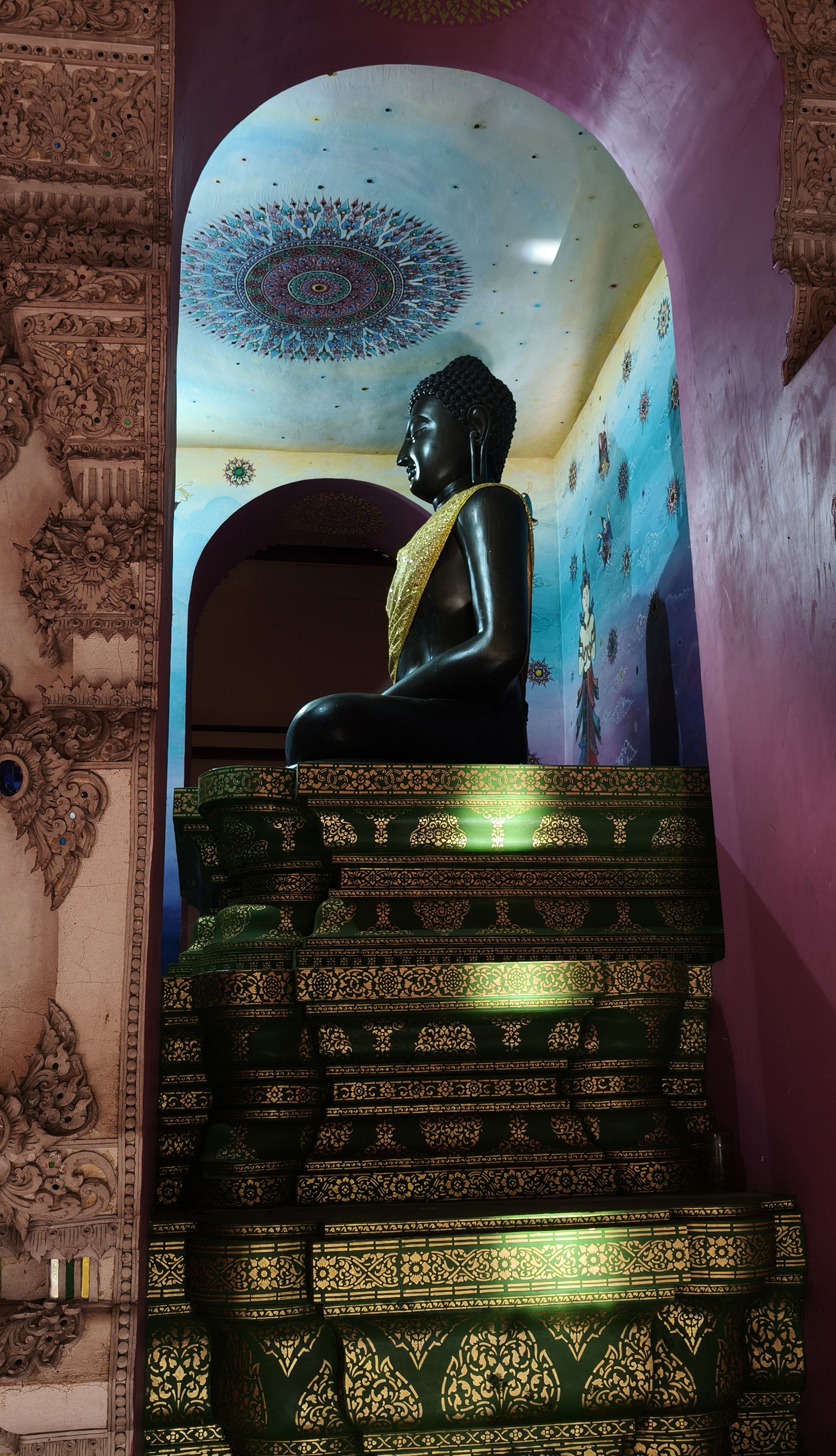
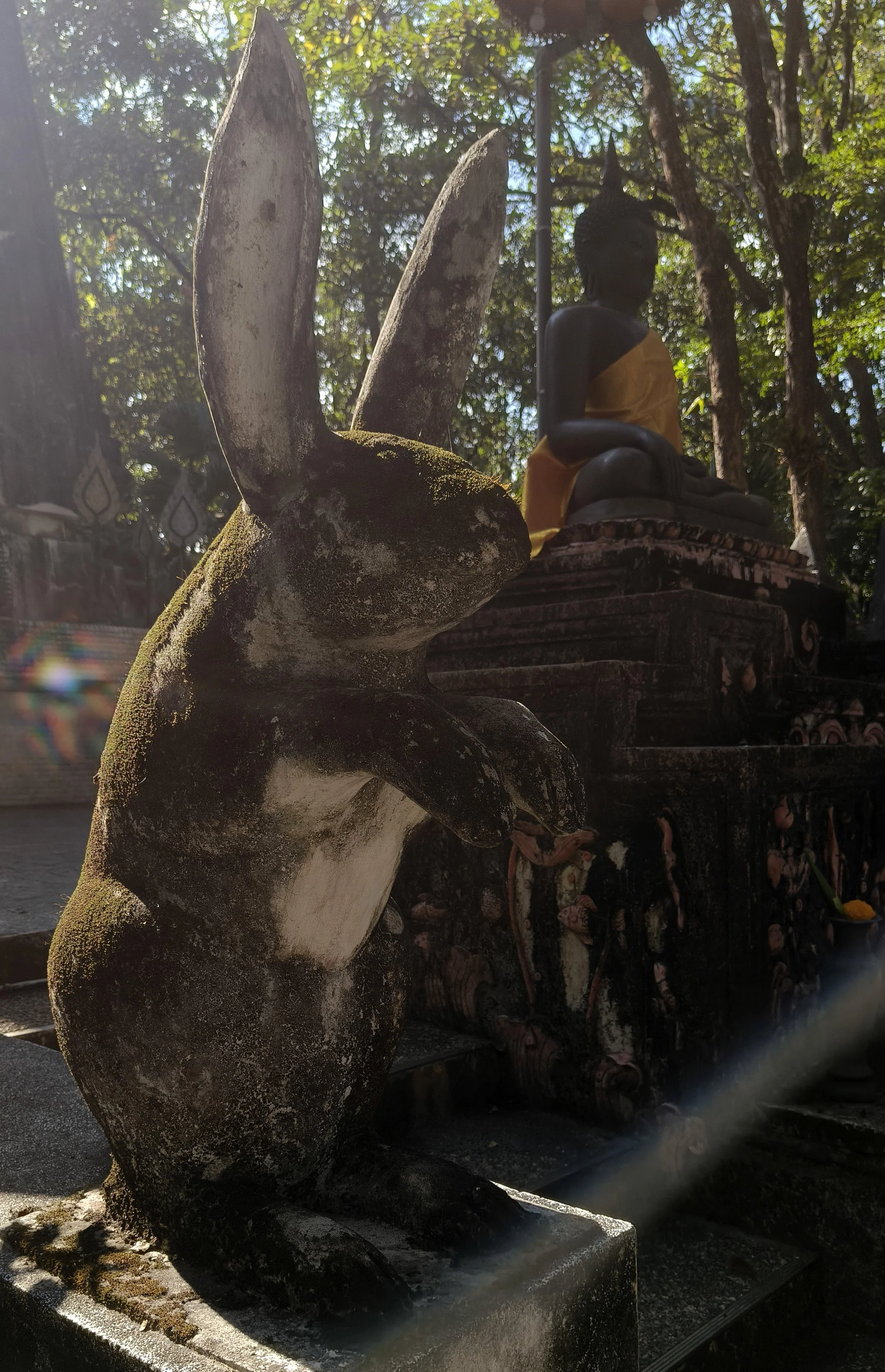

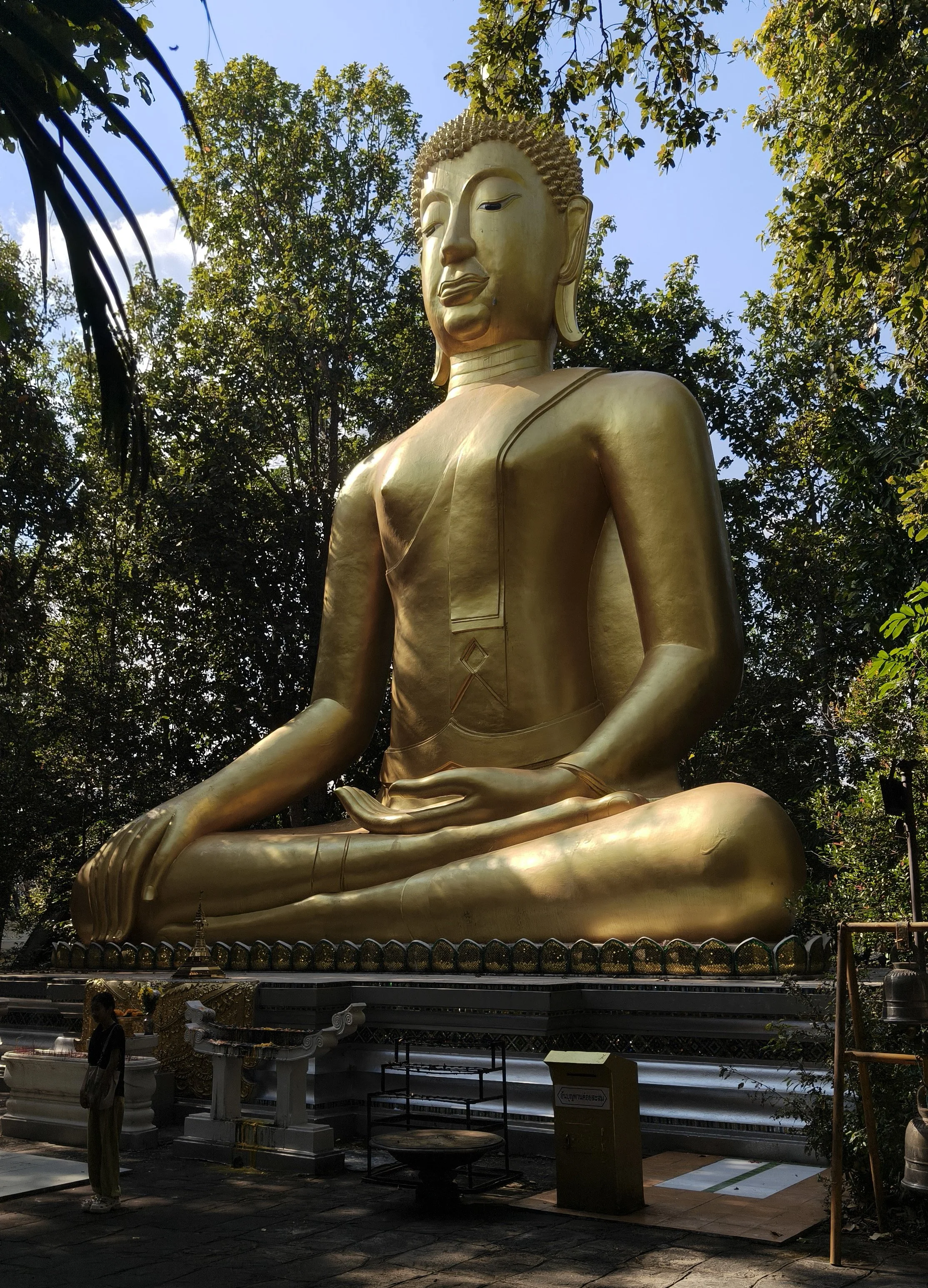
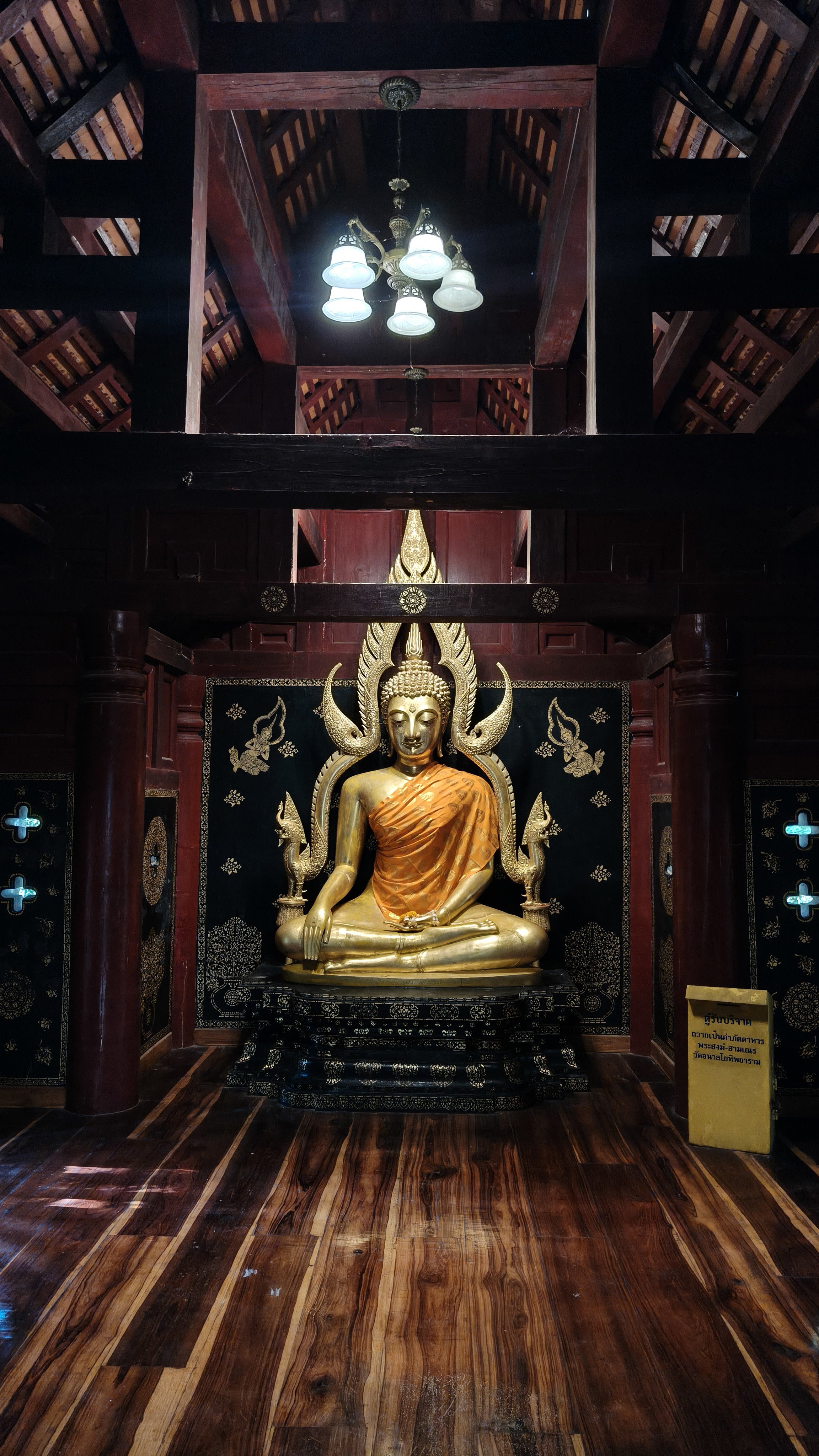
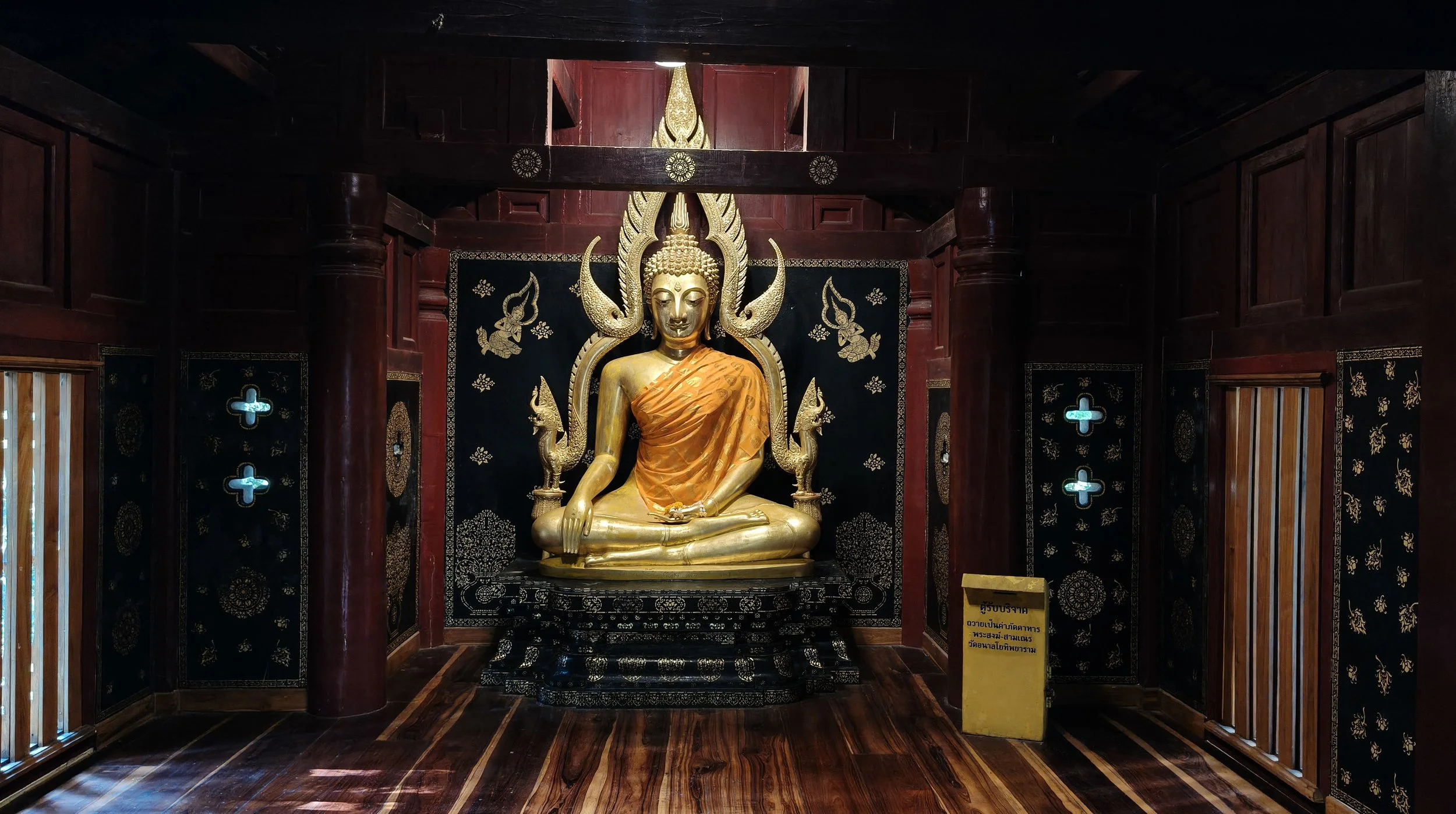
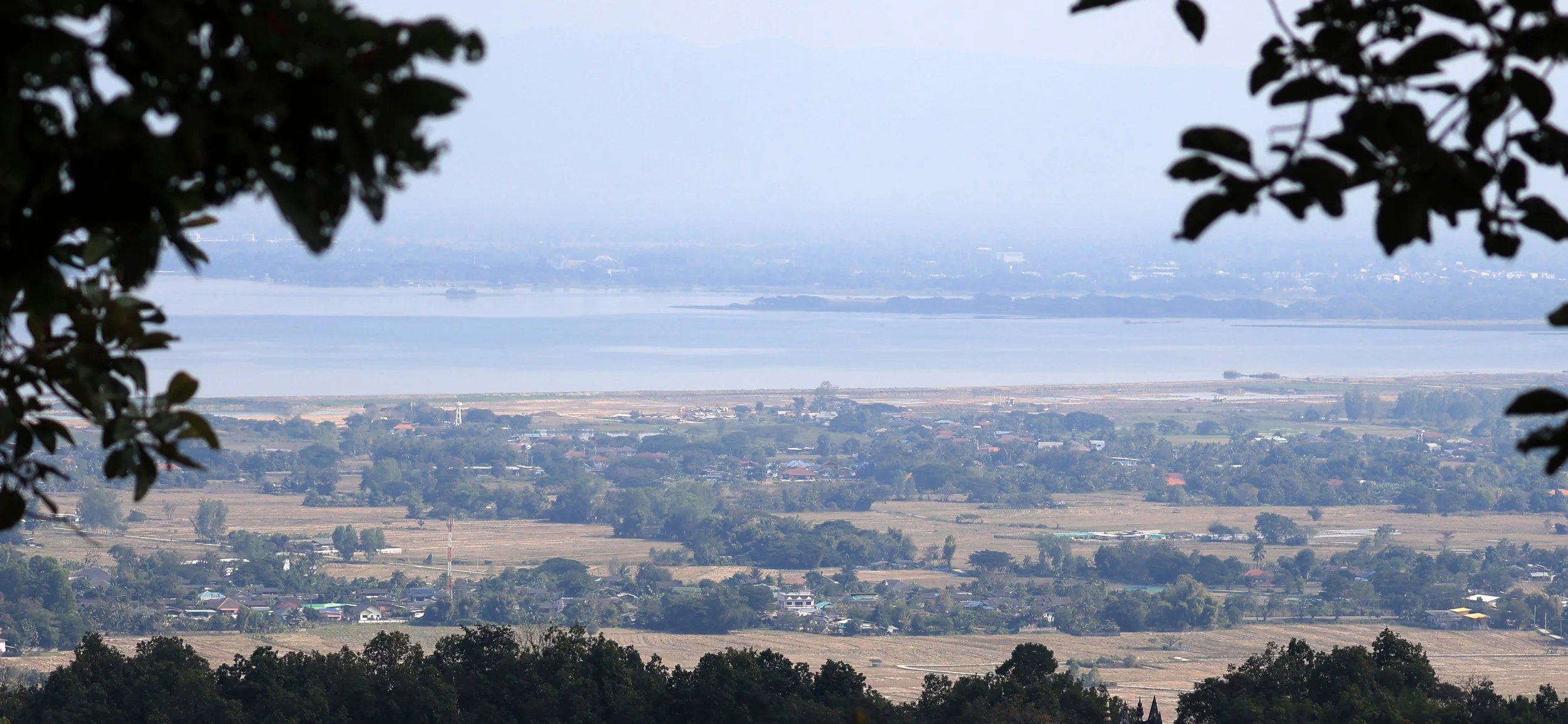
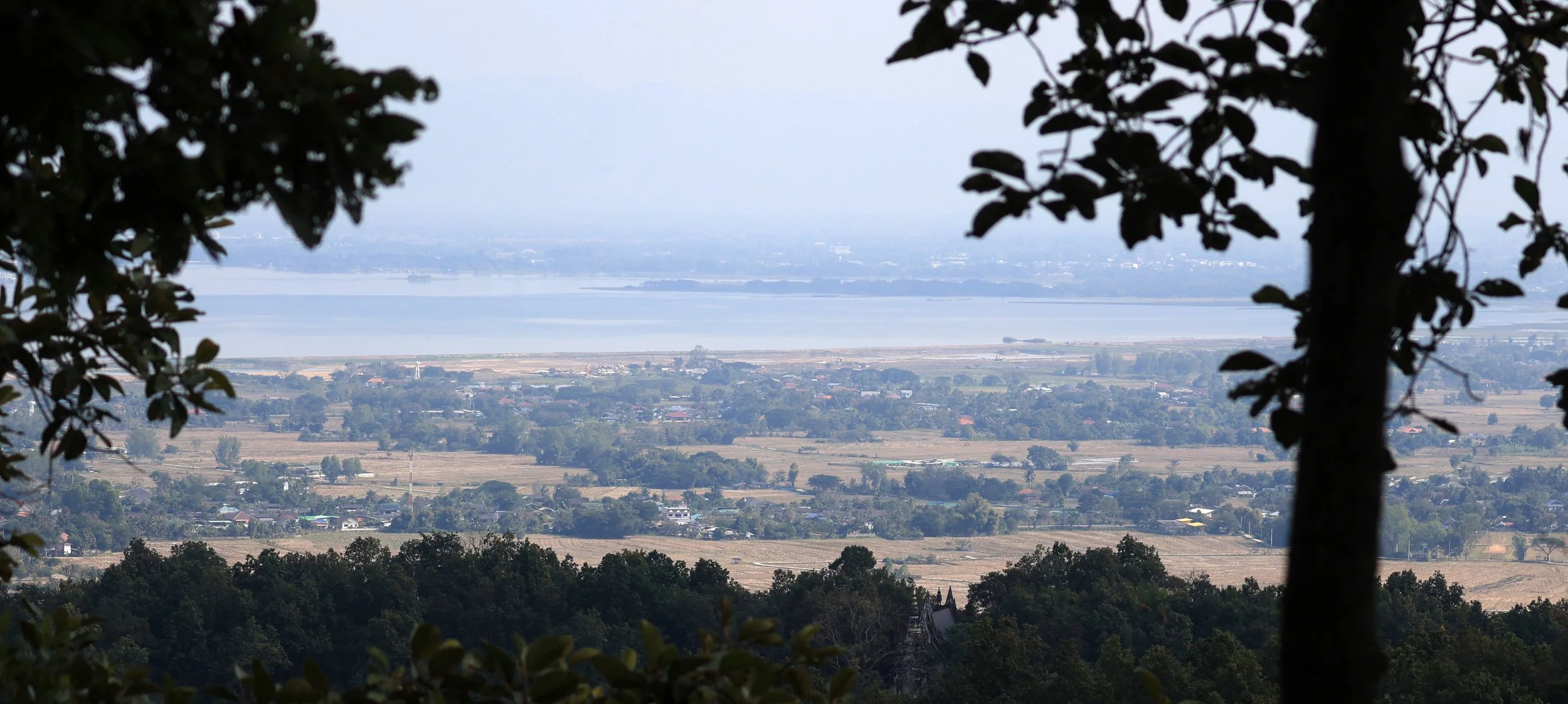
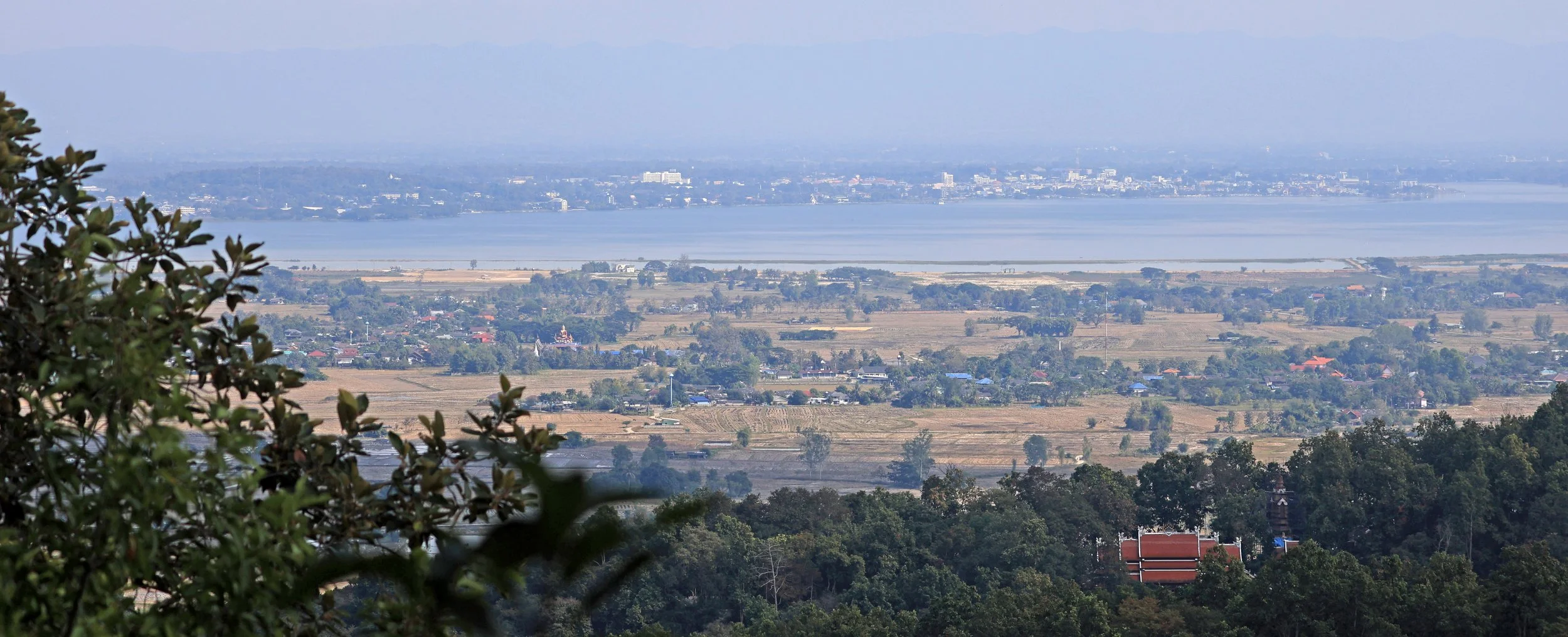
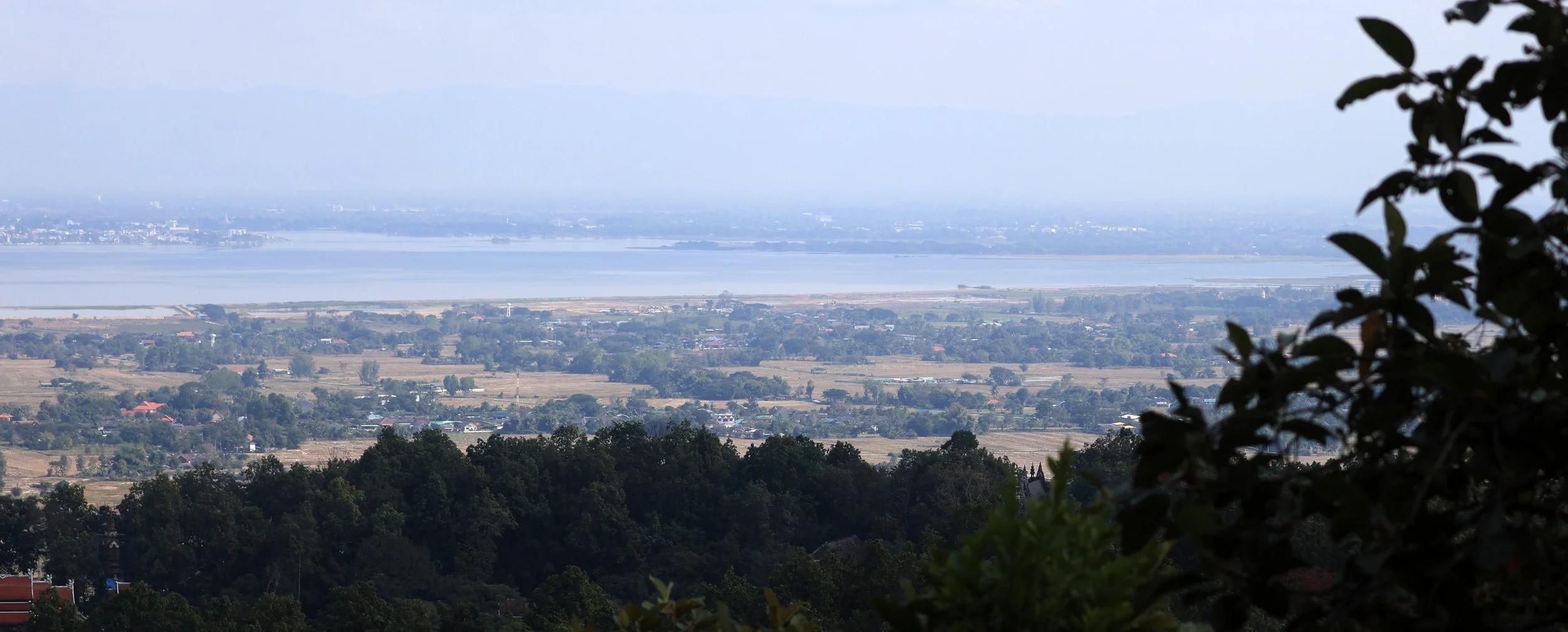
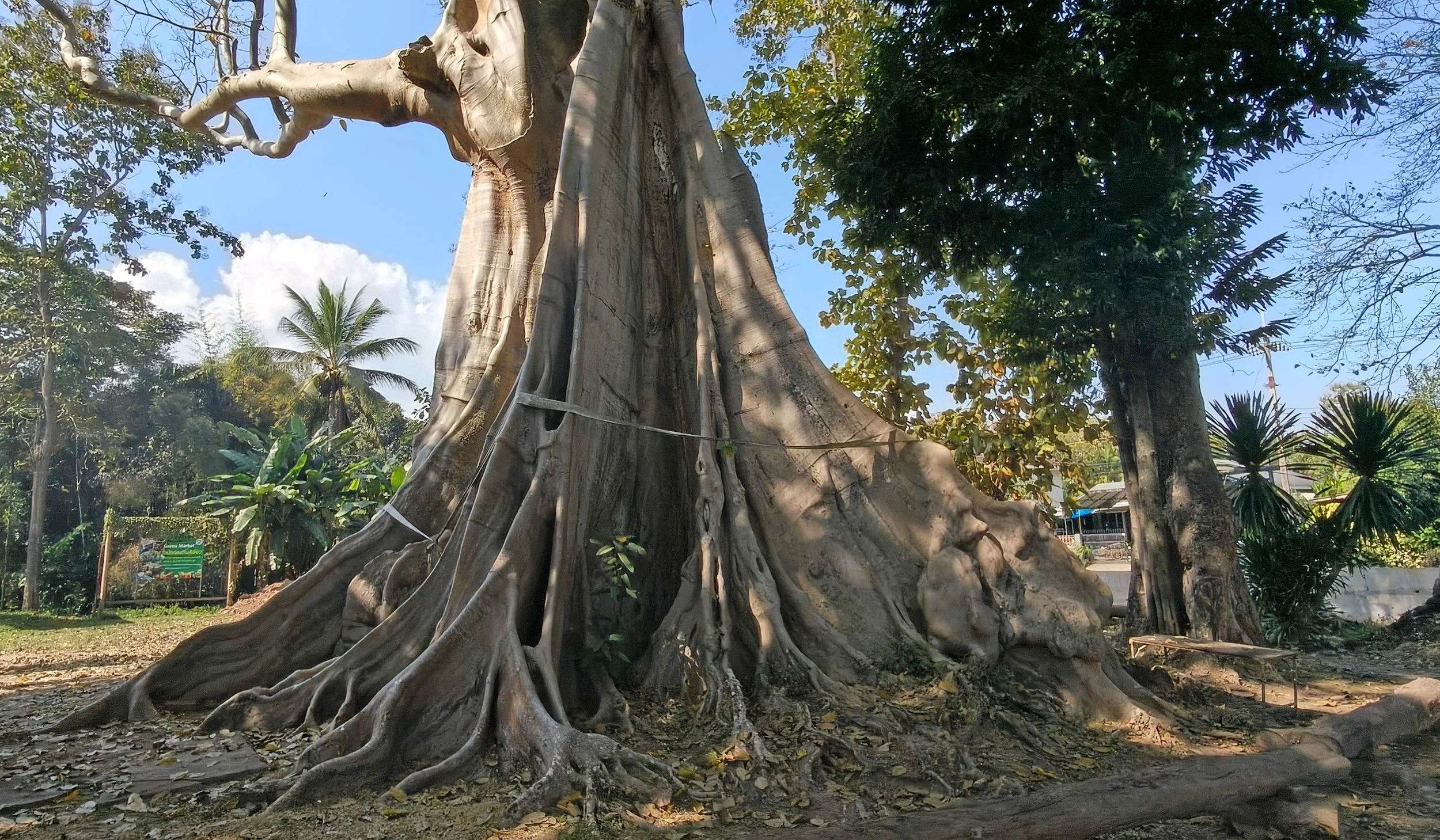
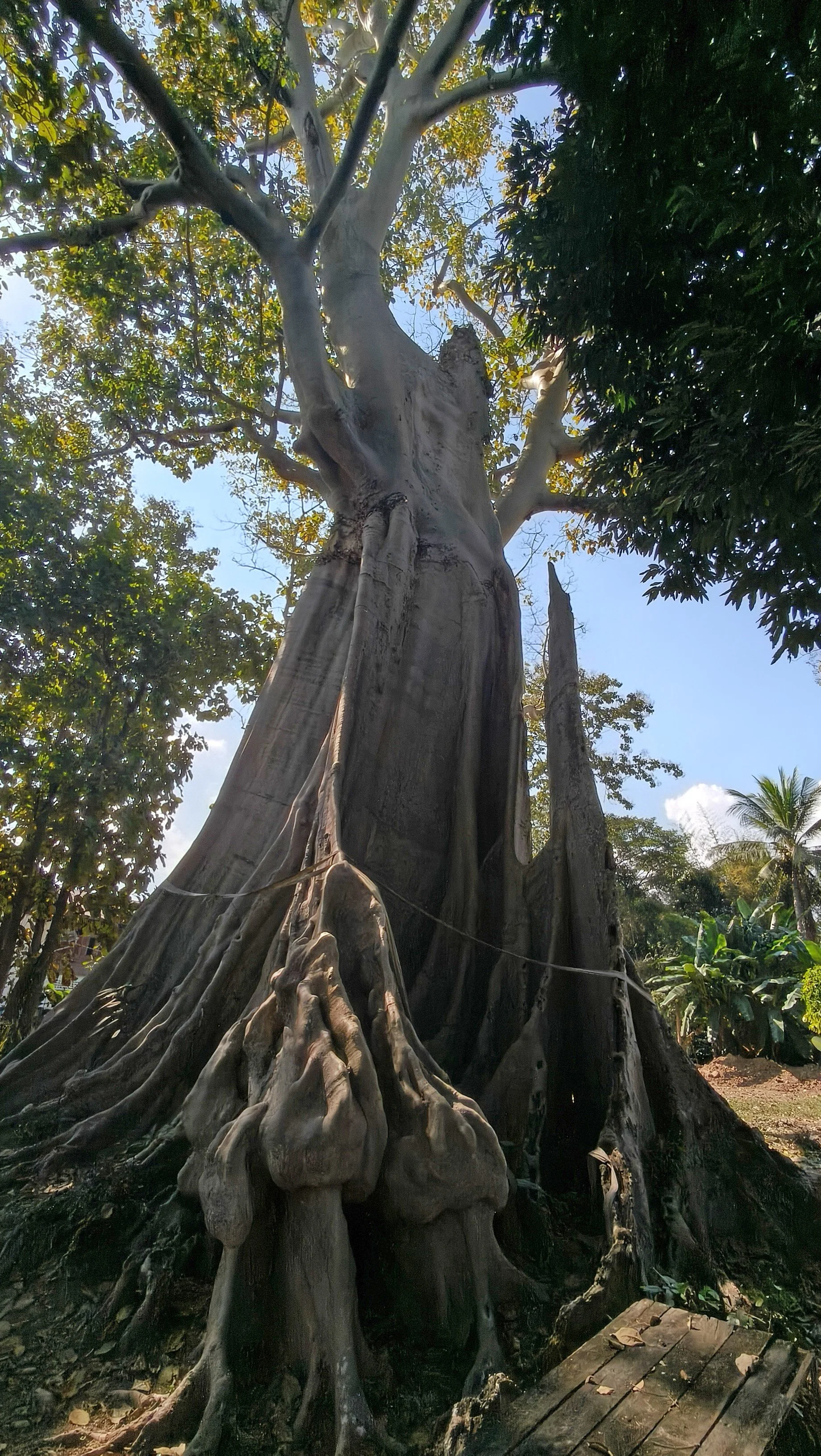
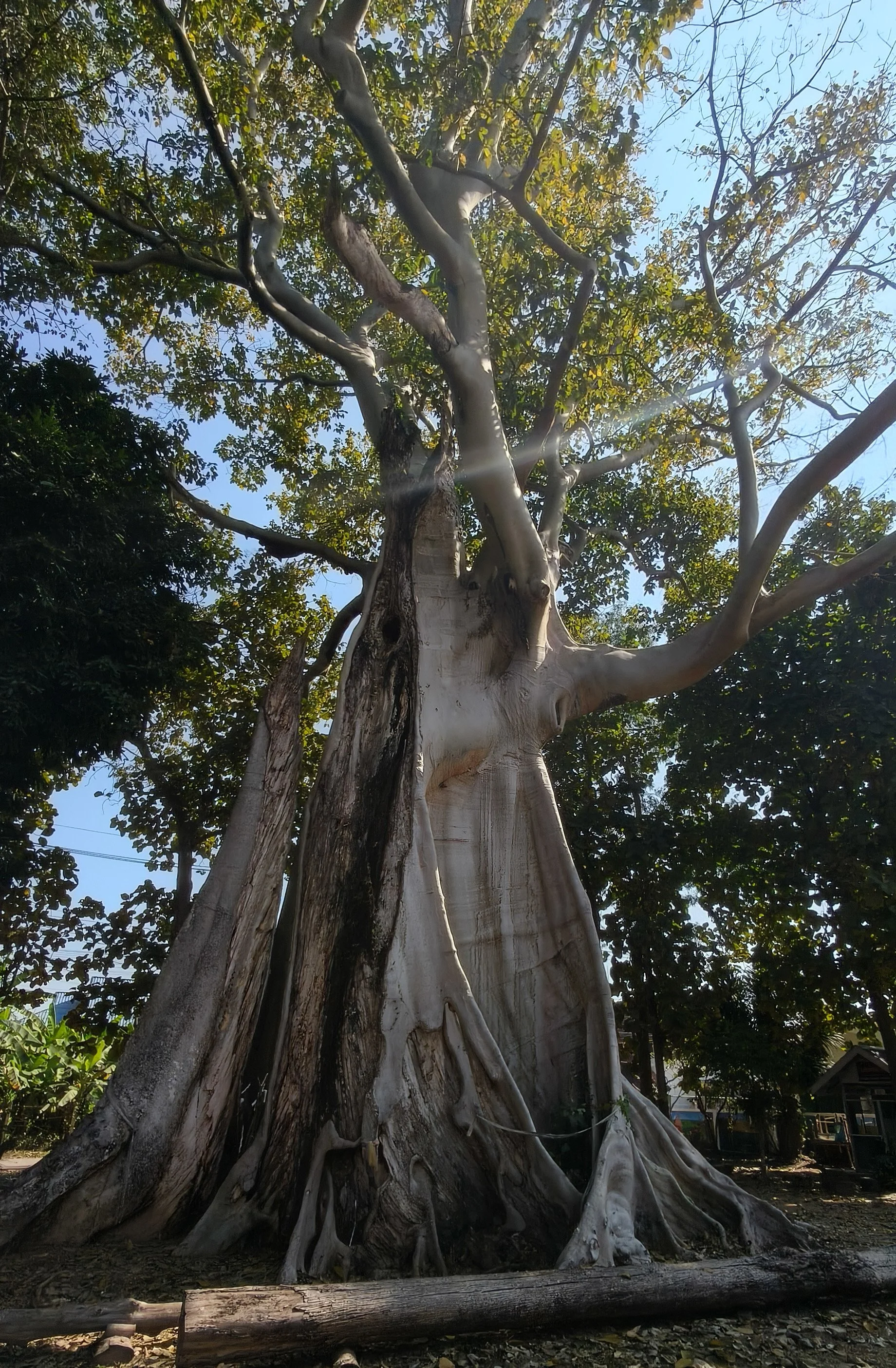
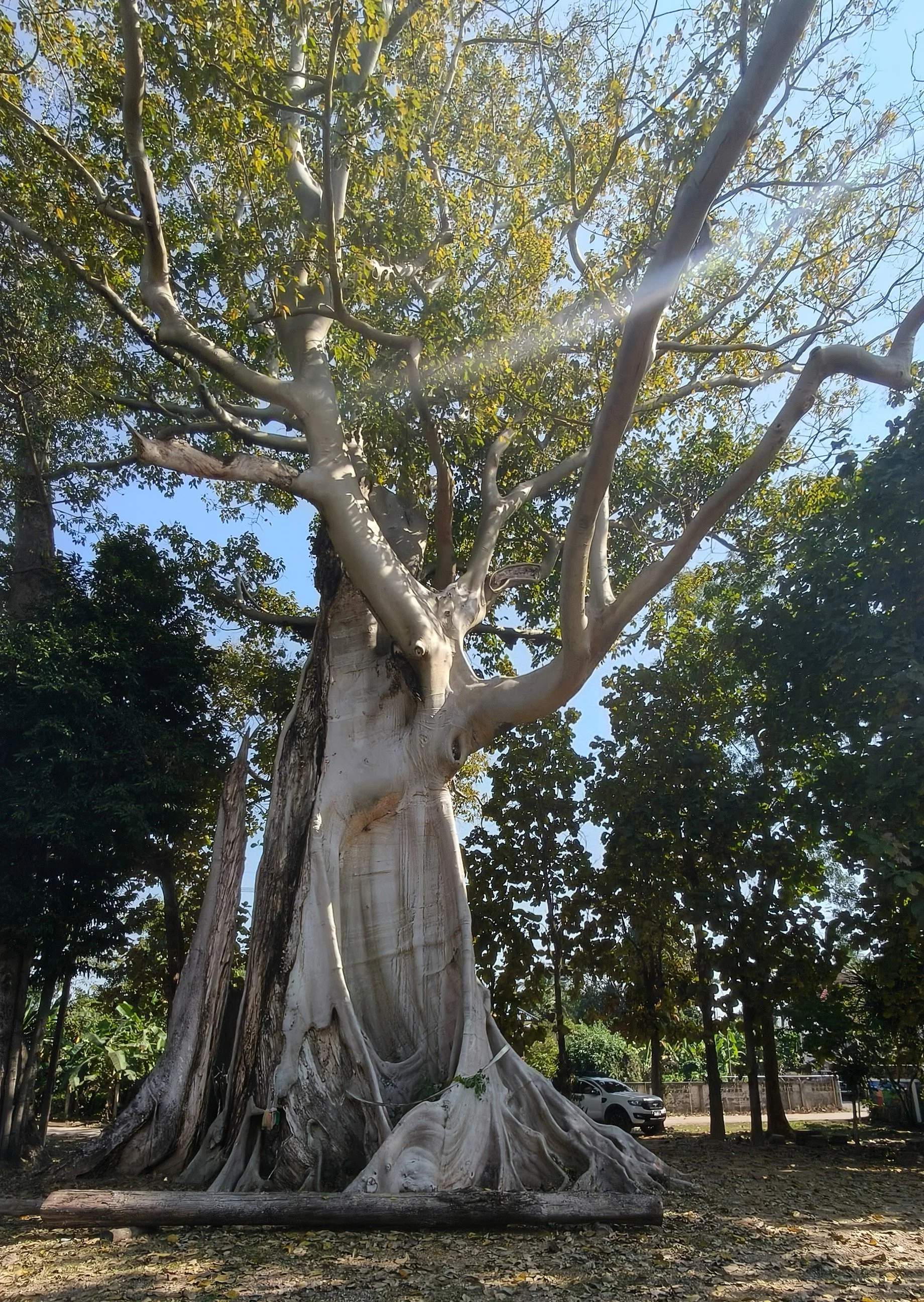
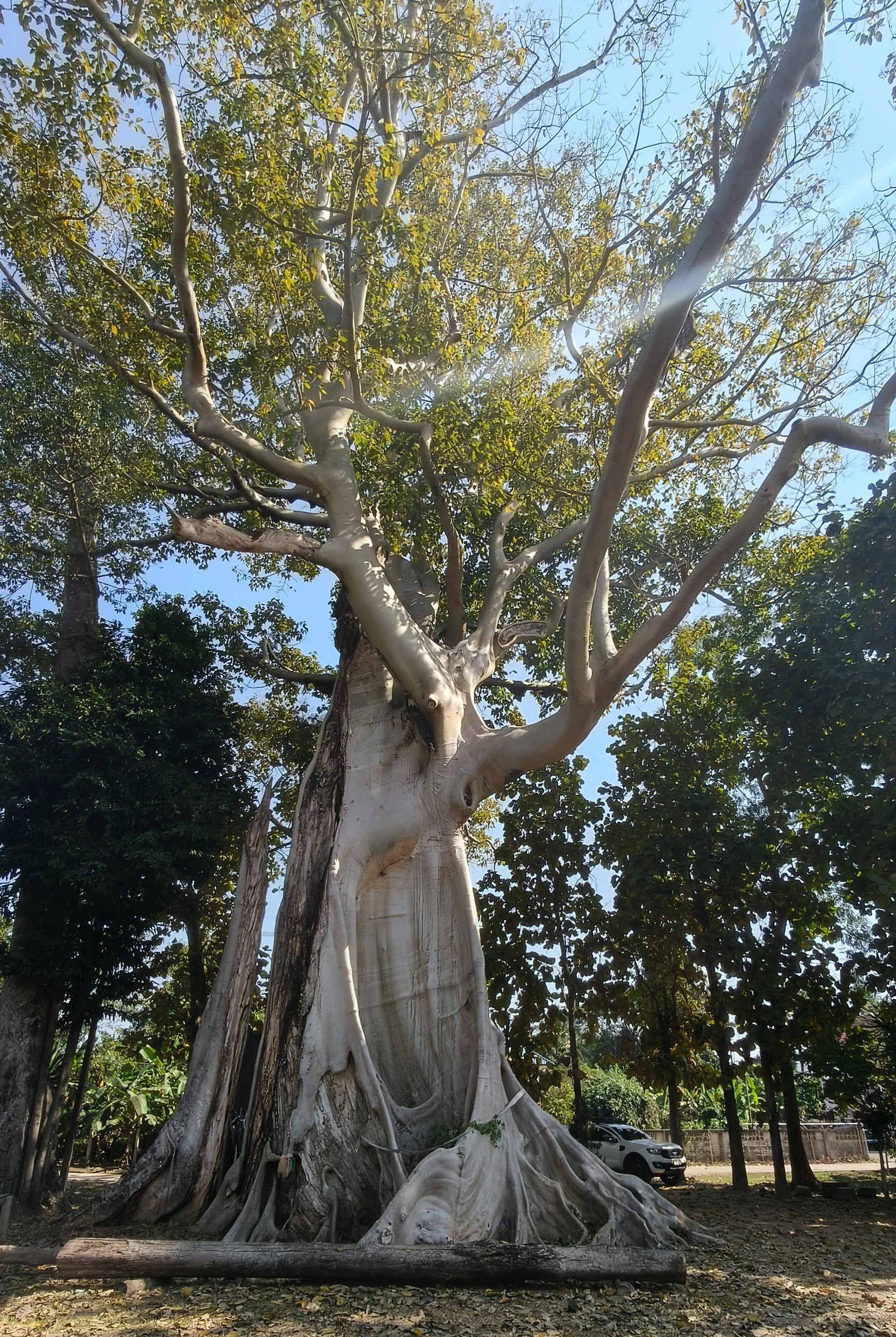
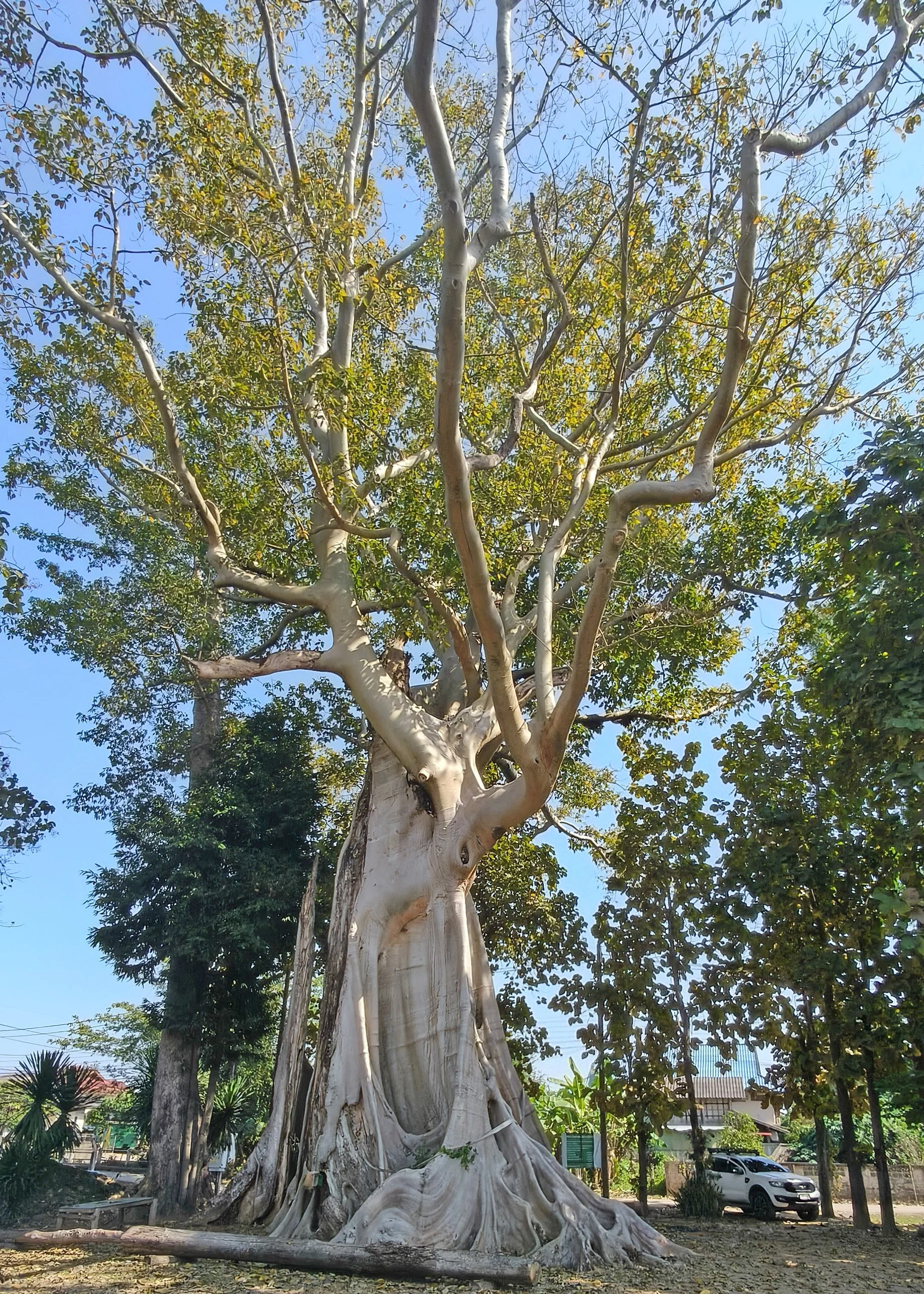
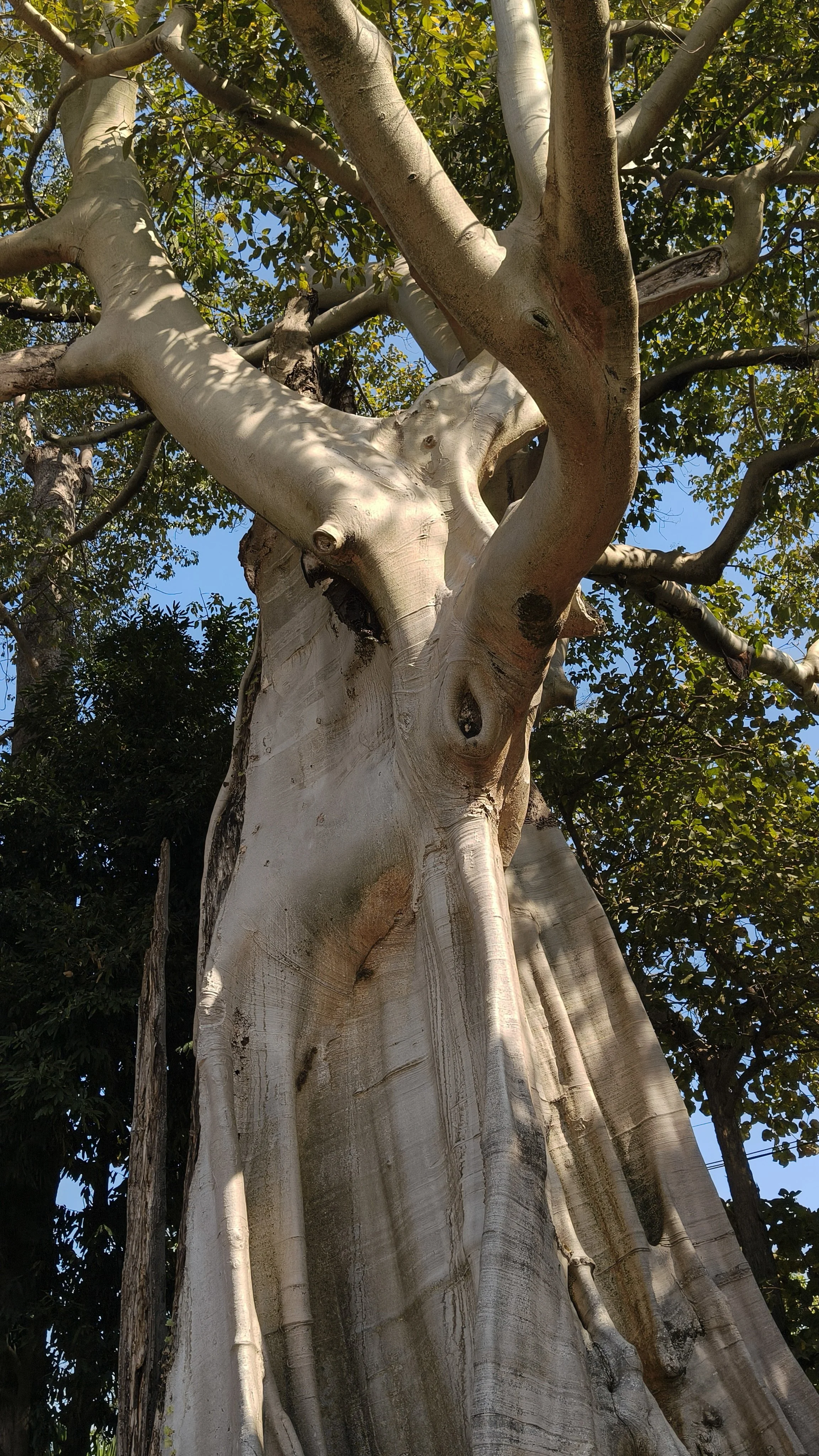
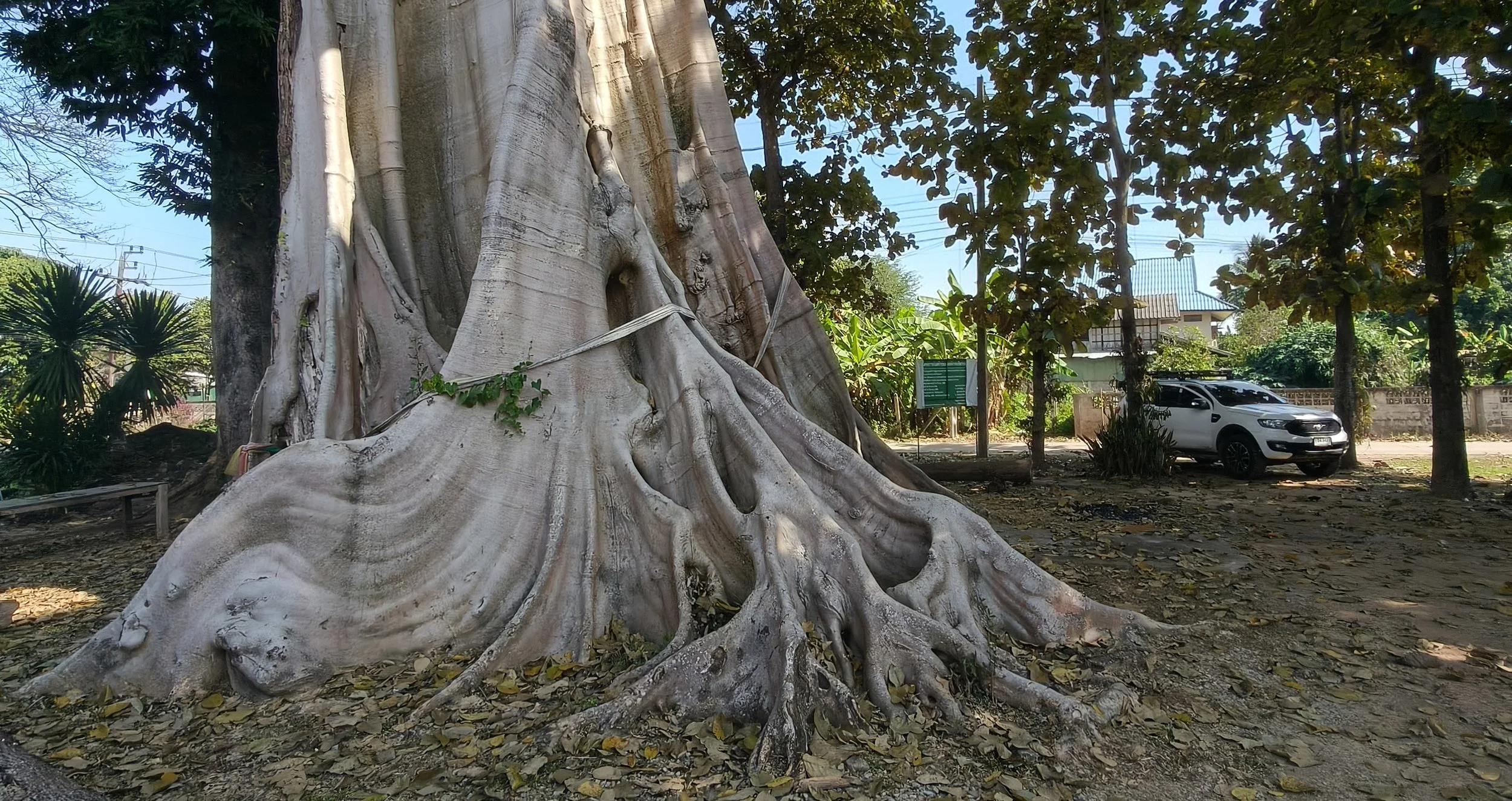
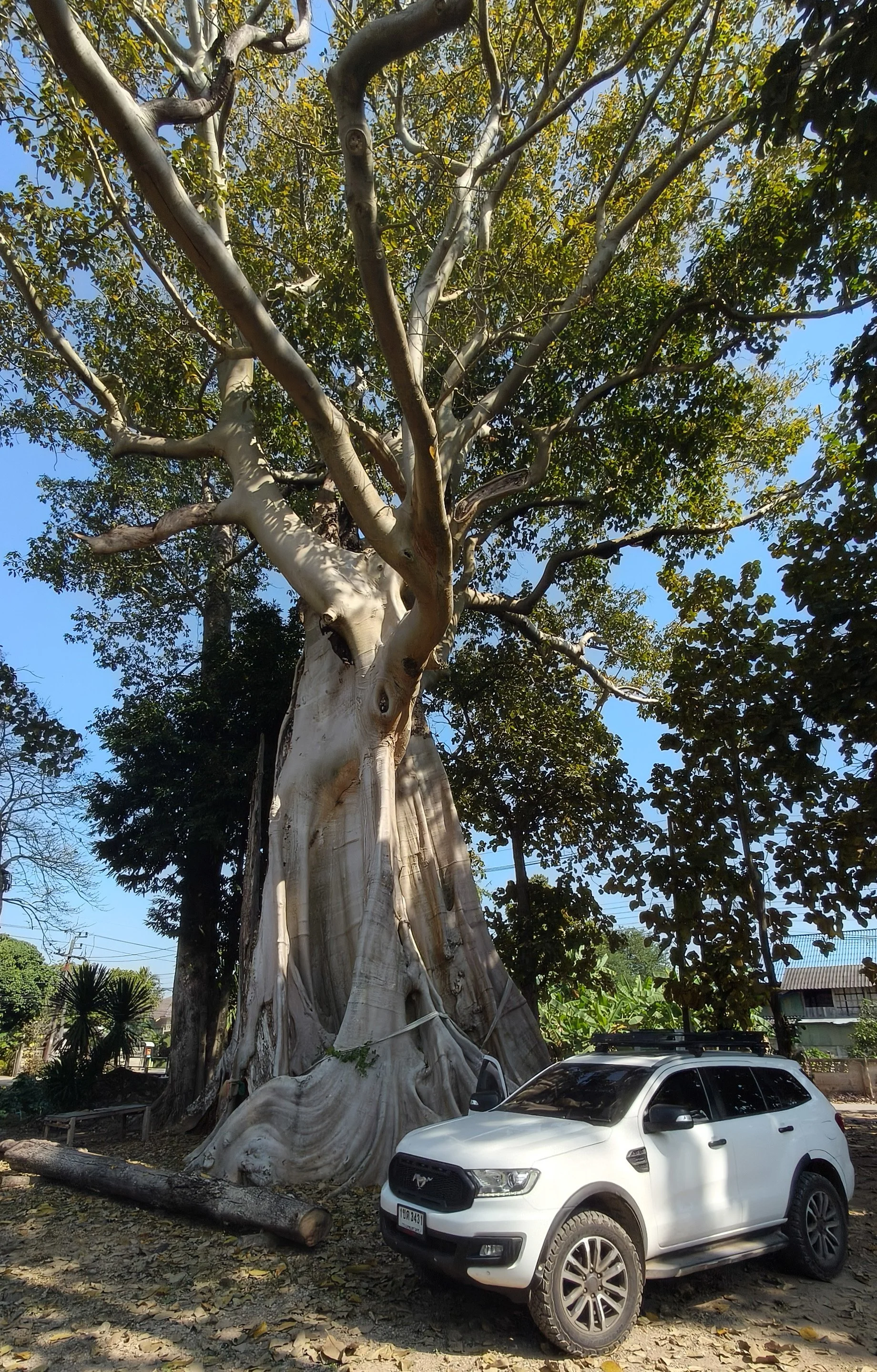
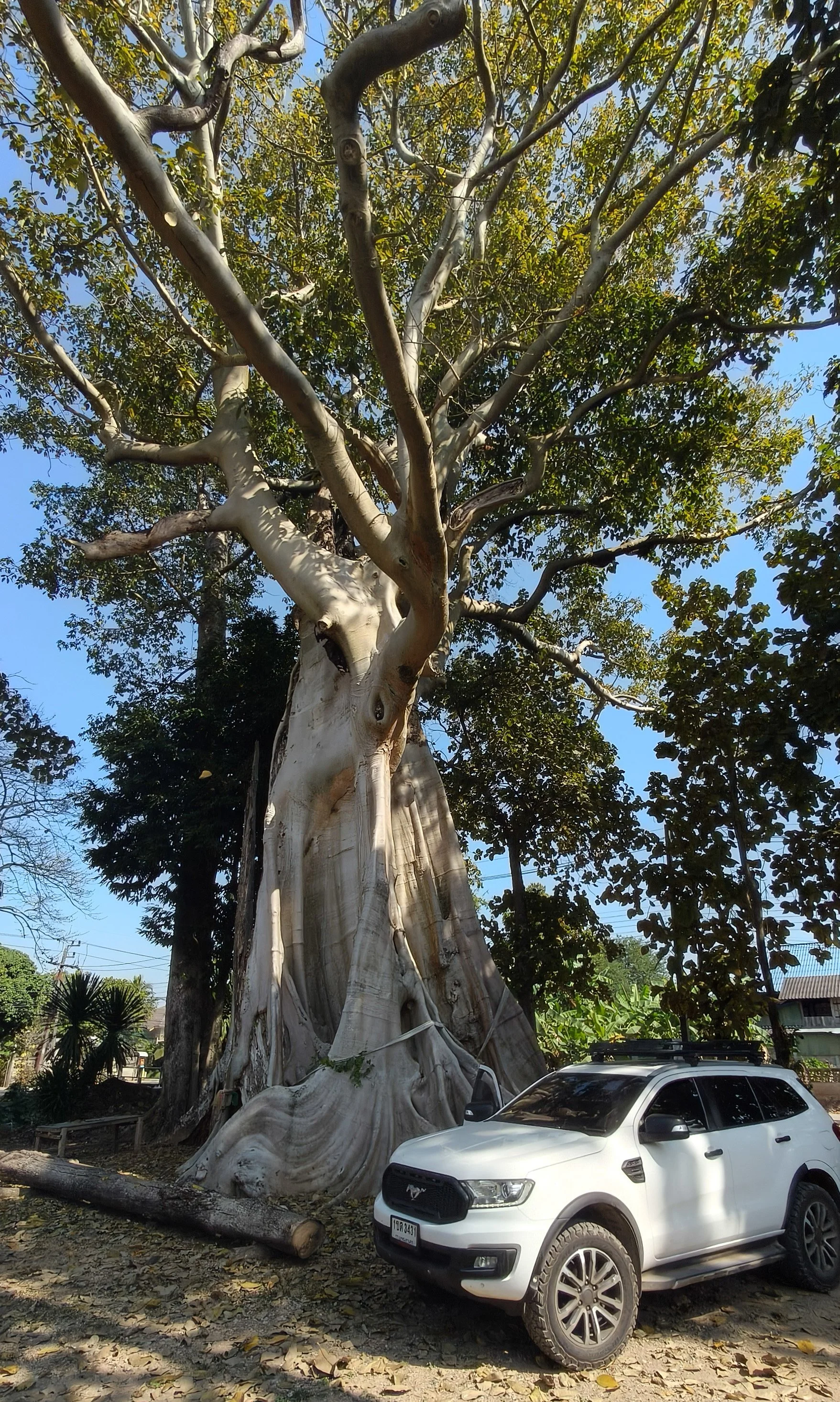
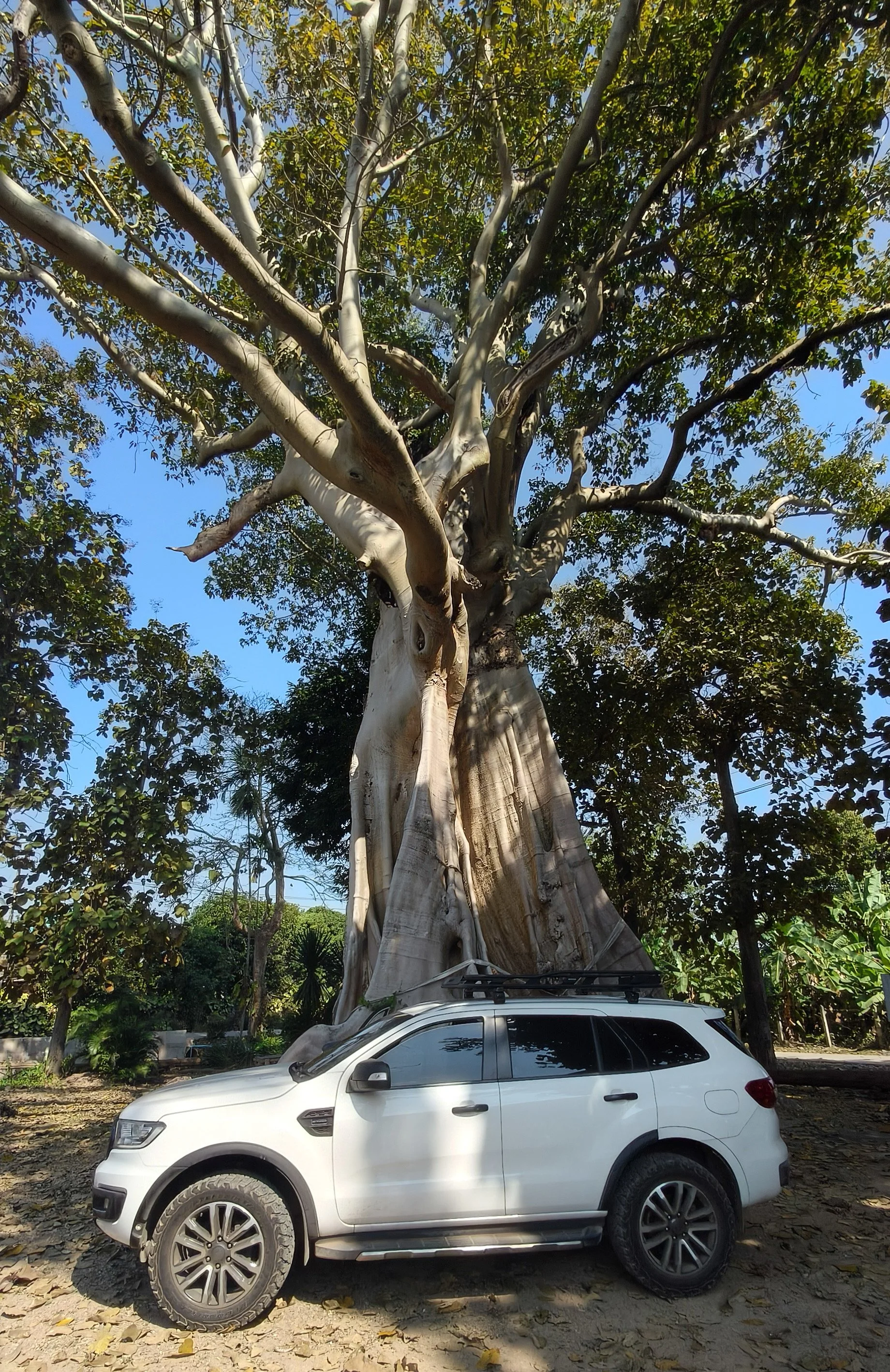
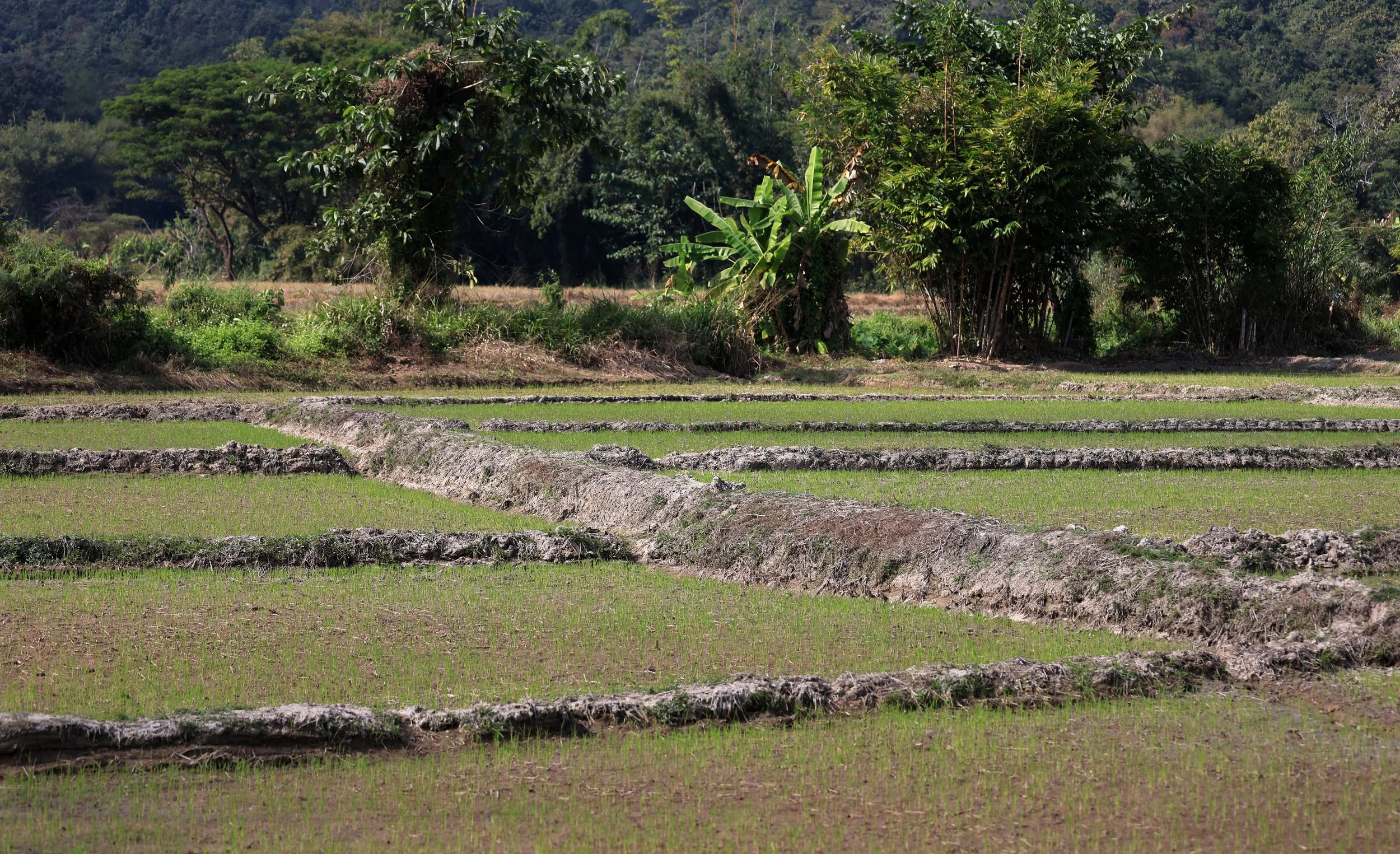
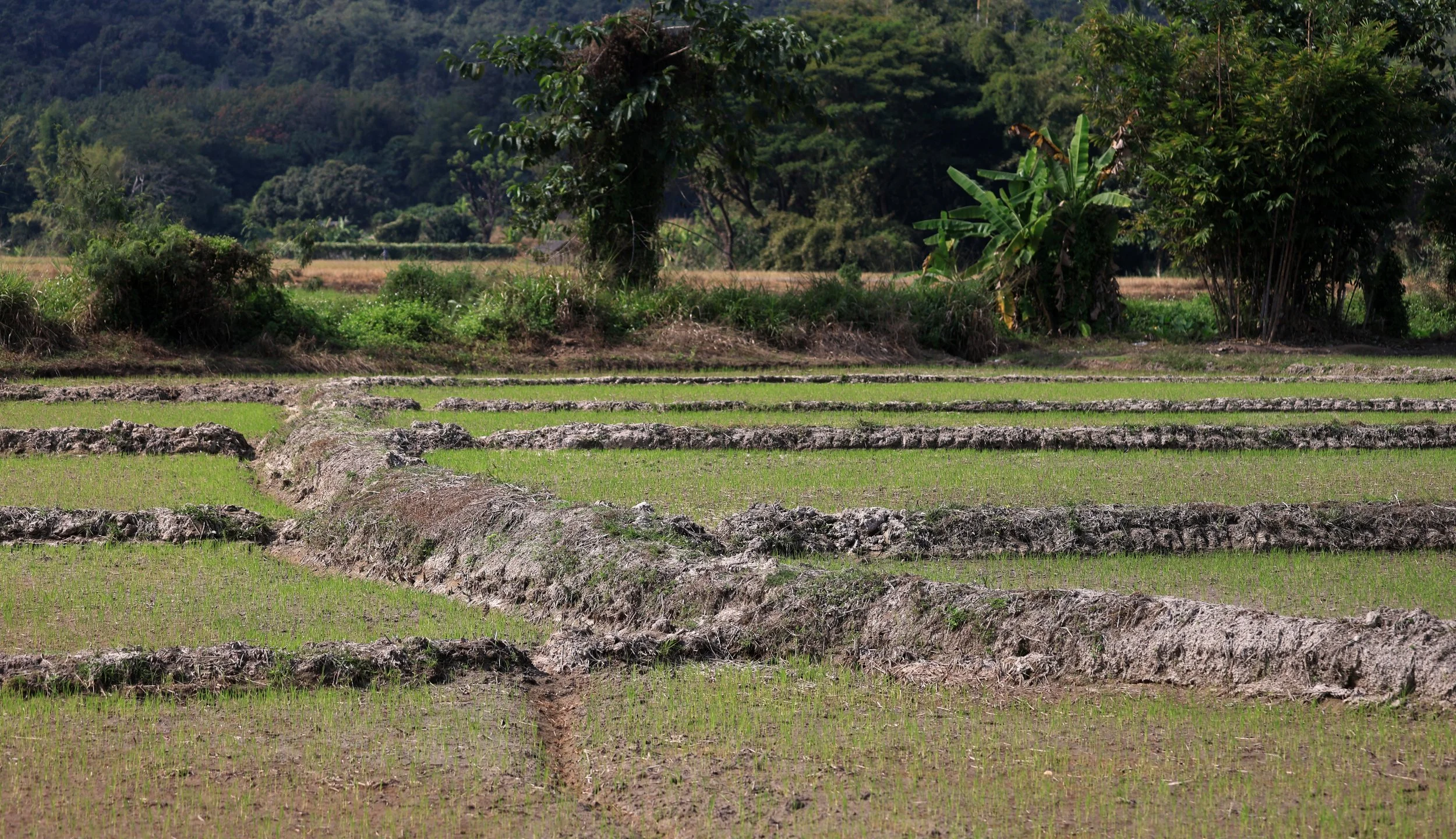
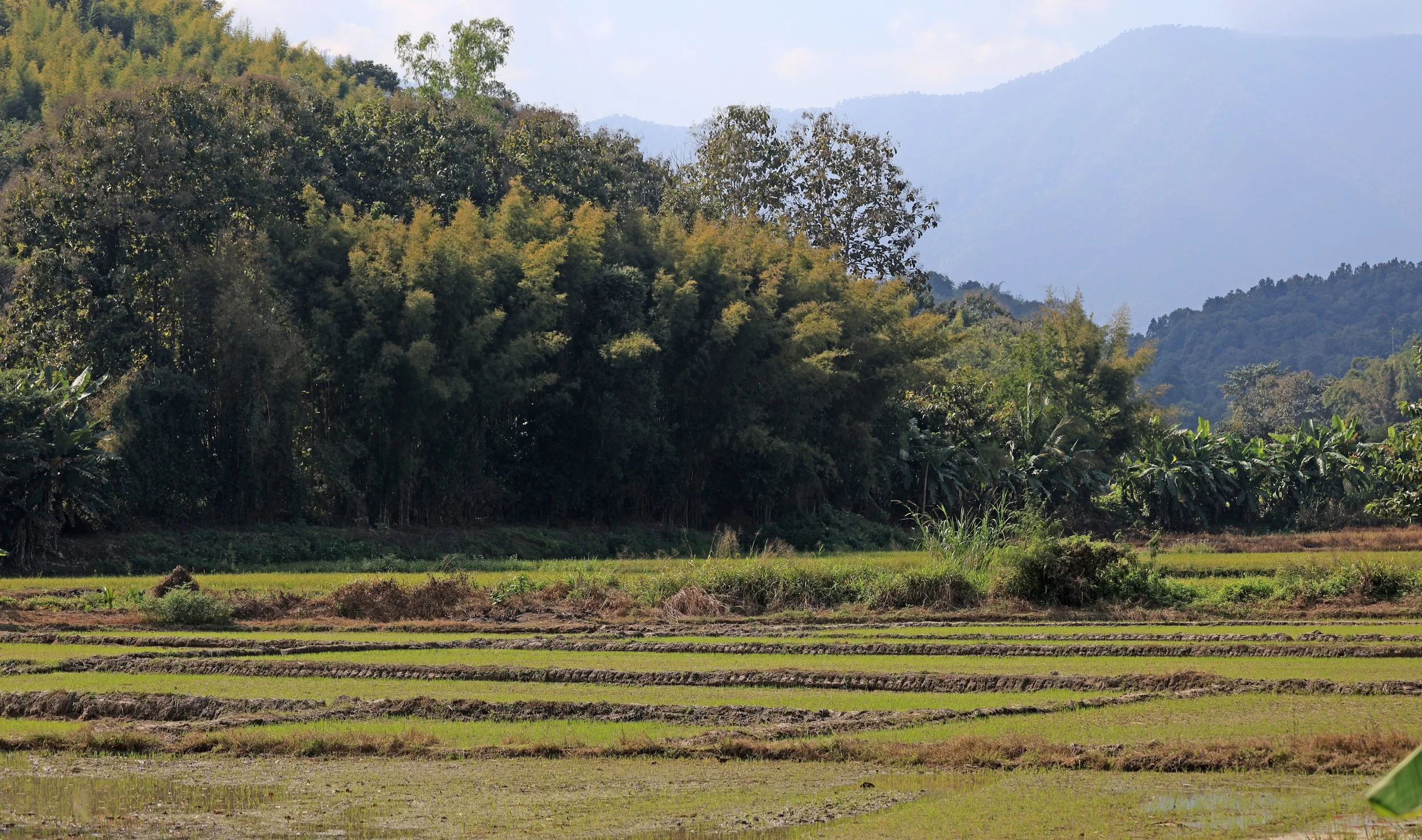
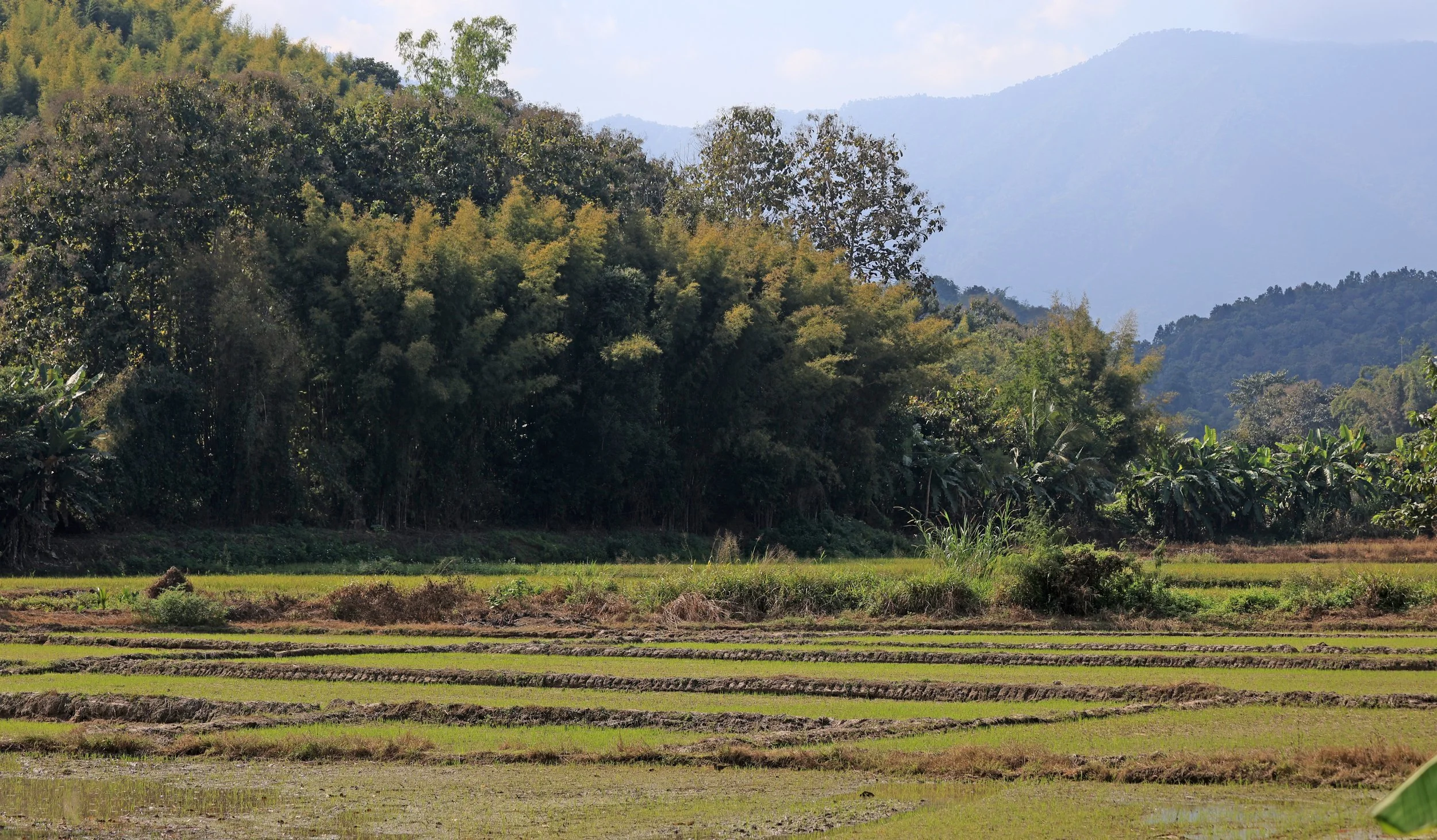
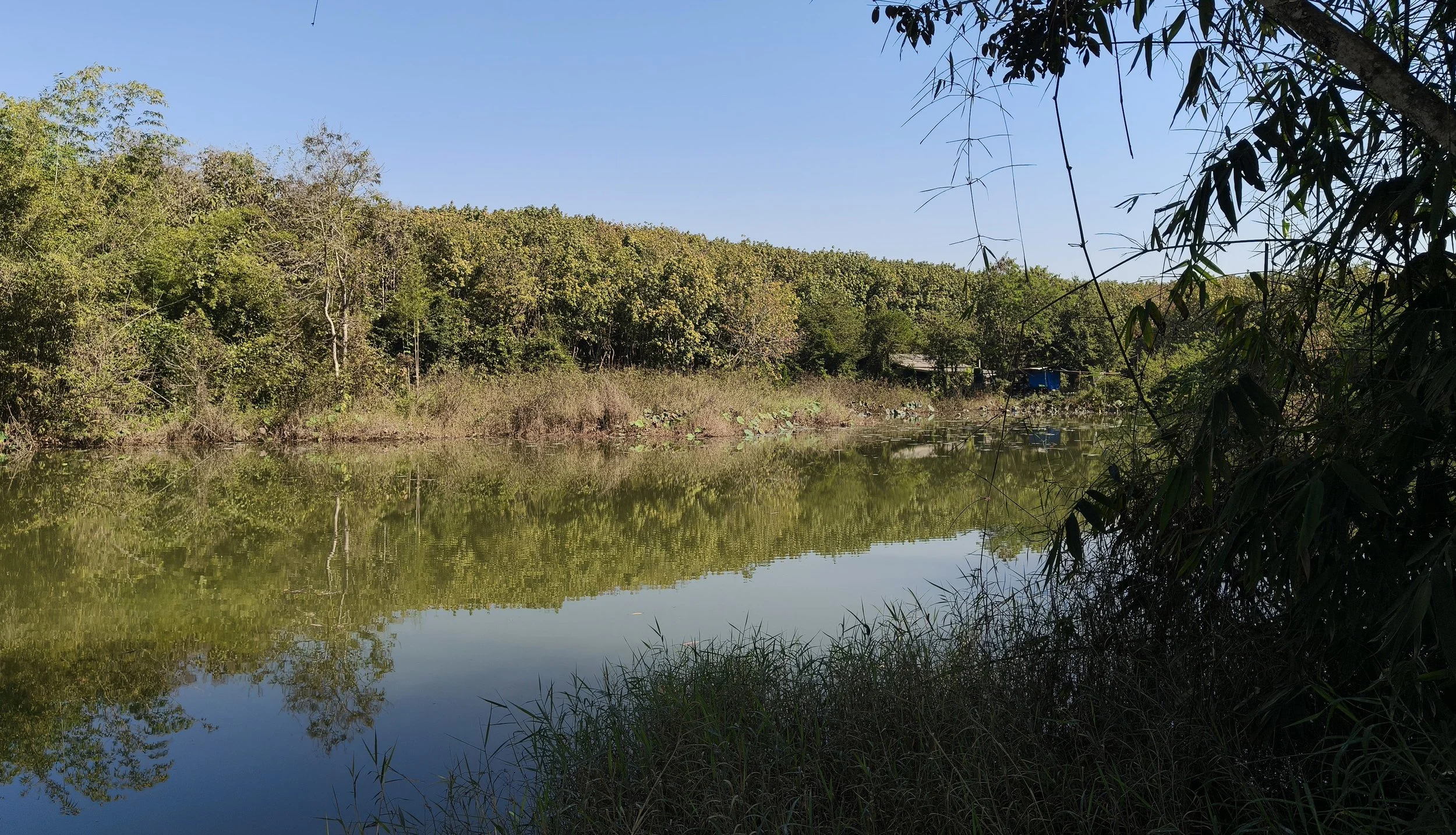
Phayao’s Giant Ficus Tree and the Surrounding Countryside of Phayao
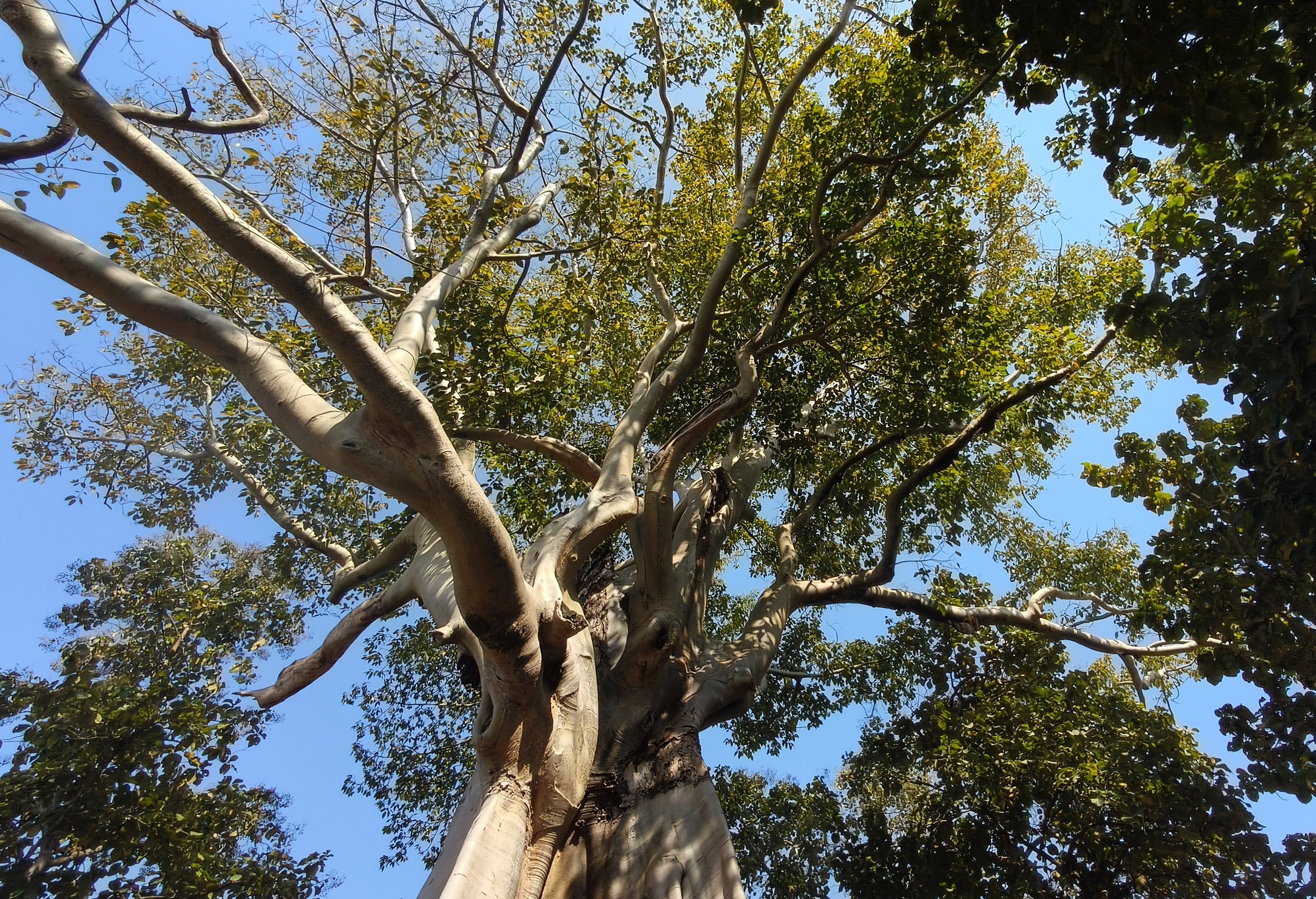
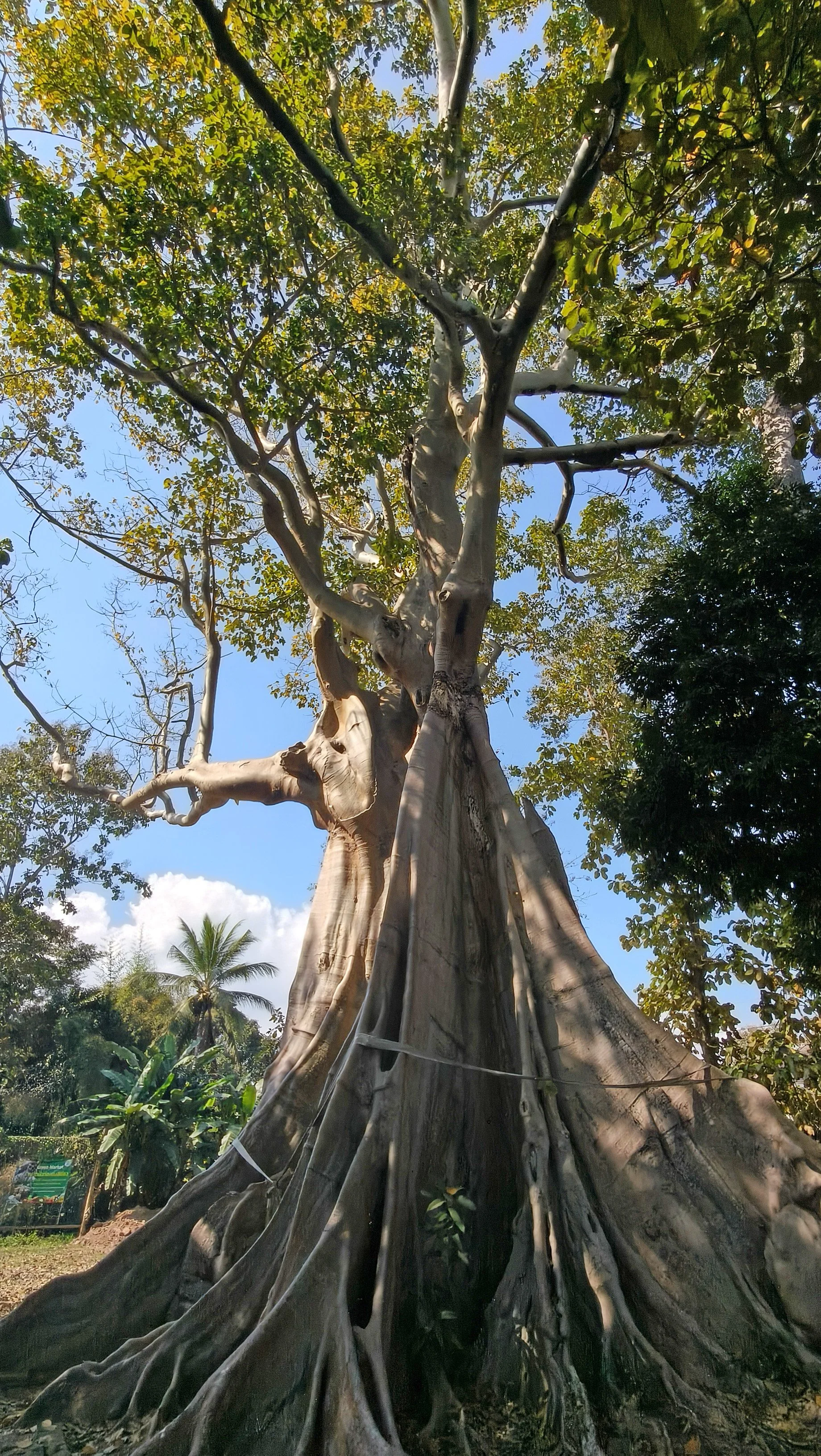
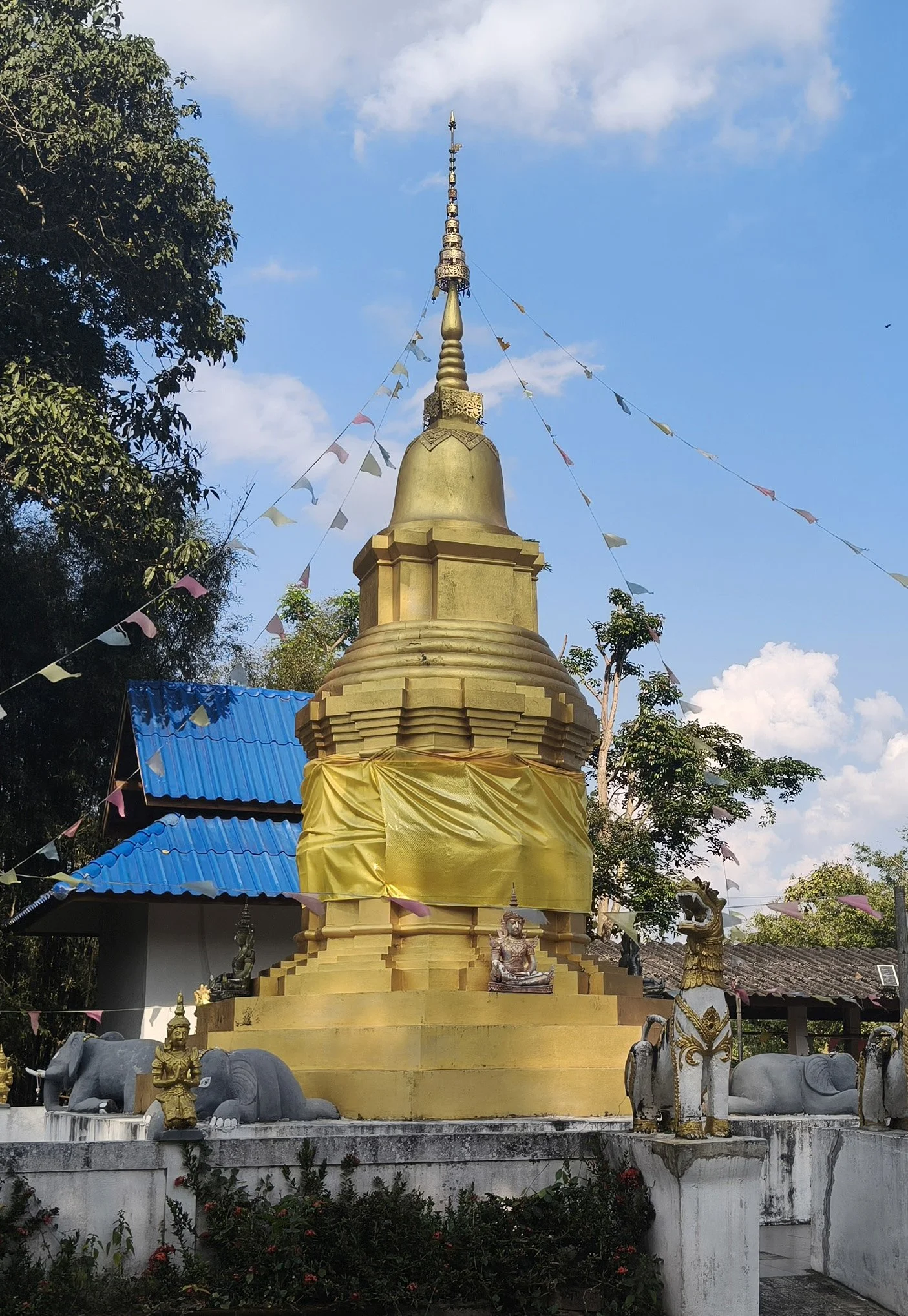
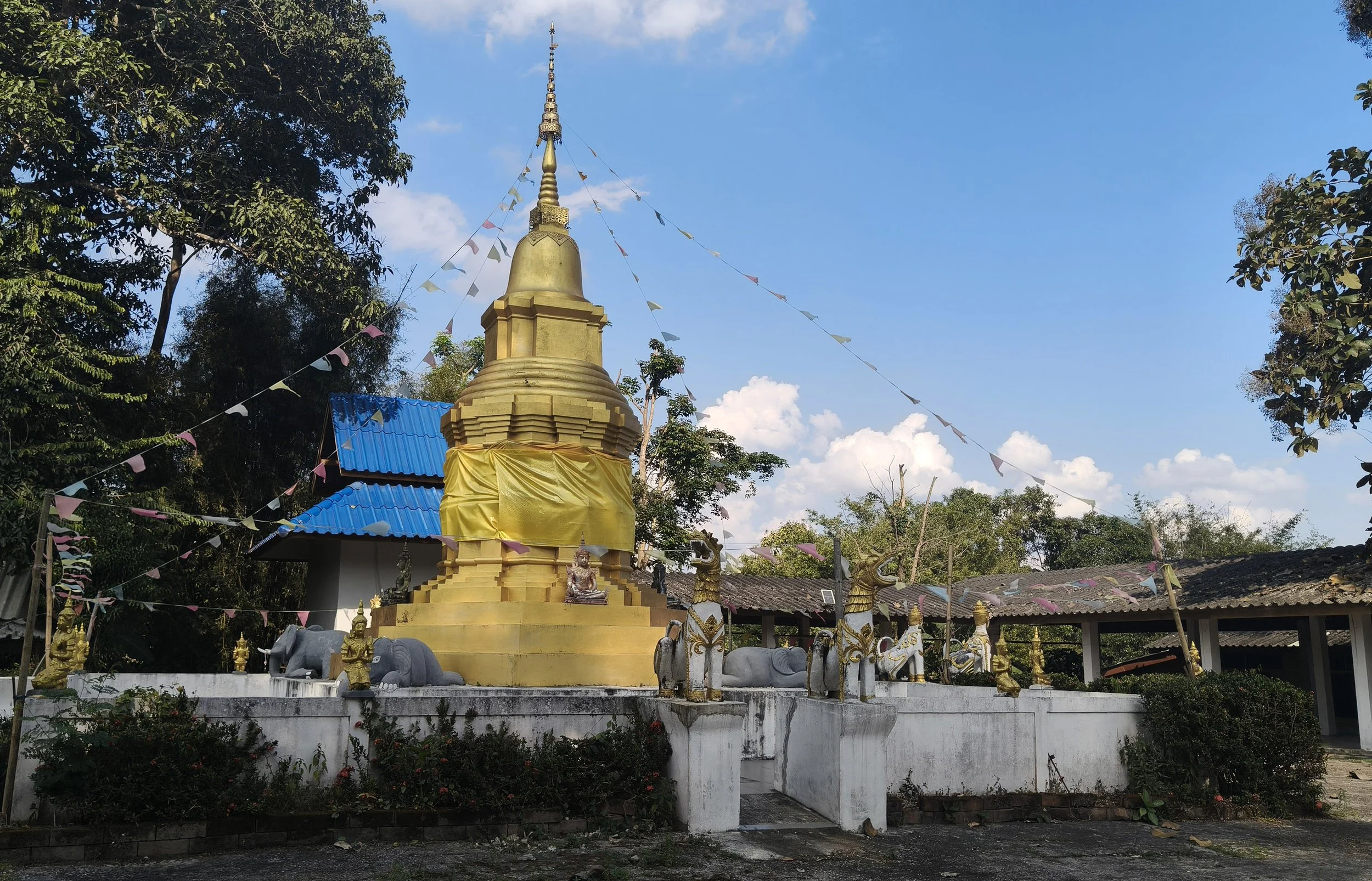
Phra That Pha Chang - Phayao Province
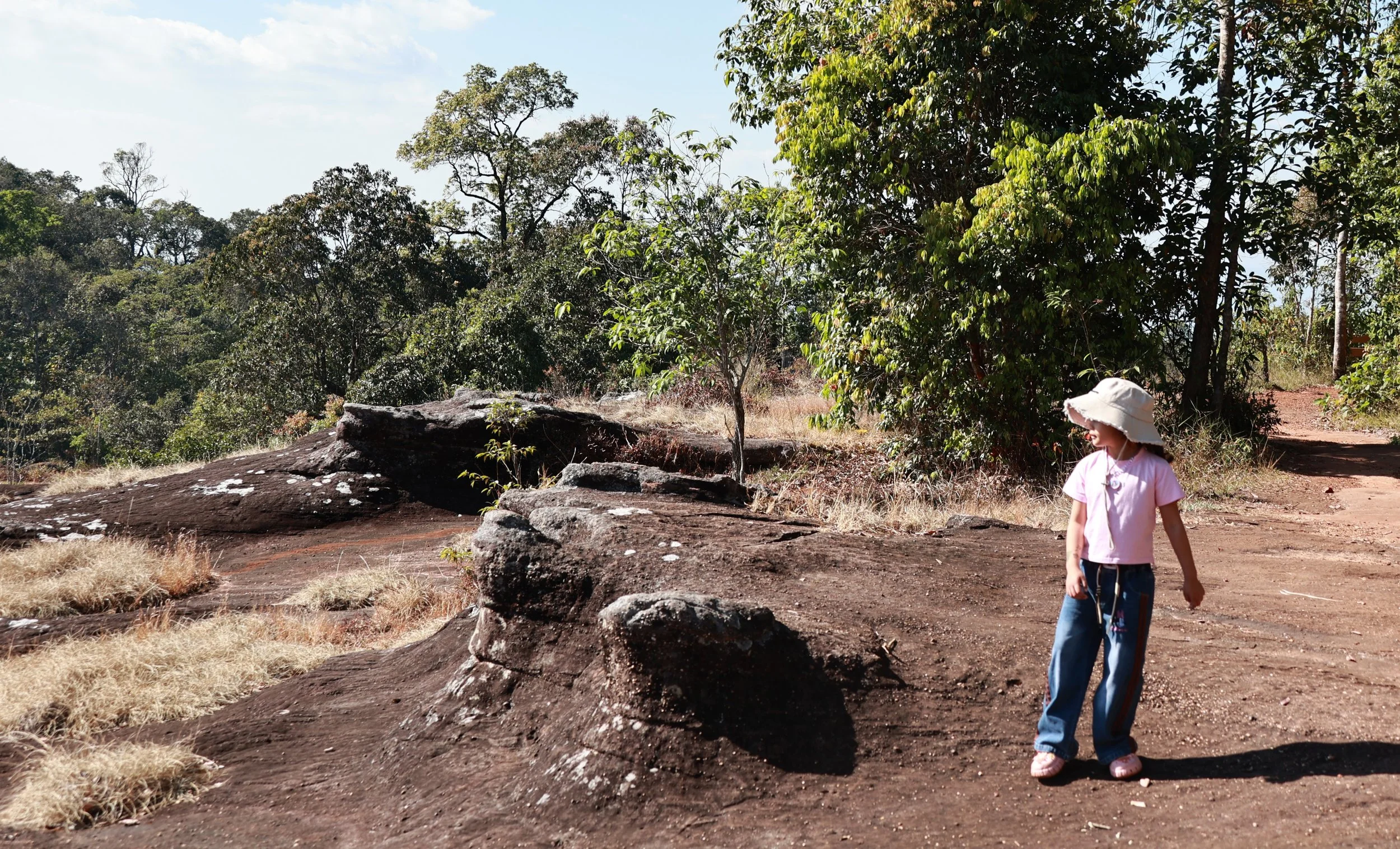
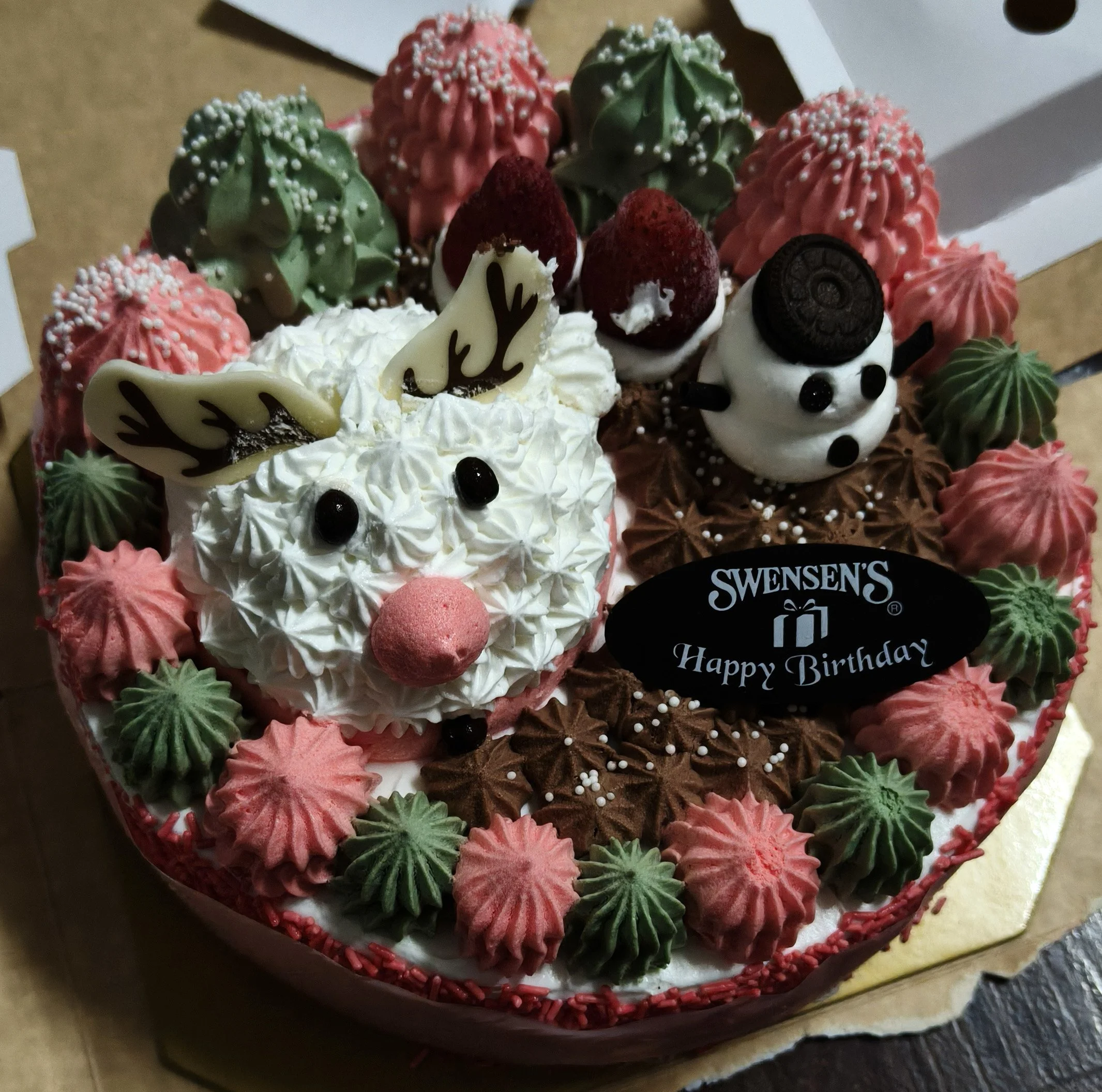
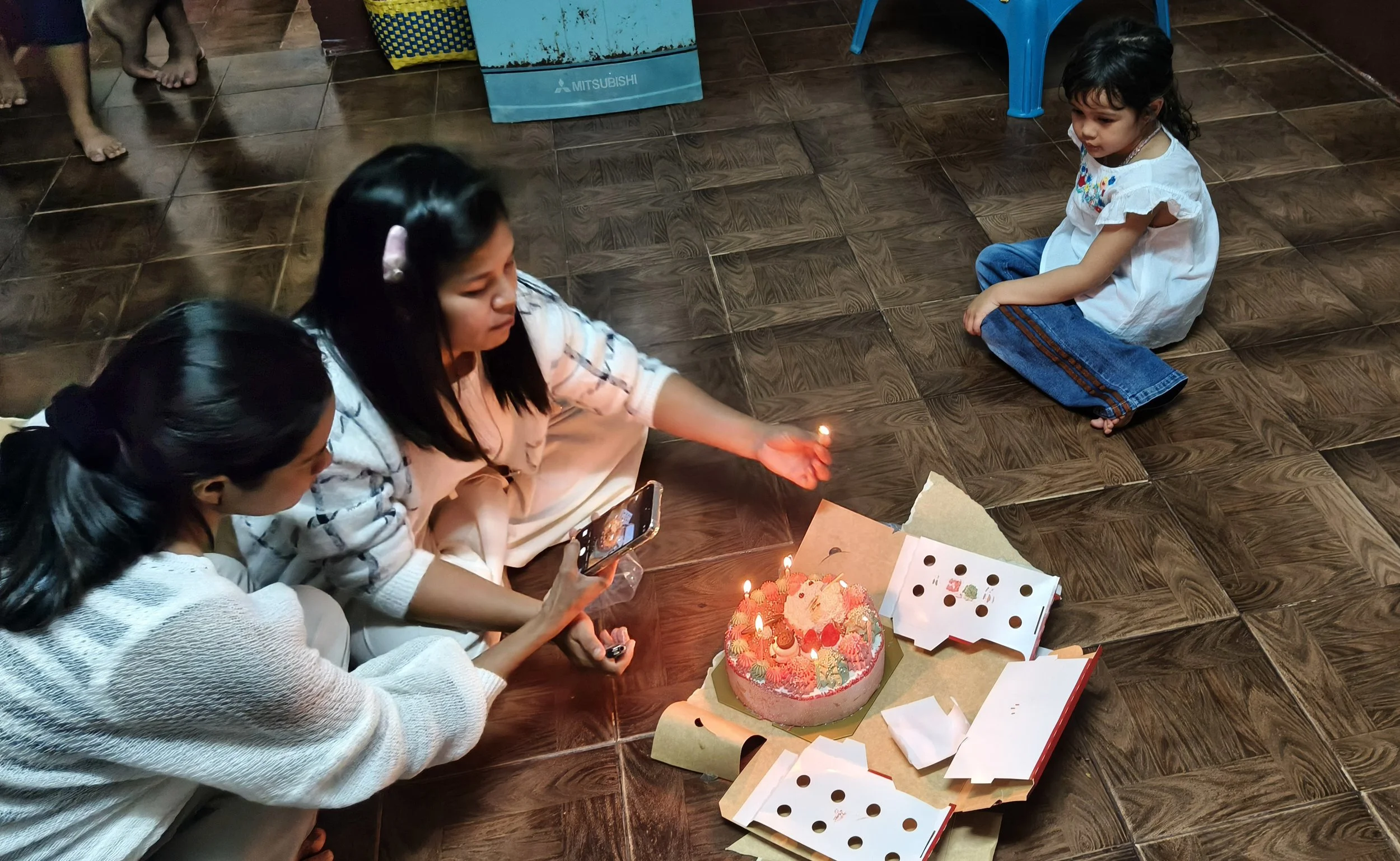
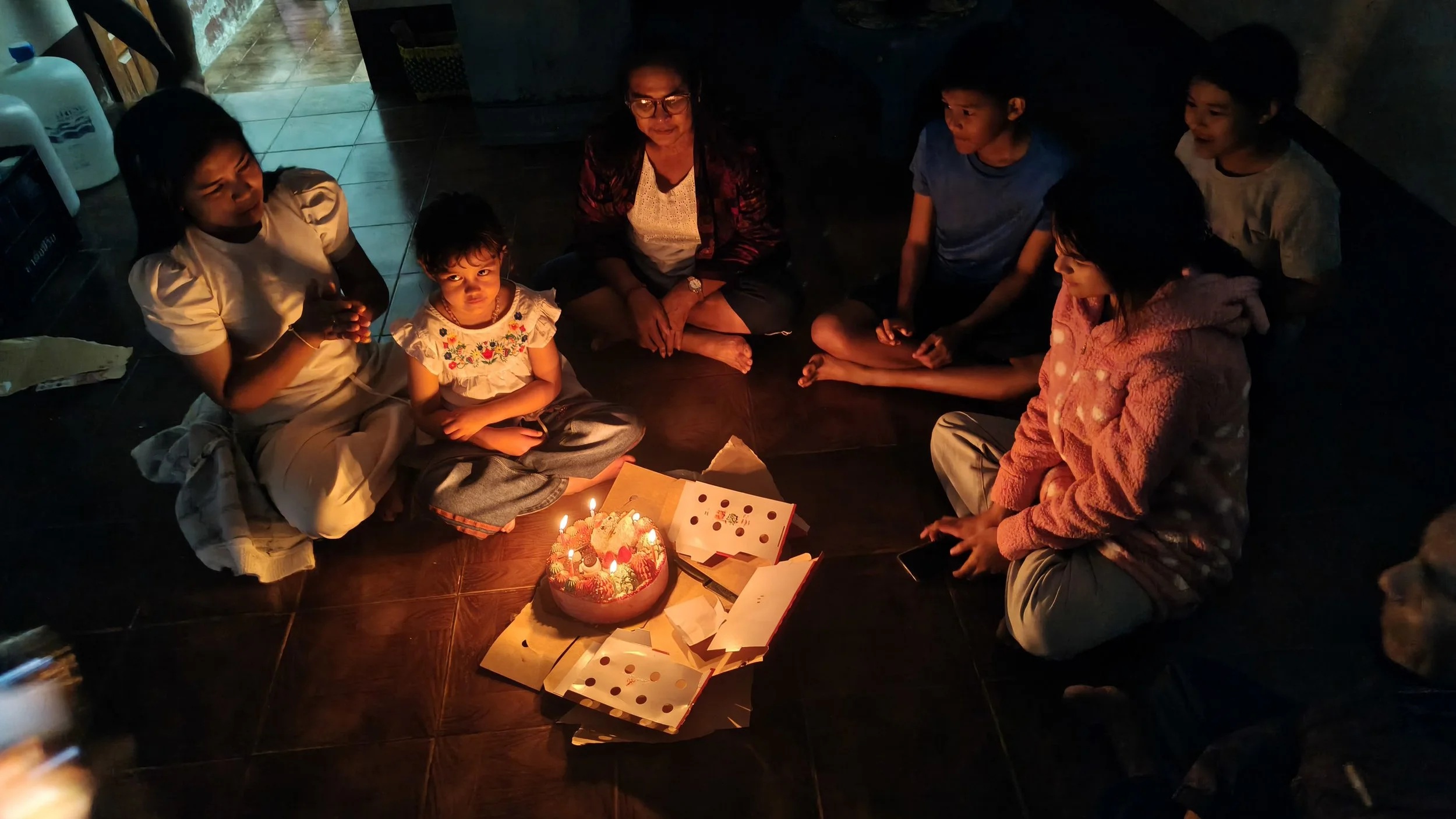
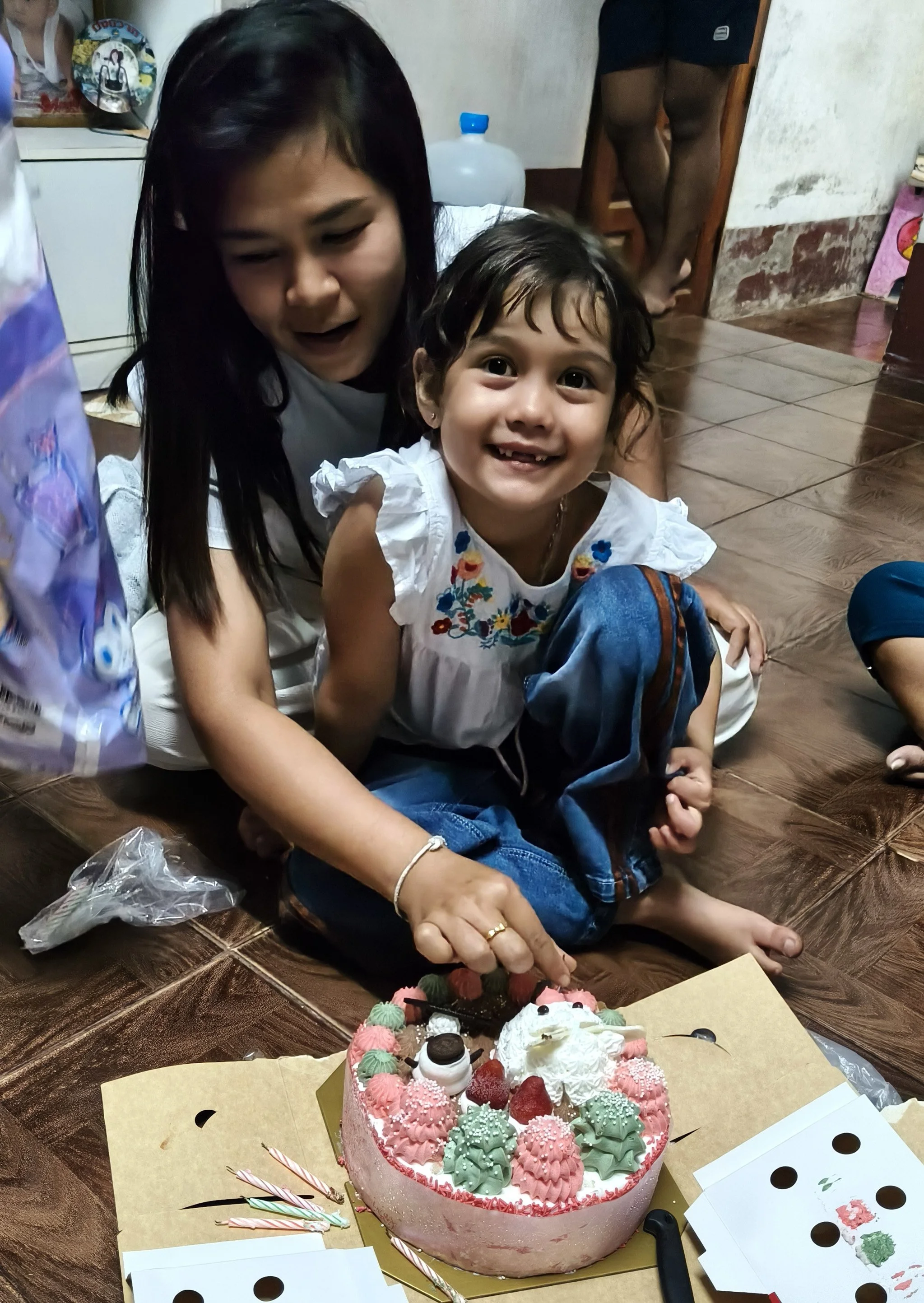
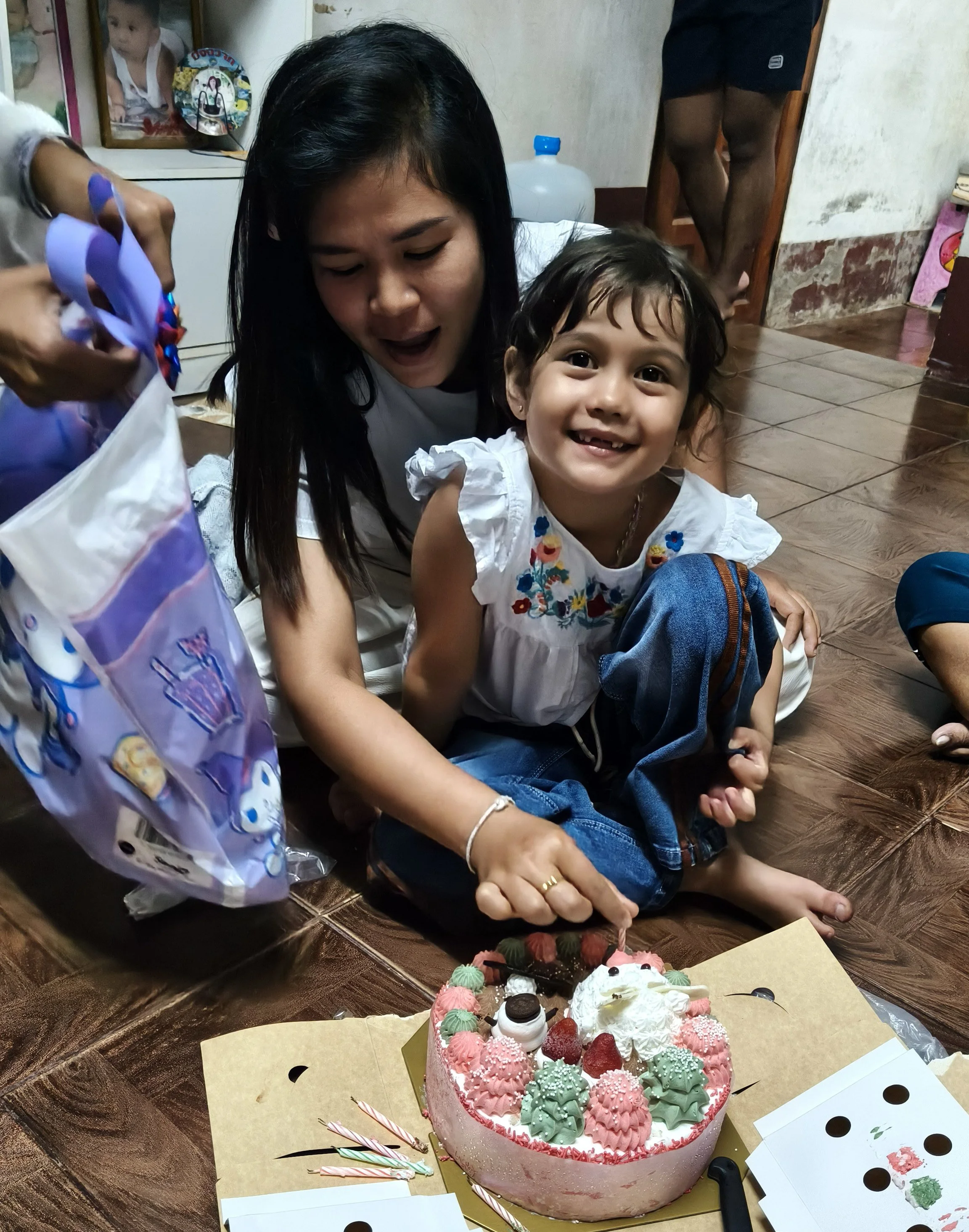
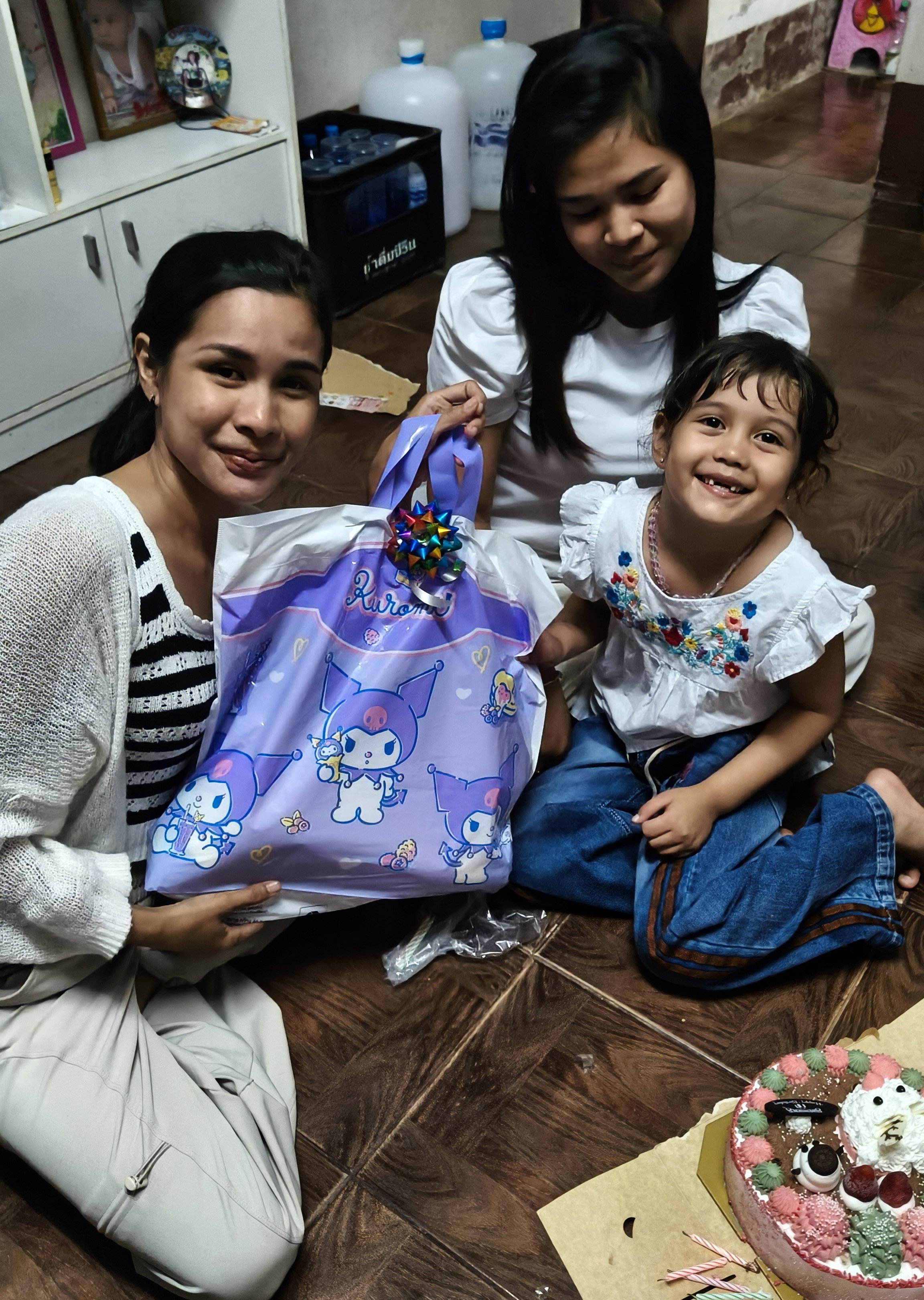
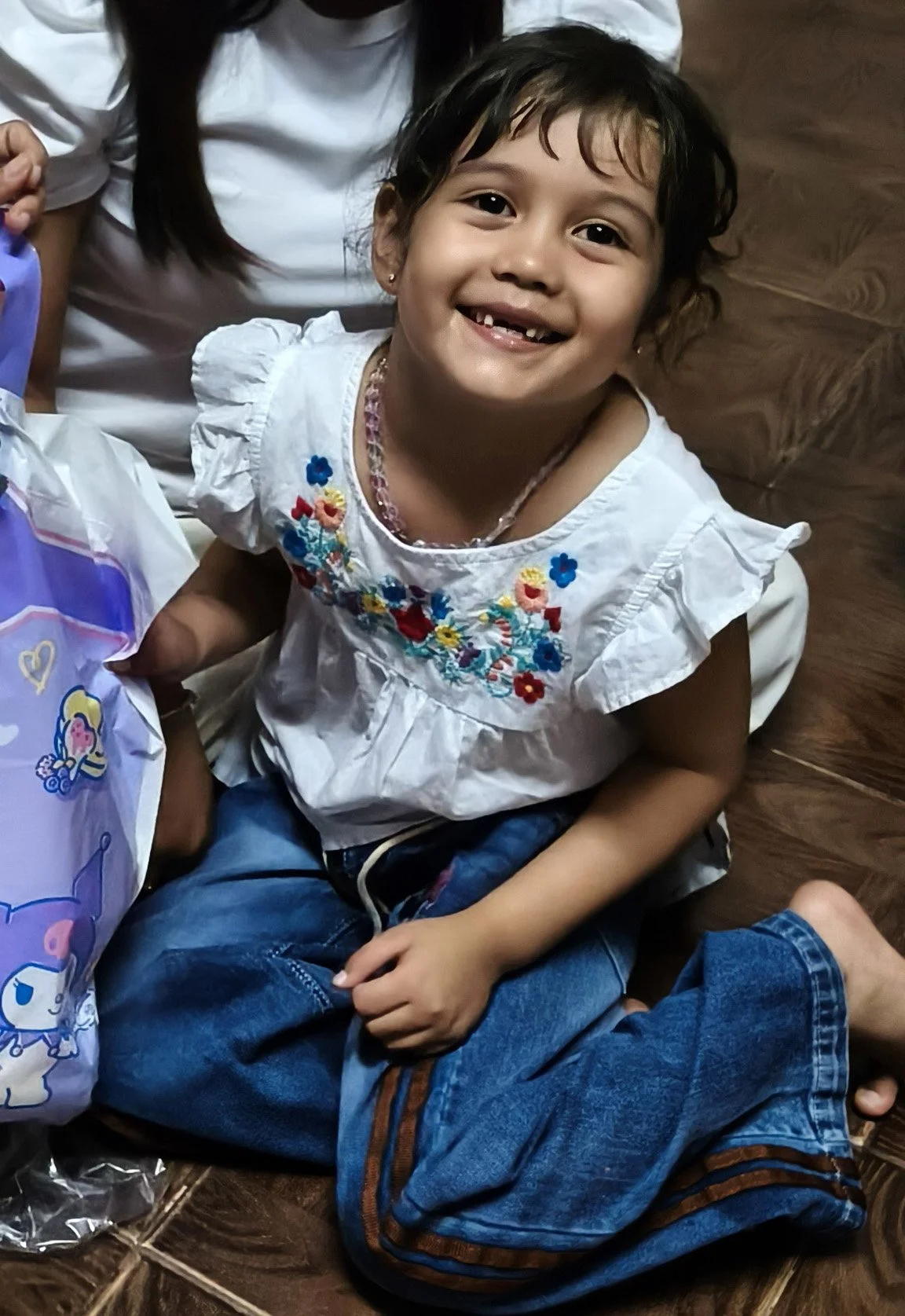
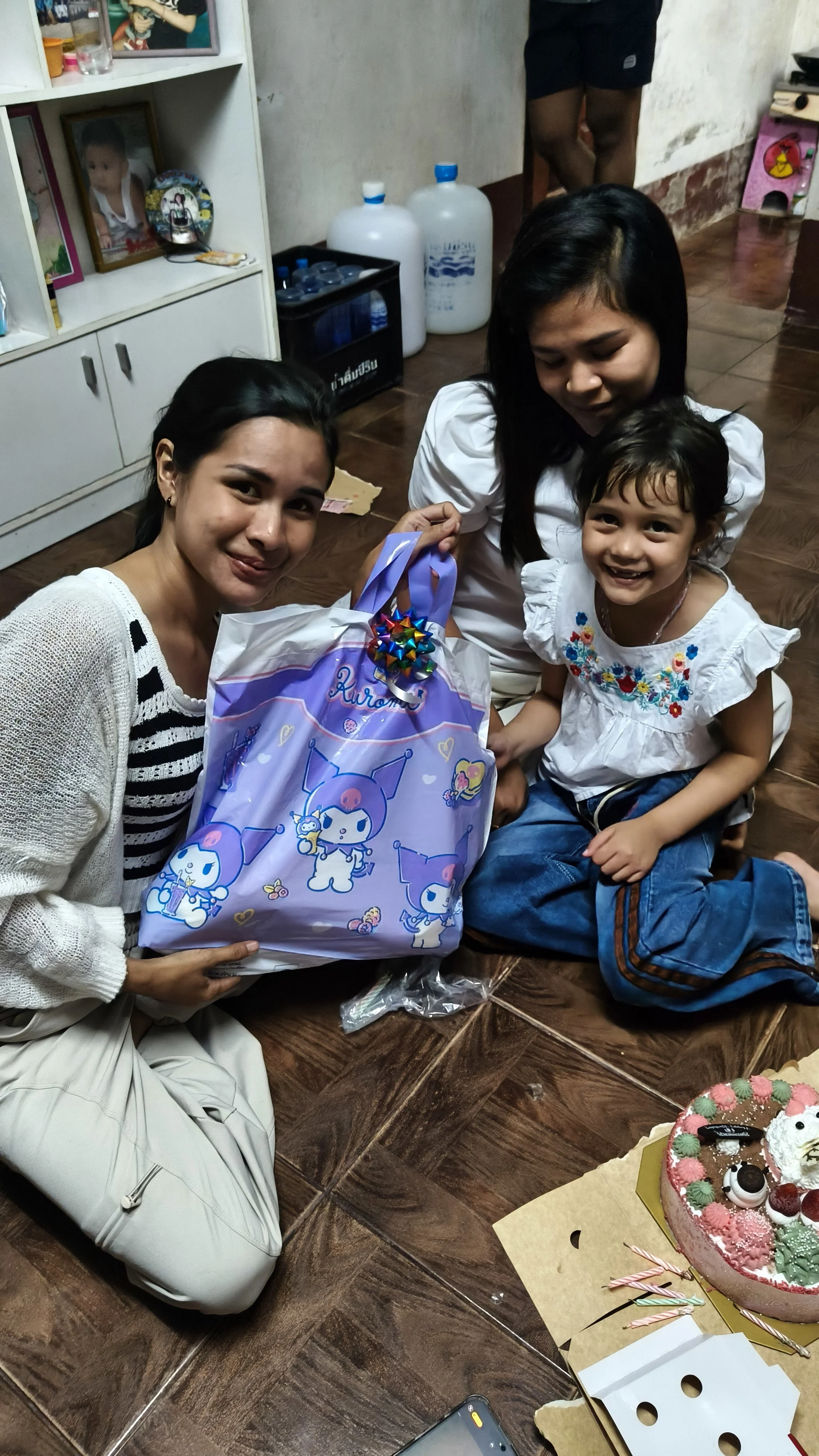
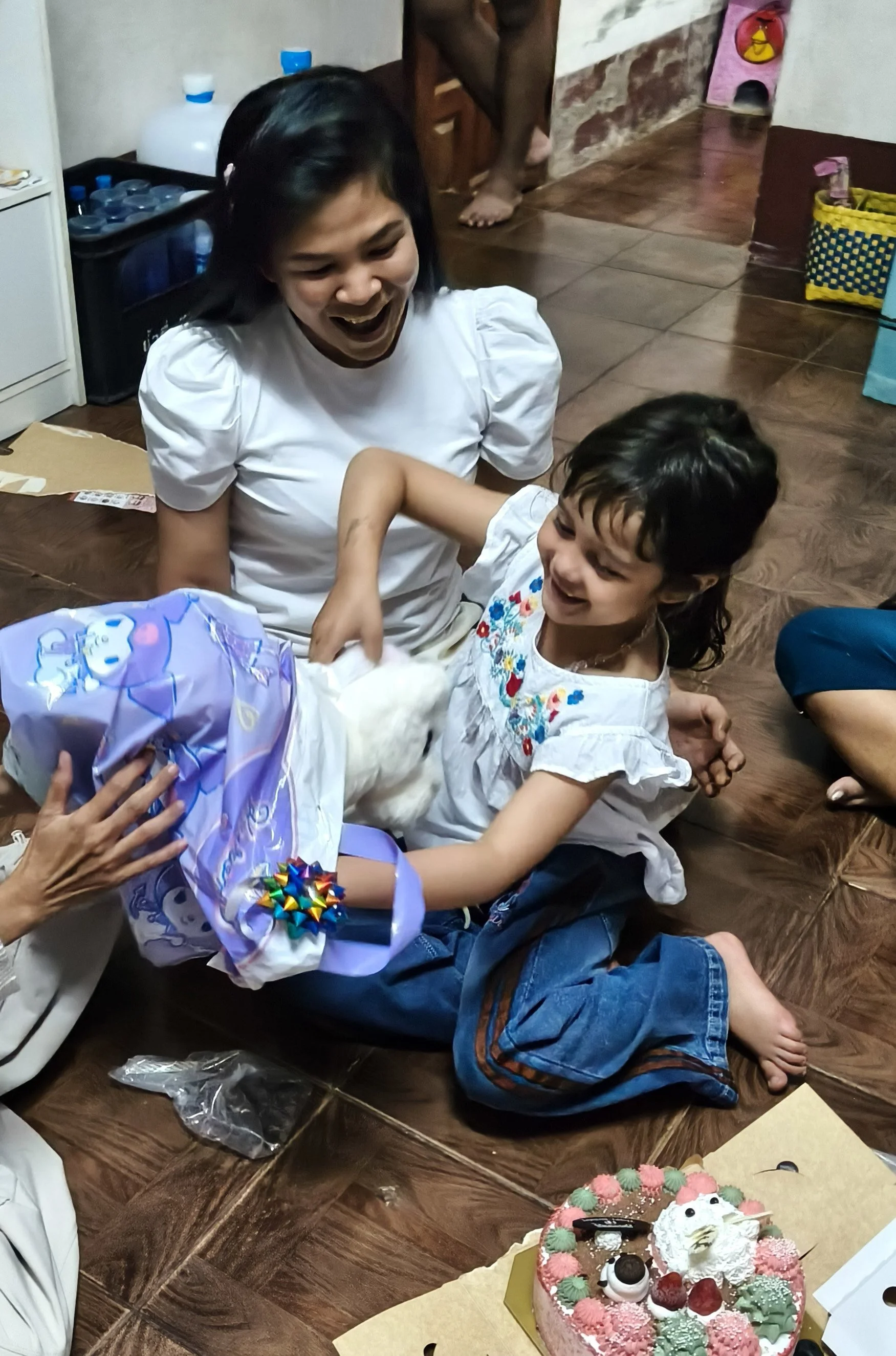
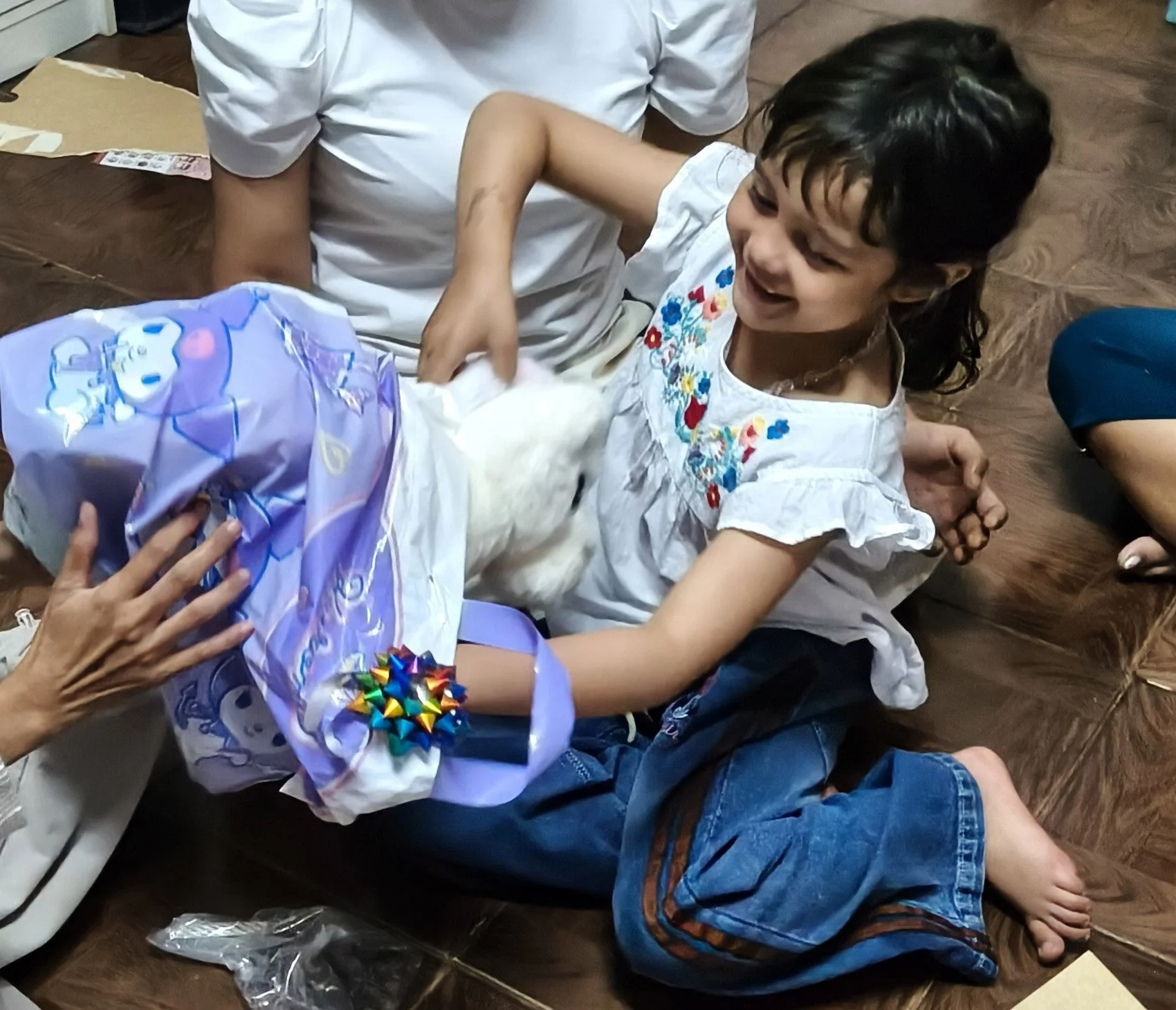
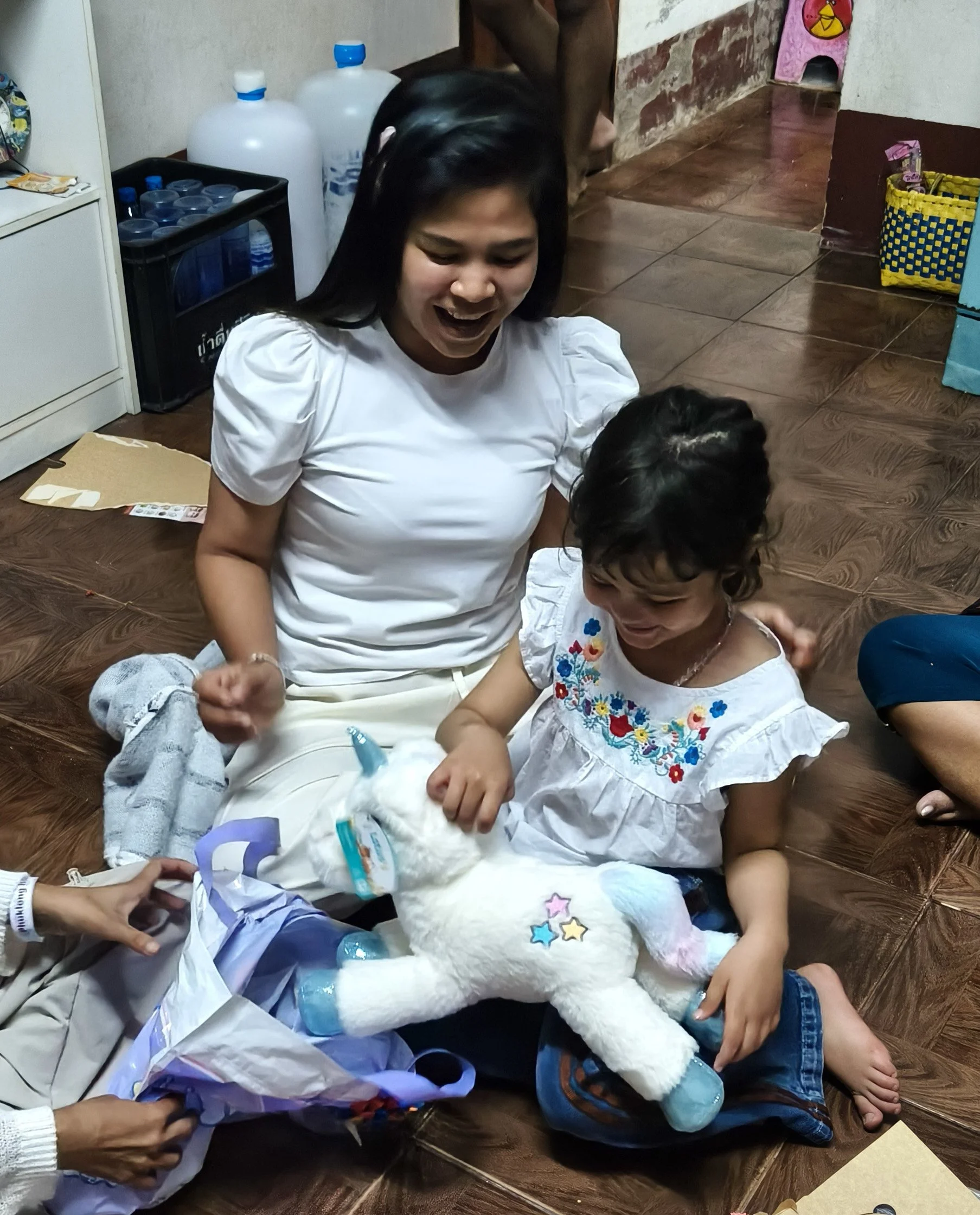
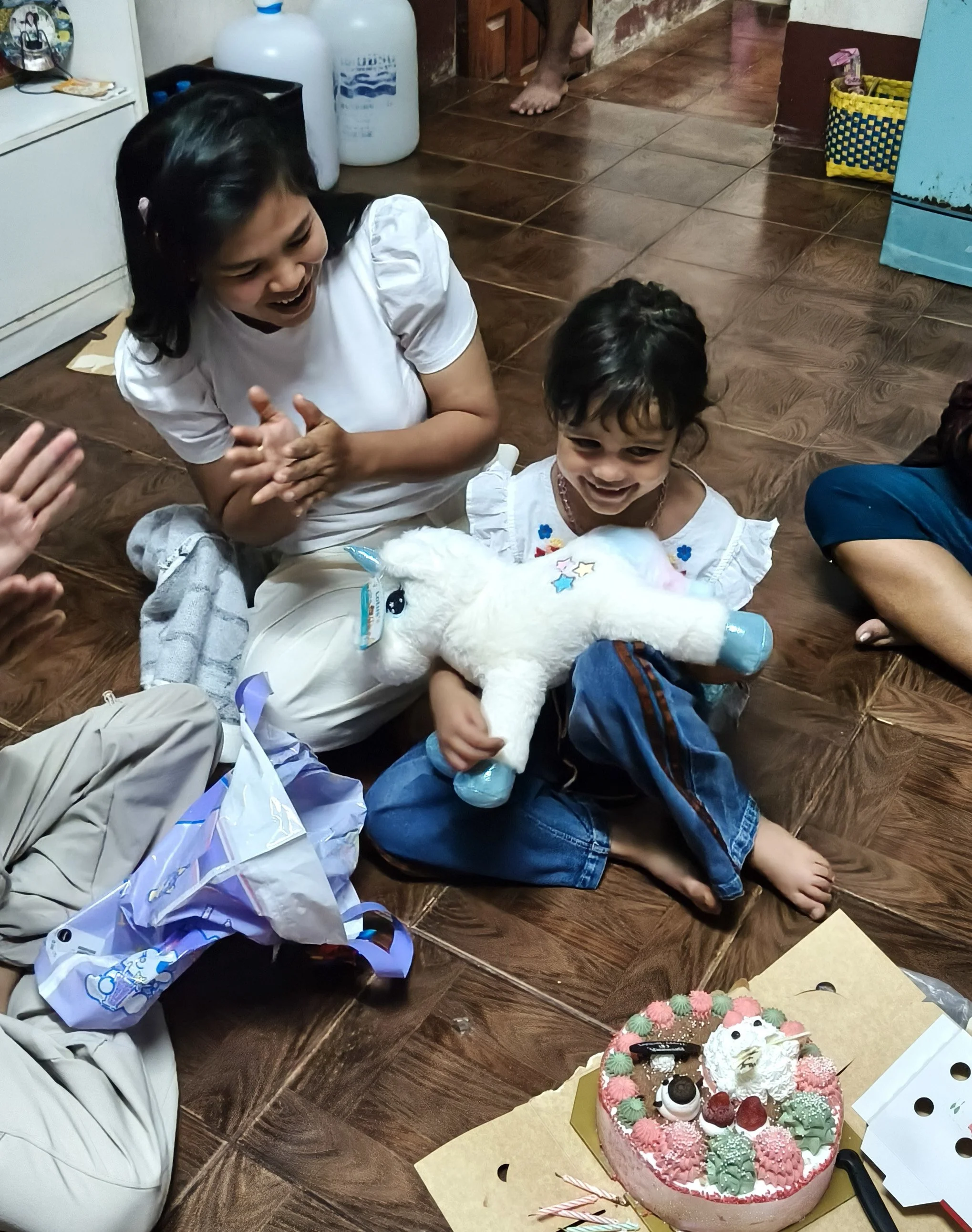
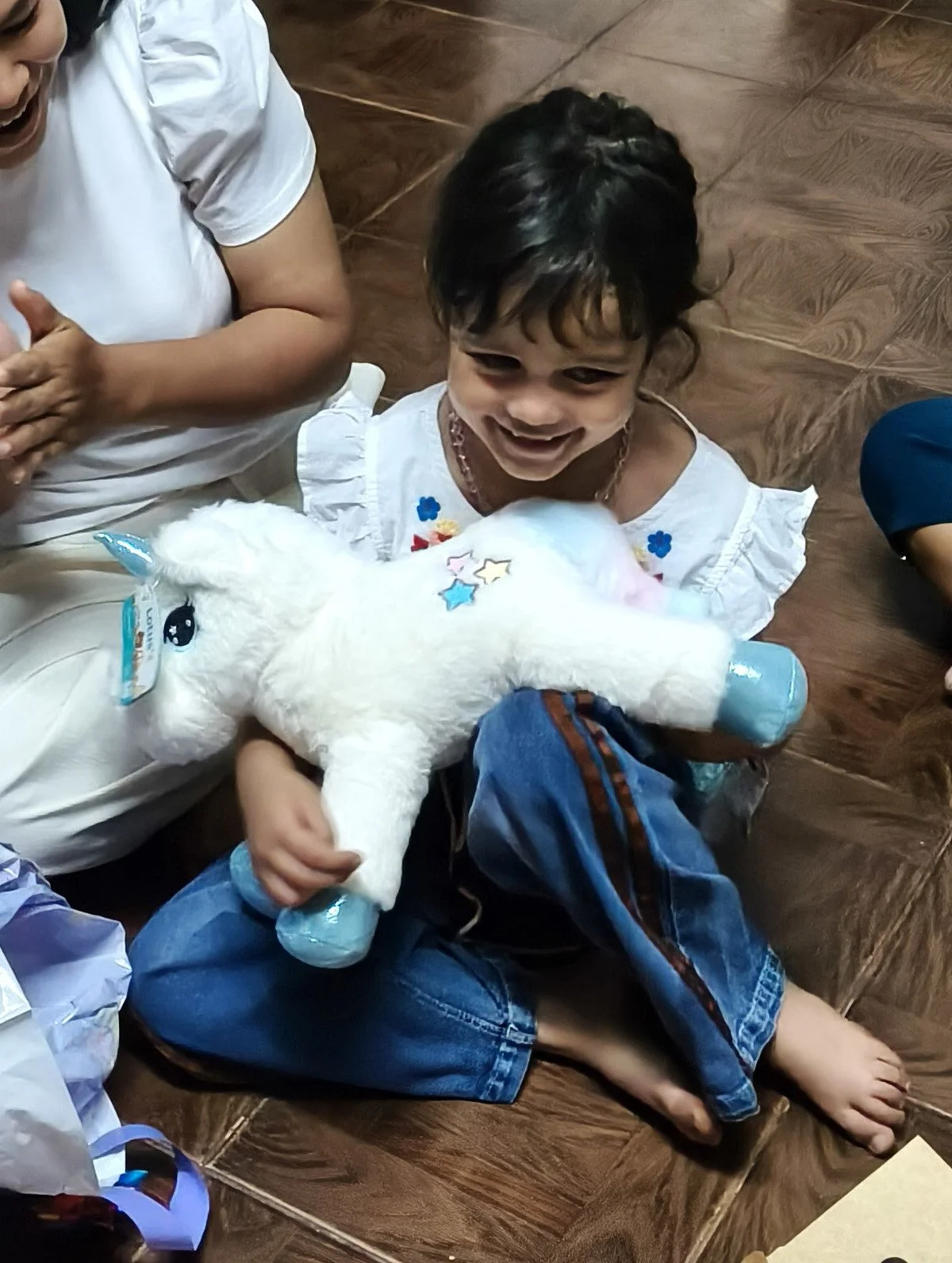
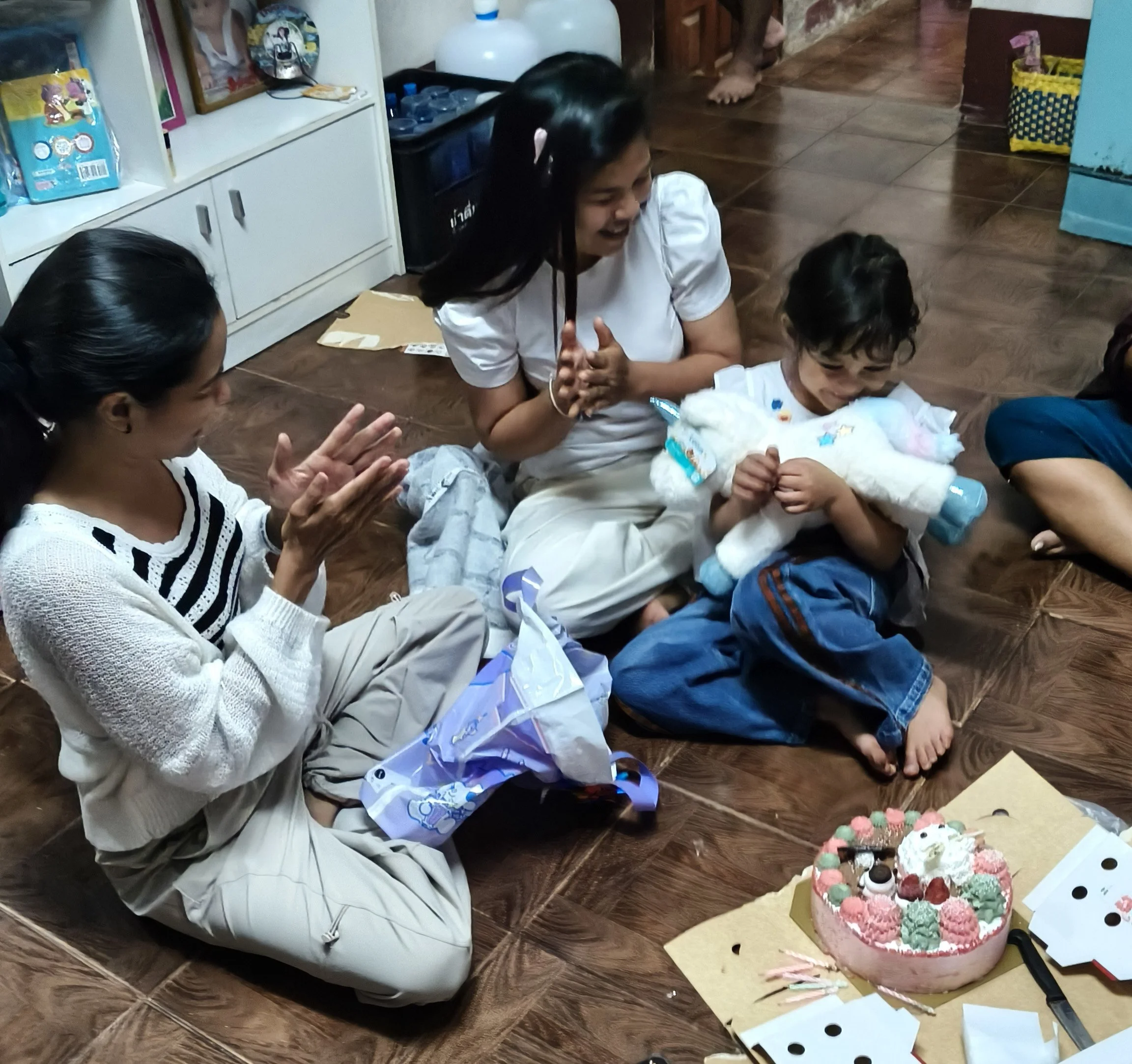
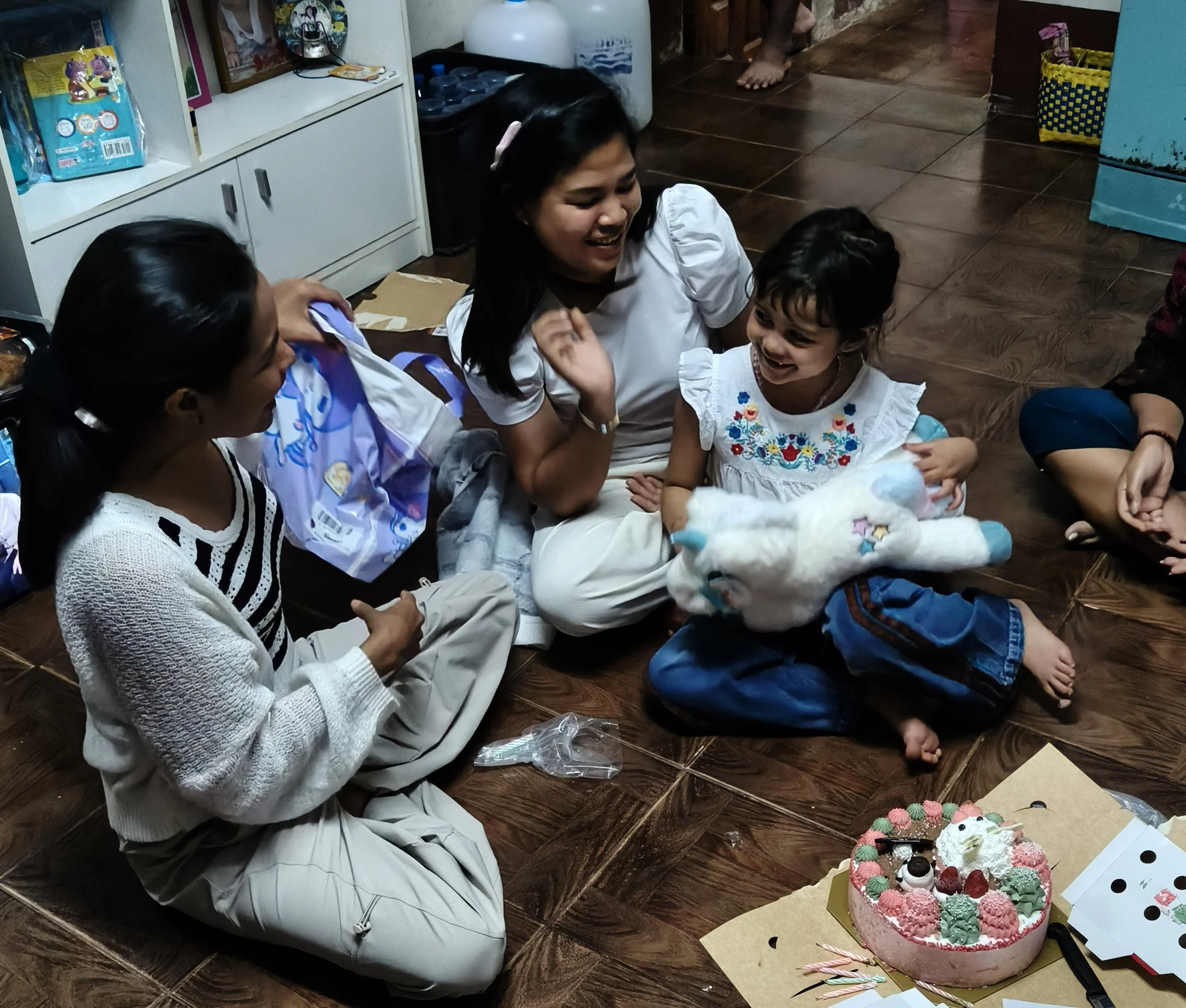
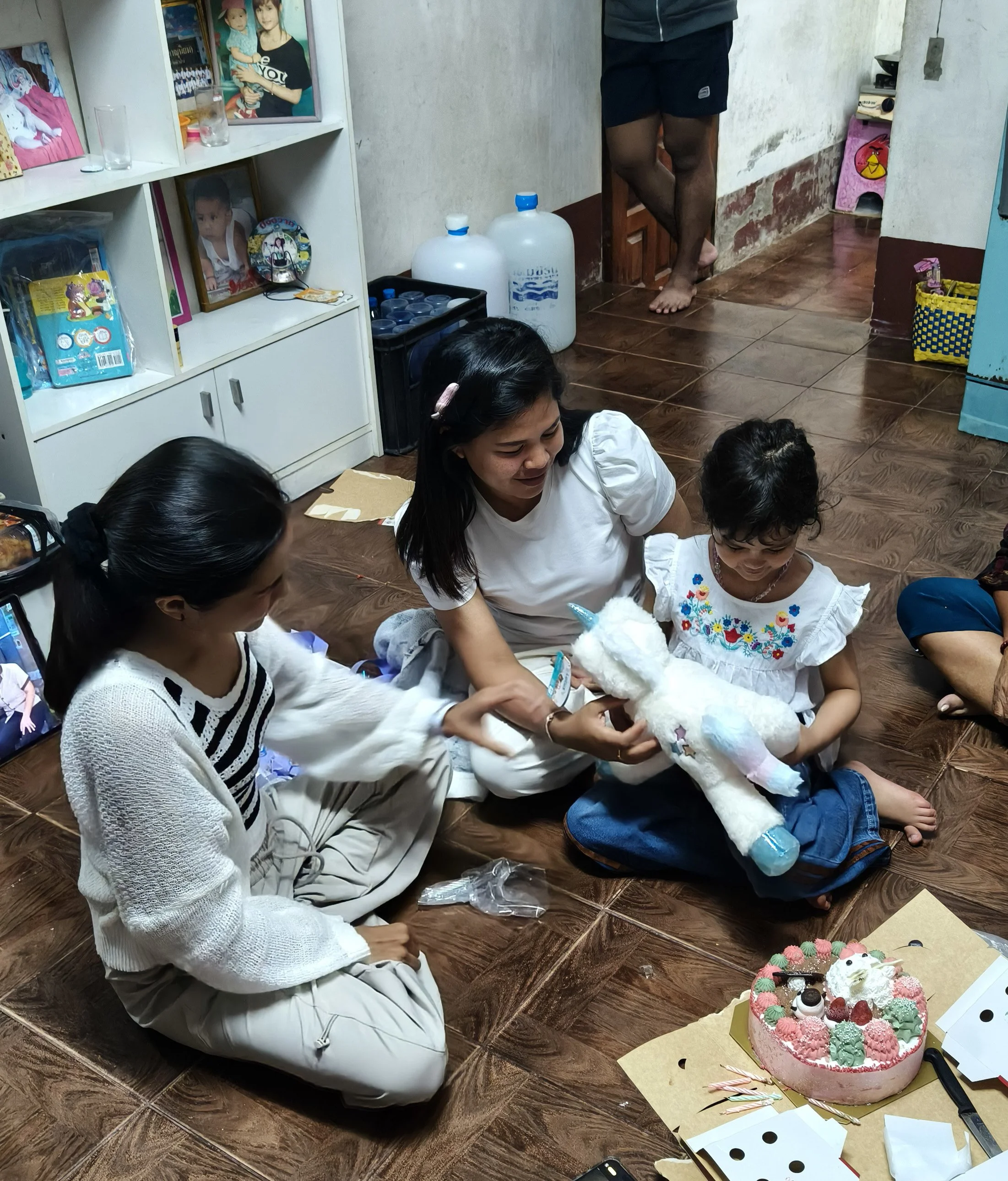
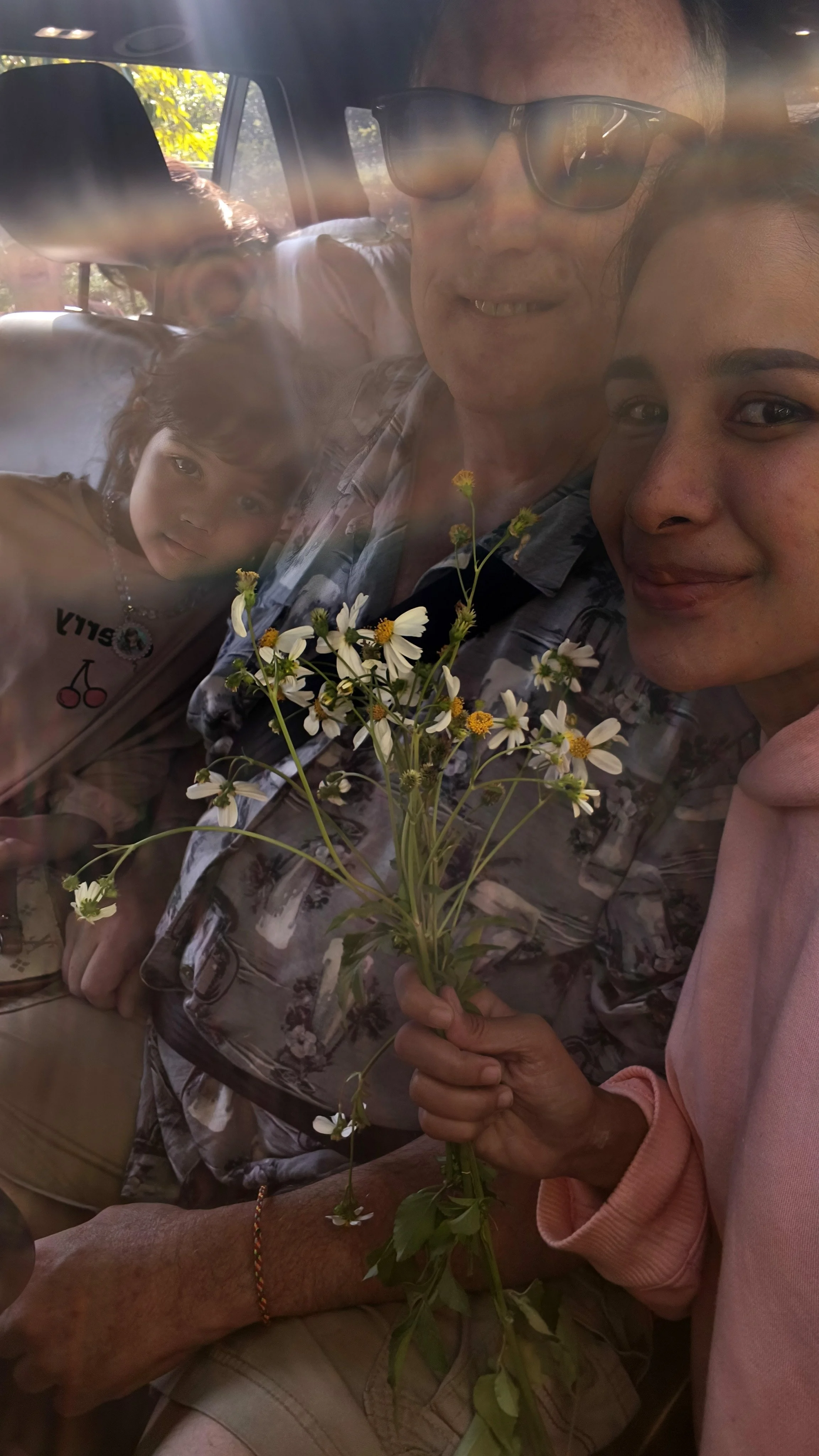
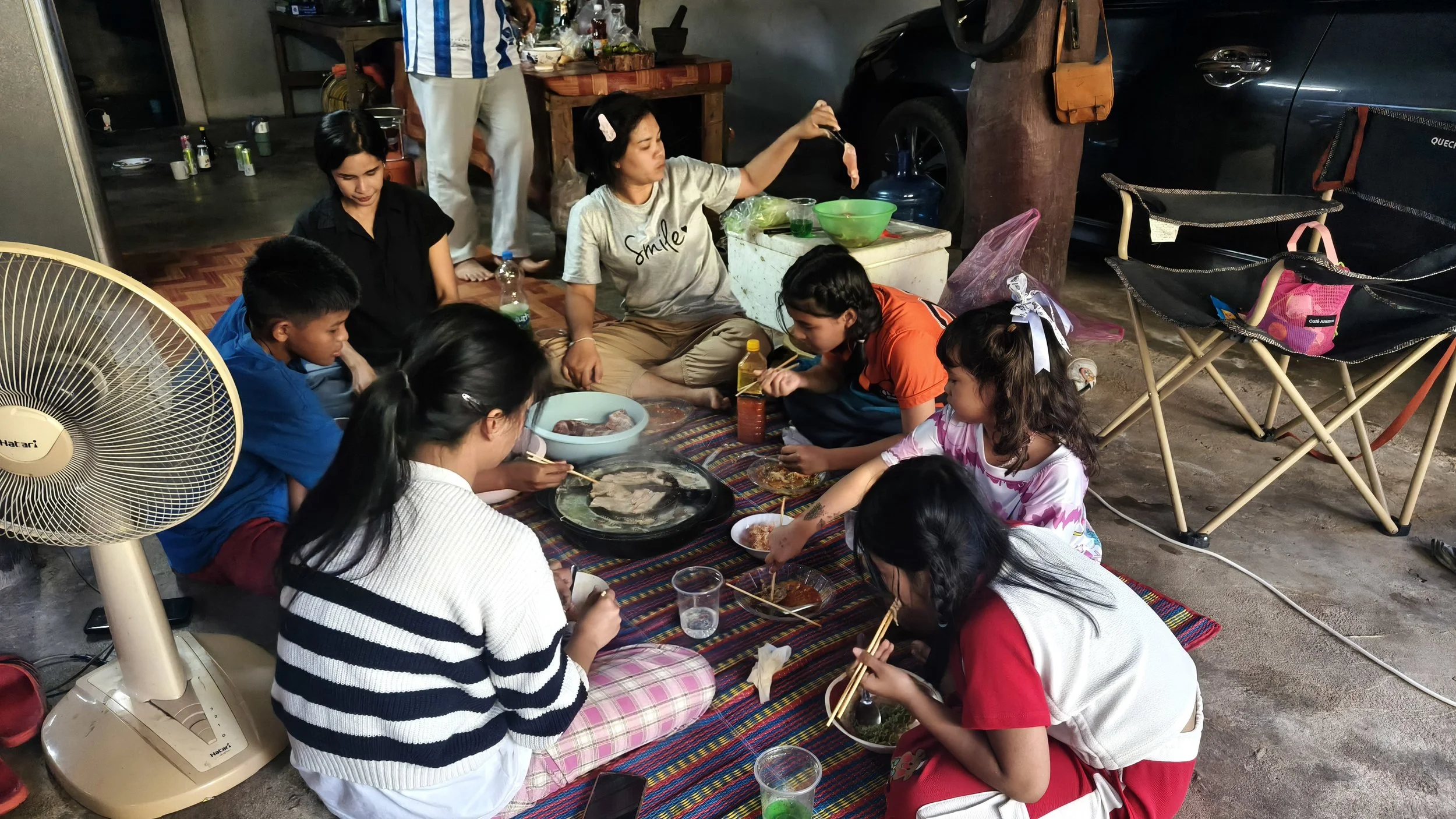
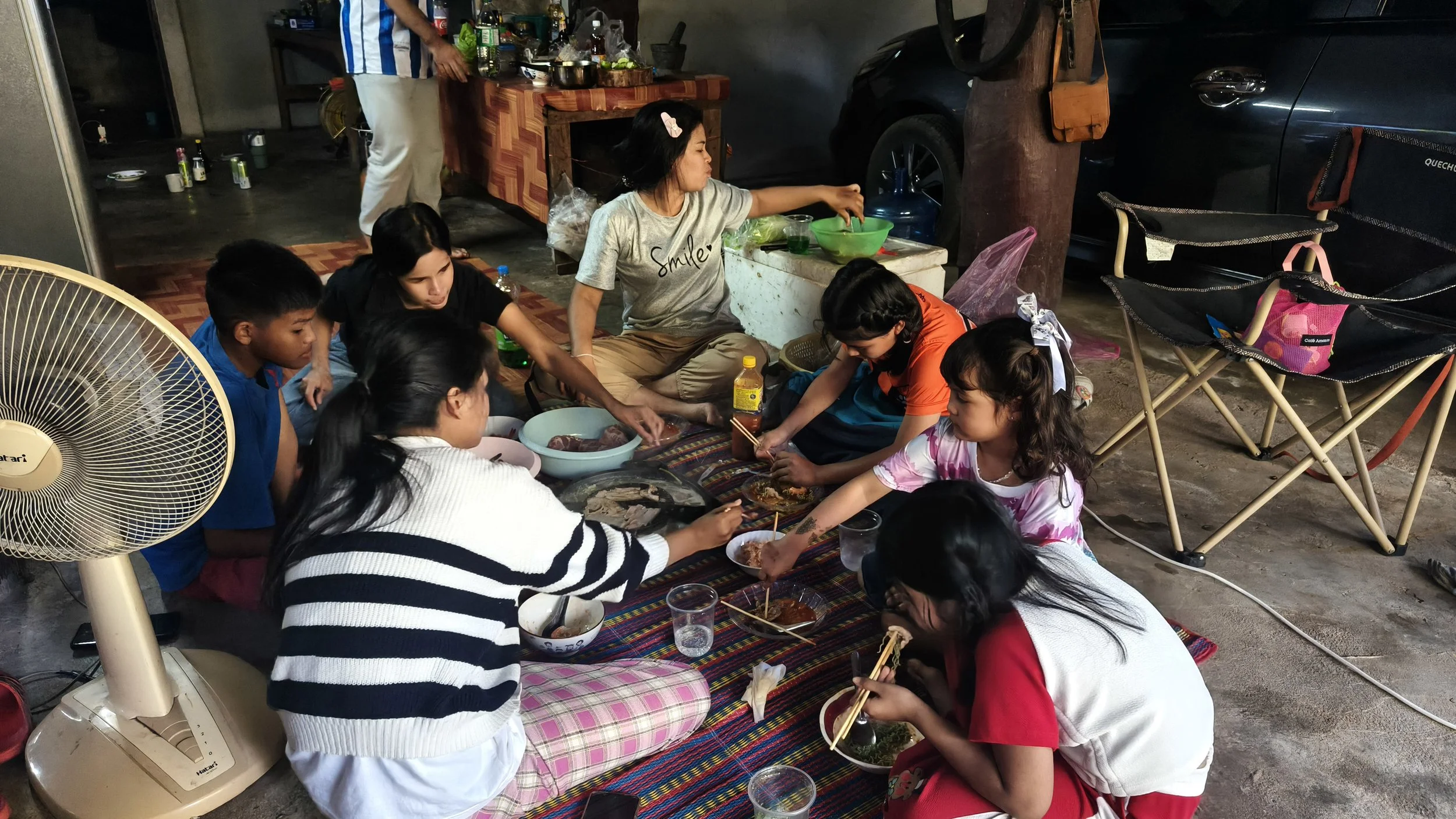
Liana’s 6th Birthday! January 2, 2026
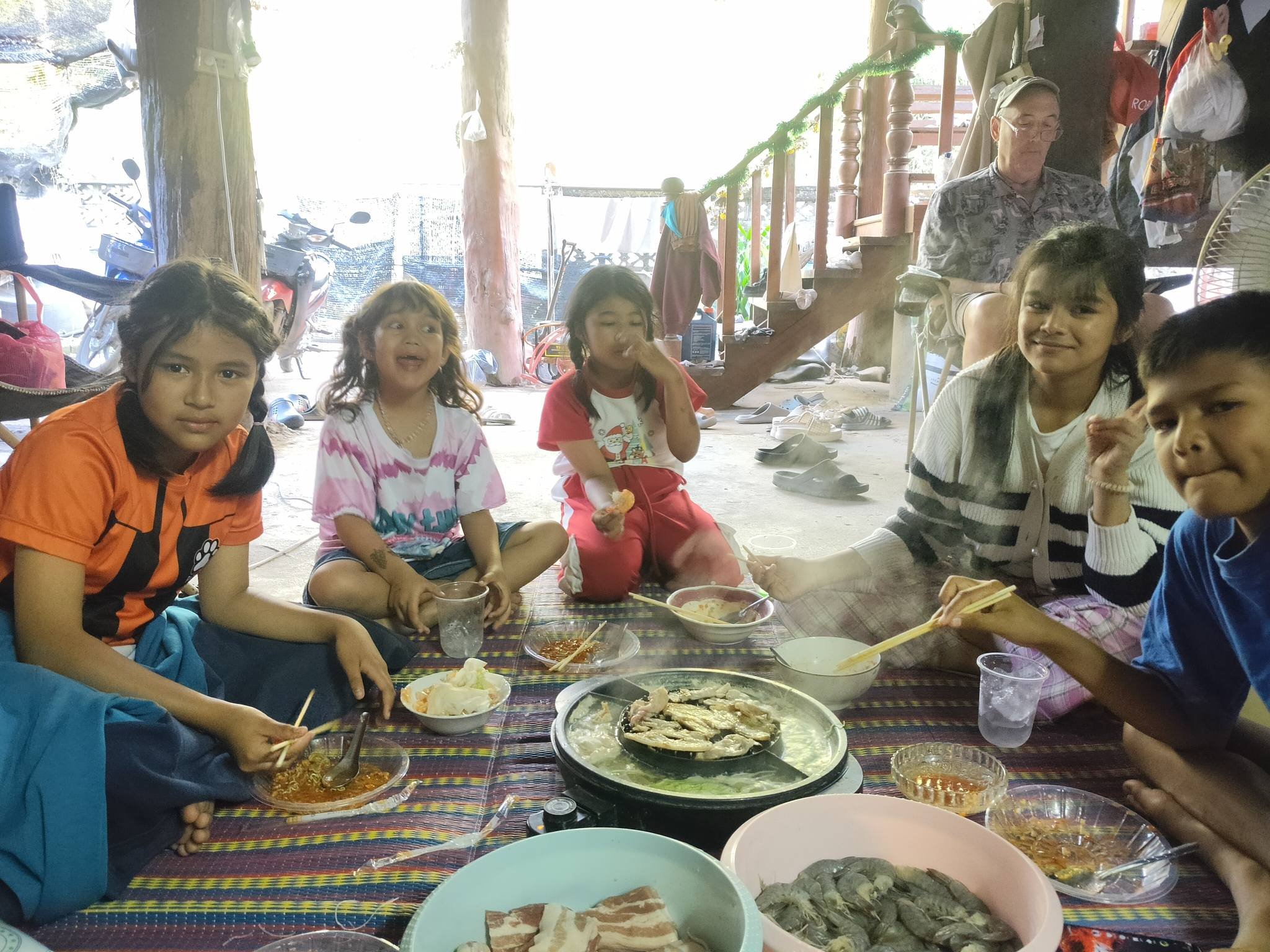
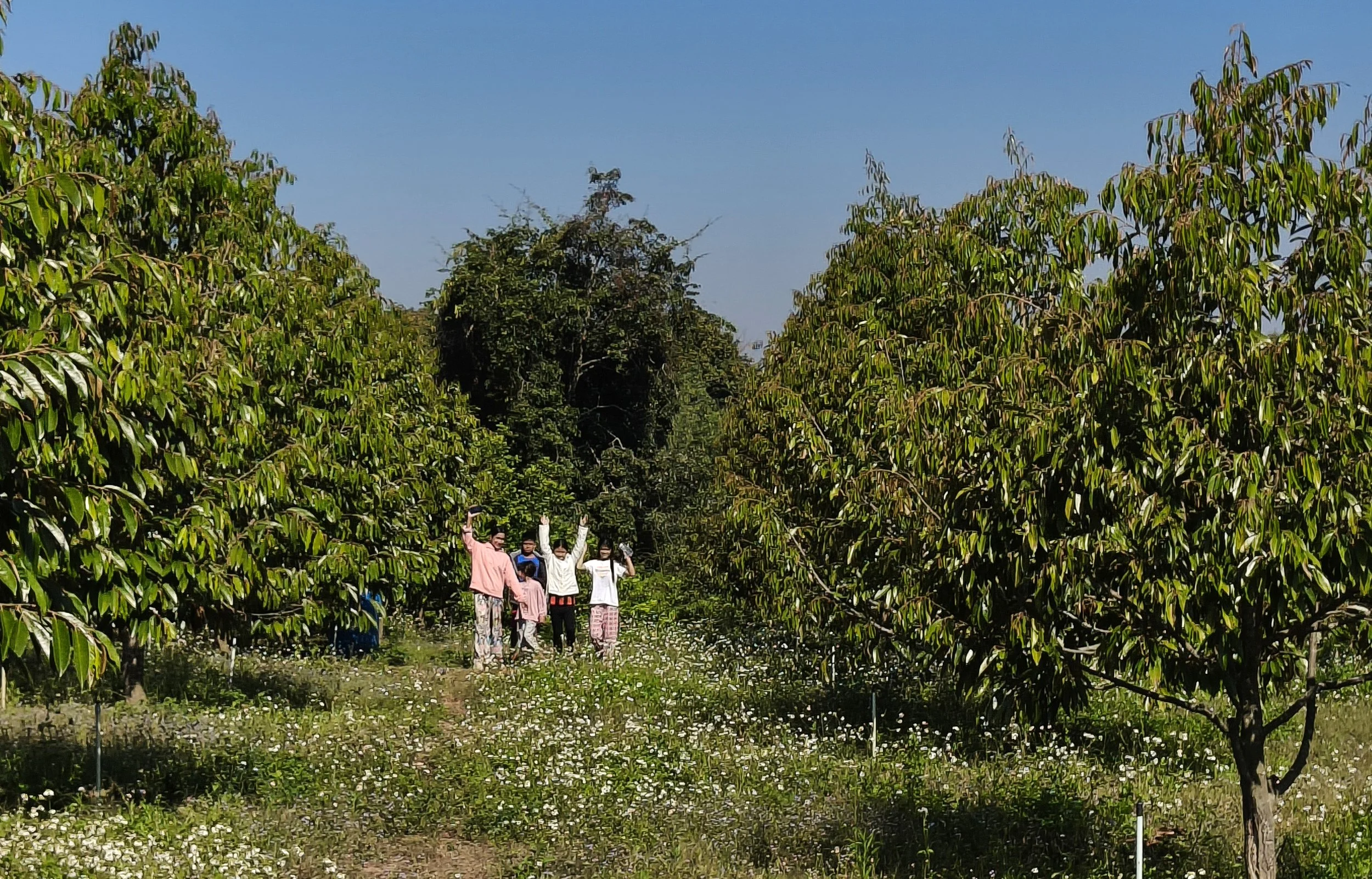
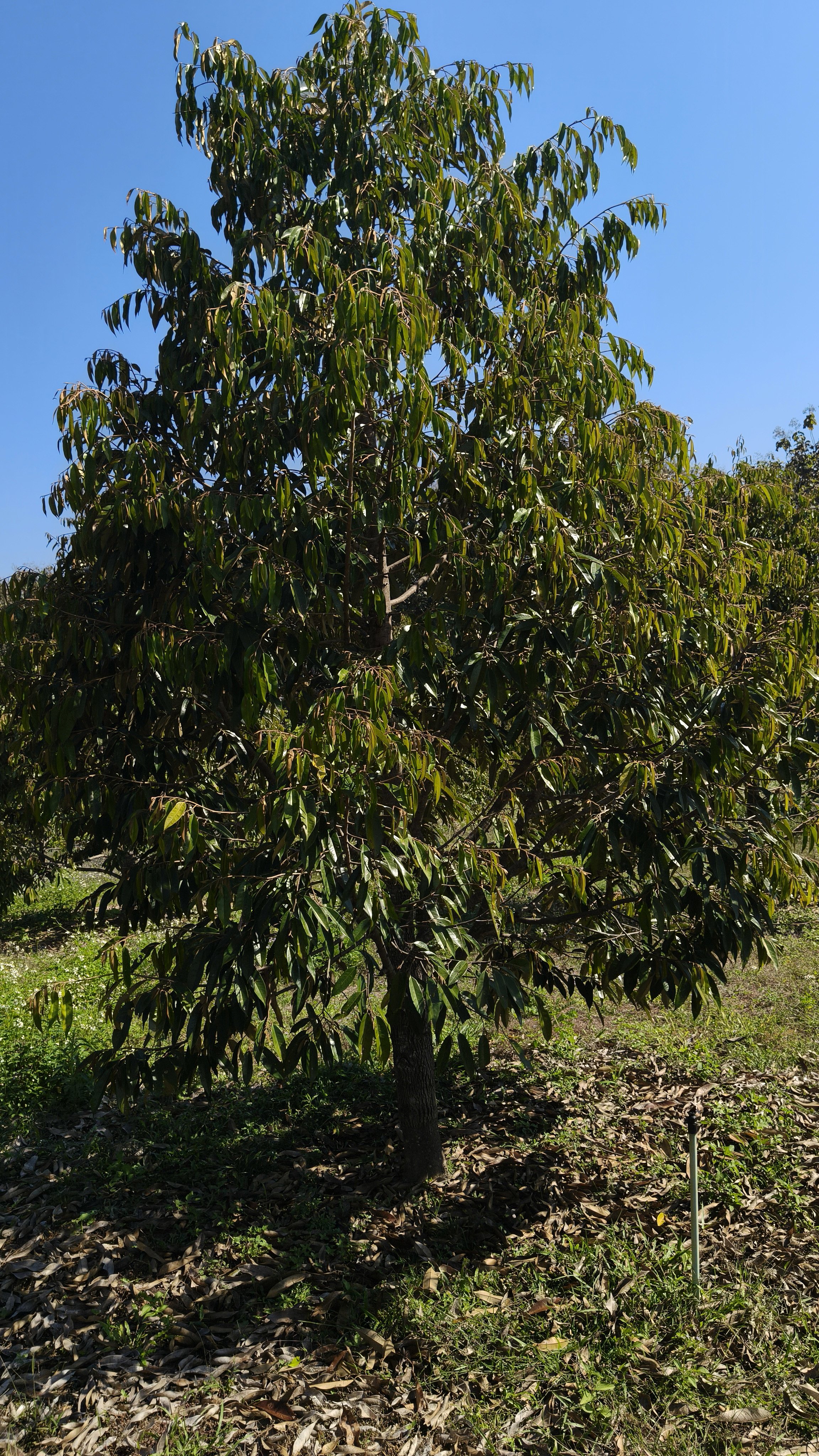
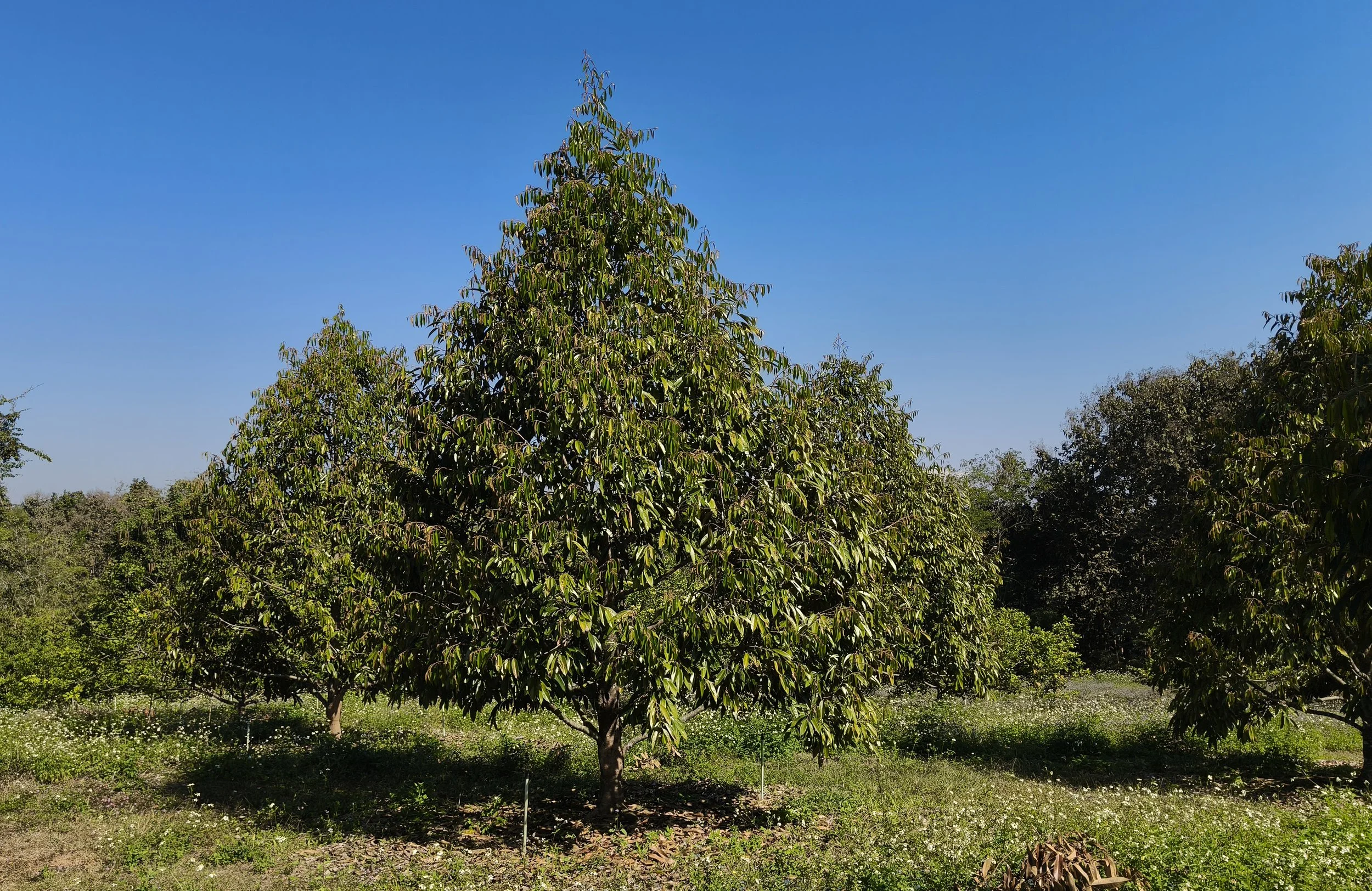
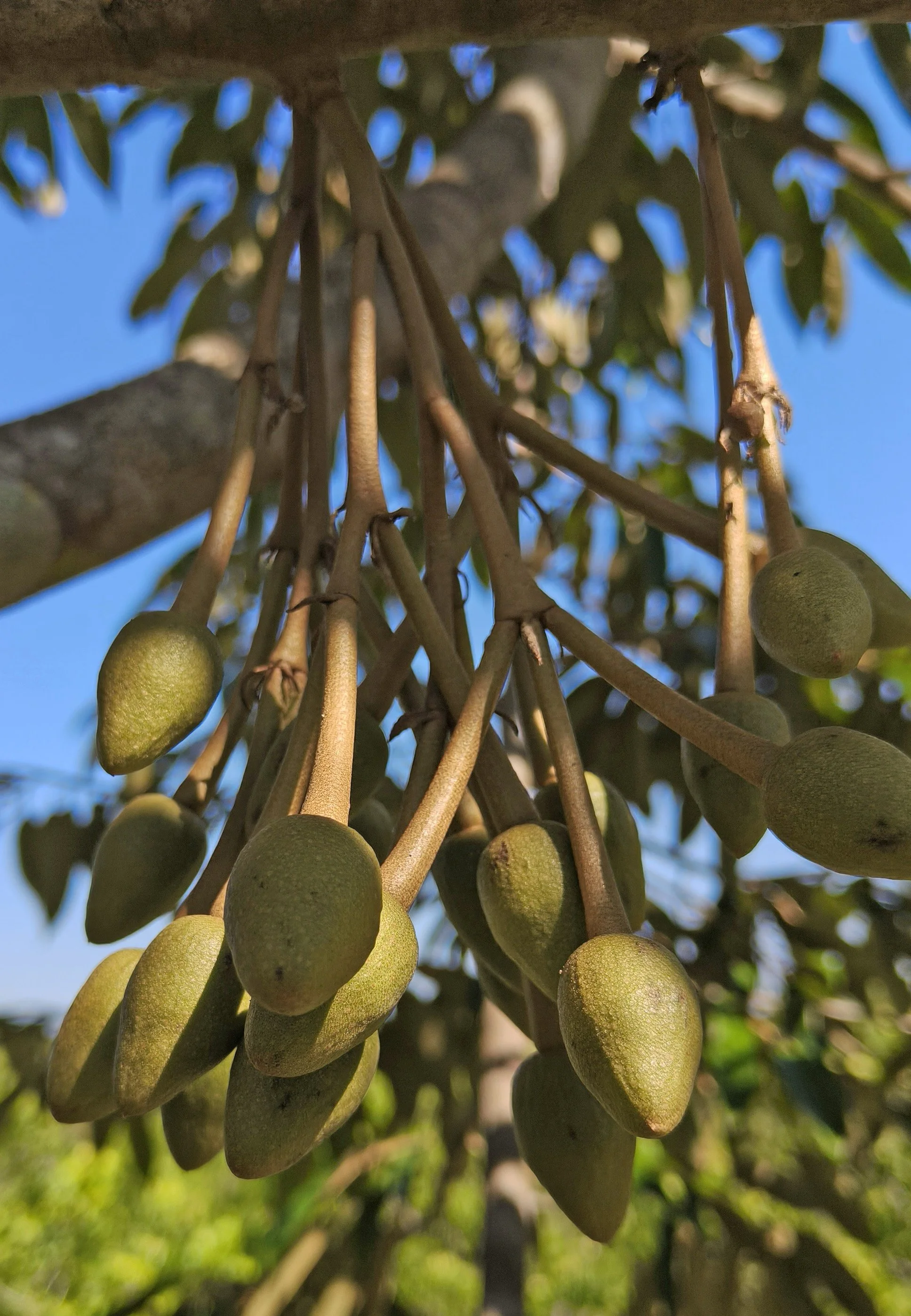
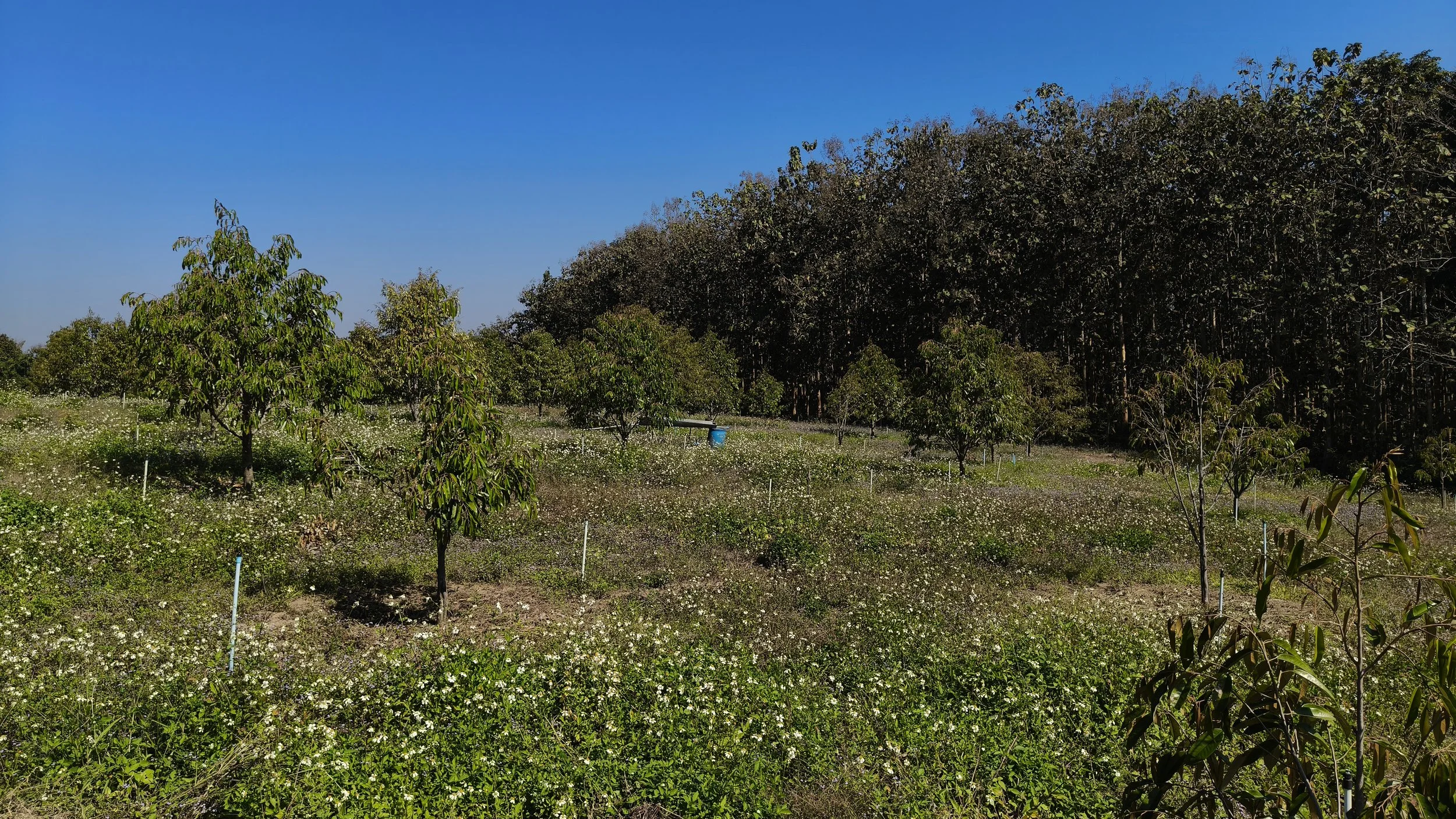
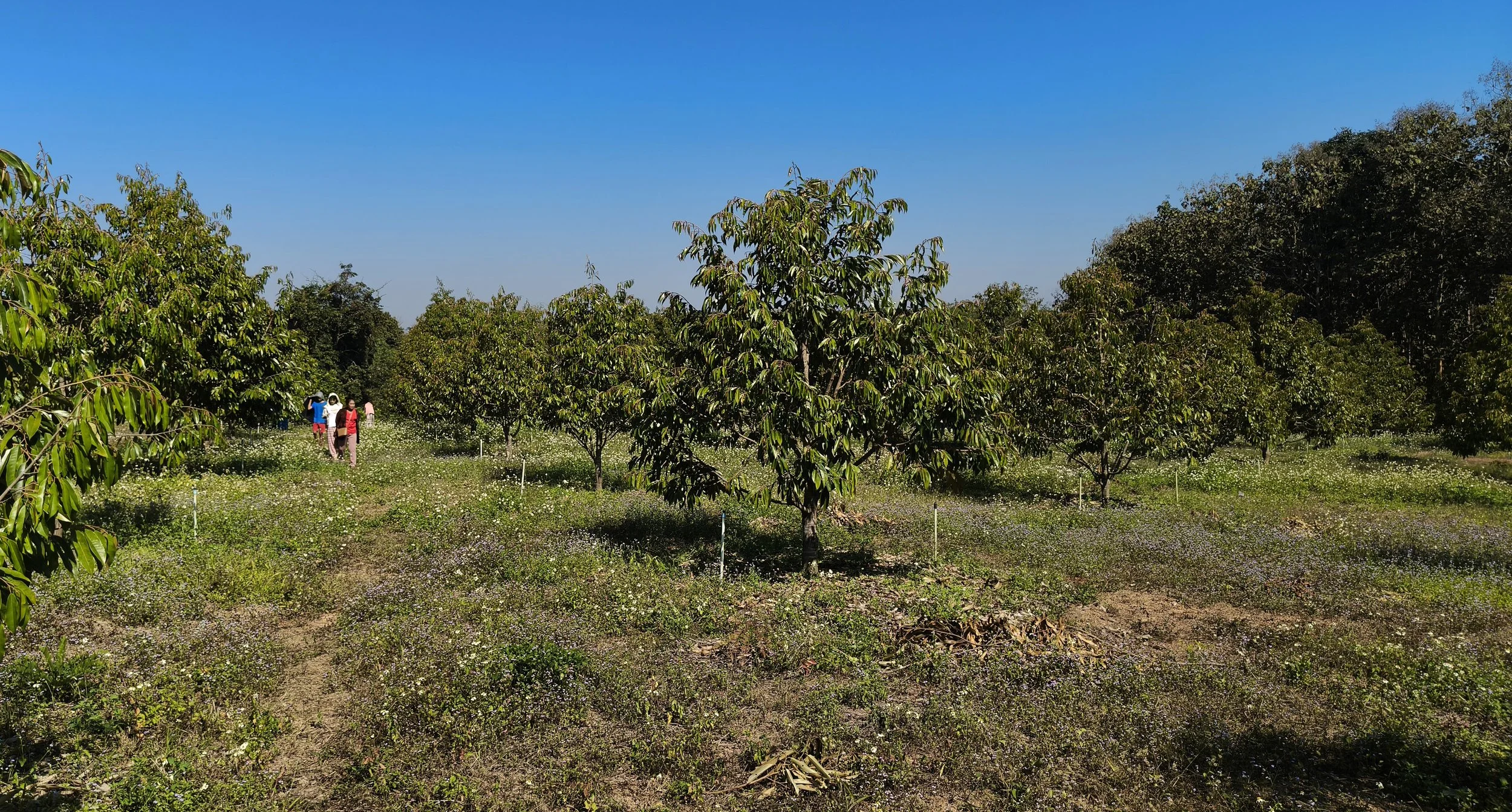
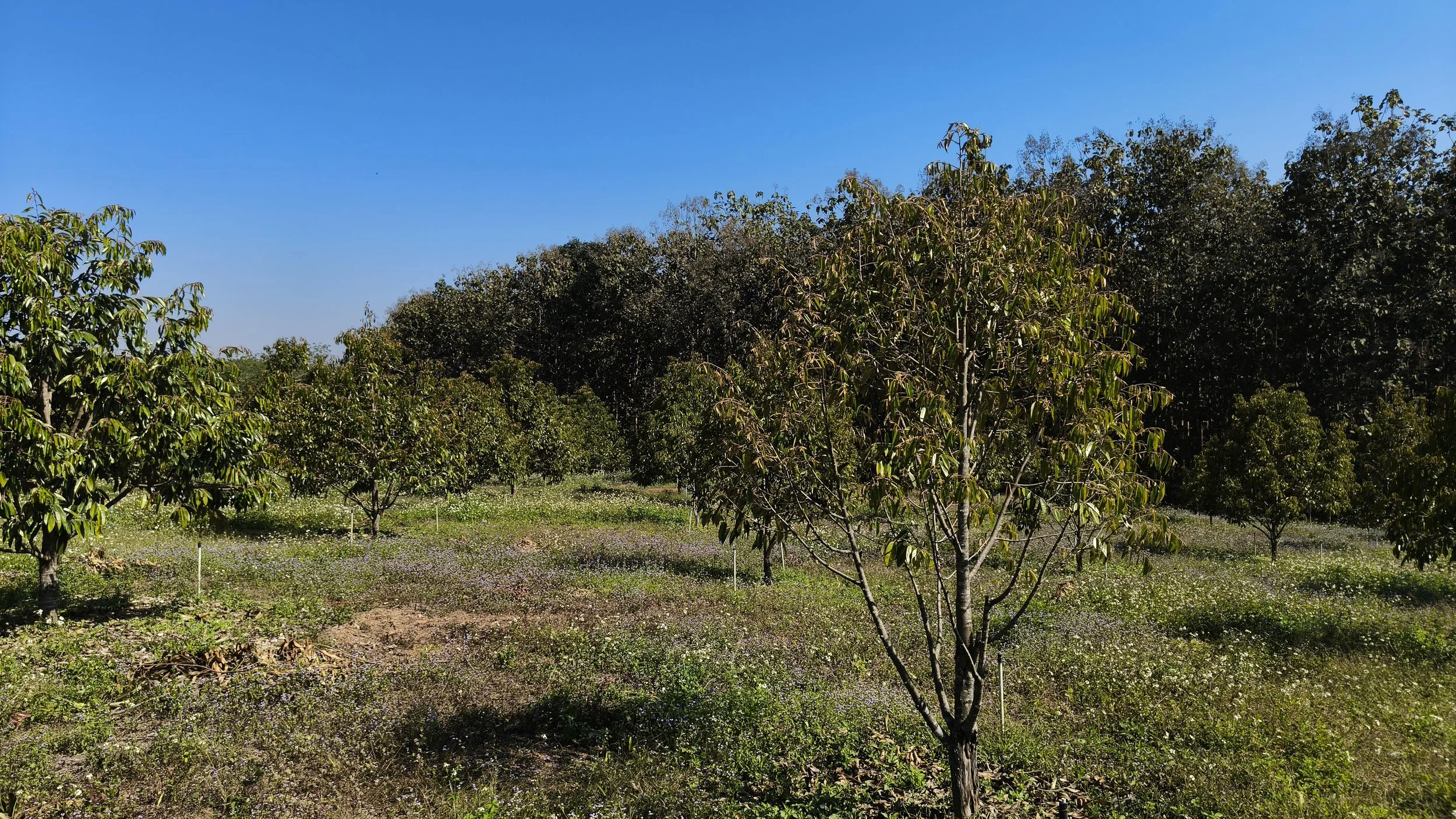
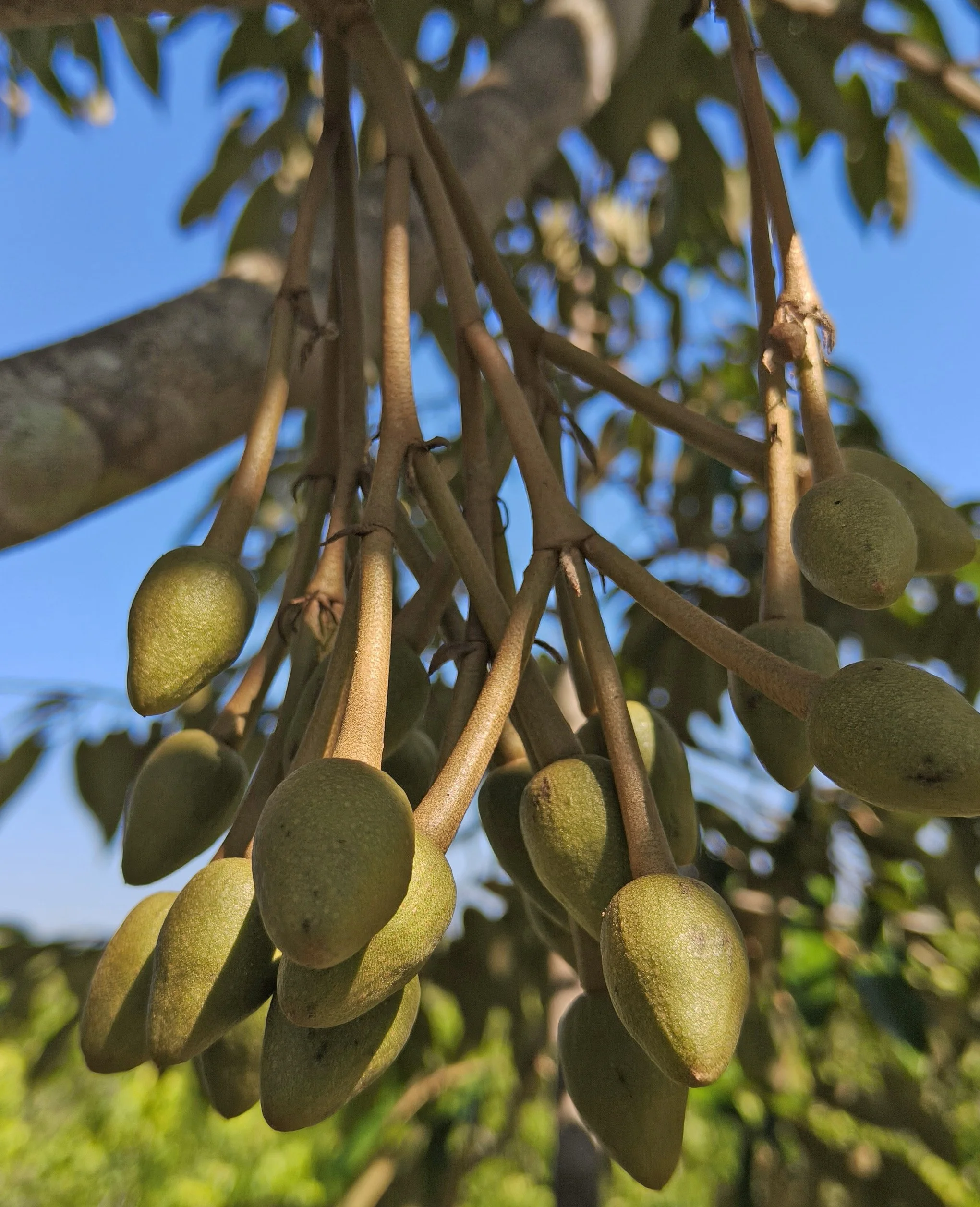
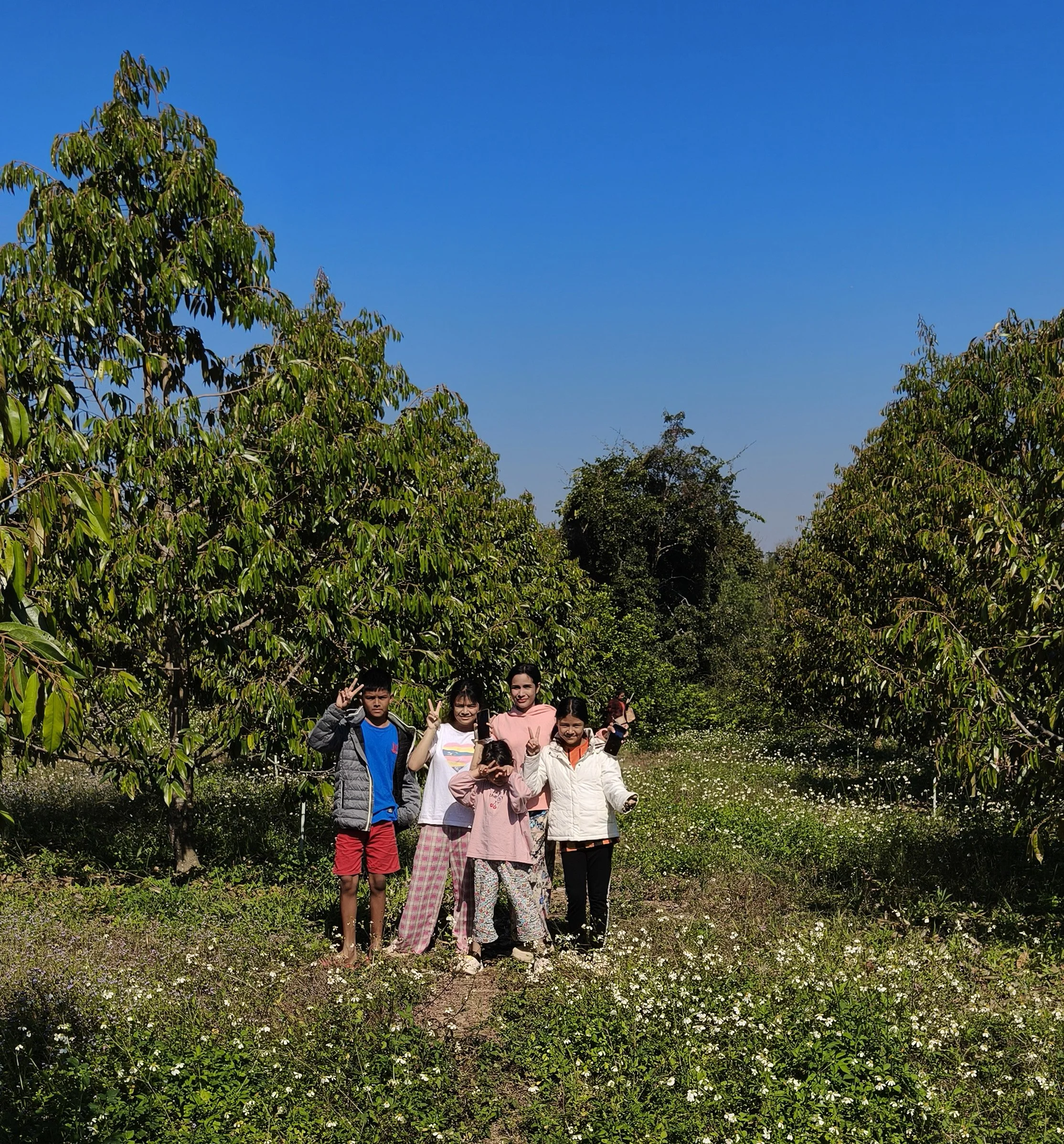
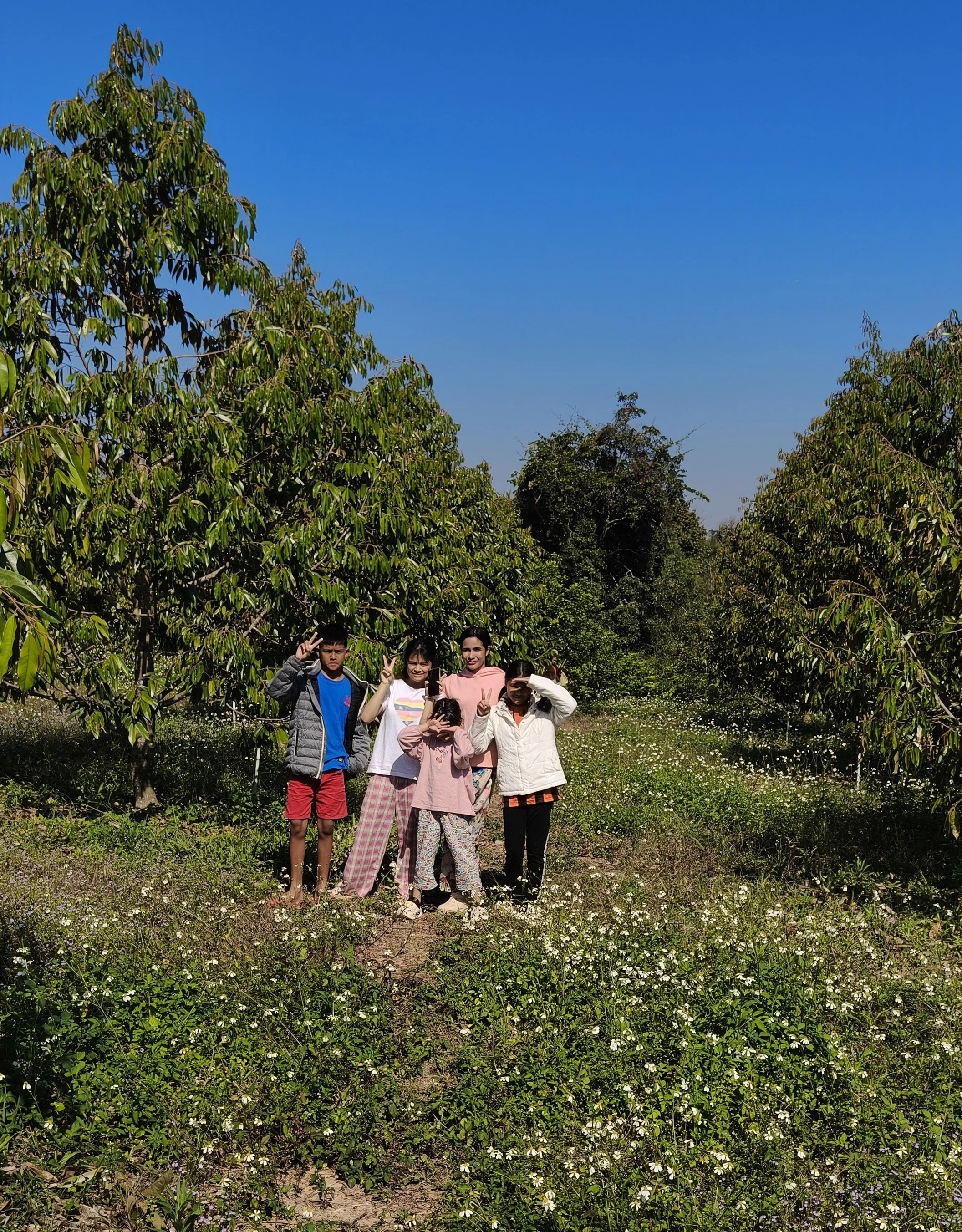
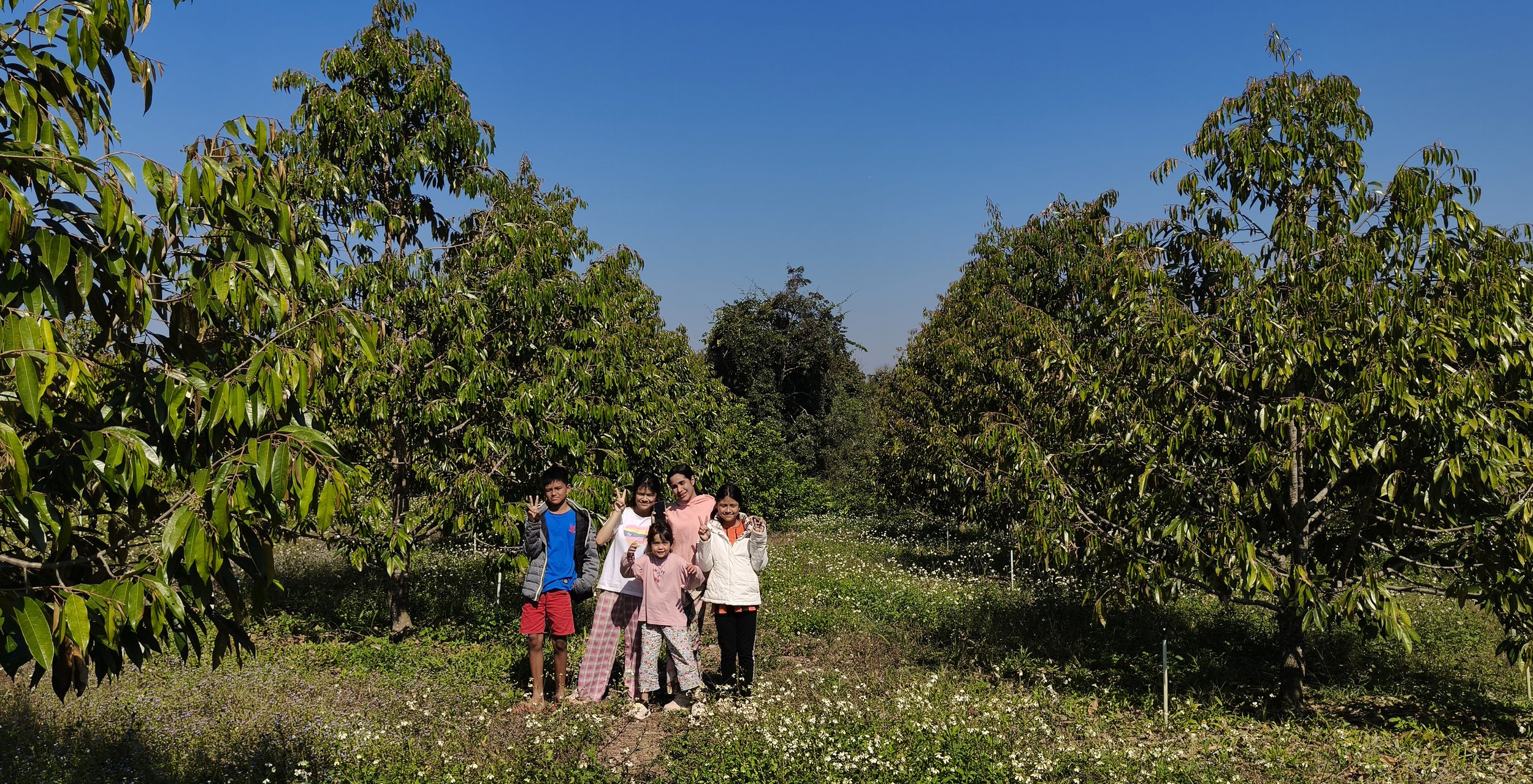
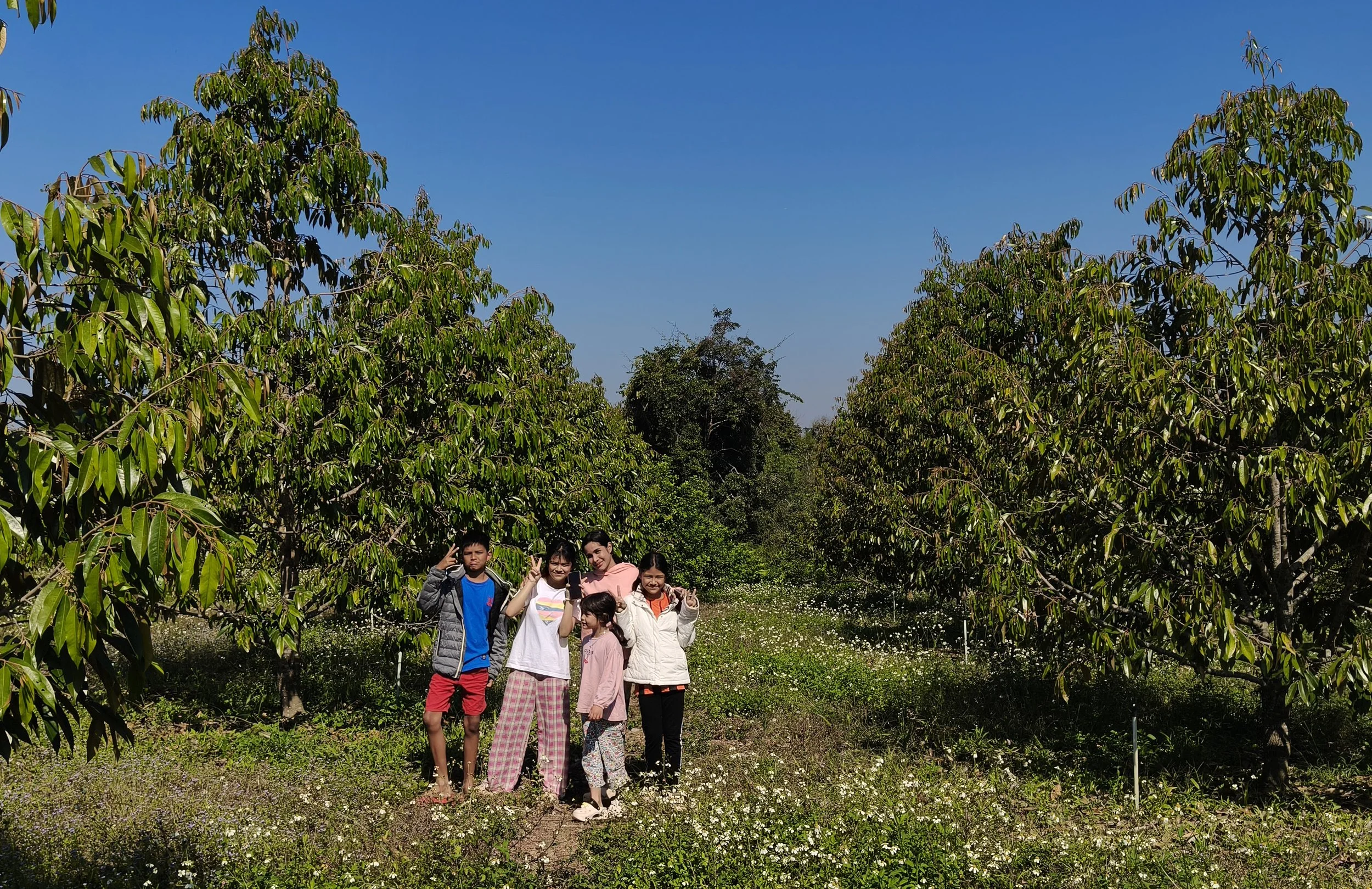
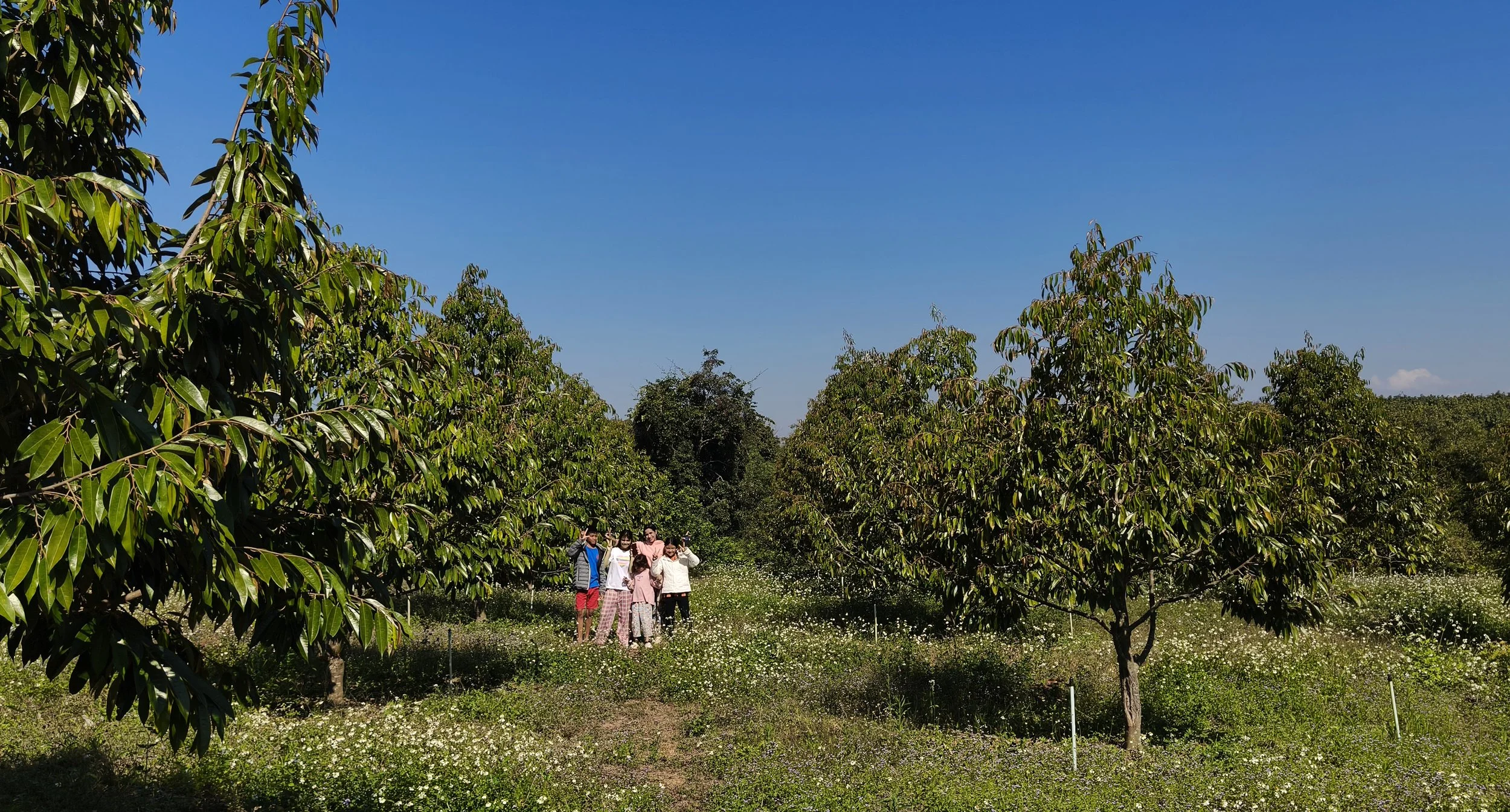
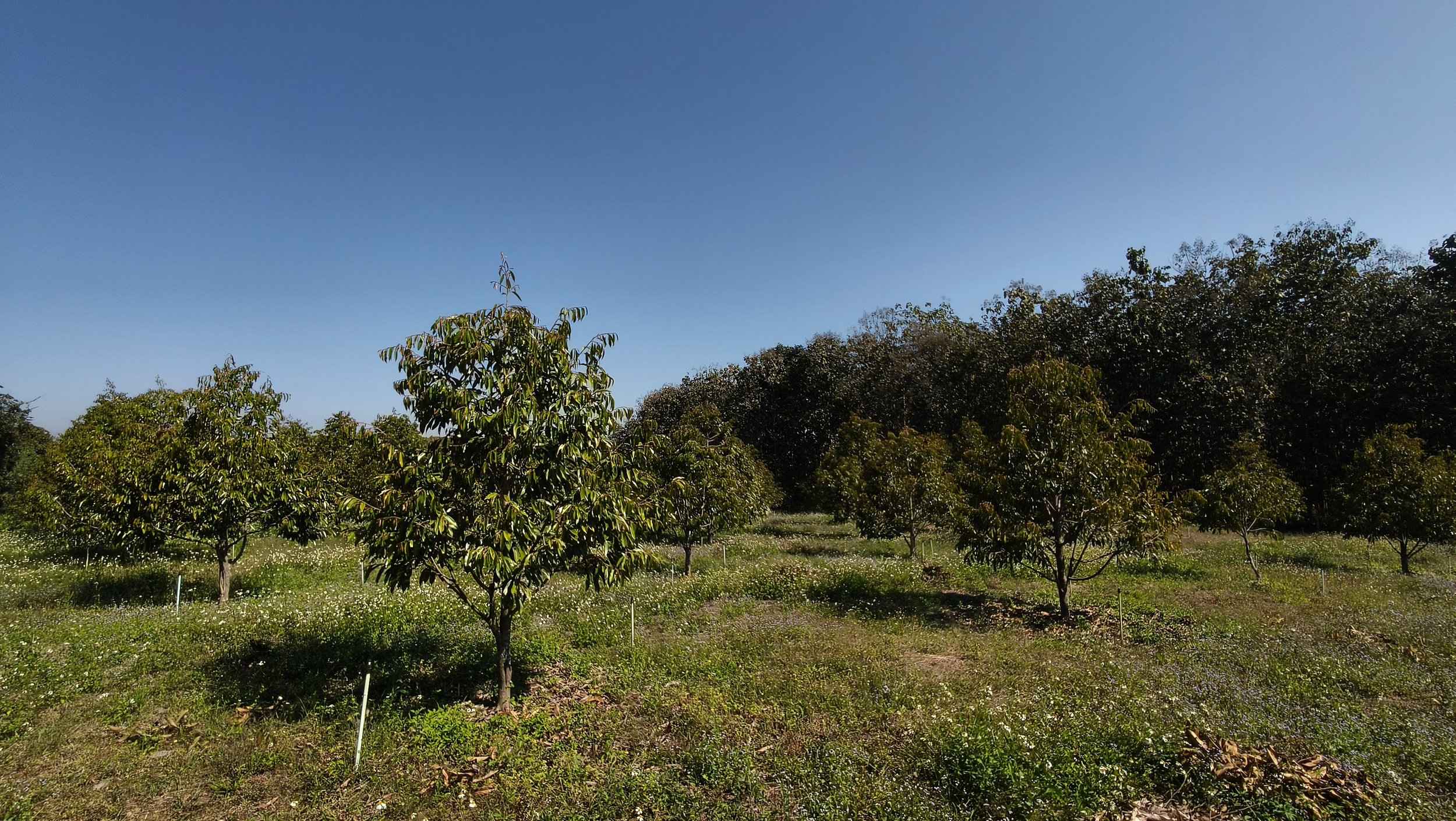
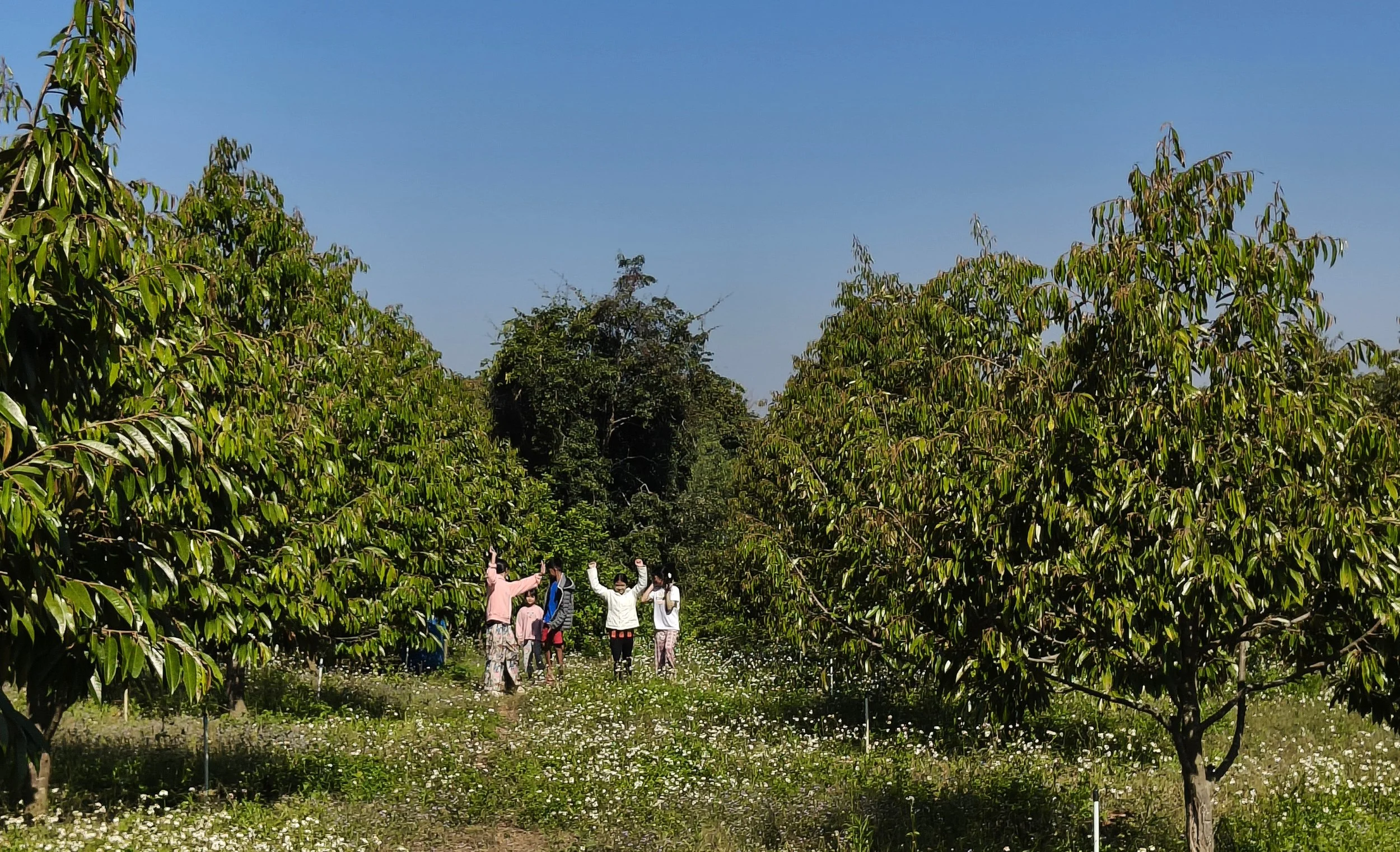
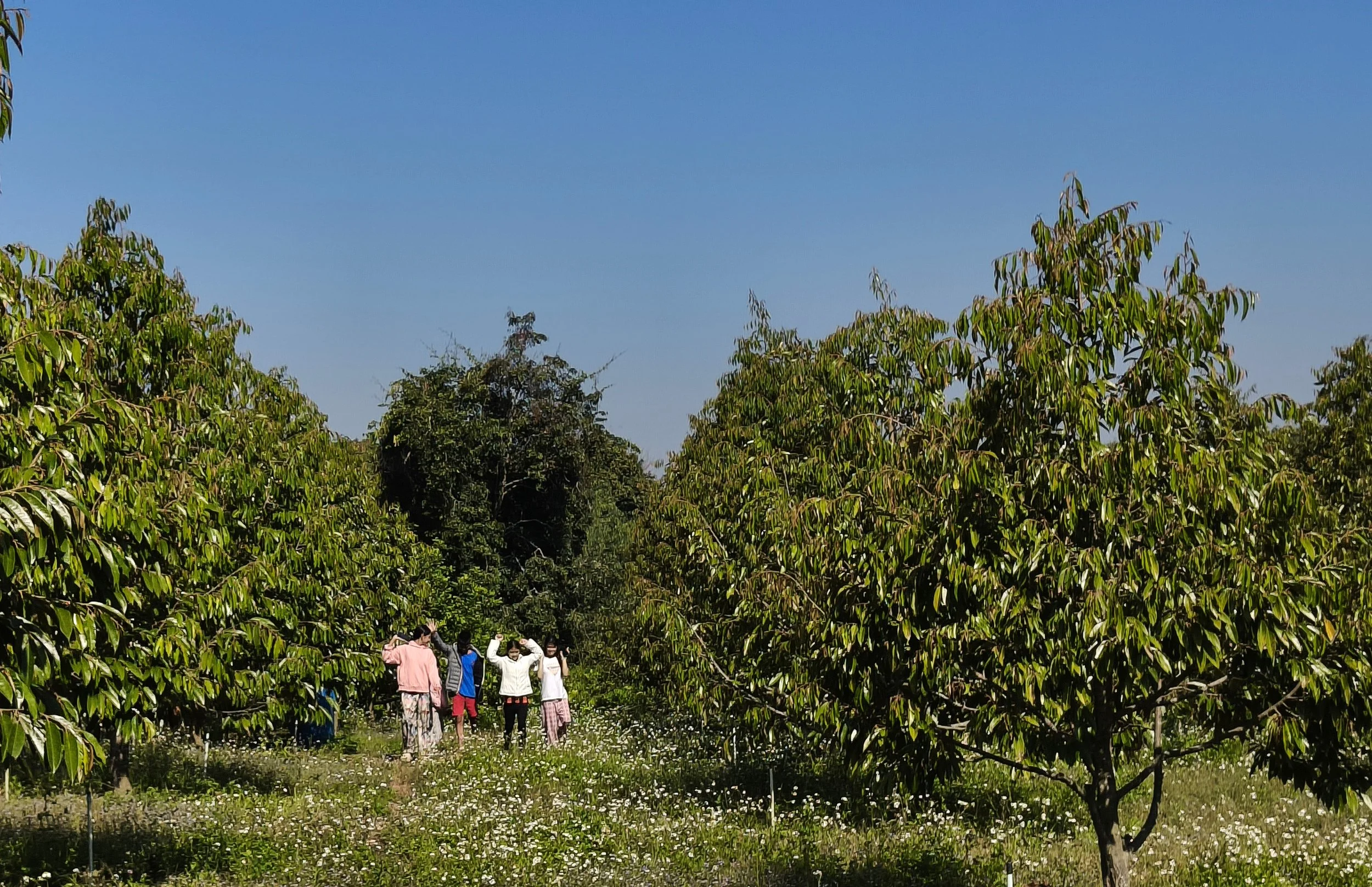
Ngao Durian Farm January 1 2026
Pichit Sunrise January 3, 2026